



An athlete name pronunciation form is a structured data-collection tool that captures each student-athlete’s phonetic spelling, preferred name, and optional audio guidance before a public ceremony, announcement, or permanent recognition display publication. It solves one of the most consistent — and most visible — recognition errors in school athletics: mispronouncing a student’s name at the moment the institution is trying to honor them.
Mispronunciation during an awards ceremony or on a public-facing digital display sends an unintentional message that the person’s identity was secondary to the logistics of the event. For the athlete, the family in the room, and the permanent record being built, getting the name right is not a courtesy — it is the baseline standard of respectful recognition. A single, well-designed intake form collected at the start of each season or before each major event eliminates this risk at the source.
This guide provides athletic directors, advancement staff, facilities teams, and recognition committees with a ready-to-use pronunciation form template, a collection workflow, distribution strategies, and guidance on storing phonetic data in digital recognition systems so pronunciation accuracy follows the athlete’s record across every channel — banquet, hallway display, and alumni archive.

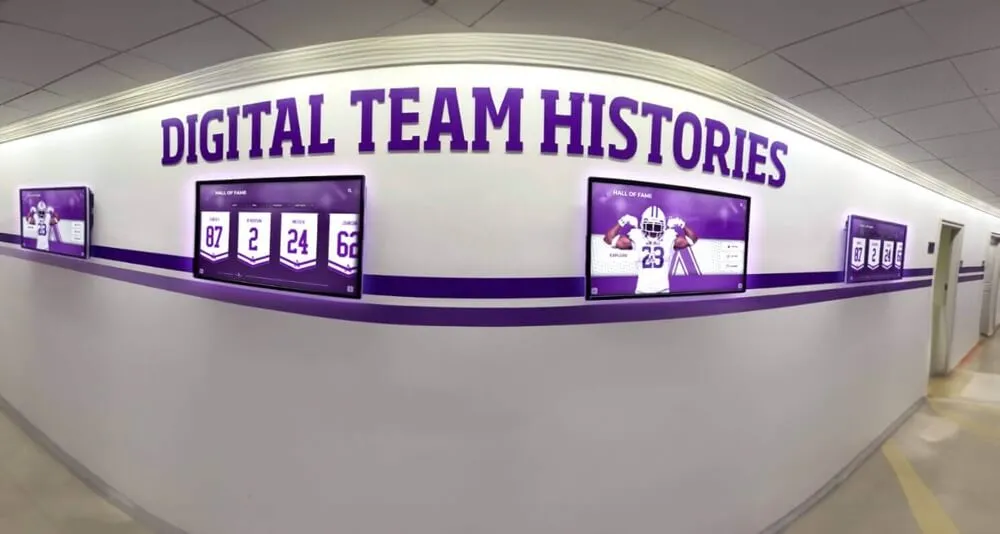
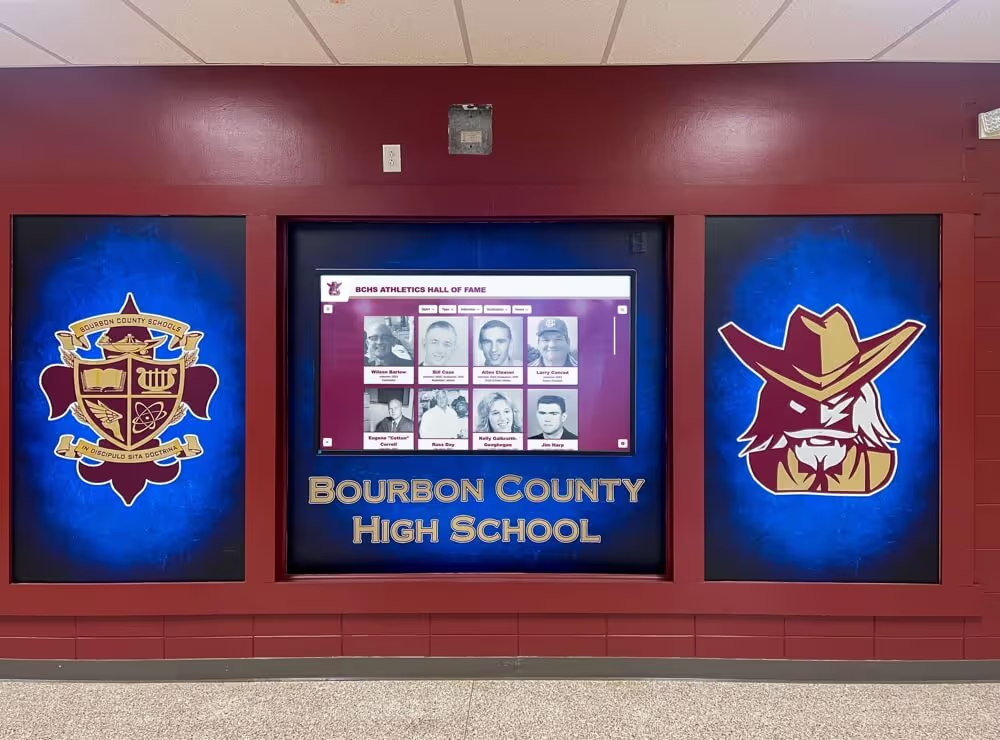
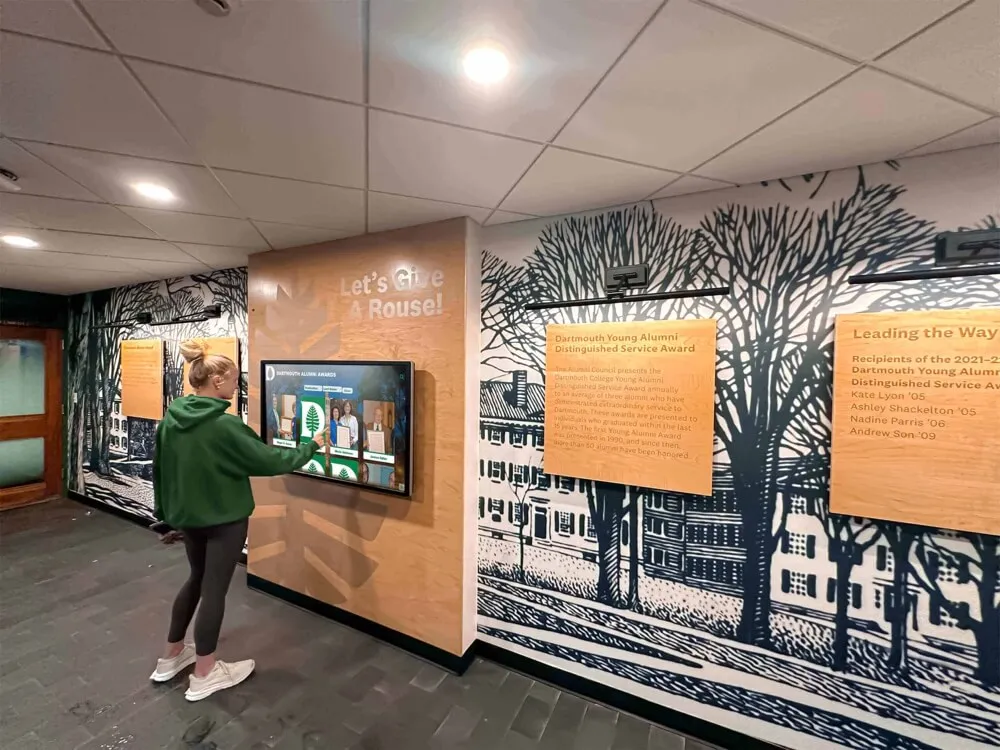
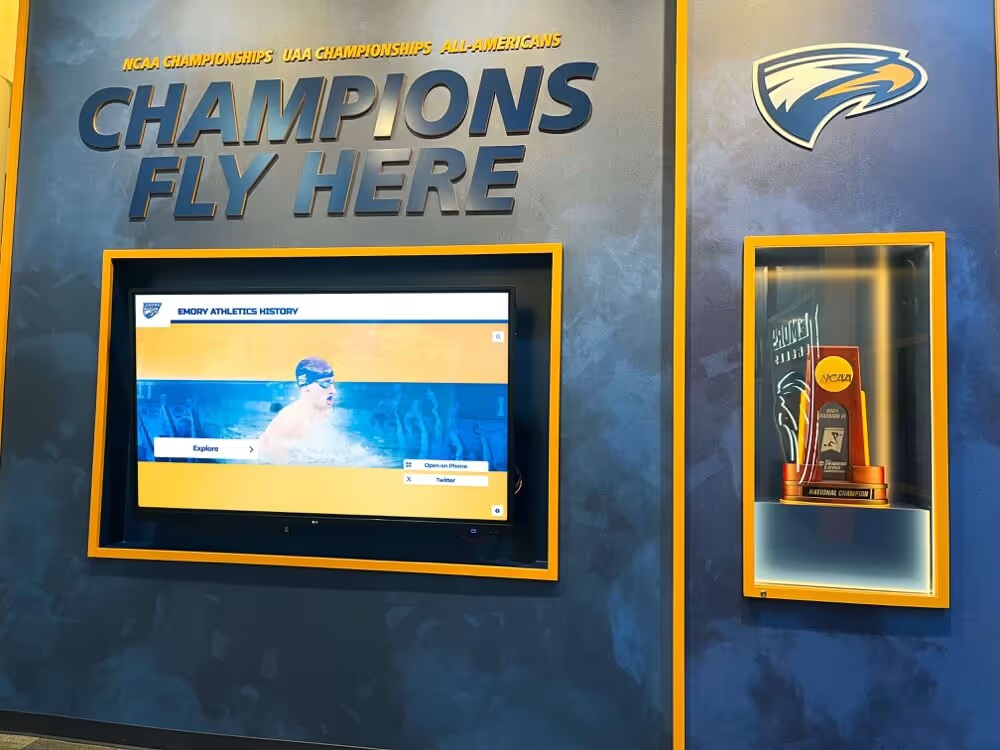
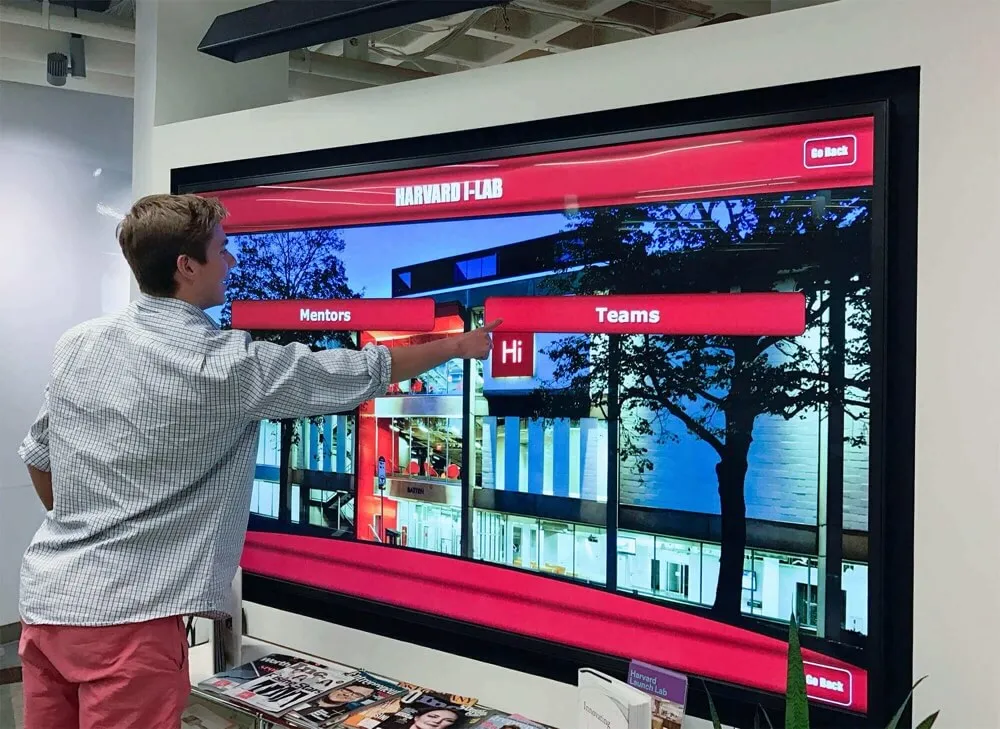
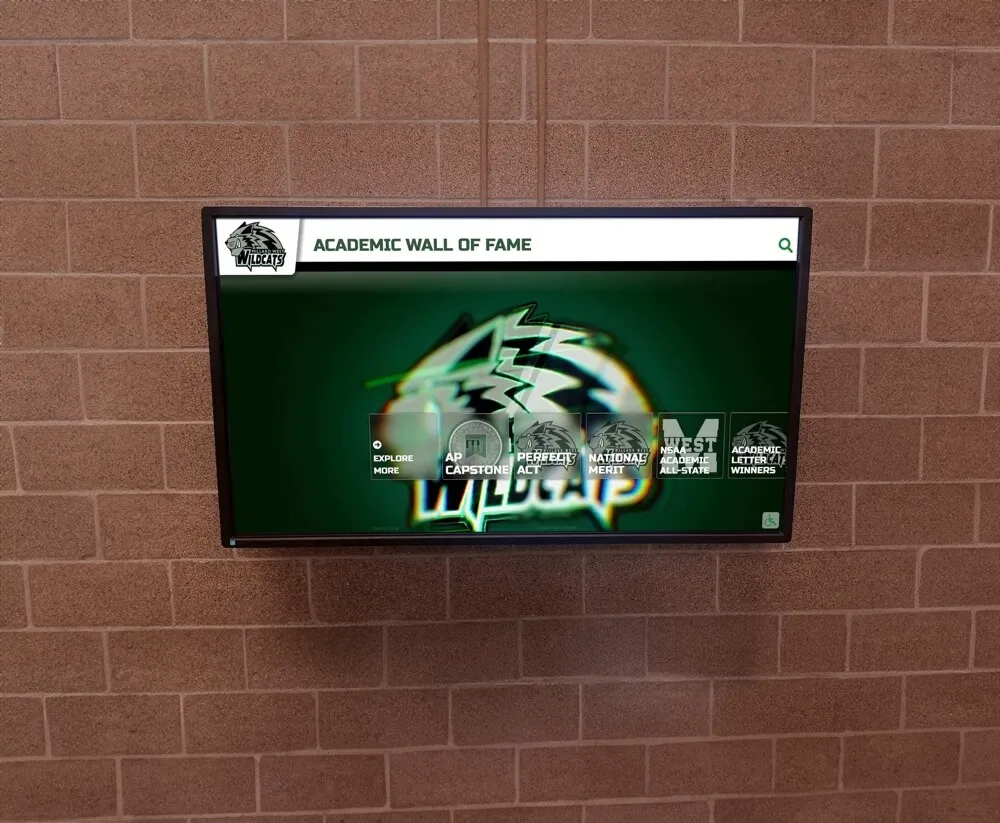
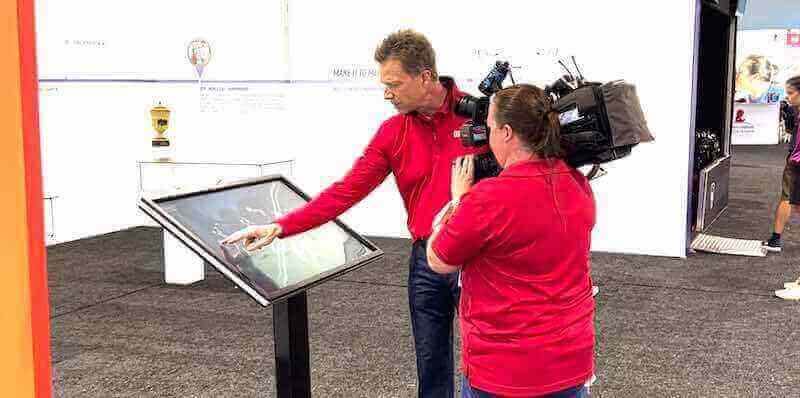
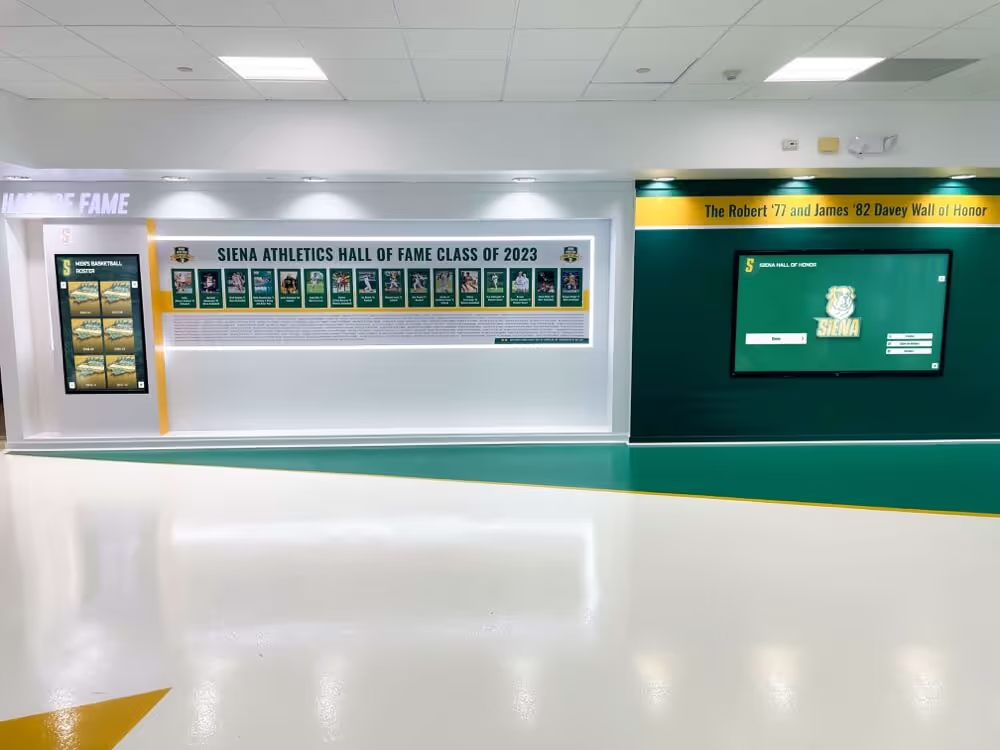
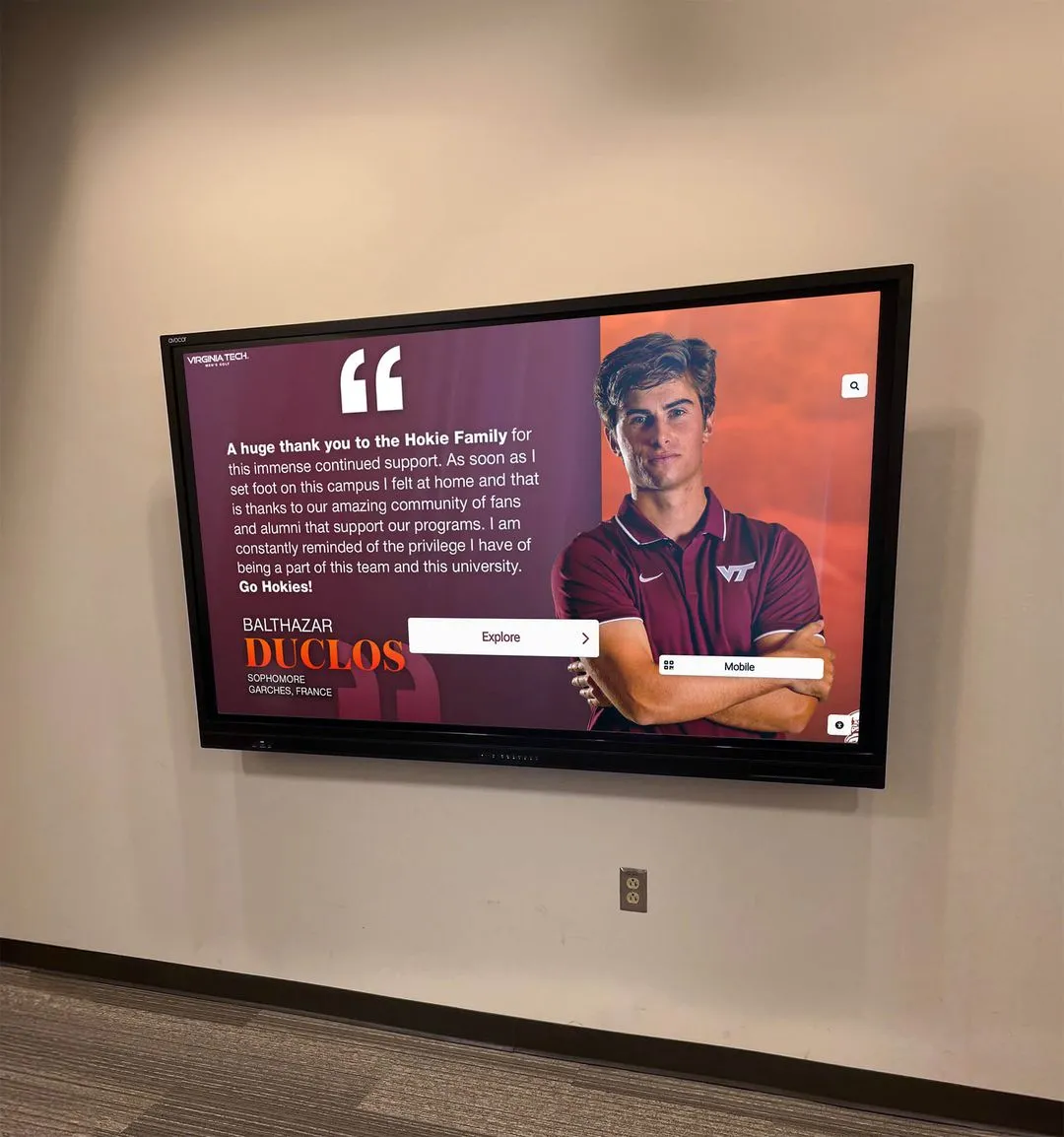
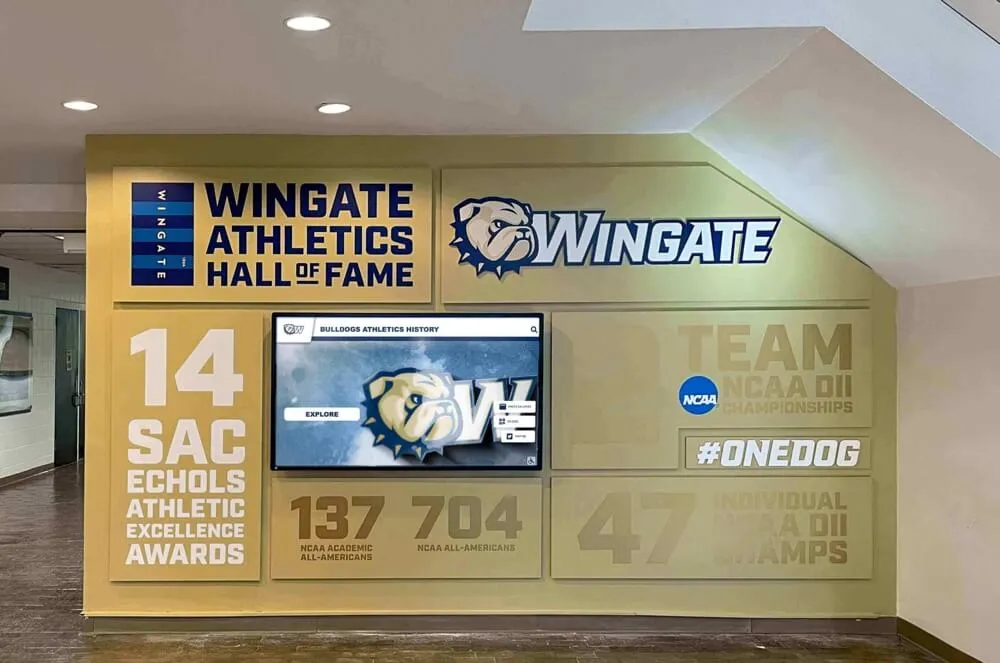
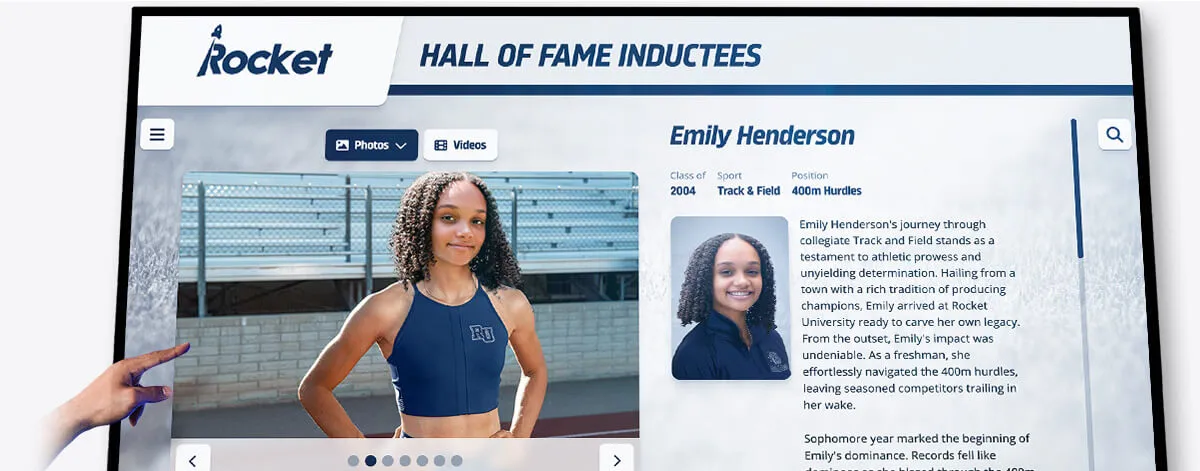
Digital recognition displays that surface full names, sports, and years create a permanent public record — which is exactly why accurate pronunciation data must be collected before the profile is published
Why Athlete Name Pronunciation Forms Matter
Athletic departments collect jersey numbers, medical forms, and equipment sizes without question. Pronunciation data deserves the same systematic treatment, especially because the consequences of omitting it are publicly visible.
The Ceremony Problem
Award night is the moment every other part of the recognition program has been building toward. A mispronounced name at the podium — particularly a name from a heritage unfamiliar to the announcer — can overshadow the award itself. Athletes who hear their names mangled at graduation or a hall of fame induction often remember the error long after the award.
Announcers and emcees are not at fault when they lack guidance. They default to phonetic guesses based on spelling conventions that may not match the family’s actual usage. Providing a pronunciation guide is an administrative responsibility, not an announcer accommodation.
The Digital Display Problem
Recognition that lives on a touchscreen, a digital record board, or a hall of fame wall is even more exposed than a ceremony announcement. A name displayed incorrectly reaches every viewer who encounters the screen — current students, prospective families, alumni, and donors — for as long as the display runs. The error compounds over time rather than ending when the applause stops.
For schools building out mid-year digital hall of fame launches or adding inductees to existing displays, phonetic data should be part of the intake package for every profile, not a retroactive afterthought.
The Archive Problem
Records that survive for decades will eventually be read aloud by people who had no direct relationship with the athlete. A phonetic field in the athlete’s profile gives future administrators and announcers the guidance they need without requiring them to track down a family member twenty years later.
When to Collect Pronunciation Data
Timing determines whether pronunciation data is available when it is needed. The following table maps collection points to recognition events.
| Collection Timing | Covers |
|---|---|
| Start of each sport season | Banquets, mid-season recognitions, year-end awards |
| Before hall of fame nomination process | Induction ceremonies, digital hall of fame profiles |
| During graduation data collection | Commencement announcements, diploma ceremony |
| Before digital display profile publication | All public-facing recognition screens |
| During annual athletic enrollment update | Year-round roster maintenance |
The most efficient approach is to embed the pronunciation form into the same intake workflow used to collect other athlete information at the start of the year. If a school already gathers emergency contacts and physical exam confirmations digitally, adding a pronunciation field to the same form adds seconds to the process and eliminates a separate collection step.
The Athlete Name Pronunciation Form: A Ready-to-Use Template
The following fields form the core of a pronunciation intake form. Schools may adapt these to a paper form, a Google Form, or an intake module within their athletic management system.
Core Fields
| Field | Purpose | Example |
|---|---|---|
| Legal first name | Matches official records and award engravings | Siobhán |
| Legal last name | Same | Ó’Briain |
| Preferred first name | Name athlete wants called at ceremonies | Shih-VAWN |
| Phonetic spelling (first) | Syllable-by-syllable guide for announcer | SHIH-vawn |
| Phonetic spelling (last) | Same | oh-BREE-in |
| Rhymes with / sounds like | Optional backup for difficult phonetics | “rhymes with ‘Sean’” |
| Pronunciation notes | Family-specific pronunciation details | “the Ó is silent at ceremonies” |
| Audio recording link | URL to a brief audio clip the athlete records | [optional submission link] |
| Preferred pronouns | For use in speeches and written recognition | she/her |
| Family contact for verification | Secondary source if questions arise | parent email or phone |
| Date collected | For data freshness tracking | 2026-09-05 |
Field Guidance Notes
Phonetic spelling should break the name into syllables and mark the stressed syllable in ALL CAPS. This convention is used by broadcast professionals and is immediately readable by any announcer without specialized training.
Rhymes with / sounds like is especially useful for names where the phonetic spelling is not intuitive. “Rhymes with Sean” communicates more clearly than a transliteration that still requires interpretation.
Audio recording is the gold standard. A short clip of the athlete saying their own name — even recorded on a phone — removes all ambiguity. Schools can collect these as MP3 or M4A files and store them alongside the athlete’s profile. If a school uses a digital recognition platform, audio files can often be attached directly to the athlete’s display record.
Preferred pronouns belong on the same form because they are referenced in the same use cases: banquet speeches, hall of fame narration, and written recognition materials. Collecting them once, in the same workflow, prevents a separate outreach cycle.
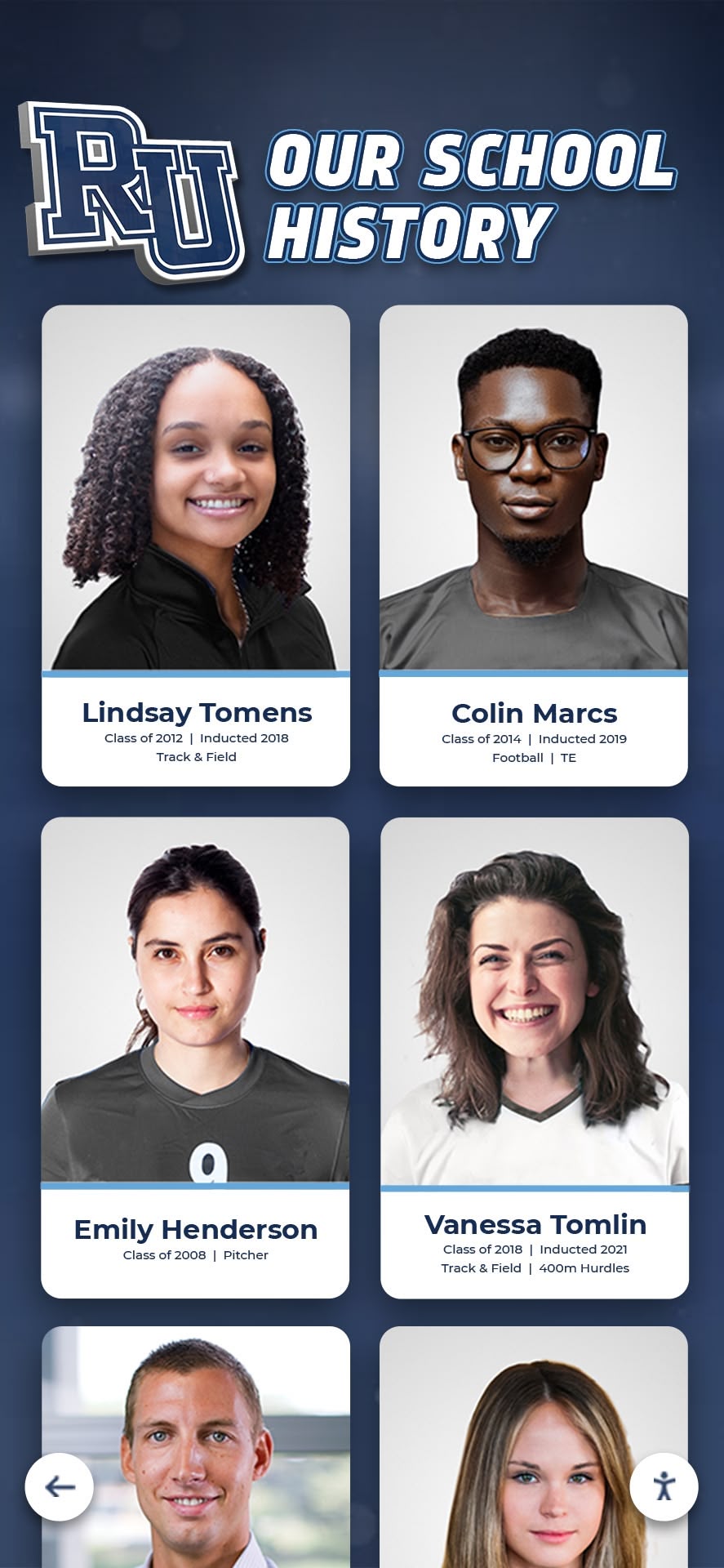
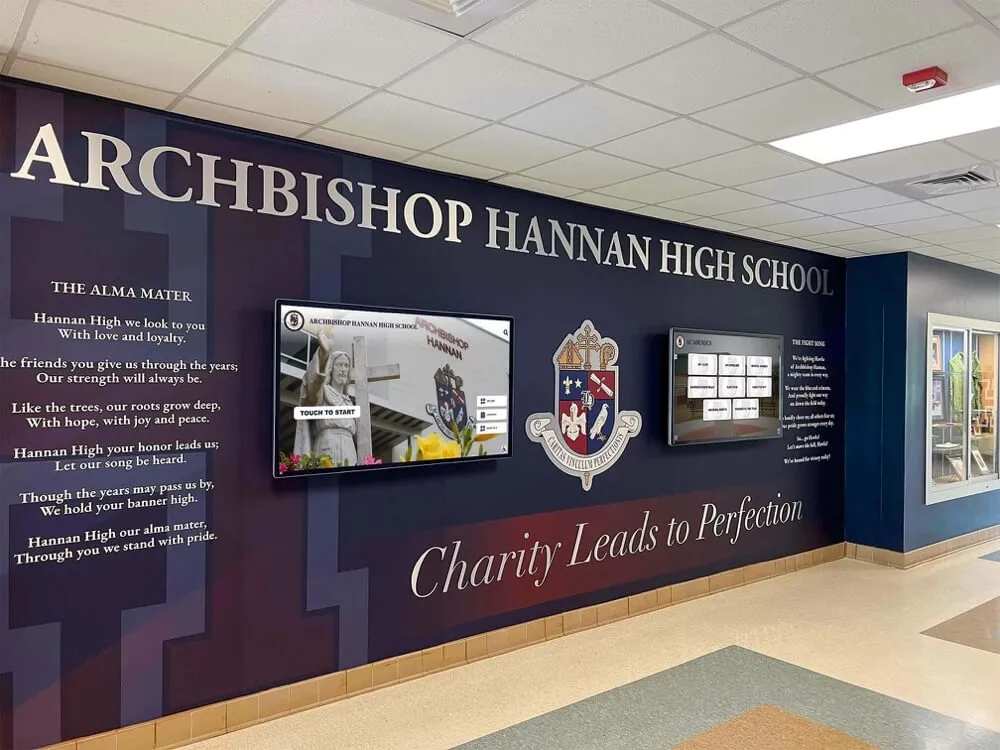
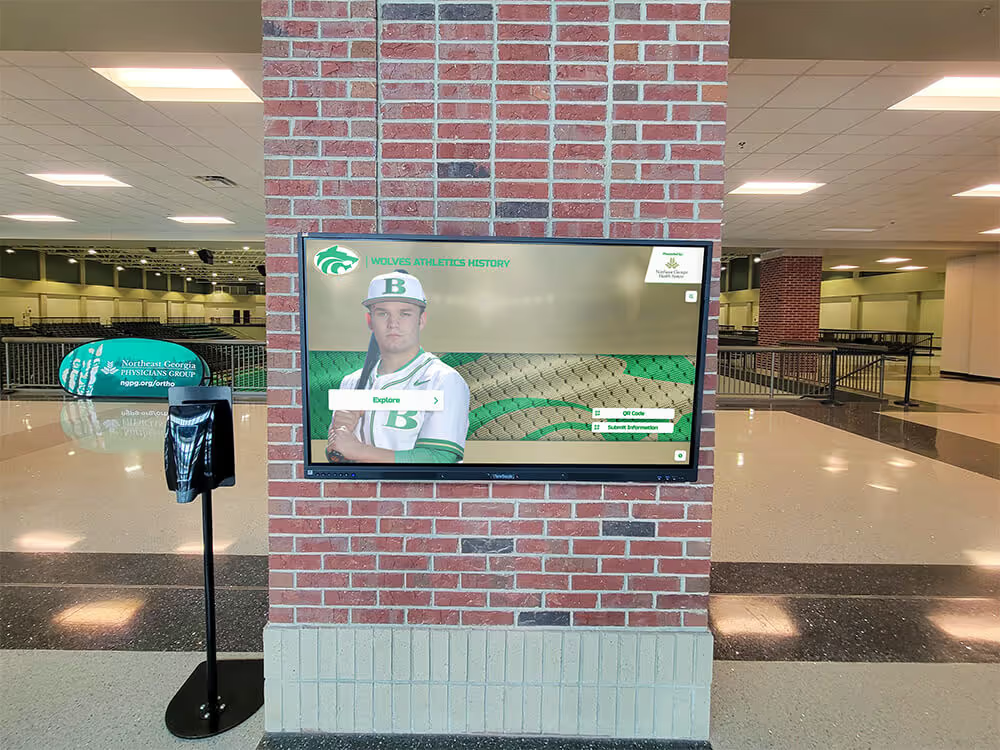
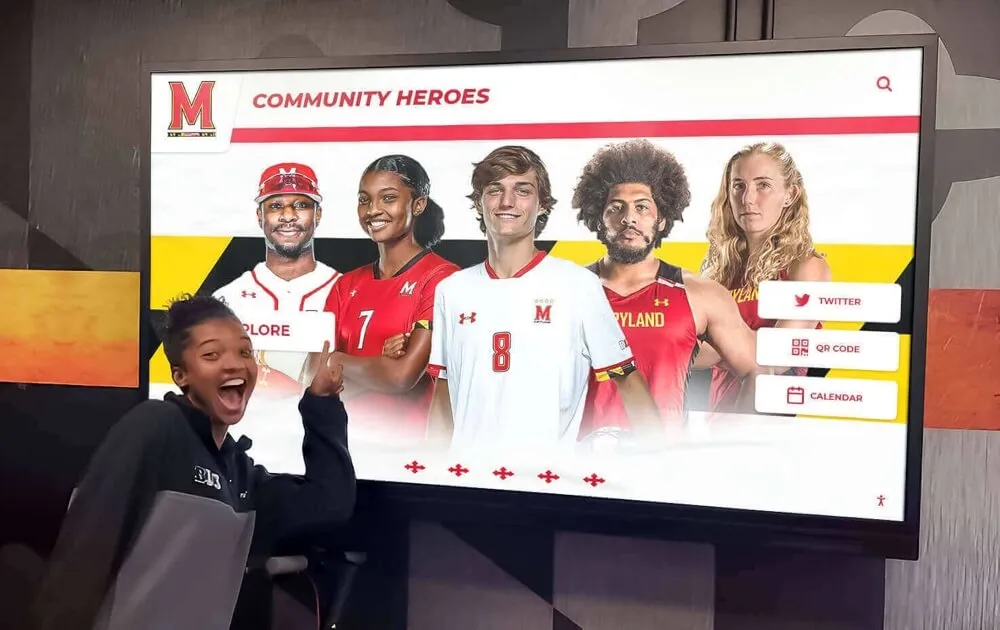
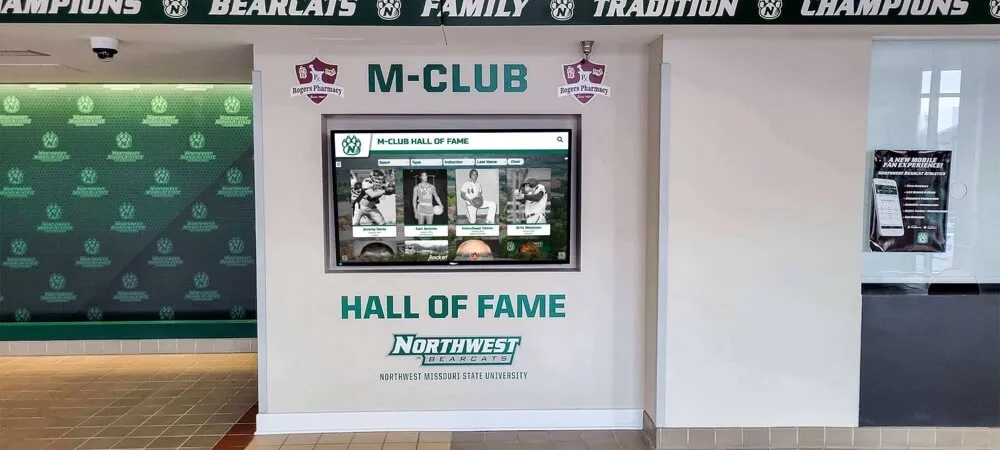
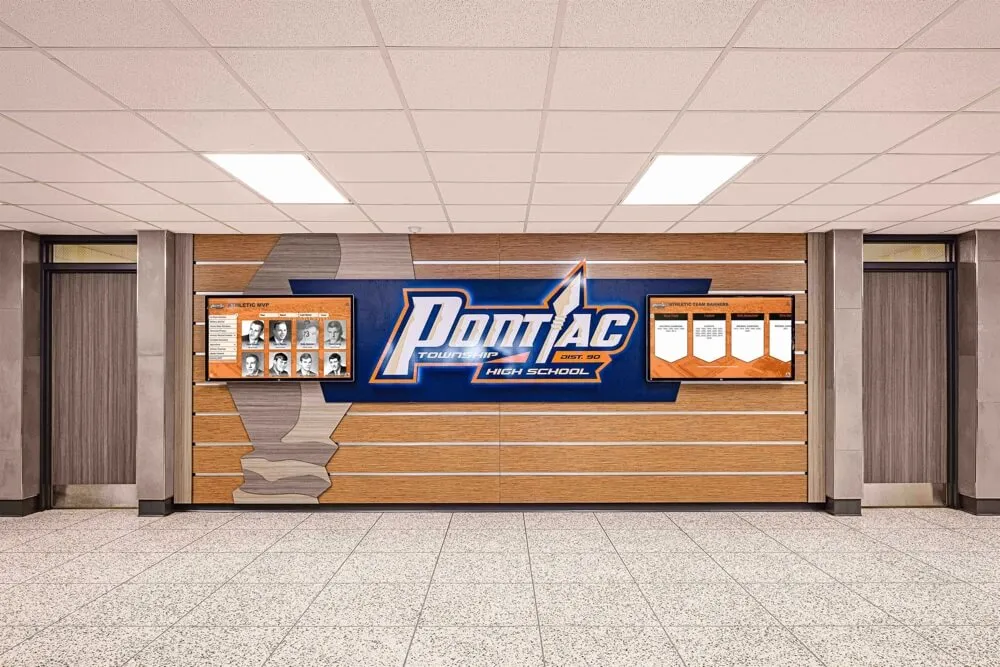
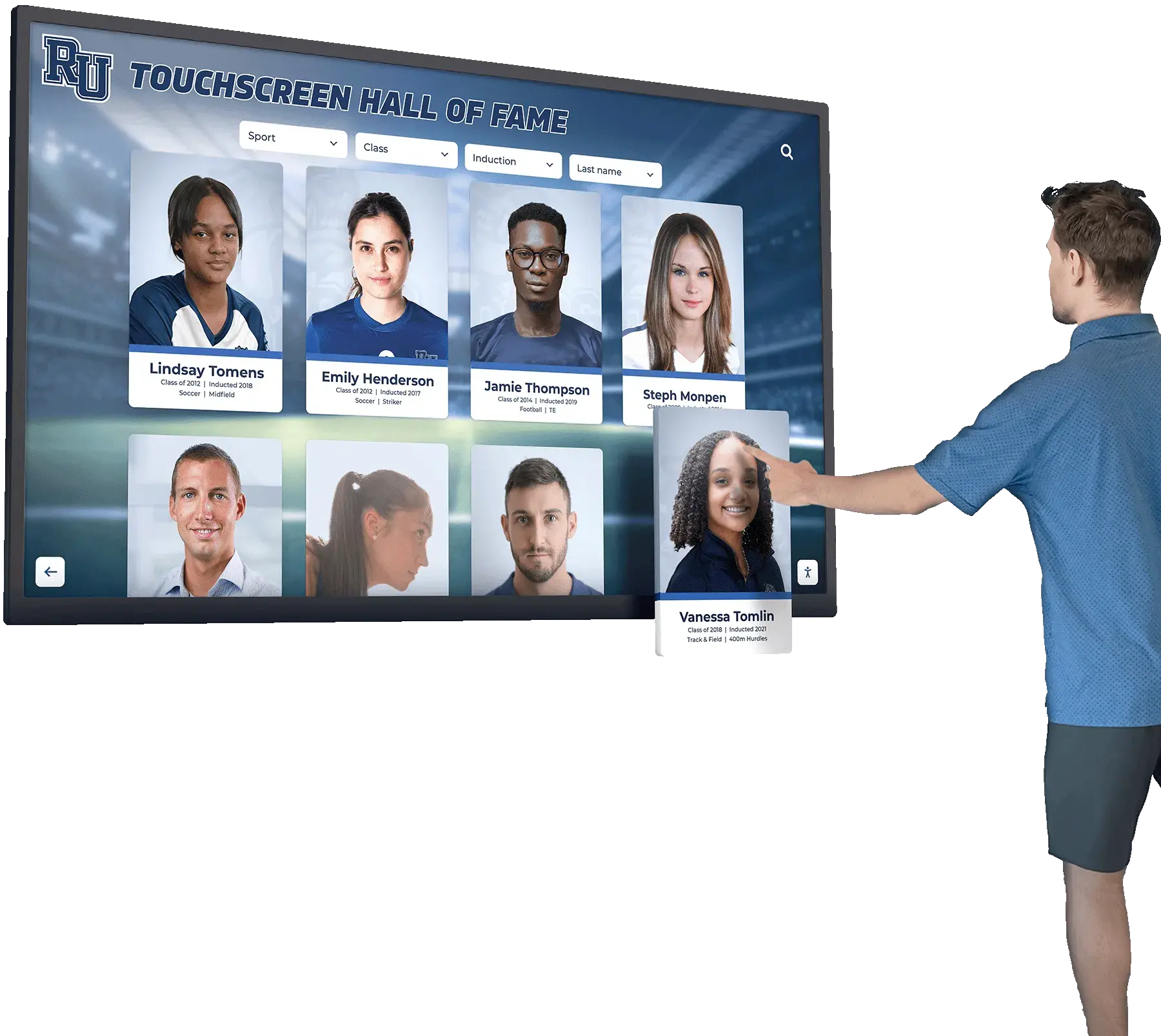
Portrait-style recognition displays surface full names publicly — pronunciation forms ensure every name in a display like this was verified before publication
Checklist: Pronunciation Form Collection Workflow
Use this checklist to implement a pronunciation data program from intake through publication.
Before the Season or Event
- Add pronunciation form fields to existing athlete intake process
- Communicate to athletes and families why pronunciation data is being collected
- Set a submission deadline aligned with the first recognition event of the season
- Identify the point person who will review and store completed forms
During Collection
- Confirm every rostered athlete has submitted a response (including athletes who say “no correction needed”)
- Follow up with non-responders at least one week before the deadline
- Verify phonetic spellings that appear inconsistent with common patterns by checking with the athlete or family directly
- Store raw forms in a centralized location accessible to all staff who manage recognition events
Before Ceremony or Display Publication
- Distribute pronunciation guide to the event announcer or emcee at least 48 hours in advance
- Conduct a name-reading rehearsal with the announcer using the phonetic guide
- Confirm digital display profiles reflect the athlete’s preferred name (not just legal name if different)
- Add phonetic spelling to the athlete’s record in your digital recognition platform or CMS
Post-Event
- Note any corrections or new guidance from the athlete or family following the event
- Update the stored record with any corrections
- Archive the completed form alongside the athlete’s other recognition data for future use
For schools establishing or expanding their hall of fame programs, pronunciation intake is one of the process steps covered in a thorough digital hall of fame setup and hardware review.
Distribution Strategies That Achieve High Response Rates
A form that is not completed does not protect against mispronunciation. Response rate depends on how and when the form is distributed.
High-Response Distribution Methods
Digital form embedded in existing workflows. If athletes already complete an online pre-participation form, adding pronunciation fields there achieves near-100% response without a separate outreach campaign. Most coaches already require pre-season digital paperwork.
QR code posted in locker rooms or at practice. A laminated card with a QR code linking to the pronunciation form — placed where athletes gather before practice — generates ongoing passive responses throughout the first week of the season.
Coach-facilitated team completion. Five minutes at the first team meeting, with phones out, completes the form for an entire roster in one session. Coaches who understand the purpose will champion this workflow.
Family communication. For student-athletes with non-English-origin names, reaching out directly to families — particularly for junior or senior athletes approaching banquet or graduation season — builds trust and ensures the school is representing the family correctly.
The same inclusive-data workflow applies across recognition contexts. Schools building out student highlight recognition programs for NHS or similar academic honor societies encounter the same pronunciation data gap when those students are recognized at ceremonies or added to permanent displays.
Storing Pronunciation Data in Digital Recognition Systems
Collecting pronunciation data is only the first step. The data must be stored where it can be retrieved by anyone managing a recognition event or publishing a display profile.
Where Pronunciation Data Should Live
Athlete profile in the recognition CMS. Any digital recognition platform that manages hall of fame, record boards, or honors walls should have a notes or supplemental data field where phonetic spellings and audio links can be stored directly on the athlete’s profile. When a staff member pulls up the profile to update the display or prepare ceremony notes, the pronunciation guide is in the same place.
Ceremony run-of-show document. For each major recognition event, the event coordinator should export or copy the phonetic spellings into the master run-of-show document alongside the athlete’s name. The announcer should never be working from a plain-name list without phonetic guidance attached.
Athletic department shared drive. A folder organized by sport and year, containing the completed pronunciation forms or a summary spreadsheet, ensures the data survives staff transitions and is accessible to future administrators who were not present during the original collection.
What Digital Recognition Platforms Enable
Modern digital recognition platforms designed for schools allow athletic departments to:
- Store phonetic spelling and audio recordings directly on each athlete’s profile
- Surface names and supplemental data on touchscreen displays, where staff can review before publication
- Update profile data remotely without requiring a vendor visit or facilities work order
- Maintain records across staff transitions with no data loss
- Make athlete profiles accessible via QR code, allowing families to verify name display from a mobile device before the induction is made public
These capabilities mean that pronunciation data collected during intake flows directly into the permanent record without a manual re-entry step at each downstream event.
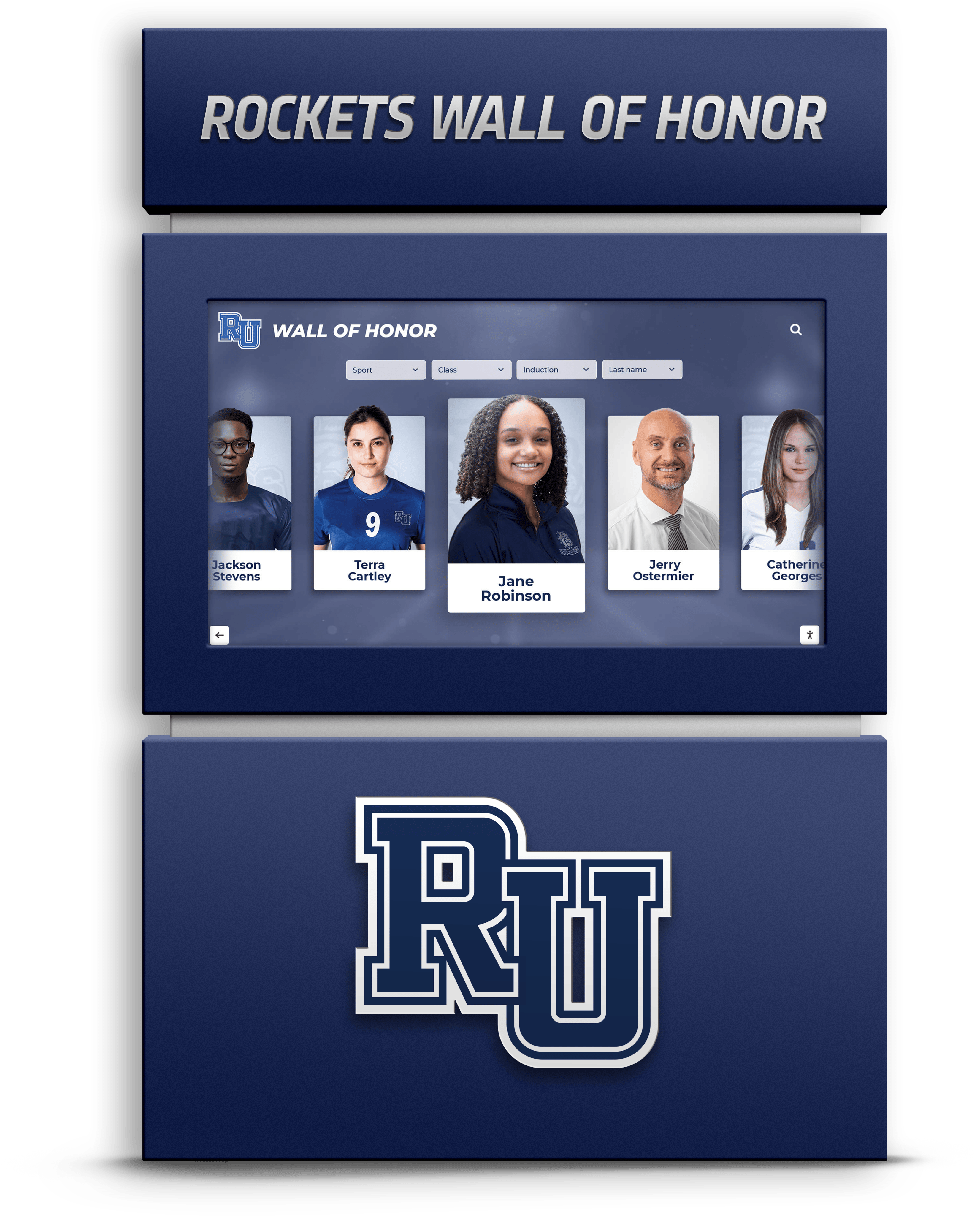
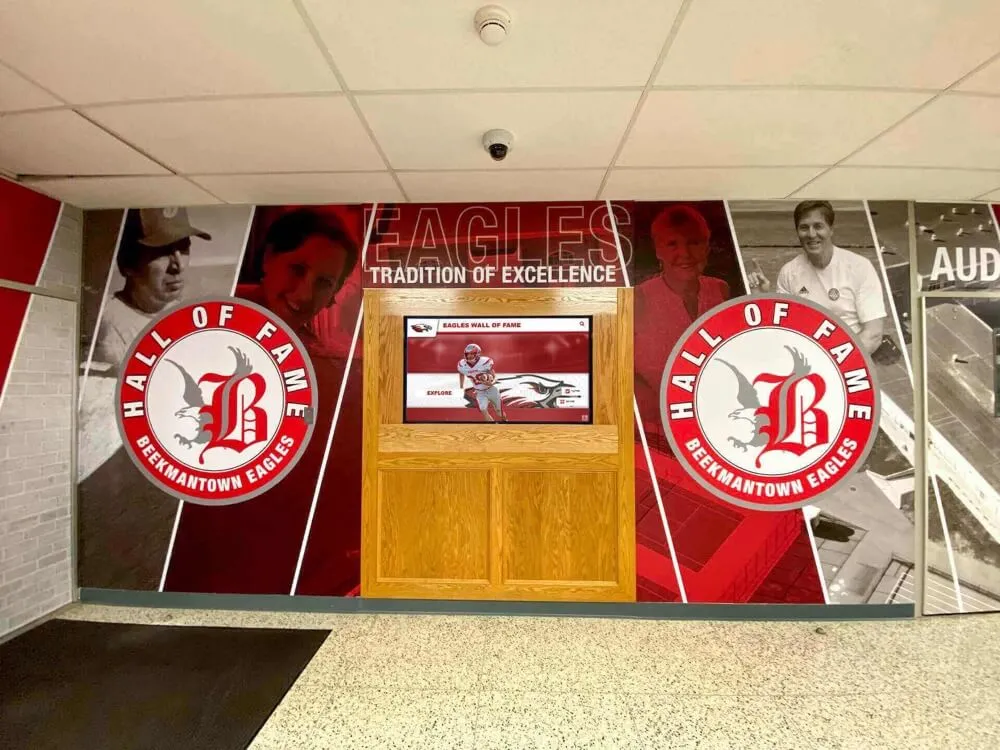
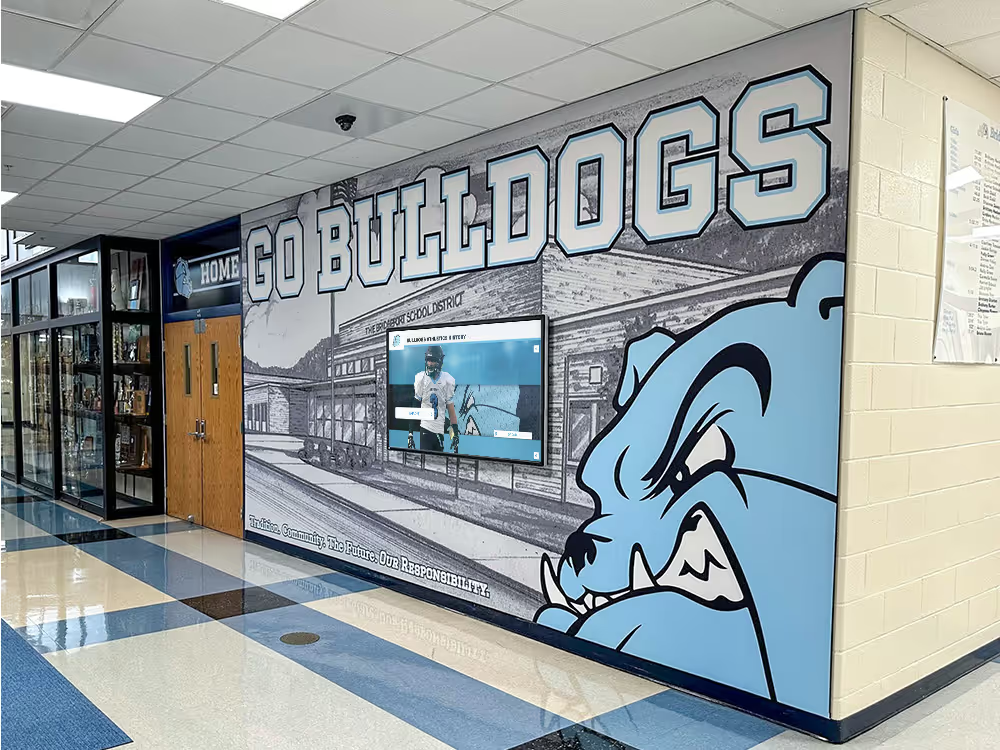
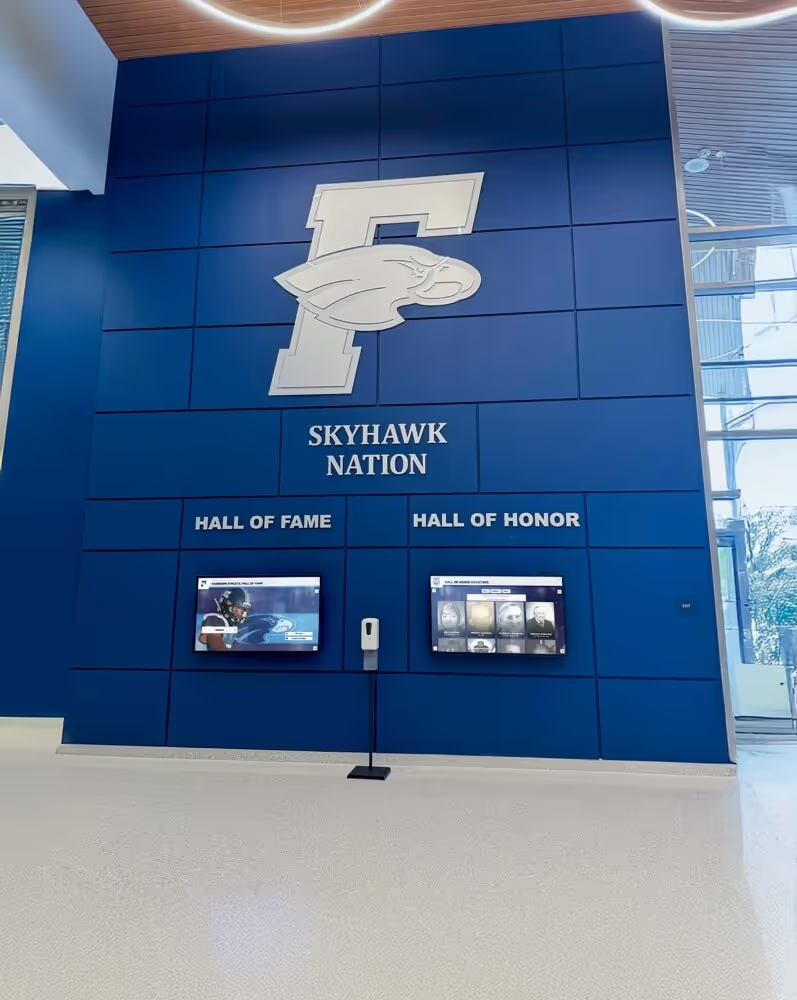
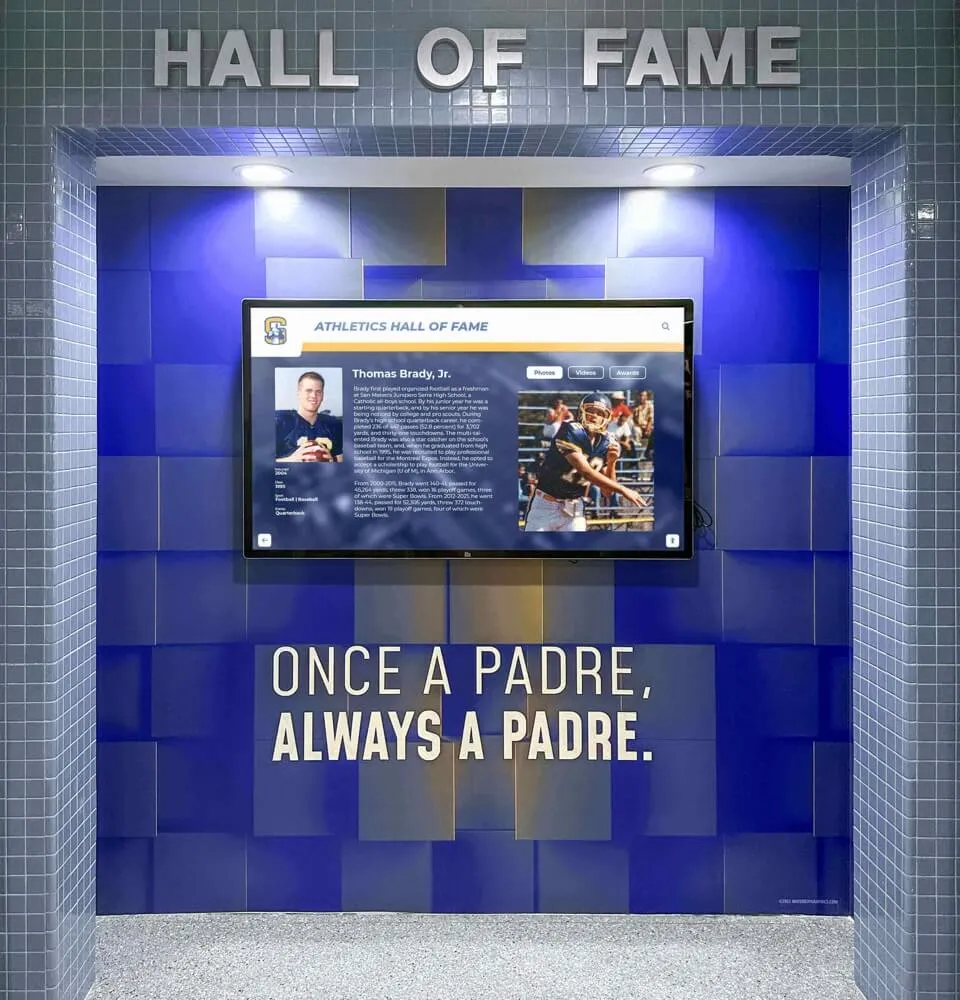
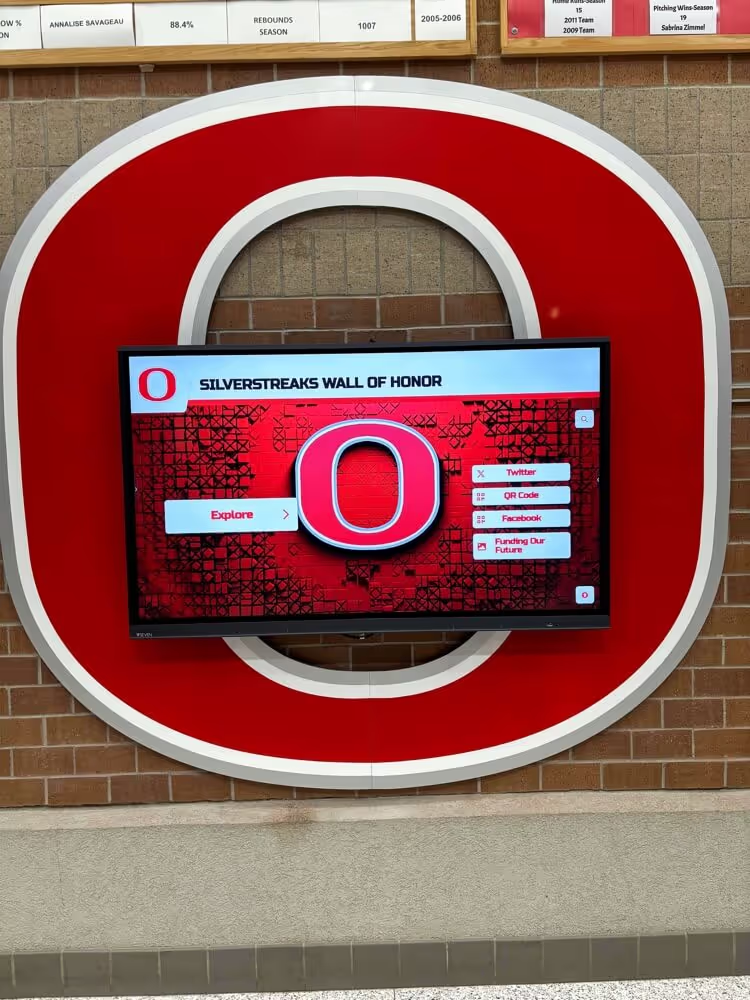
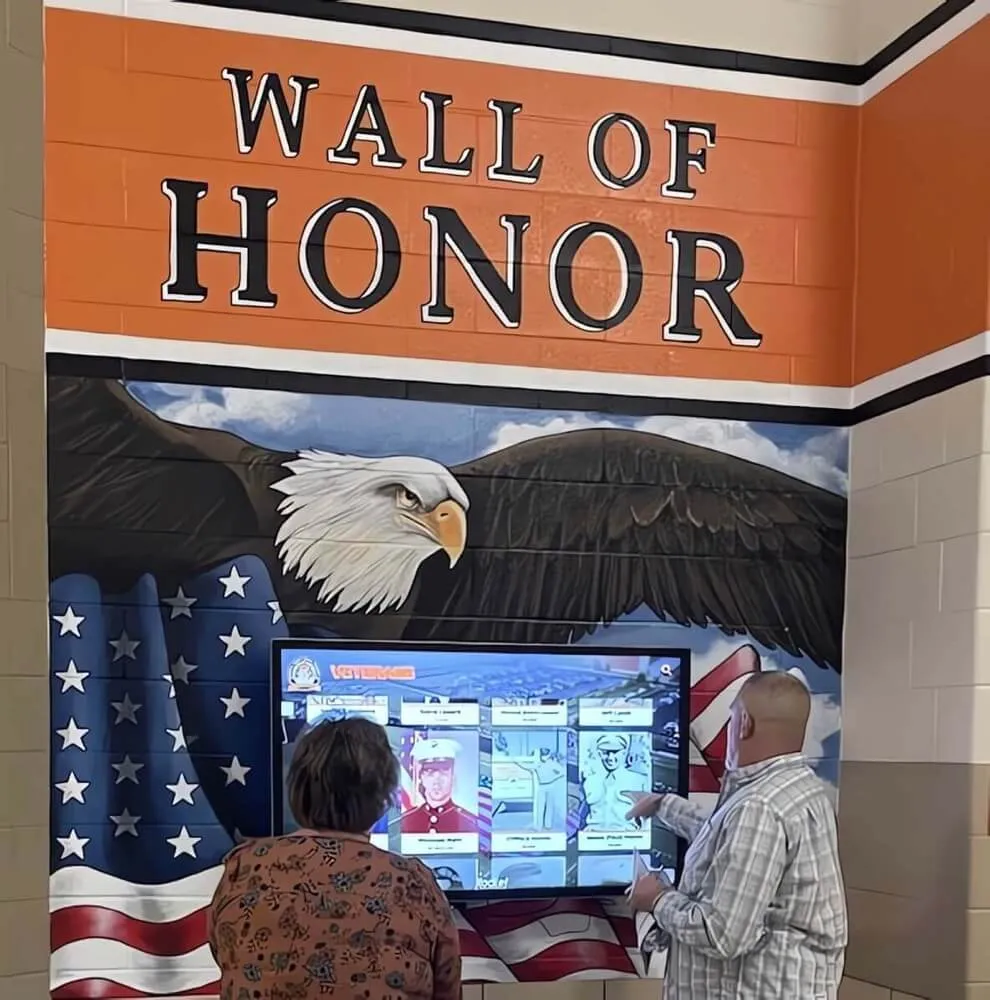
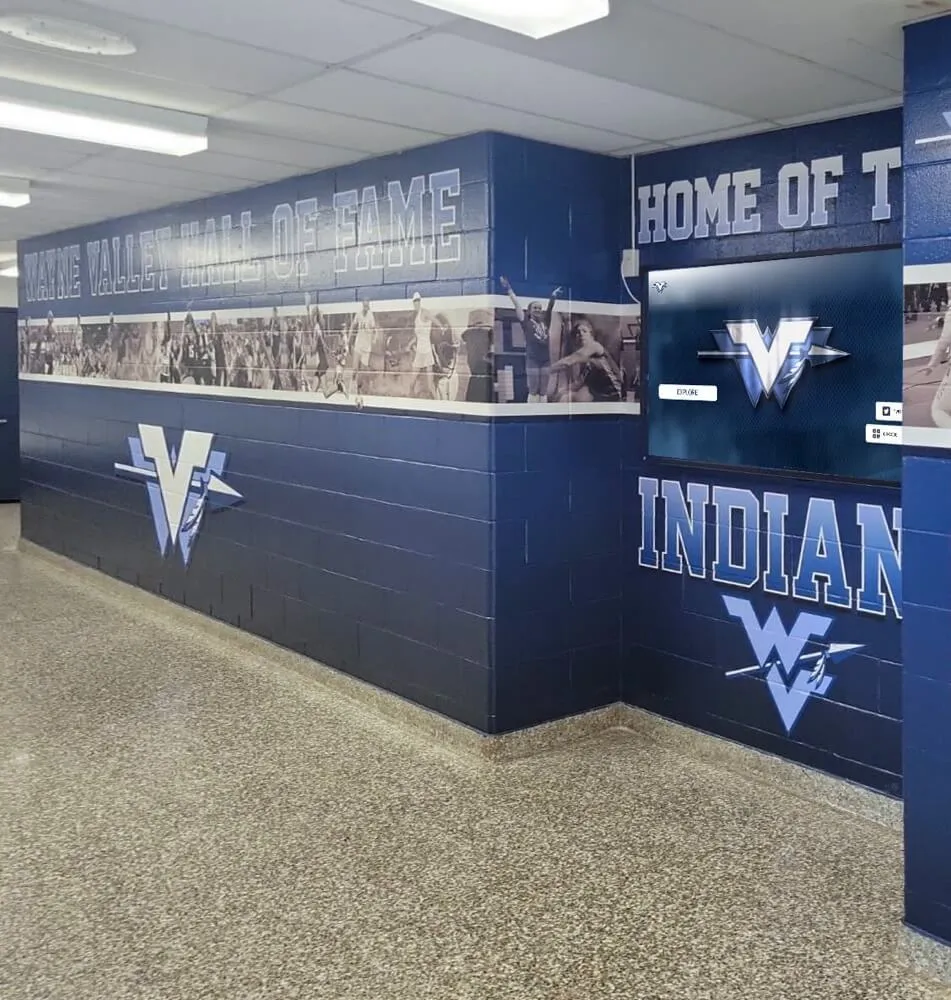
Wall of honor touchscreen displays surface names publicly — pronunciation data should be verified before any profile goes live on a permanent display like this
For schools evaluating how permanent recognition programs handle inclusive recognition data, the letterman patches and varsity recognition guide covers the broader data-collection discipline that supports long-lasting athletic recognition.
Connecting Pronunciation Accuracy to Broader Recognition Quality
Pronunciation forms are one component of a larger recognition data quality program. Schools that approach data collection systematically produce recognition programs that feel personalized and respectful rather than generic and error-prone.
Related Data Gaps Pronunciation Forms Help Identify
When athletes fill out pronunciation forms, schools often discover adjacent data quality issues:
Preferred name vs. legal name discrepancies. An athlete who goes by a middle name, a shortened form, or a culturally preferred variant may have been listed incorrectly in the school’s roster system for years. The pronunciation form surfaces this.
Spelling errors in existing records. Athletes with diacritical marks (accents, umlauts, tildes) in their names are frequently stored without them in school systems that do not support extended character sets. The pronunciation form is a natural moment to flag these discrepancies.
Gender and pronoun data. If the school’s recognition program references athletes in first-person narration (ceremony speeches, digital display bios, alumni publications), pronoun data collected alongside pronunciation data prevents misgendering in public materials.
Integrating with Hall of Fame and Awards Night Programs
Recognition programs that include pronunciation data as a standard intake field produce award nights and hall of fame inductions that stand apart from those that don’t. When an announcer calls an athlete’s name correctly — especially a name from a heritage underrepresented in the school’s history — the moment lands with the gravity it deserves.
For schools planning graduation ceremonies that double as recognition moments, graduation banner and display ideas covers the visual presentation layer that pairs with accurate name announcement at commencement.
For honors programs that recognize academic achievement alongside athletics, honors cord colors and GPA-based recognition provides a parallel example of structured, data-driven recognition that requires the same kind of advance intake planning.
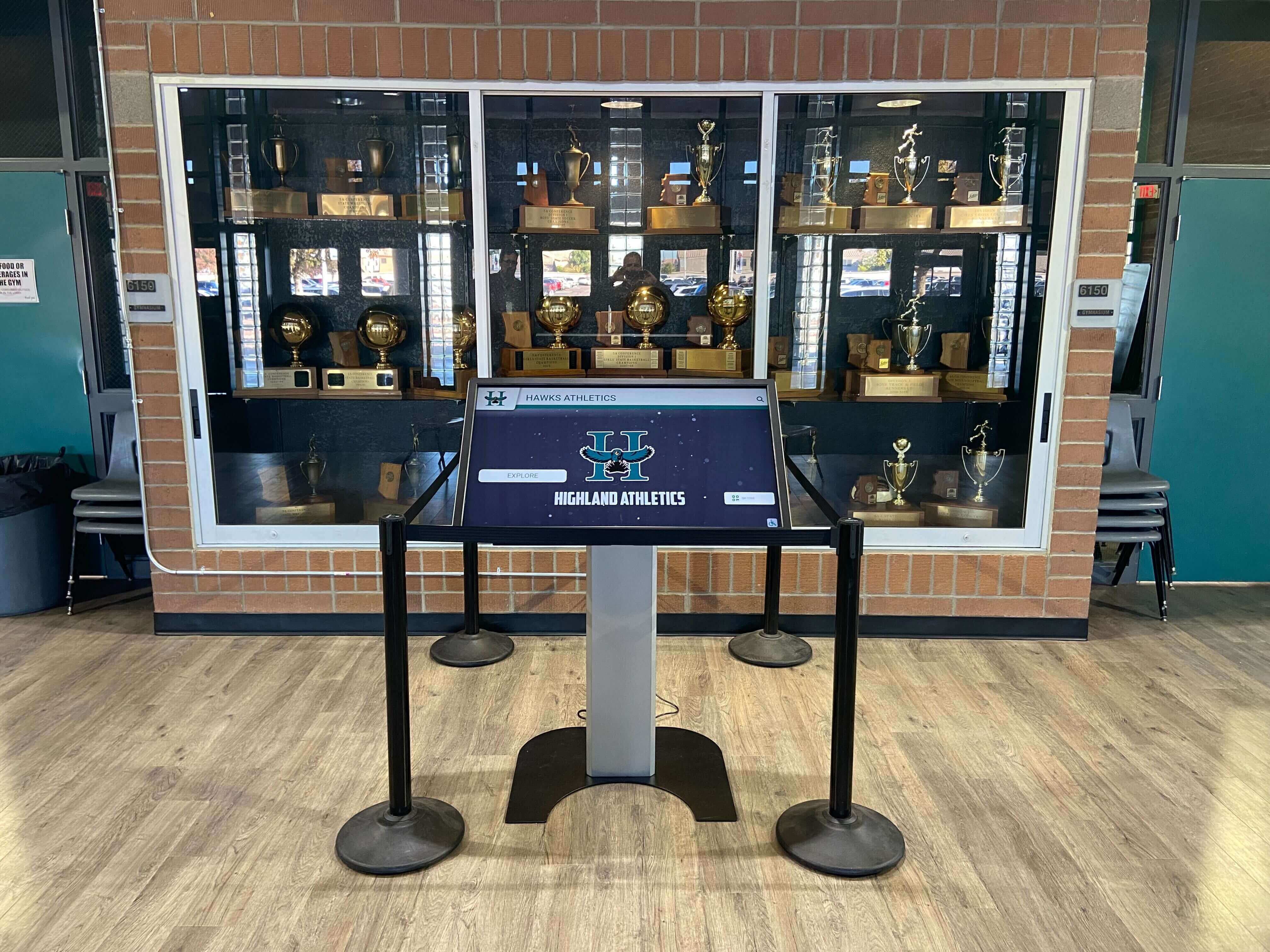
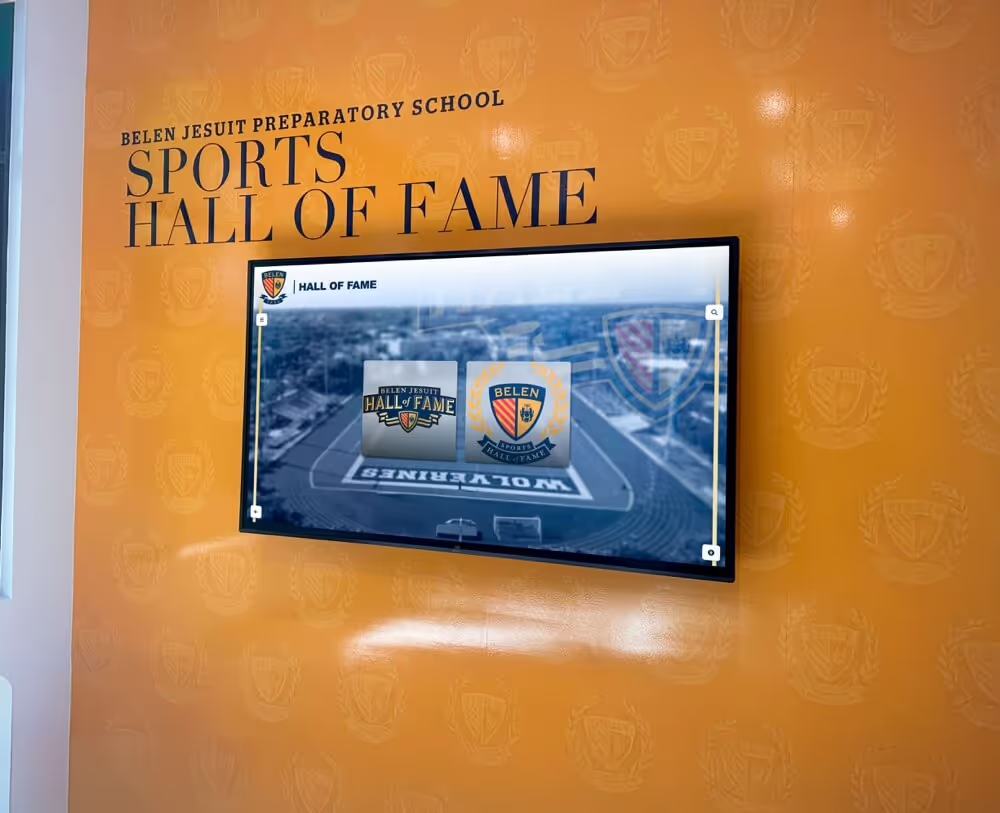
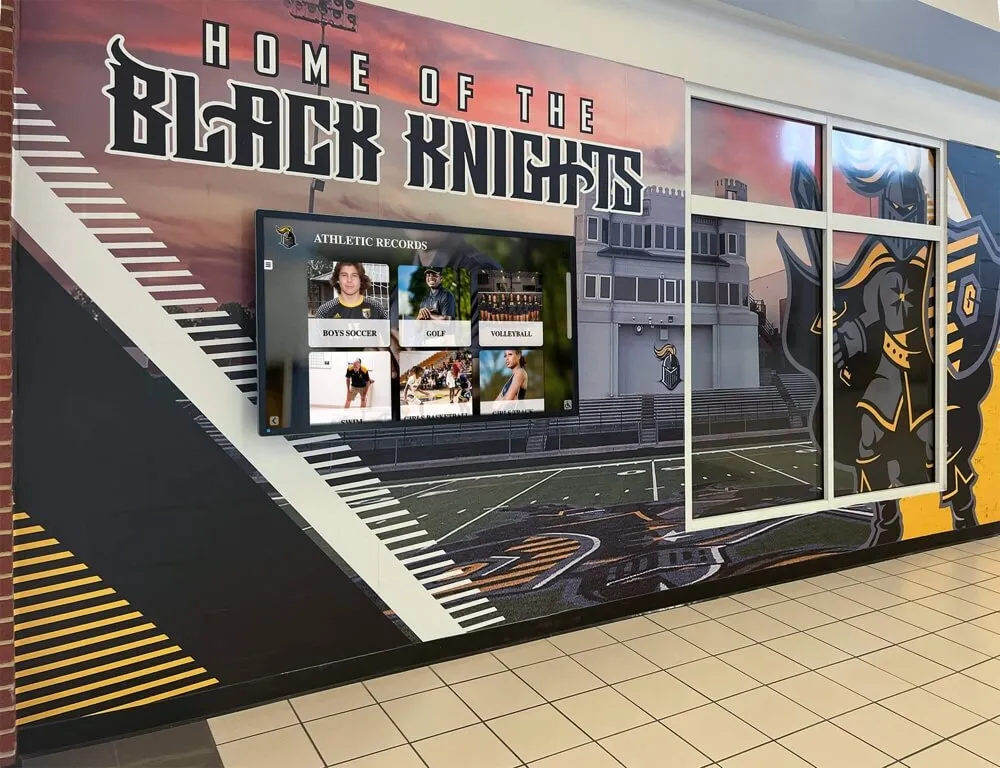
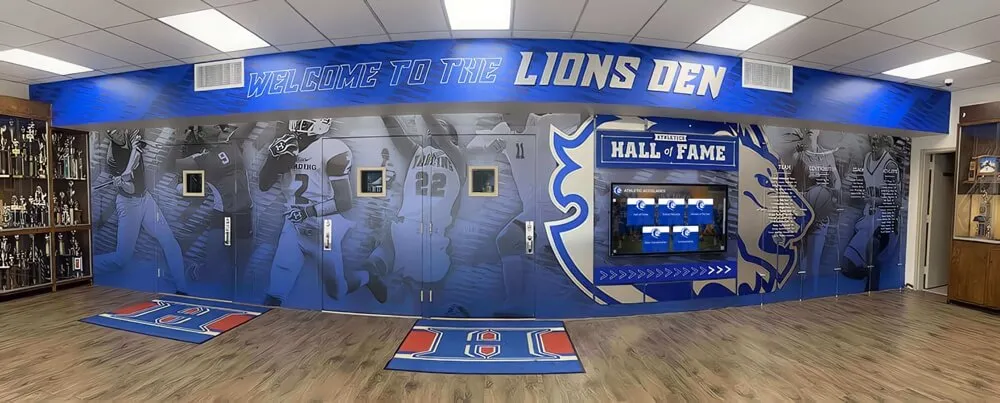
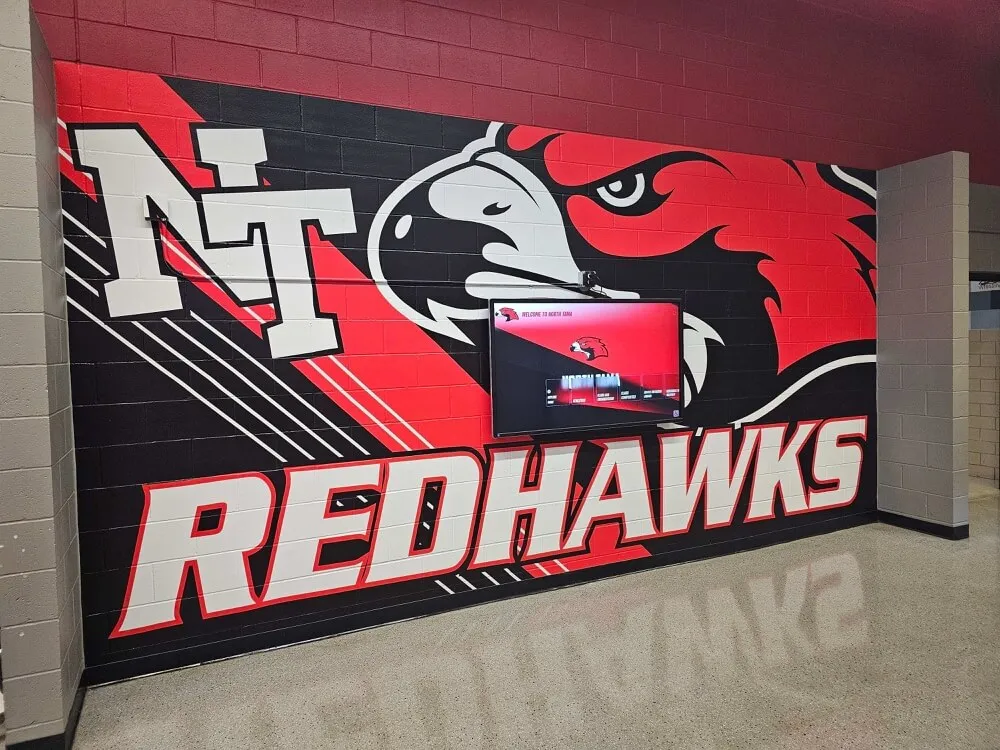
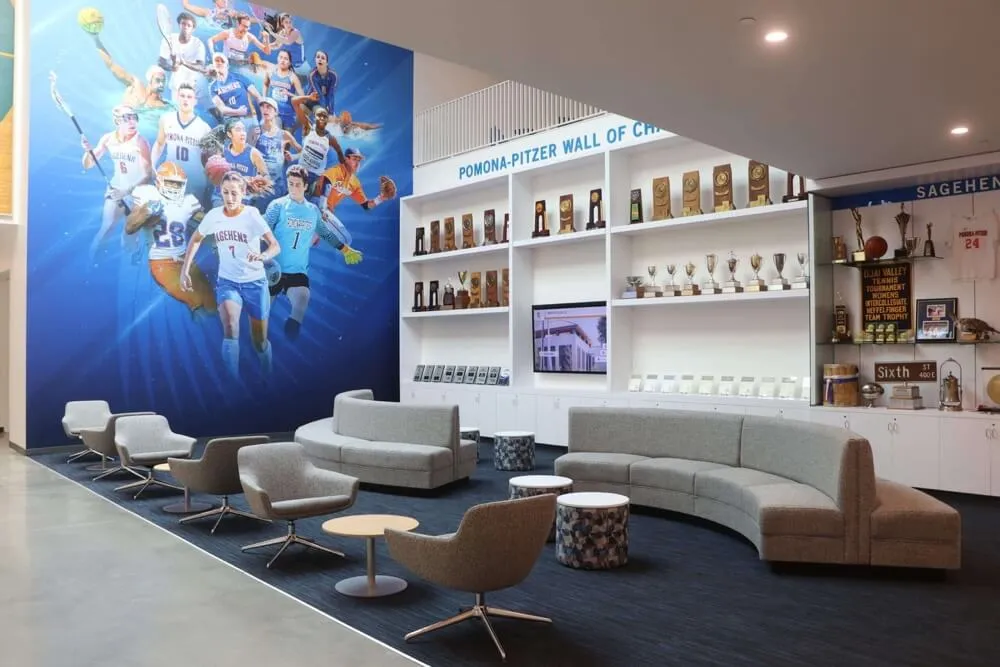
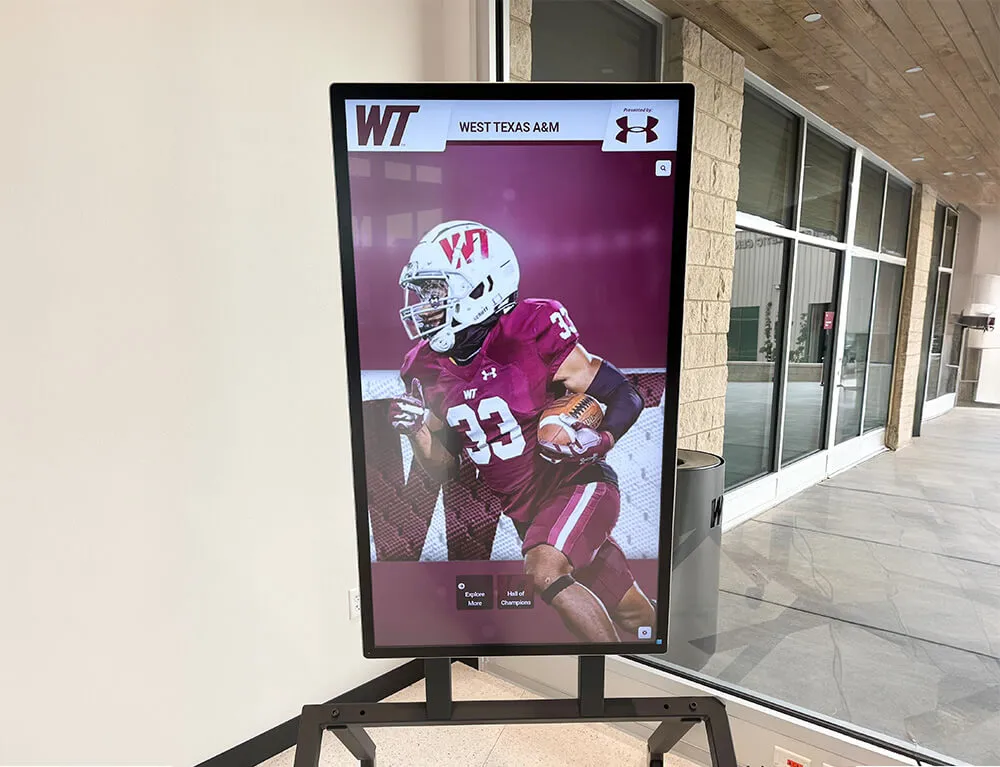
Recognition kiosks in trophy cases give families and alumni direct access to athlete profiles — accurate names, phonetics, and preferred forms should be verified before these public-facing displays go live
Frequently Asked Questions
What is an athlete name pronunciation form?
An athlete name pronunciation form is a structured intake document that collects each student-athlete's phonetic spelling, preferred name, and optionally a short audio recording of their own name. It is distributed before award ceremonies, hall of fame inductions, graduation announcements, and digital display publications so that every public-facing use of the athlete's name is accurate and respectful. Schools typically embed it into their existing pre-season or recognition intake workflow.
When should schools collect athlete name pronunciation data?
The most efficient approach is to collect pronunciation data at the start of each sport season as part of existing pre-participation paperwork. Schools should also collect it separately before hall of fame nomination cycles, graduation ceremonies, and any new digital display publication. For athletes being added to permanent recognition records mid-year, pronunciation intake should happen before the profile goes public rather than after.
What should a pronunciation form include?
At minimum, a pronunciation form should include the athlete's legal name, a phonetic spelling with syllable stress marked (stressed syllable in capitals is a standard convention), a "rhymes with / sounds like" field for additional guidance, and a note field for family-specific pronunciation details. Optional but valuable additions include a short audio recording, the athlete's preferred name if different from their legal name, preferred pronouns, and a family contact for verification.
How do schools handle athletes who say their names are easy to pronounce?
Every athlete should complete the form, even those who believe their name requires no special guidance. A simple "no correction needed" field handles this case. This approach ensures that the absence of data in the system means the form was not yet collected — not that the name was verified as standard. It also prevents staff from making pronunciation assumptions based on perceived name origin rather than the athlete's actual preference.
Can pronunciation data be stored in a digital recognition platform?
Yes. Most digital recognition platforms designed for schools include notes or supplemental data fields on athlete profiles where phonetic spellings, audio links, and preferred name data can be stored alongside photos, statistics, and awards. Storing pronunciation data directly on the athlete's profile in the recognition CMS ensures the guidance is available whenever the profile is updated, published, or referenced for a future event — without requiring a separate lookup.
What is the best way to share pronunciation guides with ceremony announcers?
Provide a printed or digital run-of-show document with each athlete's name listed alongside their phonetic spelling at least 48 hours before the ceremony. If audio recordings are available, share them as a playlist the announcer can preview privately. Schedule a 10–15 minute rehearsal in which the announcer reads through every name and flags any remaining questions. This rehearsal is especially important for ceremonies honoring 30 or more athletes, where the volume of names increases the probability of errors.
Do pronunciation forms apply to recognition beyond athletics?
Yes. The same form and workflow applies to any recognition program involving public name announcement or permanent display: National Honor Society inductions, academic awards nights, hall of fame programs spanning alumni decades, donor recognition walls, and graduation ceremonies. Schools that adopt pronunciation intake as a standard for athletics typically extend it to all recognition programs once they see the improvement in ceremony quality and the reduction in errors.
A Summary for Recognition Administrators
An athlete name pronunciation form is a low-cost, high-impact tool that protects the dignity of every recognition moment the school creates. The workflow is straightforward: collect phonetic data early, store it where it can be retrieved by anyone managing a ceremony or a display, rehearse with announcers before events, and maintain the data as part of the athlete’s permanent record.
For schools building or expanding digital recognition programs, pronunciation data is one of the intake fields that separates a display that informs from one that actually honors. A name rendered correctly — in the hallway, on the touchscreen, and at the podium — is the most fundamental form of recognition the institution can offer.
The broader framework for building inclusive, accurate recognition programs connects to how schools archive, present, and maintain athlete records across every channel. Schools that use their recognition programs to highlight students across academic and social contexts — as covered in the school newspaper archive and student journalism showcase guide — face the same name-accuracy challenges at scale. The same pronunciation intake workflow serves all of them.
For recognition programs that span years and include alumni who graduated before digital data collection was standard, the guide to highlighting National Junior Honor Society students in recognition programs offers a parallel example of structured recognition that requires careful name and identity data management across a large population.
Build Recognition Displays That Get Every Name Right
See how Rocket Alumni Solutions helps schools collect, store, and surface athlete name data — including phonetic spellings and preferred names — in a cloud-based platform that keeps every ceremony and display accurate from the first induction to the fiftieth.
Request a Demo