



An athletic award appeals process is a formal procedure that gives student-athletes, families, or alumni a defined path to contest a recognition decision — whether a season honor was withheld, a hall of fame nomination was declined, or a records board entry was removed. A written process protects the school from ad hoc decision-making, gives claimants a fair hearing, and produces a documented outcome that can be applied consistently to future disputes.
For schools that do not yet have one: establish a written appeals process before the first challenge arrives. The five stages below — intake, record review, committee deliberation, written decision, and notification with display update — form a defensible framework that athletic directors, principals, and district policy staff can adapt to their specific program context.
When a student-athlete or family believes a recognition decision was made in error, applied inconsistently, or based on criteria that were never clearly communicated, the absence of a formal process puts the athletic director in an exposed position. Responding case by case without written procedures leads to inconsistent outcomes, perceptions of favoritism, and escalations that a structured process could have resolved at the school level.

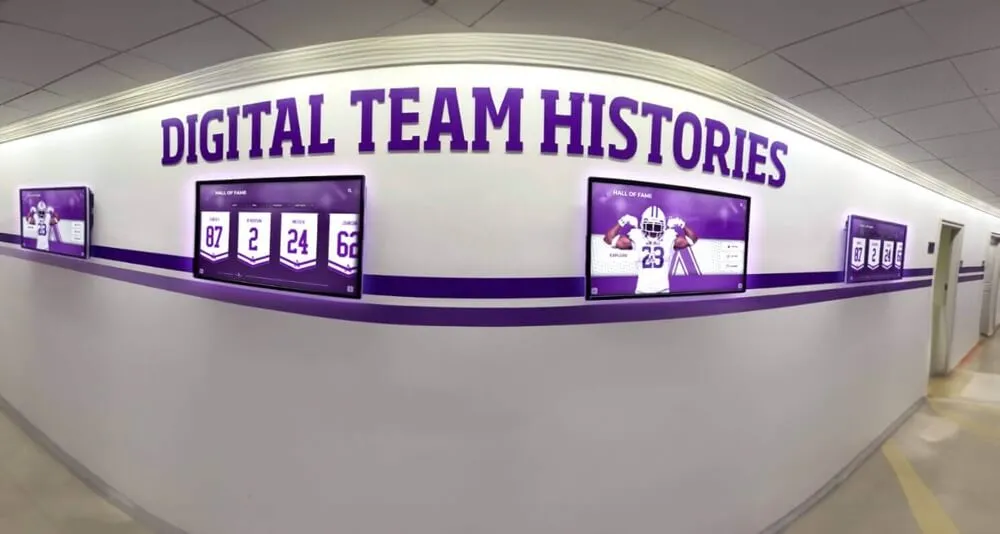
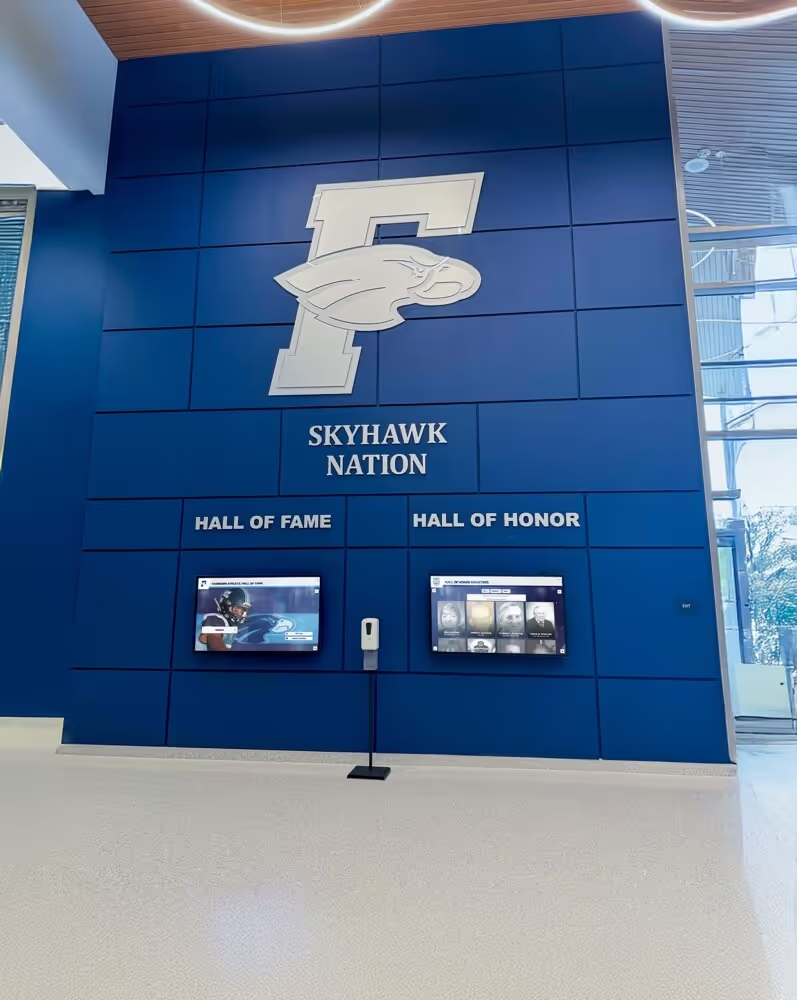
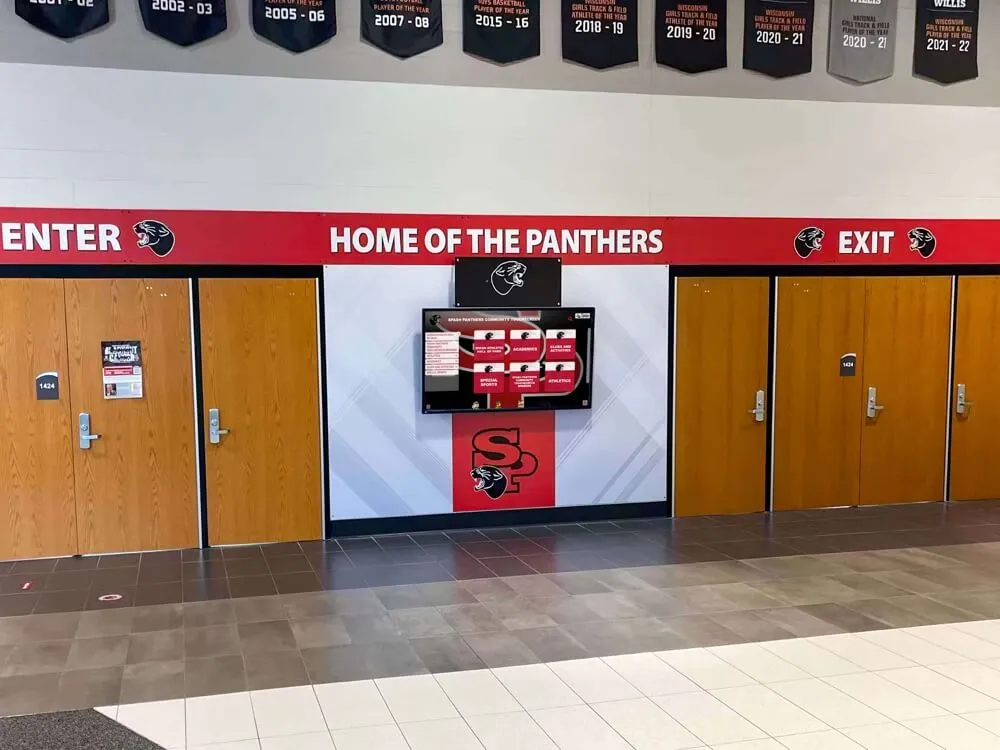
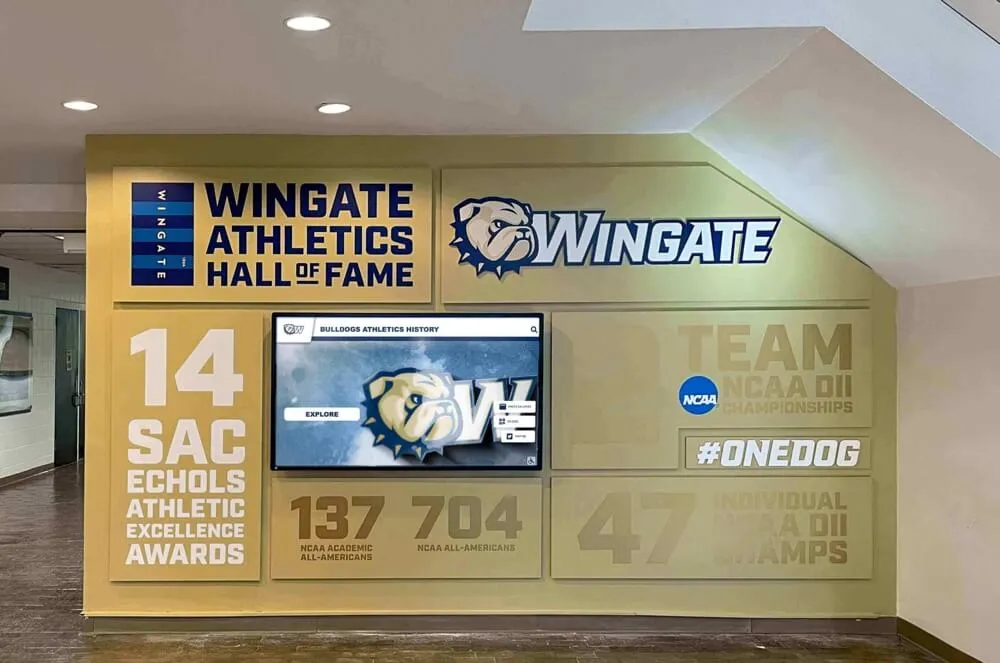
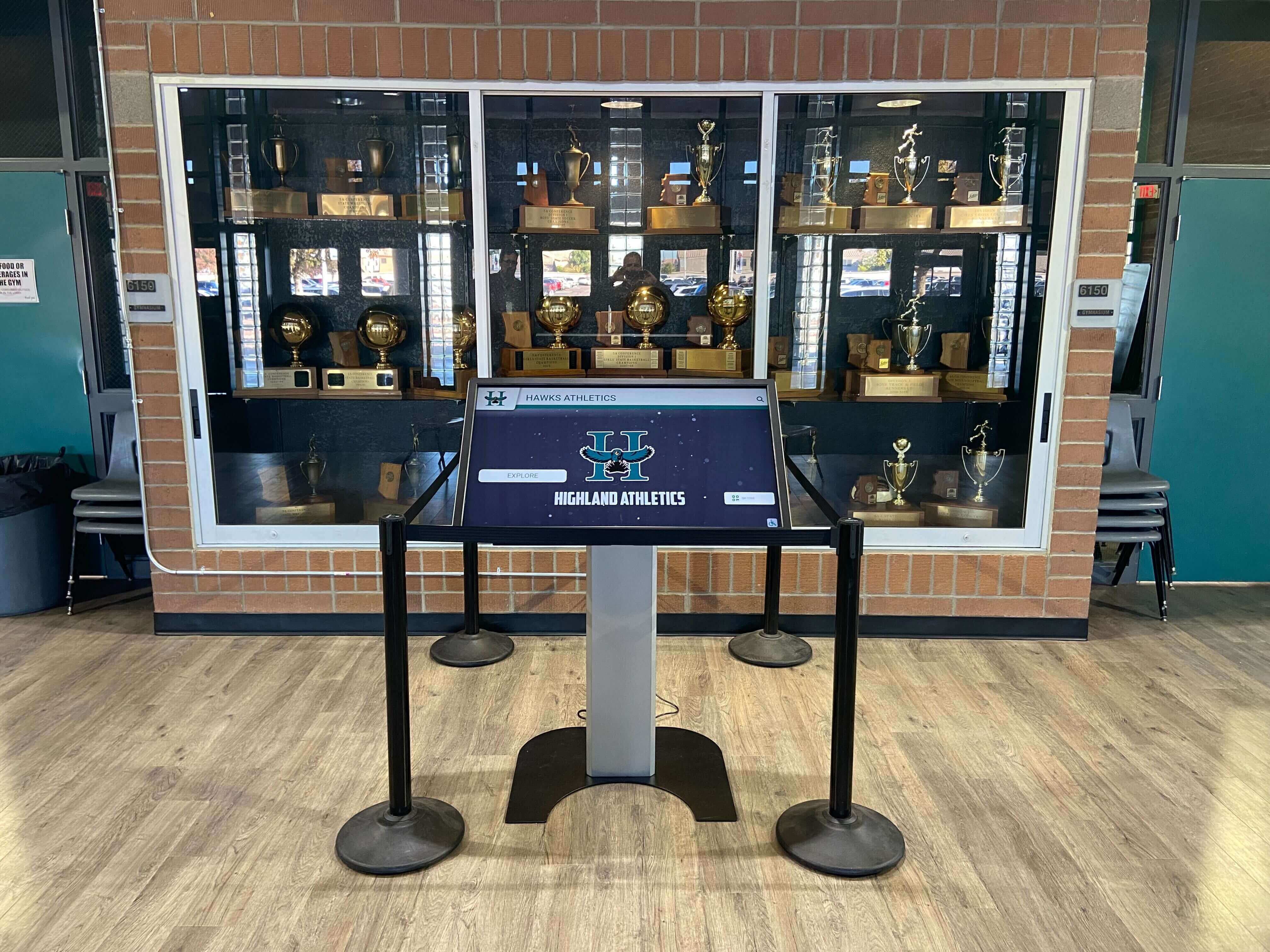
Recognition displays — physical or digital — are more defensible when backed by published award criteria and a documented appeals process that everyone can see before a dispute arises
Why Schools Need a Formal Athletic Award Appeals Process
Athletic award decisions carry real institutional and personal weight. Families invest emotional significance in end-of-season honors. Alumni remember hall of fame inductions for decades. When a decision appears inconsistent or unexplained, those stakes translate quickly into disputes.
The National Federation of State High School Associations (NFHS) identifies eligibility and recognition disputes as among the most common sources of family conflict in interscholastic athletics. Many state associations and school districts already require a formal grievance pathway for eligibility decisions; extending that structure to awards appeals is a natural and defensible step.
Four institutional benefits of a written appeals process:
- Consistency — every claimant moves through the same stages, reducing claims of favoritism
- Documentation — written records protect the school if a dispute escalates to district review or legal counsel
- Closure — a defined process has an end point; informal responses often do not
- Display accuracy — a formal decision creates a clear trigger for updating record boards, walls of honor, and digital recognition systems
Without a written process, athletic directors are left defending individual judgment calls rather than a transparently applied policy.
The 5-Step Athletic Award Appeals Process
The stages below form a complete, defensible framework. Adapt timelines, committee composition, and appealable grounds to your district’s existing policies and your state association’s requirements. Consult your district’s legal counsel or policy office before finalizing any formal appeals procedure — state due-process requirements for public school students vary, and your process must align with applicable district policy.
Step 1 — Intake: Receive and Acknowledge the Appeal
The process begins when a claimant — typically the student-athlete, a parent or guardian, or an alumnus — submits a written appeal.
Intake requirements:
| Element | Details |
|---|---|
| Submission format | Written, signed, dated; email is acceptable if district policy permits |
| Who may file | Student-athlete, parent or guardian, legal representative; alumni for post-career honors if the policy permits |
| Filing deadline | Typically 10–20 business days after the appealed decision was communicated in writing |
| Required content | Name of claimant, award at issue, date of original decision, specific grounds for the appeal |
| Submission recipient | Athletic director or designee; some districts route appeals through a central student affairs office |
Within five business days of receiving a complete appeal, the athletic director or designee should:
- Send written acknowledgment confirming receipt and the expected timeline
- Confirm the claimant’s standing to file
- Verify that the appeal was submitted within the deadline
- Notify the original decision-maker — typically the coach or selection committee — that an appeal is pending
Appeals that are incomplete, filed outside the deadline, or filed by a party without standing are returned with a written explanation before any review begins. This protects the school’s time and prevents ambiguity about whether an informal review is under way.
Step 2 — Review: Compile the Record
Before the appeals committee convenes, staff should gather all materials that informed the original decision and all materials submitted by the claimant.
Standard record elements:
- The written appeal with any supporting attachments
- The original award decision or selection committee notes
- The award criteria as written and published, not as remembered
- Any written communications between the school and the claimant about the award
- Applicable conduct or eligibility records (subject to FERPA — see note below)
- Prior precedent from similar award appeals, if any
FERPA note: Student education records — including conduct records and academic transcripts — are protected under the Family Educational Rights and Privacy Act (20 U.S.C. § 1232g). Before any student records are shared with an appeals committee, confirm that the committee members qualify as school officials with a legitimate educational interest in those records, consistent with your district’s FERPA policy. This step is particularly important when an appeal involves academic eligibility questions.
Record compilation typically takes five to ten business days, depending on the complexity of the original decision and the volume of materials involved.
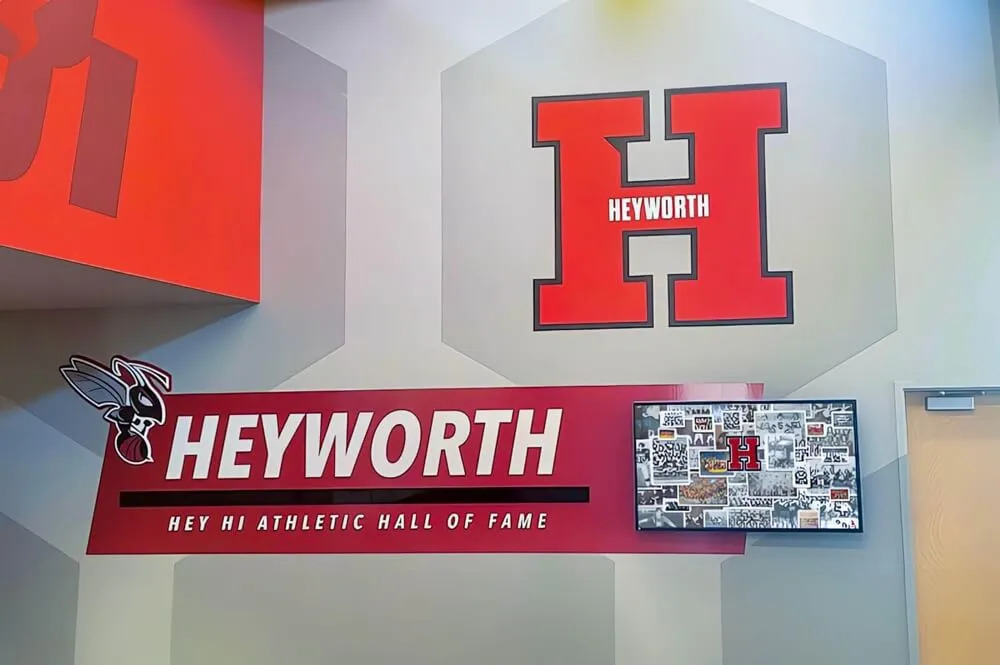
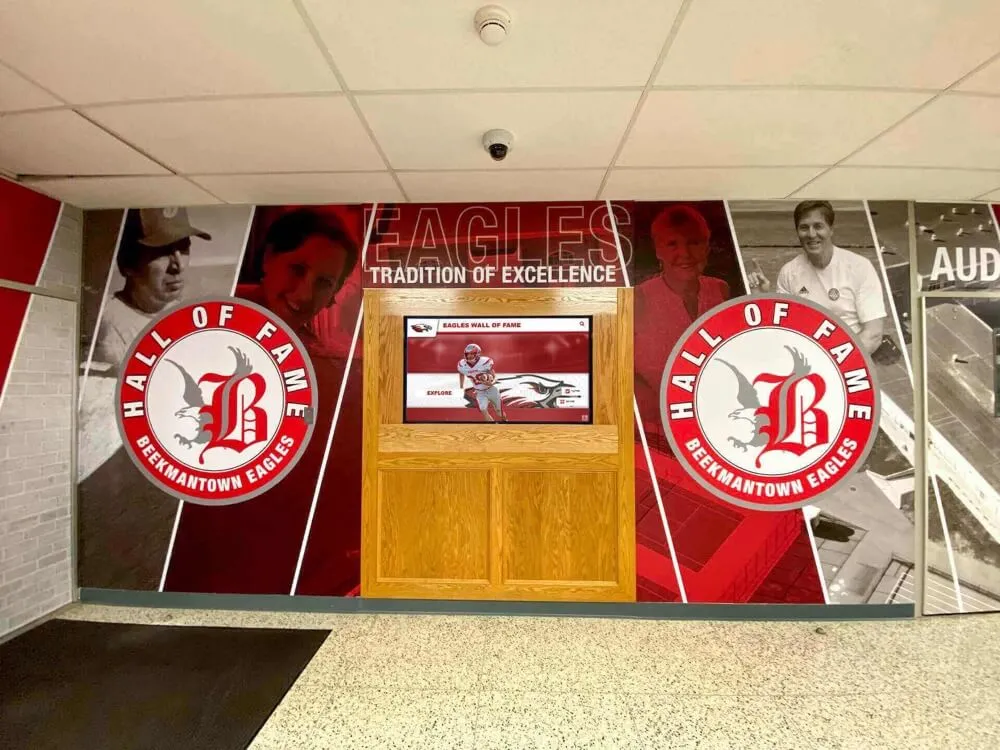
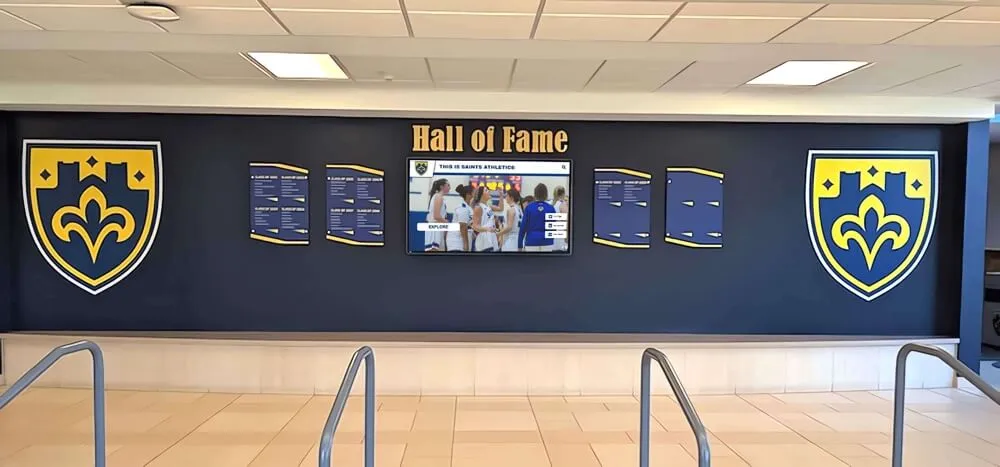
The award criteria displayed on published recognition walls become the reference standard against which appeal committee members evaluate whether an original decision was correctly applied
Step 3 — Deliberation: Convene the Review Committee
The appeals committee evaluates the compiled record and produces a recommendation or, where the policy grants it, a final decision.
Recommended committee composition:
| Role | Notes |
|---|---|
| Athletic director or designee | Chairs the committee; recuses if personally involved in the original decision |
| School principal or assistant principal | Provides institutional authority beyond the athletics department |
| A second athletic staff member | Provides subject-matter context; must be different from the original decision-maker |
| District-level representative | Optional but recommended, especially for hall of fame or multi-year disputes |
| Alumni representative | For post-career honors only; provides alumni community perspective |
The original decision-maker — the coach or committee that issued the original award — should not serve as a deliberating member. They may submit written input or appear before the committee as a resource, but their role is as a witness, not a deliberator. This separation is the single most important structural protection against the appearance of a rubber-stamp process.
Committee deliberation checklist:
- Confirm all members received and reviewed the complete record
- Identify the specific award criteria at issue
- Determine whether the original decision applied those criteria as written
- Evaluate whether any procedural error affected the outcome
- Assess whether any new evidence changes the factual basis of the decision
- Document any discussion of prior precedent
The committee should evaluate the appeal against the written criteria — not re-examine the athlete’s general character or performance beyond what those criteria explicitly address. Committees that drift into general performance reviews produce outcomes that claimants experience as a second rejection rather than a fair hearing.
Step 4 — Decision: Issue a Written Determination
The committee’s outcome should be captured in a written determination that:
- Identifies the appeal under review (award, claimant, date filed)
- Summarizes the committee’s factual findings
- Names the applicable criteria and explains how they were applied to the facts
- States the decision: uphold, overturn, or modify the original award decision
- Explains the rationale in specific terms tied to the written criteria
- Describes any corrective action required and the timeline for completing it
Three possible outcomes:
- Uphold — the original decision was consistent with published criteria and procedure; the appeal is denied
- Overturn — the original decision was inconsistent with criteria or involved a material procedural error; the recognition is granted, restored, or updated as appropriate
- Modify — the original decision was partially correct; a modified recognition outcome is warranted (for example, a performance record is reinstated while a character-based award is not)
The written determination should be issued within ten business days of the committee meeting. It becomes a permanent institutional record and should be retained in the same file as the original award decision.

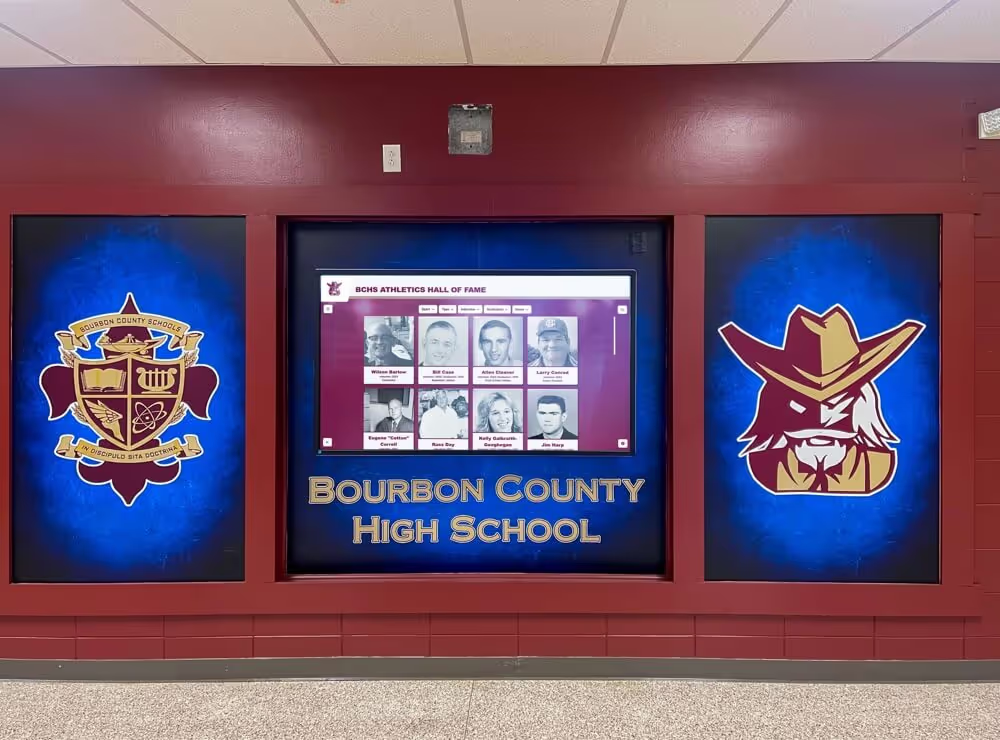
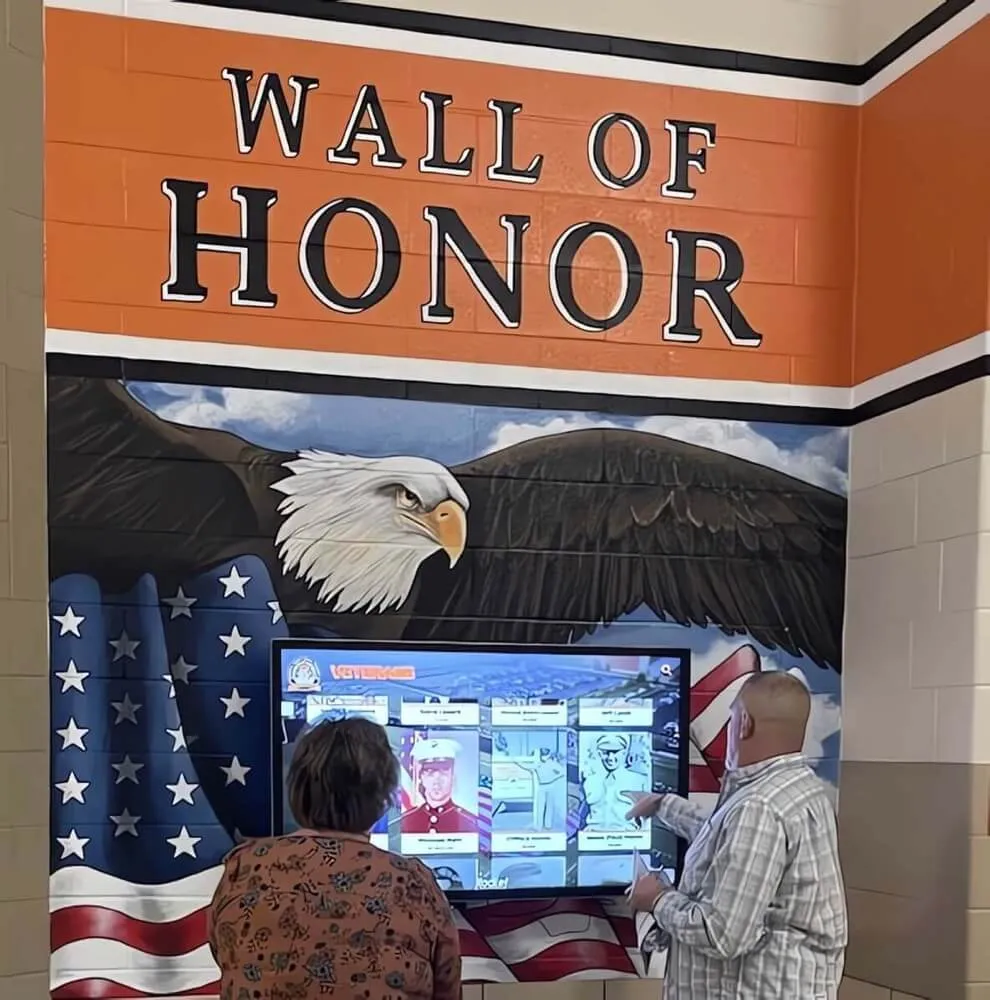
Wall of honor displays carry long-term visibility — appeals decisions affecting them should be documented in writing before any physical or digital change is made
Step 5 — Notification and Implementation
The final step closes the loop with the claimant and triggers any display or record updates required by the decision.
Notification checklist:
- Deliver the written determination to the claimant by the same channel they used to file
- Notify the original decision-maker of the outcome
- Confirm whether a second-level appeal to the district — typically the superintendent’s office or district athletic coordinator — is available, and communicate that option clearly if it exists
- Document the date notification was sent
Implementation checklist:
- If the decision overturns or modifies the original award, update the physical or digital recognition record accordingly
- Brief the platform administrator or records manager on the required change
- Log the update in the recognition system with a note referencing the appeals determination
- If a physical display requires updating, complete the change within a defined window (typically twenty business days)
No display changes should be made while an appeal is still pending. The written determination is the authorization document for any update — not an informal communication from a coach or a parent’s verbal request. For schools using interactive digital displays in athletic lobbies, the implementation step should include a direct workflow from the athletic director’s office to the content management system, making display changes traceable to a specific written decision.
Setting Up the Review Committee: Conflict of Interest Rules
Committee structure is where most appeals processes develop their weakest points. Without explicit conflict-of-interest rules, claimants may legitimately perceive the review as a formality rather than a fair hearing.
Any committee member who:
- Made or formally endorsed the original award decision
- Has a close personal or professional relationship with the claimant or the original decision-maker
- Has a financial or reputational stake in the outcome
…should recuse themselves and be replaced by a designated alternate for that appeal.
When the athletic director was the original decision-maker, the school principal or an assistant superintendent should assume the chair role. Schools with smaller athletic staffs should identify alternate committee members in advance so that conflict-of-interest recusals do not stall the process when an appeal actually arrives.
Applicable Award Types and Review Timelines
Not every recognition dispute requires the same process intensity. Establishing separate tracks by award type helps manage workload and set accurate claimant expectations.
| Award Type | Typical Review Timeline | Notes |
|---|---|---|
| End-of-season team awards | 15–30 business days from filing | Most common; typically involves criteria application questions |
| All-conference or all-district nominations | 10–15 business days | May involve a second step with the external conference or state association |
| Scholar-athlete awards | 15–30 business days | Academic eligibility data requires FERPA compliance |
| Records board entries | 20–40 business days | Longer timeline for archival verification of performance data |
| Hall of fame induction | 30–60 business days | Highest stakes; may involve alumni committee input |
| Retroactive removal of existing honor | 30–60 business days | Requires the strongest documentation; involve legal counsel before deciding |
Retroactive removal of an honor already conferred — particularly hall of fame status — carries the greatest institutional and legal risk. Schools should apply their most rigorous process here and involve legal counsel before any final determination is issued. For awards where the recipient is deceased, the guide to posthumous athletic award policies covers the additional considerations that apply when the honoree cannot participate in the review.
Connecting Award Appeals Decisions to Recognition Displays
A formal determination without a clear pathway to the recognition display is half a process. Athletic directors frequently finalize an appeal only to discover that the physical or digital display was never updated — or was changed without authorization before the process concluded.
Display update protocol after an appeal decision:
- Maintain the status quo on all displays while an appeal is pending
- The written determination is the sole authorization document for any display change
- The platform administrator or facilities staff receives the determination directly from the athletic director — not from a parent, coach, or other third party
- The change is logged in the recognition system with a note referencing the determination date and decision type
Digital recognition platforms designed for school athletics support exactly this workflow. Administrators can manage display visibility, archive records separately from active displays, and log changes with timestamps that create an auditable trail. This architecture allows a school to preserve the historical record — documenting that a recognition existed, was disputed, and was updated — without simply overwriting the original entry as though it never occurred.
For schools building or renovating their display infrastructure, the guide to hall of fame wall dimensions and athletic display space planning covers the physical and digital considerations that become relevant when appeals decisions require permanent display changes.
Schools that maintain comprehensive digital archives — including athletic photo release forms and recognition documentation — are better positioned to reconstruct the factual basis of original award decisions during a review, because the documentation was built into the recognition workflow from the start rather than assembled after a dispute arose.
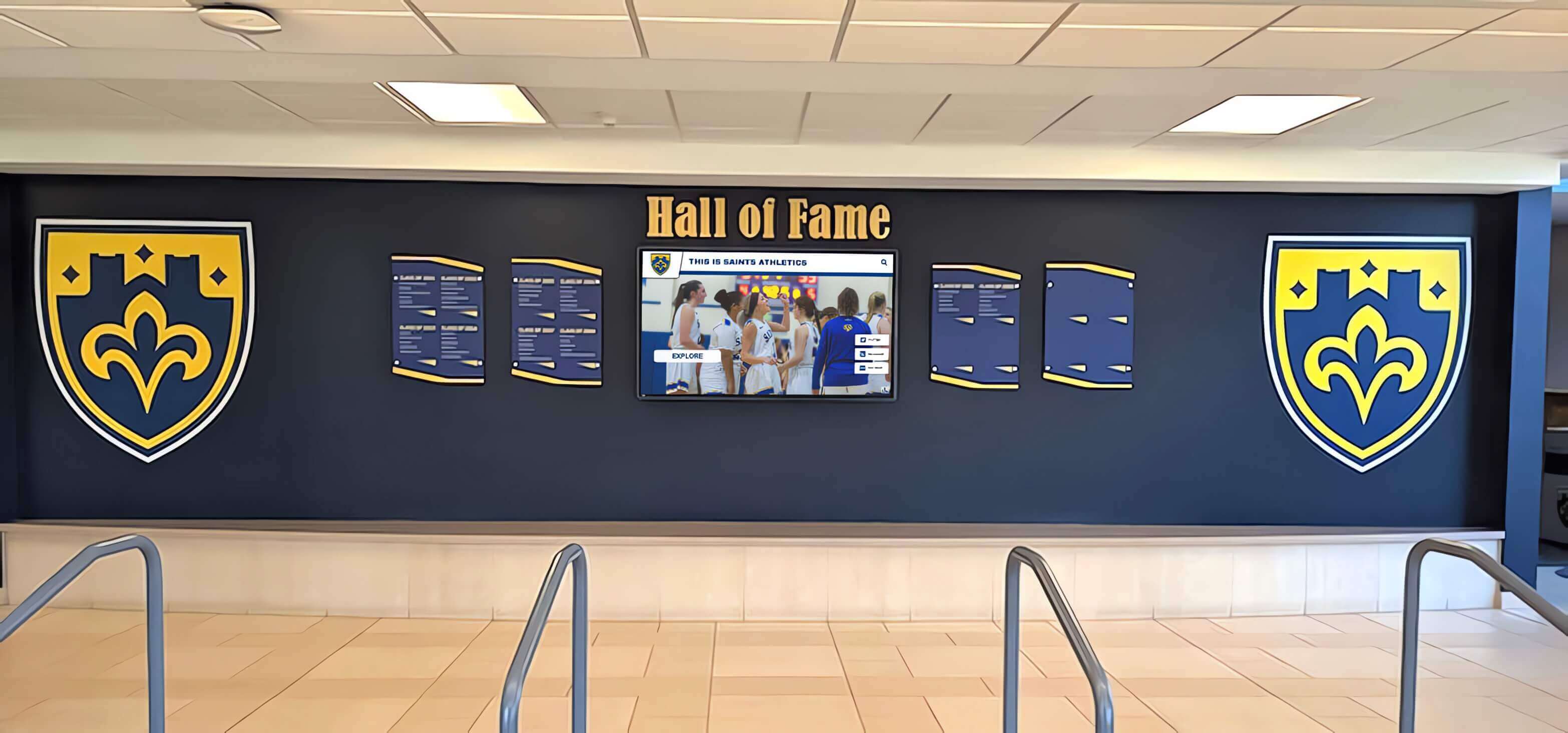
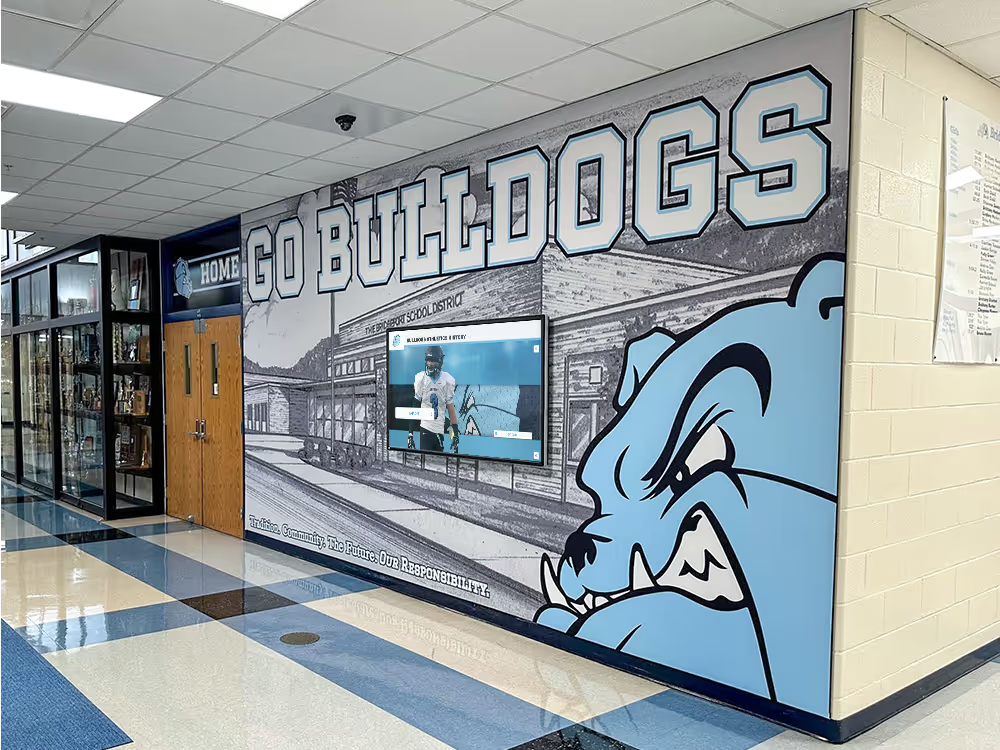
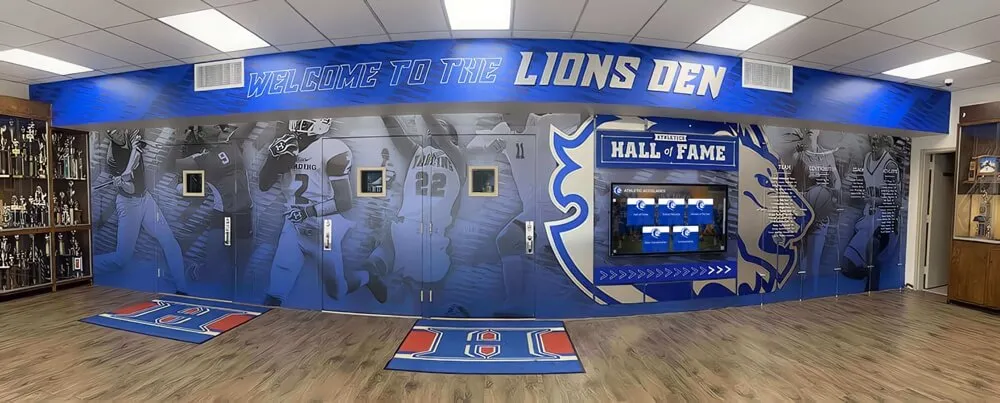
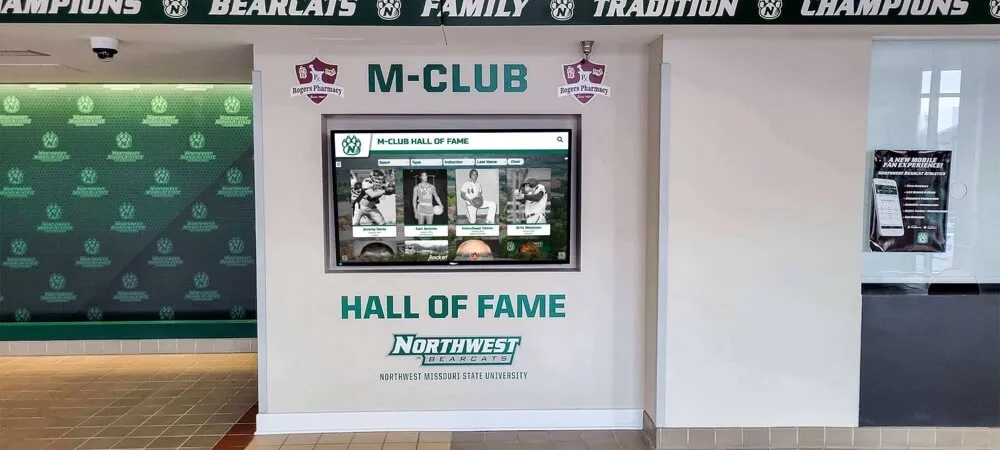
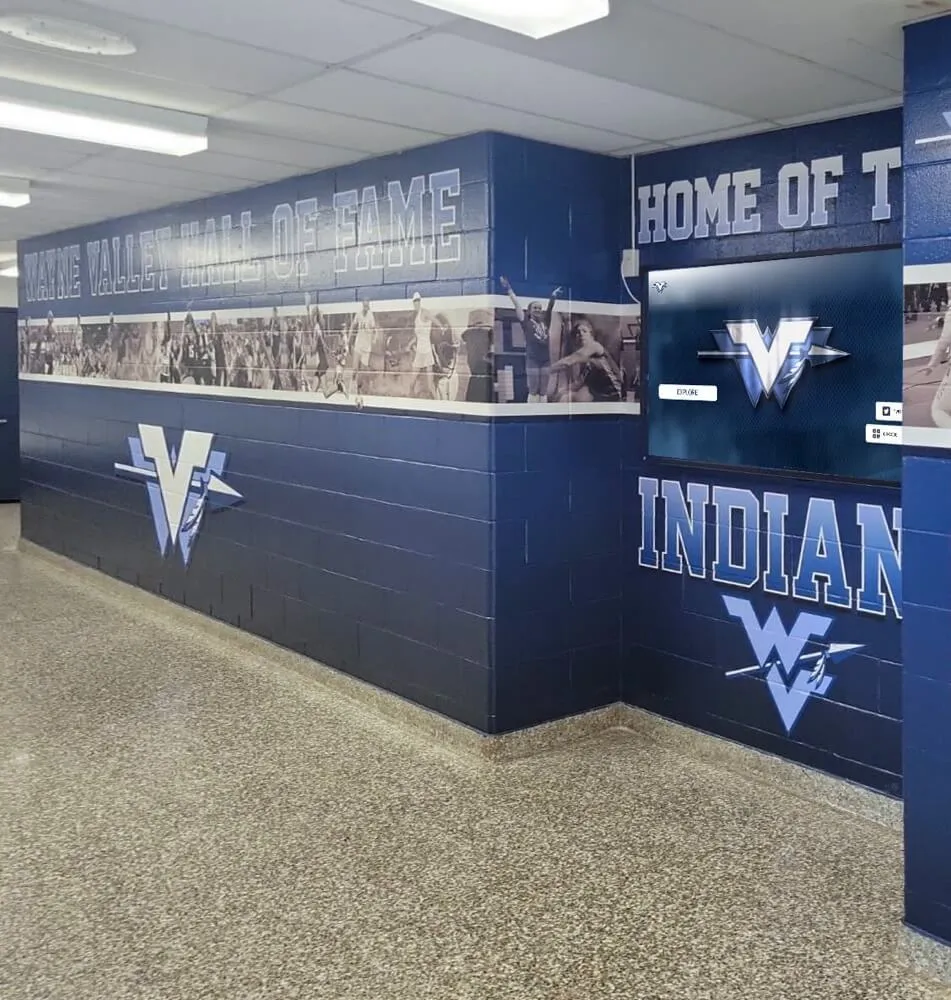
Permanent hall of fame displays reflect decades of institutional commitment — a documented appeals process protects the integrity of the records they contain
Special Cases: Scholarships, External Nominations, and Sponsored Awards
Some award appeals involve factors beyond the school’s direct control.
Academic eligibility disputes follow the school’s existing academic appeals pathway, not the athletic awards process. Athletic directors should not re-adjudicate academic eligibility determinations within an athletic appeals proceeding. If a claimant believes an academic eligibility finding was made in error, direct them to the appropriate academic review process first.
External nominations — all-conference, all-state, or scholarship recommendations administered by external bodies — are governed by the nominating organization’s own rules. Schools can review and document their internal nomination decision, but the outcome may not be reversible if the external deadline has passed. Students and families exploring how school recognition connects to scholarship consideration should also consult the guide to high school athletic scholarship recognition pathways.
Sponsored awards — donor plaques, named scholarships, or recognition tied to booster funding — involve stakeholders beyond the student and school. Review whether sponsor agreements include provisions affecting award criteria or appeals rights before initiating a review. For context on how schools structure sponsored recognition programs, the athletic sponsorship and school recognition guide outlines common frameworks.
Recognition ceremonies that have already occurred cannot be reversed. When an appeal succeeds after a public event, the school’s obligation is to provide appropriate recognition going forward: a formal presentation at the next suitable event, an update to permanent displays, and a written acknowledgment of the corrected record. For schools planning how to structure that presentation, award speech examples for school recognition and hall of fame events provides a practical template for the ceremony component.
Aligning the Appeals Process with District Policy and Academic Recognition
An athletic awards appeals process does not operate in isolation. It sits within a broader framework of district policy, state association rules, and existing school administrative procedures.
Key alignment checks:
- Does your district have a formal grievance process for student-related decisions? Your athletic awards appeals procedure should be consistent with it.
- Does your state athletic association have eligibility appeal procedures that your school-level process must feed into or align with?
- Are your award criteria — the documents against which appeals are evaluated — publicly posted, distributed to athletes and families at the start of each season, and archived for reference?
- Are your digital and physical recognition systems maintained in a platform that supports change logging and administrative audit trails?
For schools that administer academic-athletic recognition programs — including combined scholar-athlete awards, academic fitness recognition, or honors that require both athletic and academic eligibility — the guide to academic fitness awards and school administrator eligibility selection provides useful context for how eligibility criteria and appeals processes work in parallel recognition programs.

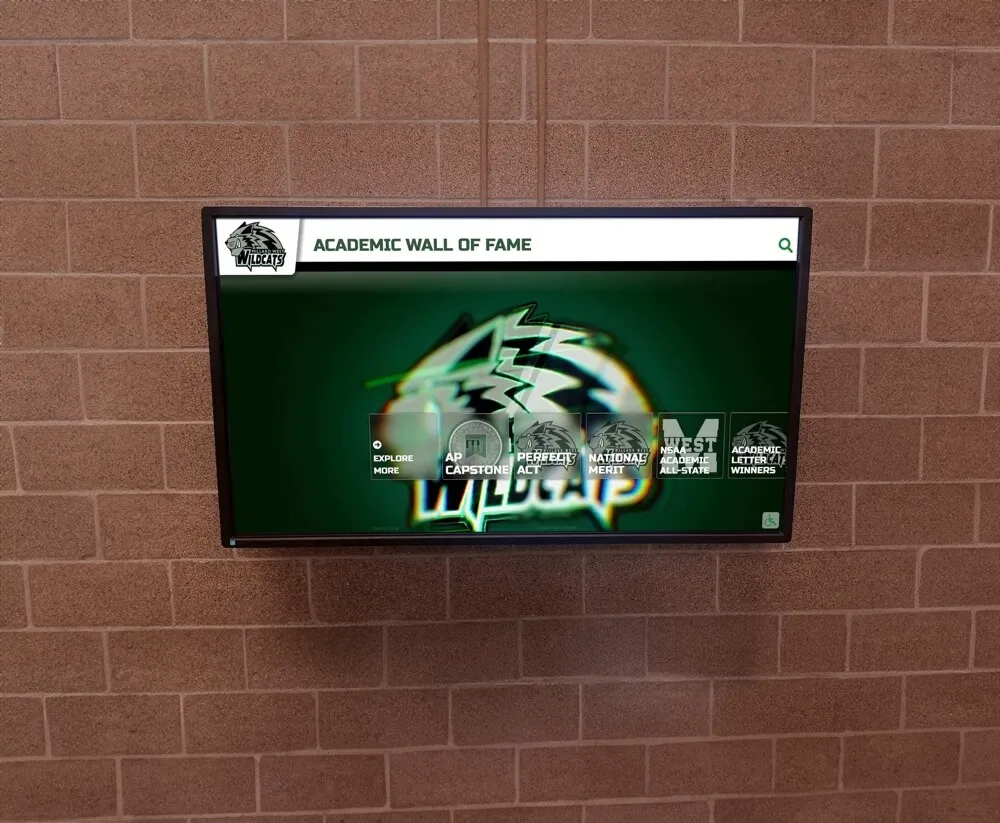
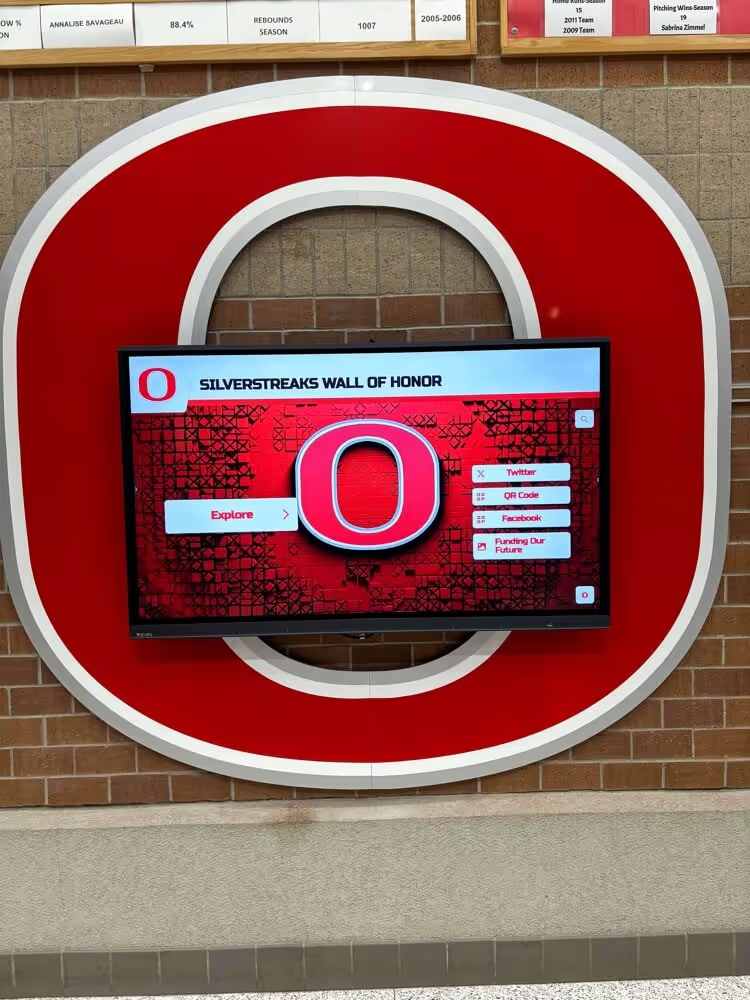
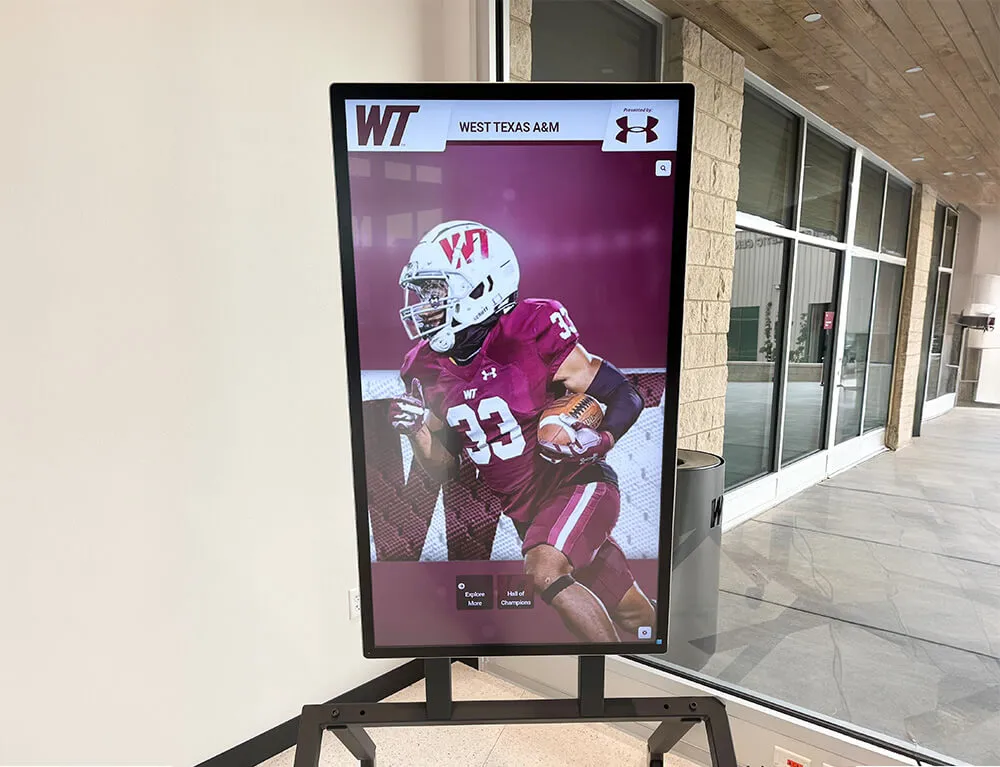
Digital platforms with granular access controls allow athletic administrators to update, archive, or restore recognition records as part of a documented appeals decision workflow
Sample Policy Summary: What to Include in Writing
Every school’s awards appeals policy should address these components in a single written document distributed before any appeal is filed:
| Policy Component | What It Should State |
|---|---|
| Scope | Which awards are appealable; which are not (purely discretionary coaching selections, for example) |
| Standing | Who may file, under what circumstances, and for how long after graduation alumni appeals are accepted |
| Filing deadline | Number of business days from written notification of the original decision |
| Submission requirements | Format (written, signed), required content for a complete filing |
| Review timeline | Maximum business days for each stage and a total process ceiling |
| Committee composition | Who serves, conflict-of-interest recusal rules, and how replacements are identified |
| Decision scope | What the committee may decide — grant, deny, modify — and whether its decision is final or advisory |
| Further appeal | Whether a second-level appeal to district administration is available |
| Records retention | How long appeal files are maintained and where |
| Display update protocol | Who authorizes display changes and within what timeline after a determination |
Distributing this policy — as a section of the athletic handbook, a standalone document, or a posted web page — before the season begins prevents disputes about the process itself from arising alongside disputes about specific decisions.
Frequently Asked Questions
What is an athletic award appeals process?
An athletic award appeals process is a formal, written procedure that gives student-athletes, families, or alumni a defined pathway to contest a recognition decision — such as a denied season honor, a rejected hall of fame nomination, or a removed records board entry. A complete process includes intake, record review, committee deliberation, a written decision, and a notification and display-update step. Schools should establish this process in writing before any specific appeal arises so the procedure itself is not in dispute when an appeal is filed.
Can a school remove an athletic award or hall of fame honor after it has been granted?
Schools generally have broad authority over their own recognition programs. However, retroactively removing an honor already conferred — particularly hall of fame status — carries significant institutional and legal risk if no pre-established written policy defines the criteria for removal. The most defensible approach is to have a removal policy in place before any specific case arises, involve legal counsel in the review, and apply the process consistently across all cases. Consult your district's policy office and state association before taking retroactive action.
Who should serve on an athletic award appeals committee?
A well-composed committee typically includes the athletic director or a designee (if the athletic director made the original decision), a school principal or assistant principal, and a second athletic staff member different from the original decision-maker. For post-career honors, an alumni representative may add appropriate community perspective. The original decision-maker — the coach or selection committee that issued the original award — should not serve as a deliberating member, though they may provide written input or respond to committee questions.
How does a successful award appeal affect recognition displays?
When an appeal overturns or modifies an original award decision, the athletic director should initiate a specific update workflow for any affected physical or digital recognition displays. No display changes should be made while an appeal is still pending. Once a written determination is issued, the platform administrator or facilities team receives that determination as the authorization document for the update. Digital recognition platforms that log changes with timestamps provide an auditable record of when and why a display was updated — protection that matters if the decision is later questioned.
Are there legal requirements governing athletic award appeals at public schools?
No federal statute mandates a specific athletic award appeals process, but several legal frameworks are relevant. FERPA (20 U.S.C. § 1232g) governs access to student records used during review. State due-process requirements for public school students may affect procedural standards, particularly for decisions that affect participation or eligibility rather than purely discretionary awards. Many state athletic associations and school districts have their own grievance procedures that school-level processes must align with. Schools should consult district legal counsel or their policy office when developing or revising an awards appeals procedure.
How long should an athletic award appeal take from filing to decision?
A well-managed process typically runs 30–45 business days from intake to written decision for standard season award appeals, and 45–60 business days for hall of fame or retroactive removal reviews. Setting explicit maximum timelines for each stage — acknowledgment within 5 business days, record review within 10, committee deliberation within 15, written decision within 10 after the committee meeting — prevents the process from stalling and gives claimants a reliable expectation of when they will receive an answer.
Building Recognition Programs That Hold Up Under Review
An athletic award appeals process is ultimately a quality-assurance mechanism for your entire recognition program. When every award decision can be explained in writing against published criteria — and when a fair, documented pathway exists for challenging decisions that appear inconsistent — the recognition your school confers carries more institutional credibility, not less.
Schools that invest in clear written criteria, consistent application, and a formal appeals pathway find that disputes arise less frequently over time. Athletes and families who understand the process — and trust it will be applied fairly — are less likely to escalate to levels that require district or legal involvement.
The same discipline applies to the systems that present recognition publicly. Digital recognition platforms that allow administrators to manage display visibility, log changes, and maintain archival records separate from active displays give athletic programs the infrastructure to implement appeals decisions accurately and durably — without overwriting the historical record in ways that cannot later be explained.
Manage Recognition Records With Confidence
Rocket Alumni Solutions helps athletic programs build digital recognition systems with the administrative controls, change logging, and display management needed to implement award decisions — including appeals outcomes — accurately and transparently.
Request a Demo