



An athletic award data lineage guide maps every award record from its authoritative governing source — a conference selection, coach’s approval, or governing body result — through each transformation point: the approval document, the database entry, any corrections applied after the fact, and the final publication on a recognition display. Schools and athletic departments that document this lineage can answer a fundamental question at any moment: where did this record come from, what changed it, and where does it now appear?
This guide is written for athletic directors, IT and data administrators, facilities coordinators, and archives staff responsible for the accuracy and accountability of school athletic recognition. It provides a source-to-display lineage table, governance checkpoints for each link in the chain, and a practical framework for tracing any record that appears to have lost its connection to its original source.
Data lineage is a concept from information governance: the documented history of where a piece of data originated, how it moved between systems, and what transformations it underwent along the way. In the context of athletic award records, data lineage answers a question that becomes increasingly important as recognition programs grow and persist over decades — not just what appears on a display, but how did it get there?

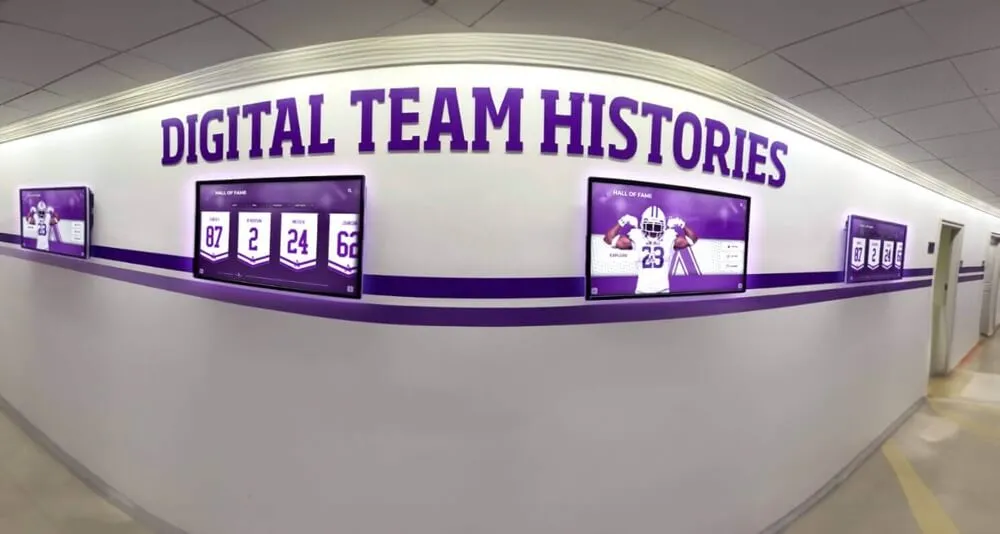
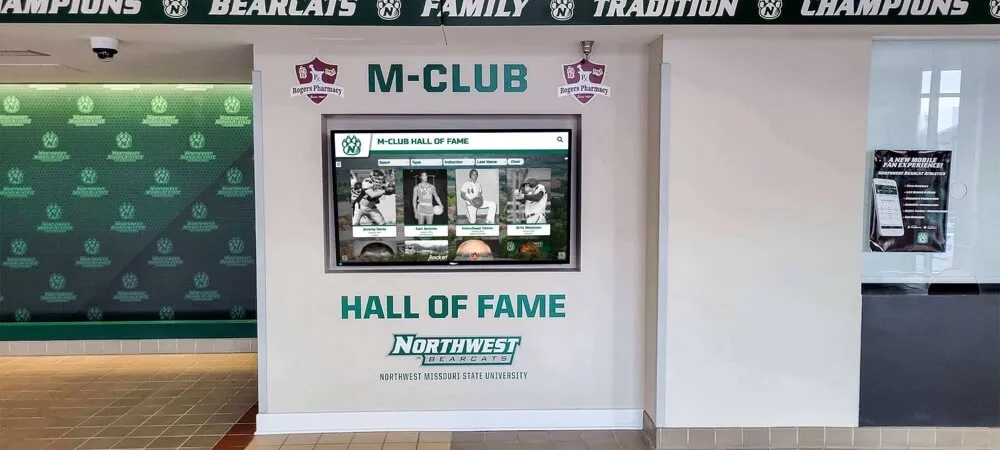
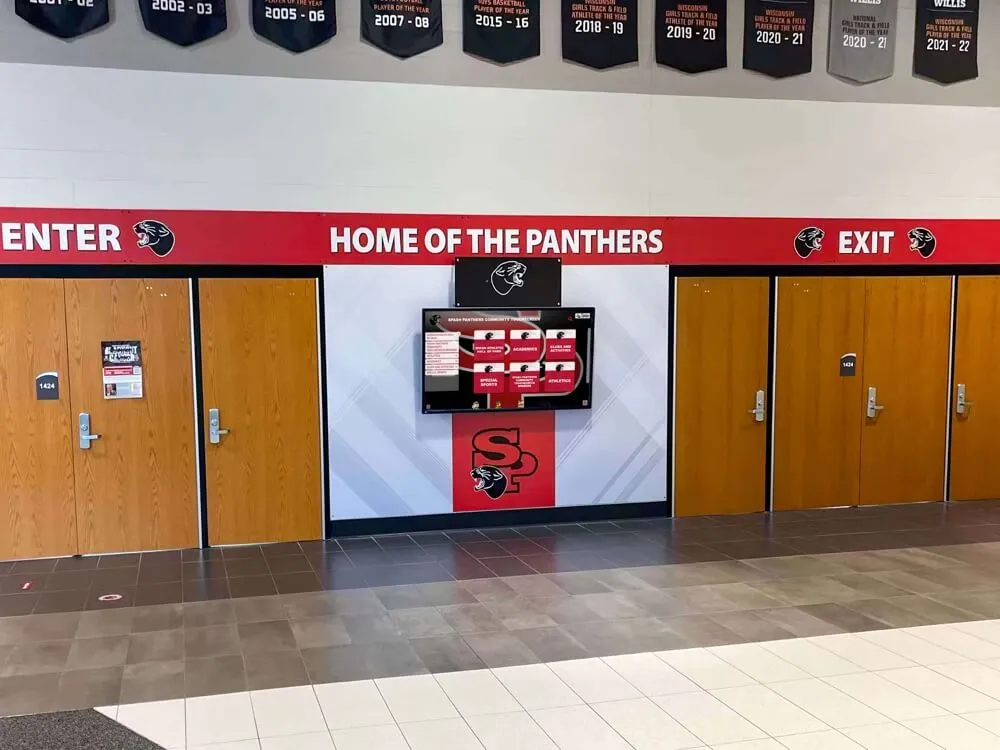
Every record visible in a school hallway display has a lineage — a traceable chain from governing source through approval, database entry, corrections, and publication
What Is Athletic Award Data Lineage?
Athletic award data lineage is the documented chain of custody for every award record, starting from the authoritative source where the result was first established and ending at every channel where that result is displayed to the public.
For a high school MVP award, the lineage chain might look like this:
- Governing source — coaching staff selection documented in a signed meeting record
- Approval record — athletic director authorization before the ceremony program was printed
- Database entry — record created in the athletic department’s recognition system
- Correction log — a name spelling correction documented 12 days after initial entry
- Display publication — the record pushed live on the digital hall of fame kiosk and physical honor wall
Each link in that chain is a data event. When all five links are documented and traceable, the lineage is complete. When even one link is absent — a correction made without a log entry, or a display updated without authorization from the source — the lineage has a gap, and the record cannot be fully trusted by future administrators who were not present when the decision was made.
A complete athletic award data lineage guide gives programs the framework to build that chain systematically, verify it annually, and trace it when something appears to have gone wrong.
Why Data Lineage Matters for Athletic Recognition Programs
Athletic records are institutional records. They outlast coaches, athletic directors, and the athletes themselves. A hall of fame inductee’s profile may be visible on a lobby display for 30 or 40 years after it was first published. A records board entry may remain on a wall for a generation before it is broken. The longer a record persists, the more important its lineage becomes — because the original source documents may eventually be unavailable to verify it.
Four institutional risks of incomplete data lineage:
- Unverifiable corrections — a name was changed on the display, but no log documents why; future staff cannot determine whether the change was authorized or erroneous
- Orphaned entries — a record appears on a physical display but has no corresponding entry in the master database, and the governing source document that originally authorized it cannot be located
- Conflicting versions — the trophy case engraving, the database, and the digital platform show different values for the same award, and no lineage trail explains which is correct
- Post-migration gaps — when records are migrated from an older system to a newer platform, lineage information not explicitly transferred is permanently lost
For athletic programs considering how data lineage connects to the broader scope of facilities and records management responsibilities, facilities manager responsibilities in school recognition programs covers the operational context in which data governance typically sits alongside physical display maintenance.
The Five Links in the Athletic Award Data Lineage Chain
The complete lineage for any athletic award record spans five distinct link types. Each link represents a different kind of data event — and a different point where the chain can break.
Link 1: The Governing Source
The governing source is where the award result is first established as official. This is the upstream authority — the document, meeting record, or body whose decision initiates everything downstream.
Common governing sources for school athletic awards:
| Award Category | Typical Governing Source |
|---|---|
| End-of-season team honors (MVP, Captain) | Coach’s written selection form or documented meeting |
| Conference and district recognitions | External conference or association official results |
| Scholar-athlete awards | School eligibility committee or academic office |
| School records board entries | Athletic department statistical verification form |
| Hall of fame inductions | Induction committee vote record or selection committee notes |
Lineage requirement at this link: The governing source document should be filed, dated, and retrievable. For awards determined by external governing bodies — conferences, state associations — the school should retain a copy of the official results communication, not rely solely on the external body’s records remaining accessible indefinitely.
Link 2: The Approval Record
The approval record is the internal authorization step that moves a result from “decided” to “authorized for publication.” This is often where lineage breaks in programs that lack a formal publication policy — the result was decided and announced informally, but no approval document was generated before the ceremony program was printed or the display was updated.
A well-formed approval record captures:
- The name and role of the authorizing party (typically the athletic director or designee)
- The date of authorization
- The specific award or record being authorized
- The publication channels approved (ceremony announcement, database, digital display, physical display)
For programs that have formalized this step as part of a written policy, award result publication workflows and display update timing provides context for how approval workflows connect to the display systems where results ultimately appear.
Link 3: The Database Entry
The database entry is the first point at which award data exists as a digital record in the school’s recognition system. This is where lineage metadata — who entered the record, when, and from which source — should be captured either automatically by the platform or documented by the entering staff member.
Lineage requirements at this link:
- Entry timestamp (date and time the record was created in the system)
- Entering user (name or role of the staff member who created the record)
- Source reference (which governing source document was used)
- Initial field values (the exact name, award title, season, and status as entered)
Entry-level lineage metadata makes the correction log (Link 4) meaningful: without a baseline record of what was entered originally, a correction log cannot establish what changed.
Link 4: The Correction Log
The correction log is the record of every change made to an award entry after its initial creation. A correction may be as minor as a capitalization fix or as significant as changing the year a record was set. Without a correction log, the lineage chain breaks the moment any edit is applied — because there is no way to distinguish an authorized correction from an unauthorized change or an untracked error.
A well-formed correction log captures for each edit:
| Correction Log Field | Purpose |
|---|---|
| Date of change | Establishes when the edit was made |
| Changed field | Identifies what was modified |
| Previous value | Preserves the record of what existed before |
| Corrected value | Documents what replaced it |
| Reason for change | Explains the authorization basis |
| Authorizing party | Names who approved the correction |
| Source document | References the governing source or evidence used |
For programs working to build correction log practices alongside broader data accuracy initiatives, reconciling names, titles, and dates across athletic award records addresses the field-level accuracy requirements that make correction logs necessary.
Link 5: Display Publication
Display publication is the terminal event in the lineage chain: the moment a record becomes visible to athletes, families, and the public. For programs operating multiple display channels — a digital recognition platform, a physical trophy case, an honor wall, and a school website — each channel represents a separate publication event, and the lineage should document when each channel was updated and who authorized it.
Lineage requirements at this link:
- Publication date for each channel
- Authorizing party for each channel update
- Display status (active, archived, flagged for review)
- Reference to the most recent correction log entry (if any corrections were made before publication)

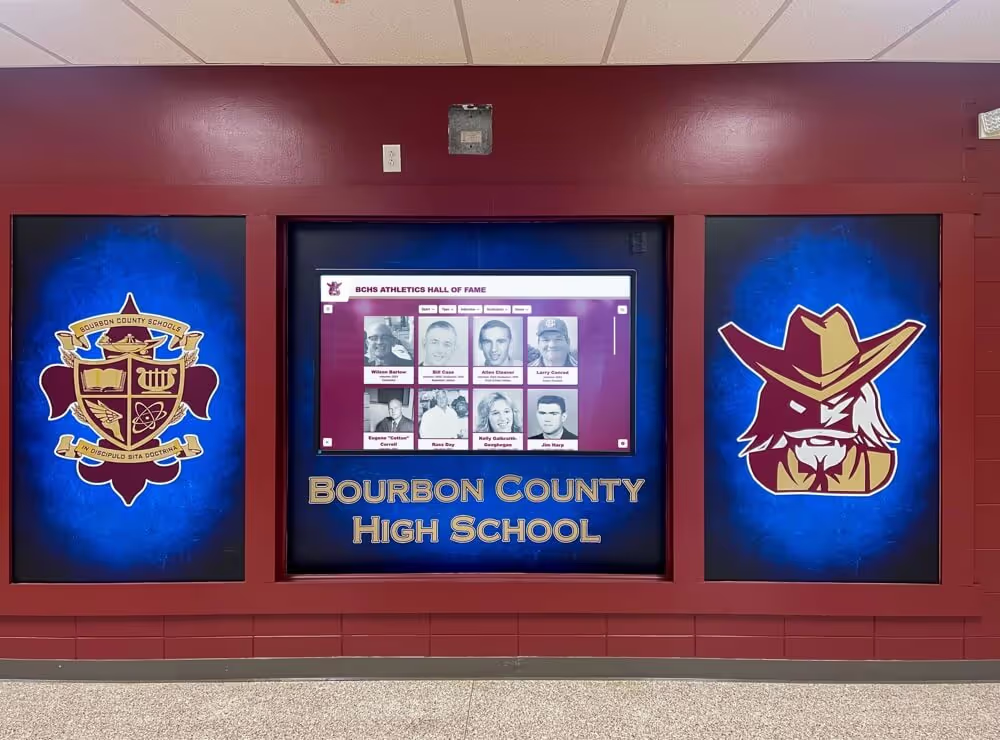
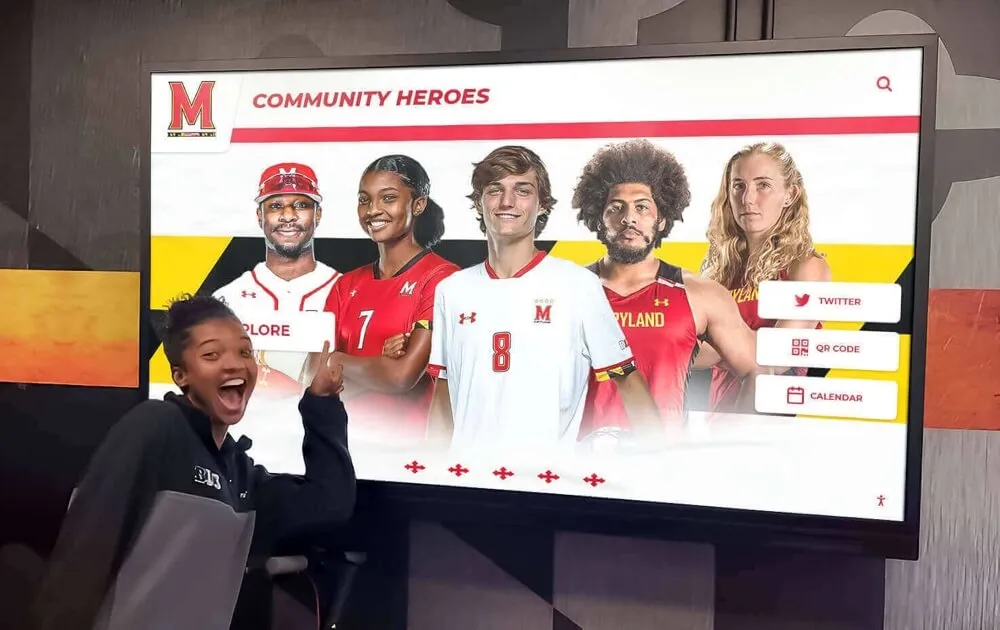
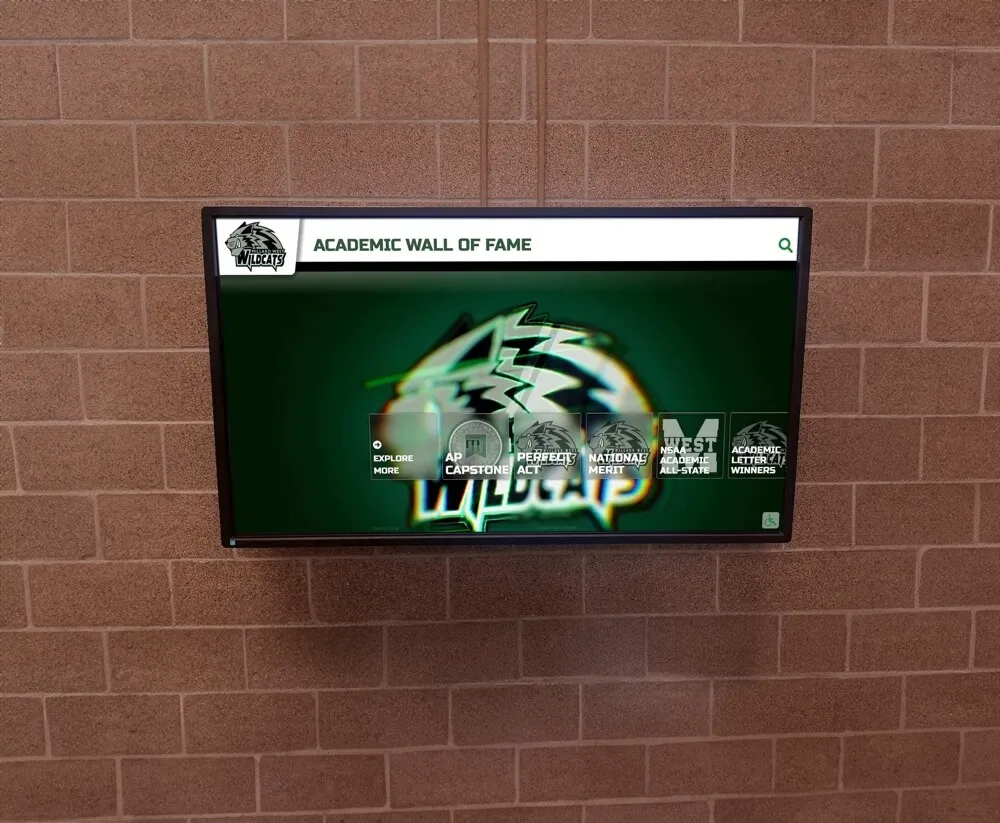
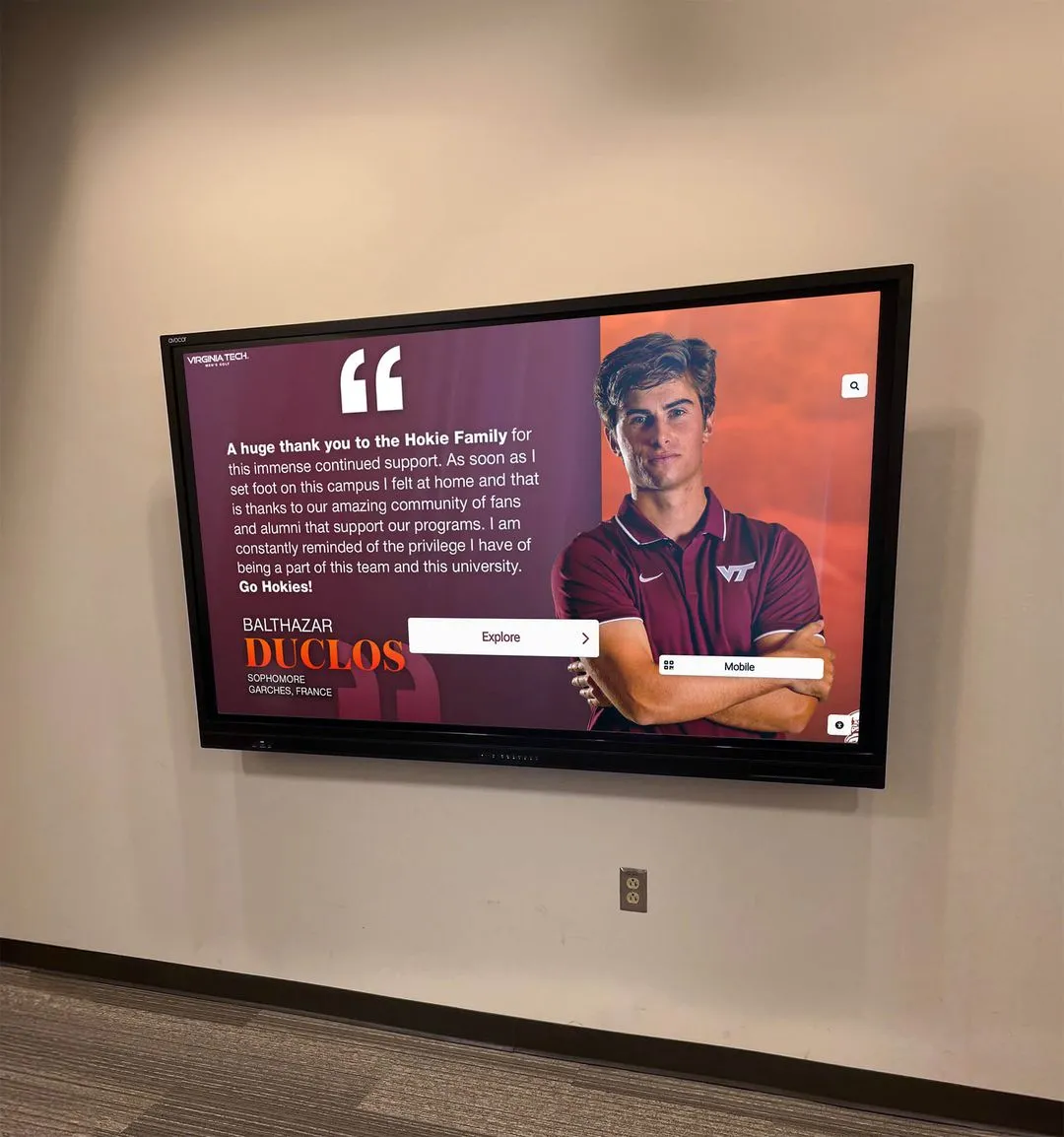
Every profile on a digital display began as a database entry — capturing the entry timestamp, user, and source document at creation preserves the full lineage from the start
Source-to-Display Lineage Table
The following table maps the complete lineage chain for a standard athletic award record. Each row represents a data event; each column represents the key metadata that should be documented at that event. Use this as a tracking template — create one row per data event for each award record, and the complete lineage becomes auditable at a glance.
| Link | Data Event | What to Document | Responsible Party | Retention Requirement |
|---|---|---|---|---|
| 1 | Governing source established | Document type, date, authorizing body | Coach or selection committee | Permanent for hall of fame; 7+ years for seasonal awards |
| 2 | Approval record issued | Authorizing party, date, publication channels approved | Athletic director | Retain with governing source document |
| 3 | Database entry created | Entry timestamp, entering user, source reference, initial field values | Athletic department staff or IT | Permanent — baseline for all corrections |
| 4a | First correction | Changed field, previous value, corrected value, reason, authorizing party | Athletic director or designee | Permanent — part of the correction log |
| 4b | Subsequent corrections | Same fields as 4a | Athletic director or designee | Permanent — chronological log |
| 5a | Digital platform published | Publication date, channel, authorizing party | Platform administrator | Retain with display record |
| 5b | Physical display updated | Update date, location, authorizing party, contractor if applicable | Facilities coordinator | Retain with facilities records |
| 5c | Website or archive published | Publication date, URL path, authorizing party | IT or web administrator | Retain with web records |
This table is intentionally channel-specific at Link 5: the governing source authorizes the result once, but each display channel has its own publication event, and each should be logged separately. A record published on the digital kiosk but not yet reflected on the physical honor wall has an incomplete publication lineage — a fact the table makes immediately visible.
For programs also managing recognition content that spans multiple types of institutional history — athletic, academic, and alumni — content planning for digital hall of fame systems covers how structured content governance can be layered on top of lineage documentation to coordinate updates across channels.
Governing Sources: Where Official Results Begin
The quality of a lineage chain is only as strong as its first link. If the governing source is informal — an email thread, a verbal announcement, a social media post — the lineage begins on unstable ground that future administrators cannot reliably retrace.
Governing source standards by award category:
Conference and association awards. For all-conference, all-district, or all-state designations, the governing source is the official results communication from the external body — an email from the conference office, an official results PDF, or a printed communication from the state association. Schools should maintain a copy of this communication as the baseline for database entry. The athlete’s certificate and the ceremony program are downstream documents that should trace back to the official results communication; they are not governing sources in themselves.
Internal team awards. For awards decided by coaches or selection committees within the school, the governing source should be a dated, signed document: a selection form, meeting minutes, or a written recommendation that was reviewed and approved. Verbal decisions that are later transcribed introduce a gap between when the decision was made and when it was first documented — a gap the lineage cannot fully close.
School records. For athletic records boards, the governing source is the statistical verification documentation: the official meet, game, or event results showing the performance that set or broke the record, cross-referenced with the school’s records standards. Performance records entered without verification documentation carry a lineage gap from the moment of their first database entry.
For schools that recognize student-athletes across multiple heritage months and commemorative recognition periods, national heritage months recognition guidance for school programs covers how recognition context affects the sourcing and documentation requirements that govern those award records.

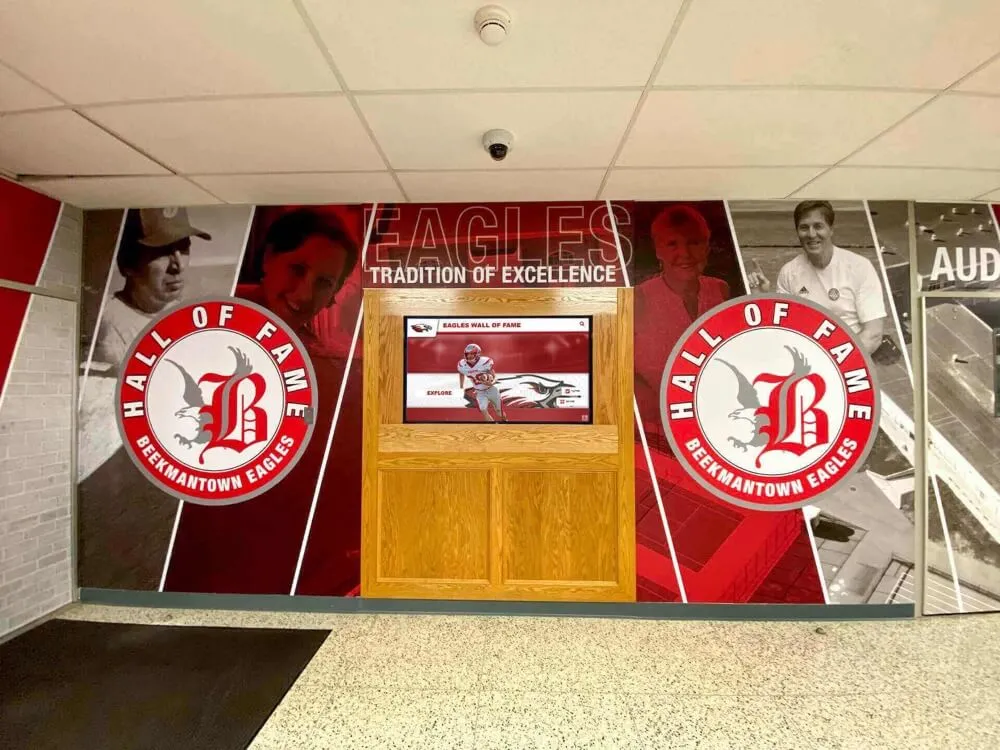
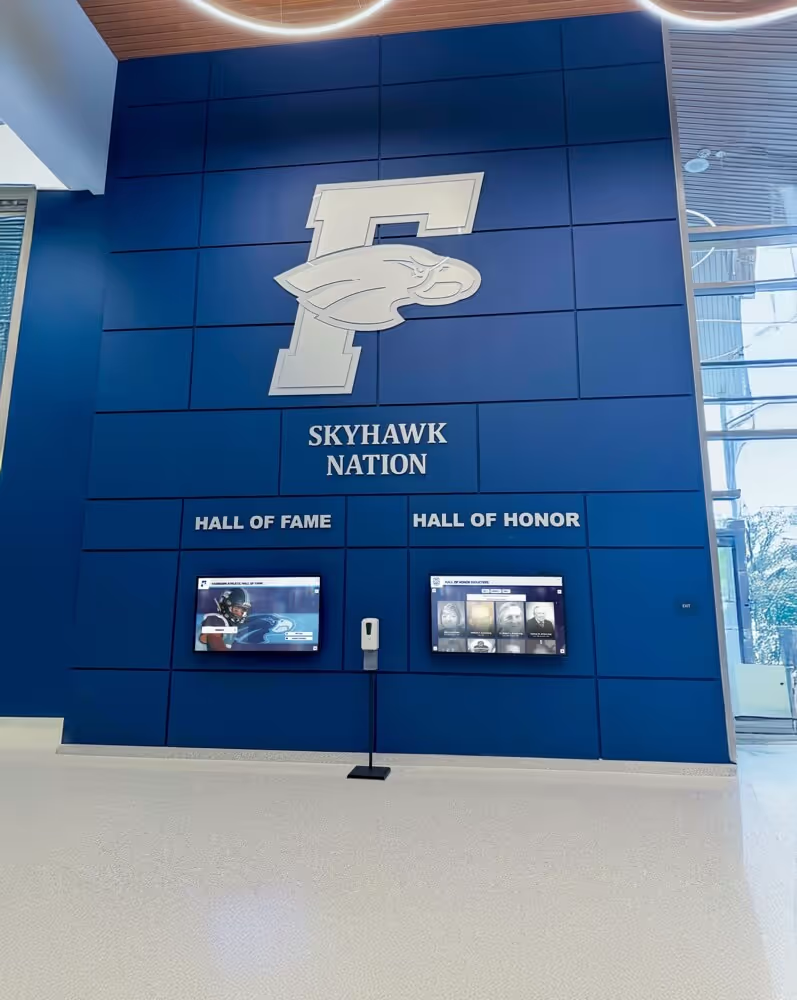
Physical honor walls reflect governing source decisions made by coaches and selection committees — the lineage chain documents the full path from that decision to the name on the wall
Tracing a Record When the Lineage Breaks
Even programs that document their lineage carefully will encounter records — typically historical entries from before formal documentation practices began — where a gap exists. A name on an honor wall that has no database record. A database record with no correction log. A trophy case entry from 1988 that has never been cross-referenced with any governing source.
A practical tracing process for lineage gaps:
Step 1 — Document what is known. Record exactly what information exists: the award appears on the physical display, the database entry exists, the ceremony program lists the name. Write down the source for each known fact before beginning any investigation.
Step 2 — Identify the gap type. Classify the break: is the governing source missing? Is the approval record missing? Is there a correction with no log entry? Is the display showing a value that does not match the database? Each gap type requires a different resolution path.
Step 3 — Search secondary sources. Yearbooks, local newspaper archives, ceremony programs, booster organization records, and alumni correspondence are common secondary sources for historical gaps. These are not governing sources — they cannot authorize a record on their own — but they can support a best-evidence determination for records where the original governing source is no longer available.
Step 4 — Document the best-evidence determination. When the governing source cannot be located, the athletic director should make a formal best-evidence determination: based on available secondary sources, this record is believed to be accurate. Document the secondary sources reviewed, the determination made, and the date it was made. This does not close the lineage gap — the gap still exists — but it establishes a defensible basis for maintaining or publishing the record while acknowledging the missing documentation.
Step 5 — Flag the record. In the database, mark records with incomplete lineage using a standardized status flag: “Documentation incomplete” or “Governing source not located.” This flag does not prevent the record’s display; it creates a persistent reminder that the lineage requires attention, and it prevents the gap from being quietly normalized over time.
For programs working with older artifacts and historical records that predate digital documentation systems, digitizing and preserving historical athletic artifacts and records covers the preservation practices that can help reconstruct lineage documentation from physical archives.
How Digital Platforms Support Complete Lineage Tracking
A purpose-built digital recognition platform does not merely store award records — it creates lineage metadata automatically with each data event, reducing the documentation burden on staff and making the correction log a built-in feature rather than a manual maintenance task.
Automatic timestamp and user logging. Modern recognition platforms capture the user, date, and time for every record creation and edit, without requiring staff to manually document those details. This means that the entry-level metadata required for Link 3 is created automatically the moment a record is entered.
Change history by field. Platforms that log changes at the field level — not just at the record level — allow administrators to see exactly what changed in each edit: the previous value, the new value, who made the change, and when. This is the correction log (Link 4) in its most complete and reliable form.
Display status tracking across channels. When a digital platform serves as the source for multiple display instances — lobby kiosks, hallway screens, web archives, and mobile access — a single approval action in the platform propagates to all instances simultaneously, and the platform logs the publication event for the entire channel set. This eliminates the need to separately track publication dates for each downstream channel.
Archival separation from active records. Platforms that distinguish between active display records and archived records allow a complete historical lineage to be maintained without cluttering the active display. An award that has been corrected or archived retains its full edit history in the platform — accessible for lineage verification — while the active display shows only current, verified information.
For programs evaluating how interactive kiosk platforms support the administrative and data governance functions that lineage tracking requires, interactive kiosk software features and capabilities for schools covers the platform capabilities most relevant to recognition program data management.
For programs considering how a single digital display platform can serve multiple recognition purposes — athletic awards, donor recognition, and hall of fame — while maintaining clean lineage for each, dual-purpose digital displays for hall of fame and donor recognition outlines how content governance applies across use cases on a shared platform.

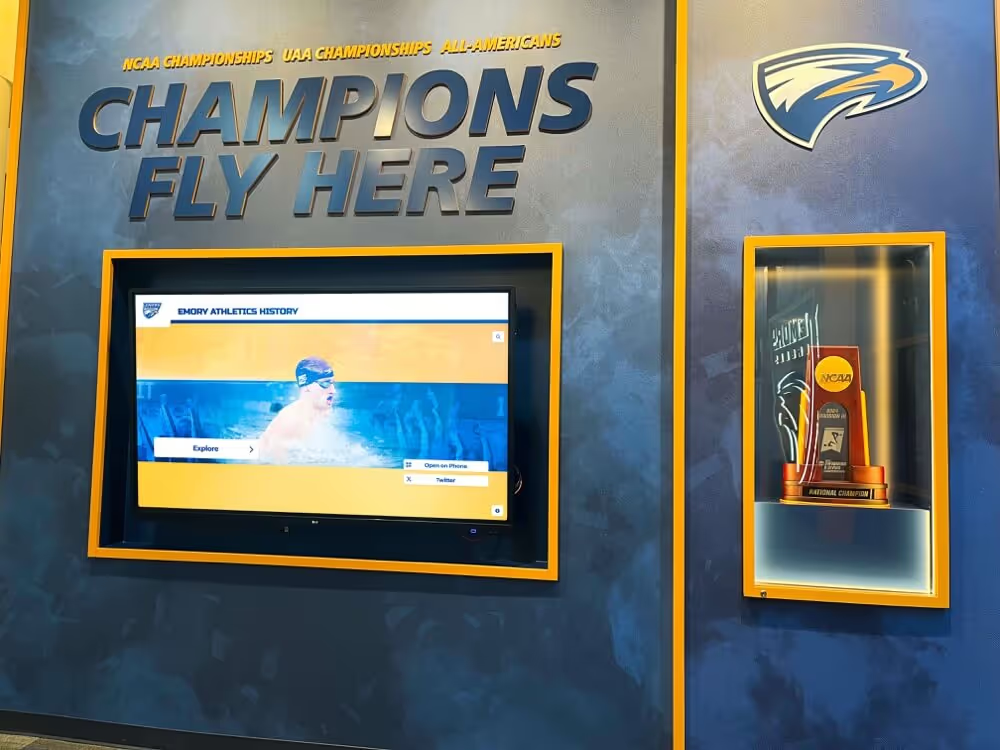
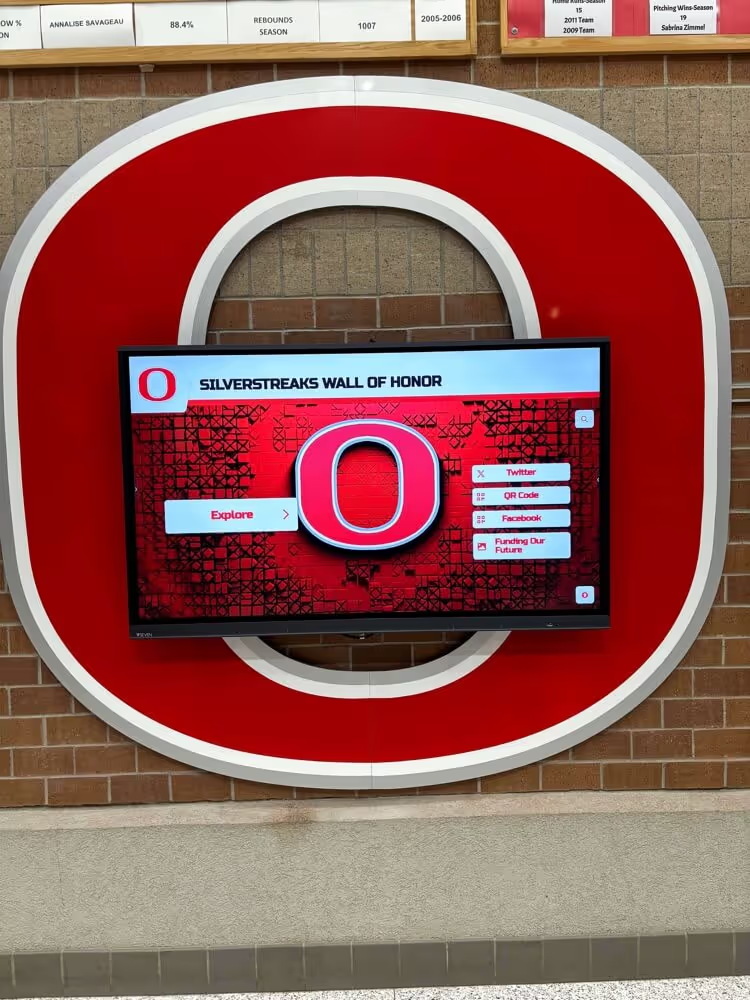
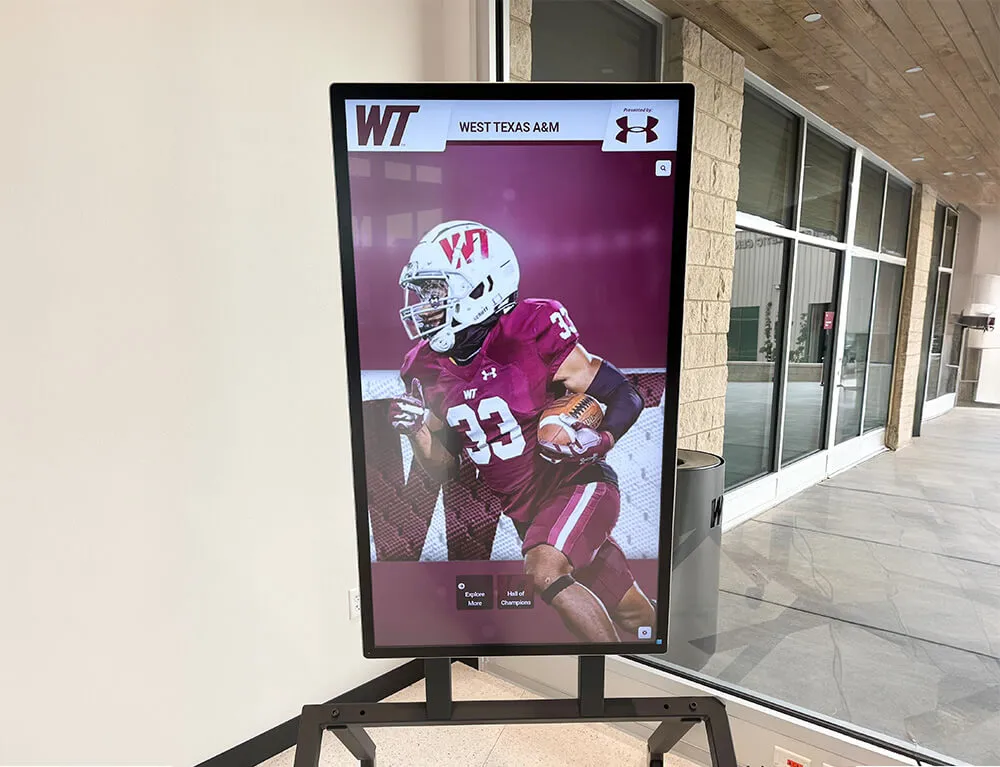
Digital platforms that log every edit — field by field, with timestamps and user attribution — create the correction log layer of the lineage chain automatically
Building Lineage Documentation Into Existing Workflows
Most athletic departments do not need to build a lineage documentation system from scratch. The five links of the lineage chain map directly onto activities that most programs already perform — they simply need to add the metadata capture that transforms those activities into a traceable chain.
For governing source documentation: Add a step to the end-of-season awards workflow that requires a dated, signed selection form before any result is entered into the database. For conference awards, add a step that routes the official results communication to a designated shared folder before database entry begins.
For approval records: If the athletic director already reviews and approves award selections before publication, the only addition is a dated sign-off form that references the governing source document and the channels authorized for publication. One additional document per award cycle adds the second link to the chain.
For database entries: Ensure that the recognition system is configured to require a source reference field at entry — not just name, sport, and award, but a reference to the governing source document that authorized the entry. Many platforms support custom fields; this is a configuration step, not a new workflow.
For correction logs: Establish a written correction request form that any staff member must submit before making any change to an existing award record. The form itself becomes the correction log entry. The athletic director reviews and approves each request before the change is made in the system, ensuring that corrections are authorized before they are applied.
For display publication: Add a publication checklist to the display update workflow that confirms four items before any record goes live: governing source on file, approval record issued, correction log current, and display status updated in the database. Four checkbox items that transform a routine publication step into a lineage-confirming event.
For programs building a comprehensive approach to athletic hall of fame administration — including how lineage documentation fits within a full governance framework for inductee selection, record management, and display standards — athletic hall of fame administration guide for school administrators provides a useful complement to the lineage framework described here.
For programs also managing senior recognition and end-of-season athlete honors — where governing source documentation often begins with nomination forms and selection materials — senior night recognition planning for high school athletic programs covers the recognition event context from which many governing source documents originate.
See How a Digital Platform Automates Award Data Lineage
Rocket Alumni Solutions gives athletic directors a cloud-based recognition platform that logs every data event — entries, corrections, approvals, and publications — creating an automatic lineage trail for every award record from governing source to display.
Request a DemoFrequently Asked Questions
What is athletic award data lineage?
Athletic award data lineage is the documented chain of custody for every award record — from the authoritative governing source where the result was first established, through the approval record, database entry, correction log, and final publication on every display channel where the record appears. A complete lineage allows any staff member to trace a record forward from governing source to display, or backward from display to governing source, at any point in the record's history — even years after the original award was issued.
What qualifies as a governing source for an athletic award?
A governing source is the authoritative document or decision that first establishes an award result as official. For conference designations, it is the official results communication from the conference or association. For internal team awards, it is the coach's signed selection form or documented meeting record. For school records, it is the statistical verification documentation from the official event results. Secondary sources such as ceremony programs, yearbooks, or certificates trace back to the governing source but are not governing sources themselves — they are downstream documents that should be consistent with the original governing source, not substitutes for it.
How should athletic departments handle lineage gaps in historical records?
When the governing source for a historical record cannot be located, the athletic director should make a formal best-evidence determination: document the secondary sources reviewed (yearbooks, newspaper archives, ceremony programs, alumni correspondence), state what those sources support, and record the date of the determination. Flag the record in the database with a "Documentation incomplete" or "Governing source not located" status — this preserves the record's visibility while creating a persistent marker that the lineage requires attention. Do not assign a best-guess value without documenting the evidence basis, and do not silently normalize the gap by removing the flag over time.
What does a correction log capture in the data lineage chain?
A correction log entry captures the date of the change, which field was modified, the previous value, the corrected value, the reason for the change, the authorizing party's name and role, and a reference to the source document that supported the correction. Without a correction log, the lineage chain breaks at the moment of any edit — there is no way to distinguish an authorized correction from an unauthorized change or an entry error. Digital recognition platforms that log changes at the field level create this correction log automatically with every edit, eliminating the need for manual documentation of each individual change.
How does data lineage differ from a data quality audit?
A data quality audit compares current field values across sources — the database, displays, certificates, ceremony programs — and reconciles any discrepancies found between them. Data lineage tracks the history of how those values came to be: where they originated, who authorized them, what changed them, and where they were published. The two practices are complementary. An audit identifies whether current records are accurate; lineage documentation explains why they are what they are and provides the evidence trail needed to verify or correct any finding the audit surfaces. Programs that maintain strong lineage documentation typically find that data quality audits surface fewer unresolvable discrepancies, because the correction history is already on record.
Conclusion: From Governing Source to Recognition Display
An athletic award data lineage guide is the governance framework that connects every record on a school’s recognition displays back to the decision that created it. When all five links of the chain are documented — governing source, approval record, database entry, correction log, and display publication — the program has an auditable record of every recognition decision it has made, in every channel where that decision is visible.
The programs that build and maintain this chain build something more durable than accurate displays: they build institutional credibility. Athletes, families, and alumni can trust that a name on a wall or a profile on a kiosk reflects a real decision, made by an identifiable person, documented by a retrievable source, and updated through an authorized process. That trust is the foundation of every recognition program worth maintaining — and it requires deliberate documentation, not just good intentions.
Build Award Records That Stay Traceable for Decades
Rocket Alumni Solutions provides athletic directors with a cloud-based platform where every award record — from first database entry to final display publication — is logged, versioned, and traceable. Request a demo to see how complete data lineage works in practice.
Request a Demo