



Intent: research. An athletic award data minimization policy tells every staff member, coach, and platform administrator exactly which data fields belong on a public school recognition profile — and which ones must never appear there. Schools that publish digital halls of fame, interactive touchscreen displays, or web-based award archives without a minimization policy routinely over-expose athlete information: birth dates, student ID numbers, home cities, and even GPA appear in public profiles simply because those fields existed in the database. This guide provides a complete policy framework, a field-by-field keep/omit table, and a seven-step process for building a policy your school can adopt, document, and enforce.
This guide is written for athletic directors, school administrators, IT and data staff, facilities coordinators, and anyone who manages the content of a public-facing athletic recognition system.
Public recognition is one of the most meaningful things a school can do for its athletes. A name engraved on a display, a profile featured in a digital hall of fame, a season record published for decades — these are acts of institutional respect. They are also data-publishing decisions. Every field that appears on a public recognition profile is a disclosure, and not every disclosure serves the recognition purpose.
An athletic award data minimization policy applies a simple discipline: before publishing any data field in a public athletic profile, confirm that the field is necessary to accomplish the recognition goal. If it is not necessary, it does not belong — regardless of whether it is available, easy to include, or already in the system.

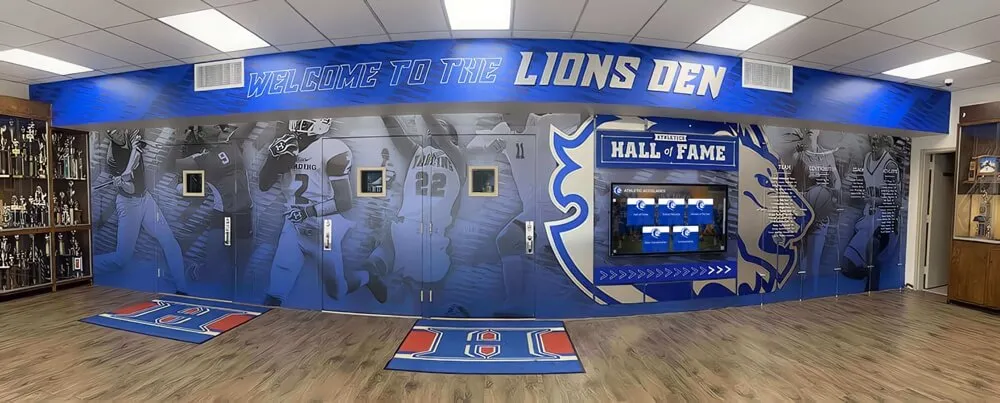
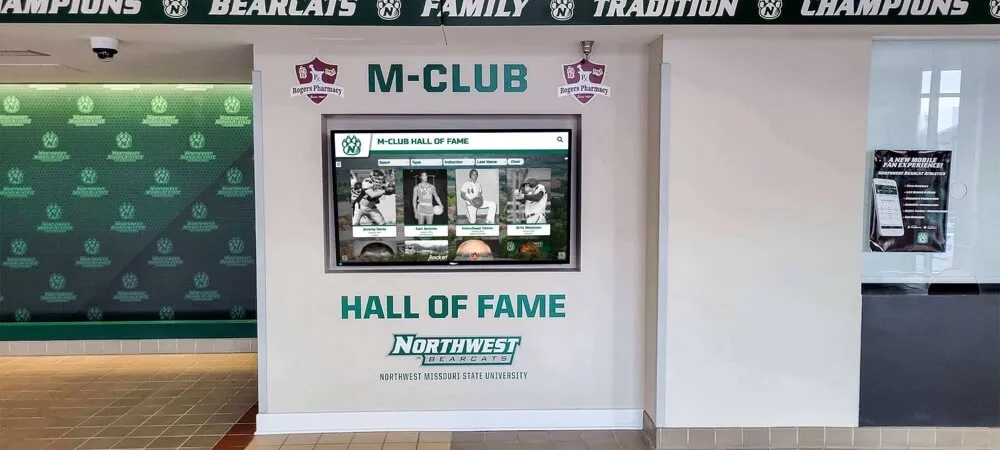
Every data field on a public athletic recognition display is a disclosure decision — a data minimization policy ensures only necessary information is published
What Is an Athletic Award Data Minimization Policy?
An athletic award data minimization policy is a written document that defines, field by field, which personal and award-related data may be included in a school’s public athletic recognition profiles — and which may not. The policy applies to every channel where recognition data appears publicly: physical displays, digital halls of fame, touchscreen kiosks, website award archives, and printed ceremony programs that are distributed or scanned.
The minimization principle itself is well established in data governance. The EU General Data Protection Regulation codifies it at Article 5(1)(c), requiring that personal data be “adequate, relevant, and limited to what is necessary in relation to the purposes for which they are processed.” While GDPR applies to European entities, the underlying standard — collect and publish only what serves the stated purpose — is widely adopted as a baseline best practice in educational data governance, including U.S. school settings governed by FERPA.
For athletic recognition specifically, the stated purpose is clear: honoring athlete achievement, preserving institutional history, and inspiring current students and alumni. Every data field should be tested against that purpose. A player’s name, sport, award, and season are necessary. A player’s home address, date of birth, or GPA are not — and their inclusion creates privacy exposure without adding recognition value.
Why Public School Athletic Recognition Requires a Minimization Policy
Most data minimization conversations in K-12 focus on student academic records. But athletic recognition profiles carry their own privacy considerations that make a formal policy necessary.
FERPA directory information rules create a false sense of permission. Under the Family Educational Rights and Privacy Act (20 U.S.C. § 1232g), schools may designate certain data elements as “directory information” — including name, participation in school activities, and awards received — that can be disclosed without prior consent unless a student or parent has exercised the right to opt out. Directory information status does not mean a field should be published; it means it may be published after proper notice and opt-out opportunity. A minimization policy adds the next question: should this field appear in a public recognition profile, given the recognition purpose?
Recognition platforms accumulate data beyond what recognition requires. Athletic databases often contain far more information than coaches and administrators originally intended to publish. When a digital hall of fame or awards display is populated from an existing database, it may pull every available field unless a publication schema explicitly limits what appears. Without a minimization policy defining that schema, over-disclosure is the default outcome.
Athletes and families expect recognition, not exposure. A student honored for a state championship does not expect their home city, graduation date format, or academic GPA to appear alongside their award. When that information appears without expectation, it erodes the trust that recognition is meant to build. Schools that have managed requests to remove historical athlete data understand that over-publication is harder to correct after the fact than to prevent at the policy level. The athletic history takedown request policy that most programs eventually need is far easier to administer when the original publication followed a minimization standard.
Minor athletes receive additional protection. Most high school athletes are minors at the time they receive awards. While recognition of athletic achievement is lawful and appropriate, the standard of care for what is published about minors is higher than for adults. A minimization policy that defaults to the least-identifying set of fields necessary for recognition is the appropriate baseline for a K-12 context.
The Core Principle: Necessary for Recognition, or Not
The test is straightforward: does this field serve the recognition purpose? Apply it to each proposed data field before publication.
A field serves the recognition purpose if it:
- Identifies who is being honored (name, team role, sport)
- Describes what is being honored (award title, season, category)
- Contextualizes the achievement for the institutional record (season year, school, coach)
- Was explicitly volunteered by the athlete or family for public display (college destination, hometown by choice)
A field does not serve the recognition purpose if it:
- Identifies the individual beyond what recognition requires (student ID, date of birth, home address)
- Reflects protected educational records (GPA in a non-academic-award context, transcript data)
- Creates locating or contact risk (phone number, personal email, current address)
- Was collected for administrative purposes, not public display (emergency contact information, medical notes, eligibility status details)
Field-by-Field Table: Keep, Conditional, or Omit
The table below covers the data fields most commonly found in school athletic recognition databases. Apply this as a starting point, then adapt to your school’s specific programs and platforms.
| Field | Recommendation | Rationale |
|---|---|---|
| Athlete full name | Keep | Core recognition purpose; necessary to identify who is honored |
| Preferred display name | Keep | Supports name dignity; use if provided by athlete |
| Sport or activity | Keep | Contextualizes award; necessary |
| Award title | Keep | Core recognition purpose |
| Award season / year | Keep | Contextualizes achievement for institutional record |
| School name | Keep | Institutional context; no privacy concern |
| Graduation year (class year) | Keep | Contextualizes era of achievement; no specific birthdate revealed |
| Team name or program | Keep | Recognition context |
| Coach name (at time of award) | Keep | Public role; appropriate for institutional history |
| Award category or level | Keep | Describes the scope of achievement |
| Career performance stats (aggregate) | Keep with care | Appropriate for records boards; avoid stats that identify medical status |
| Action photos (with consent) | Conditional | Require documented photo consent, especially for minors |
| Individual portrait photo | Conditional | Appropriate with consent; follow school photography policy |
| Home city or hometown | Conditional | Acceptable only if voluntarily provided for public use |
| College or university destination | Conditional | Acceptable when publicly announced; verify before publishing |
| Recruiting information | Conditional | Only after public announcement; never pre-announcement |
| Specific birth date (MM/DD/YYYY) | Omit | No recognition purpose; creates identification risk |
| Student ID number | Omit | Security risk; zero recognition value |
| GPA or academic grades | Omit | FERPA-protected educational record; omit unless explicit consent for an academic-athletic award |
| Home street address | Omit | No recognition purpose; creates location risk |
| Parent or guardian names | Omit | No recognition purpose; family members did not earn the award |
| Personal phone number | Omit | No recognition purpose; contact risk |
| Personal email address | Omit | No recognition purpose; contact and spam risk |
| Social Security Number | Omit | Never publish under any circumstances |
| Health or medical information | Omit | HIPAA and FERPA protected; never publish |
| Eligibility status details | Omit | Internal administrative record; no recognition purpose |
| Emergency contact information | Omit | Collected for safety purposes only; never publish publicly |
| Disciplinary or conduct notes | Omit | Internal record; publishing would be adverse, not recognizing |
Seven Steps to Build Your School’s Athletic Award Data Minimization Policy
Step 1: Define the recognition purpose in writing. Before auditing any field, document what your program is trying to accomplish. A one-paragraph purpose statement — “This program recognizes athlete achievement in school-sponsored sports by publishing award records that preserve institutional history and inspire current students” — provides the reference standard against which every field decision is evaluated.
Step 2: Inventory every field currently being published. Pull a sample record from each publication channel: the digital display, the website archive, the ceremony program, the physical case placard. List every data field that appears. This inventory often reveals fields that were included historically without deliberate decision — graduation address from an old database export, for example, or birth year from an eligibility form.
Step 3: Apply the necessity test to each field. For each field in the inventory, ask: does including this field make the recognition more meaningful, or does it only add identifying detail? Use the keep/conditional/omit framework from the table above as your starting point. Document the decision for each field and the reasoning.
Step 4: Classify fields and build your publication schema. Compile the decisions into a formal publication schema: the defined list of fields that may appear in each type of public recognition profile. A digital display profile schema may differ from a printed ceremony program schema — the display may show photos, the program may include a brief biography. Maintain a schema document for each channel.
Step 5: Establish a consent workflow for conditional fields. Conditional fields — action photos, hometown, college destination — require a defined process for obtaining and recording consent before publication. Design a simple consent form or digital workflow that captures the athlete’s (and, for minors, guardian’s) explicit permission for each conditional field. Log consent with the athlete’s record so it can be verified if a takedown or dispute arises.
Step 6: Implement a review cadence. A minimization policy is not a one-time audit. Assign a named role — typically the athletic director or a designee — to review the publication schema annually and before any platform migration or system update. When a new recognition category is added or a new channel is opened, run the necessity test before populating it.
Step 7: Connect to your takedown and correction policy. Data minimization prevents over-publication, but requests will still arise — from athletes who have turned 18 and want information updated, from families with concerns, from individuals whose records contain errors. The athletic history takedown request policy and the athletic award data reconciliation report process are the downstream mechanisms that handle individual record concerns. Connecting your minimization policy to these processes creates a complete lifecycle: publish only what is necessary, correct what is wrong, and remove what should not have been published.
Connecting Data Minimization to Digital Display Systems

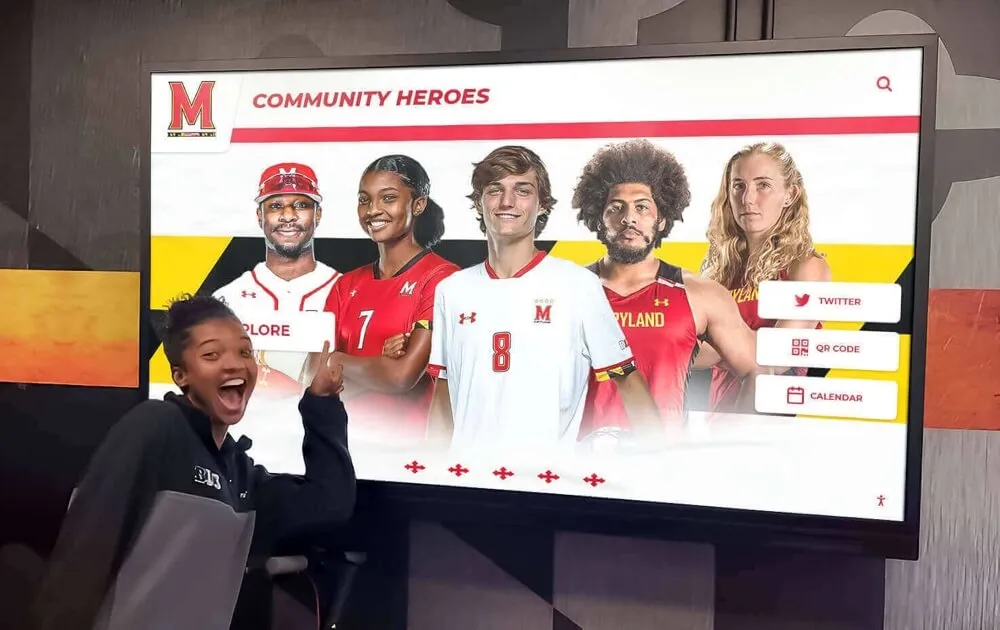
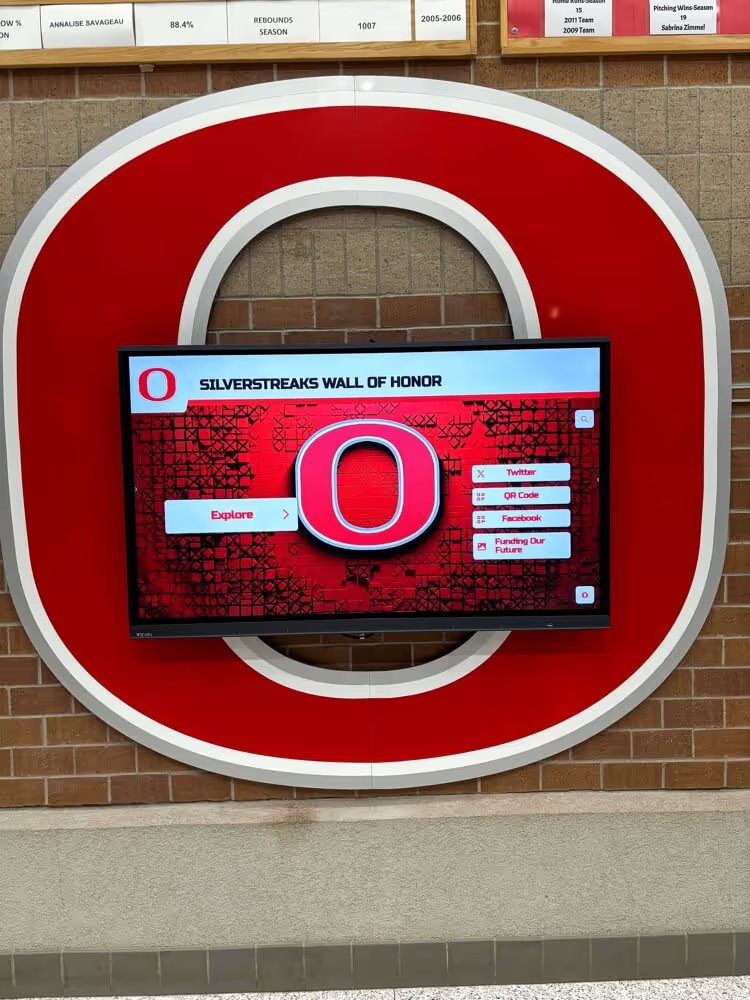
Interactive recognition displays show only what the platform is configured to publish — a minimization policy defines exactly which fields that includes
Modern digital athletic recognition platforms operate through a cloud-based content management system that controls which fields appear in each public profile. This architecture is directly compatible with data minimization: the platform can be configured to display only the approved fields in your publication schema, regardless of what data exists in the underlying record.
For administrators evaluating or currently using digital recognition platforms, data minimization policy connects to platform configuration in three practical ways:
Field visibility settings. Most enterprise recognition platforms allow administrators to toggle field visibility per profile type and per channel. An athlete’s date of birth may exist in the system for administrative use while being suppressed from all public-facing displays. Confirm that your platform supports field-level publication control before assuming minimization is enforced at the source.
Role-based access. The publication schema should align with role-based access controls: only staff with the data steward role should be able to add or modify fields in a public profile. Coaches and volunteers contributing award nominations should submit data through a defined intake form that captures only the approved fields — not through direct database access.
Multi-device profile consistency. Recognition programs displayed on lobby touchscreens, school websites, and mobile-accessible QR code destinations should show identical field sets. A minimization policy applied to one channel but not others creates inconsistency — and the channel with more data becomes the effective publication standard. Platforms that manage all channels from a single CMS make consistent field configuration easier to enforce.
For programs building or refreshing recognition databases alongside their display systems, the intake and audit practices in the athletic award duplicate record report guide illustrate how field-level decisions during data entry affect what eventually appears on public displays — another reason to define the publication schema before populating the system.
FERPA and Athletic Recognition: What Athletic Directors Need to Know
FERPA protects “education records” — records maintained by a school that are directly related to a student. The regulation provides a specific carve-out for “directory information,” which schools may designate and disclose publicly (after proper annual notice to families and opportunity to opt out). Under 34 CFR § 99.3, typical directory information designations include student name, participation in officially recognized activities and sports, and awards received.
Three FERPA considerations are directly relevant to an athletic award data minimization policy:
Directory information designation does not require publication. A school that designates “awards received” as directory information may publish award records without individual consent (absent an opt-out). But directory information status creates permission, not obligation. A minimization policy adds the institutional judgment that some fields — even if technically permissible to disclose — should not be published because they serve no recognition purpose.
Opt-out requests must be honored. Families of minors (and students themselves once they turn 18) may opt out of directory information disclosure. Schools must have a process for flagging opt-out records in the recognition system and suppressing them from public display. Any policy framework should include this as a defined exception.
Non-directory fields remain protected regardless of context. GPA, academic grades, disciplinary records, and health information are not directory information and may not be published without explicit written consent, even in an awards context. The one exception most schools apply is academic-athletic awards (scholar-athlete recognition, academic all-state) where GPA is the award criterion — and even then, explicit written consent is the appropriate standard before including GPA in a public profile.
For programs that publish recognition aligned with academic achievement, the AP Scholar Award recognition practices provide a model for how schools acknowledge academic distinction — the award itself, not underlying academic data, is what is recognized publicly.
Practical Pre-Publication Checklist
Use this checklist before publishing any new recognition profile or updating an existing one:
- Every displayed field is listed in the approved publication schema for this channel
- No date of birth, student ID, home address, phone number, or GPA appears in the profile (unless GPA is the award criterion and written consent is on file)
- Photos are covered by a signed consent form from the athlete (and guardian if the athlete is a minor)
- Opt-out status has been checked — no records flagged for FERPA opt-out are included
- Athlete name matches the athlete’s preferred display name if one is on file
- Award title, season, and sport are verified against the governing source document
- Conditional fields (hometown, college destination) are included only if the athlete explicitly provided them for public display
- The profile has been reviewed by the designated data steward before publication
For programs managing recognition across multiple award seasons and team cohorts, the same data integrity practices that apply to athletic banquet recognition programs — confirming names, verifying award categories, matching results to governing sources — are the entry-level quality controls that feed into a compliant minimization framework.
Building a Recognition Archive That Respects Athlete Privacy Over Time
Recognition archives grow. A digital hall of fame that begins with 50 inductees accumulates hundreds of profiles over a decade. Each new season adds records. Each platform migration creates a data-transfer moment where field mappings must be checked. Each staff transition creates a moment where institutional knowledge of the minimization policy may be lost.

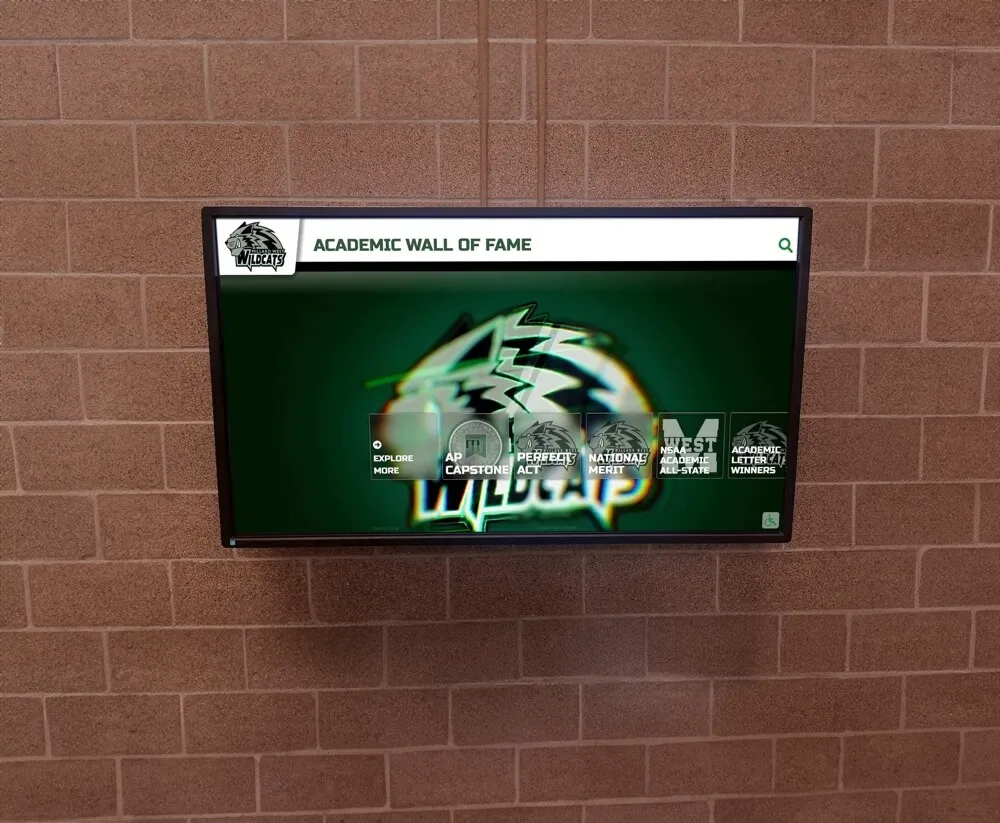
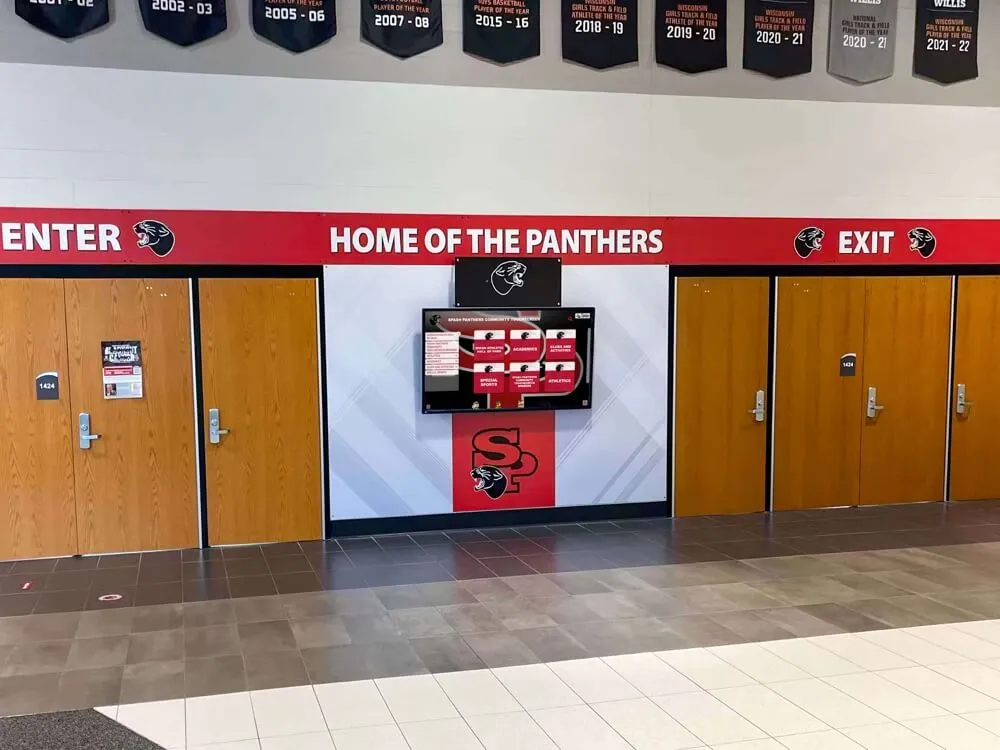
A recognition archive that grows across decades requires a documented minimization policy — so that the standard applied to records published in year one is the same standard applied in year twenty
Sustaining a data minimization standard over time requires three institutional habits:
Documented policy, not institutional memory. The publication schema, the necessity test, the consent workflow, and the review cadence must exist as written documents accessible to whoever holds the relevant role — not as knowledge held by one administrator who may leave the institution. This is the same principle behind assigning athletic award data stewardship roles that align with institutional mission.
Migration review as a policy checkpoint. Every time recognition data moves — from one platform to another, from paper records to digital, from a legacy database to a new CMS — the transfer is an opportunity to audit field mappings against the current minimization policy. Fields that were published under a previous standard may no longer meet the current standard. A migration review checklist that includes field-level publication approval prevents old over-disclosure patterns from carrying forward.
Annual review tied to the athletic calendar. The review cadence works best when tied to a fixed point in the athletic year — the end of the academic year, the period after spring ceremonies, before the fall season begins. A one-hour annual review of the publication schema, consent log completeness, and opt-out flags is sufficient for most programs to maintain compliance and catch drift before it accumulates.
Programs that manage physical artifacts alongside digital records face the same discipline when deciding what to display publicly. The athletic artifact sign-out sheet and custody practices that govern physical memorabilia apply the same chain-of-custody logic that data minimization applies to digital records — only the authorized content leaves the controlled environment and enters the public domain.
For programs building a recognition culture that extends beyond athletics, the principles of thoughtful, recognition-purpose-focused data publication apply equally to academic honor programs and touchscreen museum or community displays, where institutions like those involved in America 250 celebration commemorations navigate similar questions about what historical information to surface and what to protect.
Frequently Asked Questions
What is the difference between data minimization and data deletion in athletic recognition?
Data minimization determines what is published in a public profile — it limits what appears externally without deleting internal records. A school may retain complete athlete records, including date of birth and contact information, for administrative purposes while publishing only name, sport, award, and season in the public-facing display. Data deletion is a separate action, typically triggered by a takedown request or an expiration policy, that removes a record from the internal system entirely. A minimization policy addresses publication; a retention policy addresses deletion.
Does FERPA require schools to get consent before publishing an athlete’s name in a recognition display?
Generally, no — if the school has designated student name and participation in activities as directory information, as most schools do, and has provided families with the required annual notice and opt-out opportunity. However, FERPA opt-out requests must be honored, and additional fields beyond the directory information designation (such as GPA, date of birth, or home address) may not be published without explicit written consent. A minimization policy that limits publication to the approved field set substantially reduces the FERPA compliance surface.
What fields are most commonly over-published in school athletic recognition profiles?
The most common over-publication patterns are: birth year or graduation date in formats that reveal approximate age, home city or state pulled from address fields in the athletic database, GPA or class rank included in scholar-athlete profiles without explicit consent documentation, and parent names included in biography-style profiles. None of these fields are necessary for recognition, and all can be suppressed with a documented publication schema that explicitly excludes them.
How should a school handle an athlete who requests removal of their data from a public recognition display?
The first step is to determine whether the request is a FERPA directory information opt-out (which applies prospectively and requires prompt action), a correction request (the data published is inaccurate), or a discretionary removal request (the data is accurate but the athlete prefers not to be featured). Each scenario has a different response. Programs that have established a takedown request policy for athletic history document these pathways in advance, which makes individual requests faster to process and more consistent to handle.
Can a school include performance statistics — rushing yards, batting average, swim times — in a public recognition profile?
Yes, with appropriate care. Career and season performance statistics are appropriate for recognition displays and record boards because they describe achievement, not the individual’s personal identity. The minimization test is satisfied if the statistic directly contextualizes the award being recognized. Statistics that could indirectly reveal medical or health information — playing time after an injury, performance patterns tied to a documented condition — should be reviewed before publication. In practice, aggregate career and season statistics for standard athletic events are appropriate for public recognition profiles without additional consent.
Take the Next Step
A data minimization policy is one layer of a complete athletic recognition governance framework — alongside validation rules, stewardship roles, and correction workflows. If your school is building or modernizing a digital hall of fame, awards archive, or touchscreen recognition display, the platform configuration and field-level publication controls your system provides are the technical implementation of the policy decisions made here.
To see how a cloud-based digital recognition platform handles field visibility, consent-driven publication, and multi-channel consistency, request a custom demo and walk through how the system maps to your school’s minimization policy.