



An athletic award data quality audit is a structured review that compares award records across every source — databases, certificates, physical displays, and digital recognition platforms — to identify and resolve discrepancies in athlete names, award titles, dates, and recognition status before they become permanent errors. Schools that run this audit on a regular cycle catch the small inconsistencies that accumulate quietly over years: a misspelled surname on a trophy, an award year that reflects the ceremony date rather than the season, a record board entry that was never updated after a correction.
This guide is written for athletic directors, archives staff, facilities teams, alumni coordinators, and school IT leads who are responsible for the accuracy of athletic recognition records. It provides a field-by-field reconciliation table, a pre-audit checklist, and a numbered exception workflow for resolving every type of discrepancy the audit surfaces.
A school’s athletic records are only as trustworthy as the process used to verify them. Award certificates get filed. Trophy case plaques get engraved. Digital displays go live. Each step introduces its own opportunity for a name to be misspelled, a date to be transposed, or a title to drift from the program’s official award catalog. An athletic award data quality audit closes the feedback loop — checking that every channel reflects the same verified record.

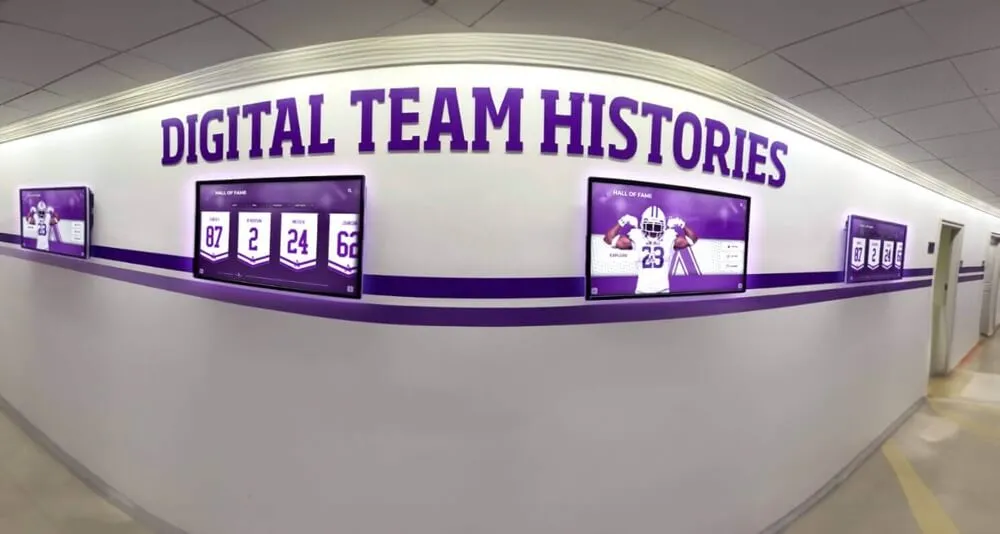
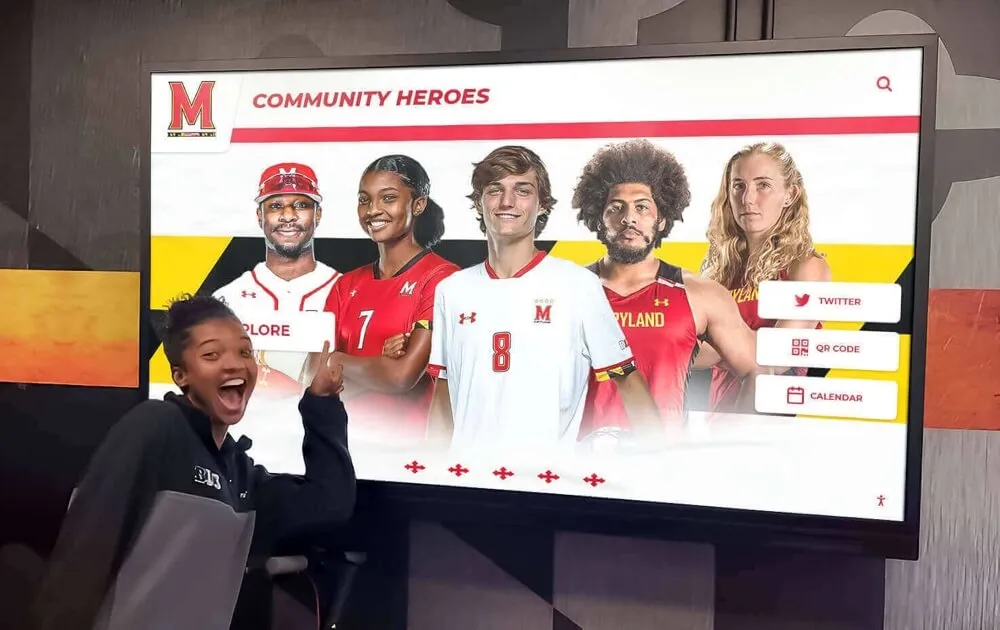
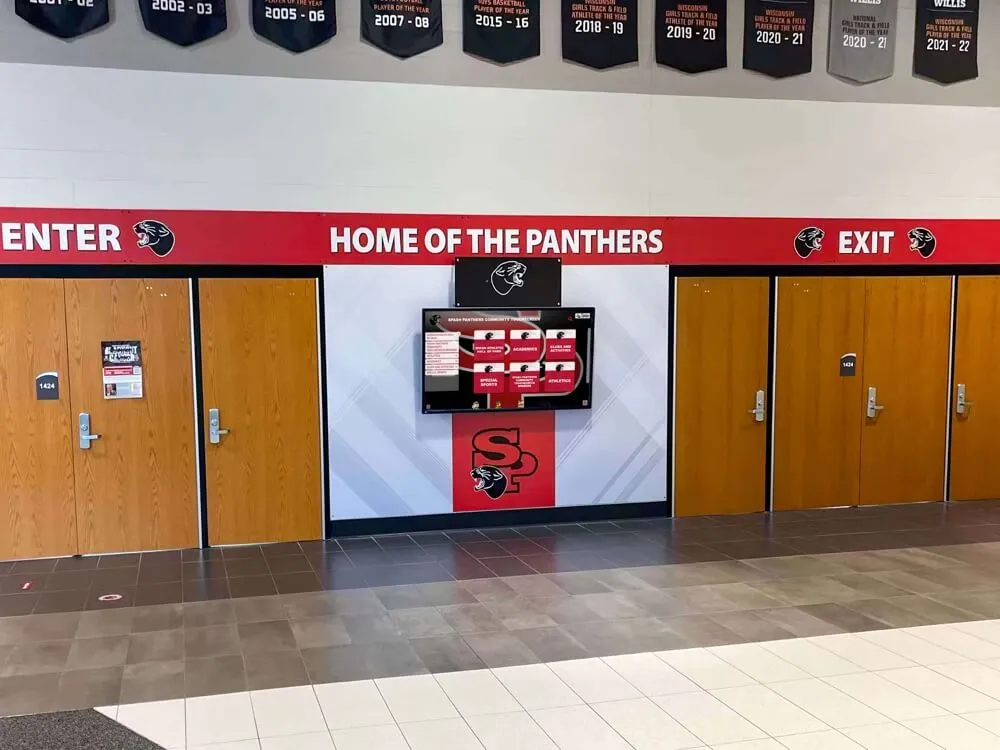
Hallway displays are only as accurate as the records behind them — a data quality audit confirms that every name, title, and date visible to students and visitors has been verified against the authoritative source
What Is an Athletic Award Data Quality Audit?
An athletic award data quality audit is the process of systematically comparing award records across every source where they appear — the athletic department’s master database, issued certificates, physical honor walls, trophy engraving, and digital recognition platforms — and reconciling any differences found between them.
The audit answers five questions for every award record in scope:
- Is the athlete’s name spelled correctly and consistently across all sources?
- Does the award title match the school’s official award catalog exactly?
- Is the date or season recorded accurately — the competitive season, not just the ceremony year?
- Is the award reflected on every display channel where it should appear?
- Is the record marked as verified, or does it carry a flag that requires follow-up?
A data quality audit is distinct from an awards selection review (which evaluates who received an award) and a publication policy audit (which evaluates process). The data quality audit focuses exclusively on whether the record of what was decided is accurate wherever that record lives.
Pre-Audit Checklist
Before beginning field-by-field reconciliation, use this checklist to confirm that all source documents and access permissions are assembled.
| Checklist Item | Responsible Party | Status |
|---|---|---|
| Master award database export (all seasons in scope) | Athletic director / IT | ☐ |
| Ceremony programs and banquet documentation | Athletic director / admin | ☐ |
| Physical display inventory (plaques, engraved plates, trophy cases) | Facilities coordinator | ☐ |
| Digital recognition platform record export | IT / platform admin | ☐ |
| Record board printout or screenshot (current state) | Athletic director | ☐ |
| Certificate or letter copies for high-visibility awards | Athletic director / archives | ☐ |
| Official award catalog (current version with all award title definitions) | Athletic director | ☐ |
| Access credentials for digital CMS confirmed | Platform admin | ☐ |
Gathering all sources before beginning prevents the most common audit interruption: discovering mid-review that a critical source document requires a different access credential or is filed in a location outside the auditor’s immediate reach.
Core Field Reconciliation Table
The heart of the athletic award data quality audit is field-by-field reconciliation. Each column below represents a source; each row represents a data field that should match across all sources.
| Data Field | Master Database | Ceremony Program | Physical Display | Digital Platform | Certificate |
|---|---|---|---|---|---|
| Athlete first name | ✓ verify | ✓ verify | ✓ verify | ✓ verify | ✓ verify |
| Athlete last name | ✓ verify | ✓ verify | ✓ verify | ✓ verify | ✓ verify |
| Graduation year | ✓ verify | ✓ verify | — | ✓ verify | ✓ verify |
| Sport | ✓ verify | ✓ verify | ✓ verify | ✓ verify | ✓ verify |
| Award title (exact) | ✓ verify | ✓ verify | ✓ verify | ✓ verify | ✓ verify |
| Competitive season | ✓ verify | ✓ verify | — | ✓ verify | ✓ verify |
| Academic year | ✓ verify | ✓ verify | — | ✓ verify | — |
| Ceremony date | ✓ verify | ✓ verify | — | ✓ verify | — |
| Photo file linked | ✓ verify | — | — | ✓ verify | — |
| Display status | ✓ verify | — | ✓ verify | ✓ verify | — |
For each cell, the auditor confirms that the value in that source matches the value in the master database. Any cell where the values differ triggers the exception workflow described in the next section. Mark each cell Green (match confirmed), Yellow (minor variance — likely typo or formatting difference), or Red (substantive discrepancy requiring formal resolution).
For programs that maintain a formal data dictionary for their records system, the athletic records data dictionary resource covers how standardized field definitions prevent the naming and formatting drift that makes reconciliation harder each year.
Field-by-Field Guidance
Athlete Names
Name discrepancies are the most common finding in an athletic award data quality audit and the highest-impact errors on permanent displays. The most frequent name issues:
Spelling variants. Hyphenated surnames, names with diacritical marks, and compound first names are commonly simplified or modified during data entry. The audit standard is that the official record matches the athlete’s legal or school-registered name exactly — including hyphens, apostrophes, and accent marks.
Preferred vs. legal name. Some athletes use a nickname or preferred name publicly but have a different legal name. The award record should reflect the name the athlete wishes to appear on permanent recognition, documented with explicit written confirmation from the athlete or guardian. A brief acknowledgment form — similar in concept to a name pronunciation intake — creates a clean paper trail.
Name changes. Athletes who have legally changed their name after receiving an award present a specific challenge: the historical record reflects the name used at the time of the award, but the athlete may prefer updated records. The audit should flag any records where a name change has been requested and document the decision made by the athletic director and reviewed by school administration. This is a policy decision, not purely a data decision — consult the school’s own records management guidelines when in doubt.
Phonetic spellings in digital platforms. Digital recognition platforms that include a name pronunciation field — or allow audio attachments — should have that field populated as part of the audit. Accurate phonetic guidance prevents ceremony mispronunciation when future staff access historical records.
Award Titles
Award title discrepancies are common when a program has used informal variations of official award names across seasons — “Most Valuable Player” in one ceremony program, “MVP” in another, and “Varsity MVP” in the database. The audit standard is that every record uses the exact title from the program’s official award catalog.
Verify against the official catalog. If no official catalog exists, the audit is the right moment to create one. A simple list of every award the program grants, with the exact title, the sport(s) to which it applies, and the first season it was issued, becomes the reference document for all future record entry.
Retired award titles. Awards that have been discontinued should be flagged in the database with a “retired” status and an end-season date. Records for retired awards should retain the original title rather than being updated to a current equivalent — the historical record should reflect what the athlete actually received.
Spelling and capitalization. Award title consistency extends to capitalization. “Coaches Award” and “Coach’s Award” and “Coaches’ Award” are three different strings that may sort or display differently across systems. Pick one form and enforce it across every source.
For programs reviewing their academic and athletic award taxonomy together, academic achievement award recognition practices for high schools covers the naming conventions used for cross-program recognition that athletic departments often need to align with.
Dates and Seasons
Date discrepancies are the most structurally confusing errors in athletic award records because several legitimate dates are associated with every award — the competitive season, the academic year, and the ceremony date — and these routinely differ.
Season vs. year. An award earned during the fall 2024 season and presented at a January 2025 banquet belongs to the 2024–2025 academic year and the fall 2024 competitive season. If the record stores only “2025,” it is ambiguous whether it reflects the season year, the ceremony year, or the graduation year. Every record should store both the academic year and the competitive season as separate fields.
Ceremony date vs. award season. Physical displays often engrave a single year — typically the ceremony year — which may differ from the season year by one calendar year for fall or winter sports. This is a known structural issue, not an error, but the audit should document which convention a given display uses so future updates are consistent.
Retroactive records. Historical records entered from paper archives commonly carry only a calendar year with no season or academic year distinction. These should be flagged as “date incomplete” in the master database rather than silently assigned to a default value that may be wrong.

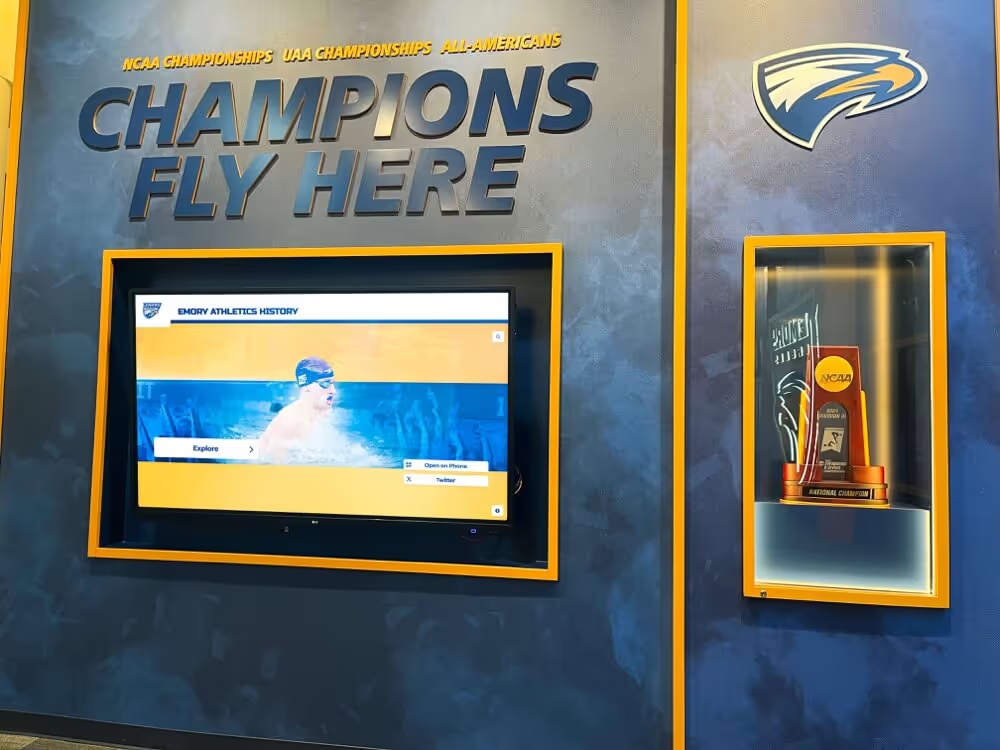
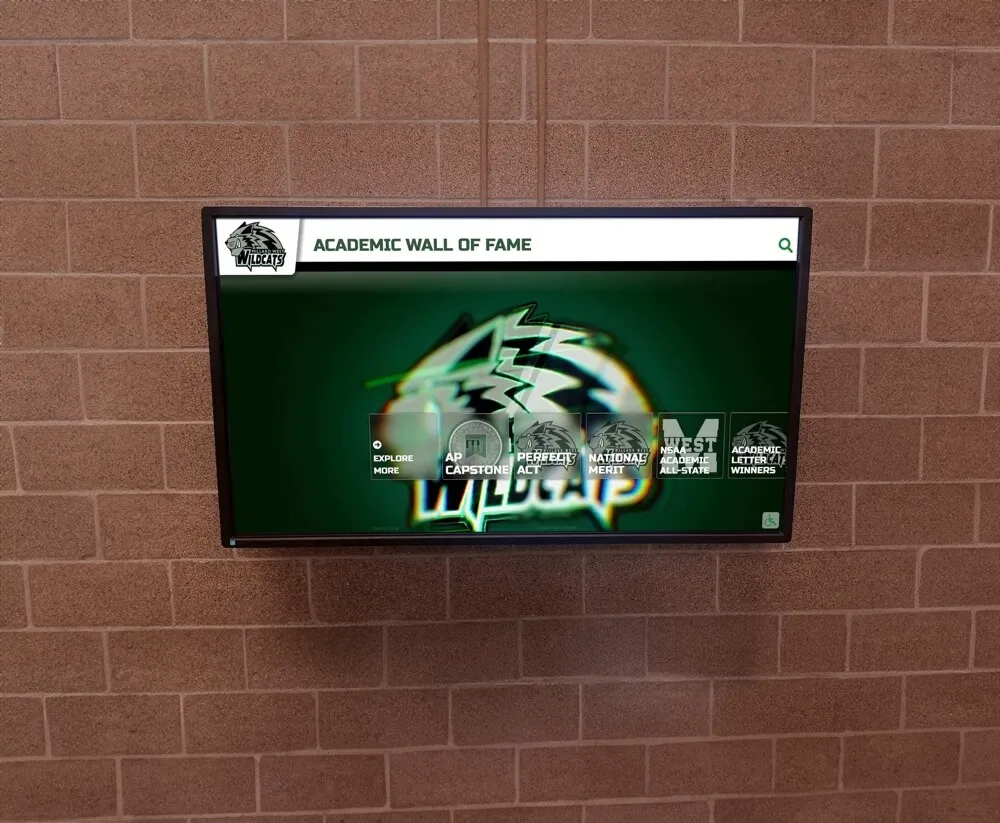
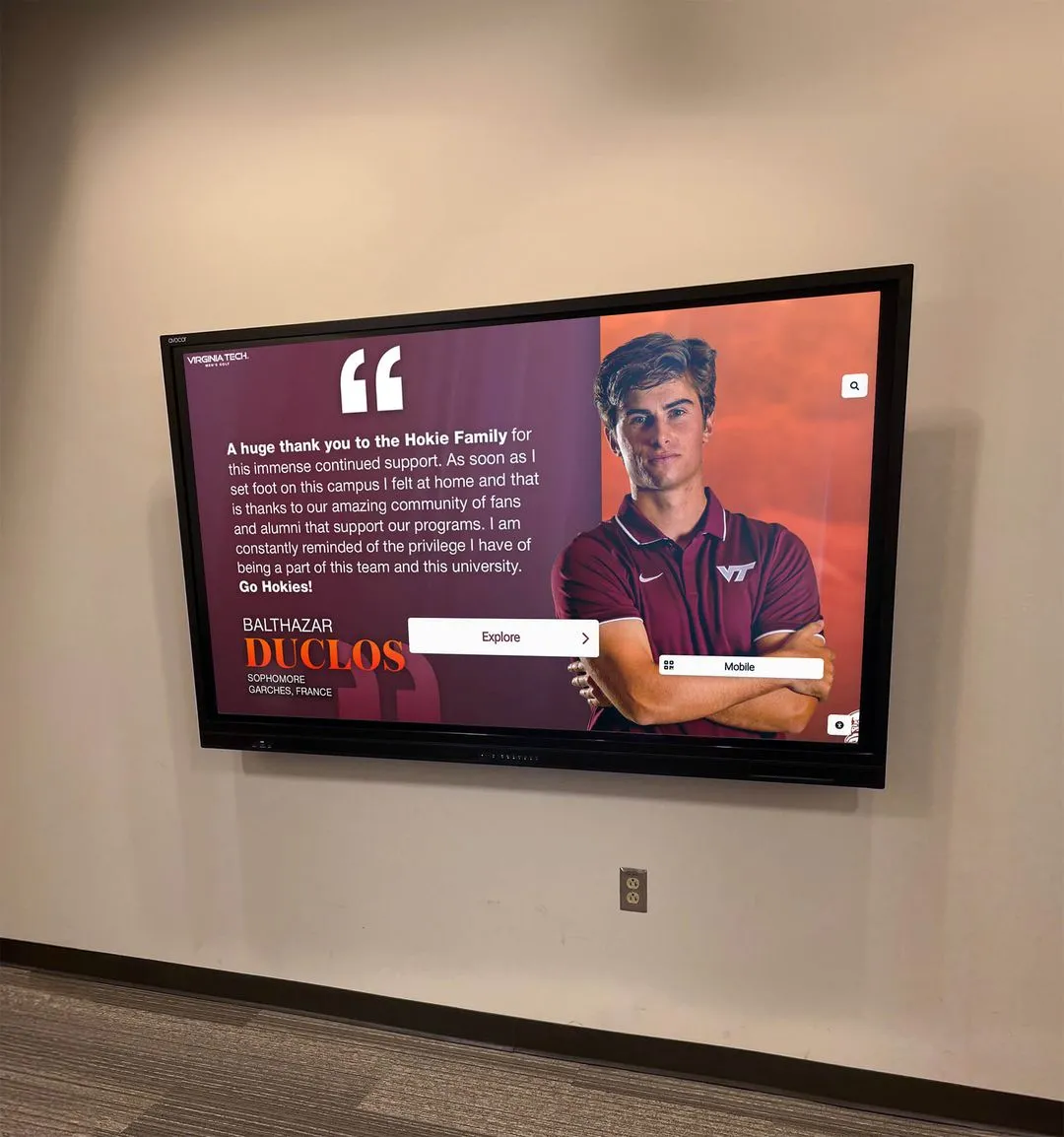
A digital recognition platform that stores season, academic year, and ceremony date as separate fields prevents the date ambiguity that causes reconciliation errors across sources
Display Records
Display record discrepancies occur when the award database contains a record that is not reflected on one or more display channels — or when a display contains an entry that does not exist in the master database.
Database-to-display gaps. Filter the master database for all records where display status is “Pending” or “Not Published.” Any record more than 90 days past its award date that remains unpublished represents a gap between what the program decided and what athletes, families, and visitors can actually see.
Display-to-database gaps. Physical displays — particularly legacy trophy cases, engraved plaques, and honor walls — sometimes contain entries that were never entered into the digital database. Walk the physical displays as part of the audit and verify that every entry visible on a wall or case has a corresponding record in the master database. This step frequently surfaces historical awards from before digital record-keeping began.
Record board accuracy. Record boards represent a specialized subset of display records: statistical bests that should automatically reflect the current holder of each record. Verify that every entry currently displayed on the record board matches the value stored in the database, and that any performances from the most recent season that may qualify as new records have been reviewed. The hall of fame annual content review checklist covers the broader scope of annual display review that record board audits fit within.
Digital platform field completeness. Digital recognition profiles should meet a minimum field-completeness standard before they are considered fully published. At minimum: athlete name (verified), sport, graduation year, award title (from official catalog), competitive season, and at least one photo. Records published without meeting this standard should be flagged for completion even if they are technically visible.
For programs establishing retention timelines for the records that underlie display content, athletic award records retention schedule guidance addresses how long different categories of award documentation should be kept and in what format.
Exception Workflow: Resolving Every Discrepancy Found
When the reconciliation table identifies a discrepancy — any cell that is Yellow or Red — use this numbered workflow to resolve it.
Step 1 — Classify the discrepancy. Assign one of three categories:
- Typo / formatting — the value is clearly intended to match but differs in spelling, punctuation, capitalization, or whitespace
- Source conflict — two authoritative sources contain different values and neither is obviously wrong
- Missing record — the value exists in one source but is absent from another
Step 2 — Identify the authoritative source. For each field, the audit policy should designate one source as the authority:
- Athlete name: school enrollment records (or athlete’s written preference for preferred name)
- Award title: official award catalog
- Date and season: ceremony program cross-referenced with athletic department season calendar
- Display status: master database
Step 3 — Draft the correction. Document the proposed corrected value, which source it comes from, and the name of the person who reviewed the correction. Do not apply any correction without a documented review step.
Step 4 — Route for approval. Typos and formatting corrections can be approved by the athletic director alone. Source conflicts require review by the athletic director and, if the award is a historical record, the school archives or records officer. Missing records that involve adding new entries to displays require the same approval chain as any new publication.
Step 5 — Apply the correction. Update the master database first. Then propagate to each downstream source: digital platform, and if the error appears on a physical display, initiate the correction order for the physical element. Document the date each source was updated.
Step 6 — Verify propagation. Within 14 days of applying the correction, confirm that every source now reflects the corrected value. Re-run the relevant row of the reconciliation table and mark the cell Green.
Step 7 — Log the exception. Record the discrepancy, its classification, the resolution, and the sources updated in a running exception log. This log serves as an audit trail — useful for responding to future questions, for demonstrating policy compliance, and for identifying patterns (e.g., a particular coach’s submissions consistently have season-year errors that warrant a process change upstream).
For programs where data quality issues have upstream causes — such as algorithmic or automated systems introducing errors into digital recognition records — data integrity considerations in digital hall of fame platforms covers the types of errors that audits are designed to catch before they propagate.

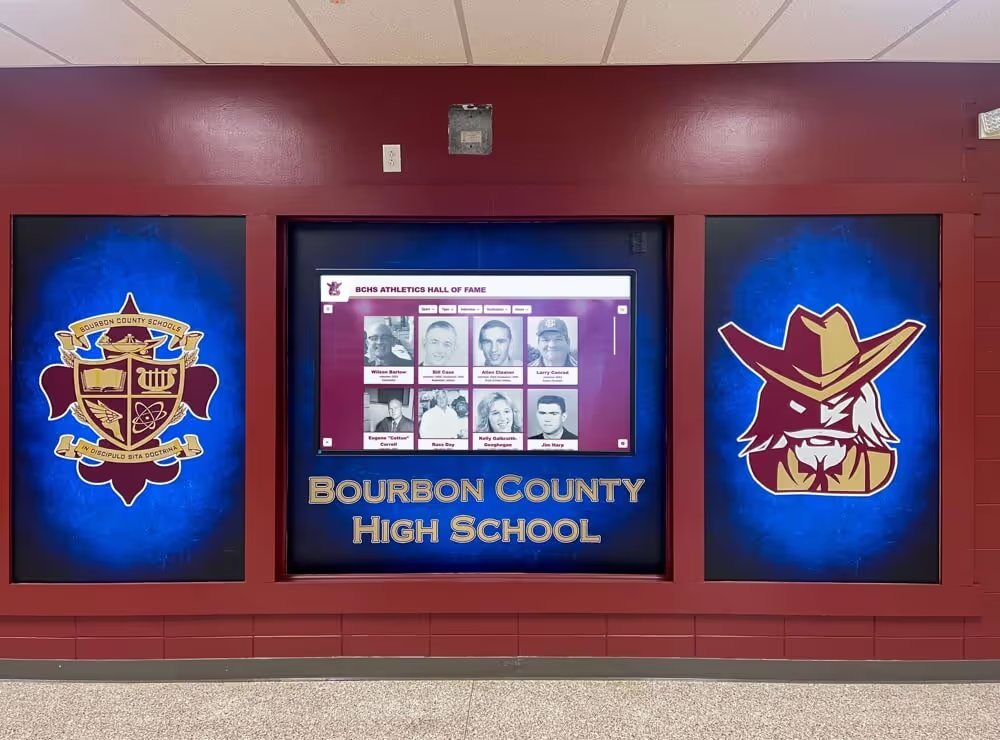
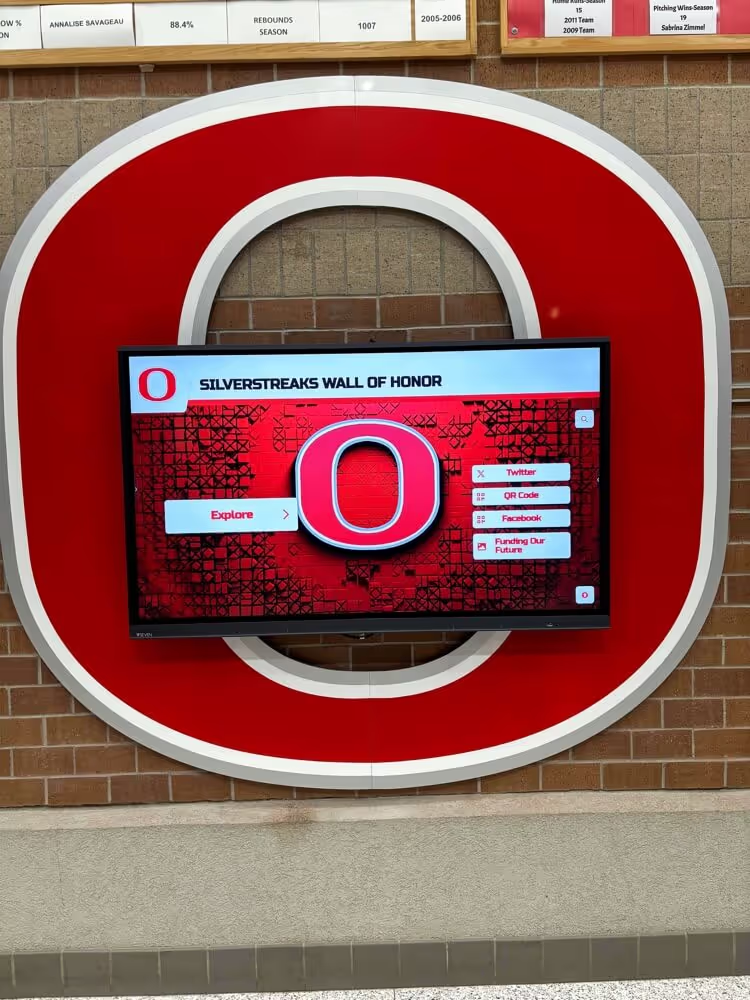
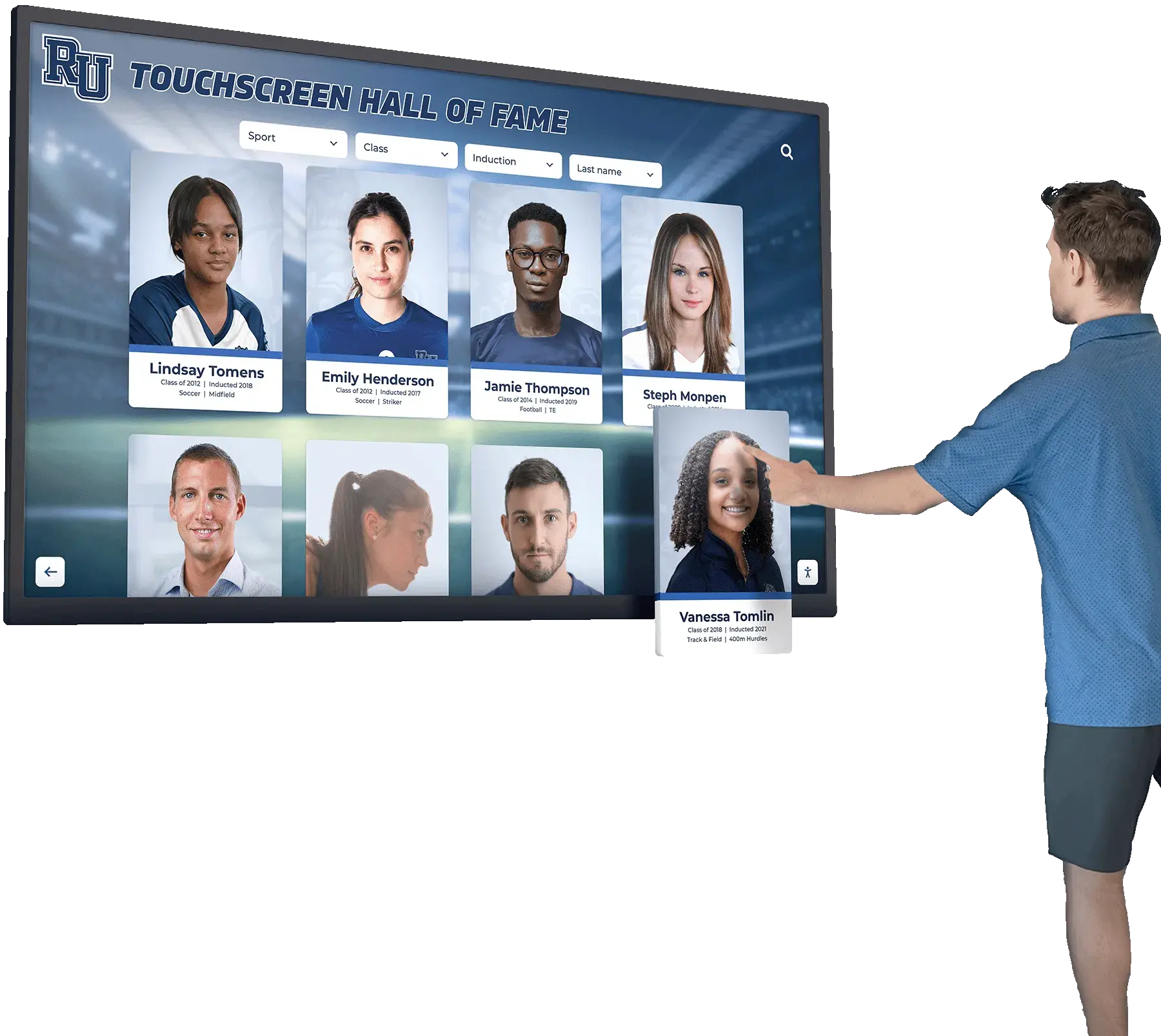
Every profile visible on a touchscreen recognition display should trace back to a verified master record — the exception workflow ensures discrepancies are resolved before they reach permanent display
Audit Scope: What to Include Each Cycle
Not every program needs to audit its entire historical archive every year. Structure the audit scope based on risk and resource availability.
Annual Audit (Recommended Minimum)
- All records from the current and prior two seasons
- Any record flagged as unresolved from the previous audit
- All record board entries
- All records on physical displays that were updated in the past 12 months
Three-Year Deep Audit
- All records from the past ten seasons
- Physical display entries that have not been verified since they were installed
- Historical records entered from paper archives without source documentation
Full Historical Audit
- All records in the master database, from oldest to most recent
- Physical displays not touched in the deep audit cycle
- Records that surface during alumni engagement outreach, reunion events, or hall of fame induction review
Most programs find that annual maintenance audits take four to eight hours when the database is well-organized, while a first-time deep audit of a program with decades of unverified records can take significantly longer. Allocating audit time as a scheduled offseason project — rather than deferring until an error surfaces publicly — prevents the more expensive reactive correction process.
How Digital Platforms Support Ongoing Data Quality
A cloud-based digital recognition platform does not eliminate the need for a data quality audit, but it substantially reduces the burden by centralizing records, enforcing field requirements at entry, and providing real-time cross-source synchronization.
Centralized source of truth. When the master database and the display system are the same platform, corrections made in the database are reflected immediately on every display instance — hallway kiosk, lobby screen, web archive, and mobile-accessible portal — without requiring separate updates to each channel.
Field-completeness enforcement. Platforms that require mandatory fields before a record can be published prevent incomplete records from reaching displays. An athletic director cannot accidentally publish a profile without a verified name, sport, and season if the platform enforces those fields at the point of entry.
Change history and audit trails. Purpose-built platforms maintain a log of every edit to every record — what changed, when, and who made the change. This log is the exception workflow’s Step 7 built into the platform, requiring no manual maintenance.
Scheduled publishing and display status tracking. Records that are entered but not yet approved for display can be held in a draft or scheduled state, preventing premature publication and making the display status field in the reconciliation table trivially easy to verify.
For programs evaluating how data integrity issues in automated or AI-assisted recognition systems are best managed, AI data integrity advisory for digital hall of fame markets outlines the types of errors platforms should be designed to prevent and that human audit processes should catch when they occur.
For how academic recognition programs — which share many of the same data fields and display workflows — approach data quality, academic achievement award definitions and school recognition standards provides a useful parallel framework.
Building Audit Findings Into Future Workflows
An athletic award data quality audit is most valuable when its findings inform process improvements that reduce future discrepancy rates. Patterns in the exception log reveal upstream causes:
- Repeated name-spelling errors often trace to a form that does not require a second-person verification step before entry
- Repeated season/year confusion often traces to a data entry form that collects only a calendar year field
- Repeated display-to-database gaps often trace to a workflow where physical display updates are managed independently of the digital database, with no cross-check requirement
Each pattern maps to a specific process change. When the pre-audit checklist, reconciliation table, and exception workflow are built into the athletic department’s operating calendar as a recurring responsibility — not a one-time project — the audit becomes the mechanism through which the recognition program continuously improves its own accuracy.
For programs planning the ceremony and presentation side of the recognition calendar alongside the data management side, school award ceremony decoration and planning ideas covers the event context in which accurate records most visibly matter.
See How a Cloud Platform Supports Data Quality Across Every Display
Rocket Alumni Solutions gives athletic directors a centralized system where every correction propagates instantly to every display — hallway kiosks, lobby screens, and web archives — with change logs that make annual audits straightforward.
Request a DemoFrequently Asked Questions
What is an athletic award data quality audit?
An athletic award data quality audit is a structured reconciliation process that compares award records across every source where they appear — databases, ceremony programs, physical displays, and digital platforms — to identify and resolve discrepancies in athlete names, award titles, dates, and display status. The goal is to ensure that every channel reflects the same verified record before errors become permanent in institutional archives.
How often should an athletic department run a data quality audit?
Most programs benefit from an annual audit covering the current and prior two seasons, with a deeper audit of ten or more seasons conducted every three years. The annual audit typically takes four to eight hours when records are well-organized. Programs that are building a database for the first time or migrating from paper archives should plan for a longer initial audit before settling into a maintenance cadence.
What data fields should the audit cover?
The core fields to reconcile are athlete first and last name, graduation year, sport, award title, competitive season, academic year, and display status. Each of these should be verified against the master database and cross-checked against ceremony programs, physical displays, digital platforms, and certificates where applicable. Name and award title are the highest-priority fields because errors in these fields are the most visible on permanent recognition displays.
How should discrepancies be resolved when sources disagree?
Every data field should have a designated authoritative source — enrollment records for athlete names, the official award catalog for award titles, ceremony programs cross-referenced with the season calendar for dates. When two authoritative sources conflict, the discrepancy requires review by the athletic director and, for historical records, the school’s archives or records officer. All corrections should be documented before being applied, and each downstream source should be updated from the master database after a correction is approved.
Who should be responsible for running the audit?
The athletic director is typically the primary owner, but the audit draws on resources from several groups: facilities staff for physical display inventory, IT or the platform administrator for digital export access, and the school archives or records officer for historical documentation and retention guidance. Assigning a lead auditor and designating supporting roles before beginning ensures the process does not stall waiting for access to a source that a different staff member controls.
What happens to records that cannot be resolved?
Records with unresolvable discrepancies — typically historical entries where the source documents no longer exist — should be flagged in the master database with a “disputed” or “documentation incomplete” status rather than silently assigned a best-guess value. A disputed record is more useful than a wrong record. The flag preserves the open question for future research, such as an alumni outreach campaign that might surface a yearbook photo or a banquet program from the relevant year.
Conclusion: Accurate Records Are the Foundation of Meaningful Recognition
An athletic award data quality audit protects the integrity of every recognition decision a school has made — not by questioning who received an award, but by ensuring that the record of what was decided is accurate wherever it appears. Athlete names spelled correctly. Award titles consistent with the official catalog. Dates that reflect the competitive season, not just the ceremony year. Display records that confirm every honor is visible, not just documented.
The programs that run this audit as a scheduled, recurring responsibility build a recognition archive that athletes, families, and alumni can trust — one that remains accurate through leadership transitions, platform migrations, and the slow accumulation of small errors that quietly undermine confidence in the program’s records over time.
Build a Recognition System That Stays Accurate Year After Year
Rocket Alumni Solutions provides athletic directors with a cloud-based platform where award records, display updates, and correction logs are managed in one place — making annual data quality audits straightforward and keeping every display current from any device, any time.
Schedule a Demo