



Athletic award data timeliness monitoring is the practice of measuring, tracking, and correcting the delays that occur between three points in every award record’s life cycle: when the award decision is made, when the record is entered into the recognition system, and when it becomes visible on each display channel where families and athletes expect to find it. Schools that monitor these delays can identify where records are stalling — at the entry step, in the approval queue, or between channels — and apply targeted corrections before stale data becomes a credibility problem.
This guide is written for athletic directors, IT and data administrators, facilities coordinators, records staff, and recognition-program owners responsible for keeping school athletic award displays current. It provides a four-gap timeliness framework, practical monitoring schedules, timeliness targets by award type, and a workflow for correcting delays when they exceed acceptable thresholds.
When an athletic award decision is made — a coach selects the team MVP, a conference announces all-district honorees, a records committee certifies a new school record — the clock starts. Athletes and families expect that result to appear on the school’s recognition displays promptly. When it does not, the display becomes the one place families know to look but no longer trust. Athletic award data timeliness monitoring is the systematic practice that closes that gap: measuring each delay point, flagging records that exceed targets, and assigning clear responsibility for getting stalled records moving again.

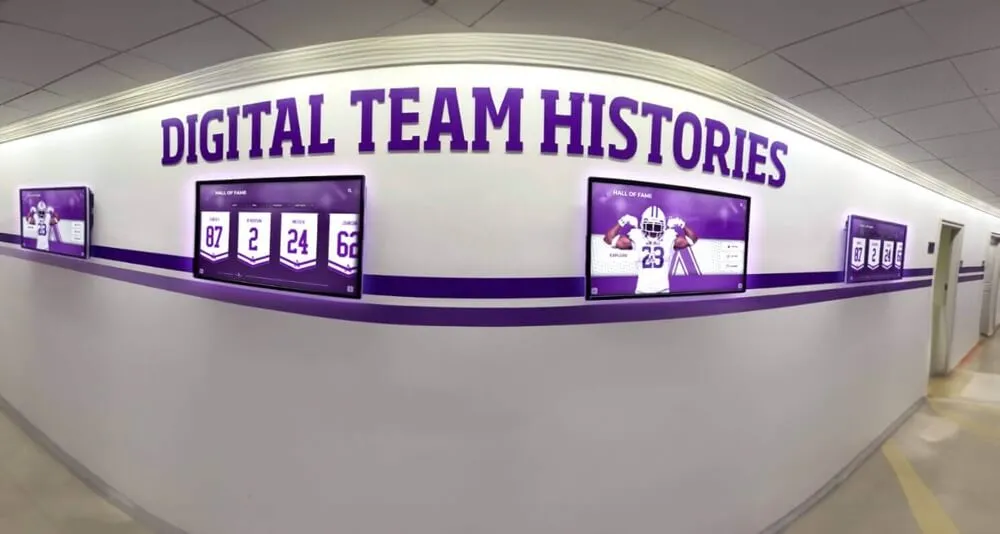
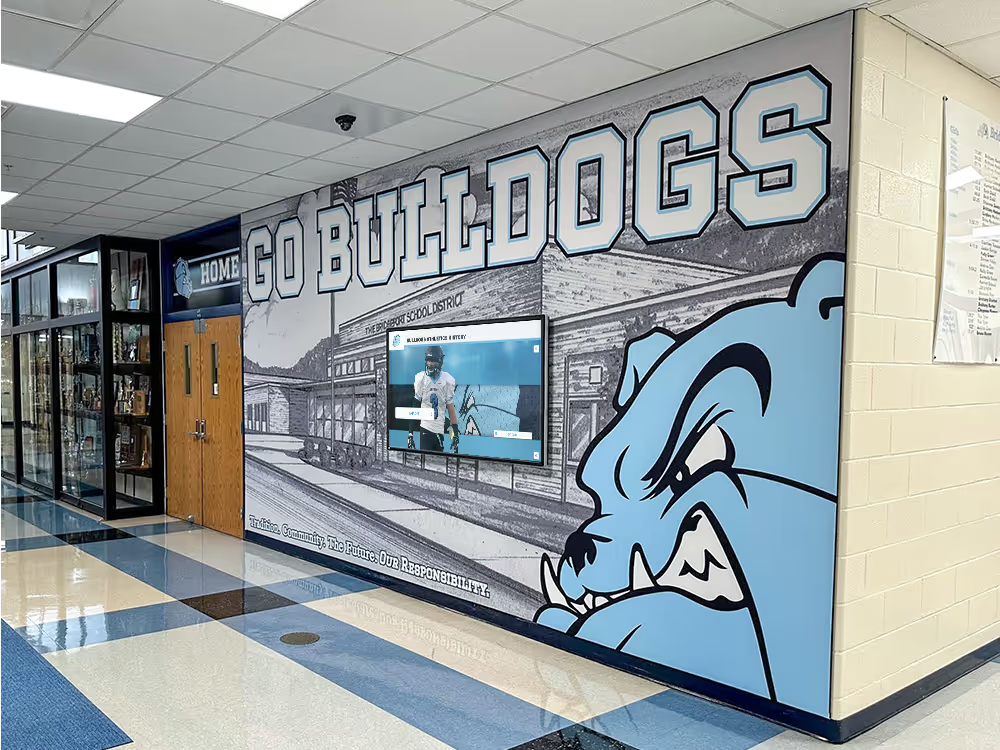
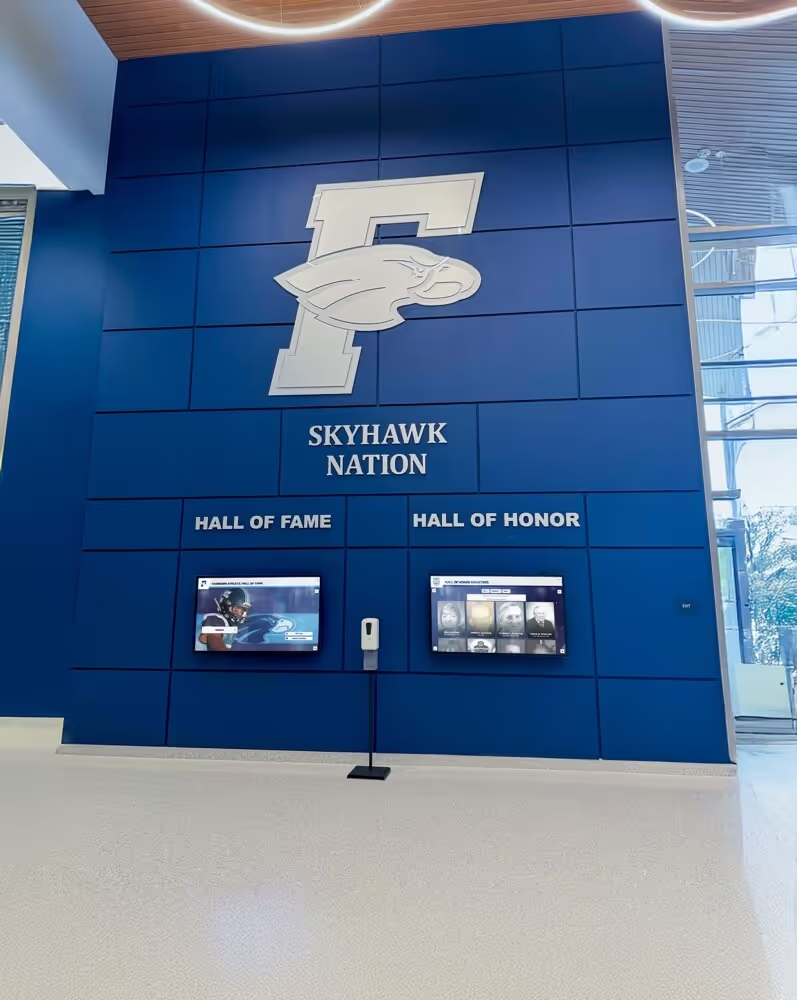
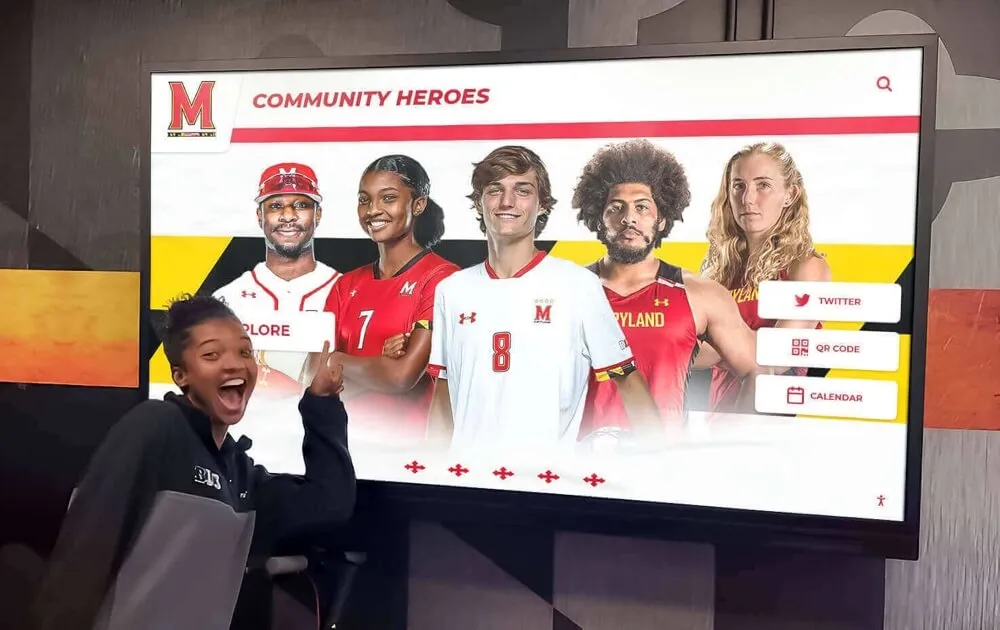
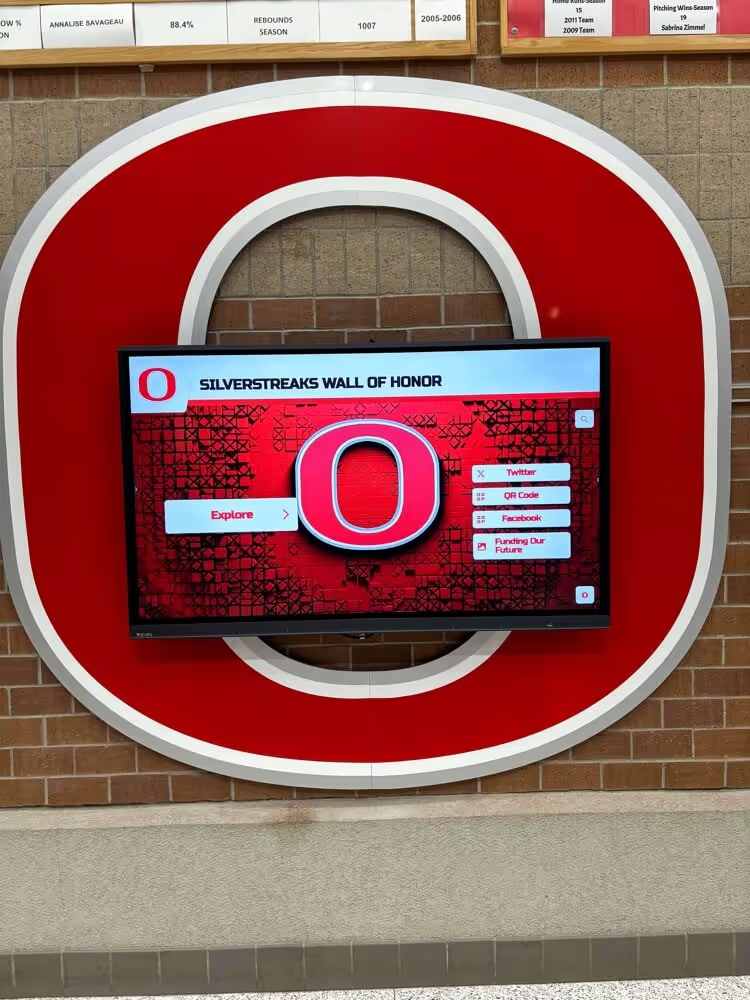
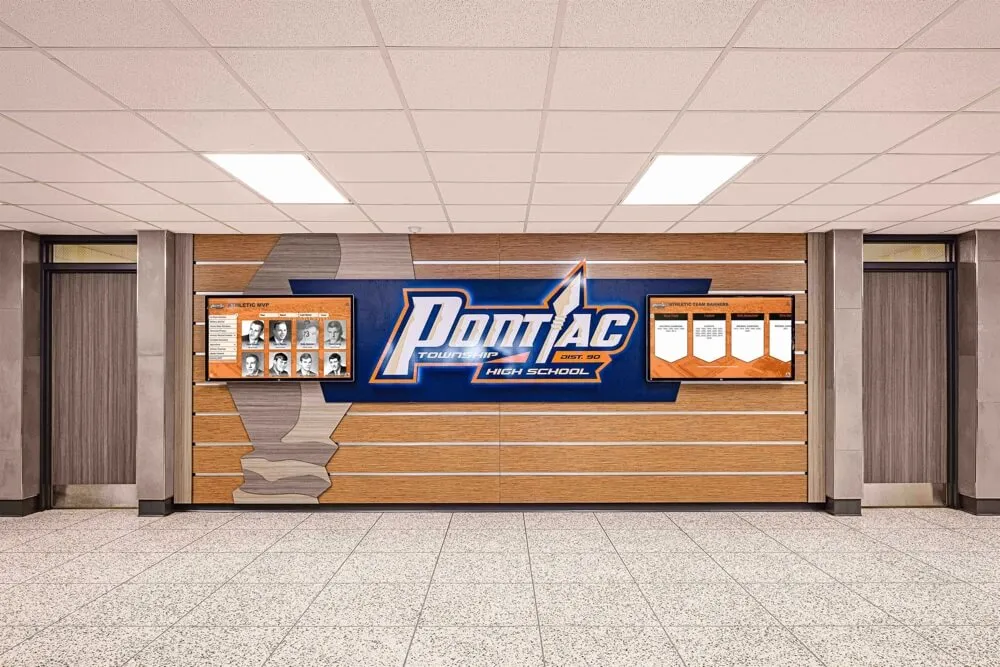
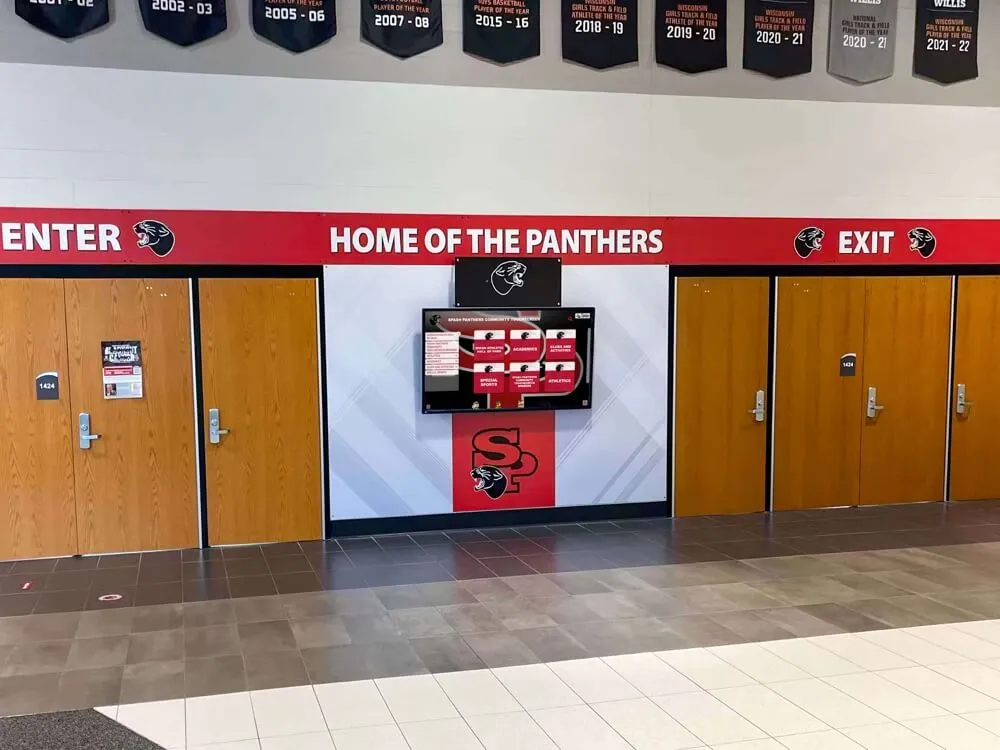
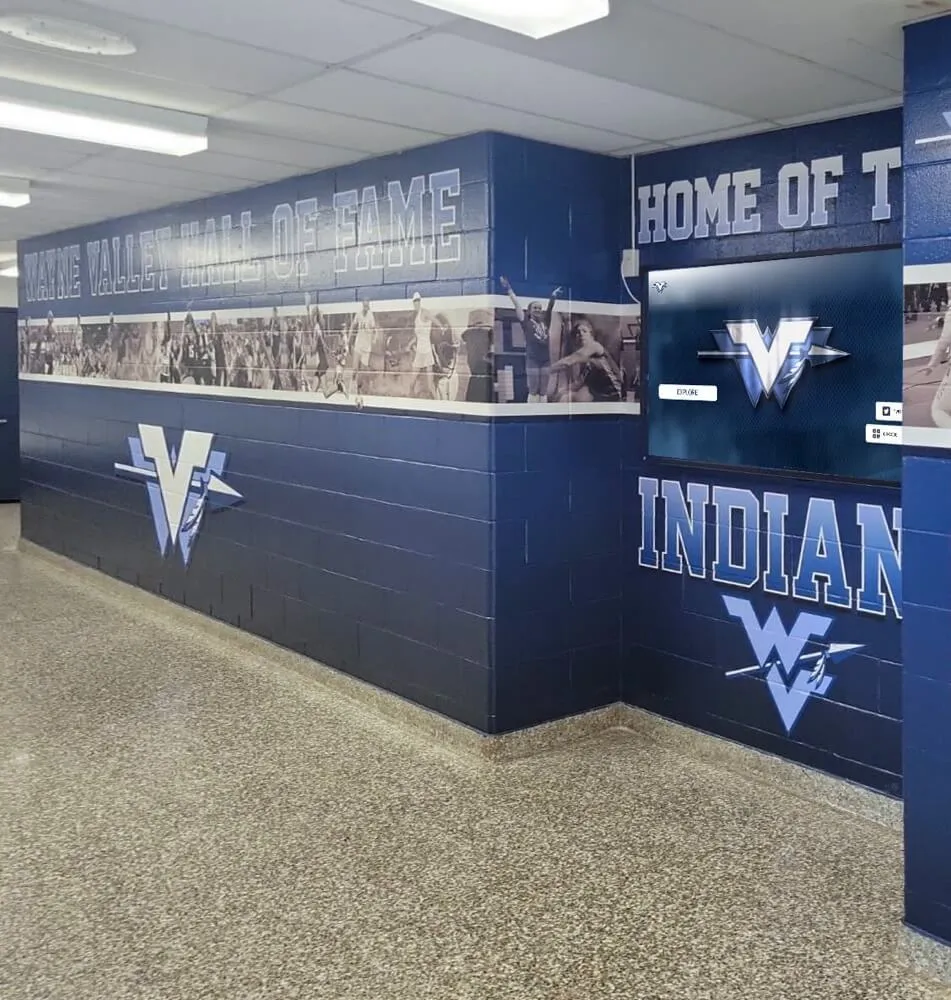
Hallway displays that show outdated or incomplete award data signal to athletes and families that recognition is not a priority — timeliness monitoring gives programs the visibility to catch and correct those gaps before they become entrenched
What Is Athletic Award Data Timeliness Monitoring?
Athletic award data timeliness monitoring is the structured measurement of elapsed time between defined events in an award record’s publication workflow, compared against documented target thresholds for each award type and each workflow step. When elapsed time exceeds the threshold, a timeliness failure is logged and a correction action is triggered.
Timeliness monitoring differs from a one-time data quality audit. A quality audit asks: are the records currently in the system accurate? Timeliness monitoring asks: are records being entered and published within the time windows that stakeholders expect? Both practices are essential, but they address different failure modes. A program with highly accurate records can still have a timeliness problem if accurate data takes three months to reach the display. A program with fast publication can still have a quality problem if errors pass through the workflow quickly.
For programs building timeliness practices alongside broader data quality work, athletic award data quality audit and reconciliation processes provide complementary context for how freshness and accuracy goals work together — particularly in end-of-season recognition cycles where both pressures converge.
The Four Delay Gaps in Athletic Award Data
Every award record passes through four potential delay points between the moment a decision is made and the moment it appears, correctly, on every display channel. Timeliness monitoring requires measuring each gap separately because each gap has different causes, different responsible parties, and different acceptable thresholds.
| Gap | Start Event | End Event | Common Cause of Delay |
|---|---|---|---|
| 1. Decision-to-Entry | Award decision documented | Record created in recognition system | Coaching staff delay in submitting nomination forms; administrative backlog |
| 2. Entry-to-Approval | Record entered in system | Approval authorization issued | Approval queue backlog; approver unavailable; incomplete fields requiring resubmission |
| 3. Approval-to-Publication | Approval issued | Record visible on primary display | Platform update not triggered; publication step not initiated by responsible staff |
| 4. Cross-Channel Synchronization | Primary display updated | All display channels updated | Physical display not yet updated; secondary channels not refreshed; web archive lagging |
Gap 1 — Decision-to-Entry is typically the largest delay in programs without a structured nomination workflow. When coaches communicate award decisions verbally or informally, no formal record exists to initiate the entry process. Programs with documented nomination form requirements at the end of each season close this gap at the source.
Gap 2 — Entry-to-Approval is where records frequently stall in programs that have formal approval requirements but no monitoring for queue depth. If the athletic director is the sole approver and has thirty records waiting for review at the end of the season, approval latency compounds across the entire award set.
Gap 3 — Approval-to-Publication is often invisible until someone looks for a record on the display and finds it missing. An approved record that was never pushed live represents a workflow handoff failure — the approval step completed, but no one triggered the publication step.
Gap 4 — Cross-Channel Synchronization affects programs operating multiple display types: a lobby digital kiosk, a hallway honor wall, a physical trophy case, and a school website archive. When the digital platform is updated but the physical displays are not, the channels are out of sync — and families comparing what they see on the screen with what they see on the wall will notice.
Timeliness Targets by Award Type
Different award categories justify different timeliness thresholds. A hall of fame inductee profile needs to be published before the induction ceremony. A school record set at a meet should appear on the records display within days. A seasonal team honor can reasonably wait until all awards for that sport are processed together. The following table provides a starting framework; programs should adjust targets to match their own operational capacity and stakeholder expectations.
| Award Category | Decision-to-Entry Target | Entry-to-Approval Target | Approval-to-Publication Target | Cross-Channel Sync Target |
|---|---|---|---|---|
| School athletic records | 48 hours from verified result | 24 hours | 24 hours | 5 business days |
| End-of-season team honors (MVP, captain, etc.) | 5 business days from ceremony | 3 business days | 2 business days | 10 business days |
| Conference / external designations | 3 business days from official result | 2 business days | 2 business days | 7 business days |
| Hall of fame inductions | 30 days before induction ceremony | 10 business days | Before ceremony | Day of ceremony |
| Seasonal statistics and records board | End of competitive season | 5 business days | 5 business days | 15 business days |
| Scholar-athlete and academic honors | 5 business days from issuing committee | 3 business days | 3 business days | 10 business days |
These targets treat the four gaps as sequential — total elapsed time from decision to full cross-channel publication is the sum of all four gap targets. For a school athletic record, that means a program should aim to have the record visible on every display channel within roughly nine days of the verified result. For an end-of-season team honor, the target window is approximately 20 business days from the ceremony date.
Programs that set explicit targets for the first time should expect to discover that their current average elapsed time substantially exceeds these benchmarks. The purpose of the initial measurement is not to achieve the target immediately — it is to establish a baseline so that improvement is measurable over time.
For programs where end-of-season award ceremonies serve as the primary event triggering the data entry workflow — and where timeliness pressures from banquets and ceremonies create real operational constraints — planning considerations for athletic banquets and end-of-season recognition events illustrates the scheduling context in which timeliness targets become practically important.
How to Measure Delay: The Data Timeliness Audit
The first step in timeliness monitoring is establishing a baseline by auditing elapsed time across recent award records. Programs that do not yet have decision dates documented for historical records can start the measurement clock from the entry date for Gap 2 and Gap 3, and measure cross-channel synchronization for Gap 4.
A four-step baseline audit process:
Pull a representative sample. Select a representative set of award records from the most recent competitive season — a minimum of 20 records across at least three different award categories. Include records from multiple sports and multiple award types to avoid a sample biased toward one part of the workflow.
Timestamp each gap. For each record in the sample, find the earliest available date for each event: the decision document date, the database entry timestamp, the approval log date, and the publication date for each display channel. Many records will have incomplete timestamps — document which events are undated, as those gaps are themselves a monitoring finding.
Calculate elapsed time for each gap. For each record and each gap, calculate the number of business days between events. Average the elapsed times by award category and by gap type. The result is a gap-by-gap baseline: the program’s current actual performance for each part of the workflow.
Compare against targets. Map the baseline averages against the timeliness targets established for each award category. Identify which gaps are within target, which gaps are exceeding target, and by how much. These findings become the initial monitoring alert thresholds — the trigger points at which a record in the workflow is flagged for intervention.
For programs that maintain archives of historical records alongside current award data — including digitized artifacts that may provide documentation for older entries — building searchable digital award archives for schools describes how accessible archive systems make it faster to reconstruct the timestamp history needed for a baseline audit.
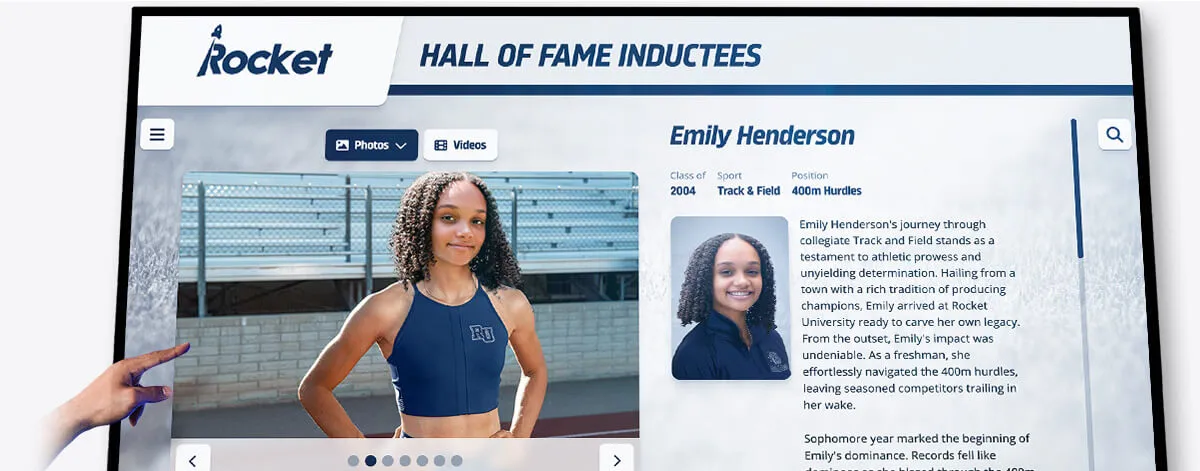
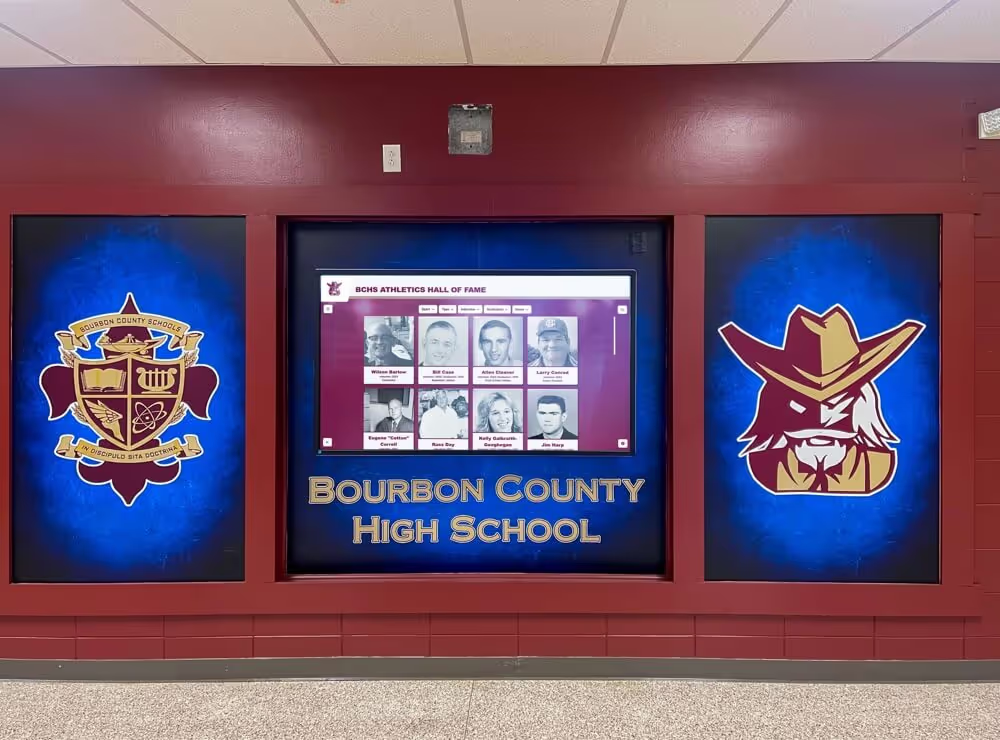
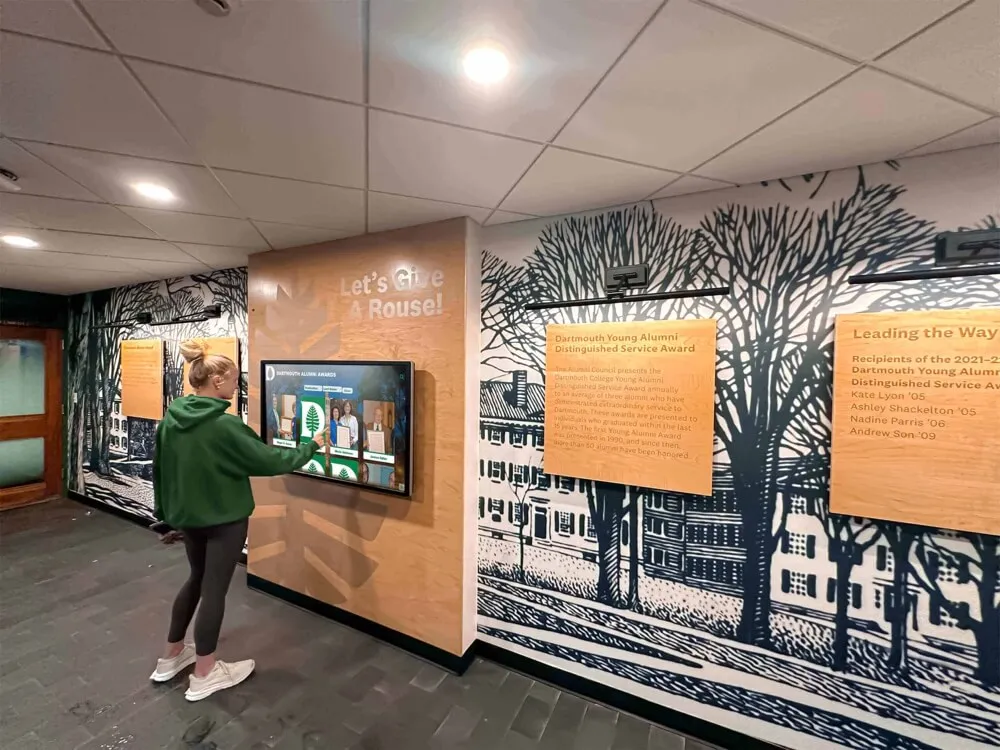
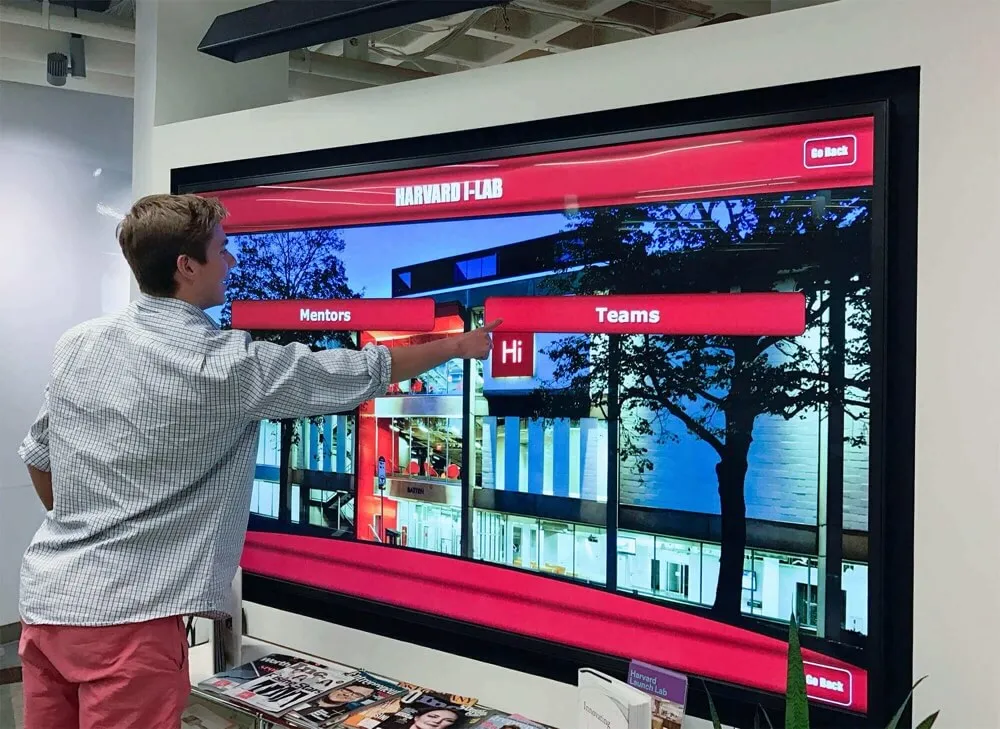
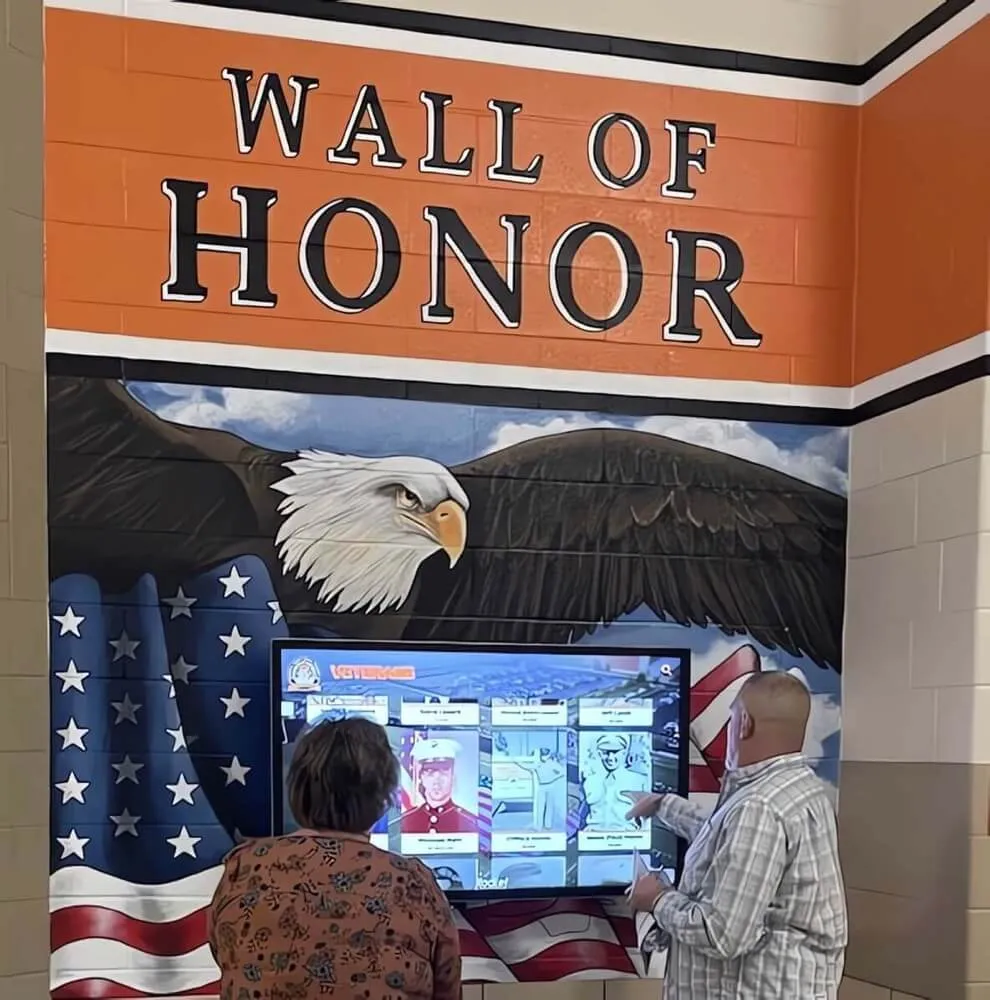
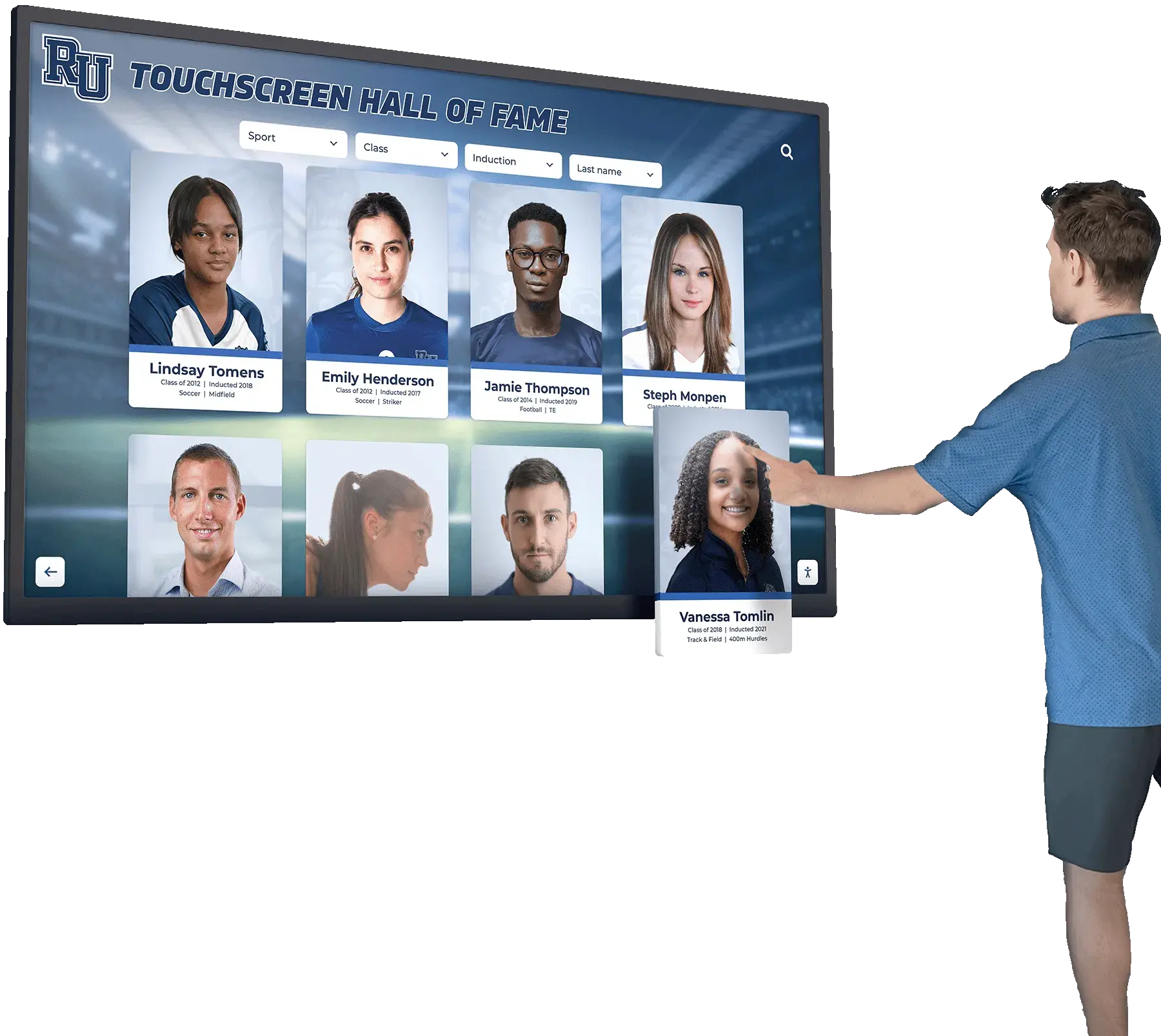
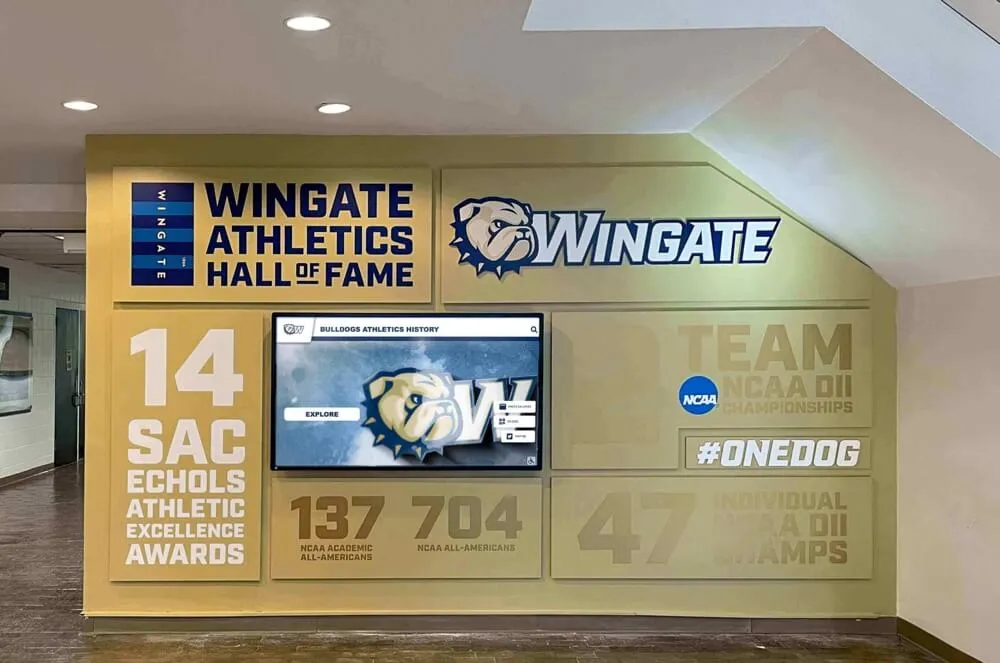
Individual athlete profiles on recognition displays represent the end point of a multi-step workflow — timeliness monitoring measures how long each step takes and flags records that are stalling before they reach the display
Building a Timeliness Monitoring Schedule
A one-time baseline audit establishes where a program starts. Ongoing timeliness monitoring requires a recurring schedule that checks for stalled records, measures gap performance across each new award cycle, and produces a summary report that the athletic director can use to identify trends.
Recommended monitoring cadence:
Weekly during active seasons. During each sport’s competitive season, a weekly check should flag any records in the decision-to-entry or entry-to-approval gap that have exceeded their target window. A record that was decided six days ago and has not yet been entered into the system should generate a prompt to the responsible staff member, not wait for the annual review.
Post-season within 30 days. Within 30 days of each sport’s season end, a post-season timeliness review should confirm that all end-of-season awards for that sport have completed all four gaps and are visible on all display channels. Any record that has not yet reached full cross-channel publication should be escalated to the approver for immediate resolution.
Annual summary. Once per year — typically at the end of the academic year — a full timeliness summary should aggregate gap performance across all sports and award categories for the year. This summary should compare against the prior year’s baseline, identify award categories that consistently exceed targets, and produce recommendations for workflow adjustments.
Triggered reviews. Whenever a staff member, athlete, or family member reports a missing record on a display, a triggered timeliness review should trace which gap the record is currently stalled in and assign a named responsible party to complete the pending step.
For programs where athletic director responsibilities encompass the full range of digital display management — from selecting what content appears on recognition screens to monitoring the data that feeds them — athletic director responsibilities in digital display management covers the operational context in which timeliness monitoring fits alongside other administrative duties.
Who Monitors Timeliness: Roles and Responsibilities
Timeliness monitoring requires a named responsible party for each gap — not a shared responsibility that no individual owns. When monitoring is everyone’s job, it is no one’s job. The four gap types correspond to four distinct roles in the athletic department’s data workflow.
Gap 1 monitoring (Decision-to-Entry) — Coach liaison or records coordinator. The person responsible for tracking whether coaches have submitted nomination forms and governing source documents within the required window. When a coach has not submitted required documentation within the target period, this person follows up directly.
Gap 2 monitoring (Entry-to-Approval) — Data steward or records coordinator. The person responsible for confirming that entered records move to the approval queue within the target window, and that the approval queue does not accumulate a backlog that exceeds the approval target. When records are waiting in the queue beyond the target, this person escalates to the approver.
Gap 3 monitoring (Approval-to-Publication) — Platform administrator or IT designee. The person responsible for confirming that approved records are published to the primary display channel within the target window. In platforms with automated publication workflows, this monitoring may be primarily exception-based — flagging records that remain approved but unpublished. In manual workflows, this person actively initiates the publication step.
Gap 4 monitoring (Cross-Channel Synchronization) — Facilities coordinator and platform administrator jointly. Monitoring synchronization across physical and digital channels requires coordination between the team that manages physical display updates (facilities) and the team that manages the digital platform. A shared checklist — confirmed after each approval batch — ensures that no channel is overlooked.
For programs where athletic recognition awards for specific honors like defensive or leadership designations create recurring timeliness pressure at the end of each season, how schools recognize specific athletic honors and announce season award decisions describes the announcement and communication workflows from which the decision-to-entry clock starts running.
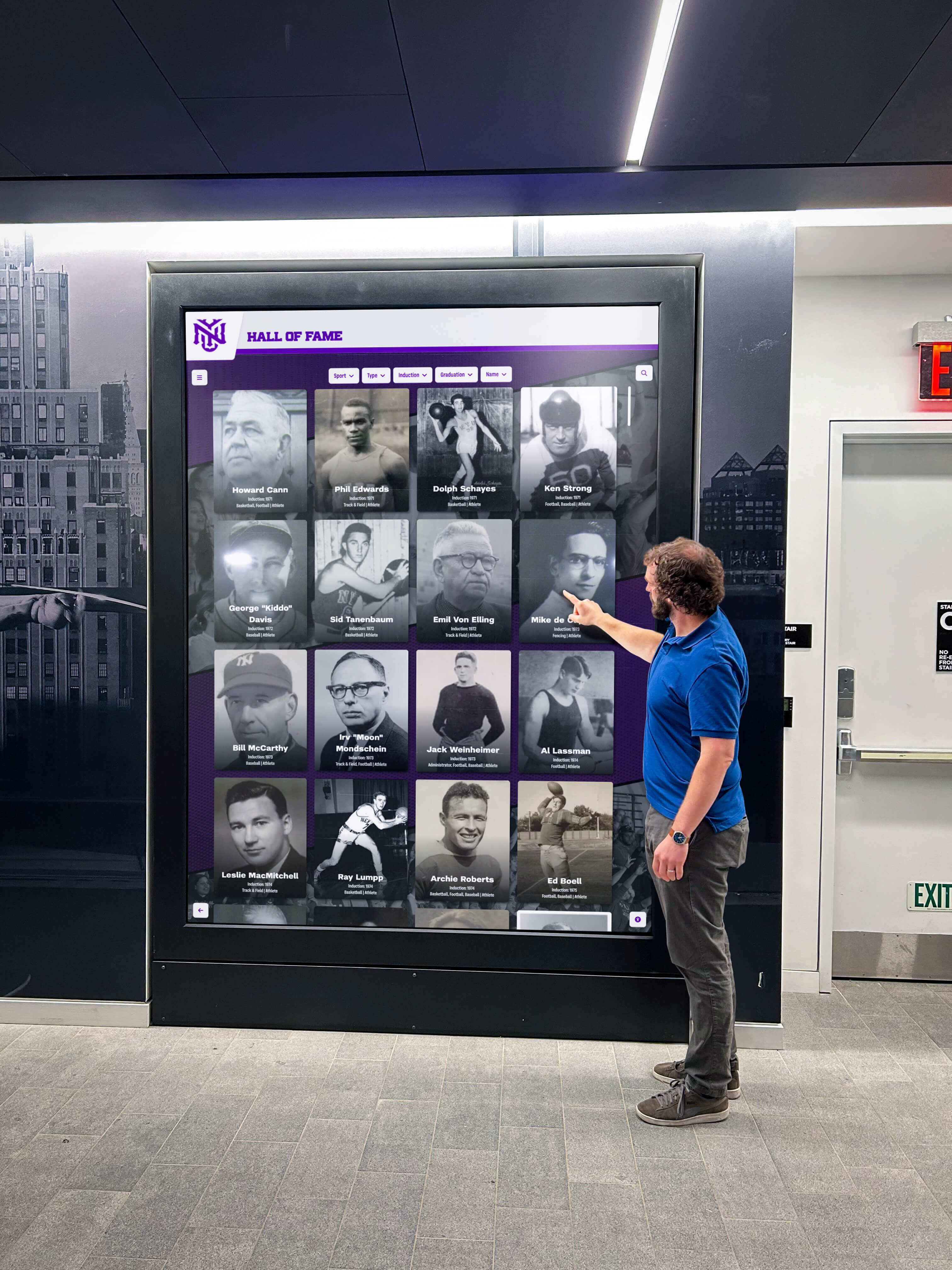
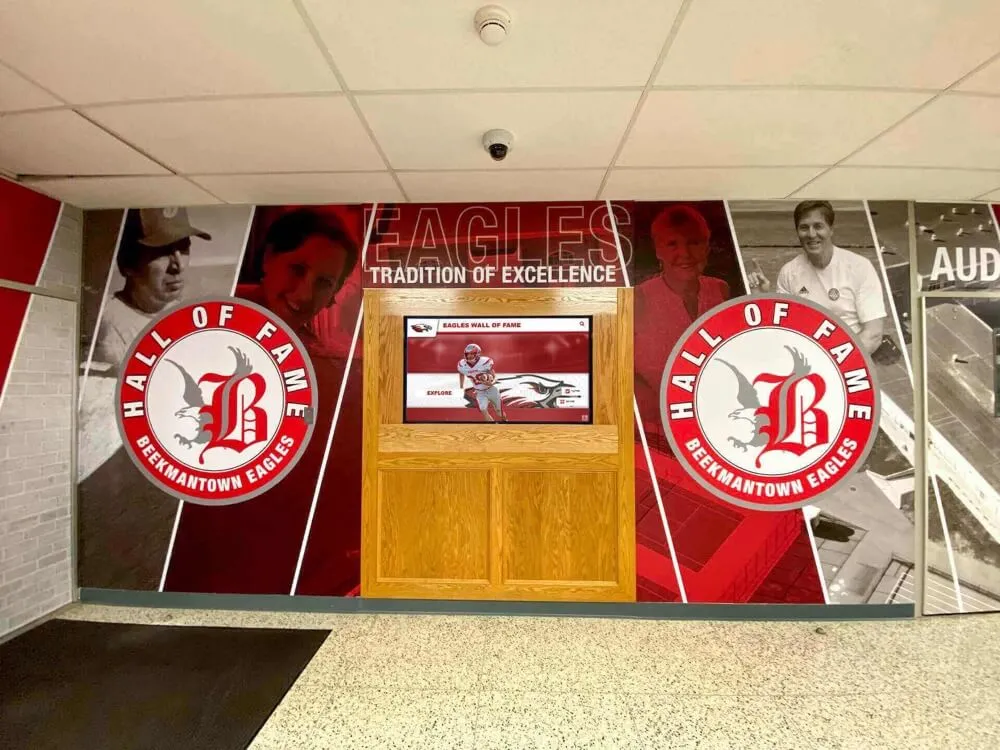
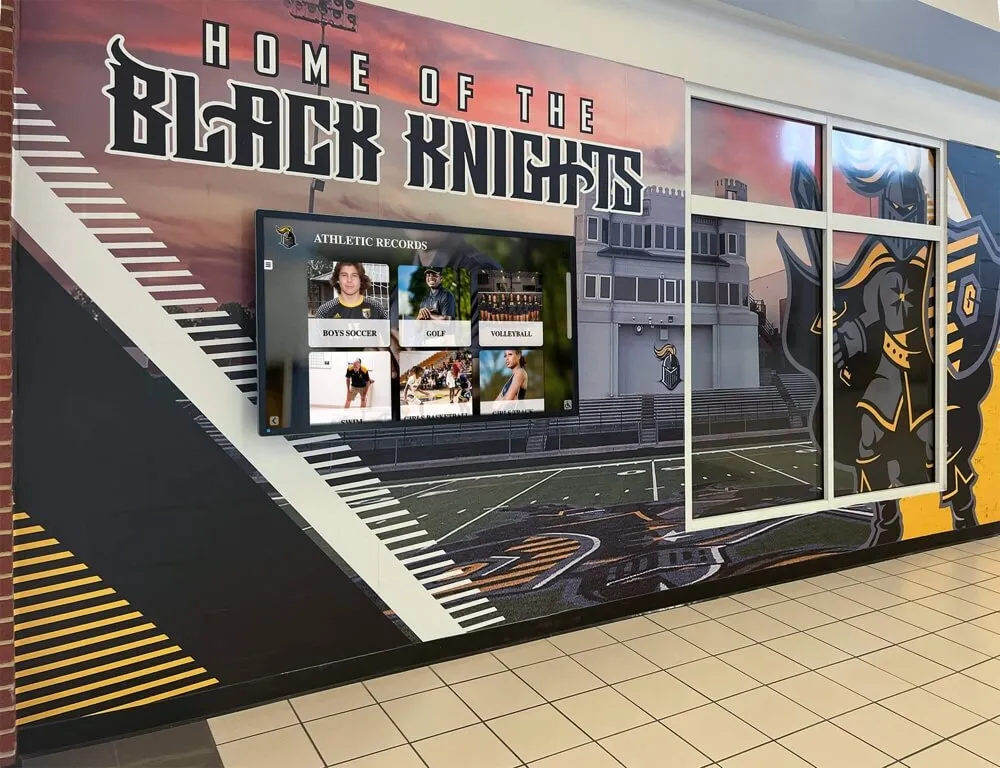
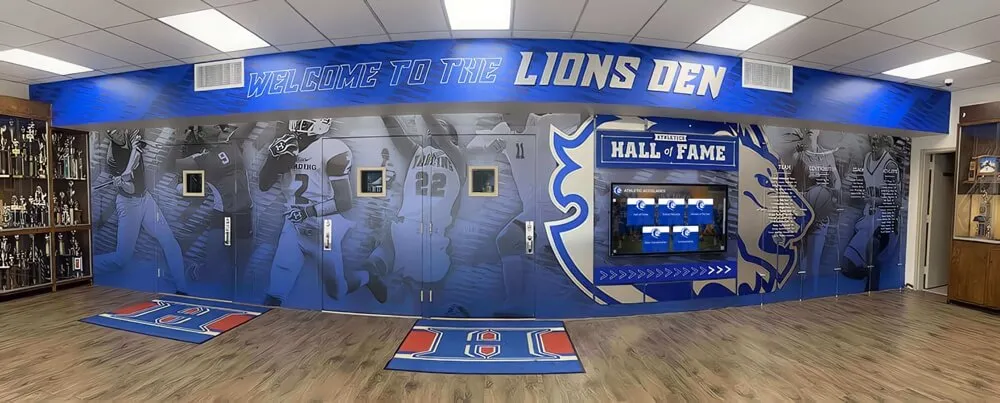
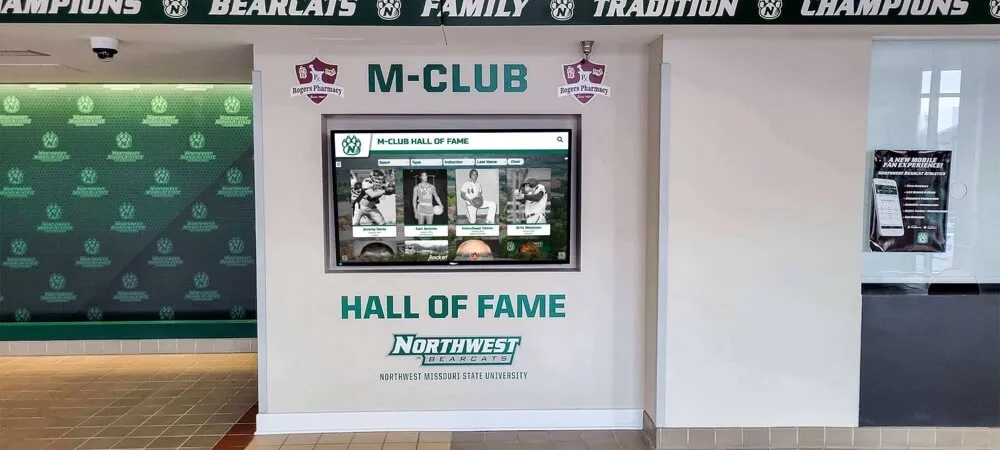
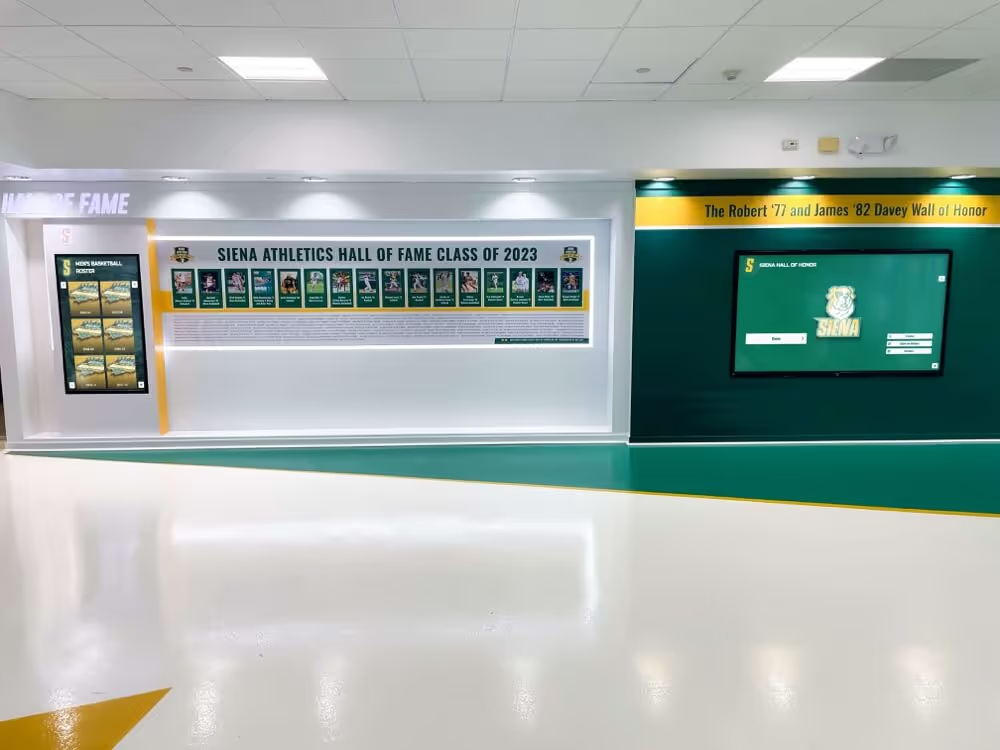
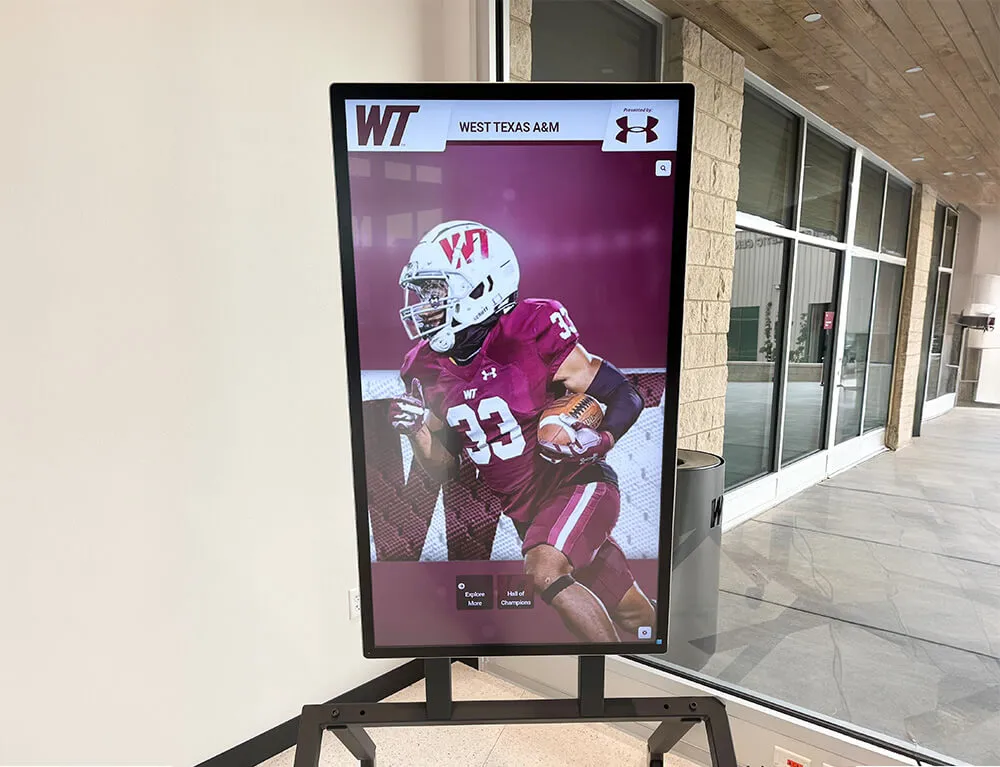
When families arrive at a lobby display expecting to see a recently announced award and find it missing, the program's credibility suffers — timeliness monitoring prevents that gap from persisting beyond the target window
Correcting Timeliness Failures
When a timeliness review identifies a stalled record — a record that has exceeded its target window at any gap — the correction workflow should follow a defined sequence that routes the record to the correct responsible party without creating ambiguity about who needs to act.
Step 1 — Classify the stall. Determine which gap the record is stalled in. Is the entry step not yet completed? Is the record entered but not yet approved? Is it approved but not published? Is it published on the digital platform but not yet reflected on physical displays? Each classification produces a different correction action.
Step 2 — Assign to the named responsible party. Route the stalled record to the person responsible for monitoring that specific gap. Include the record details, the date the gap target was exceeded, and the specific action required to complete the step.
Step 3 — Set a correction deadline. Timeliness failures should not simply be added to a general to-do list. Assign a named deadline — typically within two business days of the gap being flagged — and confirm that the responsible party has received and acknowledged the assignment.
Step 4 — Verify completion. After the correction deadline, confirm that the stalled step has been completed and that the record has advanced to the next gap. If the correction step was approval, confirm that the record is now published. Do not close the timeliness alert until the record has fully completed all four gaps.
Step 5 — Document the root cause. For records that exceed targets by more than 50 percent of the target window, document the root cause: what caused the delay? Coaching staff not submitting documentation on time? Approval queue overloaded? Platform configuration issue? Root cause documentation feeds the annual timeliness summary and informs workflow improvements.
For programs where recognition data must appear accurately across multiple display formats — including both academic and athletic recognition displays that share administrative workflows — how schools define, recognize, and display academic and athletic honors in a unified recognition program describes how timeliness coordination works when multiple recognition programs share the same publication channels.
How Digital Platforms Support Timeliness Monitoring
A purpose-built digital recognition platform reduces timeliness delays in three ways: it shortens the elapsed time for individual workflow steps, it makes stalled records visible before they become a problem, and it automates synchronization across channels so Gap 4 no longer requires separate manual action.
Automated timestamp logging. When a platform logs the creation date, approval date, and publication date for every record automatically, the timeliness audit becomes a reporting function rather than a manual reconstruction. A program that starts with automated timestamps begins every timeliness monitoring cycle with complete data for Gaps 2, 3, and 4 — eliminating the most common reason that baseline audits return incomplete results.
Approval queue dashboards. Platforms that display the number of records waiting in each workflow stage give the athletic director real-time visibility into queue depth. A dashboard that shows 14 records pending approval — with 6 of them exceeding their target window — turns a latent problem into a visible prompt. Without that visibility, queue backlog is invisible until a family notices a missing record on the display.
Automated cross-channel publishing. When a single approval action in the platform propagates to all connected display instances simultaneously — lobby kiosks, hallway screens, mobile access, and web archives — Gap 4 effectively collapses to near zero for digital channels. The remaining synchronization gap is the physical display update, which still requires a separate facilities workflow. But eliminating the digital synchronization burden reduces the total cross-channel gap substantially.
Configurable alerts. Platforms that support configurable alert thresholds can notify designated staff when a record has been in a workflow stage for longer than the target window — automatically, without requiring manual monitoring. When the platform sends an alert because a record has been in the approval queue for four business days against a three-day target, the correction can begin the same day rather than waiting for the next scheduled review.
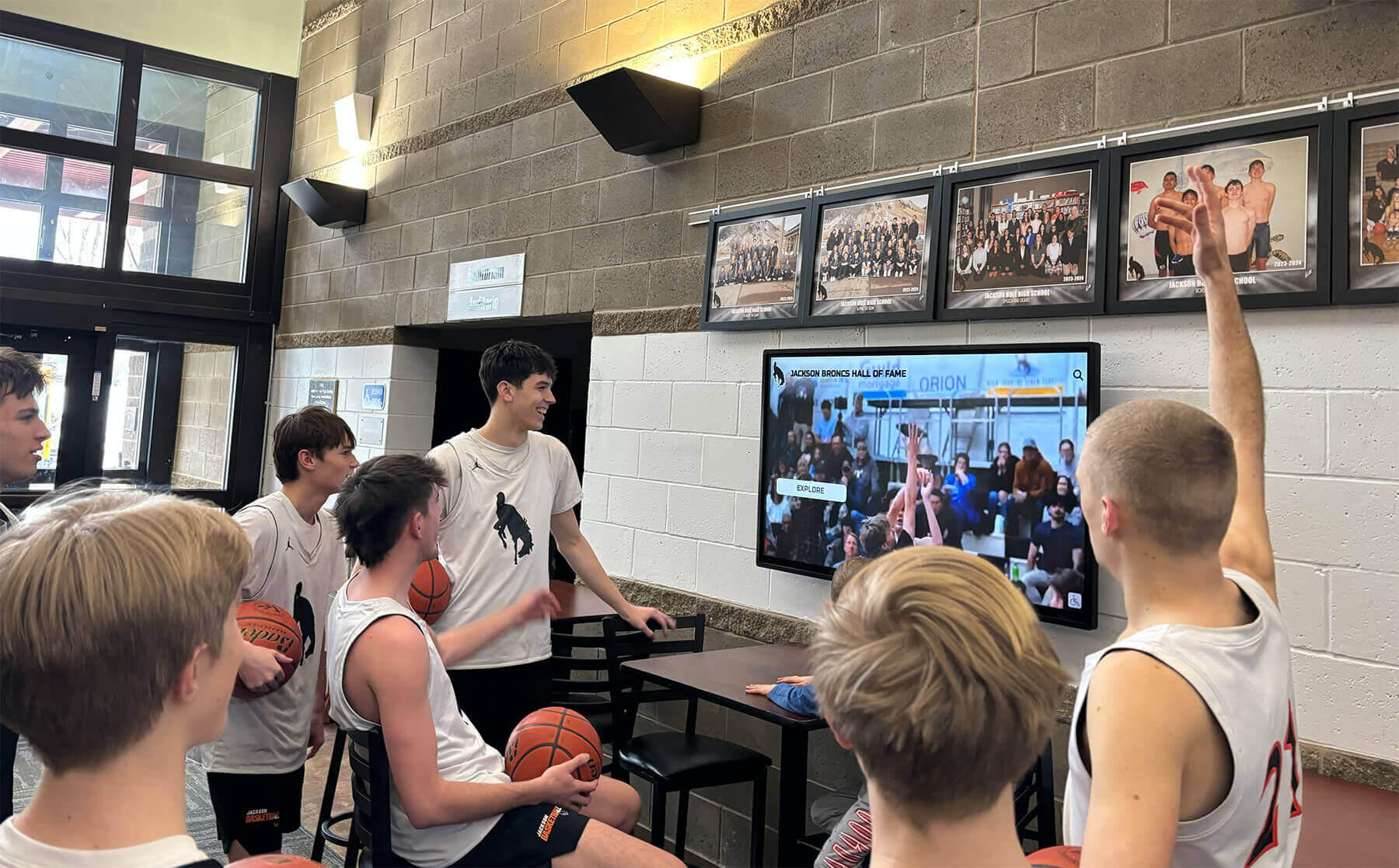
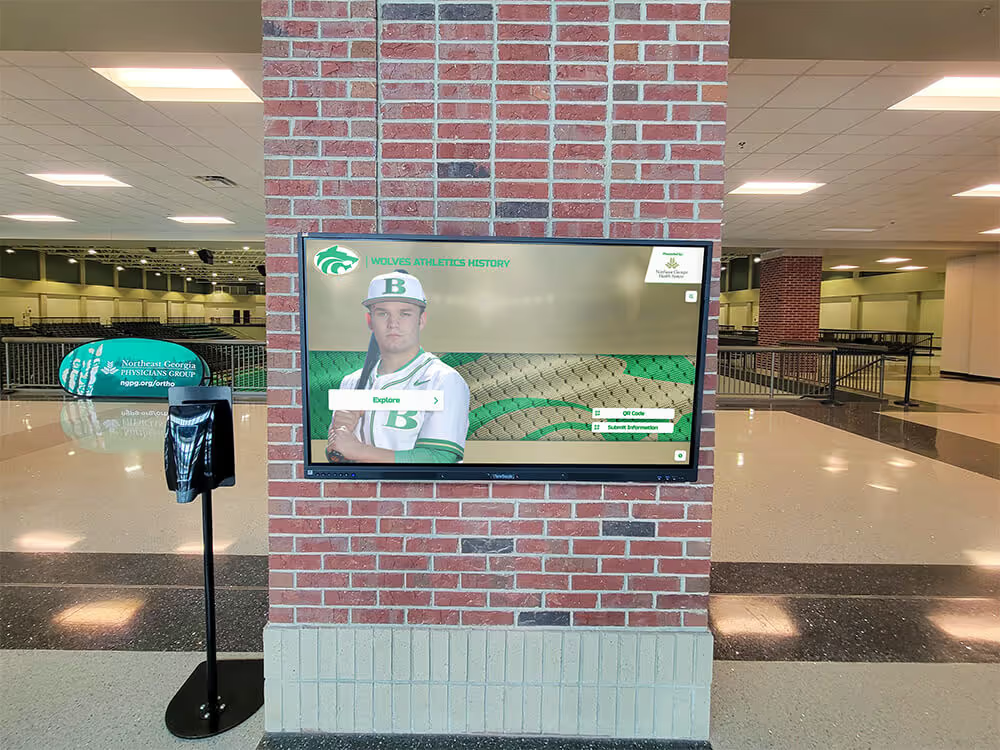
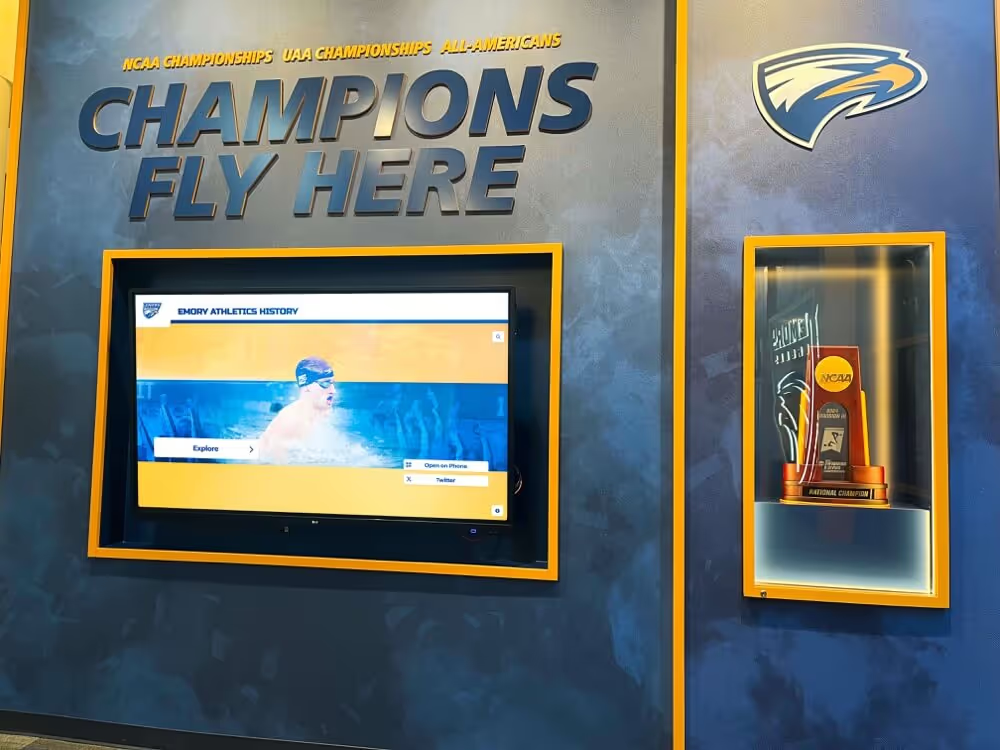
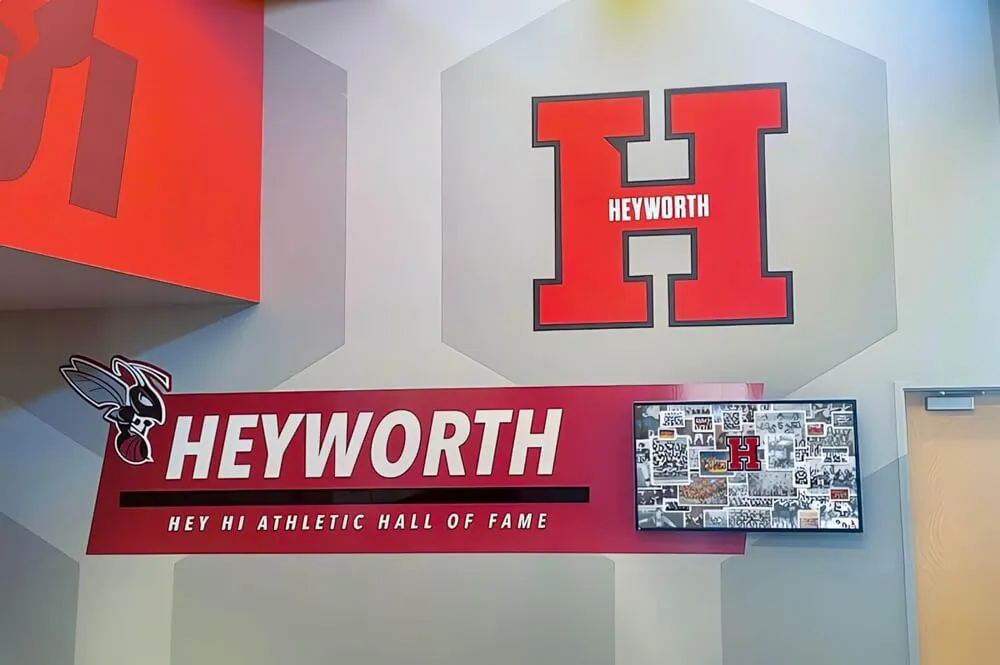
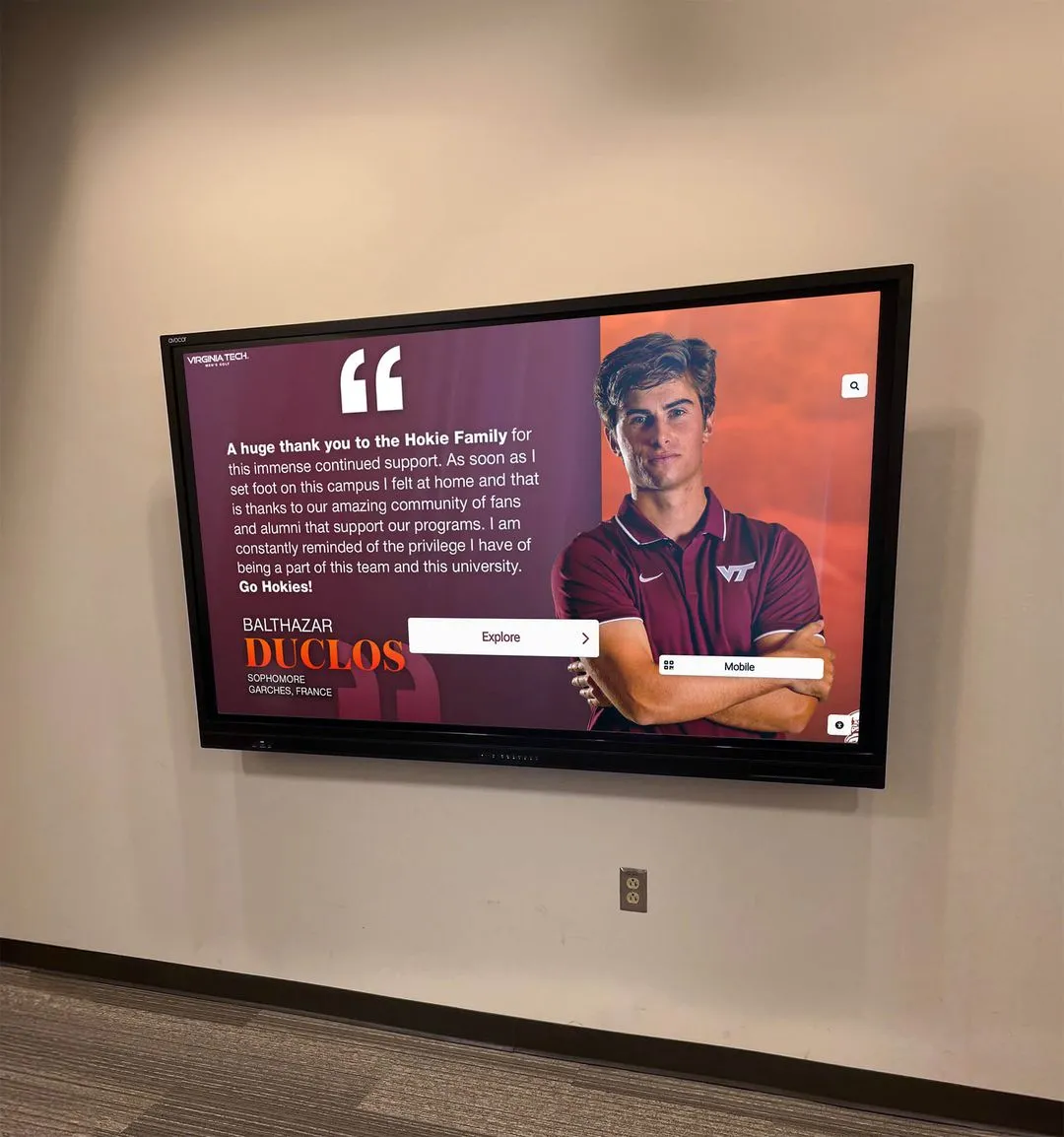
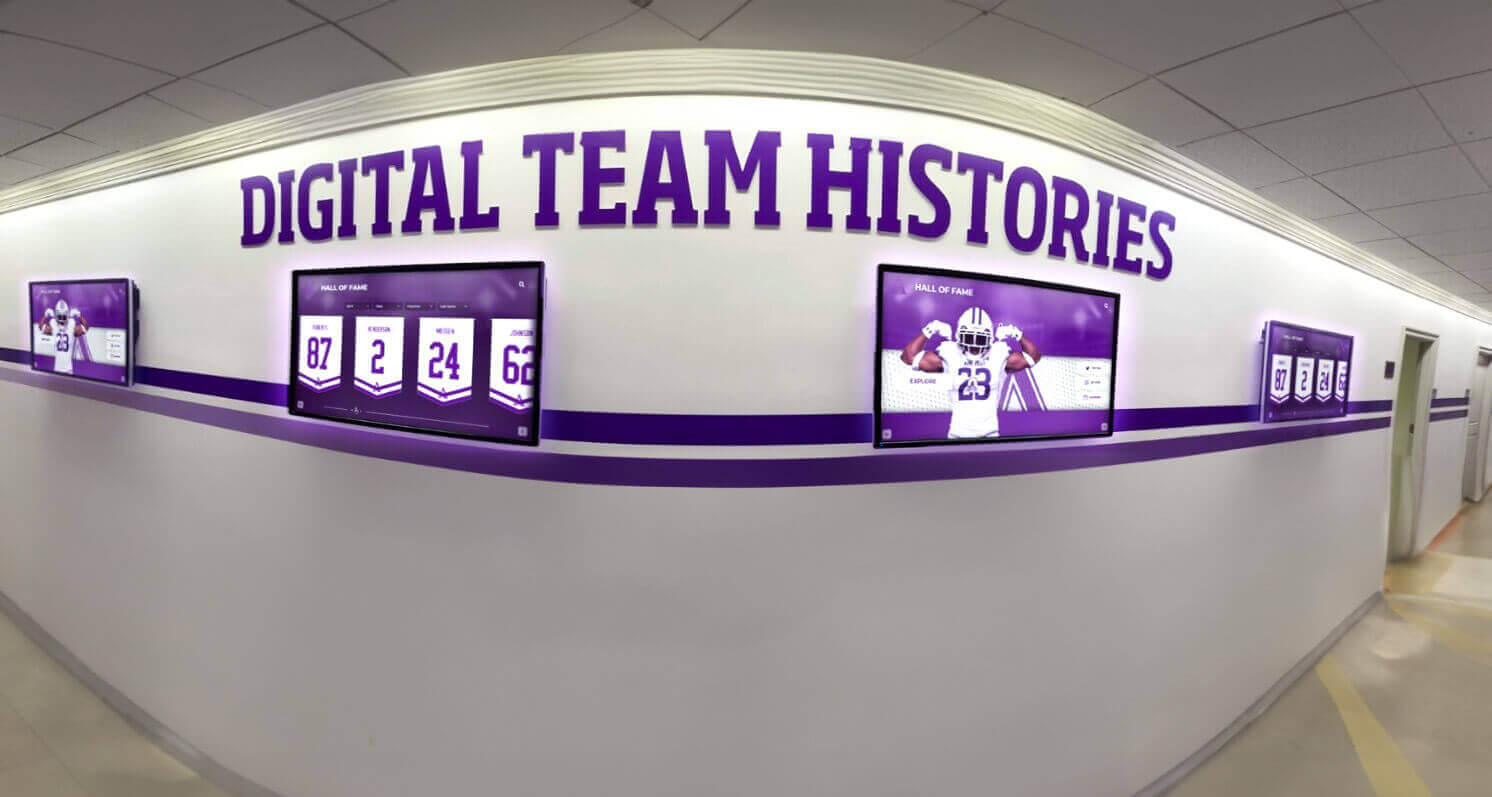
Athletes who see their own recognition appear on displays shortly after award decisions experience the recognition program as current and meaningful — timeliness monitoring is what makes that experience consistent across every award cycle
See How Rocket Alumni Solutions Keeps Award Data Current
Rocket Alumni Solutions gives athletic directors a cloud-based recognition platform with automated timestamp logging, approval queue dashboards, configurable timeliness alerts, and single-action cross-channel publishing — the infrastructure that turns timeliness monitoring from a manual audit into an automated workflow.
Request a DemoFrequently Asked Questions
What is athletic award data timeliness monitoring?
Athletic award data timeliness monitoring is the structured practice of measuring the elapsed time between defined events in an award record's workflow — from when a decision is made, to when the record is entered in the system, to when it is approved, to when it appears on every display channel — and comparing that elapsed time against documented target thresholds. When a record exceeds its target window at any gap, a timeliness alert is generated and a named responsible party is assigned to complete the stalled step. The goal is to ensure that athletes, families, and administrators see current recognition data on displays within the time window the program has committed to.
What are the four delay gaps in athletic award data publishing?
The four delay gaps are: (1) the decision-to-entry gap, measuring the time between when an award decision is documented and when a record is created in the recognition system; (2) the entry-to-approval gap, measuring the time between database entry and authorized approval; (3) the approval-to-publication gap, measuring the time between approval and the record going live on the primary display channel; and (4) the cross-channel synchronization gap, measuring the time until every display channel — digital kiosks, physical honor walls, school website archives — reflects the same current record. Each gap has different responsible parties and different acceptable target windows.
How often should athletic departments run timeliness monitoring reviews?
The recommended cadence is weekly during active competitive seasons — to catch stalled records before they fall significantly behind target — followed by a post-season review within 30 days of each sport's season end, and an annual summary that aggregates performance across all sports and award categories for the year. Triggered reviews should also occur any time a staff member, athlete, or family member reports a missing or outdated record on any display channel. During periods between competitive seasons, a monthly check is typically sufficient to ensure that records from the prior cycle have completed all four publication gaps.
What timeliness targets should schools set for end-of-season athletic awards?
A practical starting framework for end-of-season team honors targets: decision-to-entry within five business days of the ceremony; entry-to-approval within three business days; approval-to-publication within two business days; and cross-channel synchronization within ten business days of the approval date. That produces a target of approximately 20 business days from the ceremony to full cross-channel publication. Programs with dedicated recognition staff may be able to achieve shorter windows; programs where the athletic director handles all steps personally may need longer targets. The most important step is establishing documented targets and measuring against them, not achieving a specific number on the first attempt.
How do digital recognition platforms reduce award data timeliness gaps?
Digital recognition platforms reduce timeliness gaps in three ways. First, automated timestamp logging captures the creation, approval, and publication date for every record without requiring manual documentation, making the timeliness audit a reporting function rather than a manual reconstruction. Second, approval queue dashboards give the athletic director real-time visibility into how many records are waiting in each workflow stage and which ones have exceeded their target window. Third, single-action cross-channel publishing propagates an approved record to all connected display instances simultaneously, collapsing the cross-channel synchronization gap to near zero for digital channels and leaving only the physical display update as a separate workflow step.
Conclusion: Measuring What You Manage
Athletic award data timeliness monitoring turns recognition program management from a reactive practice — noticing that records are missing when someone asks — into a proactive one. When every award record has a documented target window for each of its four publication gaps, and when named staff monitor those gaps on a scheduled cadence, stalled records surface in days rather than months. Athletes see their recognition appear on displays within meaningful time of the decisions that created it. Families can trust that what they find on the lobby kiosk reflects the current season’s results, not last year’s. And the athletic director has the data to demonstrate, across every award cycle, that the recognition program is functioning as intended.
The measurement starts with a baseline audit. The improvement follows from the monitoring cadence. Both require deliberate structure — target thresholds, named responsible parties, scheduled reviews, and a correction workflow that routes stalled records to the right person without ambiguity. Programs that build that structure build displays that athletes and families genuinely rely on.
Start Monitoring Award Data Timeliness with a Platform Built for It
Rocket Alumni Solutions provides athletic directors with a cloud-based recognition platform featuring automated workflow timestamps, approval queue visibility, configurable timeliness alerts, and cross-channel publishing that keeps every display current. Request a demo to see how the platform supports a full timeliness monitoring program from day one.
Request a Demo