



Intent: research — an athletic award data versioning policy defines the rules for capturing, preserving, and retrieving every version of an award record: the original value as first entered, every correction applied thereafter, who authorized each change, and what was displayed to the public at any point in time. A versioning policy goes beyond a simple correction log by guaranteeing that prior versions are never overwritten — only superseded — so administrators can reconstruct exactly what any recognition display showed on any past date and trace every correction back to its authorization.
This guide is written for athletic directors, school administrators, IT and facilities teams, and recognition-program owners. It covers what versioning policy components are required, how versioning differs from correction logging, a six-step implementation sequence, a version-history table template for snippet-ready reference, and a focused Q&A section addressing the most common policy questions.
Athletic records carry institutional weight that outlasts the people who create them. A hall of fame inductee’s profile may be visible on a lobby touchscreen for 30 or 40 years. A records board entry may stand for a generation before it is broken. When a correction is applied to either — a name misspelled at initial entry, a season year transposed, an award title revised after a program rebranding — the question is not just whether the correction is accurate. It is whether the institution can account for what it displayed before the correction, who authorized the change, and why the original value was wrong.

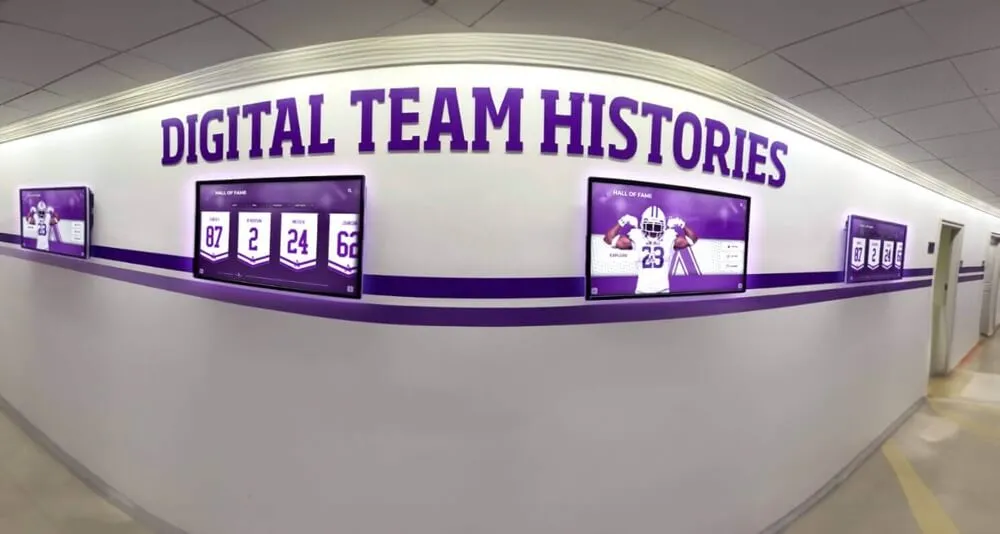
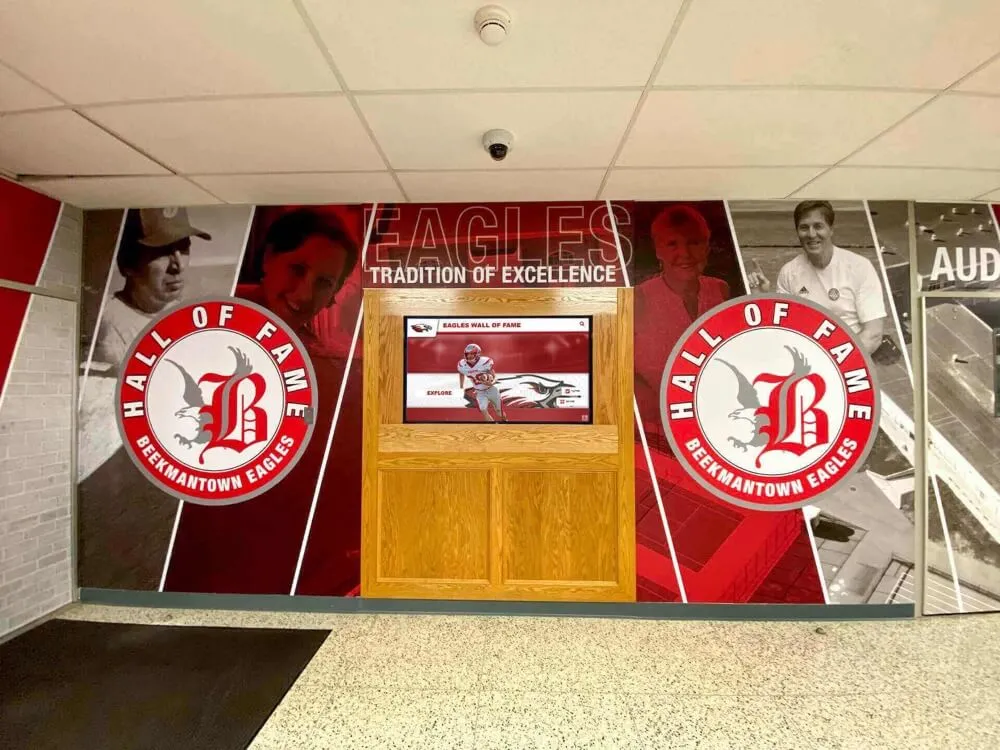
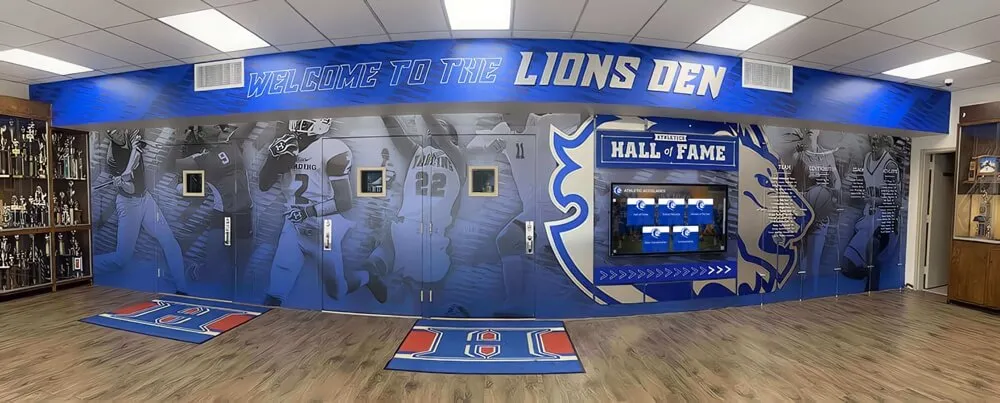
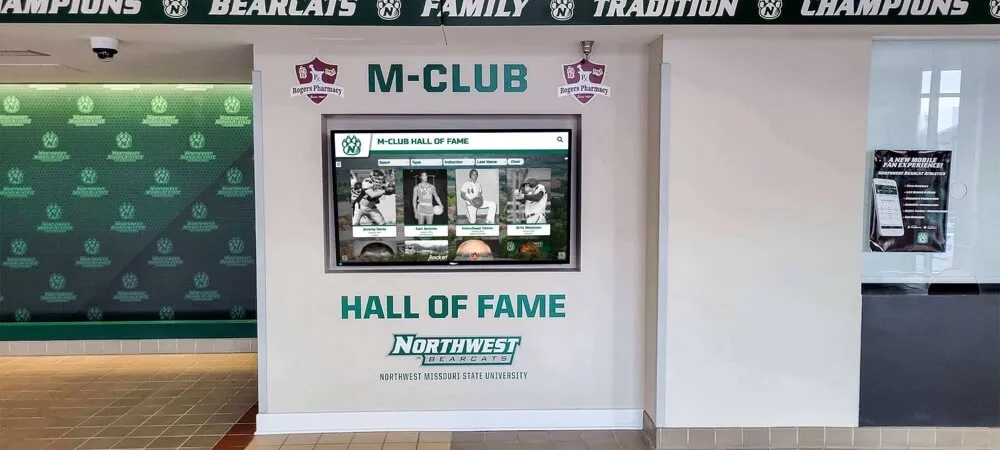
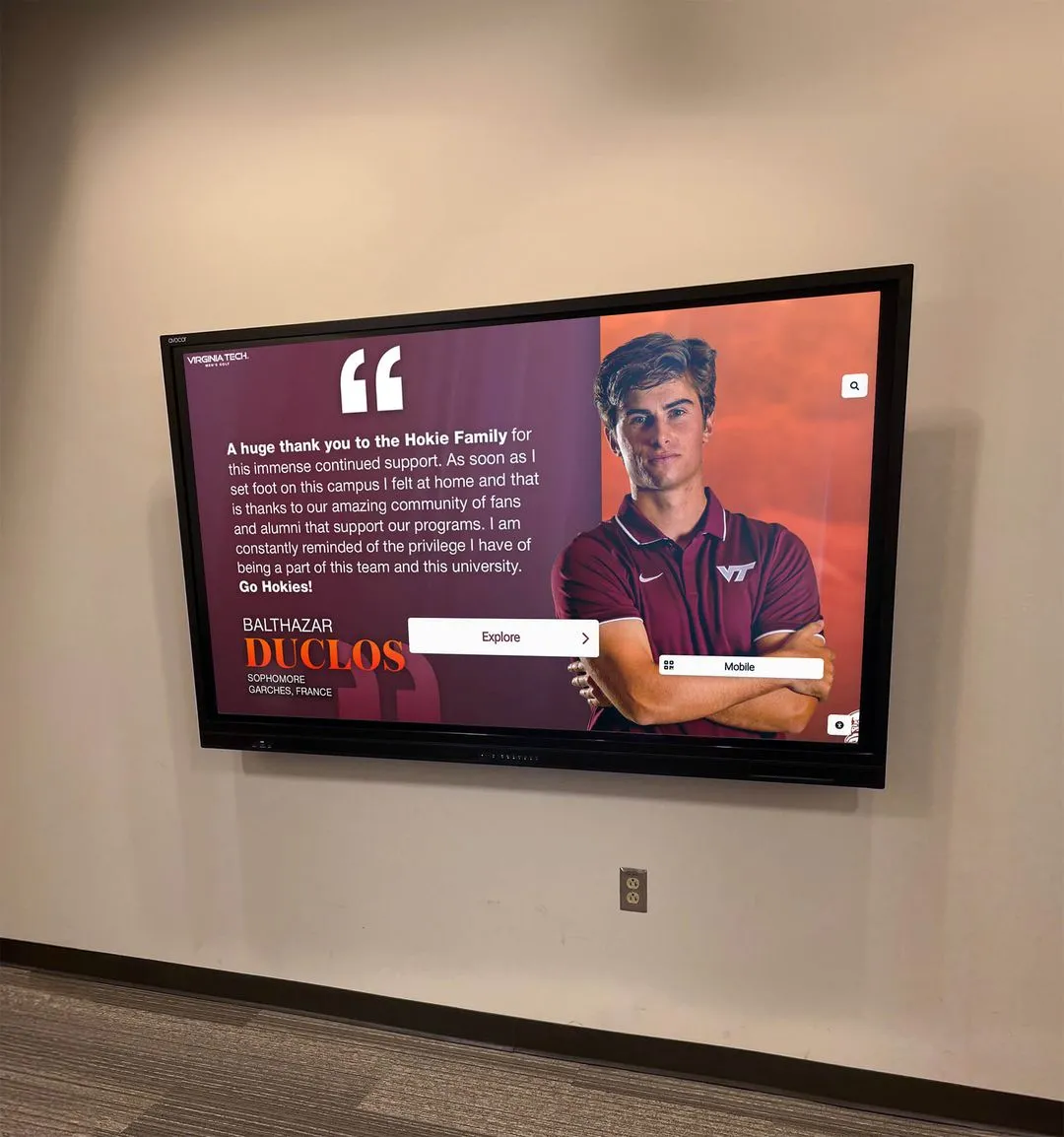
Recognition records displayed in a school hallway may remain visible for decades — a versioning policy guarantees that every change applied to those records is preserved, attributable, and retrievable by future administrators
What Is an Athletic Award Data Versioning Policy?
An athletic award data versioning policy is a written governance document that specifies how changes to award records are tracked, preserved, and made retrievable over time. It defines which fields are versioned, how version identifiers are assigned, what metadata must be captured with each change, how long prior versions are retained, and which staff have authority to view or retrieve version history.
The core principle that distinguishes versioning from basic correction logging is non-destructive change capture: no version of a record is ever deleted or overwritten. When a name is corrected, both the original name and the corrected name remain accessible in the version history. When a season year is updated, administrators can retrieve the value that appeared on every display channel before the update was applied. The complete record state at any prior point — not just the list of changes — remains reconstructable on demand.
For programs operating recognition displays visible to athletes, families, and the public, a versioning policy answers two questions that become significant the moment a correction is disputed: what did this display show before this change? and who authorized that change to happen?
Why Versioning Is Not the Same as a Correction Log
A correction log records changes as they happen. A versioning policy creates a format that allows the complete state of a record — every field, at a specific point in time — to be reconstructed on demand. The difference matters when a correction is later found to be itself in error, when an athlete or family member questions whether their recognition was ever displayed correctly, or when a governing body requests an audit of what appeared on a recognition display during a specific season.
Three limitations of correction logging alone:
A log records what changed, not the full record state. A correction log entry noting “name changed from ‘Jon Smith’ to ‘John Smith’” tells you the field and the values but not the complete record context — which sport, which season, which award category — that surrounded the name at the time of the change. Version snapshots preserve the full record at each checkpoint, not just the modified field.
Logs document individual corrections; versioning creates retrievable checkpoints. If a record receives four corrections over ten years, a correction log gives you a sequence of changes. A versioning policy gives you four complete record states, each independently retrievable and comparable to any other.
Correction logs may not capture display-layer state. A correction made in the database may not simultaneously document what was actively displayed on the lobby touchscreen, the physical trophy case, or the school website at the time of the change. A versioning policy that includes display-layer version alignment closes this gap by requiring that each channel’s publication state be recorded as part of the version event.
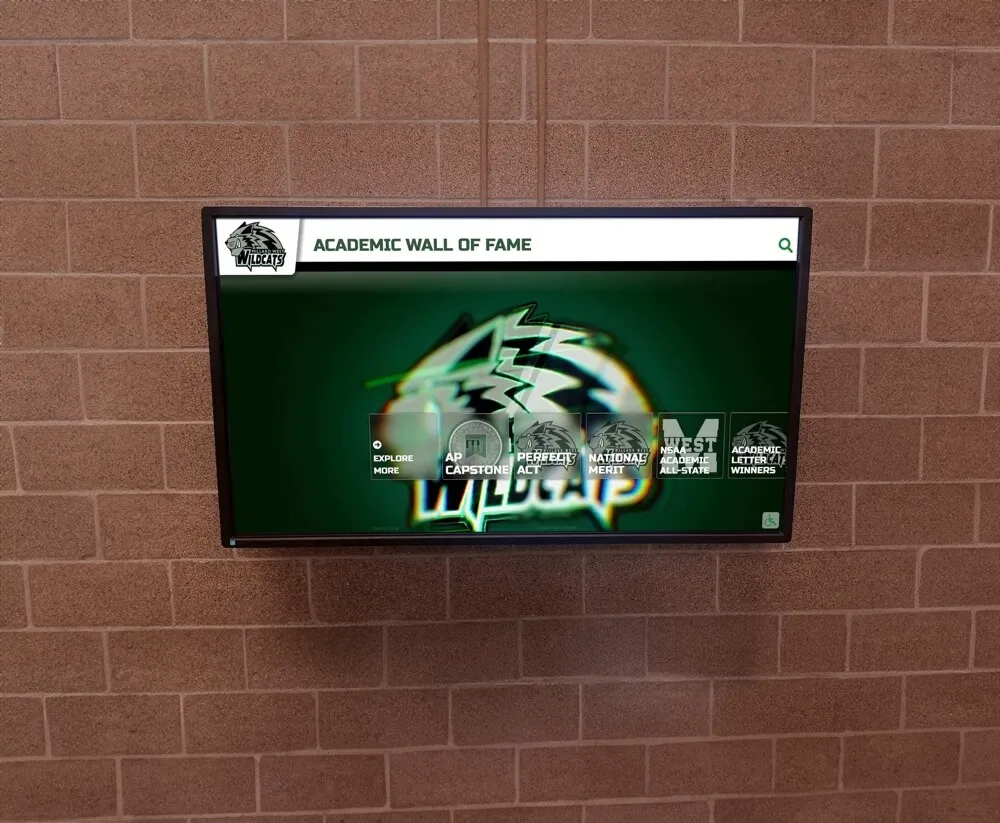
For recognition programs that manage records across multiple award categories — including academic all-state designations that carry the same long-term visibility as athletic honors — versioning governance applies equally: the same audit questions arise when those records are corrected years after initial publication.
Five Core Components of a Versioning Policy
A complete athletic award data versioning policy addresses five areas. Each component should be documented explicitly in the written policy so that platform configuration and manual procedures can be aligned to it consistently across staff changes and system migrations.
1. Version Identifier Assignment
Every time a record changes, it receives a new version identifier — a sequential number, a timestamp-based ID, or a combination of both. Version identifiers allow administrators to refer to a specific record state unambiguously: “Version 3 of the 2019 MVP entry for the varsity baseball program” is a retrievable object, not a narrative description of a correction sequence.
2. Field-Level Change Capture
The policy specifies which fields are versioned. For most athletic award records, versioned fields include athlete name, award title, sport or activity, season or year, award category, display status, and any associated images or media. Administrative metadata fields — system-generated timestamps and record identifiers — are typically excluded because they are set automatically by the platform and are not subject to staff-initiated correction.
3. Retention of All Prior Versions
The policy defines a retention schedule for version history by award category. According to guidance from the National Center for Education Statistics, records with significant institutional value — including recognition and honor records — are generally recommended for retention for the life of the institution or permanently, depending on category. For hall of fame inductions and major championship records, version history should be retained permanently. For seasonal honors, a minimum retention period of seven years is a reasonable starting point, aligned with common document retention requirements in educational settings. The policy should specify retention periods by category, not through a single blanket rule.
4. Timestamp and User Attribution
Every version is stamped with the date and time it was created, and the name or role of the staff member who made the change. This is the audit trail that separates a documented correction from an unexplained edit. Programs that allow CMS or database access without user attribution cannot meet the audit requirements of a meaningful versioning policy — because there is no way to determine, after the fact, which staff member applied a change that has no attribution record.
5. Display-Layer Version Alignment
The policy specifies what happens to display-channel records when a version change is applied. Specifically, it defines whether corrections propagate automatically to all channels simultaneously or require a secondary publication authorization for each channel. It also specifies whether prior version states are accessible through the display platform’s administrative interface — a capability that has a direct bearing on how quickly administrators can respond to a retrieval request.
For programs evaluating whether their touchscreen platform supports version retrieval and search transparency, hall of fame search relevance testing and platform validation offers a framework for verifying that search and history behavior aligns with governance requirements before a versioning policy depends on those platform capabilities.
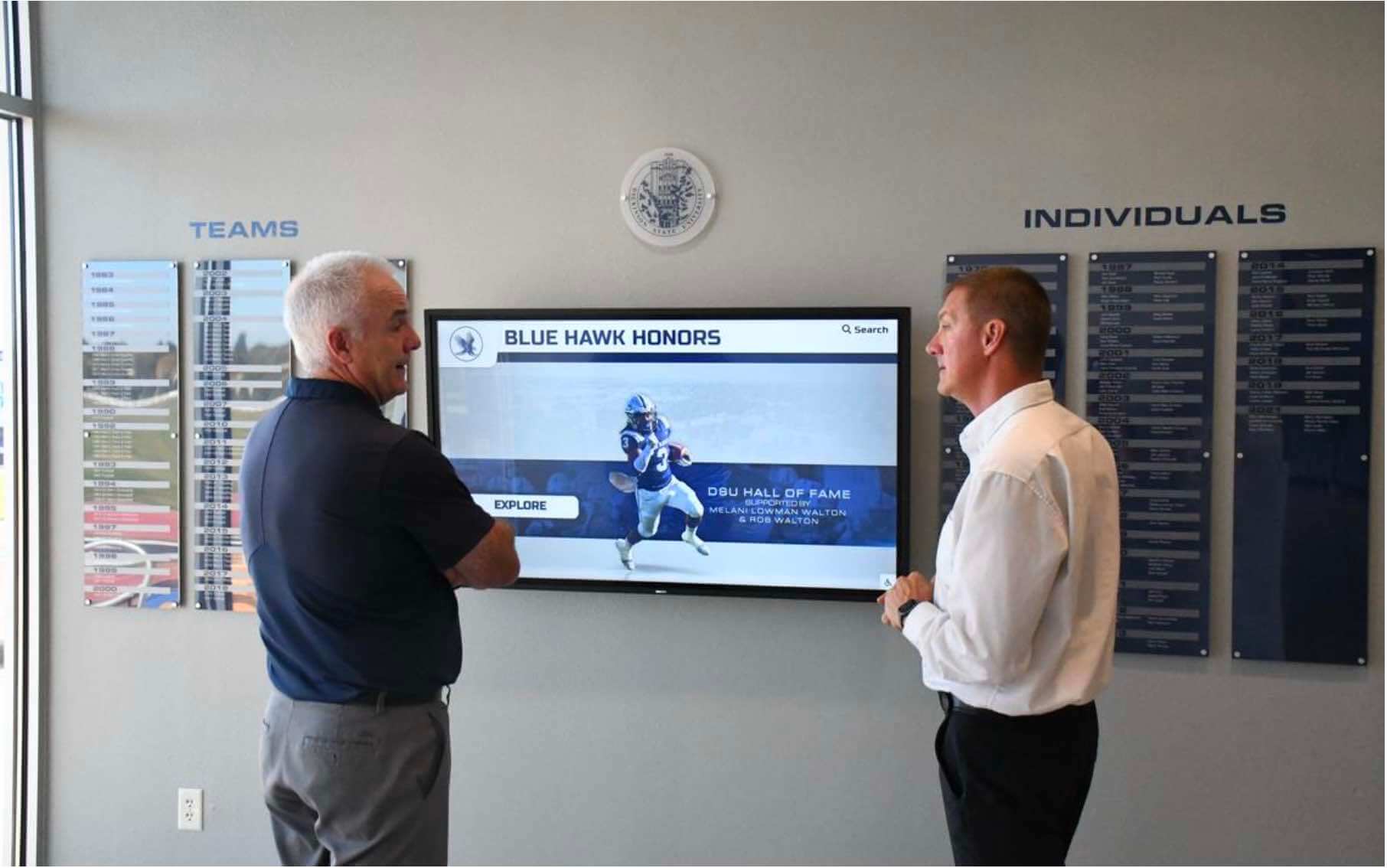
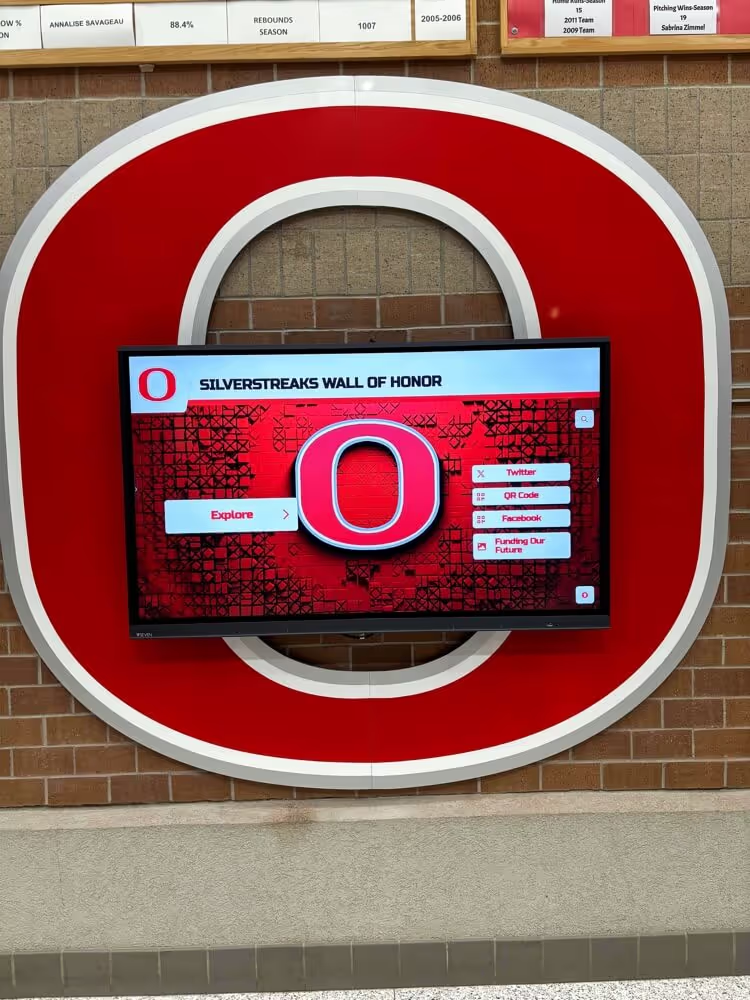
Version retrieval is most valuable when an administrator who was not present at the time of a correction needs to understand what the display showed before it — a versioning policy makes that retrieval routine rather than investigative
Implementing a Versioning Policy: Six Steps
The following sequence is designed for programs establishing versioning governance for the first time. Programs that already maintain a correction log in place can enter the sequence at Step 3.
Step 1 — Audit existing records for untracked changes. Before a versioning policy can be applied going forward, the program needs to understand the current state of its records. Identify which records have been corrected without log entries, which display-channel values do not match the database, and which records have informal correction history (in email threads, paper forms, or staff memory) that has not been documented. This audit establishes the baseline from which versioning governance begins. Records with unresolvable gaps should be flagged in the system with a “Documentation incomplete” status rather than silently normalized.
Step 2 — Define which fields require versioning. Not every field needs a version record. Start with the fields that have the highest public visibility and the highest correction frequency: athlete name, award title, season or year, and sport or activity. Add image or media references if the program includes inductee photographs or video on recognition displays. Document the versioned field list in the policy explicitly — not just in platform configuration — so that future staff can verify that configuration against the written standard.
Step 3 — Choose a version tracking method. Most programs will use one of three approaches: (a) a purpose-built digital recognition platform that logs changes natively and provides version retrieval through its CMS interface; (b) a managed spreadsheet or database with a dedicated versioning tab that captures field values and change metadata at each edit; or (c) a document-based version log in which each correction generates a dated version snapshot stored in a shared, access-controlled folder. Platform-native versioning is the most reliable and lowest-maintenance option. Document-based versioning is the lowest-cost entry point for programs not yet using a dedicated digital recognition platform.
Step 4 — Assign a version administrator. The version administrator is the staff member responsible for confirming that every correction generates a version record before the edit is applied, maintaining the version log or platform configuration, and responding to version retrieval requests from the athletic director, legal counsel, or governing bodies. In most programs, this role belongs to the athletic director or a named designee — the same person who holds correction authorization authority.
Step 5 — Establish a version-retention schedule. Document retention periods by award category in the policy. Suggested minimums: hall of fame inductions and major championship records (permanent or life of program); seasonal honors and team awards (minimum seven years, or as required by state records retention law); administrative metadata corrections (minimum three years). Verify state records retention requirements for educational records and apply the longer of the state minimum or the policy standard to each category. Because recognition programs span multiple staff generations, the retention schedule should be reviewed and reaffirmed at least every five years.
Step 6 — Connect version records to display channels. Update the publication workflow for each display channel to include a versioning checkpoint: before any corrected record is pushed live, the version record must be confirmed as created and the prior version confirmed as preserved. For digital recognition platforms with multi-channel publishing, this checkpoint should be documented in the platform’s approval workflow rather than as a separate manual step. For physical display channels — trophy cases, honor walls, engraved plaques — the version record should document the physical update separately, including the date, the person responsible, and any vendor or contractor involved.
Recognition events such as end-of-season banquets and award ceremonies are among the highest-risk moments for untracked corrections — because they create public-facing documents (ceremony programs, printed award lists) that may diverge from what the database shows. For programs thinking about how recognition governance applies to the full spectrum of school events where award records go public, homecoming and school spirit recognition planning offers context for how recognition accuracy standards apply during high-visibility school events.
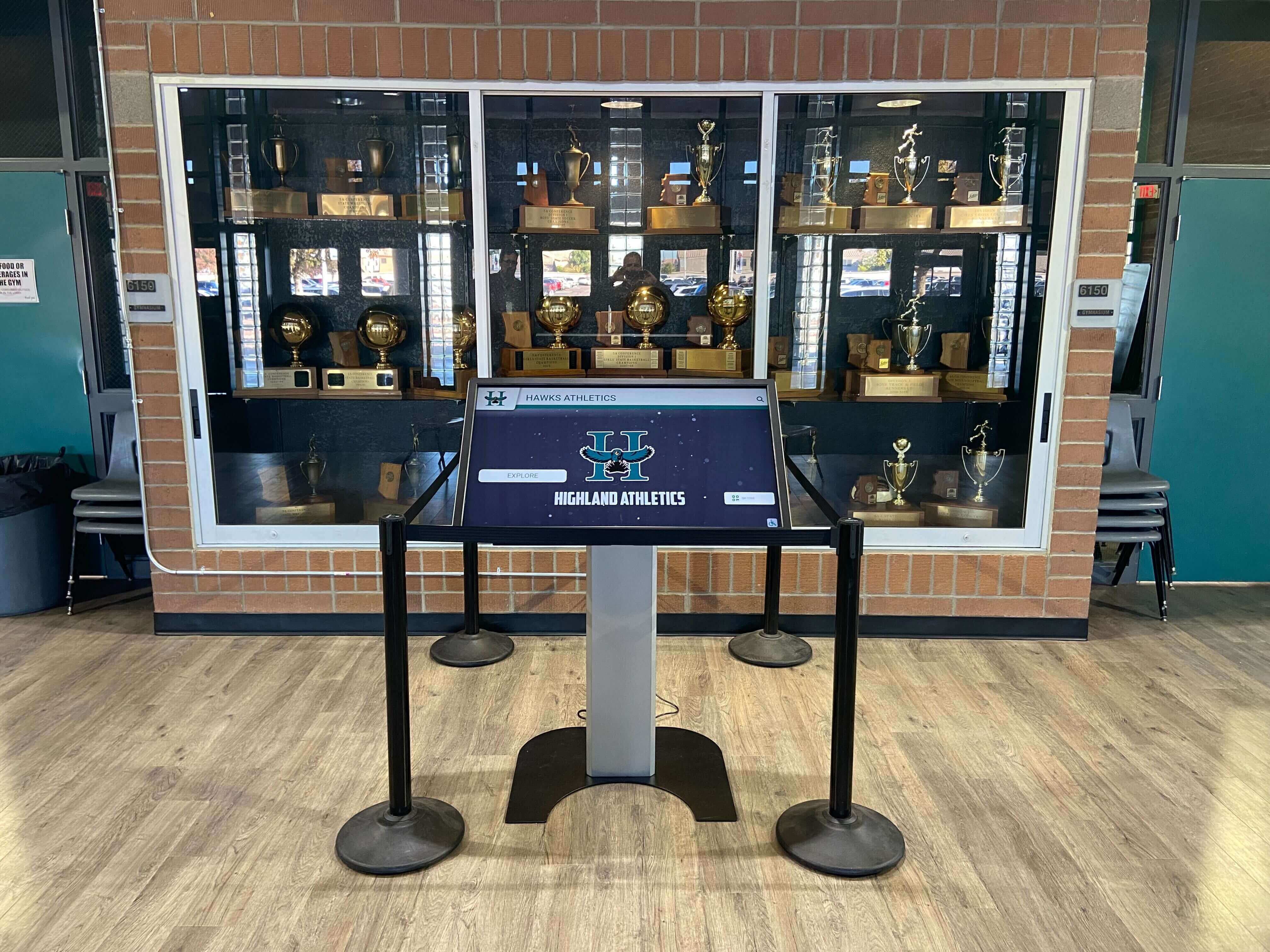
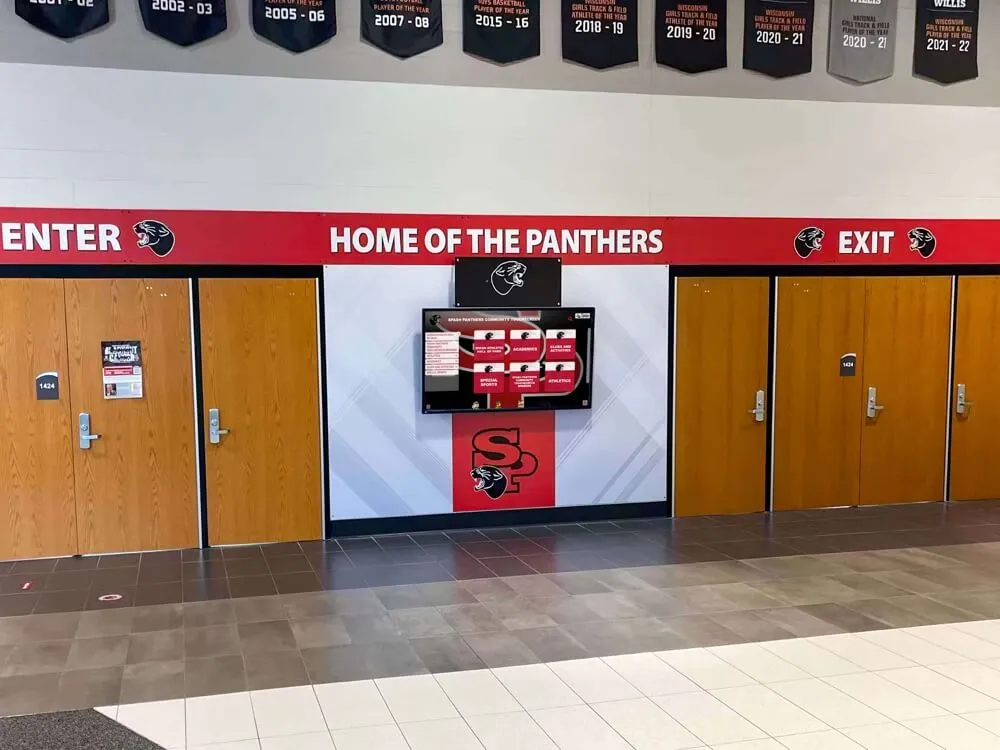
Physical and digital display channels both require version documentation — a correction that updates the kiosk database without documenting the trophy case state creates an undocumented discrepancy the policy is designed to prevent
Version History Table Template
The following table is a working template for recording version history for a single athletic award record. Each row represents one complete version of the record. Version 1 is the original entry as first published; each subsequent row documents a correction event. The table is designed to be read as a linear history: if a question arises about what the display showed at a specific date, the table identifies which version was active at that time and what its field values were.
| Version | Date Applied | Changed Field | Previous Value | New Value | Reason for Change | Authorizing Party | Channels Updated |
|---|---|---|---|---|---|---|---|
| 1 | 2023-09-15 | — (initial entry) | — | All fields as entered | Record creation | Athletic Director | Database, Digital Platform |
| 2 | 2023-10-03 | Athlete Name | Jon Smith | John Smith | Name misspelling; corrected per official records | Athletic Director | Database, Digital Platform |
| 3 | 2024-01-22 | Award Title | MVP | Most Valuable Player | Award category renamed per program policy update | Athletic Director | Database, Digital Platform, Physical Display |
| 4 | 2024-11-05 | Season Year | 2022 | 2023 | Transposition error at initial entry; corrected per ceremony program | Athletic Director | Database, Digital Platform |
This template can be maintained in a spreadsheet, in a platform CMS custom field, or as a document in a shared folder linked to the award record. The key requirement is that it is created at the time of each correction, not reconstructed afterward. For programs that also manage version records for non-athletic recognition categories — including FFA, performing arts, and student leadership awards — the same table structure applies regardless of program type. Understanding the significance of recognition symbols across student programs like FFA illustrates how recognition accuracy standards apply across the full scope of school programs, not only athletic ones.
The version table also serves as a communication tool when an athlete or family member raises a concern: rather than attempting to reconstruct what happened from memory or email threads, the version administrator can present the table as a complete, sequenced record of every state the award entry has occupied since its creation.

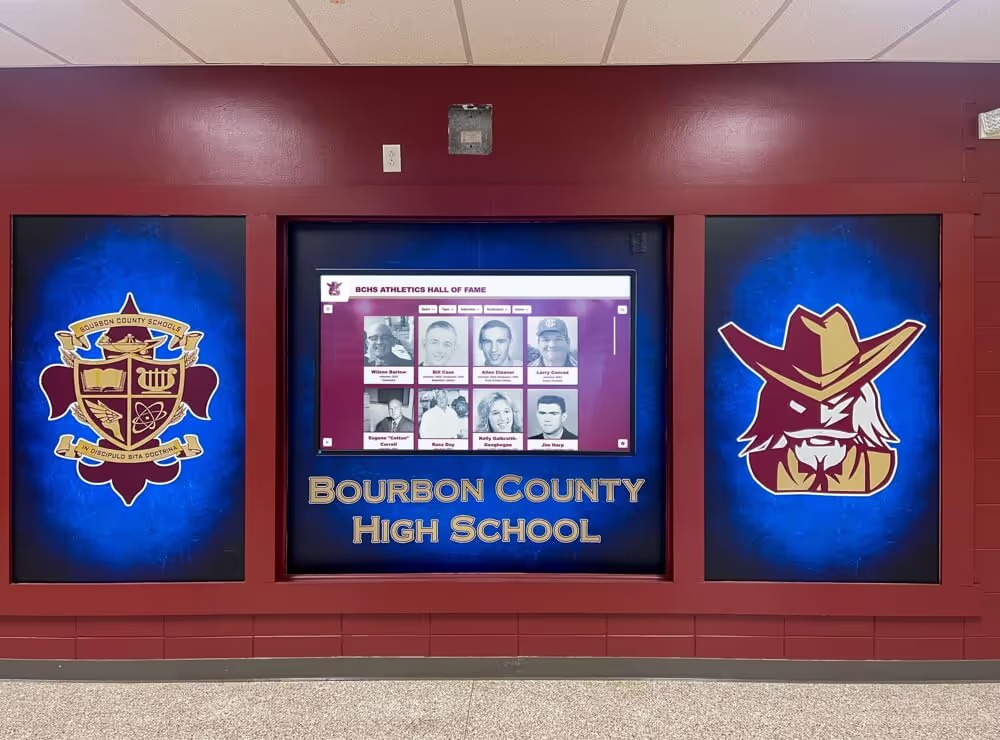
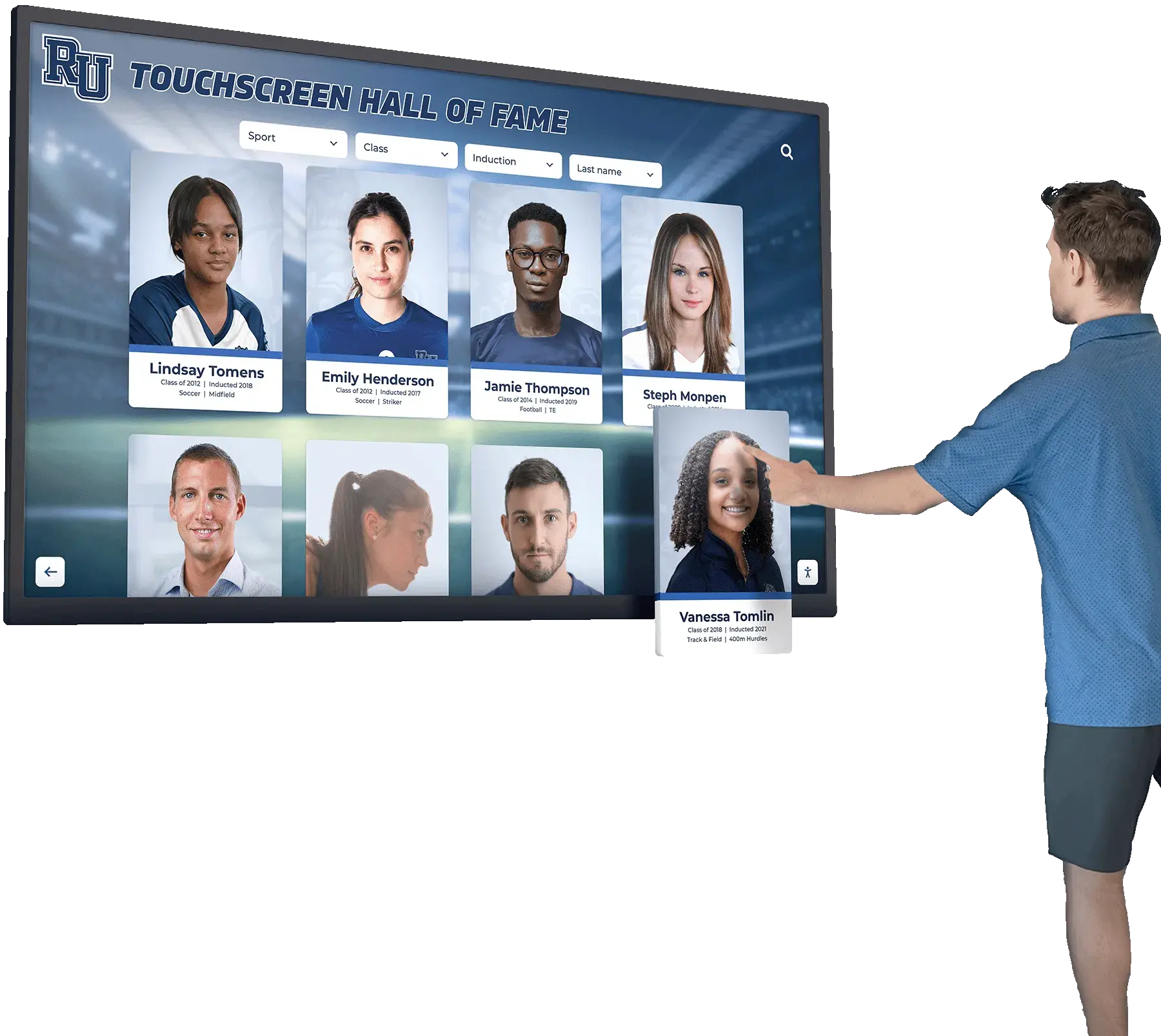
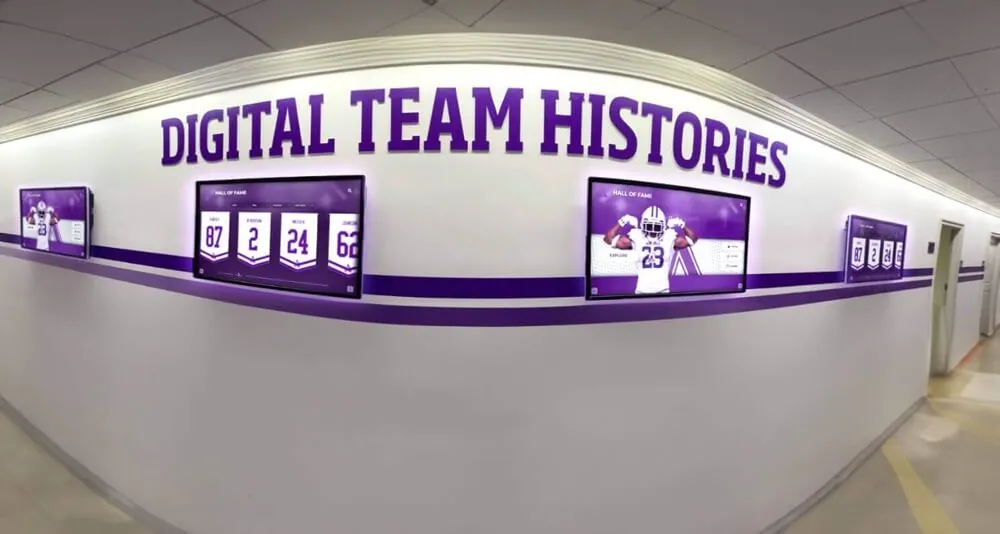
Every profile card on a recognition display represents a record that may have passed through multiple versions — the version history table makes that history transparent and retrievable for any card on any display
Connecting Versioning Policy to Recognition Display Systems
A versioning policy is most effective when the display system enforces it at the platform layer rather than relying entirely on manual documentation. Digital recognition platforms that support native change history eliminate the risk of a correction being applied without a corresponding version record — because the platform creates the version record automatically as part of the edit workflow.
Platform capabilities that directly support versioning policy compliance:
- Change history by field: The platform logs the previous value and new value for each field edit, with a timestamp and user attribution, without requiring a separate manual documentation step by the staff member making the correction.
- Version retrieval from the CMS: Administrators can retrieve a prior version of any record from within the platform interface, without needing direct database or server access.
- Multi-channel publication logging: When a correction is published across multiple display instances — lobby kiosks, hallway screens, web archives, and mobile access — the platform logs the publication event for each channel, supporting the display-layer version alignment requirement in the policy.
- Status flags for records under correction: The platform can mark a record as “Under Correction,” preventing public display of an in-progress edit, and return it to “Active” status only after the correction has been authorized, versioned, and published.
For programs evaluating recognition platforms based on governance and data management capabilities, Rocket Alumni Solutions product capabilities covers the features most directly relevant to version-aware record publishing and correction workflow management.
A versioning policy also aligns recognition governance with a program’s stated institutional values. Programs that publicly commit to transparent, accountable recognition should be able to demonstrate — when asked — that their records are corrected through documented processes, not through silent edits with no audit trail. Athletic department mission statement examples illustrates how explicitly stated recognition values create an implicit accountability standard that a versioning policy helps the program meet in practice.
For programs whose recognition displays also surface cheer, performing arts, and student leadership records alongside athletic honors, the same versioning standards apply across award categories. Award recognition planning for cheer programs provides context for how cheer banquet awards and other non-athletic recognition fit within the same governance framework, since they appear on the same displays and face the same audit questions.
Who Should Own Version Retrieval Authority?
The version administrator manages version records day-to-day, but version retrieval authority — the right to access and formally use version history in a dispute, audit, or legal review — should be defined separately in the policy. In most programs, this authority belongs to the athletic director. The distinction matters because version history may document corrections that were made under disputed circumstances, and access to that history should be governed with the same deliberateness as access to the underlying records.
Three situations that require formal version retrieval:
An athlete or family member disputes a correction. Version history allows the athletic director to show exactly what was displayed before the correction, when the change was made, who authorized it, and what evidence supported it — without relying on memory or reconstructed accounts.
A governing body or conference office requests an audit of displayed records. Version history allows the program to produce a time-stamped account of what appeared on each channel at any point during the audit period, down to the day.
A new staff member inherits records with values that appear inconsistent. Version history allows the incoming administrator to trace a current display value back to the correction that produced it and verify whether that correction was properly authorized — rather than initiating a new correction workflow based on a misunderstanding of how the current value came to exist.
For programs thinking about how recognition governance responsibility is distributed across staff roles — including how versioning authority connects to the broader accountability structure of school-wide recognition — touch-board displays and staff recognition governance offers context for how the same accountability questions apply across the full scope of a school’s public recognition, not only in athletic programs.
For display boards and digital sports walls where records are visible to visiting athletes, families, and community members, school sports display board governance addresses how version accountability connects to the public-facing responsibility that recognition displays carry — because a display board that shows an incorrect record is a public record of the program’s governance, not just an internal data problem.
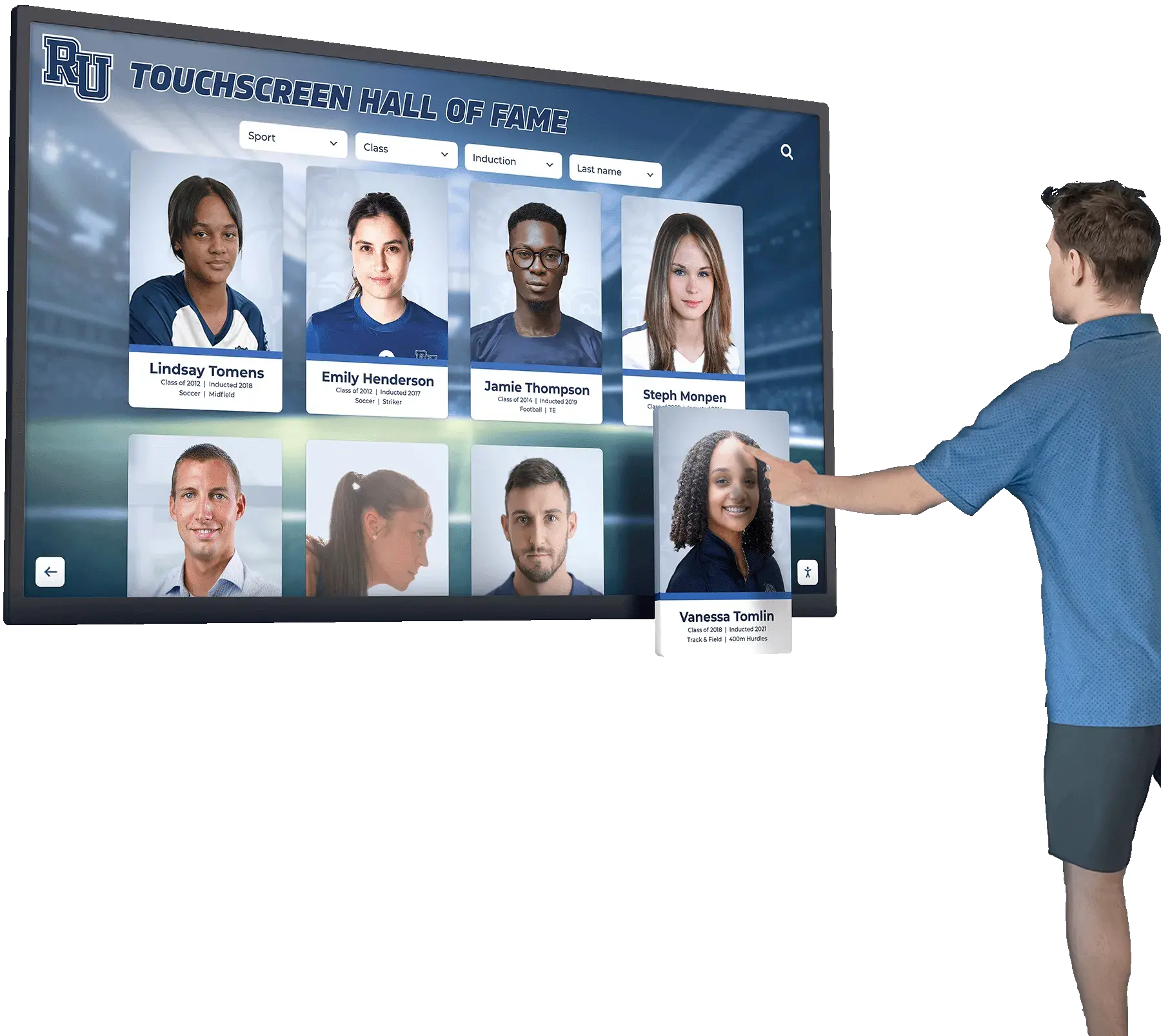
When an athlete or family member questions what a recognition display showed at a specific point in the past, version history provides the authoritative, documented answer — a capability that a correction log alone cannot deliver
Frequently Asked Questions
What is an athletic award data versioning policy?
An athletic award data versioning policy is a written governance document that defines how changes to award records are tracked, preserved, and made retrievable over time. It specifies which fields are versioned, how version identifiers are assigned, what metadata must accompany each version, how long prior versions are retained, and who has authority to retrieve version history. The core principle is non-destructive change capture: no version of a record is ever deleted or overwritten — only superseded — so administrators can reconstruct exactly what any recognition display showed at any prior point in time.
How does data versioning differ from a correction log for athletic awards?
A correction log records individual changes as they happen — what field changed, from what value to what value, and who authorized it. Data versioning creates complete, retrievable snapshots of the full record at each change point. The difference matters when a correction is later disputed or found to be itself in error: a correction log tells you what changed, while version history lets you retrieve the complete record as it existed at any prior moment, including which display channels it was published to and what status it carried at that time.
Which fields in an athletic award record should be versioned?
The minimum set of versioned fields for most athletic award records includes athlete name, award title, sport or activity, season or year, award category, and display status. Programs that include photographs or media on recognition displays should also version image references. Administrative metadata fields — system-generated timestamps and identifiers — are typically excluded because they are set automatically and are not subject to correction. The policy should document the versioned field list explicitly so that platform configuration and manual documentation procedures can be aligned to it across staff changes.
How long should prior versions of athletic award records be retained?
Retention periods should be defined by award category. Hall of fame inductions and major championship records warrant permanent version retention because of their institutional and potential legal significance. Seasonal honors — all-conference selections, team awards, end-of-season recognitions — should have version history retained for a minimum of seven years, aligned with common educational records retention requirements. Programs should verify their state's records retention requirements for educational records and apply the longer of the state minimum or the policy standard to each award category.
Can a digital recognition platform enforce versioning policy automatically?
Yes. Digital recognition platforms that support native change history log every field-level edit with a timestamp and user attribution automatically, without requiring a separate manual documentation step. The best platforms also support version retrieval from within the CMS, multi-channel publication logging, and status flags that prevent in-progress corrections from going public before they are authorized. Platform-native versioning is the most reliable enforcement mechanism because it makes the version record a byproduct of the correction workflow itself — a step that cannot be skipped rather than a manual task that can be omitted under time pressure.
See Version-Aware Award Record Management in Action
Rocket Alumni Solutions' cloud-based recognition platform logs every field-level change — with timestamps, user attribution, and display-channel publication records — giving athletic directors a complete version history for every award record from first entry to current display. ADA WCAG 2.1 AA compliant, with remote content management, auto-ranking record boards, and QR code mobile access for off-site visitors.
Request a Demo