



Intent: research — an athletic award record lifecycle policy defines the rules governing how award records are created, corrected, archived, and retired, giving athletic departments a structured framework that preserves recognition history without allowing records to persist indefinitely without review. Schools and programs that implement a formal lifecycle policy can answer two fundamental governance questions at any moment: is this record still active, and what is its complete history from creation through its current status?
This guide is written for athletic directors, school administrators, IT and facilities teams, archivists, and recognition-program owners. It provides a four-stage lifecycle model with checklists and a status-flow table for each stage, a Q&A section addressing common policy questions, and practical guidance on connecting lifecycle governance to the digital display systems where athletic award records become public.
Athletic records outlast coaches, administrators, and often the athletes themselves. A hall of fame induction profile may remain visible on a lobby touchscreen for 40 years. A records board entry may stand for a generation before it is broken. Without a formal policy that defines what happens to a record at each stage of its life — from the moment it is entered to the point it is permanently retired — schools accumulate records in various states of accuracy, currency, and relevance with no documented authority governing what any particular record currently means.

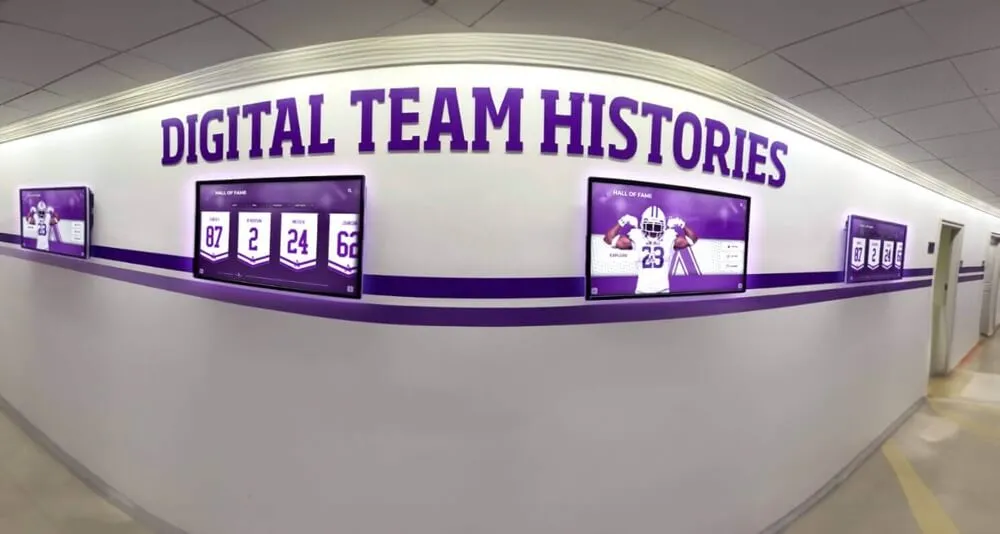
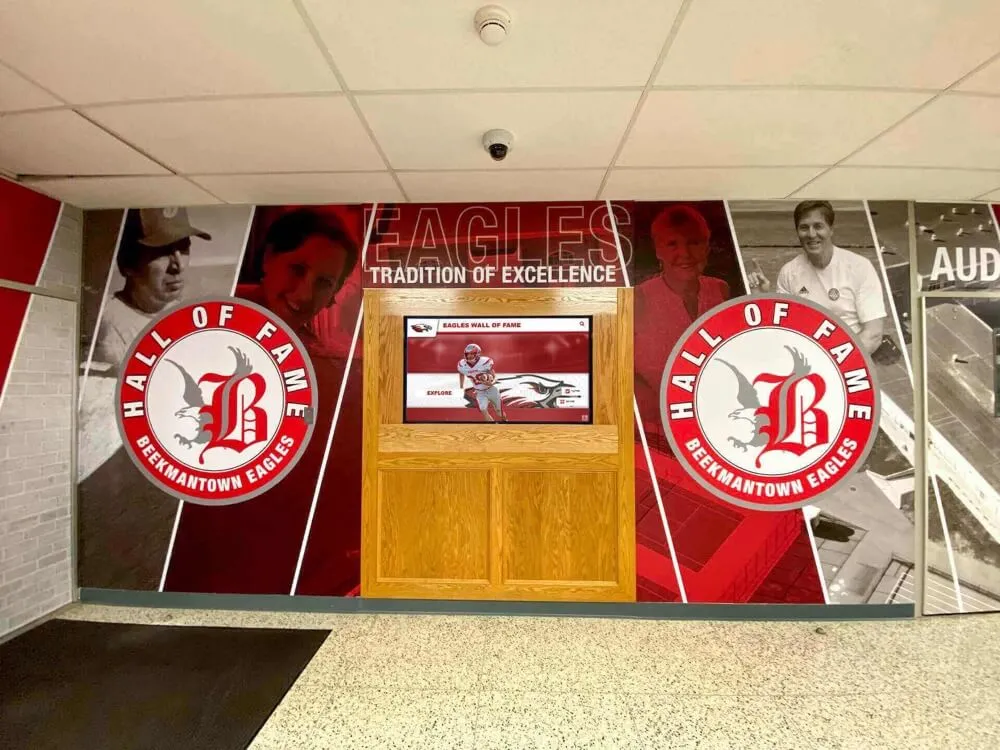
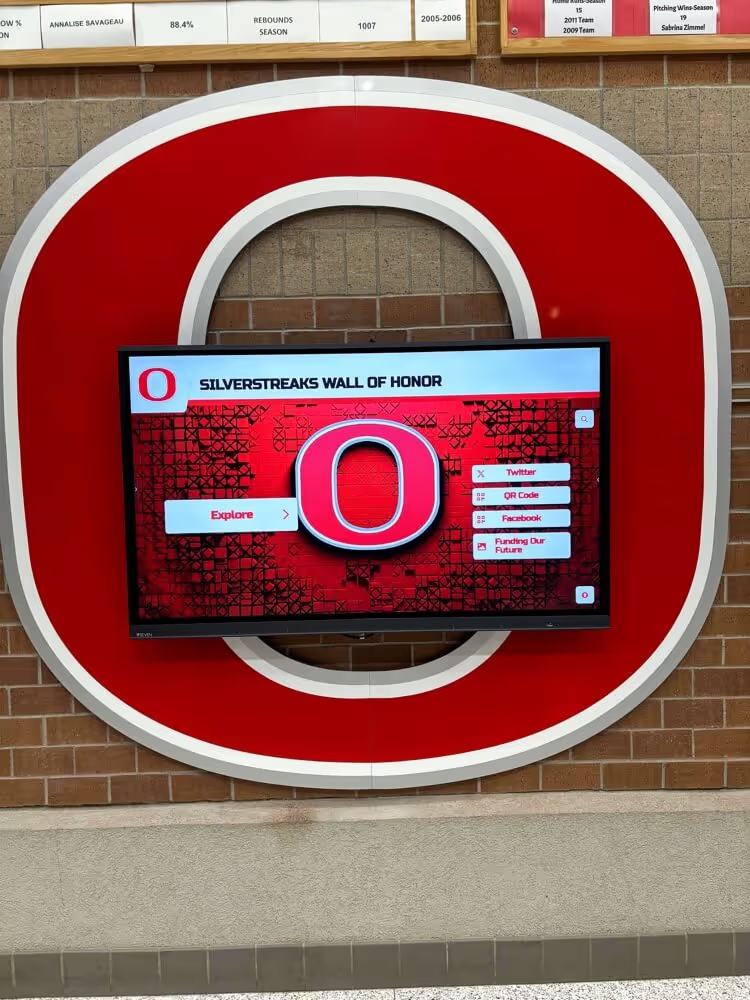
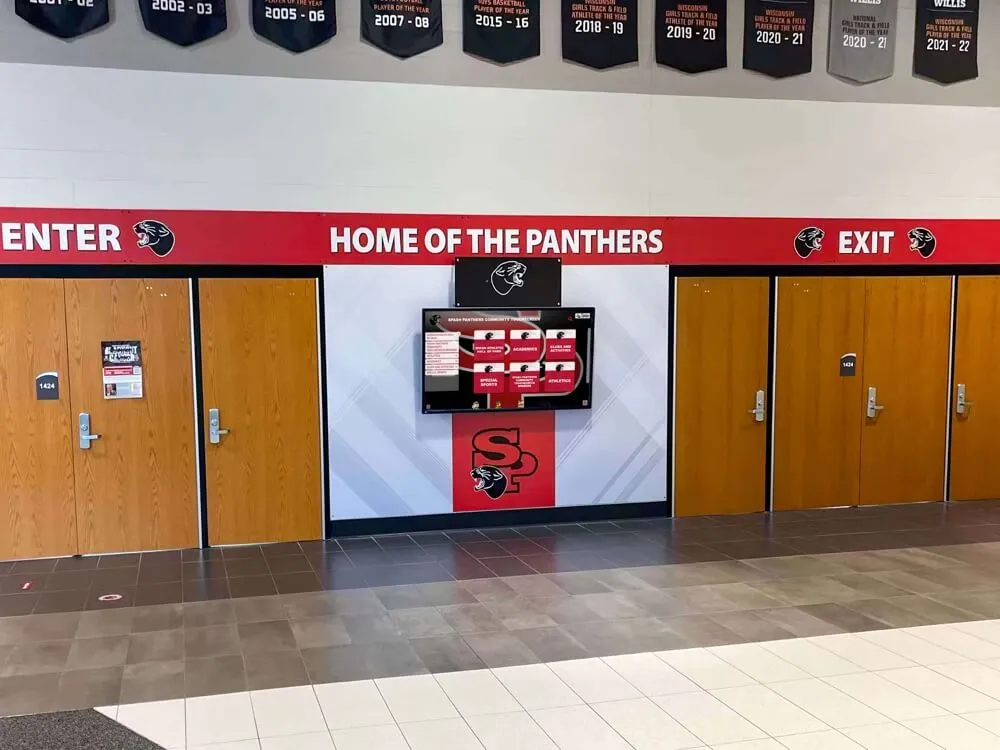
Physical and digital displays both surface records that have passed through multiple lifecycle stages — a formal policy ensures each stage is governed, documented, and auditable across every channel
What Is an Athletic Award Record Lifecycle Policy?
An athletic award record lifecycle policy is a written document that defines the authorized status states a recognition record can occupy — from active publication through correction, archiving, and eventual retirement — along with the rules, roles, and documented steps governing each transition.
The policy answers five questions that arise in every recognition program:
- What must happen before a new record is published?
- Who can authorize a correction, and what must be documented?
- When does an active record become an archived record?
- What does retirement mean — and how does it differ from deletion?
- Where do retired records remain visible, if at all, to preserve public recognition history?
Without a written policy, these questions are answered differently by every staff member who touches the records — producing inconsistent treatment, undocumented changes, and no shared understanding of what any given record’s current status actually means.
The Four-Stage Lifecycle Model
The lifecycle of a well-governed athletic award record follows four stages: Create, Correct, Archive, and Retire. Each stage has an entry trigger (what must happen for a record to enter that stage), defined activities, and an exit trigger (what moves the record to the next stage or ends its active life).
| Stage | Status Label | Entry Trigger | Exit Trigger |
|---|---|---|---|
| 1 — Create | Active | Award verified and publication approved | Correction request submitted, archival threshold reached, or award category discontinued |
| 2 — Correct | Under Correction | Formal correction request received and authorized | Correction applied, documented, and re-published to all channels |
| 3 — Archive | Archived | Retention threshold met or award category discontinued | Retirement decision or active reinstatement by athletic director |
| 4 — Retire | Retired | Retirement authorized by athletic director | None — retirement is terminal, but the record is permanently preserved |
Stage 1: Create — Making a Record Active
A record enters Active status when it has passed three gates: governing source verification, administrative approval, and publication authorization. Skipping any gate produces a record that is technically visible but not fully governed — meaning it cannot be traced, corrected, or archived with confidence when a question arises later.
Stage 1 checklist — before activating a new record:
- Governing source document on file (coach’s selection form, conference results communication, induction committee vote)
- Award name, athlete name, season, and category verified against the source document
- Administrative approval documented (athletic director or named designee, with signature and date)
- Publication channels identified (database, digital recognition platform, physical display, website)
- Entry timestamp and entering user captured in the recognition system
- Initial status set to “Active” in the record management system or platform CMS
For programs establishing which award categories qualify for formal lifecycle tracking before individual records are created, athletic archive collection development policy guidance provides a framework for defining scope and inclusion criteria at the program level.

Creation governance begins before the first entry is made — a record not verified against its governing source document at creation carries unresolvable uncertainty through every subsequent lifecycle stage
Stage 2: Correct — Changing What Is Already Published
A correction is any change made to a record after it has been published to at least one channel. Corrections are normal and expected — names are misspelled, seasons are transposed, award titles are adjusted over time. What distinguishes a well-governed correction from an ungoverned edit is documentation: a formal correction request, a named authorization, a before-and-after log entry, and a re-publication step that updates every affected channel simultaneously.
Stage 2 checklist — documenting a correction:
- Correction request submitted in writing (by whom, date received, specific field to be changed)
- Supporting evidence provided (source document, governing body communication, or other authoritative basis)
- Athletic director or named designee authorization recorded before any edit is applied
- Previous value preserved in the correction log before the change is made
- Corrected value entered and verified against the supporting evidence
- All affected channels updated simultaneously (database, digital platform, physical display, website)
- Correction log entry completed (date, changed field, previous value, corrected value, authorizing party, evidence reference)
- Record status returned to “Active” after correction and re-publication are confirmed
Duplicate records — where the same athlete or award appears twice under slightly different name spellings or season formats — are among the most common reasons correction workflows are triggered. Identifying and resolving duplicate award records provides a structured process for surfacing duplicates before they require individual corrections across multiple display channels.
For programs with existing records related to athletes who have since passed away, posthumous athletic recognition policy guidance addresses the specific correction and update considerations that arise when a posthumous designation is added to an active or archived record.
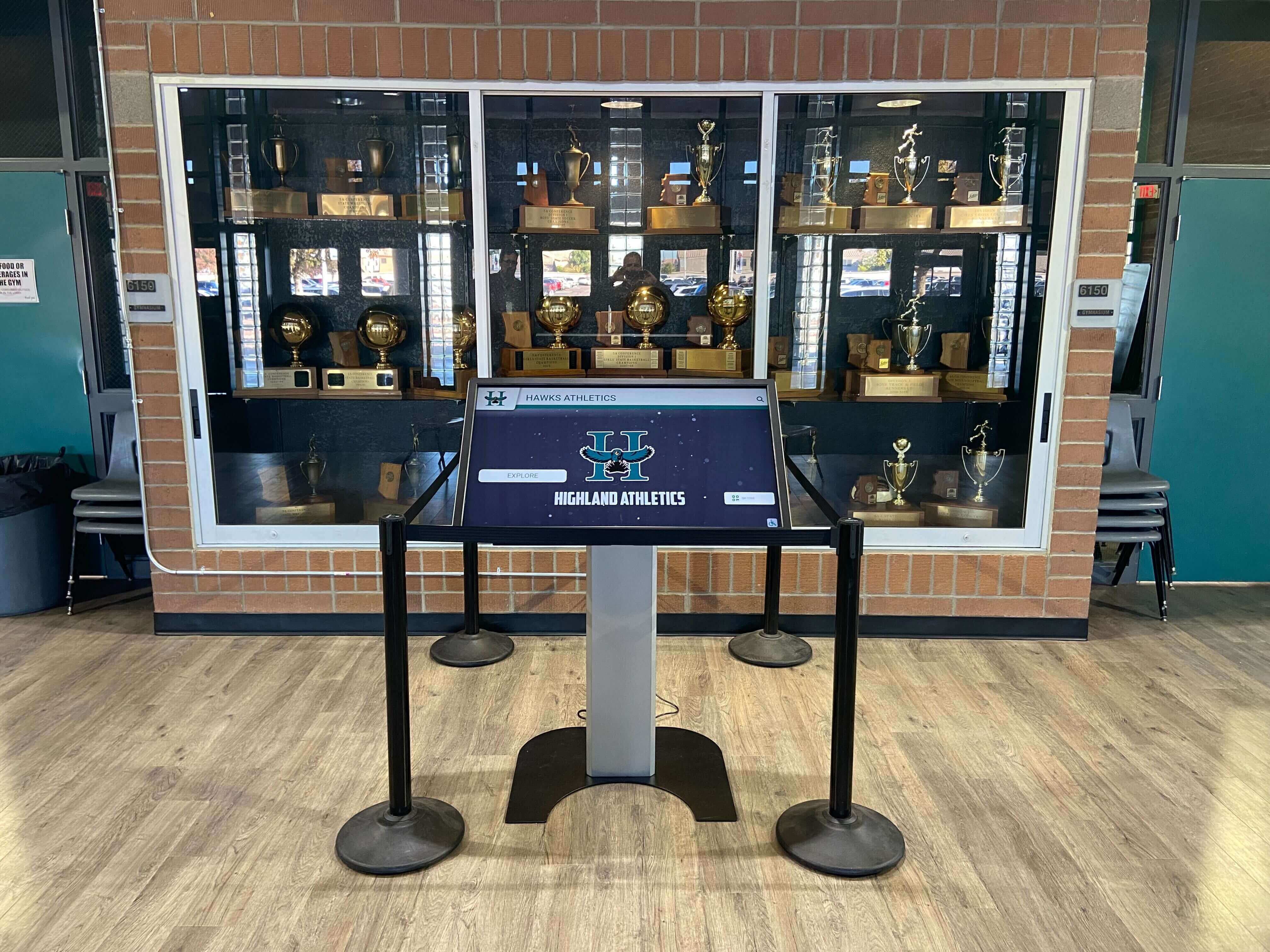
A correction that updates the database but leaves the physical trophy case unchanged creates the exact inconsistency a lifecycle policy is designed to prevent — re-publication must cover every channel, not just the digital one
Stage 3: Archive — Preserving Without Active Promotion
Archiving moves a record out of active promotion while keeping it fully preserved, searchable, and accessible. Archived records are not deleted, hidden, or degraded — they are retained with their complete history but no longer surfaced as current content in active display listings or record board rankings.
Common triggers for moving a record to Archived status:
- The award category was discontinued, but records from prior seasons remain valid and should be preserved in the institutional history
- A retention threshold has been reached (for example, seasonal honors that fall outside the active lookback window for a records board)
- The athlete, event, or program is no longer within the scope of the current display program but should remain accessible in the institutional archive
- A program review identified records requiring re-evaluation before continued active display
Stage 3 checklist — archiving a record:
- Archival trigger documented (which policy provision or review decision authorizes this archival)
- Athletic director or named designee authorization recorded
- Record status updated to “Archived” in the recognition system or platform CMS
- Record preserved with complete history intact: original entry, all correction log entries, source documents
- Active display channels updated to reflect archived status (removed from current listings where appropriate; may remain visible in archive or history views)
- Institutional archive location documented (which system, repository, or storage tier holds the archived record)
- Retrieval process documented (who can access the archived record, how, and under what circumstances)
For programs managing records that were created in now-superseded systems or digital formats, born-digital records policy for athletic archives covers the preservation standards that should govern how digital records are held through format changes and platform migrations without losing governance metadata.
Assigning sensitivity and access levels to records — a process called data classification — becomes especially important at the archive stage, when records may transition out of active CMS access and into longer-term storage systems with different permissions structures. Athletic archive data classification policy frameworks provide the classification vocabulary that makes archive retrieval and access governance consistent across staff changes and system migrations.

Archived records remain part of the institution's permanent recognition history — digital platforms that support archive browsing modes allow visitors to explore historical records without conflating them with current active content
Stage 4: Retire — Ending the Active Record Lifecycle
Retirement is the terminal status for a record that will no longer be displayed, corrected, or maintained in any active system. Retirement is not deletion — the record is preserved in a permanent institutional repository with its full documentation history intact. The distinction matters because retirement decisions are occasionally reversed (an athlete reinstated after an appeals process, for example), and because retired records may retain legal, historical, or evidentiary significance long after their active display value has ended.
Retirement triggers include:
- A governing body determination that a record should be removed from public recognition
- An appeals decision resulting in an award being formally rescinded
- A court order or legal settlement requiring removal from public display
- A program-level policy decision that a category of records has reached end-of-life with no further institutional value served by continued retention in active systems
Stage 4 checklist — retiring a record:
- Retirement trigger documented with specific policy provision, legal basis, or governing body communication
- Athletic director authorization recorded (legal counsel sign-off required for legally triggered retirements)
- All active display channels updated: digital platform, physical displays, school website, printed materials if applicable
- Record transferred to permanent institutional repository with status marked “Retired”
- Complete history preserved: original entry, all correction log entries, archival record if applicable, retirement authorization
- Access controls documented (who may view the retired record, under what circumstances, and through which process)
- Stakeholder communication plan documented if athletes, families, or program partners need to be notified
Where retirement intersects with content rights — for example, photographs contributed by a third party that appear in a display profile — athletic archive copyright takedown policy guidance addresses the rights-specific considerations that may trigger or accompany a retirement decision and affect which elements of the record can be preserved in the repository.
Connecting Lifecycle Policy to Digital Display Systems
A lifecycle policy is only as effective as the systems that enforce it. When award records live across multiple channels — a database, a physical trophy case, a school website, and a digital recognition platform — lifecycle status changes must propagate consistently across all of them. A record marked “Archived” in the database but still displaying as active on the hallway touchscreen creates the precise inconsistency a lifecycle policy is designed to prevent.
Digital recognition platforms that support status-aware publishing allow athletic administrators to apply a lifecycle status change once and have it reflected across all connected display channels simultaneously. For programs evaluating which display technology supports the governance workflows their lifecycle policy requires, touchscreen athletic record board comparison guides offer feature-level comparisons of how different platforms handle record management, status publishing, and archival browsing modes.
The most complete recognition programs maintain visibility into all lifecycle stages simultaneously — active records surfaced for current athletes and visitors, archived records preserved in a browsable historical view, and retired records documented for institutional and legal purposes. Programs exploring how layered display modes present active and archived recognition alongside one another without conflating their governance status can find implementation context in digital achievement award display examples.

A digital recognition platform that supports lifecycle status publishing can propagate Create, Correct, Archive, and Retire changes across all connected channels from a single administrator action — no channel falls behind
Rocket Alumni Solutions’ cloud-based recognition platform includes remote content management that allows athletic directors to update record status — from active to archived or from correction back to published — from any location without requiring on-site IT involvement. The platform’s auto-ranking record boards automatically reflect corrected and updated data as status changes are applied. QR code mobile unlock features ensure that archived historical records remain accessible to off-site users even when the primary physical display surfaces only current active content. The platform is ADA WCAG 2.1 AA compliant, ensuring that public recognition history — across every lifecycle stage — remains accessible to all visitors regardless of ability.
For programs evaluating display platforms as part of lifecycle policy implementation, Rocket Alumni Solutions product capabilities details the features that directly support status-aware record publishing, correction tracking, and archive browsing at the display layer.

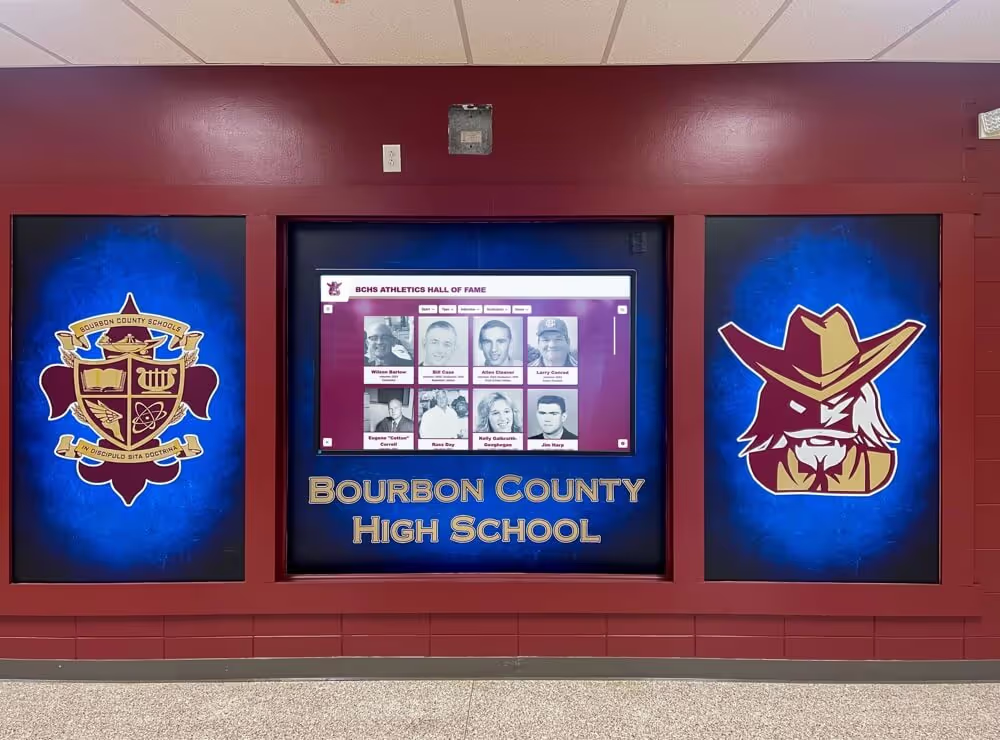
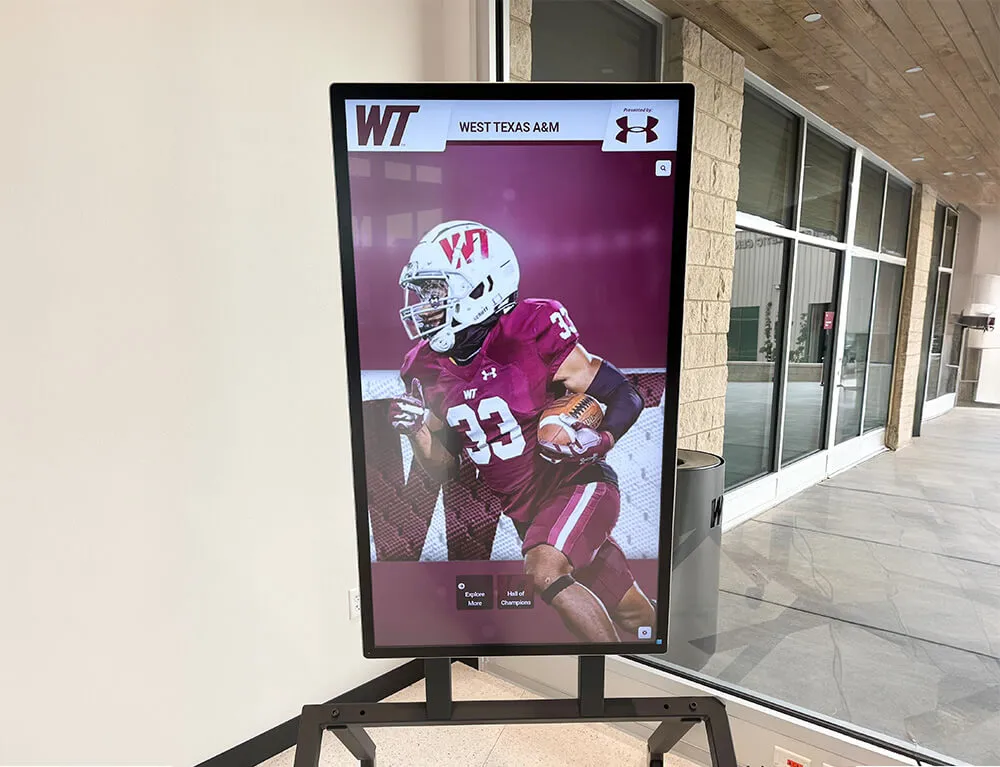
Active records in a lifecycle-governed system are publication-ready, source-verified, and correction-logged — a touchscreen display surfaces the end result of all four lifecycle stages working correctly together
Frequently Asked Questions
What is the difference between archiving and retiring an athletic award record?
Archiving moves a record out of active promotion while keeping it preserved, searchable, and accessible within the institution’s recognition system. Archived records are no longer featured as current content but remain fully intact with their complete history, and they can be reinstated to Active status if a governing authority reverses the archival decision. Retirement is terminal — the record is moved to a permanent repository and removed from all active display channels and maintenance workflows. The key distinction is reversibility: archived records can be reinstated; retired records require formal re-authorization and a new Active entry to re-enter any display channel.
Who should have authority to approve a correction to a published award record?
The athletic director or a specifically named designee should be the sole authorized approver for corrections to published award records. The lifecycle policy should specify that correction requests must be submitted in writing, must include supporting evidence, and must receive explicit approval before any edit is applied to any channel. Allowing self-service corrections by any staff member with database or CMS access — without a documented approval step — is the most common source of untracked record drift in school athletic programs.
How long should athletic award records remain active before archiving?
Retention thresholds depend on the award category and should be specified by category in the policy, not through a single blanket rule. Hall of fame inductions and major championship recognitions are typically retained as active records permanently or for the life of the recognition program. Seasonal honors — all-conference selections, coach’s awards, end-of-season team recognitions — are commonly moved to archived status after a defined lookback window (often five to ten seasons) or when the award category is formally discontinued. Matching the retention threshold to the institutional significance of each record type produces a more accurate and manageable active display.
Can a retired record ever be reinstated to active display?
Yes, but reinstatement requires formal re-authorization following the same governance path as a new record creation: governing source documentation, administrative approval, and a new publication authorization covering each channel. The original retired record and its complete history should be preserved separately in the permanent institutional repository. The reinstated record should be created as a new Active entry in the recognition system, with a reference in its documentation to the prior retirement decision and the authority that approved the reinstatement.
What should a lifecycle policy say about records for athletes who face disqualification or eligibility disputes?
The policy should specify that disqualification or eligibility determinations trigger a formal retirement review — not an immediate deletion or silent removal. The review should involve the athletic director, school administration, and legal counsel when the basis is a legal or governing body action. Records should remain on all display channels until the review is complete and a formal retirement authorization is issued, documented, and communicated to any required stakeholders. This protects the institution from premature action and ensures the complete governance record is in place before any public-facing change is made.
An athletic award record lifecycle policy gives every recognition record a governed path from creation through retirement — and gives athletic departments the documentation to answer questions about any record years after the administrators who created it have moved on. If your program is building or updating this kind of governance infrastructure and evaluating the digital display platforms that support status-aware record publishing, schedule a custom demo with Rocket Alumni Solutions to see how lifecycle-governed record management works in a live recognition system.