



An athletic award reference data management policy defines the approved, standardized values for the descriptive data that frames every award record — the team name, the season label, the award title, the classification or division, and the sport category. Without a formal policy, these values drift: one database records “Boys Varsity Basketball,” another records “Men’s Basketball,” and a third records “BV Basketball.” The records describe the same program, but they cannot be searched, merged, or displayed consistently because the reference data was never standardized.
This guide is written for athletic directors, school administrators, IT and data staff, advancement leaders, and facilities teams responsible for maintaining athletic recognition records. It defines the four core reference data domains, provides a standardization framework, maps ownership to each domain, and connects reference data governance to the digital display systems where award records are ultimately published.
A formal athletic award reference data management policy is the operational infrastructure that keeps every downstream record — individual award credits, seasonal results, hall of fame profiles, record board entries — anchored to consistent, searchable reference values. When team names match across every system, searches return complete results. When season labels follow a uniform format, records from 1998 and 2024 sort and compare correctly. When award titles use approved vocabulary, a query pulls every relevant record without omissions.

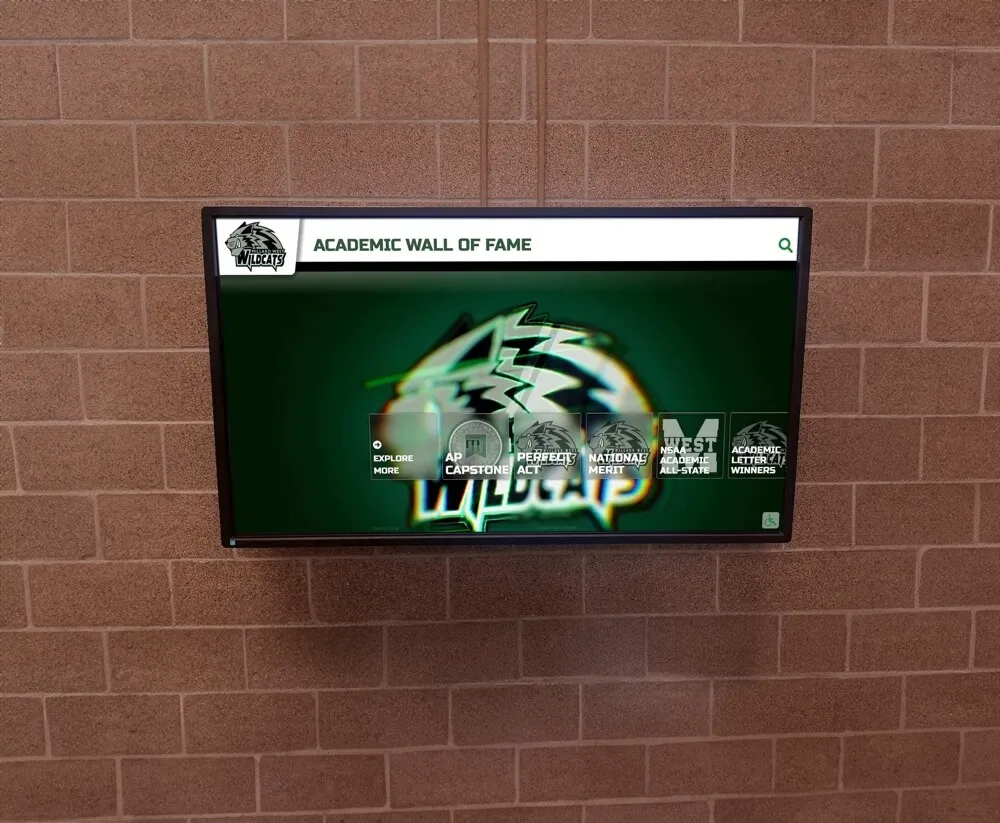
Digital displays that show team histories and season records depend on consistent reference data to organize and surface the right results for every query
What Is Athletic Award Reference Data Management?
Reference data is the set of approved, controlled values used to classify, label, and organize other records. In athletic award databases, reference data includes the official names, codes, and labels that describe the context of each award — not who won it, but how to categorize it.
Athletic award reference data falls into four primary domains:
- Team names and program labels — the official, approved name for each athletic program (“Girls Varsity Soccer” vs. “Women’s Soccer” vs. “GV Soccer”)
- Season and year labels — the format used to identify each competition season (“2023–24,” “2023-2024,” “Fall 2023,” “2024”)
- Award titles and categories — the approved names for each award type (“Most Valuable Player,” “MVP,” “Team MVP”) and the category hierarchy that groups related awards
- Classification and division labels — the approved values for competitive tier, conference, district, or division identifiers
Reference data management is the discipline of creating, maintaining, and enforcing a controlled vocabulary for each of these domains — defining the approved values, documenting them in a policy, and applying them consistently across every database, system, and display.
An athletic award reference data management policy formalizes this discipline in writing, assigning ownership, documenting the approved value sets, defining change procedures, and establishing a review cycle.
The Four Reference Data Domains in Athletic Awards
1. Team Names and Program Labels
Team names are the most frequently inconsistent reference data element in school athletic records. A program that has existed for decades may have accumulated different name formats across handwritten scorebooks, early spreadsheets, a newer digital platform, and the physical display in the athletic hallway — each entered by a different person who made a reasonable but undocumented formatting choice at the time.
Common inconsistencies:
- Abbreviation vs. full name: “BV Football” vs. “Boys Varsity Football”
- Gender prefix variants: “Boys” vs. “Men’s” vs. no prefix
- Level variants: “Varsity” vs. “V” vs. no level indicator
- Mascot substitutions: “Eagles” instead of the program-level name
Policy requirement: Define one approved label per program. Document it in a reference data registry. Apply it as the canonical value in every database field that identifies the team.
For programs building comprehensive athletic record systems, how schools track and display all-time athletic records covers how team-level reference data anchors the accuracy of displayed records across seasons.
2. Season and Year Labels
Season labeling errors are subtle but consequential. A record entered as “2023” when the season was “2023–24” appears to belong to a single calendar year only. A record labeled “Fall 2023” instead of “2023–24” fails to match a search for cross-season awards. When year formats vary — some records using single years, others academic-year spans, others semester-specific labels — querying a database for a complete season’s awards returns incomplete results.
Common inconsistencies:
- Single year vs. academic year span: “2024” vs. “2023–24” vs. “2023-2024”
- Semester vs. full-year: “Fall 2023” vs. “2023–24”
- Dash format: em dash vs. en dash vs. hyphen in academic-year spans
- Misaligned year reference: using the spring year vs. the fall year for an academic-year label
Policy requirement: Define a single season-labeling format for each season type (academic year, fall, winter, spring, summer). Document the approved format with a concrete example. Apply it as the canonical value in every season-related database field.
3. Award Titles and Categories
Award titles vary because no one standardized them when the first records were entered — and because different coaches in different sports named equivalent awards differently without realizing they were creating parallel, non-mergeable records.
Common inconsistencies:
- “Most Valuable Player” vs. “MVP” vs. “Team MVP” vs. “Team Most Valuable Player”
- “Scholar-Athlete Award” vs. “Academic Athlete Award” vs. “Scholar Athlete”
- Category groupings that differ between systems: “Individual Awards” in one database, “Player Awards” in another, no category at all in a third
Policy requirement: Create an award taxonomy with approved titles at every level — the award name as entered in the database, the award name as displayed publicly, and the category it belongs to. For display purposes, a consistent taxonomy allows recognition platforms to group, filter, and surface awards correctly.
For programs building digital hall of fame and recognition programs where award titles drive search and filtering, recognition program structure for hall of fame platforms provides a framework for how award category hierarchies support consistent recognition display.
4. Classification and Division Labels
Classification labels — the competitive tier, conference, district, and division identifiers attached to awards and results — change over time as programs reclassify, conferences realign, or governing bodies reorganize. Without a formal change management procedure, old classification labels remain in the database alongside new ones, and historical records appear to belong to non-existent divisions.
Common inconsistencies:
- Old conference names applied to new records after a conference rename
- State classification codes that changed but were not updated in older records
- District identifiers that vary by year but are entered without year-specific context
Policy requirement: Maintain a classification reference table with the approved label, the years it was active, and the superseding label if the classification changed. Apply the correct label for the record’s season, not the current label.
Why Reference Data Inconsistency Damages Athletic Recognition Programs
Inconsistent reference data creates three categories of downstream problems — all of which become more serious as the record archive grows.
Broken search and filtering. When team names vary, a search for “Girls Varsity Soccer awards” misses every record entered under a different format. Athletic directors trying to build a comprehensive display of the program’s history get incomplete results. Families searching for an athlete’s career cannot find all relevant records.
Unverifiable historical records. When season labels are inconsistent, the archive’s records for a given year cannot be reliably identified. An annual program report, a hall of fame nomination review, or a records-board verification cannot confirm that all eligible records were reviewed if the query returned inconsistent results.
Display errors and mismatches. Digital recognition platforms use reference data fields to organize and present content. Award records that use non-standard team names or season labels may appear in the wrong sections, fail to display alongside related records, or produce errors in platforms that enforce controlled vocabulary.
Data governance bodies including DAMA International — the professional association for data management — recognize reference data management as a high-value governance practice precisely because poorly controlled reference data causes downstream errors that propagate across every system that consumes it. Athletic recognition programs, with records that must remain accurate across decades and multiple platform migrations, face the same class of risk that data governance frameworks are designed to prevent.
For programs maintaining long-term digital archives where reference data quality directly affects retrieval accuracy, digital archives guidance for schools and universities covers how reference data consistency supports archive integrity over decades.
Building an Athletic Award Reference Data Management Policy: 6 Steps
Step 1: Inventory Every Reference Data Field in Use
Before standardizing, map every database, spreadsheet, physical record, and digital platform that stores award records. For each system, identify the fields that contain reference data: team name, season, award title, classification. This inventory is the scope of the standardization effort.
Step 2: Audit Current Values for Each Domain
For each reference data field identified in Step 1, list every unique value currently in use. The goal is not to judge the values but to document the full range of current variation. A simple spreadsheet with one column per domain and every current value listed is sufficient at this stage.
Step 3: Define the Approved Value Set for Each Domain
For each domain, designate the approved values. For team names, this is the canonical program label. For season labels, this is the approved format with a documented example. For award titles, this is the master taxonomy. For classifications, this is the current approved list with historical variants noted and dated.
A reference data registry — a single document or spreadsheet that lists every approved value for every domain — is the primary output of this step.
Step 4: Map Non-Standard Values to Approved Values
For every non-standard value identified in Step 2, document the approved replacement. This mapping table is the input for any data cleanup effort and the reference used by anyone entering new records.
| Non-Standard Value | Approved Value | Domain |
|---|---|---|
| BV Football | Boys Varsity Football | Team Name |
| 2024 (for academic year) | 2023–24 | Season Label |
| Team MVP | Most Valuable Player | Award Title |
| IHSA Class 4A | Class 4A | Classification |
| Men’s Basketball | Boys Varsity Basketball | Team Name |
| Scholar Athlete | Scholar-Athlete Award | Award Title |
Step 5: Assign Ownership for Each Domain
Reference data requires designated owners — the roles responsible for approving changes, maintaining the registry, and enforcing the approved values when new records are entered.
| Reference Data Domain | Primary Owner | Secondary Owner |
|---|---|---|
| Team Names | Athletic Director | Activities Director |
| Season Labels | Athletic Director | IT / Data Administrator |
| Award Titles | Athletic Director | Sport-specific Head Coach |
| Classification Labels | Athletic Director | State Association Liaison |
For programs where reference data governance connects to broader athletic administration responsibilities, athletic director job responsibilities and data oversight covers how reference data ownership fits within the athletic director’s operational role.
Step 6: Document the Change Management Procedure
Reference data values change over time — programs add new sports, awards rename, conferences realign. The policy should define a change request procedure: how a proposed change is submitted, who reviews and approves it, when the change takes effect, and how historical records affected by the change are handled.
A written change procedure prevents the most common source of post-policy inconsistency: a legitimate value change that bypasses the registry because the person making the change did not know the procedure existed.
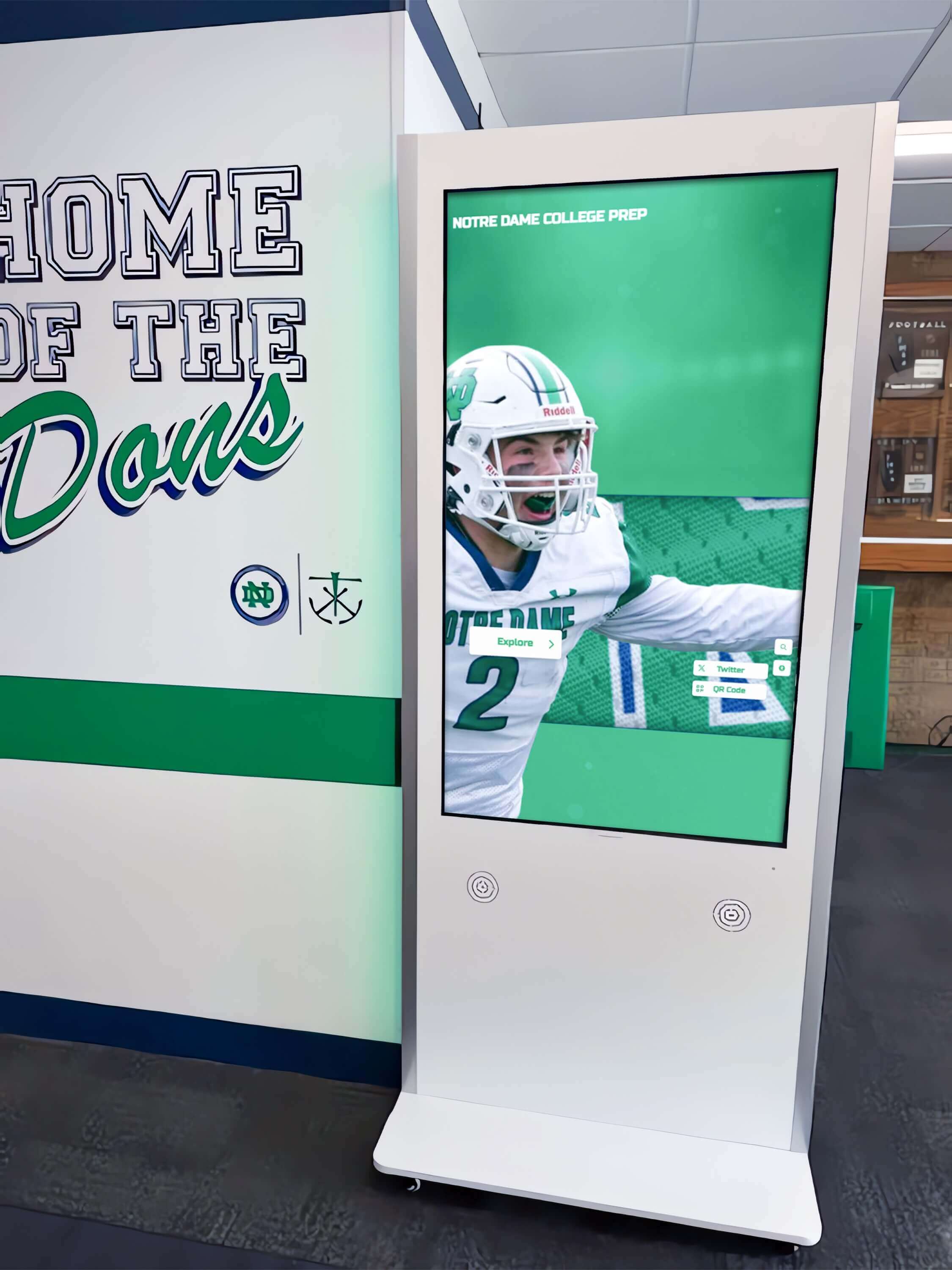
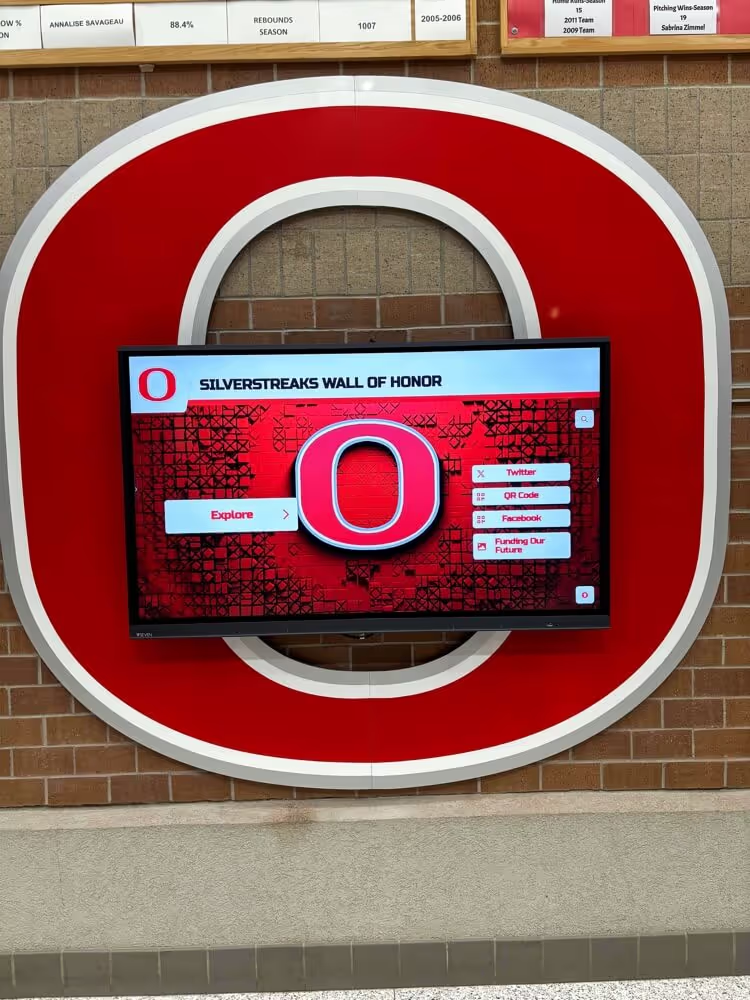
Interactive recognition kiosks organize award content by team, season, and award type — all of which depend on reference data consistency in the underlying records
Reference Data Standards Quick-Reference Table
The table below illustrates the structure of a reference data registry for a school athletic program. Each program should populate the registry with its own approved values; the formats shown here are examples of what a completed policy documents.
| Domain | Approved Format | Example | Notes |
|---|---|---|---|
| Team Name — gender prefix | Full word, not abbreviation | “Boys” or “Girls” | Not “Men’s/Women’s” unless post-secondary |
| Team Name — level | Spelled out | “Varsity” or “Junior Varsity” | Not “V” or “JV” in database fields |
| Season — academic year | YYYY–YY with en dash | 2023–24 | Use fall year as first year |
| Season — single semester | Season + YYYY | Fall 2023 | For fall / winter / spring sports |
| Award Title — player honors | Full title, no abbreviation | “Most Valuable Player” | Not “MVP” in the database field |
| Award Title — academic honors | Full title, hyphenated | “Scholar-Athlete Award” | No possessive; consistent hyphen |
| Classification | Current state designation | “Class 4A” | Document effective year range |
| Conference | Official full conference name | “Prairie State Conference” | Update registry when conferences rename |
Connecting Reference Data Policy to Digital Recognition Displays
Digital recognition platforms publish athletic award records to displays that coaches, athletes, families, and alumni view directly. The accuracy of every display depends on the quality of the reference data attached to every record.
Team filtering. When a visitor uses a digital kiosk to filter awards by team, the results depend on team name consistency. Records entered under non-standard team name formats do not appear in the filtered view — the award is in the database but invisible to the query.
Season timelines. Recognition platforms that display year-by-year timelines, season-by-season award histories, or records-board progressions require consistent season labels to sort and group records correctly. Mixed formats produce garbled timelines that undermine the program’s historical narrative.
Award category displays. Platforms that organize award content by category — grouping MVPs together, listing Scholar-Athlete honorees in a dedicated section — require a consistent award taxonomy. Non-standard award titles appear in incorrect sections or outside all categories entirely.
Rocket Alumni Solutions’ cloud-based recognition platform supports controlled vocabulary configuration, allowing athletic programs to define approved team names, season formats, and award categories within the content management system — so that every new record is entered against a validated reference list rather than a free-text field. With unlimited entries and remote CMS access, administrators can manage reference data standards and publish updates from anywhere.
For programs preserving decades of recognition history as a living digital archive, digital time capsule and institutional memory preservation approaches for school programs covers how reference data consistency supports the long-term integrity of recognition archives that future generations will search.
See How Controlled Vocabulary Works in a Recognition Platform
Rocket Alumni Solutions supports reference data configuration for team names, season labels, and award categories — so every record your staff enters connects to a consistent, searchable archive that displays accurately on every screen.
Request a DemoAnnual Reference Data Audit Checklist
Reference data values drift even when a policy exists. Staff enter records under time pressure. Coaches submit award lists in free-text format. New personnel are unaware of the approved value set. An annual audit of reference data quality catches these problems before they accumulate into a cleanup project that requires months of effort.
Reference data audit checklist:
- List all unique team name values currently in the database — compare to the approved registry and flag non-standard entries
- List all unique season label values — identify any non-standard formats and document the approved replacement
- List all unique award title values — identify any entries that do not match the approved taxonomy
- List all unique classification values — identify any outdated or superseded labels
- For any non-standard values found, initiate cleanup using the approved mapping table
- Update the reference data registry for any approved value changes that occurred during the year
- Confirm that any staff who entered records during the year received the reference data registry
- Verify that the digital recognition platform’s controlled vocabulary settings match the current approved registry
- Archive the audit record with the date, auditor name, findings summary, and corrections applied
For programs that have accumulated historical records from periods before the reference data policy existed, how digital archives support long-term record integrity at schools and universities covers how retroactive standardization can be approached systematically without disrupting current operations.
Supporting Booster and Advancement Staff with Reference Data Access
Athletic recognition programs frequently involve contributors beyond the core athletic department. Booster organizations, advancement offices, and parent volunteers may enter or submit award data as part of their support roles. Each of these contributors is a potential source of reference data inconsistency — not through negligence, but through unfamiliarity with the approved value set.
Policy application for external contributors:
- Provide a reference data quick-reference card to every external contributor who submits award data
- Require submission forms to use dropdown fields for team, season, award title, and classification — forcing selection from the approved registry rather than free-text entry
- Designate a data steward who reviews all external submissions for reference data compliance before entering records into the master database
For programs building governance frameworks that include booster and advancement partner relationships, how booster organization policies support consistent program governance provides context on how formal policy structures apply to athletic program partners working with shared institutional records.
For college and multi-sport programs maintaining recognition across a broad portfolio of teams and programs, digital recognition display approaches for college intramural and multi-sport programs covers how reference data consistency enables recognition systems to manage high-volume, multi-program record sets accurately.

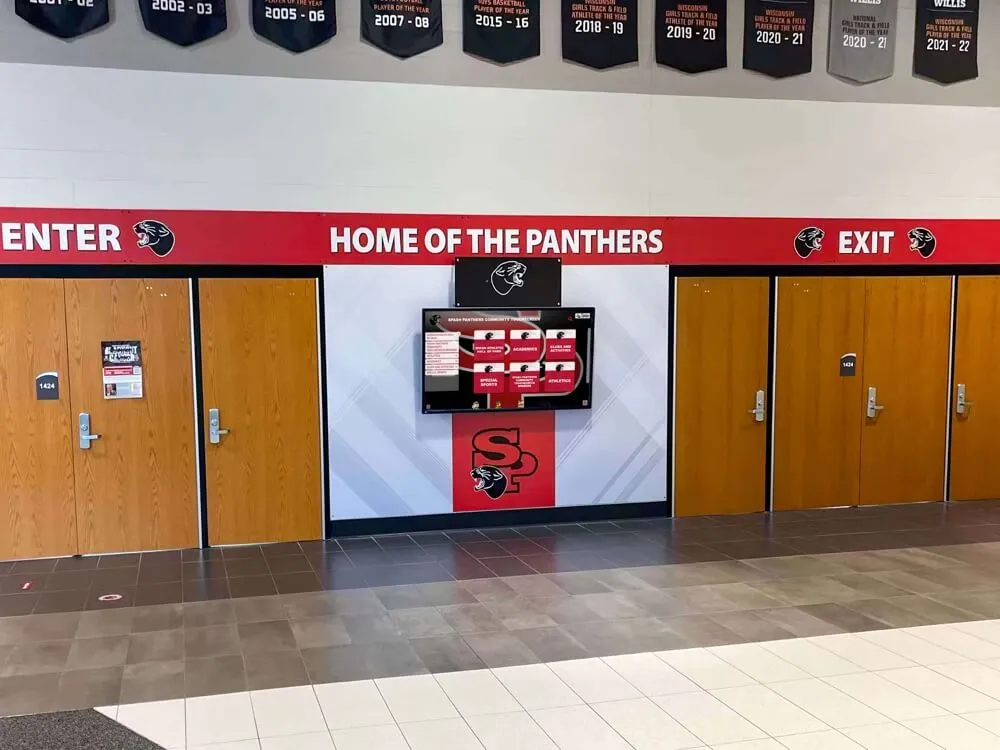
Digital recognition displays surface award records by team, season, and category — all of which depend on reference data consistency in the records they draw from
Frequently Asked Questions
What is an athletic award reference data management policy?
An athletic award reference data management policy is a formal document that defines the approved, standardized values for the descriptive fields attached to every award record — including team names, season labels, award titles, and classification identifiers. It assigns ownership for each domain, documents the approved value set, provides a change management procedure, and establishes an annual review cycle. The policy prevents reference data inconsistency from accumulating across systems and ensures that records remain searchable, comparable, and display-ready across every platform.
Why do team names and season labels cause problems in athletic award databases?
Team names and season labels cause problems because they are typically entered as free text, which allows different staff members to use different formats for the same program or time period. Without a controlled vocabulary, a single program may be recorded under five or six different label variants across different databases, spreadsheets, and display systems. This variation prevents search and filtering queries from returning complete results, creates sorting errors in season timelines, and causes display platform filters to miss relevant records. A reference data management policy resolves this by defining one approved format for each value and documenting it in a registry that every contributor can reference.
Who should own reference data governance in a school athletic program?
The athletic director is the natural primary owner of athletic award reference data governance, because the athletic director has visibility across all programs, oversees the award publication process, and is accountable for the accuracy of the department’s official records. Secondary ownership for specific domains — award titles, for example — may sit with sport-specific head coaches or the activities director. IT and data administrators typically serve as technical custodians of the reference data registry, ensuring the approved values are reflected in every database system and digital platform configuration.
How often should an athletic program review its reference data registry?
An annual review is the minimum standard. The review should coincide with the end of the competitive year, before new records for the upcoming season are entered. This timing allows any non-standard values that accumulated during the year to be corrected before they propagate further. Programs that experience frequent changes — conference realignments, new sport programs, reclassification — benefit from a mid-year checkpoint as well. Any change to the approved value set should be documented in the registry with an effective date and the name of the person who authorized the change.
How does a reference data policy connect to digital recognition display accuracy?
Digital recognition platforms use reference data fields — team names, season labels, award categories — to organize, filter, and display award content. Records entered with non-standard values appear in the wrong sections, fail to surface in filtered queries, or create display errors in platforms that enforce controlled vocabulary. A reference data management policy, implemented through the platform’s CMS configuration, ensures that every record entered connects to the approved value set. Retroactive cleanup of pre-policy records using the approved mapping table extends this consistency to historical records, so the entire archive — not just current-season entries — displays accurately.
Conclusion: Reference Data Governance Is the Infrastructure of Athletic Recognition
An athletic award reference data management policy is not a bureaucratic formality. It is the foundational infrastructure that determines whether decades of athletic achievement can be accurately searched, consistently displayed, and reliably preserved for the athletes, alumni, and communities who depend on those records.
Schools that establish reference data standards — defining approved team names, season formats, award taxonomies, and classification labels — create recognition archives that work as intended. Displays that filter by program return complete histories. Season timelines sort and compare correctly across decades. Award records connect to the correct categories and appear in the right sections of every digital and physical display.
The policy itself is modest: a reference data registry, an ownership table, a change procedure, and an annual audit checklist. The return on that investment is a recognition program whose records remain accurate and consistent as platforms change, staff turn over, and athletic programs evolve across generations.
Build a Recognition Archive with Consistent, Searchable Reference Data
Rocket Alumni Solutions gives athletic programs cloud-based tools to configure controlled vocabularies, manage team names and seasons consistently, and publish award records that display accurately across every channel — kiosks, digital signage, and web archives.
Request a Demo