



An athletic award result publication policy defines who approves award decisions, when results become official and visible, how errors are corrected, and when physical and digital displays are updated after each recognition cycle. Schools that formalize this process prevent the most common recognition failures — contradictory announcements, uncorrected errors on permanent displays, and award winners waiting months before their recognition is visible to the community.
A formal publication policy is not bureaucratic overhead. It is the operational backbone that transforms a well-intentioned award program into a reliable institutional record. Athletic directors, booster leaders, and recognition-program owners who document this workflow in writing protect both the program’s credibility and the athletes whose names and achievements depend on accurate, timely publication.
This guide provides a practical framework for building or formalizing an athletic award result publication policy — with approval chain guidance, timing benchmarks, correction procedures, and display update workflows that keep recognition current and accurate across every channel.
An athletic award result publication policy answers four operational questions every recognition program must resolve: Who has authority to approve results before they go public? When do approved results become official? How are errors identified and corrected after publication? And when are physical and digital displays updated to reflect new recognition? Without written answers to all four, programs depend on informal understandings that fail during leadership transitions, tight timelines, or disputed selections.

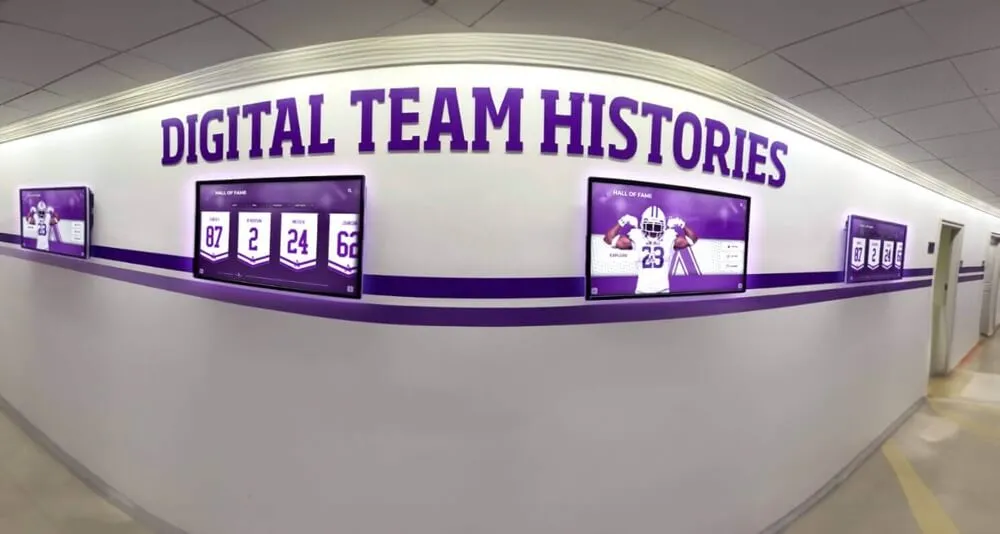
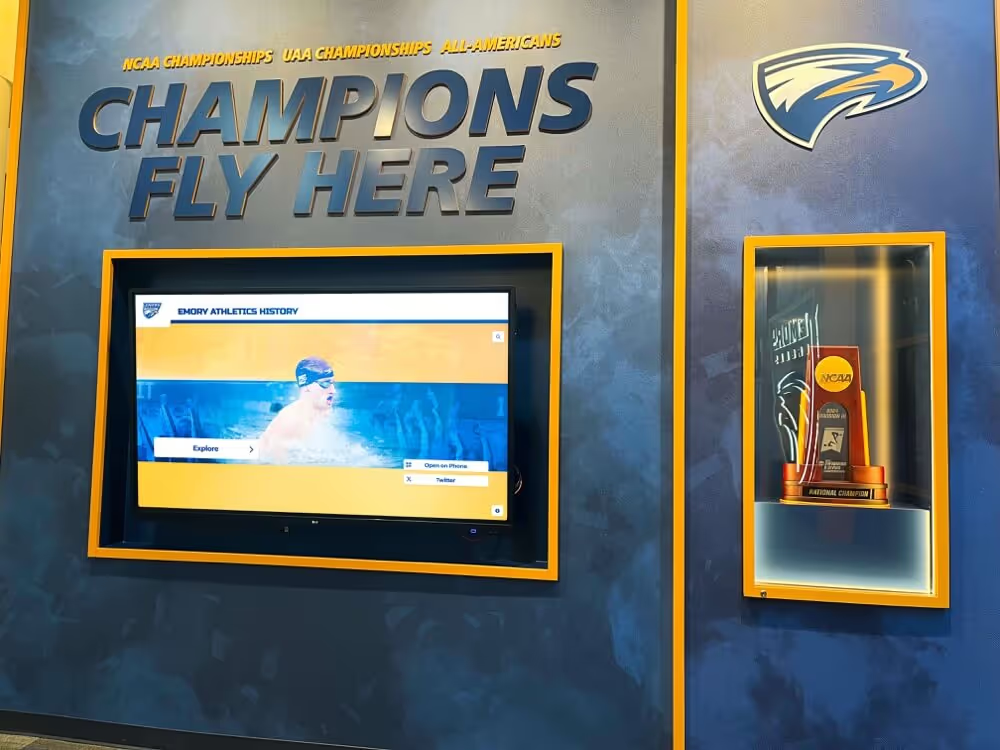
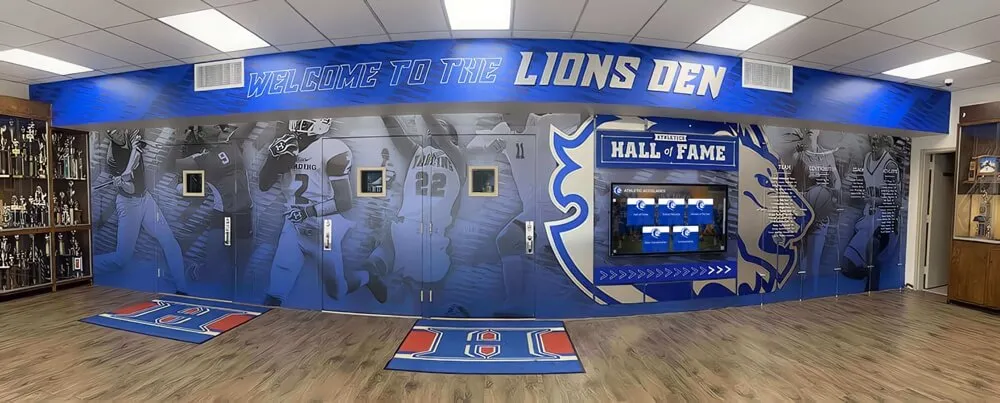
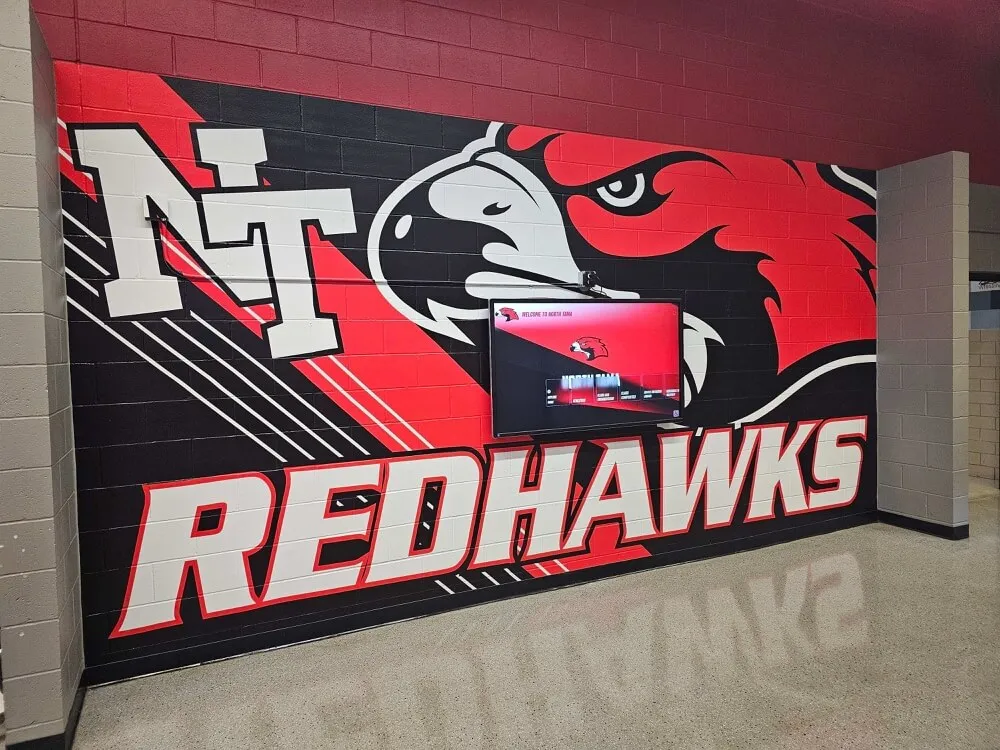
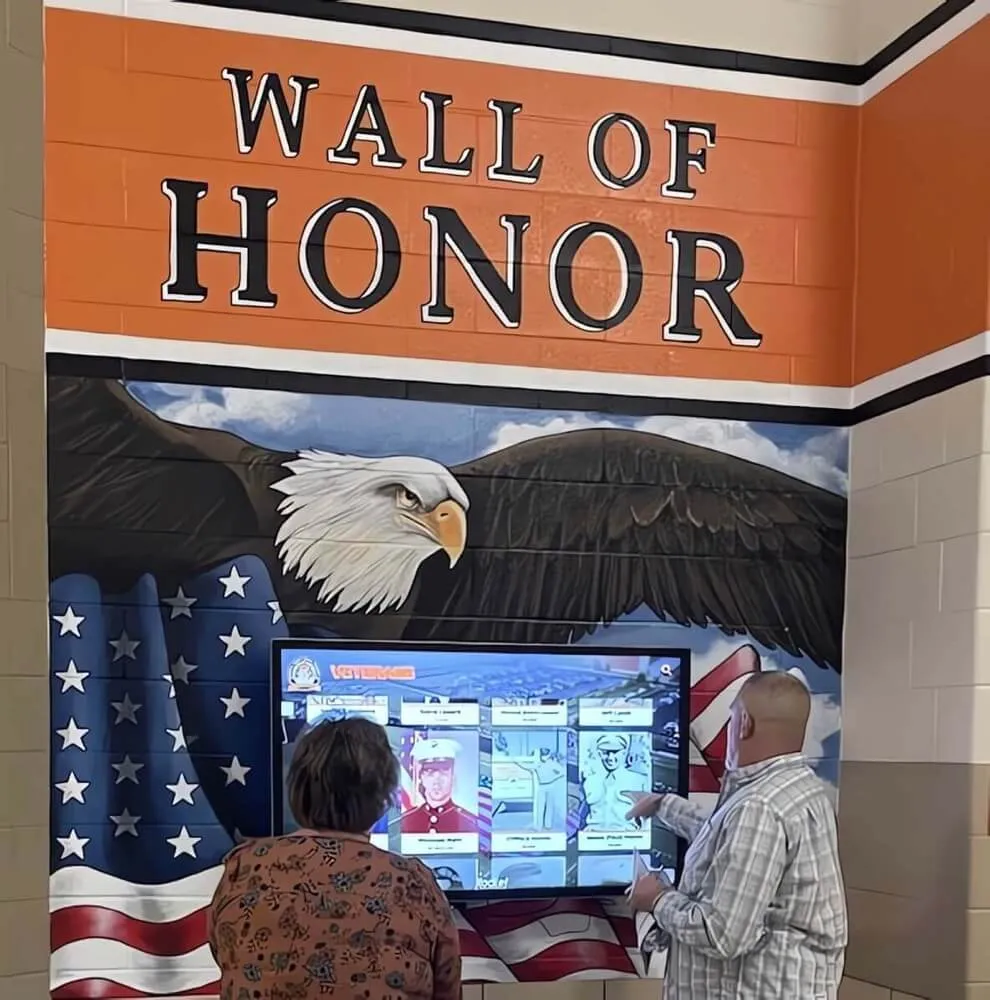
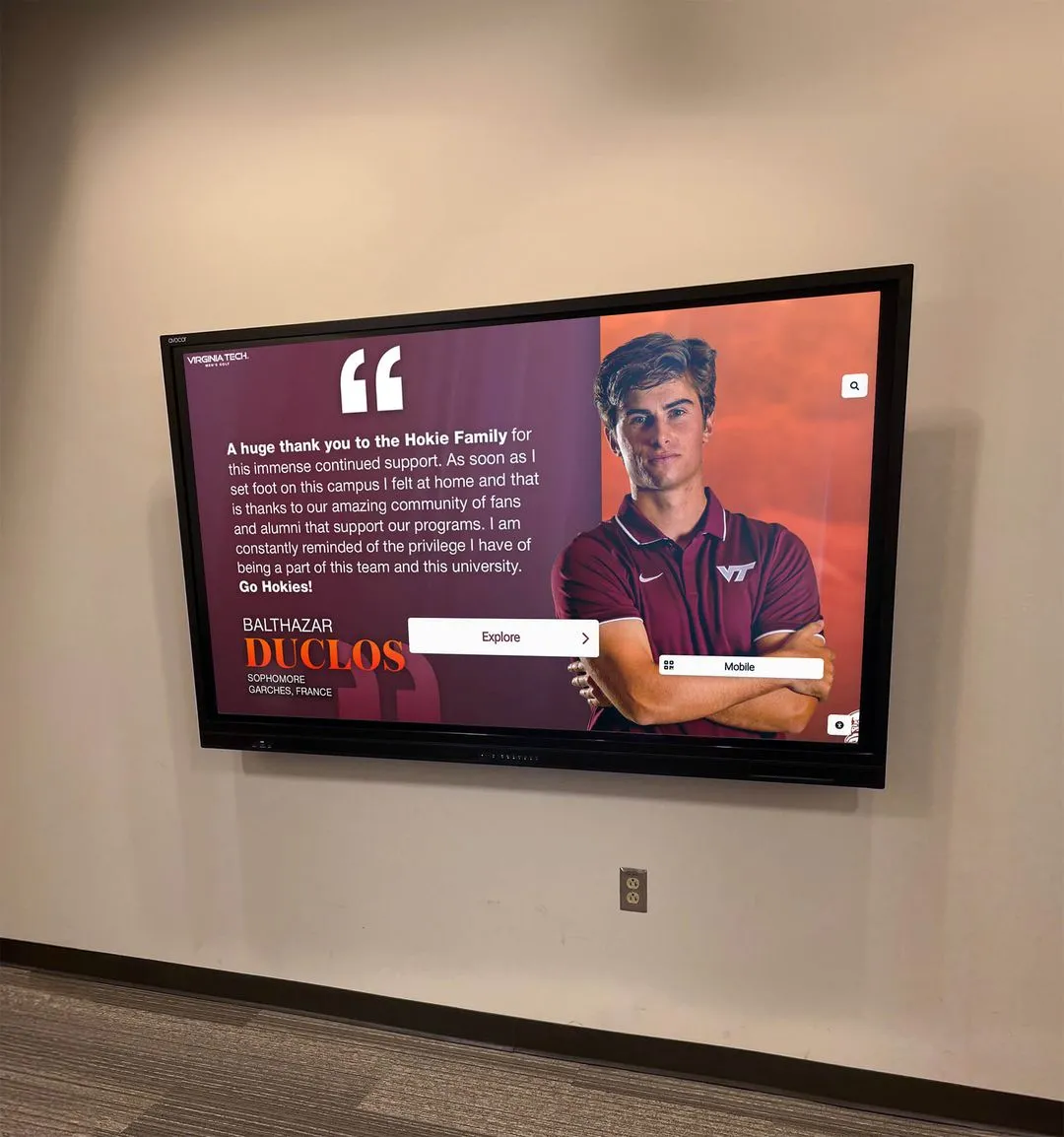
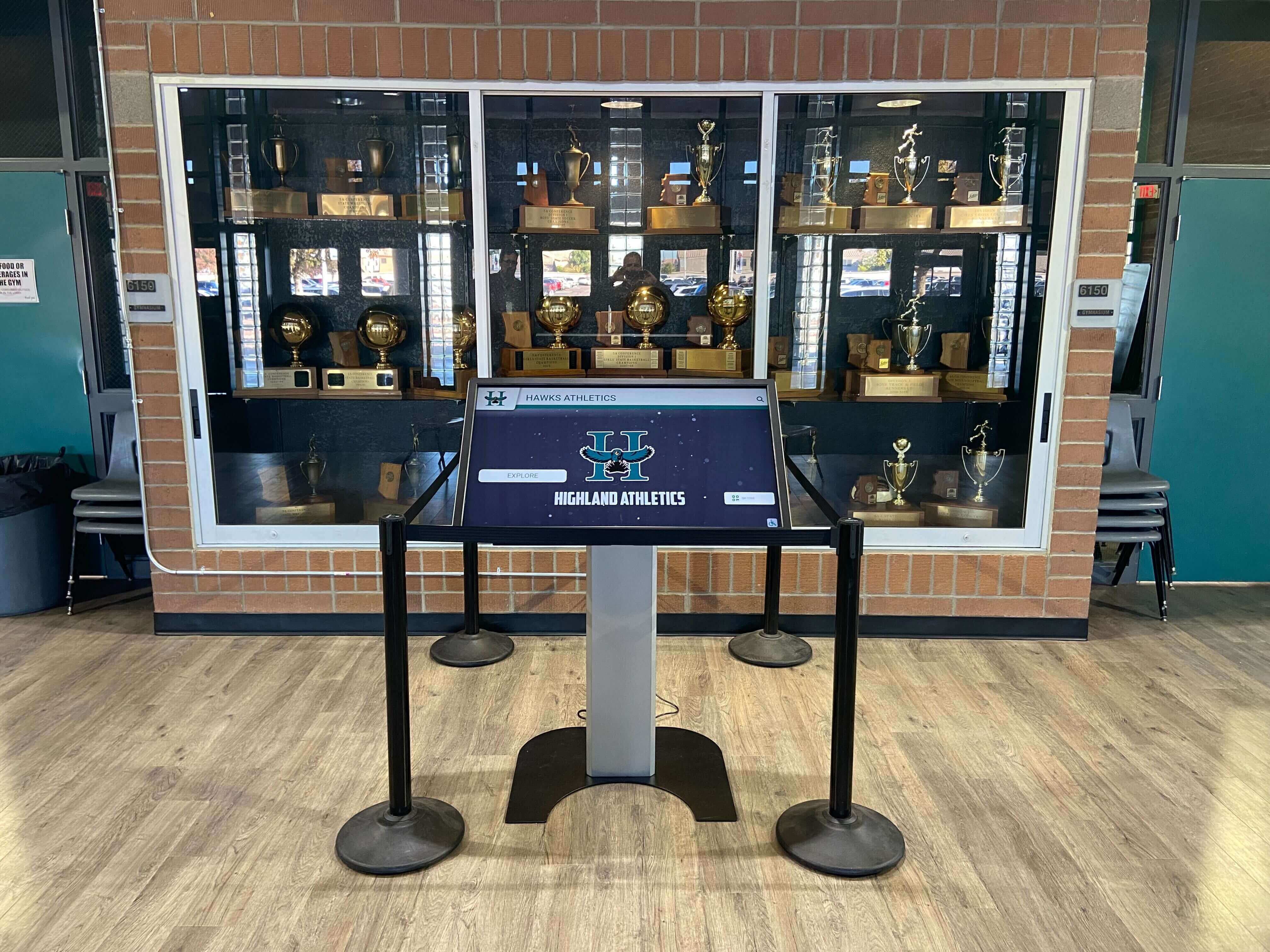
A clear publication policy determines when award results are ready to appear on permanent displays — physical trophy cases and digital platforms alike
Why Schools Need a Formal Athletic Award Publication Policy
A formal athletic award result publication policy protects program credibility at every stage of the recognition cycle.
Award decisions are made by people. People make errors — selection mistakes, data entry mistakes, spelling errors in names and statistics, and in rare cases procedural violations that require a result to be revisited. Without a publication policy, these problems surface unpredictably: an incorrect name announced at the ceremony before anyone catches it, a digital display updated with wrong statistics, or a retraction needed after a result was shared on the school’s social media. Each scenario damages athlete trust and program reputation more than the original error would have, because the damage comes from the handling, not just the mistake.
A formal policy also matters for institutional memory. Athletic directors turn over. Coaches change. Booster board rosters rotate annually. The recognition program’s publication workflow cannot live in any single person’s institutional knowledge — it needs to be documented so that the next person in each role can follow the same process without interruption.
According to the National Interscholastic Athletic Administrators Association (NIAAA), athletic programs that maintain written policy documentation for core administrative functions report smoother leadership transitions and fewer compliance gaps during audits. Publication policies for award results fall squarely within the category of administrative documentation that pays dividends long after it is written.
For programs evaluating how accurate recognition data supports long-term institutional integrity, AI data integrity considerations in digital hall of fame platforms covers the data accuracy challenges that formal publication policies are designed to prevent.
The Four Components of a Complete Publication Policy
A complete athletic award result publication policy addresses approval authority, timing, corrections, and display updates. Each component functions independently, but they depend on one another to form a coherent workflow.
1. Approval Authority: Who Can Authorize Publication
Approval authority defines who must sign off on award results before they are published, announced, or shared in any channel. Schools typically operate a two-stage approval chain.
Primary Approver — Coaching Staff
The head coach or coaching staff responsible for selection submits a finalized award list to the athletic director. This list includes the award name, recipient name, sport, year, and any statistical or criteria documentation supporting the selection.
Secondary Approver — Athletic Director
The athletic director reviews the submitted list for completeness, consistency with published criteria, and absence of obvious errors before authorizing publication. For high-visibility honors — athlete of the year, hall of fame induction, multi-sport recognition — some programs add a third approval layer involving the principal or activities director.
Approval Documentation Requirement
Every approval should be documented, even informally. An email chain confirming the athletic director reviewed and approved the list provides a timestamp record. Programs using digital recognition platforms can build approval steps directly into their content management workflow, requiring explicit sign-off before content becomes visible on any display.
| Approval Stage | Responsible Party | Typical Timeline |
|---|---|---|
| Selection draft submitted | Head coach | Within 5 days of final competition |
| Primary review complete | Athletic director | Within 3 days of coach submission |
| Secondary review (if required) | Principal / activities director | Within 2 days of AD review |
| Publication authorized | Athletic director | After all required approvals |
2. Timing Policy: When Results Become Official
The timing policy defines the earliest a result can be published in any channel — announcement, social media, school website, or physical or digital display — and the latest it must be published to be considered current.
Embargo Period
Most programs benefit from a brief embargo period between selection and publication. This window — typically 24 to 72 hours — gives approvers time to catch errors before a result becomes public. Results published before the embargo period closes are provisional, not official, and should be clearly labeled as such if shared at all.
Official Publication Date
The official publication date is the date on which the athletic director confirms all approvals are complete and authorizes release. From this date, all channels — oral announcement, social media, website, and display platforms — should publish concurrently or in a defined sequence: ceremony first, digital displays within 24 to 48 hours, physical display fabrication initiated immediately.
Maximum Publication Lag
A publication lag standard defines the latest point at which approved results must appear on permanent displays. Without a lag standard, physical and digital displays drift behind the program’s actual award history. A common benchmark is 30 days from official publication date for digital display updates and 60 days for physical display updates that require fabrication or ordering.
Scheduled vs. Real-Time Publishing
Programs using cloud-based digital recognition platforms can schedule content to publish automatically at a defined date and time — useful for ensuring ceremony-night results appear simultaneously on lobby displays without requiring manual entry the evening of the event. Academic honor roll recognition and display timing guidance covers scheduling approaches that athletic programs can adapt directly to award result workflows.

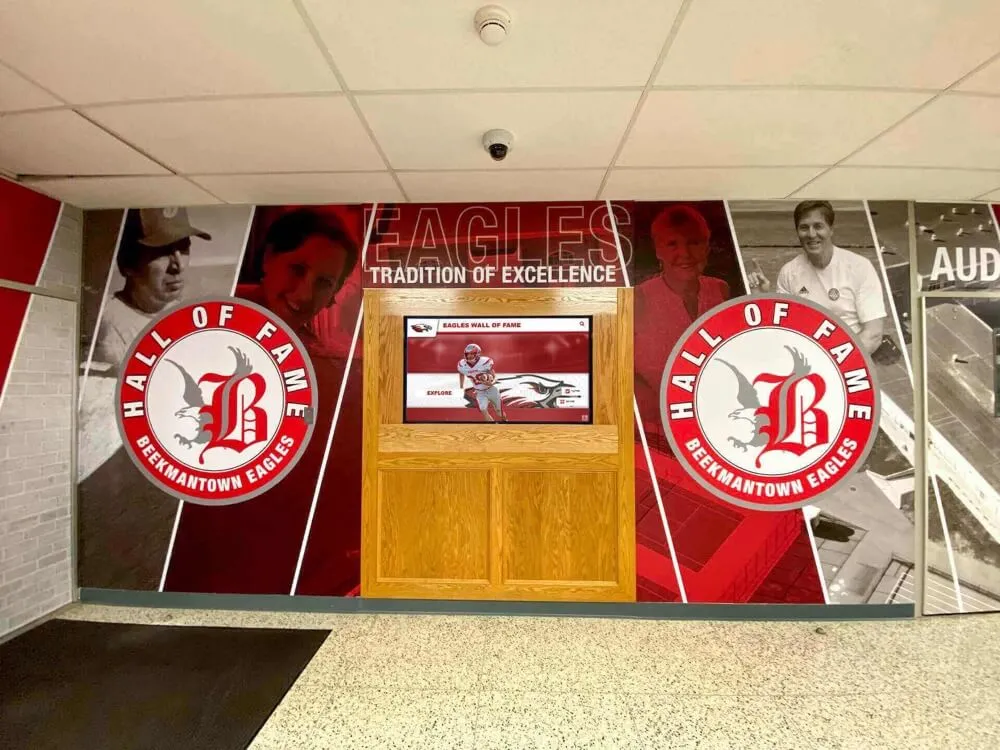
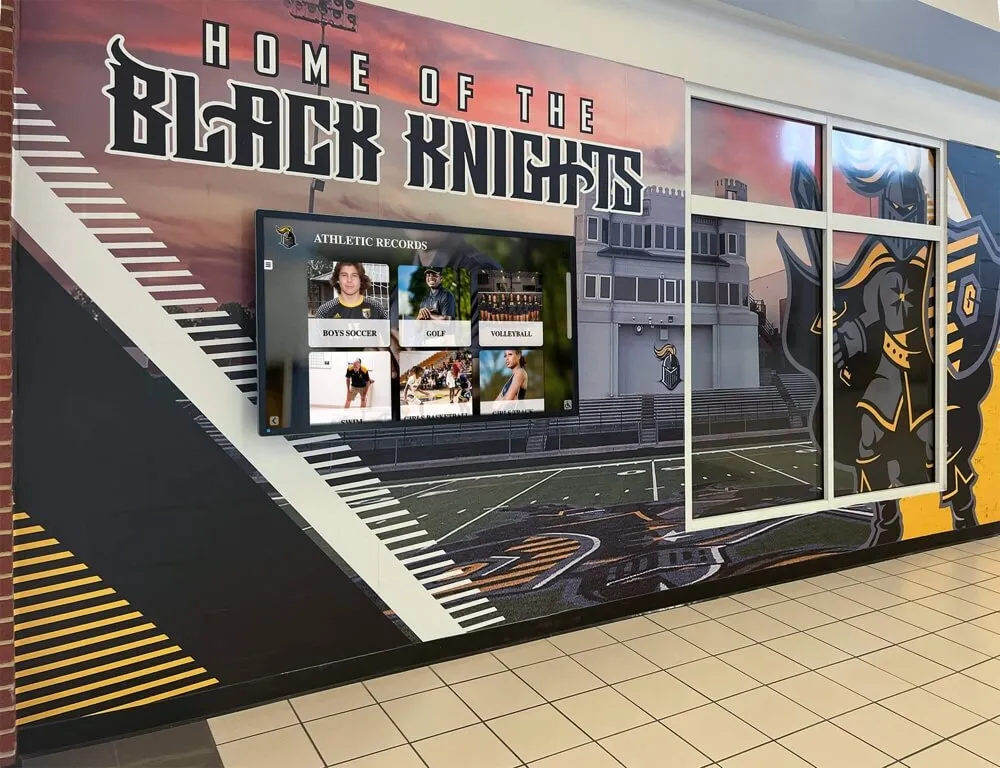
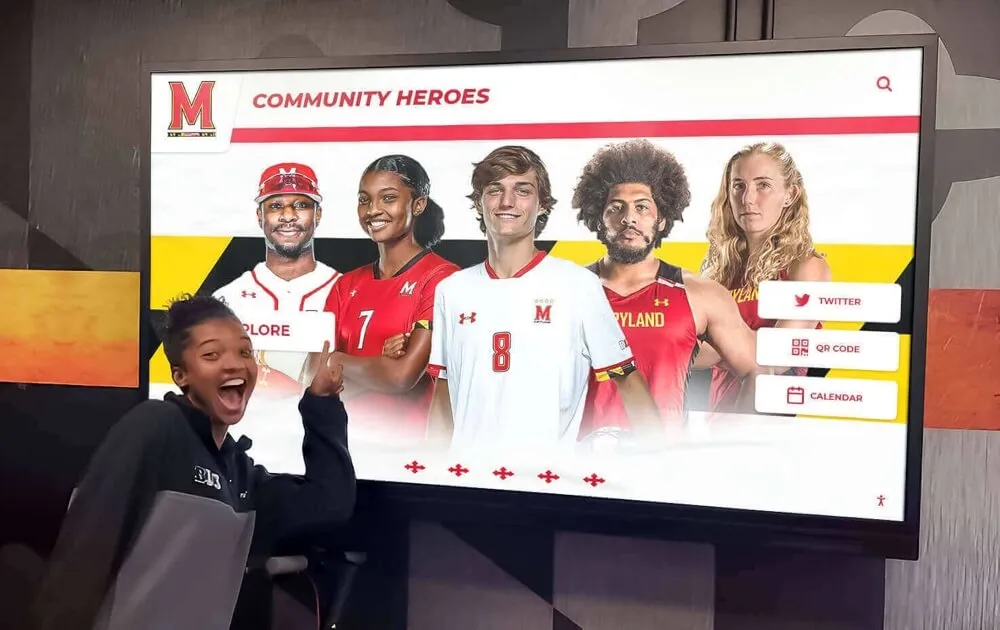
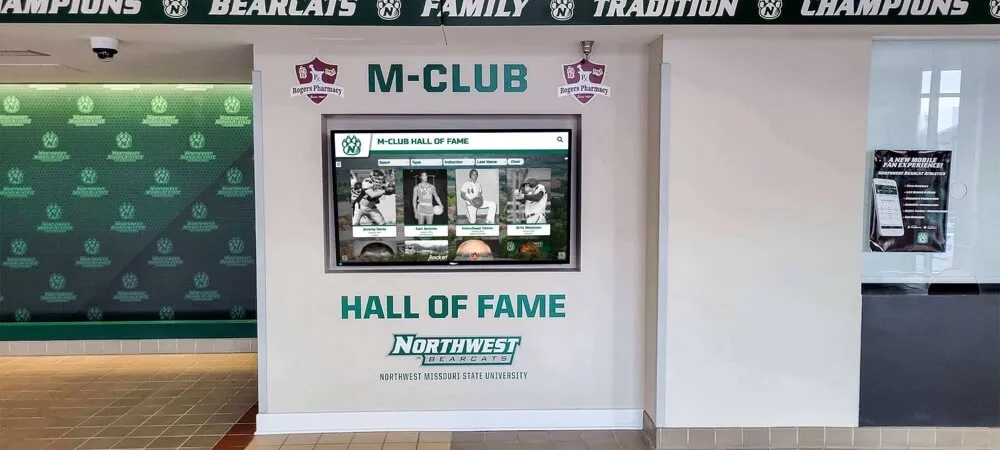
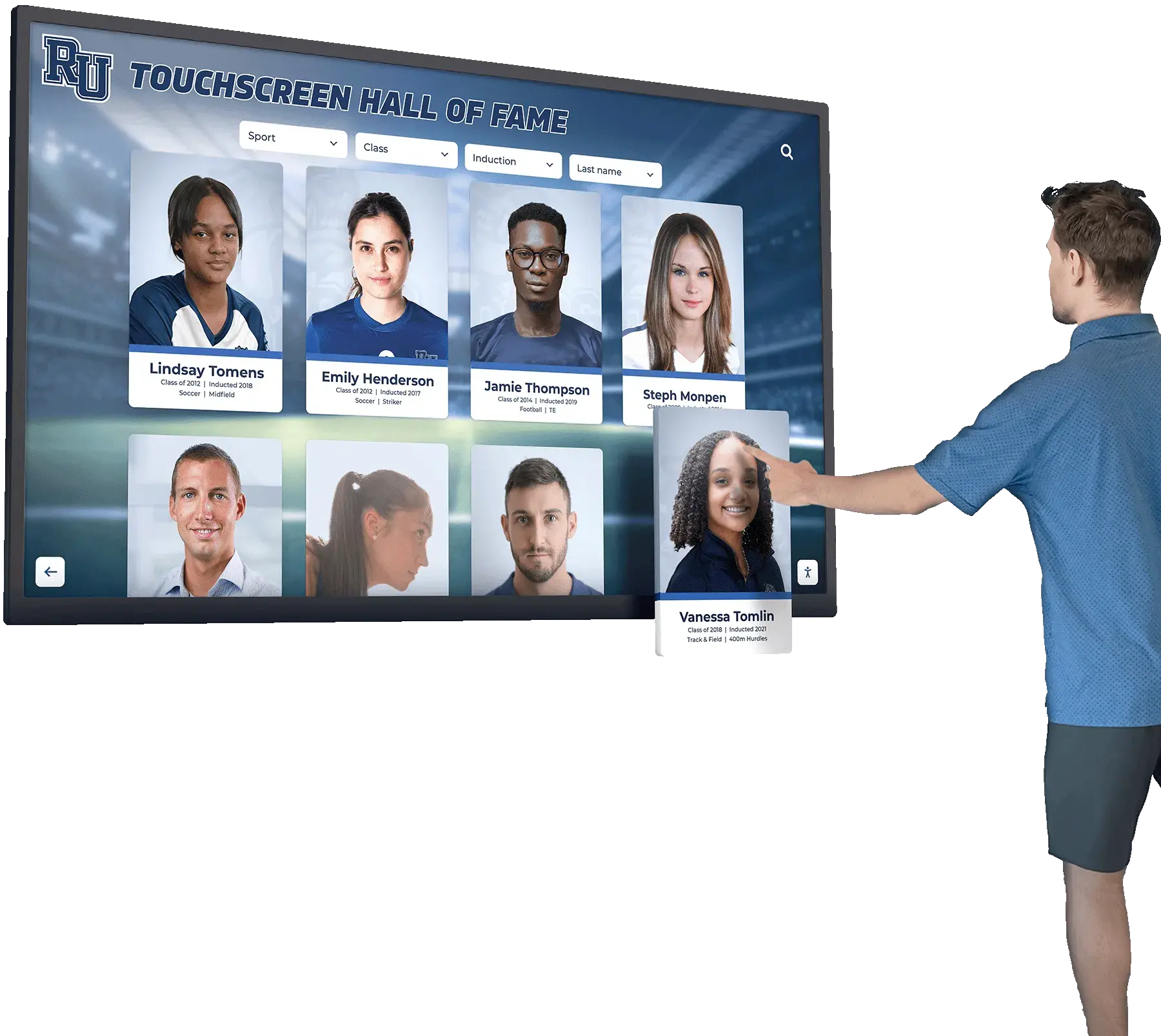
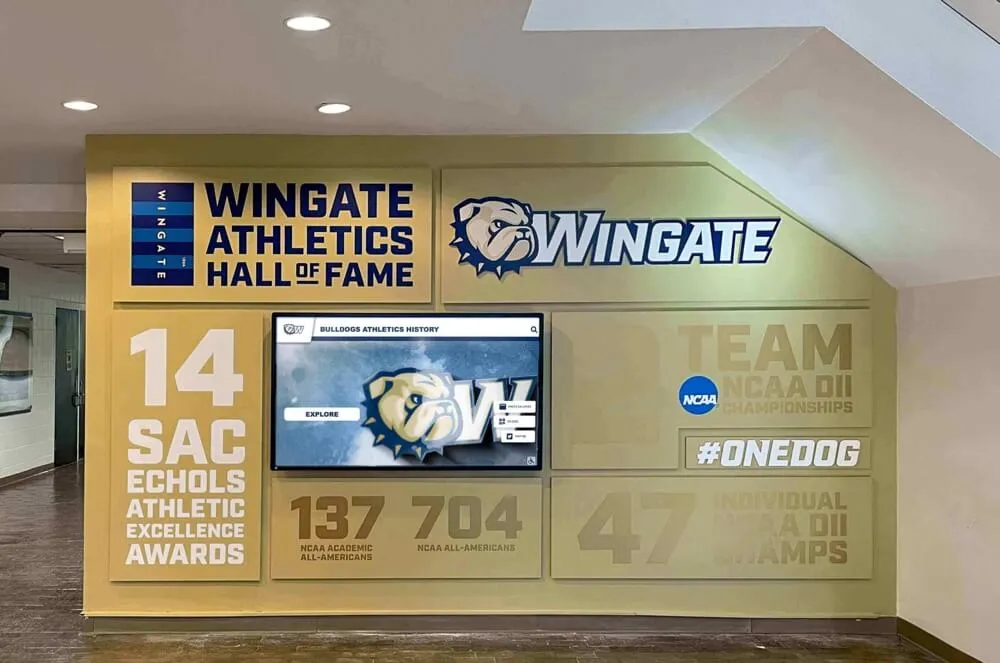
Digital recognition platforms allow publication timing to be scheduled in advance — eliminating the lag between ceremony and display update
3. Correction Policy: How Errors Are Identified and Resolved
The correction policy defines how errors in published award results are handled — from initial identification through corrected publication. A written correction policy prevents the most common response to award errors: ignoring them and hoping no one notices.
Error Categories
Publication errors typically fall into one of three categories:
- Typographical errors — incorrect spelling of athlete names, wrong graduation year, transposed statistics. Corrected with a simple administrative update; no formal announcement is required.
- Selection errors — the wrong recipient was published, or a result was published before the selection process was complete. These require a formal correction notice and a revised publication.
- Procedural violations — the selection process deviated from published criteria in a material way. These require review by the athletic director and potentially the principal before a correction is issued.
Correction Initiation
Anyone can identify a potential error — athletes, families, coaches, alumni, or community members. The policy should define a clear submission path: a designated contact (typically the athletic director) who receives correction requests and responds within a defined window (typically 5 to 10 business days).
Correction Review Timeline
| Error Type | Review Authority | Target Response Time | Publication Action |
|---|---|---|---|
| Typographical | Athletic director | 3 business days | Update without announcement |
| Selection error | AD + coach of record | 7 business days | Revised publication with notice |
| Procedural violation | AD + principal | 14 business days | Formal review, written resolution |
Correction Communication
Typographical corrections should be made quietly — updating the display and correcting the record without drawing additional attention to the error. Selection errors require proactive communication: notify the affected athletes, update all published channels, and issue a brief correction notice through the same channels that originally published the result.
For programs using digital displays, corrections can be applied instantly across all display instances from a single cloud-managed update — eliminating the lag between correction approval and visible correction that physical displays requiring reprinting or reordering inevitably create.
Digital signage systems and update workflows for school displays documents how schools configure display update processes that support rapid correction cycles.
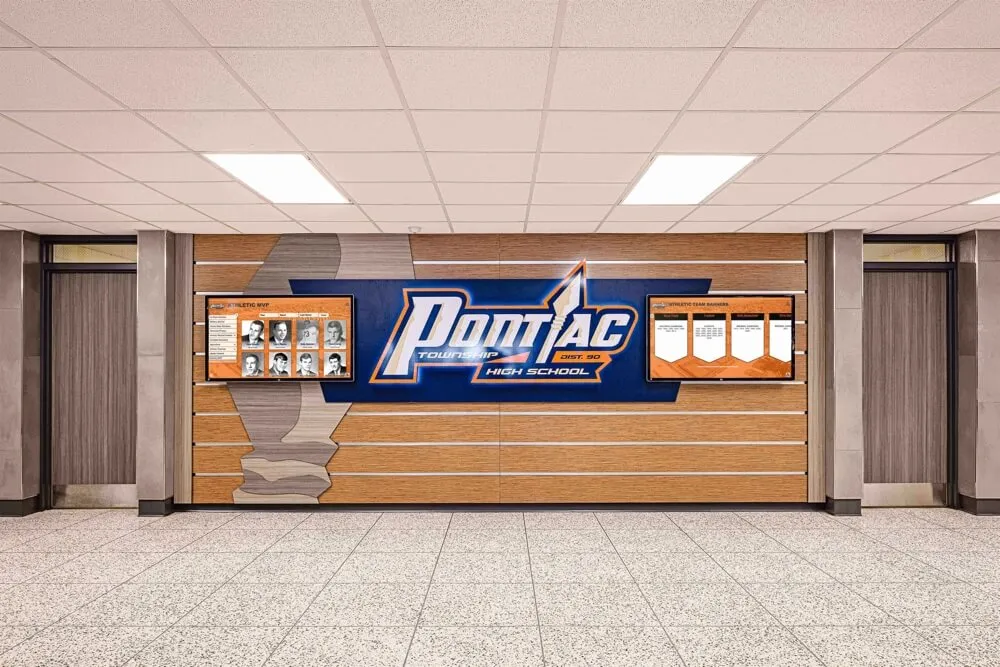
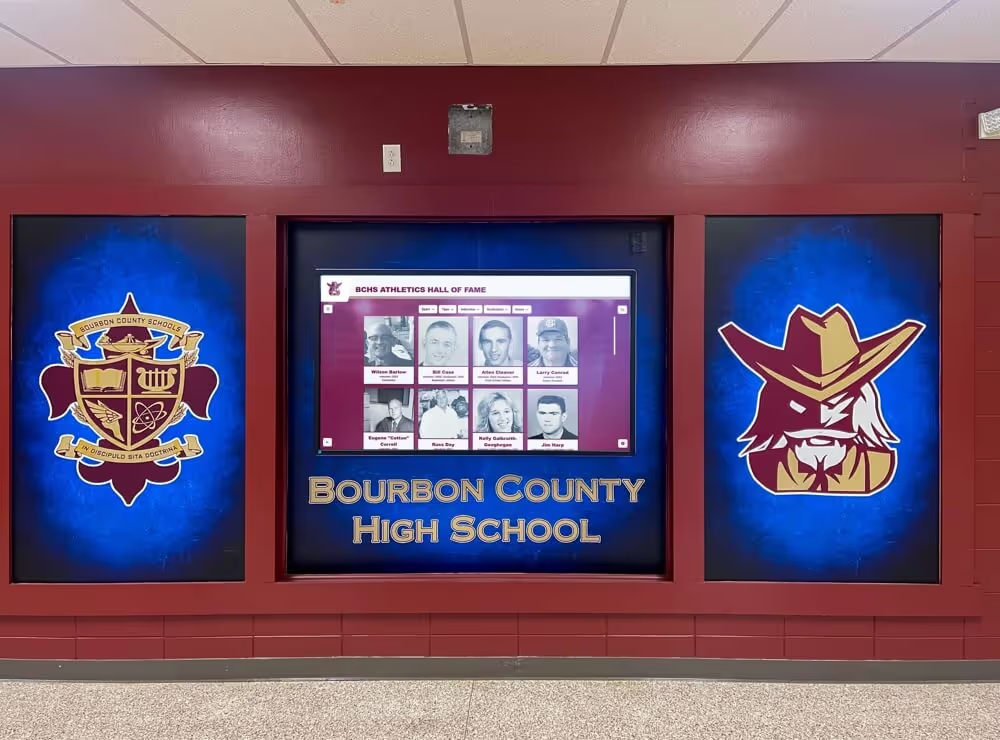
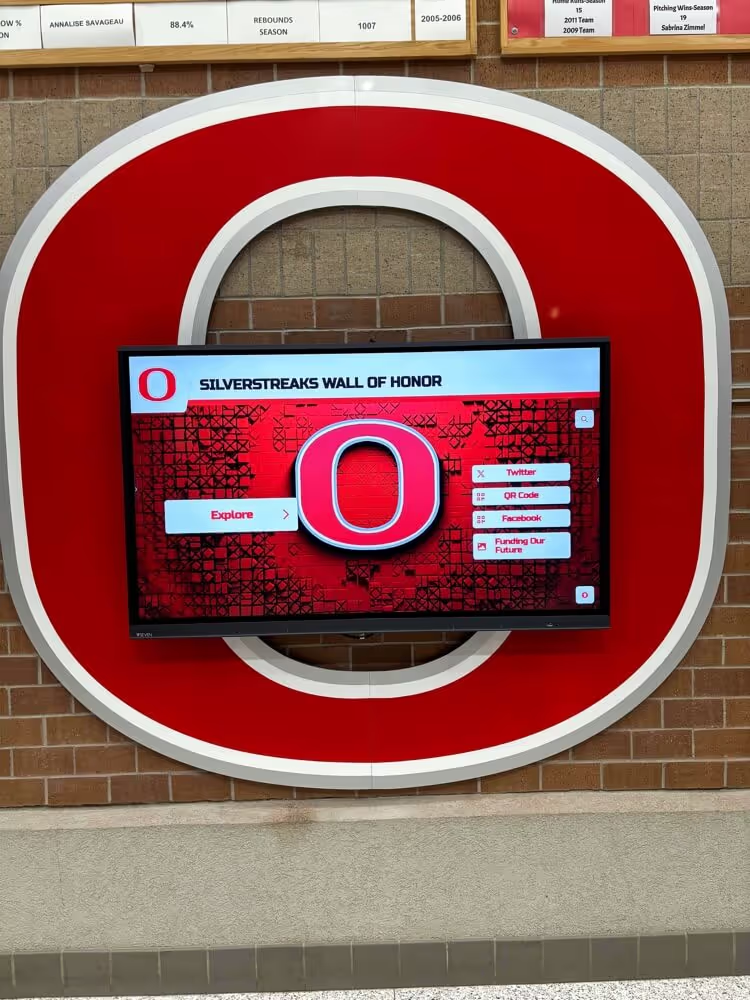
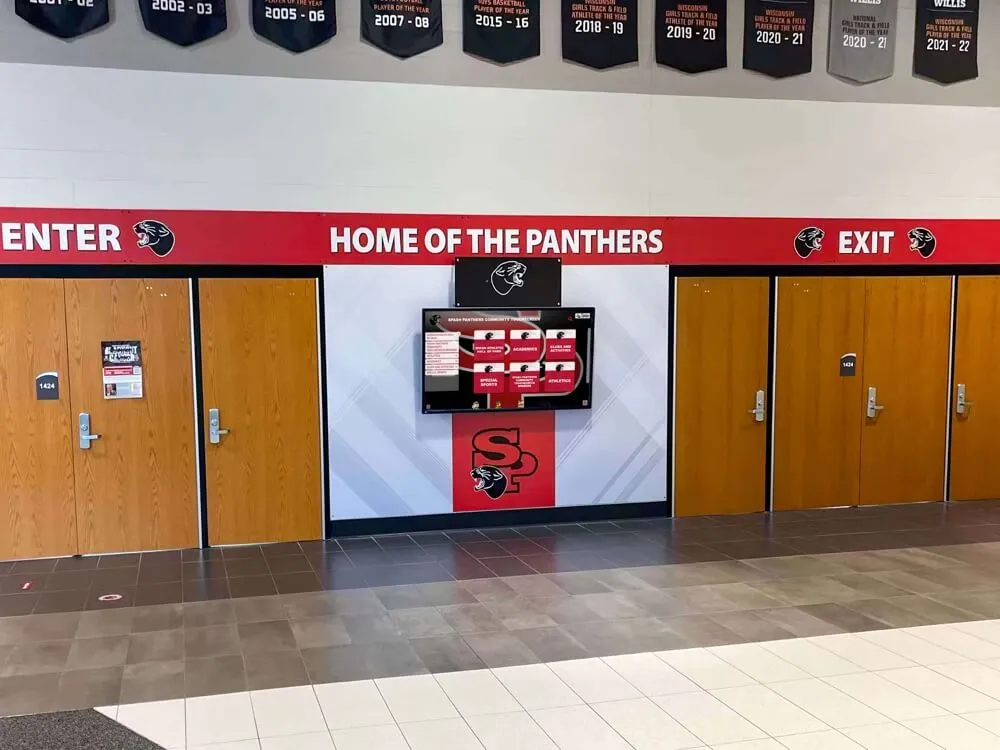
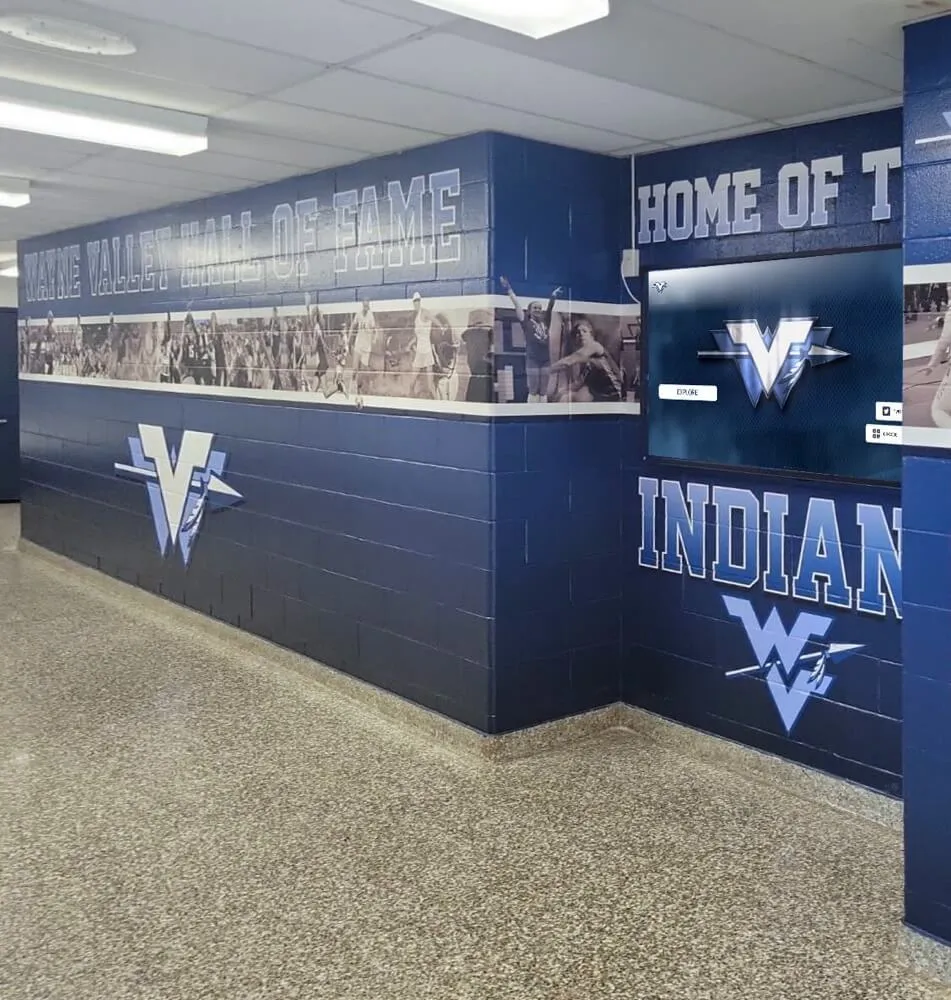
Physical honor walls require separate correction timelines from digital displays — a publication policy documents both to prevent gaps between corrected records
4. Display Update Policy: When and How Displays Are Updated
The display update policy defines the specific workflow for updating physical and digital recognition displays after award results are officially published. This is the component most programs neglect — and the gap that causes award recipients to wait months or years before their recognition is visible to the community.
Physical Display Update Workflow
Physical displays — trophy cases, honor walls, award boards, plaques — require a procurement and installation process that takes time. The update workflow should define five things:
- The trigger: display update begins when official publication is confirmed
- The responsible party: who initiates the physical update (typically the athletic director or designated facilities contact)
- The vendor or internal process: where plaques, plates, or other physical elements are ordered or produced
- The installation timeline: a target date by which physical installation is complete
- The verification step: who confirms installation is accurate before the update is considered complete
A common target for physical display updates is within 60 days of official publication, with a maximum lag of 90 days before the update is flagged for administrative review.
Digital Display Update Workflow
Digital recognition platforms allow same-day or scheduled updates that eliminate the procurement delay of physical displays. A digital display update workflow should define:
- Who has CMS access to publish award results to digital displays (typically the athletic director and one designated backup)
- The publishing sequence: when digital displays update relative to the ceremony (same night, next morning, or within 48 hours)
- The content requirements: what fields are required before a result can be published (recipient name, award name, sport, year, photo)
- The review step before going live: whether a second person confirms digital content before publication
- The archive integration: how new results connect to the program’s cumulative recognition archive
Rocket Alumni Solutions’ cloud-based platform supports scheduled publishing, meaning athletic directors can queue award results to go live at a specific time — publishing ceremony-night results automatically without manual intervention the night of the event. Updates made from any device reach all display instances simultaneously, whether kiosks in the athletic hallway, screens in the main lobby, or the program’s web-accessible recognition archive.
See How Scheduled Publishing Works in Practice
Rocket Alumni Solutions helps school athletic programs publish award results on a precise schedule — ceremony night, next day, or whenever your policy requires — with cloud updates that reach every display from a single entry.
Request a DemoBuilding the Policy Document: A Framework for Athletic Directors
A written athletic award result publication policy does not need to be long. A two-page document with clear definitions, a decision table, and named responsible parties covers the essential requirements.
Policy Document Structure
Section 1 — Purpose and Scope
State that this policy governs the publication of athletic award results for all sports programs within the athletic department. Define what counts as an “award result” — individual awards, team honors, hall of fame inductions, record achievements — and which seasons and programs fall within scope.
Section 2 — Approval Authority
Name the specific roles (not individuals) responsible for each approval stage. Role-based assignment ensures continuity during personnel transitions. Include a simple decision table mapping award type to approval authority.
Section 3 — Publication Timeline
Define the embargo period, official publication date process, and the channel sequence (ceremony, social media, website, digital display, physical display) with target timelines for each. A timeline table works well here.
Section 4 — Correction Procedures
Define how correction requests are submitted, who reviews each error category, target response times, and how corrections are communicated to affected athletes and to channels where the original result was published.
Section 5 — Display Update Standards
Define target update timelines for physical and digital displays, responsible parties, required content fields, and verification steps. Address what happens when a display update cannot be completed within the standard timeline.
Section 6 — Record Retention
Define how award records — selection documentation, approval records, correction records — are retained and for how long. For programs with hall of fame components, data accuracy considerations covered in digital hall of fame platform integrity guidance apply directly to the retention and accuracy standards a publication policy should reinforce.
Integration with Digital Recognition Platforms
A written publication policy is most effective when the school’s digital recognition platform is configured to enforce it operationally — not just document it on paper.
Access Controls
Restrict CMS publishing access to the roles named in the approval section of the policy. If the policy requires two-stage approval, the platform should require two distinct users to confirm content before it goes live.
Scheduled Publishing
Configure digital platforms to honor the embargo period automatically. Set results to publish at the date and time defined by the official publication date, preventing premature visibility regardless of when content is entered into the system.
Correction Audit Trails
Ensure the platform maintains a change history for every record. Audit trails document when corrections were made, what changed, and who made the change — essential for responding to disputes and demonstrating policy compliance.
Display Synchronization
Verify that platform updates reach all connected display instances — kiosks, digital signage screens, mobile apps, and web interfaces — simultaneously. Award results that appear on lobby kiosks but not on the school website, or vice versa, create the appearance of inconsistency even when the records are accurate.
For programs evaluating how digital displays connect academic recognition to broader athletic records, academic all-Americans award digital display practices covers display integration approaches directly applicable to athletic award publication workflows.

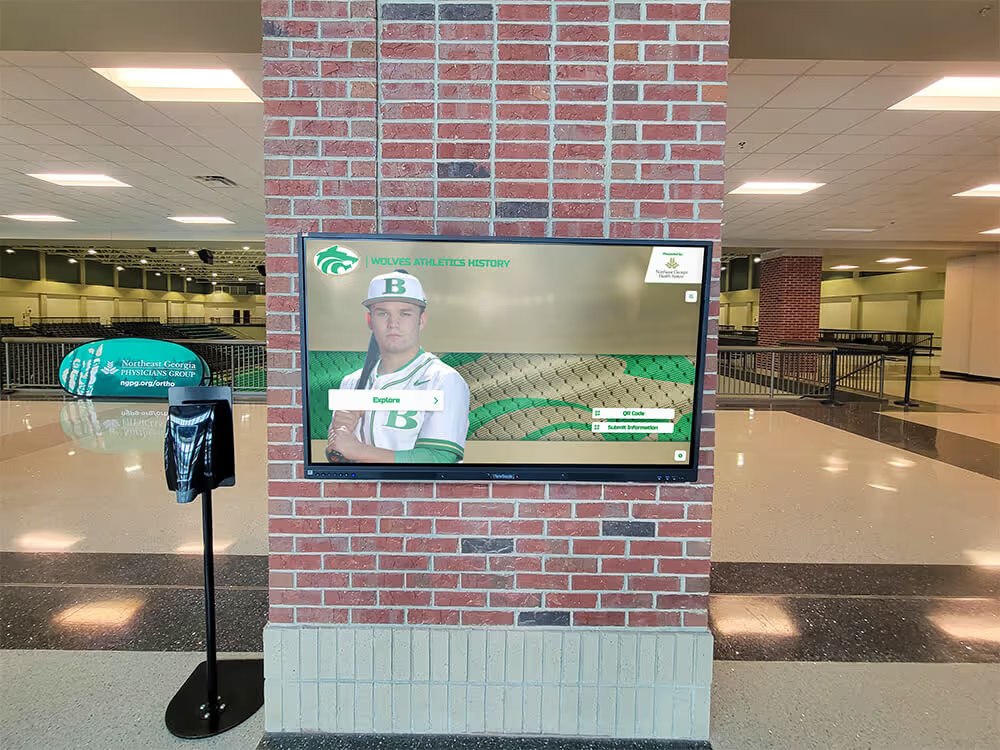
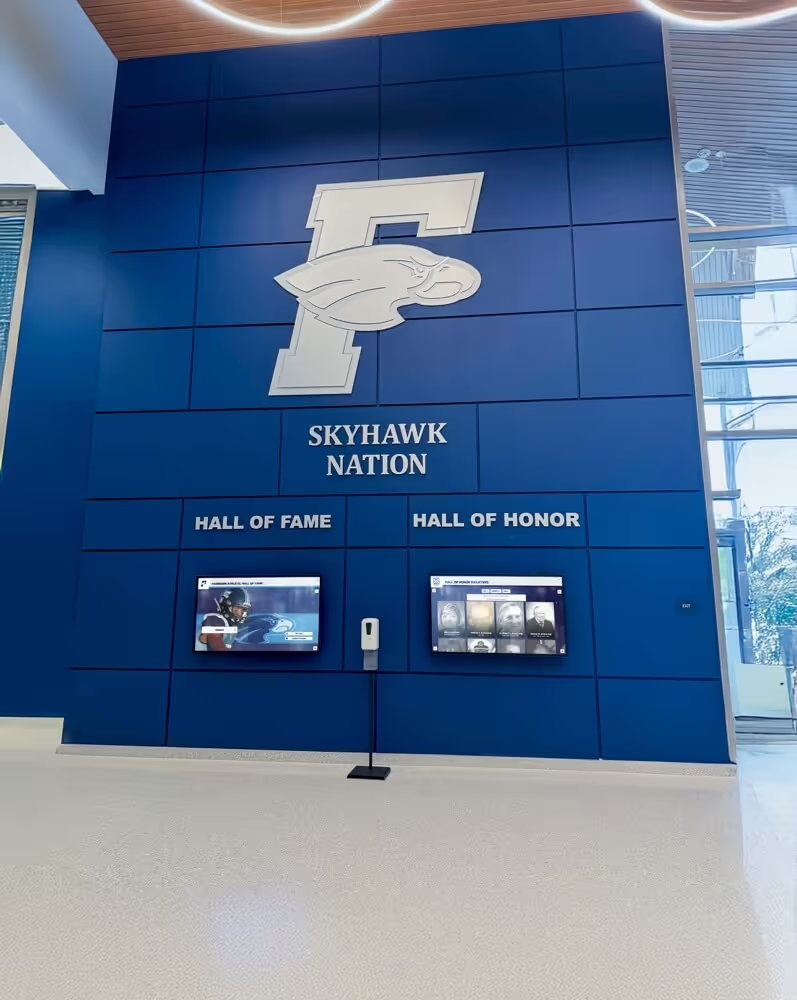
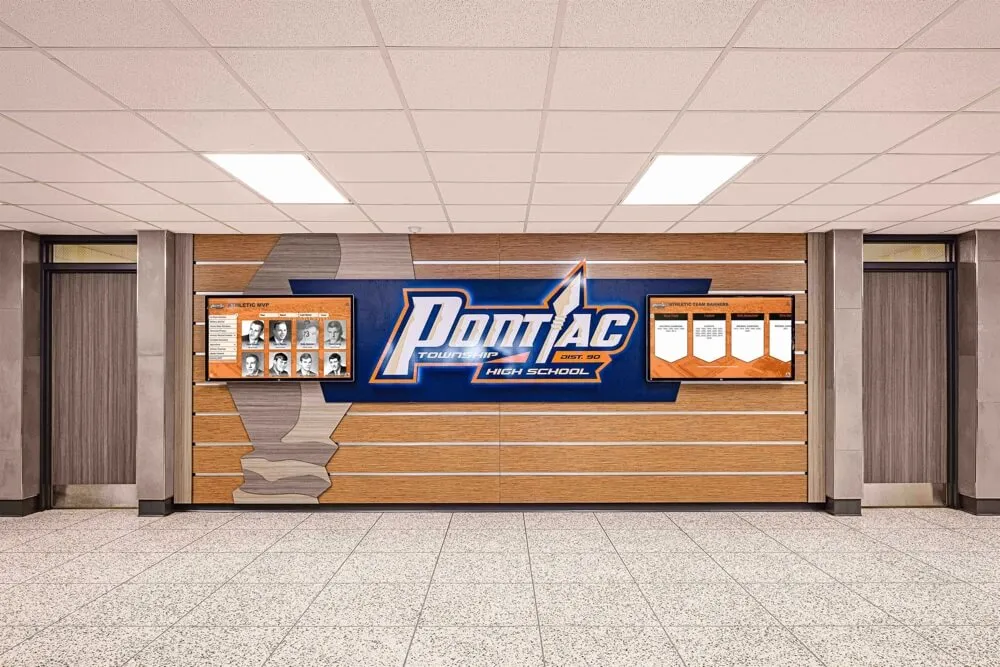
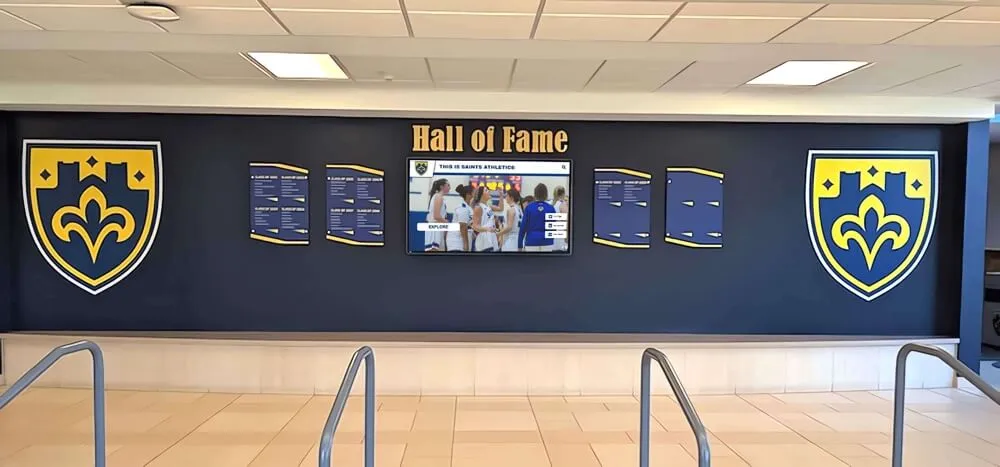
A publication policy should address all channels where award results appear — including web-based recognition archives accessible from any device
Booster Organizations and Third-Party Publication
Booster organizations, parent groups, and alumni associations frequently share award results through their own channels — social media, newsletters, group chats. A comprehensive publication policy should address third-party sharing explicitly.
Embargo Coordination
If the policy includes an embargo period, booster leaders and parent communications coordinators should be briefed on it. Third-party publication of provisional results before the embargo closes undermines the approval process and forces the athletic department to manage corrections in channels it does not control.
Sharing Authorization
Define when booster organizations may share results and from what source. A simple rule — share only after the official publication date and only from sources authorized by the athletic department — prevents premature or inaccurate third-party publication.
Correction Coordination
When corrections are issued, all third-party channels should receive the correction promptly. The athletic director or designee is responsible for notifying booster leadership of any corrections that may have already been shared externally.
For programs building comprehensive recognition archives that connect booster engagement to official institutional records, academic all-Americans digital recognition display approaches provides relevant context on how recognition platforms support multi-stakeholder communication.
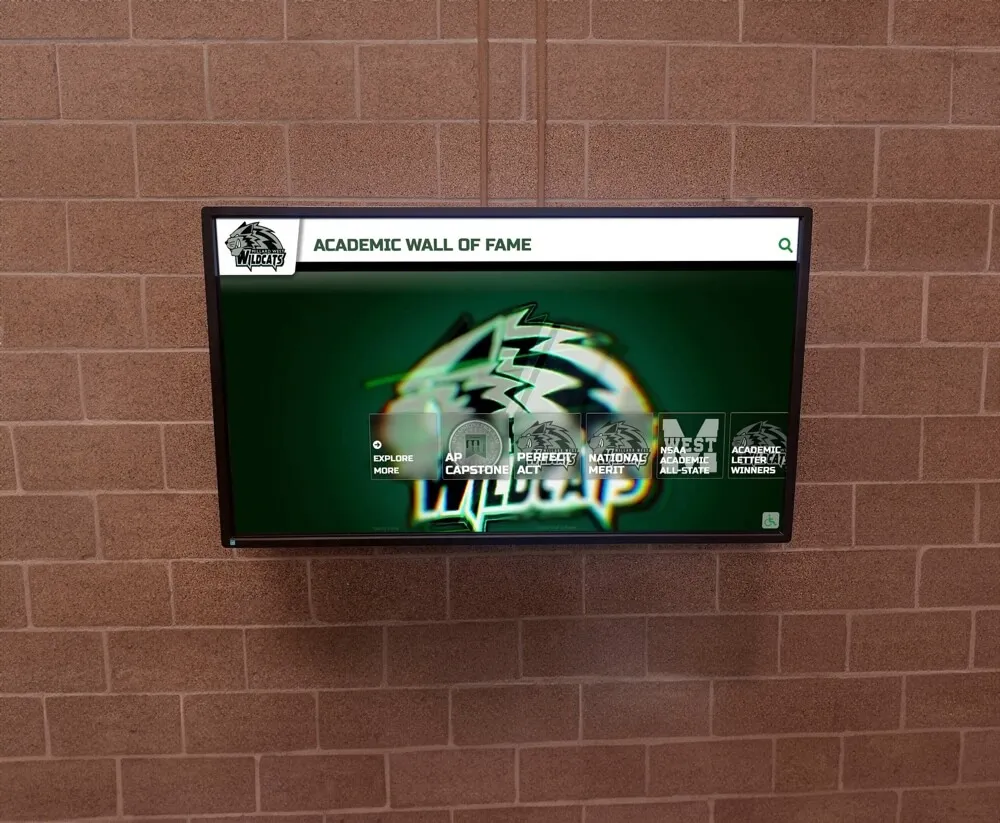
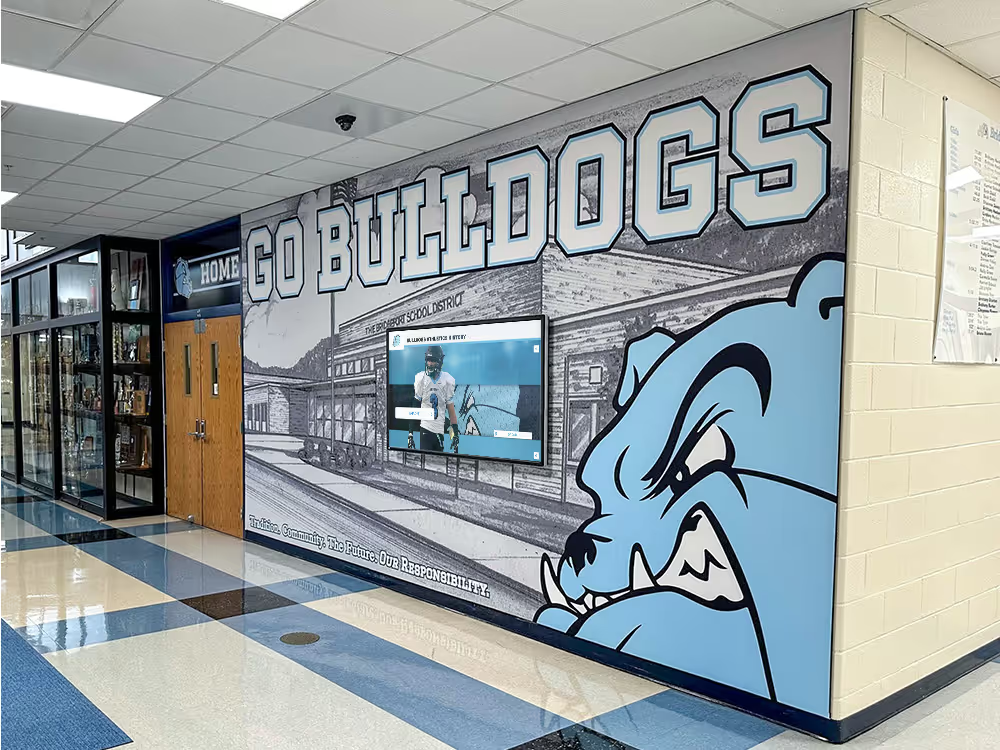
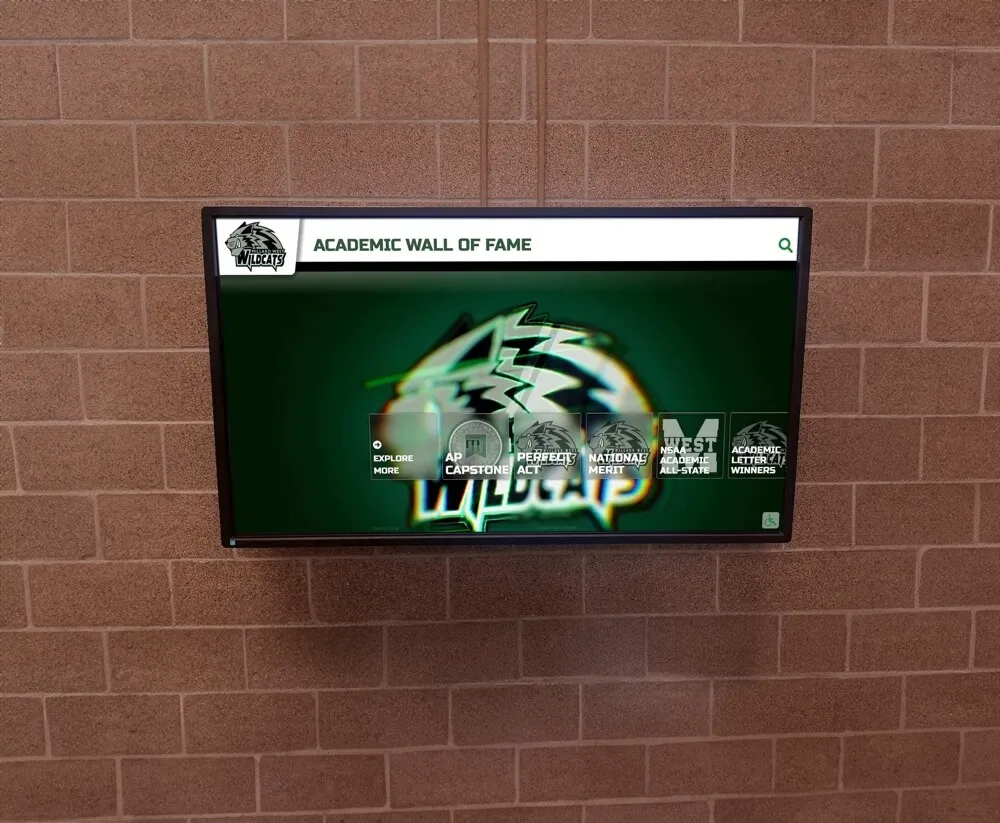
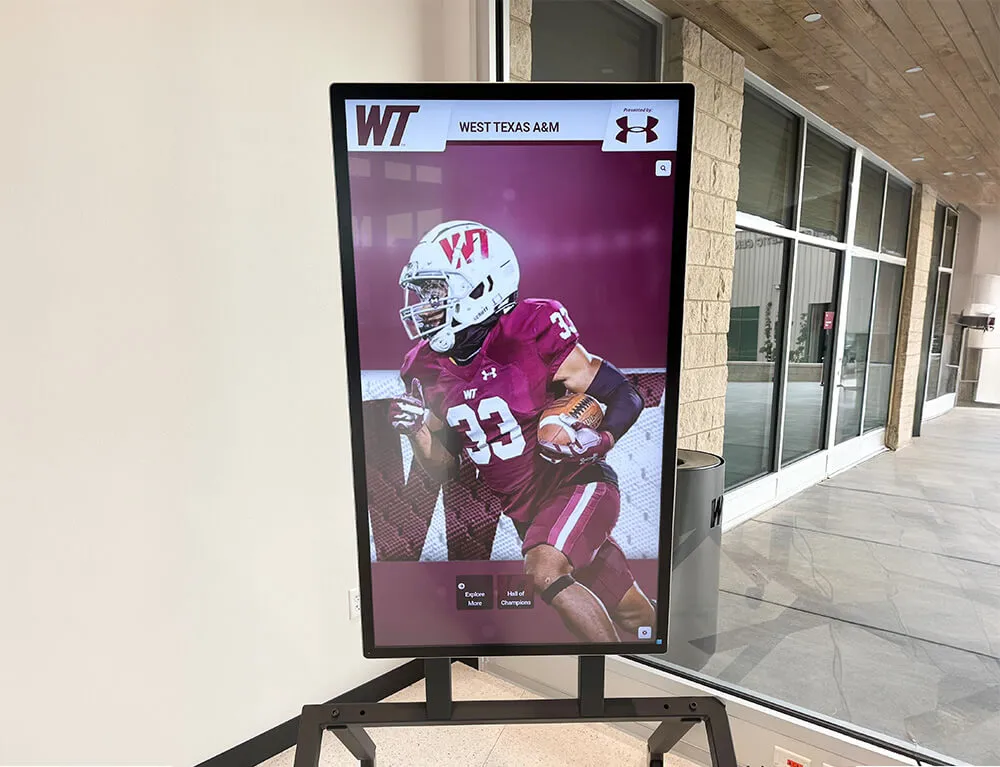
Digital recognition screens in school hallways update remotely — a publication policy defines when those updates occur and who authorizes them
Archiving Award Results: Policy Implications for Long-Term Records
The publication policy should address not just current-season results but the long-term archive of award records that accumulates across decades of athletic program history.
Permanence Standard
Award records, once officially published, should be treated as permanent institutional records. The policy should state that corrections are the only acceptable mechanism for changing published results — results cannot be unpublished, hidden, or removed from the archive absent a documented correction process.
Retroactive Recognition
Programs that discover historical award records never formally published — awards given before digital systems existed, or results announced but never archived — should have a process for entering retroactive records. The policy should define who authorizes retroactive entries and how they are distinguished from current-season results.
Archive Accessibility
Published award results should remain accessible to athletes, alumni, and community members beyond any single display’s lifespan. Cloud-based archives, web-accessible platforms, and exportable records protect against display obsolescence. For programs connecting athletic recognition to broader campus history, youth sports awards preservation and display approaches covers how programs maintain accessible archives across evolving display technologies.
Frequently Asked Questions
What is an athletic award result publication policy?
An athletic award result publication policy is a written document that defines who approves award results before publication, when approved results become official and visible, how errors are corrected after publication, and when physical and digital displays are updated. It provides a consistent, role-based workflow that applies across all sports programs and persists through leadership transitions.
Who should approve athletic award results before they are published?
Most school programs use a two-stage approval: the head coach submits the finalized award list to the athletic director, who reviews it for accuracy and completeness before authorizing publication. High-visibility honors — athlete of the year, hall of fame inductions — may require a third approval from the principal or activities director. Role-based approval authority, rather than naming specific individuals, ensures continuity when personnel change.
How quickly should award results appear on digital displays after a ceremony?
A common standard is to update digital displays within 24 to 48 hours of the official publication date, which may coincide with the ceremony date or follow a brief post-ceremony embargo period. Cloud-based platforms support scheduled publishing that automates this timeline, publishing results at a preset time without manual entry the night of the event. Physical display updates typically target 30 to 60 days after official publication.
How should schools handle errors in published athletic award results?
Published errors fall into three categories: typographical errors (corrected administratively without announcement), selection errors (require a revised publication with notification to affected athletes), and procedural violations (require formal review before a correction is issued). Every program should define a clear submission path for correction requests, target response times by error category, and communication protocols for notifying affected parties and updating all published channels.
Should booster organizations follow the same publication policy as the athletic department?
Booster organizations and parent groups that share award results through external channels should receive explicit guidance tied to the policy’s embargo period and official publication date. A clear rule — share only after the official publication date and only from authorized sources — prevents third-party publication of provisional results. When corrections are issued, booster leadership should be notified promptly so corrections propagate through all channels where the original result appeared.
Conclusion: A Publication Policy Protects the Athletes Behind the Results
An athletic award result publication policy is ultimately about the athletes whose names are on those awards. A result published incorrectly, corrected poorly, or never updated on permanent displays fails the athlete who earned the recognition — not just the program that issued it.
Schools that build formal publication policies — with documented approval chains, clear timing benchmarks, structured correction procedures, and defined display update workflows — create recognition programs that athletes, families, and alumni can trust. That trust is what transforms a one-night ceremony into a permanent institutional record with lasting value.
The operational investment is modest: a two-page policy document, a defined approval chain, and a digital platform configured to enforce the timing and access controls the policy requires. The return is a recognition archive that is accurate, current, and credible across every channel — physical displays, digital kiosks, web archives, and third-party sharing — for every season in the program’s history.
Build a Recognition System That Publishes on Your Schedule
Rocket Alumni Solutions gives athletic directors cloud-based control over award publication timing, display updates, and archive management — so your recognition program stays accurate and current across every channel, every season.
Request a Demo