



Intent: research — an athletic awards database advisory lock policy defines the rules for acquiring, naming, timing, and releasing application-level advisory locks that coordinate concurrent season import operations within a school’s recognition database. Unlike row-level or table-level locks, advisory locks are cooperative: the database enforces them only because the importing application explicitly requests them, not because a DML statement automatically triggers a lock. A written policy ensures that every import process — whether for fall sports rosters, end-of-year award batches, or hall-of-fame induction records — follows the same lock-acquisition protocol so that two concurrent imports for the same season never run simultaneously while unrelated imports and display queries proceed without interference.
This guide is written for school IT administrators, athletic directors, database managers, and recognition-platform owners responsible for the reliability and completeness of athletic award records. It covers when advisory locks are appropriate, how they differ from row-level locks and optimistic locking, the five components of a complete advisory lock policy, a lock-key naming convention, transaction-level versus session-level lock selection, a seven-step implementation sequence, and a monitoring reference for detecting contention and timeout violations.
When a school runs end-of-season award processing — importing football statistics and team honors while a separate process loads volleyball All-Conference selections and a third process updates the hall-of-fame induction batch — those operations write to an overlapping set of athlete and season records. If two of them happen to target the same season, they will either deadlock on shared rows or produce a split-write where each import overwrites the other’s partial result.
Row-level locks and transaction boundaries can reduce deadlock risk, but they cannot prevent two well-formed import transactions from running simultaneously for the same season. The mechanism designed for that purpose is an athletic awards database advisory lock policy: a set of application-level locks the import process acquires before writing any data, held only for the duration of the import, and named precisely enough that unrelated imports — for different sports or seasons — are never blocked.

Athletic hallway displays depend on complete, un-conflicted season data — an advisory lock policy prevents two concurrent imports from splitting writes to the same season while allowing imports for different sports to run in parallel
When Is an Advisory Lock the Right Tool?
Leading with the question of when advisory locks are appropriate is important because they are not the right answer to every concurrency problem in an athletic awards database. Applied to the wrong scenario, an advisory lock adds latency without solving the problem it was intended to address. The table below maps common concurrency scenarios to the appropriate control mechanism.
| Concurrency Scenario | Recommended Control | Why Not Advisory Lock |
|---|---|---|
| Two staff members edit the same athlete record simultaneously | Optimistic locking (version token comparison at save) | Staff editing through a UI should use version-token conflict detection, not advisory lock acquisition before opening a record |
| Two batch imports target the same season simultaneously | Advisory lock | Primary use case: one import holds the lock, the second waits or fails-fast, eliminating split-write risk without row-level lock contention |
| An import and a display query read the same award rows simultaneously | No lock required | Display queries use read-committed isolation; advisory locks do not affect read operations and should not be applied to read-only workflows |
| Two imports write to entirely different seasons with no shared rows | No lock required | Lock keys scoped to the specific season ensure imports for different seasons never compete for the same key |
| A statistics refresh job runs during an active import | Transaction serialization (advisory lock + correct transaction boundary) | The advisory lock prevents a second import from starting; correct transaction boundaries keep the statistics update from deadlocking on rows the import holds |
| An application must serialize multi-step operations across tables | Advisory lock | Multi-step operations with no atomic SQL equivalent are the second primary use case; the lock provides a coordination point the database cannot supply at the row level |
The three scenarios where advisory locks are clearly appropriate:
1. Same-season concurrent imports. When two processes attempt to write to the same season’s award records — roster data, award assignments, or season statistics — at the same time. One import acquires the advisory lock; the other either waits or skips with a logged message.
2. Hall-of-fame induction batch coordination. When induction processing involves multiple steps across athlete profiles, induction records, and media-reference tables, and a second induction process cannot safely begin until the first has completed all steps.
3. Cross-system data pushes. When a state association or conference awards feed pushes results to the school’s database at the same time a local import job runs for the same data. The advisory lock ensures one process owns the write window and the other queues cleanly.
What Is a Database Advisory Lock in an Athletic Awards Context?
A database advisory lock is an application-level lock stored and tracked by the database engine — but triggered and released by the application, not automatically by DML statements. PostgreSQL implements advisory locks through functions: pg_advisory_lock(key bigint) to acquire a session-level lock, pg_advisory_xact_lock(key bigint) to acquire a transaction-level lock, pg_try_advisory_lock(key bigint) to attempt acquisition without blocking, and pg_advisory_unlock(key bigint) to release a session-level lock explicitly. Microsoft SQL Server provides equivalent functionality through sp_getapplock and sp_releaseapplock.
The key is a 64-bit integer — or two 32-bit integers in PostgreSQL — chosen by the application to represent the resource being protected. Because the key is application-defined, the import process and the database both understand what the lock represents, but no database row or table is exclusively locked. Display queries that read athlete profiles or award records continue running without interruption because they never request the advisory lock key.
For a school athletic awards database, the practical result is:
- A fall football award import acquires the advisory lock for
(season_year=2026, sport=football)before writing any rows - A simultaneously-submitted football roster correction job requests the same lock and is held until the import releases it
- A volleyball award import for the same season acquires a different lock key —
(season_year=2026, sport=volleyball)— and runs in parallel without any interference - The digital display query serving the lobby touchscreen reads from the same tables throughout without ever seeing or requesting any advisory lock
According to PostgreSQL’s official documentation on explicit locking, advisory locks are intended exactly for this pattern: application-defined locking mechanisms that do not interact with table-level or row-level locking. No hardware or system resource is consumed by a waiting advisory lock beyond the database’s internal lock tracking table.
For programs that manage comprehensive recognition programs alongside their athletic records — including academic recognition programs that share the same database platform as athletic awards — the advisory lock framework described here applies equally to concurrent honor roll imports, academic decathlon record updates, and other multi-category data loads.
Five Components of a Complete Athletic Awards Database Advisory Lock Policy
A written athletic awards database advisory lock policy governs five elements. Without each element documented, import processes developed by different IT staff or different vendors will use inconsistent lock keys, inconsistent timeout values, and inconsistent release behavior — producing coordination failures the policy was designed to prevent.
1. Lock Scope Definition
The policy defines which import operations are required to acquire an advisory lock before writing, and which are exempt. Required: any import that writes to the same season-sport combination that another concurrent import might also target. Exempt: display queries, read-only analytics exports, and imports that write to uniquely-keyed reference tables with no realistic concurrent-import scenario.
Policy language example: “Any process that writes award assignments, athlete profile updates, season statistics, or hall-of-fame induction records for a specific sport-season combination must acquire the corresponding advisory lock before beginning the write transaction. Read-only queries are exempt from advisory lock requirements.”
2. Lock Key Naming Convention
The policy defines how the 64-bit integer key is derived from the semantic meaning of the lock — the sport identifier and season year — so that two independently-developed import processes produce the same key for the same resource and therefore coordinate correctly.
Policy language example: “Lock keys are computed as: (sport_id * 10000) + season_year. For the 2026 football season with sport_id=3, the advisory lock key is 30000 + 2026 = 32026. For the 2026 volleyball season with sport_id=7, the key is 70000 + 2026 = 72026. A reference table mapping sport names to sport IDs in the sport_categories table is the authoritative source for key computation.”
3. Lock Mode and Level
The policy specifies whether to use session-level locks (held until explicitly released or session ends) or transaction-level locks (automatically released at transaction commit or rollback). For batch imports, transaction-level locks are almost always the correct choice: they release automatically when the transaction completes, eliminating the risk of an abandoned session holding a lock indefinitely.
Policy language example: “All award import advisory locks use transaction-level acquisition (pg_advisory_xact_lock in PostgreSQL; sp_getapplock with @LockOwner = 'Transaction' in SQL Server). Session-level advisory locks are prohibited for import processes because an abandoned session holds a session-level lock until the connection closes.”
4. Timeout and Fail-Fast Configuration
The policy specifies the maximum wait time before a lock acquisition attempt is abandoned, and whether the default behavior is to wait (blocking) or to attempt-and-fail (non-blocking). A non-blocking attempt that fails immediately — using pg_try_advisory_lock — is appropriate when a concurrent import should be skipped and retried later rather than queued. A blocking wait with a timeout is appropriate when the concurrent import must complete before the waiting process begins.
Policy language example: “End-of-season award imports use a 30-second blocking wait for advisory lock acquisition. If the lock is not acquired within 30 seconds, the import process logs an advisory-lock-timeout event and exits without writing any data. The lock timeout is set at the database session level with SET lock_timeout = '30s' before the lock acquisition call.”
5. Release and Failure Handling
The policy defines when and how advisory locks are released, and what the import process must do if it terminates abnormally — through an application error, a deadlock victim termination, or a server crash — before reaching the explicit release point.
Policy language example: “Transaction-level advisory locks are released automatically by the database engine at transaction commit or rollback. Session-level locks, if used for any approved special-case scenario, must be released in an application-layer finally block regardless of whether the import completed successfully. If the import process exits without releasing a session-level lock, the database administrator must release it using pg_advisory_unlock before any subsequent import for that season-sport combination can proceed.”
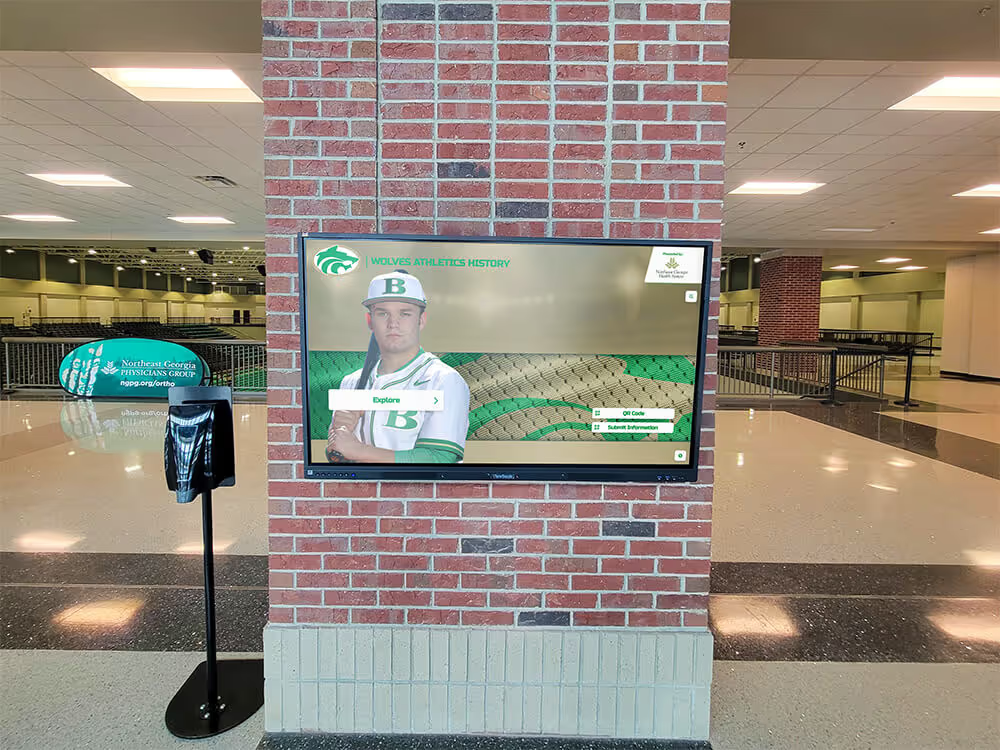
The integrity of a hall of fame kiosk depends on whether the imports that wrote its records were properly serialized — an advisory lock policy gives every import process a coordination point that prevents one import from overwriting another's partial result
Advisory Lock Key Naming Convention
The lock key naming convention deserves its own section because it is the mechanism that actually makes advisory locks coordinate — rather than just existing in isolation per import process. Two import processes acquire the same advisory lock only if they compute the same key. Two processes that compute different keys for the same season-sport combination will not coordinate, defeating the purpose of the policy.
A robust naming convention for athletic award advisory locks has three properties:
Deterministic. Given the same sport and season, two independently-running import processes always compute the same integer key. Using a formula like (sport_id * 10000) + season_year is deterministic; using a hash of the import job’s timestamp is not.
Collision-resistant. Different sport-season combinations should map to different keys. Using sport_id * 10000 as the sport component provides 10,000 unique values per sport before the season_year digit could produce a collision — more than sufficient for any realistic athletic program.
Documented in a shared reference. The formula must be documented in the policy and implemented from a shared reference — the sport_categories table — rather than hardcoded differently in each import script. An import script that hardcodes sport_id=3 for football while the reference table assigns sport_id=5 will acquire the wrong lock key and coordinate with nothing.
Reserved prefix range. Define a range of key values reserved for advisory locks. For example, all athletic award import locks use keys in the range 10000–99999. System-level maintenance locks use keys in the range 100000–199999. This prevents two different categories of lock from accidentally sharing a key and appearing to coordinate when they are actually unrelated.
For programs that manage multi-category recognition databases covering academic decathlon records alongside athletic honors, extend the key prefix convention to cover academic award imports separately — for example, academic category locks use keys in the range 200000–299999 — so that athletic and academic import processes never share a key space.
Transaction-Level vs. Session-Level Advisory Locks
The choice between transaction-level and session-level advisory locks determines what happens when an import process terminates abnormally. This is one of the most consequential choices in the policy.
| Characteristic | Transaction-Level | Session-Level |
|---|---|---|
| Acquisition function (PostgreSQL) | pg_advisory_xact_lock(key) | pg_advisory_lock(key) |
| SQL Server equivalent | sp_getapplock @LockOwner='Transaction' | sp_getapplock @LockOwner='Session' |
| Release trigger | Automatic at COMMIT or ROLLBACK | Explicit pg_advisory_unlock(key) or session close |
| Risk if process crashes mid-import | Lock releases with the transaction rollback | Lock persists until session closes or unlock is called |
| Appropriate for batch imports | Yes — preferred | Only for special-case multi-transaction workflows |
| Risk of lock orphaning | None | Present if explicit unlock is missing from error-handling path |
The policy-level recommendation is transaction-level advisory locks for all batch imports. Transaction-level locks release automatically when the import transaction commits (success) or rolls back (failure or deadlock). There is no risk of an abandoned import session holding a lock that prevents all subsequent imports for that season.
Session-level locks are appropriate only when the coordinated operation spans multiple separate transactions — for example, when a multi-phase induction process must hold the lock across a data-load transaction, a media-reference transaction, and a publish-status transaction. In that scenario, the session-level lock must be released in an application-layer finally block that executes regardless of whether any individual transaction succeeded or failed.
Implementing the Policy: Seven Steps for Athletic IT Teams
The following sequence is designed for programs establishing advisory lock governance for the first time. Programs already using advisory locks informally can enter the sequence at Step 4.
Step 1 — Inventory which import processes run concurrently. Document every automated and manual import job that writes to the athletic awards database. Identify which pairs of jobs could realistically run at the same time — either because they are scheduled to overlap, or because they are triggered on-demand without scheduling controls. Concurrent pairs that write to the same sport-season combination are the primary advisory lock candidates.
Step 2 — Define the lock key formula and populate the reference table. Establish the sport_id values for all sports in the reference table and document the formula. Verify that the formula produces unique keys for all realistic sport-season combinations. Test by computing keys for every sport for the current and prior three seasons and confirming no collisions.
Step 3 — Confirm database support for advisory locks.
Verify the database engine version supports advisory locks. All current PostgreSQL versions support advisory locks natively. SQL Server 2005 and later support sp_getapplock. Confirm the database connection credentials used by import processes have the permissions required to acquire advisory locks.
Step 4 — Add advisory lock acquisition to each import process.
At the start of each covered import process, before any DML statement, add the lock acquisition call inside the same transaction as the import DML: SELECT pg_advisory_xact_lock((sport_id * 10000) + season_year) in PostgreSQL, or EXEC sp_getapplock @Resource='sport_2026_3', @LockMode='Exclusive', @LockOwner='Transaction', @LockTimeout=30000 in SQL Server.
Step 5 — Configure and test the timeout. Set the lock timeout before the acquisition call. Test the timeout behavior by running two instances of the same import process simultaneously against a test database and confirming that the second attempt waits, then either acquires the lock after the first completes or exits with a logged timeout message after 30 seconds.
Step 6 — Add advisory lock monitoring.
Add a recurring check of the database lock view to the monitoring dashboard. Alert when any advisory lock has been held for longer than twice the maximum expected import duration — a signal that an import may have stalled without releasing the lock. In PostgreSQL, query pg_locks WHERE locktype = 'advisory'. In SQL Server, query sys.dm_os_waiting_tasks.
Step 7 — Document the policy and train import process owners. Record the five policy components, the lock key formula, the timeout configuration, and the monitoring procedure in the program’s data governance documentation. Brief the staff responsible for running or scheduling import jobs on what an advisory lock acquisition timeout means — specifically, that it signals a concurrent import for the same season is running or recently stalled — and what steps to take before retrying.
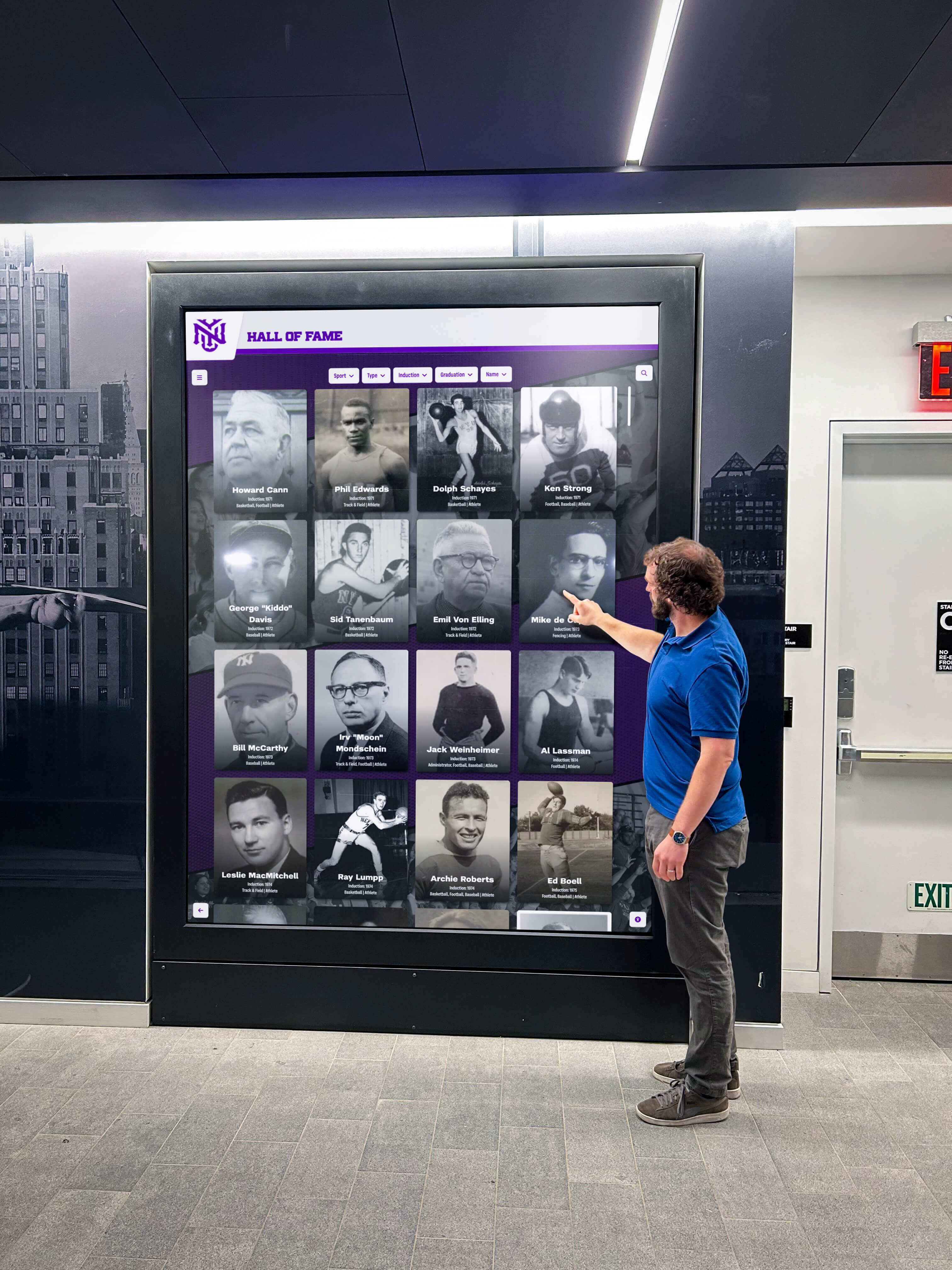
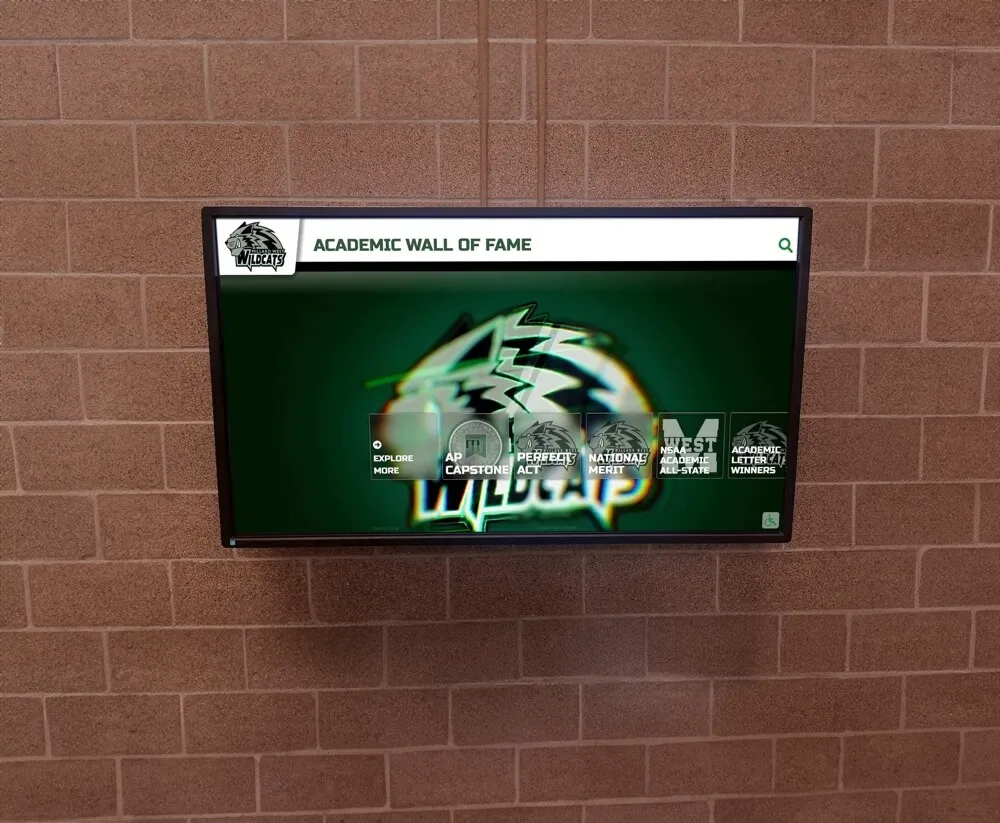
Every hall of fame profile a visitor accesses through a lobby touchscreen was written by an import process — the advisory lock policy ensures that no two imports for the same season split the writes to those records
Serializing Concurrent Season Imports Without Blocking Unrelated Records
The design goal that distinguishes an advisory lock policy from cruder serialization approaches — like a global import queue or a table-level lock — is scoped serialization: only imports that genuinely compete for the same season-sport combination are serialized against each other. Imports for different sports or different seasons proceed in parallel.
This distinction matters operationally. A school processing end-of-year awards for fifteen varsity sports does not want all fifteen imports to run sequentially. It wants football and volleyball imports to run in parallel if they target different seasons, and to serialize only if they target the same season simultaneously. Advisory lock keys achieve this automatically: the football 2026 lock key (32026) and the volleyball 2026 lock key (72026) are different integers. Both imports run without interference.
Three design principles for scoped advisory lock serialization:
Principle 1 — Key includes the season. A lock key that identifies only the sport without the season would serialize all football imports sequentially — the 2025 import would block the 2026 import even though there is no actual competition between them. Including the season year in the key limits serialization to the specific scope where it is needed.
Principle 2 — Parallel imports for the same season, different sports, are always allowed. The policy must explicitly state that locks for different sport-season combinations are independent. Developers unfamiliar with advisory lock scope may mistakenly implement a global import semaphore that serializes all imports. The policy prevents this by defining the lock key formula at the sport-season level rather than at the program level.
Principle 3 — Display queries are never blocked. Advisory locks do not affect queries that do not attempt to acquire them. The lobby touchscreen’s inductee query, the coach’s award search, and the athletic director’s season-summary report all run without requesting any advisory lock. They read committed data from the database with no interference from an active import lock — which is the key operational advantage over table-level or schema-level locks.
For programs that serve recognition records to multiple concurrent display types — including the kind of interactive recognition platforms evaluated for athletic, donor, and historical displays — advisory lock design is what makes high-throughput import processing compatible with high-availability display serving.
For programs evaluating data integrity practices across the recognition technology market, data integrity advisory research in the digital hall of fame market provides useful background on how data governance and import reliability affect the trust schools place in their recognition systems.

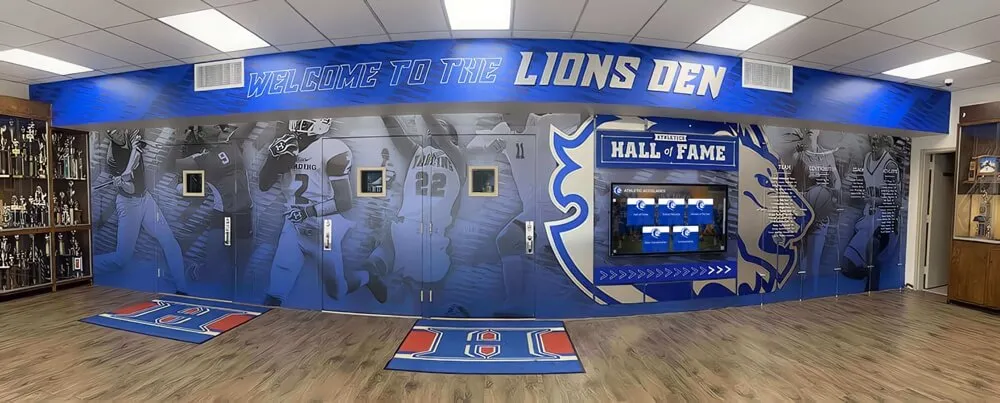
Multi-screen recognition installations serve continuous display traffic — advisory lock scoping ensures that background import operations for one sport never block the display queries serving an unrelated hall of fame screen
Monitoring Lock Acquisition, Timeout, and Contention
A written advisory lock policy is only as effective as the monitoring that verifies it is being followed. Without monitoring, a misconfigured import process that acquires the wrong lock key, never releases a session-level lock, or times out without logging will create a coordination gap invisible to IT staff.
Minimum monitoring requirements for an athletic awards advisory lock policy:
| Monitoring Target | Check Method (PostgreSQL) | Alert Threshold |
|---|---|---|
| Currently held advisory locks | SELECT * FROM pg_locks WHERE locktype = 'advisory' | Alert if any advisory lock has been held for more than 2× the maximum expected import duration |
| Waiting processes | SELECT * FROM pg_stat_activity WHERE wait_event_type = 'Lock' | Alert if any process has waited more than the configured lock timeout (30s by default) |
| Lock timeout events | Application-layer log for advisory lock timeout messages | Alert if more than 2 timeout events occur within a single import window |
| Session-level lock orphans | pg_locks WHERE locktype = 'advisory' AND pid NOT IN (SELECT pid FROM pg_stat_activity) | Alert immediately — indicates a session-level lock from a terminated session, requiring manual release |
| Lock contention frequency | Monthly count of timeout events from application log | Trend increase signals that concurrent import scheduling needs adjustment |
Lock contention as an escalation signal. A single timeout event per season is expected and unremarkable — it means the policy worked exactly as designed: one import acquired the lock, a concurrent attempt waited and eventually timed out, and the locked import completed cleanly. A pattern of repeated timeouts for the same sport-season combination signals that two processes are being scheduled to run simultaneously for that combination and one consistently fails. The resolution is scheduling adjustment — not a lock policy change.
For programs evaluating broader recognition program governance practices, including the kind of hall of fame tools that handle import coordination as part of a managed platform, lock monitoring should be part of the evaluation criteria alongside display reliability and content management features.
For programs that manage academic award records alongside athletic honors — including academic achievement award data for high school recognition — applying the same monitoring framework to academic import advisory locks ensures governance discipline extends across all award categories on the shared platform.
How Cloud-Based Recognition Platforms Handle Import Coordination
Schools managing their athletic awards database on an in-house system carry the full burden of advisory lock policy design, implementation, and monitoring. Cloud-based recognition platforms built for athletic and school programs absorb the majority of that burden through platform-managed import coordination.
Platform-level import serialization. Purpose-built recognition platforms maintain their own import queuing and serialization logic at the application layer. When two coaches submit end-of-season award data simultaneously for the same sport and season, the platform queues the second submission until the first has been fully processed and committed. Staff members never see a lock acquisition timeout — they see a processing status indicator that resolves when the first import completes.
Automatic conflict detection. Well-designed platforms detect when an incoming data submission would overwrite a record written by a concurrent import and surface the conflict for review — combining advisory lock-style serialization with the conflict notification model of optimistic locking. The school’s IT team does not need to configure lock keys, timeouts, or monitoring dashboards.
Display isolation by design. Cloud platforms separate the import pipeline from the display-serving pipeline at the infrastructure level. Import processing runs in a dedicated write path; display queries run against a read replica or a cached read layer. Advisory lock coordination happens in the write path without any possibility of affecting display query latency.
Audit trail for import coordination events. Every import submission, including cases where a submission was queued behind a concurrent import and delayed, is logged in the platform’s audit trail with timestamps, user identity, and final commit status. School administrators see exactly when each import was submitted, when it was processed, and whether any coordination delay occurred — without needing access to database lock monitoring tools.
Schools using Rocket Alumni Solutions’ cloud-based recognition platform receive these import coordination capabilities as part of the core product — along with ADA WCAG 2.1 AA compliance, auto-ranking record boards, unlimited inductees and layouts, QR code mobile access, and remote cloud-based content management from any device.
For school programs evaluating how a managed recognition platform handles end-of-season imports across all recognition categories — including programs building out their recognition programs across multiple award types — platform-level import coordination means the athletic director and IT team focus on the records, not the transaction-layer mechanics underneath.
For programs approaching major alumni milestones — such as reunion recognition events where digital displays carry historical award records from multiple import cycles — the reliability of the import coordination policy matters more than in routine maintenance windows, because incomplete or split-write records surfacing during a public event are highly visible.
If your program is currently managing import coordination manually, requesting a demo of Rocket Alumni Solutions is a practical starting point for evaluating how a managed platform can absorb the advisory lock policy burden while delivering more reliable import coordination than most school IT environments can achieve with in-house tooling.

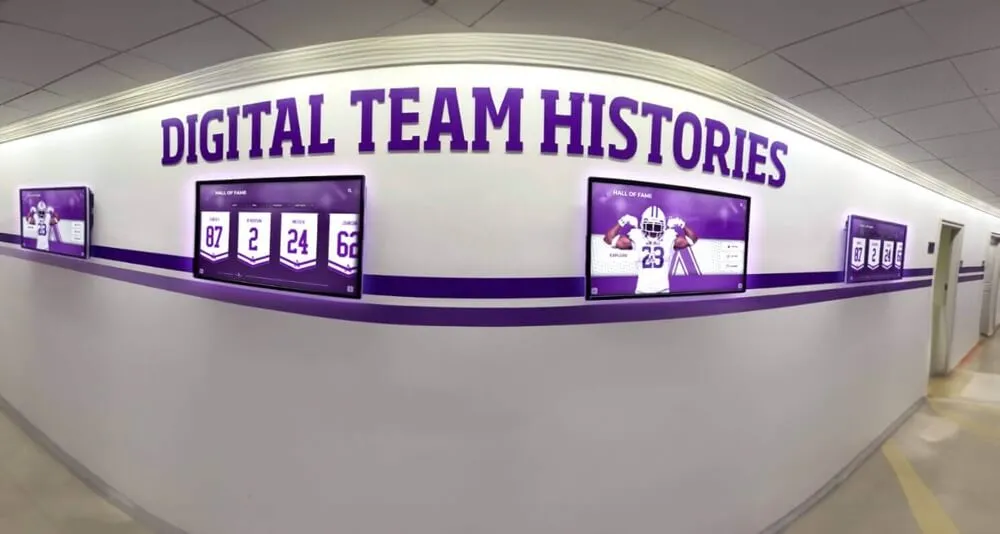
Hall of fame screens that visitors interact with in school hallways are the visible result of a reliable import pipeline — advisory lock governance is the mechanism that prevents concurrent imports from producing split or incomplete records on the display
Frequently Asked Questions
What is an athletic awards database advisory lock policy?
An athletic awards database advisory lock policy is a written governance document that defines the rules for acquiring, naming, timing, and releasing application-level advisory locks used to coordinate concurrent season import operations. Advisory locks are cooperative locks that the importing application explicitly requests from the database engine — not locks automatically triggered by DML statements. The policy ensures that two concurrent imports for the same season and sport are serialized (one waits or fails-fast while the other completes), while imports for different sports or seasons run in parallel without interference and display queries are never blocked.
When should an athletic awards database use advisory locks instead of row-level locks?
Advisory locks are appropriate when the coordination problem is application-level — preventing two import processes from running simultaneously for the same season — rather than row-level. Row-level locks protect individual rows from concurrent modification within a single transaction. For batch imports where the risk is two complete import transactions targeting the same season data, advisory locks provide a cleaner serialization mechanism: one import holds the lock, the other waits or fails-fast, and no row-level lock contention accumulates between the competing processes. Display queries are never affected because they do not request advisory locks.
How are advisory lock keys named for athletic award imports?
Advisory lock keys for athletic award imports are typically computed from a deterministic formula combining the sport identifier and the season year — for example, (sport_id × 10000) + season_year. A football import for sport_id=3 in season 2026 would acquire lock key 32026; a volleyball import for sport_id=7 in the same season would acquire 72026. These are different keys, so both imports run in parallel. A second football 2026 import acquires the same key (32026) and is serialized against the first. The formula must be documented in the policy and derived from an authoritative sport reference table, not hardcoded per import script, so that independently developed import processes always compute the same key for the same season-sport combination.
What is the difference between transaction-level and session-level advisory locks for athletic imports?
Transaction-level advisory locks are released automatically when the transaction commits or rolls back. Session-level advisory locks persist until explicitly released with an unlock call or until the database session closes. For batch imports, transaction-level locks are almost always the correct choice: they release automatically on import success or failure, eliminating the risk of an abandoned import session holding a lock indefinitely and blocking all subsequent imports for the same season. Session-level locks are appropriate only for multi-transaction workflows where a single coordination point must span multiple consecutive transactions — and only when explicit unlock logic in an application-layer error-handling block is guaranteed to execute regardless of outcome.
How do advisory locks affect display queries on a digital hall of fame system?
Advisory locks do not affect display queries at all. They are cooperative locks that the database enforces only for processes that explicitly request them. A lobby touchscreen query that reads athlete profiles, a coach's search for award history, or an athletic director's season summary report never requests an advisory lock, so none of these queries are ever held, delayed, or blocked by an active import lock. This is the key operational advantage of advisory locks over table-level locks for recognition systems: import serialization and display availability are completely independent, allowing imports to run continuously without interrupting the recognition displays that athletes, families, and visitors interact with.
See a Recognition Platform Where Import Coordination Is Built In
Rocket Alumni Solutions provides athletic directors and IT administrators with a cloud-based recognition platform that handles concurrent import coordination, conflict detection, and audit logging at the infrastructure level — so your team manages award records, not lock policies. ADA WCAG 2.1 AA compliant, with auto-ranking record boards, QR code mobile access, unlimited inductees and layouts, and remote content management from any device. Request a demo to see how managed import coordination keeps hall of fame displays and season records accurate and complete year-round.
Request a Demo