



Intent: research — an athletic awards database BRIN index policy defines the criteria for deciding when a Block Range INdex is the correct choice for a time-ordered recognition table, how to verify that the table’s physical layout supports BRIN’s assumptions, and when to fall back to a B-tree index despite BRIN’s compact footprint. BRIN indexes store range summaries for consecutive disk pages rather than individual row pointers, making them orders of magnitude smaller than B-tree indexes on the same column — but only effective when the indexed column’s values align with the physical order in which rows were written to disk.
This guide is written for school IT administrators, athletic directors, database administrators, and recognition-program data stewards who manage PostgreSQL-backed award archives and digital recognition displays. It covers what BRIN indexes are, a direct fit/no-fit answer for athletic recognition tables, a decision table by table characteristic, verification queries that confirm physical correlation before deployment, configuration parameters for recognition workloads, and how BRIN policy integrates with the broader index governance framework for school athletic databases.
School athletic recognition databases grow in a pattern that most general-purpose databases do not: new award records are almost always appended in chronological order. A fall season ends; coaches submit their awards; those records land in the database with award_date values clustered in November and December. Winter season closes; another batch of records arrives in March. Spring awards follow in June. The awards table grows row by row, season by season, and the award_date column increases in near-perfect step with the physical position of each row on disk. This append pattern is the exact precondition that makes an athletic awards database BRIN index policy worth writing — because BRIN’s block-range architecture delivers its compact-index advantage only when that physical alignment exists.

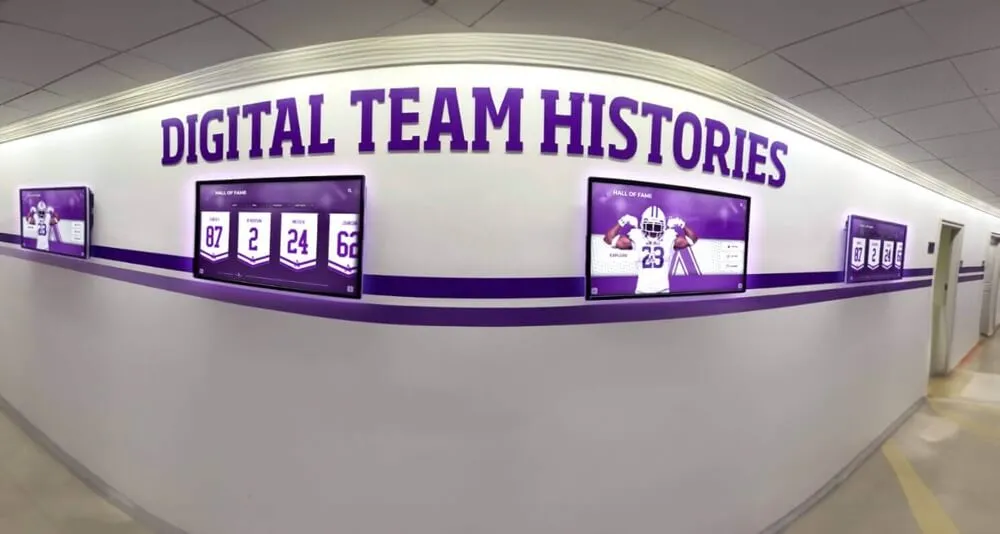
Digital athletic records displays in school hallways are typically served by append-heavy database tables that grow season by season — the physical append pattern is the key precondition that determines whether a BRIN index improves query performance or adds overhead without benefit
What Is a BRIN Index in an Athletic Awards Database?
A BRIN (Block Range INdex) is a PostgreSQL index type that stores the minimum and maximum value of a specified column for each “range” of consecutive disk pages in a table. By default, one range covers 128 pages (8 KB each), so a single BRIN entry summarizes the indexed column values for thousands of rows using just two values: the minimum and maximum found anywhere in that page range.
When a query includes a date-range filter on a BRIN-indexed column, PostgreSQL reads the range summaries and identifies which page ranges could possibly contain qualifying rows. Page ranges whose min/max values do not overlap the query’s date range are skipped entirely. Only the page ranges that might contain matching rows are scanned. For a large athletic award archive queried by season date — “all awards between September 2023 and June 2024” — BRIN can reduce the number of disk pages read to only those containing records from that season, without storing a pointer for every individual row.
The tradeoff is precision. A B-tree index navigates directly to the exact rows that match a query predicate. BRIN can only identify which page ranges might contain matching rows — it will include any page range that overlaps the query’s date range, even if only one row on that page actually qualifies. This creates “false positives” that require PostgreSQL to read more pages than a B-tree would. BRIN is only efficient when false positives are rare — which happens when rows within each range are physically sorted by the indexed column, so overlapping ranges are few.
The practical result: BRIN indexes for athletic award tables are typically tens to hundreds of kilobytes. An equivalent B-tree index on a 5-million-row award archive might occupy 200–400 MB. This size difference matters for programs that host recognition databases on infrastructure with limited storage, and for databases where index bloat has become a routine maintenance concern across multiple seasons of accumulated records.
Does BRIN Fit Athletic Recognition Records? A Direct Answer
Yes, for append-heavy, date-filtered award tables with high physical correlation. No, for tables with frequent date corrections, random insertion order, or primary query patterns that do not filter by date.
The single most important variable is the statistical correlation between the indexed column and the physical order of rows on disk. PostgreSQL’s pg_stats system catalog tracks this correlation coefficient for every analyzed column. A value near 1.0 means rows are physically stored in the same order as the column’s values — exactly the condition BRIN requires. A value near 0 means rows are scattered relative to the column’s values — and BRIN will perform worse than a sequential table scan.
For athletic award databases, award_date and season_start_date columns on tables that are insert-only (or nearly so) typically have correlations between 0.85 and 0.99, depending on whether historical records were migrated in date order. The policy question is not “should we use BRIN everywhere?” — it is “which specific columns on which specific tables meet the physical-order precondition?”
Induction-year tables for hall of fame programs are a strong BRIN candidate: new cohorts are added once per year, in strict chronological order, and are rarely updated after publication. Award records for forensics, debate, and academic recognition programs accumulate in the same seasonal append pattern as athletic records. For the broader recognition data landscape, forensics team recognition administration and digital display management describes a non-athletic award archive that grows with the same append-by-season pattern, making the BRIN policy decision structurally identical to the athletic records case.
Decision Table: BRIN Fit by Table and Column Characteristic
The following table provides the direct fit/no-fit determination for the conditions most commonly encountered in school athletic recognition databases. Apply it by checking the current state of the target table — not the intended future state.
| Table or Column Characteristic | BRIN Fit? | Reason |
|---|---|---|
Append-only award records, award_date increases monotonically | Yes | Physical row order matches column order — high correlation |
| Historical records migrated in season date order | Yes | Migration preserved the chronological append pattern |
| Historical records migrated in athlete ID or name order | No | Physical order does not match date column — low correlation |
Records frequently updated with corrected award_date values | No | Updates scatter rows and break physical correlation |
| Table queried exclusively by athlete ID, sport, or category | No | BRIN provides no benefit for non-sequential access patterns |
| Induction-year column on a hall of fame cohort table | Yes | Annual append pattern; high correlation |
| Season-end date range queries spanning one to three seasons | Yes | Block ranges match the seasonal query pattern |
| Table with fewer than 10,000 rows | No | Sequential scan outperforms any index at small scale |
Table rebuilt with CLUSTER or VACUUM FULL on a non-date column | No | Cluster column now controls physical order; date correlation drops |
Table rebuilt with CLUSTER explicitly on the date column | Yes | Physical order aligned with date column |
| Multi-sport award table queried by date across all sports | Partial | Effective for date filtering; requires secondary filter on sport |
| Soft-delete table with frequent logical deletions and reinsertions | No | Reinsertions scatter date values across pages |
The most common surprise in athletic recognition databases is the historical migration case. Programs that migrate legacy paper records into a digital system frequently import records ordered by athlete name or ID — the natural order of a spreadsheet or legacy report — rather than by award date. This breaks the chronological physical correlation that BRIN requires, even though the award dates themselves are historically sequential. A BRIN index applied after such a migration performs no better than a sequential scan and may perform worse, because the index is too small to skip meaningful numbers of page ranges.

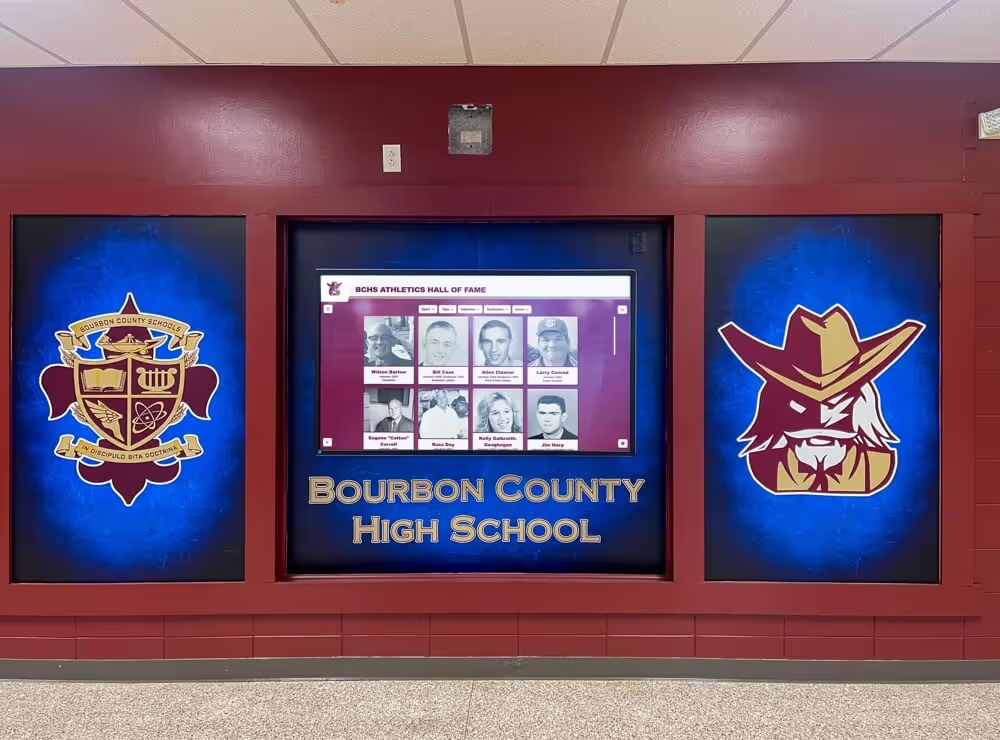
Hall of fame displays are typically powered by induction-cohort tables that receive one annual batch of new records — the annual append pattern preserves the chronological physical order that makes BRIN indexes effective for induction-year queries
How to Verify Physical Correlation Before Creating a BRIN Index
Running verification queries before deploying a BRIN index is the practical foundation of any BRIN policy for athletic award databases. These three queries — each runnable on a live PostgreSQL database without downtime risk — determine whether the target table meets BRIN’s physical-order precondition.
Verification Query 1: Column Correlation Check
SELECT
  attname    AS column_name,
  correlation
FROM pg_stats
WHERE tablename = 'athletic_awards'
  AND attname IN ('award_date', 'season_start_date', 'induction_year')
ORDER BY abs(correlation) DESC;
A correlation value above 0.85 is a reliable indicator that BRIN will outperform a sequential scan for date-range queries on that column. A value below 0.5 indicates that BRIN will provide little benefit and should not be deployed. Values between 0.5 and 0.85 warrant testing under realistic query workloads before committing.
Note: pg_stats is populated by ANALYZE. Run ANALYZE athletic_awards before executing this query if the table has not been analyzed recently.
Verification Query 2: Query Plan Confirmation
EXPLAIN (ANALYZE, BUFFERS, FORMAT TEXT)
SELECT *
FROM athletic_awards
WHERE award_date BETWEEN '2024-09-01' AND '2025-06-30';
After creating a test BRIN index, look for Bitmap Index Scan on idx_awards_brin_date in the query plan. If the plan instead shows Seq Scan on athletic_awards, PostgreSQL’s query planner has determined that the BRIN index does not reduce the scan cost enough to be worth the index overhead — a direct signal that physical correlation is insufficient for the query selectivity and data distribution on this table.
Verification Query 3: False-Positive Rate Estimate
SELECT
  COUNT(*) FILTER (WHERE award_date BETWEEN '2024-09-01' AND '2025-06-30') AS matching_rows,
  COUNT(*)                                                                   AS total_rows_scanned,
  ROUND(
    COUNT(*) FILTER (WHERE award_date BETWEEN '2024-09-01' AND '2025-06-30')::numeric
    / NULLIF(COUNT(*), 0) * 100, 2
  ) AS selectivity_pct
FROM athletic_awards
WHERE ctid = ANY (
  SELECT ctid FROM athletic_awards
  -- Proxy: rows in pages that BRIN would include for this range
);
A selectivity below 5% on a BRIN-scanned page set suggests that BRIN is returning a high false-positive rate — scanning many pages that contain no qualifying rows. In this case, a partial B-tree index scoped to recent seasons may outperform BRIN despite its larger storage footprint.
These verification steps should be repeated after any bulk migration, annual historical import, or CLUSTER operation that might alter the physical row order of the target table.
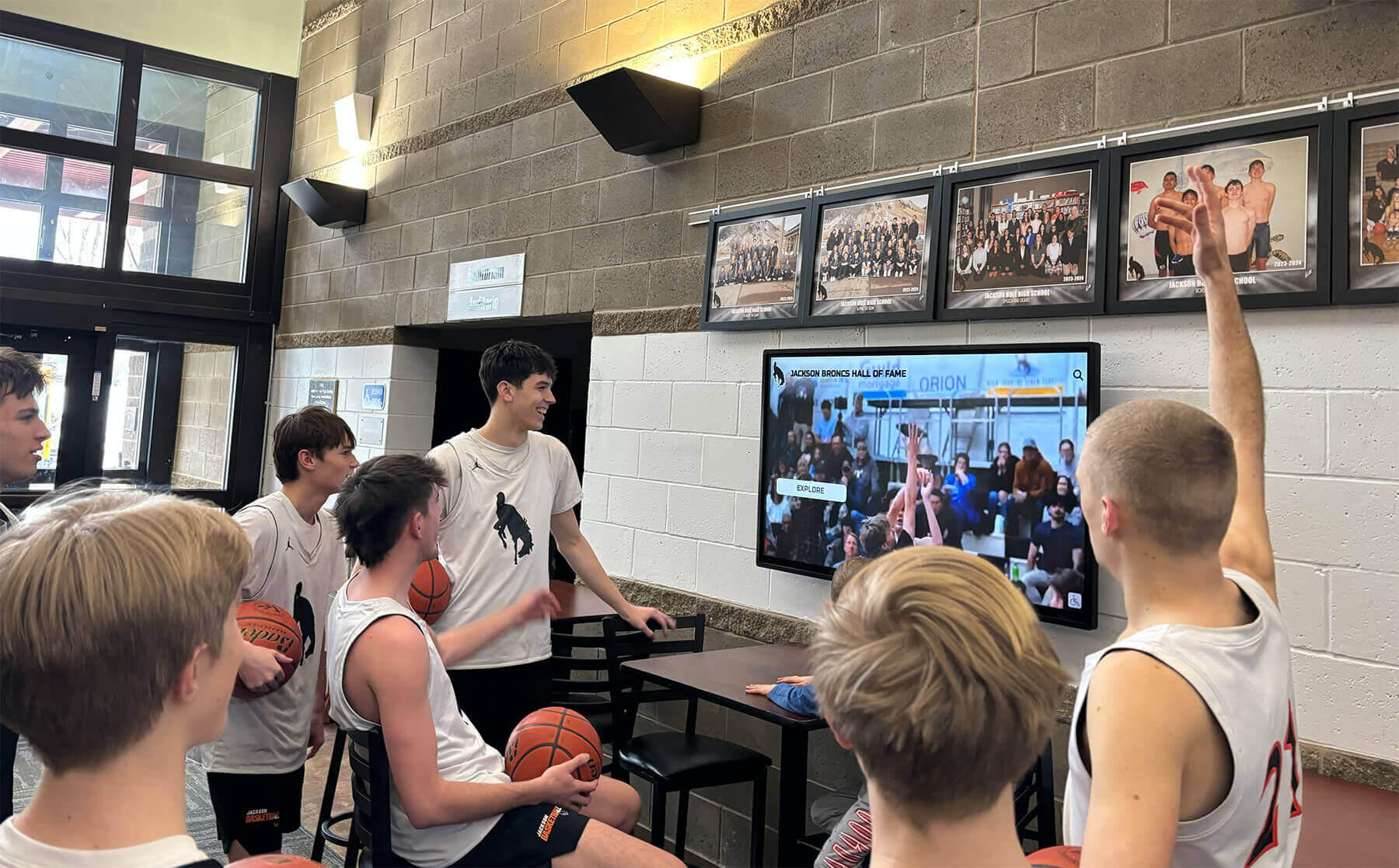
Lobby recognition screens serve date-range queries with every page load — running the correlation verification query before deploying a BRIN index confirms whether the table's physical layout will actually speed up those queries or merely add write overhead without read benefit
BRIN Configuration for Athletic Award Recognition Tables
When verification confirms that a target column qualifies for BRIN, the policy should specify the index creation command and the primary configuration parameter — pages_per_range — calibrated to the table’s characteristics.
CREATE INDEX CONCURRENTLY idx_awards_brin_award_date
ON athletic_awards
USING BRIN (award_date)
WITH (pages_per_range = 64);
The CONCURRENTLY option allows index creation on a live table without blocking concurrent reads or writes — essential for recognition databases that serve lobby displays around the clock.
Choosing pages_per_range:
The default value of 128 pages per range works well for large tables with relatively uniform data distribution across seasons. For athletic award databases where each season’s records are dense — many awards per sport per season — a smaller pages_per_range value (32 or 64) creates more granular range summaries that skip more pages per query. For databases where seasons are sparse (few awards per season, many seasons in the archive), the default or a larger value (256) may produce better results by keeping the index small enough to fit in the database’s shared buffer pool entirely.
Recommended pages_per_range by table profile:
| Award Table Profile | Recommended pages_per_range | Rationale |
|---|---|---|
| Large multi-sport archive, dense seasonal records | 32–64 | Granular ranges skip more pages per date-range query |
| Single-sport archive, moderate annual volume | 64–128 | Default range sufficient; avoids unnecessary index size |
| Sparse historical archive covering many decades | 128–256 | Fewer ranges keeps index compact; data density is low |
| Hall of fame cohort table, one batch per year | 32 | Annual batches are small; tight ranges maximize page skipping |
For programs that also maintain donor recognition records alongside athletic awards — where the same database infrastructure serves donor-wall display queries with similar date-range patterns — donor recognition wall planning and display administration describes the operational patterns that may allow a shared BRIN policy across multiple recognition record types within the same database.
See How Purpose-Built Recognition Platforms Handle Database Performance
Rocket Alumni Solutions provides athletic directors and school IT teams with a cloud-based recognition platform where database index management, query performance, and display freshness are handled at the platform level — so recognition displays stay responsive during peak import seasons without requiring per-table index tuning. Request a demo to see the platform in action.
Request a DemoWhat BRIN Cannot Do for Athletic Recognition Databases
A complete athletic awards database BRIN index policy must document the no-fit scenarios with the same precision as the fit scenarios. BRIN is frequently proposed as a default index choice for “large tables with date columns” — a heuristic that produces poor results in athletic recognition databases when the underlying table characteristics do not match.
BRIN cannot accelerate point lookups by athlete identity. When a recognition display shows a single athlete’s award history — filtering by athlete_id or athlete_name rather than by award_date — BRIN provides no benefit. The query must still scan all page ranges whose date ranges include any of the athlete’s awards, which is typically the entire table. A B-tree index on athlete_id is the correct choice for this access pattern, and the BRIN policy should document which query types require B-tree alternatives.
BRIN cannot compensate for low physical correlation. If the pg_stats correlation check returns a value below 0.5 for the target column, creating a BRIN index on that column adds write overhead (the index must be updated for each new row) without meaningful read benefit. In this scenario, a partial B-tree index scoped to recent seasons — or a composite index on (sport_id, award_date) — is more appropriate than BRIN.
BRIN cannot maintain effectiveness through table rewrites. Running VACUUM FULL or CLUSTER on the award table re-writes all rows in a new physical order. If the cluster key is athlete_id, the physical order of award_date values is now random — and the BRIN index that was effective before the operation becomes nearly useless. The policy must include a post-CLUSTER verification step using the correlation check query, with a rebuild procedure that recreates a BRIN index only if the correlation of award_date still exceeds the policy threshold after the rewrite.
BRIN cannot replace a covering index for display-critical queries. Touchscreen recognition displays that retrieve specific award fields for a specific season — SELECT sport, award_title, recipient_name FROM athletic_awards WHERE award_date BETWEEN ... — benefit from a covering index that includes the projected columns. BRIN can narrow the page range scan, but it cannot satisfy a covering-index scan that avoids table heap access entirely. For display-critical query paths where heap access latency is measurable, a partial covering B-tree index on recent seasons may outperform BRIN despite its larger storage footprint.
For hall of fame programs planning annual induction ceremonies — where the display must show newly inducted records on the day of the ceremony with no perceptible delay — hall of fame induction ceremony planning and digital display preparation describes the operational timeline in which index performance directly determines whether newly approved records appear on the lobby touchscreen before guests arrive.

Touchscreen hall of fame displays make hundreds of date-filtered database queries each day — the BRIN index policy specifies which tables and columns meet the physical-order precondition that makes compact block-range indexes more efficient than B-tree alternatives for time-ordered award record lookups
Integrating BRIN Policy with Broader Index Governance
An athletic awards database BRIN index policy functions as one layer within a broader index governance framework. It answers the question “which columns on which tables can use BRIN?” — but it depends on and informs several adjacent governance decisions that recognition programs typically manage in parallel.
Relationship to query plan regression monitoring. After a BRIN index is created or rebuilt, the query plan for date-range queries on the indexed table changes. Query plan regression monitoring should include a post-BRIN baseline — capturing the expected plan, execution time, and buffer hit count — so that future schema changes, statistics drift, or pages_per_range misconfiguration can be detected through plan comparison rather than user-reported display slowness. A plan that shifts from Bitmap Index Scan back to Seq Scan after an import event is a regression signal that requires a ANALYZE run to refresh statistics before the planner recovers the BRIN-based plan.
Relationship to data import scheduling. High-volume seasonal imports temporarily reduce the BRIN index’s effectiveness for the imported rows until AUTOVACUUM runs ANALYZE and updates pg_stats. The policy should specify that ANALYZE is run explicitly after each large import to ensure the query planner’s statistics reflect the newly appended rows before the next display query cycle. This is especially important for end-of-season batch imports, where display traffic typically spikes as coaches and families check newly published award results.
For programs that integrate athlete recognition records with annual student achievement archives — where the class officer recognition cycle and athletic award cycle share the same database append pattern — digital showcase for high school class officers and student recognition records describes the shared database patterns that make a unified BRIN policy applicable across multiple recognition record types within the same infrastructure.
Relationship to the read-replica lag policy. BRIN indexes created on the primary database are replicated to standby servers as part of normal WAL streaming. The BRIN index does not need to be created separately on each replica. However, if pages_per_range is changed through an index rebuild, the rebuild operation generates WAL records that apply the rebuild on the standby — which can temporarily increase replication lag during the rebuild window. The policy should schedule BRIN index rebuilds during the same low-traffic windows used for other index maintenance operations, and coordinate with the read-replica lag policy’s alert thresholds to ensure the rebuild does not trigger a false lag alert.
Annual BRIN policy review. Correlation degrades over time as corrections, retroactive historical record entries, and schema migrations add rows outside the normal chronological append sequence. The policy should mandate an annual review — run after each fiscal year’s records are finalized and before the next season’s imports begin — using the correlation check query to confirm that all BRIN-indexed columns still meet the correlation threshold. Columns that have fallen below the threshold should have their BRIN indexes dropped and replaced with an appropriate index type before the next high-volume import window opens.
For recognition programs that also manage graduation ceremony program archives alongside athletic award records — where commencement records are entered annually in the same append pattern as athletic season awards — graduation program design and digital commencement archive management describes the annual append pattern that meets BRIN’s physical-order precondition in the academic recognition context, making the policy review criteria directly transferable.
For school programs that use interactive digital signage to display recognition content across multiple departments — where the same database infrastructure powers athletic, academic, and community recognition displays — how digital signage for schools transforms recognition and communication covers the multi-channel display environment in which BRIN index policy decisions affect query performance across all connected recognition channels simultaneously.

Every athlete portrait and seasonal award record shown on a touchscreen display comes from a table that may qualify for BRIN indexing — the annual policy review confirms whether each table's physical order has been preserved through seasonal imports, corrections, and maintenance operations
Frequently Asked Questions
What is a BRIN index and why does it matter for athletic award databases?
A BRIN (Block Range INdex) is a PostgreSQL index type that stores the minimum and maximum value of a column for ranges of consecutive disk pages, rather than storing a pointer for every individual row. For athletic award databases where records are inserted in chronological order — season by season, induction year by induction year — the physical order of rows on disk closely matches the order of the indexed date column. BRIN exploits this alignment to skip entire page ranges that cannot contain rows matching a date-range query, using a fraction of the storage a B-tree index would require. The result is faster date-range queries and smaller index maintenance overhead for append-heavy recognition tables that grow by one or two seasonal batches per year.
How do I verify whether a BRIN index is appropriate for my award records table?
Run a correlation check against PostgreSQL's pg_stats catalog: SELECT attname, correlation FROM pg_stats WHERE tablename = 'athletic_awards' AND attname = 'award_date'. A correlation value above 0.85 indicates the column's values align with the physical row order closely enough for BRIN to be effective. Below 0.5, BRIN provides little benefit. After creating a test BRIN index with CREATE INDEX CONCURRENTLY, run EXPLAIN (ANALYZE, BUFFERS) on a representative date-range query and confirm the plan shows a Bitmap Index Scan on the BRIN index — not a sequential scan, which signals the planner has rejected the index as unhelpful for this table's data distribution.
Does BRIN work for querying athletic awards by athlete name or sport category?
No. BRIN indexes only benefit queries that filter on the indexed column using range predicates — date ranges, year ranges, or similar sequential conditions. When a recognition display queries by athlete name, athlete ID, or sport category without a date filter, BRIN provides no page-skipping benefit because those columns are not physically ordered in the same way as a chronologically appended date column. Queries filtered by athlete identity require a B-tree index on the athlete identifier column. A composite index on (sport_id, award_date) is more appropriate than a BRIN-only approach for queries that combine a sport filter with a date range, because it handles both the categorical and temporal dimensions of the filter simultaneously.
What happens to a BRIN index after a historical records migration?
If historical records are migrated in chronological date order, the BRIN index on the date column will remain effective — the physical row order preserved by the migration matches the column order the BRIN range summaries depend on. If records are migrated in a non-date order such as athlete name, sport, or legacy ID, the physical row order is scrambled relative to the date column, and the BRIN index will perform similarly to a sequential scan. Run the pg_stats correlation check after any bulk migration to verify that the physical order has been preserved. If correlation has dropped below the policy threshold, drop the BRIN index and re-import in date order before rebuilding, or replace the BRIN index with a B-tree index for the date column on that table.
How often should an athletic awards database BRIN index policy be reviewed?
At minimum, annually — after each fiscal year's records are finalized and before the next season's imports begin. The review should run the pg_stats correlation check on all BRIN-indexed columns to confirm that corrections, retroactive entries, and maintenance operations have not degraded physical ordering below the policy's correlation threshold. BRIN indexes should also be reviewed after any CLUSTER, VACUUM FULL, or large-scale historical import operation that could alter the physical row order of the indexed table. Any column whose correlation falls below the threshold should have its BRIN index replaced with a B-tree index before the next high-volume import window, so that display queries remain performant during the seasonal import period when query load on recognition tables peaks.
Conclusion: A Policy Built for the Append-Heavy Athletic Award Archive
An athletic awards database BRIN index policy is a narrow, precise governance document: it specifies exactly which table-column combinations qualify for BRIN indexing, how to verify that qualification before deployment, and when to use a different index type instead. Its value is not universal — BRIN is not the right index for every column in an athletic award database. But for the core append pattern that defines how most school recognition programs write award records — seasonally, in chronological order, with rare updates after initial entry — BRIN delivers a measurably smaller index footprint and competitive read performance on date-range queries, without the storage cost that makes large B-tree indexes a routine maintenance concern on high-volume recognition archives.
Programs that document this policy clearly, run the correlation verification queries before each BRIN deployment, and schedule annual reviews after major import seasons will maintain indexes that serve recognition displays efficiently across the full lifecycle of the award archive — from the first season’s records to decade-old historical migrations.
For programs evaluating how their hall of fame displays maintain data accessibility standards alongside indexing performance — where the display layer’s responsiveness depends on the database’s ability to serve time-range queries with consistent latency — digital hall of fame accessibility audit and status message verification describes the display requirements that depend on consistent, low-latency database query responses from the tables a BRIN policy governs.
See Athletic Recognition Data Delivered With Consistent Performance
Rocket Alumni Solutions provides school athletic directors and IT teams with a cloud-based recognition platform that manages database performance, index maintenance, and display query responsiveness at the platform level — so recognition displays serve accurate, up-to-date award records throughout every import season without requiring per-table index tuning. Request a demo to see how the platform keeps recognition data current and accessible.
Request a Demo