



Intent: research — an athletic awards database deadlock retry policy defines exactly how a school’s recognition system should respond when two or more concurrent batch import operations lock each other out, preventing any of them from completing. Without a documented retry policy, a deadlocked import either silently fails — leaving award records partially written and recognition displays out of sync — or retries without limit, compounding the original contention problem.
This guide is written for school administrators, athletic directors, IT and database administrators, facilities coordinators, and recognition-program owners who manage batch imports of roster data, season results, and award assignments into school recognition systems. It covers the deadlock problem in plain terms, the safe retry rule, transaction boundary requirements, exponential backoff configuration, idempotency requirements, failure logging standards, and a complete runbook checklist for reliable batch import operations.
When a school runs end-of-season award processing — importing roster changes, season records, and award assignments for multiple sports at once — those concurrent operations compete for the same database rows. A varsity football roster import may lock athlete profile rows at the same moment a coach submits award assignments that need to read those same rows. Neither transaction can proceed. Neither can release its lock without completing. The result is a database deadlock: both operations stall, the database detects the cycle, and it terminates one transaction to break the impasse.
The terminated transaction fails. If the recognition system has no documented response — no retry logic, no failure log, no idempotent design — the award records from that transaction are never written, and the display shows incomplete data until someone notices manually. An athletic awards database deadlock retry policy prevents that outcome by defining the system’s response in advance, at the policy level, before any import begins.

Every award record visible in a school hallway display was written by a transaction — a deadlock retry policy ensures that when competing transactions collide, the resolution is automatic, logged, and complete
What Is a Database Deadlock in an Athletic Awards Context?
A database deadlock occurs when two or more transactions each hold a lock on a resource the other needs, and neither can proceed without the other releasing its lock first. The database detects the cycle — “Transaction A is waiting for Transaction B; Transaction B is waiting for Transaction A” — and resolves it by terminating one transaction (the “deadlock victim”) so the other can complete.
In a school athletic awards system, deadlocks are most likely to occur during concurrent batch import operations: multiple processes writing to overlapping tables at the same time. Three scenarios generate the most deadlock risk:
Scenario 1 — Roster and award imports running simultaneously. A roster update transaction locks athlete profile rows for update at the same moment an award assignment import reads those rows to validate athlete eligibility. Neither can complete: the roster transaction is blocked waiting for its write to commit; the award transaction is blocked waiting for the roster read to release.
Scenario 2 — Multi-sport award batches with shared reference tables. When award imports for football and volleyball both run at the same time and both need to insert into a shared seasons or sport_categories reference table, they can lock each other on that shared resource even if the actual award rows are entirely separate.
Scenario 3 — Season configuration updates during active imports. If an administrator updates season boundary records (start dates, end dates, sport assignments) while an automated award import is reading those records to validate season membership, the update and the read can deadlock on the configuration table.
According to PostgreSQL’s documentation on lock management, deadlocks involving multiple table updates are most common when operations acquire locks in inconsistent order — a principle that informs transaction design in any relational database. The policy-level response is to detect deadlocks automatically, retry the failed transaction with controlled timing, and log every failure regardless of whether the retry succeeds.
For programs building their recognition data governance framework, the search governance and testing practices documented in digital hall of fame governance testing guides provide a parallel framework for validating that the data delivered to public-facing displays is complete and accurate — which depends on imports completing reliably in the first place.
The Safe Retry Rule
The safe retry rule for athletic awards database deadlock handling is: retry automatically up to three times, on deadlock error codes only, with the full transaction re-executed from the beginning, with increasing wait intervals between attempts.
Every component of that rule matters. Breaking any part of it produces either unsafe retries (too many, wrong errors, partial re-execution) or no retries at all.
Retry automatically. Manual retry workflows for batch imports fail in practice because the deadlock failure may not surface to a staff member immediately. If the import runs on a scheduled task outside business hours and there is no automatic retry, the failure sits until the next monitoring check — potentially hours later.
Up to three times. Three attempts is the industry-standard default for transient database errors in operational systems. After three failures, the error is no longer transient — it signals a structural problem (persistent lock contention, a configuration error, or a resource constraint) that automatic retries will not resolve. The fourth “attempt” should be a manual escalation, not a fourth automatic retry. The PostgreSQL JDBC driver documentation and Microsoft SQL Server retry guidance both recommend 3-5 retries as the ceiling for deadlock-specific retry logic.
On deadlock error codes only. Retry logic must be scoped to deadlock-specific error signals — for example, SQLSTATE 40P01 in PostgreSQL, error 1213 in MySQL, or error 1205 in SQL Server. Retrying on general errors (network timeouts, constraint violations, null values) produces incorrect behavior: a constraint violation will fail on every retry and the retry loop will exhaust all attempts before surfacing a meaningful error message.
Full transaction re-executed from the beginning. Retrying a partial transaction — re-running only the rows that were not written before the deadlock — is dangerous. It assumes the partial write state is known and stable, which is not guaranteed after a deadlock victim termination. Always ROLLBACK and re-execute the full transaction from the opening statement.
With increasing wait intervals. Retrying immediately after a deadlock without any delay increases the probability of encountering the same lock contention again. Staggered wait intervals give competing transactions time to complete before the retry begins. The wait strategy for those intervals is covered in the backoff section below.
Transaction Boundaries for Batch Imports
Correct transaction boundary design reduces deadlock frequency before retry logic is ever needed. The most common transaction boundary error in athletic awards batch imports is making a single transaction too large — wrapping a full end-of-season import (roster updates, season records, and award assignments for all sports) into one atomic operation.
Large transactions hold locks longer, increasing the window during which another transaction can attempt to access the same rows. They also make retry logic expensive: when a large transaction deadlocks and must be retried, all its work must be repeated.
Recommended transaction boundaries for athletic awards batch imports:
| Import Type | Recommended Transaction Scope | Rationale |
|---|---|---|
| Athlete roster update | One transaction per sport per season | Limits lock scope to one sport’s athlete rows |
| Season configuration | One transaction per season record | Configuration rows are shared; narrow scope reduces contention with concurrent award imports |
| Award assignment batch | One transaction per award category per sport | Prevents a multi-sport award batch from holding cross-sport locks |
| Hall of fame induction batch | One transaction per induction cohort | Induction records are independent; batching by cohort preserves atomicity without over-locking |
| Records board update | One transaction per record category | Records board rows are frequently read by display queries; narrow write transactions reduce read-write contention |
The principle is smallest-correct-unit atomicity: make each transaction as small as possible while still ensuring that the data it writes is internally consistent. A roster import for one sport is one correct unit — either all athletes in that sport are updated together or none are. Mixing two sports into one transaction is not required for consistency and increases deadlock risk.
For programs operating recognition displays that must reflect current-season data — including the kind of interactive recognition displays in schools that athletes and families check in real time — transaction boundary correctness determines whether the display shows a complete picture or a half-written batch.
Exponential Backoff Configuration
Exponential backoff is the practice of increasing the wait time between retry attempts by a factor (typically doubling) with each attempt, plus a small random offset called jitter. Jitter prevents multiple simultaneous retries from all pausing for the exact same duration and then all retrying at the same instant — which would recreate the original contention.
Standard formula:
wait_ms = base_delay_ms * (2 ^ attempt_number) + random_jitter_ms
Where:
base_delay_msis the initial wait before the first retry (recommended: 100–200ms for database operations)attempt_numberstarts at 0 for the first retry, increments by 1 for each subsequent retryrandom_jitter_msis a random value between 0 andbase_delay_ms
Example backoff schedule for a three-retry policy with 150ms base delay and up to 150ms jitter:
| Attempt | Formula | Wait Range |
|---|---|---|
| Retry 1 | 150 * (2^0) + 0–150ms | 150–300ms |
| Retry 2 | 150 * (2^1) + 0–150ms | 300–450ms |
| Retry 3 | 150 * (2^2) + 0–150ms | 600–750ms |
| After 3 failures | Escalate to manual review | — |
Maximum cap. Apply a maximum wait ceiling — typically 2,000–5,000ms for school award system operations — so that a misconfigured retry loop does not pause imports indefinitely. If the calculated wait exceeds the cap, use the cap value.
What not to do. Fixed-interval retries (retrying every 500ms regardless of attempt number) do not reduce contention under sustained load. Zero-delay retries (“retry immediately”) almost always recreate the deadlock. Retry-forever loops without an attempt counter will stall an import process for hours during heavy concurrent load.

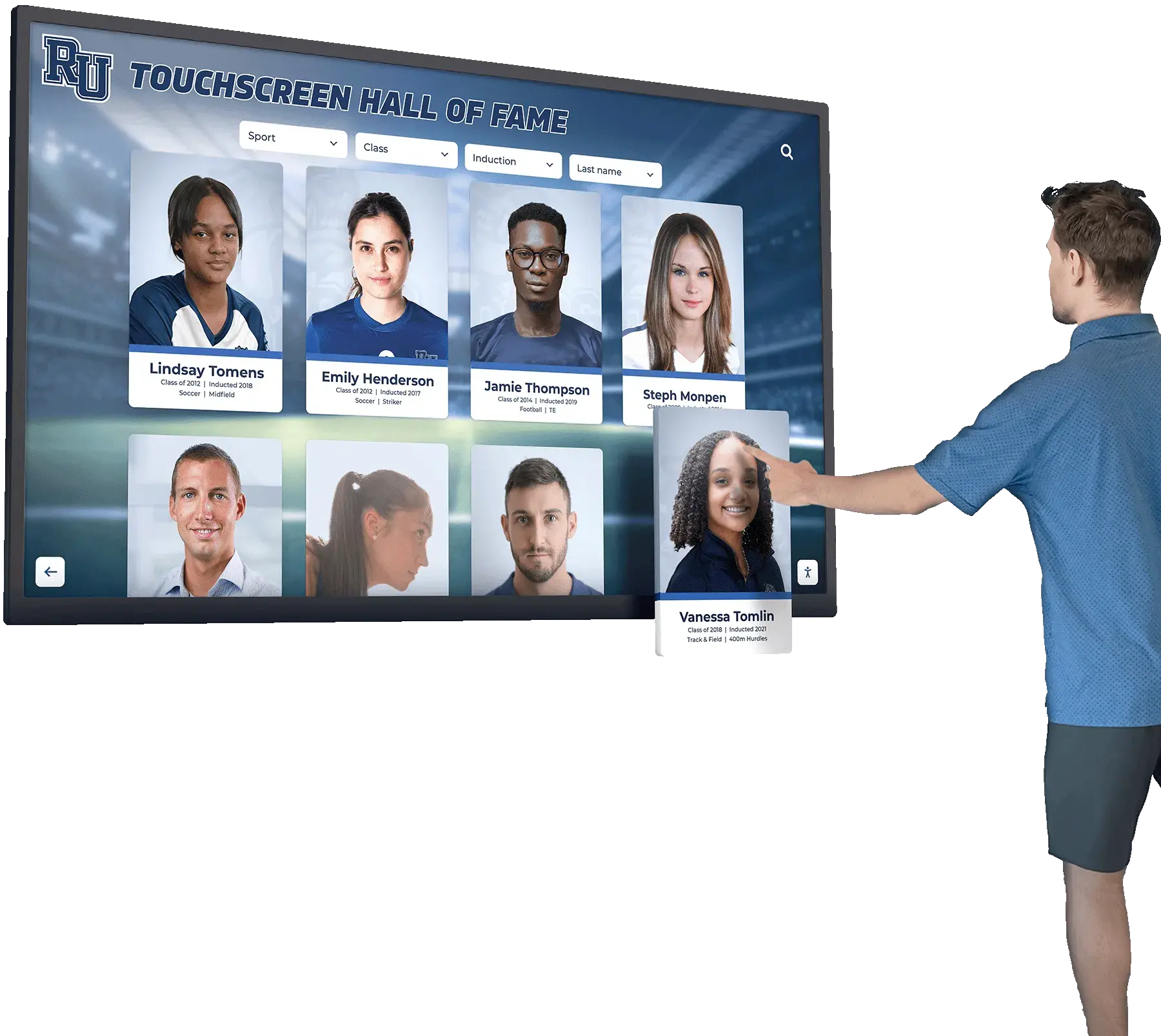
Athlete award records displayed on a touchscreen hall of fame are only as reliable as the import process that wrote them — exponential backoff ensures deadlocked imports retry with decreasing contention risk on each attempt
Idempotency Requirements for Batch Imports
Idempotency means that running an import operation multiple times produces the same result as running it once. An idempotent batch import can be retried safely after a deadlock failure because re-running the full transaction does not create duplicate records, double-count awards, or overwrite previously correct data.
An import that is not idempotent cannot be safely retried. If a non-idempotent roster import fails mid-batch after writing 40 of 80 athlete records, retrying the full transaction from the beginning will attempt to re-insert the 40 already-written records — producing duplicate rows, primary key conflicts, or application-layer errors that mask the original deadlock problem.
Three patterns that produce idempotent batch imports:
Pattern 1 — UPSERT (INSERT OR UPDATE). Instead of plain INSERT, use database-specific UPSERT syntax that inserts a new row if it does not exist and updates the existing row if it does. PostgreSQL uses INSERT ... ON CONFLICT DO UPDATE; MySQL uses INSERT ... ON DUPLICATE KEY UPDATE; SQL Server uses MERGE. The behavior on retry is deterministic: existing records are updated to the same value, new records are inserted once.
Pattern 2 — Deduplication keys. Define a natural uniqueness key for each import record type — for example, (athlete_id, sport_id, season_year, award_category) for award assignments — and enforce it as a database UNIQUE constraint. Combined with an UPSERT pattern, the deduplication key ensures each logical record exists exactly once regardless of how many times the import runs.
Pattern 3 — Import idempotency tokens. For external data sources (conference award feeds, state association results), assign each batch import a unique token based on the source and the reporting period. Before processing any row, check whether that token has already been fully imported. If yes, skip the batch. This approach is particularly useful for fall sports playoff recognition imports where the same result set may be submitted multiple times by external reporting systems during a busy playoff season.
For programs that also manage digital art galleries and school recognition systems as part of a broader digital display network, idempotent import design applies equally to any content system where multiple users or automated processes write to shared records.
Failure Logging Standards
A deadlock retry policy without failure logging is incomplete. Logging serves two functions: operational visibility (knowing that a deadlock occurred and whether retries resolved it) and pattern detection (identifying which imports deadlock repeatedly, which tables generate the most contention, and whether the frequency is increasing).
Minimum fields to log for each deadlock event:
| Log Field | Description | Example Value |
|---|---|---|
event_timestamp | UTC timestamp when the deadlock was detected | 2026-09-05T14:22:08Z |
transaction_id | The identifier of the deadlock victim transaction | txn_8a3f2c |
import_batch_id | The batch or job identifier for the failing import | batch_football_awards_2026 |
retry_attempt | Which attempt number triggered the log entry (0 = first failure, 1 = after first retry) | 2 |
error_code | Database-specific deadlock error code | SQLSTATE 40P01 |
affected_tables | Tables involved in the lock conflict | athlete_profiles, award_assignments |
competing_transaction | Identifier of the other transaction in the deadlock cycle, if reported by the database | txn_6d1e4a |
resolution | Whether this attempt succeeded or failed | failed / succeeded |
escalated | Whether the event was escalated to manual review after max retries | true / false |
Log retention. Retain deadlock logs for a minimum of 90 days for operational review, and export monthly summaries to long-term storage. Monthly summaries should include total deadlock count, deadlock-by-import-type breakdown, retry success rate, and escalation count.
Escalation trigger. When an import exhausts all three retries without success, the failure log entry should trigger an escalation notification — an email alert, a ticketing system entry, or a dashboard flag — to the responsible IT administrator or database owner. Escalated failures require manual investigation: the competing transaction pattern should be examined to determine whether transaction boundary redesign or scheduling changes would reduce future deadlock frequency.
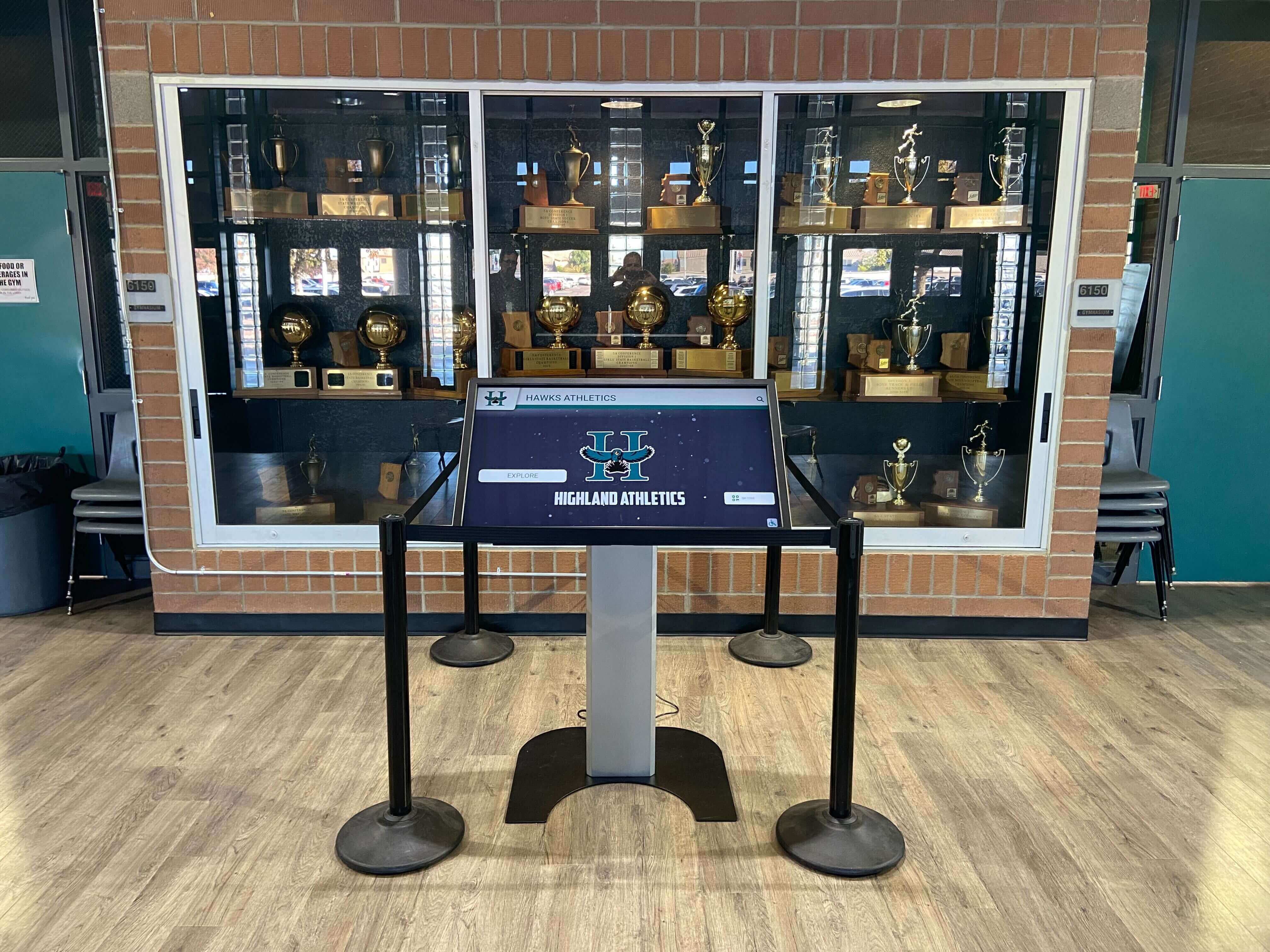
Recognition kiosks in trophy cases depend on reliable import pipelines — failure logging gives IT administrators the visibility to detect deadlock patterns before they affect display completeness
Scheduling Imports to Reduce Deadlock Frequency
Deadlock retry logic handles failures after they occur. Import scheduling reduces how often they occur in the first place by separating competing operations across time.
Scheduling principles for athletic awards batch imports:
Never run roster and award imports concurrently for the same sport. Roster imports lock athlete profile rows; award imports read those rows for validation. Sequencing them — roster first, award assignment second — eliminates the most common deadlock class.
Stagger multi-sport imports by 5–10 minutes. When end-of-season processing covers fifteen varsity sports, scheduling all fifteen imports to run simultaneously creates maximum lock contention on shared reference tables. Staggering by sport avoids simultaneous writes to shared configuration rows.
Schedule season configuration updates outside active import windows. Administrative changes to season boundaries, sport category definitions, or award type records should run before or after the import batch window, not during it.
Reserve overnight windows for large hall-of-fame batch imports. Hall-of-fame induction batches — which may involve linking athlete profiles, uploading media references, and creating induction records — are the largest single imports most programs run. Scheduling them overnight, when display-serving queries generate lower read traffic, reduces the read-write contention that contributes to deadlock frequency.
For programs managing the technical infrastructure behind recognition displays — including recognition display infrastructure and power delivery testing — import scheduling is part of the same infrastructure-reliability discipline that governs display uptime.
Batch Import Deadlock Retry Runbook Checklist
This checklist operationalizes the policy components above into a structured pre-import, during-import, and post-import verification sequence. Use it before any scheduled batch import that writes to athlete profiles, award assignments, season records, or hall of fame tables.
Pre-Import Checklist
- Confirm no competing imports are currently running against the same sport or award category
- Verify season configuration tables were last updated more than 10 minutes ago (to clear any pending locks)
- Confirm the import batch has a unique batch identifier assigned
- Verify the import script uses UPSERT syntax (not plain INSERT) for all target tables
- Confirm the deduplication key constraint is present on each target table
- Set retry counter to 0 and confirm max retry limit is configured to 3
- Confirm the failure log destination is writable and has sufficient storage
- Confirm the escalation notification target (email or ticketing) is current
During-Import Checklist
- Log the batch start event: batch ID, import type, sport, season, record count estimate
- Monitor for deadlock error codes (not just generic failure signals)
- On deadlock detection: log the event immediately, increment retry counter
- Apply the correct backoff wait before the next attempt (see backoff schedule above)
- Re-execute the full transaction from the beginning — do not resume from the point of failure
- After each retry attempt: log the attempt number and outcome
- If retry count reaches 3 without success: log escalation flag, send escalation notification, halt import
Post-Import Verification Checklist
- Confirm record count in the target table matches expected import count
- Spot-check 3–5 individual records against the source file for field accuracy
- Confirm no orphaned records exist (award assignments without valid athlete profile references)
- Review the failure log for any deadlock events that resolved via retry — document in the session log
- Confirm any escalated failures are assigned to a named IT staff member for root-cause review
- Verify the updated records are visible on the digital recognition display within the expected publication window
For programs that have invested in touch-optimized recognition display systems that athletes and families interact with directly, post-import verification is the last checkpoint before the public sees the result.
Connecting Deadlock Policy to Display Reliability
Database deadlock management is a back-end concern, but its effects are entirely visible to the people who use recognition displays. A deadlocked and unresolved import produces the same result as a missing record: the display shows incomplete data, the records board is out of date, or a newly inducted hall-of-fame profile never appears.
Schools that adopt cloud-based recognition platforms — including the kind of interactive recognition systems used by Rocket Alumni Solutions — benefit from platform-layer import reliability built into the product rather than manually configured at the database level. The platform handles concurrent write management, retry behavior, and idempotency as part of the content management infrastructure, so athletic directors and coaches can submit award updates from anywhere without worrying about the transaction-layer mechanics underneath.
For programs evaluating Fenway-scale touchscreen recognition systems and the reliability standards those installations require, the underlying import reliability policy — however it is implemented — is a prerequisite for the public-facing display performing as expected at scale.
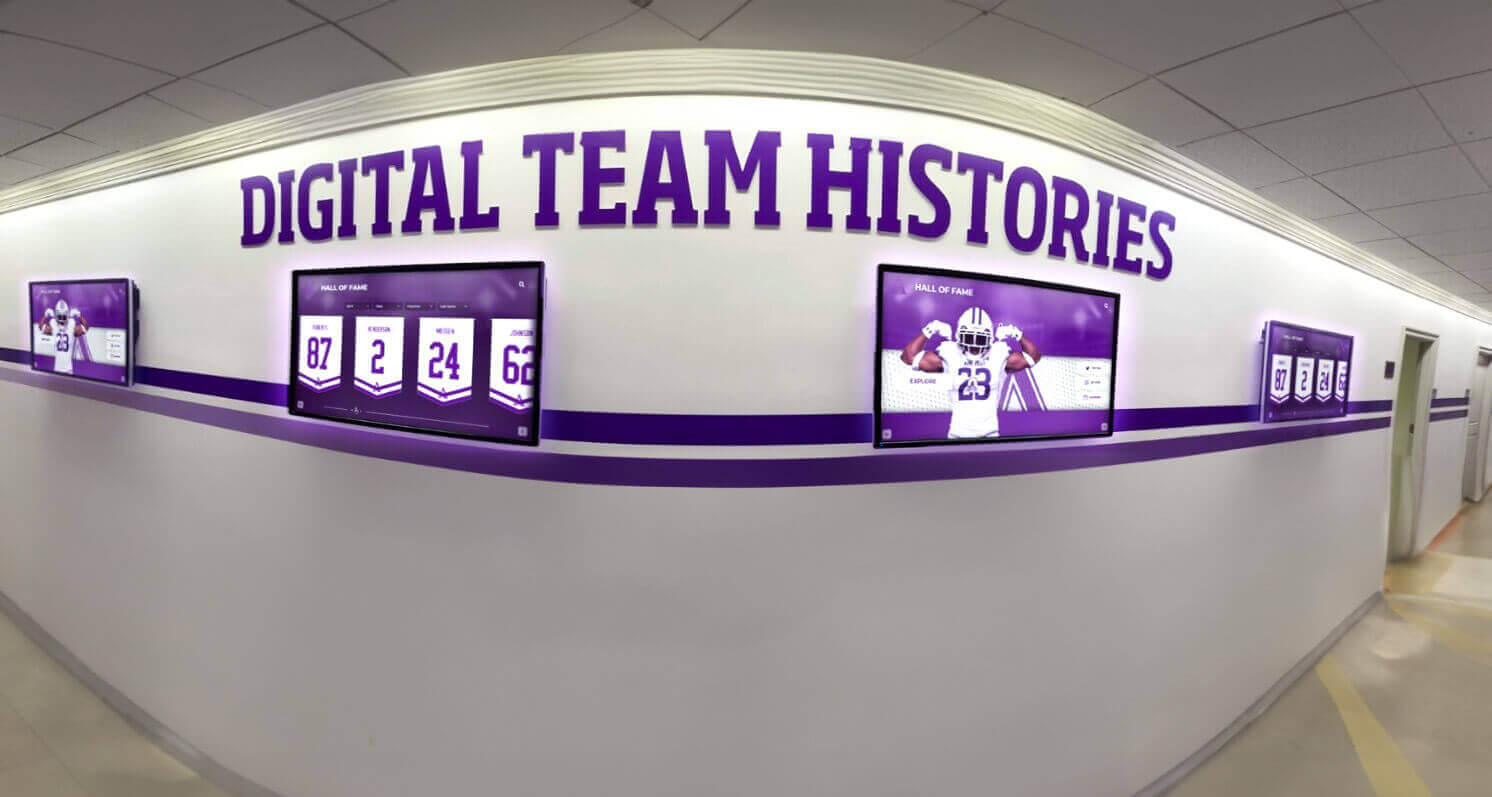
Team history displays depend on complete, accurate batch imports — a deadlock retry policy with idempotency, backoff, and failure logging ensures the records are written correctly even when concurrent imports compete for the same database resources
FAQ: Athletic Awards Database Deadlock Retry Policy
What causes deadlocks in athletic awards batch imports?
Deadlocks in athletic awards batch imports occur when two or more concurrent transactions each hold a lock on a database row or table that the other transaction needs to proceed. The most common causes are roster and award imports running simultaneously against the same athlete profile rows, multi-sport award batches writing to shared reference tables at the same time, and season configuration updates running during an active award import. The database detects the circular wait and terminates one transaction to break the cycle.
How many retries should an athletic awards batch import attempt before failing?
Three automatic retries is the standard policy for deadlock-specific retry logic in database operations, consistent with guidance in PostgreSQL JDBC and Microsoft SQL Server documentation. After three failed attempts, the failure is no longer transient — it indicates a structural contention problem that automatic retries will not resolve. The fourth step should be an escalation to manual review, not a fourth automatic retry. Each retry should include an exponential backoff wait to reduce the probability of re-encountering the same lock contention.
What is idempotent batch import in an athletic awards system?
An idempotent batch import produces the same result whether it runs once or multiple times. In an athletic awards database, idempotency is achieved through UPSERT syntax (INSERT with ON CONFLICT DO UPDATE in PostgreSQL, or equivalent), uniqueness constraints defined on natural deduplication keys such as athlete-sport-season-award combinations, and import idempotency tokens that prevent the same external result set from being processed twice. Idempotent imports can be retried safely after a deadlock failure without creating duplicate records or overwriting correctly-written data from an earlier attempt.
How do you log deadlock failures in a school awards database?
Each deadlock failure should be logged with the UTC timestamp, the failing transaction identifier, the import batch identifier, the retry attempt number, the database error code, the tables involved in the lock conflict, and whether the event resolved via retry or was escalated. Logs should be retained for at least 90 days for operational review. When an import exhausts all retries without success, the log entry should trigger an escalation notification to the responsible IT administrator. Monthly deadlock frequency summaries help identify which import types generate persistent contention.
Should roster, season, and award imports run as one transaction or separately?
They should run as separate transactions, and generally in sequence rather than concurrently. Combining roster updates, season configuration changes, and award assignments into a single large transaction extends the lock-holding window across all three table groups simultaneously, maximizing deadlock risk with any other concurrent operation. The recommended practice is smallest-correct-unit atomicity: one transaction per sport per season for roster updates, one transaction per season record for configuration changes, and one transaction per award category per sport for award assignments. Running roster imports before award imports for the same sport eliminates the most common deadlock class entirely.
Running end-of-season award imports reliably — across rosters, season records, and award assignments for every sport in the program — requires a policy that handles the unexpected. A documented athletic awards database deadlock retry policy turns what would otherwise be a silent data loss into a managed, logged, and escalated event with a clear resolution path.
Schools managing recognition programs of any scale benefit from platforms designed to handle these reliability challenges as part of their core infrastructure. Rocket Alumni Solutions builds import reliability, concurrent write management, and cloud-based content delivery into its recognition platform so that athletic directors and IT teams can focus on the records themselves — not the transaction-layer mechanics underneath.
Ready to see a recognition platform where import reliability is built in?
Request a Demo of Rocket Alumni Solutions and see how the platform handles award data management — from batch imports to public display — without manual database retry configuration.