



Intent: research — An athletic awards database GIN index policy defines which PostgreSQL Generalized Inverted Indexes should be created for full-text profile search, JSONB metadata containment queries, and array-based tag lookups across athlete records — and specifies the write-overhead tradeoffs, fastupdate settings, and pending-list limits that keep those indexes from becoming a maintenance liability as award archives grow. GIN indexes invert a column’s content: instead of mapping a row to its column value, they map each searchable token, tag, or JSON key to the set of rows that contain it. That inversion is what makes a full-text search across thousands of athlete biographies fast — and it is also what makes GIN’s write path more expensive than a B-tree index’s, which is why a written policy matters more than a best-guess index list.
This guide is written for school IT administrators, athletic directors, database administrators, and recognition-program data stewards who manage PostgreSQL-backed recognition platforms that power lobby touchscreens, hallway displays, and online athletic archives. It covers what GIN indexes are, a direct fit/no-fit answer for searchable athlete profiles, a decision table by column type and query pattern, SQL for building and verifying GIN indexes, fastupdate and gin_pending_list_limit configuration, write-overhead estimation, and a FAQ section addressing the questions school technology teams most commonly ask.
When a visitor steps up to a hall of fame touchscreen and types a partial athlete name, selects a sport tag, or searches for any inductee who earned a specific award category, the database behind the display needs to examine content inside text fields — not just match exact row values. Conventional B-tree indexes navigate sorted key values precisely; they cannot search within a biography, match any element in a tags array, or check whether a JSONB document contains a particular key-value pair. PostgreSQL’s Generalized Inverted Index (GIN) is the index type purpose-built for that content-aware searching, and an athletic awards database GIN index policy is the governance document that specifies exactly where GIN should be applied, how it should be configured, and when a different approach is more appropriate.

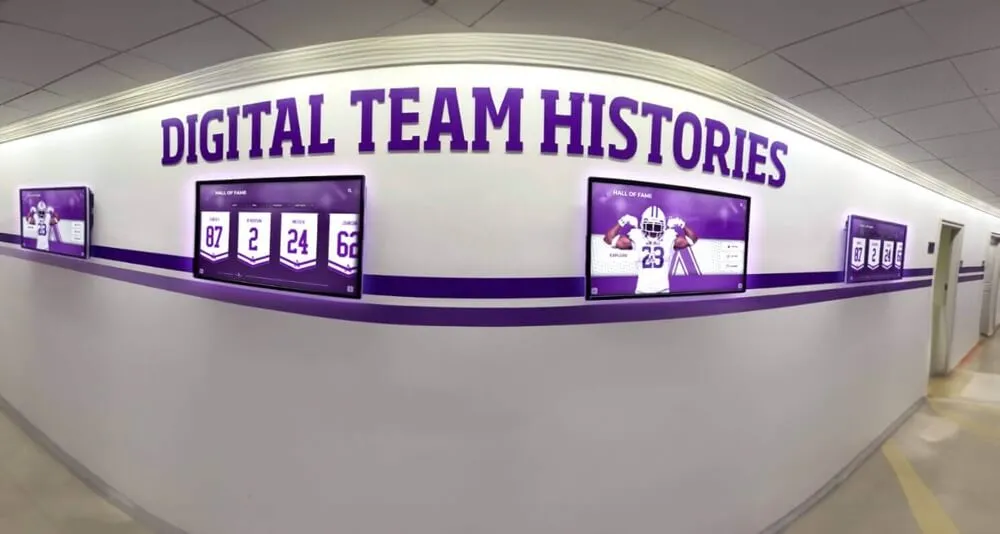
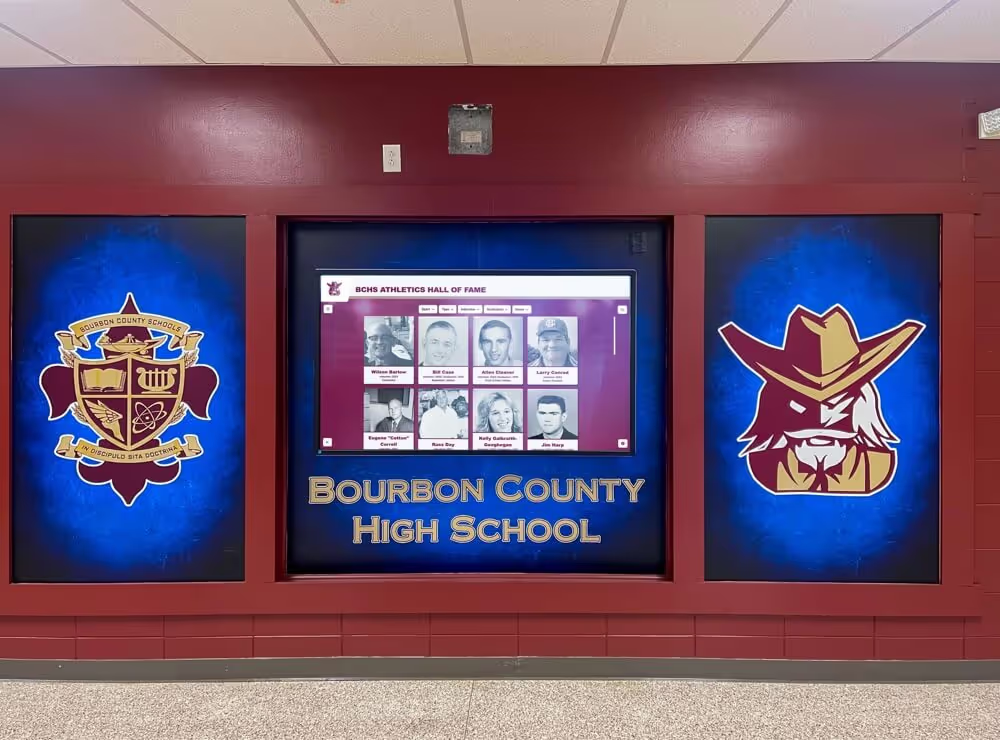
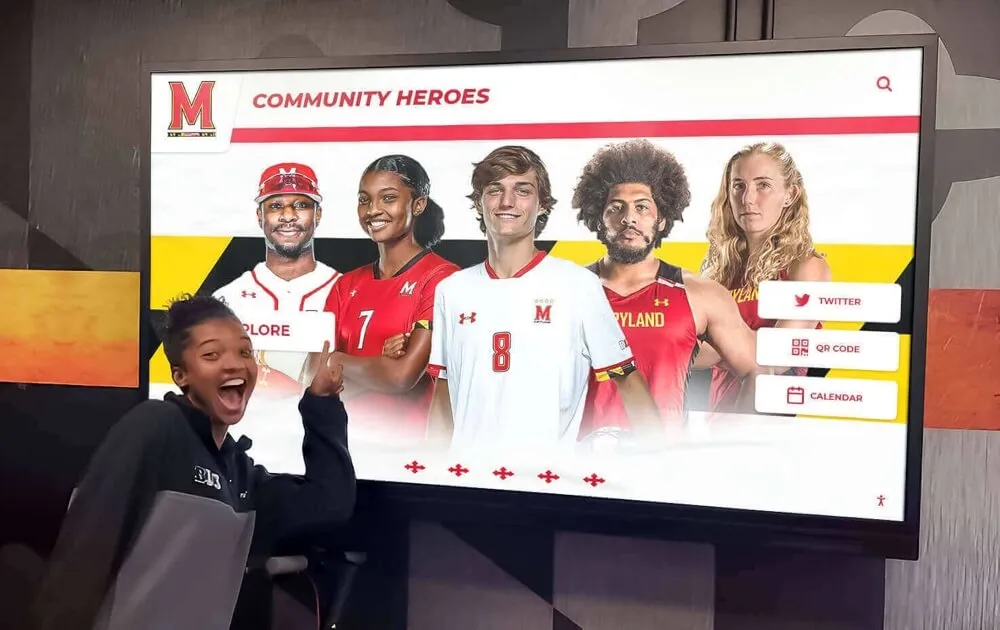
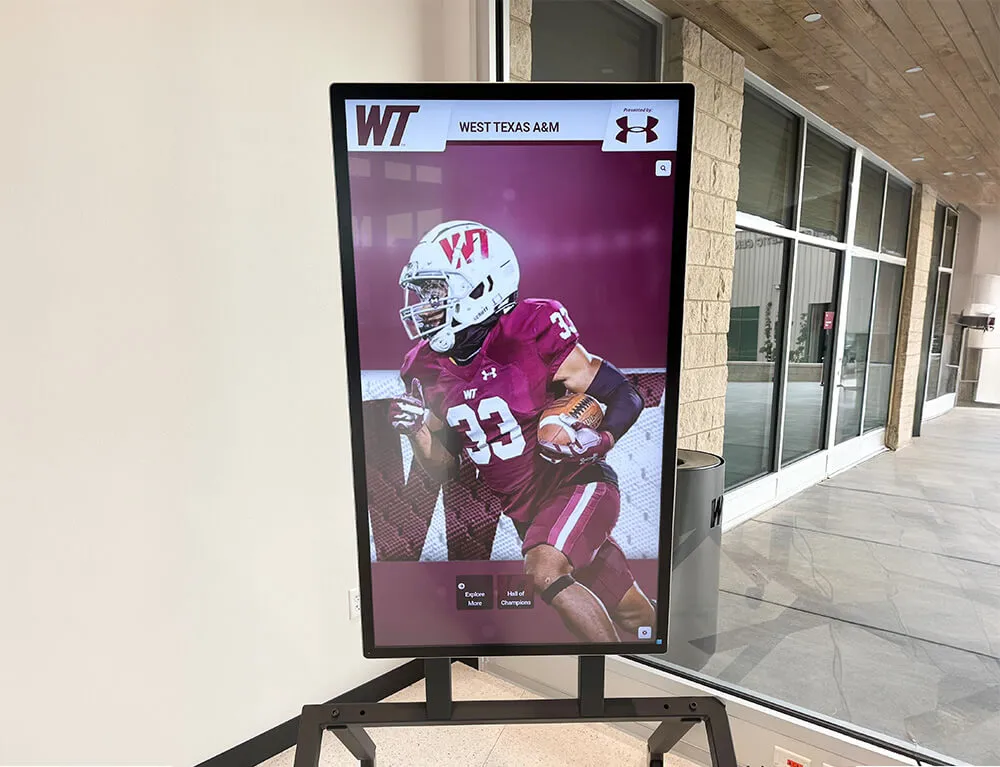
Profile search on a hall of fame touchscreen depends on the database's ability to scan inside text fields and match array tags quickly — GIN indexes provide that capability, and a written policy governs where they are applied and how they are maintained
What Is a GIN Index in an Athletic Awards Database?
A GIN (Generalized Inverted Index) is a PostgreSQL index type that maps individual tokens, keys, or values — extracted from a column — to the rows that contain them. Where a B-tree index on last_name maps each distinct last name to its rows, a GIN index on a tsvector biography column maps each lexeme (normalized word stem) to the rows whose biography text contains that word. Where a B-tree index on a JSONB column would sort by the entire document, a GIN index on a JSONB column maps each key-value pair to the rows that contain it.
For athletic awards databases, GIN indexes are relevant to three distinct column types:
| Column Type | PostgreSQL Data Type | GIN Operator Class | Profile Search Use Case |
|---|---|---|---|
| Full-text biography and citation text | tsvector (derived from text) | tsvector_ops (default) | Keyword search across career biographies and award citations |
| Tag and category arrays | text[], integer[] | Default array ops | Filter profiles by sport tags, award categories, or season labels |
| Flexible profile metadata | jsonb | jsonb_ops (full) or jsonb_path_ops (containment only) | Containment queries — e.g., metadata @> '{"sport":"basketball"}' |
| Trigram partial-match text | text | gin_trgm_ops (via pg_trgm extension) | Partial-match searches — finding “Henderson” when typed without exact case |
The key architectural distinction between GIN and B-tree is that GIN’s internal structure is optimized for the case where one row contributes many index entries — every word in a biography, every element of a tags array, every key in a JSONB document. B-tree is optimized for the case where each row contributes one index entry. Choosing GIN where a B-tree would suffice wastes storage and write capacity; choosing B-tree where GIN is needed forces full-table scans.
Does GIN Fit Searchable Athlete Profiles? A Direct Answer
Yes, for full-text biography search, JSONB containment queries, and array tag filtering on archives large enough that sequential scans are slow. No, for exact-value equality lookups on low-cardinality columns, for tables under 1,000 rows, and for frequently updated text columns without properly tuned fastupdate settings.
The practical threshold for GIN benefit in an athletic awards database is approximately 1,000 profiles for full-text search and 5,000 rows for JSONB containment queries, below which a sequential scan may be faster than GIN index overhead. According to the PostgreSQL documentation on GIN indexes, GIN delivers its largest relative benefit when queries are selective — returning fewer than 5–10% of rows — and when the indexed column’s token space is large (many distinct words, keys, or array elements).
For school athletic archives, this threshold is typically met within two to three years of records accumulation for full-text biography search. Programs maintaining a hall of fame archive with hundreds of inductees, each with a multi-paragraph career biography, will see measurable GIN benefit. Programs with a small single-season award database and no biography text will not.
The second critical variable is update frequency. GIN’s write path is more expensive than B-tree’s — each new or updated row must contribute potentially hundreds of new index entries. PostgreSQL addresses this with fastupdate, a GIN-specific optimization that buffers new entries in a pending list and flushes them to the main GIN structure in bulk rather than one row at a time. The policy must specify whether fastupdate is enabled or disabled for each GIN index, and what gin_pending_list_limit threshold triggers a flush, because the pending list itself adds read overhead during searches — reads must scan both the main GIN structure and the pending list until a flush occurs.
For recognition programs that manage athlete profiles with seasonal updates — new awards, corrected biographies, added media — the interactive kiosk implementation guide for schools and universities describes the seasonal content cycle that determines GIN update frequency and, by extension, the appropriate fastupdate configuration for each index.
Decision Table: GIN Fit by Column Type and Query Pattern
The following table provides a direct fit assessment for the column types and query patterns most commonly found in school athletic recognition databases. Apply it by checking the current state of the target table — not the intended future state.
| Column and Query Pattern | GIN Fit? | Recommended Configuration |
|---|---|---|
tsvector biography column, keyword search | Yes | CREATE INDEX ... USING GIN (bio_tsvector) with fastupdate = on |
text[] sports tags array, containment filter (@>) | Yes | Default GIN array ops; gin_pending_list_limit = 4MB |
jsonb profile metadata, containment query (@>) | Yes | jsonb_path_ops for containment-only; smaller index than jsonb_ops |
jsonb profile metadata, key-existence query (?) | Yes | jsonb_ops required; jsonb_path_ops does not support ? |
text athlete name, exact equality (=) | No | B-tree on (last_name, first_name) — GIN adds no benefit |
text athlete name, partial match (LIKE '%son%') | Yes | pg_trgm extension + gin_trgm_ops for trigram partial match |
integer sport category code, equality filter | No | B-tree; low-cardinality columns do not benefit from GIN |
tsvector, biography updated multiple times per day | Conditional | Set fastupdate = off or increase gin_pending_list_limit; test write latency |
| Table under 1,000 rows | No | Sequential scan with WHERE bio_text ILIKE '%query%' is sufficient |
| Full-text search across biography AND citation combined | Yes | Single GIN index on a computed tsvector column combining both fields |
| Multi-sport archive with evolving tag schema | Yes | GIN on sport_tags; rebuild with REINDEX CONCURRENTLY when schema expands |
The most common misconfiguration in school athletic databases is applying a GIN index to a low-cardinality text column used for exact equality lookups — such as sport_name or award_category. GIN indexes on such columns consume more storage than B-tree alternatives without improving query speed for equality predicates. The policy should specify that GIN is reserved for token-level or containment queries, and that equality-predicate columns use B-tree indexes regardless of table size.
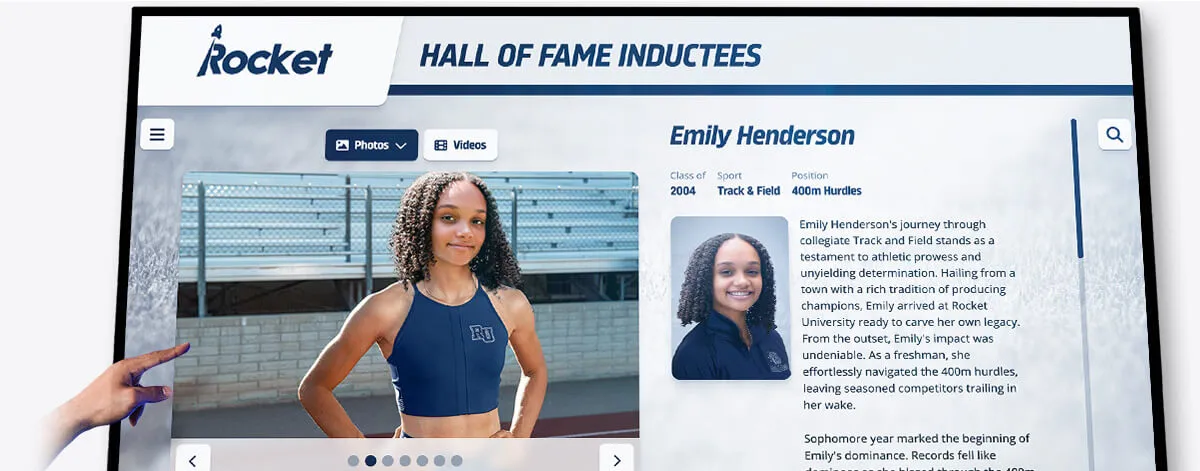
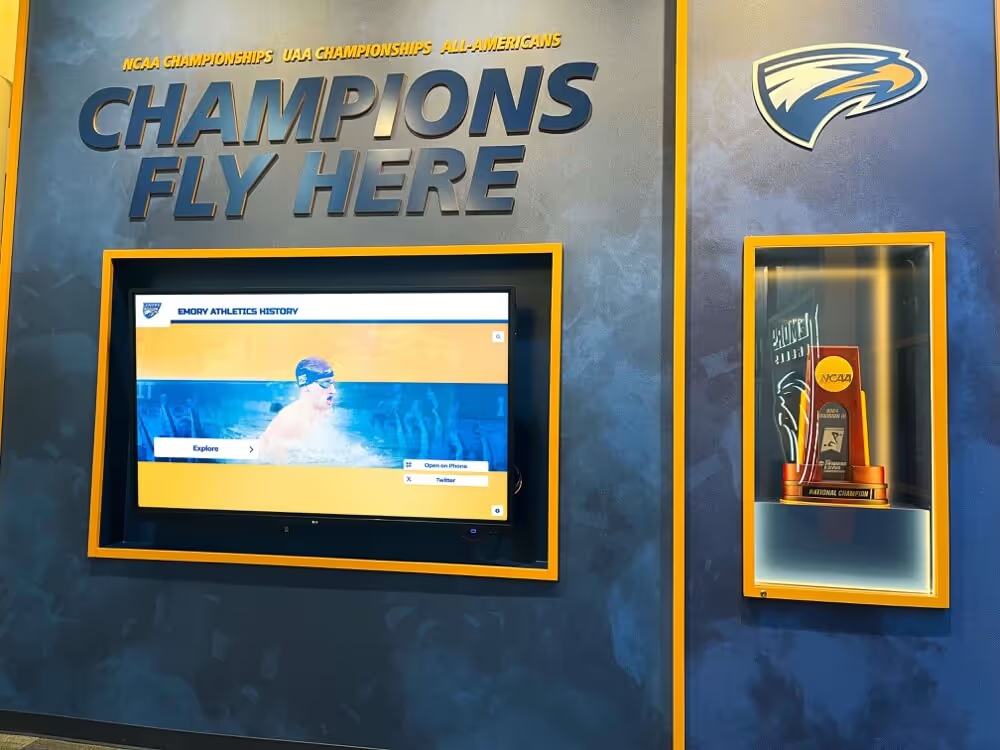
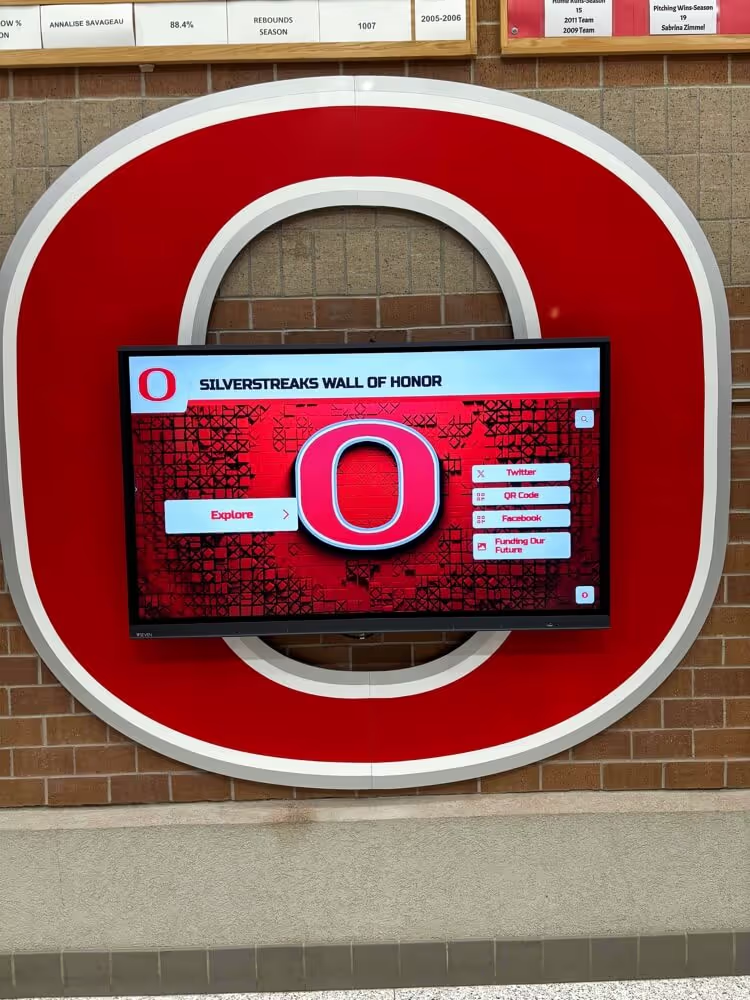
GIN indexes target the searchable content inside athlete profiles — career text, sport and event tags, and JSONB metadata — making keyword and tag searches fast even as the archive grows across hundreds of inductees and decades of records
Building GIN Indexes for Full-Text Athlete Profile Search
Full-text search in PostgreSQL requires converting raw biography text into a tsvector — a normalized, position-annotated list of lexemes — and indexing that vector with a GIN index. The recommended pattern for an athletic awards database is to store the tsvector in a generated column and keep it synchronized with the source text column automatically.
Step 1 — Add a Generated tsvector Column
ALTER TABLE inductees
ADD COLUMN bio_search tsvector
GENERATED ALWAYS AS (
  to_tsvector(
    'english',
    coalesce(biography, '') || ' ' || coalesce(award_citation, '')
  )
) STORED;
This expression combines the biography and award citation into a single searchable vector. The 'english' configuration applies English-language stemming and stop-word removal — “running” and “runner” both map to the lexeme “run”, so a search for either term finds profiles containing either word.
Step 2 — Create the GIN Index Concurrently
CREATE INDEX CONCURRENTLY idx_inductees_bio_search
ON inductees
USING GIN (bio_search)
WITH (fastupdate = on);
The CONCURRENTLY option allows index creation without blocking concurrent reads or writes on the table — essential for recognition databases that serve lobby displays during school hours.
Step 3 — Verify the Index Is Used
EXPLAIN (ANALYZE, BUFFERS)
SELECT id, last_name, first_name, sport, induction_year
FROM inductees
WHERE bio_search @@ to_tsquery('english', 'basketball & championship');
The query plan should show Bitmap Index Scan on idx_inductees_bio_search. If it shows Seq Scan on inductees instead, run ANALYZE inductees to refresh statistics and re-check. On tables under approximately 1,000 rows, the planner may correctly prefer a sequential scan over the GIN index — this is expected behavior, not a misconfiguration.
For programs building recognition systems that integrate athletic award histories with alumni networks — where profile search is a primary feature rather than a secondary lookup — alumni network software and profile management for school programs describes the search requirements that make full-text GIN indexing a necessary component of any production recognition database rather than an optional optimization.
GIN for JSONB Profile Metadata and Array Tags
Many athletic award databases store flexible per-profile metadata as JSONB: event specialties for track athletes, scholarship information, social recognition tags, or platform-specific fields that vary by sport or program. GIN indexes on JSONB columns enable containment queries that search for profiles containing a specific key-value pair without reading every row.
JSONB Containment Index
CREATE INDEX CONCURRENTLY idx_inductees_metadata
ON inductees
USING GIN (profile_metadata jsonb_path_ops)
WITH (fastupdate = on);
jsonb_path_ops creates a smaller index than the default jsonb_ops by hashing key paths rather than storing individual keys. It supports containment queries (@>) but not key-existence queries (?). For profile metadata queried exclusively through containment predicates — WHERE profile_metadata @> '{"sport":"swimming","event":"butterfly"}' — jsonb_path_ops is the correct choice and typically produces an index 30–50% smaller than jsonb_ops.
Array Tag Filter Index
CREATE INDEX CONCURRENTLY idx_inductees_sport_tags
ON inductees
USING GIN (sport_tags)
WITH (fastupdate = on);
This enables fast containment queries on array columns: WHERE sport_tags @> ARRAY['volleyball'] finds all profiles tagged as volleyball athletes. The GIN index stores each tag value as a separate index entry, so the query scans only the index entries for 'volleyball' rather than examining every row’s tag array.
For recognition programs that use team-based award categories alongside individual profile tags — including leadership recognition that spans beyond the final season of play — team captain award recognition and leadership displays in school athletics describes the award taxonomy that maps naturally to an array-tag schema and benefits directly from a GIN indexing strategy.
See How Purpose-Built Recognition Platforms Handle Profile Search at Scale
Rocket Alumni Solutions provides athletic directors and school IT teams with a cloud-based recognition platform where full-text profile search, tag filtering, and metadata queries are handled at the platform level — so recognition displays serve accurate search results without requiring per-table GIN index tuning. Request a demo to see the search experience in action.
Request a DemoWrite Overhead and Pending-List Tuning for Award Profile Updates
GIN indexes carry a higher write cost than B-tree indexes because each inserted or updated row generates many new index entries — one per lexeme, tag, or JSON key. PostgreSQL’s fastupdate mechanism reduces this cost by accumulating new entries in an in-memory pending list and flushing them to the main GIN structure in bulk during VACUUM or when the pending list exceeds gin_pending_list_limit.
Write configuration summary by update pattern:
| Setting | Write Behavior | Read Behavior | When to Use |
|---|---|---|---|
fastupdate = on (default) | New entries buffered; bulk-flushed during VACUUM | Read must scan pending list + main structure | Seasonal bulk import cycles; recognition platforms updated in batches |
fastupdate = off | Each insert updates main GIN structure immediately | No pending list overhead on reads | Tables with sustained concurrent read-write where pending-list search adds latency |
gin_pending_list_limit = 4MB (default) | Flush triggered when pending list reaches 4MB | Smaller pending list = less read overhead between vacuums | Standard athletic award databases with weekly or monthly import cycles |
gin_pending_list_limit = 16MB | Flush deferred longer; larger batches per flush | Slightly more read overhead between vacuums | End-of-season bulk imports; reduces flush frequency during high-insert periods |
For athletic award databases, the standard configuration is fastupdate = on with the default gin_pending_list_limit = 4MB. Programs that run annual or seasonal bulk imports — adding one induction cohort at the end of each school year — benefit from fastupdate because the bulk insert is followed by a manual VACUUM ANALYZE inductees that flushes the pending list and refreshes statistics, leaving the GIN index fully merged before the next season’s display traffic begins.
Programs that update individual profiles throughout the year can monitor pending list size with:
SELECT
  indexrelid::regclass AS index_name,
  pg_size_pretty(size) AS pending_list_size
FROM pg_gin_pending_stats
WHERE indexrelid IN (
  SELECT oid FROM pg_class
  WHERE relname LIKE 'idx_inductees%'
);
If pending list size consistently approaches gin_pending_list_limit between autovacuum runs, either increase the limit for high-insert seasons or reduce autovacuum_vacuum_scale_factor on the inductees table from the default 0.2 to 0.05, triggering autovacuum (and thus pending list flushes) earlier and keeping pending list size bounded throughout the season.
According to the PostgreSQL documentation on GIN and index maintenance, programs that insert large amounts of data into GIN-indexed tables should run VACUUM explicitly after each large batch to avoid accumulating a pending list so large that subsequent reads scan it in full before the main structure — a pattern that inverts GIN’s usual performance advantage.
For cybersecurity-aware recognition programs that store training completion and program records alongside athlete profiles — where searchable profile infrastructure is shared across recognition types — cybersecurity trainee recognition programs and searchable achievement guides describes the profile search requirements that apply to athletic award archives and similar structured achievement databases.

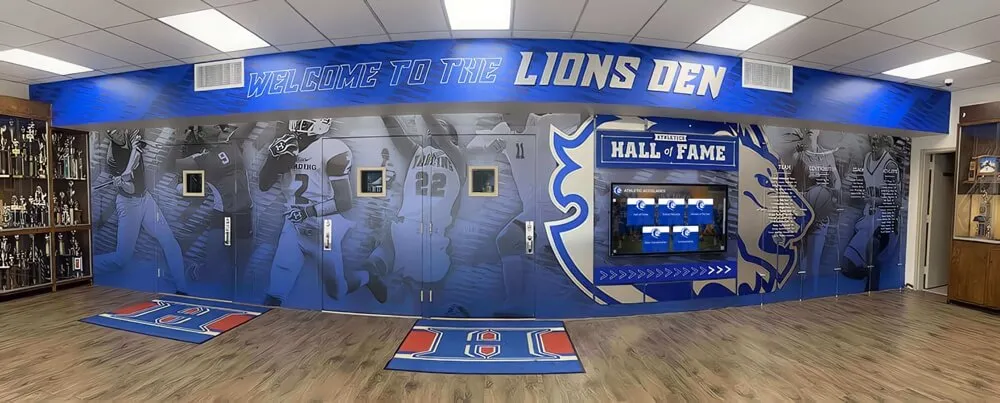
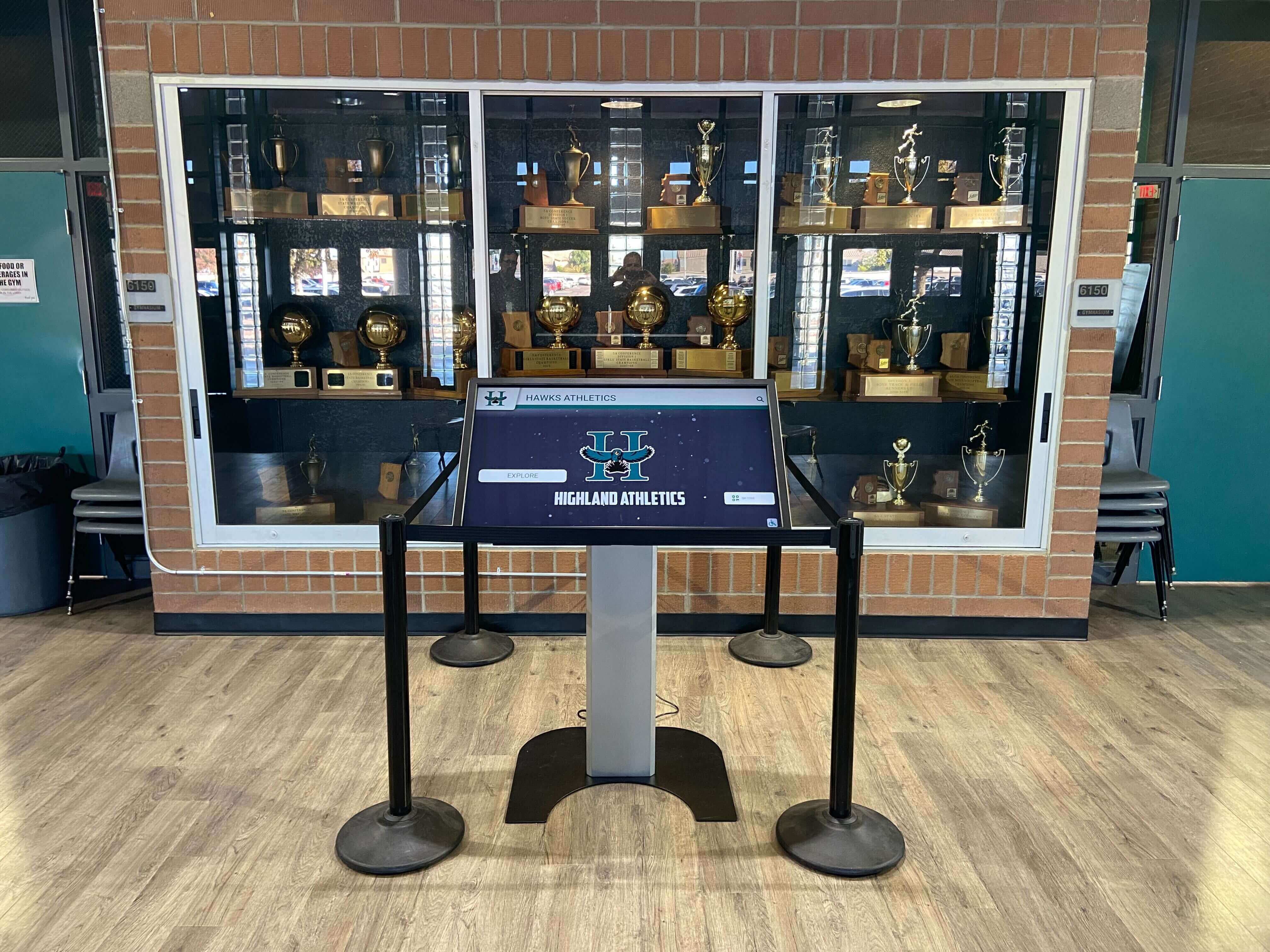
Each profile lookup on a hall of fame display depends on the GIN index returning results quickly — pending-list tuning and regular VACUUM scheduling keep the index fully merged and the read path free of pending-list overhead between seasonal import cycles
Integrating GIN Policy with Broader Index Governance
An athletic awards database GIN index policy does not stand alone — it connects to the same governance framework that governs covering indexes, BRIN indexes for time-ordered queries, and query plan regression monitoring. Understanding these relationships prevents duplicate or conflicting index strategies across the same tables.
Relationship to covering index policy. A GIN index on a tsvector column accelerates predicate evaluation for a biography keyword search, but it cannot cover a query that returns last_name, first_name, sport, and induction_year without a heap fetch. Queries that use GIN to identify matching rows and then retrieve display columns from the heap still pay a heap access cost per row. For display queries that return high volumes of matches — such as all athletes tagged with a given sport on a large archive — adding a partial B-tree covering index on the display columns as a complement to the GIN tag index may reduce total query cost more than GIN tuning alone. The covering index policy for fast athletic awards search results governs this complementary layer.
Relationship to BRIN index policy. GIN and BRIN serve entirely different query patterns and are not alternatives to each other. A recognition database can simultaneously maintain a BRIN index on award_date for seasonal date-range queries and a GIN index on bio_search for full-text profile search. The BRIN index policy for time-ordered recognition records covers the date-range query layer; this GIN policy covers the content-search layer. Both should be documented in the same index governance framework with clear scope boundaries so administrators know which index type to check first when a query is slow.
Relationship to WAL and replication. GIN pending list flushes generate WAL records that replicate to standby servers. A bulk flush triggered by a large seasonal import or a manual VACUUM creates a burst of replication activity that can temporarily increase lag on read replicas serving display queries. The policy should coordinate GIN maintenance windows with replication lag alert thresholds to avoid false alerts during scheduled flushes, and should schedule VACUUM ANALYZE on GIN-indexed tables during the same low-traffic windows used for other index maintenance.
Annual GIN policy review. As athlete profiles mature — biographies expand, tag schemas evolve, JSONB metadata structures gain new fields — GIN index configurations that were optimal at creation may become suboptimal. An annual review should check index size growth, pending list flush frequency from pg_gin_pending_stats, and query plan stability for the top profile search queries. Indexes on deprecated column schemas should be dropped; new indexes on added searchable columns should be created using CREATE INDEX CONCURRENTLY to avoid display disruption during the rebuild.
For programs coordinating recognition display hardware performance with database query speed — where display responsiveness is affected by the full stack from touchscreen input to database result — recognition display touch sensitivity testing and calibration and recognition display network error diagnostics describe the full-stack performance context in which GIN index response time is one component of the visitor’s search experience.
For programs preparing recognition archives in conjunction with graduation ceremonies — where searchable athlete profiles need to be current before the event — graduation slideshow template design and recognition archive preparation and graduation celebration planning and school recognition coordination illustrate the event-driven timeline in which GIN index maintenance scheduling matters most.
GIN index policy integrates with covering index, BRIN, and query plan regression governance to ensure that every layer of the database supports consistent, fast profile search across the full recognition event lifecycle
Frequently Asked Questions
What is a GIN index and why does it matter for athletic profile search?
A GIN (Generalized Inverted Index) is a PostgreSQL index type that maps individual tokens, tags, or JSONB keys to the rows containing them — the inverse of a B-tree index's row-to-value mapping. For athletic award databases, GIN makes full-text searches across biography text fast (keyword search inside the biography of every inductee), enables array containment queries on sport and award tags (find all profiles tagged "volleyball"), and accelerates JSONB containment queries on flexible profile metadata. Without a GIN index, those searches require a full table scan that reads every row regardless of whether it matches the query. GIN's inverted structure reads only the index entries for the queried terms, then fetches only the matching rows.
How does fastupdate affect GIN index performance on a recognition database?
When fastupdate is enabled (the default), PostgreSQL buffers new GIN index entries in a pending list rather than merging them immediately into the main index structure. This reduces write latency during bulk profile imports — common at the end of each award season — because each new row contributes its tokens to the pending list in a single operation rather than updating the full inverted structure. The tradeoff is that read queries must scan the pending list in addition to the main GIN structure until the next vacuum flushes it. For athletic award databases with seasonal import patterns, fastupdate is the correct default. Programs that update profiles continuously throughout the year should monitor pending list size via pg_gin_pending_stats and tune gin_pending_list_limit or autovacuum frequency to keep pending list overhead bounded.
Should a GIN index cover the athlete name columns in an awards database?
Only if partial-match name searches are required — for example, finding "Henderson" when a visitor types "hend" on a kiosk. That use case requires the pg_trgm extension and a gin_trgm_ops index, which enables LIKE and ILIKE operators to use a GIN-backed trigram index. For exact equality lookups on athlete names (WHERE last_name = 'Henderson'), a standard B-tree index on (last_name, first_name) is faster, smaller, and simpler to maintain. The GIN trigram index on athlete names is only appropriate when the display's search interface supports partial matches, and this should be documented in the policy alongside the index definition so future administrators understand why the gin_trgm_ops operator class was chosen over a standard B-tree.
What is the difference between jsonb_ops and jsonb_path_ops for profile metadata GIN indexes?
jsonb_ops is the default GIN operator class for JSONB columns and supports all JSONB operators: containment (@>), key existence (?), key-in-array existence (?|), and all-key existence (?&). jsonb_path_ops supports only the containment operator (@>) and stores hashed key paths rather than individual keys, producing an index typically 30–50% smaller than an equivalent jsonb_ops index. For athletic profile metadata queried exclusively through containment predicates (WHERE profile_metadata @> '{"sport":"swimming"}'), jsonb_path_ops is the better choice. If the application also uses ? to check whether a profile has any value for a given key without specifying a value, jsonb_ops is required. The policy should document which operator class each GIN index uses and what query types that choice supports.
How often should GIN indexes on athlete profiles be vacuumed or rebuilt?
GIN indexes benefit from a manual VACUUM ANALYZE after every large batch import — the end of each award season or the annual induction class entry. The VACUUM flushes the fastupdate pending list into the main GIN structure and refreshes query planner statistics, ensuring that search queries after the import use the fully merged index rather than scanning a large pending list. Between bulk imports, PostgreSQL's autovacuum handles routine maintenance. Programs that update more than 20% of profile rows in a season should reduce autovacuum_vacuum_scale_factor on the inductees table from the default 0.2 to 0.05 or lower, triggering autovacuum earlier and keeping pending list size bounded throughout the year. A full REINDEX CONCURRENTLY is only necessary when index bloat from repeated large-value updates has measurably increased index size beyond its expected growth trajectory.
School athletic recognition programs grow more searchable as they mature — more profiles, richer biographies, broader sport and award tag taxonomies, and deeper JSONB metadata structures. That searchability is what makes a hall of fame touchscreen worth stopping at. An athletic awards database GIN index policy is the technical foundation that keeps search fast across that depth — specifying which columns warrant inverted indexing, how fastupdate should be configured for the program’s update pattern, and when a B-tree or BRIN index is the better tool for a given query shape.
Programs that document this policy clearly, verify GIN index usage with EXPLAIN (ANALYZE, BUFFERS), schedule VACUUM ANALYZE after each import cycle, and review index configurations annually will maintain profile search performance that matches visitor expectations — from the first season’s inductees to a multi-decade archive that no sequential scan could serve quickly enough.
Want to see a recognition platform that manages full-text athlete search, tag filtering, and profile metadata queries at scale — without requiring your team to tune a single index?
Request a Custom Demo to see how Rocket Alumni Solutions delivers fast, accurate profile search across 600+ institutions, powered by a database infrastructure your IT team does not have to maintain.