




An athletic awards database pg_prewarm review evaluates whether deliberately loading PostgreSQL table or index blocks into the database buffer cache — or the operating-system page cache — before a hall of fame induction night, athletic banquet, or championship recognition ceremony is worth the operational complexity it adds. pg_prewarm is a PostgreSQL extension that provides this capability through a single function: pg_prewarm(regclass, mode, fork, first_block, last_block). Depending on the mode chosen, it loads a bounded block range from a named relation into either the operating-system file cache (prefetch or read modes) or PostgreSQL’s own shared buffer pool (buffer mode), and it returns an int8 count of blocks prewarmed. It is not a read-only health query — it actively changes cache state and can evict other useful data in doing so. Prewarmed blocks receive no special eviction protection: other database or OS activity can displace them before the first induction query runs. This guide is written for school IT administrators, database administrators, and vendor reviewers evaluating a PostgreSQL-backed athletic recognition database. It covers the precise function signature and return value, all three loading modes with their platform conditions, the block-range parameters that make tests repeatable, the autoprewarm background worker and its shared_preload_libraries dependency, how to measure cold-versus-warm repeatability in an authorized test environment, and the important distinction between buffer prewarming and prepared-plan caching.
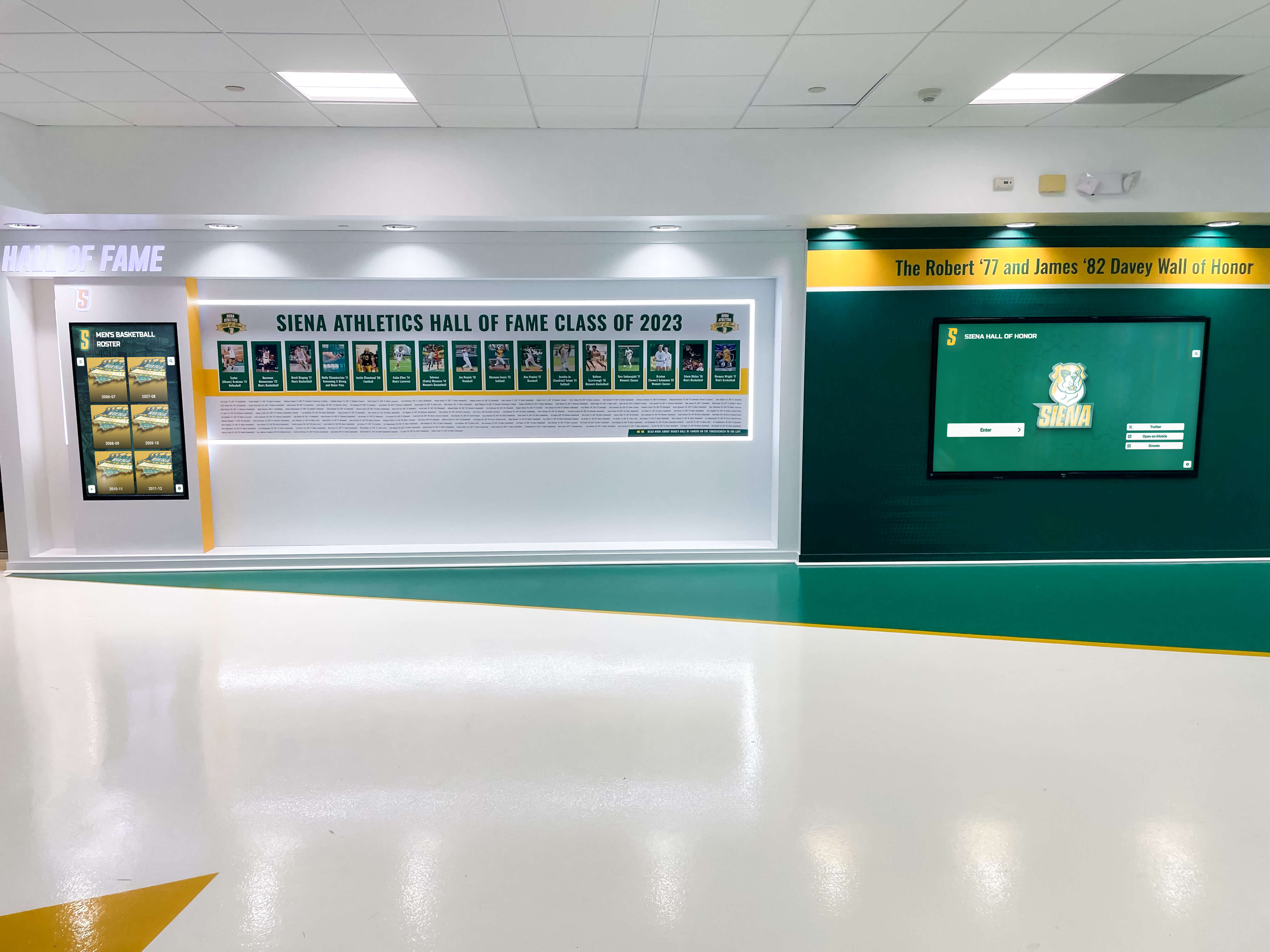
When a hall of fame induction ceremony begins, every touchscreen kiosk in the school lobby starts serving display queries that load inductee profiles, scroll recognition rosters, and render records boards. If those queries find the relevant table and index blocks already resident in PostgreSQL’s shared buffer pool, they complete quickly. If they must read blocks from disk, they wait — and that wait is visible to the athletes, families, and staff gathering for the event. pg_prewarm exists to give database administrators a deliberate path to loading those blocks before the event begins. Whether that path is appropriate for a given program depends on which loading mode fits the platform, how tightly the block range is bounded, how long warmed blocks are likely to survive before eviction, and whether a controlled repeatability test in an authorized environment has confirmed the approach actually makes a measurable difference.

Athletic hall of fame displays rely on PostgreSQL queries loading inductee profiles, sport rosters, and records boards; prewarming the relevant blocks before an induction event is the operational purpose of the pg_prewarm extension — subject to the eviction risks and platform conditions this guide covers in full
What pg_prewarm Does — and Why It Is Not a Read-Only Tool
pg_prewarm is a contrib extension included with standard PostgreSQL distributions. Unlike monitoring views such as pg_stat_io or pg_stat_statements, which accumulate statistics without altering database state, pg_prewarm() actively changes which blocks reside in cache. Calling it reads the specified blocks into the target cache layer, potentially evicting other blocks to make room. This operational consequence matters for any prewarm plan: loading a large table into a fully occupied shared buffer pool displaces whatever was there before, which may include the very display query data you want to protect.
The extension must be installed before use:
CREATE EXTENSION IF NOT EXISTS pg_prewarm;
The shared_preload_libraries entry in postgresql.conf is required only for the autoprewarm background worker (covered below). The manual pg_prewarm() function can be called after CREATE EXTENSION without listing the extension in shared_preload_libraries, as long as the server has been restarted after any prior configuration changes.
Function Signature and Return Value
According to the PostgreSQL pg_prewarm documentation, the complete function signature is:
pg_prewarm(
  regclass,
  mode        text  DEFAULT 'buffer',
  fork        text  DEFAULT 'main',
  first_block int8  DEFAULT NULL,
  last_block  int8  DEFAULT NULL
) RETURNS int8
| Parameter | Type | Default | Description |
|---|---|---|---|
| First argument | regclass | (required) | The relation — table or index — to prewarm |
mode | text | 'buffer' | Loading mode: 'prefetch', 'read', or 'buffer' |
fork | text | 'main' | Relation fork to prewarm; 'main' is the standard data fork |
first_block | int8 | NULL | First block number to load; NULL is equivalent to block 0 |
last_block | int8 | NULL | Last block number to load; NULL loads through the final block |
Return value: int8 — the number of blocks prewarmed during the call. This integer is the only confirmation that the function executed its loading pass. It does not indicate how many of those blocks remain in cache after the call completes; blocks can be evicted immediately after pg_prewarm returns.
OS Cache vs PostgreSQL Buffer Cache: The Foundational Distinction
The most important conceptual boundary in any pg_prewarm review is the distinction between the operating-system buffer cache and the PostgreSQL shared buffer pool. Confusing these two layers leads to incorrect predictions about which queries will benefit from a prewarm call and by how much.
Operating-system buffer cache (also called the OS page cache or file cache) is managed by the kernel. When PostgreSQL reads a data block from storage, the OS reads it into the page cache first, then copies it into PostgreSQL’s shared buffer pool. The OS page cache is shared across every process on the server — not just PostgreSQL. Its contents can be evicted by the OS in response to memory pressure from any process, including those entirely unrelated to the award database.
PostgreSQL shared buffer pool is managed by PostgreSQL within the shared_buffers allocation set in postgresql.conf. When a display query runs, PostgreSQL checks shared buffers first. A block found there (a buffer hit) avoids an OS-level read entirely. A block not found (a buffer miss) causes PostgreSQL to request it from the OS, which may serve it from the page cache or from storage.
The three pg_prewarm modes target these layers differently:
prefetchandreadmodes populate the OS page cache only. Blocks loaded by these modes may still produce shared buffer misses on the first query — PostgreSQL will then copy them from the OS cache into shared buffers on demand, avoiding storage I/O but not the shared-buffer-miss step.buffermode populates PostgreSQL’s shared buffer pool directly. Blocks loaded inbuffermode are immediately available for buffer hits by subsequent queries on the same server, skipping both storage I/O and the OS-to-shared-buffer copy.
This distinction determines how much latency reduction to expect from a given prewarm call. A read-mode prewarm eliminates storage I/O on first access; a buffer-mode prewarm eliminates both storage I/O and the shared-buffer miss, providing the largest single-call improvement for database queries. Neither mode prevents eviction.
The Three Loading Modes: Platform Conditions and Precise Behavior
prefetch Mode
Issues asynchronous prefetch requests to the operating system, targeting the OS page cache — not PostgreSQL shared buffers. Because prefetch requests are asynchronous, pg_prewarm() may return before all blocks have finished loading; the function submits the OS requests and returns without waiting for their completion.
Platform condition: prefetch requires operating-system support for asynchronous prefetch. On platforms or build configurations where this is unavailable, calling pg_prewarm() with mode => 'prefetch' raises an error rather than falling back silently. Linux with posix_fadvise support is the most common environment where prefetch works. Windows builds of PostgreSQL typically do not support it. Verify platform support in a test environment before including prefetch mode in any event preparation plan.
read Mode
Reads the specified block range synchronously, targeting the OS page cache. Unlike prefetch, read waits for each block to be loaded before proceeding. The return value therefore reflects a confirmed count of blocks that entered the OS cache during the call.
Platform condition: read mode is supported on all platforms and build configurations. It is slower than prefetch on platforms where asynchronous prefetch is available, but it is portable and produces a reliable return value. When platform support for prefetch is uncertain, read is the safe default for OS-cache loading.
buffer Mode
Reads the specified block range into PostgreSQL’s shared buffer pool. This is the only mode that ensures (subject to eviction) that subsequent queries can serve those blocks as buffer hits. It is the default mode when the mode argument is omitted from the function call.
Platform condition: buffer mode is supported on all platforms. It requires that shared_buffers have sufficient available capacity for the warmed blocks. Prewarming a block range larger than the available space in shared_buffers causes earlier blocks to be evicted as later ones are loaded — the total number of blocks held in the buffer pool after the call may be less than the return value suggests, depending on what other data was already resident.
Block Range Parameters: Bounding the Prewarm
The first_block and last_block parameters allow a prewarm call to target a contiguous subset of a relation’s blocks rather than the entire relation.
first_block = NULLis equivalent to starting at block 0.last_block = NULLloads through the last block in the relation at call time.- Explicit values — for example,
first_block => 0, last_block => 299— restrict loading to 300 blocks.
Bounding the block range serves two purposes in a recognition database context:
Limiting eviction impact. Warming all blocks of a large inductee table when display queries are likely to access only the most recent records — or only the pages covered by a specific index — evicts other resident data unnecessarily. A bounded call targeting the blocks most likely to be needed during an induction event minimizes disruption to the rest of the buffer pool.
Enabling repeatable tests. A bounded call with fixed first_block and last_block values produces a consistent block count (the return value) on every run, assuming the relation has not been vacuumed or extended in between. Repeatable calls make it possible to compare cold-baseline and post-prewarm query execution plans reliably, as described in the repeatability measurement section below.
To determine a relation’s block count before constructing a bounded call, query pg_class:
SELECT relname, relpages
FROM pg_class
WHERE relname IN ('athletic_inductees', 'idx_inductees_sport_year');
relpages is the planner’s estimate of the relation’s block count. Use it to set a meaningful last_block value. For small indexes, last_block = NULL (the full index) is usually already a bounded call in practice.

Recognition display events generate concentrated bursts of display queries; a bounded pg_prewarm call targeting the relation blocks those queries are most likely to read can reduce initial query latency — provided the warmed blocks survive until the first attendee interaction
The Autoprewarm Background Worker
When pg_prewarm is listed in shared_preload_libraries, it registers an autoprewarm background worker that automatically records the shared buffer pool’s contents and reloads them after a server restart.
How it works:
- The main autoprewarm worker runs continuously and periodically writes the current set of shared buffer block references to a file named
autoprewarm.blocksin the PostgreSQL data directory. - After a PostgreSQL restart, two background workers collaborate to reload the blocks listed in
autoprewarm.blocksinto shared buffers, restoring the pre-restart cache state as closely as the available buffer pool space allows.
Configuration parameters (set in postgresql.conf):
shared_preload_libraries = 'pg_prewarm'
pg_prewarm.autoprewarm = on
pg_prewarm.autoprewarm_interval = 300s
pg_prewarm.autoprewarm is a boolean that defaults to on and can only be set at server start. Setting it to off while pg_prewarm remains in shared_preload_libraries prevents the autoprewarm worker from starting without removing the extension from the preload list. pg_prewarm.autoprewarm_interval controls how frequently autoprewarm.blocks is updated; the default is 300 seconds. Setting it to 0 disables periodic writes — the file is then written only at server shutdown.
Manual control functions:
autoprewarm_start_worker()— launches the main autoprewarm worker if it is not already running, returning void. Useful when the server started without autoprewarm enabled and the worker needs to be activated without a restart.autoprewarm_dump_now()— immediately writes the current shared buffer block list toautoprewarm.blocksand returns anint8count of records written. Call this before a planned maintenance restart to capture the freshest possible cache snapshot for post-restart restoration.
When autoprewarm matters for induction events: If the award database server is restarted in the hours before a hall of fame ceremony — for a maintenance window, OS patch, or configuration change — autoprewarm will attempt to restore the pre-restart cache state from the most recently written autoprewarm.blocks file. The restoration quality depends entirely on how recently that file was written. Calling autoprewarm_dump_now() immediately before a planned restart captures the most current snapshot, minimizing the cold-cache window after the server comes back up.
For WAL-level visibility into write activity during the same event preparation window — including how much write-ahead log volume end-of-season award imports generate — WAL counter snapshots for school recognition imports at awardsdisplay.com covers the pg_stat_wal monitoring workflow that provides the write-side counterpart to cache warm-up planning.
Running a Bounded Test in an Authorized Test Environment
pg_prewarm() changes database cache state. Calling it on a production system outside an approved maintenance window can displace the blocks currently serving live display queries, temporarily increasing disk I/O for concurrent sessions. All bounded tests described in this section should be conducted in an authorized test environment that replicates the production schema and a representative sample of award data.
The purpose of a bounded test is to confirm one thing before any live event depends on it: does prewarming a specific, repeatable block range produce a measurable reduction in display query time that persists long enough to matter?
Illustrative bounded prewarm calls — example values only; substitute your actual relation names and block counts:
-- Load the first 300 blocks of the inductees table into shared buffers
-- (adjust last_block based on relpages from pg_class)
SELECT pg_prewarm('athletic_inductees', 'buffer', 'main', 0, 299);

-- Load a display index into shared buffers (full index, bounded by its actual size)
SELECT pg_prewarm('idx_inductees_sport_year', 'buffer', 'main', NULL, NULL);

-- OS-level prefetch of an inductee photos relation on Linux
-- (throws an error on unsupported platforms — test platform support first)
SELECT pg_prewarm('inductee_photos', 'prefetch', 'main', 0, 99);

-- Portable read-mode warm of a records board index (all platforms)
SELECT pg_prewarm('idx_records_board_sport', 'read', 'main', NULL, NULL);
The return value of each call is the number of blocks prewarmed. Compare it to relpages from pg_class to confirm the bounded range was fully covered by the call.
Measuring buffer hit rate before and after — illustrative example:
-- Step 1: Cold baseline — note shared_blks_hit and shared_blks_read
EXPLAIN (ANALYZE, BUFFERS)
SELECT id, athlete_name, sport, induction_year
FROM athletic_inductees
WHERE sport = 'basketball'
ORDER BY induction_year DESC
LIMIT 50;

-- Step 2: Prewarm the relation (example bounds)
SELECT pg_prewarm('athletic_inductees', 'buffer', 'main', 0, 299);

-- Step 3: Post-prewarm — compare shared_blks_hit and shared_blks_read
EXPLAIN (ANALYZE, BUFFERS)
SELECT id, athlete_name, sport, induction_year
FROM athletic_inductees
WHERE sport = 'basketball'
ORDER BY induction_year DESC
LIMIT 50;
A successful prewarm for the queried block range will show higher shared_blks_hit and lower shared_blks_read in the post-prewarm plan output. These are example queries with example relation and column names; replace them with the actual identifiers from your database schema. Note that EXPLAIN (ANALYZE, BUFFERS) itself executes the query, so run these measurements in a test environment rather than against production display traffic.
Decision and Mode Selection Table
Use this table to select a prewarm mode and scope for an authorized bounded test aligned to a specific induction event preparation scenario. Platform conditions and eviction risks apply as described above.
| Scenario | Mode | Block Range | Platform Condition | Key Consideration |
|---|---|---|---|---|
| Warm key inductee table into PostgreSQL buffer pool | buffer | Bounded by expected query access range (check relpages) | All platforms | Most direct path to buffer hits; competes with all other shared_buffers users for space |
| Warm a display index into PostgreSQL buffer pool | buffer | NULL, NULL (full index; typically small) | All platforms | Index blocks are usually small enough that a full prewarm is naturally bounded |
| OS-level asynchronous prefetch on Linux | prefetch | Bounded range | Linux with posix_fadvise; throws error otherwise | Does not guarantee PostgreSQL buffer hits; verify platform support before use |
| Portable OS-level load for any platform | read | Bounded range | All platforms | Synchronous; slower than prefetch where available; does not guarantee PostgreSQL buffer hits |
| Restore cache after a planned server restart | autoprewarm worker | Managed from autoprewarm.blocks | Requires shared_preload_libraries = 'pg_prewarm' | Call autoprewarm_dump_now() immediately before restart for the freshest snapshot |
| Full relation prewarm without block bounds | buffer | NULL, NULL | All platforms | Risk of displacing other useful data; only appropriate for small relations or very large shared_buffers allocations |
Eviction Risk: No Special Protection Guaranteed
Prewarmed blocks receive no special eviction protection within either the OS page cache or PostgreSQL’s shared buffer pool. PostgreSQL’s buffer manager uses a clock-sweep replacement algorithm; any block — including one loaded seconds ago by pg_prewarm — can be selected for eviction when another query references a block that is not yet cached.
The practical implication for event preparation: the time between a prewarm call and the first induction query determines how many prewarmed blocks are still resident when needed. Several common server activities can displace prewarmed blocks in that window:
- Autovacuum triggered by recent award imports reads table and index blocks, competing for the same buffer pool space.
- Background writer activity flushes dirty pages, cycling buffer pool slots.
- Other applications or databases sharing the same PostgreSQL instance reference their own tables, loading blocks that displace award data.
- The OS page cache (relevant for
prefetchandreadmodes) responds to memory pressure from any process on the server.
There is no PostgreSQL configuration option to pin specific blocks in the buffer pool or reserve slots for prewarmed data. A reliable prewarm-based preparation strategy therefore requires running the prewarm as close to the event start as the maintenance window allows, limiting the warmed block range to avoid unnecessary eviction of other data, and confirming through a repeatability test (next section) that warmed blocks persist for a window long enough to be useful under realistic server conditions.
For school programs also preparing their display screens for event-night readiness — ensuring that touchscreen kiosks do not enter low-power or dim states between the pre-event setup period and attendee arrival — school athletic recognition display screen wake lock release and reacquisition testing covers the display-side preparation that runs alongside database cache warm-up in a complete event readiness plan.
Measuring Cold and Warm Repeatability Before Induction Events
A prewarm plan is only as reliable as the test that validates it. Before any recognition event depends on a pg_prewarm call for faster first-query response, conduct a repeatability measurement in a test environment that mirrors production as closely as possible in terms of shared_buffers size, concurrent load, and autovacuum configuration.
Step 1: Establish a cold baseline. In the test environment, clear the relevant blocks from shared buffers (by restarting PostgreSQL or, in a test-only environment, by running pg_prewarm on unrelated large relations to evict the target blocks). Immediately execute the target display query five consecutive times and record the execution time from EXPLAIN (ANALYZE, BUFFERS) for each run. The first one or two runs show cold-cache behavior. Later runs show how quickly PostgreSQL’s buffer manager naturally warms the blocks through normal demand-loading.
Step 2: Apply the bounded prewarm. Call pg_prewarm() with the bounded block range and mode selected from the decision table. Record the return value (blocks prewarmed) and the wall-clock time the function call took.
Step 3: Execute display queries immediately after prewarm. Run the target display query five more times, recording execution times and shared_blks_hit versus shared_blks_read from the execution plan output. Compare against the cold baseline.
Step 4: Introduce representative background load. Simulate the background activity typical of the production server: trigger autovacuum on recently modified tables, run any concurrent application queries expected during the event window, and wait a period comparable to the expected lead time between the prewarm call and the first attendee interaction. Then repeat the display query set from Step 3. If buffer hit rates remain high, the prewarm provides durable warm-up for the expected window. If hit rates have returned toward cold-baseline levels, prewarmed blocks are being evicted before they can benefit event queries.
Step 5: Document and decide. Record: the prewarm block count, call duration, mean query time at cold baseline, mean query time immediately post-prewarm, mean query time after simulated load, and the difference between warm and cold means. Only adopt the prewarm plan for live events if the repeatability measurement shows a consistent, measurable improvement that survives the expected lead time under the simulated load profile.

Each touchscreen interaction triggers one or more display queries; the repeatability measurement tests whether a bounded pg_prewarm call produces consistently faster first-response times across multiple cold-start and warm cycles under realistic background load
The broader latency chain from database query completion to the moment a result appears on an interactive recognition display — covering application server processing, network round-trip, and display rendering time in addition to database query duration — is examined in a practical UX checklist for touchscreen latency on interactive recognition displays, which situates database cache warm-up as one input to a multi-layer latency stack where each layer has its own preparation and measurement requirements.
Prewarm Differs from Prepared-Plan Caching
A common point of confusion in pre-event database preparation is conflating pg_prewarm (data block caching) with PostgreSQL’s prepared-statement plan cache (query plan caching). They operate at different layers of the query execution stack and address different performance factors.
pg_prewarm loads data blocks — the actual pages of a table or index — into the buffer cache. It reduces the I/O component of query execution time by ensuring the blocks a query needs are already in memory when the query runs. It has no effect on how long the query planner takes to select an execution plan.
Prepared-statement plan caching stores a parsed and planned query tree so that repeated executions of the same parameterized query skip re-parsing and re-planning. PostgreSQL uses generic plans for prepared statements after enough executions to establish parameter distributions, trading per-call plan optimality for planning speed. It has no effect on whether a query finds its data in the buffer cache or must read from disk.
These mechanisms are additive and independent. A display query can benefit from both a warm buffer cache (lower I/O time) and a cached execution plan (lower planning overhead), from one but not the other, or from neither. An athletic awards database pg_prewarm review addresses the I/O layer only. If pg_stat_statements analysis shows that planning time rather than buffer miss latency is the dominant contributor to slow display queries, the appropriate response is prepared-plan configuration — not additional prewarm calls.
For recognition displays that serve HTTP range request video content alongside database-driven inductee records — where video segments are retrieved in byte ranges from a media server or CDN rather than from the PostgreSQL buffer pool — the HTTP range request video seeking test for school recognition displays covers the video delivery layer whose caching and seek behavior is governed by HTTP headers and content delivery configuration rather than PostgreSQL buffer management.
What pg_prewarm Can and Cannot Guarantee
Before incorporating any prewarm plan into a written IT acceptance brief or event preparation checklist, the following scope boundaries should be clearly stated.
pg_prewarm can:
- Load a bounded block range into the OS page cache (
prefetch,read) or PostgreSQL shared buffer pool (buffer) on demand - Return a confirmed
int8count of blocks submitted to the loading process during the call - Reduce block I/O latency for the first set of display queries after the warm-up call, in a controlled environment where those blocks remain resident
- Automate post-restart buffer restoration via the autoprewarm background worker and
autoprewarm.blocks
pg_prewarm cannot:
- Prevent prewarmed blocks from being evicted by subsequent database activity, autovacuum, OS memory pressure, or any other cache user
- Guarantee specific query latency outcomes after warming
- Protect blocks from displacement by the background writer, checkpointer, or concurrent queries
- Replace query optimization: if a display query has a missing index or an inefficient execution plan, warming its blocks reduces block I/O wait but does not address the scan time
- Load data stored outside PostgreSQL — video assets, image files, CDN-served content, or OS-level application caches are unaffected
- Be treated as equivalent to a read-only health check or monitoring query; it changes cache state each time it runs
A complete induction event database preparation checklist includes cache warm-up, index coverage verification, and query plan review; pg_prewarm addresses only the buffer cache layer, making it one step in a multi-step preparation workflow rather than a standalone solution
Before the database layer of an induction event is considered ready, the recognition records themselves must be complete and accurate. For inductees whose display profiles include physical memorabilia references — trophies, historical jerseys, event photographs — documenting ownership, history, and display rights for athletic memorabilia with a provenance form covers the record-keeping process that ensures every object referenced in a display profile has verified documentation before it appears on a recognition screen at an induction night.

Athletic records boards execute aggregation queries on each page load; a bounded pg_prewarm call can reduce the I/O component of those queries, while index coverage and plan review address the scan scope and planning overhead that pg_prewarm cannot affect
Frequently Asked Questions
What does pg_prewarm return, and what does it confirm?
pg_prewarm() returns an int8 value equal to the number of blocks submitted to the loading process during the call. In buffer mode, this reflects blocks loaded into the PostgreSQL shared buffer pool at the time of the call. In prefetch or read modes, it reflects blocks submitted to or loaded into the OS page cache. The return value confirms how many blocks the function processed — it does not confirm how many remain in cache after the call completes, because blocks can be evicted immediately after pg_prewarm returns.
Is pg_prewarm safe to call on a production athletic awards database before an event?
pg_prewarm changes database cache state — it is not a read-only query. Calling it during live display traffic can displace blocks currently serving active queries, temporarily increasing disk I/O for concurrent sessions. Any prewarm plan should be validated in an authorized test environment before being applied to production. If used on a production system, it should be called within an approved maintenance window or during a low-traffic period, with a bounded block range limited to the blocks most relevant to the display queries it is intended to help.
What is the difference between pg_prewarm prefetch, read, and buffer modes?
prefetch issues asynchronous OS-level prefetch requests, targeting the operating system page cache rather than PostgreSQL shared buffers. It requires platform support — available on Linux with posix_fadvise, but it throws an error on unsupported platforms rather than falling back silently. read loads blocks synchronously into the OS page cache and is supported on all platforms. buffer loads blocks directly into PostgreSQL’s own shared buffer pool and is the only mode that eliminates both disk I/O and shared-buffer misses on subsequent queries. prefetch and read reduce storage I/O for the first demand-load but do not guarantee that subsequent queries will find blocks in the PostgreSQL buffer pool.
Does pg_prewarm require shared_preload_libraries to function?
The pg_prewarm() function itself does not require a shared_preload_libraries entry. It can be called after running CREATE EXTENSION pg_prewarm in the target database. The shared_preload_libraries entry is required only for the autoprewarm background worker, which periodically saves the shared buffer block list to autoprewarm.blocks and reloads it after server restarts using two background workers. Without the shared_preload_libraries entry, autoprewarm_start_worker() can still launch the worker after server initialization, but the extension must be installed first.
How does pg_prewarm differ from PostgreSQL’s prepared-statement plan caching?
pg_prewarm loads data blocks — the actual table and index pages — into the buffer cache to reduce I/O wait time on subsequent queries. Prepared-statement plan caching stores parsed and planned query execution trees so that repeated executions of the same parameterized query skip re-planning. They address different components of query execution time and operate independently: pg_prewarm targets block I/O latency, plan caching targets planning overhead. A prewarm-based event preparation review addresses only the I/O layer. If planning overhead is the dominant contributor to display query latency, prepared-plan configuration is the appropriate response.
See How Rocket Alumni Solutions Manages Recognition Display Performance for Your School
Rocket Alumni Solutions provides cloud-based athletic hall of fame and recognition display platforms for schools and athletic programs. Database performance, cache management, and display query optimization are handled at the platform level — so induction nights, banquet evenings, and championship recognitions load quickly without your IT team managing PostgreSQL prewarm cycles, buffer pool tuning, or repeatability testing. Request a demo to see how the platform delivers fast, reliable recognition display performance for programs of every size.