



Intent: research — an athletic awards database read-replica lag policy defines the freshness thresholds, routing rules, and monitoring procedures that govern how long a recognition display is permitted to serve data from a read replica before that replica’s lag is considered operationally unacceptable. When a school’s database architecture separates write traffic (award approvals, record corrections, new inductions) from read traffic (display queries, report exports, public-facing kiosk requests), a replication delay — the interval between a write completing on the primary and the same change appearing on the replica — is always present. Without a documented policy, that lag is invisible until a newly approved award appears missing on a lobby touchscreen while the athlete’s family is standing in front of it.
This guide is written for school IT administrators, athletic directors, data stewards, and facilities or recognition-program owners who operate or evaluate database-backed athletic award systems. It covers what read-replica lag is, why it creates recognition display accuracy risks, a five-component policy framework, freshness thresholds by award category, practical monitoring procedures, and how cloud-based platforms reduce the administrative burden of lag management.
When a school’s recognition system approves a new award record — a conference all-star designation, a school athletic record, a hall of fame induction — that change is written to the primary database. But the public-facing displays that athletes, families, and visitors interact with in the hallway or lobby typically read from a separate read replica, a copy of the database that receives updates asynchronously after the primary has committed each change. The interval between “written to primary” and “visible on replica” is read-replica lag, and it can range from milliseconds in a well-tuned local environment to several minutes or more during peak import windows. An athletic awards database read-replica lag policy closes the governance gap by specifying exactly how much lag is acceptable for each award category, how displays should behave when lag exceeds that threshold, and which staff members are responsible for detecting and correcting lag failures.

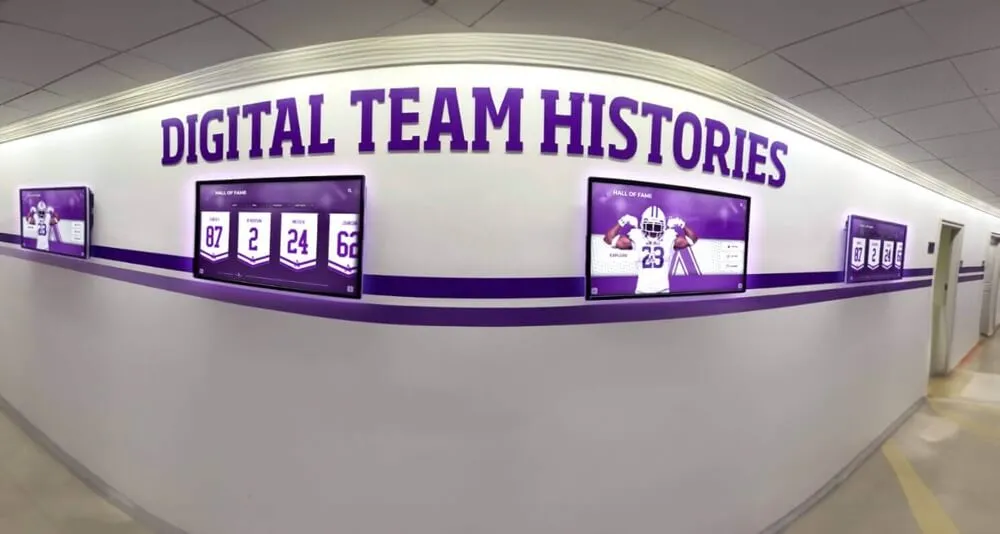
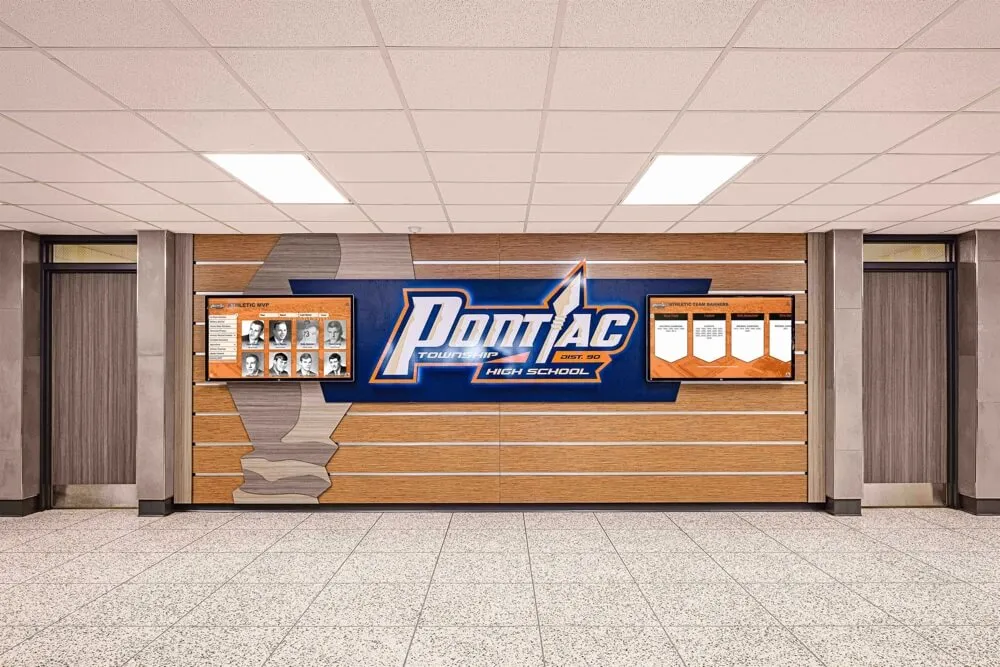
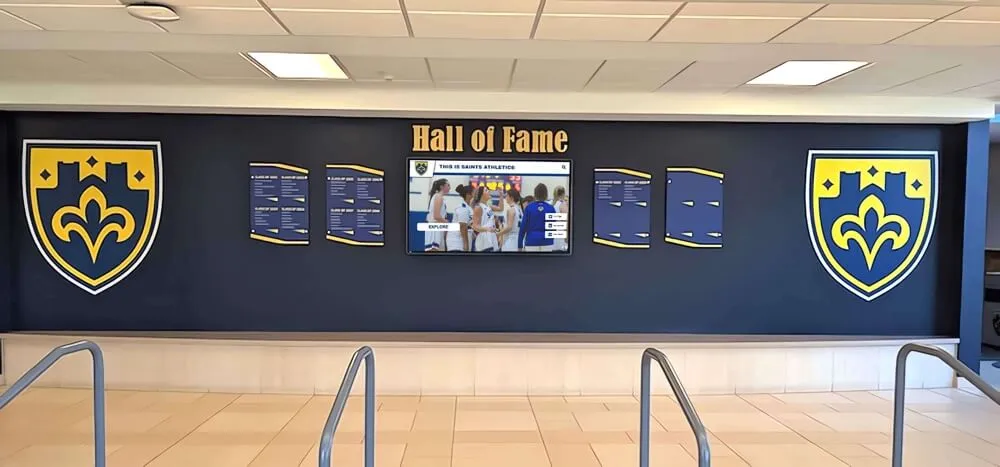
When award records are updated in the primary database, those changes must propagate to the read replicas that feed hallway and lobby recognition displays — a lag policy defines how long that propagation is allowed to take before an alert is triggered
What Is Read-Replica Lag in an Athletic Awards Database?
Read-replica lag is the measured delay between the moment a write transaction commits successfully on the primary database server and the moment the identical change becomes visible on a read-only replica database that serves display and reporting queries. In a primary-replica architecture, all data modifications — new award records, honoree profile corrections, seasonal statistics — are written exclusively to the primary. The replica receives those changes through a replication stream and applies them asynchronously, which means the replica’s view of the data is always slightly behind the primary’s current state.
For general-purpose web applications, a lag of a few seconds is usually inconsequential. For school athletic recognition displays, the acceptable lag window depends on the award category and the display context:
- A hall of fame induction record approved three weeks before a ceremony can tolerate a longer lag window before the gap becomes visible to stakeholders.
- A school athletic record certified at this afternoon’s meet and expected to appear on the lobby records board tonight has a much shorter acceptable lag window.
- A real-time records board displaying updated point totals or season leaders during an active athletic event may require near-zero lag tolerance.
The policy’s job is to document those differences explicitly — not assume that all award data carries the same freshness requirement — and to define what the display should do when lag exceeds the threshold for a given record type.
Databases that serve recognition displays commonly experience lag spikes during three operational patterns: end-of-season batch imports (when coaches submit all season awards simultaneously), overnight backup windows (when replication may pause or throttle), and large-scale data corrections (when a records administrator applies changes to dozens of records in rapid succession). A well-designed read-replica lag policy anticipates these patterns and includes provisions for each.
For programs evaluating how a digital recognition infrastructure fits alongside touchscreen display requirements and interactive signage design choices, how interactive digital signage and touch displays integrate with recognition programs provides context on the full display stack in which a replication policy operates.
Why Lag Tolerance Thresholds Matter for Recognition Displays
A recognition display that shows stale data fails the athlete it is supposed to honor. If a coach approves an end-of-season MVP award on Monday afternoon and the athlete’s family arrives at the lobby touchscreen on Monday evening expecting to see the record, a display that is still serving data from Monday morning — before the approval was committed — will show the award as missing. The family does not see lag. They see an omission.
Three practical harms result from undefined or unmonitored read-replica lag:
Credibility failures. Stakeholders who discover that a display does not reflect recently announced awards draw the reasonable conclusion that the recognition program is poorly managed or that records are maintained carelessly. The actual cause — replication lag — is invisible to the family standing in front of the screen and irrelevant to their experience of the program.
Support burden escalation. When families, coaches, or administrators report missing records that are actually present in the primary database but not yet propagated to the replica, the records staff must investigate whether the record was omitted or simply delayed. Without a lag monitoring system, distinguishing a genuine missing record from a replication delay requires manual comparison of the primary and replica databases — a time-consuming process that escalates during high-volume award seasons.
Inconsistency across display channels. Programs that operate both a web-accessible award archive and a lobby touchscreen display often serve each from a different replica. If the two replicas have different lag values — one updated seconds ago, the other several minutes behind — a parent who checked the school website this morning may see a different record count than the family standing at the lobby kiosk this afternoon. Inconsistency between channels is harder to explain than a uniform delay.
For schools also managing interactive bulletin board decisions — digital versus physical recognition formats — and working through the freshness trade-offs each format introduces, comparing interactive digital bulletin boards and traditional recognition formats in school settings examines how display format choices interact with content currency expectations.
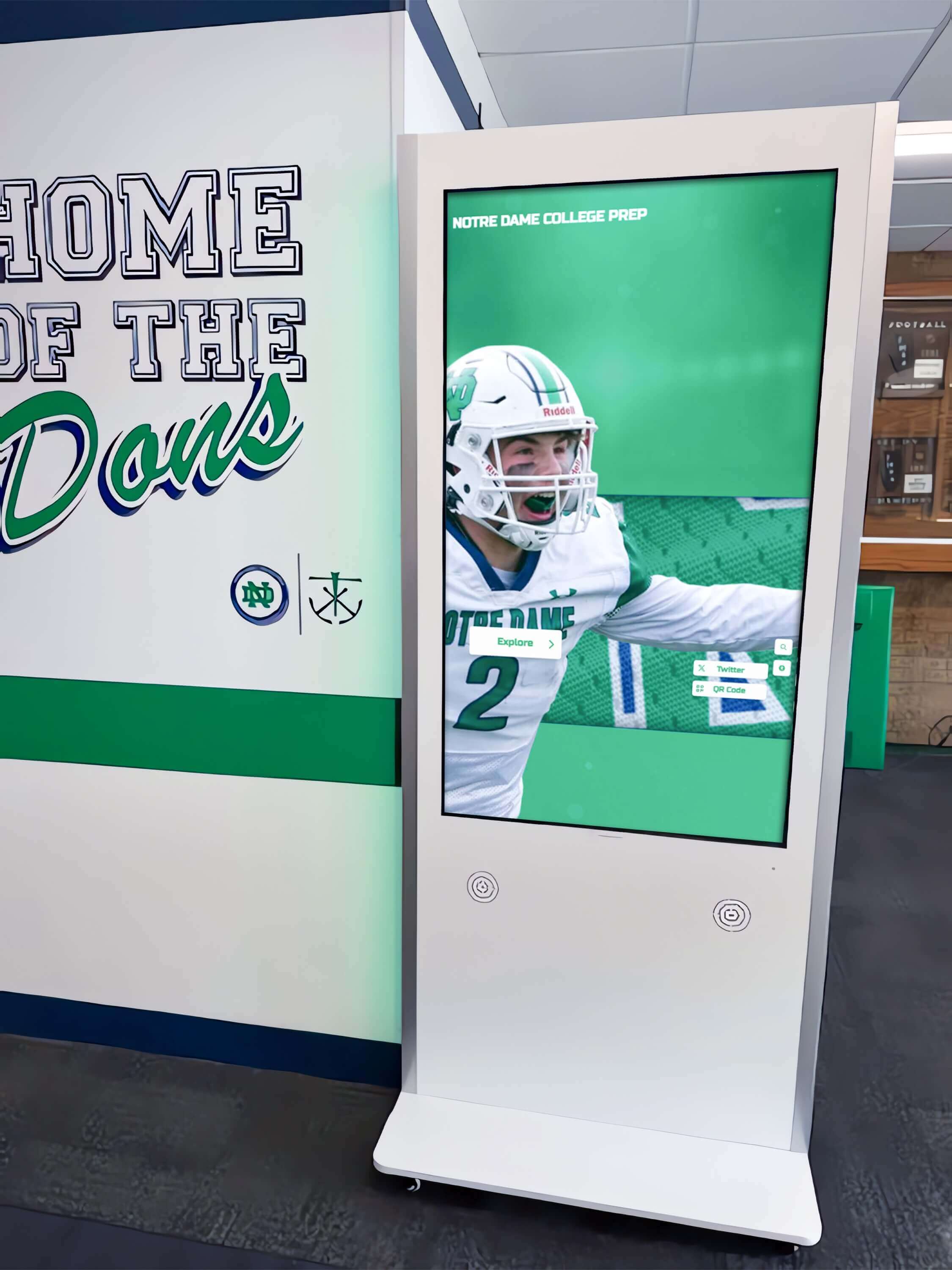
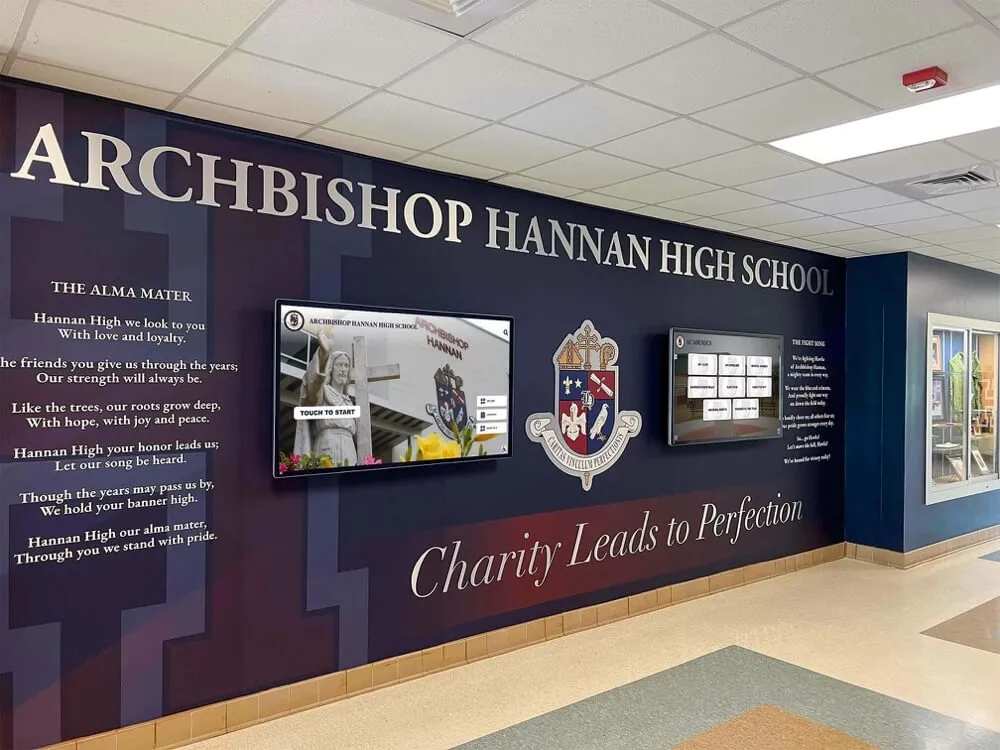
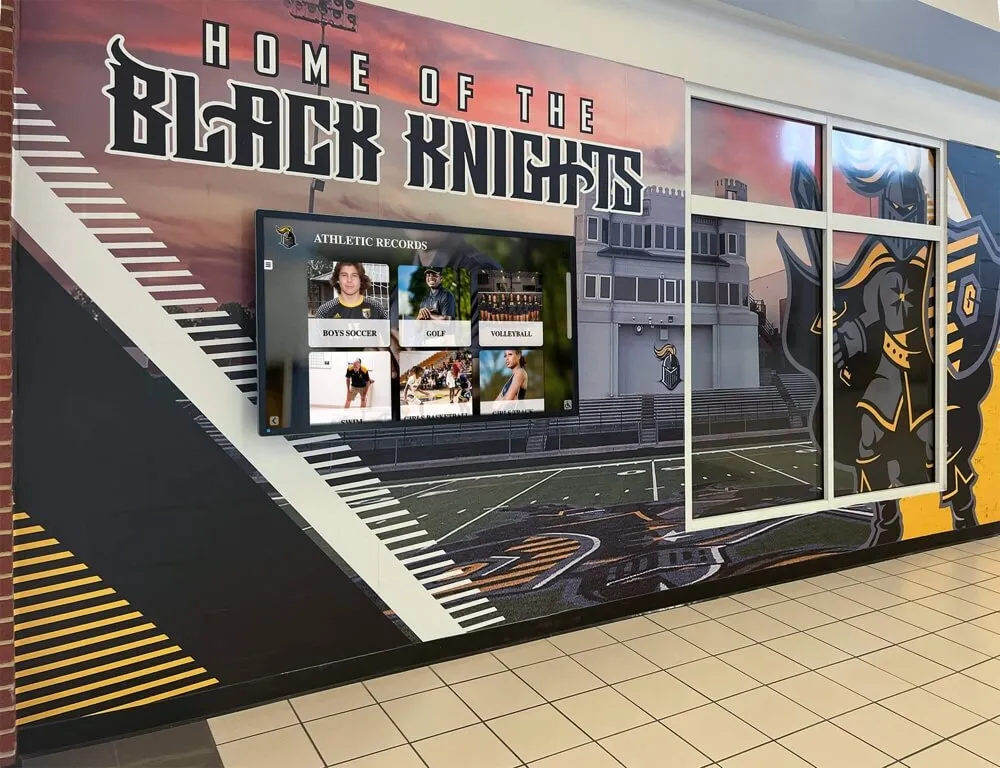
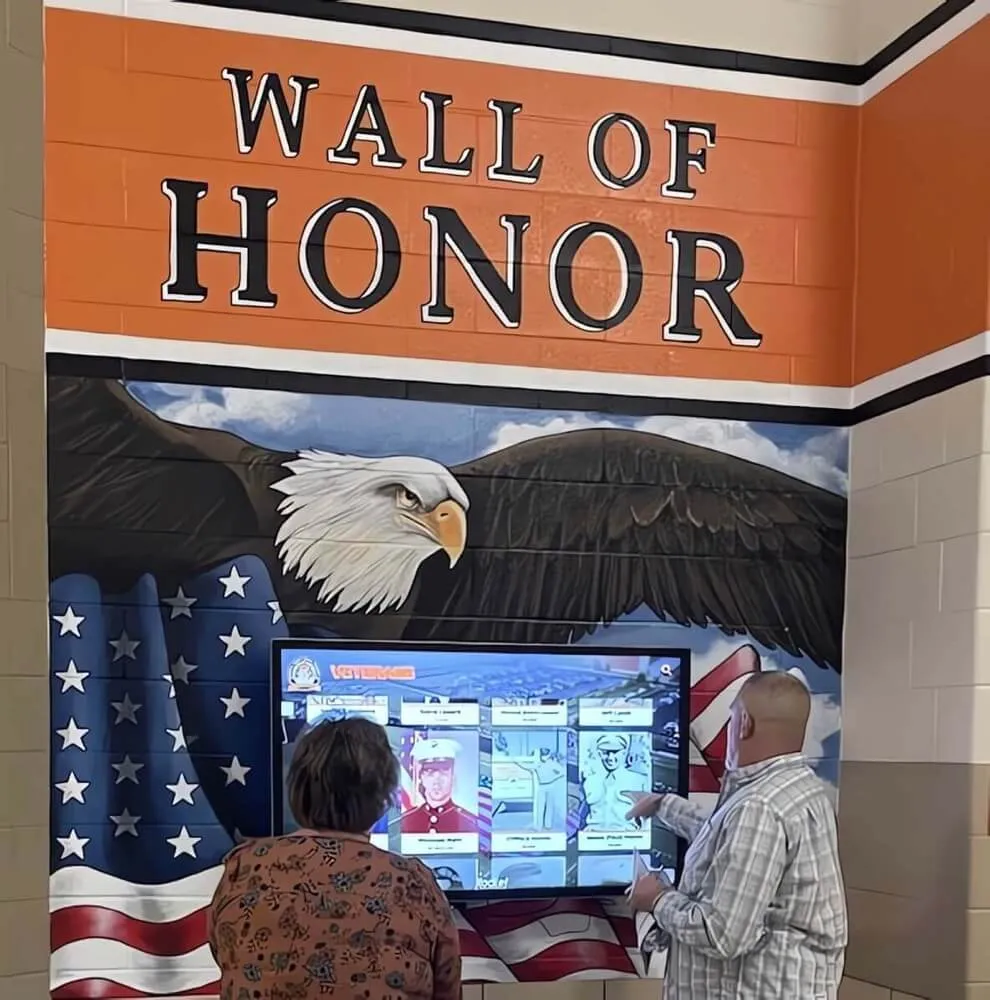
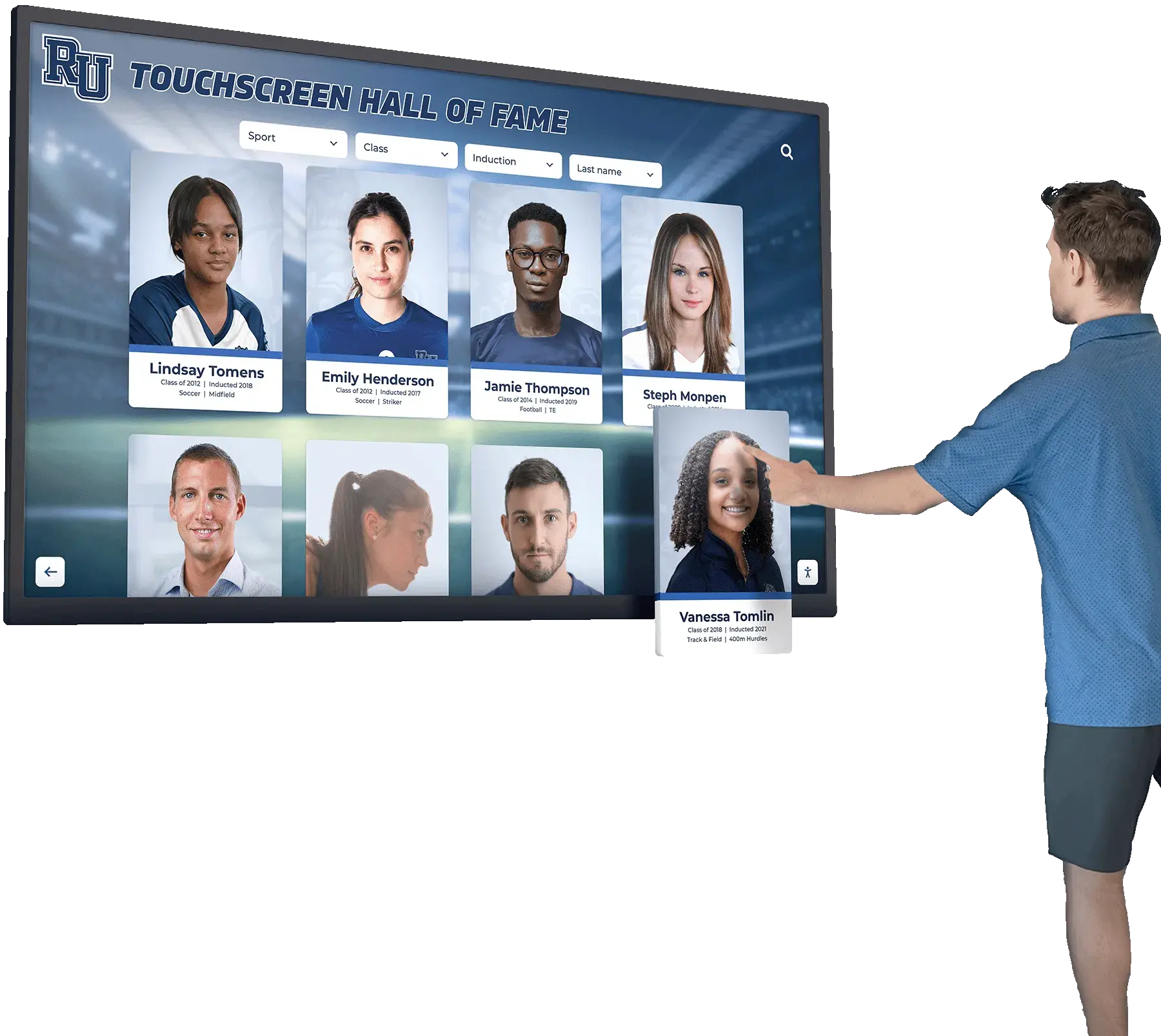
A lobby kiosk showing a sport-specific award record requires that its replica database reflect current approvals — lag policy thresholds for each award category determine when the display should show a staleness warning rather than potentially outdated data
A Five-Component Read-Replica Lag Policy
A complete policy addresses five operational dimensions: where lag is measured, what thresholds are acceptable by award category, how displays behave when thresholds are breached, when to route reads directly to the primary instead of the replica, and who is responsible for detecting and responding to lag failures.
1. Lag Measurement Points
Lag must be measured at the point where it affects display accuracy: at the replica database, not at the network layer. The standard measurement is the replication delay metric — the number of seconds (or minutes) between the most recently committed transaction on the primary and the most recently applied transaction on the replica. Most database platforms expose this as a native monitoring metric.
A lag policy should specify:
- The metric name and query that produces the lag measurement for the specific database engine in use
- The measurement frequency (continuous or interval-based polling)
- The maximum lag value that will be logged without triggering an alert, and the value that triggers an escalation
2. Award-Type Freshness Thresholds
Different record categories carry different acceptable maximum lag. The following table provides a starting framework; programs should calibrate thresholds against their operational capacity and stakeholder expectations.
| Award Category | Acceptable Max Lag | Rationale |
|---|---|---|
| Real-time records board (active season) | 30 seconds | Displayed during events; families expect near-current data |
| School athletic records (post-certification) | 15 minutes | Expected on display the same day as certification |
| End-of-season team honors | 2 hours | Approved in batches; same-session visibility expected |
| Conference and external designations | 4 hours | Typically batch-approved; same-day display expected |
| Hall of fame inductions (pre-ceremony) | 24 hours | Longer lead time; ceremony date is the display deadline |
| Historical archive corrections | 8 hours | Accuracy is priority; immediate display is not required |
3. Display-Side Staleness Indicators
When lag exceeds the acceptable threshold for a given record category, the display should respond with a staleness indicator rather than serving potentially outdated data without warning. Acceptable indicator behaviors include:
- A visible timestamp showing the data’s last-confirmed-fresh time (“Records as of [timestamp]”)
- A non-blocking notice that the display is serving cached data and recent updates may not yet be reflected
- A graceful fallback to a static summary view that does not imply currency
What a display should never do when lag is unknown or unmonitored: present award data without any indication of its freshness, implying that the record shown is the current, approved, authoritative state.
For schools building or evaluating digital hall of fame display systems with accessibility requirements — including text spacing and readability standards that also affect how staleness notices should be presented — auditing digital hall of fame displays for WCAG text spacing compliance addresses the presentation standards that apply to all text content on recognition displays, including freshness indicators.
4. Read Routing Rules: When to Use the Primary
For a subset of recognition queries, the cost of serving stale data exceeds the cost of routing the query to the primary database. A lag policy should enumerate these exceptions:
- Immediately post-approval queries. When a staff member approves a record and then navigates directly to the display to verify publication, the query should be routed to the primary for that session to prevent a false negative.
- Ceremony-day record verification. On the day of a recognition ceremony or induction event, administrative verification queries should read from the primary, not the replica.
- Triggered freshness checks. When a staff member or administrator manually triggers a freshness check in the display management system, the check should query the primary and compare its result against the replica to produce an accurate lag measurement at that moment.
5. Alert and Escalation Procedures
A monitoring system that detects lag but has no escalation path provides data without action. The policy should name the person responsible for each escalation level and the expected response time:
| Lag Level | Threshold | Responsible Party | Expected Response |
|---|---|---|---|
| Advisory | Exceeds award-type threshold | Database administrator / IT designee | Investigate cause; confirm replication is running |
| Warning | 2× the award-type threshold | Athletic director notified | Assess display impact; consider temporary primary reads |
| Critical | 5× the award-type threshold or replication stopped | Athletics and IT leadership | Pause display queries; switch to primary reads; resolve replication break |
Setting Freshness Thresholds by Award Category
The threshold table above provides a framework, but programs with specific operational constraints may need to adjust. Three factors most frequently drive threshold changes:
Ceremony and event schedules. A school that announces hall of fame inductees at a Friday evening ceremony needs all approved inductee records visible on the display before the event begins — not within 24 hours of approval, but by a specific time on the ceremony day. The policy should include an event-specific provision: for records approved within 48 hours of a ceremony, the acceptable lag is reduced to one hour and read routing falls back to the primary if the replica is not within the tighter threshold.
Staff capacity for monitoring. A program managed by a single athletic administrator cannot realistically maintain real-time lag monitoring. Programs with limited IT staffing should set more conservative thresholds — wider acceptable windows — so that alerts fire only when the replication failure is genuinely impacting display accuracy, not for brief spikes during normal operational patterns.
Database engine and hosting environment. Programs hosted on cloud database services with native replication monitoring (built-in lag metrics, managed failover) can rely on platform-level tooling to enforce thresholds automatically. Programs running self-hosted databases must implement monitoring separately. The policy should identify which tooling is in use and where lag metrics are accessible to the responsible administrator.
For programs managing the complete data migration lifecycle — including moving award records between systems, which creates temporary replication gaps during cutover windows — a complete guide to data migration for digital recognition systems covers the migration events that create predictable lag spikes and should be addressed in the policy’s event-specific provisions.
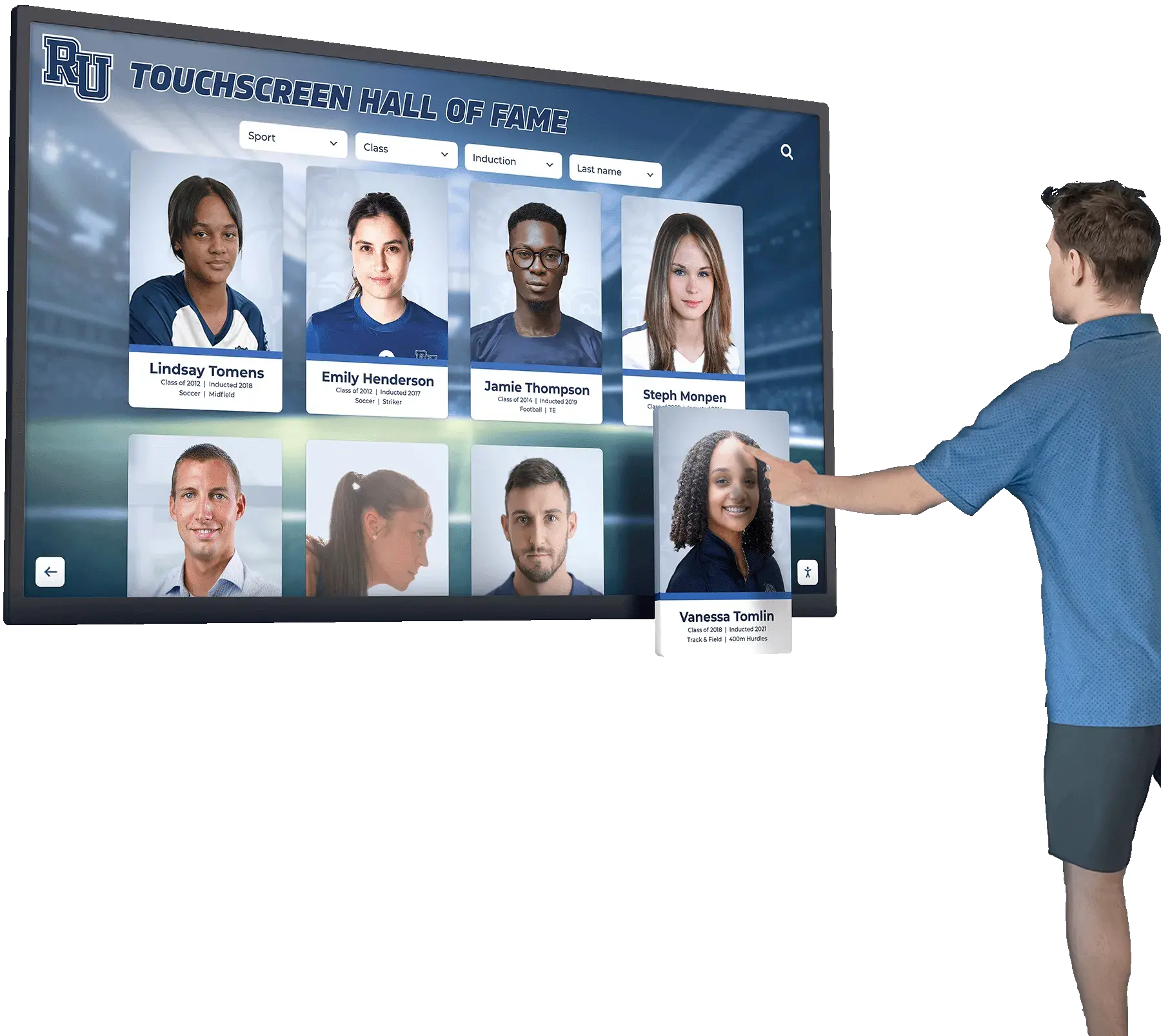
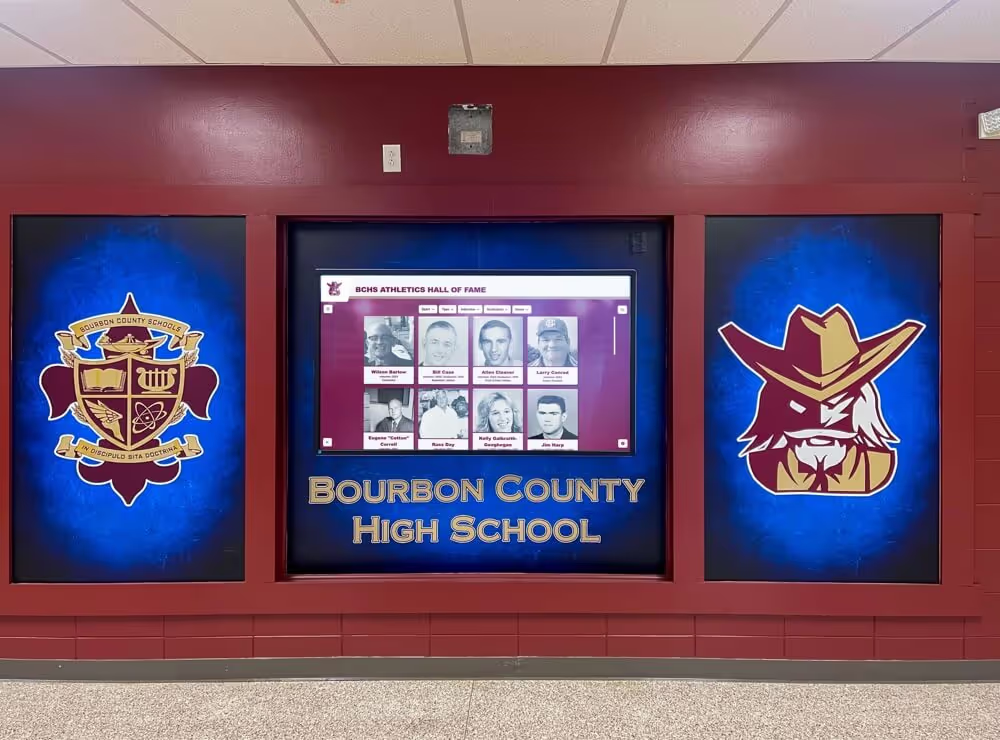
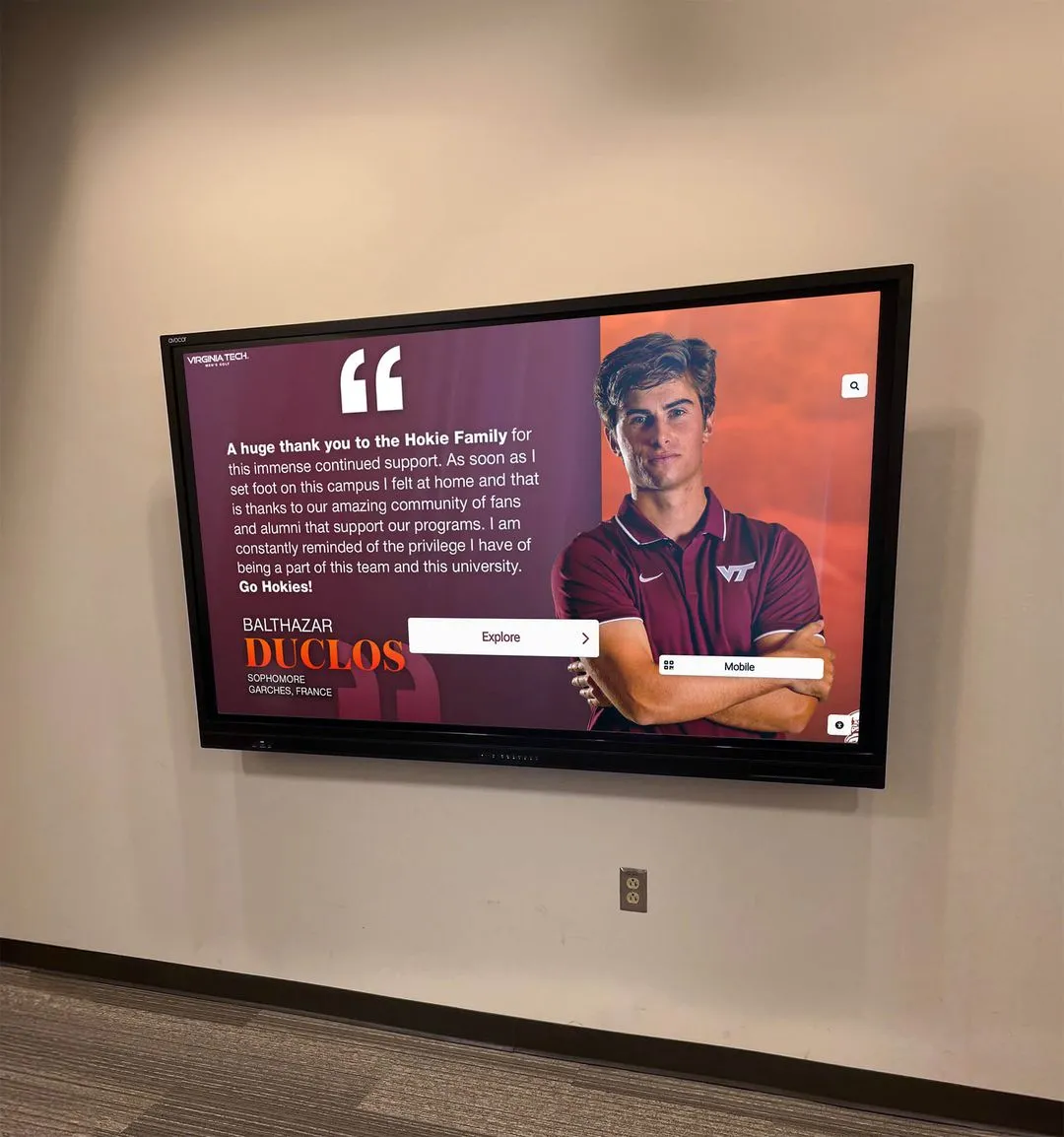
Every athlete profile served on a recognition touchscreen represents a query against the replica database — the read-replica lag policy governs whether that profile reflects the current approved record or an older version that predates a recent correction or addition")
Monitoring Read-Replica Lag in Practice
A policy without monitoring is aspirational, not operational. Effective lag monitoring for a school athletic recognition database requires three components working together: a lag metric source, a threshold comparison, and a notification path.
Lag metric source. The database engine or hosting platform must expose a replication delay metric that can be queried programmatically. For PostgreSQL-based systems, the pg_stat_replication view on the primary and pg_last_xact_replay_timestamp() on the replica provide the standard lag calculation. For MySQL-based systems, the Seconds_Behind_Source field in SHOW REPLICA STATUS is the equivalent metric. Cloud-hosted managed database services typically surface this metric through their monitoring dashboards and expose it via API for integration with alerting tools.
Threshold comparison. The monitoring tool should compare the current lag value against the policy’s threshold for the award category most recently modified. A simple implementation compares against the most restrictive active threshold — the tightest window among all award categories with records approved within the past 24 hours. This conservative approach ensures that a real-time records board threshold is applied when any recent activity has modified that record class.
Notification path. When a threshold is breached, the alert should reach the responsible party within the expected response time. For advisory-level alerts, email or dashboard notification is sufficient. For critical-level alerts — replication stopped, lag exceeding 5× the threshold — push notification or SMS to the named IT administrator and athletic director is appropriate.
Programs that operate recognition displays in hallways and public spaces alongside academic recognition and National Junior Honor Society recognition infrastructure should also note that freshness expectations extend to academic record displays, not just athletic ones. A complete guide to National Junior Honor Society requirements and recognition programs illustrates how the same display infrastructure often serves both athletic and academic recognition — meaning a lag policy’s thresholds affect every recognition category on the same screen.
For schools managing end-of-year award ceremonies where the recognition display’s accuracy is most visibly scrutinized, planning and executing a high school awards ceremony describes the ceremony planning context in which a lag failure — an award appearing missing on a display during the event — would be most consequential.
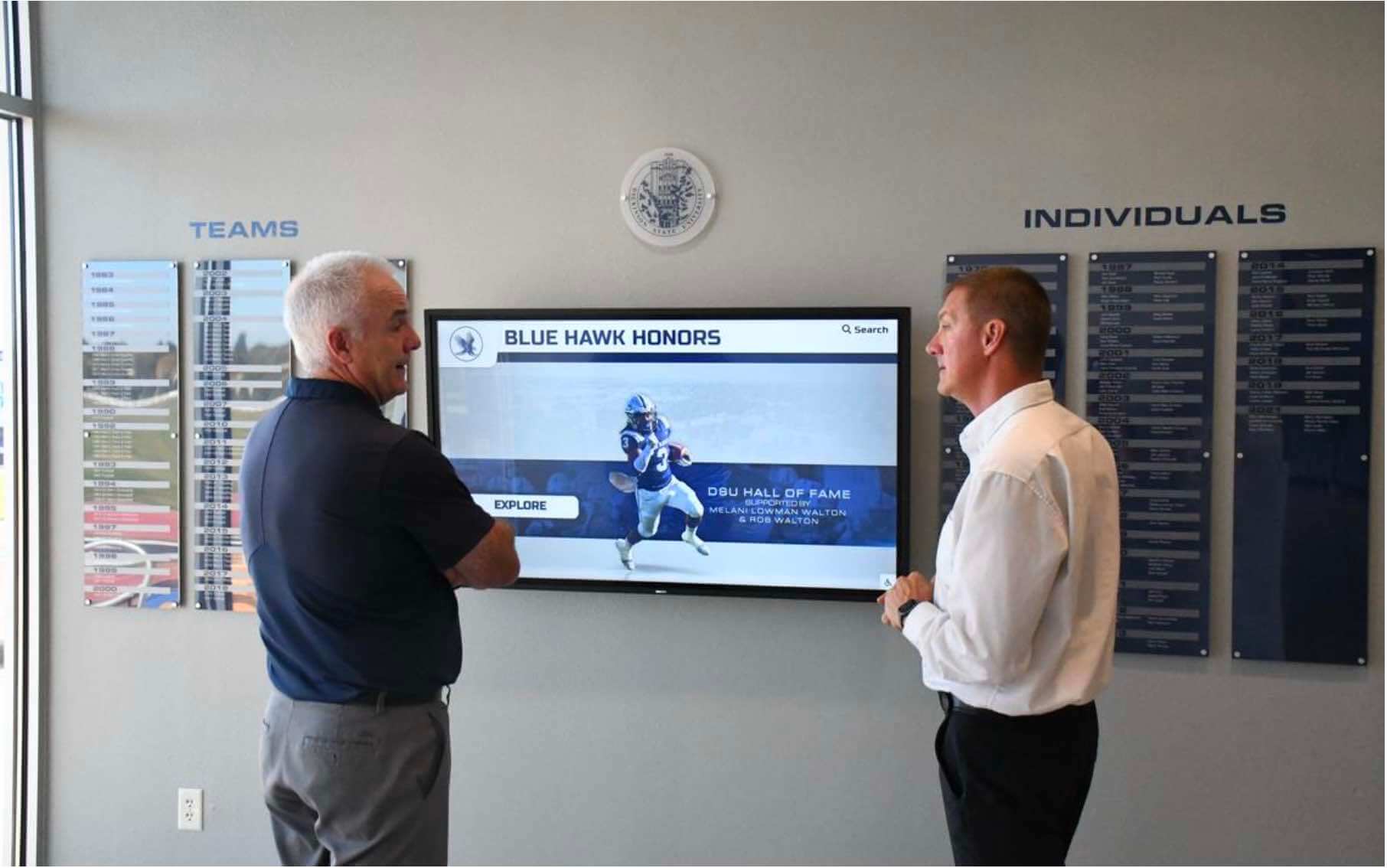
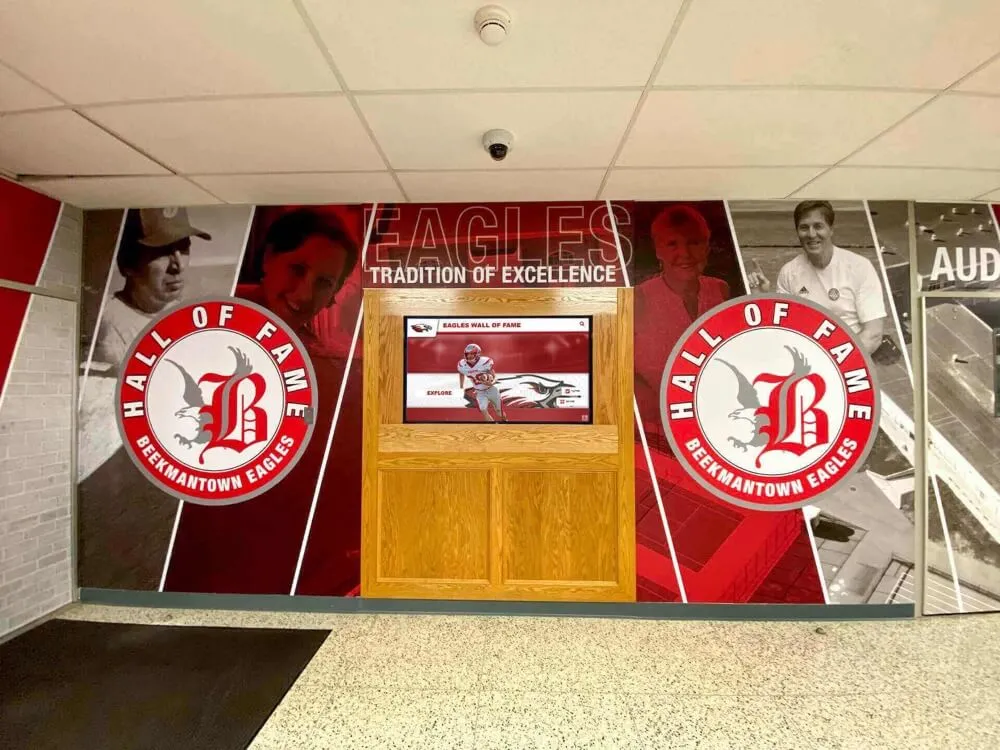
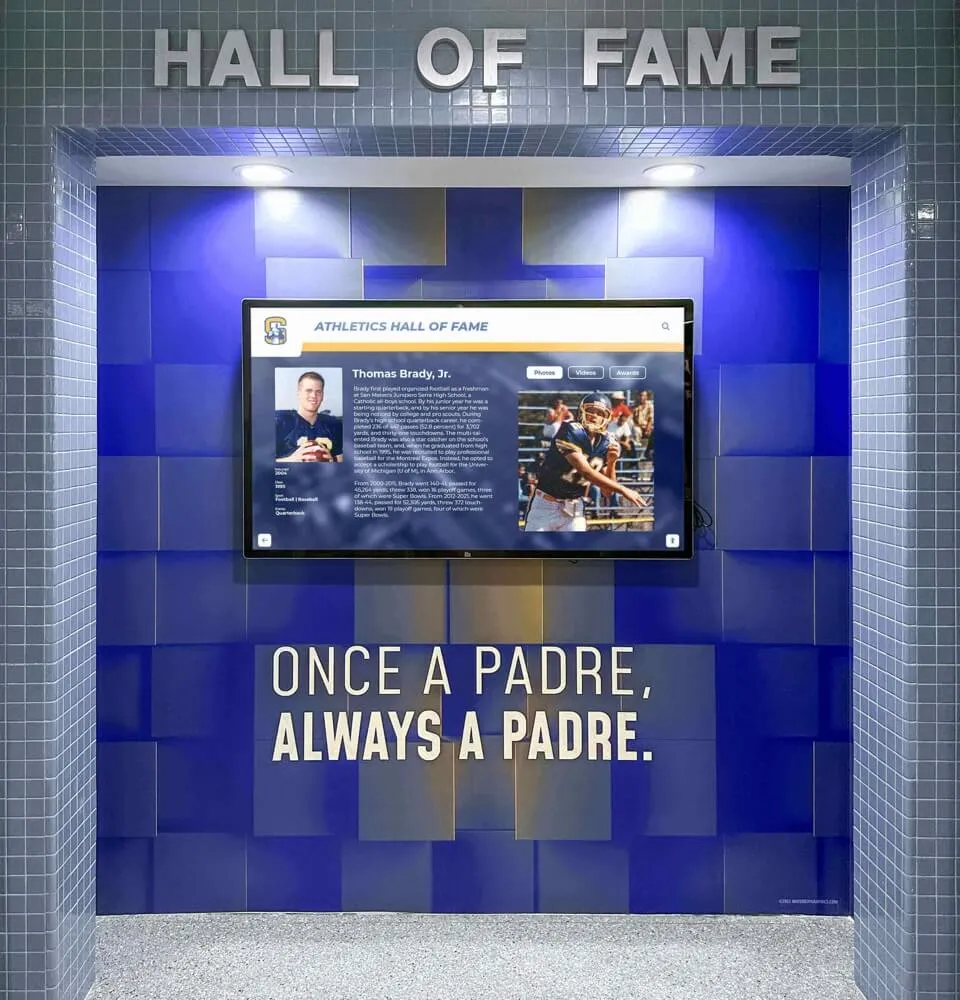
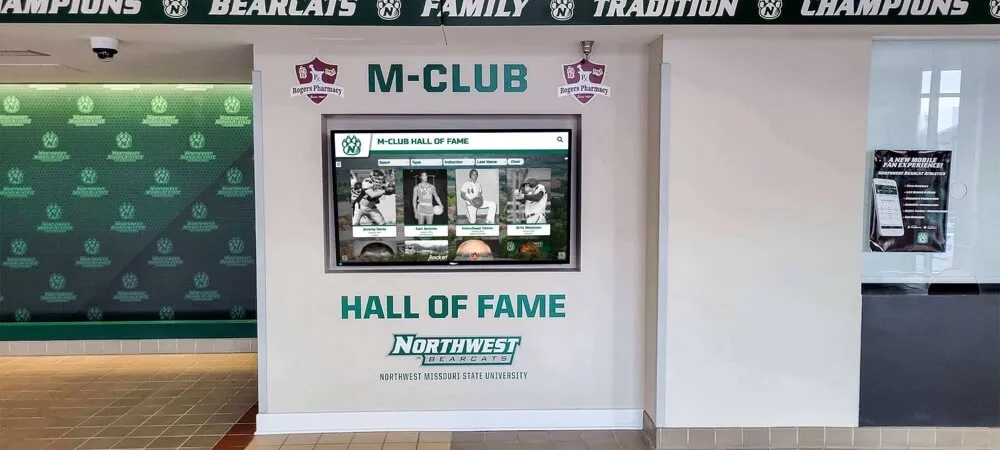
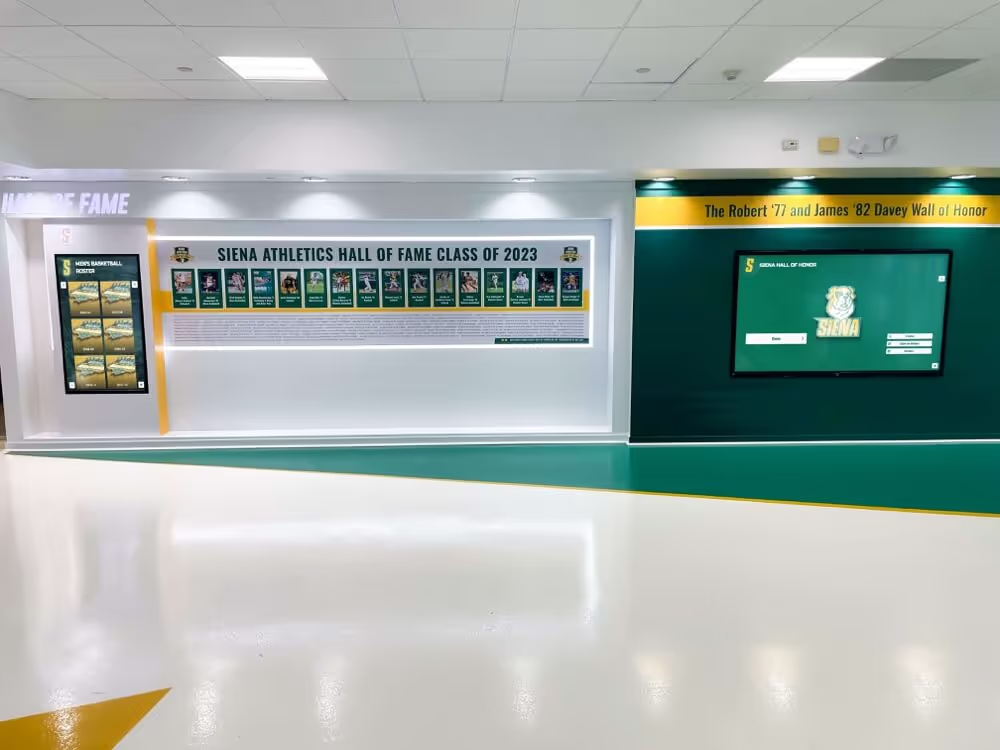
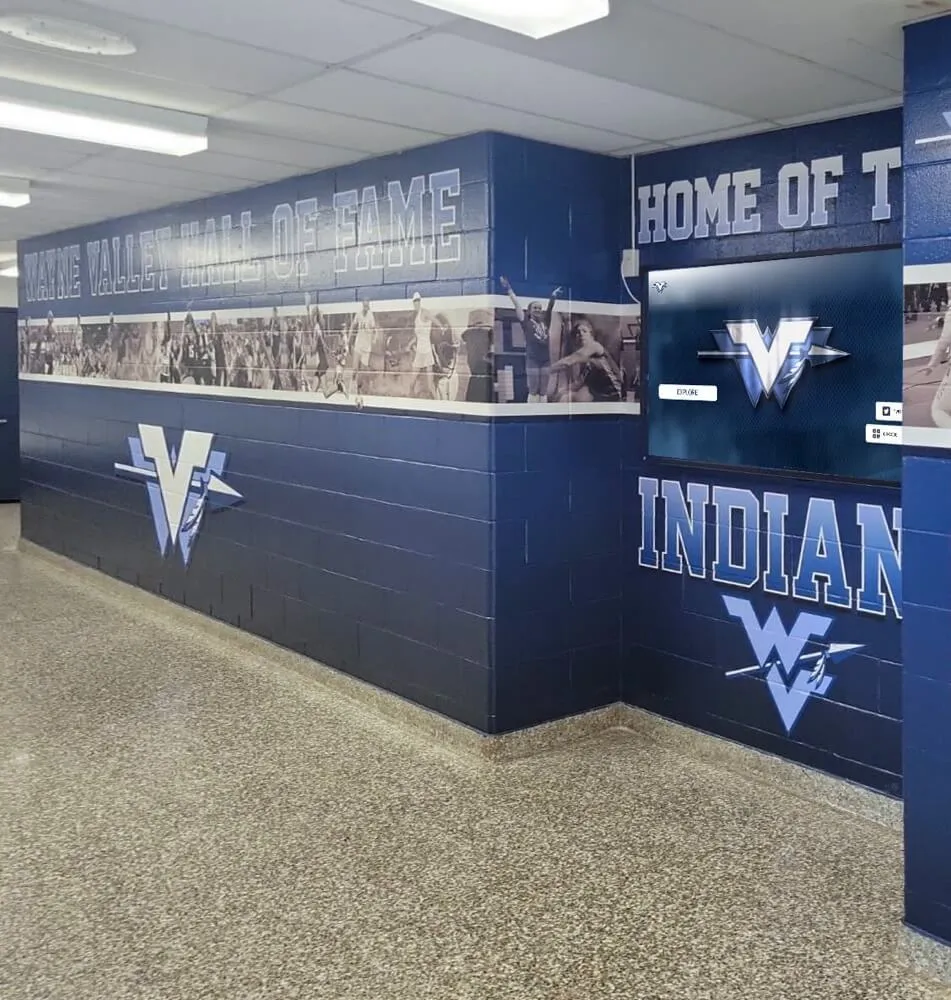
Hall of fame displays viewed by multiple stakeholders simultaneously must serve consistent, current data — a read-replica lag policy ensures that what one visitor sees matches what another sees, and that both reflect the most recently approved record state
How Cloud-Based Recognition Platforms Handle Replication Lag
For most school athletic programs, a custom-configured primary-replica database architecture is not realistic — it requires dedicated database engineering, ongoing monitoring infrastructure, and operational procedures that exceed the capacity of a school IT team. Managed cloud-based recognition platforms address this differently: rather than exposing the replication layer to the school, they absorb replication management within the platform and expose only the publication workflow through the administrative interface.
In a managed platform, what would otherwise be a replication lag problem becomes a publication delay — the window between when an administrator approves a record in the CMS and when that record appears on all connected displays. The platform controls the replication internally; the school’s data owner configures publication thresholds (how quickly approved records should appear), sets staleness indicators for the display UI, and monitors publication status through a dashboard rather than through database-level metrics.
This architecture shift has practical implications for how a read-replica lag policy should be written for schools using managed platforms:
- The policy’s technical lag measurement provisions are replaced by the platform’s publication SLA — the contractual or documented commitment to how quickly an approved record will appear on connected displays.
- The display-side staleness indicator provisions remain relevant: the school should confirm that the platform surfaces a data-freshness timestamp or equivalent indicator on public-facing displays.
- The alert and escalation provisions should name who monitors the platform’s publication dashboard and what the escalation path is when a record approved in the CMS is not visible on a display within the platform’s SLA window.
For programs researching how digital recognition display infrastructure should be planned and structured — including how classroom and educational recognition projects integrate with broader institutional display systems — a guide to recognition display planning for classroom and educational recognition projects addresses how display infrastructure planning decisions affect content management and data freshness across a school.
Rocket Alumni Solutions operates as a cloud-based recognition platform in which replication and publication are managed at the platform level. Award records approved in the administrative CMS propagate to all connected touchscreen displays, mobile QR access points, and web archives through a single publication action — eliminating the primary-to-replica lag monitoring burden from the school’s IT team. The platform’s remote CMS allows administrative staff to approve records, verify publication status, and confirm display accuracy from any location, with changes reflected across all display instances without requiring a separate synchronization step.
For programs building or refreshing sports graphic templates that accompany digital award displays, sports graphic design templates for school athletic programs covers the visual design layer that pairs with the data freshness infrastructure to produce a complete, current recognition display.
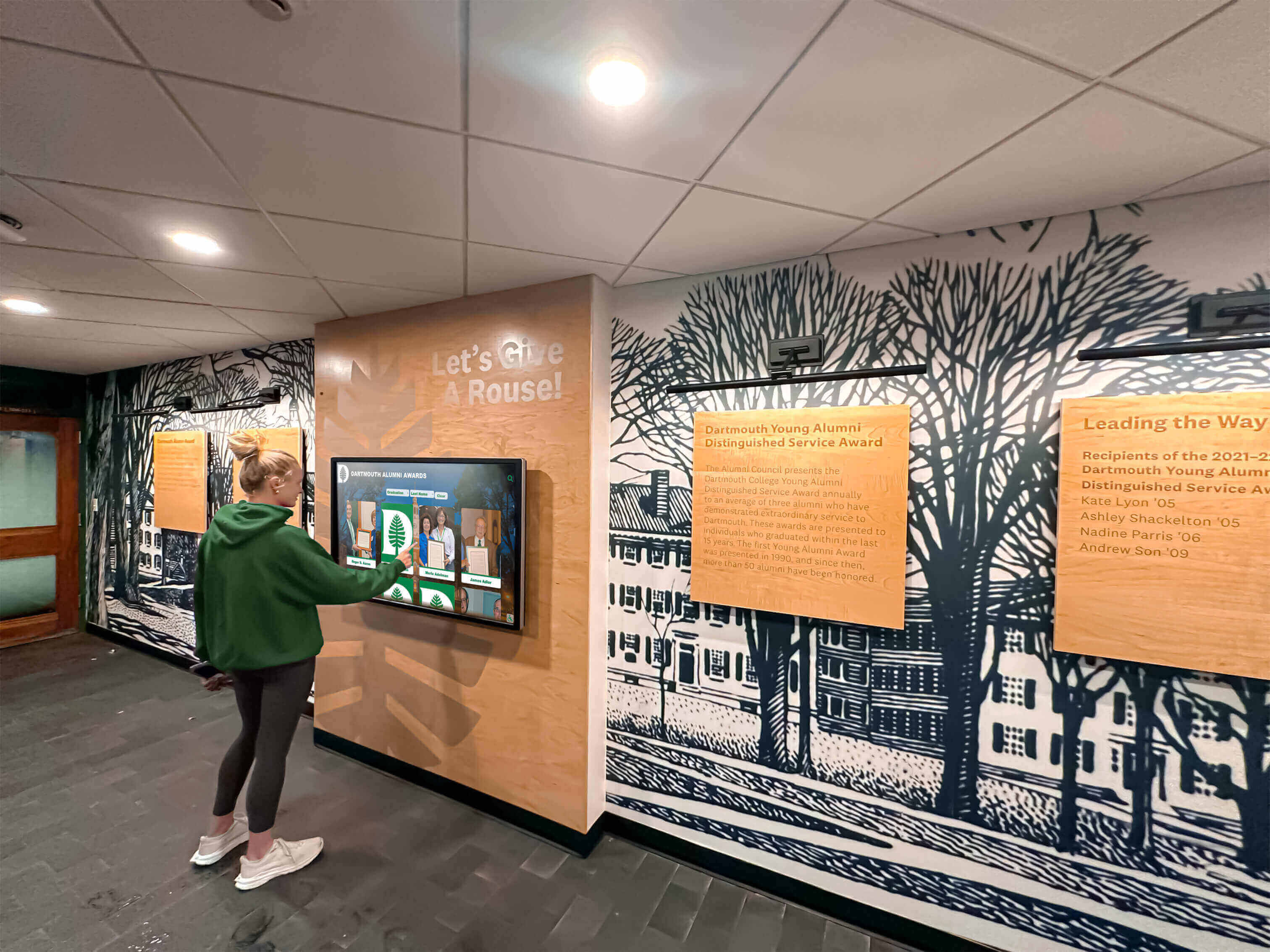
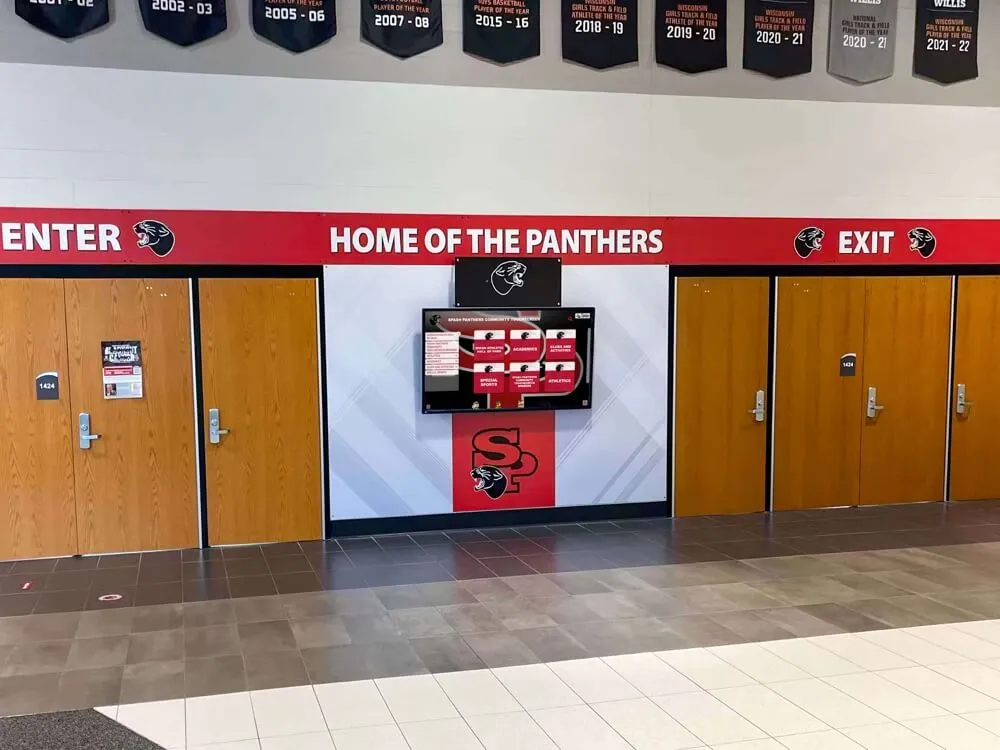
Students who interact with recognition displays expect the data shown to be current — a read-replica lag policy creates the governance structure that makes that expectation reliable across every award category and display channel
See How Rocket Alumni Solutions Manages Award Data Freshness
Rocket Alumni Solutions gives athletic directors a cloud-based recognition platform where award record publication is managed at the platform level — approved records propagate to all connected displays automatically, with no primary-to-replica lag monitoring required from your team. Remote CMS access, real-time publication status, and multi-channel synchronization in a single approval action.
Request a DemoFrequently Asked Questions
What is an athletic awards database read-replica lag policy?
An athletic awards database read-replica lag policy is a governance document that defines how long a school's recognition display is permitted to serve data from a read replica — a copy of the database that receives updates asynchronously — before that lag is considered unacceptable. The policy specifies freshness thresholds by award category, the display behavior when thresholds are exceeded (such as showing a staleness timestamp), conditions under which display queries should route to the primary database instead of the replica, and the monitoring and escalation procedures responsible for detecting and correcting lag failures. Its purpose is to prevent newly approved awards from appearing missing on public recognition displays due to replication delay.
Why does read-replica lag cause athletic award records to appear missing on displays?
Read-replica lag causes missing-record appearances because public-facing recognition displays typically query a read replica — not the primary database — to reduce load on the write server. When an award is approved and committed to the primary, the replica does not immediately reflect that change; it applies the update asynchronously, after a replication delay. If a family arrives at the lobby display during that delay window, the replica will not yet include the approved record, making the award appear absent. The actual data exists in the primary — it simply has not yet propagated to the display's data source. A lag policy defines the maximum acceptable delay and triggers an alert or display notice if the window is exceeded.
What freshness thresholds should schools set for different award categories?
A practical starting framework: real-time records boards displayed during active events should have a maximum lag of 30 seconds. School athletic records certified after a meet should appear within 15 minutes. End-of-season team honors should propagate within two hours of approval. Conference and external designations should be visible within four hours. Hall of fame inductions should be published at least one hour before the ceremony. Historical archive corrections can tolerate an eight-hour window since immediate display is not operationally required. Programs should calibrate these thresholds against their own staffing capacity, database environment, and the stakeholder expectations set by how prominently their recognition program communicates award announcements.
When should a recognition display route queries to the primary database instead of the replica?
Three situations justify routing display queries to the primary database rather than the replica: immediately after an approval action, when the approving staff member navigates to the display to verify publication and the lag window has not yet elapsed; on ceremony days, when administrative staff verify that all inductee or honoree records are visible before the event begins; and during manually triggered freshness checks, when a data administrator explicitly requests a current-state comparison between the primary and the replica to diagnose a reported discrepancy. Outside these exceptions, display queries should use the replica — routing all queries to the primary defeats the purpose of a read-replica architecture and introduces primary load during high-traffic periods.
How do managed cloud recognition platforms change the read-replica lag monitoring requirement?
Managed cloud recognition platforms absorb the replication layer within the platform itself, replacing the school-side responsibility for monitoring primary-to-replica lag with a platform-level publication SLA — the documented commitment to how quickly an approved record will appear on connected displays. Schools using a managed platform do not need to query database replication metrics or configure alert thresholds at the database level; instead, they monitor publication status through the platform's administrative dashboard and escalate to the platform vendor when records approved in the CMS do not appear on displays within the SLA window. The policy provisions that remain school-side are the escalation procedure (who monitors the dashboard, who contacts the vendor) and the display-side freshness indicator requirements.
A documented athletic awards database read-replica lag policy converts an invisible infrastructure risk — replication delay — into a measurable, monitored, and manageable operational parameter. Schools that define freshness thresholds by award category, specify how displays behave when those thresholds are exceeded, and assign named responsibility for monitoring and escalation ensure that a technical limitation does not become a visible failure for the athletes and families their recognition program is meant to serve.