



Intent: research — an athletic awards database transaction isolation policy defines which isolation level governs each type of concurrent import operation so that when two or more staff members — or two scheduled batch processes — write to the same recognition database at the same time, the result is a consistent, complete record set rather than a mix of partial writes and phantom values. Without a documented isolation policy, end-of-season award imports, roster corrections, and historical data loads can interfere with each other in ways that are invisible in the moment and difficult to diagnose after the fact.
This guide is written for school administrators, athletic directors, IT and database administrators, and recognition-program owners who run batch imports of roster data, award assignments, and season results into school athletic recognition systems. It defines transaction isolation in plain terms, maps the four standard isolation levels to athletic award import scenarios, provides an eight-step procedure for applying the policy, and includes a post-import verification table and FAQ section.
The direct answer: set REPEATABLE READ isolation for concurrent batch award imports. This level prevents the two anomalies most likely to corrupt a recognition record during a concurrent write — nonrepeatable reads and phantom reads within a single transaction — without the full serialization overhead required only for the most critical end-of-season processing. Apply SERIALIZABLE for imports where all-or-nothing consistency across a full award cohort is mandatory. For read-only display queries running during an active import, READ COMMITTED is safe and imposes no additional overhead.

Concurrent access to recognition databases is routine in schools with multiple staff — a transaction isolation policy defines the rules that prevent simultaneous imports from producing inconsistent results
What Is Transaction Isolation in an Athletic Awards Database?
Transaction isolation is the property of a database that controls how and when changes made by one transaction become visible to other transactions running at the same time. It is one of the four ACID properties — Atomicity, Consistency, Isolation, Durability — that govern reliable database operations. The SQL standard (ISO/IEC 9075) defines four isolation levels, each preventing a progressively stricter set of read anomalies.
For an athletic awards database, isolation determines what a concurrent import sees when it reads existing records during its operation. If the import reads a record that another concurrent transaction has already modified but not yet committed, it may write a result based on stale or inconsistent data — even when each individual transaction is internally correct.
Three read anomalies are the practical concern for athletic award imports:
Dirty read: a transaction reads data written by another transaction that has not yet committed. If that other transaction is later rolled back, the first transaction has based its work on data that never officially existed. According to the PostgreSQL documentation on transaction isolation, PostgreSQL does not permit dirty reads even when Read Uncommitted is requested; the engine silently upgrades the session to Read Committed behavior.
Nonrepeatable read: a transaction reads the same row twice within a single operation and receives different values — because another concurrent transaction committed a change to that row between the two reads. For an award import that reads an athlete’s eligibility status at the start of a batch and again during validation, a nonrepeatable read can cause the system to approve an athlete whose status changed mid-import.
Phantom read: a transaction executes the same query twice and receives a different set of rows — because another transaction inserted or deleted rows matching the query’s filter conditions between the two executions. For an award import checking how many active records a sport category already contains before adding new ones, a phantom read can cause the import to exceed a configured limit without triggering the check.
Understanding which anomaly is most likely for each import type — and which isolation level prevents it — is the foundation of a practical athletic awards database transaction isolation policy.

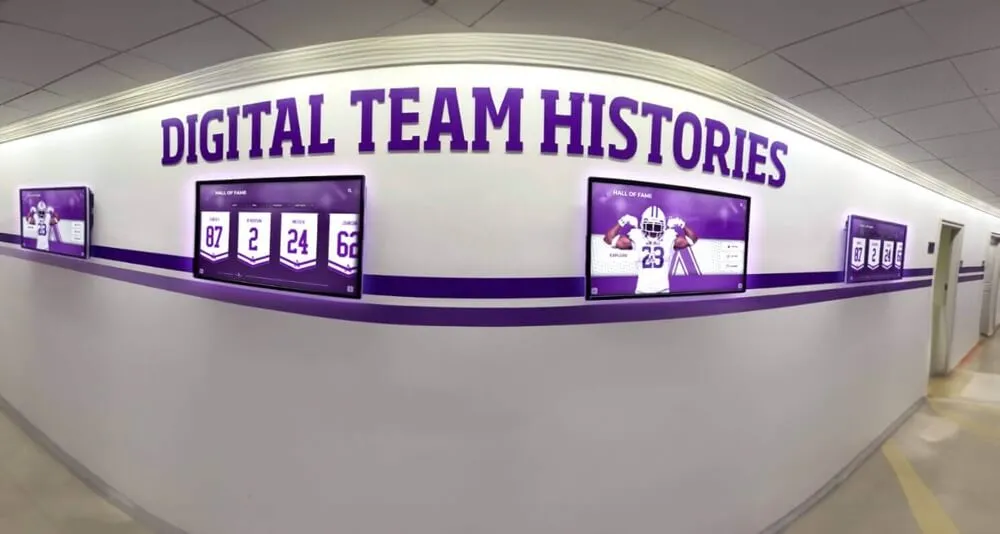
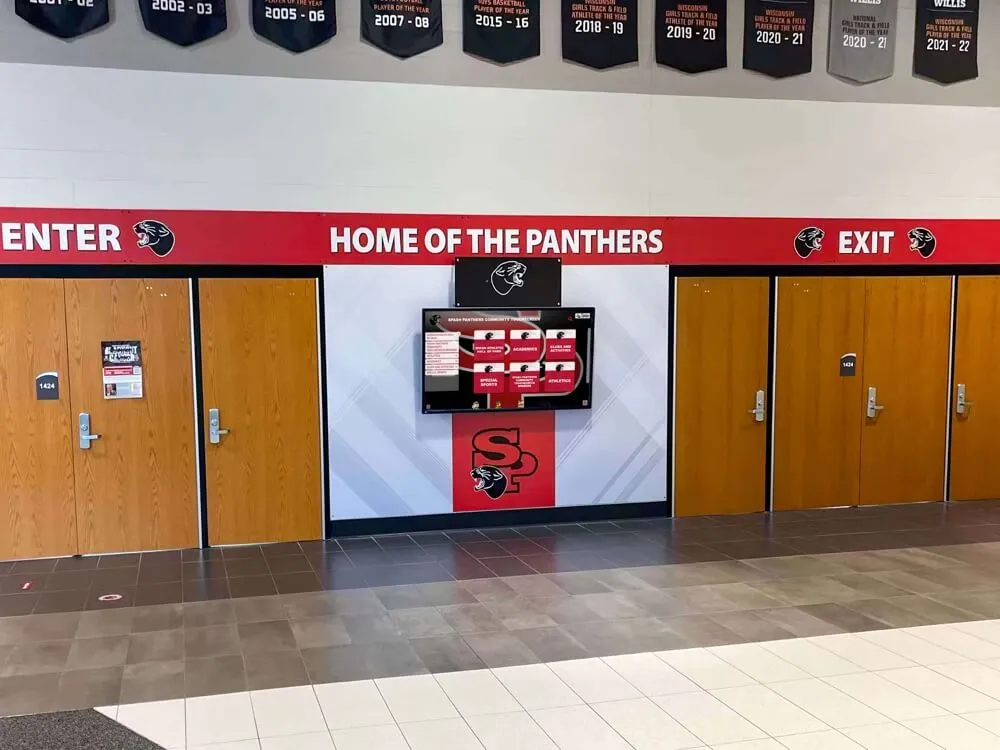
Every award record on a hallway display was written by a database transaction — isolation policy determines what those transactions see when they run concurrently and what anomalies they can introduce
The Four Transaction Isolation Levels
The SQL standard defines four isolation levels. The table below maps each level to the anomalies it prevents, PostgreSQL’s implementation behavior, and its appropriate use in an athletic awards context. All definitions reference the PostgreSQL documentation on transaction isolation and concurrency control.
| Isolation Level | Dirty Read | Nonrepeatable Read | Phantom Read | Serialization Anomaly | Appropriate Use in Athletic Awards |
|---|---|---|---|---|---|
| Read Uncommitted | Possible (PostgreSQL prevents) | Possible | Possible | Possible | Not recommended for any import — no meaningful protection above PostgreSQL’s effective floor |
| Read Committed | Prevented | Possible | Possible | Possible | Safe for read-only display queries during active imports; insufficient for concurrent write batches |
| Repeatable Read | Prevented | Prevented | Prevented* | Possible | Recommended default for concurrent batch imports — prevents the anomalies most likely to corrupt award cohort records |
| Serializable | Prevented | Prevented | Prevented | Prevented | Required for hall of fame induction and season configuration imports where all-or-nothing cohort consistency is mandatory |
*PostgreSQL implements Repeatable Read using snapshot isolation rather than the locking approach the SQL standard formally requires. As documented in the PostgreSQL reference, this means Repeatable Read in PostgreSQL prevents phantom reads in practice — a stronger guarantee than the standard requires at that level. Programs applying this policy to PostgreSQL databases can rely on Repeatable Read for phantom read protection without escalating to Serializable.
Serializable isolation in PostgreSQL uses Serializable Snapshot Isolation (SSI), which detects potential serialization anomalies and rolls back the transaction that would create one. As the PostgreSQL documentation notes, applications using Serializable must be prepared to detect SQLSTATE 40001 (serialization failure) and retry the transaction. Programs with existing deadlock retry infrastructure can extend that logic to cover serialization failures; programs without retry infrastructure should default to Repeatable Read and reserve Serializable for the specific import types identified in the table below.
Three Concurrent Import Scenarios That Create Inconsistency
Understanding where isolation gaps cause real problems in athletic recognition programs clarifies why a documented policy matters more than relying on database defaults.
Scenario 1 — End-of-season multi-sport batch with simultaneous roster and award runs. An athletic director triggers an end-of-season award assignment import for all fall sports at 4:00 PM. A registrar triggers a roster correction import that updates athlete eligibility records for three football players at 4:02 PM. Both run under READ COMMITTED. The award import reads football athlete eligibility at the start of its transaction; before it finishes, the roster import commits corrected eligibility for two of those players. On its validation pass, the award import re-reads those athletes’ eligibility and sees the corrected values — but the initial read already determined which athletes were eligible for the first-pass assignment. The result is a mixed cohort: some assignments reflect pre-correction eligibility, some reflect post-correction eligibility, and the record set cannot be trusted as a consistent picture of any single state.
Scenario 2 — Correction import during active display refresh. A staff member submits a correction batch for historical athlete records while the recognition display platform polls the database for a scheduled content refresh. Under READ COMMITTED, the display query may read a mix of corrected and uncorrected records — seeing updated values for some athletes and pre-correction values for others, depending on which rows the correction transaction has committed at the moment each display query executes. The display receives an internally inconsistent snapshot and shows a split state until the next refresh cycle.
Scenario 3 — Hall of fame induction import during season boundary reconfiguration. A hall of fame induction batch reads season boundary records to validate that nominees’ award years fall within eligible windows. Simultaneously, an IT administrator updates the season boundary configuration to correct a year range. Under READ COMMITTED, the induction import may read the old boundary on its first pass and the new boundary on a subsequent validation query — yielding different eligibility determinations for nominees whose award years fall near the updated boundary.
Each scenario is preventable by setting REPEATABLE READ before the import transaction begins. Under that level, the transaction holds a consistent snapshot of the database as it existed when the transaction started; concurrent commits that happen during the import remain invisible to the transaction’s read operations.
For programs also governing how savepoints interact with isolation levels — specifically how partial rollbacks to savepoints behave under Repeatable Read versus Serializable — athletic awards database transaction savepoint policy covers those checkpoint mechanics in detail.
Recommended Isolation Level by Import Type
Not all import operations carry the same concurrent modification risk. The table below assigns a recommended isolation level to each major import type in a school athletic awards system.
| Import Type | Recommended Isolation Level | Rationale |
|---|---|---|
| End-of-season award assignment (single sport) | REPEATABLE READ | Prevents eligibility nonrepeatable reads during the award assignment pass |
| End-of-season award assignment (all sports, batch) | REPEATABLE READ | Sufficient for independent sport batches; use SERIALIZABLE only if strict cross-sport cohort consistency is required |
| Roster update (in-season) | REPEATABLE READ | Prevents award import transactions running concurrently from reading a mix of old and new roster data |
| Historical records correction | REPEATABLE READ | Prevents display refresh queries from reading a partially corrected historical record set |
| Hall of fame induction batch | SERIALIZABLE | Induction decisions reference cross-table award histories; serialization anomaly prevention is worth the retry overhead |
| Season configuration update | SERIALIZABLE | Configuration rows are read by multiple concurrent imports; a serialization anomaly in configuration data propagates to every downstream transaction that reads it |
| Read-only display refresh | READ COMMITTED | Display queries do not write; READ COMMITTED delivers current committed data without snapshot overhead |
| Ad hoc single-record correction | READ COMMITTED | Single-row writes do not read aggregate sets; nonrepeatable reads are not a meaningful risk |
Eight-Step Procedure: Applying Transaction Isolation to Athletic Award Imports
The following procedure governs each batch import operation in a school athletic awards system operating under a documented transaction isolation policy. It applies to any relational database (PostgreSQL, MySQL, or SQL Server) with standard transaction control. Steps 1 through 8 apply in sequence for every import classified as REPEATABLE READ or higher.
Step 1 — Classify the import. Before the import begins, identify its type from the table above and confirm the required isolation level. Record the classification in the import run log before any database connection is opened.
Step 2 — Set the isolation level at session start. Issue the isolation level directive as the first statement after the connection is established, before any data read or write. In PostgreSQL: BEGIN TRANSACTION ISOLATION LEVEL REPEATABLE READ;. Do not rely on database session defaults — the default in PostgreSQL is READ COMMITTED, which is insufficient for concurrent batch imports.
Step 3 — Validate the pre-import state. Within the same transaction, run a pre-import consistency check: confirm that existing record counts in the relevant tables match expected values, that no records carry an in-progress or incomplete status from a prior failed import, and that required reference records (season boundaries, sport category IDs) are present and complete. If any check fails, roll back and halt before writing any data.
Step 4 — Execute the import writes. Perform all insert and update operations within the same open transaction. Do not commit between individual batches within the same logical import unit. If the import is large enough to require progress checkpointing, use savepoints within the transaction rather than intermediate commits — committing partial results violates the all-or-nothing guarantee that the isolation level is designed to support.
Step 5 — Run the post-write validation pass. Within the same transaction (still uncommitted), re-read the records just written and validate them against the source data: record counts, expected award assignments, athlete IDs resolved correctly, no null values in required fields. This pass reads the uncommitted data written by the current transaction — under REPEATABLE READ, concurrent commits from other sessions remain invisible, so the validation reflects a consistent snapshot of the import’s own output.
Step 6 — Commit or roll back based on validation. If the post-write validation passes all checks, issue COMMIT. If any check fails, issue ROLLBACK and log the failure reason, the specific check that failed, and the timestamp. Do not commit a transaction whose validation has not passed.
Step 7 — Write the import log entry. After commit, write an import run log entry capturing: import type, isolation level used, start and end timestamps, record count written, user or process that initiated the import, and outcome (success or rollback with reason). Write this entry outside the import transaction, in a separate logging write.
Step 8 — Handle serialization failures for SERIALIZABLE imports. If the import is running under SERIALIZABLE and receives a serialization failure (PostgreSQL SQLSTATE 40001), do not treat it as a permanent error. Roll back, wait a brief interval, and re-execute the full transaction from Step 2. The PostgreSQL documentation on serializable isolation explicitly states that applications using Serializable must be prepared to retry on serialization failure. Limit automatic retries to three attempts and escalate to manual review after that ceiling, consistent with standard retry policy for transient database errors.
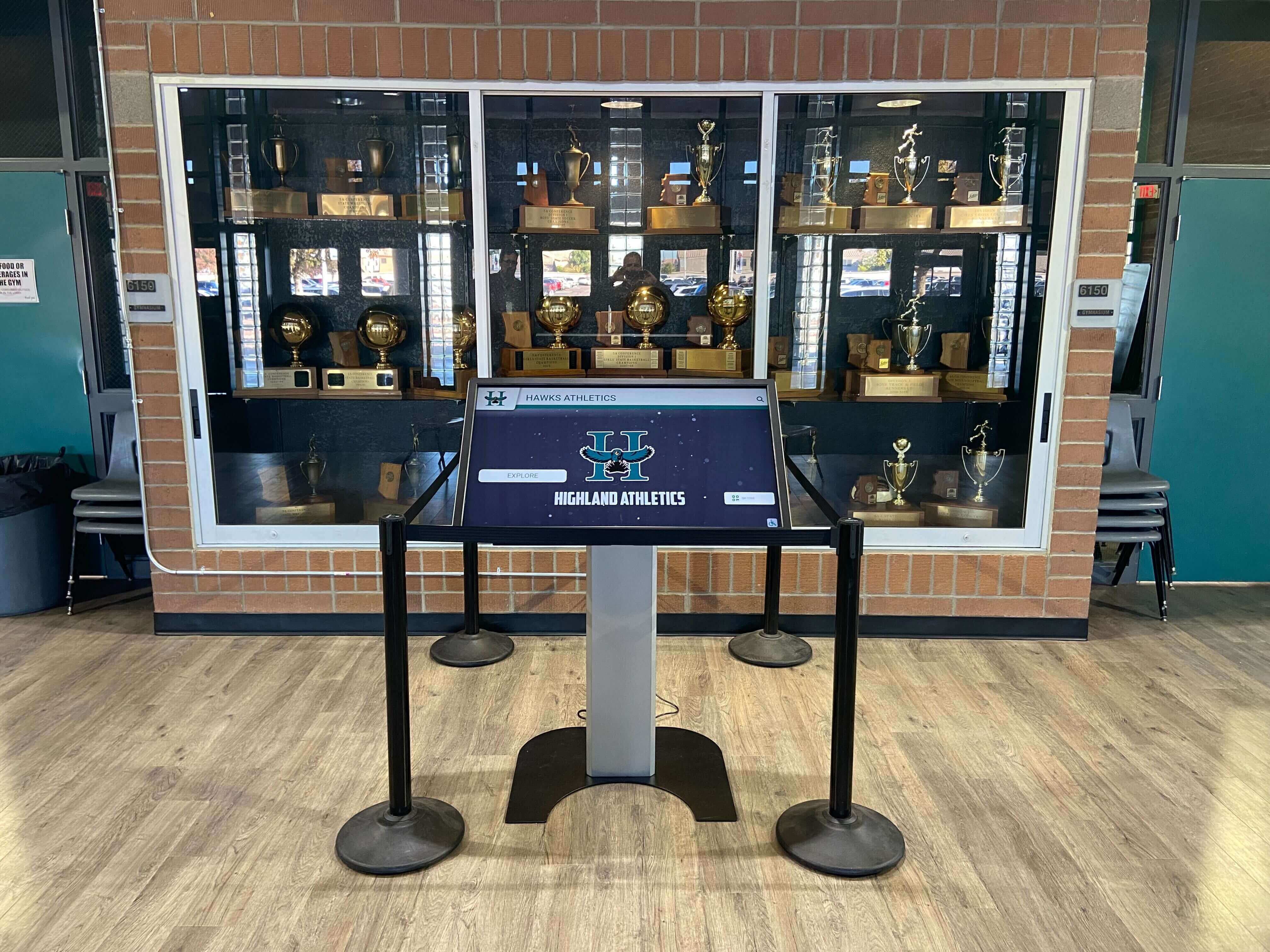
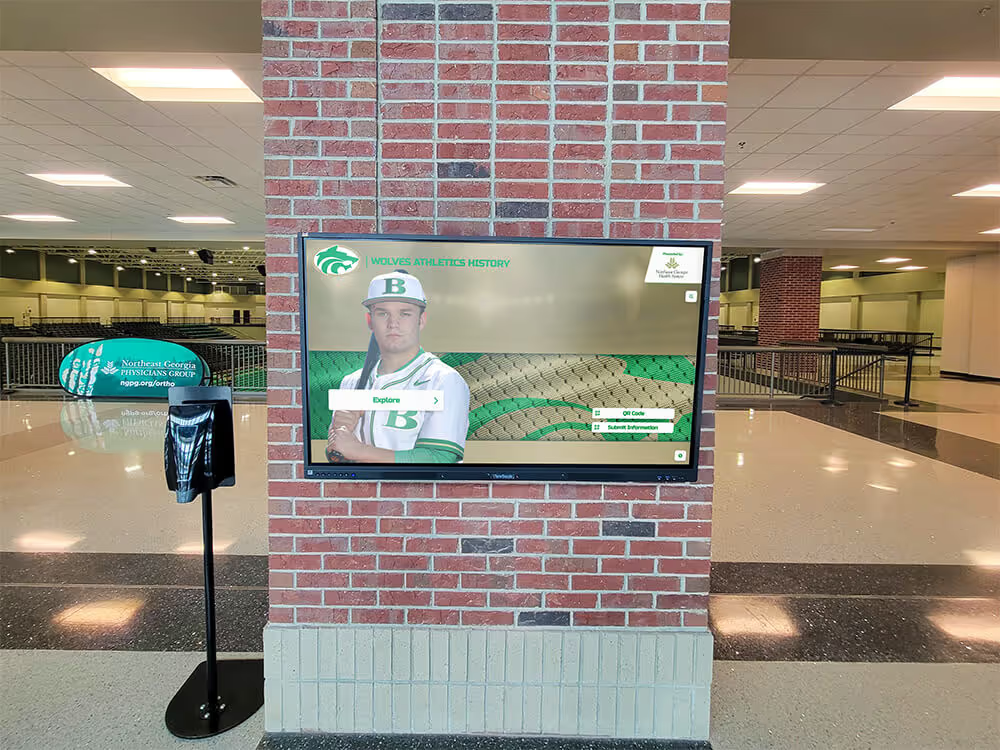
A recognition kiosk in a school trophy case surfaces records from an underlying database — when concurrent imports run without an isolation policy, the kiosk can display a mixed-state cohort rather than a consistent award set
Post-Import Verification Table
After each import completes, the following checks confirm that the isolation policy produced the expected consistent result. Run these checks immediately after commit, before the recognition display platform performs its next scheduled refresh. Document the result of each check in the import run log.
| Verification Check | What to Confirm | If Check Fails |
|---|---|---|
| Record count matches source | Rows written equals rows in the import source file | Investigate for partial write; confirm source file integrity and re-run import |
| No orphaned award assignments | Every award record references a valid athlete ID in the athlete profile table | Check for unresolved athlete IDs in the import source; correct and re-import |
| No duplicate award records | No athlete holds more than one active record for the same award in the same season | Identify and remove duplicates; audit the import source for input errors |
| Season boundaries resolved correctly | Award year values in imported records fall within the configured season window | Verify season boundary configuration; if recently updated, confirm the import transaction captured the correct boundary snapshot |
| Display-layer record count matches database | Count of records visible in the recognition platform matches the post-commit count in the source database | Check for replication lag or a display cache holding a pre-import snapshot; allow the refresh cycle to complete before escalating |
| No edit conflict events during the import window | Conflict log shows no events triggered during the import run window | Identify which concurrent sessions triggered conflicts and verify their resolved outcomes |
| No in-progress status records remaining | No records carry an in-progress or pending status from the completed import | Resolve stuck in-progress records before the next import run begins |
Run this table as a sequential checklist immediately after commit — before any additional import begins against the same record set. It functions as the final gate between a completed import transaction and a public display refresh.
How Recognition Displays Depend on Import Consistency
Athletic recognition displays — lobby kiosks, hallway touchscreens, and digital honor walls — consume data from the awards database on a scheduled refresh cycle. Each refresh pulls the current committed state of the database and renders it as the public-facing view of the program’s award history. When the database holds a consistent, correctly isolated snapshot from each import, the display reflects a coherent picture. When it holds a mixed-state result from two concurrent imports that interfered with each other, the display reflects the inconsistency — showing an athlete whose eligibility was evaluated under two different states, or a hall of fame cohort where some inductees’ records reference an old season boundary and others reference the updated one.
For programs operating multi-channel displays — lobby kiosks, digital honor walls, and web archives — the consistency of the underlying database determines whether all channels tell the same story. A transaction isolation policy is the mechanism that makes that consistency possible at the data layer.
Programs managing the network isolation layer that separates recognition display traffic from the broader school network — a complementary concern that operates at the infrastructure level rather than the database level — can find a parallel treatment in recognition display private VLAN isolation testing, which covers how network-level isolation is validated in school recognition environments.
For programs evaluating recognition display platforms and the database access patterns they expose to administrators running concurrent imports, the top hall of fame tools for athletic programs provides a comparative overview of platform capabilities relevant to database-backed recognition programs.
See How a Managed Platform Handles Concurrent Award Imports
Rocket Alumni Solutions provides athletic directors with a cloud-based recognition platform where concurrent imports, corrections, and display refreshes stay consistent — no manual isolation level configuration required. Request a demo to see how it works in practice.
Request a Platform Demo
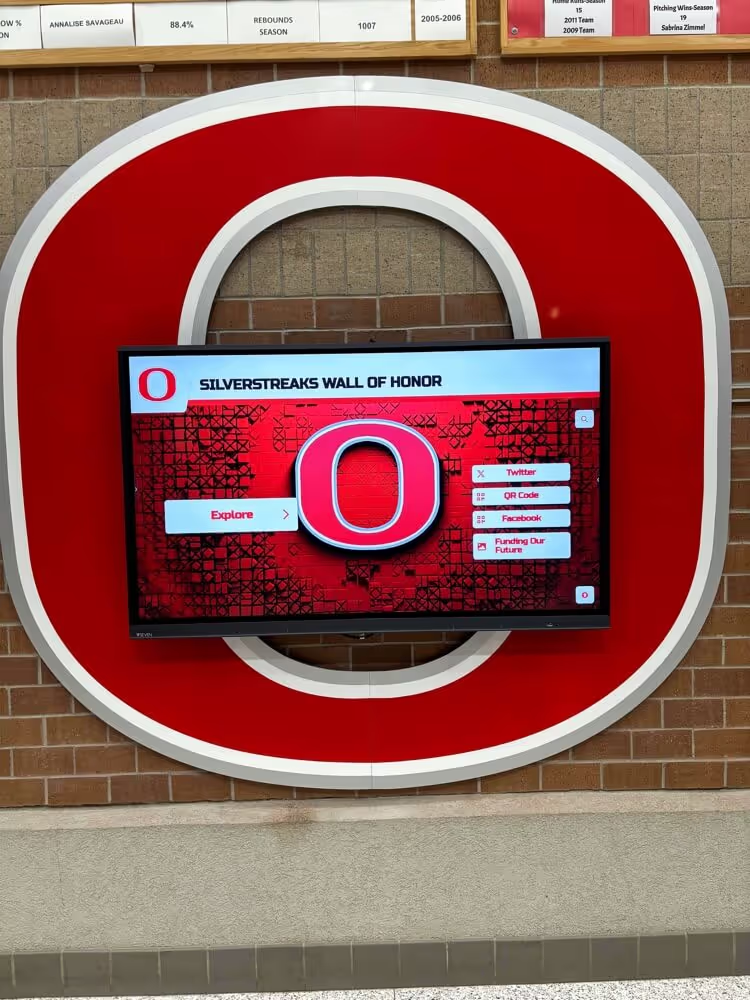
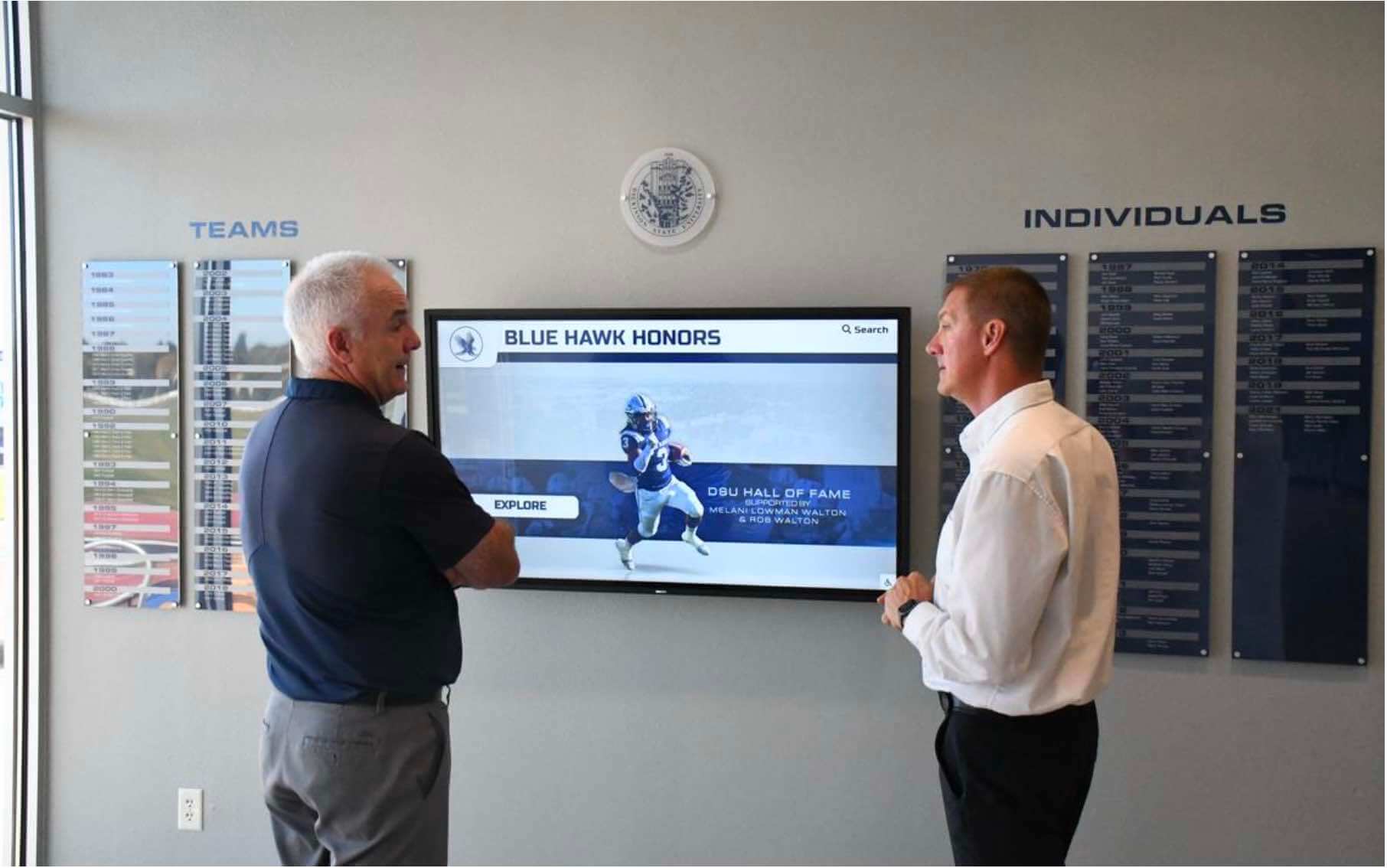
Each athlete card on a recognition display was written by a database transaction — an isolation policy ensures that when concurrent imports run, the display reflects a single consistent state rather than a mix of transactional snapshots
Frequently Asked Questions
What is the recommended transaction isolation level for concurrent athletic award imports?
REPEATABLE READ is the recommended default isolation level for concurrent batch award imports. It prevents dirty reads, nonrepeatable reads, and — in PostgreSQL's snapshot-based implementation — phantom reads, without requiring the retry infrastructure that SERIALIZABLE isolation demands. Use SERIALIZABLE for hall of fame induction batches and season configuration updates, where cross-table consistency and protection against serialization anomalies justifies the additional overhead. Use READ COMMITTED only for read-only display queries that run during active imports — not for any concurrent write operation.
What is a nonrepeatable read and why does it matter for award imports?
A nonrepeatable read occurs when a transaction reads the same row twice within a single operation and receives different values because another transaction committed a change to that row between the two reads. For award imports, this is a problem when the import reads athlete eligibility, award category limits, or season boundary data at the start of the batch and again during its validation pass. Under READ COMMITTED, a concurrent commit that occurs between those two reads is visible on the second read but not the first — producing an inconsistency in the import's internal view of the data. REPEATABLE READ prevents this by holding a stable snapshot of all rows read during the transaction, regardless of what other transactions commit in the interim.
How does PostgreSQL's Repeatable Read differ from the SQL standard definition?
The SQL standard defines Repeatable Read as preventing dirty reads and nonrepeatable reads but permitting phantom reads. PostgreSQL implements Repeatable Read using snapshot isolation, which prevents phantom reads in practice — a stronger guarantee than the standard formally requires at that level. As documented in the PostgreSQL transaction isolation reference, a query under Repeatable Read sees only data committed before the transaction began, and re-executing the same query within the transaction always returns the same set of rows. For athletic award imports running on PostgreSQL, this means Repeatable Read provides phantom read protection without the serialization failure overhead of the Serializable level.
What should happen when a SERIALIZABLE import receives a serialization failure?
A serialization failure (PostgreSQL SQLSTATE 40001) is a transient error, not a permanent one. The correct response is to roll back the transaction, wait a brief interval, and re-execute the full transaction from the beginning — not to resume from an intermediate point. The PostgreSQL documentation on serializable isolation explicitly states that applications using Serializable must be prepared to retry on serialization failure. The policy should define a maximum retry count — three attempts is the standard ceiling for transient database errors — and escalate to manual review after that ceiling is reached. Every retry attempt and its outcome should be logged in the import run log.
Should read-only display queries use a higher isolation level during active imports?
No. Read-only display queries do not write data and are not subject to the anomalies that higher isolation levels are designed to prevent. READ COMMITTED is appropriate for display refresh queries because it delivers the most recent committed data efficiently without the snapshot overhead of REPEATABLE READ. The risk for display queries during an active import is that the display may refresh while a concurrent import has partially committed — not a read anomaly within the query itself. The solution is to coordinate display refresh timing so it occurs after an import's full commit rather than during the import run, not to elevate the isolation level of the display query.
Conclusion
An athletic awards database transaction isolation policy is the mechanism that makes concurrent imports safe. By assigning REPEATABLE READ as the default for batch award imports, SERIALIZABLE for hall of fame and configuration operations, and READ COMMITTED for display queries, programs eliminate the three read anomalies most likely to corrupt a recognition record when multiple staff members or scheduled processes write to the same database at the same time.
The eight-step procedure and verification table in this guide provide a practical framework for applying the policy to each import run — not as a theoretical standard, but as an operational checklist that protects the records appearing on recognition displays for the life of the program.
For programs building a broader concurrent import governance framework — covering deadlock retry logic, optimistic locking for simultaneous edits, and savepoint policy for large batch operations — this isolation policy belongs alongside those complementary controls as part of a complete recognition data governance stack. For programs evaluating recognition platforms with built-in data management that reduces the configuration burden described here, best hall of fame tools for athletic programs and hall of fame tools for athletics, donors, arts, and history provide comparative platform overviews.
Run Athletic Award Imports Without the Isolation Complexity
Rocket Alumni Solutions provides athletic directors with a managed recognition platform where concurrent imports, corrections, and display refreshes stay consistent out of the box. Request a demo to see how the platform handles concurrent data operations in practice.
Request a Demo