



Athletic awards database uniqueness constraints are rules that prevent the same honoree from being recorded more than once for the same award in the same season — defined by combining at minimum four dimensions: the athlete’s identity, the team or program context, the competitive season, and the specific award title. A properly constructed uniqueness constraint blocks duplicate entries at the point of record creation rather than requiring a cleanup process after duplicates have already been committed to the archive and, potentially, published on a recognition display.
This guide is written for athletic directors, data administrators, IT staff, facilities coordinators, and recognition-program owners responsible for the integrity of school athletic honor records. It provides a four-dimension uniqueness model, a rule-by-rule constraint catalog, a numbered implementation workflow, guidance on legitimate edge cases that uniqueness logic must accommodate, and a framework for connecting database constraints to the digital display systems where honoree records appear publicly.
Duplicate honoree records are one of the most persistent quality problems in school athletic recognition archives — and one of the most preventable. When the same athlete appears twice for the same MVP award in the same season, the error rarely originates from carelessness. It originates from a database that permits the second entry without challenge. An athletic awards database uniqueness constraint is the structural mechanism that removes the permission for that second entry to exist.

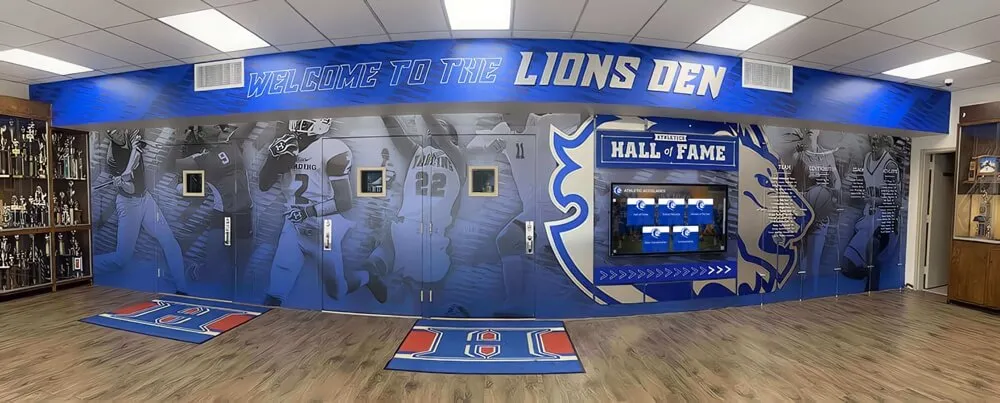
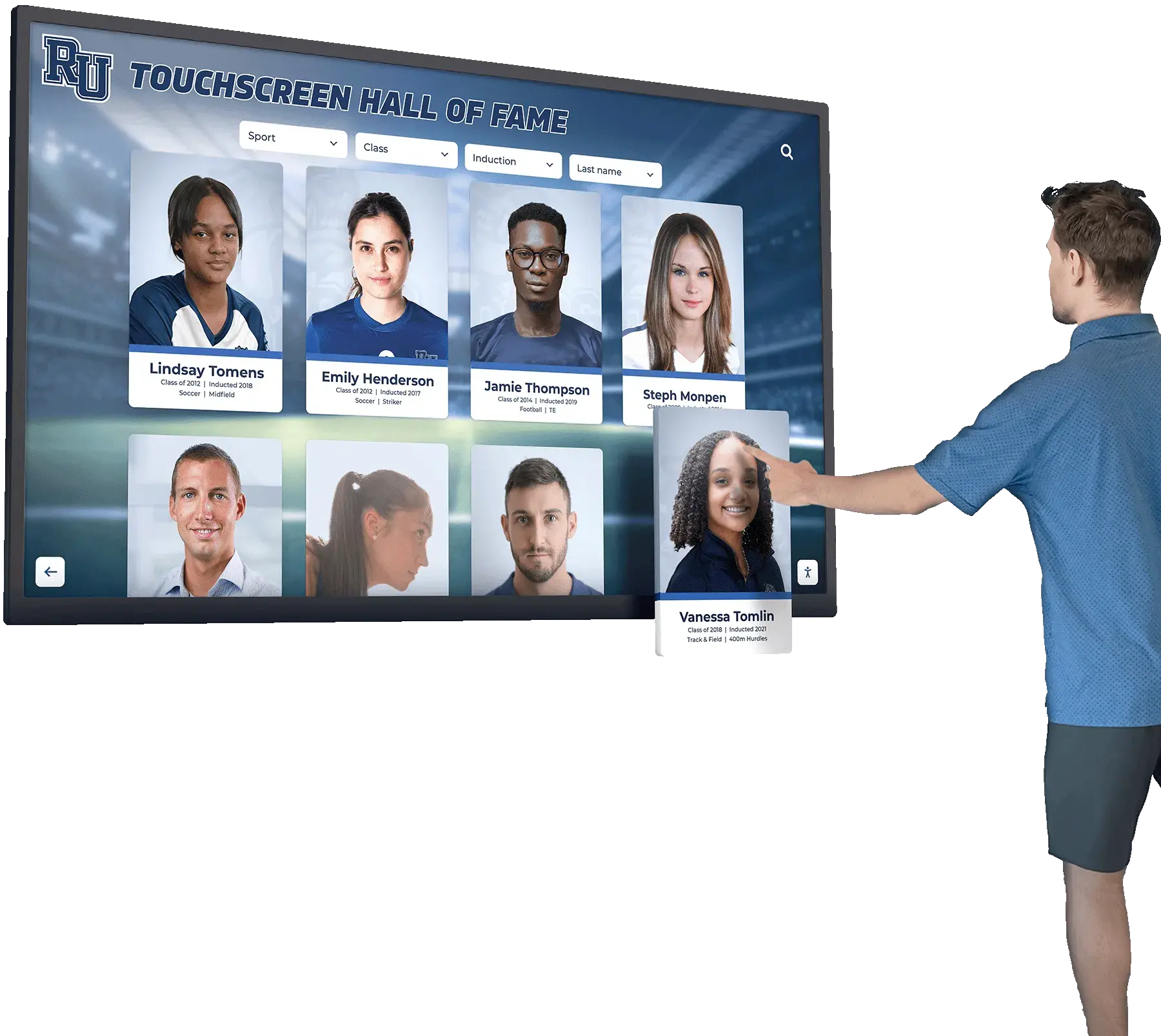
Every name visible on a school's hallway recognition display is a downstream output of the database that feeds it — uniqueness constraints prevent the duplicate entries that create two-record conflicts in the data before they surface as doubled honorees on the display
What Are Uniqueness Constraints in an Athletic Awards Database?
A uniqueness constraint is a rule applied to a database or record system that prevents any two records from sharing the same combination of values across a defined set of fields. In a traditional database, a unique index enforces this rule at the storage layer: the database engine rejects any insert or update that would produce a duplicate combination, regardless of who is entering the record or how many times the entry is attempted.
In athletic awards record systems — which range from purpose-built recognition platforms to spreadsheets managed by an administrative assistant — the constraint may be implemented at the database layer, the application layer (form validation), the workflow layer (a review step that checks for existing records), or all three in combination.
The distinction between a uniqueness constraint and a duplication warning: A warning alerts staff that a potential duplicate may exist but allows the entry to proceed. A uniqueness constraint blocks the entry entirely until the conflict is resolved. Both have legitimate roles in an athletic recognition system, but they serve different functions and should not be treated as equivalents. For records where duplicate publication would cause visible, public harm — a doubled honoree on a trophy case or a touchscreen display — a hard constraint is more reliable than a warning that a user may inadvertently dismiss.
The Four Dimensions of Athletic Award Uniqueness
Every athletic award record exists at the intersection of four dimensions. A uniqueness constraint that does not span all four will permit legitimate-seeming duplicates that are actually the same recognition entered twice.
| Dimension | Definition | Example Value |
|---|---|---|
| Athlete identity | The specific individual being honored, resolved to a single canonical record | “Jordan Rivera” resolved to athlete ID #1047 |
| Team and program context | The sport, gender classification, and competition level to which the award belongs | Boys Varsity Soccer |
| Competitive season | The academic year and season term that define when the award was earned | Fall 2025 / 2025–26 |
| Award title | The official award name from the program’s managed award catalog | Most Valuable Player |
A constraint built on all four dimensions means that the following record is blocked if any identical combination already exists in the database:
Athlete: Jordan Rivera | Program: Boys Varsity Soccer | Season: Fall 2025 / 2025–26 | Award: Most Valuable Player
But the following three records are all distinct and may coexist without conflict:
- Jordan Rivera | Boys Varsity Soccer | Fall 2025 / 2025–26 | Scholar-Athlete Award (different award title)
- Jordan Rivera | Girls Varsity Soccer | Fall 2025 / 2025–26 | Most Valuable Player (different program — relevant for gender-specific classification)
- Jordan Rivera | Boys Varsity Soccer | Fall 2024 / 2024–25 | Most Valuable Player (different season)
This four-dimension model is the minimum required for athletic awards database uniqueness constraints to function correctly. Constraints built on fewer dimensions produce false positives (blocking records that should be allowed) or false negatives (permitting duplicates that should be blocked).
Why Duplicate Honoree Records Persist Without Constraints
Duplicates enter athletic award databases through several predictable pathways. Understanding these pathways clarifies why structural constraints — rather than better training alone — are required to prevent them.
Pathway 1: Re-entry after a record is not found. A staff member searches for an existing record, does not find it (because the name was entered slightly differently the first time), and creates a new entry. Two records now exist for the same honoree under two slightly different name spellings.
Pathway 2: Parallel entry across systems. An award is entered into a spreadsheet by one staff member and into the recognition platform by another, with no synchronization step between the two. When records are later merged or migrated, the honoree appears twice.
Pathway 3: Season ambiguity. An end-of-season award is entered once using the academic year as the season identifier and once using the calendar year of the ceremony. Two entries exist for the same award, one labeled “2024–25” and one labeled “2025.” Without a uniqueness constraint that normalizes the season field to an approved format before checking for duplicates, the database treats these as distinct records.
Pathway 4: Batch import overlap. A historical record migration imports records from a prior system. The prior system also had duplicates. Without a uniqueness check at import time, those duplicates are imported and multiplied.
Pathway 5: Post-correction residue. An entry is corrected by creating a new record with the corrected values and manually archiving the original — but the archiving step is skipped. The original and the corrected record now both exist in the active database.
According to the National Center for Education Statistics, U.S. school districts collectively maintain records for more than 50 million students across thousands of programs. Even small error rates across that scale represent large absolute numbers of affected records — making structural prevention more scalable than record-by-record auditing.
For programs that have already accumulated historical duplicates and need to surface and resolve them before they propagate to display systems, resources on digitizing old yearbooks and hall of fame display preservation cover how archival consolidation efforts connect to ongoing data quality workflows.
Step-by-Step: Implementing Athletic Awards Database Uniqueness Constraints
The following numbered workflow applies whether the program is implementing constraints in a purpose-built recognition platform, a custom database, or a structured spreadsheet system with validation rules.
Step 1 — Establish the Canonical Athlete Identity Record
Uniqueness constraints that include athlete identity require a single canonical record for each athlete — a master entry that all award records reference, rather than multiple free-text name entries that may vary by spelling, nickname, or middle-name inclusion.
A canonical athlete record should include:
- A unique internal identifier (ID number, not dependent on name)
- Legal first and last name (validated per name format rules)
- Preferred display name (if applicable, with authorization documented)
- Enrollment or participation period (academic years active)
All award records link to the canonical athlete ID rather than to a free-text name field. This means that a search for an athlete’s records returns every award linked to their ID — not just the awards entered under one exact spelling of their name.
Why this matters for uniqueness: If award records link to athlete IDs rather than name strings, the uniqueness constraint compares IDs, not strings. Two records with athlete ID #1047 and the same season, program, and award title will always be caught as duplicates, regardless of whether the name was entered identically in both records.
Step 2 — Define the Season Dimension Using an Approved Format
Season fields are the most common source of constraint failures because the same season can be expressed in multiple legitimate-seeming formats. Before a uniqueness constraint on the season dimension can function reliably, the season field must enforce a single approved format.
Approved format requirements:
- Academic year: YYYY–YY using an en dash (e.g., 2025–26)
- Season term: Fall, Winter, Spring, or Summer (from a controlled vocabulary list)
- Both fields must be populated; neither may substitute for the other
A uniqueness check on the season dimension compares the exact combination of academic year and season term. This means Fall 2025 / 2025–26 is distinct from Winter 2025 / 2025–26, which is correct and expected — fall and winter sports in the same academic year are different competitive seasons.
Step 3 — Lock Award Titles to the Official Catalog
A uniqueness constraint on the award title dimension requires that the title field contain only values from the program’s managed award catalog. Free-text entry in the award title field defeats the constraint: “Most Valuable Player,” “MVP,” “M.V.P.,” and “Most Val. Player” are four strings that describe the same award but will not match each other in a uniqueness check.
Implement the award title field as a dropdown or lookup against the official award catalog — not a free-text entry. Every entry in the catalog should have:
- A canonical title (used in all records and displays)
- Active season range (the seasons for which this award was offered)
- Applicable programs (which sports the award applies to)
Step 4 — Define the Constraint Rule for Each Award Type
Not all awards have the same uniqueness logic. A team-level award (best team record) has a different constraint structure than an individual athlete award (MVP). Define the constraint rule for each award type explicitly.
| Award Type | Constraint Dimensions | Notes |
|---|---|---|
| Individual athlete honor (MVP, Scholar-Athlete) | Athlete ID + Program + Season + Award title | Standard four-dimension constraint |
| Shared award (co-MVPs) | Program + Season + Award title + each Athlete ID separately | Multiple records permitted if the shared award is documented |
| Team-level award (Championship) | Program + Season + Award title | Athlete ID not in constraint; applies to the entire team |
| Record board entry (individual event record) | Athlete ID + Event type + Program + Season | Season dimension may be relaxed if records are permanent until broken |
| Hall of fame induction | Athlete ID + Award title | No season dimension; induction is a one-time, permanent event |
Defining these rule variants before implementing the constraint prevents both false positives (rejecting a legitimate shared award as a duplicate) and false negatives (permitting a team-level duplicate because athlete ID was in the constraint and two athletes share the award).
Step 5 — Apply the Constraint at All Entry Points
A uniqueness constraint defined but only enforced at one entry point will fail at every other point. The constraint must be applied at:
- The data entry form — before a record is saved, the form checks the four-dimension combination against existing records and blocks submission if a match is found
- The pre-save validation pass — a server-side or rule-engine check that catches entries that bypass form-level validation
- The batch import process — all records in an incoming import are checked against the existing database and against each other before any record is committed
- The record migration workflow — any transfer of records between systems includes a deduplication step using the four-dimension uniqueness check
For programs operating multiple display channels — digital recognition kiosks, physical trophy cases, a school website archive, and touchscreen hall of fame interfaces — the records feeding each channel should trace back to a single deduplicated master database, not to separate per-channel databases that accumulate independently. For context on how digital archive systems preserve institutional history while maintaining record integrity, digitizing vintage school yearbooks and archival quality service options covers the archival standards that underpin long-term record reliability.
Step 6 — Define the Resolution Workflow for Constraint Violations
When the constraint blocks an entry, the staff member needs a clear, documented resolution path — not just a generic “duplicate exists” error. The resolution workflow should present:
- The existing record that triggered the constraint (with all four field values visible)
- Three options: Confirm existing record is correct and discard this entry, Confirm this is a distinct record and document why, or Edit the existing record if it contains an error
- A required documentation step for any “distinct record” confirmation (why is this a legitimate duplicate-seeming entry?)
Without a resolution workflow, staff members often work around the constraint by altering one of the four fields slightly — misspelling the athlete’s name, using an informal season label — which defeats the constraint and introduces the name inconsistency the constraint was designed to prevent.
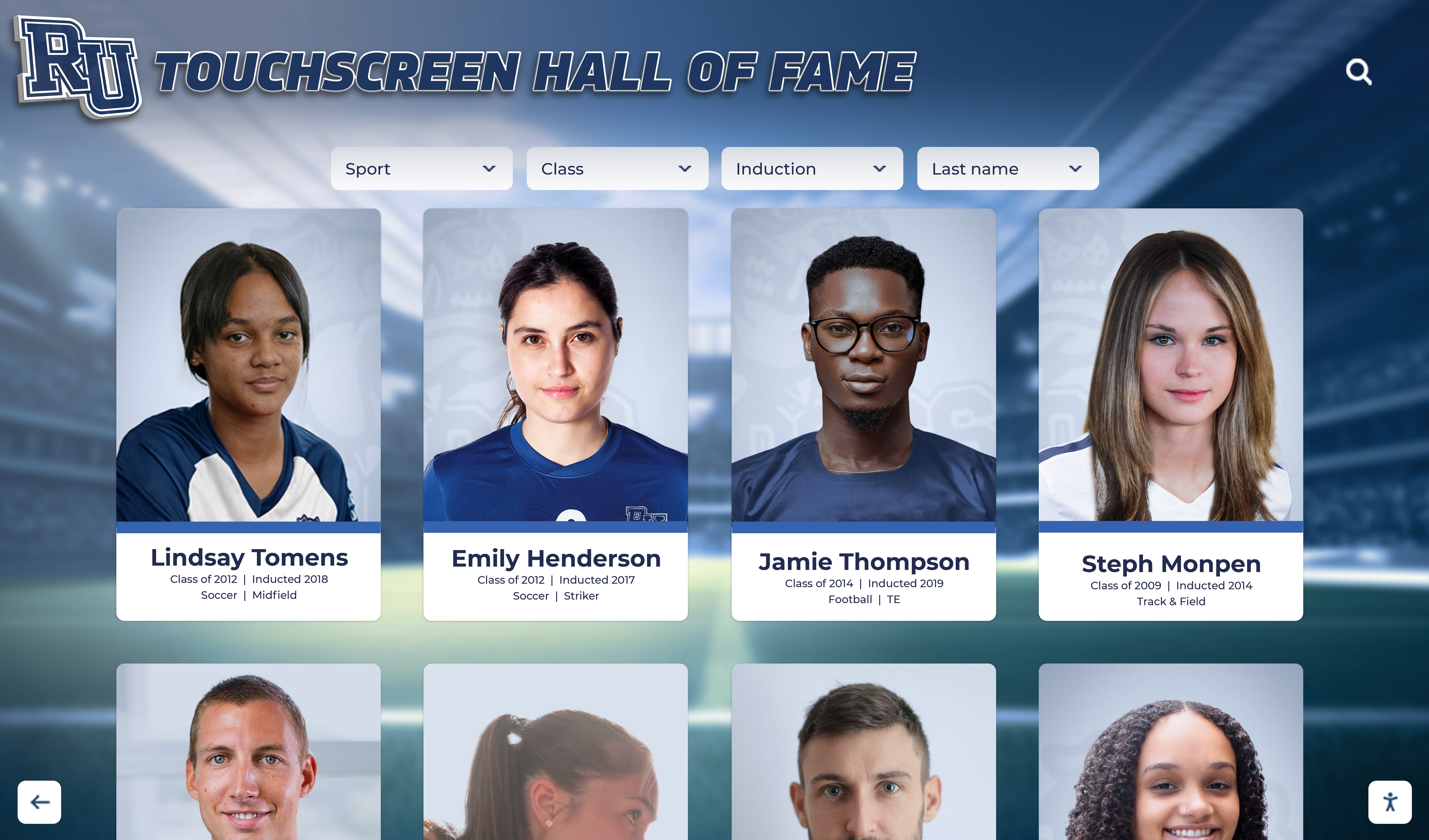
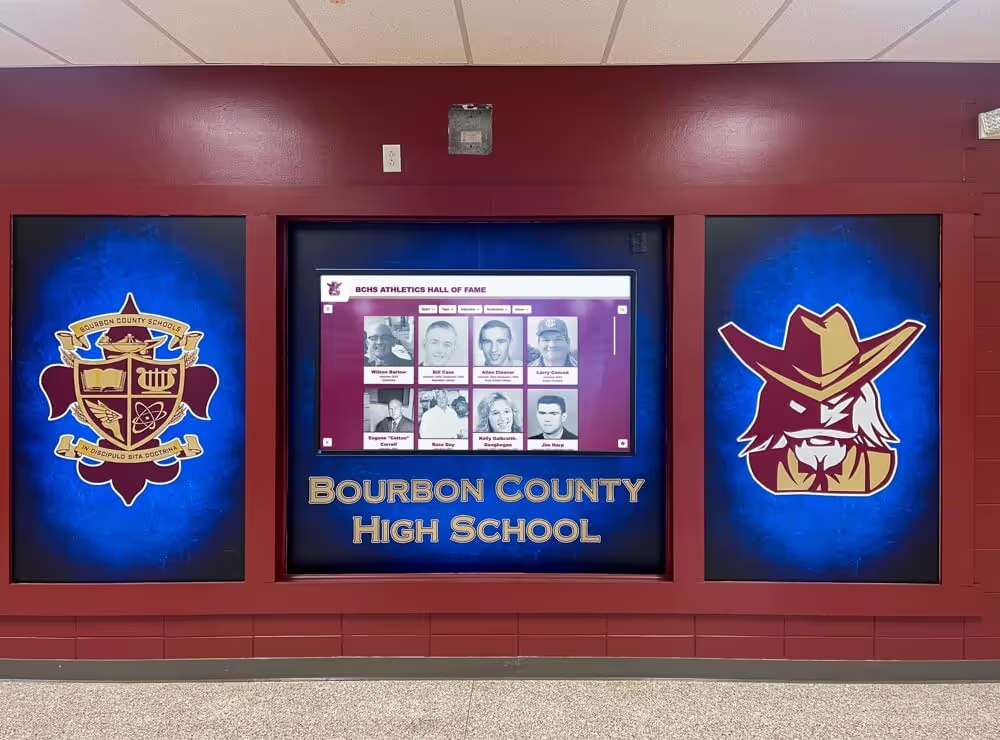
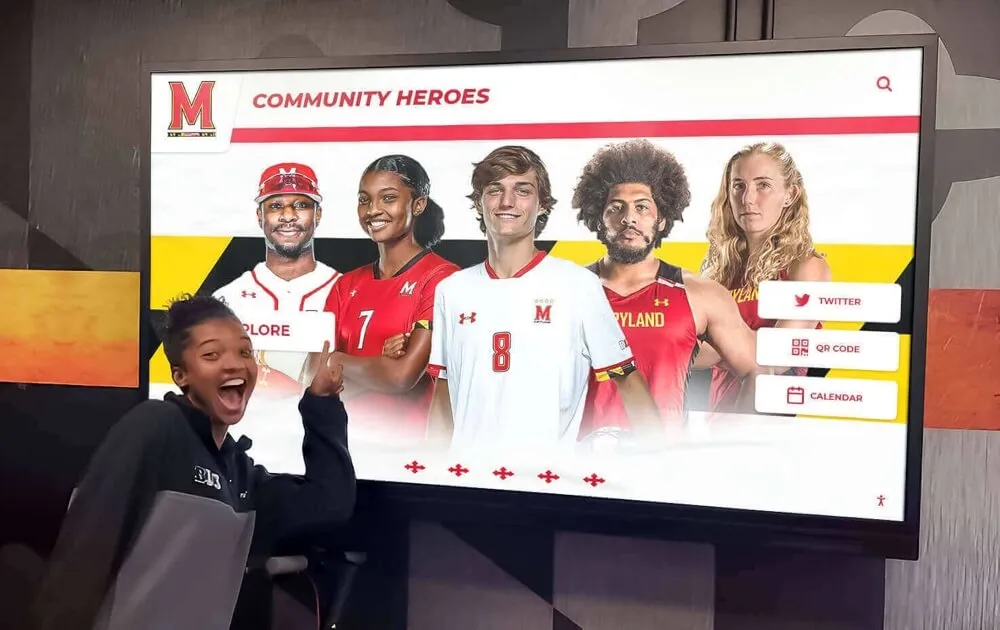
Portrait-style recognition displays rely on a deduplicated master record — each athlete's profile should appear once per award, with uniqueness constraints enforced at entry preventing the doubled records that produce duplicate portraits on touchscreen displays
Uniqueness Constraint Rules Catalog
The following catalog defines constraint rules by domain, parallel in structure to a data validation rules catalog. Each rule specifies the constraint type, the fields included, the action taken on violation, and the conditions under which an exception is permitted.
| Rule ID | Constraint Type | Fields in Scope | Violation Action | Exception Conditions |
|---|---|---|---|---|
| UNIQ-01 | Individual award uniqueness | Athlete ID + Program ID + Season (academic year + term) + Award title | Block entry; display existing record and resolution options | Shared award documented with written athletic director authorization |
| UNIQ-02 | Team award uniqueness | Program ID + Season + Award title | Block entry; display existing record | Award presented to multiple teams in same season (e.g., league co-champions — must be documented) |
| UNIQ-03 | Hall of fame induction uniqueness | Athlete ID + Award/induction category | Block entry; display existing record | No exceptions — an athlete may only be inducted once per category |
| UNIQ-04 | Record board entry uniqueness | Athlete ID + Event type + Program + Measurement unit | Warn and require confirmation; do not hard-block | Broken records: previous record retains historical entry; new record becomes active |
| UNIQ-05 | Same-name athlete disambiguation | First name + Last name + School year (freshman/sophomore/junior/senior) | Warn; prompt for athlete ID confirmation | Athletes with identical names must be resolved to distinct canonical athlete records with distinct IDs before award entry proceeds |
| UNIQ-06 | Cross-season repeat award | Athlete ID + Award title (repeat flag enabled for the award) | Allow; no constraint | Awards like “Four-Year Scholar-Athlete” are designed to repeat annually — flag in the award catalog so the constraint engine skips UNIQ-01 for those titles |
| UNIQ-07 | Import batch internal uniqueness | All batch import records checked against each other using UNIQ-01 and UNIQ-02 logic before database commit | Flag all duplicates in a pre-commit report; require resolution before import proceeds | None — batch imports must pass deduplication before any records are committed |
| UNIQ-08 | Cross-system migration uniqueness | Incoming migrated records checked against existing master database records using UNIQ-01 and UNIQ-02 logic | Flag conflicts in migration report; require athletic director review before conflicts are resolved | None — migration conflicts require explicit resolution, not automatic override |
Handling Edge Cases That Uniqueness Logic Must Accommodate
Several legitimate scenarios produce record combinations that look like duplicates but are not. A well-designed constraint system documents these exceptions explicitly rather than building workarounds into the constraint rules themselves.
Shared Awards (Co-MVPs, Co-Captains)
When two athletes share an award — named co-MVPs, for instance — the program has two distinct records that share the same season, program, and award title. These are not duplicates; they are legitimate shared recognitions. The uniqueness constraint for a shared award exception should require:
- Written documentation from the athletic director confirming the shared award decision
- Both athlete records linked to a shared-award flag on the award entry
- The ceremony program or official documentation referenced as the governing source
For programs that manage recognition ceremonies where shared awards are announced, corporate award recognition category conventions that parallel school ceremonies provides useful framing for how shared recognition is typically handled across formal recognition contexts.
Transfer Athletes
An athlete who transferred from another school and receives an award in their first season at the new school is not a duplicate of any prior record — but the new record may conflict with historical records transferred from their previous institution if systems are merged. Transfer athlete records require:
- A distinct canonical athlete ID at the receiving school (not merged with the previous school’s athlete ID)
- A documented transfer date so that award season eligibility can be verified
- A note in the athlete’s canonical record referencing any prior institution’s records
Name Changes and Preferred Display Names
An athlete who changed their legal name after receiving an award — due to marriage, legal correction, or other reason — may have two canonical name forms in the record system. The correct resolution is to update the canonical athlete record with the new legal name, not to create a new canonical record. The athlete ID remains the same; only the name fields are updated. The correction log should document the name change with the date and authorization.
For recognition programs that produce physical artifacts such as memorial plaques and permanently engraved displays, the implications of post-publication name changes are significant. Resources on personalizing permanent recognition tributes after the fact cover the practical considerations for physical displays that digital uniqueness constraints cannot retroactively fix.
Reinstated Records After Corrected Errors
When a record is correctly blocked by a uniqueness constraint — because an existing record turned out to be the duplicate, not the new entry — the athletic director may need to archive the original record and allow the corrected entry to proceed. The resolution workflow should support:
- Archive the original (duplicate) record with a correction log entry explaining the archiving decision
- Confirm the new entry against the now-cleared constraint
- Update all display channels that published the original record
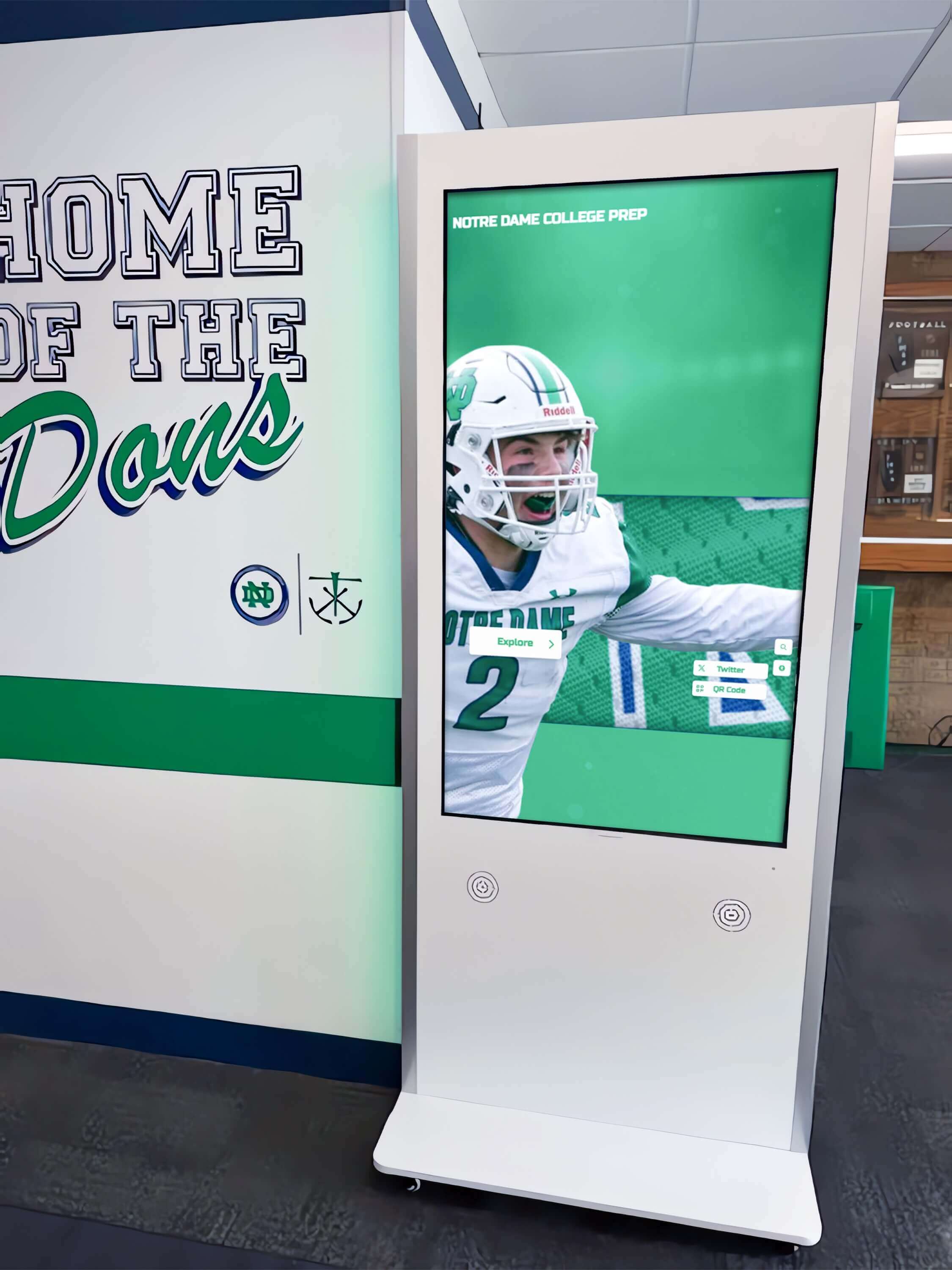
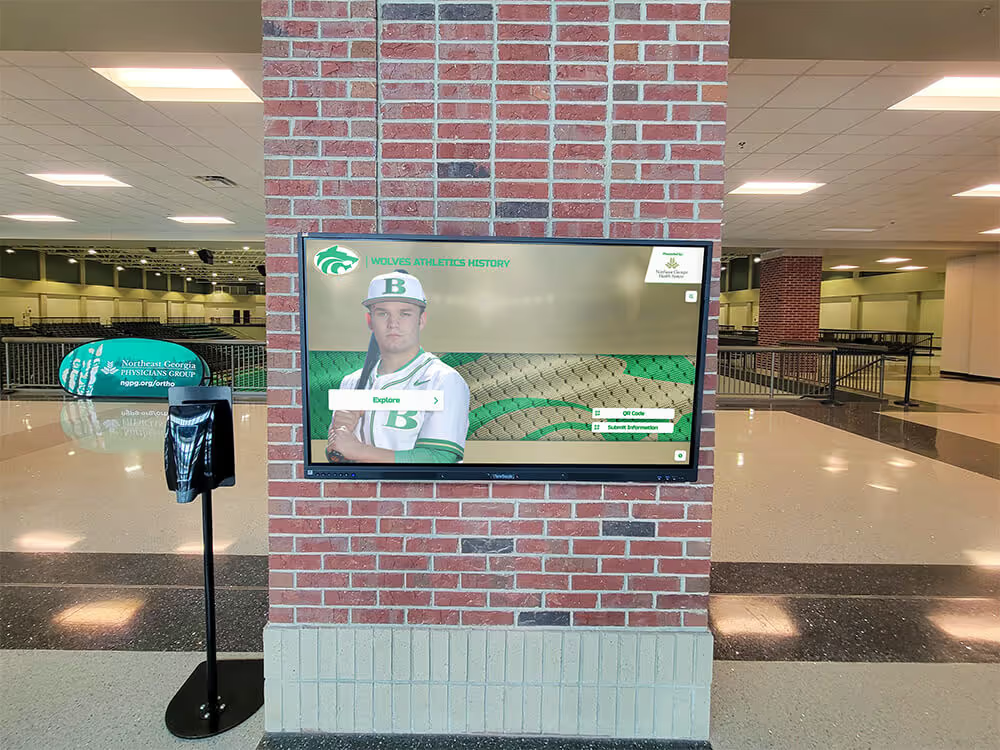
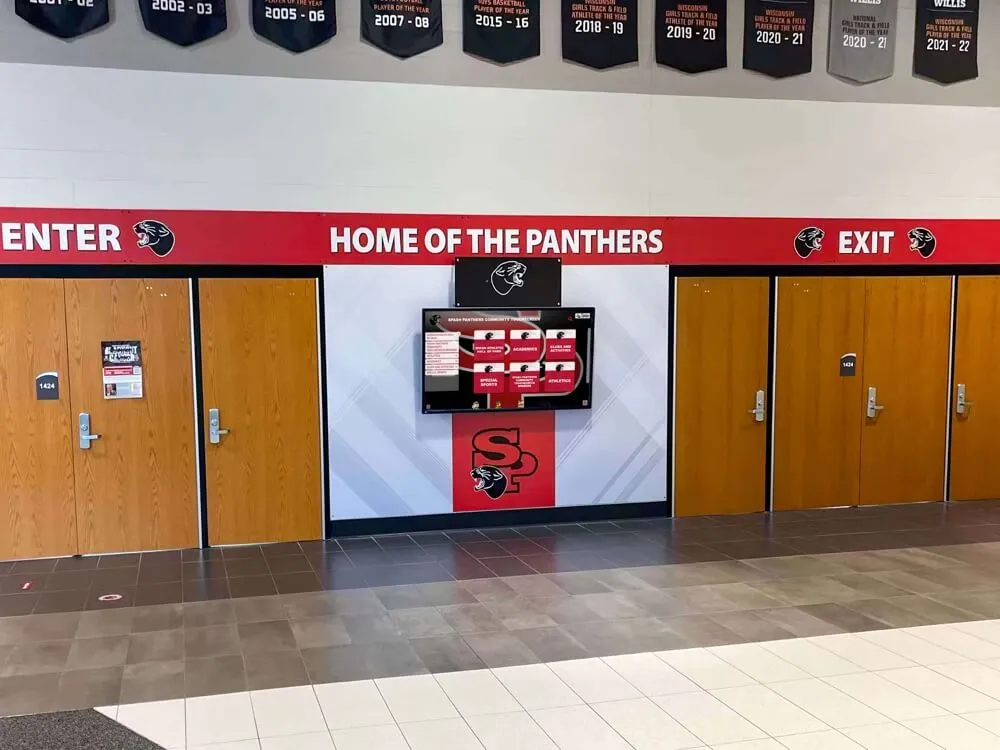
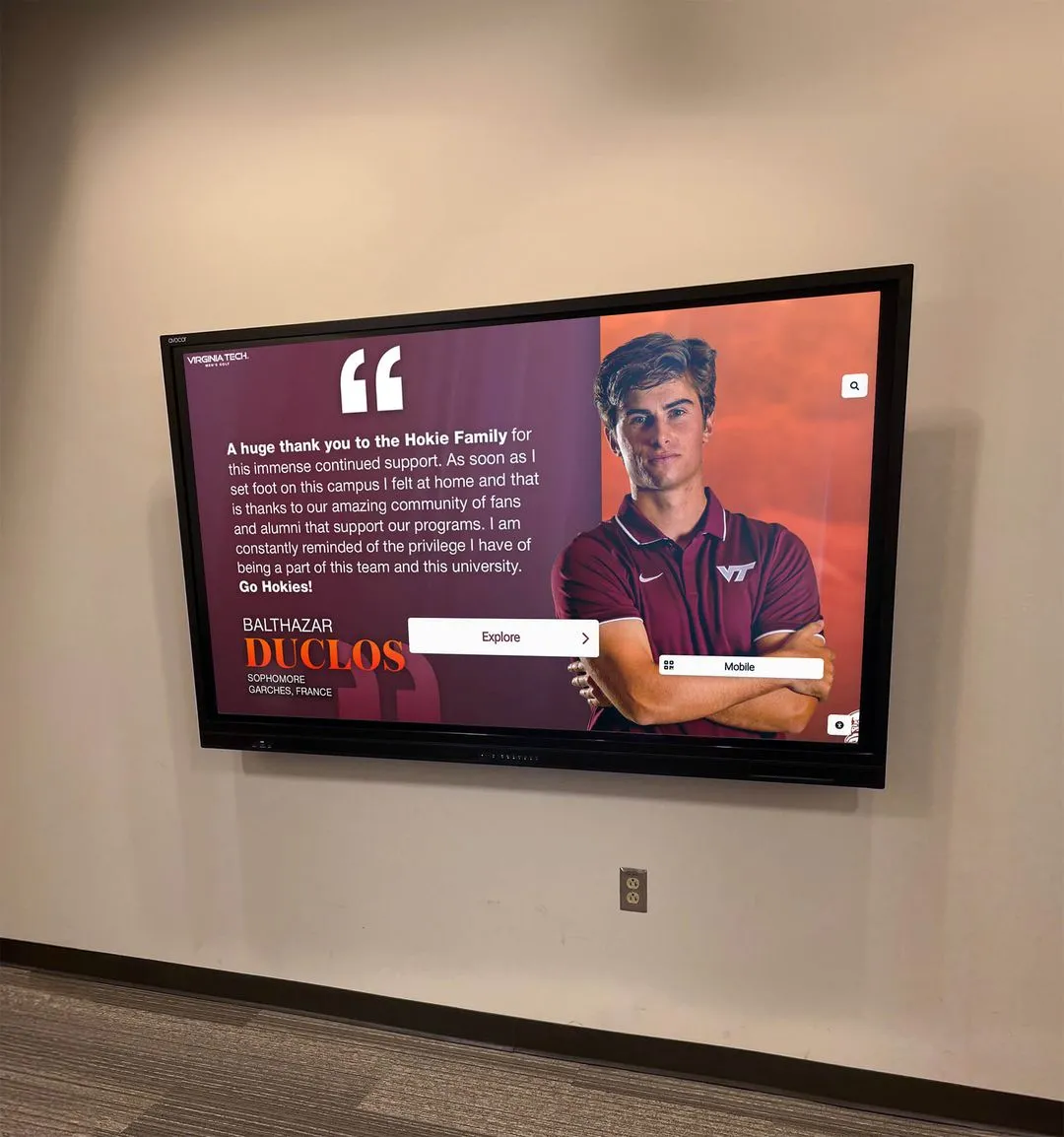
Athletic recognition kiosks that organize records by team and season depend on clean, deduplicated underlying data — uniqueness constraints applied at each entry point prevent the doubled records that cause inconsistent display output
How Digital Recognition Platforms Enforce Uniqueness Automatically
Purpose-built digital recognition platforms implement uniqueness constraints natively as part of their data architecture, reducing the enforcement burden on staff and ensuring that constraints are applied consistently even as team members change.
Athlete ID resolution at entry. Platforms that require staff to select an athlete from an existing canonical roster — rather than typing a name into a free-text field — resolve the athlete identity dimension automatically. The system uses the athlete’s ID for all internal linking, so the uniqueness check compares IDs rather than name strings, eliminating the spelling-variation failure mode.
Controlled vocabulary for award titles and season labels. Dropdown selection for award titles (from the managed catalog) and season terms (Fall, Winter, Spring, Summer from an approved list) eliminates the format-variation failure mode. The system cannot accept a misspelled award title or an informal season label because those options do not exist in the interface.
Pre-save duplicate detection. Recognition platforms that run a uniqueness check before saving a new award record surface existing matches automatically, presenting the conflicting record and the three-option resolution workflow described in Step 6, without requiring the staff member to perform a manual search.
Batch import deduplication. Platforms with native import tools run the four-dimension uniqueness check across the entire import batch before committing any records. The system generates a conflict report identifying each duplicate pair, the dimensions on which they match, and the recommended resolution — enabling athletic directors to resolve conflicts in the source data before the import proceeds.
Audit log for exception documentation. When a staff member confirms that a duplicate-seeming record is a legitimate exception (a shared award, a co-captaincy), the platform logs the confirmation with a timestamp, the confirming user, and any attached documentation. This audit trail prevents the exception-confirmation process from becoming a routine bypass of the constraint.
For programs considering how digital time capsule and memory-display technologies handle record uniqueness across years of institutional history, digital time capsule touchscreen memory display solutions for schools provides context for how long-term archive integrity intersects with the data governance practices that uniqueness constraints establish.
Connecting Uniqueness Constraints to Digital Display Quality
The downstream impact of athletic awards database uniqueness constraints is most visible on the recognition displays that athletes, families, alumni, and visitors see. A duplicate record that passes through the constraint gap and reaches a public display creates three categories of visible problems.
Problem 1: Doubled honoree profiles. A touchscreen hall of fame or portrait display that renders one profile per award record shows the same athlete twice — two portraits, two profile cards, two listings in the same category. The duplication is immediately visible and raises questions about the reliability of every other record in the display.
Problem 2: Inflated record counts. A records board or award summary that counts records per athlete, per team, or per season reports incorrect totals when duplicate records exist. An athlete credited with two MVP awards in a single season — both identical records — appears to have won the award twice, which may not be the case.
Problem 3: Search and filter failures. Digital recognition platforms that allow visitors to browse by athlete name, team, or season will surface both duplicate records in any search that matches their shared fields. Visitors cannot determine which record is authoritative, and the display loses credibility as a reference source.
For programs building digital recognition archives that serve as long-term institutional references for athletes and alumni — including halls of fame, donor recognition walls, and historical record boards — data governance resources on student-athlete recognition and whole-person recognition displays at schools provide context for why record integrity matters beyond administrative accuracy and connects to the trust that recognition programs earn with the communities they serve.
For programs working on display graphics and digital media that accompany recognition records — where the graphic assets used in a display must match the honoree records they represent — free social media graphics and school recognition media resources covers the production pipeline downstream of the data records that uniqueness constraints protect.
Pre-Publication Uniqueness Checklist
Before any athletic award record is published to a display channel, run this checklist to confirm that uniqueness constraints were applied correctly at every prior step.
- Athlete identity resolved to a canonical athlete ID (no free-text name entry used as the record key)
- Season field uses approved format: academic year (YYYY–YY) and season term (Fall/Winter/Spring/Summer)
- Award title drawn from the managed award catalog (not a free-text entry)
- Four-dimension uniqueness check run and no unresolved conflicts exist
- If a shared-award exception was confirmed, written documentation is on file and the exception is logged
- Transfer athletes confirmed to have distinct IDs from any prior institution records
- Batch import records (if applicable) cleared the pre-import deduplication report
- Correction log is current if any field was modified after initial entry
- All display channels will receive the record simultaneously to prevent channel-specific duplication
See How a Recognition Platform Enforces Uniqueness Automatically
Rocket Alumni Solutions gives athletic directors a cloud-based recognition platform with controlled vocabulary award titles, canonical athlete rosters, pre-save duplicate detection, and batch import deduplication — so uniqueness constraints are enforced at every entry point without additional manual review steps.
Request a Demo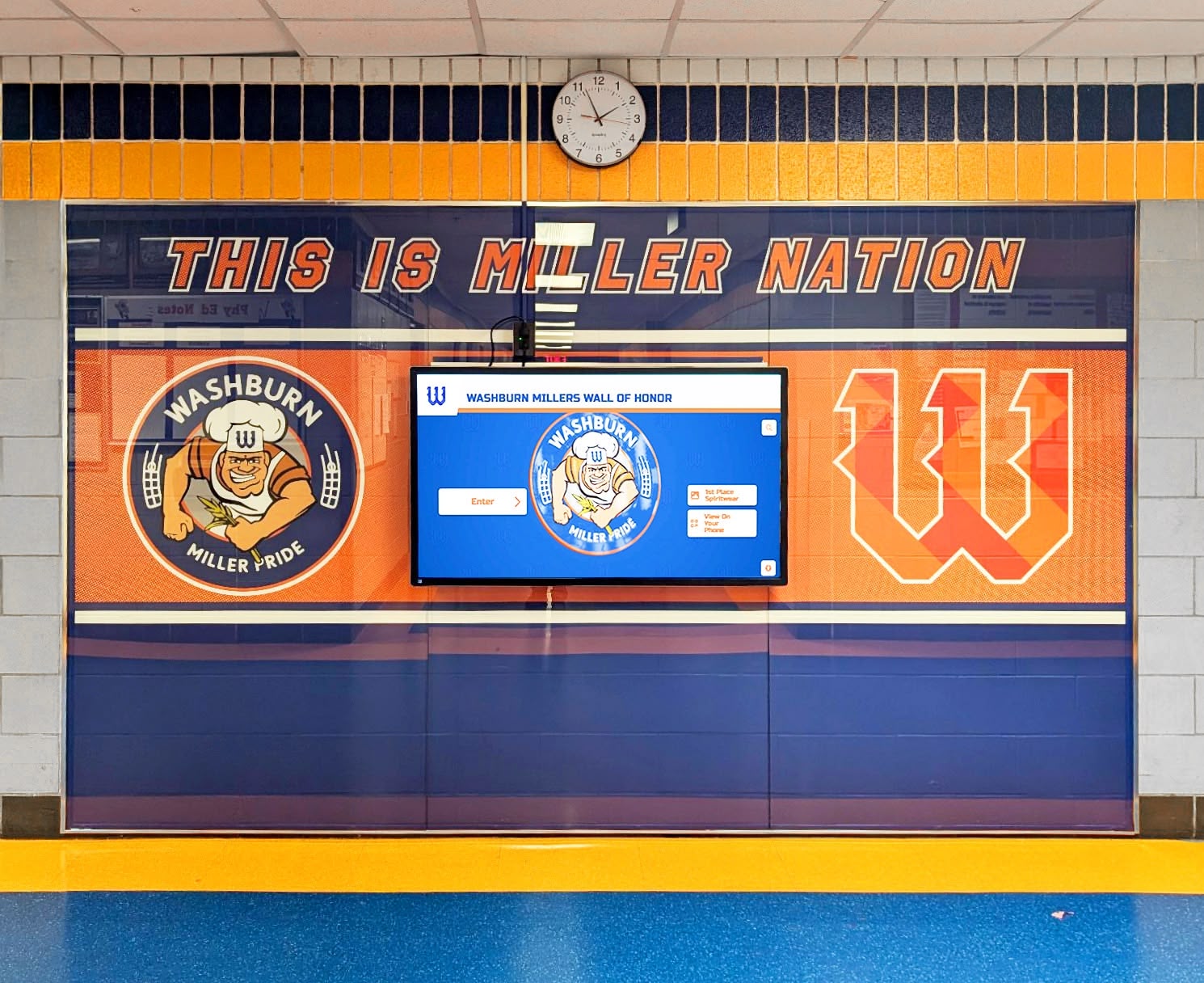
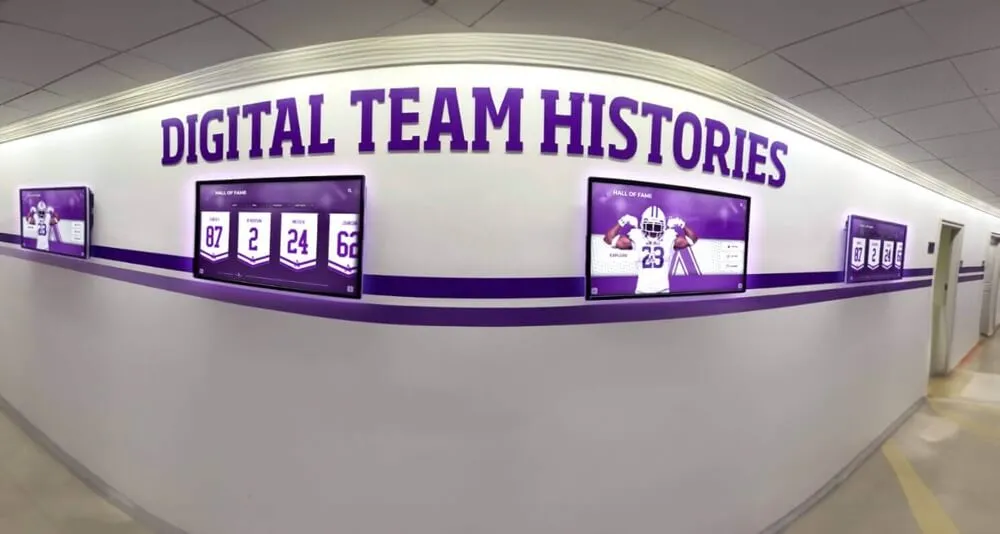
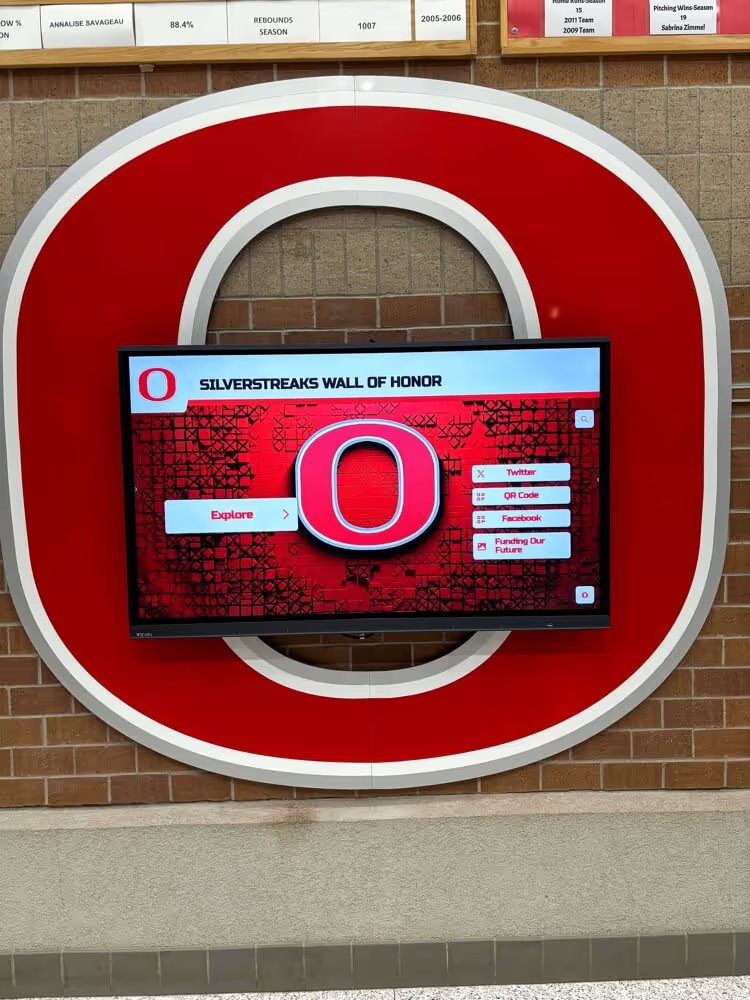
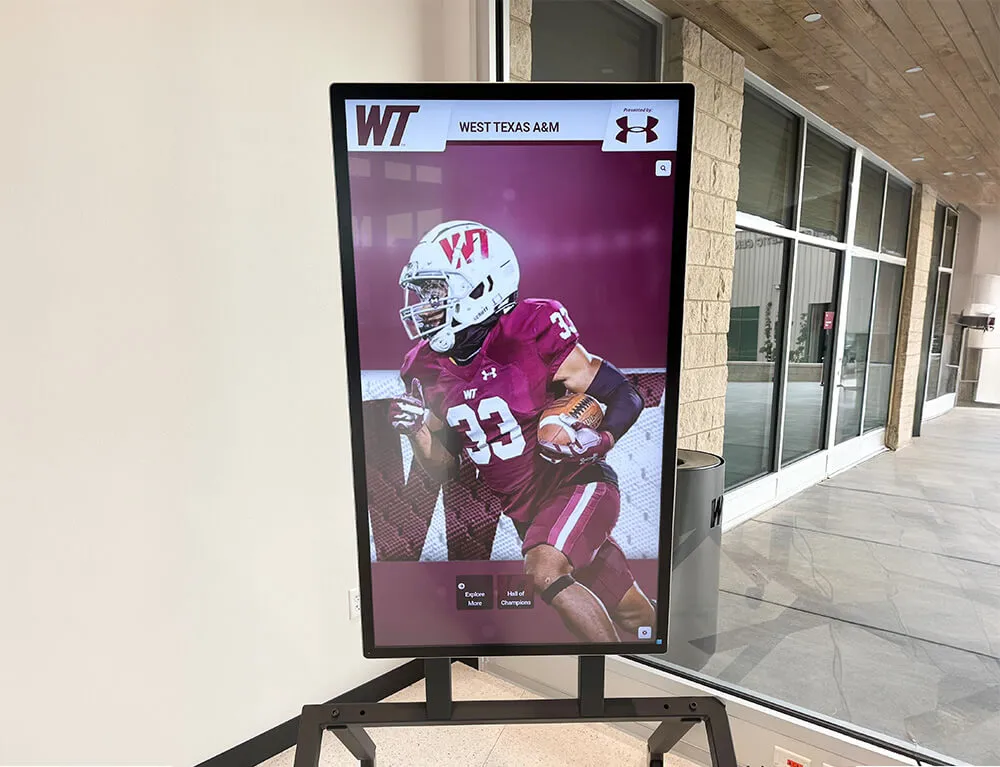
Every honoree visible on a wall of honor display should appear exactly once — uniqueness constraints enforced at the database and platform layers prevent the doubled records that surface as duplicated names on hallway recognition displays
Frequently Asked Questions
What are athletic awards database uniqueness constraints?
Athletic awards database uniqueness constraints are rules applied to a recognition record system that prevent the same honoree from being recorded more than once for the same award in the same season. A complete uniqueness constraint spans four dimensions: the athlete's canonical identity (resolved to a unique ID rather than a name string), the team or program context (sport, gender classification, and competition level), the competitive season (academic year and season term in an approved format), and the specific award title (drawn from the official award catalog). When a new record matches an existing record on all four dimensions simultaneously, the constraint blocks the new entry and presents the staff member with a resolution workflow: confirm the existing record is correct, document why this is a legitimate exception, or correct the existing record if it contains an error.
Why do duplicate athletic award records occur even when staff are careful?
Duplicate athletic award records typically arise from structural gaps in the record system rather than from individual carelessness. Common causes include: a staff member who cannot locate an existing record (because the name was entered under a slightly different spelling) and creates a new entry; parallel data entry into two separate systems that are later merged without deduplication; season ambiguity where the same season is entered in two different formats in separate records; and batch import processes that bring in duplicates from historical spreadsheets or legacy systems without a deduplication pass. Because each of these pathways operates at the system level — not the individual level — preventing duplicates requires structural constraints that block the duplicate at the point of creation, not better training alone.
How should shared awards (co-MVPs, co-captains) be handled in a system with uniqueness constraints?
Shared awards require a documented exception to the standard four-dimension uniqueness constraint. When two athletes share an award — named co-MVPs, for instance — two records exist with the same program, season, and award title but different athlete IDs. The uniqueness constraint should be configured to permit this combination when a shared-award flag is present on both records and written documentation from the athletic director is on file confirming the shared-award decision. The exception should be logged with a timestamp and the confirming user's name, so that the audit trail preserves evidence that the shared award was an intentional decision rather than a duplicate entry that slipped through the constraint. Without this documentation step, shared-award exceptions are indistinguishable from constraint bypasses.
What is the role of canonical athlete IDs in uniqueness constraint implementation?
Canonical athlete IDs are the mechanism that allows uniqueness constraints to function reliably despite name variation. When award records link to an athlete's unique internal identifier rather than to a free-text name field, the uniqueness check compares IDs rather than strings. Two records with athlete ID #1047 and the same season, program, and award title will always be caught as duplicates — even if the name was spelled differently in each entry. Without canonical IDs, the constraint compares name strings, and any spelling variation ("Rivera" vs. "Riviera") produces two strings that do not match, allowing the duplicate to pass through undetected. Establishing canonical athlete records as the foundation of the identity dimension is the prerequisite step for the other three dimensions of the uniqueness constraint to function correctly.
How do uniqueness constraints apply during batch imports of historical athletic award records?
Batch imports of historical athletic award records require two categories of uniqueness checks: an internal deduplication pass that compares incoming records against each other before any record is committed, and an external deduplication pass that compares incoming records against the existing master database. The internal pass catches duplicates within the import file itself — common in historical spreadsheets where end-of-season awards were entered multiple times across different sheets. The external pass catches records that already exist in the master database and would be duplicated by the import. Both passes should generate a conflict report that names each conflicting record pair, the dimensions on which they match, and the recommended resolution. No records from the batch should be committed until all conflicts in the report have been resolved by the athletic director — resolving conflicts in the source data before import is far less labor-intensive than cleaning up duplicates after they have been committed to the database.
Conclusion: Structural Prevention Over Record-by-Record Cleanup
Athletic awards database uniqueness constraints are the structural mechanism that prevents duplicate honoree records from entering a school’s recognition archive in the first place. The four-dimension model — athlete identity, program context, competitive season, and award title — covers every field combination that defines a distinct award record. The constraint rules catalog translates that model into specific, implementable rules that apply across individual entry, shared-award exceptions, batch imports, and system migrations.
The alternative to structural constraints is a detection-and-cleanup cycle: duplicates enter the database, accumulate across seasons, and surface eventually in a data quality audit or — more visibly — on a display where an athlete’s name appears twice for the same award. Detection and cleanup are necessary practices for any program inheriting historical records that predate formal data governance. But for ongoing record entry, structural constraints are more reliable: they block the duplicate before it exists, rather than finding it after it has been published.
Programs that implement the four-dimension uniqueness model, enforce constraints at all entry points, and document the exception workflow for shared awards build recognition archives where every honoree appears exactly once — which is, ultimately, what every athlete who earned that recognition deserves.