



Intent: research — an athletic awards database WAL checkpoint policy defines the configuration rules, frequency thresholds, and monitoring procedures that govern how a school’s recognition database flushes write-ahead log data to its permanent data files, ensuring that every approved award record survives a power failure, crash, or unplanned restart without requiring manual recovery. WAL (Write-Ahead Logging) is the durability mechanism that all major relational databases use to guarantee that committed transactions are not lost: every change to an award record is written to the WAL before it touches the data files. A checkpoint is the coordinated process that catches the data files up to the WAL, creating a recovery point from which the database can restart cleanly. Without a documented checkpoint policy, a school’s recognition database may run checkpoints too infrequently — extending crash recovery time to the point where a display goes dark mid-ceremony — or too aggressively, generating I/O spikes that slow the award-display queries families see in real time.
This guide is written for school IT administrators, athletic directors, data stewards, and recognition-program owners who manage database-backed award archives and digital recognition displays. It covers what WAL checkpointing is, why a documented policy prevents recognition display outages, a five-component policy framework, a checkpoint frequency table by import event type, practical configuration steps, and how cloud-based recognition platforms absorb checkpoint management at the platform level.
When a school’s recognition system approves a new award record — a conference designation, a school athletic record, a hall of fame induction — that approval triggers a database write. The write is first recorded in the WAL, then eventually flushed to the main data files during a checkpoint. An athletic awards database WAL checkpoint policy governs how often those checkpoints run, how aggressively they flush dirty data pages, how long the WAL is retained for recovery, and who monitors checkpoint behavior during high-volume import seasons. A well-configured policy ensures that a crashed or restarted database can recover to a fully consistent state quickly enough that the recognition display comes back online before the ceremony resumes — and that the checkpoint process itself never generates enough disk I/O to make the display feel sluggish while families are browsing award records in the hallway.

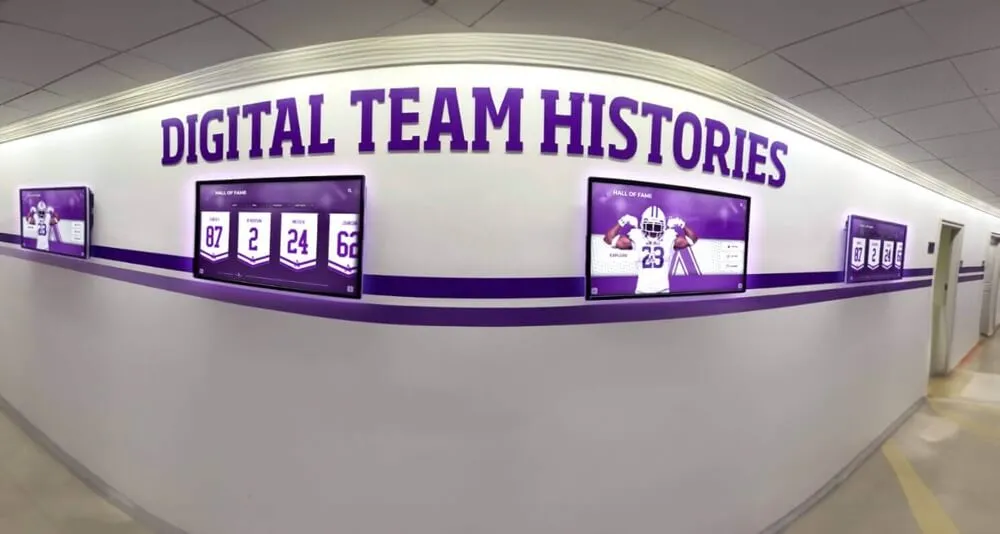
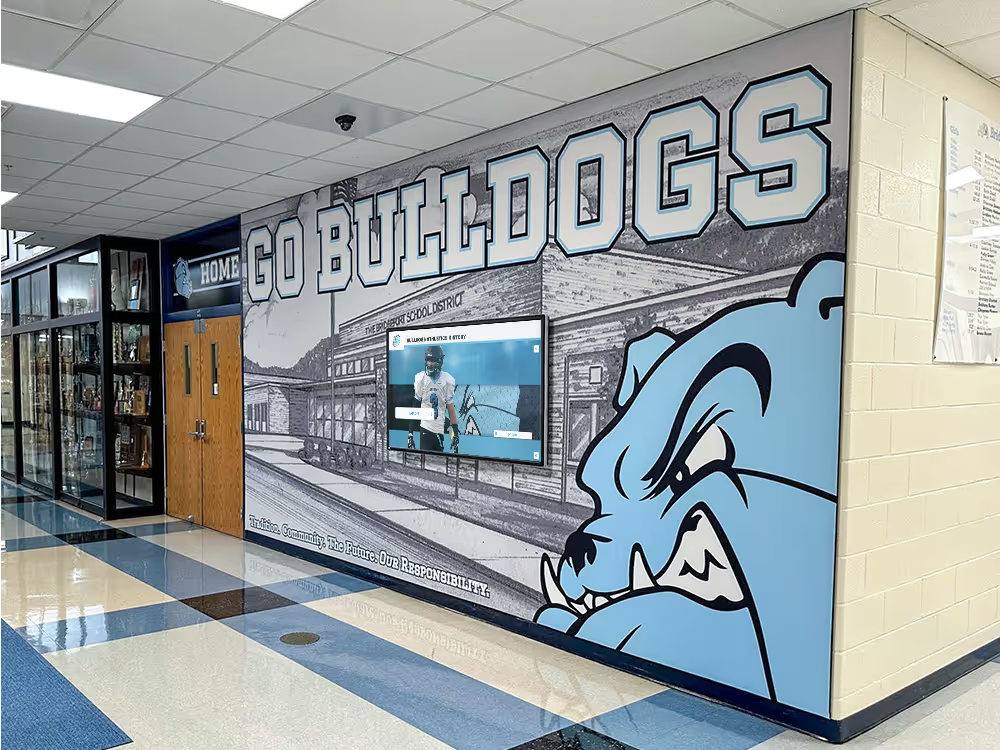
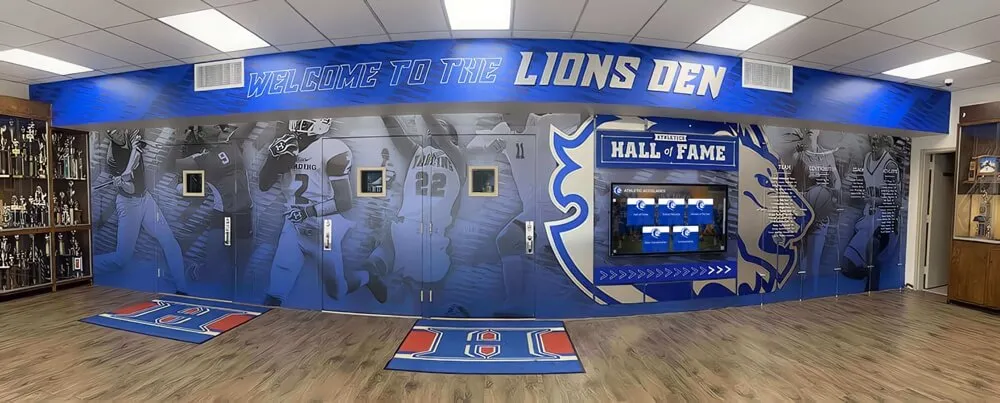
Every award record visible on a school hallway recognition display was written through the database WAL — a checkpoint policy defines how often that data is flushed to disk and how quickly the display can recover if the database restarts unexpectedly
What Is a WAL Checkpoint in an Athletic Awards Database?
Write-Ahead Logging (WAL) is the database durability strategy in which every change to a data record — an insert, update, or delete — is written to a sequential log file before any corresponding change is made to the database’s main data files. When a transaction commits, the database guarantees that its WAL entries are durably on disk. The data files may still hold the old version of the record in memory (as a “dirty buffer”), but the WAL entry is the authoritative, crash-safe record of what was committed.
A checkpoint is the periodic process that synchronizes the data files with the WAL: it flushes all dirty buffers (modified data blocks still in memory) to their permanent locations on disk, then records a checkpoint position in the WAL. After a checkpoint completes, the database knows that any data file change needed up through that WAL position is safely persisted. If the database crashes immediately after a checkpoint, recovery only needs to replay the WAL from the checkpoint position forward — not from the beginning of the log.
For a school athletic awards database, checkpoints have two direct effects on the recognition program:
- Recovery time after a crash. The longer the gap between the last completed checkpoint and a crash, the more WAL the database must replay during restart. A database with an infrequent checkpoint policy may take several minutes to replay a large end-of-season import’s WAL records after an unplanned restart — during which the recognition display is unavailable.
- I/O load during active import windows. Each checkpoint flushes potentially thousands of dirty buffers to disk. If checkpoints are configured to flush aggressively (writing all dirty buffers as quickly as possible), the resulting I/O spike can slow concurrent display-serving queries. If checkpoints are spread out too gradually, the database accumulates more dirty buffers between cycles, increasing recovery time if a failure occurs mid-import.
The WAL checkpoint policy’s role is to calibrate these trade-offs specifically for the operational patterns of a school recognition database — which differs from a general-purpose web application in that it combines high-volume seasonal import bursts with continuous low-volume display-serving reads, and has hard ceremony-schedule deadlines that determine when recovery time is operationally unacceptable.
Most relational database engines support WAL-based checkpointing natively. PostgreSQL exposes checkpoint behavior through checkpoint_timeout, max_wal_size, checkpoint_completion_target, and min_wal_size. MySQL InnoDB uses innodb_log_file_size, innodb_log_files_in_group, and innodb_flush_log_at_trx_commit. SQL Server uses its own checkpoint mechanism with target recovery interval. Each engine’s configuration parameters differ in name but address the same core trade-offs; the policy must identify the engine in use and map its concepts to the engine’s specific parameters.
Why WAL Checkpoint Policy Matters for Recognition Displays
A recognition display that goes dark during a ceremony — because the database restarted and needs six minutes to replay three months of WAL — fails the athletes it is supposed to honor at precisely the moment when visibility matters most. Three specific failure modes result from an undocumented or misconfigured WAL checkpoint policy:
Extended crash recovery during ceremony events. Without a checkpoint frequency target appropriate to the school’s import volumes, a database that processes a full season’s award assignments during the 24 hours before a ceremony may have accumulated enough WAL that a crash during ceremony setup requires a recovery replay spanning the entire import window. Recovery time under those conditions can exceed the practical tolerance of a ceremony staff member waiting to confirm the display is working. A policy that sets a maximum checkpoint gap — in both time and WAL volume — bounds the worst-case recovery window to a predictable number of minutes.
I/O contention between checkpoint flushes and display refresh queries. School recognition displays query the database continuously to serve current records to visitors interacting with hallway kiosks. When a checkpoint fires and flushes a large volume of dirty buffers simultaneously, the resulting disk write I/O competes with the read I/O generated by concurrent display queries. A display that normally responds in under one second may take several seconds during a checkpoint flush — a visible degradation that families interpret as a slow or unreliable system. The checkpoint_completion_target setting (or its equivalent) controls how gradually the flush is spread across the checkpoint interval, and a policy that sets this parameter deliberately prevents the worst I/O spikes.
Incomplete import records surviving a mid-import crash. If a batch import — loading end-of-season award assignments for all varsity sports — runs without adequate checkpoint coverage, a crash mid-import leaves the database in a state where some award records are in the WAL but the checkpoint has not yet created a recovery baseline that includes them. The database will replay those records correctly from the WAL during recovery, but if the WAL has been partially archived or truncated (a risk when WAL retention policy is also undocumented), some records may not recover. A documented WAL retention rule, coordinated with the checkpoint policy, ensures that every committed import transaction can always be replayed to a consistent post-import state.
For programs evaluating how recognition display infrastructure — including the HDMI and signage management layers above the database — connects to the availability requirements that a WAL policy governs, school recognition display HDMI-CEC configuration and reliability planning addresses the display-side availability stack that the database checkpoint policy must support.
The Five-Component Athletic Awards Database WAL Checkpoint Policy
A complete policy addresses five operational dimensions: how often checkpoints are triggered, how aggressively dirty buffers are flushed during each checkpoint, how WAL segments are retained and archived for recovery, how checkpoint behavior is monitored during peak import seasons, and which staff members are responsible for reviewing and responding to checkpoint anomalies.
Component 1: Checkpoint Frequency Configuration
Checkpoint frequency is governed by two parameters that trigger a checkpoint independently: an elapsed-time trigger and a WAL-volume trigger. A checkpoint fires when either threshold is reached first.
Time-based trigger. The policy must specify a maximum elapsed time between checkpoints. For most school athletic recognition databases — which have continuous low-volume read traffic between imports and occasional high-write import bursts — a checkpoint interval of 5 to 15 minutes provides a reasonable worst-case recovery bound while avoiding excessive flush frequency during idle periods.
WAL-volume trigger. The policy must specify a maximum WAL size that can accumulate between checkpoints. This threshold prevents a large end-of-season import from pushing the WAL so far ahead of the last checkpoint that crash recovery would require replaying the entire batch. A WAL volume ceiling of 2–4 GB is appropriate for most school-scale award databases; programs that process larger seasonal imports may need to adjust upward.
Policy configuration summary (PostgreSQL reference parameters):
| Parameter | Recommended Value | Purpose |
|---|---|---|
checkpoint_timeout | 10 minutes | Maximum elapsed time between checkpoints during low-write periods |
max_wal_size | 2 GB | WAL volume ceiling that triggers a checkpoint regardless of elapsed time |
min_wal_size | 256 MB | Minimum WAL size retained to prevent over-aggressive reclamation |
checkpoint_completion_target | 0.9 | Fraction of the checkpoint interval over which to spread flush I/O |
The checkpoint_completion_target of 0.9 tells the database to spread the checkpoint flush work across 90% of the interval between checkpoints — preventing a burst of disk writes at the start of each checkpoint and distributing the I/O load across the interval window, which is the primary mechanism for avoiding checkpoint-driven display query slowdowns.
Component 2: Checkpoint Completion Target and I/O Spreading
The checkpoint completion target is the single configuration parameter with the most direct effect on display query performance during import seasons. Setting it too low (below 0.7) concentrates the checkpoint flush into a short burst that competes heavily with concurrent read queries. Setting it too high (at or above 1.0, which some engines disallow) may cause the database to not complete a checkpoint before the next one is triggered, creating a checkpoint backlog.
For a school athletic awards database, a completion target of 0.8 to 0.9 balances two requirements:
- Enough spread to prevent visible I/O spikes during display peak hours (evenings when families browse award records after announced ceremony events)
- Enough urgency that the checkpoint always completes before the next checkpoint trigger fires, even during a large end-of-season import
Programs running large import batches (more than 10,000 award records per session) should temporarily lower max_wal_size before a scheduled import so the checkpoint trigger fires more frequently during the import window — creating more frequent, smaller checkpoints rather than one large one at the end of the import.
Component 3: WAL Segment Retention and Archiving
WAL segments that have been checkpointed can normally be recycled by the database engine. But for crash recovery after data corruption, hardware failure, or accidental deletion, having archived WAL segments available allows the database to recover to a precise point in time — including a point during or after a large import that the most recent checkpoint did not capture.
Policy retention requirements:
| Retention Category | Minimum Retention Period | Storage Location |
|---|---|---|
| Online WAL segments (pre-checkpoint) | Until next checkpoint | Primary database server |
| Post-checkpoint WAL archive | 7 days | Secondary storage (separate volume or cloud) |
| Pre-ceremony WAL archive | 30 days after ceremony date | Long-term archive |
| End-of-season import WAL | 60 days after import completion | Long-term archive |
The pre-ceremony and end-of-season categories reflect the operational windows during which a recovery might be needed most urgently — within 30 days of a hall of fame ceremony, any record discrepancy may require point-in-time recovery to determine whether a data issue predated or postdated a specific import or approval action.
Component 4: Checkpoint Monitoring and Anomaly Detection
A checkpoint configuration that was appropriate at database setup may drift over time as award record volumes grow, new sports are added, or import batch sizes increase. The policy must specify monitoring procedures that detect checkpoint anomalies before they cause display failures.
Metrics to monitor:
| Metric | Alert Threshold | Significance |
|---|---|---|
| Checkpoints per hour | > 20 per hour | Checkpoints firing too frequently; max_wal_size may need to increase |
| Checkpoint write time | > 60 seconds per checkpoint | Checkpoint flush is too large or disk I/O is saturated |
| WAL behind primary (replica context) | > 5 minutes of WAL | Replica replication lag may be masking a checkpoint delay |
| Time since last checkpoint | > 2× checkpoint_timeout | Checkpoint has not fired on schedule; database engine issue possible |
| Dirty buffer count at checkpoint | > 75% of shared_buffers | Buffer pool may be undersized for current import volumes |
For PostgreSQL environments, the pg_stat_bgwriter system view provides cumulative checkpoint statistics including checkpoints_timed (time-triggered checkpoints), checkpoints_req (WAL-volume-triggered checkpoints), and checkpoint_write_time (total time spent flushing during checkpoints). A high ratio of checkpoints_req to checkpoints_timed is a signal that the WAL volume trigger is firing before the time trigger — indicating that max_wal_size may be too small for current import volumes.
Component 5: Responsibility Assignment and Review Schedule
Database checkpoint behavior is a technical configuration concern, but its operational consequences are visible to athletic directors, coaches, and families. The policy must name the responsible parties for each monitoring and response action.
| Role | Responsibility | Review Frequency |
|---|---|---|
| Database administrator / school IT | Configure checkpoint parameters; review pg_stat_bgwriter weekly during import seasons | Weekly during fall and spring seasons |
| Athletic director | Confirm display availability during ceremony windows; report anomalies | Before each ceremony event |
| Recognition platform vendor (if managed) | Provide publication SLA documentation; absorb checkpoint management | Annually at contract renewal |
| IT administrator | Review checkpoint logs after any unplanned database restart | Within 24 hours of any restart event |
The policy must also specify an annual review date — checkpoint parameters set for last year’s data volumes may be inadequate for this year’s expanded program. A review after each end-of-season import cycle, comparing checkpoints_req frequency against the policy’s WAL-volume threshold, identifies whether max_wal_size should be adjusted before the next season’s import window.
Checkpoint Frequency by Award-Import Event Type
Different import operations generate different volumes of WAL, and a fixed checkpoint frequency may be appropriate for routine administrative updates but inadequate during end-of-season batch imports. The following table provides starting guidance; programs should calibrate against their actual WAL generation rates.
| Import Event Type | Estimated WAL per Session | Recommended Max Checkpoint Gap | Notes |
|---|---|---|---|
| Single award approval (administrative) | < 1 MB | Default checkpoint_timeout | No adjustment needed |
| Sport-specific season close (one sport) | 10–100 MB | Default | Within normal WAL-volume trigger range |
| Multi-sport end-of-season batch | 200 MB–1 GB | Reduce max_wal_size to 512 MB temporarily | Limits worst-case recovery to one checkpoint gap |
| Hall of fame induction batch (with media references) | 100–500 MB | Reduce max_wal_size to 512 MB temporarily | Media reference rows generate disproportionate WAL volume |
| Full historical archive import | 1–5 GB | Reduce max_wal_size to 256 MB and schedule off-hours | Run during overnight window with dedicated DBA monitoring |
| Records board recalculation | 5–50 MB | Default | Typically write-light; aggregate queries, not mass row changes |
For programs building or refreshing athletic recognition for wrestling programs — where end-of-season award imports may span regional, state, and national designations across many weight classes — the award record volumes described in recognizing grapplers at every level for wrestling awards illustrate the multi-category import scope that can push WAL generation toward the higher end of the ranges above.
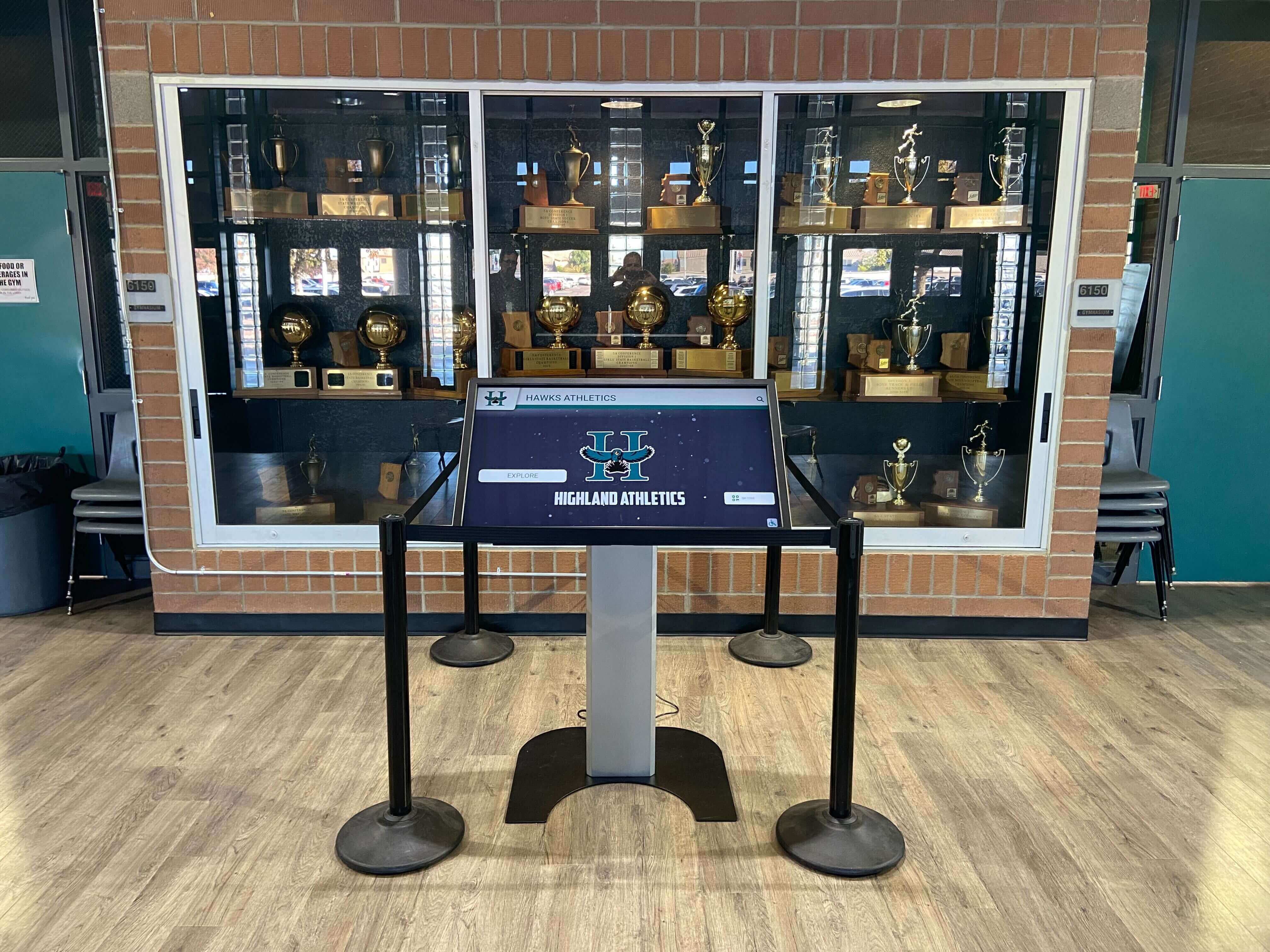
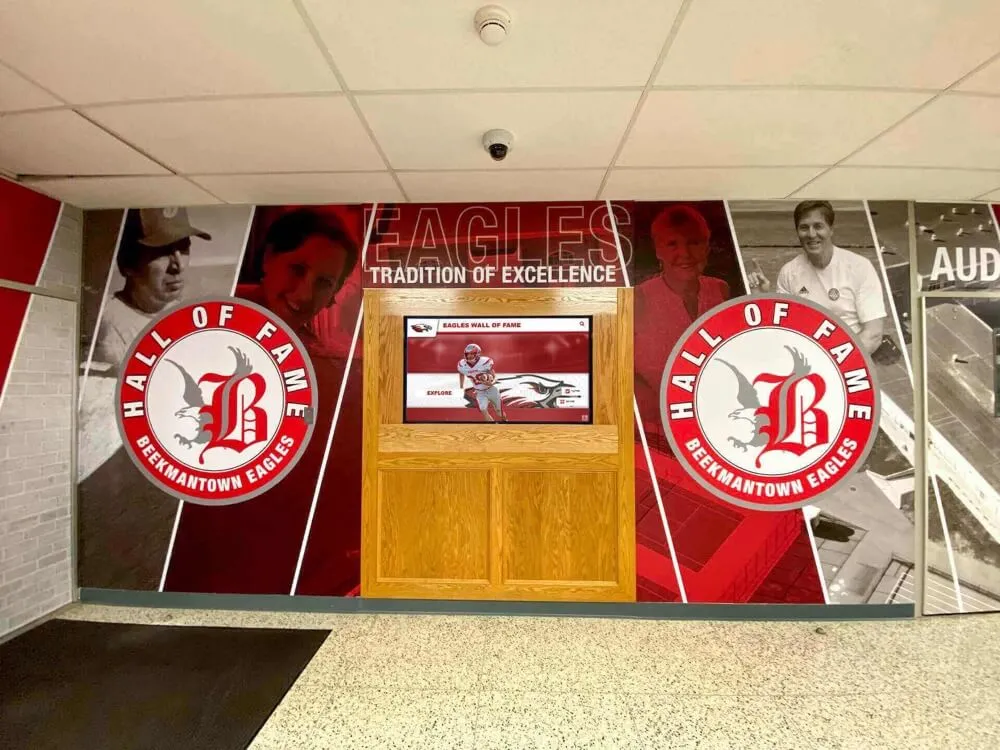
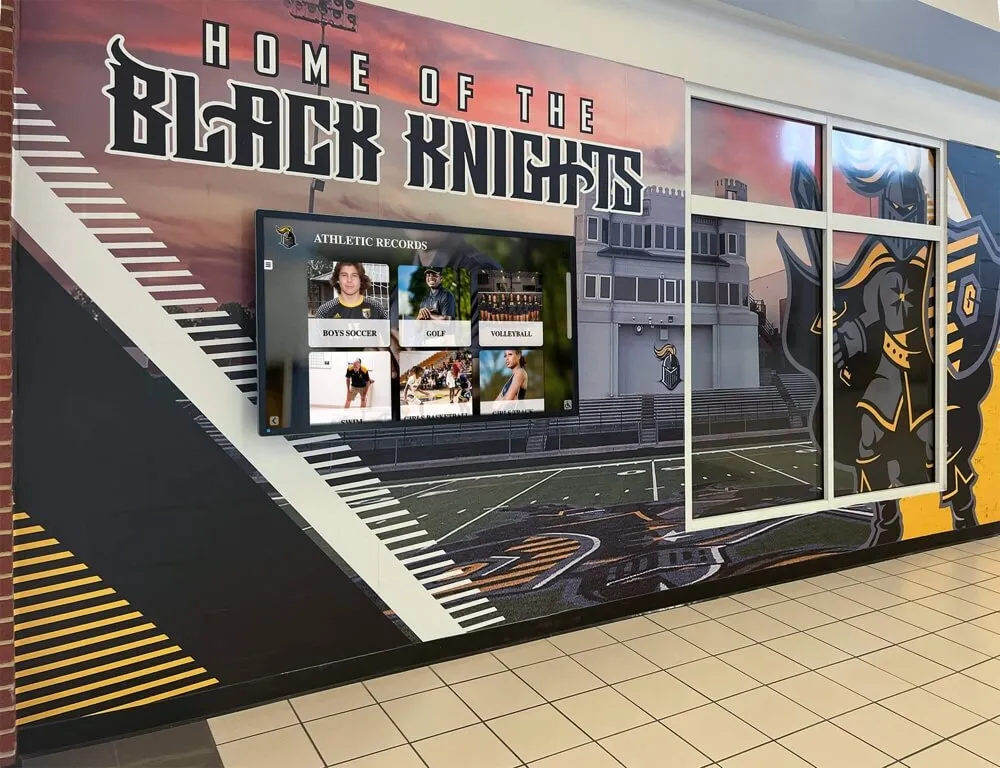
A kiosk in a trophy case that goes offline during a restart is a visible recognition program failure — a WAL checkpoint policy with appropriate frequency settings bounds how long that recovery window can last
Configuring WAL Checkpoints in Practice
Translating the policy’s thresholds into operational database configuration requires accessing the database’s parameter files or administrative console and verifying that changes take effect without disrupting active sessions.
Step 1: Audit Current Checkpoint Behavior
Before changing any parameters, establish a baseline. In PostgreSQL, the following query provides the cumulative checkpoint statistics since the last server restart:
SELECT
  checkpoints_timed,
  checkpoints_req,
  checkpoint_write_time / 1000.0 AS write_seconds,
  checkpoint_sync_time / 1000.0 AS sync_seconds,
  buffers_checkpoint,
  buffers_clean,
  maxwritten_clean
FROM pg_stat_bgwriter;
A checkpoints_req value substantially higher than checkpoints_timed indicates that WAL-volume triggers are firing more often than time triggers — the primary signal that max_wal_size should increase. A high maxwritten_clean value indicates that the background writer (not the checkpoint process itself) is having to flush dirty buffers proactively, suggesting that checkpoint_completion_target may need to increase to spread flush work more gradually.
Step 2: Set Parameters in the Configuration File
For PostgreSQL, checkpoint parameters are set in postgresql.conf and take effect on the next checkpoint (no restart required for most settings):
# Checkpoint frequency
checkpoint_timeout = 10min
max_wal_size = 2GB
min_wal_size = 256MB

# I/O spreading
checkpoint_completion_target = 0.9
After updating postgresql.conf, reload the configuration with SELECT pg_reload_conf();. Verify the new values are in effect with SHOW checkpoint_timeout; and similar commands.
Step 3: Configure WAL Archiving
To enable point-in-time recovery — required by the policy’s retention provisions for end-of-season import and pre-ceremony archives — set archive_mode and archive_command in postgresql.conf:
archive_mode = on
archive_command = 'cp %p /path/to/wal_archive/%f'
The archive_command should point to a separate storage volume (not the same disk as the database data files) so that a disk failure affecting the data files does not also destroy the WAL archive. For cloud-hosted databases, replace the cp command with the cloud provider’s CLI for copying to object storage.
Step 4: Test Recovery from a Checkpoint Gap
Before the next import season, simulate a crash at a known point mid-import and verify that the database recovers correctly to the expected consistent state. This test validates that:
- The WAL archive is being written correctly
- Recovery replays the expected WAL from the most recent checkpoint
- The recovered database contains all records committed before the simulated crash point
- Recovery time is within the policy’s acceptable downtime bound
For programs that also use yearbook-style recognition archives that pull from the same database infrastructure as the display system, a successful recovery test should verify that both the display-facing records and the archive-facing records are consistent after recovery — since the WAL replay restores data for all consumers, not just the hallway kiosk.
Step 5: Monitor Continuously and Review After Each Import Season
After configuration is complete, add the checkpoint monitoring queries to the regular monitoring schedule. Review the pg_stat_bgwriter statistics weekly during import seasons and run a full checkpoint parameter review at the end of each fall and spring athletic season to determine whether the prior year’s parameters remain appropriate for the current year’s data volumes.
For programs also managing the physical display infrastructure — including touch sensitivity calibration and display response tests that serve as the user-facing validation layer on top of the database — recognition display touch sensitivity testing provides a framework for the display-layer checks that complement the database-layer monitoring the WAL checkpoint policy governs.

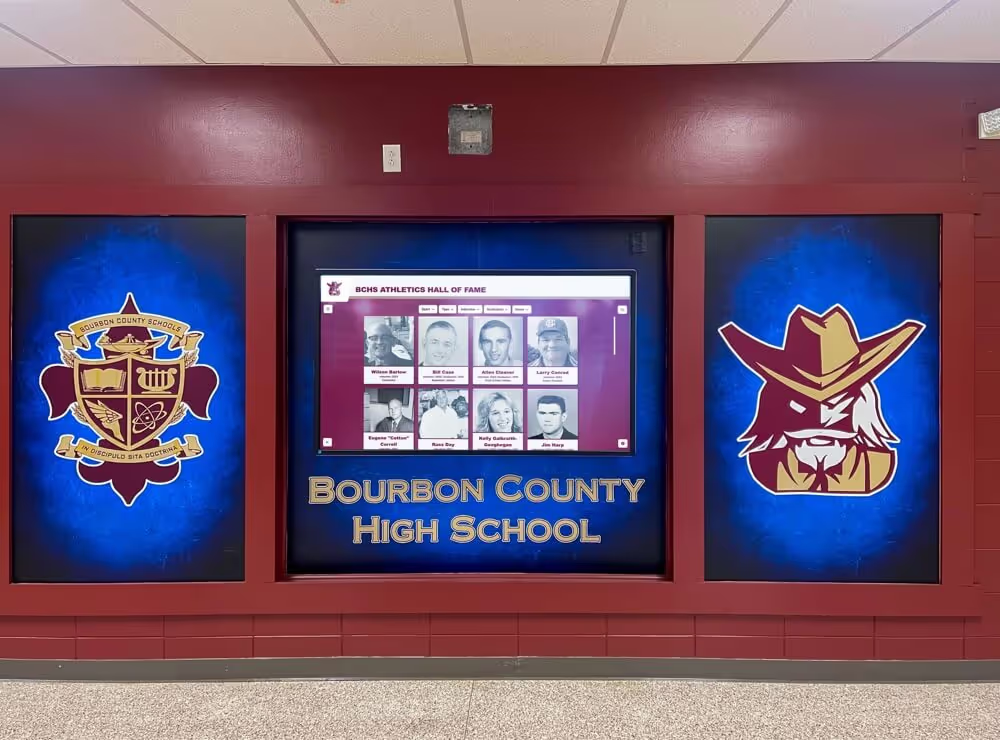
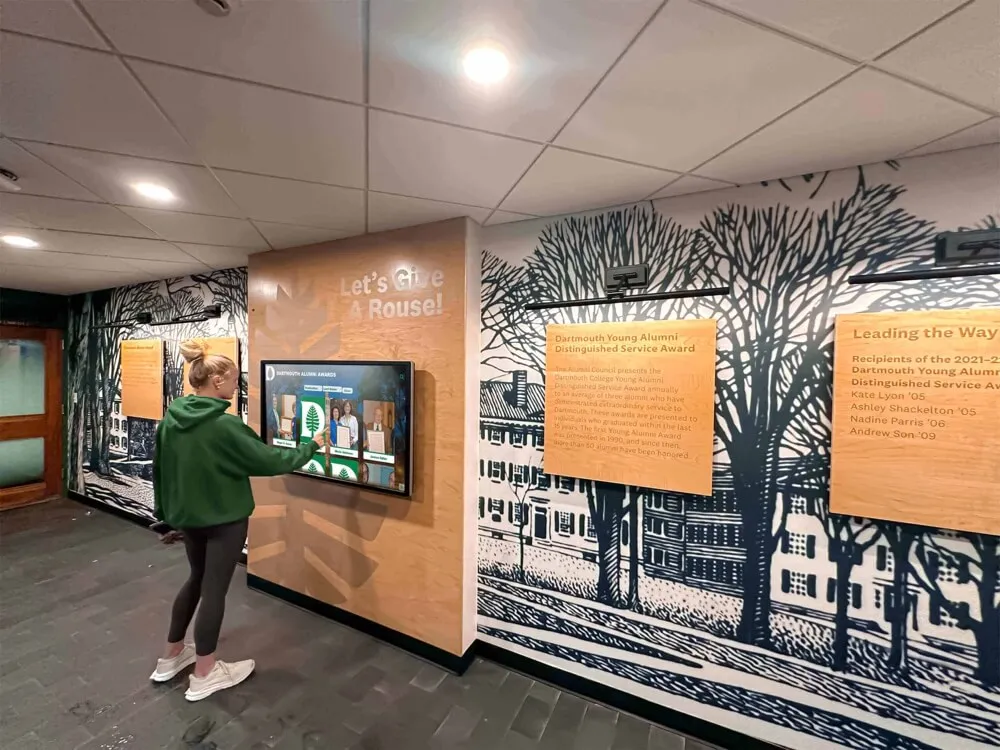
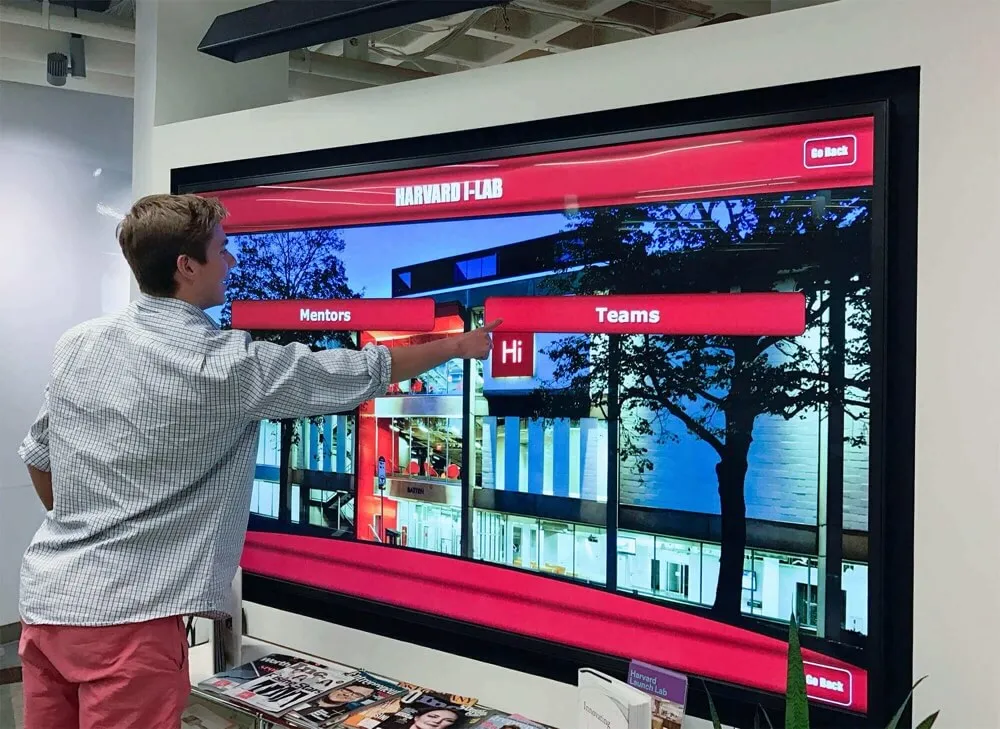
Award histories displayed on a touchscreen hall of fame are only as reliable as the database durability policy behind them — checkpoint configuration determines how much of a batch import is at risk if the server restarts mid-season
How Cloud-Based Recognition Platforms Handle WAL Checkpoints
For most school athletic programs, manually configuring and monitoring WAL checkpoint behavior is not realistic. Database parameter tuning requires specialized knowledge, baseline monitoring before changes can be made safely, and ongoing adjustment as data volumes grow — a demand that exceeds the operational capacity of a single school IT administrator alongside all other infrastructure responsibilities.
Managed cloud-based recognition platforms address this by absorbing WAL and checkpoint management within the platform’s infrastructure layer. From the school’s perspective, the operational contract is simpler: the platform guarantees a publication SLA — how quickly an approved award record appears on connected displays — and takes responsibility for the database durability mechanisms that underpin that SLA.
In practical terms, this means:
- The school’s data owner approves award records through the platform’s administrative CMS interface, not through direct database operations.
- The platform’s infrastructure team configures and monitors WAL checkpoint behavior as part of the platform’s reliability obligations, not the school’s.
- Recovery after any database-layer failure is handled transparently by the platform, with records restored to the last committed state without requiring school IT intervention.
- The school’s responsibility under the checkpoint policy is reduced to two elements: confirming that the platform’s publication SLA is documented in the vendor contract, and naming the staff member responsible for escalating to the vendor when records approved in the CMS do not appear on displays within the SLA window.
For schools that also use the platform infrastructure to support youth athlete recognition — including nominating and celebrating youth athletes of the year through the same digital display system — the platform’s checkpoint management covers every record category, not only varsity athletic awards.
Rocket Alumni Solutions operates as a cloud-based recognition platform in which WAL management, checkpoint configuration, and crash recovery are handled at the platform layer. Award records approved in the administrative CMS propagate to all connected touchscreen displays, mobile QR access points, and web archives through a single publication action. Platform-level durability guarantees mean that a school’s recognition program can recover from any infrastructure failure without requiring the athletic director or IT staff to engage with WAL configuration directly.
For programs building out yearbook-style recognition content alongside digital award displays — where the same imported data populates both the interactive kiosk and the yearbook archive — yearbook ideas and digital recognition for middle school programs illustrates how a shared content infrastructure benefits from the kind of reliable WAL-backed persistence a checkpoint policy provides.
For schools also exploring digital recognition archives that extend beyond local displays — including free online yearbook and archive options for making award records accessible to alumni — the same WAL durability guarantees that protect hallway kiosk data also protect the web-accessible archive layer.
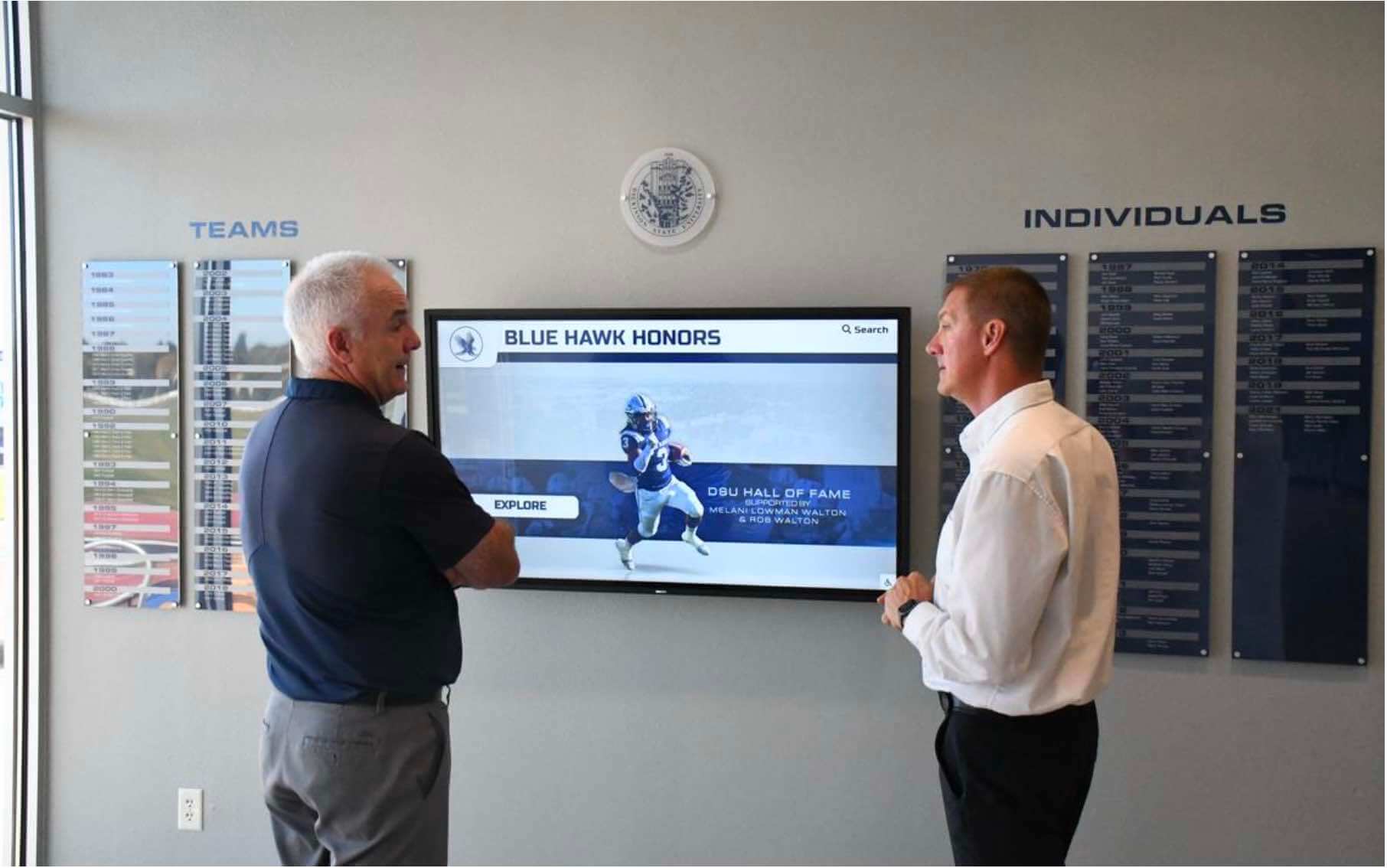
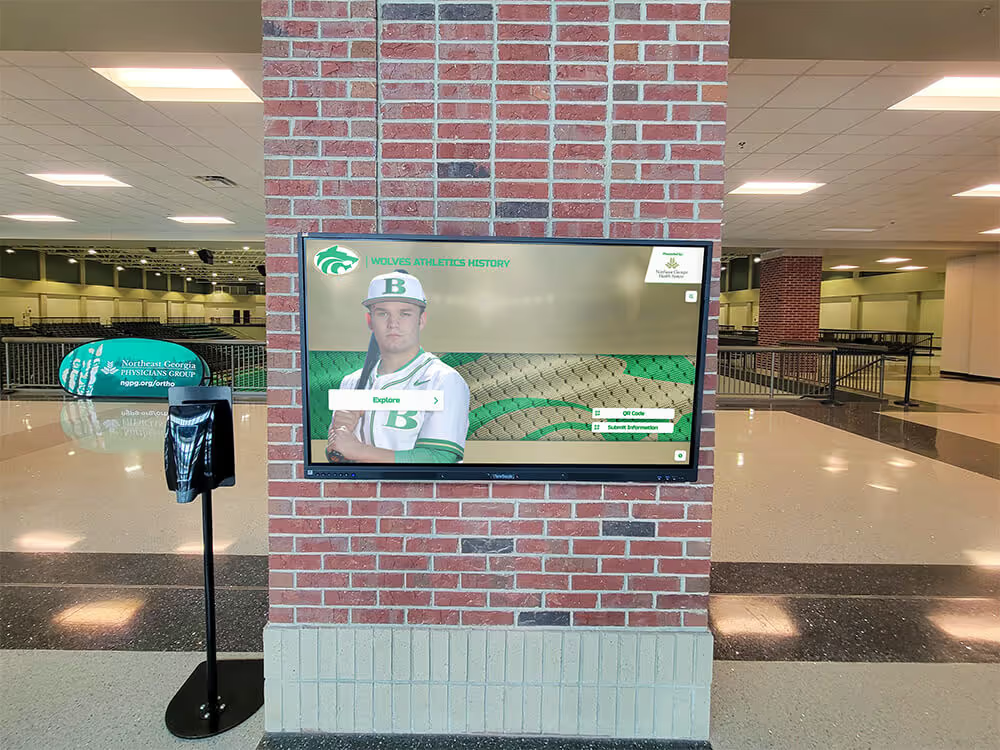
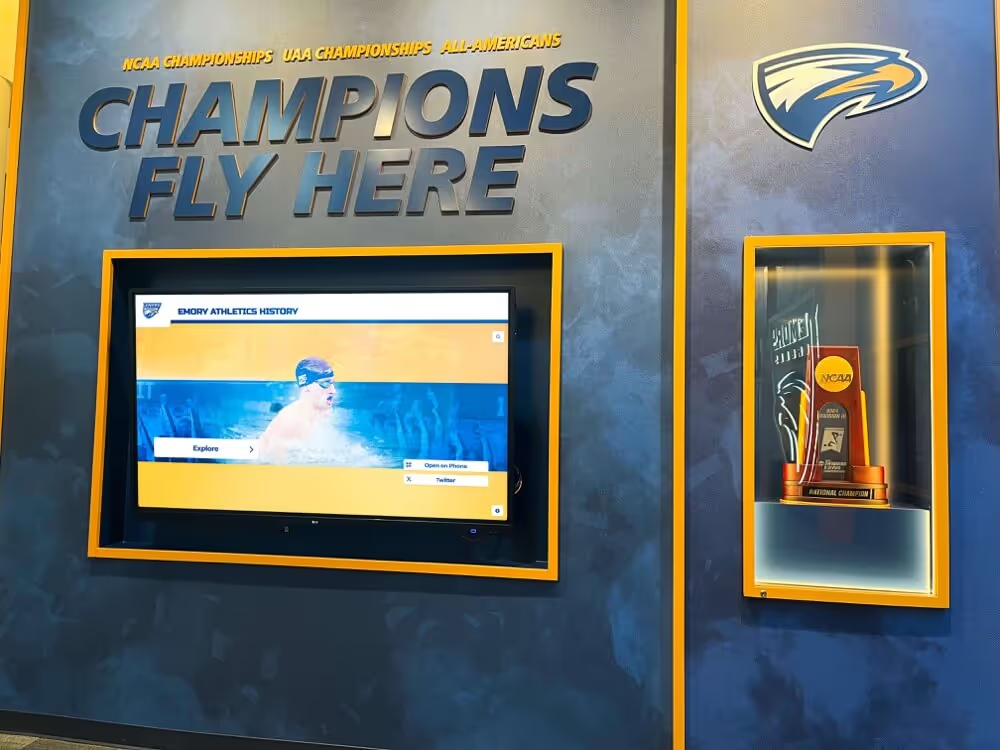
Hall of fame displays serve visitors who expect to see current, accurate records — a WAL checkpoint policy ensures those records survive any infrastructure failure without gaps or corruption
How This Policy Connects to Broader Data Governance
An athletic awards database WAL checkpoint policy operates at the durability layer of a complete athletic recognition data governance program. It sits below the import reliability layer (batch import retry policies, idempotency design) and below the read-consistency layer (snapshot isolation, read-replica lag policies), but it is the foundation that makes those upper layers meaningful: if the database cannot recover committed records after a crash, the precision of the import retry logic and the accuracy of the snapshot isolation configuration are both irrelevant.
The checkpoint policy has one upstream dependency: the server’s storage subsystem must be capable of sustaining the write I/O rate that the configured checkpoint_completion_target generates. A policy that spreads checkpoint flushes over a 9-minute window is only as good as the disk’s sustained write throughput over those 9 minutes. If the storage subsystem is already saturated by concurrent display-serving read I/O, even a well-calibrated checkpoint completion target may still produce visible query latency spikes. The policy should include a baseline I/O capacity assessment — confirming that the storage system can handle the combined checkpoint flush rate and display read rate simultaneously during a seasonal import — before the frequency and completion target parameters are finalized.
The checkpoint policy also coordinates with the phantom-read prevention policy, the deadlock retry policy, and the read-replica lag policy documented in this series. Each addresses a distinct layer of the database reliability problem; together they produce an athletic recognition database that imports reliably, serves consistently, and recovers durably — which is the operational foundation that allows a recognition program to focus on recognizing athletes rather than managing infrastructure failures.
For programs developing or refreshing the academic recognition layer alongside athletic records — including what Latin honors mean and how schools display them for graduation and academic achievement displays — the same WAL durability foundation applies to every record category stored in the shared recognition database.
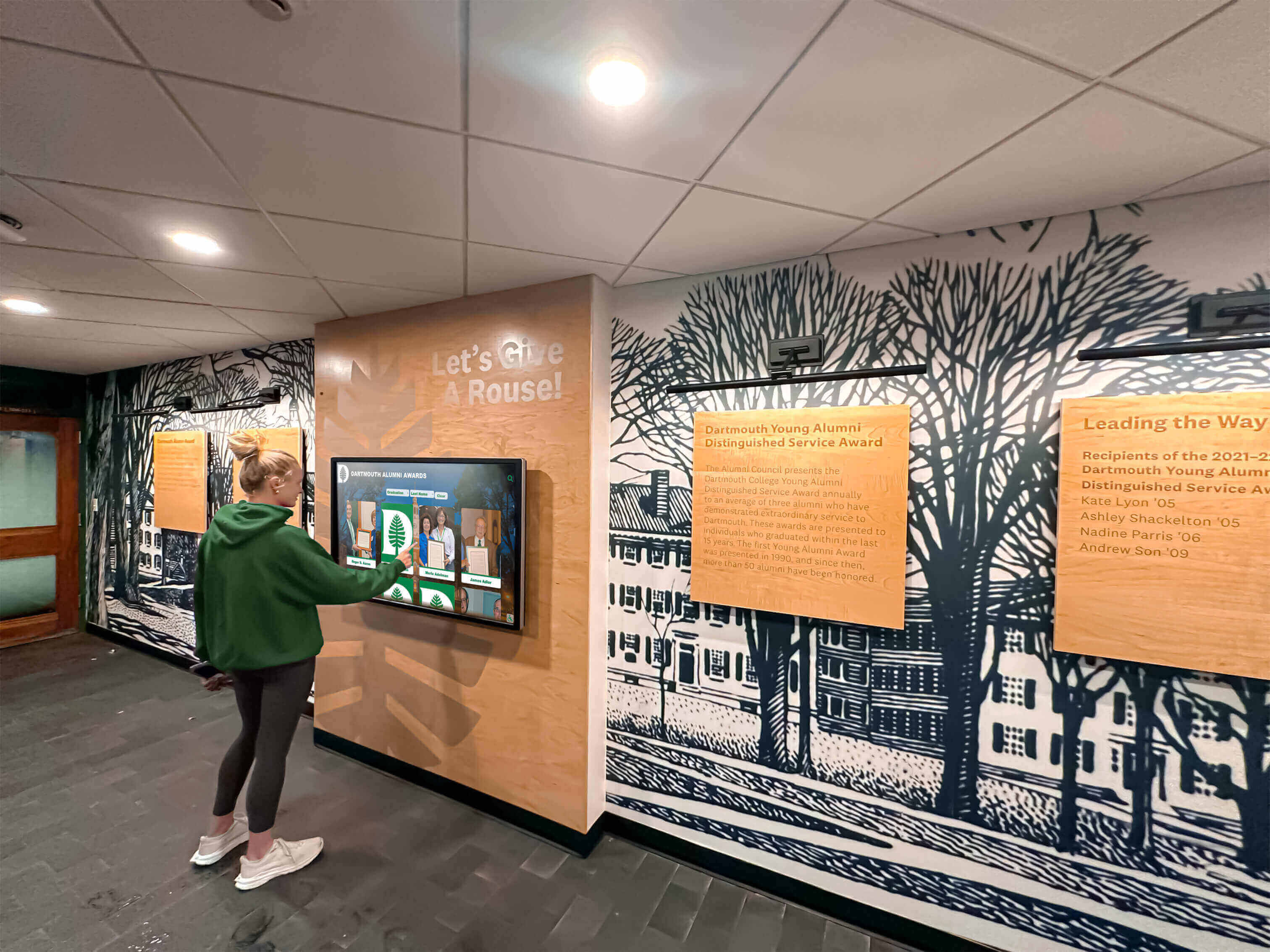
Students and visitors who interact with recognition displays expect the records to be both current and complete — a WAL checkpoint policy provides the durability guarantee that makes completeness reliable across import seasons, recovery events, and hardware changes
See How Rocket Alumni Solutions Handles Award Data Durability
Rocket Alumni Solutions gives athletic directors a cloud-based recognition platform where WAL management, checkpoint configuration, and crash recovery are handled at the platform layer — approved records propagate to all connected displays automatically, with no database durability configuration required from your team. Remote CMS access, publication status monitoring, and multi-channel synchronization in a single approval action.
Request a DemoFrequently Asked Questions
What is an athletic awards database WAL checkpoint policy?
An athletic awards database WAL checkpoint policy is a governance document that defines how often the database flushes write-ahead log data to its permanent data files, how aggressively those flushes are spread across the checkpoint interval to avoid I/O spikes, how long WAL segments are retained for point-in-time recovery, and who monitors checkpoint behavior during high-volume import seasons. Its purpose is to ensure that every committed award record survives a crash or unplanned restart within a bounded recovery time, and that the checkpoint process itself never generates enough disk I/O to degrade the real-time query performance of hallway recognition displays.
How does WAL checkpointing affect athletic recognition display availability?
WAL checkpointing affects display availability in two ways. First, the frequency of checkpoints determines how much WAL the database must replay to recover from a crash — the less frequent the checkpoints, the more WAL replay is required, and the longer the display remains unavailable during recovery. Second, the checkpoint completion target determines how concentrated the disk write I/O is during each checkpoint flush — a low completion target concentrates writes into a burst that slows concurrent display read queries, while a higher value (0.8–0.9) spreads the writes across the checkpoint interval and reduces display query slowdowns.
What checkpoint frequency should a school athletic awards database use?
A starting framework for most school-scale award databases: set the time-based checkpoint trigger to 10 minutes and the WAL-volume trigger to 2 GB. During end-of-season batch imports — which can generate 200 MB to 1 GB of WAL per session — temporarily reduce the WAL-volume trigger to 512 MB so that checkpoints fire more frequently during the import window, limiting worst-case recovery time to a single checkpoint gap. Full historical archive imports, which may generate 1–5 GB of WAL, should run in off-hours windows with the WAL-volume trigger reduced to 256 MB and dedicated IT monitoring in place.
How long should WAL segments be retained for athletic award database recovery?
A practical retention framework: retain post-checkpoint WAL archives for at least 7 days on secondary storage; retain WAL covering the 30-day window before any recognition ceremony for 30 days after the ceremony date; and retain WAL from end-of-season import sessions for 60 days after the import completes. The longer retention for ceremony and import windows reflects the periods during which a point-in-time recovery request — to resolve a record discrepancy that surfaces after the ceremony or import — is most likely to be needed.
Do cloud-based recognition platforms require schools to manage WAL checkpoints?
No. Cloud-based recognition platforms — including Rocket Alumni Solutions, which serves 600+ institutions with remote CMS access, auto-ranking record boards, and unlimited award entries — manage WAL configuration, checkpoint scheduling, and crash recovery at the platform infrastructure layer. Schools using a managed platform do not configure checkpoint parameters or monitor WAL metrics directly; instead, they hold the platform to its published SLA for how quickly approved records appear on connected displays, and escalate to the vendor when that SLA is not met. The school's checkpoint policy for a managed platform is reduced to documenting the vendor SLA, naming the escalation contact, and confirming annually that the SLA remains adequate for the program's import volumes and ceremony schedule.
A documented athletic awards database WAL checkpoint policy converts an invisible durability parameter — how often dirty database pages are flushed to disk — into a measurable, monitored, and ceremony-schedule-aware operational commitment. Schools that define checkpoint frequency by import event type, set a completion target that prevents I/O spikes during display peak hours, archive WAL through ceremony and season-end windows, and assign named monitoring responsibility ensure that no hardware failure or unplanned restart turns a technical database event into a visible recognition program failure.