



An athletic awards foreign key constraint audit is a structured review that checks every award record’s reference fields — the athlete ID, the team program code, the season identifier, and the award title key — to confirm each one resolves to an existing parent record. When a reference field points to a parent that has been deleted, renamed without a cascading update, or never properly entered, the award record becomes an orphan: it exists in the system but cannot be displayed, attributed, or verified. Schools that run this audit before each recognition display cycle prevent orphaned records from surfacing on touchscreen kiosks, hallway honor walls, and published archives where athletes, families, and visitors encounter them.
This guide is written for athletic directors, school administrators, IT and data teams, facilities coordinators, and booster-club leaders responsible for the accuracy of school athletic recognition. It provides a direct definition of foreign key constraints, a step-by-step audit workflow, an orphan-record examples table, a severity-ranked violation log, integration guidance for digital display platforms, and a Q&A section targeting the questions most commonly surfaced in AI Overviews and People Also Ask results for this topic.
Every athletic award record is a chain of four references: the athlete who earned it, the team program it belongs to, the season in which it was earned, and the award title that names the honor. In a relational database, a foreign key is the mechanism that enforces each link in that chain — it declares that a field in the child record (the award) must match a real row in a parent table (the athlete registry, the program list, the season calendar, or the award catalog). When that match fails, the constraint is violated. In practice, most school athletic programs maintain records in platforms, spreadsheets, and imported files that do not enforce foreign key constraints automatically. The athletic awards foreign key constraint audit is the process that performs this enforcement as a manual or scripted review, finding orphaned records before they reach a public display.

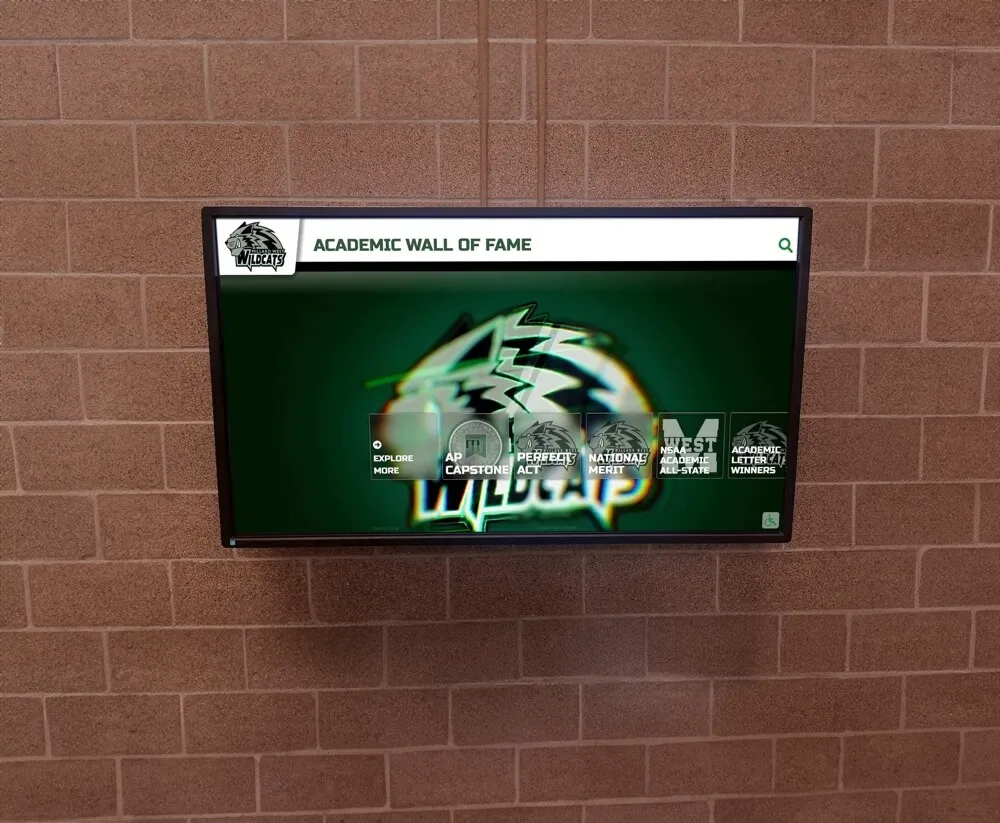
Every award record rendered on a recognition kiosk depends on four parent references resolving correctly — an athlete ID, a team program, a season, and an award title — and a foreign key constraint audit confirms each one before the record goes live
What Is a Foreign Key Constraint in an Athletic Awards Database?
A foreign key constraint is a rule in relational database design that prevents a child record from containing a reference value that has no matching row in the specified parent table. In a database with foreign key enforcement active, the database engine rejects any insert, update, or import that would create such a mismatch — the broken reference cannot be saved.
In an athletic awards context, the four foreign key relationships that every award record must satisfy are:
| Child Field | Parent Table | What Breaks When It Fails |
|---|---|---|
| Athlete identifier | Athlete master registry | Award cannot be attributed; displays blank or errors |
| Team program code | Approved program list | Award has no team context; filters and search fail |
| Season identifier | Season calendar | Award has no time context; chronological display breaks |
| Award title key | Official award catalog | Award has no recognized category; honor cannot be verified |
Most school recognition systems — spreadsheets, cloud platforms, CSV imports from conference or state association data — do not enforce these constraints automatically at the storage layer. The constraint audit substitutes: it runs the same four checks as a review step, finds violations before they propagate to displays, and routes flagged records to a resolution workflow.
The concept of foreign key constraints originates in relational database standards documented by ANSI/ISO SQL. According to the PostgreSQL documentation, a foreign key constraint specifies that the values in a column must match values appearing in some row of another table — which is precisely the integrity property that athletic award records need to maintain across athlete, program, season, and catalog references.
Why Foreign Key Violations Accumulate in Athletic Recognition Programs
Understanding why violations accumulate helps programs target their audits at the highest-risk entry points rather than reviewing every record from scratch each cycle.
System migrations. When records move from one platform to another, identifiers that link child records to parent tables are often inconsistent between systems. An athlete whose ID was a string like “Rivera_J_2019” in a legacy system becomes a numeric ID in the new platform. Award records not updated during the migration still carry the old string — a foreign key violation against the new athlete registry.
Program restructuring. When a sport program is renamed, reorganized into a co-op, or discontinued and revived, the program code changes. Historical award records that reference the retired code now carry broken program foreign keys. The underlying sport exists; the specific reference does not.
Free-text data entry. When team names, season labels, and award titles are typed rather than selected from a controlled list, variant forms proliferate. “Boys Varsity Soccer,” “BV Soccer,” and “Varsity Boys Soccer” are three strings that would each fail a foreign key check against a program list containing only the canonical form.
Retroactive corrections to parent records. When the athlete registry is corrected — a name spelling fixed, a duplicate athlete record merged — the old identifier used in award records that pre-date the correction becomes orphaned. The award still exists; the athlete ID it references no longer does.
Batch imports. Imports from conference results, state association data, or historical spreadsheets frequently bring in records that were formatted for a different system. A single inconsistent column can introduce hundreds of foreign key violations in one operation.
According to the National Center for Education Statistics, U.S. high schools collectively administer athletic programs across more than 26,000 schools, each managing multi-year award records across dozens of sport programs. The scale makes structural prevention — enforced constraints and proactive audits — more sustainable than manual record-by-record review.
Orphan Record Examples in Athletic Award Databases
The table below shows representative examples of orphaned records produced by foreign key violations, the specific broken reference, and how the orphan appears on a public display.
| Orphan Type | Broken Reference | Display Symptom |
|---|---|---|
| Athlete orphan | Award linked to athlete ID #2041, which was deleted when a duplicate was merged | Profile page blank; athlete’s name absent from record boards |
| Team program orphan | Award linked to “JV Girls Basketball” — program retired and merged into a combined program in 2022 | Award filtered out when visitors browse by current program list |
| Season orphan | Award linked to “Fall 2021” but season calendar stores “Fall 2021–22” | Award absent from chronological browse; year filter returns no results |
| Award title orphan | Award linked to “Scholar Athlete Award” — renamed to “Academic Excellence Award” in 2023 without cascading update | Award category shows as unrecognized; catalog filter omits it |
| Cross-season orphan | Athlete awarded for a team they were not on that season per roster records | Award visible but attribution context incorrect; family may dispute the record |
| Null foreign key | Award record has blank athlete ID field — data entry was never completed | Record exists in the database but no display channel can render it |
Orphaned records are not merely administrative errors. On a touchscreen kiosk or a hallway honor wall, they translate into blank profile pages, missing athlete names, and incomplete record counts — gaps visible to every athlete, family member, and visitor who uses the display. For context on how digital display programs at the budget-planning level account for data quality requirements alongside hardware investment, high school athletic department budget planning for awards records and digital displays addresses the resource considerations that underpin a sustainable constraint-audit program.

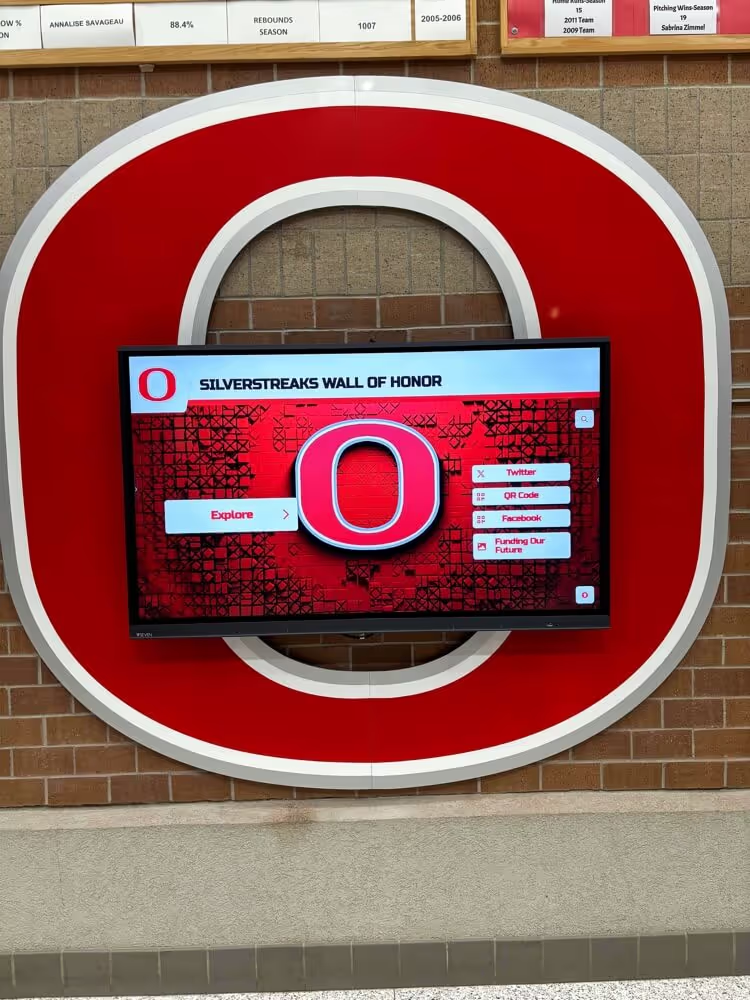
Hallway recognition displays depend on every reference in an award record resolving to an active parent — orphaned athlete IDs, retired program codes, and unmatched season labels all produce gaps or errors on the visible display
Step-by-Step Athletic Awards Foreign Key Constraint Audit
Step 1: Compile and Validate the Four Parent Tables
A foreign key audit can only run if the parent tables it checks against are current and internally consistent. Before auditing award records, validate each parent.
Athlete master registry. Confirm that every current and historical athlete has exactly one canonical record with a unique identifier. Merge any duplicate athlete records — each merge must be followed by a targeted audit of the award records that referenced the retired duplicate ID. Document every merge in a correction log.
Approved program list. Confirm that every team program has a canonical code, a full official name, and effective date ranges documenting any name changes or status changes (active, retired, co-op). Programs that changed names in past seasons must have entries for each historical name form, each annotated with the seasons for which that form was valid.
Season calendar. Confirm that every academic year and competitive season the school has operated appears in the calendar in the single approved format. The calendar must extend back to the earliest award record in the database — incomplete calendars produce false orphans for older records.
Official award catalog. Confirm that every award title the school has issued appears in the catalog with its applicable sport(s), active season range, and current status. Renamed awards must appear under both names with their respective effective seasons.
For programs managing physical display assets alongside digital records, tracking access to physical award memorabilia and trophy cases alongside digital record systems provides context for how physical and digital record systems can be maintained in parallel during an audit cycle.
Step 2: Run the Athlete Foreign Key Check
For every award record, verify that the athlete identifier resolves to a row in the athlete master registry.
Checks to run:
- Does the athlete identifier match any row in the registry? (Orphan check)
- Does the athlete name in the award record match the name in the registry row it references? (Propagation check — catches name corrections not cascaded to award records)
- Is the athlete identifier field populated? (Null check)
Violation log by severity:
| Violation | Severity | Resolution Path |
|---|---|---|
| Athlete ID not found in registry | Critical | Trace via secondary source (ceremony program, yearbook); update to current ID |
| Athlete name mismatch vs. registry | High | Update award record to match current canonical name; log correction |
| Athlete ID field null or blank | Critical | Trace award origin; populate or flag as “unresolvable” for senior review |
Step 3: Run the Team Program Foreign Key Check
For every award record, verify that the team program code resolves to an entry in the approved program list and that the entry was active during the award’s season.
Checks to run:
- Does the program code match any row in the approved program list?
- If yes, was that code active during the season specified in the award record?
- Is the program code a variant form of an approved code (e.g., an abbreviation not in the list)?
Violation log by severity:
| Violation | Severity | Resolution Path |
|---|---|---|
| Program code not found in any row | High | Map to closest canonical program; document in correction log |
| Program code found but not active in award season | High | Assign the program name valid for that season; document |
| Program code is an unofficial variant | Medium | Batch-replace with canonical code; update source entry convention |
Step 4: Run the Season Foreign Key Check
For every award record, verify that the season identifier resolves to an entry in the season calendar and that the academic year and competitive season fields are internally consistent.
Checks to run:
- Does the season label match any entry in the season calendar?
- Are the academic year and competitive season term consistent with each other per the school’s documented convention?
- Is the season field populated?
Season format violations are often the easiest to resolve in bulk: a batch find-and-replace that standardizes “2023-24” to “2023–24” (hyphen to en dash) may resolve dozens of records simultaneously.
Step 5: Run the Award Title Foreign Key Check
For every award record, verify that the award title resolves to an entry in the official award catalog for the sport and season assigned to the record.
Checks to run:
- Does the award title match any entry in the catalog?
- If yes, was that title active during the award’s season?
- Is the title valid for the sport program assigned to the award?
Award title violations often reflect informal entry (“MVP” instead of “Most Valuable Player”) or renamed honors where the historical records were not updated when the catalog changed. Both are resolvable with a controlled-vocabulary replacement if the mapping is unambiguous.
Step 6: Run the Cross-Reference Checks
After the four primary foreign key checks, two cross-reference checks verify consistency between multiple foreign keys within the same award record.
Athlete–program–season cross-reference. Confirm that the athlete was enrolled on the specified program during the specified season. An award assigned to an athlete for a sport they did not participate in — even if all four foreign keys individually resolve — is a cross-reference violation. This check requires roster data.
Award frequency cross-reference. Confirm that single-recipient awards have not been assigned to multiple athletes in the same program and season. A “Most Valuable Player” award assigned to four athletes in the same team and season likely reflects a duplicate import rather than four co-MVPs. Verify against ceremony documentation before allowing multiple records for a single-recipient title.
For programs managing comprehensive athletic website content that includes awards, records, sponsors, and alumni alongside constraint-audited data, building an athletic website content checklist covering teams, records, awards, sponsors, and alumni describes the content architecture that a constraint-clean award database supports.
Step 7: Produce the Violation Log and Prioritize Resolution
Consolidate all six checks into a single violation log ranked by severity. Records with critical violations must be resolved before any affected award is published. High-severity violations should be cleared before the next display cycle. Medium and low violations should receive documented target resolution dates.
| Severity | Violation Type | Resolution Trigger |
|---|---|---|
| Critical | Athlete foreign key not found — ID resolves to no registry row | Resolve before publication |
| Critical | Null athlete foreign key — ID field blank | Resolve before publication |
| Critical | Null award title — cannot be resolved to any catalog entry | Resolve before publication |
| High | Program foreign key retired — program not active in award season | Resolve before next display cycle |
| High | Award title not active in award season | Resolve before next display cycle |
| High | Award title not valid for assigned sport | Resolve before next display cycle |
| Medium | Season format mismatch — label differs in format only | Batch-resolve in current cycle |
| Medium | Athlete–program–season cross-reference mismatch | Investigate; resolve or document with authorization |
| Low | Award frequency violation — single-recipient title assigned to multiple athletes | Investigate; confirm co-award or correct duplicate |
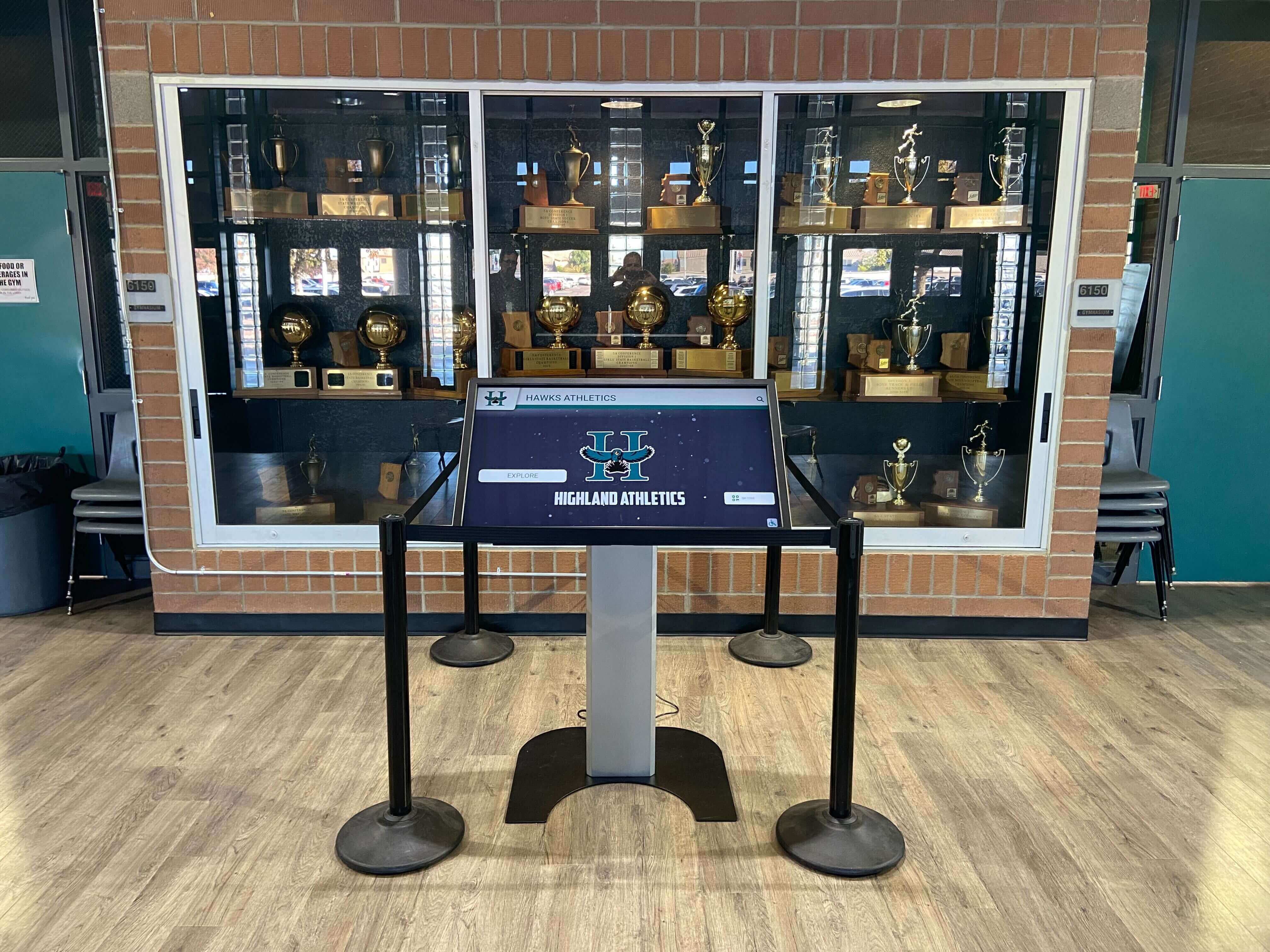
Every record displayed in a trophy case touchscreen depends on clean foreign key references — an audit that runs all six checks before each publication cycle prevents broken references from reaching the display
When to Run the Audit
A foreign key constraint audit is most effective when scheduled at four predictable trigger points rather than run reactively after display errors are reported.
Before every batch import. Any incoming records — from a conference results export, a state association data file, or a historical spreadsheet — should be passed through all six checks before a single record is committed. Batch imports are the single highest-risk event for large-scale foreign key violations: one inconsistently formatted column can introduce hundreds of broken references simultaneously.
Before each recognition display publication cycle. Before records are pushed to touchscreen kiosks, honor walls, or web archives, run the four primary checks on the records being published. Records that fail any check should not go live until violations are resolved or formally documented with senior authorization.
Annually at the close of each academic year. A full six-check pass on the entire award database at year-end surfaces accumulated violations from the preceding year’s entries and provides a clean baseline for the following year.
When a parent table is updated. Any time a parent record changes — an athlete registry merge, a program name change, an award title retirement — run a targeted foreign key check on all award records that reference the changed entry. A parent update that is not followed by this check will silently orphan every child record that referenced the old value.
Audit Checklist
The following checklist covers the key pre-publication steps for a foreign key constraint audit. Each item maps to a check in the step-by-step process above.
- Athlete master registry is current; all duplicates have been merged
- Approved program list includes all historical program names with effective date ranges
- Season calendar covers the full span of records in the database in the approved format
- Official award catalog includes active and retired titles with sport applicability and effective seasons
- Athlete foreign key check complete — no critical violations outstanding
- Team program foreign key check complete — no unresolved program code mismatches
- Season foreign key check complete — format inconsistencies batch-resolved
- Award title foreign key check complete — no retired titles assigned to post-retirement seasons
- Athlete–program–season cross-reference check complete — no unauthorized team assignments
- Award frequency check complete — single-recipient violations investigated
- Violation log produced with severity rankings and target resolution dates
- All critical and high-severity violations resolved before publication
For FBLA chapter recognition programs that manage awards alongside athletic record systems, the same foreign key audit logic applies to member award databases — FBLA awards recognition programs and their data management requirements addresses recognition data governance in a parallel organizational context that maps to the same audit steps.
How Digital Recognition Platforms Reduce Foreign Key Violations
Manual foreign key audits are necessary but labor-intensive. Purpose-built digital recognition platforms reduce violation frequency by enforcing constraint logic at the point of data entry — preventing broken references before they are saved.
Athlete registry linking at entry. Platforms that require staff to select an athlete from an existing canonical roster rather than entering a name as free text resolve the athlete foreign key automatically. The system links the award to the athlete’s ID, not to a name string — which means the foreign key cannot be null, misspelled, or outdated at the moment of entry.
Controlled vocabulary for program and title fields. Dropdown selection for team programs and award titles eliminates the variant-form failure mode entirely. A staff member cannot enter “BV Soccer” if the only selectable options are canonical program names from the approved list. The broken reference cannot be created.
Season calendar binding. Platforms that manage seasons as administrative records — created by an administrator before they can be assigned to award entries — enforce season foreign key validity structurally. An award cannot reference a season that does not exist in the platform’s calendar because there is no free-text path to that reference.
Pre-import deduplication and foreign key validation. Recognition platforms with native import tooling run foreign key checks across the entire incoming batch before committing records, generating a violation report that must be cleared before the import proceeds.
Award title–sport eligibility logic. Platforms that bind each award title to specific sport programs enforce the sport-applicability dimension of the award title foreign key at entry: an award title not valid for the selected sport is not presented as an option, preventing the cross-sport assignment error this check targets.
For programs running digital FBLA recognition displays alongside athletic recognition systems, building a digital FBLA awards recognition display covers how structured award data from a constraint-clean database feeds reliable digital display output across different recognition program types.
For athletic recognition programs that include plaques and permanent physical hardware alongside digital systems, athletic awards plaques and the data records that back them addresses how physical recognition artifacts connect to the digital award records that a foreign key audit validates.
Rocket Alumni Solutions’ cloud-based recognition platform enforces foreign key constraints at the entry layer through canonical athlete profiles, controlled vocabulary program and award title fields, managed season calendars, and pre-publish validation — so broken references are prevented at creation rather than discovered in a post-publication audit.

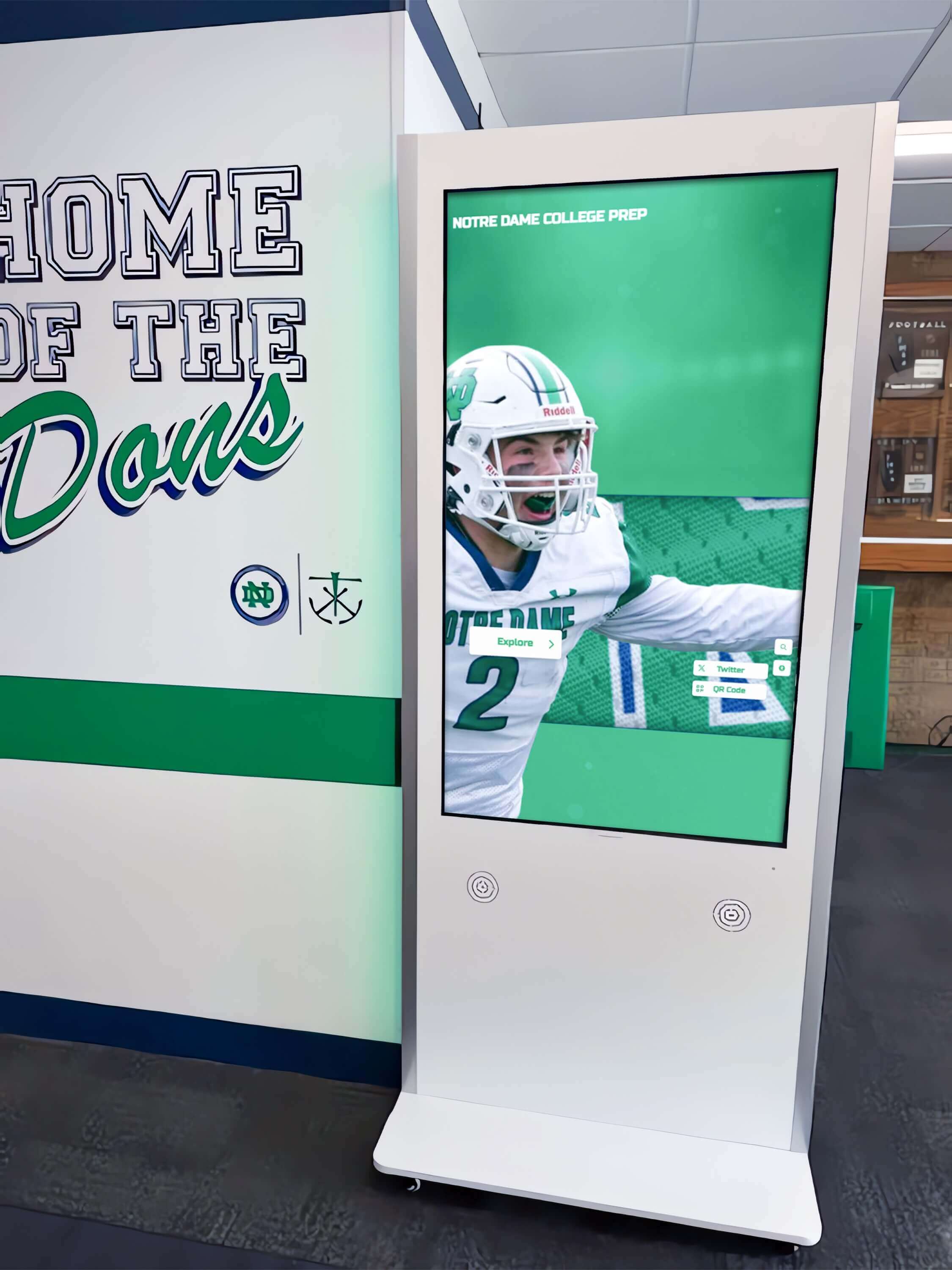
A platform that enforces foreign key constraints at entry — through athlete registry linking, controlled vocabulary dropdowns, and season calendar binding — prevents orphaned references before they can reach a touchscreen display
Connecting the Audit to Recognition Display Quality
The downstream impact of a foreign key constraint audit is most visible on the recognition displays that school communities encounter. Each of the four foreign key types produces a distinct display failure when violated.
Orphaned athlete references produce blank profile cards on portrait-style touchscreen displays, missing names on record boards, and athlete-filter results that return zero entries for an athlete who genuinely earned recognition.
Orphaned program references cause sport-filter browse to exclude awards from programs that cannot be matched to an active program in the display system’s program list — effectively hiding recognition that belongs to a sport the school still operates.
Orphaned season references break chronological display ordering, cause year-filter results to omit entire seasons, and prevent accurate “all-time” records from being computed when an award’s season cannot be placed in the timeline.
Orphaned award title references cause category-filter browse to omit records for retired titles, display an unrecognized award label in the honor detail view, or prevent the record from appearing in any catalog-based sort that cannot match the title to a catalog entry.
All four failure types are invisible at the data-entry level and visible at the display level — which is exactly why a pre-publication foreign key constraint audit, run before records reach the display pipeline, is the appropriate intervention point.
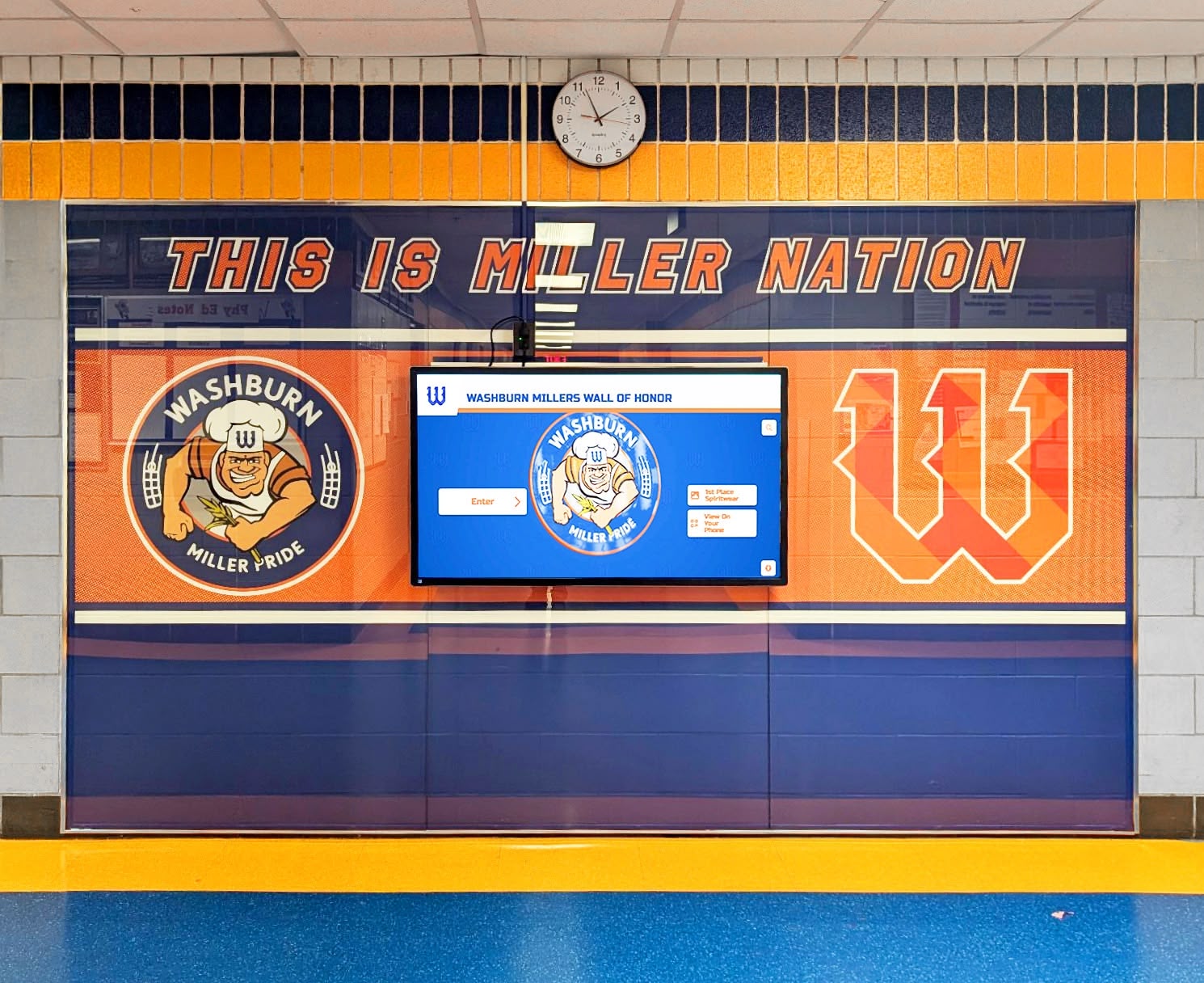
Wall of honor displays that surface complete, accurate records for every athlete depend on a foreign key audit confirming that no orphaned athlete, program, season, or award title reference exists before the records are published
Frequently Asked Questions
What is an athletic awards foreign key constraint audit?
An athletic awards foreign key constraint audit is a structured review that verifies every reference field in an athletic award record resolves to an existing parent record. The four foreign key fields checked are the athlete identifier (must match a row in the athlete master registry), the team program code (must match an active entry in the approved program list for the award's season), the season identifier (must match an entry in the season calendar), and the award title key (must match an active entry in the official award catalog for the sport and season assigned). Two additional cross-reference checks confirm that the athlete was enrolled on the referenced team during the referenced season and that single-recipient awards have not been assigned to multiple athletes. Schools run this audit before batch imports, before each display publication cycle, and annually at year-end to prevent orphaned records from appearing on recognition kiosks, hallway displays, and published archives.
What is a foreign key constraint?
A foreign key constraint is a relational database rule that requires a value in a child record's reference field to match an existing row in the specified parent table. In an athletic award database, a foreign key constraint on the athlete field means the award record cannot be saved unless the athlete identifier it contains matches a real row in the athlete master registry. If the parent record is later deleted or its identifier changed without a cascading update, the child record's foreign key becomes broken — it references a parent that no longer exists. The child record is then called an "orphan." Most school athletic recognition systems do not enforce foreign key constraints automatically; an explicit audit substitutes by running the same checks as a review step.
What is an orphaned record in an athletic award database?
An orphaned record in an athletic award database is an award entry whose foreign key field references a parent record that no longer exists. The most common type is an orphaned athlete reference: an award linked to an athlete identifier that was deleted when two duplicate athlete records were merged, or changed when the school migrated to a new platform. The award still exists in the database, but the athlete it was assigned to cannot be identified because the reference is broken. On a recognition display, orphaned records produce blank profile cards, missing entries in record boards, and filter results that return no data for the affected athlete. Resolving orphaned records requires tracing the award to secondary sources — ceremony programs, yearbooks, coaching records — to identify the correct athlete and update the reference.
How often should a foreign key constraint audit be run on athletic award records?
A foreign key constraint audit should be run at four trigger points: before any batch import of records from an external source, before each recognition display publication cycle, annually at the close of each academic year, and whenever a parent table is updated — an athlete registry merge, a program name change, or an award title retirement. The batch-import check prevents large-scale violations from entering the database in a single operation. The pre-publication check prevents broken references from reaching displays. The annual pass surfaces accumulated violations from the preceding year's entries. The parent-update check prevents retroactive corrections from silently orphaning the child records that referenced the changed value.
How do digital recognition platforms help enforce foreign key constraints in athletic award databases?
Digital recognition platforms reduce foreign key violations by enforcing constraint logic at the point of data entry rather than in a downstream audit. Athlete registry linking requires staff to select an athlete from an existing canonical profile rather than typing a name, ensuring the athlete foreign key is always valid at entry. Controlled vocabulary dropdowns for team program codes and award titles eliminate the variant-form entries that break foreign key checks. Season calendar binding prevents award records from referencing a season that does not exist in the platform's managed calendar. Pre-import validation tools run foreign key checks across an entire incoming batch before any record is committed, surfacing violations in a report that must be cleared before the import proceeds. Together, these mechanisms shift the enforcement point from a post-entry audit to the entry interaction itself.
What causes foreign key violations in athletic recognition databases?
The most common causes of foreign key violations in athletic recognition databases are system migrations that change identifiers without cascading updates to child records, program restructuring that retires program codes still referenced in historical award entries, free-text data entry that produces variant forms of program names and award titles that do not match the canonical approved value, retroactive corrections to parent registry records that are not propagated to linked award records, and batch imports from external systems that use different identifier formats. Batch imports carry the highest single-event risk: one inconsistently formatted column can introduce hundreds of broken foreign key references in a single operation.
Conclusion: Enforced Links, Trustworthy Displays
An athletic awards foreign key constraint audit is the practice that keeps a school’s recognition database from accumulating the orphaned records that make displays incomplete and unreliable. By checking all four foreign key fields — athlete, program, season, and award title — against their parent registries at every import, every publication cycle, and every annual close, athletic programs prevent the broken references that turn individually accurate award entries into unattributable orphans.
The seven-step audit process, the severity-ranked violation log, and the orphan-record examples table in this guide provide a systematic path through every foreign key relationship an award record must maintain. Programs that follow this framework — and that build toward platform-level enforcement through controlled vocabulary, canonical athlete IDs, and season calendar binding — build recognition archives where every award on every display resolves exactly as it should: to a real athlete, a real program, a real season, and a real honor.
See How a Recognition Platform Enforces Foreign Key Constraints at Entry
Rocket Alumni Solutions gives athletic programs a cloud-based recognition platform with canonical athlete profiles, controlled vocabulary program and award title fields, managed season calendars, and pre-publish validation — so foreign key violations are prevented at the point of entry, not discovered after records reach a display.
Request a Demo