



An athletic code of conduct is more than a disciplinary document — it is the policy foundation that determines which athletes qualify for awards, whose names appear on record boards, who earns captain honors, and who gets inducted into a hall of fame. When athletic directors treat the code of conduct as a recognition-eligibility framework rather than a punishment checklist, they build programs where accountability and celebration reinforce each other.
This guide explains how to connect your athletic code of conduct to every downstream recognition decision: season awards, post-season honors, records boards, walls of honor, and digital displays. It includes sample policy language, a tiered eligibility framework, and practical guidance for communicating standards to athletes and families before the season begins.
A well-drafted athletic code of conduct answers one question consistently: what does a student-athlete have to do — and refrain from doing — to earn the recognition this program offers? Without that connection, recognition feels arbitrary, and enforcement lacks a principled rationale.

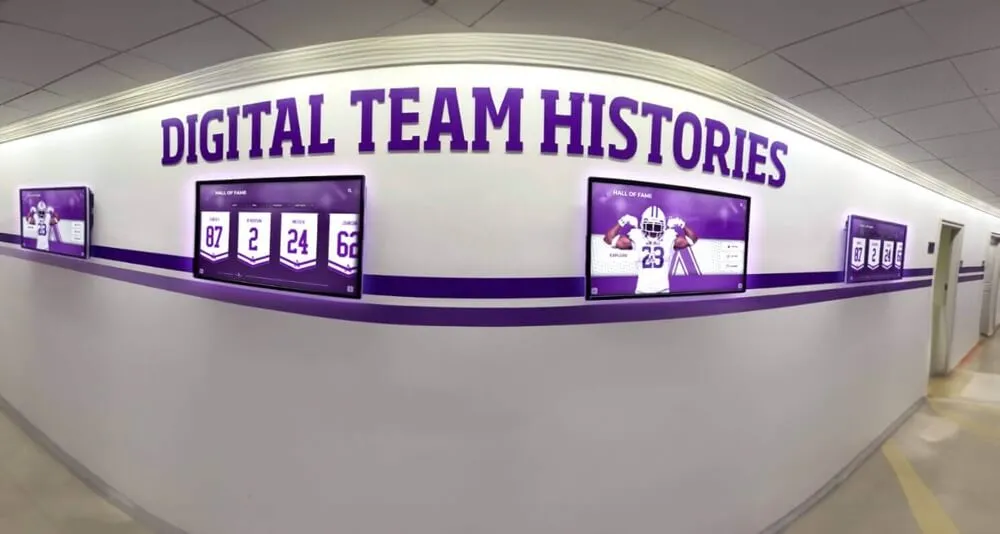
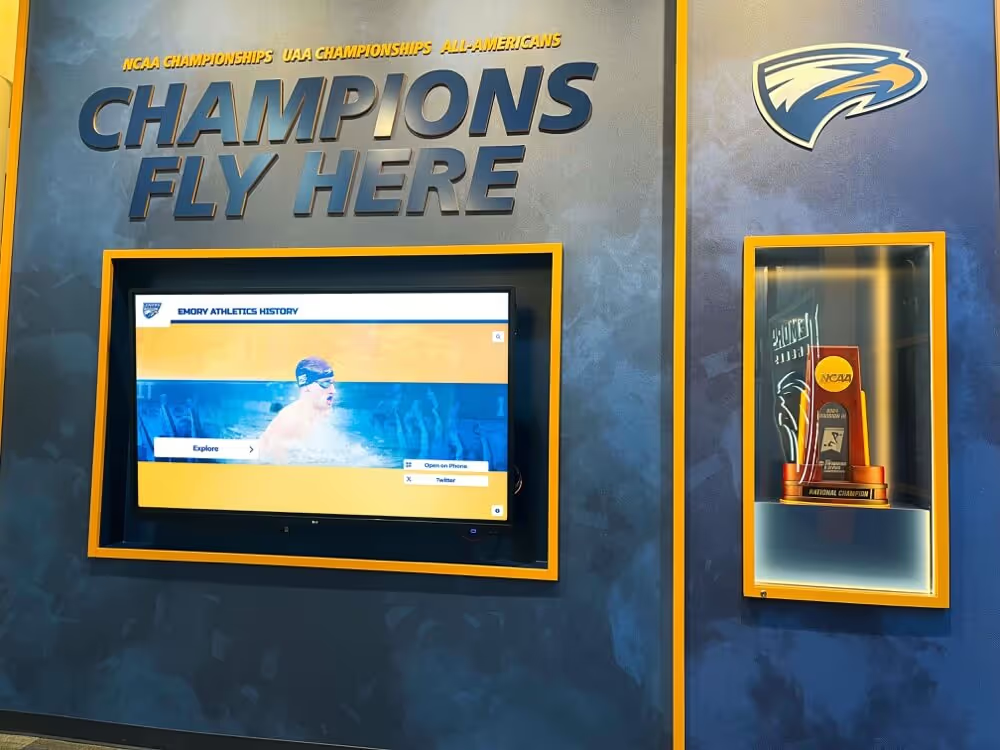
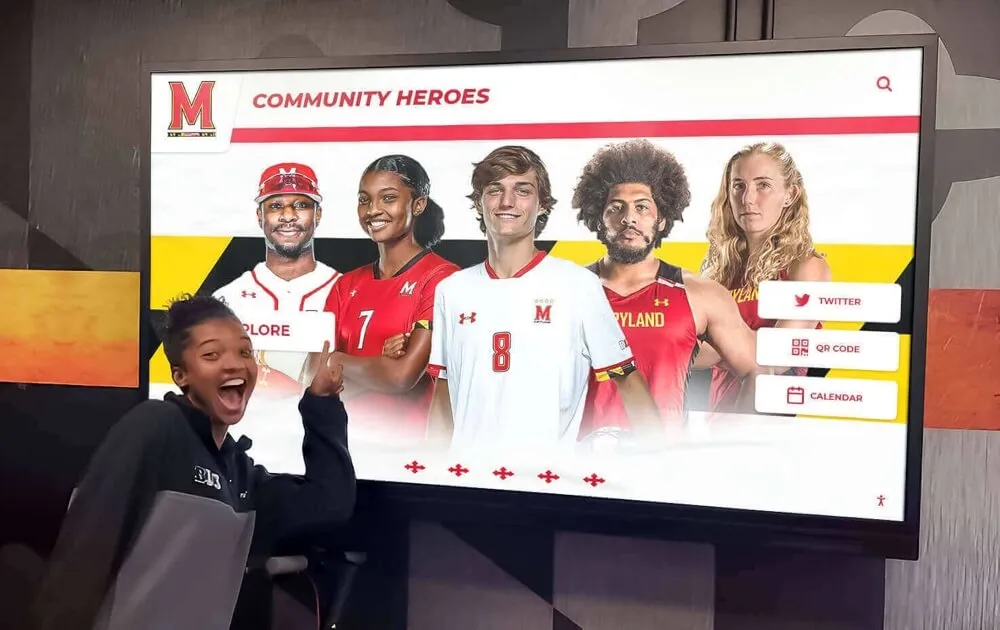
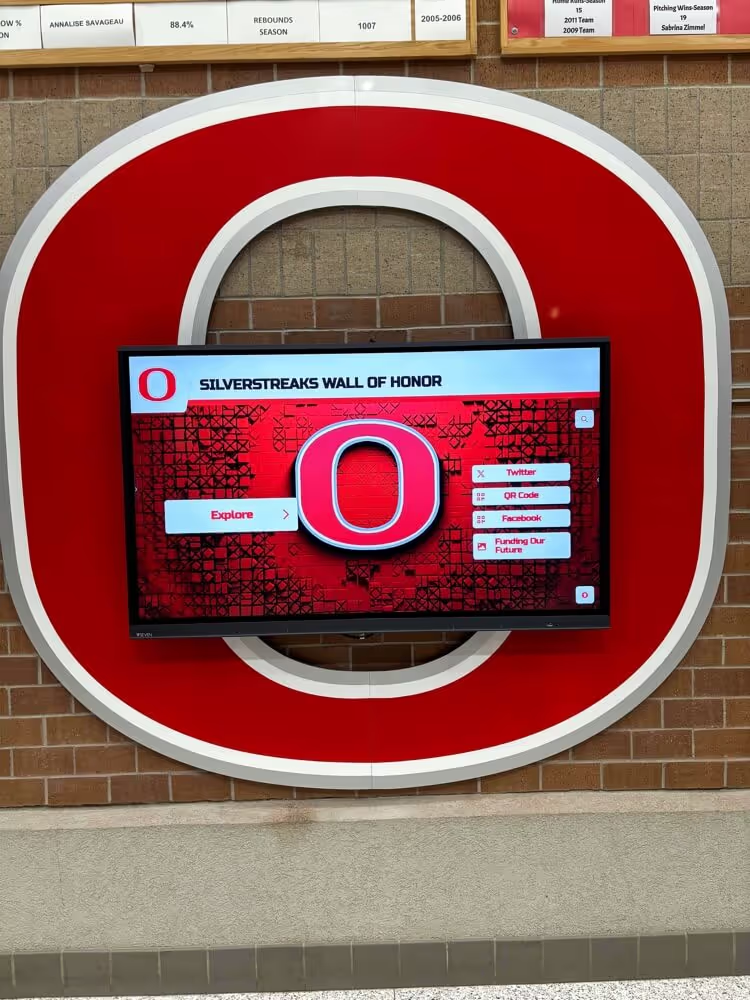
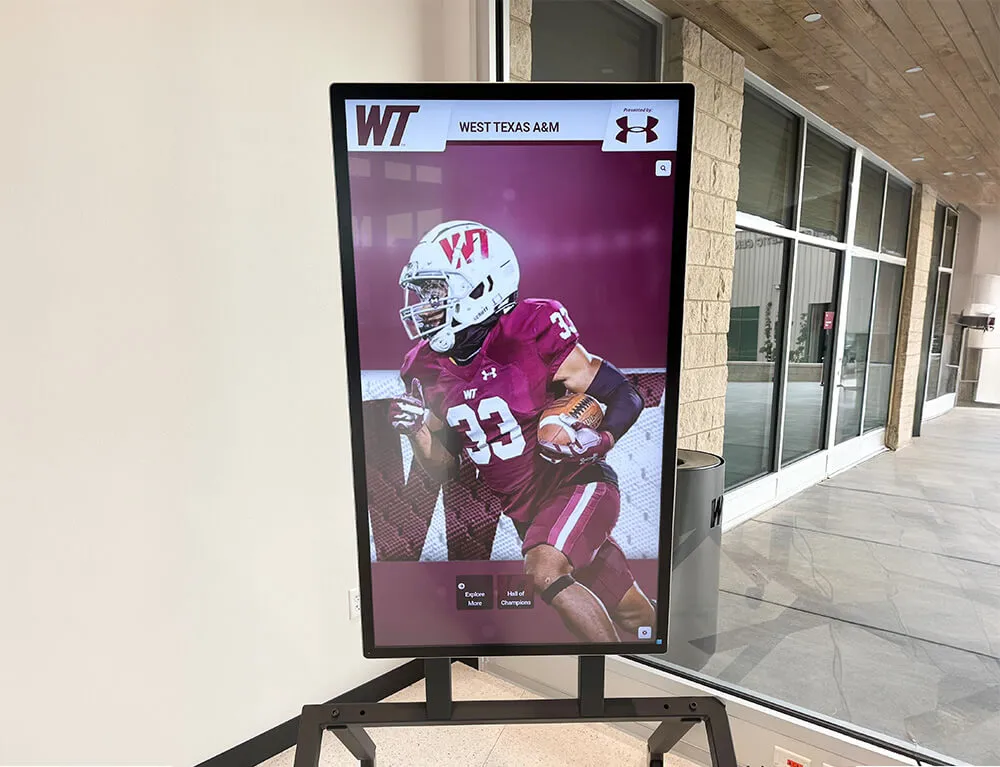
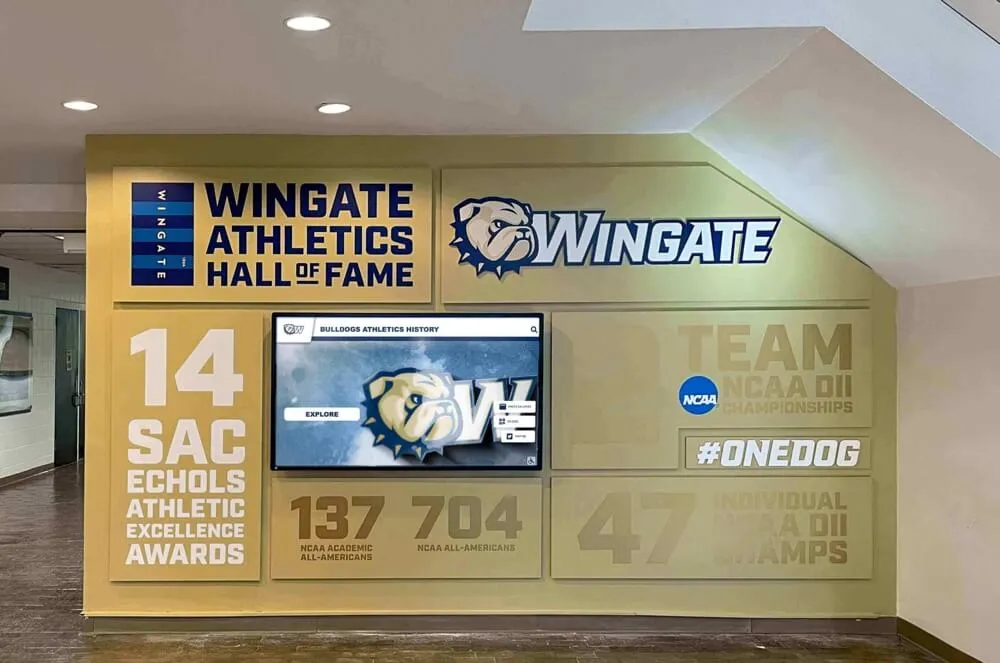
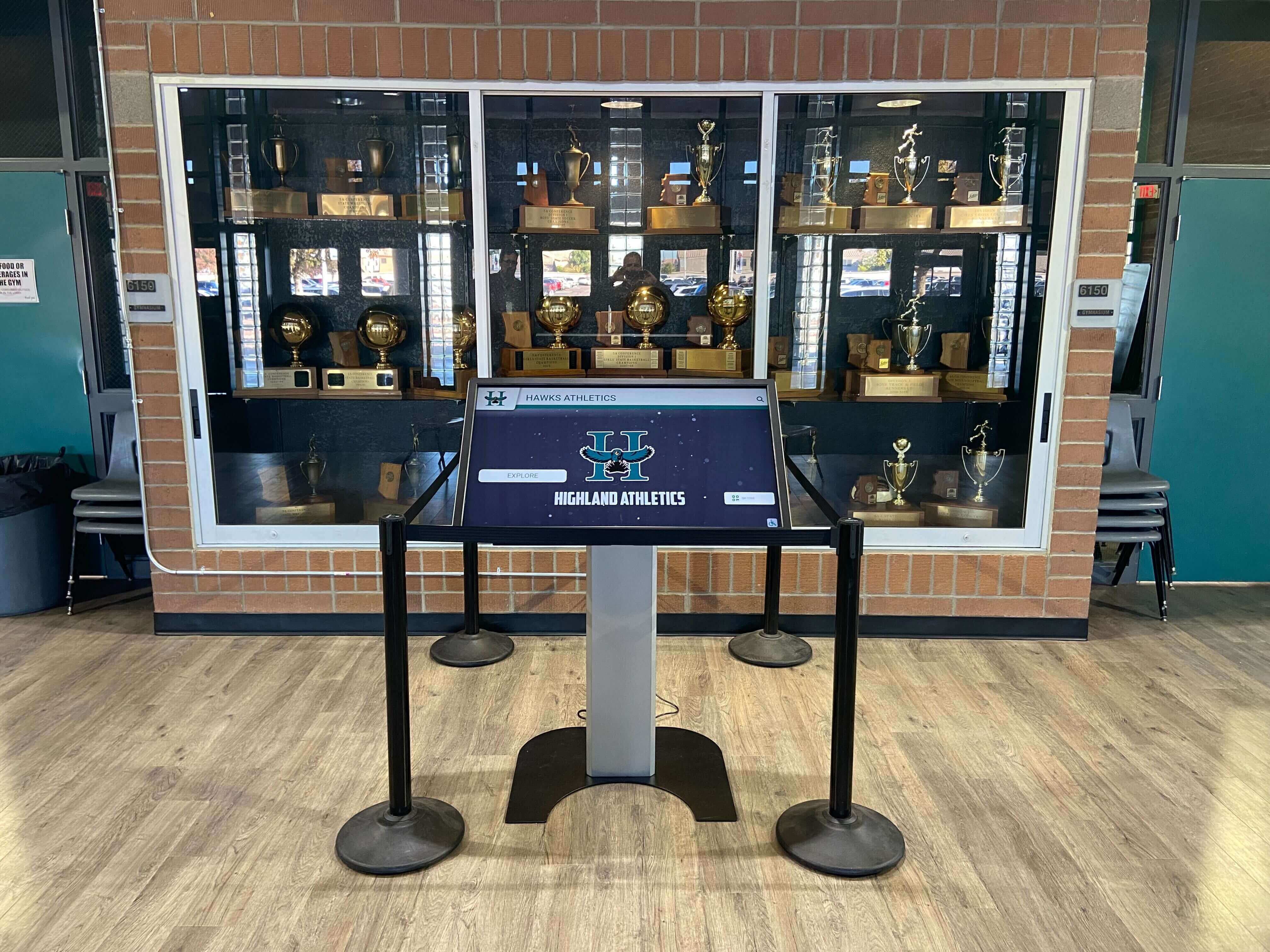
Recognition displays become more meaningful when tied to clear eligibility standards established in the athletic code of conduct
What Is an Athletic Code of Conduct and Why Does It Drive Recognition?
An athletic code of conduct is a written policy that defines the behavioral, academic, and character standards student-athletes must meet to participate in school athletics. Most codes address attendance at practice, academic standing, sportsmanship, substance use, social media conduct, and consequences for violations.
The link to recognition is direct: every award your program presents, every name on a record board, and every hall of fame induction is implicitly an endorsement of that athlete. When a program inducts someone who violated its code without consequence, or strips an award from a player based on an undisclosed policy, it signals that recognition standards are unclear or inconsistently applied.
According to the National Federation of State High School Associations (NFHS), eligibility policies — including conduct standards — are among the most common sources of parent and athlete disputes in interscholastic athletics. A clearly documented code of conduct, with explicit recognition eligibility consequences, reduces ambiguity and defensible challenges.
Three reasons to build recognition policies into your code of conduct:
- Consistency — coaches and athletic directors apply the same standard to every athlete, reducing perceptions of favoritism
- Deterrence — athletes understand that misconduct carries recognition consequences, not only playing-time penalties
- Institutional credibility — your hall of fame, records board, and award history reflect genuine program values
Recognition Eligibility Tiers: A Framework for Athletic Codes of Conduct
A tiered eligibility framework maps code-of-conduct violations to specific recognition consequences. Rather than vague language like “conduct unbecoming,” tiers give athletes, coaches, and families a clear picture of what is at stake.
Tier 1 — Full Eligibility
Athletes who complete the season in good standing and meet all code requirements are eligible for:
- All team awards (MVP, Most Improved, Coaches Award, etc.)
- All-conference and all-district nominations
- Scholar-athlete and academic recognition
- Captain and team leadership roles for the following season
- Inclusion on digital record boards and season archives
- Nomination consideration for post-career hall of fame honors
Tier 2 — Conditional Eligibility
Athletes who received a single documented violation and completed a corrective action plan are eligible for participation awards and recognition at the coach’s discretion, but are typically ineligible for:
- Character-based awards (sportsmanship, leadership, coaches award)
- Captain nominations for the following season
- Formal public recognition at banquets until the corrective period ends
Tier 3 — Ineligibility for Season Recognition
Athletes dismissed from the team, suspended for more than a defined number of contests, or found responsible for serious conduct violations (substance policy, academic fraud, harassment) are ineligible for:
- All season awards
- All-conference nominations
- Any public display of recognition for that season
This does not automatically affect previously earned recognition (prior-year awards, records set before the violation), but those questions require a separate retroactivity policy addressed later in this guide.
| Violation Level | Season Awards | Character Awards | Captain Eligibility | Records Display |
|---|---|---|---|---|
| No violation | Eligible | Eligible | Eligible | Eligible |
| Single violation + corrective action | Eligible | Ineligible | Ineligible next season | Eligible |
| Multiple violations | Coach discretion | Ineligible | Ineligible next season | Coach discretion |
| Dismissal / serious violation | Ineligible | Ineligible | Ineligible (1+ seasons) | Case-by-case review |
Awards Policies: Connecting Conduct Standards to Season Recognition
Season awards represent the most immediate connection between code of conduct and recognition. The following policy language illustrates how to make that connection explicit.
Sample Language: Season Award Eligibility
To be eligible for any end-of-season team award, a student-athlete must have (1) completed the full season or been medically excused, (2) maintained good academic standing as defined by school policy throughout the season, (3) received no unresolved conduct violations under this code, and (4) attended the mandatory end-of-season banquet or been excused by the head coach.
Coaches frequently ask how to handle athletes who set performance records but violated conduct policies. The recommended approach is to separate performance recognition (most points scored, fastest time) from character recognition (MVP, coaches award) in your policy. Performance records may stand on their own factual basis; character awards should require meeting the full eligibility standard.
All-Conference and External Nominations
Before nominating athletes for all-conference, all-state, or scholar-athlete honors administered by your athletic conference or state association, confirm that your code of conduct explicitly states: “Nominations to external honors bodies require the same eligibility standards as internal team awards.” This prevents a situation where an athlete is ineligible for your own team MVP but is submitted for all-conference consideration.
Many state associations publish their own eligibility criteria. According to the NFHS Handbook, member schools are responsible for verifying that nominated athletes meet all local and association eligibility requirements before submission.
Academic Eligibility and Recognition
Academic eligibility and code-of-conduct eligibility often run on separate tracks within school policy, but they intersect at recognition. An athlete on academic probation who is still permitted to compete may nonetheless be ineligible for scholar-athlete awards. Build this explicitly into your recognition eligibility section rather than leaving it to case-by-case interpretation.
Explore how schools structure comprehensive academic recognition programs that coordinate athletic and academic standards effectively.
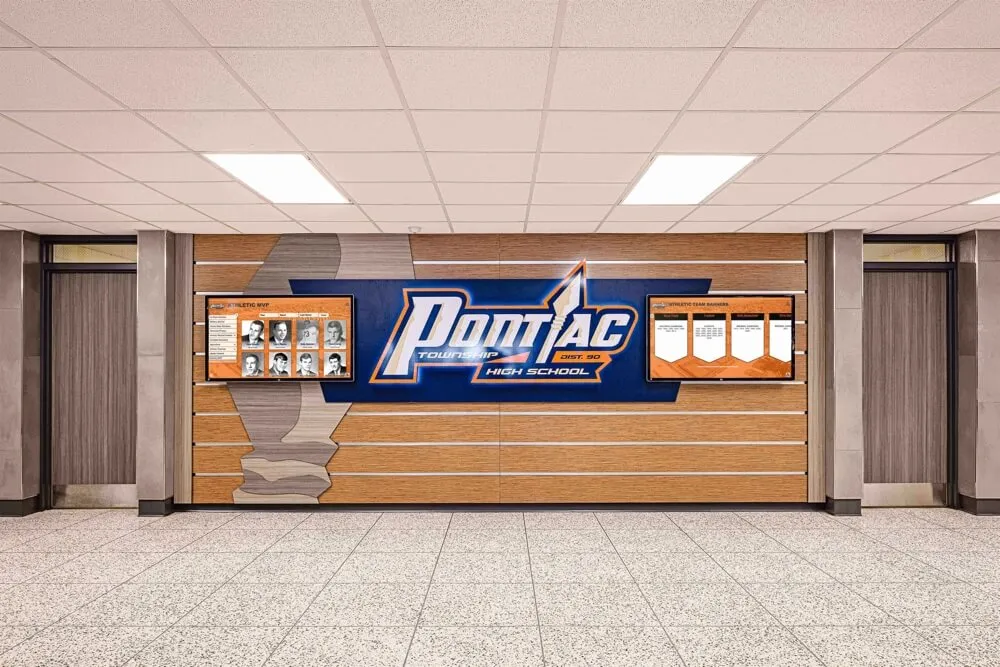
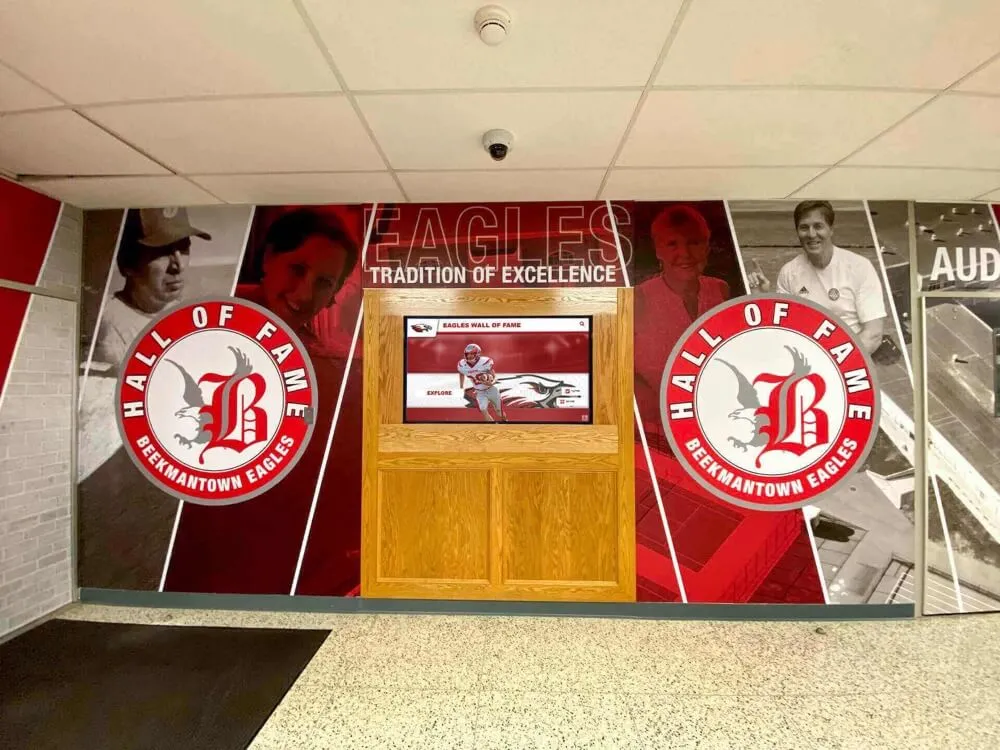
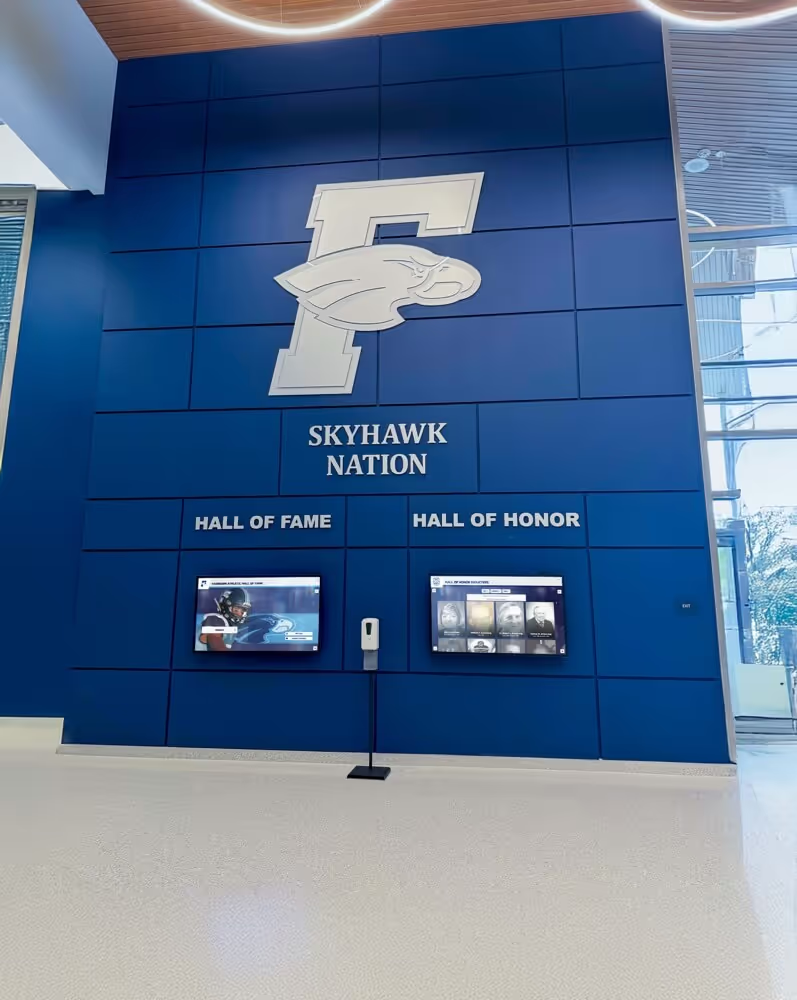
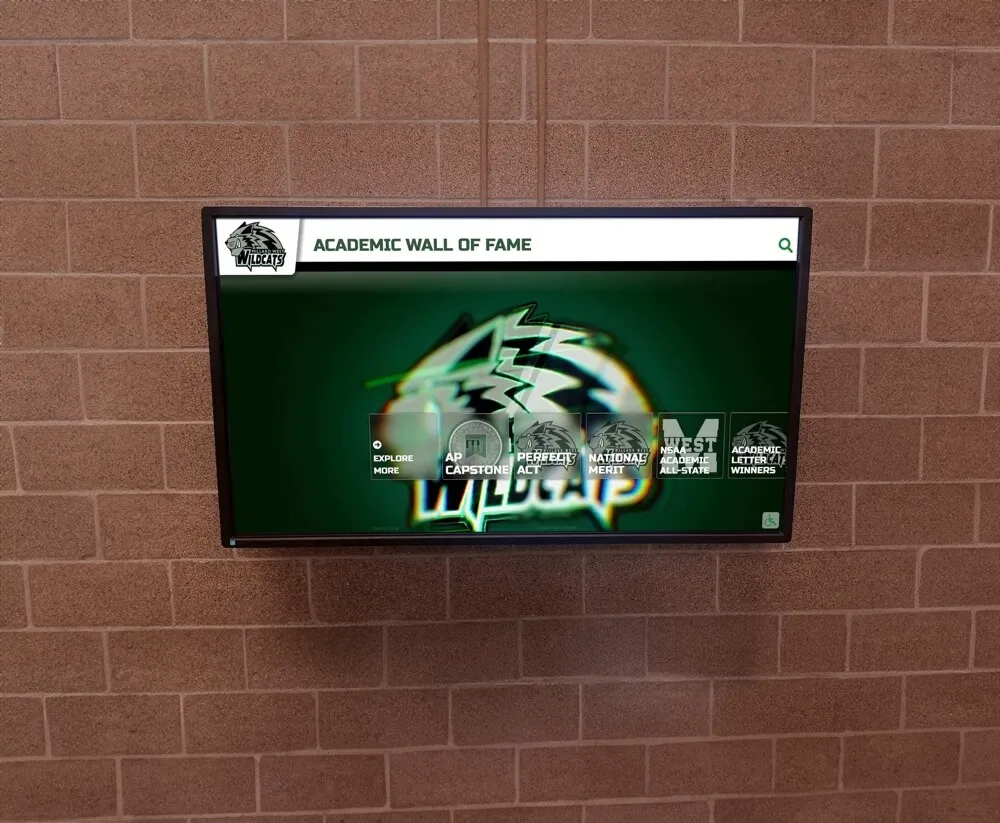
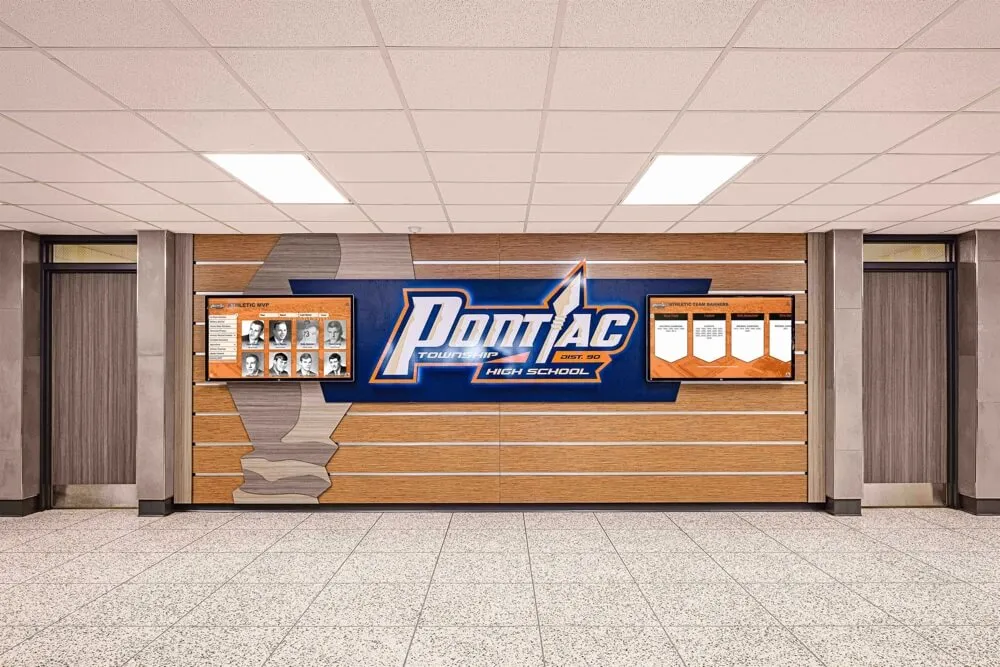
Honor walls become more defensible when backed by published eligibility criteria tied to the athletic code of conduct
Records Boards and Code of Conduct: Display Rules
Athletic records boards are among the most visible recognition assets a school maintains. A record set by an athlete who later violated the code of conduct — or worse, was later found to have committed academic fraud — puts athletic directors in a difficult position.
Records Set During a Violation-Free Season
Records set during seasons where the athlete completed the year in good standing are generally appropriate for permanent display. These are factual achievements, and removing them absent extraordinary circumstances creates more controversy than it resolves.
Records Set During or Before a Conduct Violation
The most defensible approach is a clear written policy, established before problems arise, that defines when records remain on display and when they are reviewed. Consider language like:
Performance records reflect verified athletic achievement and are not removed solely on the basis of conduct violations, except where the performance itself involved a rules violation (e.g., ineligible athlete participation, equipment violation, or academic fraud that affected eligibility at the time of the record).
This gives your program a principled rationale that is consistent across cases rather than reactive to individual circumstances.
Retroactive Review Triggers
Certain situations justify retroactive review of displayed records:
- Discovery that the athlete was academically ineligible when the record was set
- A subsequent finding that performance was aided by a prohibited substance at the time
- Rules violations by the institution (e.g., use of ineligible athletes) that have been formally adjudicated
Document your review policy in writing and involve your school’s legal counsel or district policy office when developing it. For guidance on how digital record boards can be updated accurately and transparently, explore digital record board tools designed for high school and college athletic programs.
Hall of Fame and Wall of Honor: Post-Career Eligibility Standards
Hall of fame induction represents the highest recognition your athletic program offers. Because induction is post-career, it raises questions that season awards do not: Does misconduct after graduation affect eligibility? Does a code-of-conduct violation from a student’s junior year disqualify them from future induction?
Minimum Eligibility Criteria to Include in Policy
Most school and university athletic halls of fame establish minimum criteria. For high school programs, a typical framework includes:
- Minimum years since graduation (commonly 5–10 years)
- Significant athletic achievement during enrollment (records, all-state honors, championship contributions)
- Demonstration of character consistent with program values, both during enrollment and since graduation
- No unresolved conduct violations on record from their playing years
The “character consistent with program values” criterion is where post-graduation conduct enters — but it should be explicit in policy, not applied retroactively without notice.
Inductee Nomination Review Process
A transparent nomination process reduces controversy:
- Open nomination period with published criteria
- Review committee including coaches, athletic staff, and ideally an alumni representative
- Written evaluation against each criterion
- Final approval by athletic director or principal
- Advance notification to the inductee before public announcement
When schools document this process, they can explain decisions confidently to athletes, families, and alumni — which is particularly important in contested cases.
Retroactive Induction Removal
Retroactive removal of hall of fame honors is among the most sensitive decisions an athletic director can face. Published policies that define removal criteria before any specific case arises are far stronger than ad hoc decisions. Common criteria that justify review include:
- Subsequent discovery of serious eligibility fraud during the playing career
- Formal criminal conviction for conduct directly relevant to the program’s values statement
- Actions that would have made the athlete ineligible for induction had they been known at the time of the nomination
Without a written removal policy, programs face the unenviable choice between taking potentially defensible action without a framework, or avoiding action and facing criticism for inaction.
Learn how schools build comprehensive digital archives that incorporate recognition standards in hall of fame tools for athletics, donors, and history and digital wall of fame platforms.
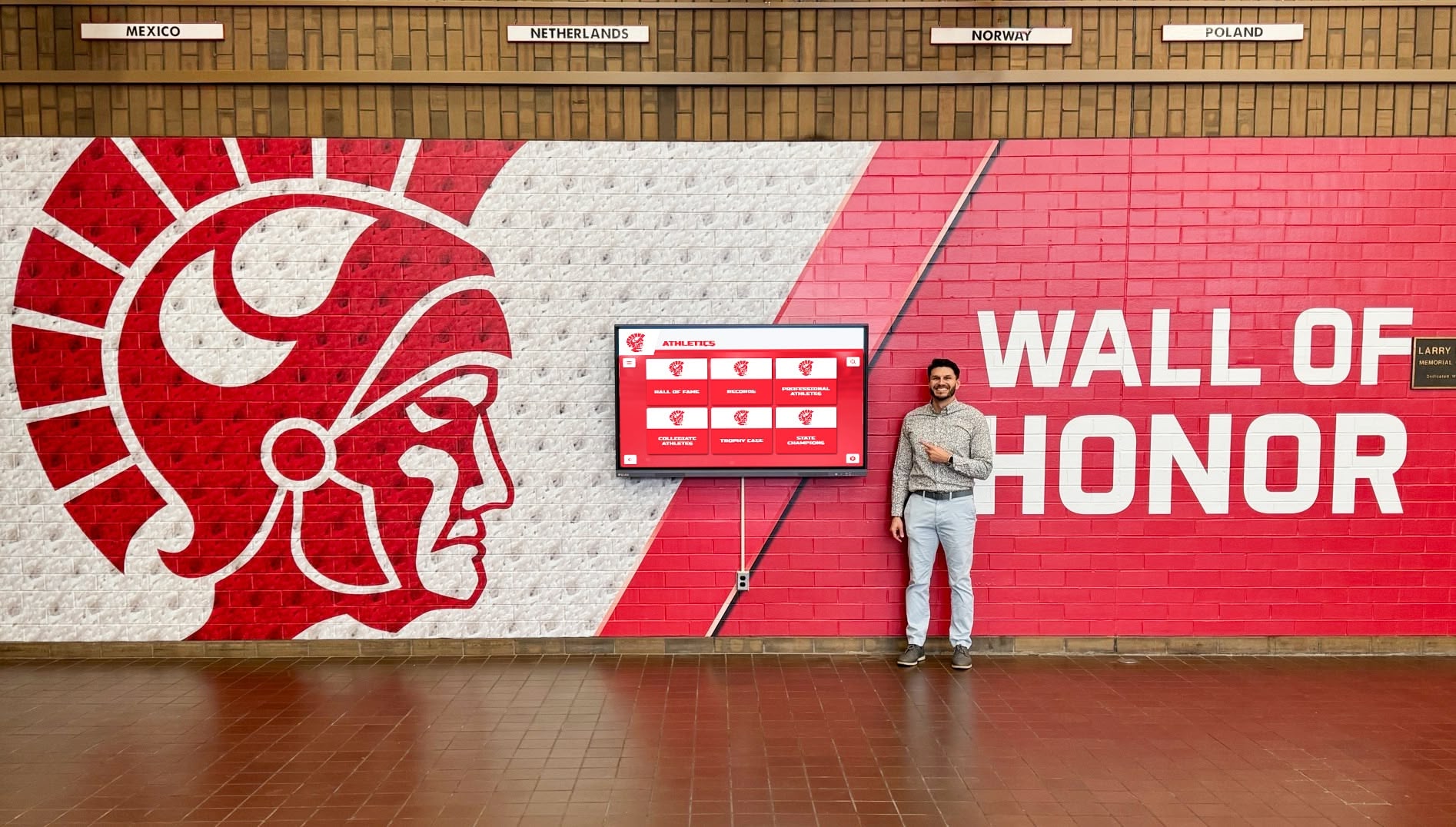
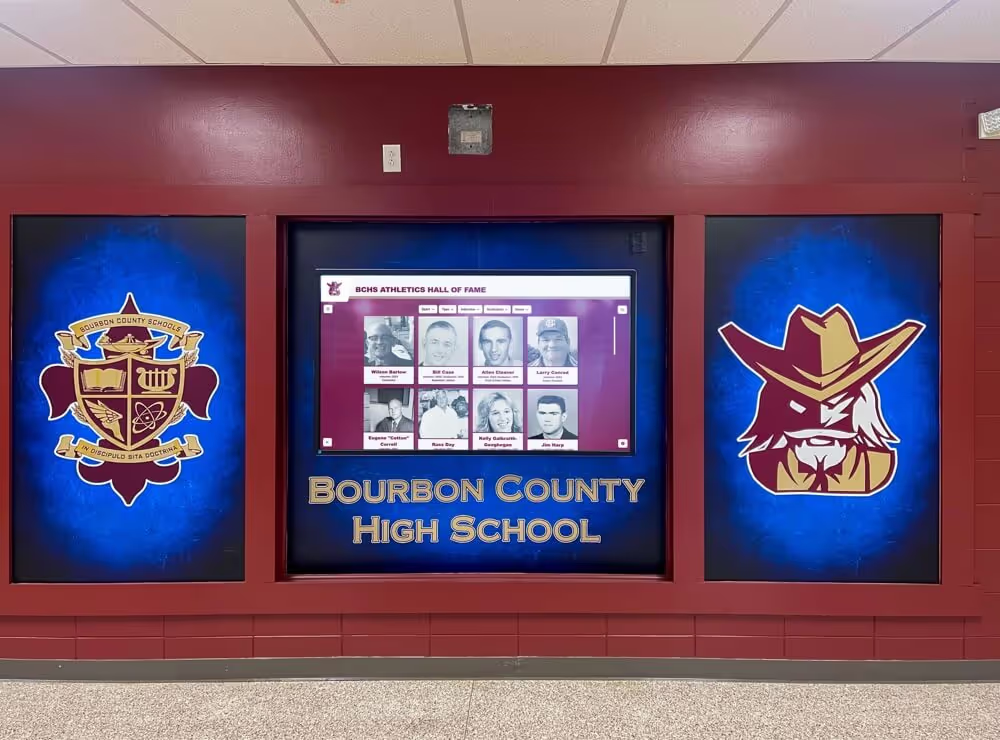
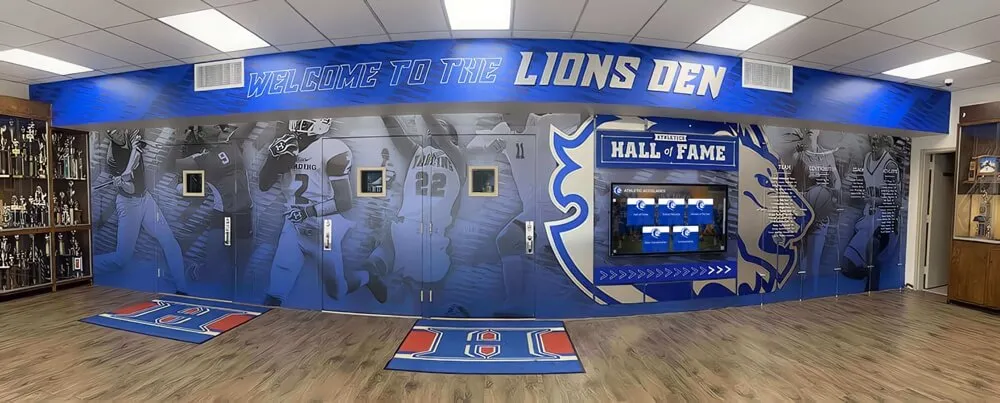
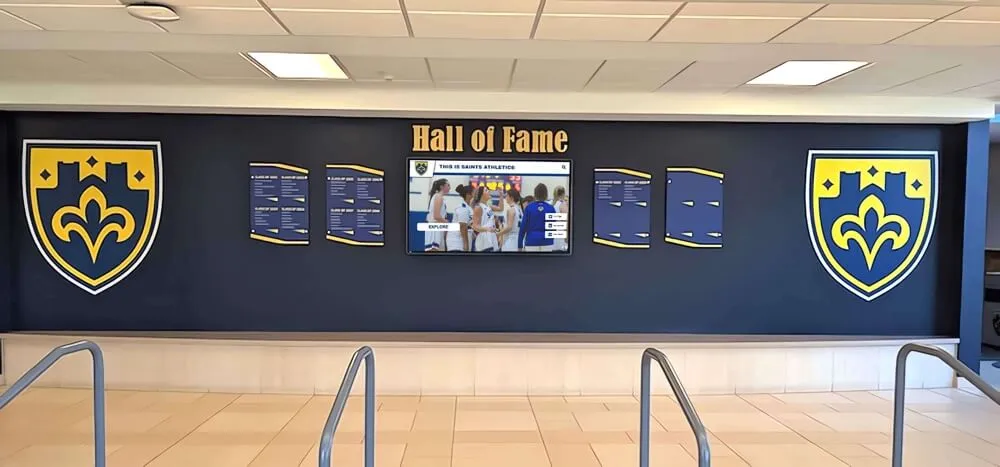
Wall of honor displays reflect program values most accurately when eligibility criteria are documented and consistently applied
Captain and Leadership Eligibility: Connecting Conduct to Honor
Captain selection is a recognition category that many athletic codes of conduct overlook. Because captain is both an honor and a responsibility, it deserves explicit eligibility criteria.
Captain Eligibility Requirements
A strong captain eligibility policy typically requires:
- Full season in good standing for the preceding year (no unresolved conduct violations)
- Academic standing meeting or exceeding the school’s minimum requirements
- Coach and team confidence through a transparent selection or election process
- No dismissal or suspension of more than a specified number of contests in the previous two seasons
Publish these criteria at the start of every season. When a player who expected to be named captain is passed over due to a conduct issue, having the criteria on record transforms a subjective decision into a policy outcome.
Removing Captain Status Mid-Season
Your code should also address what happens if a captain violates the code mid-season. Options include automatic removal, probationary status with coach review, or case-by-case determination. Whichever approach you choose, document it in advance.
Communicating Code of Conduct and Recognition Policies to Athletes and Families
Even the most carefully drafted policy fails if athletes and families don’t understand it before the season begins. Recognition eligibility consequences are especially important to communicate clearly, because families who feel their athlete was denied an award without fair notice are far more likely to dispute the decision.
Pre-Season Communication Checklist
- Distribute the full athletic code of conduct in writing before the first practice
- Hold a parent/athlete meeting that covers eligibility consequences, not just playing-time penalties
- Require signed acknowledgment from both the athlete and a parent or guardian
- Highlight the recognition eligibility section specifically — many families read conduct policies as behavioral rules and miss the awards implications
- Provide a summary document with specific award categories and their eligibility requirements
In-Season Communication
- Address conduct violations in writing as they occur, not only verbally
- Document the violation, the corrective action required, and the recognition eligibility impact
- Give the athlete and family an opportunity to respond before recognition decisions are finalized
- Maintain a consistent documentation standard across all athletes and all sports
End-of-Season Transparency
At the conclusion of the season, before the awards banquet, communicate to each athlete their recognition eligibility status. Surprises at the banquet — athletes expecting an award they are ineligible to receive — damage trust and can escalate quickly. A brief written notice to families whose athlete has a code-related eligibility limitation prevents most conflicts.
Explore how schools structure effective athlete recognition programs that build program culture and community trust.
Digital Display and Archive Considerations
Athletic recognition is increasingly managed through digital platforms — interactive touchscreens, digital record boards, online halls of fame, and website-based athlete profiles. These platforms raise additional questions about how code-of-conduct policies apply to display and archiving.
What to Display and What to Archive
A useful distinction separates active display (visible in hallways, on screens, in current-year programs) from archival records (documentation maintained for institutional history). Code-of-conduct violations may affect active display without necessarily affecting the historical archive.
For example: an athlete who set a school record as a junior but was dismissed from the team as a senior might not appear on the current-year active recognition display, but the record itself can remain in the verified archive. Digital platforms that allow administrators to toggle visibility versus archiving make this distinction manageable.
Updating Digital Displays After Conduct Decisions
When a conduct decision affects a recognition display, plan for a clear internal workflow:
- Athletic director or designee makes the recognition eligibility determination
- Decision is documented in the athlete’s file
- Platform administrator updates the display consistent with the decision
- No public announcement is required — simply update or remove the display element
Platforms designed for athletic recognition administration — including Rocket Alumni Solutions — allow administrators to control display visibility, manage award records, and maintain verified archives separately from active recognition screens. This separation is operationally important when navigating conduct-related display decisions.
Long-Term Record Integrity
Digital platforms that maintain timestamped records of when information was added, modified, or removed provide institutional protection. If a family later disputes a recognition decision, having a clear audit trail — including when a record was updated and by whom — supports the athletic director’s position.
For schools managing multi-decade athletic archives, consider exploring digital yearbook and hall of fame tools that support long-term record integrity alongside current recognition management.
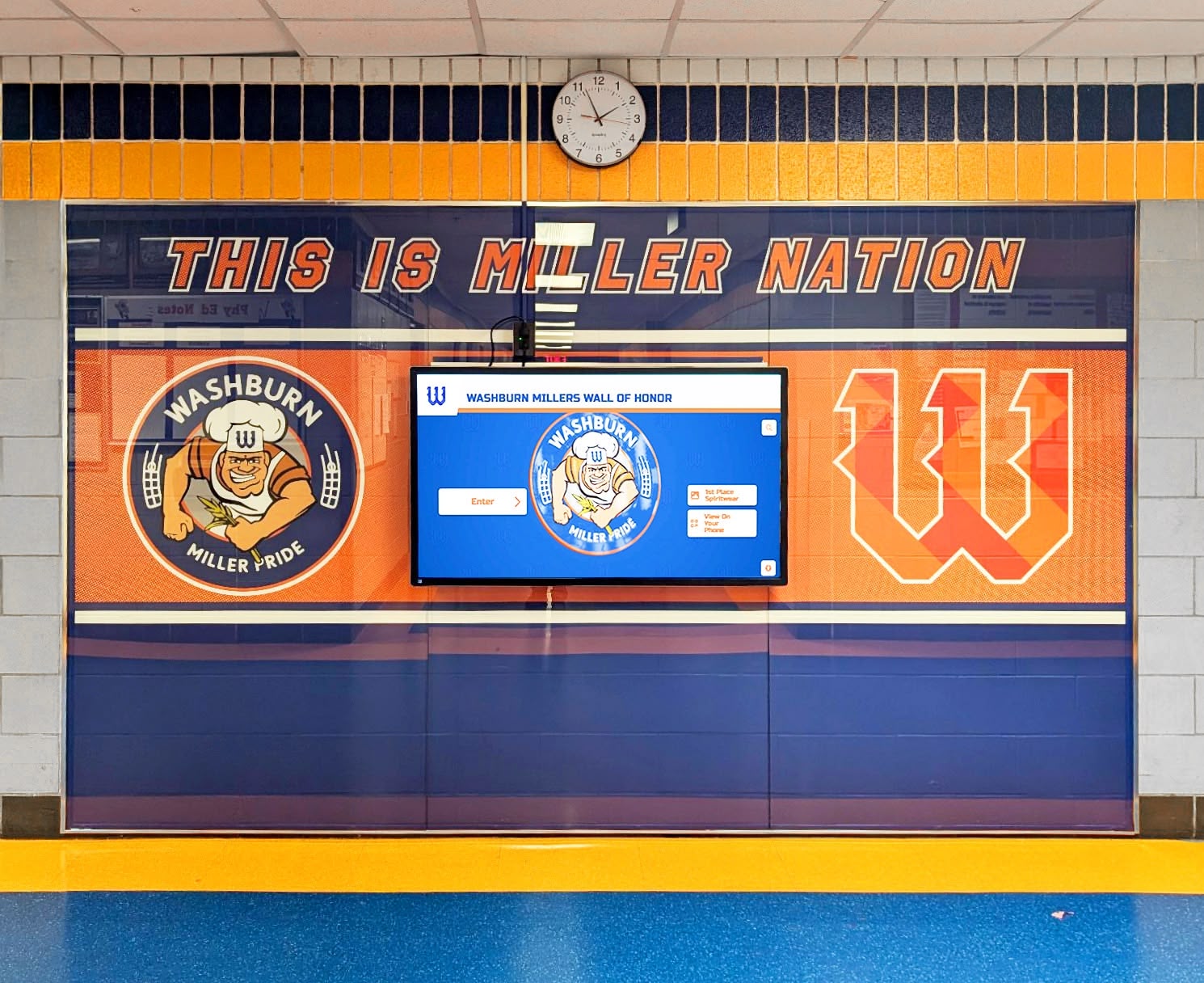
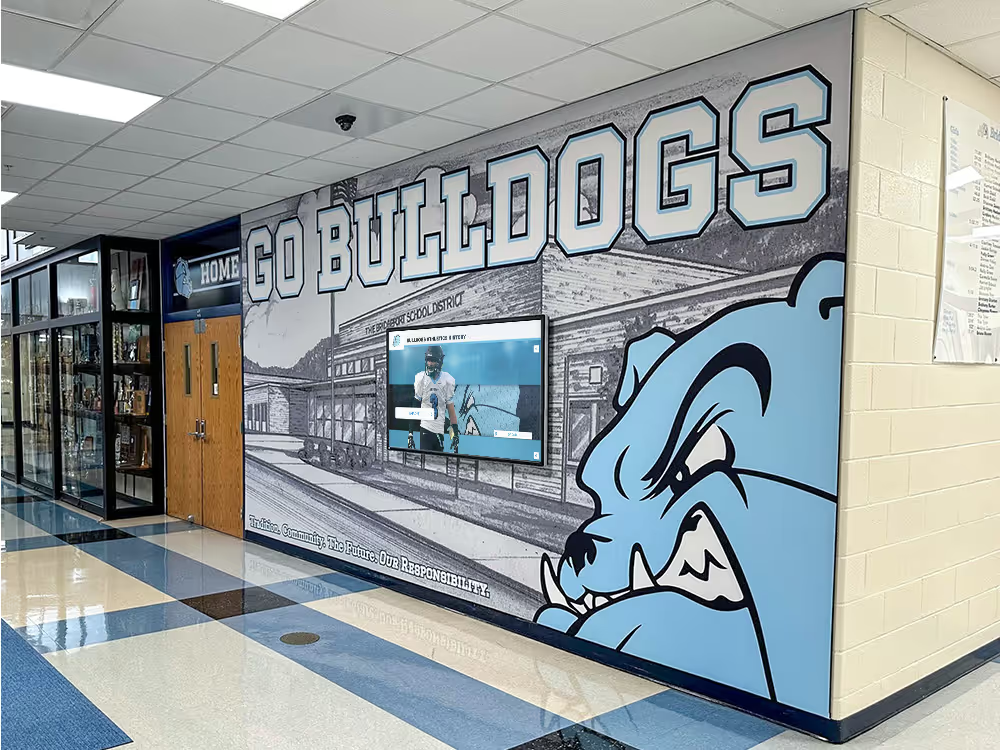
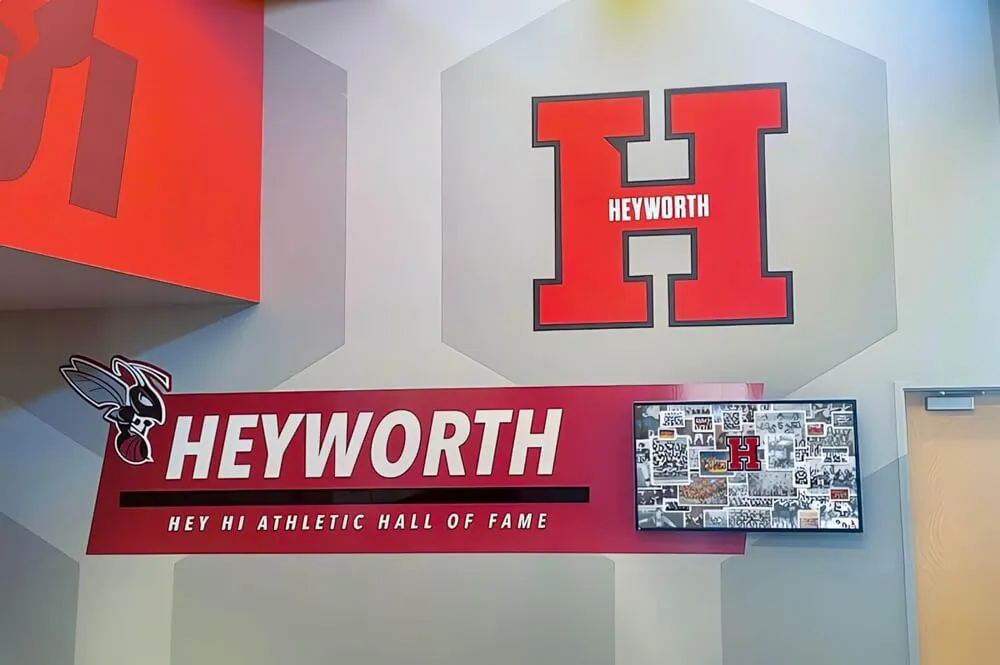
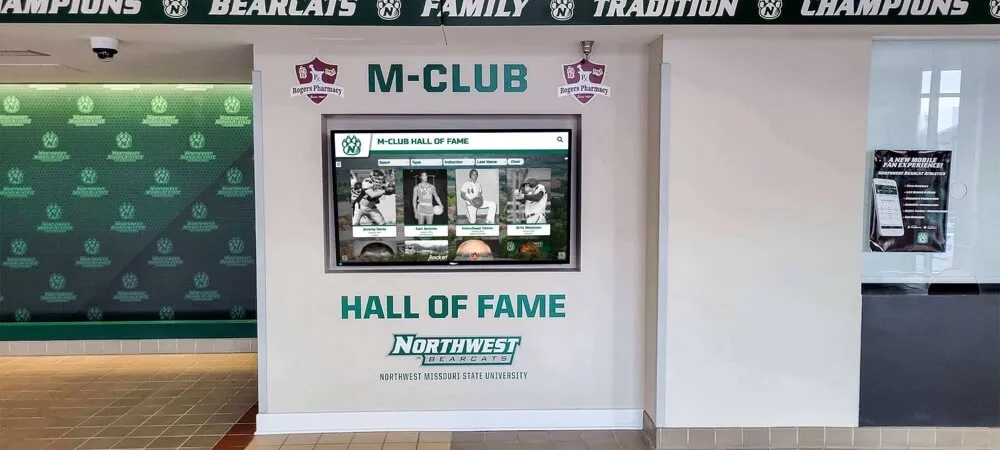
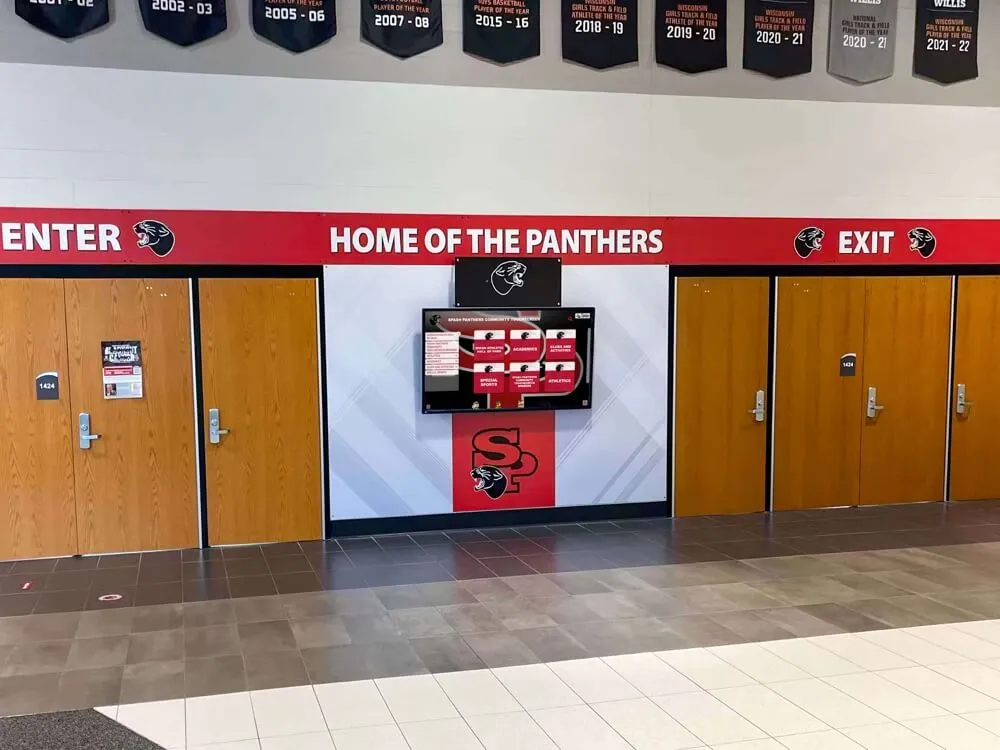
Digital displays tied to administrative platforms allow athletic directors to update recognition visibility while maintaining verified historical archives
Integrating Code of Conduct Policies with Broader Athletic Administration
A stand-alone code of conduct is weaker than one integrated into your broader program policy infrastructure. Consider how the code connects to:
Student-athlete handbooks — the code should be excerpted or summarized in the handbook, with cross-references to the full document. Athletes receive handbooks; they may not independently read the full policy.
Booster and parent organization communications — boosters who fund awards or hall of fame plaques have a stake in eligibility policies. Communicate the standards to booster leadership so they understand why recognition decisions are made as they are.
School board and district policy — your athletic code of conduct should align with district-level student conduct policies. Where they conflict, district policy typically controls. Periodic review with district administration prevents inconsistencies.
Insurance and risk management — some code-of-conduct provisions (substance testing, mandatory safety training attendance) affect your athletic program’s insurance coverage. Review with your district’s risk management office.
Alumni engagement — alumni who were athletes at your school have a direct interest in how recognition standards evolve. Transparency about your hall of fame criteria and post-career conduct standards builds alumni trust. For approaches to sustaining alumni connection through recognition, explore alumni engagement and recognition strategies.
Sample Policy Language Summary
The following provides model language for key sections of a recognition-aware athletic code of conduct. Adapt to your school’s specific context and review with legal counsel or district policy staff.
Season Award Eligibility
Eligibility for end-of-season awards requires completion of the full season in good standing, maintenance of academic eligibility, and no unresolved conduct violations under this policy. Character-based awards additionally require that no conduct violations were issued during the season, resolved or otherwise.
Records Display
Athletic records are maintained as verified factual records of performance achievement. Records are not removed on the basis of conduct violations unless the underlying performance involved an eligibility violation at the time the record was set.
Hall of Fame Eligibility
Nomination to the Athletic Hall of Fame requires demonstration of athletic achievement and character consistent with program values both during enrollment and since graduation. The selection committee may consider documented conduct violations from the athlete’s playing career in evaluating this criterion.
Captain Eligibility
Selection as team captain requires completion of the prior season in good standing with no unresolved conduct violations, maintenance of academic eligibility, and selection through the process defined by the head coach.
Frequently Asked Questions
What is an athletic code of conduct?
An athletic code of conduct is a written policy defining the behavioral, academic, and character standards student-athletes must meet to participate in school athletics. It typically covers attendance, academic requirements, sportsmanship, substance use, and consequences for violations — and, in a recognition-aware program, defines which athletes are eligible for awards, captain honors, and hall of fame consideration.
Can a school remove an athletic record from a display board due to a conduct violation?
Generally, schools have broad authority over what they display in their own facilities. However, the most defensible approach is a written policy established before any specific case arises that defines when records are reviewed or removed. Removing a performance record solely based on a conduct violation — rather than an eligibility fraud that affected the performance itself — is legally and institutionally riskier than maintaining the record while limiting other forms of recognition.
Do conduct violations affect hall of fame eligibility?
They can, if your published hall of fame criteria include a character or conduct standard. The key is having that criteria in writing before individual cases arise. Retroactively applying conduct standards to past nominees or inductees without a pre-existing written policy creates significant institutional and legal risk.
How should schools communicate recognition eligibility policies to athletes?
Schools should distribute the athletic code of conduct before the first practice of each season, hold a parent/athlete meeting covering recognition eligibility consequences specifically, require signed acknowledgment, and provide individual written notice to athletes whose eligibility is affected by a conduct decision before public recognition events like awards banquets.
How do digital display platforms handle code-of-conduct-related recognition changes?
Modern athletic recognition platforms allow administrators to control display visibility separately from archival records. This means an athlete’s historical achievements can be preserved in a verified archive while their active display profile is updated to reflect current recognition eligibility. Platforms that log when records are modified also provide an audit trail if decisions are later disputed.
Conclusion: Building a Recognition-Aware Athletic Code of Conduct
An athletic code of conduct that explicitly addresses recognition eligibility gives athletic directors a principled, defensible framework for every awards decision, records board update, hall of fame nomination, and digital display change. When athletes and families understand from day one that conduct and recognition are connected — not arbitrarily, but through documented policy — the program earns credibility that supports both accountability and celebration.
The most effective programs treat recognition not as a reward distributed after the fact, but as an outcome built into the conduct expectations established before the season begins. That integration — code of conduct to eligibility framework to award presentation to digital display — creates an athletic program that honors achievement and upholds standards simultaneously.
For schools looking to align their recognition display infrastructure with clearly documented eligibility standards, modern platforms like Rocket Alumni Solutions provide the administrative controls, archive management, and display flexibility that recognition-aware programs need.
Connect Your Recognition Displays to Clear Eligibility Standards
Rocket Alumni Solutions helps athletic programs manage awards archives, hall of fame records, and digital displays with the administrative controls needed to reflect your code of conduct policies accurately and consistently.
Request a Demo