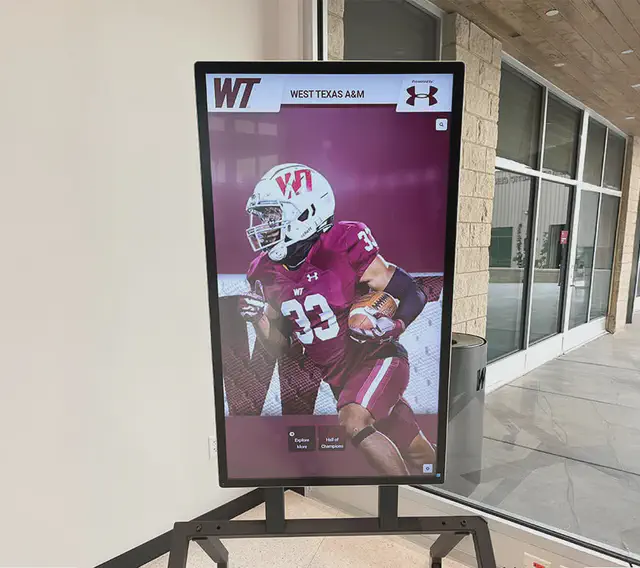

When a school’s athletic director receives recognition — a section-level award, a statewide administrator honor, or a national service citation — the communications or athletics office faces an immediate practical question: how do you label and preserve that recognition on a school display without overstating its scope, confusing the awarding sponsor, or listing a nominee as a confirmed recipient? The answer starts with the award’s exact official name, the granting organization, and the year. A concise, accurate label for an athletic director of the year award display might read: "[Name] — Section 1 Athletic Director of the Year, [State Association], 2026" — not simply “Award of the Year” or “State Champion Administrator.”
This guide walks through the distinctions that matter most, uses publicly available 2026 Florida announcements as a dated illustration, provides compact fictional label examples, and ends with an optional review checklist. It is focused on going from an award announcement to a sustainable, accurate display — not on nomination procedures or deadlines.
Preserving an athletic director’s recognition correctly is a matter of institutional integrity. The wrong label can imply a broader scope than the award carries, mislead visitors about the awarding body, or — in the case of citations that require a separate approval step — announce a selection that has not yet been confirmed. Getting the label right protects the administrator being honored and the school displaying the recognition.
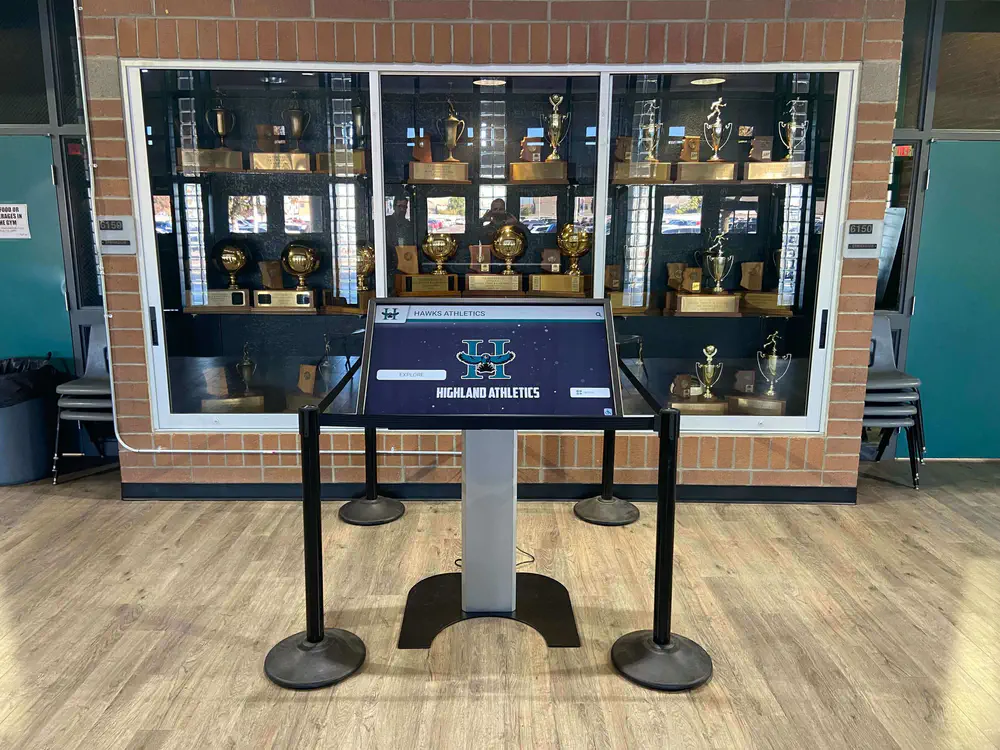
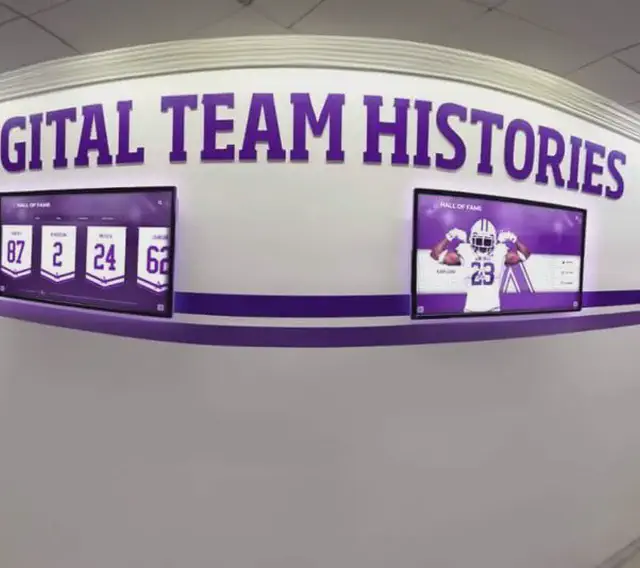
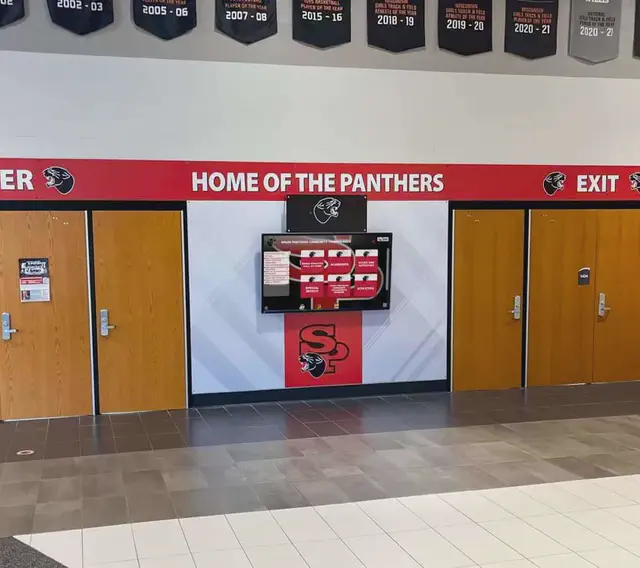
A digital recognition kiosk allows schools to display administrative and service awards alongside athletic honors, with labels and context that physical plaques often cannot accommodate
Understanding Which Award Was Given
Not every AD recognition carries the same scope or the same granting process. Before writing a single word on a plaque, case panel, or digital display, the communications team needs to identify three things: the official award name, the organization that selects and presents it, and whether the person was nominated or confirmed as a recipient.
Athletic director awards generally fall into several distinct categories that are easy to conflate:
- Conference or section-level awards — determined by the athletic administrator association within a defined geographic section. These recognize one director per section and do not carry statewide or national authority.
- Named statewide administrator awards — typically sponsored or named by the state athletic administrator association, often honoring career contributions rather than single-season performance.
- State Award of Merit provided by NIAAA — the National Interscholastic Athletic Administrators Association’s awards page describes an award that may be presented by each state; state athletic administrator associations select and present it, and NIAAA provides it. This award is distinct from the separate NIAAA Award of Merit, which is an entirely different recognition with different criteria and selection procedures. Displaying one as the other introduces a material error.
- NFHS Citations — the National Federation of State High School Associations recognizes athletic directors with a Citation award. As the NFHS reported for its 2025 class, recipients are approved by the NFHS Board of Directors. That approval step matters: a nomination is not confirmation of selection. A school that labels a nominee as a recipient before the board acts has overstated the honor.
- Hall of Fame inductions — a formal multi-step process, typically involving a nomination, a review committee, and an official induction ceremony. Hall of fame status is not equivalent to, and should not be labeled as, any of the above recognition categories.
A Dated Florida Example: FIAAA’s 2026 Distinctions
Using the Florida Interscholastic Athletic Administrators Association (FIAAA) as a concrete, dated example illustrates how several distinct award types can appear in a single announcement from one state association. The FIAAA congratulations announcement for 2026 identifies at least four separate recognitions:
| Recognition | Scope | Notes for Display |
|---|---|---|
| Section 1 Athletic Director of the Year | One geographic section within Florida | Label as section-level, not statewide; scope is FIAAA Section 1 |
| Dr. Clarence Noe Administrator Award | Named statewide recognition | Named award — use the full award title; this is a Florida-specific distinction |
| NIAAA State Award of Merit | State-presented, NIAAA-provided | State association selects and presents; NIAAA provides the award — not the same as the NIAAA Award of Merit |
| NFHS Citation (nominee) | National recognition pending board approval | List as “NFHS Citation nominee” until NFHS Board confirms; do not label as recipient |
The table above is drawn from the FIAAA announcement and NIAAA’s publicly described award structure — not from a universal hierarchy that applies in every state. Many states have different association names, different award titles, and different selection criteria. Florida’s distinctions serve only as an illustration of the kind of careful reading required before any display label is written.
One point that the FIAAA example makes visible: an athletic director who receives a section-level award, a named statewide award, and a national nomination is being recognized for different things by different bodies in the same year. Each deserves its own accurate label on a display — not a merged label that inflates the scope of any single honor.
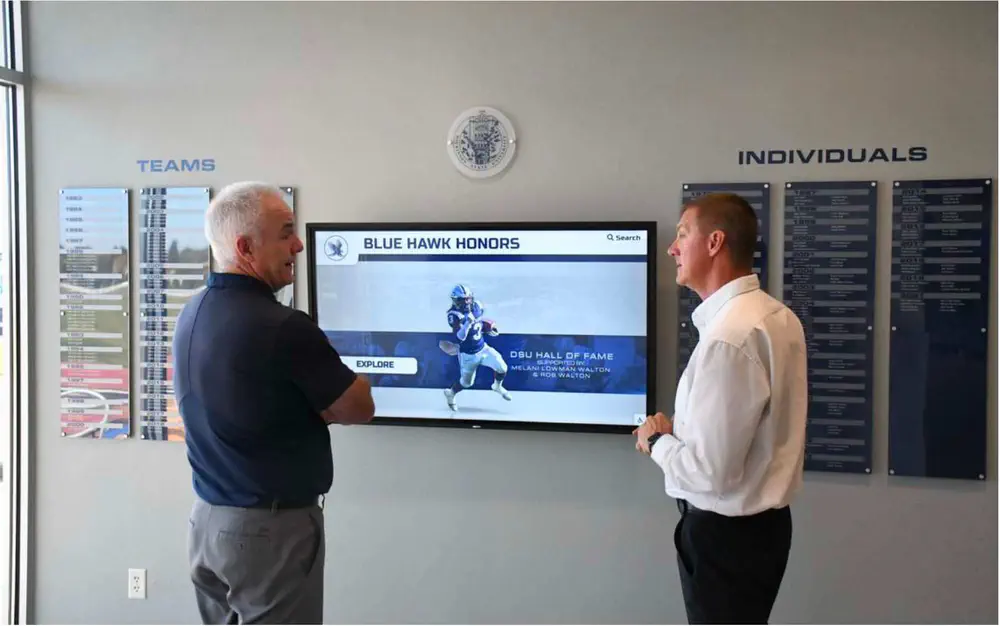
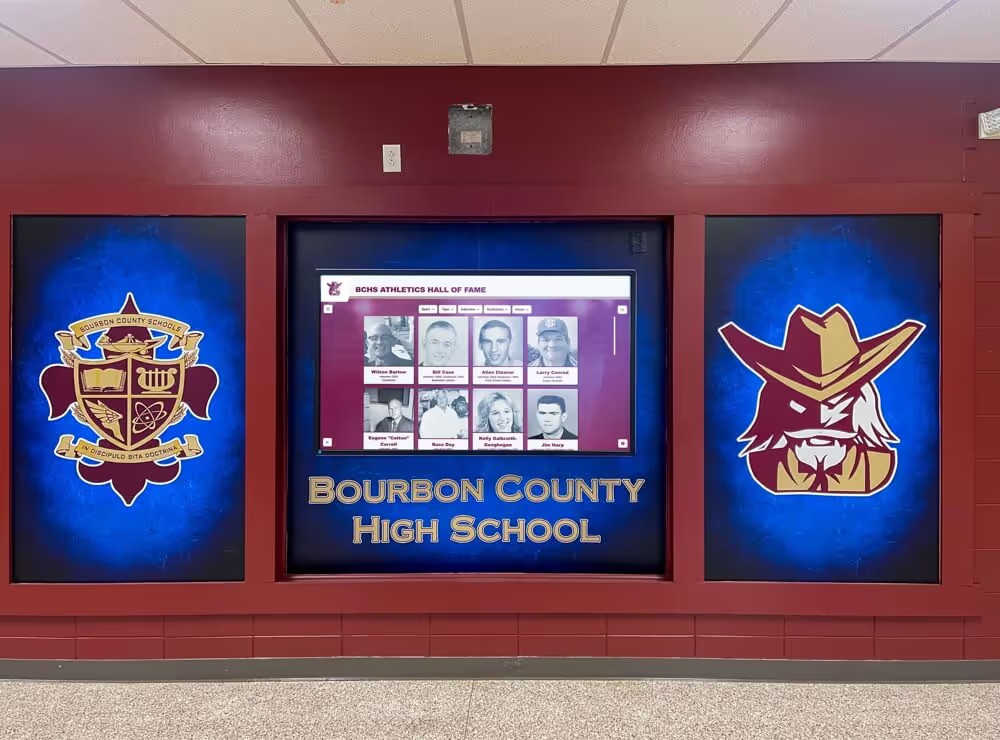
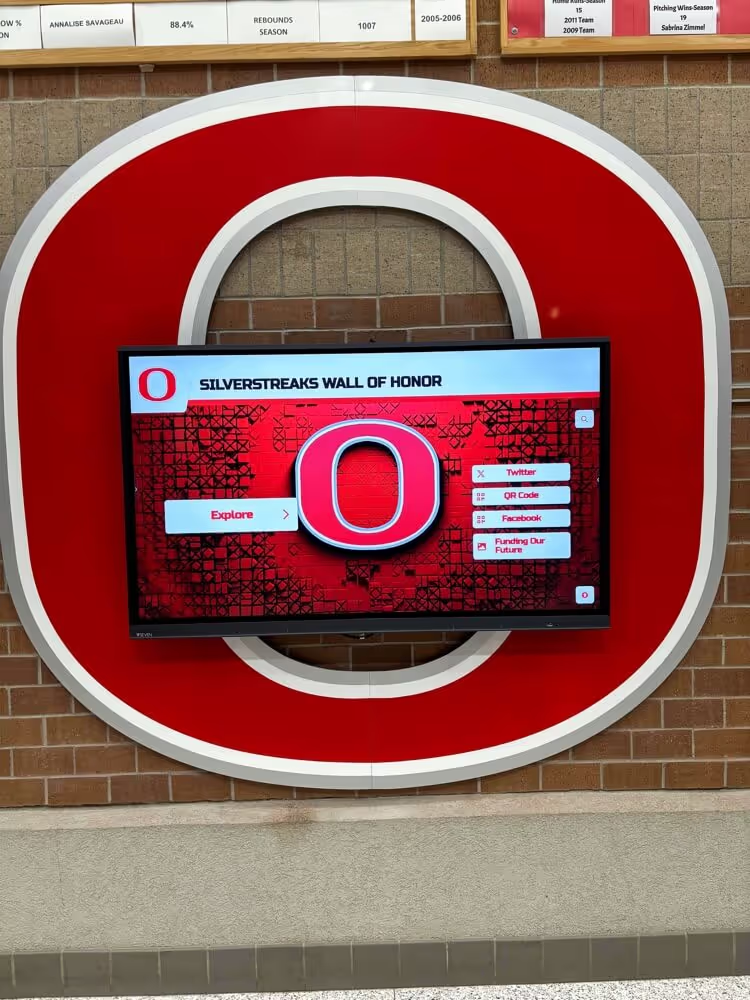
Digital recognition platforms allow administrators to maintain separate, accurately labeled entries for different awards — section honors, state recognitions, and service citations can each carry their own distinct record
Nomination Versus Selection — Why the Distinction Matters
The NFHS Citation illustrates a step that many recognition programs share: an official body must approve or confirm a nominee before they become a recipient. Displaying a nomination as a confirmed award does two things: it misstates the administrator’s status and it potentially embarrasses the school if the board does not confirm the nomination.
The safe and accurate display practice is to hold the entry in draft form — or to label it explicitly as a nomination — until confirmation arrives. Once the NFHS Board acts and the organization publishes the confirmed class, the display can be updated to reflect recipient status.
This same caution applies to any recognition that uses a multi-stage process: nomination, committee review, board vote, or official presentation ceremony. The presentation step matters. For some awards, the honor is considered conferred only when formally presented at a specific event.
Compact Label Examples for Each Award Type
The following are fictional labels that illustrate accurate phrasing. They use placeholder names and years.
Section-level award:
“J. Doe — Athletic Director of the Year, [State Association] Section 3, 2026”
Named statewide award:
“J. Doe — [Award Name] Administrator Award, [State Association], 2026”
NIAAA State Award of Merit:
“J. Doe — State Award of Merit (presented by [State Association], provided by NIAAA), 2026”
NFHS Citation — before board confirmation:
“J. Doe — NFHS Citation Nominee, 2026” (update to ‘recipient’ after board approval)
NFHS Citation — after board confirmation:
“J. Doe — NFHS Citation Recipient, National Federation of State High School Associations, 2026”
Hall of Fame induction (separate from any citation or service award):
“J. Doe — Inducted, [Association] Hall of Fame, 2026” (do not combine with citation or service award entries)
Notice that each label includes: the award’s official name, the organization that conferred it, and the year. None uses a shorthand like “State Award Winner” or “National Honoree” that implies a broader or different scope than what was actually recognized.
What a School Display Does (and Does Not) Represent
A school display honoring its athletic director’s recognition communicates something specific and limited: that this administrator was recognized by an external body for their professional work. It does not imply that the school won a team championship, that the school was ranked by the association, or that the award extended to the program rather than the individual.
This distinction matters most when section or conference awards are displayed in trophy cases alongside team banners and state championship plaques. Clear labeling — especially labeling that identifies the recipient as an individual administrator rather than as the school’s team — prevents the kind of confusion that can mislead families, students, and prospective athletes reading a trophy case.
A well-designed digital recognition system makes this separation easier to maintain. Schools can organize administrative honors, service awards, and professional citations in a dedicated category or section of their display, keeping them visually distinct from team championships and player hall-of-fame inductees.
For schools looking at how coach recognition can extend meaningfully beyond a single plaque, many of the same labeling and archiving principles apply — identifying the granting body, the scope, and the year is as important for a coach award as it is for an administrative honor.

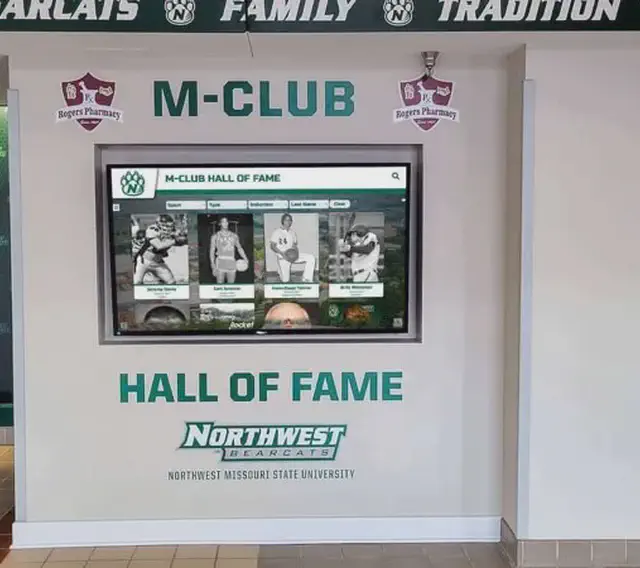
Recognition walls that separate hall of fame inductees, administrative honors, and team championships help visitors accurately interpret each category of achievement
From Announcement to Archive — A Practical Workflow
The gap between receiving an award announcement and maintaining a correct long-term display is where most errors occur. A simple five-step workflow closes that gap.
Step 1 — Read the official announcement carefully. Use the granting organization’s own language for the award name and the administrator’s status (nominee, recipient, honoree). Do not rewrite the award name into shorthand.
Step 2 — Verify scope before labeling. Confirm whether the award is section-level, statewide, or national. Confirm whether the person is a nominee or a confirmed recipient. When in doubt, contact the awarding organization’s public communications channel — not to request personal information, but to clarify the official award title and status.
Step 3 — Write the display label using the template: [Name] — [Award Official Title], [Granting Organization], [Year].
Step 4 — Stage the entry until all confirmation steps are complete. For awards with a board approval step (such as the NFHS Citation), hold the entry in draft or explicitly label it as a nominee entry. Publish the full entry only after the official announcement from the granting body.
Step 5 — Archive the source announcement. Save a link to the official announcement or a PDF copy in your records. If a future administrator questions the award’s scope, the original source resolves the dispute in seconds.
Building a Sustainable Recognition System for AD Honors
A single plaque in a trophy case handles one award in one year. A digital recognition platform handles dozens of awards across a career — and makes each one searchable, accurately labeled, and accessible to alumni, faculty, and community members years after the original announcement.
Programs built around recurring recognition structures for coaches and administrators demonstrate that sustainable recognition is not an annual event — it is an ongoing institutional practice. The same applies to athletic director honors. An administrator who receives a section award in 2024, a named statewide honor in 2025, and an NFHS Citation in 2026 has built a career recognition record worth preserving with the same care as an athlete’s performance statistics.
Cloud-based digital display platforms allow recognition administrators to:
- Add, edit, or stage entries without a vendor visit or a print order
- Maintain separate categories for administrative honors, coach awards, team championships, and athlete hall-of-fame inductees
- Update a nominee entry to recipient status the moment the granting organization confirms
- Provide remote access so alumni and community members can view the full recognition record from any device

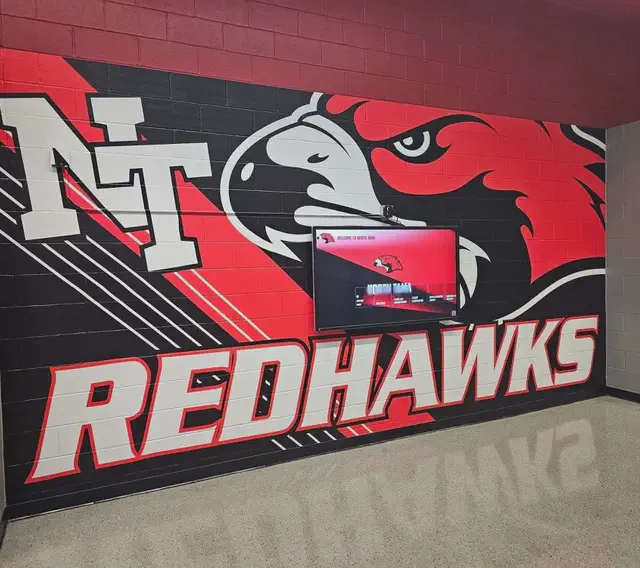
Digital touchscreens integrated into recognition wall murals make it possible to update entries — including award status changes from nominee to recipient — without altering the physical installation
Optional Display Review Checklist
Before publishing any athletic director award entry, the communications or athletics team should be able to confirm each item:
- The award title on the display matches the official title used by the granting organization
- The granting organization is named on the display (not implied or abbreviated into the school’s name)
- The scope of the award (section, state, national) is accurately reflected in the label
- The entry indicates recipient status — not nominee status — if the administrator has been confirmed as a recipient
- If the recipient status is pending board approval, the entry is staged as a draft or labeled explicitly as a nominee
- The year of recognition is correct and refers to the year the award was conferred, not the year the display was updated
- The entry is categorized separately from team championships and athlete hall-of-fame inductees
- A link to the original official announcement is saved in the department’s records
Frequently Asked Questions
What information should an athletic director of the year award display include?
An accurate athletic director award display entry should include the administrator's name, the official award title as used by the granting organization, the name of the organization that selected and presented the award, the year the award was conferred, and the award's scope (section, state, or national). Omitting the granting organization or paraphrasing the award title can imply a different or broader scope than the actual recognition.
Is the NIAAA State Award of Merit the same as the NIAAA Award of Merit?
No. Per NIAAA's publicly described award structure, the State Award of Merit may be presented by each state's athletic administrator association, with NIAAA providing the award itself. The NIAAA Award of Merit is a separate, distinct recognition with different criteria and a different selection process. Displaying one as the other introduces a factual error that misrepresents both the award and the administrator's achievement.
Should a school display an NFHS Citation before the NFHS Board approves it?
No. The NFHS Citation requires NFHS Board approval before a nominee becomes a confirmed recipient. A school should either hold the entry in draft until confirmation or label it explicitly as a nomination. Once the NFHS publishes the confirmed class, the entry can be updated to reflect recipient status. Listing a nominee as a recipient before board action misstates the administrator's current status.
Does displaying an athletic director's award imply the school won a team championship?
No, but clear labeling prevents that confusion. An athletic director's professional recognition is an individual honor awarded by an external organization for administrative leadership — not a team sports outcome. Clear labels that identify the award as an administrative honor and place it in a category separate from team championships prevent misreading by students, families, and visitors.
How should a school archive athletic director awards for long-term access?
A sustainable archive includes the official award title, the granting organization, the year, and a saved link or copy of the original announcement from the awarding body. Cloud-based digital recognition platforms allow administrators to maintain searchable records that can be updated when award status changes — such as when a nomination is confirmed — without requiring a new plaque or physical installation change.
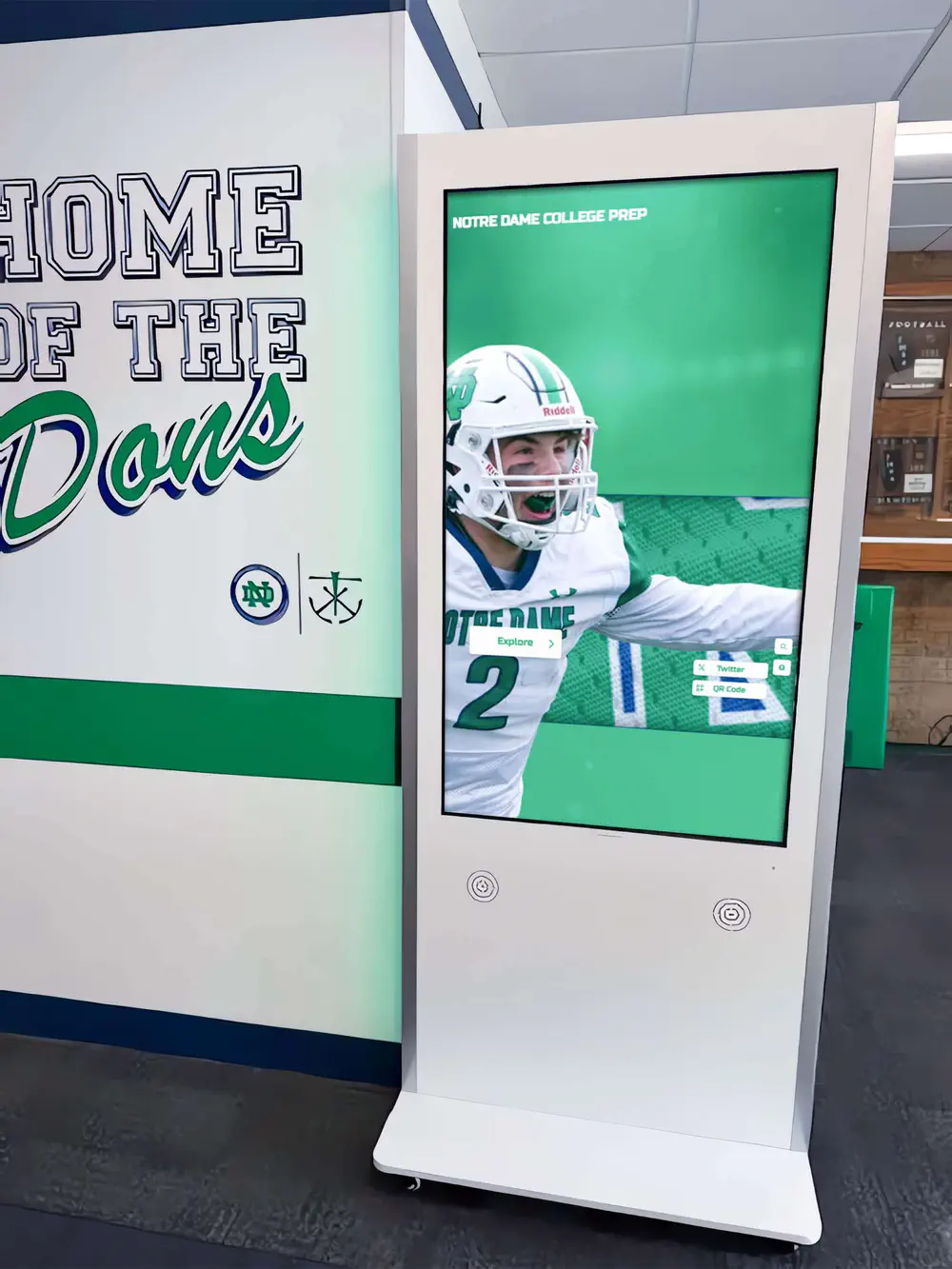
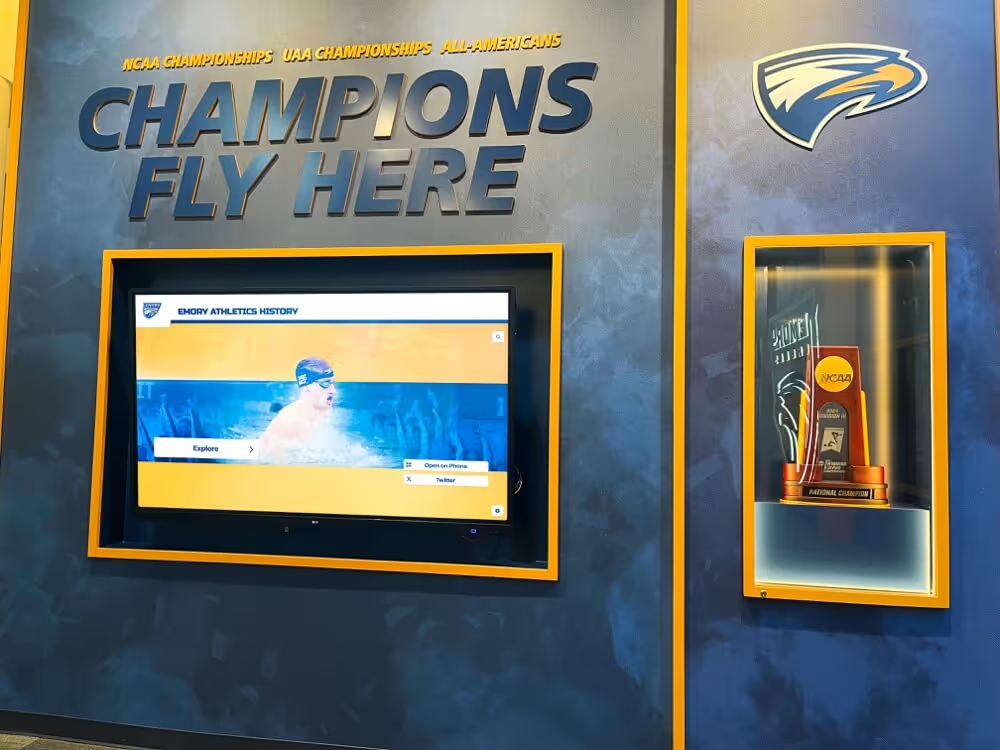
Freestanding digital kiosks allow schools to present administrative recognition, athletic honors, and institutional history in a single searchable system without the space constraints of static display cases
Conclusion: Accurate Labels, Lasting Records
An athletic director of the year award display earns credibility when the label reflects exactly what the granting organization said, in its own terms, with the scope it actually intended. That means naming the section or state association correctly, distinguishing a state-provided award from a national association’s separate honor, and staging nominee entries until confirmation is in hand.
The 2026 FIAAA announcements illustrate how different recognitions — a section award, a named statewide honor, an NIAAA State Award of Merit, and an NFHS Citation nomination — can appear in the same congratulations cycle without being interchangeable. Each deserves its own entry and its own label. Using a digital recognition system to manage these entries makes it possible to update status changes immediately, keep categories clearly separated, and give every recognition the institutional permanence it deserves.
See How Your School Can Preserve Every Administrative and Athletic Honor
Rocket Alumni Solutions helps schools build searchable, accurately labeled digital recognition systems — from section-level athletic director awards to athletic hall of fame inductees — that remain current and accessible for decades.
Request a Demo