



Walk into any elite athletic program’s locker room and you immediately sense something different. The walls don’t just hold paint—they speak. Athletic locker room signage communicates what a program stands for before a single coach utters a word, reminding athletes of their identity, their history, and the standard they’re expected to meet every time they lace up. From hand-lettered motivational quotes above the lockers to championship banners running the length of the room, these visual elements silently shape culture in ways that pregame speeches cannot replicate.
Yet many schools treat their locker rooms as purely functional spaces—benches, hooks, and floor drains—missing a significant opportunity to reinforce team values and build genuine pride. When coaches and athletic directors invest thoughtfully in locker room decor and signage, they create environments where athletes feel the weight of program tradition the moment they arrive and leave mentally prepared for competition.
This guide covers practical athletic locker room signage ideas across every budget and facility type, from low-cost vinyl lettering to full-scale digital recognition walls, so your team’s space can become a daily motivational tool that celebrates both history and future potential.
The connection between a well-designed athletic environment and athlete performance has been recognized by coaches and facility designers for decades. When athletes enter a space that visually communicates excellence, accountability, and belonging, they perform differently. Athletic locker room signage is one of the most cost-effective investments a program can make toward building that culture.

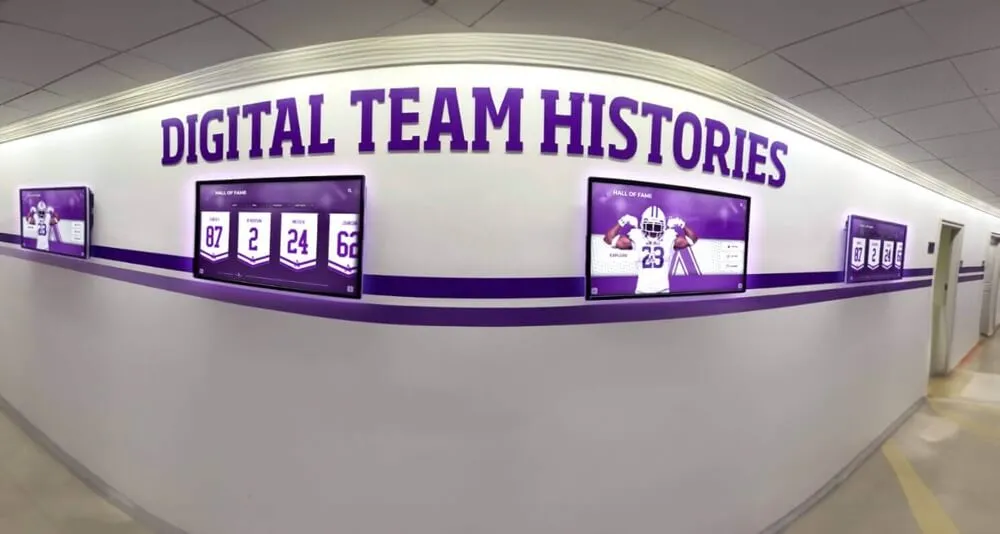
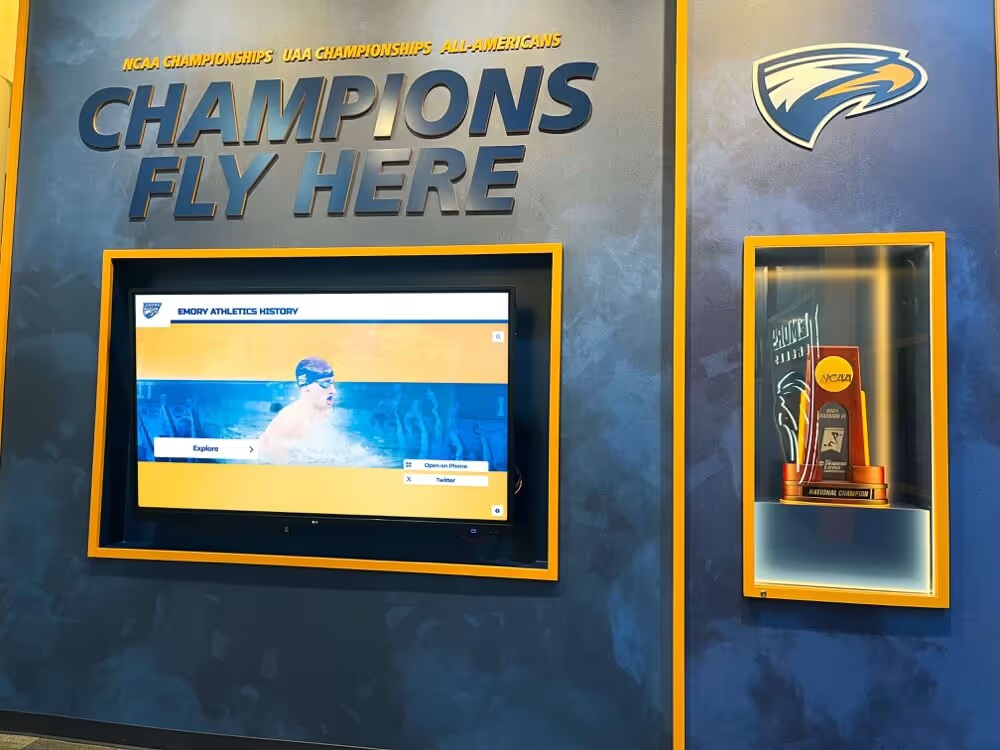
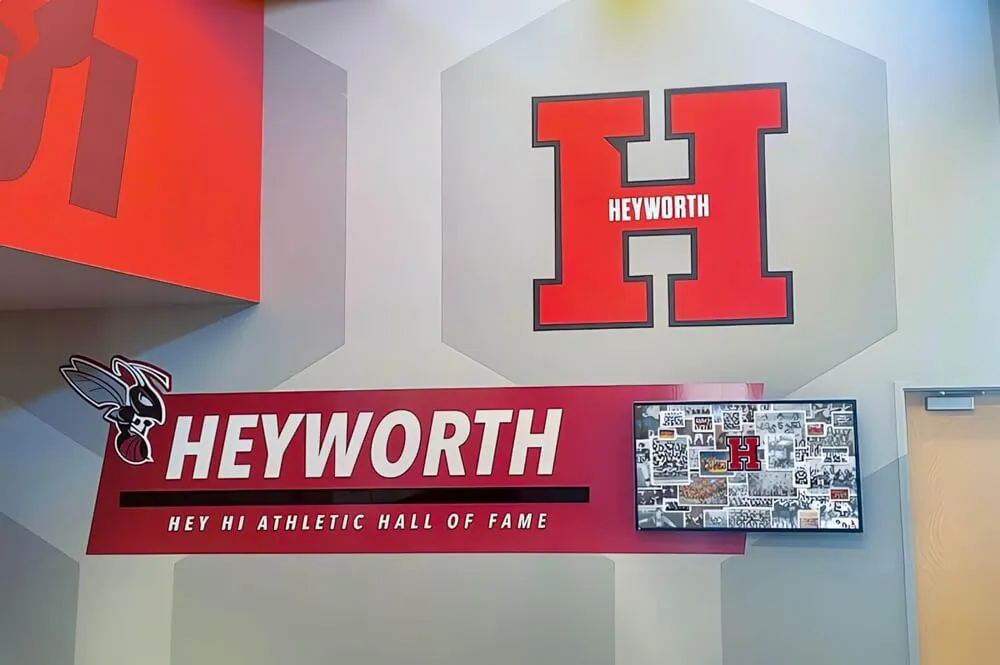
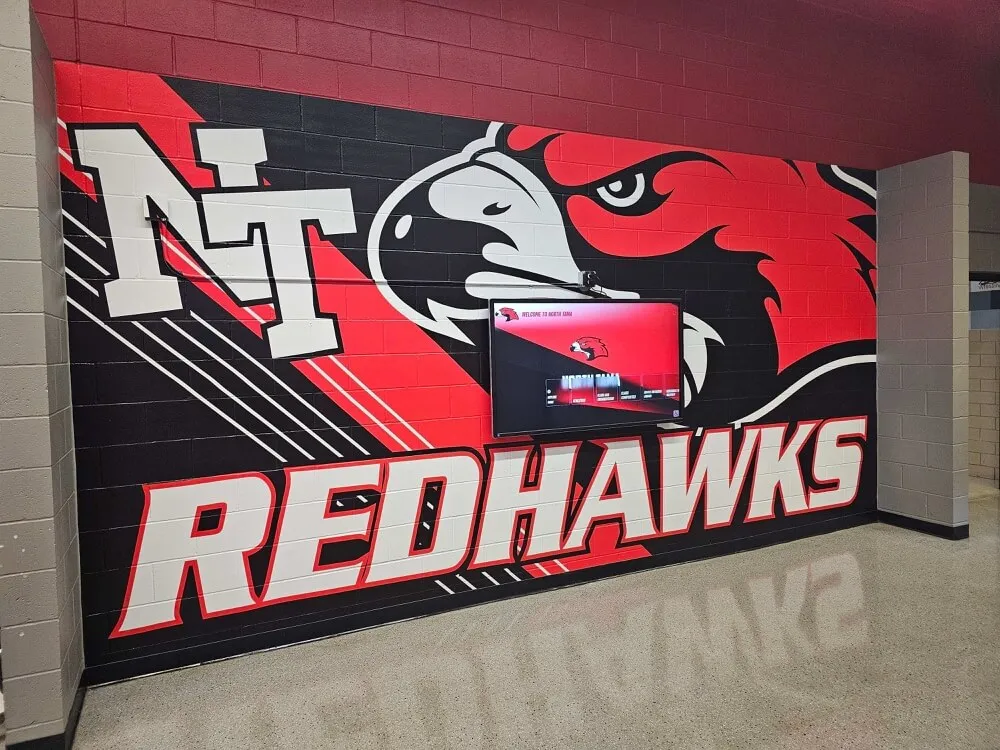
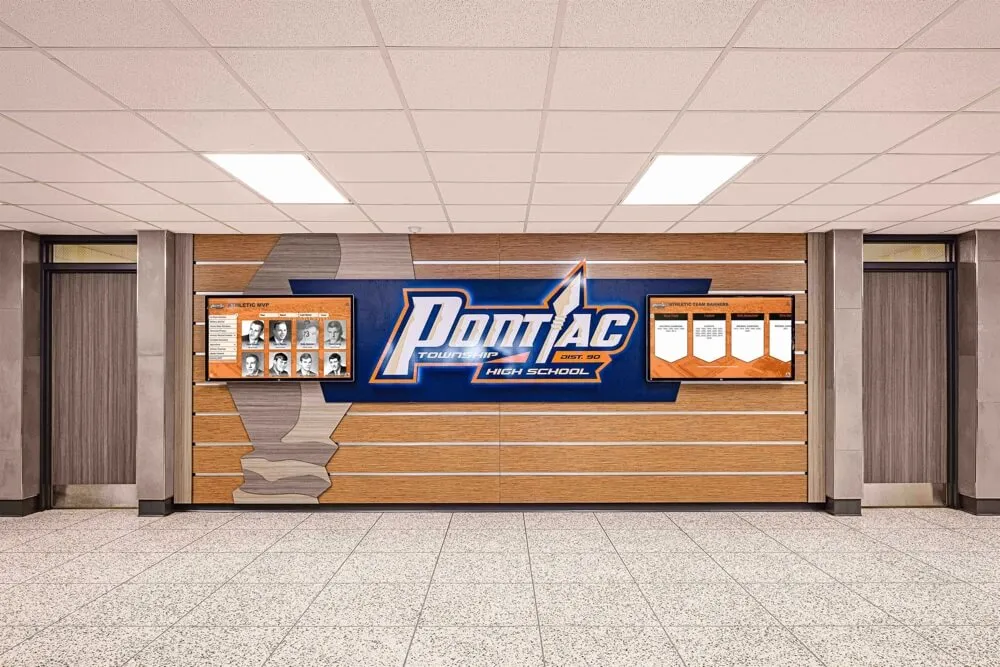
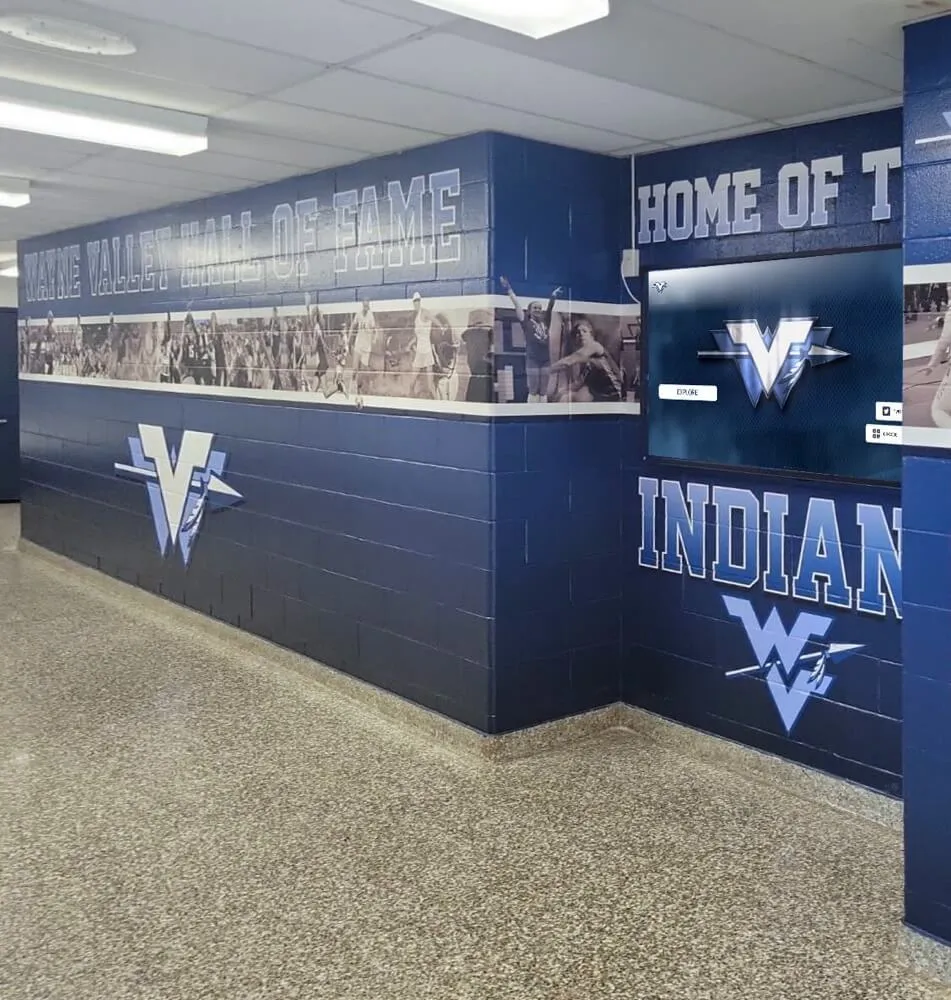
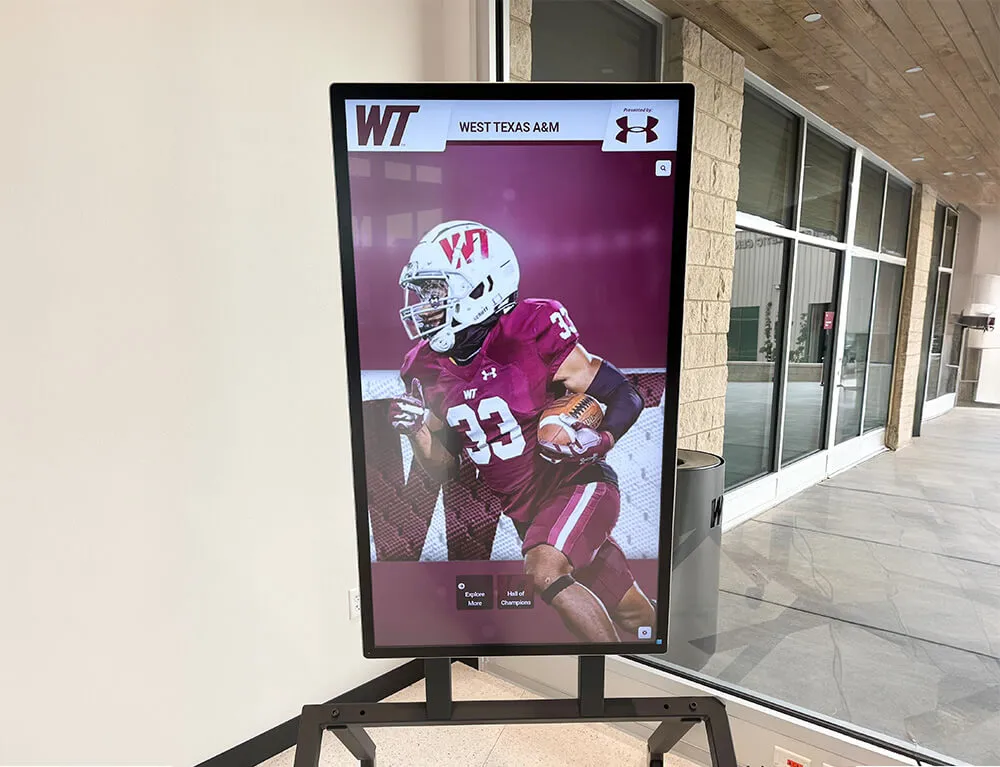
Comprehensive athletic signage systems extend from the locker room into hallways, reinforcing team identity throughout the entire facility
Why Athletic Locker Room Signage Matters
Before diving into specific ideas, it’s worth understanding what well-planned locker room signage actually does for a program.
Creating a Culture Container
Elite coaches describe the locker room as a “culture container”—a physical space where team values, expectations, and identity are reinforced daily. Unlike the practice field or game floor where the focus shifts entirely to performance, the locker room is where athletes transition from individual mindset to collective identity. Signage accelerates that transition.
What effective locker room signage accomplishes:
- Communicates non-negotiable team standards without requiring verbal reminders
- Honors past achievement, creating aspirational connection for current athletes
- Reinforces mascot and brand identity that unifies team around shared symbols
- Provides visual anchors for coaching points discussed throughout the season
- Creates a space athletes feel proud to inhabit, increasing program buy-in
The Psychological Impact of Environment Design
Research in environmental psychology consistently demonstrates that physical spaces influence behavior and mindset. Athletes who train and prepare in high-quality, well-designed facilities report stronger feelings of program pride and competitive readiness. According to facility design consultants working with collegiate programs, the locker room ranks alongside the weight room as one of the two spaces with the greatest day-to-day psychological impact on athletes.
For schools operating with limited budgets, the locker room represents an opportunity to create high impact through smart, strategic signage rather than expensive renovation.
Core Athletic Locker Room Signage Categories
Effective locker room signage generally falls into four categories, each serving a distinct purpose within your facility.
1. Motivational Quote Signage
Motivational quotes remain the most common form of locker room signage—and for good reason. When selected carefully and displayed prominently, quotes from coaches, historical figures, or program legends create powerful daily reminders of the mental approach your program demands.
Best practices for motivational signage:
- Choose quotes that reflect your specific program philosophy rather than generic inspirational content
- Limit to three to five prominent quotes to avoid visual overload
- Update quotes seasonally to keep the content fresh and relevant
- Use your school’s brand colors and typography for visual consistency
- Position primary quotes at eye level above the locker bank where athletes see them while dressing
Quote placement strategy: The entrance wall—the first surface athletes see when entering—should carry your most impactful statement. This might be your program motto, a quote from a legendary coach, or a single phrase that encapsulates your team’s identity. Secondary quotes can appear above specific functional areas: near the whiteboard, above the exit door leading to the field or court, or around the coach’s meeting area.
For guidance on effective school signage systems, digital school signs and effective signage implementation offers practical planning frameworks applicable to athletic facilities.
2. Team Identity and Branding Elements
Your locker room should be unmistakably yours. Team identity signage reinforces who you are as a program through mascot imagery, school colors, and brand elements that create a cohesive visual environment.
Essential identity elements:
- Large-format mascot graphic or logo on the primary wall
- School colors applied consistently across all signage elements
- Team nickname displayed prominently in bold typography
- Jersey numbers or position-specific designations above individual lockers
- Program tagline or motto in a prominent location
Material options by budget:
Budget-friendly: Vinyl wall decals offer full-color imagery at relatively low cost. They adhere directly to painted walls and can be removed or updated without wall damage. For mascot graphics and large typographic statements, vinyl is often the most cost-effective option.
Mid-range: Dimensional lettering in metal or PVC creates depth and visual interest that flat vinyl cannot match. A school name in raised metal letters above the mirror bank, for example, carries a level of permanence and prestige that motivates athletes differently than a printed sticker.
Premium: Custom mural painting by a sports facility artist creates unique, program-specific artwork that becomes a visual landmark. Many programs photograph athletes in front of their locker room mural for media purposes, extending the signage’s reach well beyond the facility itself.
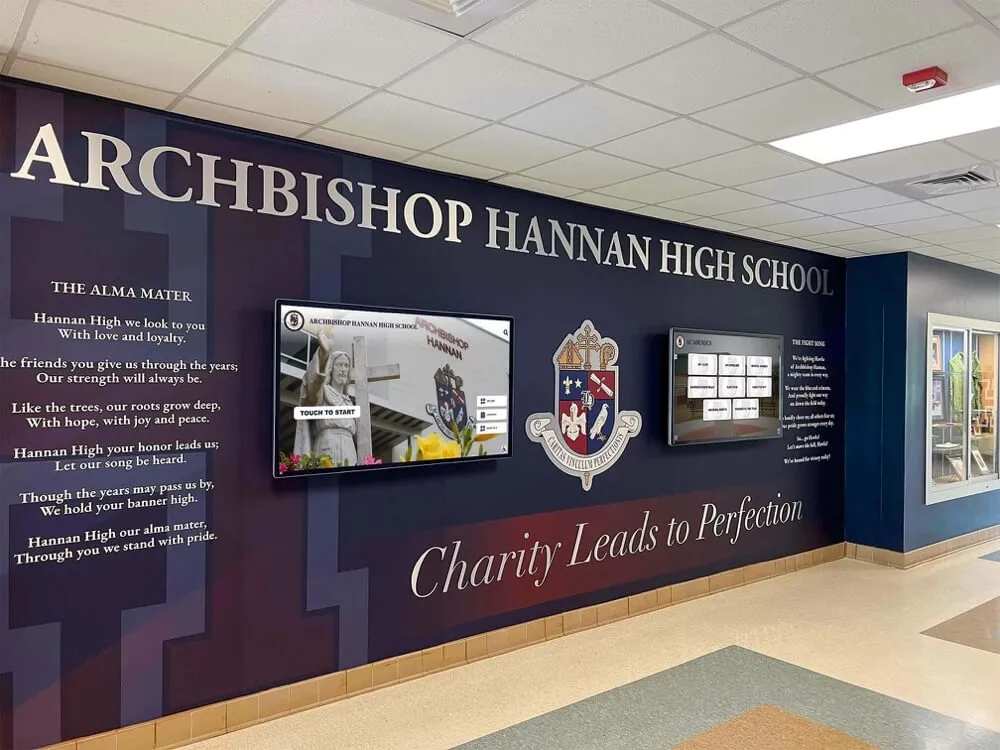
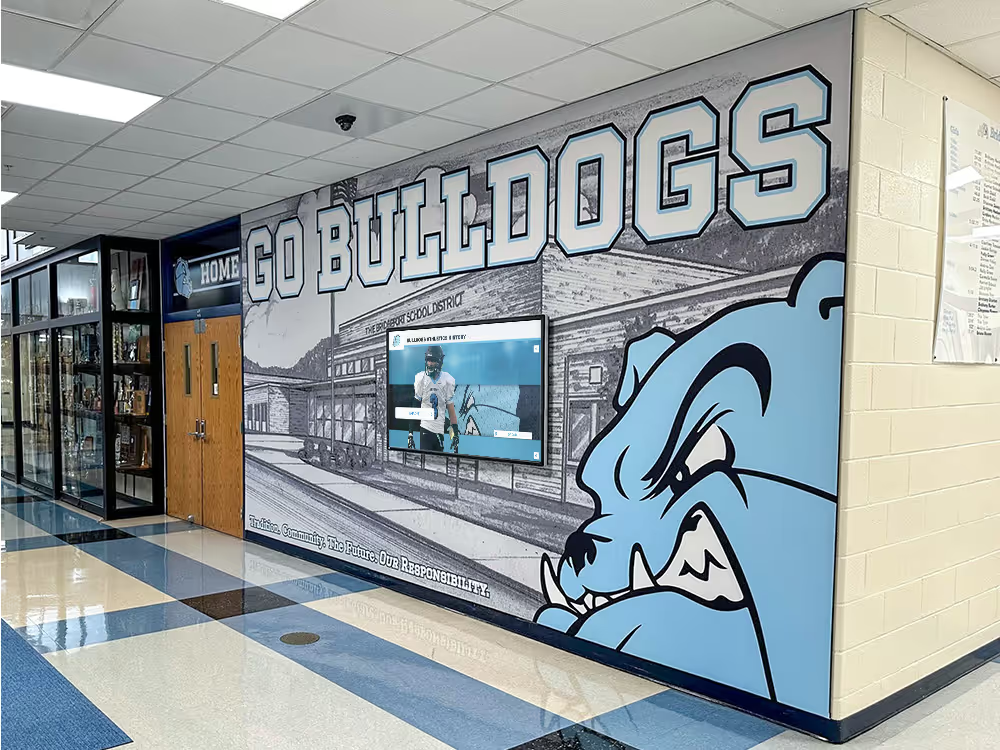
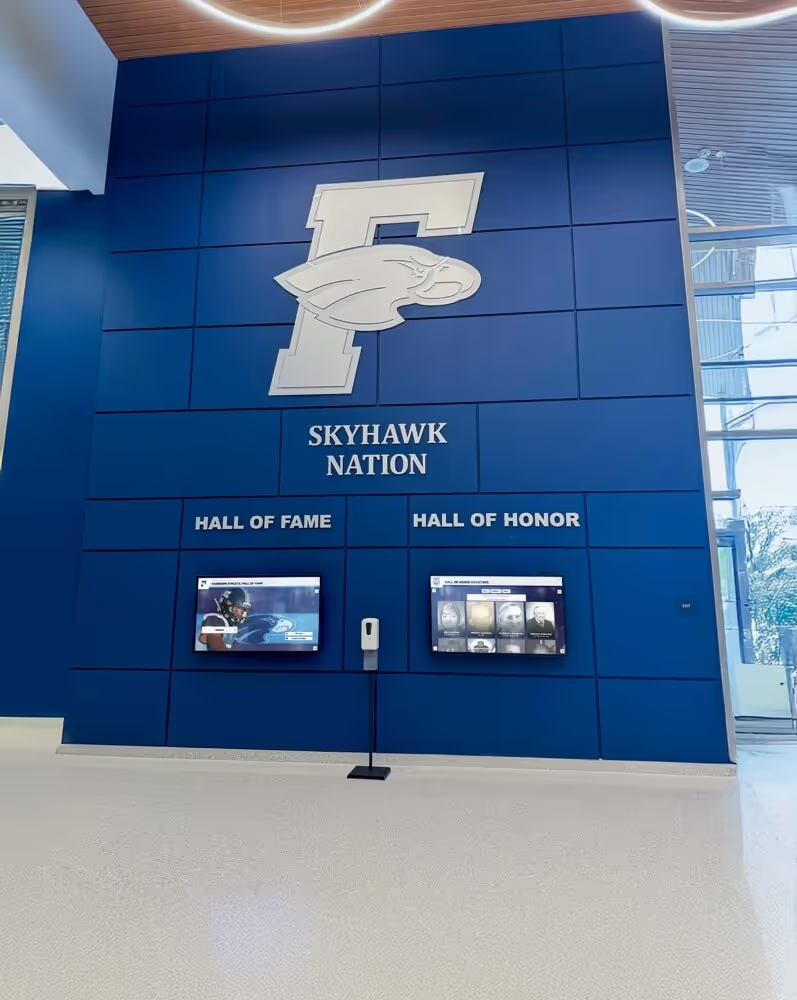
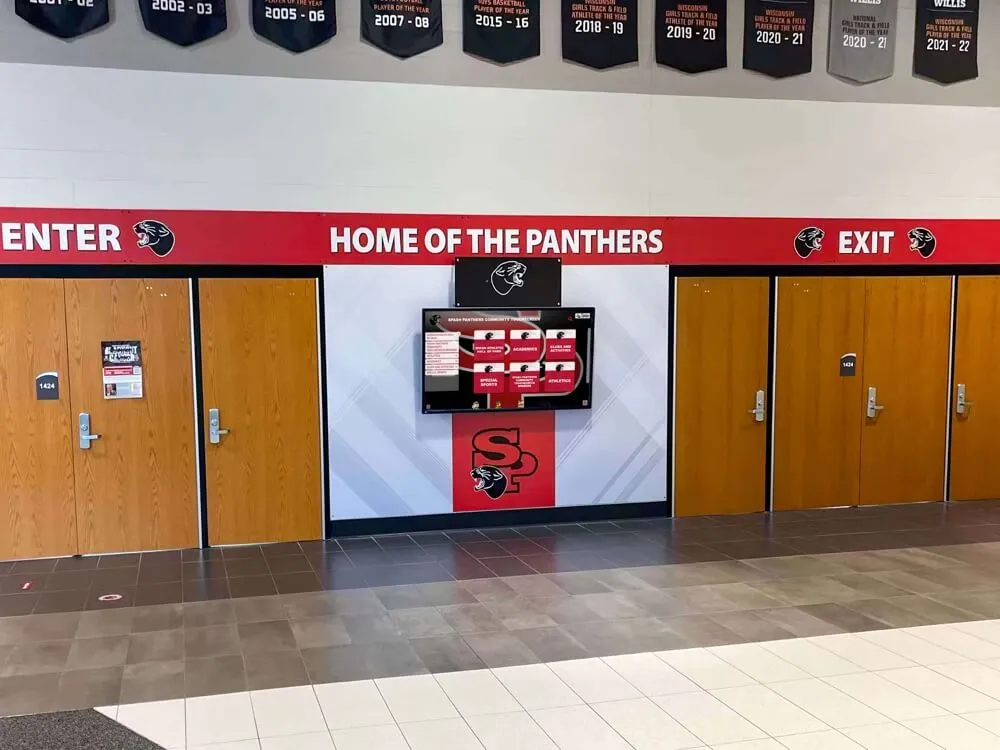
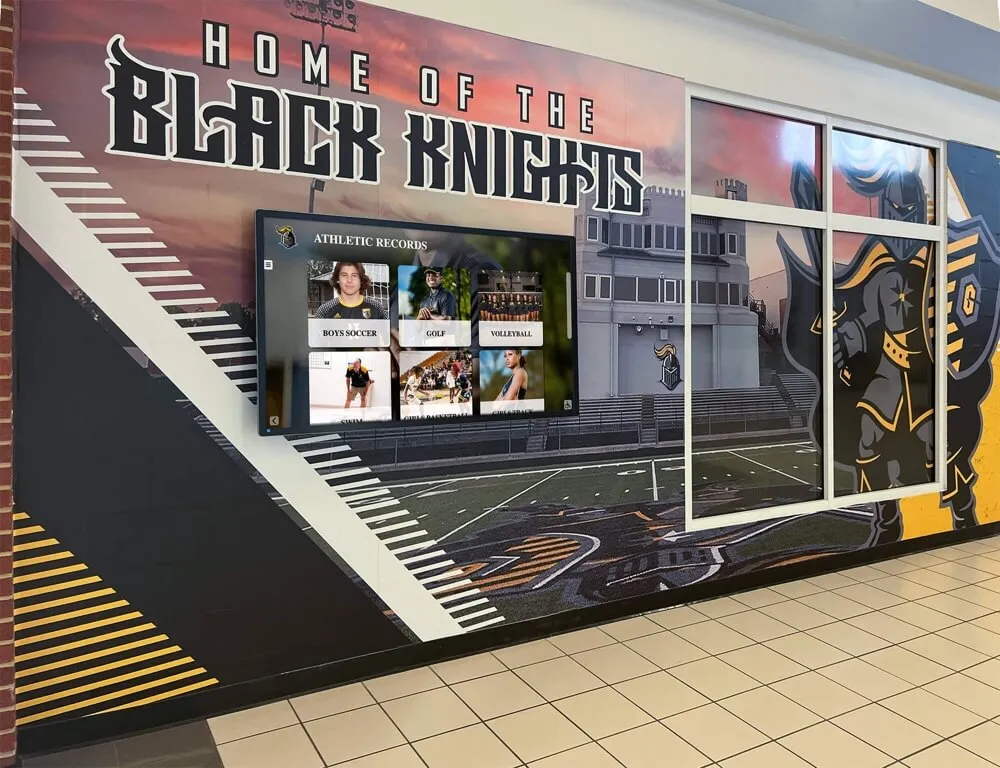
Consistent branding across athletic spaces—from locker rooms to hallways—builds cohesive program identity that athletes carry into competition
3. Achievement and Recognition Displays
Recognition signage honors program history while setting aspirational targets for current athletes. When players see the names of those who came before them—state champions, all-conference selections, program records—they understand the standard they’ve inherited and the legacy they can build.
Types of achievement signage for locker rooms:
Championship displays: Banners, plaques, or framed graphics listing championship seasons, conference titles, and playoff appearances. These are typically most prominent in the main athletic facility but dedicated versions in the locker room create daily proximity to accomplishment.
Program record boards: All-time records in key statistical categories posted in a visible location create natural aspirational targets. An athlete who sees the school’s all-time assists record on the wall above the locker has a concrete goal that history makes tangible.
All-conference and all-state recognition: Athletes who achieved individual honors deserve recognition in the spaces where their teammates prepare daily. This creates both pride in program excellence and motivation for current athletes seeking similar recognition.
Senior legacy walls: Some programs dedicate a section of locker room wall to retiring seniors, creating an ongoing record of team leaders that builds over years into a compelling visual timeline.
For expanding recognition beyond the locker room, team photo wall ideas for athletic programs provides complementary display strategies for hallways and common areas.
4. Accountability and Standards Signage
Beyond motivation and recognition, some of the most impactful locker room signage communicates behavioral expectations explicitly. This category often features program core values, team rules, or philosophical frameworks that define the standard of conduct your program demands.
Effective accountability signage approaches:
Core values display: List your program’s three to five core values in a permanent, prominent location. Whether your pillars are “Compete, Commit, Connect” or “Trust, Toughness, Teamwork,” visible values become reference points coaches can point to when discussing behavior.
Standards and expectations: Some programs post their specific behavioral expectations—academic standards, practice habits, competitive mentality—in clear, direct language that leaves no ambiguity about what the program demands.
The “Why We Play” statement: A framed, program-specific mission statement that articulates why the team exists beyond wins and losses creates powerful context for everything athletes do in the space.
Designing a Cohesive Locker Room Signage System
Random individual pieces of signage lack the cumulative impact of a cohesive, intentionally designed system. Athletic directors and coaches who approach locker room design with a unified vision create spaces that feel professional and intentional rather than assembled from miscellaneous pieces.
Developing Your Visual Identity
Before purchasing any signage materials, establish the visual framework your locker room will follow:
Color palette: Define two to three primary colors drawn directly from your official school color standards. Consistency across all signage elements creates a unified look even when different types of materials are used.
Typography: Select one or two typefaces that represent your program’s personality. Bold, geometric fonts communicate power and directness. Script or serif fonts convey tradition and legacy. Mixing too many typefaces creates visual chaos.
Brand voice: Determine whether your signage language will be direct and challenging (“Earn It Every Day”), inspirational and expansive (“Chase Greatness”), or historically rooted (“This Is Where Champions Are Made”). Consistency in voice across all text-based signage reinforces your program’s identity.
For comprehensive guidance on branding athletic recognition spaces, hall of fame wall design, branding, and backlighting approaches offers detailed planning frameworks.
Zoning Your Locker Room Space
Effective locker room signage design considers the functional zones of the space and assigns signage purpose accordingly:
Entrance zone: First impression and identity statement. This wall should deliver your most powerful visual statement—mascot, program name, or primary motivational message.
Locker zone: Individual nameplate systems, jersey number designations, and motivational quotes at eye level. Athletes spend significant pre and post-practice time in this zone.
Meeting/whiteboard zone: Core values display, program philosophy statements, and team achievement recognition. This area is where group conversations happen, so signage here provides visual support for coaching points.
Exit zone: The last thing athletes see before taking the field or court. A powerful send-off statement or program motto here becomes mentally embedded as athletes transition from preparation to competition.
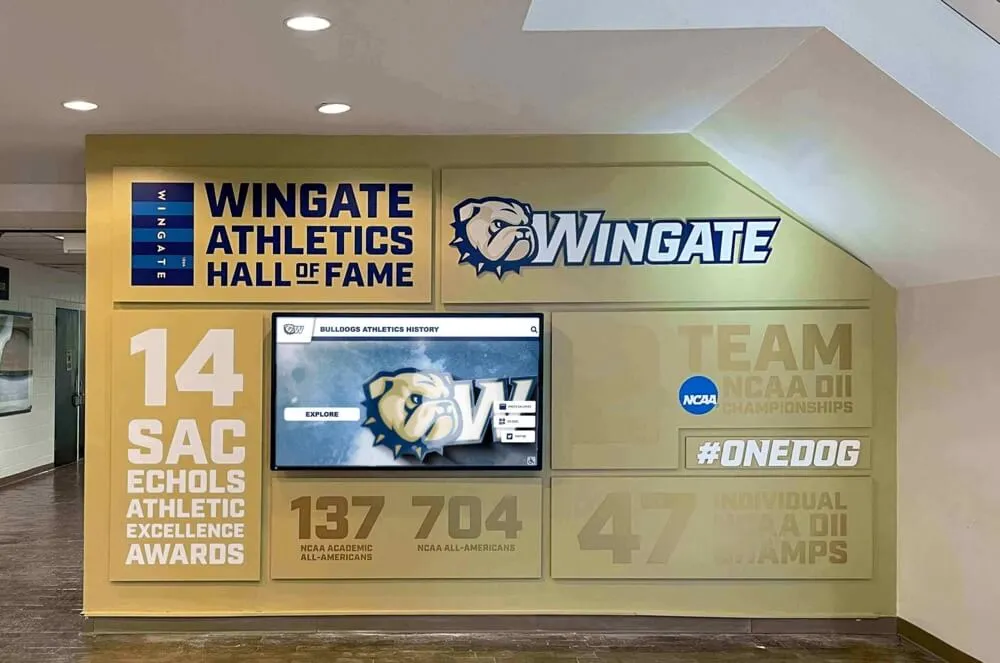
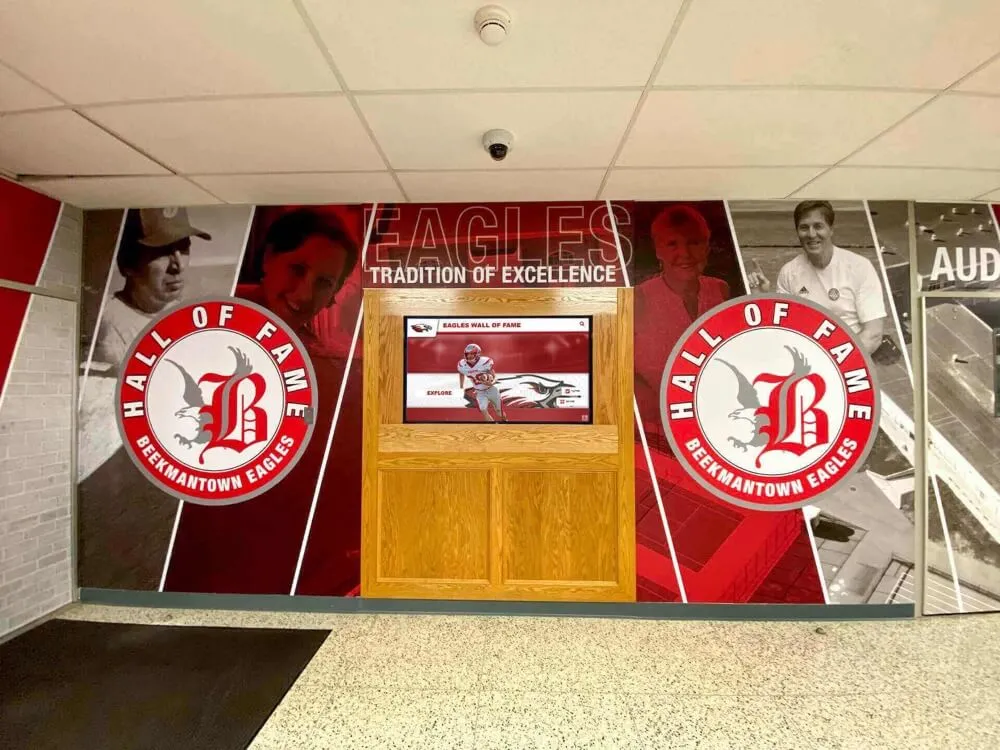
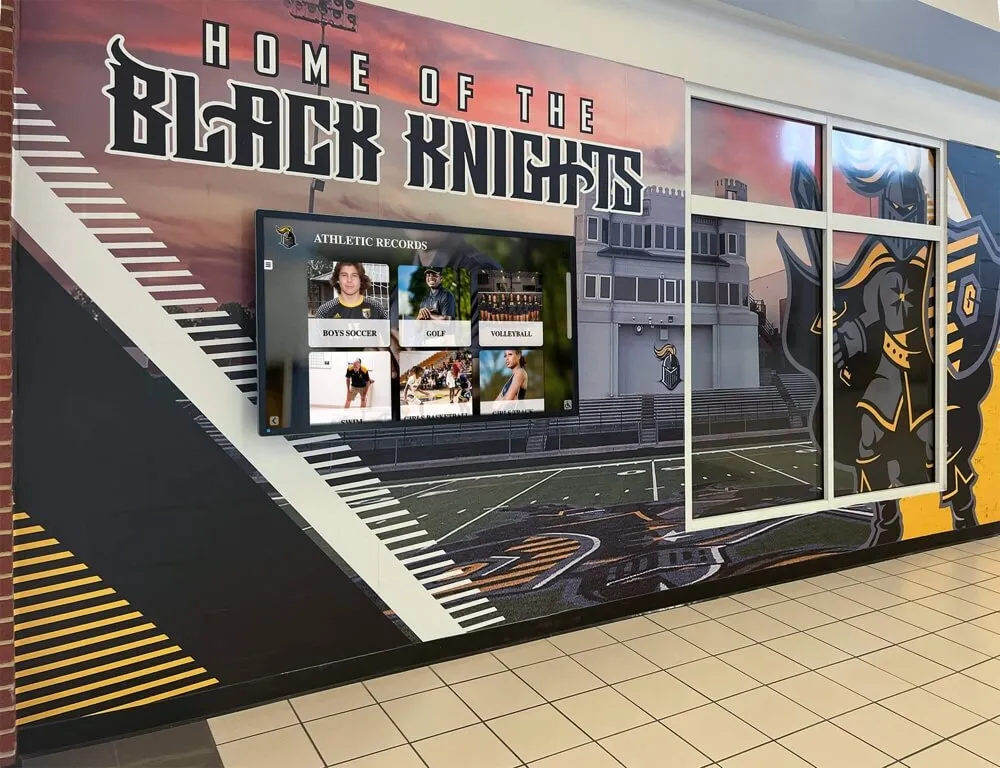
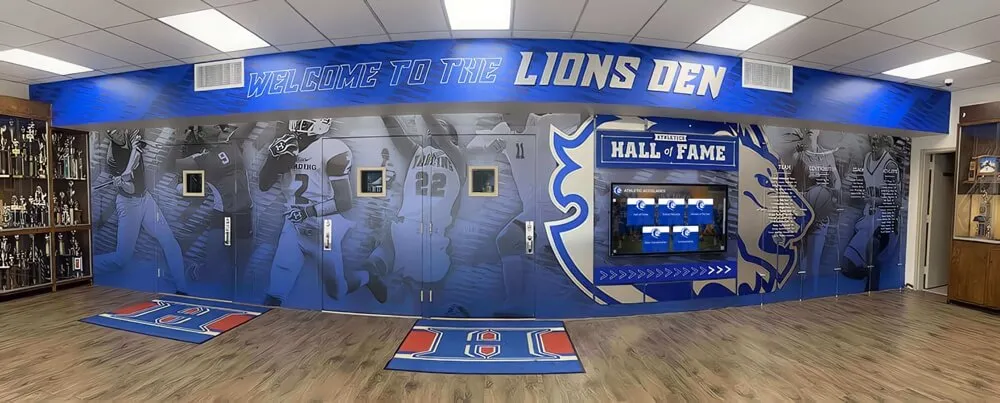
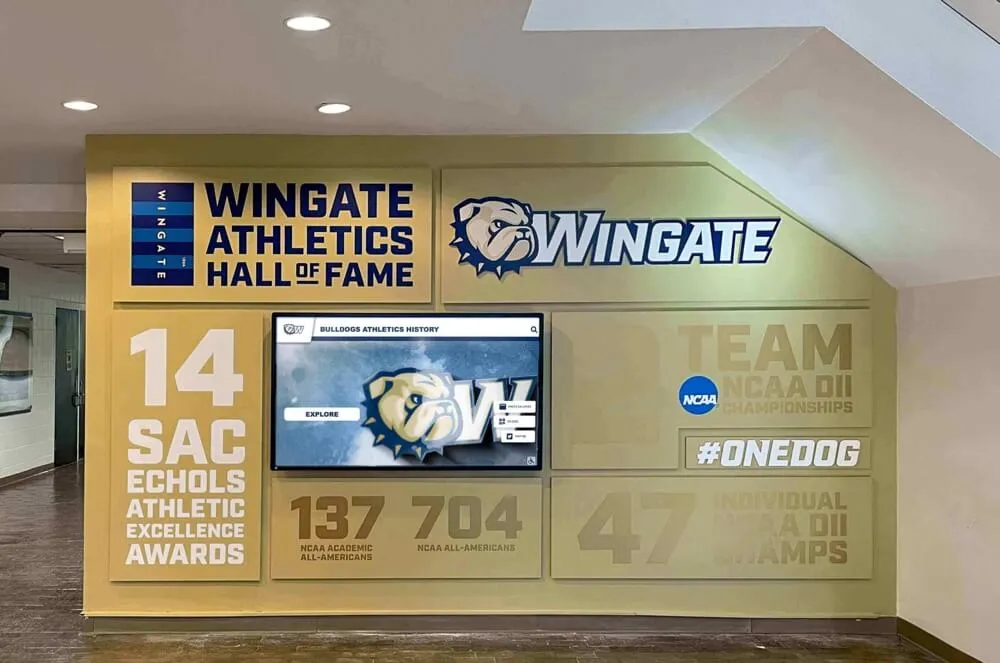
Strong mascot imagery combined with achievement recognition creates locker room environments where team identity and program history reinforce each other
Specific Athletic Locker Room Signage Ideas by Sport
While core principles apply across programs, different sports often have specific traditions and needs that influence locker room signage approaches.
Football Locker Room Signage
Football locker rooms typically handle large rosters and benefit from:
- Position-group designation signage organizing the locker area by offensive/defensive units
- Large-format motivational graphics appropriate to the physical demands of the sport
- Opponent countdown displays or upcoming schedule boards (can be dry-erase for easy updating)
- Strength and performance metrics posted to create aspirational lifting standards
Basketball Locker Room Signage
Basketball programs often emphasize:
- Statistical record boards featuring points, assists, rebounds, and steals leaders
- Conference championship and tournament history recognition
- Court-view diagrams or play concept boards integrated into meeting areas
- Player profile sections celebrating individual achievement within the team context
Baseball and Softball Locker Room Ideas
These programs benefit from:
- Pitching record boards tracking program strikeout, ERA, and win records
- Historical team photo displays organized chronologically to show program growth
- Batting record sections honoring offensive milestones
- Academic achievement recognition alongside athletic accomplishment
Wrestling Room Signage
Wrestling programs often use signage particularly effectively:
- Weight class record boards organized by each competitive class
- State championship and all-state recognition prominently displayed
- Motivational quotes specifically addressing the mental demands of weight management and individual competition
- Sectional and regional recognition complementing state-level honors
Extending Locker Room Signage into the Broader Athletic Facility
The most impactful programs don’t limit their recognition and signage philosophy to the locker room—they extend it throughout the entire athletic facility complex, creating a cohesive experience from parking lot to playing surface.
Hallway and Corridor Signage
Athletic hallways connecting locker rooms to competition spaces offer prime real estate for recognition displays and motivational content. Athletes walk these corridors multiple times each day during the season, making them high-frequency environments for reinforcing program identity.
Hallway signage approaches:
- Chronological championship banner displays running the length of the corridor
- Team photograph timelines showing program history across decades
- All-time record boards accessible to visitors and current athletes alike
- Rotating spotlight displays celebrating current season team and individual achievements
For fan engagement strategies that connect athletic facilities to broader school community, digital displays in hallways and common areas create significant opportunities to build program identity with the full school community.
Weight Room and Training Space Signage
Weight rooms represent another high-frequency athletic space where signage meaningfully impacts culture:
- Performance standards boards posting target benchmarks for each position group
- Record boards tracking squat, bench press, power clean, and vertical jump bests
- Motivational content specifically addressing the grind of off-season training
- Team accomplishment recognition reminding athletes why the work matters
Trophy Case and Main Lobby Integration
Physical trophy cases remain important recognition tools, but their impact is limited by space constraints and the relatively passive nature of static displays. Programs increasingly complement traditional trophy cases with digital recognition systems that tell more complete program stories.
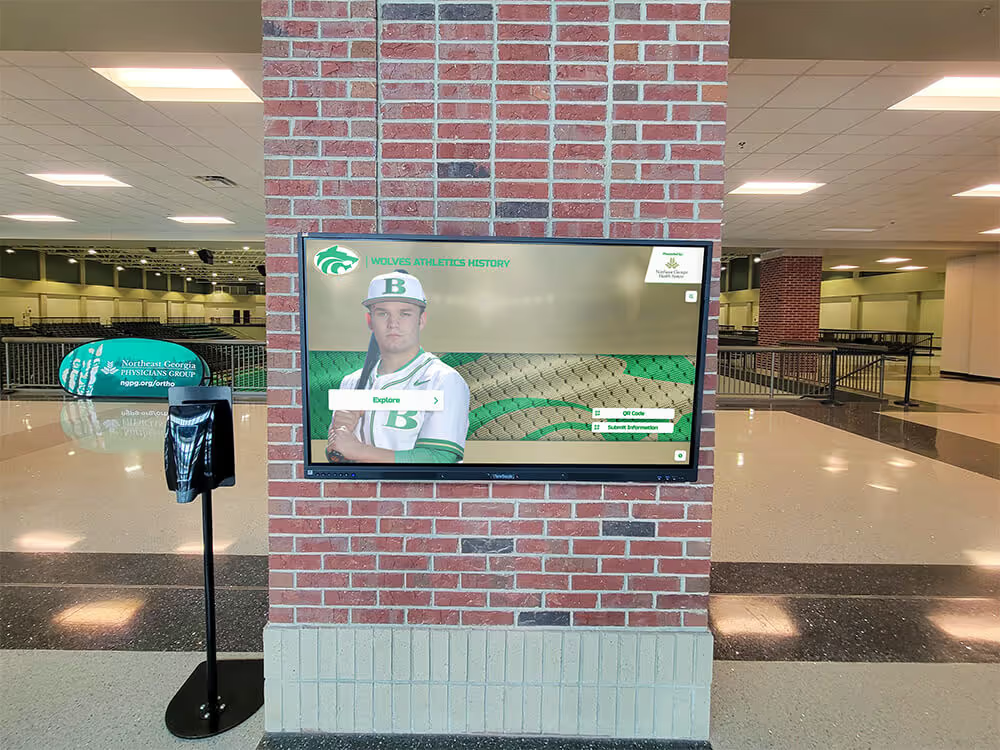
Digital trophy case solutions for schools explain how touchscreen displays can showcase decades of trophies, team photos, and athletic records in a single accessible interface—dramatically expanding what any physical case can display.
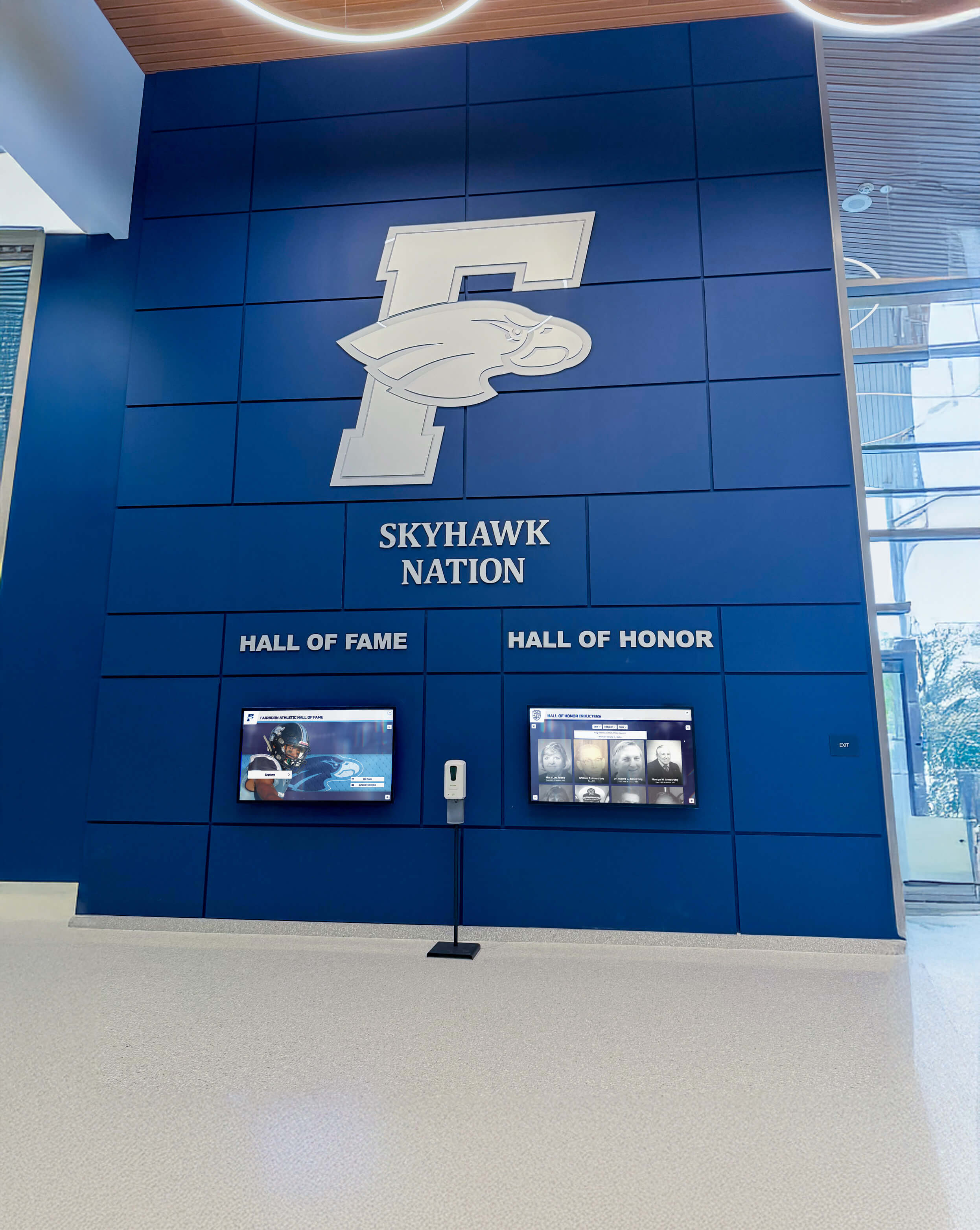
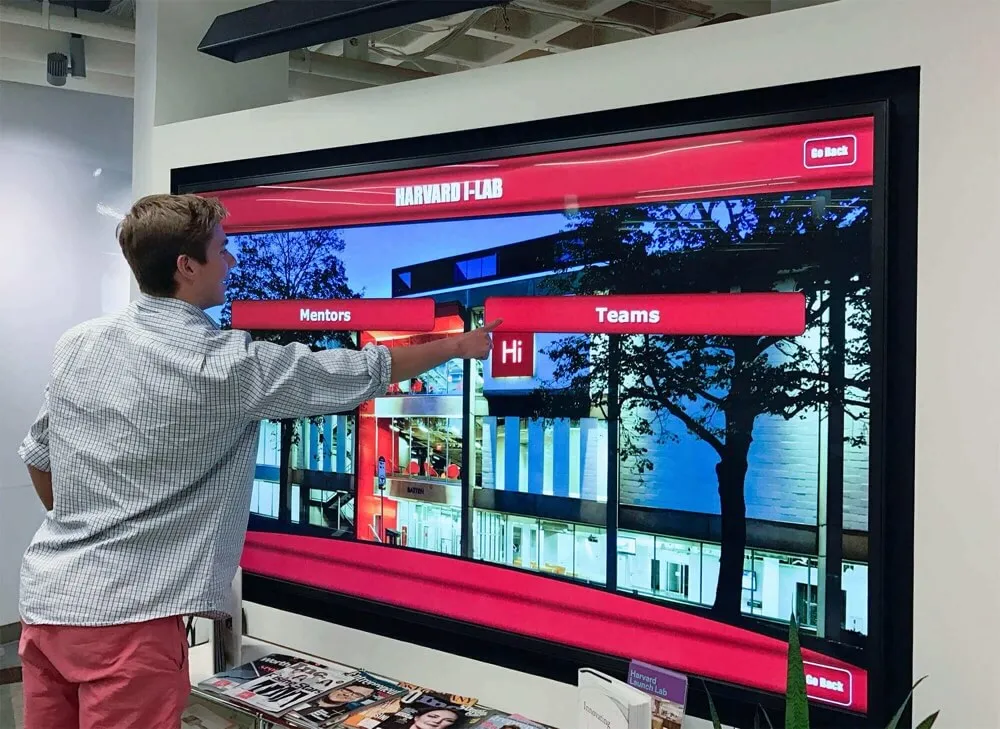
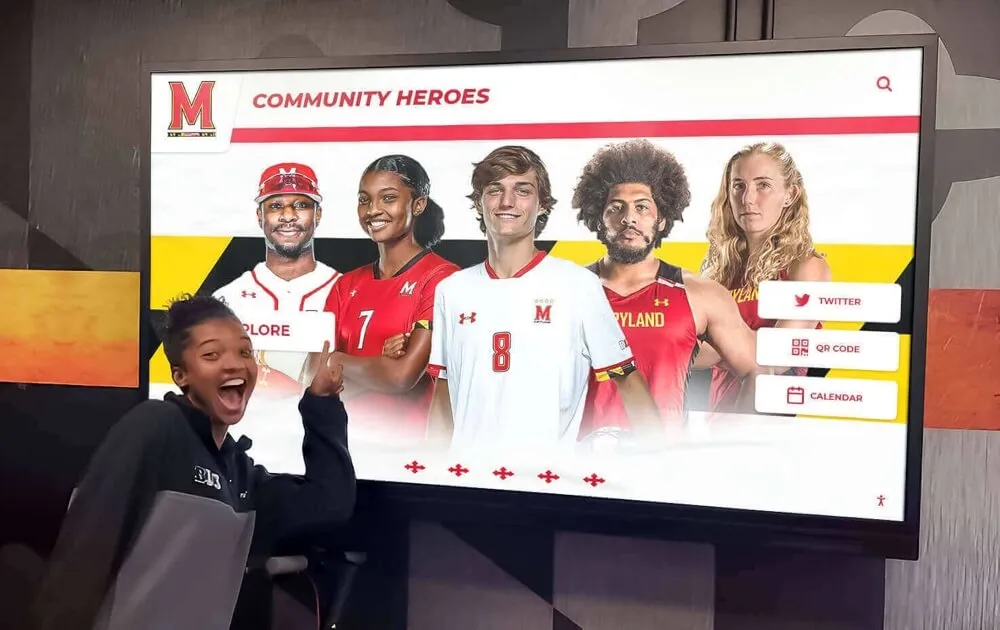
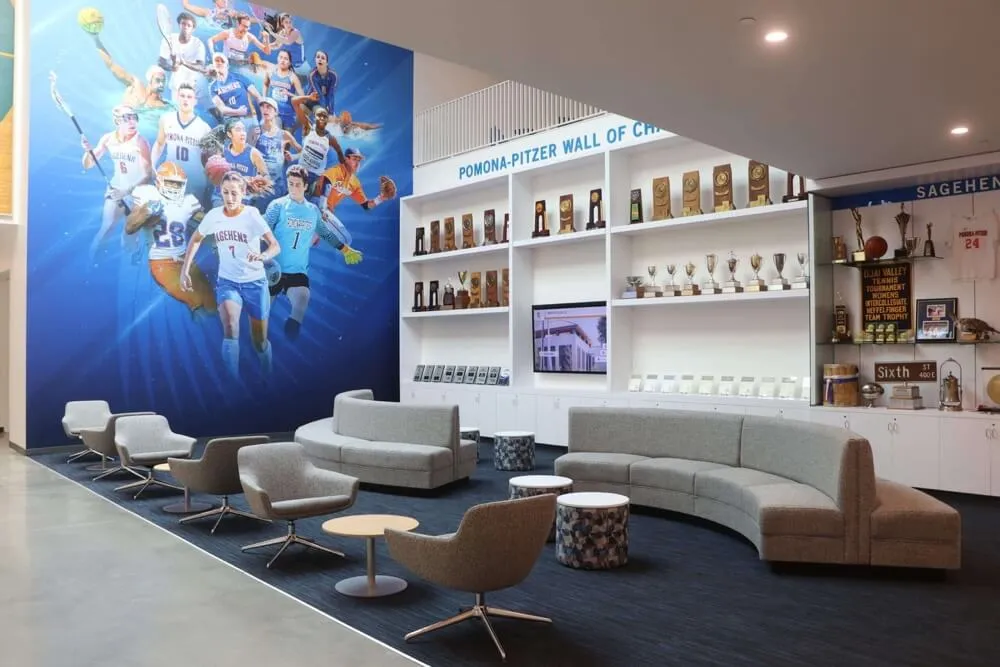
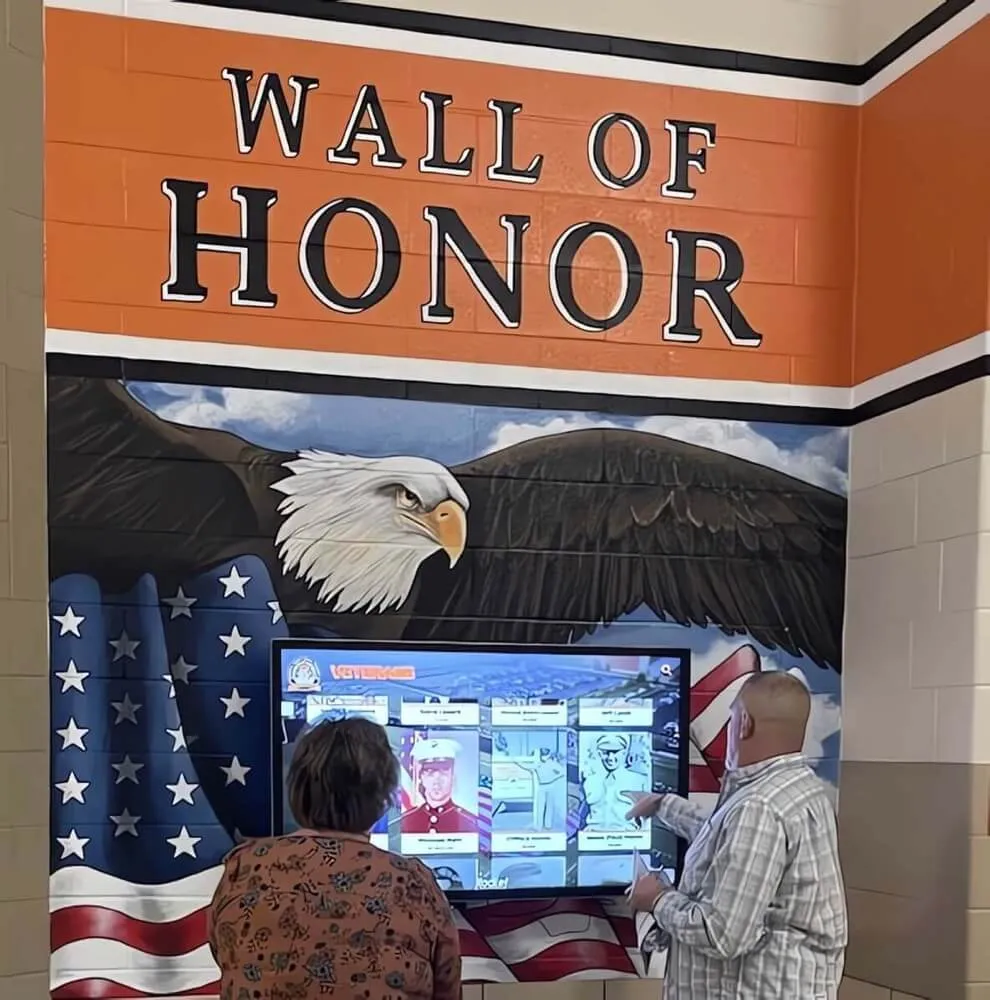
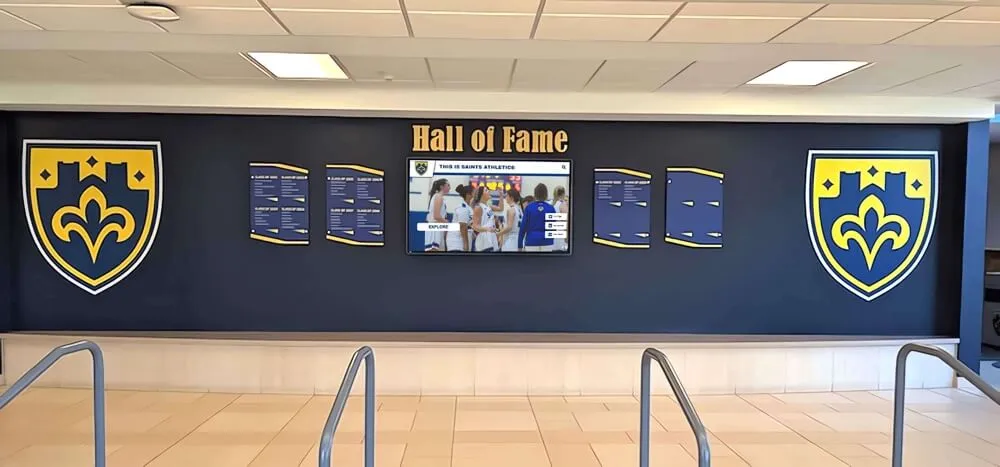
Main lobby recognition walls extend locker room signage philosophy to a public space where community members, recruits, and visitors encounter program identity and achievement
Digital Athletic Locker Room Signage: The Next Evolution
Traditional static signage—vinyl decals, painted murals, physical plaques—builds powerful environments but has inherent limitations. Content becomes outdated. Space constraints limit how many athletes and achievements receive recognition. Updating displays requires physical replacement of materials.
Digital signage systems are increasingly finding their way into locker rooms and athletic facilities, addressing these limitations while creating new possibilities for athlete recognition and engagement.
What Digital Signage Adds to Athletic Facilities
Dynamic content capability: Digital displays can rotate through motivational content, upcoming schedule information, current season statistics, and recognition profiles—all from a content management system that requires no physical installation to update.
Unlimited recognition capacity: Where a physical record board has room for perhaps a dozen entries, a digital record board system can display every record in every category across every sport going back as far as program records exist. Digital record boards for high schools provide comprehensive overviews of how these systems work in practice.
Video and multimedia integration: Highlight reels, championship game footage, and program history videos can play on locker room displays, creating an immersive environment that static signage cannot match.
Athlete profile displays: Individual athlete profiles with photos, statistics, and achievement history can rotate through a locker room display, giving each team member visible recognition throughout the season.
Digital vs. Traditional Signage: Choosing the Right Mix
Most programs benefit from a combination of traditional and digital elements rather than an either/or approach:
Best suited for traditional signage:
- Permanent program identity elements (mascot murals, school name lettering)
- Core values displays meant to represent stable, long-term standards
- Championship banners and physical trophies that carry historical weight
- Motivational quotes tied to program philosophy
Best suited for digital signage:
- Current season statistics and records tracking
- Schedule and opponent information
- Rotating athlete recognition profiles
- Video content and highlight reels
- Any content that benefits from regular updating
For a comprehensive comparison, traditional versus digital trophy case options for high schools walks through the decision factors that should guide facility investments.
Interactive Touchscreen Displays in Athletic Facilities
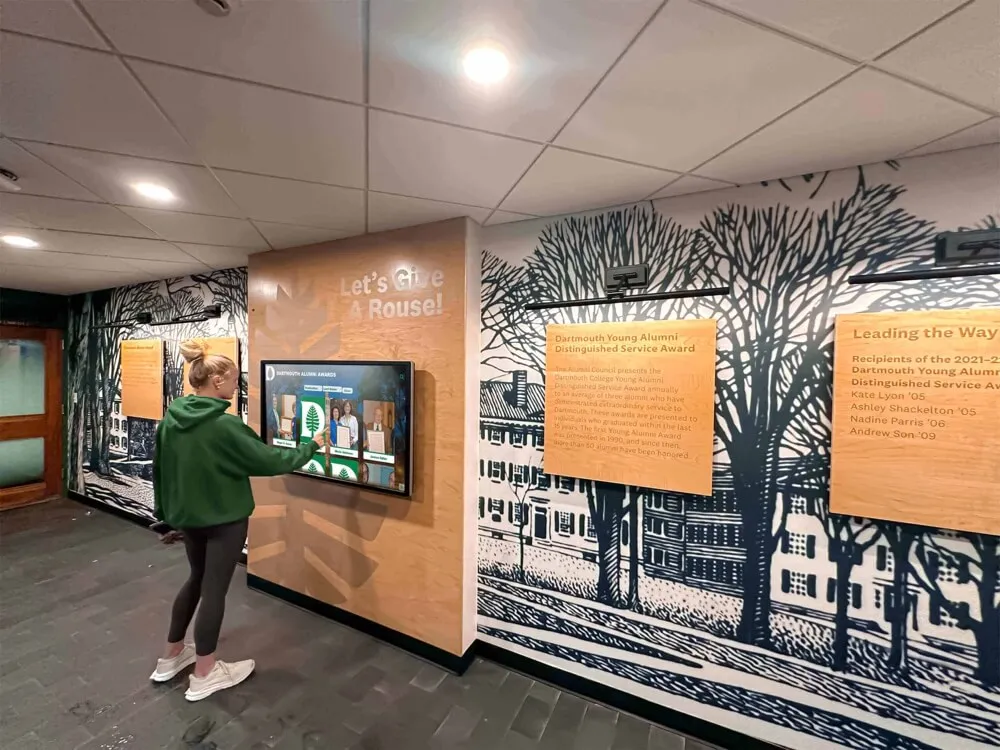
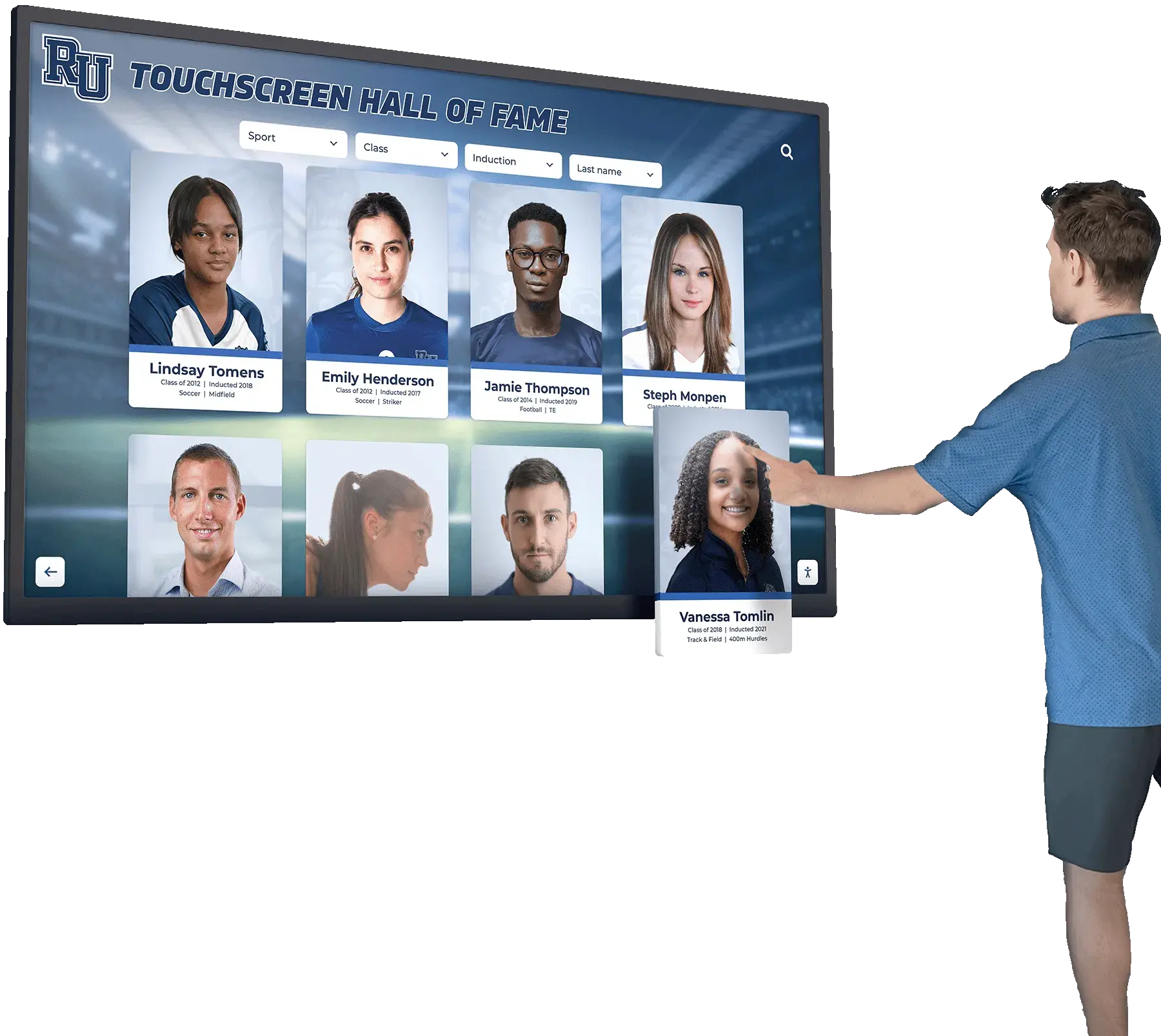
Beyond standard digital screens, interactive touchscreen kiosks represent the premium tier of athletic facility recognition technology. These systems allow athletes, families, and visitors to actively explore program history, search for specific athletes or seasons, and engage with recognition content in ways passive displays cannot support.
The complete guide to digital trophy touch wall systems explains how touchscreen recognition walls work, what they cost, and which programs benefit most from the investment.
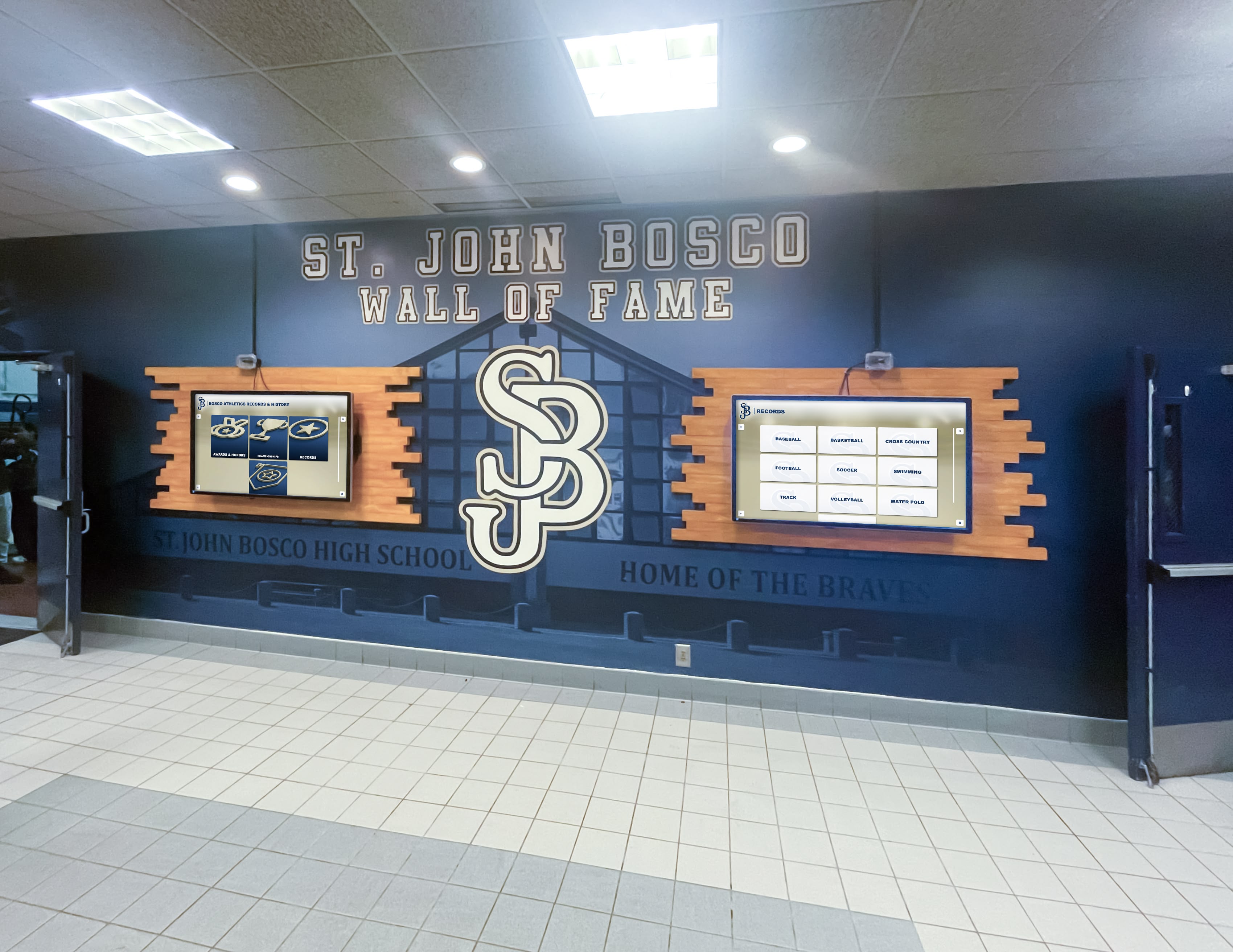
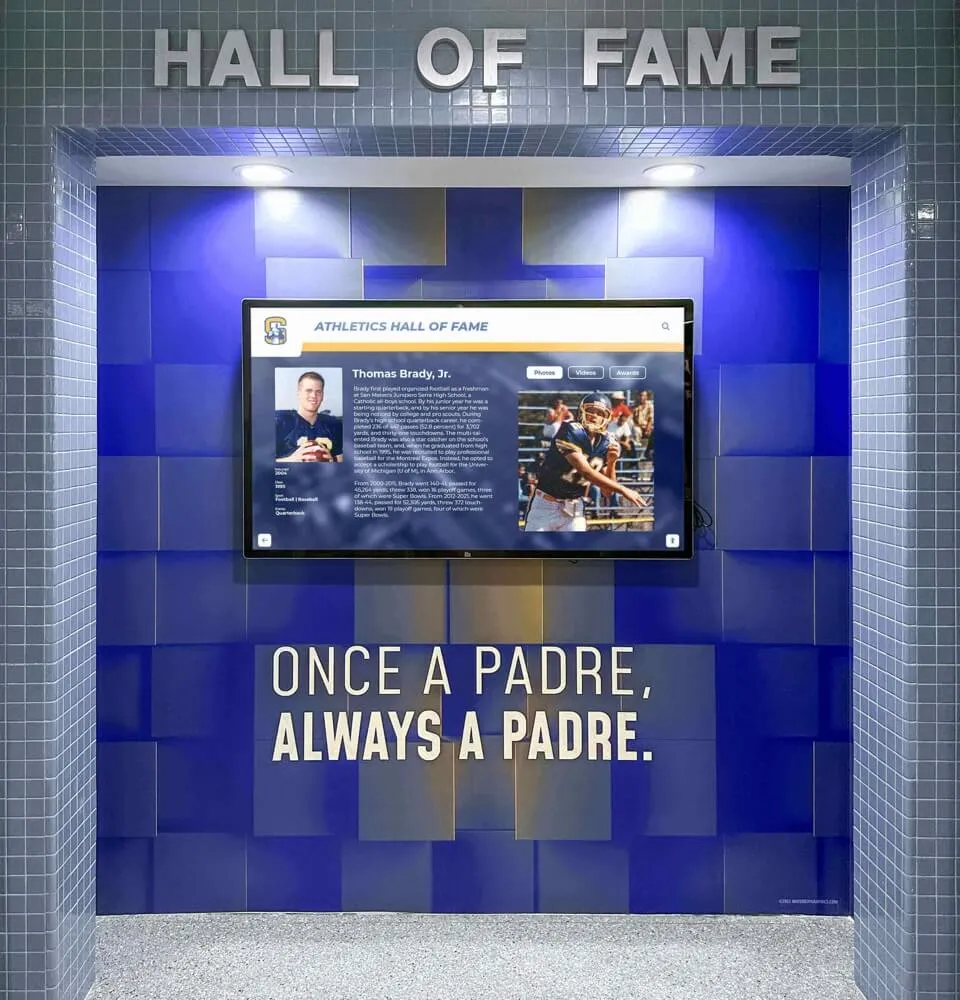
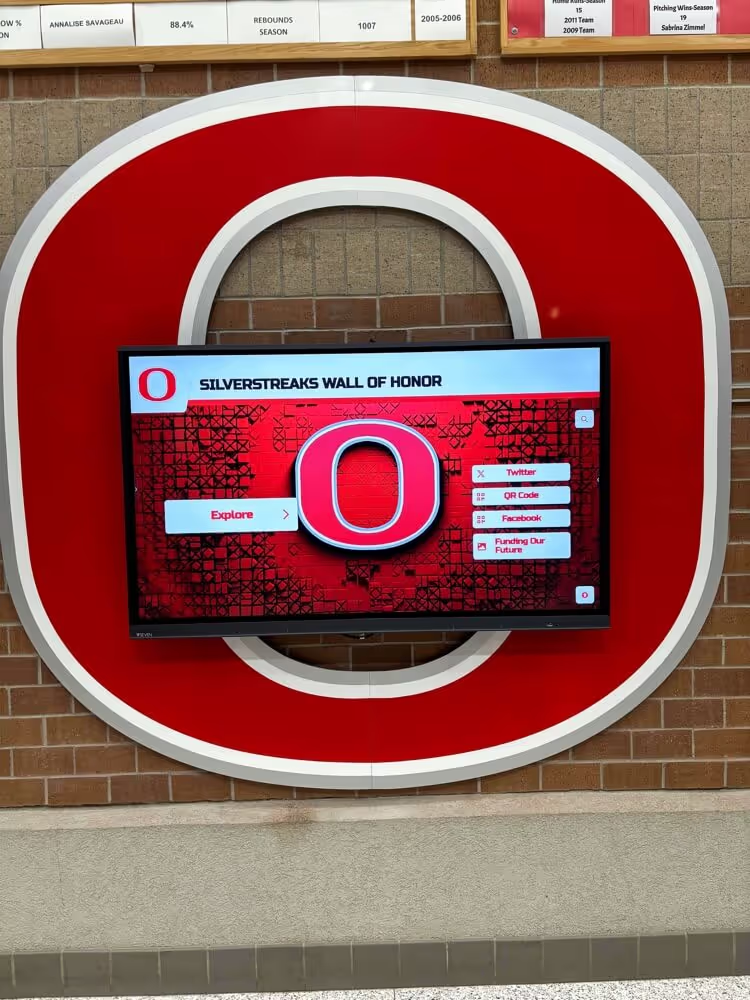
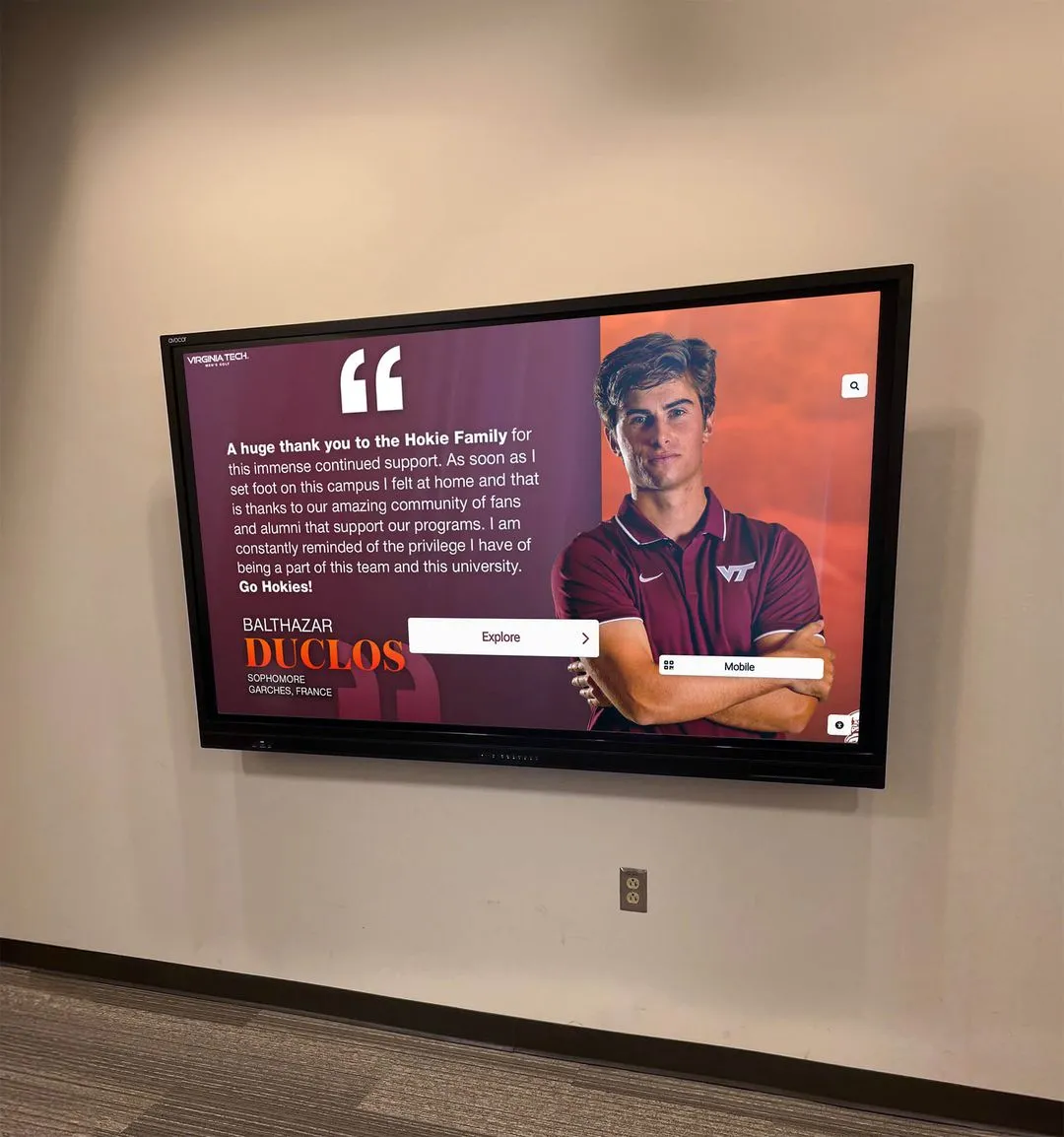
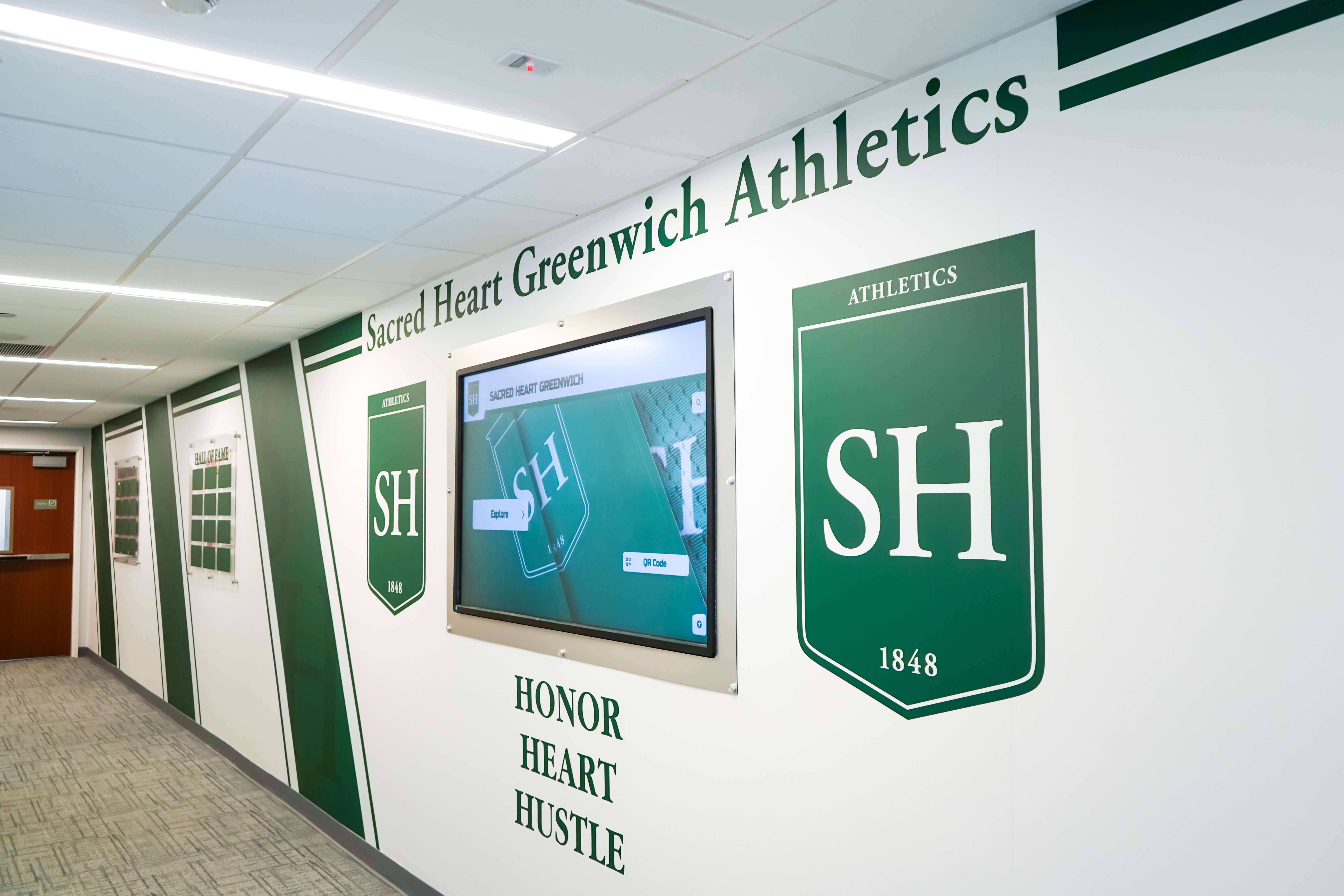
Integrated digital screen displays within traditional athletic recognition walls combine the permanence of physical signage with the dynamic content capabilities of modern technology
Implementation Guide: Planning Your Locker Room Signage Project
Moving from concept to completed locker room signage installation requires organized planning. Here’s a practical framework for approaching the project.
Step 1: Audit Your Current Space
Before ordering any materials, photograph and measure your existing locker room:
- Identify available wall surfaces and their dimensions
- Note lighting conditions (dark locker rooms require high-contrast signage for readability)
- Assess surface materials (painted drywall, concrete block, and tile each require different installation approaches)
- Document existing signage that will remain versus what will be replaced
Step 2: Define Your Content Priorities
With your space mapped, prioritize content based on your goals:
- Which values or messages are most important to display permanently?
- What historical achievements deserve prominent permanent recognition?
- What content needs to be updated regularly and might be better served by digital solutions?
- What is your budget allocation across different signage categories?
Step 3: Gather Historical Materials
For recognition-focused signage, you’ll need historical program records. This often requires research:
- School archives for championship records and historical team photos
- Athletic department records for all-time statistical leaders
- Yearbook archives for team photographs across decades
Digitizing athletic photo archives explains how to systematically collect and digitize historical athletic images for use across signage projects.
Step 4: Work with Qualified Vendors
Different elements of a locker room signage project may require different vendors:
- Sports facility muralists for custom painted graphics
- Sign shops for vinyl graphics, dimensional lettering, and printed panels
- Digital signage integrators for screen installations and content management systems
- Custom fabricators for metal lettering and dimensional recognition plaques
Getting multiple quotes and reviewing prior athletic facility work is essential—quality varies significantly across providers.
Budget Planning by Project Scale
Basic refresh ($500–$2,500): Vinyl wall decals, printed motivational quote panels, and updated nameplates represent the entry level. This level can dramatically improve a locker room’s visual impact without major investment.
Mid-range upgrade ($2,500–$15,000): Adds dimensional lettering, custom graphic panels, physical record boards, and potentially a small digital display. Most high school programs operate in this range.
Full-scale facility transformation ($15,000+): Comprehensive custom murals, interactive digital recognition systems, premium dimensional elements, and integrated athletic hallway signage create facilities that rival collegiate environments. Many programs pursue this level through booster fundraising or capital campaigns.
For programs exploring school history displays as part of facility upgrades, displaying school history comprehensively provides detailed planning guidance.
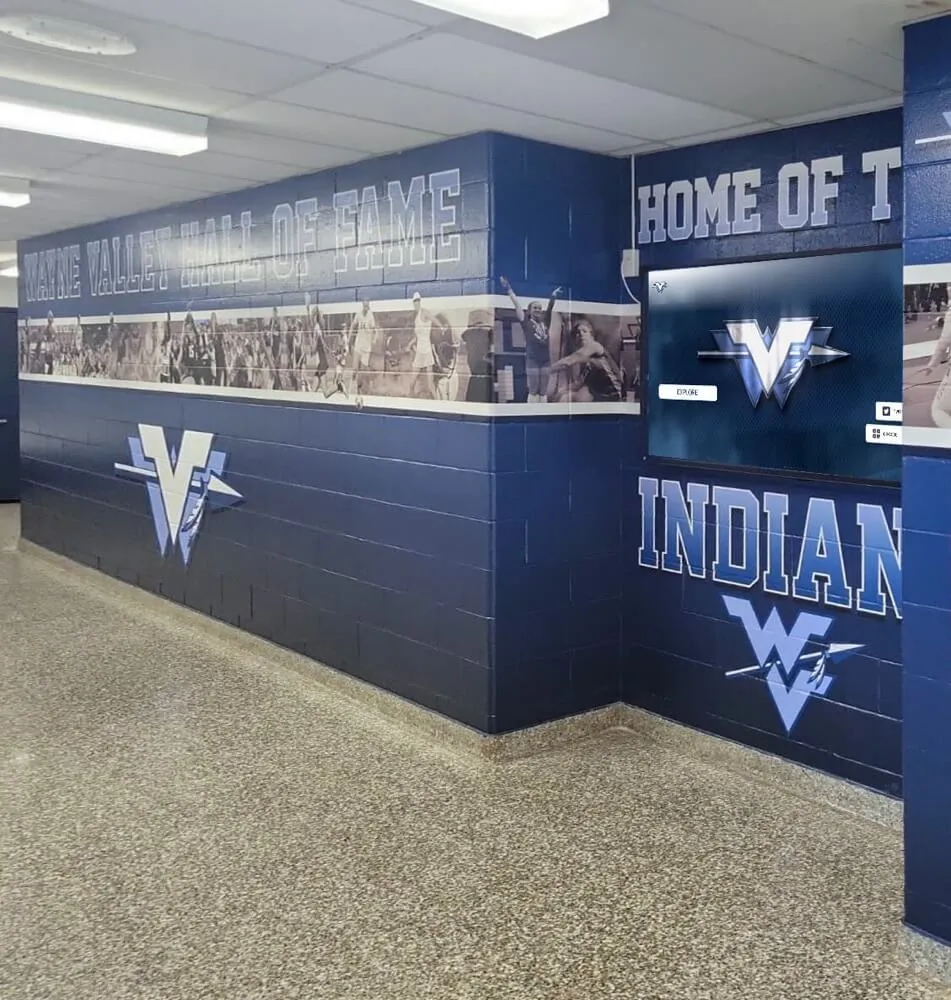
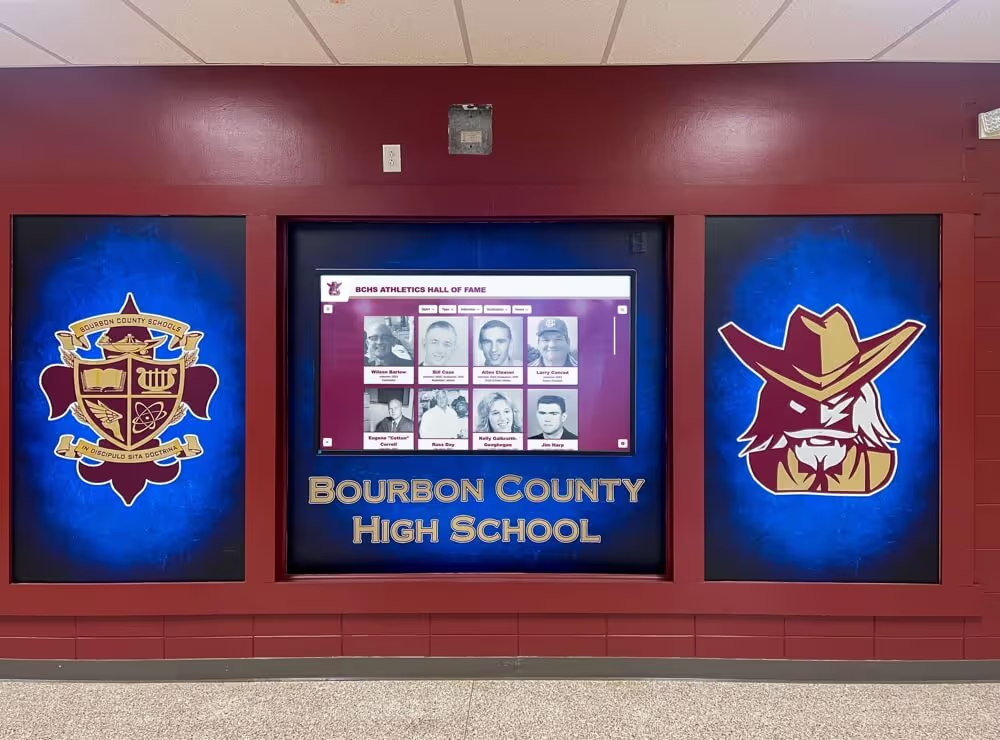
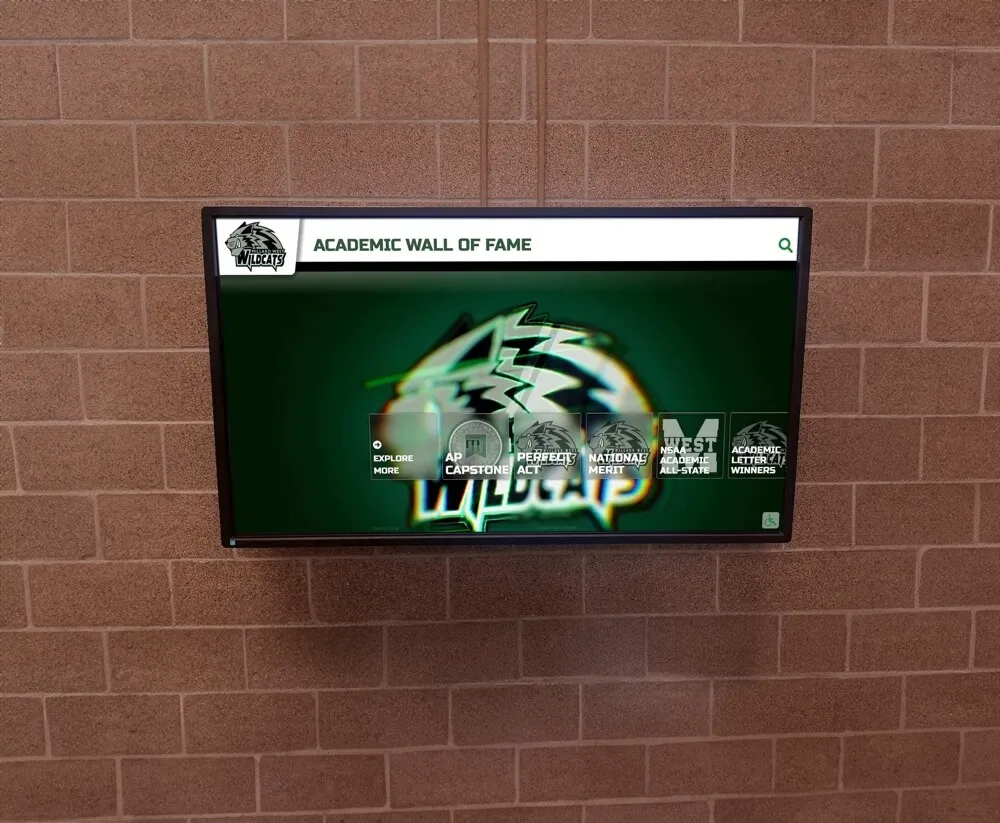
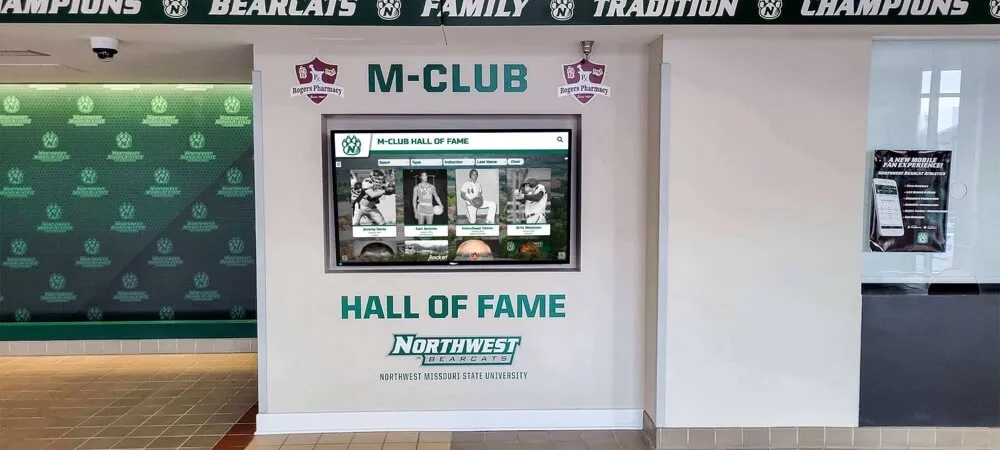
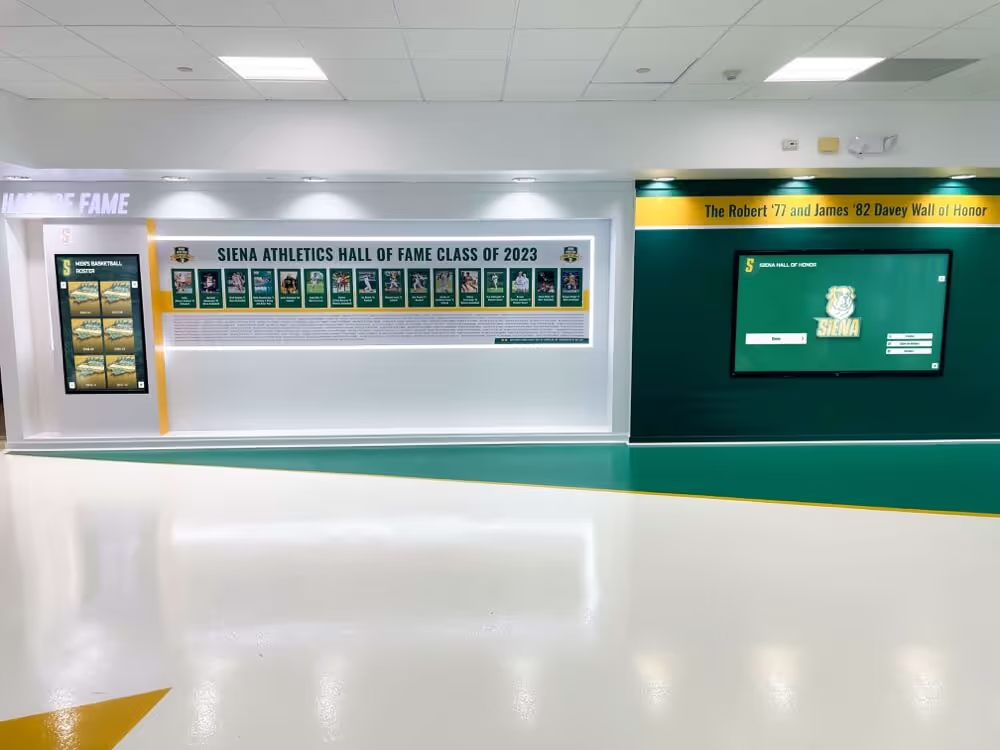
Coordinating mascot branding with hall of fame recognition throughout athletic hallways creates facilities that honor both identity and achievement
Frequently Asked Questions
What are the most impactful types of athletic locker room signage?
The highest-impact locker room signage combines three elements: a strong visual identity statement (mascot graphic or program name), a prominent motivational or values-based message, and recognition of past achievement. Programs that deliver all three create spaces where athletes simultaneously feel pride in who they are, understand what’s expected of them, and see the standard set by those who came before them. These elements work together to create genuine program culture rather than decorative wallpaper.
How much does athletic locker room signage typically cost?
Costs vary significantly by scale and materials. Basic vinyl decals and printed panels typically run $500–$2,500 and can dramatically improve a locker room’s appearance. Mid-range projects with dimensional lettering, custom graphics, and record boards typically fall between $2,500 and $15,000. Full custom mural work and integrated digital display systems can run $15,000 to $50,000 or more for comprehensive facility transformations. Most programs phase investment over multiple years, starting with high-impact basics and expanding as budget allows.
Should locker room signage be updated regularly or stay permanent?
An effective locker room signage system includes both permanent and updatable elements. Core identity elements—mascot imagery, school colors, program values—should be permanent and professionally installed. Achievement recognition, such as record boards and championship displays, should be designed for easy updating as new records are set and new seasons are completed. Digital displays serve both functions well, allowing stable branding to coexist with dynamic content that changes with the season.
How do you choose motivational quotes for athletic locker rooms?
The best locker room quotes are specific to your program’s philosophy rather than generic internet-motivational content. Consider quotes from coaches or figures your athletes actually know and respect, statements that directly address the mental or physical demands specific to your sport, or language drawn from your own program’s documented values and standards. Avoid clichéd phrases your athletes have seen on dozens of gym posters—they register as background noise rather than genuine motivation. Fewer, more powerful statements outperform walls covered in dozens of generic inspirational phrases.
What’s the difference between locker room signage and hall of fame displays?
Locker room signage primarily serves a daily motivational and identity function for the athletes using the space. Hall of fame displays, by contrast, are public-facing recognition systems typically located in main lobbies, hallways, or dedicated recognition spaces accessible to students, families, and community members. The best athletic facilities invest in both: locker room environments that prepare athletes mentally and publicly accessible recognition systems that celebrate program history for the entire school community. Many programs use digital touchscreen systems for hall of fame displays while maintaining traditional signage approaches for the more private locker room environment.
Conclusion: Building Athletic Spaces That Inspire
Athletic locker room signage represents one of the highest-leverage investments available to coaches and athletic directors seeking to build genuine program culture. The right combination of identity elements, motivational content, and achievement recognition transforms a functional changing space into an environment that daily reinforces who your athletes are and what they’re working toward.
Whether your program is starting with basic vinyl graphics on a tight budget or planning a comprehensive facility transformation with digital recognition systems, the principles remain consistent: be intentional, be specific to your program, honor your history, and communicate your standards clearly. Athletes perform to the level of the environment around them—give them a space worthy of the effort they’re expected to bring.
Ready to Transform Your Athletic Recognition Program?
Rocket Alumni Solutions helps schools create digital recognition walls, touchscreen hall of fame displays, and comprehensive athletic achievement systems that honor every athlete and preserve program history for generations.
Explore Recognition SolutionsThe most successful programs treat their athletic facility not as a collection of separate spaces but as a unified recognition environment—from the locker room where athletes prepare to the main lobby where the community celebrates program achievement. When signage, branding, and recognition work together cohesively across that entire environment, the result is something that outlasts any single season: a program culture that athletes are proud to be part of and that future athletes aspire to join.