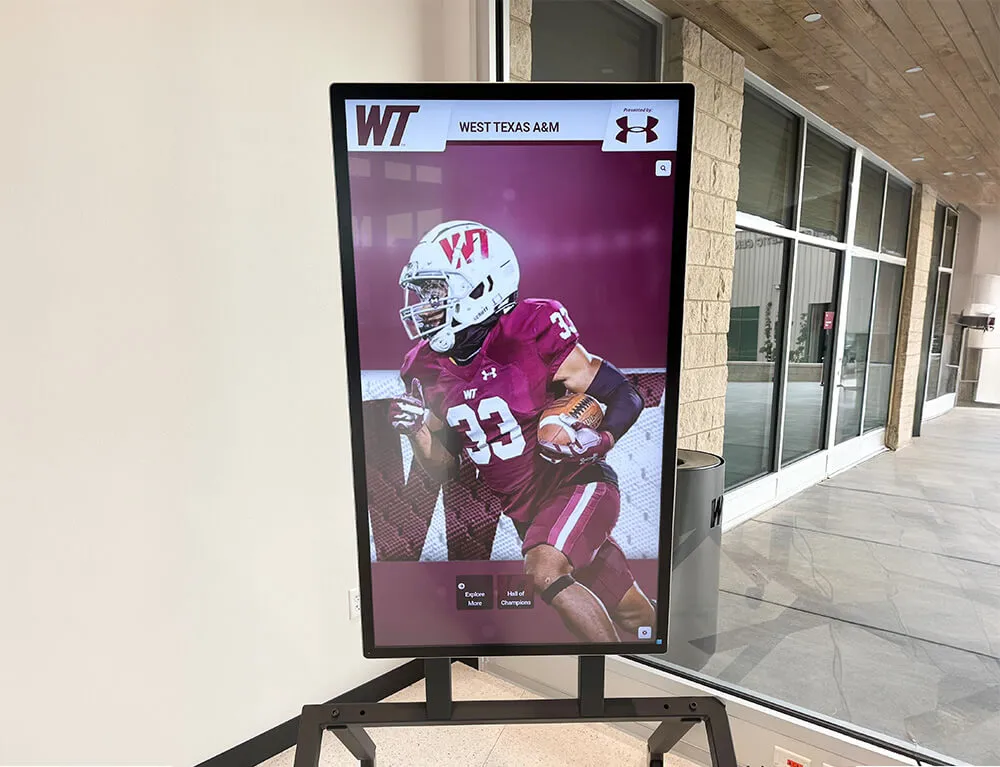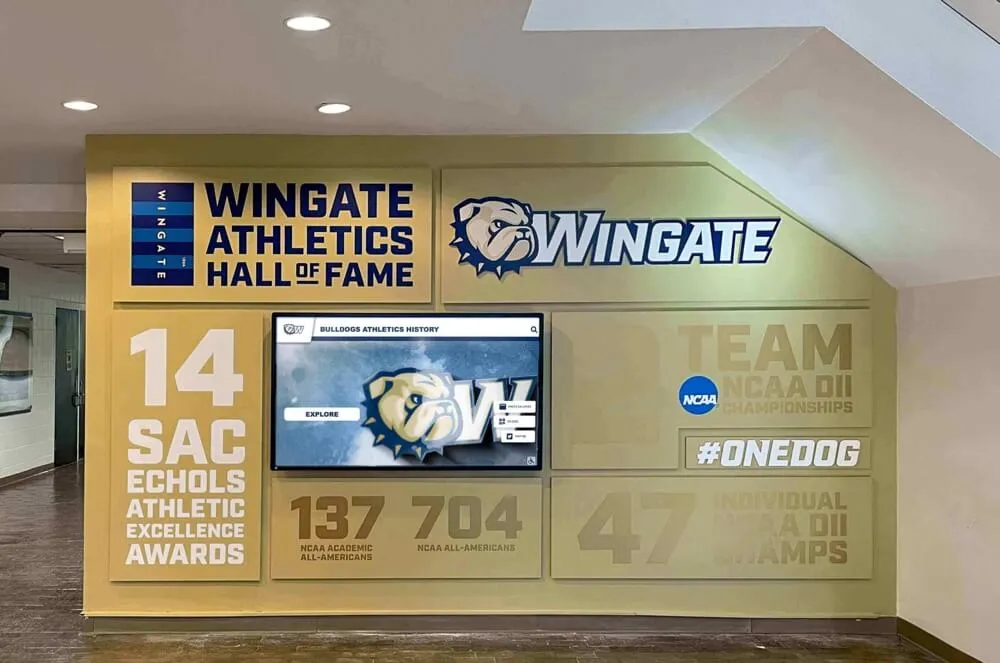




An athletic recognition program is only as strong as its visibility between ceremonies. Schools that treat recognition as a once-a-year event—trophies awarded in May, photos packed away until next fall—miss the compounding effect that comes from keeping achievement in front of athletes every day. The programs that build the strongest athletic identity do something different: they turn every award, record, and season-defining photo into a permanent display that speaks to student-athletes, families, and visitors 365 days a year.
This guide gives athletic directors, facilities leaders, school administrators, and communications staff a practical framework for building an athletic recognition program that extends well beyond the banquet table. It covers the core components of a sustainable program, how to convert season-end awards into lasting hall of fame content, digital display workflows that reduce administrative burden, and record board strategies that keep recognition visible in the spaces where athletes train and compete.
The difference between a program that motivates athletes and one that simply acknowledges them lies in persistence. Recognition that disappears after one evening cannot shape culture. Recognition that lives in hallways, on touchscreens, and behind glass cases—updated season after season—becomes the story a program tells about itself.

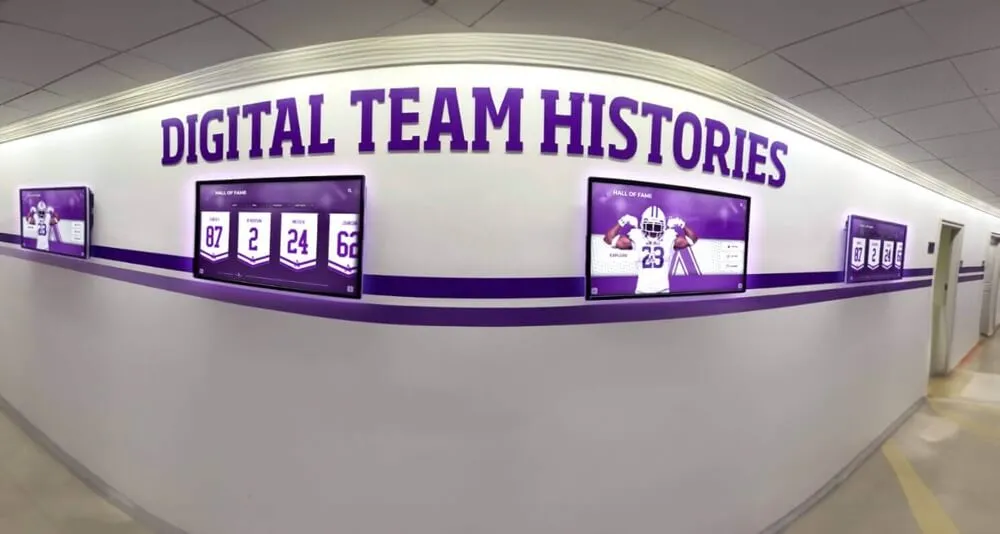
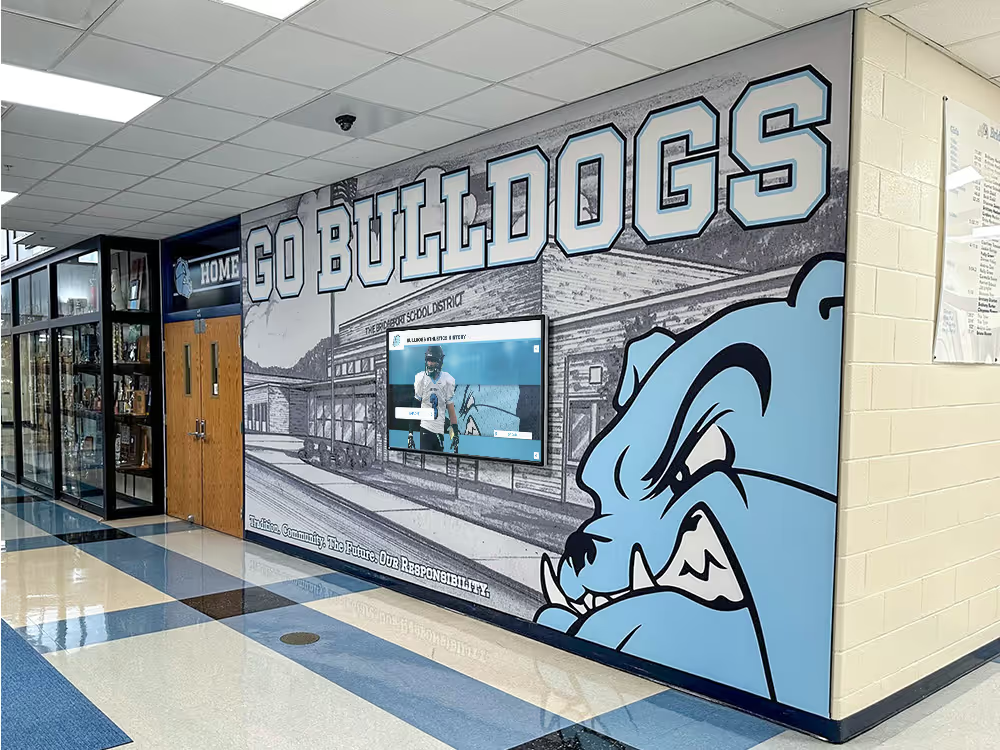
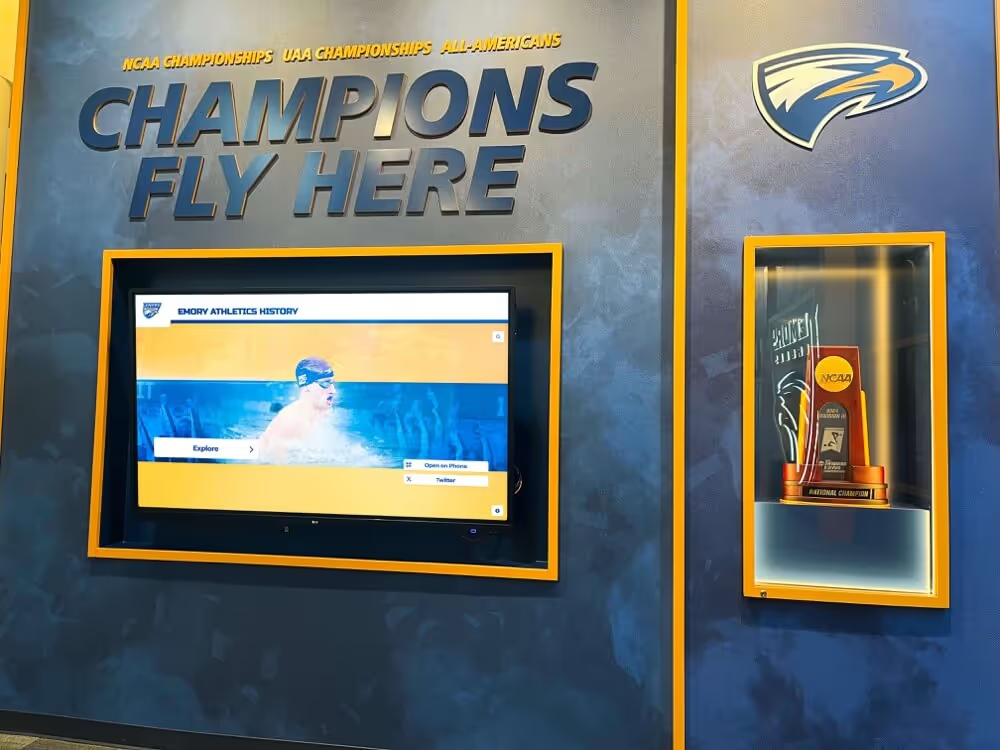
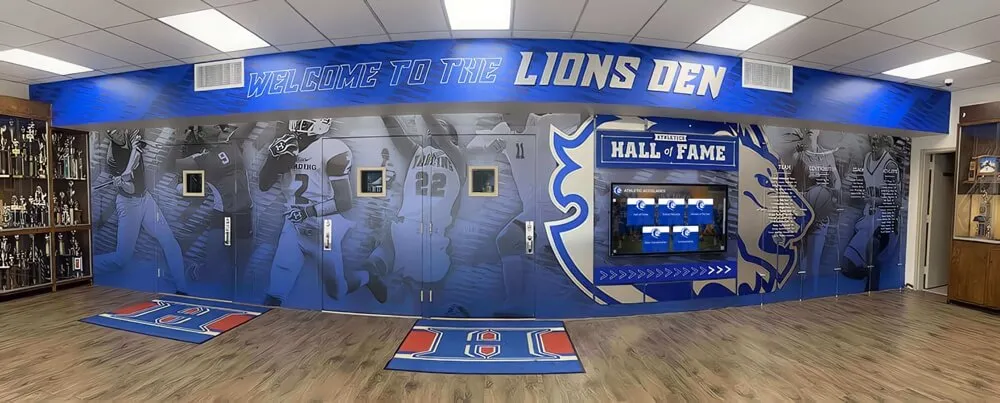
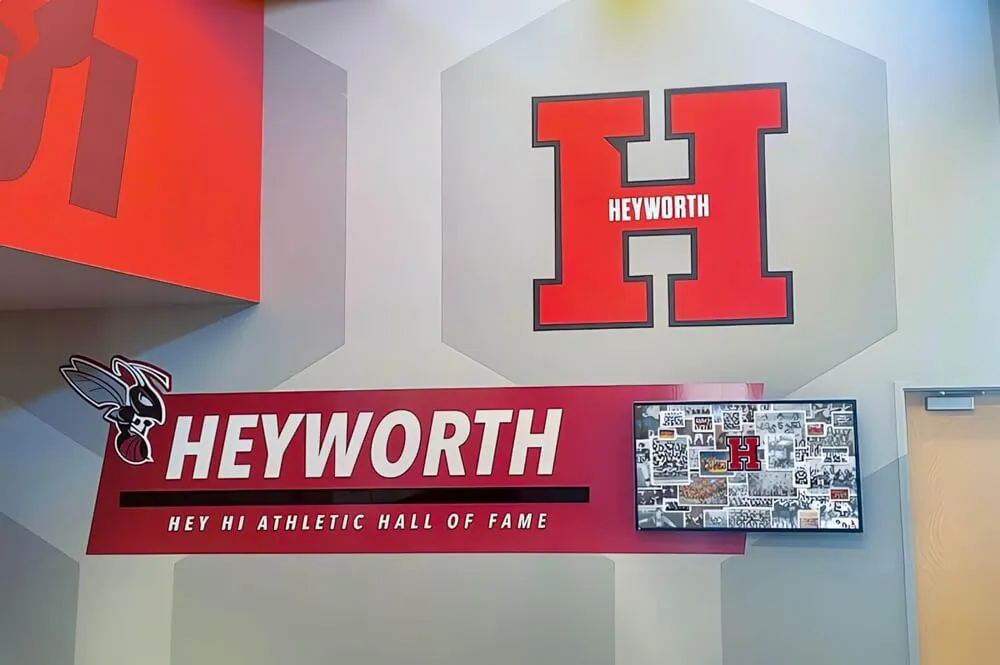
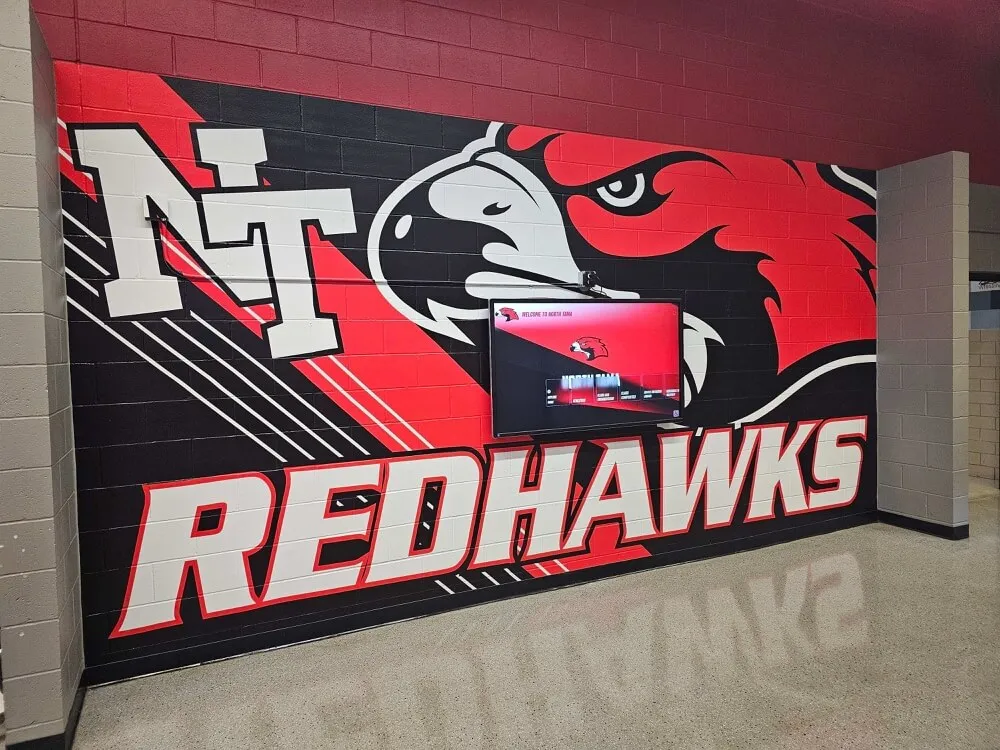
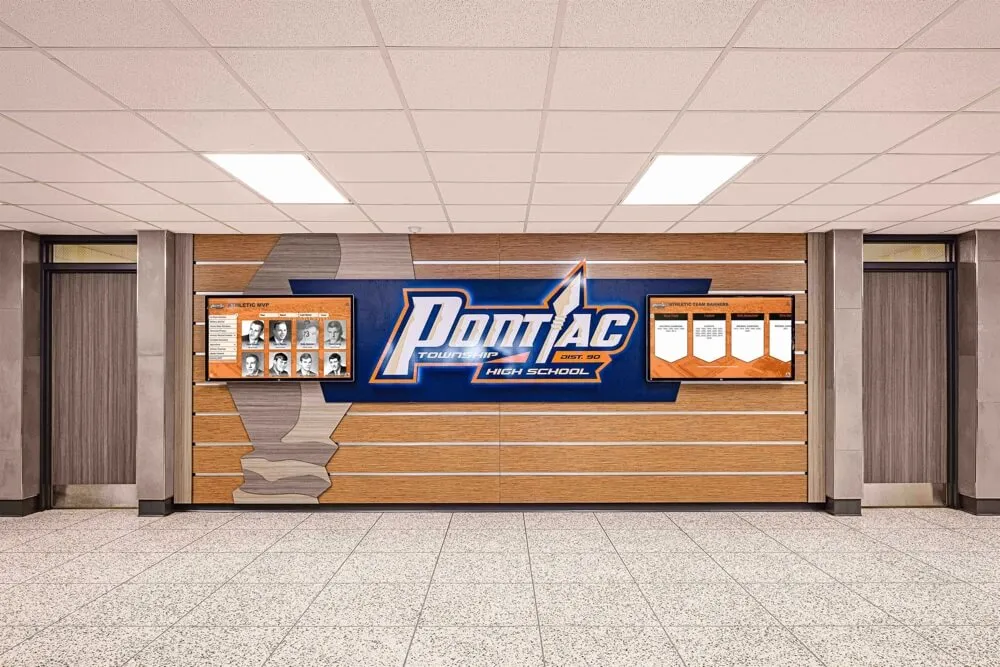
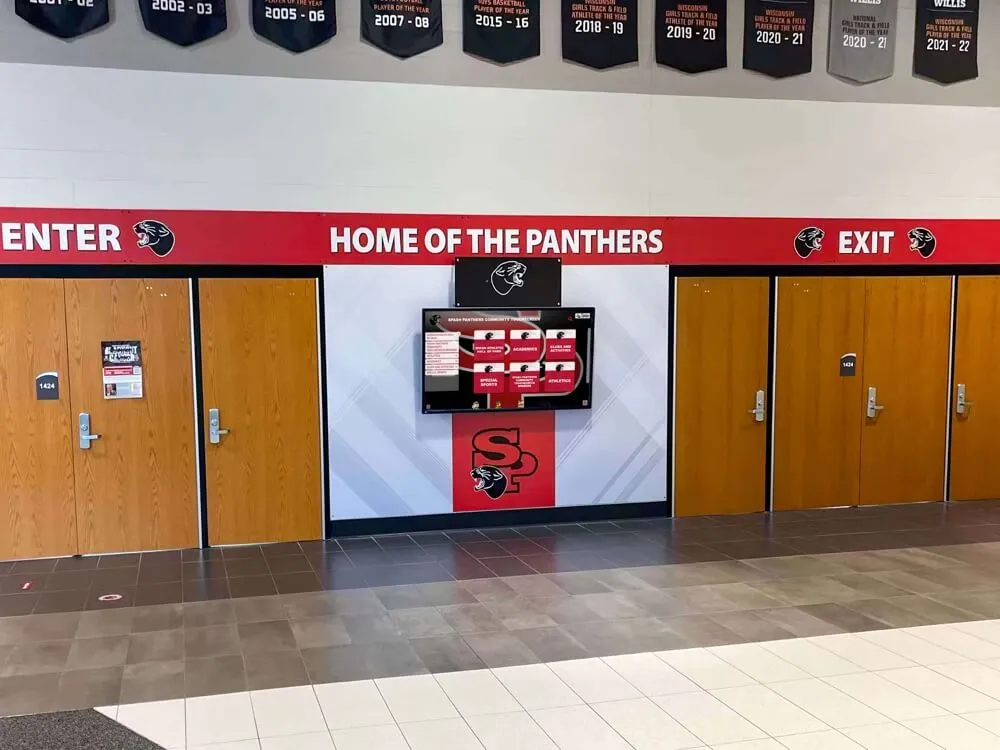
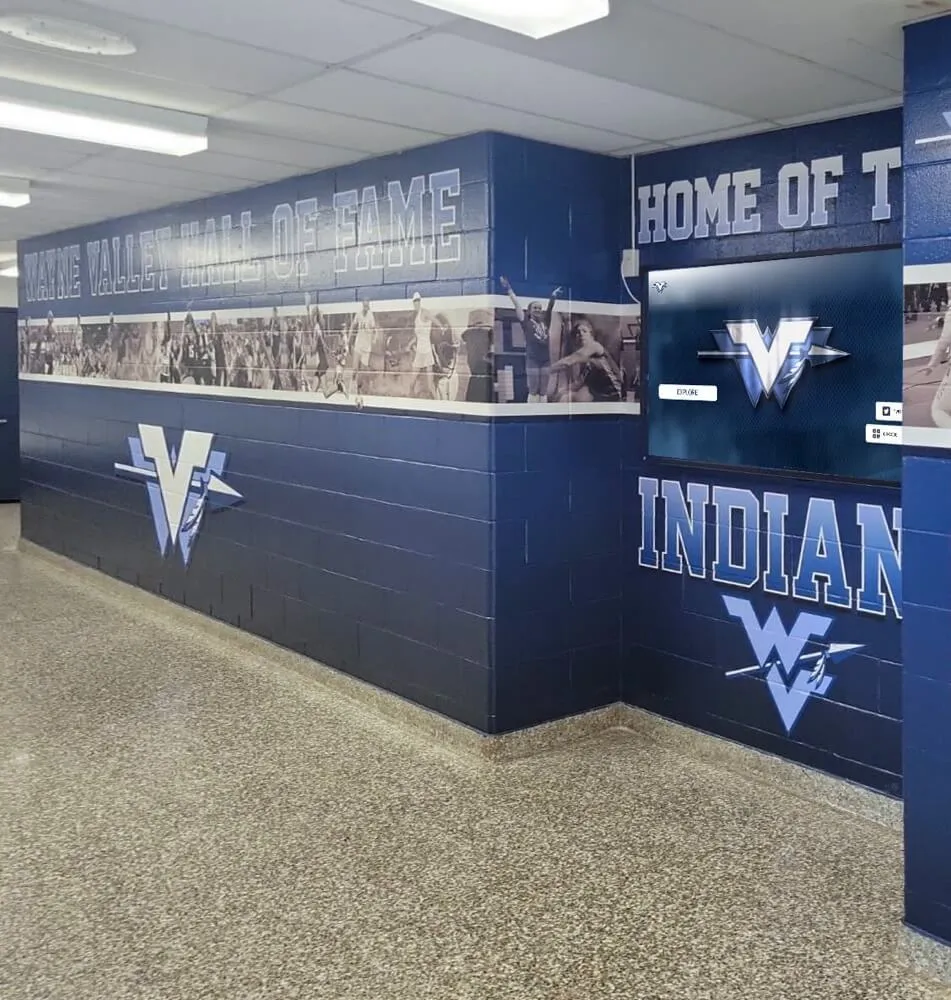
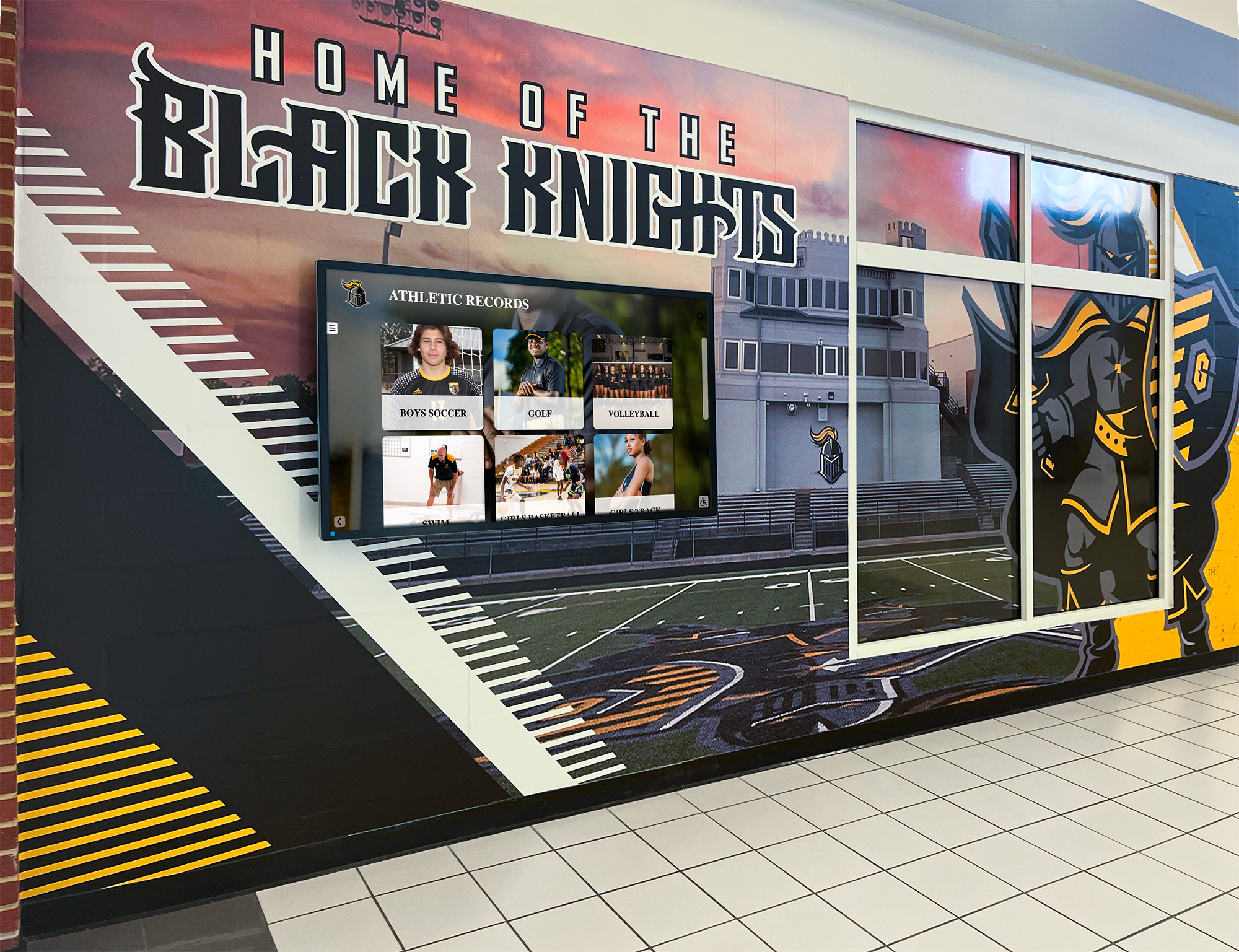
Athletic hallways that integrate murals, record boards, and digital displays create a recognition environment that reinforces program identity every day
What an Athletic Recognition Program Actually Covers
A complete athletic recognition program is the full system a school uses to identify, honor, and preserve athletic achievement—not just the annual awards banquet. A well-functioning program includes six connected components:
- Awards and ceremonies — seasonal banquets, senior nights, championship celebrations
- Record boards — all-time and single-season performance records displayed where athletes compete
- Hall of fame and wall of honor — formal induction recognizing career-level achievement
- Photo and archive systems — game action, team portraits, and historical collections
- Sponsor recognition — partner acknowledgment integrated into displays and programs
- Digital display workflows — the CMS and hardware layer that ties everything together
Schools with strong athletic identity typically have all six components operating simultaneously. Programs with gaps—often in the archive or digital workflow areas—find that recognition activities feel disconnected and underperform their potential as culture-building tools.
Building a Year-Round Athletic Recognition Calendar
A sustainable athletic recognition program requires a structured calendar so activities are planned, executed on time, and kept current. The following five-step framework covers a full 12-month cycle.
Step 1: Map Every Recognition Touchpoint
List every moment in the school year when athletes are publicly recognized. For most programs, this includes:
- Fall, winter, and spring sports banquets
- Senior nights for each sport
- Home game halftime recognitions (hall of fame anniversaries, record celebrations)
- Annual hall of fame induction ceremony
- Back-to-school display updates (new record holders, new inductees from the prior year)
- Homecoming and alumni recognition events
Once mapped, assign a staff owner and a display update requirement to each touchpoint. Recognition events that produce no display update leave achievements invisible within weeks.
Step 2: Standardize Award Categories Across Sports
Inconsistent award categories across programs make it difficult to build a cohesive recognition identity. Standardizing creates equity between sports and simplifies the display system. Core award categories to align include:
- Most Valuable Player / Athlete of the Year
- Coaches Award (character, effort, leadership)
- Most Improved
- Academic Athlete Award
- Senior Recognition
- All-Conference and All-State acknowledgment
Standardized categories also make it easier to compare recognition across seasons when presenting to boards, boosters, and community stakeholders.
Step 3: Define the Display Lifecycle for Each Award
Every award earned during the season should have a documented path to permanent display. Use a table like this to clarify the lifecycle:
| Award Type | Immediate Action | Long-Term Display |
|---|---|---|
| Team championship | Banner or digital announcement | Championship banner or digital record |
| Individual season award | Certificate + ceremony recognition | Record board entry or hall of fame profile |
| All-conference or All-state | Social media + announcement | Digital hall of fame profile |
| Senior recognition | Program bio + ceremony | Archive photo and profile |
| School record | Celebration at game | Record board update within 30 days |
Documenting this lifecycle eliminates the common problem of awards that are presented but never make it onto any permanent display.
Step 4: Schedule Quarterly Display Reviews
Recognition displays go stale when they are not updated. A quarterly review schedule—typically August, November, February, and May—ensures displays reflect current records, newly inducted honorees, and completed seasons. Each review should include:
- Updating record boards with season results
- Adding new award recipient profiles to hall of fame systems
- Replacing outdated photos in display cases
- Archiving any removed content digitally before retiring it from physical displays
Step 5: Connect Recognition to Alumni Engagement
The most underutilized component of most athletic recognition programs is the alumni connection. When recognition lives only in physical displays, graduates who left before those displays were installed have no connection to the program’s history. Digital archives that include historical content—rosters, records, photos from prior decades—keep alumni engaged and invested.
For programs developing formal alumni engagement workflows, creating an interactive directory for community stakeholders is a practical starting point for connecting recognition to broader relationship management.
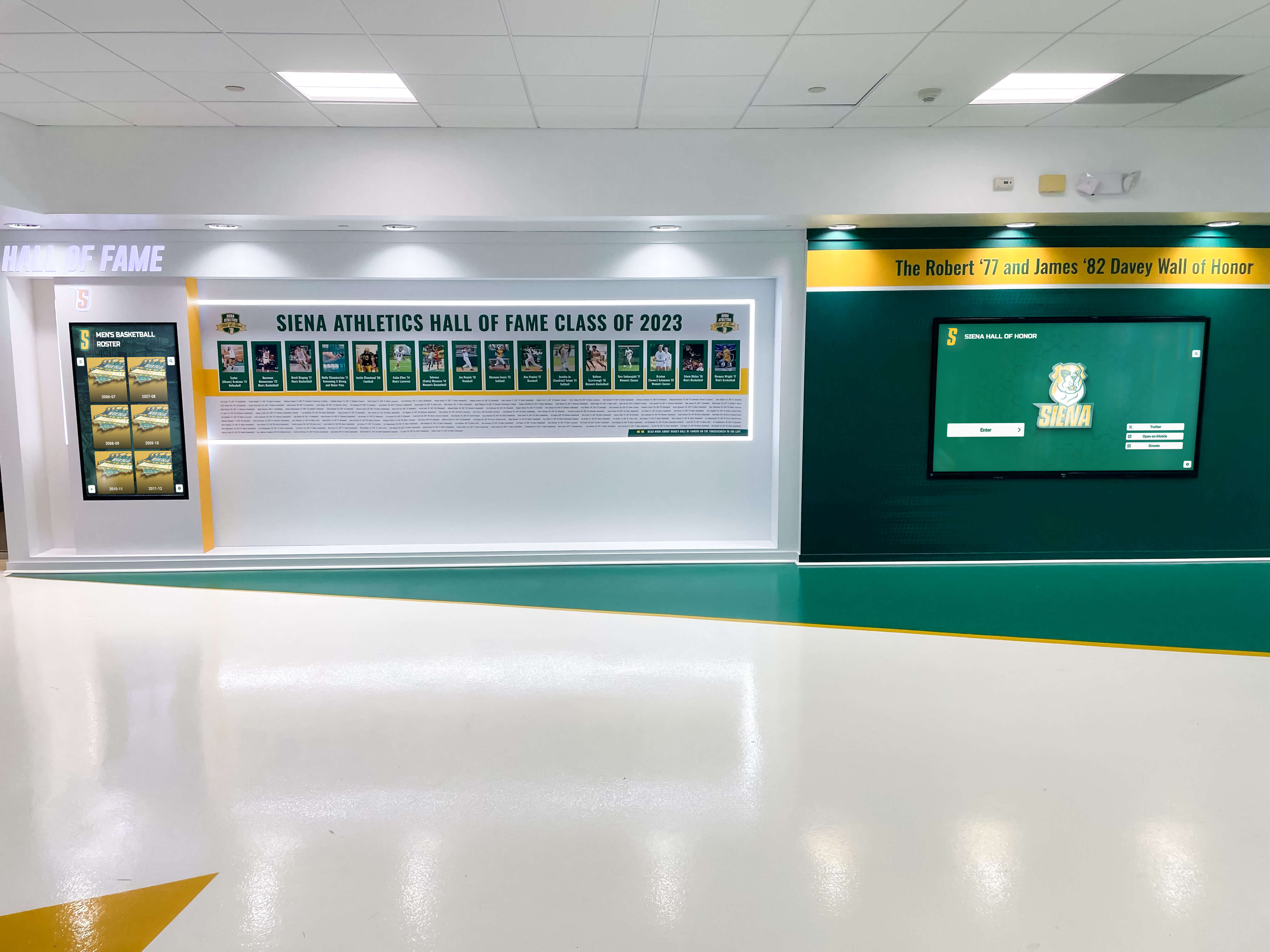
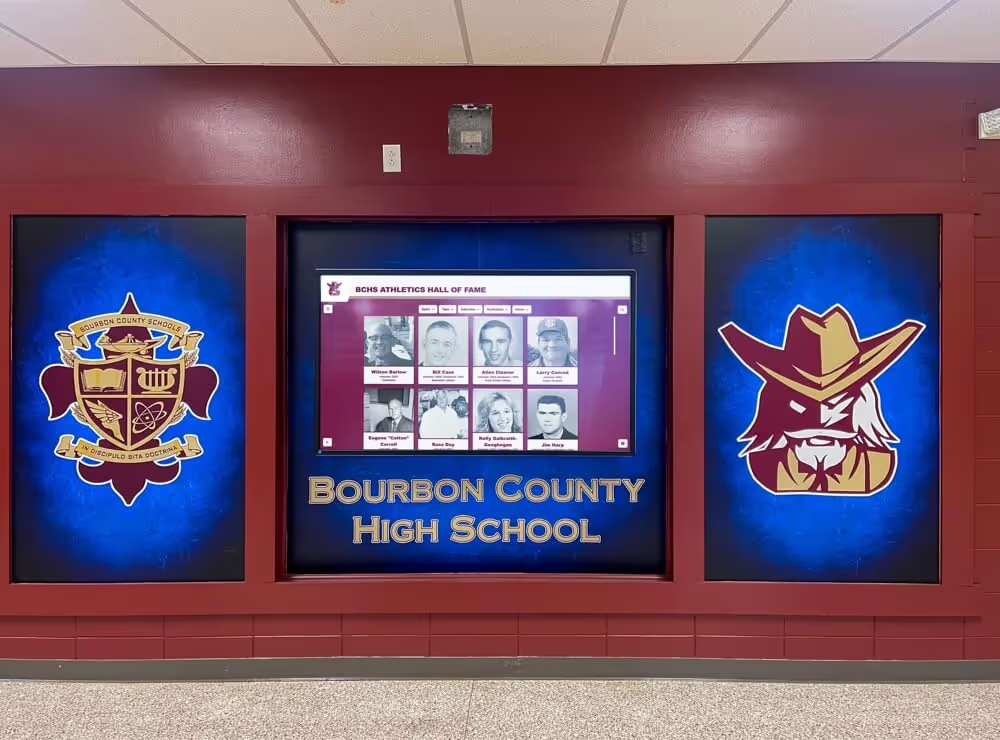
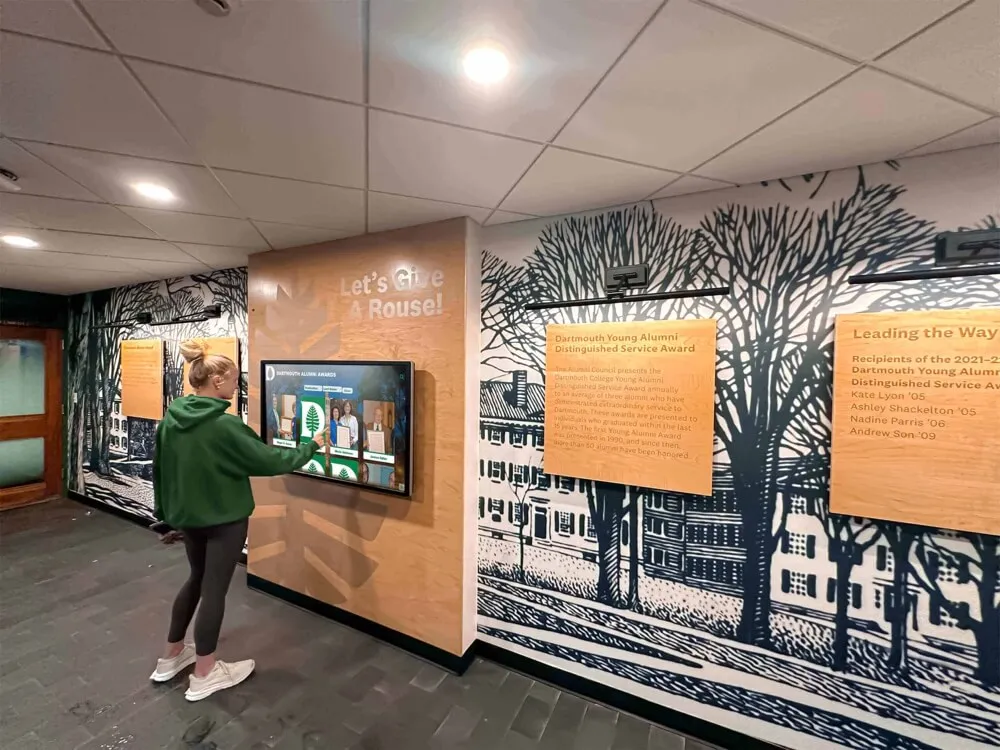
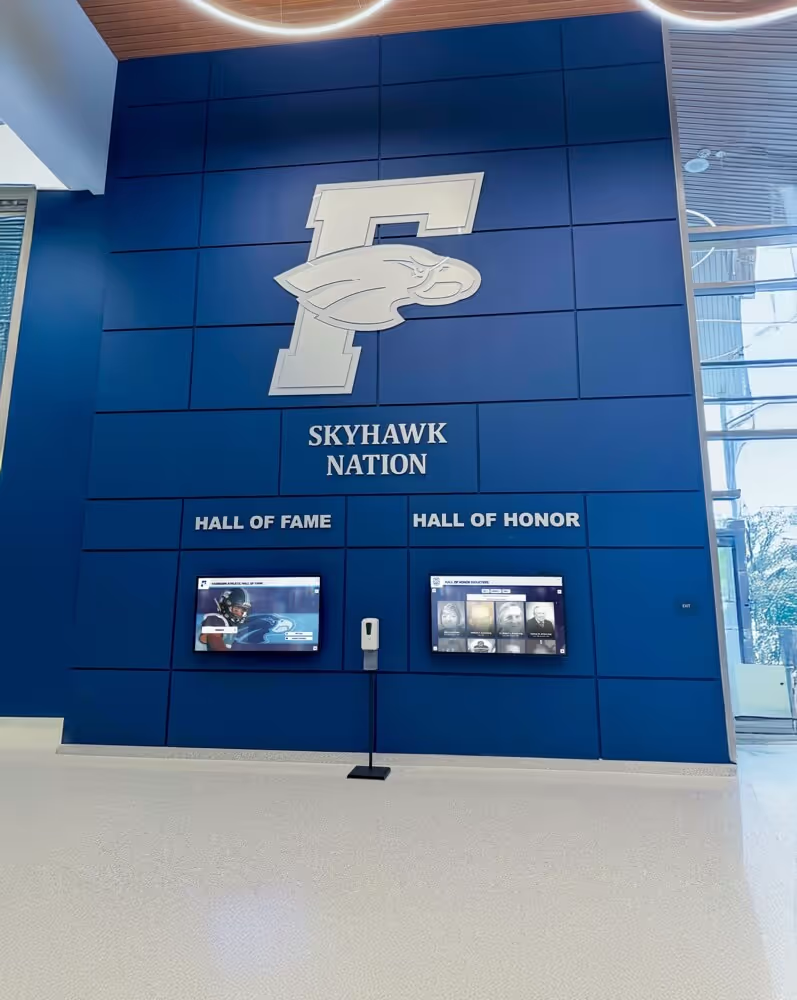
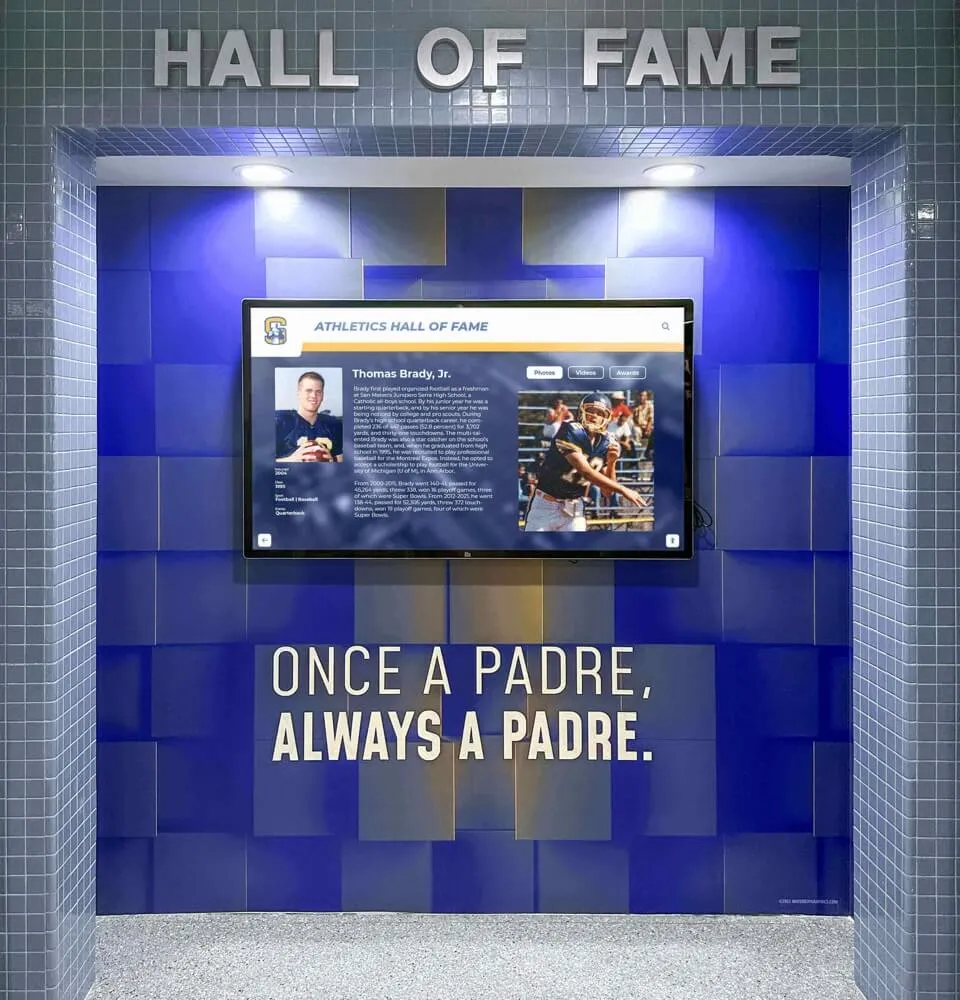
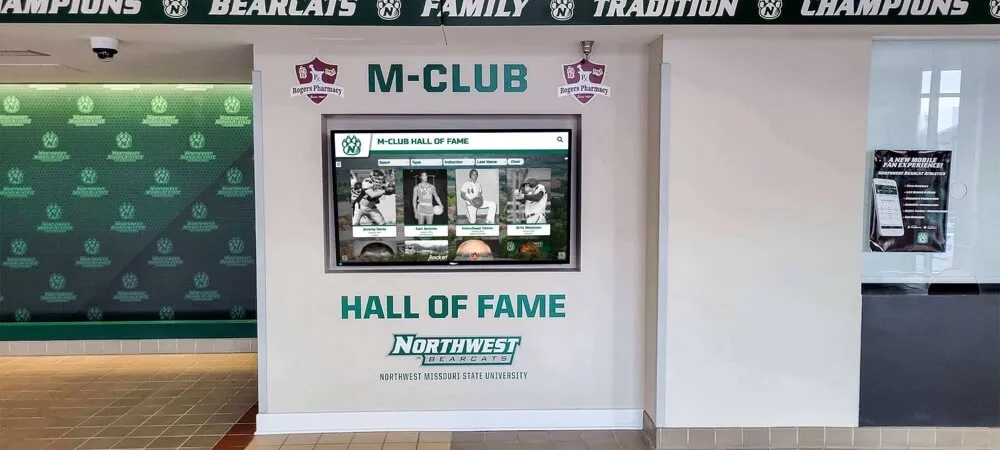
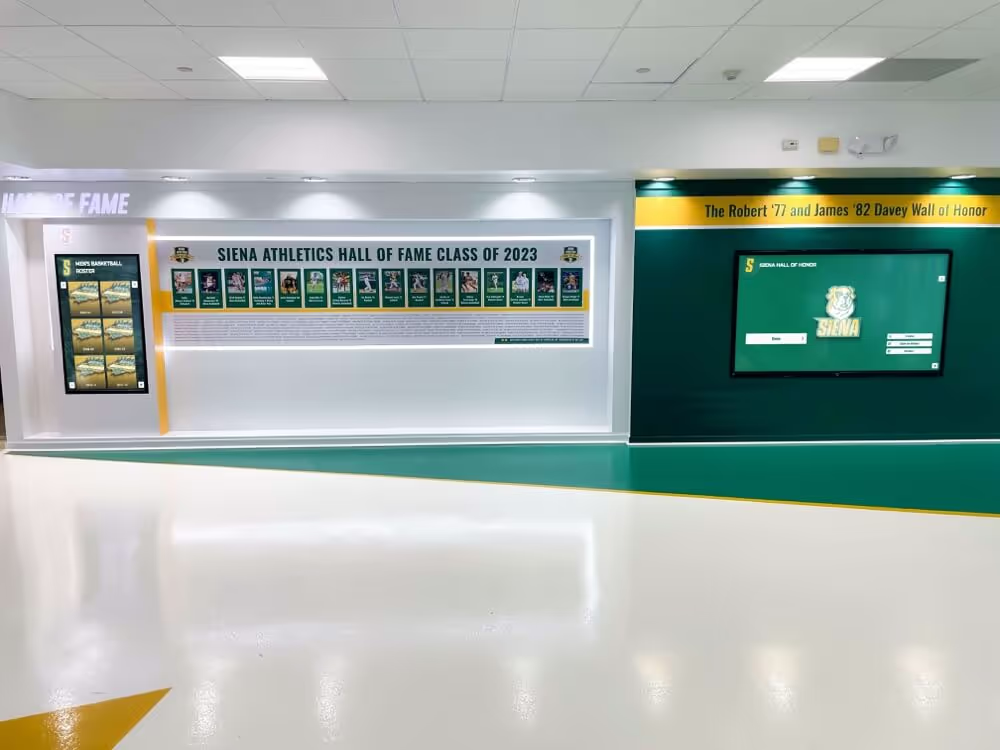
A maintained hall of fame wall serves as both a recognition destination and a connection point for alumni who want to see their era represented
Converting Season-End Awards Into Lasting Hall of Fame Content
Season-end awards are perishable. The trophy goes home. The certificate gets filed. The memory fades. Turning awards into lasting content requires an intentional conversion process.
The Profile-First Approach
Rather than treating a physical award as the end product, treat the award as the occasion for creating a permanent digital profile. When an athlete receives an end-of-season honor, use the ceremony as the moment to collect:
- A current headshot or action photo
- Career statistics and season highlights
- Coach note or brief bio
- Award category and year
This content becomes the foundation of a hall of fame or wall of honor profile that remains visible long after the ceremony. The physical award travels home with the athlete; the profile stays in the building.
Criteria: Hall of Fame vs. Annual Award Wall
Not every annual award should result in a hall of fame induction. Most programs benefit from maintaining a clear distinction:
- Annual awards recognize season-level achievement (MVP, Coaches Award, All-Conference)
- Hall of fame inductions recognize career-level achievement, typically requiring multi-year excellence, school records, or extraordinary program service
Keeping this distinction clear preserves the prestige of the hall of fame while still providing a meaningful recognition home for season-award recipients through alternative displays such as annual award walls, letter winner boards, or digital record listings.
For programs that want to honor distinguished alumni without a full hall of fame induction, tiered alum recognition approaches in specific sports offer a model that maintains meaning at every level.
Record-Breaking Athletes Deserve Immediate Display Updates
When an athlete breaks a school record, the display update should not wait until the end-of-season banquet. Best practice is to update record boards within 30 days of the performance. This serves two purposes: it validates the achievement for the record-holder while they are still in the building, and it demonstrates to other athletes that records are tracked and celebrated in real time rather than acknowledged months later.
Athletic Record Boards: The Always-On Recognition Layer
Record boards are the most consistently visible recognition tool in a school’s athletic program. Unlike a hall of fame that recognizes a small number of inductees, record boards recognize the best performance ever achieved at every event in every sport—creating recognition opportunities for a much broader group of athletes.
What Belongs on a Record Board
A comprehensive athletic record board program typically covers:
- All-time school records by event or statistical category
- Single-season records (school record vs. season record distinction)
- Career records (total points, career goals, career wins)
- Conference or regional records when applicable
For team sports, record boards often include season win totals, championship years, and undefeated season notations.
Physical vs. Digital Record Boards
Traditional painted or engraved record boards are durable and visible but difficult to update. Schools with many record-breaking athletes find that physical boards become outdated quickly and that the cost of re-engraving discourages timely updates.
Digital record boards—whether standalone screens or integrated into a hall of fame touchscreen system—solve the update problem while maintaining high visibility. Platforms that offer auto-ranking features update records automatically when new data is entered, eliminating the manual comparison step that often delays updates on physical boards.
For programs considering a renovation that incorporates both physical identity elements and digital recognition systems, digital recognition walls designed for new construction and renovation projects outline how facilities teams can integrate recognition infrastructure from the start rather than retrofitting later.
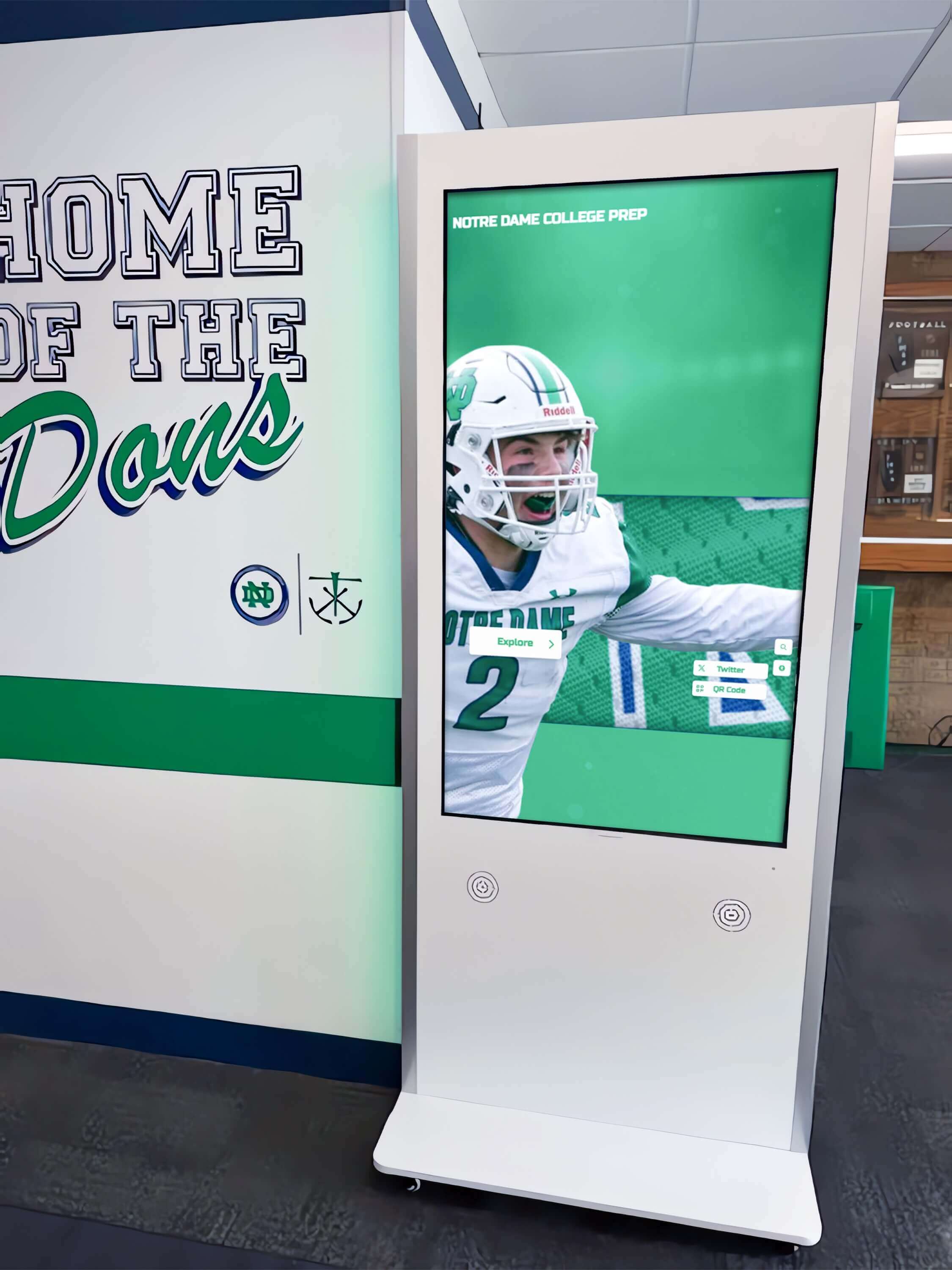
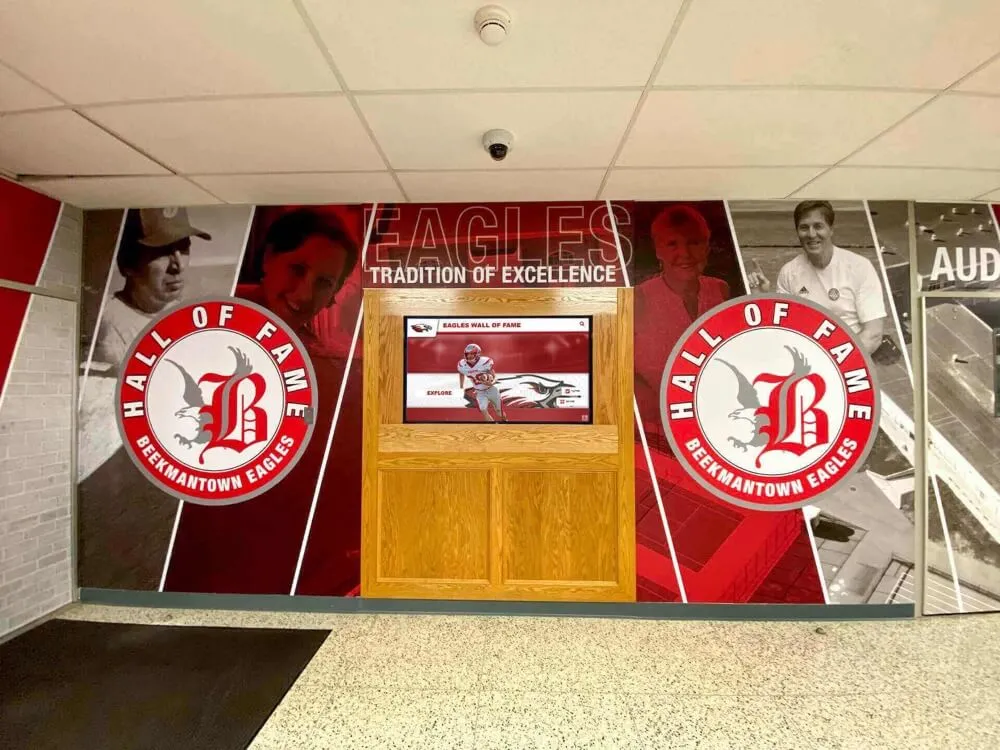
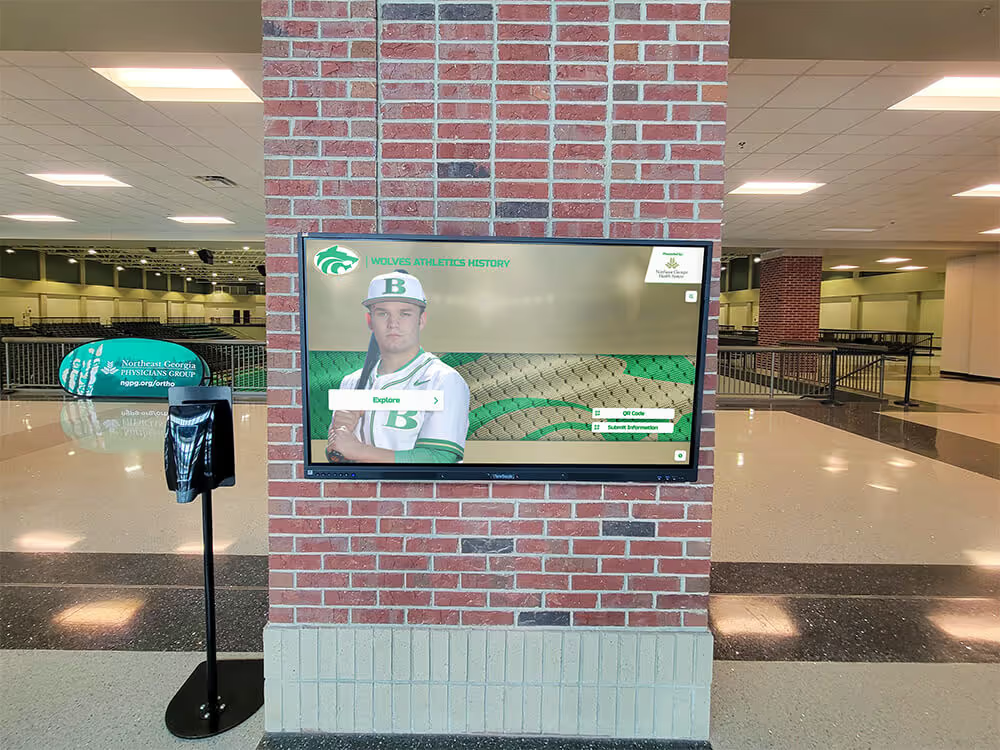
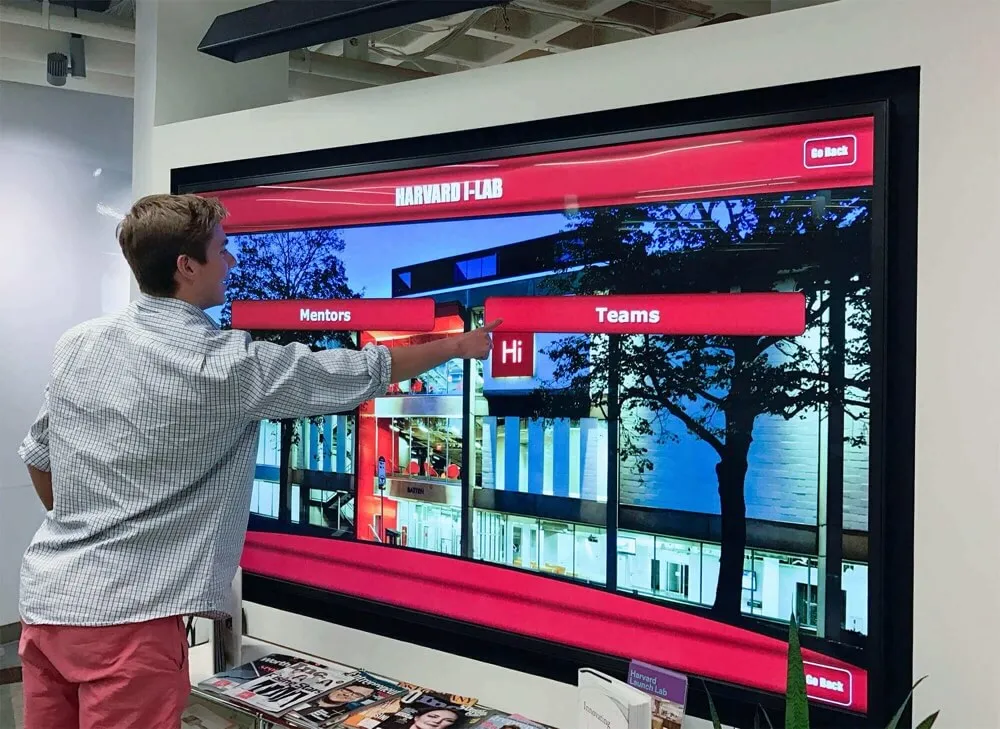
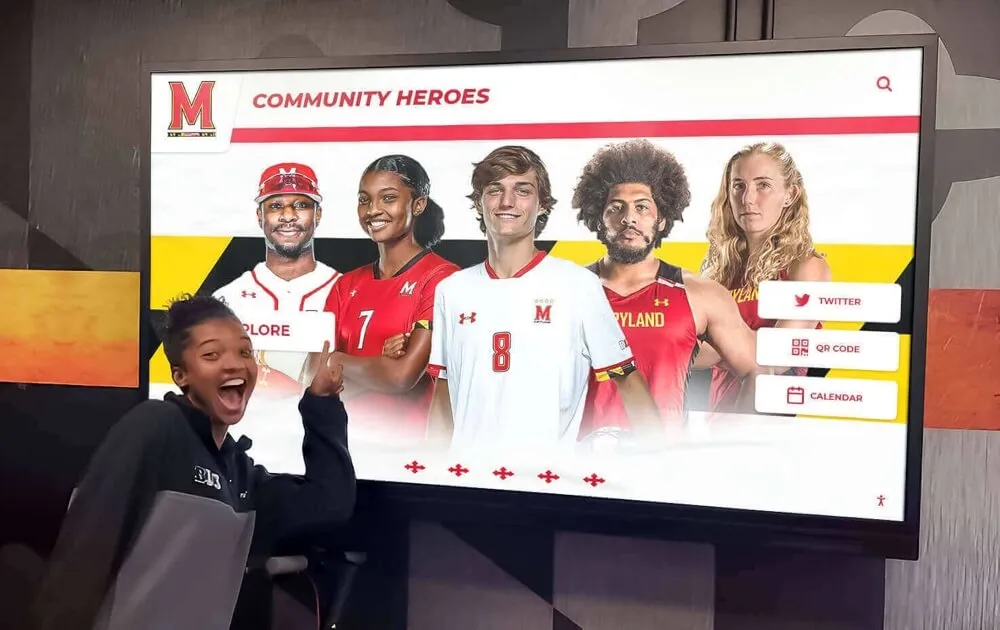
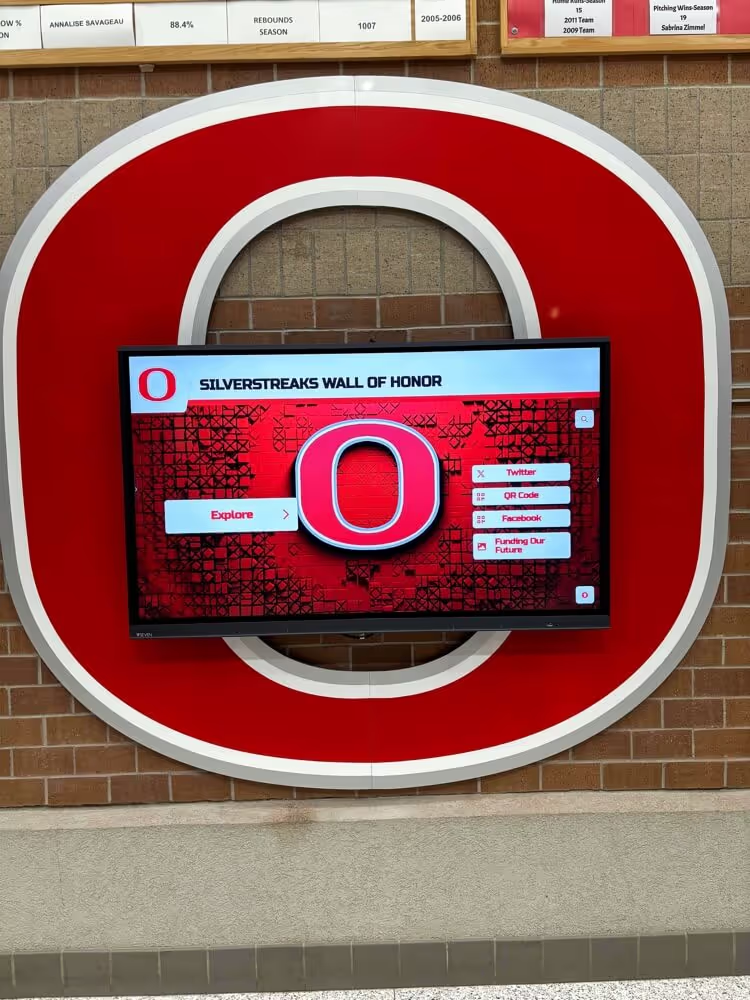
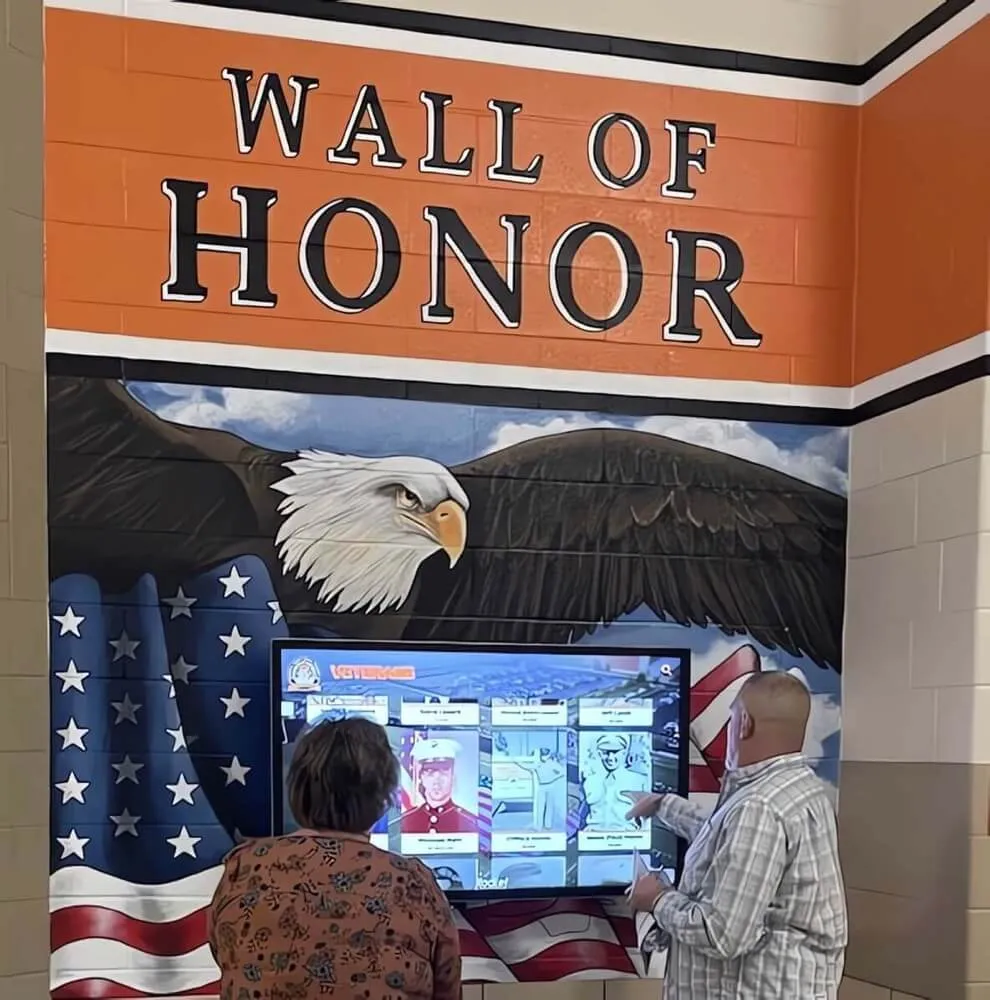
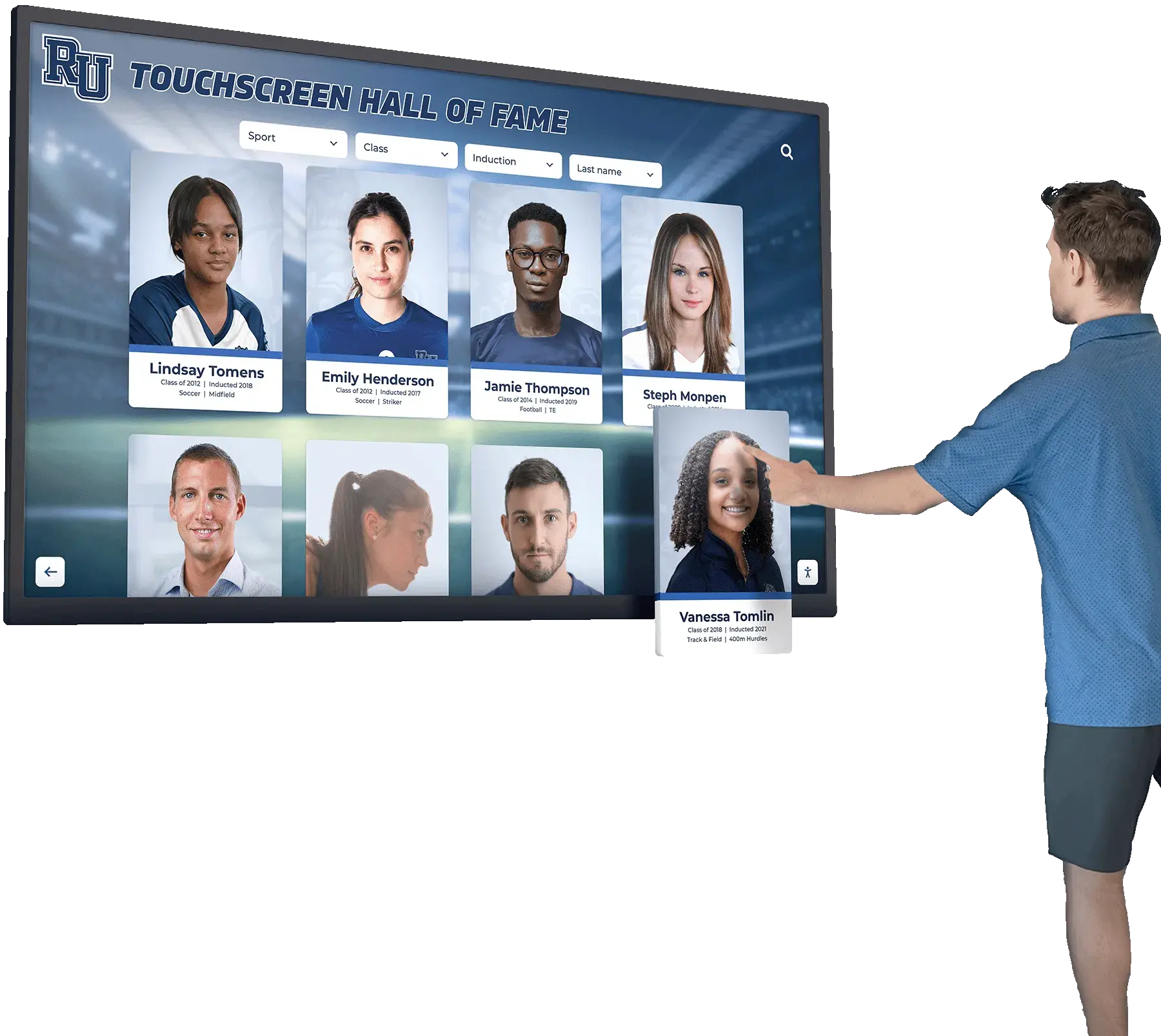
Interactive touchscreen kiosks give athletes, families, and visitors access to the full depth of an athletic recognition program—far beyond what fits on a single wall
Digital Display Workflows That Reduce Administrative Burden
The administrative load of maintaining a recognition program is the most common reason programs stagnate. Photos go unuploaded. Records stay unupdated. Inductee profiles remain in draft state for months. The solution is not more effort—it is a simpler workflow.
The Three-Step Content Update Cycle
A sustainable digital recognition workflow follows three repeatable steps:
- Collect — designate a staff member or student assistant to capture key content at each recognition event (photo, award category, recipient name, brief bio note)
- Enter — add content to the CMS within seven days of the event using a standardized template so profiles remain consistent
- Publish — review and publish profiles, update record boards, and confirm the display reflects current season data
When using a platform with a clean content management interface, the entire cycle should take no more than 60–90 minutes per event. Programs spending significantly more time than this are typically using tools that were not designed for recognition content management.
Delegating Without Losing Consistency
Many athletic programs successfully delegate content entry to:
- Sports information directors or communications staff
- Booster club volunteers with appropriate system access
- Student athletic council members
- Team managers or statisticians
The key is maintaining consistent standards by providing a clear template (name, sport, award, year, optional photo and bio note) and reviewing published profiles before they go live.
For programs integrating recognition displays with an active sports communications workflow, sports season recap documentation strategies provide a model for turning end-of-season records into display-ready archive content.
Cloud-Based CMS vs. On-Site Managed Systems
Athletic recognition platforms generally fall into two categories:
| Feature | Cloud-Based CMS | On-Site Managed |
|---|---|---|
| Update location | Anywhere with internet access | Must be on-site or VPN |
| Update speed | Immediate | Depends on access and IT |
| Redundancy | Cloud backups | Depends on local backup practice |
| Scalability | Easily adds content | Physical storage limits apply |
| Annual cost | Subscription-based | Hardware replacement over time |
For most K-12 athletic programs, cloud-based platforms are preferable because they allow coaches, communications staff, and administrators to update content from wherever they are—including from a press box the moment a record breaks.
See a Recognition System Built for Year-Round Visibility
Rocket Alumni Solutions builds interactive touchscreen halls of fame, cloud-managed record boards, and award display systems that keep recognition current every day of the school year. Request a custom demo for your school.
Request a Demo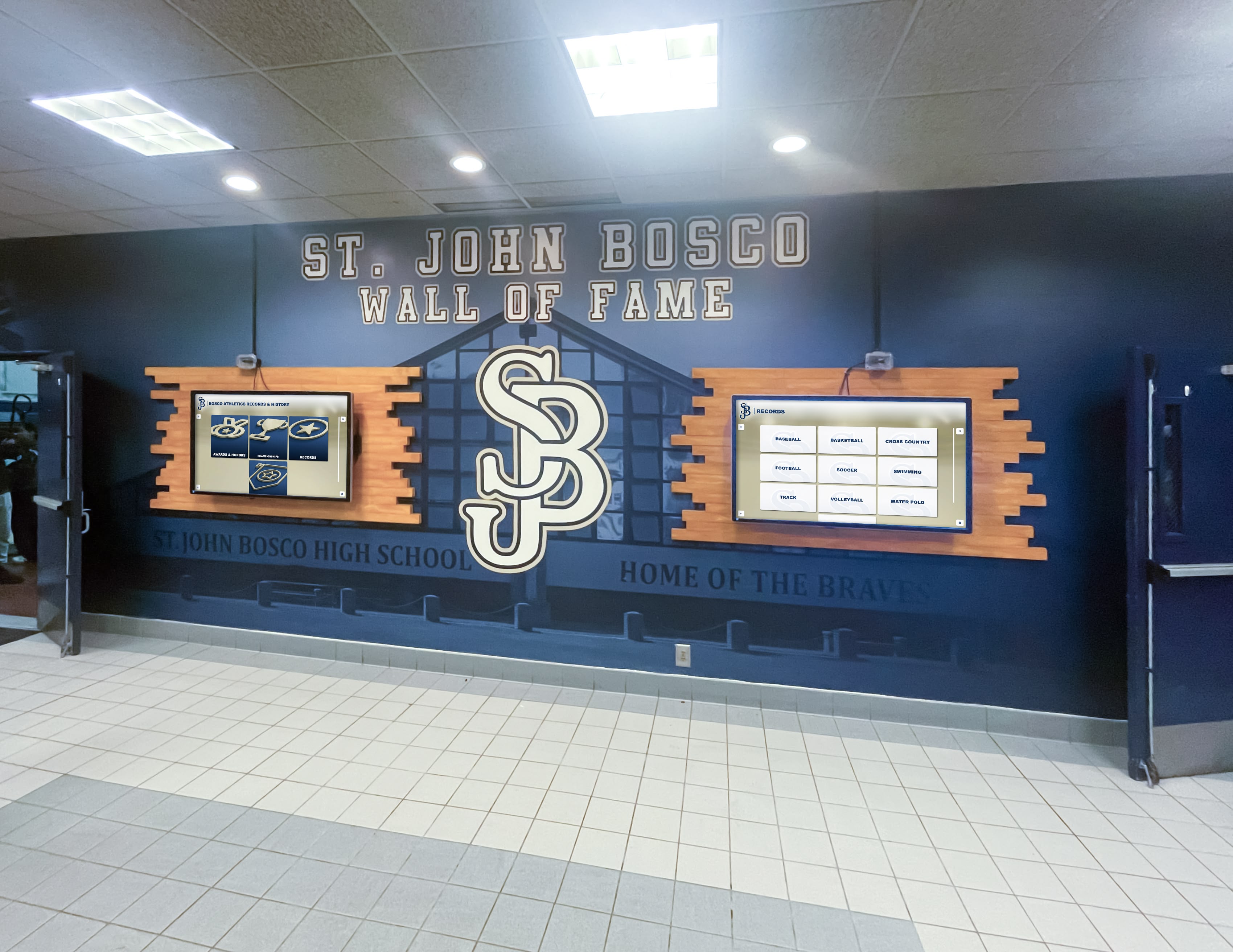
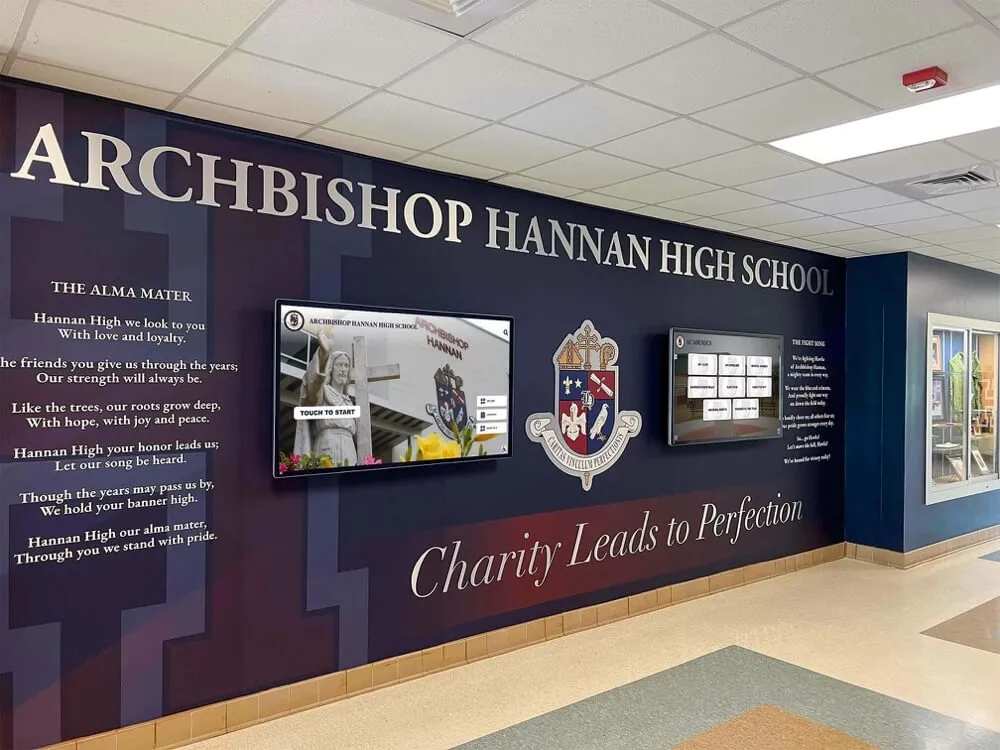
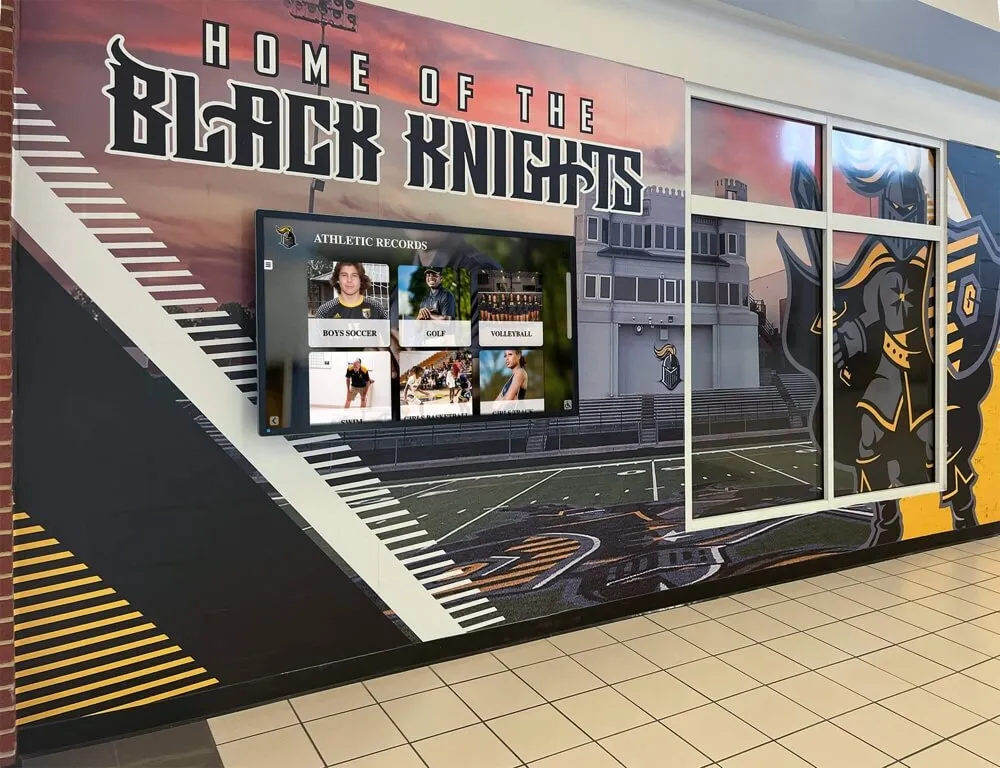
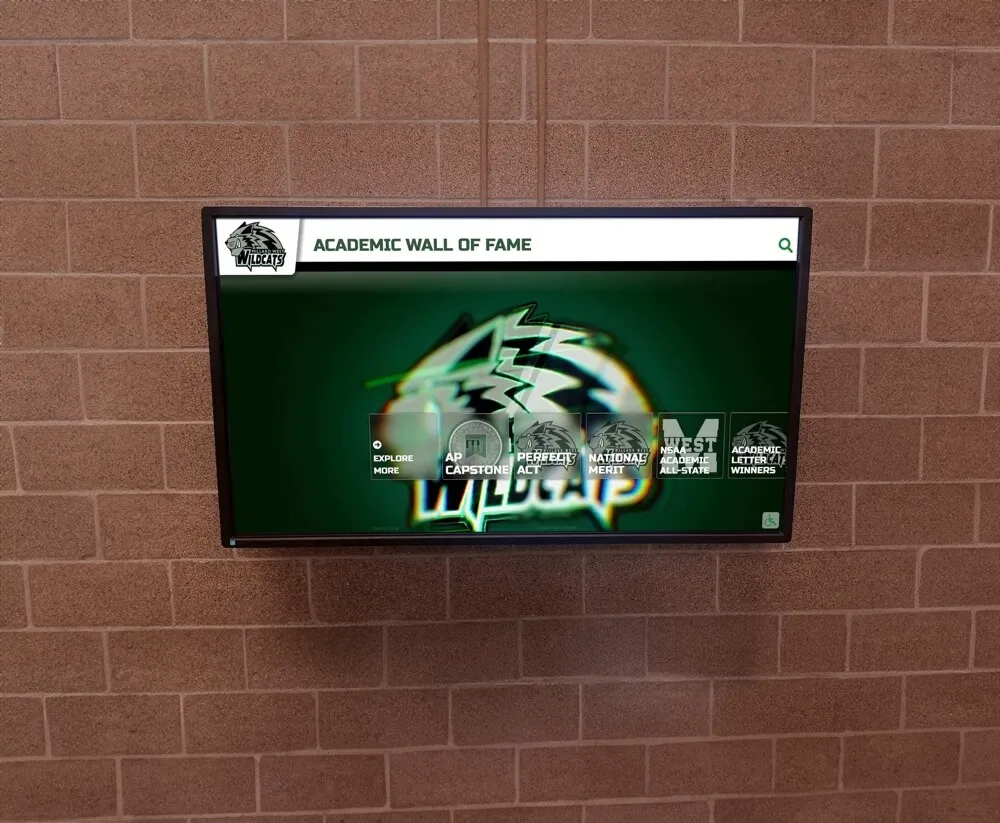
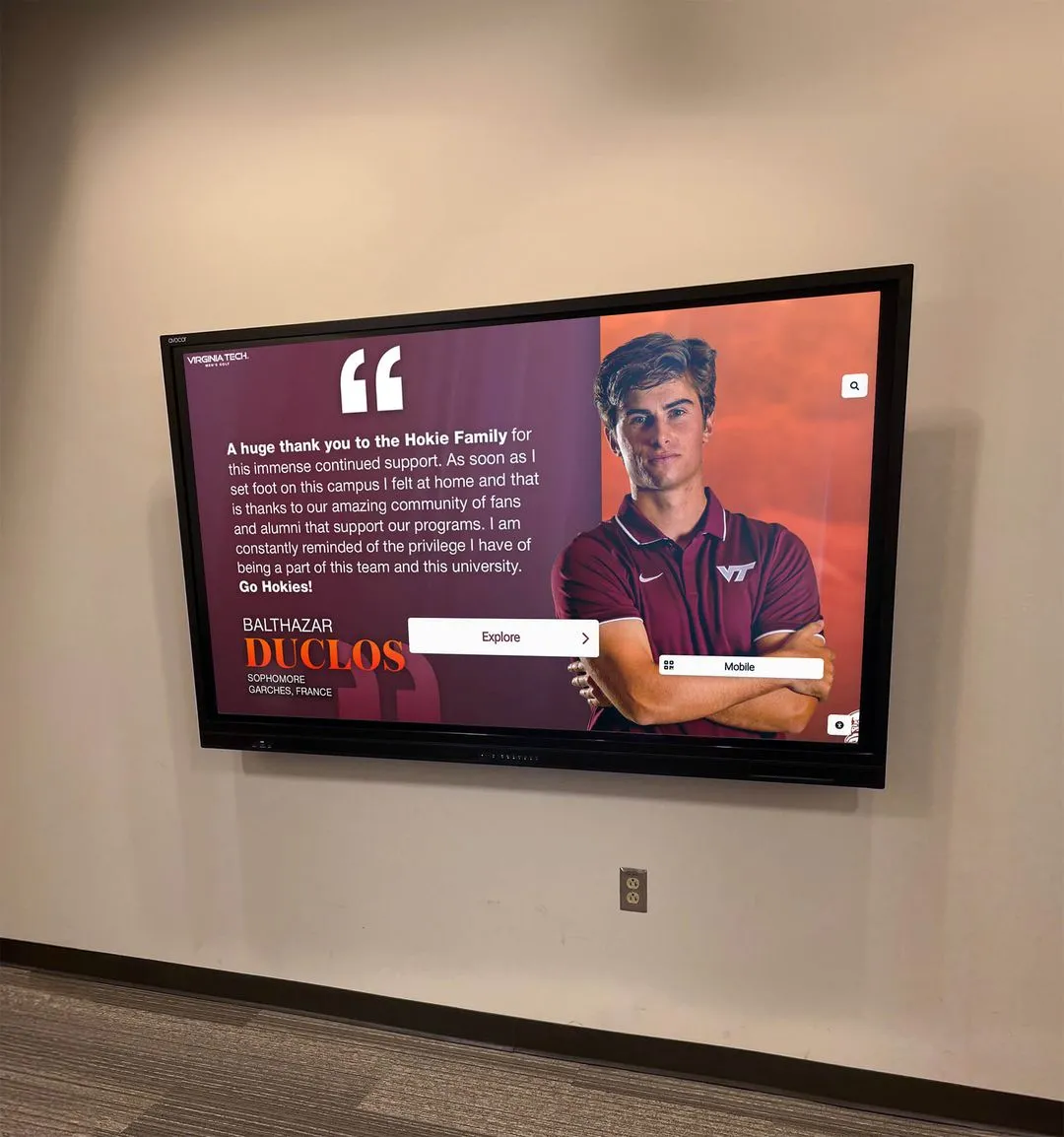
Dual-screen recognition walls allow schools to display both rotating content and permanent hall of fame profiles simultaneously in high-traffic corridors
Sponsor Recognition in Athletic Programs
Sponsorship is an underutilized component of most K-12 athletic recognition programs. For programs facing budget pressure, integrating sponsor recognition into digital display systems creates a revenue pathway that can help fund the recognition program itself.
Where Sponsor Recognition Fits Naturally
Sponsor recognition integrates naturally into:
- Digital display loading screens and screensavers
- Record board sponsorship (a named sponsor for the record board itself)
- Award category naming rights (the “[Sponsor Name] Coaches Award”)
- Athletic banquet program sponsorship sections
Schools using digital recognition platforms with built-in sponsorship modules can rotate sponsor content alongside recognition content on the same screen, eliminating the need for separate signage budgets.
Archiving Sponsor History
Long-term sponsors who have supported a program for decades are part of the program’s history. Preserving that history—in a digital archive that notes sponsorship years alongside awards and records from the same period—creates a compelling retention argument when renewing partner relationships.
Balancing Sponsor Visibility With Athlete Focus
Recognition displays should center athletes. Sponsor acknowledgment should be visible without dominating. Best practice is a 70/30 content split: recognition content comprising at least 70% of visible display area, with sponsor recognition occupying the remainder in a clearly branded but subordinate position.
Championship Banners and Display Identity
Championship banners are the most durable and highest-visibility element of an athletic facility’s recognition environment. Unlike plaques or record boards, banners are visible from across a gymnasium floor—they communicate achievement status to everyone who enters the space, including opposing teams and prospective student-athletes.
Banner Standards Worth Maintaining
For athletic recognition programs, banner consistency signals institutional seriousness. Best practices include:
- Uniform sizing and materials across all championship years within a sport
- Year and event clarity — visitors should immediately understand what the banner represents
- Accurate dating — retroactively correct any banner with wrong years or misspellings before adding new ones
For programs designing new championship banners or updating an existing set, championship banner design and material considerations cover visual identity principles that keep a banner set cohesive across decades of additions.
Connecting Recognition to Broader School Culture
An athletic recognition program does more than honor individual athletes. It communicates institutional values—what the school considers worth preserving and displaying—to every student who walks the hallways, every family who attends a game, and every alumnus who returns for homecoming.
Schools that invest in this infrastructure create self-reinforcing cultures: when athletes see that their predecessors’ achievements are permanently honored, they understand that their own efforts will be remembered. That understanding changes how athletes train, compete, and carry themselves.
For administrators thinking about recognition as part of a broader student life narrative—including academic honors, yearbook traditions, and milestone celebrations—recognition messaging and documentation approaches for milestone events offer a useful parallel framework for how institutions document and preserve student achievement across domains.
Programs preparing students for post-athletic recognition moments will find that the habits cultivated in an athletic recognition program—acknowledging effort, naming specific contributions, connecting individual achievement to program legacy—translate directly into the formal ceremonies that mark academic milestones. Crafting specific, sincere recognition language for high-stakes school events reflects the same core principle: the quality of any recognition moment depends on specificity and sincerity.
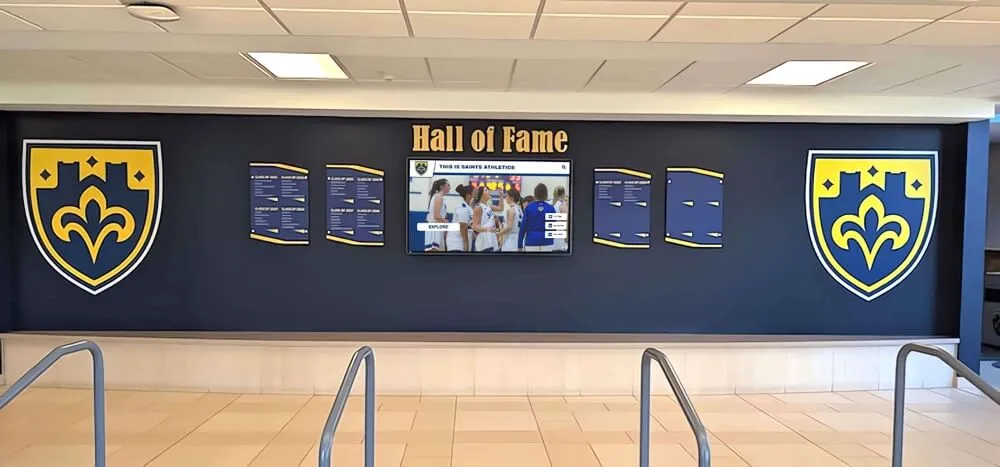
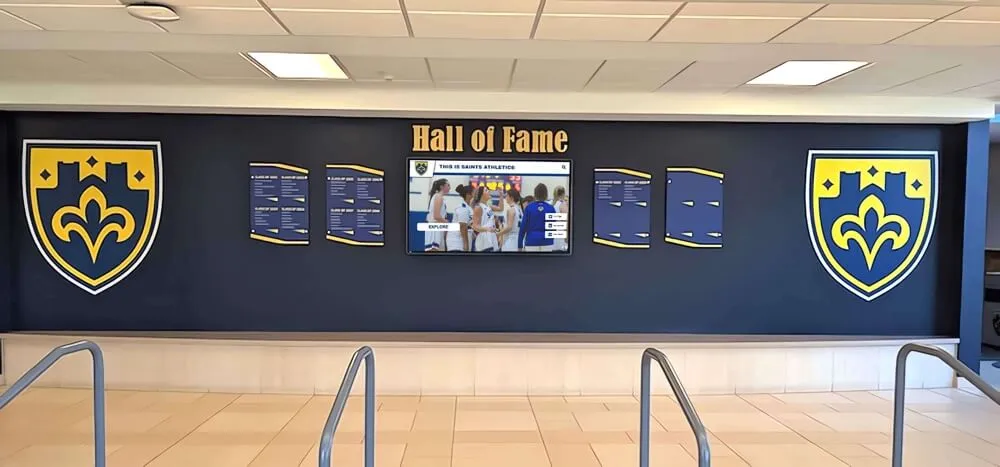
Consistent shield-style inductee plaques create a visual identity for the hall of fame that integrates with school branding and reads clearly to visitors across all eras
Frequently Asked Questions
What is an athletic recognition program?
An athletic recognition program is the complete system a school uses to identify, celebrate, and permanently preserve athletic achievement. It includes annual awards ceremonies, hall of fame inductions, record boards, photo archives, sponsor recognition, and the display infrastructure that keeps achievement visible year-round. Effective programs connect all of these elements into a consistent cycle rather than treating each as a standalone event.
How often should athletic recognition displays be updated?
Most athletic programs benefit from a quarterly update schedule, with mandatory updates after each sports season and within 30 days of any school record being broken. Cloud-based digital platforms allow updates as frequently as needed without requiring on-site hardware access. Physical displays typically require semi-annual review to add new content and retire outdated materials.
What is the difference between a hall of fame and an annual award wall?
A hall of fame recognizes career-level achievement through a formal induction process with defined criteria and is intended for permanent, prestigious recognition. An annual award wall recognizes season-level achievement—MVPs, conference honors, coaches awards—and is updated each season. Most schools maintain both: a hall of fame for long-term prestige and a rotating award wall that honors current-year recipients across all sports programs.
How can schools fund an athletic recognition program?
Athletic recognition programs can be funded through athletic department budgets, booster club contributions, naming rights and award sponsorships, and facility renovation grants. Programs that incorporate digital displays with sponsorship modules often find that sponsor revenue helps offset platform costs. Recognizing sponsors within the display itself—rather than treating sponsorship purely as a cash contribution—also improves sponsor retention rates.
What content should every athlete profile in a recognition display include?
A complete athlete profile should include the athlete’s name, sport, graduation year or active season(s), key awards and honors received, and a photo. Optional fields that increase engagement include career statistics, a brief bio note from a coach, and links to highlight footage or archival materials. For alumni recognition, a post-graduation note adds depth without requiring significant ongoing maintenance.
Conclusion
An athletic recognition program built for year-round visibility transforms individual ceremonies into a living institutional record. Awards earn their full meaning not from the trophy itself but from the permanence of the recognition—the profile on the touchscreen, the name on the record board, the banner visible from center court long after the season ends. Schools that invest in connecting award ceremonies to lasting displays build something more durable than any individual season’s results: a culture that expects excellence and consistently remembers it.
The framework above—mapped recognition touchpoints, standardized award categories, documented display lifecycles, quarterly reviews, and a sustainable content workflow—gives athletic directors and administrators the structure to build that culture deliberately rather than hoping it emerges on its own.
Build a Recognition Program That Lasts All Year
Rocket Alumni Solutions builds interactive touchscreen halls of fame, cloud-managed record boards, and digital award display systems that keep your athletes celebrated every day—not just on banquet night. Request a demo to see a custom mock-up designed for your school.
Request a Demo