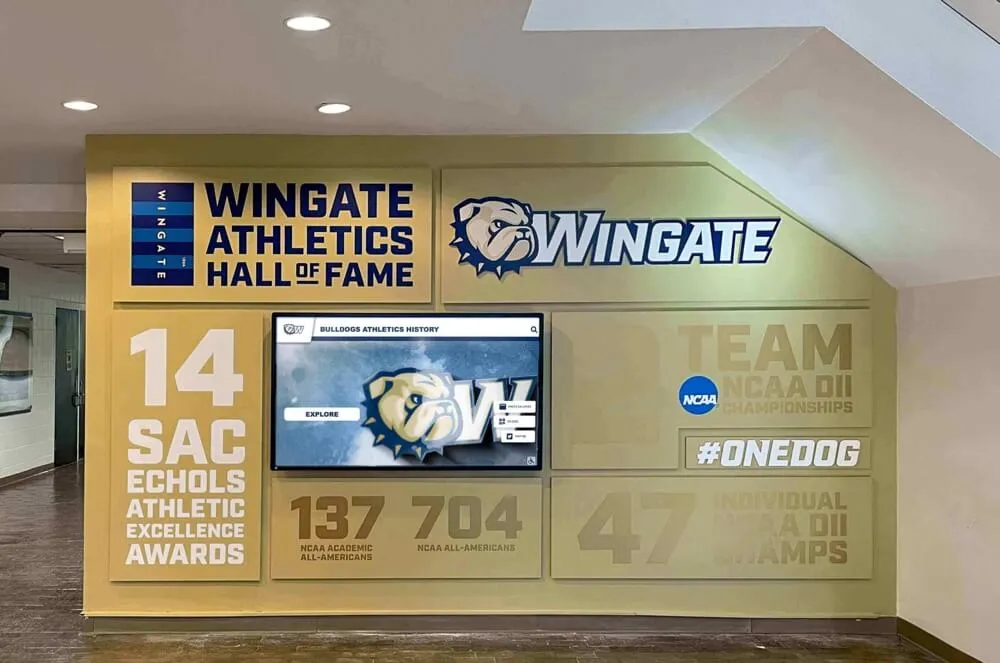




The banquet ends, the folding tables go away, and the trophies get carried home in cardboard boxes. What remains in the gymnasium hallway the next morning is largely the same as it was before the ceremony: a glass case holding a state runner-up plaque from twelve years ago and a whiteboard listing current varsity roster numbers. For athletic directors serious about building a basketball program culture that recruits, motivates, and retains players, this gap between the banquet moment and lasting program presence is the real problem to solve. Choosing the right basketball award ideas is only half the answer—the other half is creating recognition that lives on the wall year-round.
This guide walks through award categories that go beyond the standard MVP trophy, explains how to write criteria that players take seriously, and shows how recurring annual awards become the raw material for digital trophy cases, record boards, and touchscreen halls of fame that keep program history visible long after each graduating class moves on.
The best basketball recognition programs share a structural insight: awards given at a banquet and awards designed for permanent display are two different design problems. A crystal trophy on a dining room shelf serves one athlete’s memory. The same achievement category, displayed on a digital record board in the school lobby, serves every athlete who passes by for the next decade—including the sophomore who now knows exactly what they are working toward.

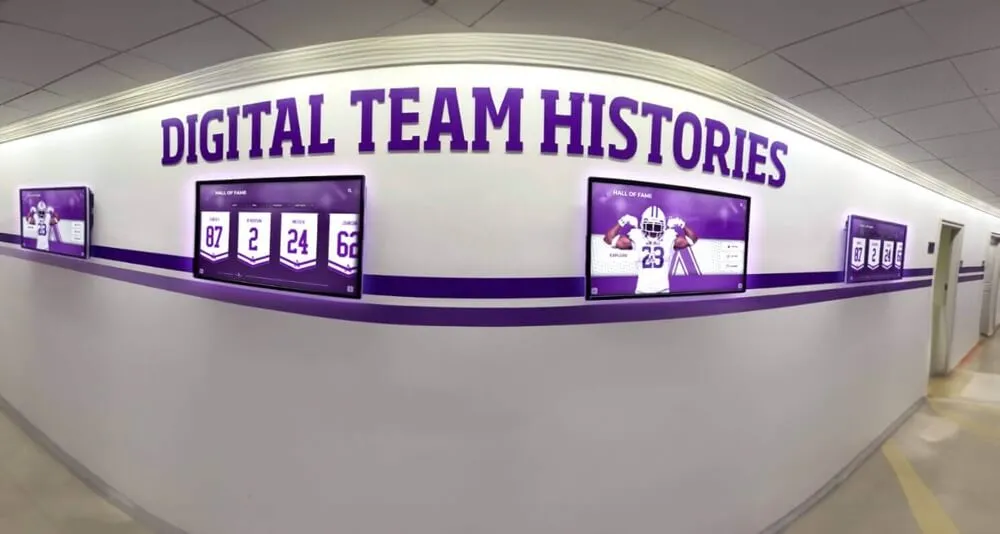
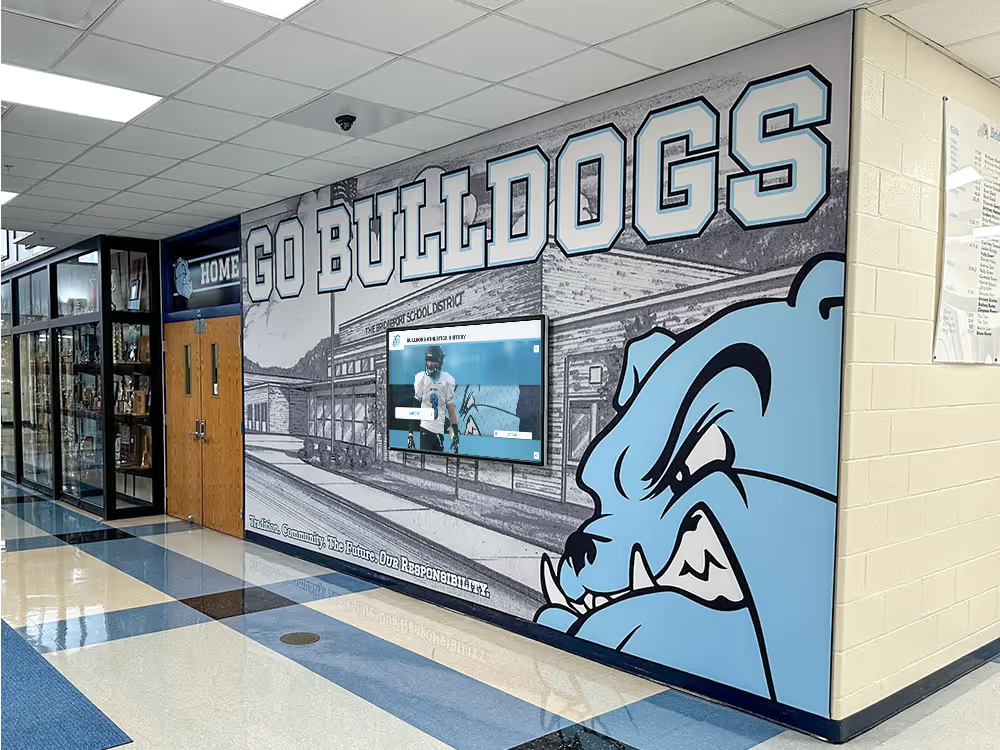
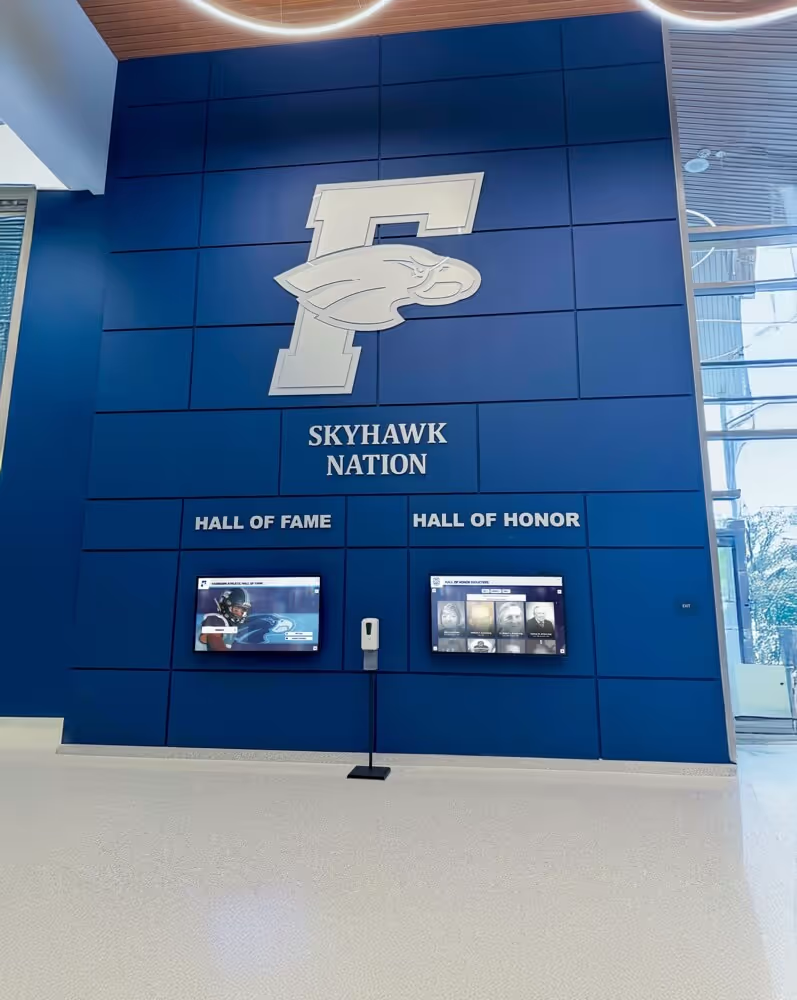
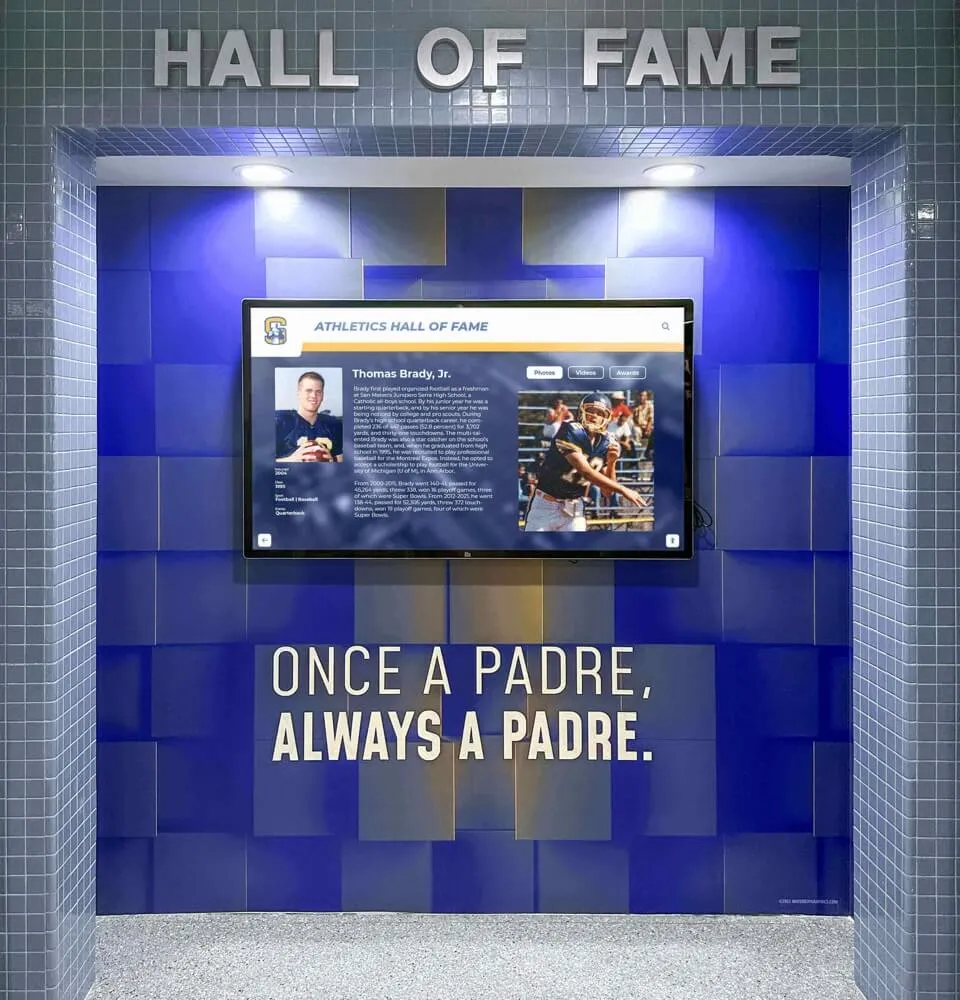
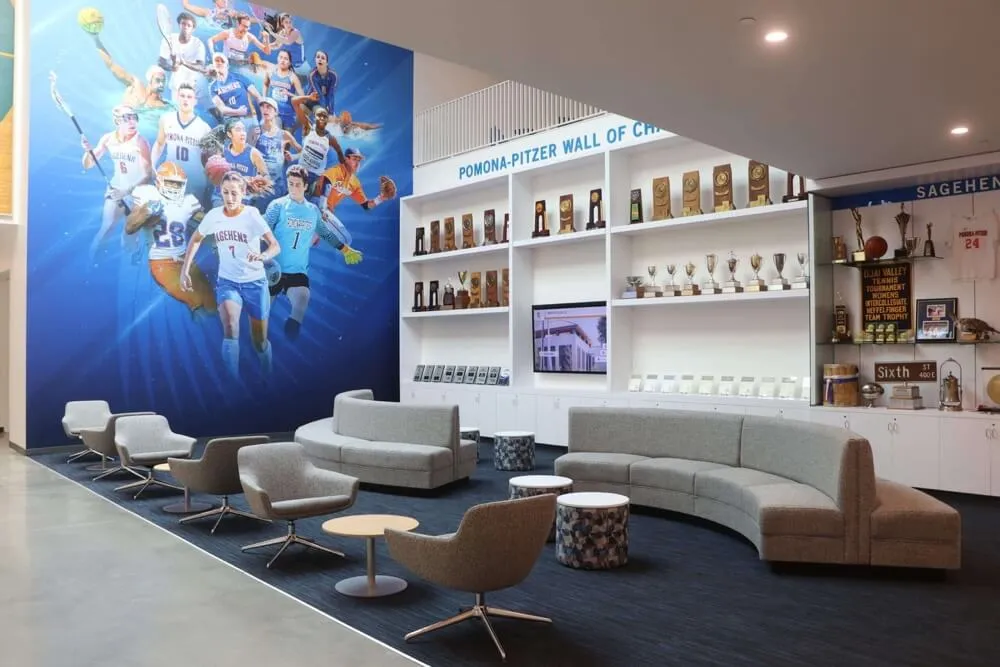
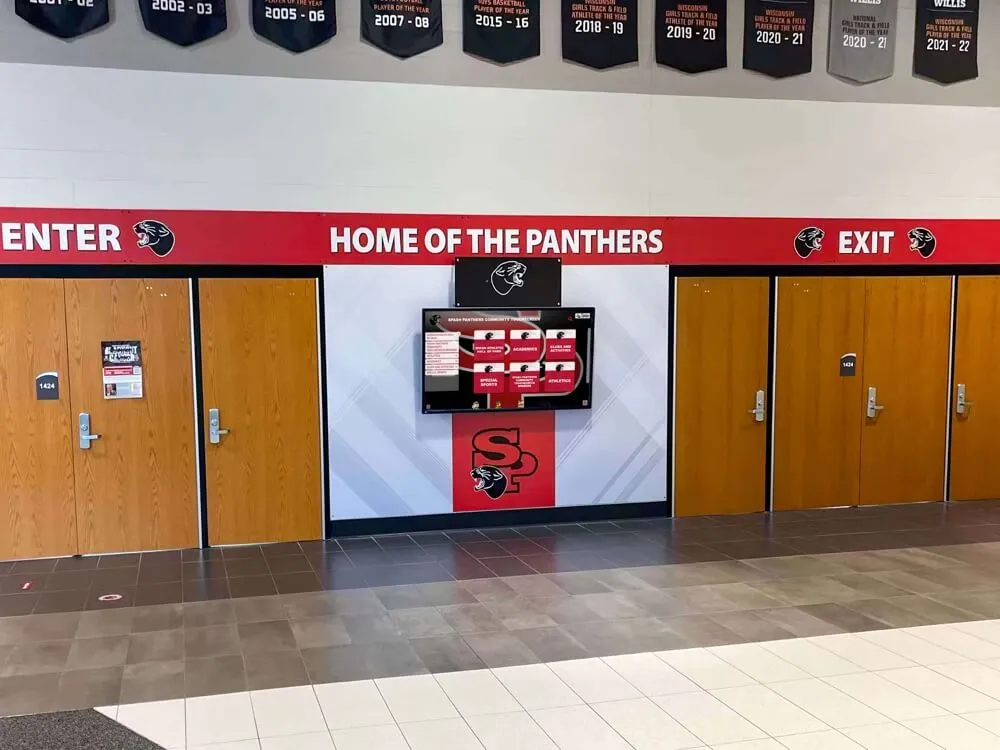
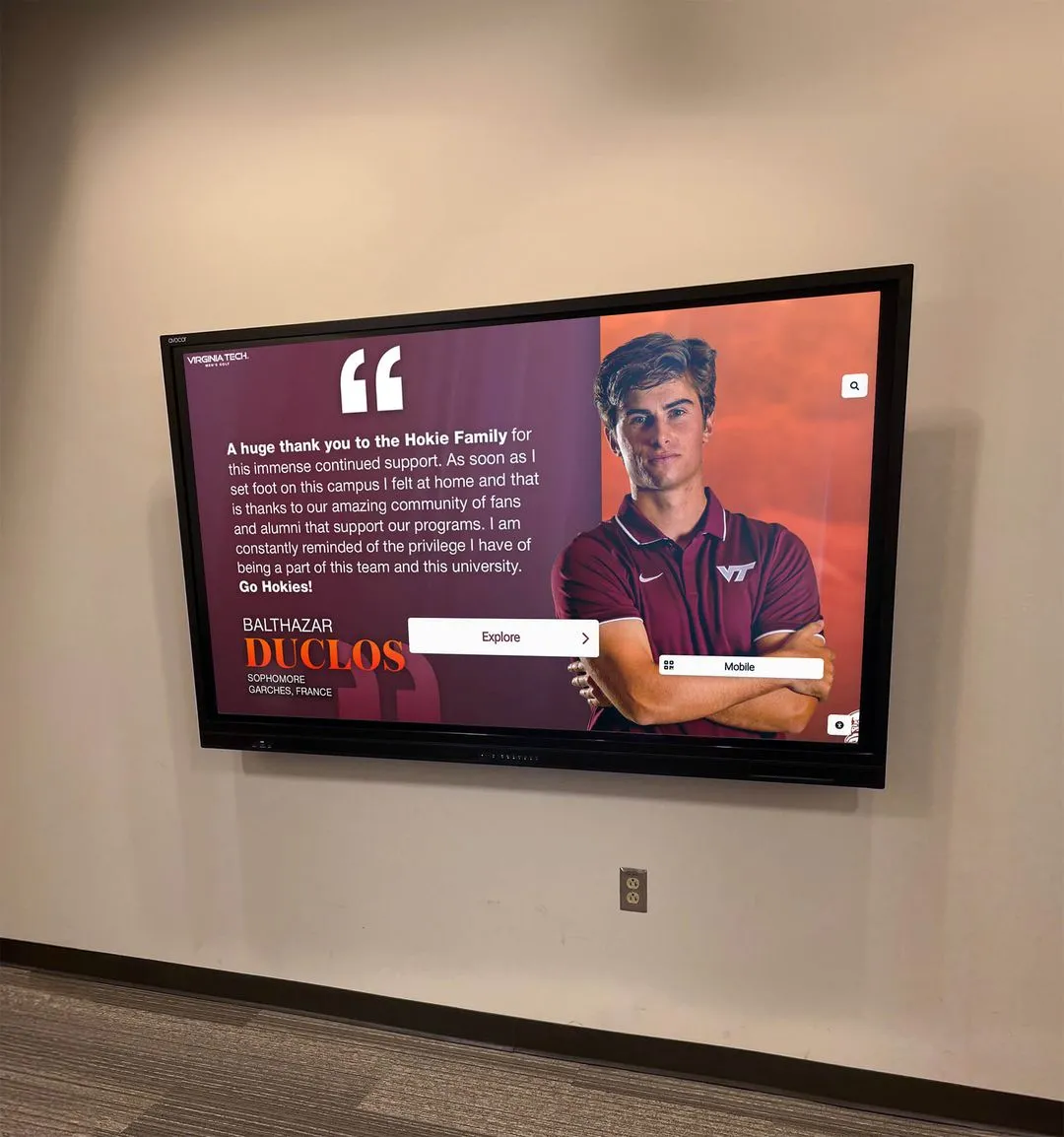
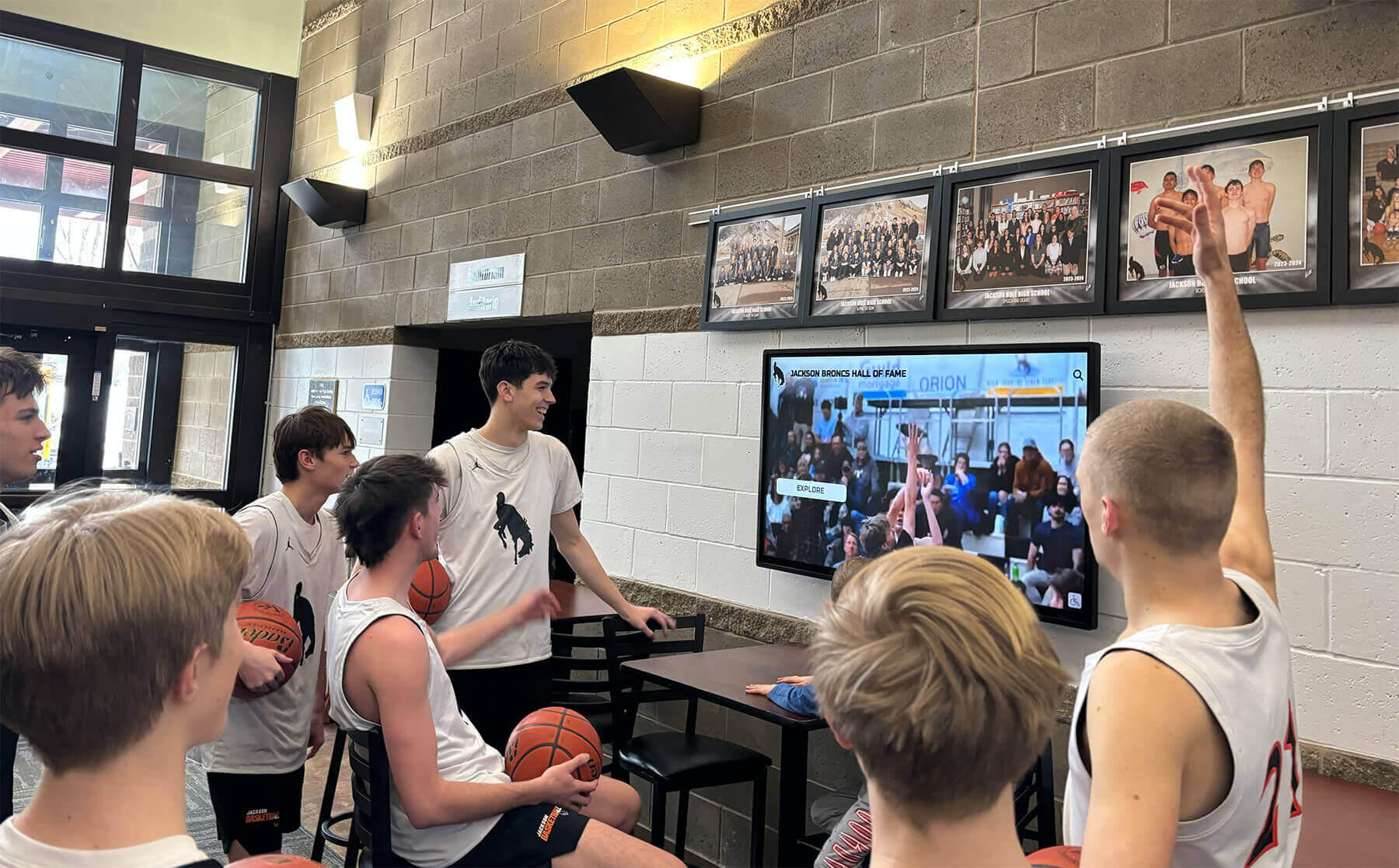
Lobby displays showing game highlights and award histories make recognition visible to every student who walks through the building
Why Award Category Design Matters More Than the Trophy
Coaches often spend more energy selecting the physical award—plaque versus trophy, engraved versus printed—than they spend writing the criteria. This is backwards. A poorly defined award category creates three problems.
First, players cannot aim at something vague. “Best Teammate” sounds meaningful until a player asks what it actually takes to win it—and finds no clear answer. Second, inconsistently applied awards lose credibility over multiple seasons. If the criteria shift each year based on who the coaches happen to appreciate, players notice. Third, loosely defined awards are difficult to display. A record board showing “Most Improved, 2019: Marcus T.” means nothing to a visitor who cannot look up what “most improved” required.
Well-designed award categories solve all three problems simultaneously. They give players a concrete target, hold coaches accountable to consistent standards, and produce display content that is meaningful without explanation.
Core Basketball Award Categories With Display-Ready Criteria
The following categories are organized by what they measure, with suggested criteria language schools can adapt. Each is also noted for how well it translates to a record board or digital trophy case.
Statistical Leaders: The Foundation of Any Record Board
Statistical awards are the natural starting point for display because the records speak for themselves. Any visitor can understand “Season Points Leader: 487” without additional context.
Points Leader
- Criterion: Highest total points scored during the regular season and postseason combined
- Display note: Show career totals alongside single-season records to create a layered leaderboard that compounds over program history
Assists Leader
- Criterion: Most recorded assists over the season, minimum 50% of games played (prevents a player who dominates a few games from winning over a consistent contributor)
- Display note: Assists records are often more durable than scoring records because fewer programs track them systematically, making early records easier to establish and later records more meaningful to break
Defensive Rebounds Per Game
- Criterion: Highest defensive rebound rate among players who logged at least 15 minutes per game in 70% of contests
- Display note: Rebounding records tell a program story about physicality and toughness, distinct from the scoring narrative most schools already celebrate
Steals and Blocks Leaders
- Criterion: Season totals in each category, displayed separately
- Display note: These records reward defensive specialists who might otherwise get lost behind scoring statistics—an important recognition equity consideration
For schools building out a winter sports recognition structure that includes basketball alongside wrestling and swimming, the winter sports hall of fame recognition guide at touchwall.us covers how to organize multi-sport historical records in a single display system.
Effort and Character Awards: The Hardest to Define, the Most Valued
Statistical awards are easy. The harder and more culturally important work is designing effort and character awards that players genuinely respect.
Defensive Player of the Year
This is the single most important non-scoring award a basketball program can give. It signals that the coaching staff values the end of the floor that wins championships. The criteria need to be specific enough to survive scrutiny.
Suggested criteria:
- Opponents held to below their season scoring average in at least 60% of contested matchups
- Team-leading deflections, charges taken, or defensive possessions per game
- Coaching staff vote weighted at 60%, statistical metrics at 40%
Display note: Name the award specifically (e.g., “Darnell Brooks Defensive Player of the Year” after a former standout defender) so that the award itself becomes part of program history.
The 6th Man Award
Bench players who change games are among the hardest contributors to recognize. An explicitly named 6th Man Award validates the role.
Suggested criteria:
- Player who did not start more than 30% of games played
- Highest points-per-minute ratio among non-starters, minimum 8 minutes per game average
- Coaching staff evaluation of impact on game momentum in substitution situations
The Charge-Taker Award
For programs that emphasize taking charges as a defensive identity, tracking charges taken across the season and awarding the leader creates a measurable target around a behavior that directly wins games.
Display note: A cumulative charge-taker record board (most charges taken in a single season, program history) is unusual enough to draw attention and specific enough to tell a visitor exactly what this program values.
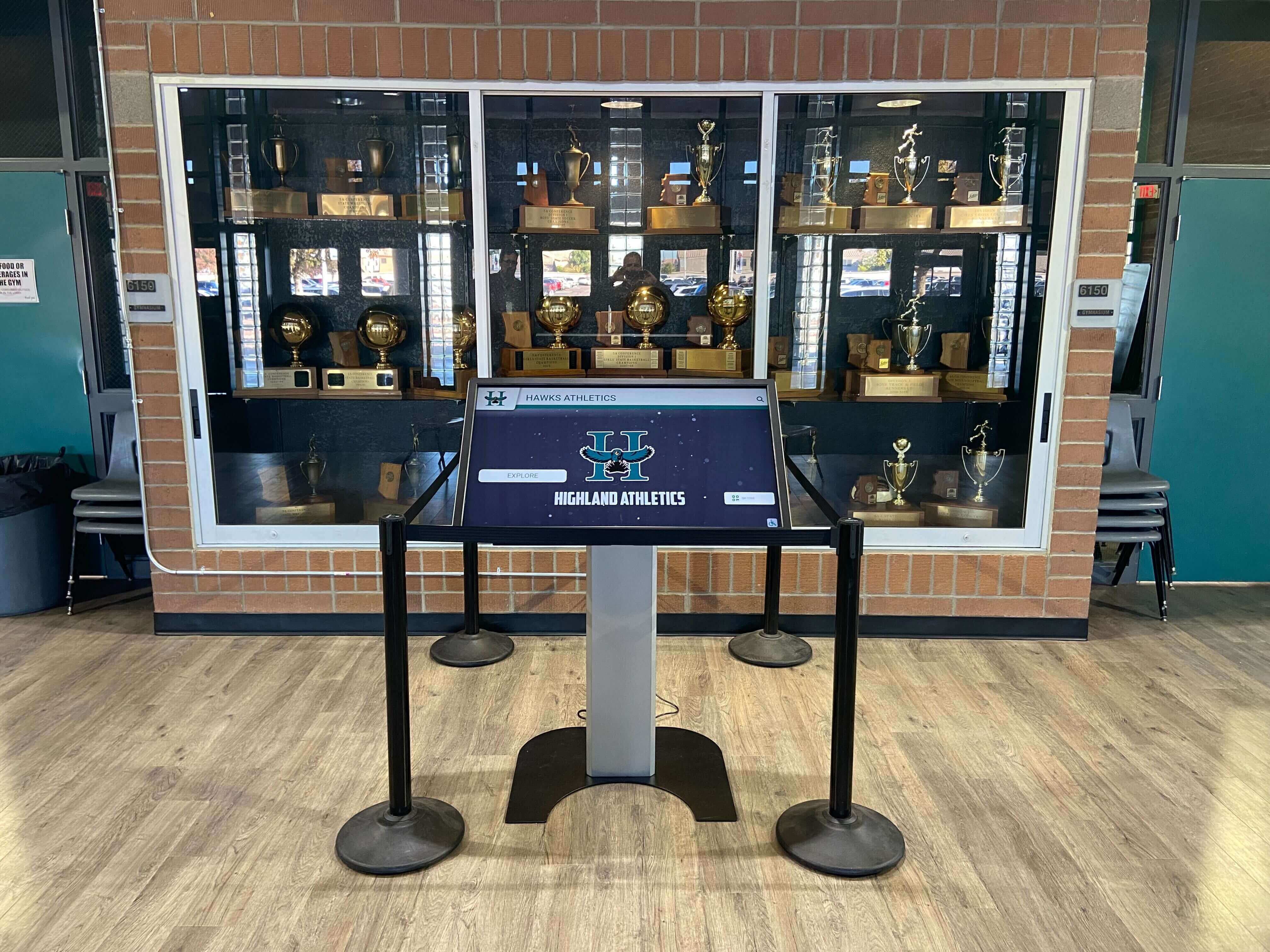
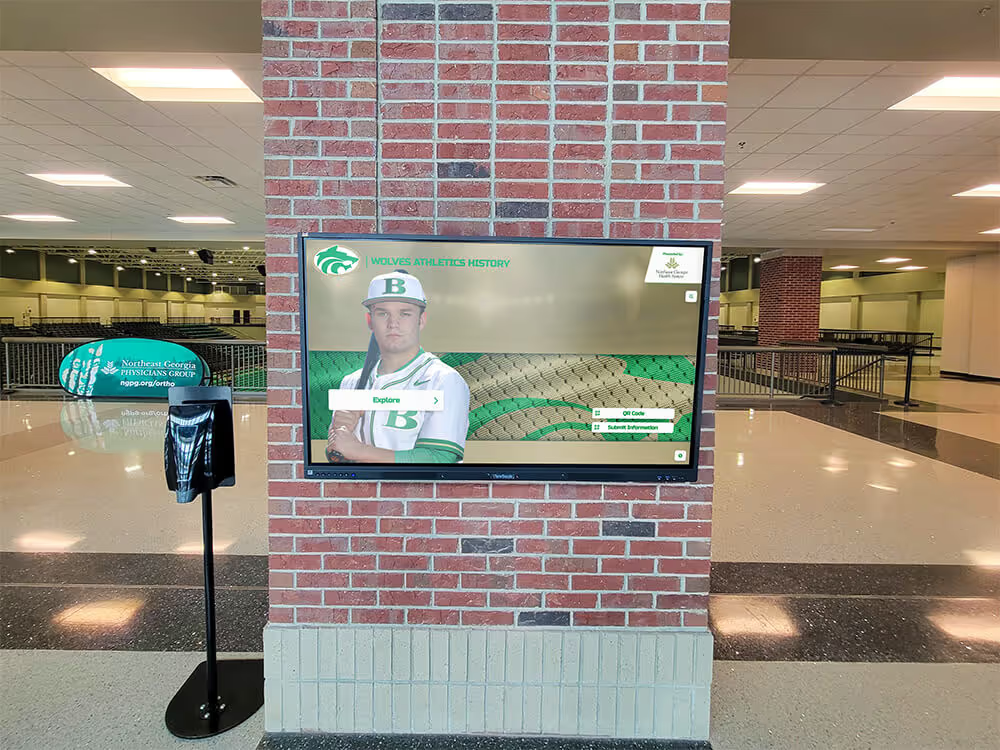
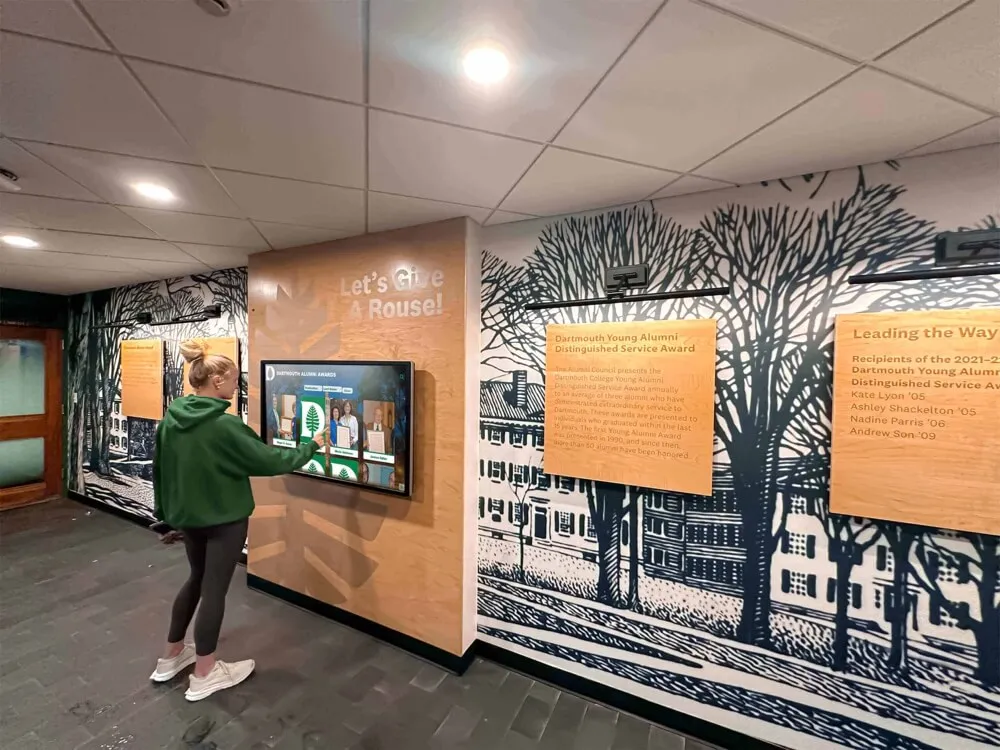
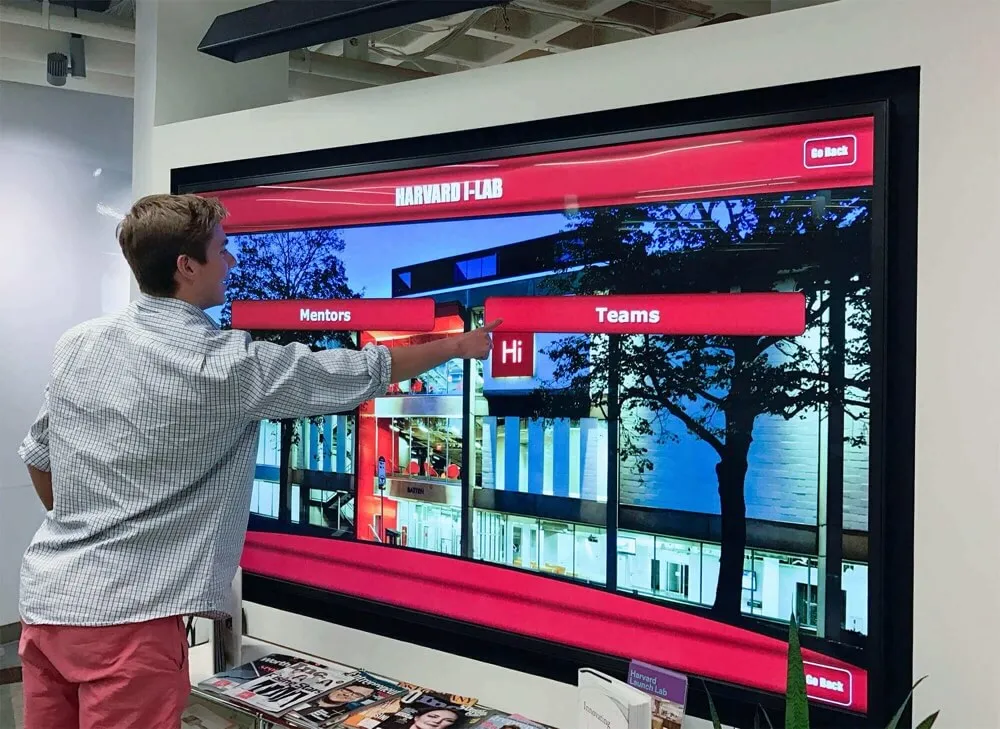
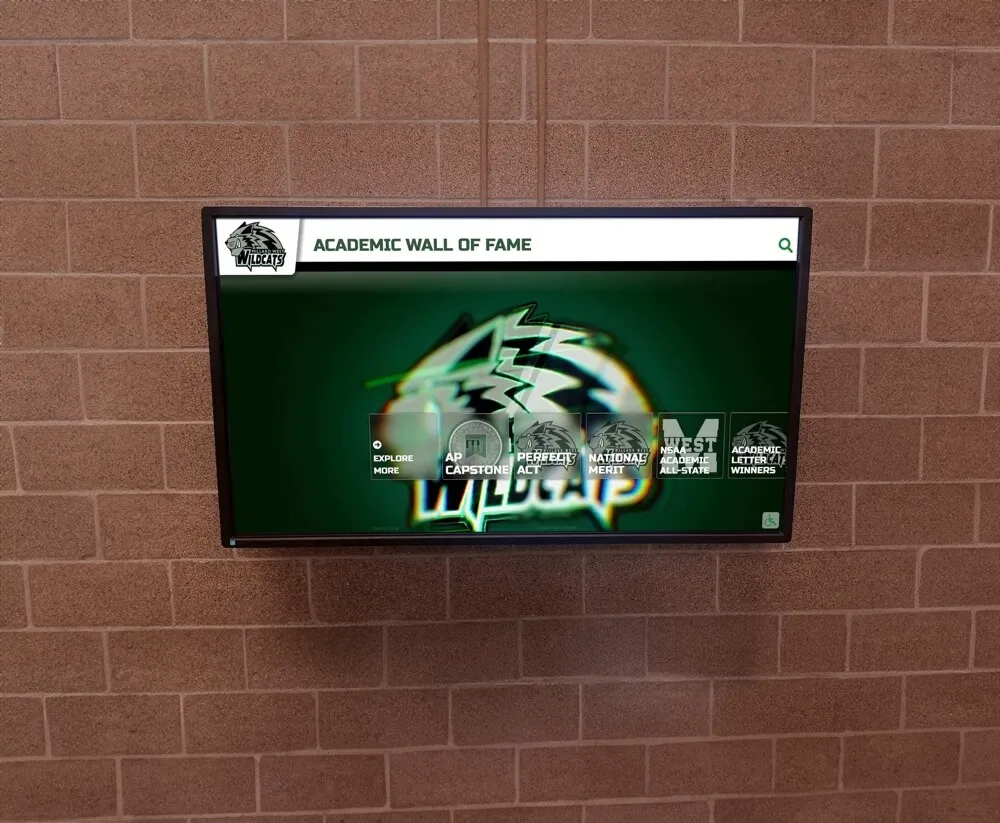
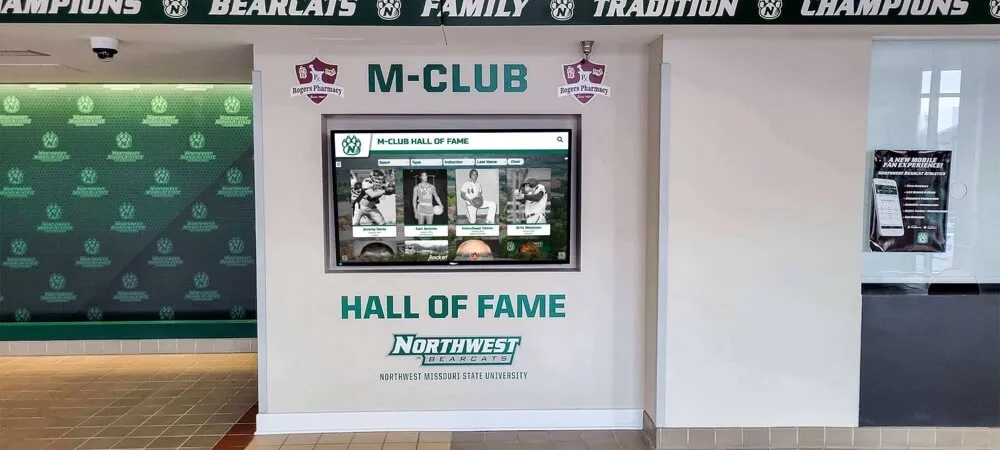
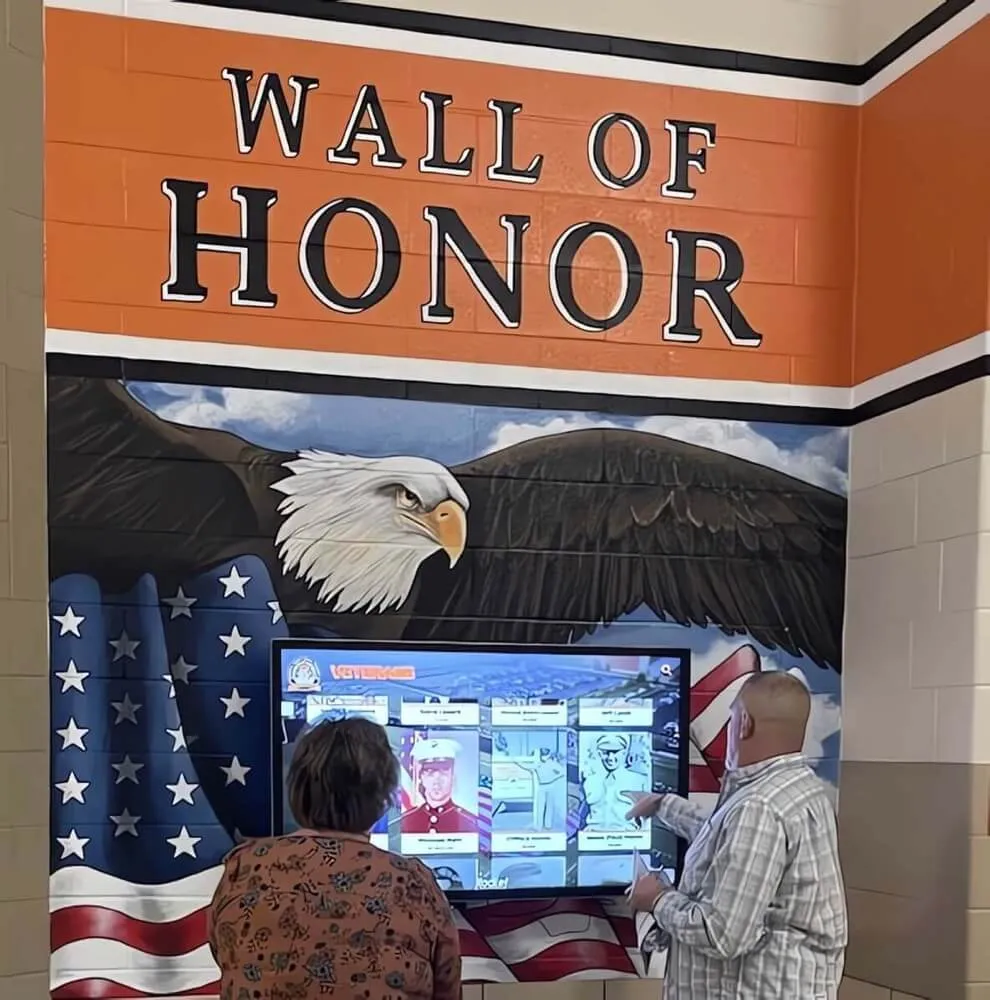
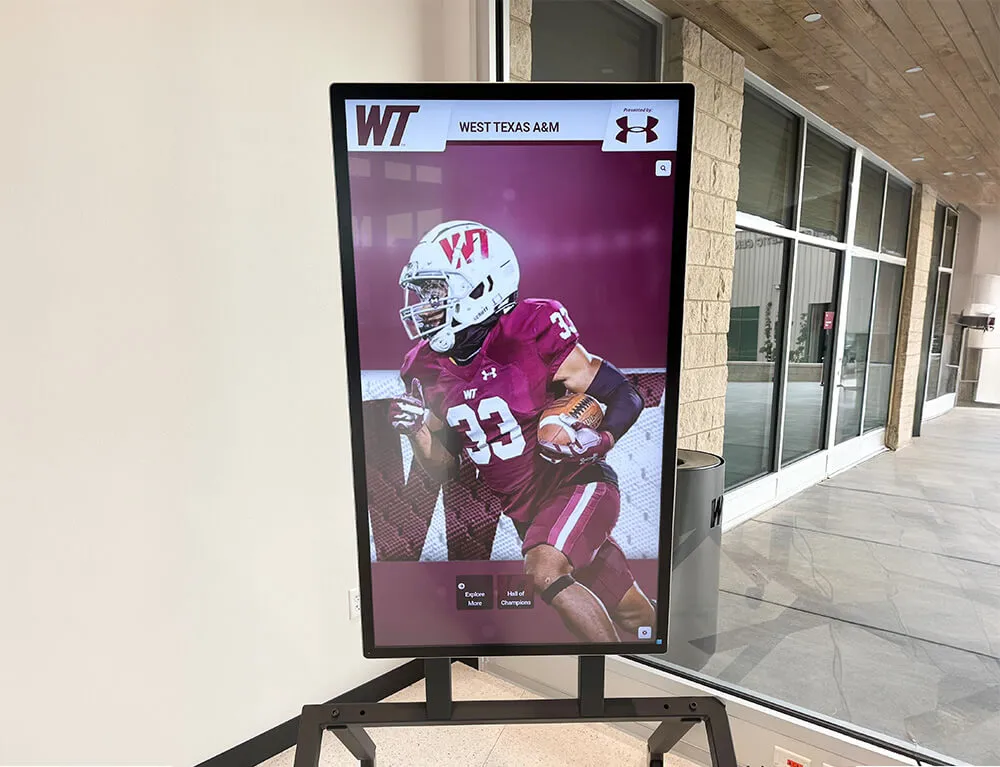
Touchscreen kiosks installed alongside traditional trophy cases let visitors explore full award histories rather than a single static year
Program Continuity Awards: Building Across Seasons
Some of the most powerful award categories are designed not for a single season but for recognition that accumulates across a player’s entire career.
Four-Year Varsity Award
Simple but meaningful: recognition for every player who completes four years on the varsity roster. This award is not about being the best—it is about showing up every day for four years.
Display application: A dedicated panel in the athletic hallway listing every four-year varsity player since the award was established creates a wall that grows by four to eight names annually. It is low-cost to maintain and high-impact for player identity.
Career Points and Assists Leaders
Career record boards differ from season record boards in one critical way: they take decades to accumulate and become nearly impossible to take down once established. A player who scores 1,200 career points at a small school owns that record for life. Displaying career statistical leaders on a permanent board creates aspirational targets that every incoming freshman can see from their first day.
Team Captain Recognition
Listing every team captain by year—not just recent years but the complete program history back to the earliest available records—creates a honor roll that grows in meaning as the school ages. Former captains who return for reunions or coaching clinics can find their name on the wall, reinforcing alumni connection.
For programs interested in also recognizing academic achievers alongside athletes, the academic recognition programs guide at archivaldisplays.com covers how schools structure dual academic and athletic honor walls.
Fun Basketball Awards: Superlatives That Players Remember
Not every award needs to be solemn. End-of-season superlative awards given during the banquet—never intended for permanent display—build locker room culture and give coaches an opportunity to celebrate personality alongside performance.
The Ankle-Breaker Award: Given to the player with the most crossover moves that left a defender off-balance during the season. Film evidence required.
The Glue Guy Award: The player coaches most rely on to hold practice energy together on days when the team would rather be anywhere else.
The Ice-in-the-Veins Award: Best performance in the final two minutes of a game decided by five points or fewer.
The Iron Man Award: The player who logged the most total practice minutes across the season, including conditioning sessions and optional workouts.
The Tape Study Award: Given to the player who could most accurately describe opponents’ tendencies at the start of a game, as assessed by coaching staff.
These superlatives work best when they are personalized to specific moments from the season. Reading the game-film evidence aloud during the banquet turns the award presentation into a storytelling moment that every player and parent in the room will remember.
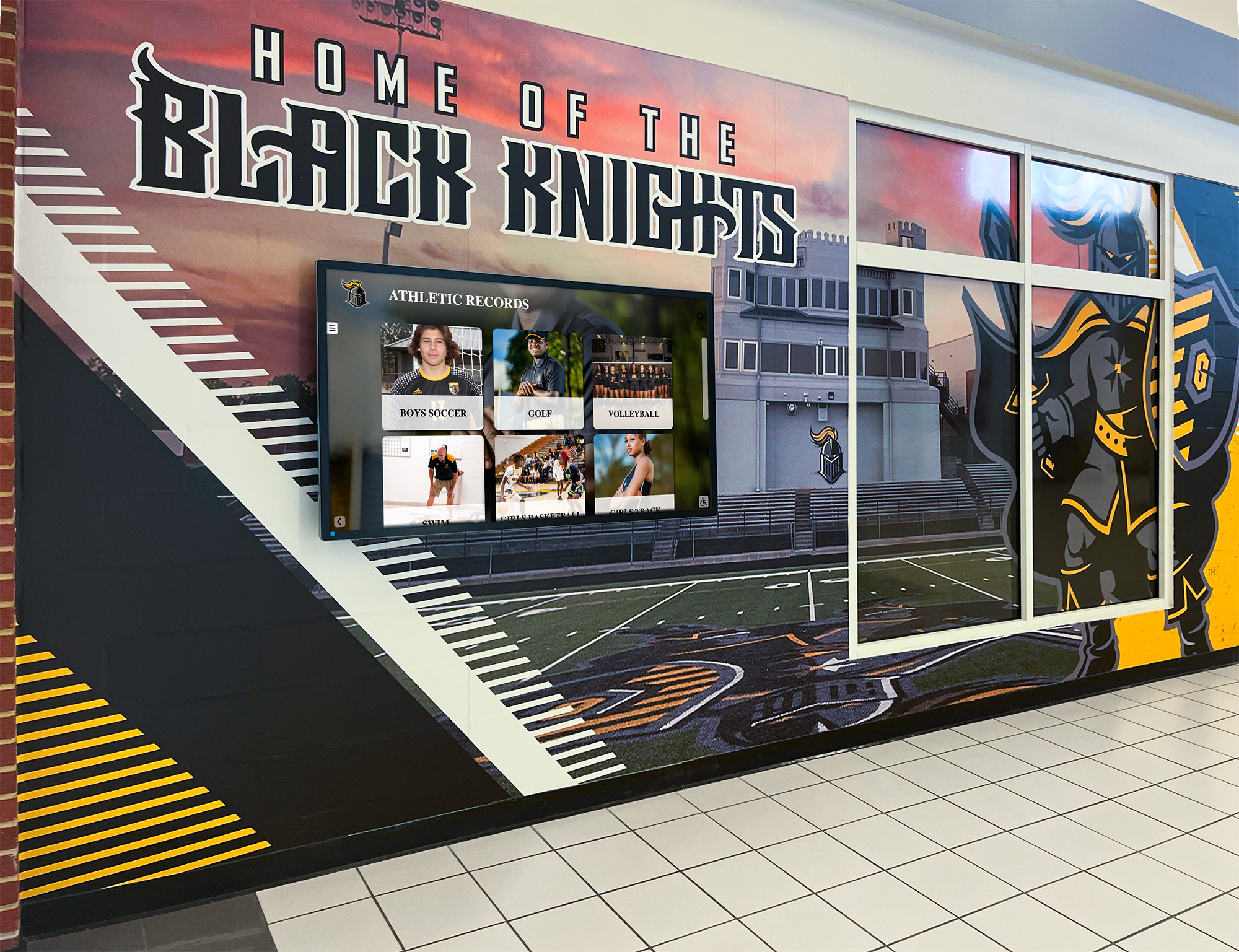
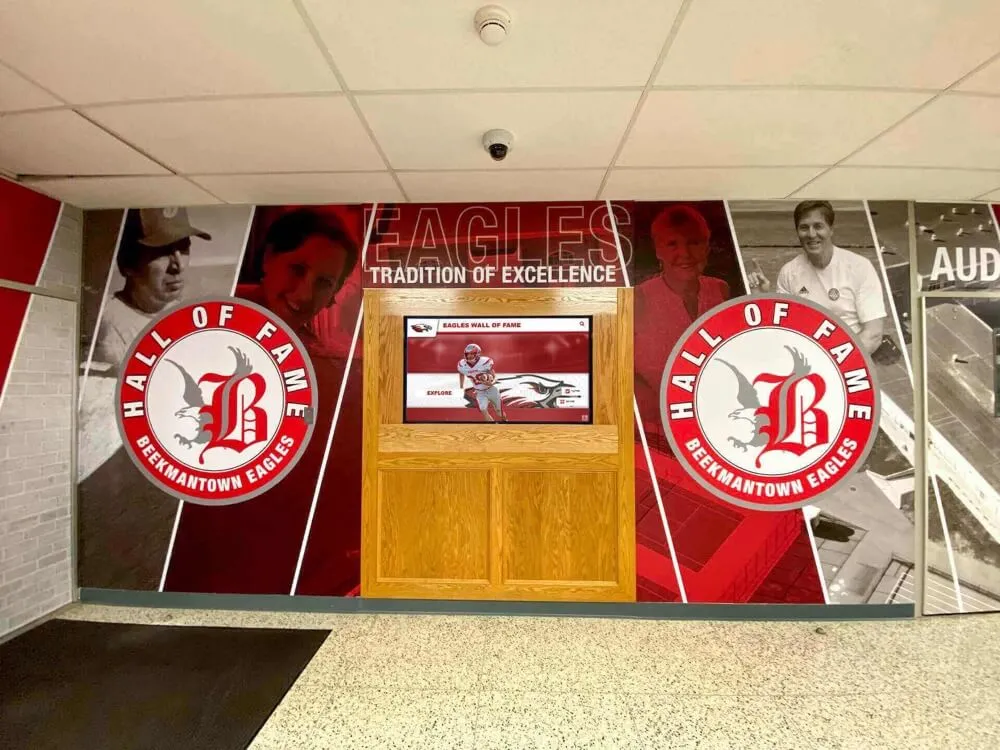
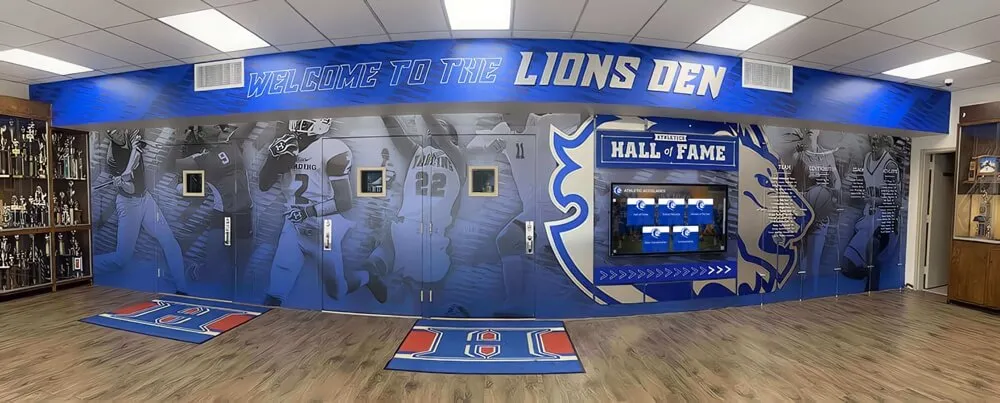
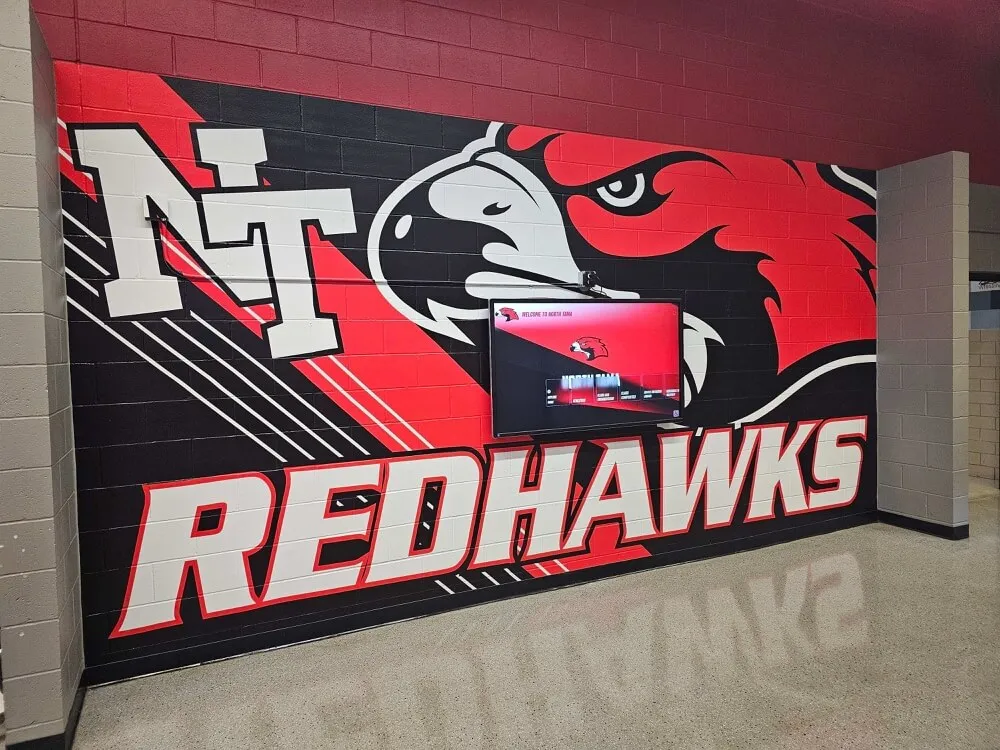
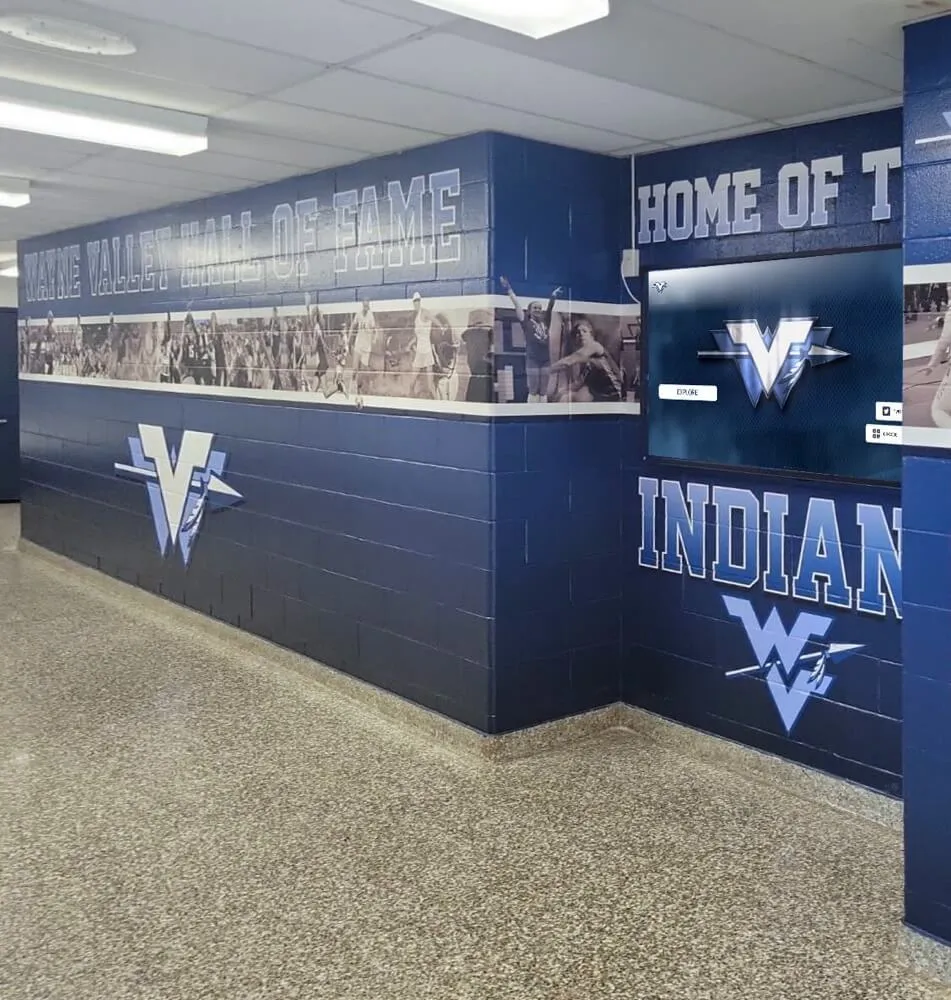
Murals paired with digital record boards create hallways where every passing student sees program history and aspires to add their name to it
How Basketball Awards Translate Into Permanent Display Content
A banquet award and a display-ready record are two different things, but with the right award design they can be the same thing. The key is capturing the right data at the right time.
The Annual Award Archive Habit
Every school should have a single document—updated each spring—that records the winner of every basketball award given that year alongside the criteria used. This archive becomes the source material for:
- Record board updates when a new statistical leader emerges
- Hall of fame nomination files built from years of accumulated award history
- Alumni outreach content (a former Defensive Player of the Year recipient who is now a coach is an obvious candidate for a guest speaker invitation)
- End-of-decade retrospectives celebrating the strongest single seasons in program history
Without this archive, award data decays. Players graduate, coaches move on, and within a decade it becomes impossible to reconstruct who won what and why. With the archive, the program has a structured foundation for any recognition system it builds later.
Record Boards: The Always-On Award System
A record board is, in effect, an award that renews itself without anyone having to plan a ceremony. When a player sets a new season scoring record, the record board updates—and the display does the recognition automatically.
Effective basketball record boards typically include:
- Single-season leaders: points, rebounds, assists, steals, blocks, three-pointers made
- Career leaders in the same categories
- Single-game leaders (can be separated from season totals)
- Team records: most wins in a season, longest winning streak, largest margin of victory
- Championship panel: every conference title and playoff appearance with year and record
For schools with limited wall space, digital record boards solve the real estate problem by allowing multiple layers of data to exist in a compact display. A touchscreen record board can show the top ten in each category rather than just the current leader, dramatically expanding the number of players whose names appear on the wall.
Schools interested in understanding how digital displays work at different budget levels will find the digital displays guide for small and medium public high schools at touchwall.tv useful for scoping a realistic project.
Digital Trophy Cases: Moving the Banquet Online
A physical trophy case holds what it holds. A digital trophy case can hold everything: photos from every banquet, scanned award certificates, game programs, season statistics, coach tributes, and player profiles—organized by year and searchable by name.
For basketball programs specifically, a digital trophy case enables:
Award history browsing: A visitor can pull up every MVP winner since 1987, see the player’s photo, read their statistics for that season, and view any media coverage from the time.
Record progression visualization: Watching a career points record get broken three times over twenty years—displayed as an interactive timeline—tells a program story no static plaque can match.
Alumni connection: Former players who find their profile in the digital trophy case are more likely to donate, volunteer as coaches, and send their own children to the school. Recognition that endures creates relationships that endure.
For schools wondering whether a touchscreen display is the right investment at their size, the Rocket touchscreen guide for small schools at digitalwarming.net makes the case for why smaller programs often benefit most from persistent digital recognition.
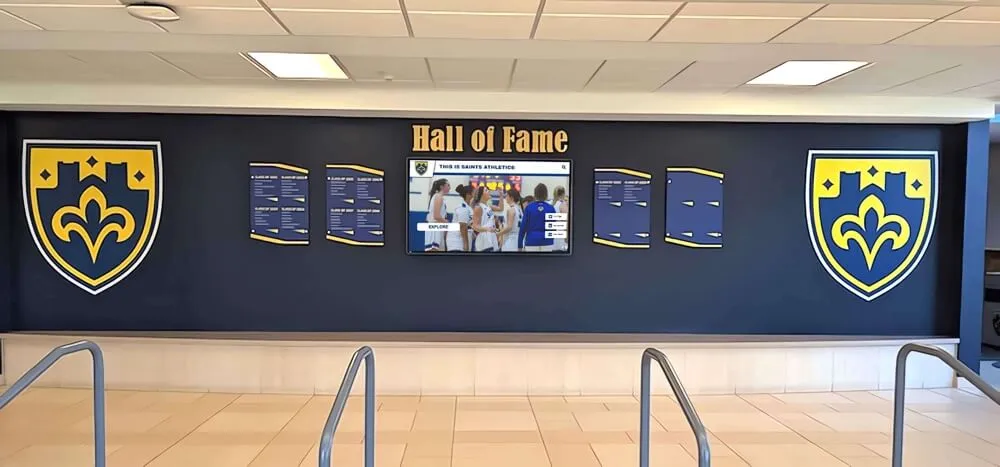
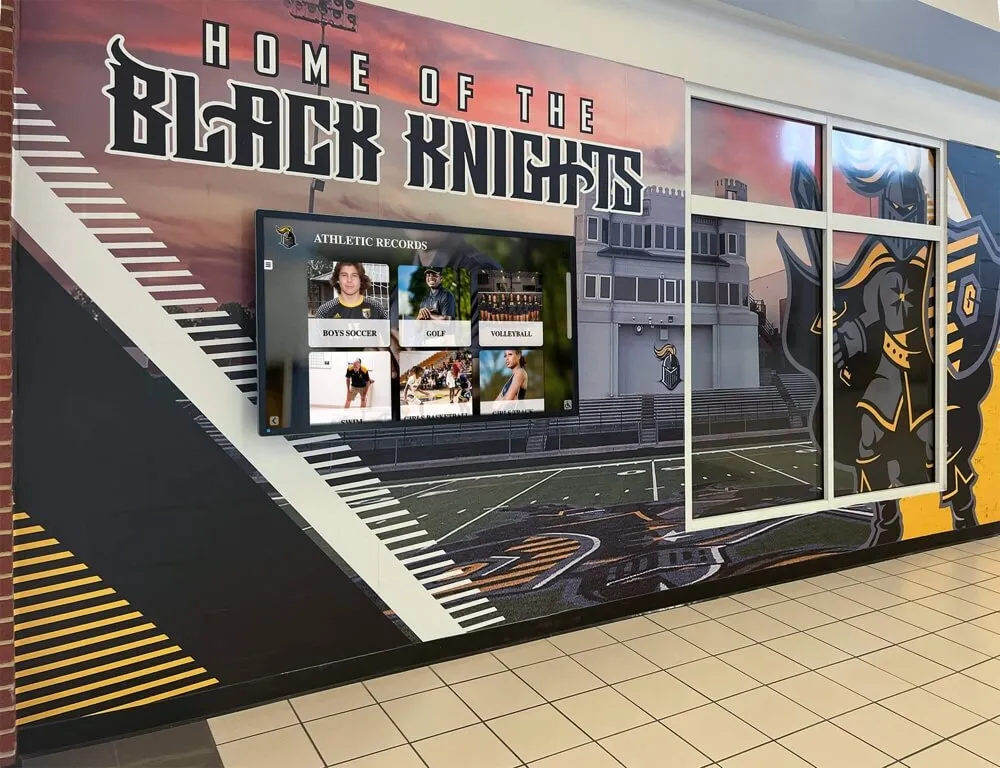
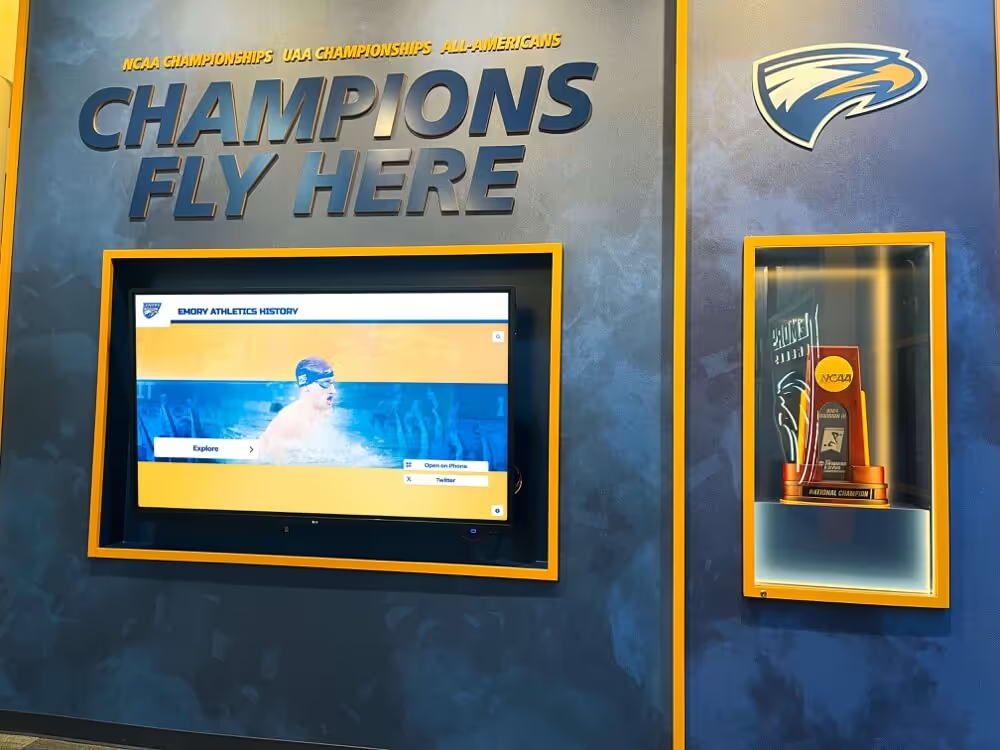
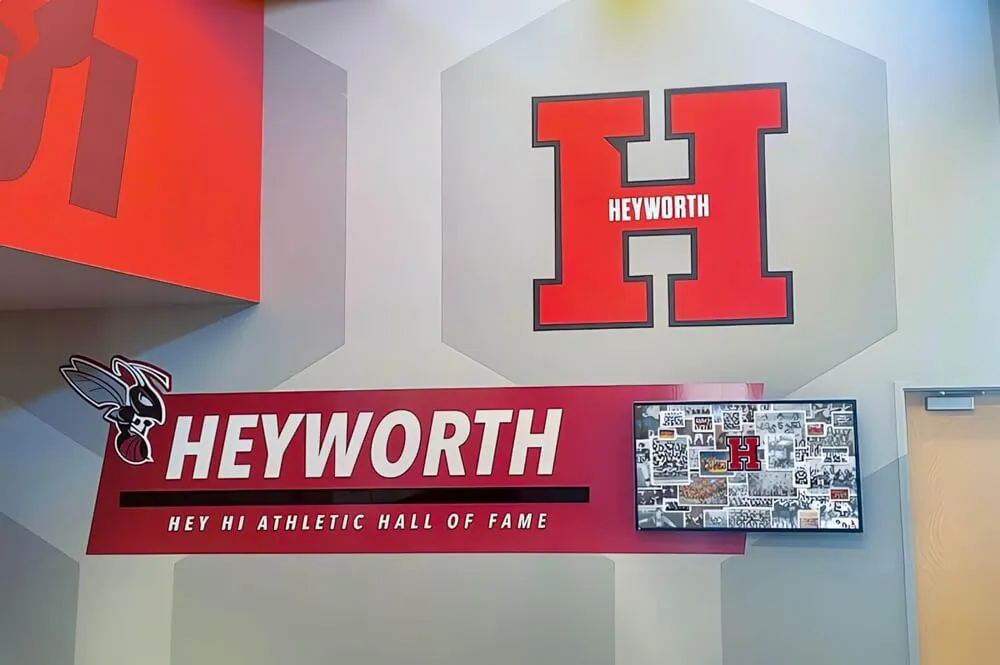
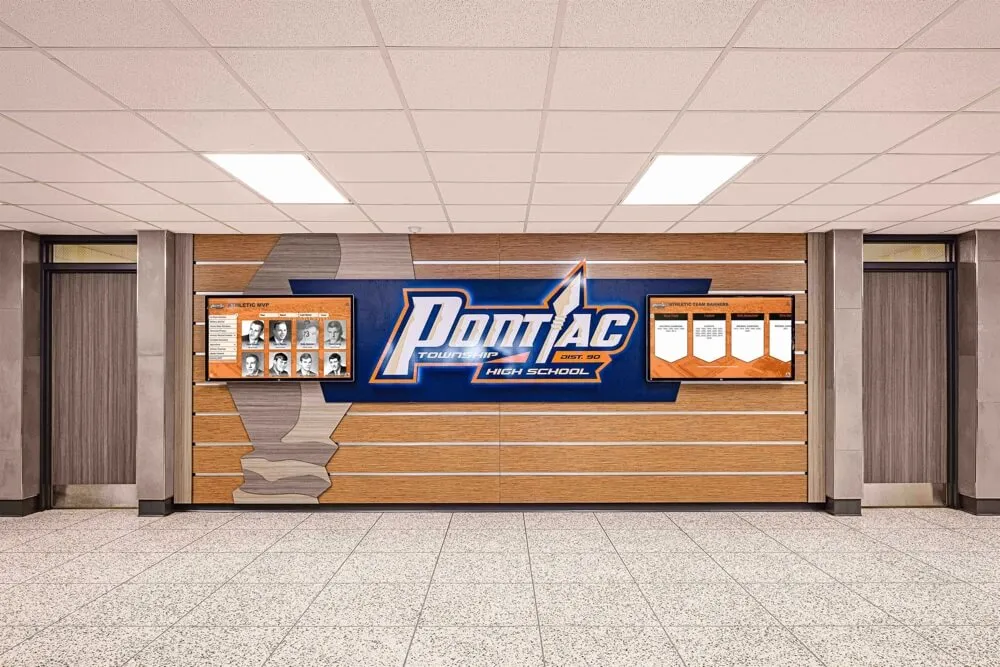
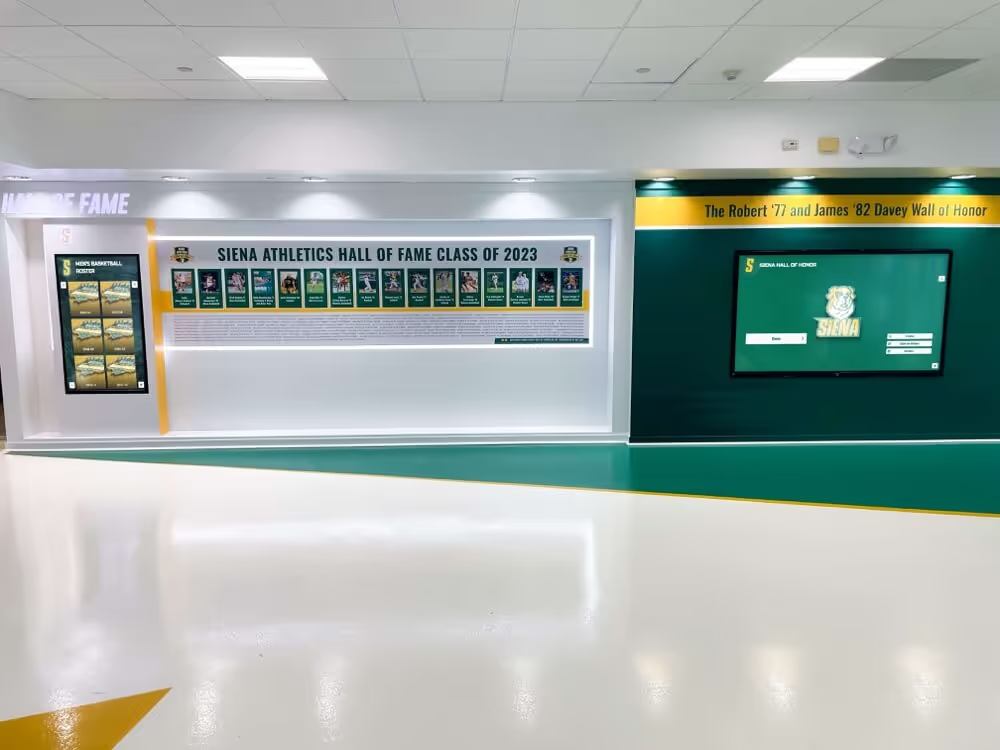
Hybrid display walls combine physical plaque traditions with digital screens to serve both current audiences and future program histories
Basketball Hall of Fame Induction: The Highest Award Level
For programs with enough history, a basketball hall of fame creates the highest tier of recognition—one that connects individual season awards to a permanent program legacy.
Hall of Fame Eligibility Criteria to Consider
- Minimum years since graduation (typically five to ten years, allowing career perspective)
- Statistical thresholds (career points, career rebounds, etc.) or coaching staff nomination
- Demonstrated contribution to program culture beyond statistics
- Sustained connection to the school community, where applicable
Categories of Inductees
Most athletic halls of fame recognize multiple categories:
- Player inductees (by position or career era)
- Coach inductees (length of service, win records, program-building contributions)
- Team inductees (for championship seasons rather than individual achievement)
- Contributor inductees (managers, statisticians, trainers, booster organizers who gave decades to the program)
The winter sports hall of fame framework at touchhalloffame.us covers how schools structure induction criteria and nomination processes across basketball, wrestling, and swimming within a single unified recognition system.
Making Award Criteria Public and Consistent
One change that dramatically improves the credibility of any basketball award program: publish the criteria before the season starts.
When players know in September that the Defensive Player of the Year award is determined by a weighted formula of opponent scoring suppression and coaching staff evaluation, two things happen. First, players who want the award can actually aim for it. Second, coaches are held accountable to the criteria they published. The award cannot quietly become a consolation prize for a player who fell short in other categories.
Publishing criteria also transforms the athletic department’s relationship with parents. Instead of subjective award decisions made behind closed doors, families can see the framework and understand why their athlete did or did not receive a particular recognition.
For programs that recognize students across both athletic and academic domains, the National Honor Society overview at best-touchscreen.com illustrates how academic recognition programs use published criteria to maintain credibility over decades—a model worth adapting for athletic award structures.
Award Wording That Travels From Banquet to Display
The language used to describe an award at the banquet needs to work differently when it appears on a wall ten years later. A few principles:
Avoid year-specific language in the award name: “2026 Most Valuable Player” ages poorly. “Season Most Valuable Player” with the year shown separately in the display record is cleaner and scales across decades.
Name awards after program legends where possible: “The Coach Harmon Award for Defensive Excellence” means something to anyone who knows the program’s history. It also gives the original honoree a form of recognition that compound-interests over time—every new winner adds to the legacy of the name.
Use criteria language in the display, not just the award name: A record board that shows “Season Assists Leader: 187 (J. Williams, 2026)” is more meaningful than one showing only the number. Visitors understand what they are reading without asking.
Document the full citation: Even if only the name and year appear on the wall, the full citation read at the banquet—the story behind the award—should exist in the annual archive. Future display upgrades can pull from this archive to add depth.
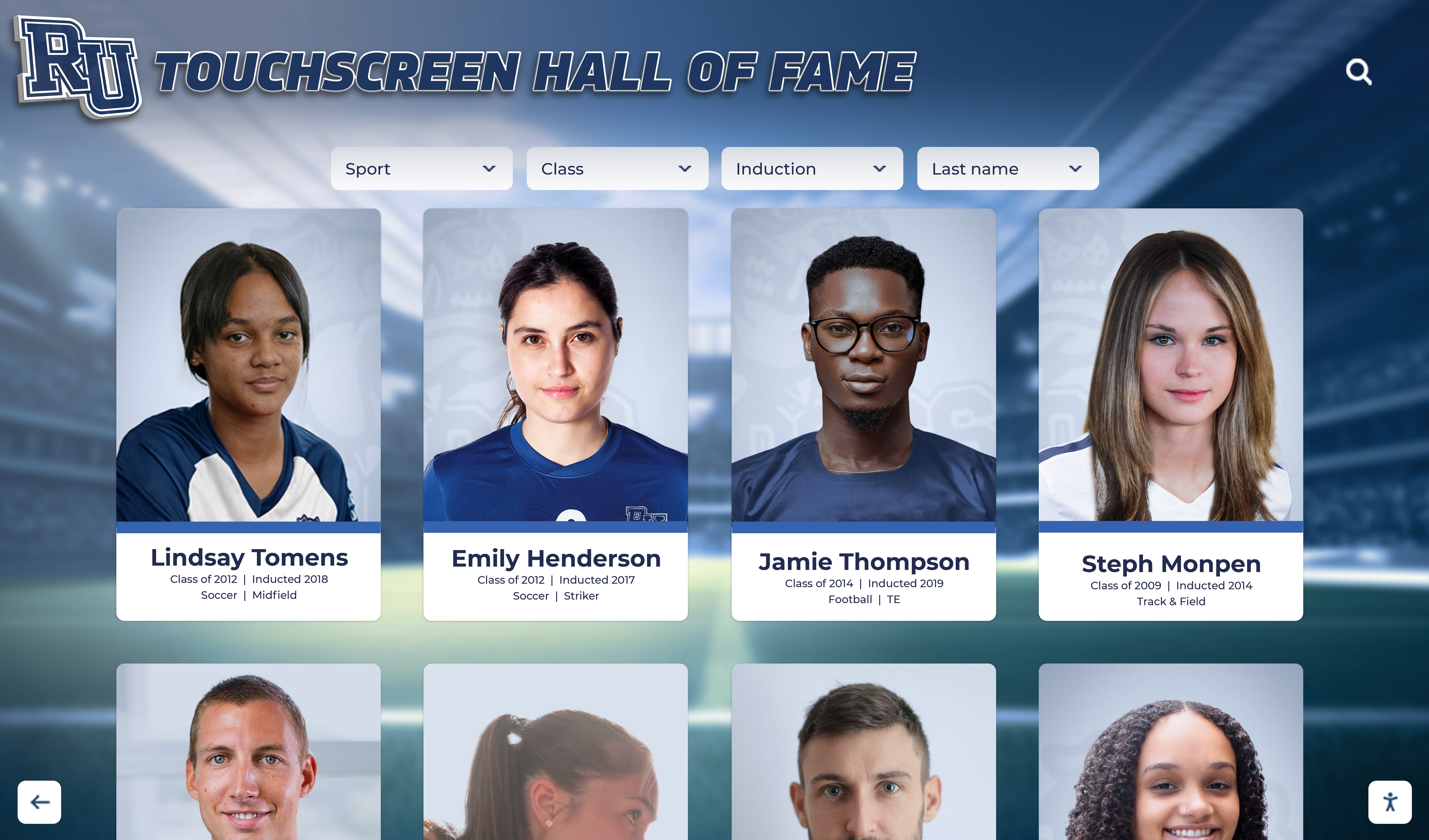
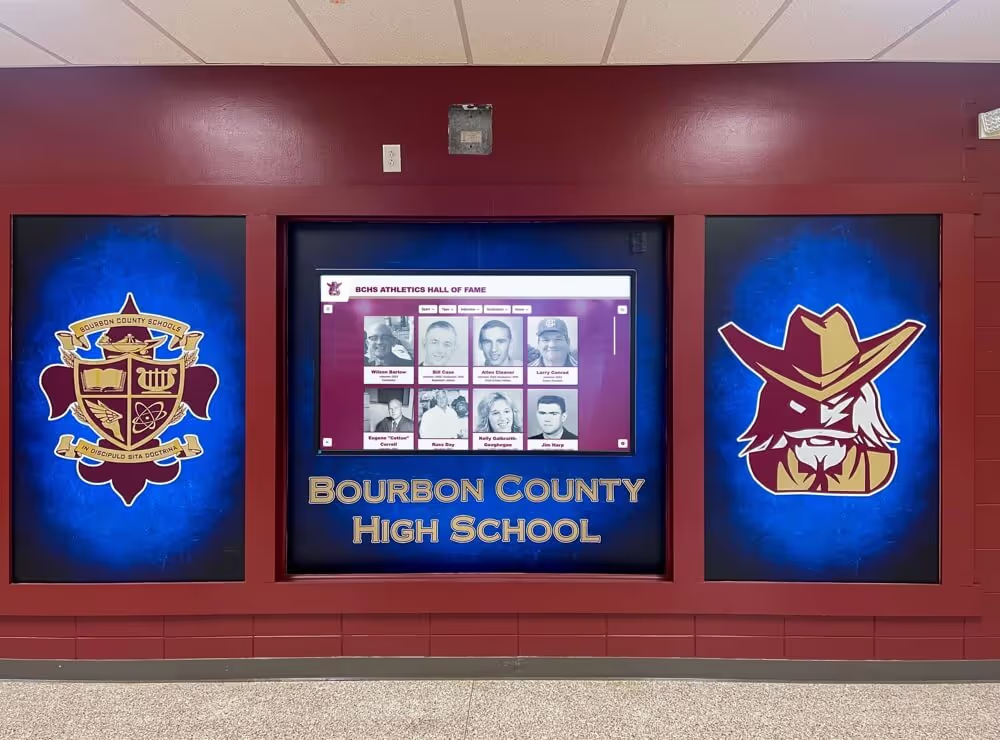
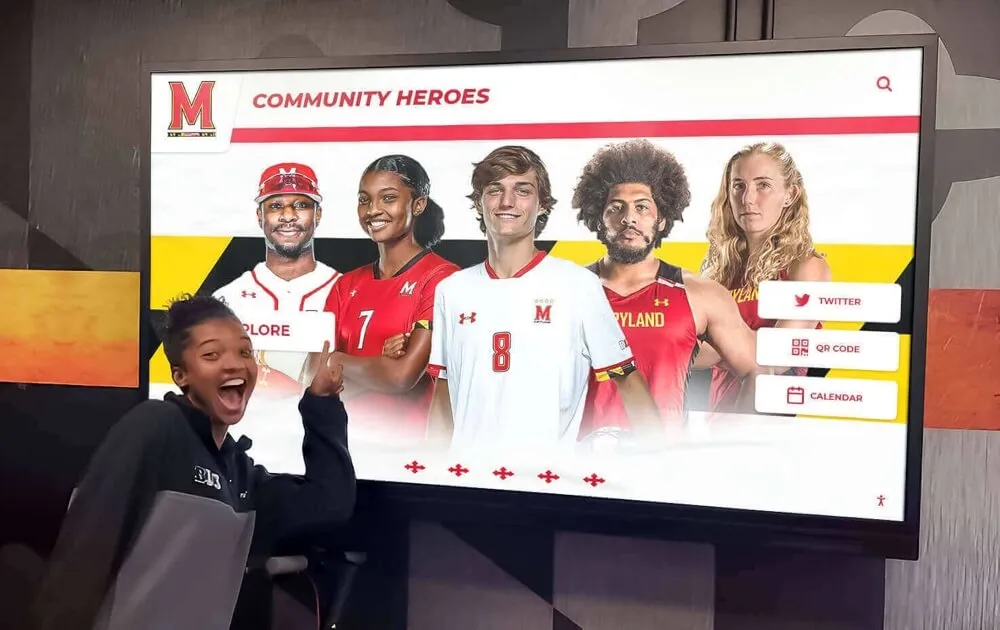
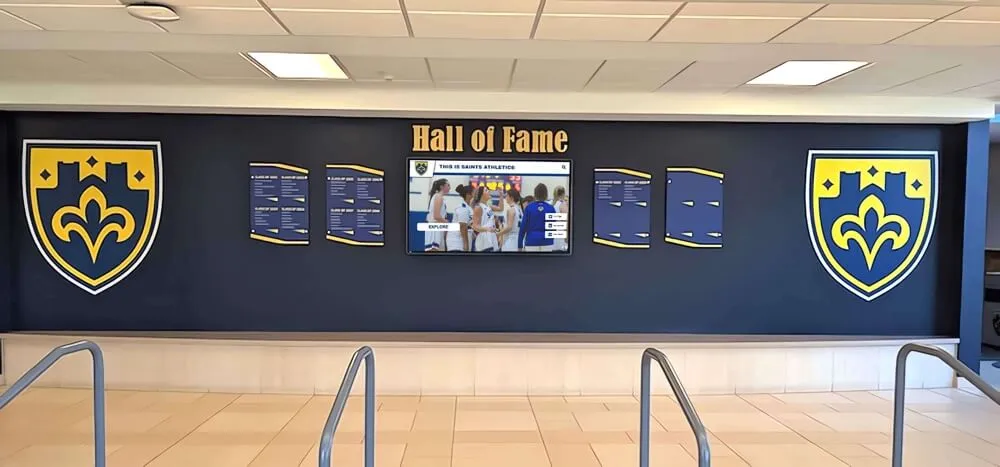
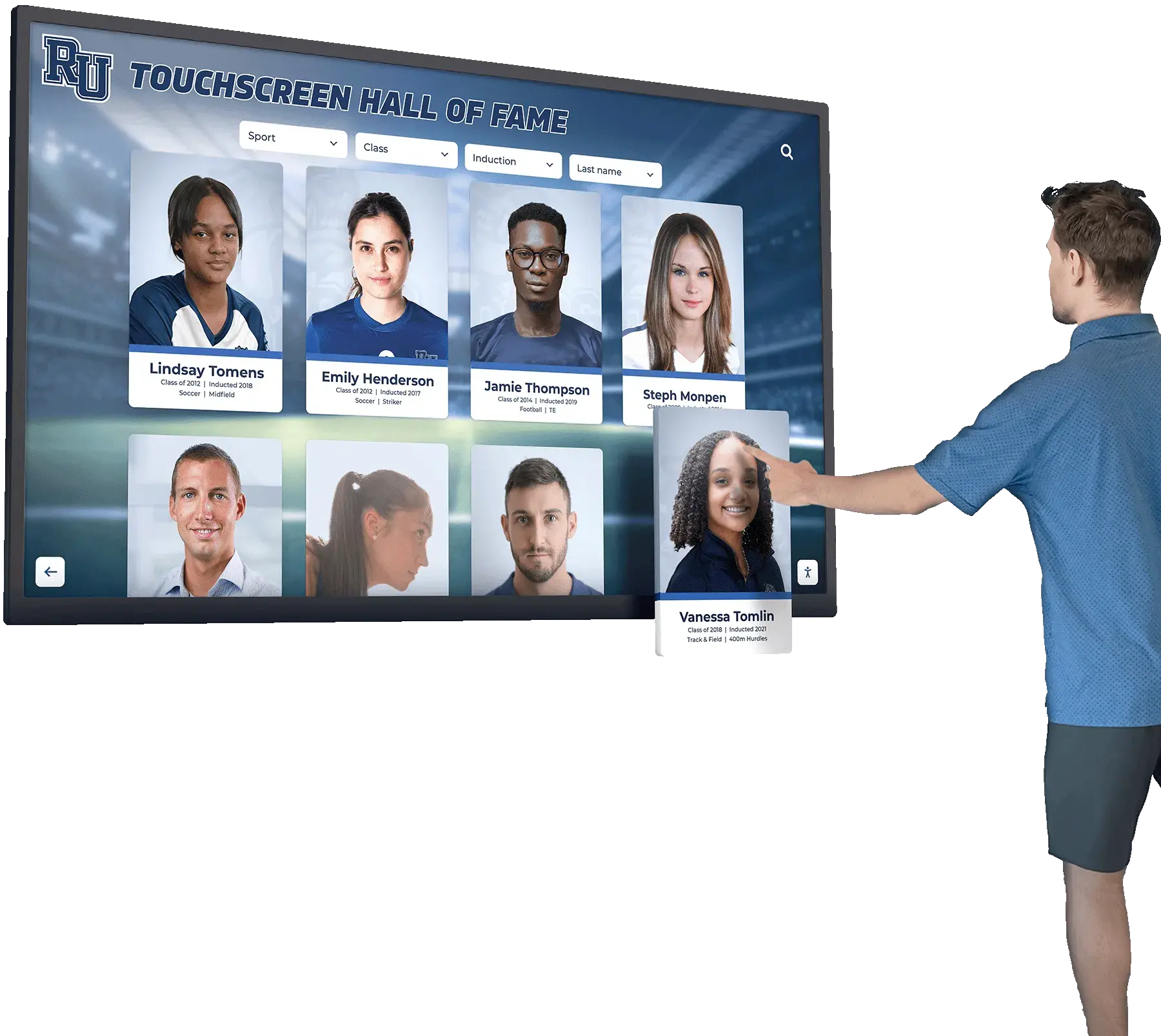
Portrait-based digital displays make athlete recognition personal and browsable, connecting names to faces across program generations
Digitizing Historical Award Records
Many basketball programs have twenty or thirty years of award history locked in file cabinets, banquet programs, and the memories of coaches who have since retired. Recovering and digitizing this history is one of the highest-leverage projects an athletic director can undertake.
The process typically involves:
- Locating physical banquet programs, newspaper clippings, yearbook pages, and award certificates from as many years as records allow
- Scanning or photographing all documents at sufficient resolution for digital display
- Entering award winner data into a structured spreadsheet organized by year and category
- Uploading player photos where available (school yearbooks are the most reliable source)
- Building or updating digital displays with the recovered historical data
For schools working through this process, the yearbook scanning and digitization guide at digitalyearbook.org covers how to handle fragile physical yearbooks without causing damage during the digitization process—a relevant consideration for programs pulling data from decades-old print sources.
The payoff for this work is significant. A digital display showing fifty years of season MVPs is qualitatively different from one showing ten years. It demonstrates institutional continuity, creates opportunities for alumni engagement across multiple generations, and makes the recognition system feel like a living part of school history rather than a recent administrative project.
Frequently Asked Questions
What basketball award ideas work best for programs with limited budgets?
The highest-value low-cost award investments are the ones that create permanent display content: a season record board updated annually, a team captain honor roll extending back to the program’s founding, and a four-year varsity award list. None of these require expensive trophies—recognition on a wall is often more meaningful to athletes than a physical object they carry home. The budget savings can be redirected toward one quality physical award for the single highest-impact recognition of the year, such as the program’s Player of the Year.
How do coaches decide between statistical and subjective award criteria?
The most credible award systems use a weighted combination: objective statistical thresholds establish the pool of eligible candidates, then coaching staff evaluation selects the winner from within that pool. Purely subjective awards invite credibility problems; purely statistical awards can miss the players whose contributions don’t show up in box scores. Publishing the weighting before the season removes ambiguity.
How often should basketball programs update their hall of fame?
Most programs with active induction processes induct one to three players or classes per year. Inducating too frequently devalues the recognition; too infrequently creates backlogs of deserving candidates. Programs that induct on a consistent annual schedule—announced in advance—find that alumni engagement around induction ceremonies grows over time as former athletes know to expect the event.
What is the best way to display basketball award history in a school with limited wall space?
Digital displays solve the space constraint problem directly. A single touchscreen positioned in the athletic hallway or lobby can surface unlimited years of award history in a compact footprint. The display can show a rotating highlight view—cycling through recent award winners—while allowing visitors to search by year, category, or player name for deeper exploration. For small schools where physical renovation is cost-prohibitive, the Rocket Alumni Solutions digital display system for small and medium public schools at touchscreenwebsite.com shows how institutions without large athletic facilities have implemented effective recognition systems.
How can schools make basketball award nights more memorable?
The single highest-impact change is specificity. Rather than announcing “Marcus Williams wins the Defensive Player of the Year award,” a coach reads the specific possessions, the opponent scoring data, and the one moment from the film that defines Marcus’s defensive season. Specificity communicates that the award is real—that someone actually studied the season and saw what Marcus did. That experience stays with an athlete far longer than the trophy.
Conclusion: Awards That Work Beyond the Banquet
The most effective basketball award ideas are the ones designed for dual service: meaningful in the moment of the ceremony and useful as permanent display content for years afterward. That requires intentional category design, consistent published criteria, an annual archive discipline, and a display system built to hold program history rather than just the current season.
Banquet nights matter. But the hallway outside the gym matters more—because it is there every day, in front of every student, for every year the school exists. Programs that design their awards with the display in mind build athletic cultures with staying power, and they give every incoming player a visible answer to the question that motivates sustained effort: what does it take to get my name on that wall?
Build a Recognition System That Lasts Beyond Every Banquet
Rocket Alumni Solutions designs touchscreen walls of fame, digital trophy cases, and interactive record boards that keep basketball program history visible year-round. See how schools are turning annual award data into permanent display content that motivates athletes, engages alumni, and builds program identity.
Request a Demo
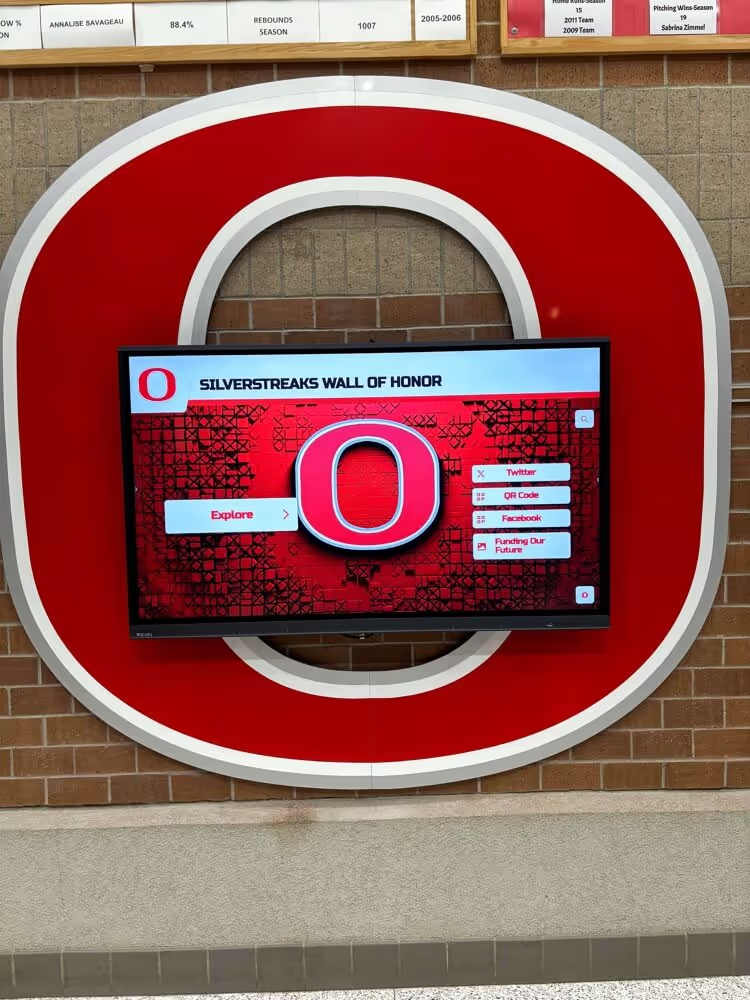
Interactive touchscreen systems let visitors browse individual athlete profiles, career statistics, and award histories from a single display in the school hallway