



The coaches award meaning in school athletics is straightforward but significant: it is a discretionary honor given by a coaching staff to the athlete whose effort, character, and contributions most reflected the values the program holds above statistical achievement. Unlike MVP designations driven by scoring and percentages, the coaches award is a direct expression of what a coaching staff believes matters most—work ethic, leadership, coachability, or sacrifice for team success.
For athletic directors standardizing recognition programs and coaches trying to define the award with integrity, this guide covers the full scope: what coaches awards mean across different programs, how to establish defensible selection criteria, how the selection process should work, and how to document each recipient in a permanent display record that outlasts any single season or coaching tenure.
When a coach presents a coaches award at a season-ending banquet, the room typically knows it carries different weight than statistical honors. It signals that this athlete embodied something the coaching staff specifically values—something that cannot be captured on a box score. For that signal to be credible, the criteria behind it have to be deliberate.

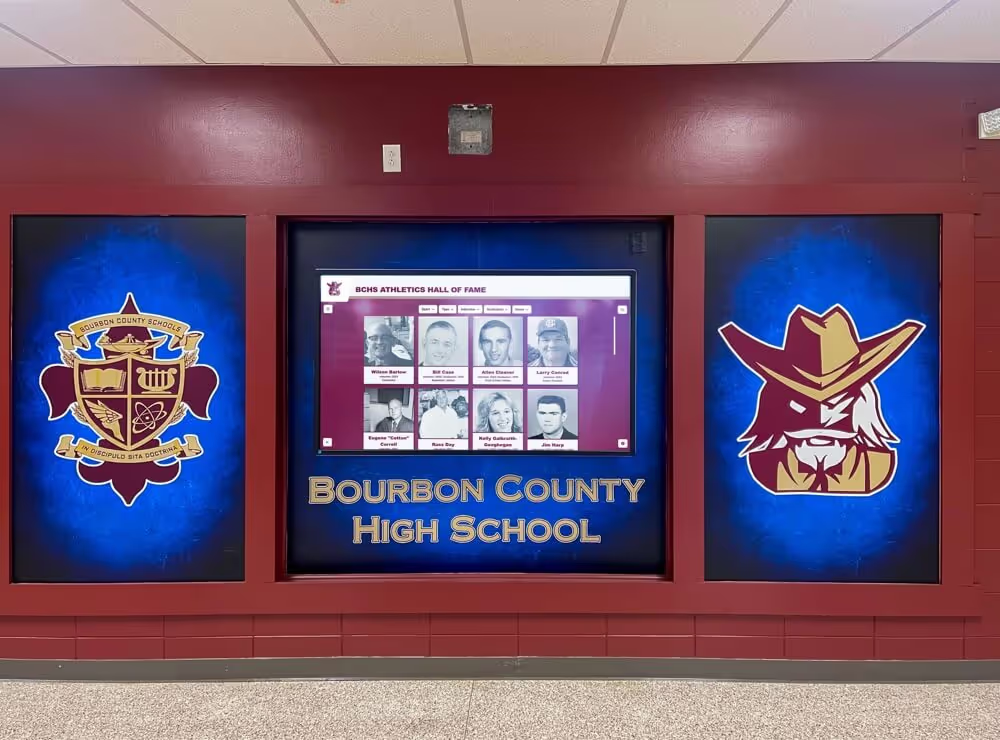
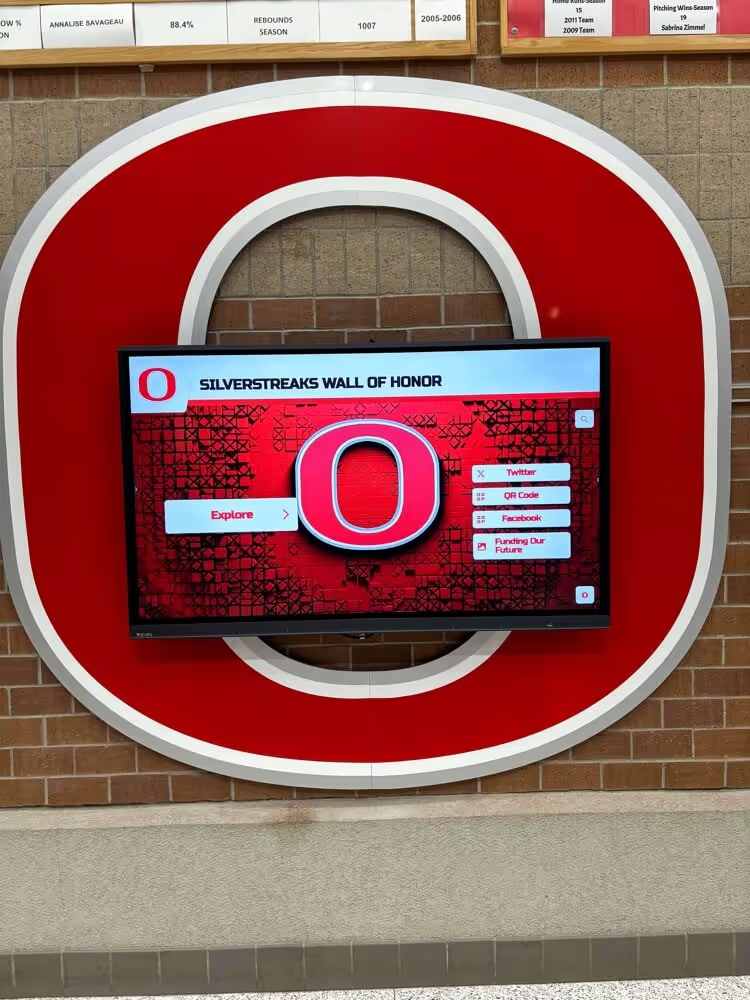
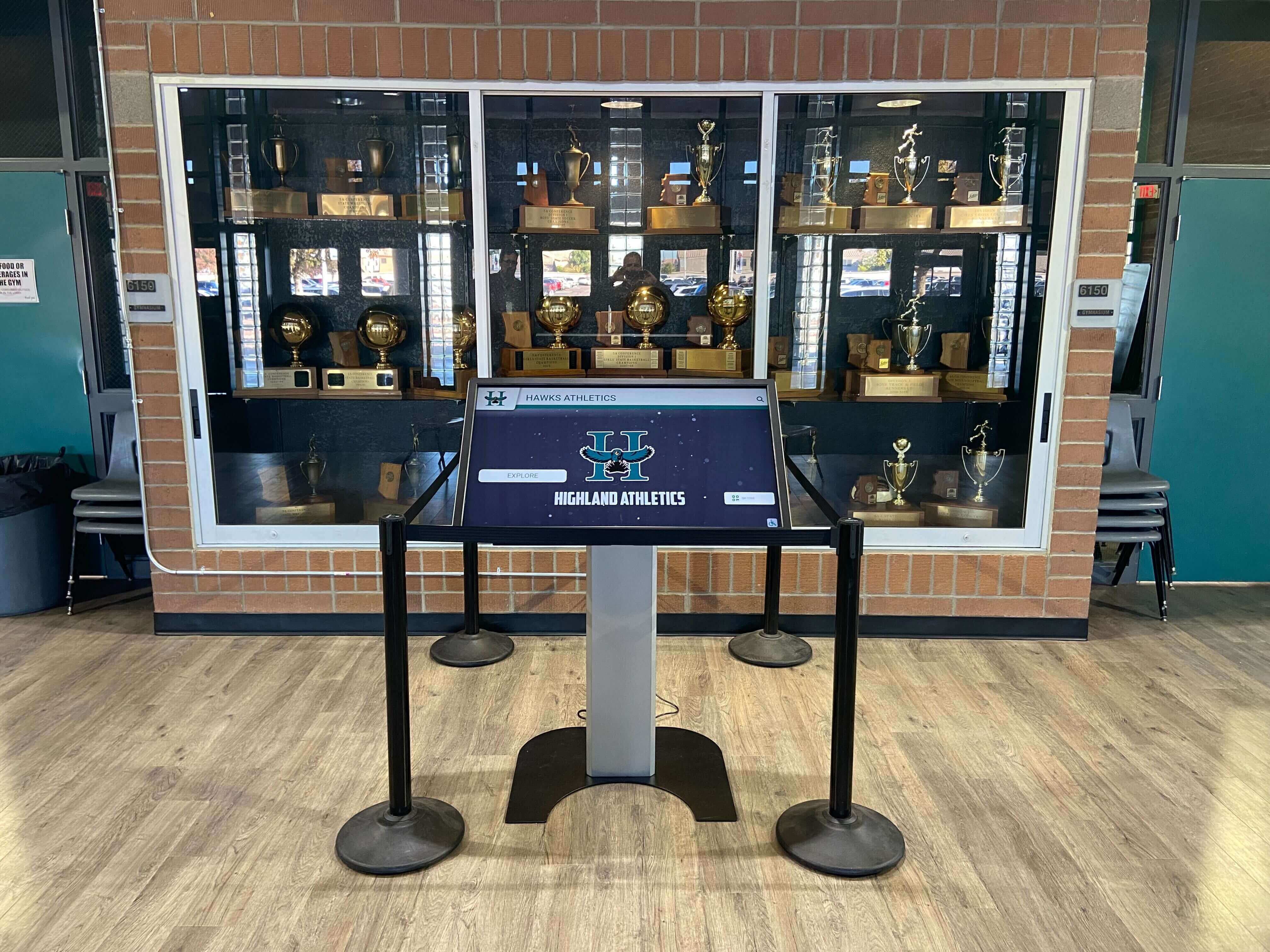
Digital recognition kiosks in trophy areas allow coaches award recipients to be displayed permanently alongside other program honors
What the Coaches Award Meaning Is in School Athletics
The coaches award is a character-based team honor given entirely at the discretion of the coaching staff to the athlete who best demonstrated the values central to the program’s identity. It is not voted on by players, parents, or the broader school community—it belongs to the coaches because it reflects a coach’s direct daily observation of an athlete’s effort, attitude, and commitment beyond the visible game.
This distinction is what gives the coaches award its specific meaning. Conference awards and statistical records reflect what happened in games. The coaches award reflects what happened at 6:00 AM in the weight room, at the end of a hard practice when no one was watching, and in the difficult moment after a loss when character is most clearly revealed.
How the Coaches Award Differs from Other Athletic Honors
| Award Type | Selected By | Primary Criteria | Core Meaning |
|---|---|---|---|
| Coaches Award | Coaching staff (discretionary) | Character, effort, leadership | Values the program prioritizes above wins |
| MVP (Most Valuable Player) | Coaches or team vote | Statistical impact and competitive contribution | Best overall performer on the roster |
| Most Improved | Coaching staff | Measurable skill or attitude growth | Biggest personal development across the season |
| Team Captain Award | Coaches or team vote | Leadership and peer respect | Formal leadership recognition |
| All-Conference | Opposing conference coaches | Performance against conference competition | External peer validation of athletic ability |
Understanding where the coaches award sits among these categories helps athletic directors communicate its significance correctly to athletes, families, and the public. It is not a consolation award for athletes who did not win statistical honors—it is the one award that only the coaching staff can give, making it a direct statement of program values.
How Schools Define Coaches Award Criteria
Defining criteria for a coaches award is the step most programs skip—and the omission costs them. Without written criteria, the award cannot be communicated to incoming athletes as a goal to pursue. It cannot be applied consistently across seasons and coaching staff transitions. And it cannot be displayed in a way that means anything to future visitors who encounter the record.
The most effective criteria statements share three qualities: they are observable (a coach can point to specific behaviors), they are consistent (they apply equally across every athlete on the roster), and they are reflective of the program’s values—not generic phrases that could come from any school in any sport.
Common Coaches Award Criteria Frameworks
Character-first frameworks define the award around values like integrity, commitment, and coachability:
- “Awarded to the athlete who consistently demonstrated the character traits the program models: honesty, effort beyond expectation, and genuine care for teammates.”
Leadership-centered frameworks focus on informal and formal influence:
- “Given to the athlete who elevated teammates’ performance and morale through daily example rather than title, especially under adversity.”
Effort and process frameworks reward the work behind results rather than outcomes:
- “Presented to the athlete whose daily commitment to preparation—practice quality, film study, conditioning, and role acceptance—set the standard for the program.”
Multi-criteria frameworks combine elements and preserve flexibility across different team compositions year to year:
- “Awarded at the coaching staff’s discretion to the athlete who best exemplified the program’s values of hard work, selflessness, and leadership. The recipient need not be the highest statistical contributor.”
Athletic programs building frameworks for what behaviors deserve formal recognition can find parallel models in structured recognition design. For additional perspective on building team environments that surface recognizable character traits, the middle school team building activities guide offers applicable principles for coaches shaping the culture their coaches award is meant to honor.
The Selection Process: How Coaches Should Choose Recipients
Without a documented selection process, coaches award decisions risk appearing arbitrary—or favoring athletes who had the best relationships with coaching staff rather than the athletes who most embodied the criteria. A structured process protects the award’s integrity.
A Four-Step Selection Process
Step 1: Review the written criteria before evaluation begins. The coaching staff should revisit the written criteria before the end of the season to ensure each staff member applies the same standard. This step prevents individual coaches from drifting toward their own informal interpretations.
Step 2: Generate a candidate list independently. Each coach should write down the names of athletes they believe meet the criteria—before any group discussion. Independent nomination prevents group dynamics from narrowing the conversation to whoever is mentioned first.
Step 3: Discuss points of consensus and divergence. Once independent nominations are gathered, the staff discusses observations together. Where coaches agree strongly, a clear candidate typically emerges. Where they diverge, the written criteria serve as a tiebreaker: which candidate’s behaviors most consistently matched the defined standard?
Step 4: Document the rationale before announcing. Before announcing the recipient, the head coach should briefly write down the specific behaviors or moments that led to the selection. This record serves two purposes: it holds the staff accountable to the criteria in future years, and it becomes the material for the award presentation speech—making the public recognition moment more specific and meaningful.
For coaches building year-round athletic programs where observable character traits emerge during high-pressure moments, the basketball tryout drills coaching guide illustrates how deliberate practice design creates genuine opportunities to evaluate the qualities a coaches award is meant to recognize.
Documenting the Winner: A Display-Ready Record Checklist
One of the most common gaps in coaches award programs is poor documentation. A handwritten note in a coach’s notebook is not a record. Neither is a photo tagged on social media that disappears from algorithms within 48 hours. Schools that treat their coaches award as a permanent program honor maintain a structured winner record for every season.
Display-Ready Coaches Award Winner Record
For each season’s recipient, capture and archive the following before the banquet:
- Athlete’s full name — confirm spelling before publishing
- Graduation year — not just the award year; supports alumni search later
- Sport and season — fall, winter, or spring; include the year
- Brief rationale — 2–3 sentences describing the specific behaviors that earned the award
- Selecting coach — name of the head coach who made the final decision
- Photo — individual action photo or team photo from the season when possible
- Secondary honors — note if the same athlete also received other awards for broader context
This checklist should be completed before the banquet where the award is announced. Waiting until after the season creates documentation gaps that compound across years until the program holds a list of names with no context attached.
For reference on how athletic programs structure end-of-season recognition records across multiple award categories, the sport end-of-year awards complete guide provides a framework that athletic directors can directly adapt for coaches award documentation.

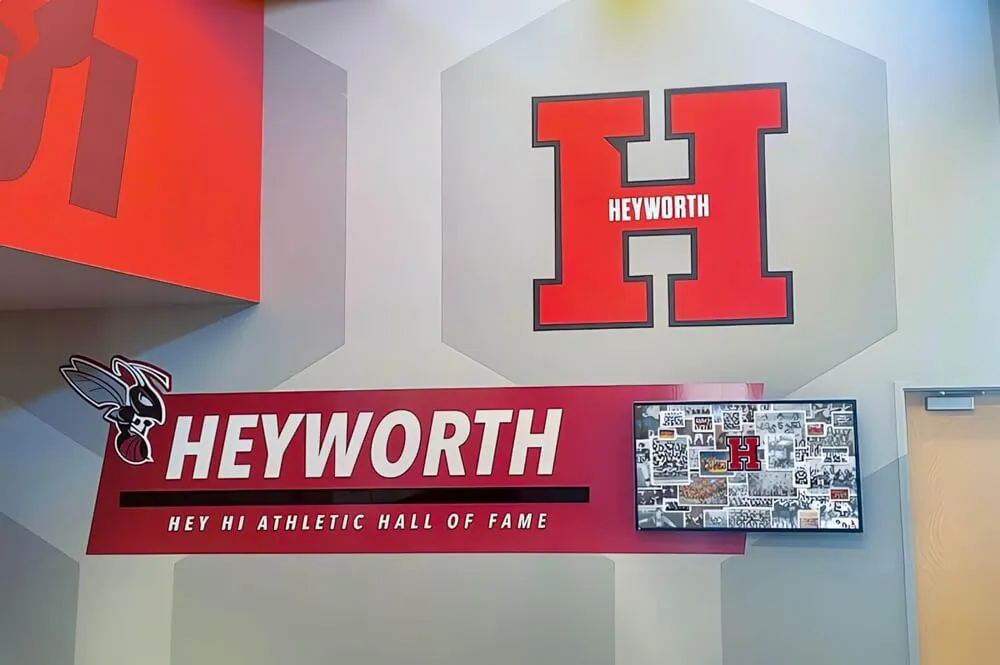
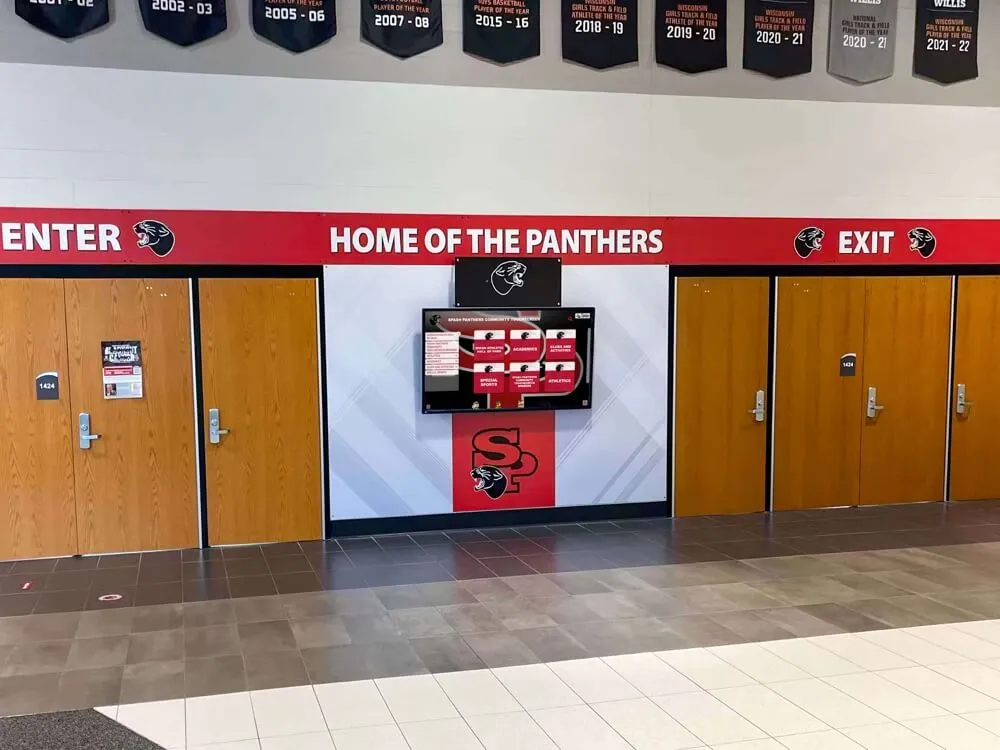
Digital athletic record displays surface coaches award winners alongside statistical records in hallway spaces students pass daily
Displaying the Coaches Award in School Facilities
The physical or digital presentation of coaches award history communicates program values as effectively as the award ceremony itself. A hallway display showing every coaches award recipient dating back to the program’s early years tells current athletes: this school keeps track of character, not just championships.
Display Options Across Technology Levels
Physical trophy case plaques are traditional but space-limited. Useful for smaller programs with stable display space. The main limitation is that plaques cannot be easily updated, cannot include photos or rationale, and cannot be searched as program history grows.
Digital record boards display multiple award categories on a single screen and can be updated remotely without a print run or facilities work order. Schools with existing digital record board infrastructure can add a coaches award category without additional hardware. The touchscreen kiosk compatibility guide covers how these systems integrate with existing school infrastructure in practice.
Interactive touchscreen displays offer the most capability for schools building comprehensive recognition archives. Coaches award recipients can be displayed with full profiles—photo, rationale, sport, season—and browsed alongside all-conference honors, hall of fame inductees, and statistical record holders in a single searchable system.
Web-based recognition pages extend the display beyond the building. A dedicated online record listing every coaches award recipient—searchable and shareable—ensures alumni who no longer visit the school can still find and share their recognition history. For programs exploring how digital recognition storytelling works across both physical and online platforms, the interactive touch screen TV schools recognition storytelling guide covers narrative approaches that translate directly to coaches award presentation.
What Makes Coaches Award Displays Effective
The most effective coaches award displays share specific design principles:
- Show the rationale, not just the name. A plaque reading “Coaches Award: Jordan M., 2018” means nothing in isolation. A profile with two sentences about why Jordan received the honor tells a story.
- Display across years in one view. Presenting the full history—not just the most recent recipient—demonstrates the award’s consistency and helps current athletes understand it has been given to people like them.
- Connect to the broader recognition ecosystem. Coaches award recipients displayed alongside statistical records and hall of fame inductees communicate that character and effort are valued alongside achievement.
- Keep records current. A display that stops updating signals institutional neglect. Every year’s recipient should be added before the next season begins.

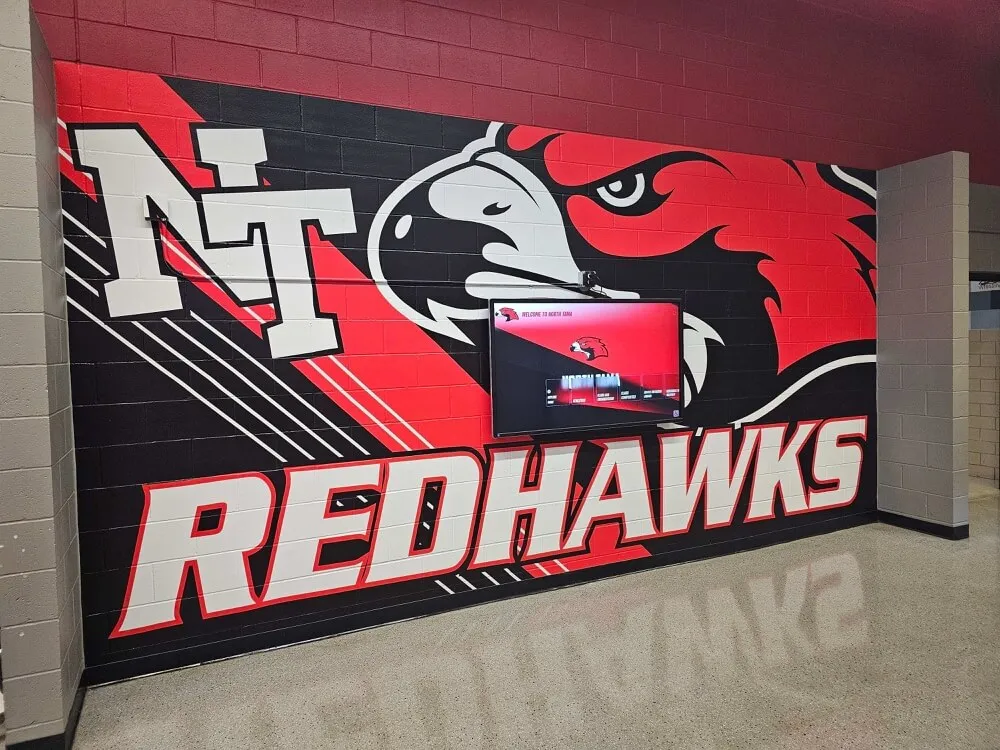
Honor walls in athletic hallways create a daily reminder of the character traits a program values, not just the wins
The Coaches Award and Long-Term Program Identity
A coaches award program that runs consistently across decades does something statistical records cannot: it creates a documented history of what a program valued at its core. A future athlete who researches the program’s history and finds that coaches award recipients across thirty years include players from every roster position—not just team stars—learns something fundamental about what that program rewards.
This long-term identity function is why the award matters institutionally, not just to individual recipients. Athletic programs that build sustainable traditions recognize that each season’s choices accumulate into a record. That record, visible in a digital display or on the program’s website, becomes a recruiting and culture-building asset.
According to the National Federation of State High School Associations (NFHS), more than 7.7 million students participated in high school sports during the 2022–23 school year. Across that population, character-based awards like the coaches award serve a recognition function that statistical honors alone cannot fill—reaching athletes who contribute in ways that box scores do not capture.
For programs building alumni recognition structures that include multi-decade honors, the alumni recognition program guide offers applicable principles on how recognition archives create lasting community engagement well beyond the graduation year.
Schools in competitive athletic environments—particularly those participating in state championship programs—benefit from connecting coaches award records to broader athletic excellence documentation. The Texas UIL state championships complete guide demonstrates how institutional record-keeping at the state championship level reinforces the value of maintaining parallel records for character-based honors.
Connecting the Coaches Award to Hall of Fame Pipelines
Many schools use coaches award history as one data point in hall of fame nomination consideration. An athlete who received the coaches award in multiple seasons holds a documented record of character-based program contribution that complements any statistical argument for induction.
Programs interested in how tiered recognition from individual program awards scales to permanent hall of fame documentation can look at the Big XII college basketball hall of fame display guide for concrete examples of how institutions structure recognition history across award levels.

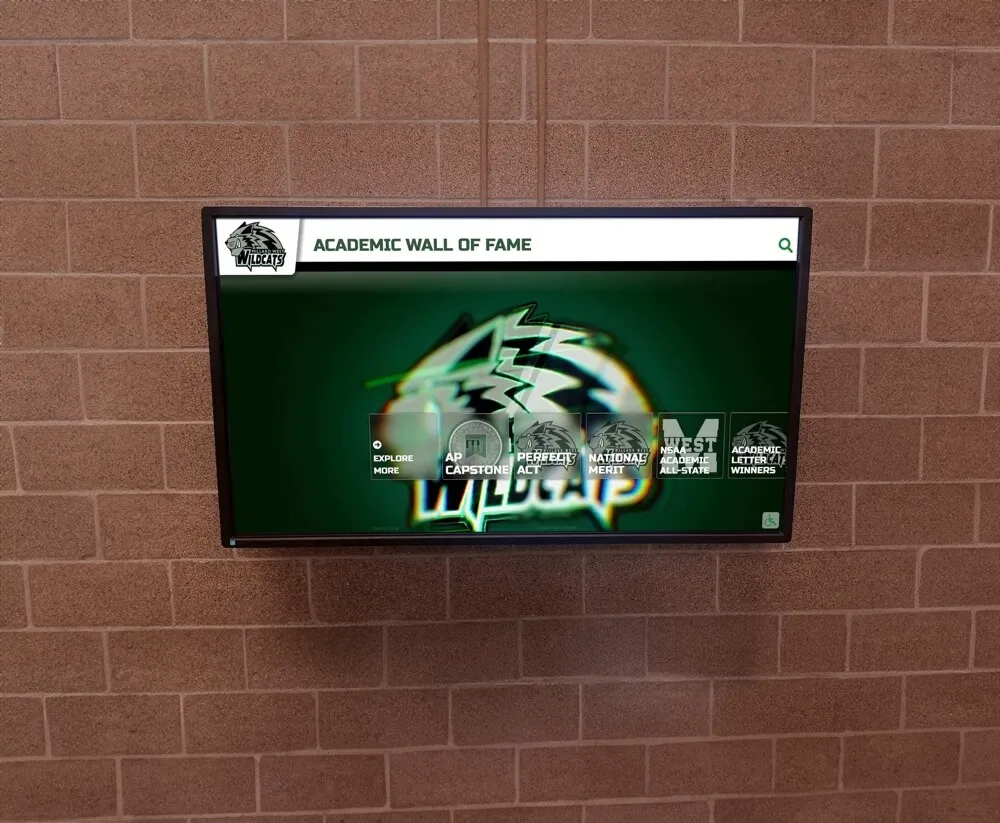
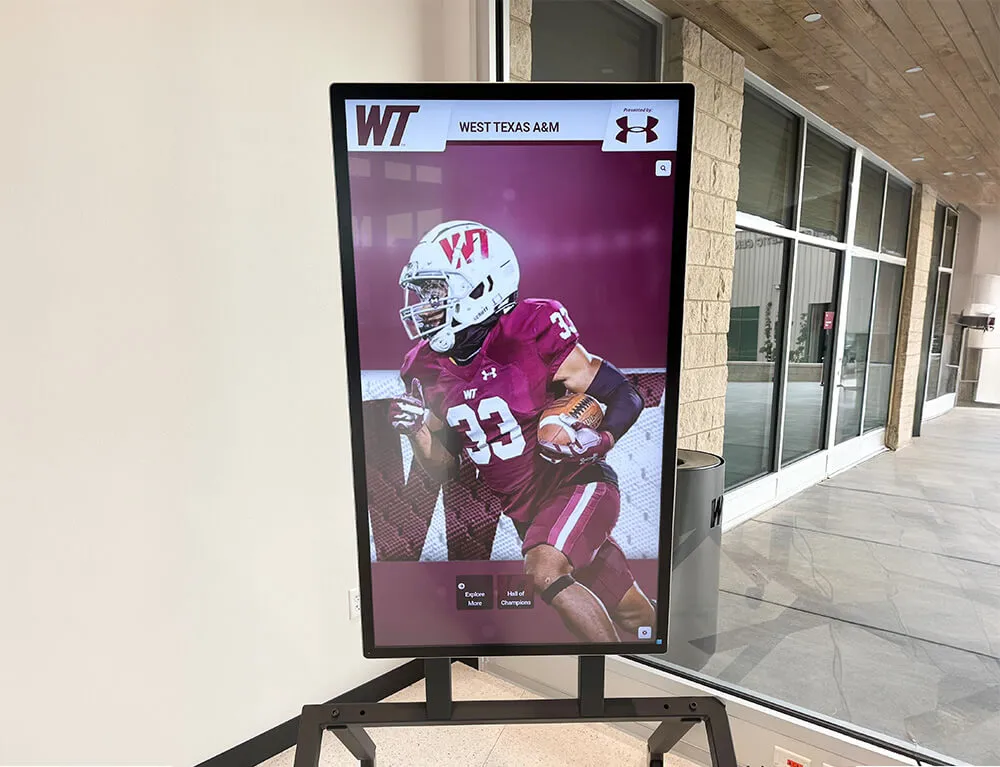
Touchscreen recognition systems display coaches award history alongside hall of fame profiles and statistical records in a single searchable archive
Schools that recognize both athletic and non-athletic contributors to school culture amplify the coaches award’s signal by situating it within a school-wide recognition philosophy. The teacher end-of-year recognition guide explores how schools position end-of-year recognition as part of a broader culture of honoring excellence across departments—a framework that connects directly to how coaches awards should be communicated to the full school community. For programs building branded recognition materials that accompany physical and digital displays, the civil air patrol unit recognition and logo guide illustrates how visual identity reinforces the permanence and prestige of organizational honors.
Frequently Asked Questions
What does the coaches award mean in sports?
The coaches award in sports means a discretionary honor given by the coaching staff to the athlete who best demonstrated the program's core values—typically effort, character, leadership, or coachability—in ways that go beyond statistical performance. It is given entirely at the coaching staff's discretion and reflects what coaches directly observed across practices, games, and team interactions throughout the season. Unlike MVP or all-conference honors, the coaches award is not based on votes or statistics; it is a direct expression of what the coaching staff values most.
How is a coaches award different from an MVP award?
The MVP award recognizes the athlete with the greatest overall statistical and competitive impact on the team's performance during the season. The coaches award recognizes the athlete who best embodied the program's values—effort, character, leadership—whether or not they were the top statistical contributor. An athlete can receive both in the same season, but the awards measure different things: an MVP measures game performance, while the coaches award measures daily behavior and character across the full season.
How should coaches select who receives the coaches award?
Coaches should follow a structured process: review the written criteria as a staff before evaluation, have each coach independently nominate candidates before group discussion, discuss observations against the criteria to find consensus, and document the specific rationale before announcing the recipient. This process ensures the selection reflects genuine evaluation against stated criteria rather than informal preference, which protects the award's credibility across seasons and coaching staff transitions.
How should schools display coaches award winners?
Schools can display coaches award winners on physical plaques in trophy cases, digital record boards that list award history without recurring print costs, or interactive touchscreen recognition systems that include athlete photos, rationale, and searchable records across decades. The most effective displays show the full history of recipients—not just the current year—and include a brief description of why each athlete received the award, so the display communicates program values to visitors who were not present at the ceremony.
What information should be documented for each coaches award recipient?
For each coaches award recipient, athletic departments should document the athlete's full name, graduation year, sport and season, a 2–3 sentence rationale describing the specific behaviors that earned the award, the name of the head coach who made the selection, and a photo from the season. This record should be completed before the banquet announcement and archived in a permanent system—a digital recognition platform, the athletic department's website, or a cloud-based record system—to ensure continuity across coaching changes.
Conclusion: Defining the Coaches Award Protects Its Meaning
The coaches award meaning holds only as long as the program around it is deliberate. An award given without written criteria fades into sentiment. An award given through a structured process, documented with a rationale, and displayed permanently in the school’s athletic facilities becomes an institutional statement—one that outlasts any single coach, season, or athlete.
Athletic directors who invest in the four elements covered in this guide—clear criteria, a structured selection process, a display-ready documentation record, and permanent display infrastructure—build a coaches award program that current athletes understand is worth pursuing and that alumni will recognize decades later as a genuine reflection of program character.
Schools ready to modernize how they display and archive coaches award records—alongside hall of fame inductees, statistical record holders, and other athletic honors—can see what a complete digital recognition solution looks like by scheduling a demonstration.
Preserve Every Coaches Award Record Permanently
Rocket Alumni Solutions builds touchscreen halls of fame and digital recognition displays that keep coaches award recipients—and every other program honor—visible, searchable, and permanently documented. See how schools use digital recognition to honor athletic character alongside achievement.
Request a Demo