


Every award a deaf school track program earns belongs to the athletes who trained for it, the families who traveled to watch, and the community that follows the program season after season. When those honors appear on a deaf school track honors display, the labels carry the whole story — which competition, which season, which authority granted the recognition, and what exactly the award represents. A school’s Team of the Year award from NDIAA/USADTF, the same school’s Team Overall Champions title at the Berg/Seeger Classic, a student’s appearance on the Prep Top 50 Best Performances list, and a verified record are four distinct recognitions, each established by a different process and carrying a different meaning. This guide is for athletic directors and recognition coordinators who want to present each honor accurately on a digital display.
This is a digital content-labeling guide, not eligibility advice, classification guidance, or coaching instruction.
A school’s track program might earn more than one honor in a single season and appear in more than one source document. The challenge for recognition staff is not just collecting that information — it is presenting each honor with the label that accurately reflects its authority, its scope, and what a visitor needs to understand about what was earned.

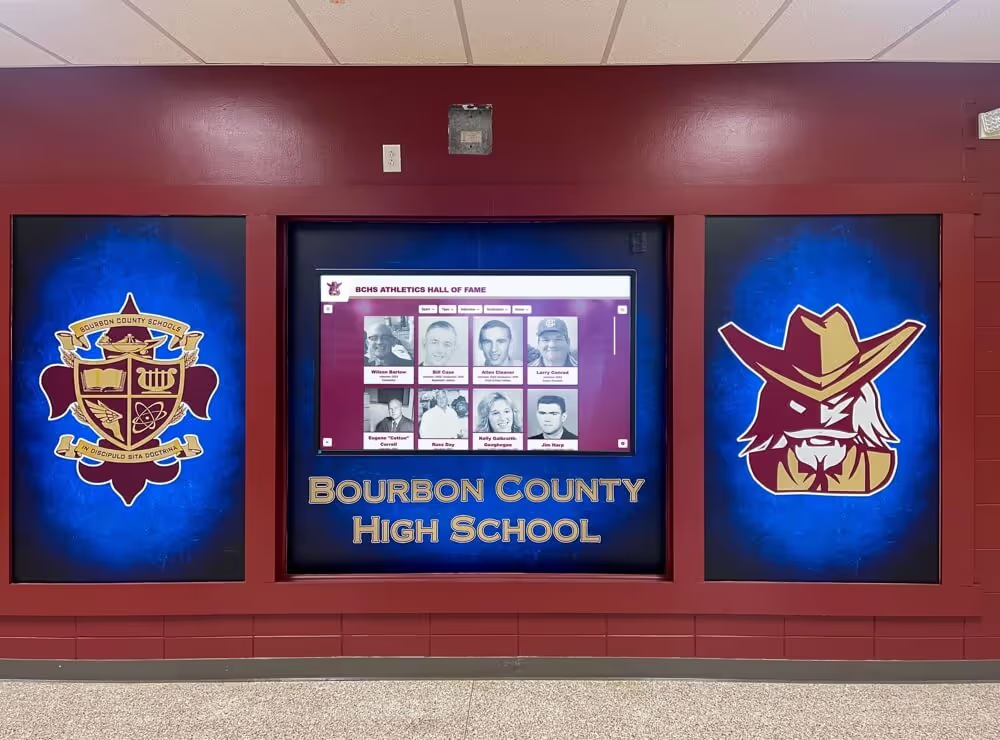
A well-organized digital records display lets families navigate directly to the honor they are looking for — without needing staff to explain what each entry means.
Four Honor Types That Can Coexist in a Single Season
The clearest way to explain the labeling challenge is to show what a school’s digital display might hold for a single track program in a single year — and how much each entry differs from the others.
| Honor Type | What It Is | Established By | What It Does Not Establish |
|---|---|---|---|
| Team of the Year | A season-wide award granted by NDIAA/USADTF based on submitted performances across all track and field events | NDIAA/USADTF committee, announced after the season | A specific meet result, a meet championship title, or a performance record |
| Meet Team Overall Champions | The team that won the team scoring at a specific invitational meet | The Berg/Seeger Classic meet standings for that year | A season-wide ranking, a school record, or a performance-list entry |
| Performance-List Entry | An individual performance ranked in the NDIAA/USADTF Prep Top 50 Best Performances for that season | The submitted season-performance ranking | An award title, a meet result, or a school record |
| Verified Record | A school or meet record confirmed by the relevant authority as the best in a defined category | The school’s own records process or the meet authority, with source documentation | Automatic elevation from an award, a meet result, or a performance ranking alone |
Each row describes a different kind of evidence. A Team of the Year award is not evidence of a specific meet win. A meet championship is not evidence of a school record. A performance-list entry is not evidence of an award. Each needs its own label, its own source citation, and its own section or entry on the display.
Team of the Year: A Season-Wide Award, Not a Meet Result
The 2025 Prep Top 50 Best Performances and Awards announcement, published June 14, 2025, by the National Deaf Interscholastic Athletic Association (NDIAA) and USA Deaf Track & Field (USADTF), announced the honors for both boys and girls: Team of the Year, Track Athlete of the Year, Field Athlete of the Year, and Coach of the Year. The announcement notes that 21 boys’ teams and 17 girls’ teams submitted their top performances that season.
The source names the award as Team of the Year DI and Team of the Year DII, with separate designations for boys and girls. The DI/DII division labels appear in the USADTF’s historical Team of the Year record for seasons from 2022 onward. Earlier years on that page list a single team per gender without a division label — blank historical cells are not evidence that no team existed; they may reflect a different award structure for those seasons.
For recognition coordinators, the USADTF Team of the Year page documents recipients going back to 1939, organized by year with Boys and Girls columns. This is the authoritative source for the season award. The annual announcement linked above is the source for a specific year’s award recipients and the award titles used in that year.
What this means for a display label:
- Use the award title exactly as published: “Team of the Year DI” or “Team of the Year DII,” not “championship” or “first place.”
- Include the awarding organization (NDIAA/USADTF), the season year, and the division label as the source records them.
- Do not describe this award as a meet result or a specific competition championship. The award reflects submitted performances reviewed across a season; it is not the outcome of a single competition day.
- The DI/DII labels do not correspond to NCAA divisions. Do not use them to infer enrollment size, school classification, or eligibility criteria. Apply only the labels the source uses.
The same approach applies to individual season honors — Track Athlete of the Year, Field Athlete of the Year, Coach of the Year — each announced separately and each requiring its own label distinct from meet-day awards. For more on how individual award titles should travel accurately from announcement to display, see the guidance on all-conference award recognition and digital display labeling.
Berg/Seeger Classic Team Overall Champions: A Specific Meet Honor
The Berg/Seeger Classic is a separate invitational meet with its own award structure. The Berg/Seeger Classic Award Winners page lists team and individual honors under two separate sections: the Ruth T. Seeger Award (Girls) and the Thomas O. Berg Award (Boys). Within each section, the Team Overall Champions column records the team that won the meet’s overall team scoring for that year.
This is a meet-specific honor. The team listed as Team Overall Champions at the Berg/Seeger Classic won the team standings at that specific invitational meet. The award winners page also records individual meet honors — Best Track Athlete, Best Field Athlete, and All Around Athlete — each recognized at the meet itself.
What this means for a display label:
- Use the meet’s name: Berg/Seeger Classic.
- Use the award’s exact title as it appears in the source: “Team Overall Champions,” not “Team of the Year” or “season champion.”
- Include the year and the gender section under which it appears: Ruth T. Seeger Award (Girls) or Thomas O. Berg Award (Boys).
- Cite the Berg/Seeger Classic Award Winners page as the source document, not the NDIAA season announcement.

Separate entries for separate honors — a digital display that keeps each recognition in its own clearly labeled section helps families understand what each achievement represents without having to interpret the distinction themselves.
Why the Season Award and the Meet Championship Are Always Separate Entries
The clearest demonstration that Team of the Year and Team Overall Champions at the Berg/Seeger Classic are different honors is to compare them directly for a single year. In 2025, the NDIAA/USADTF Boys Team of the Year DI was Maryland School for the Deaf. The Berg/Seeger Classic Boys Team Overall Champions for 2025 was Texas School for the Deaf. Two separate teams held the two honors in the same season.
Neither award diminishes the other. Each belongs in its own display entry. A display that labels either as simply “2025 Boys Team Champion” leaves a family unable to tell which honor it describes. A display that merges the two into one entry implies a connection that the two separate awarding processes do not establish.
The same school can appear in both the NDIAA Team of the Year column and the Berg/Seeger Classic Team Overall Champions column in a given year — that is a coincidence of outcomes in that season, not an equivalence of the two honors. Display them as two separate entries, with two separate labels and two separate source citations, so the reader knows exactly what each one means.
Performance-List Entry: What the Top 50 List Does and Does Not Establish
Appearing on the NDIAA/USADTF Prep Top 50 Best Performances list means a submitted performance ranked among the top performances in its event among participating Deaf school athletes for that season. It is a performance ranking, not an award title.
For a display entry:
- Label it as a performance-list entry, not an award or championship.
- Include the event, the performance and its original units, the season, and the fact that the ranking is based on submitted performances.
- Do not describe a performance-list entry as a school record unless the school has separately verified that status through its own records process.
- Do not describe a performance-list entry as an award unless the source document grants an award title along with the ranking.
Participation in a season and submission of performances to a ranking list is not by itself a record or personal best unless those claims have been separately confirmed against authoritative documentation.
Verified Record: A Separate Determination with Different Evidence
A school record and a meet record are both separate from the honors described above. A school record is an institutional determination: the school’s own records authority — typically the athletic director — reviews documentation and confirms that a performance is the best in that event in the school’s history. A meet record is specific to that meet’s historical best in an event and is marked in the meet’s official results.
Neither a Team of the Year award, a meet team championship, nor a performance-list entry automatically becomes a school record. If a school wishes to display a school record, the determination must come from the school’s own records process, with documentation that traces the performance to an authoritative result.
For a display entry labeled as a verified record, the internal planning record should include the source document, the records authority who confirmed it, and the date of verification — even if not all of that detail appears in the public caption. For step-by-step guidance on auditing award data quality, reconciling names, titles, and dates across source records, see the related article on this site.
Comparing source results, rosters, and recognition entries is a practical starting point for the administrative task of reconciling source documents, athletic office records, and display entries before publishing recognition materials.
Staff Content-Planning Table
The table below is a blank editorial planning aid. These are suggested fields for internal staff use during the review process — they are not built-in fields in any particular software and they are not a required national schema. Fill in only approved public information. Not every field applies to every honor type; a Team of the Year entry will not have a meet date or a performance mark. Mark inapplicable fields as “N/A” rather than leaving them blank, so a future records custodian knows each field was considered.
| Suggested Field | Notes |
|---|---|
| Awarding organization | e.g., NDIAA/USADTF; Berg/Seeger Classic; school’s own records authority |
| Exact award title | Copy verbatim from the source: “Team of the Year DI,” “Team Overall Champions,” etc. |
| Season/year | As the source records it |
| Division/category as published | DI/DII if applicable; Boys/Girls; Ruth T. Seeger Award / Thomas O. Berg Award |
| Team or school approved public name | Use the name approved by the school for public recognition materials |
| Meet name and date (if applicable) | Required for meet-specific honors; N/A for season awards |
| Source URL | The specific page or document verified |
| Optional verified performance and units | Only if applicable and separately verified; N/A for team awards without a performance mark |
| Public caption | Draft of what will appear on the display |
| Reviewer name and date | Staff member who compared the entry against the source and approved the caption |
A Team of the Year entry will typically have an awarding organization (NDIAA/USADTF), an exact award title (Team of the Year DI or DII), a season/year, a division/category, an approved school name, a source URL, and a public caption. It will not have a meet date or a performance mark.
A meet championship entry will have the meet name and date, the award title (Team Overall Champions), the gender section (Ruth T. Seeger Award / Girls or Thomas O. Berg Award / Boys), a source URL from the meet’s award page, and a caption. It will not have a season-award organization or a performance mark.
A performance-list entry will have the event, the performance and original units, the season, and the source document (the annual Top 50 results). It will not have an award title or a meet championship designation.
A verified record will have the source document, the records authority, and the date of verification in the internal planning record. The public caption uses language that matches what has been confirmed.
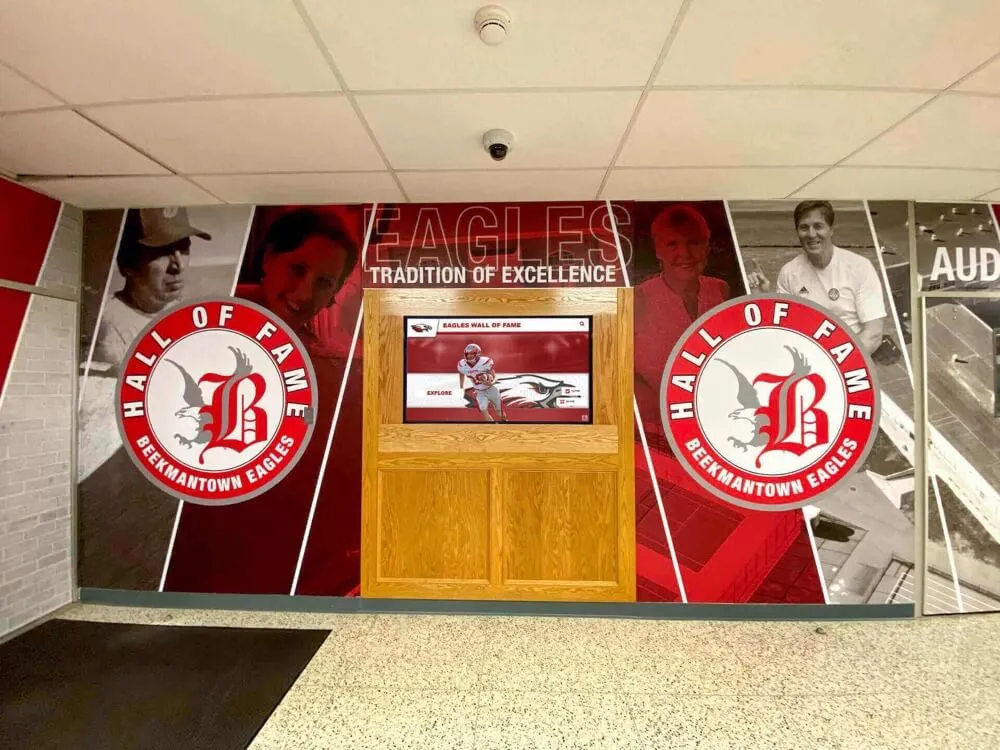
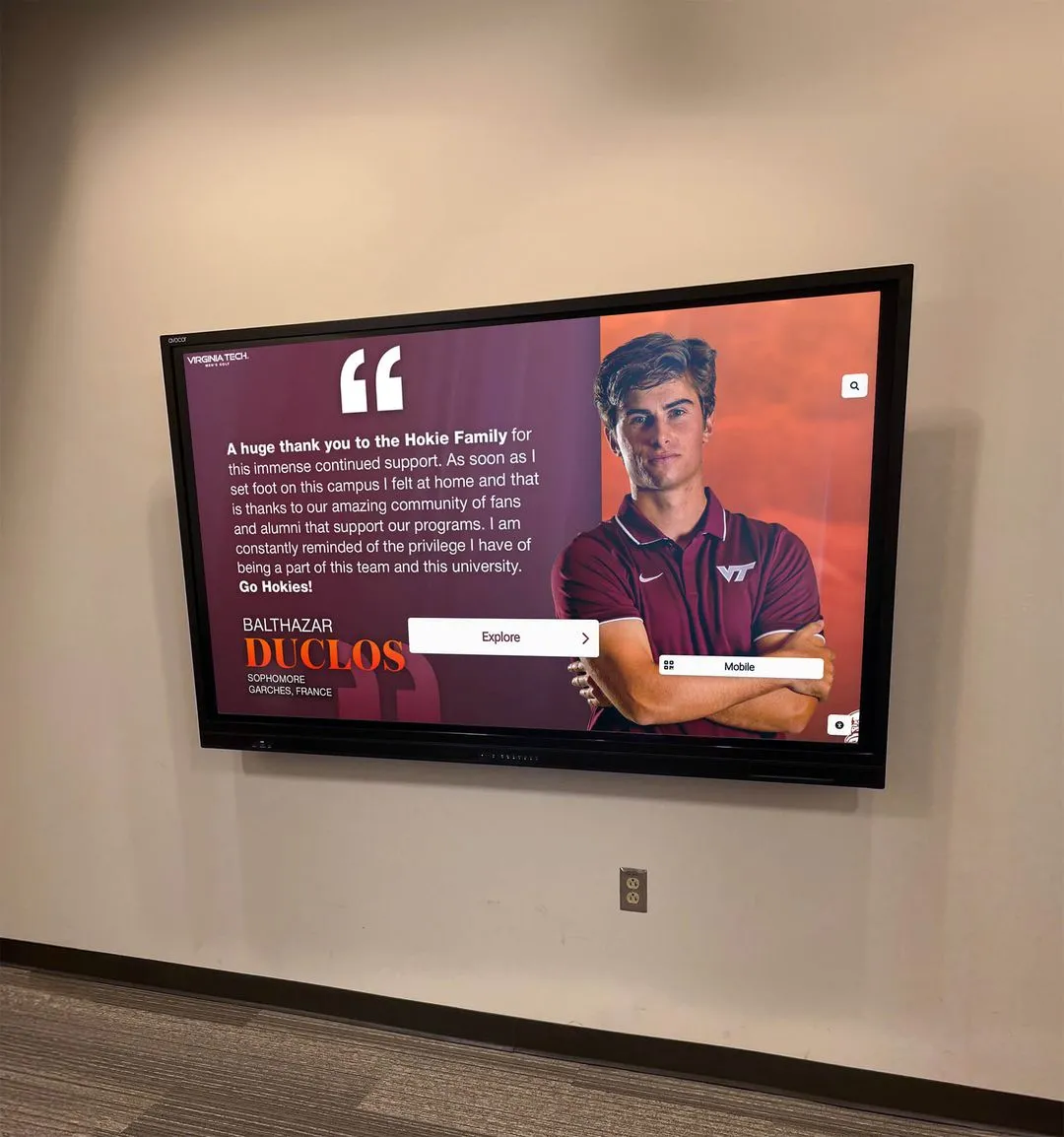
An interactive display organized by honor type lets families navigate directly to what they are looking for — a season award in one section, a meet championship in another — without needing prior knowledge of the administrative distinction.
Blank Caption Templates
The following are blank templates for each honor type. Fill in only information that has been verified from the authoritative source. Do not upgrade a meet championship to a season award, or a performance-list entry to a record, in the caption.
Team of the Year caption template:
[School approved public name] — [Exact award title as published, e.g., “Team of the Year DI”], [Boys/Girls], [Season/Year]. Awarded by [Awarding organization, e.g., NDIAA/USADTF]. Source: [Source URL].
Meet championship caption template:
[School approved public name] — Team Overall Champions, [Boys/Girls], [Meet name, e.g., “Berg/Seeger Classic”], [Year]. Source: [Source URL].
Performance-list entry caption template:
[Athlete approved public name], [School] — [Exact event and category], [Performance and original units], listed in the [Season/Year] [List name, e.g., “Prep Top 50 Best Performances”]. Source: [Source URL].
Verified record caption template:
[Athlete or team approved public name], [School] — [Exact event and category], [Performance and original units], [Competition name and season/year]. [Record scope: school record / meet record] — verified [Month Year] by [Reviewer name].
Adjust each template to reflect exactly what has been verified. If school-record status has not been confirmed through the school’s own records process, do not include a record-holder label in the caption. A strong performance or a meet finish deserves accurate recognition — not an upgraded label that will require correction later.
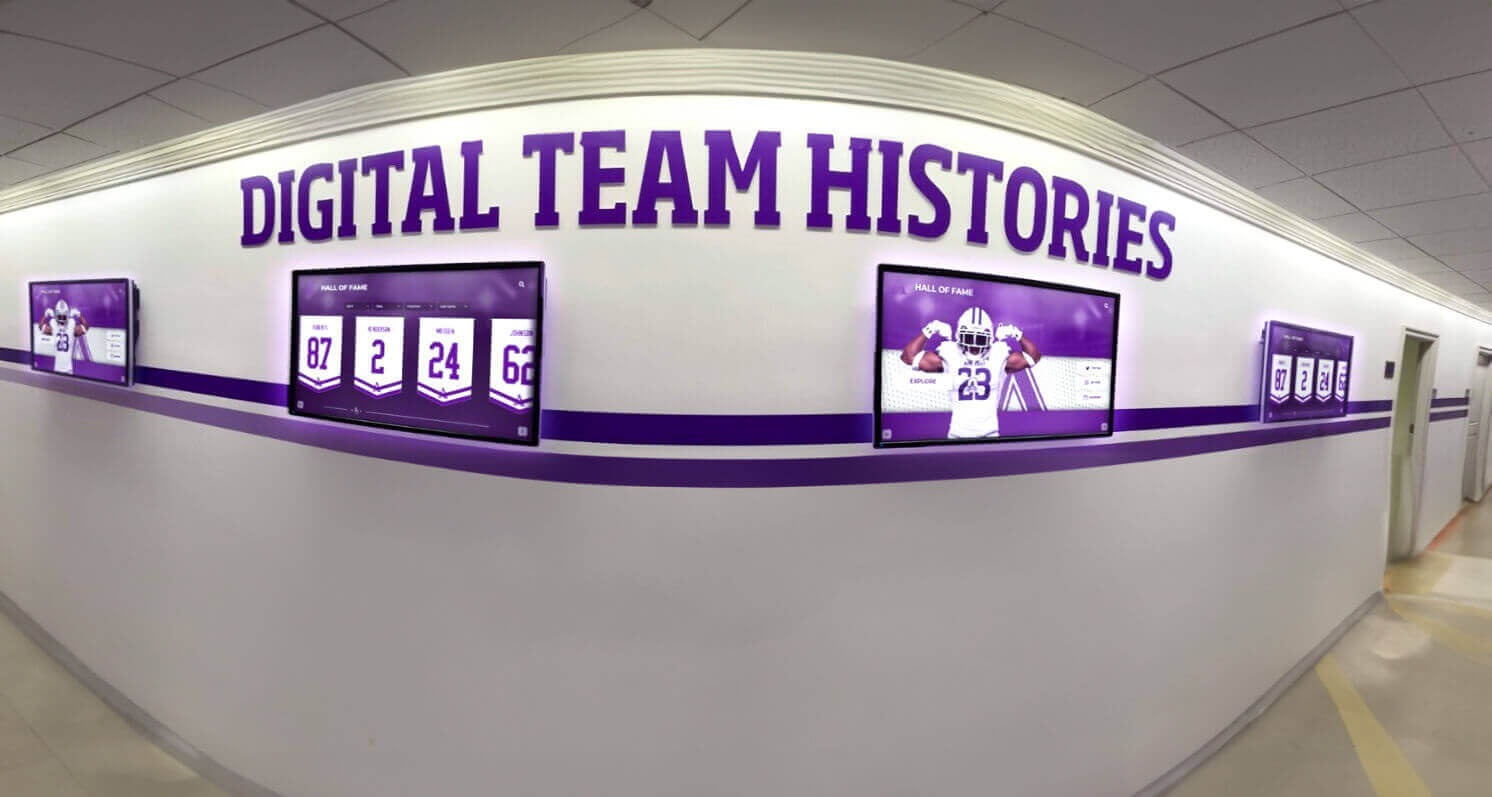
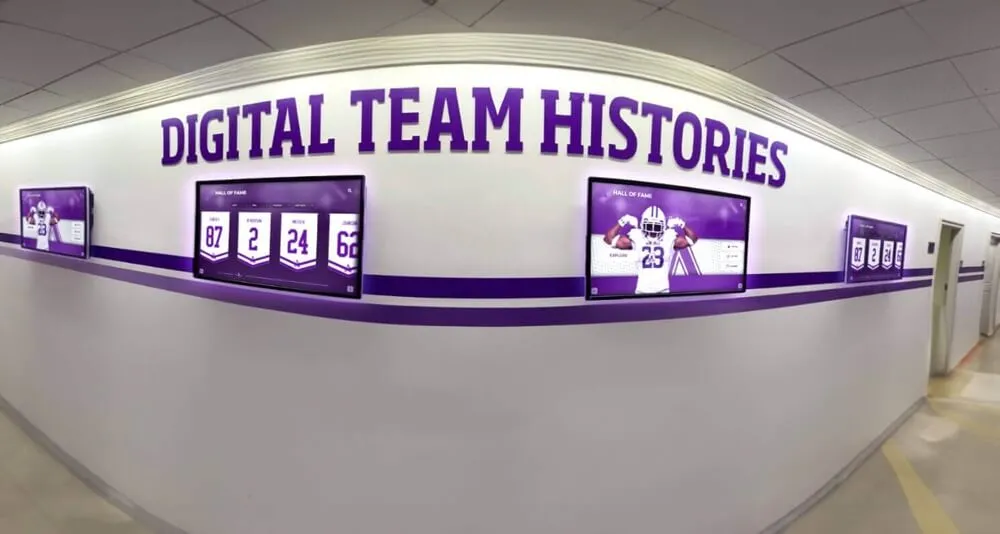
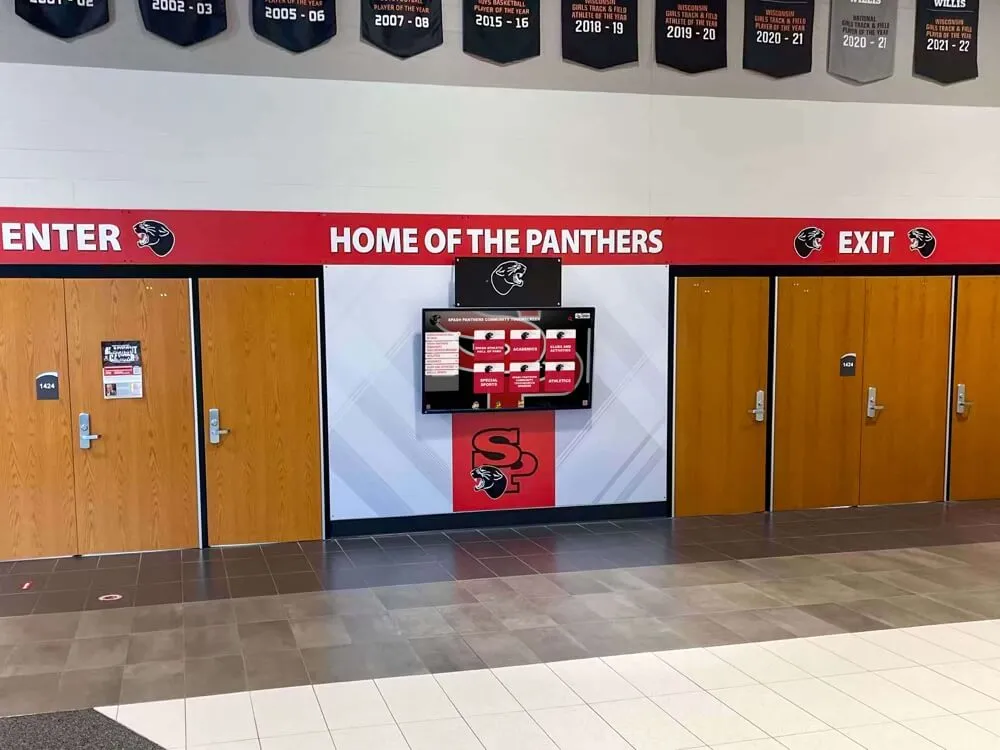
Digital hallway displays organized by honor type give families and alumni a clear account of what each season's recognition represents — season awards, meet championships, and performance records presented separately.
Human Review: Verify, Label, Preview, Publish
Before any honor goes live on your display, a staff member should complete four steps:
Verify — Pull the authoritative source for the specific honor. For Team of the Year, that is the NDIAA/USADTF annual announcement and the historical Team of the Year page. For Berg/Seeger Classic honors, that is the award winners page for the specific year. For a performance-list entry, that is the annual Top 50 results document. Confirm the award title, division label, season, and team or school name exactly as they appear in the source.
Label — Apply the exact title from the source. Do not combine honor types, merge labels, or describe a meet championship as a Team of the Year or vice versa. Write the record scope using language that matches what has been verified — not what has been assumed. If the source records a DI designation, that label belongs on the display.
Preview — Before the entry goes live, review it in context alongside your other recognition entries. Can a visitor tell this entry apart from entries for other honor types? Is the awarding organization and season visible? Does the entry appear in a section that corresponds to its honor type, so a family can find it without prior knowledge of the distinction between season awards and meet championships?
Publish — Activate the entry after the above checks are complete. Record the reviewer name and approval date in your internal planning table. Keep the planning table and source documentation in your school archive. These are not discarded when the display goes live.
This is a staff planning process — not an automated import or eligibility verification. Your display software presents what your staff has verified and approved; it does not validate award claims, verify record status, or automatically synchronize data from USADTF or Berg/Seeger Classic sources. Rocket Alumni Solutions helps organizations present approved photos and achievement stories through interactive recognition displays, giving staff a platform to organize season awards, meet championships, performance entries, and verified records in clearly separated, accurately labeled sections.
For related guidance on category-specific labeling for track results, including how record scope labels differ from meet finish labels, see the companion guide on displaying track record categories on a digital record board.

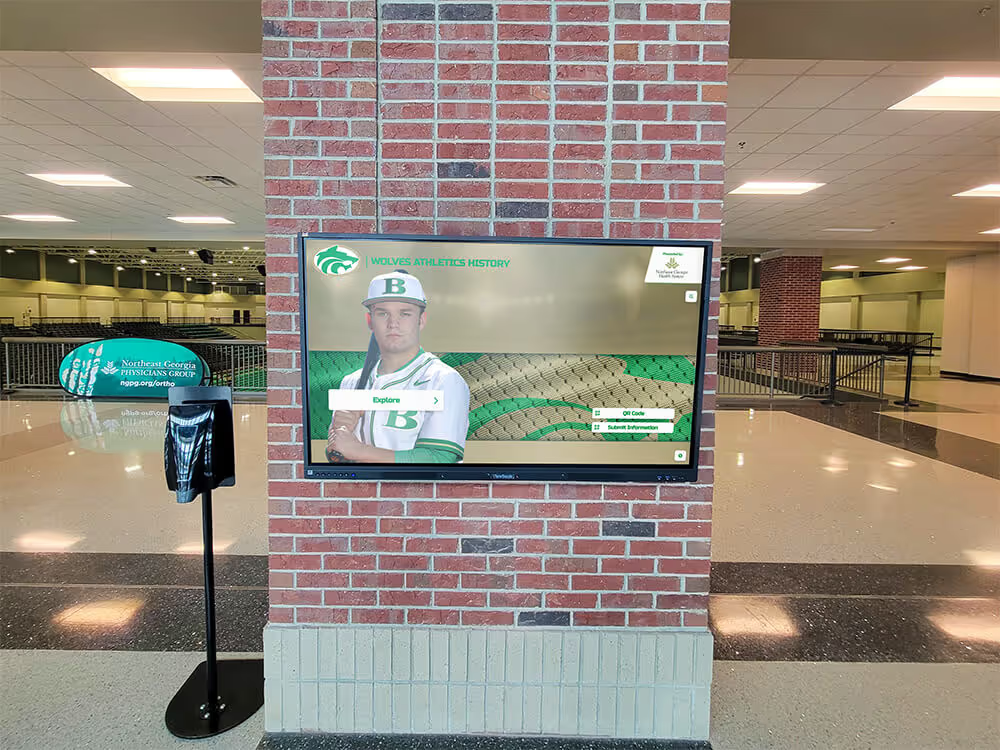
Organized by honor type and season, a digital recognition display gives families the full picture of what a track program has earned — without requiring them to interpret administrative distinctions on their own.
Frequently Asked Questions
What is the difference between Team of the Year and Team Overall Champions at the Berg/Seeger Classic?
Team of the Year is a season-wide award granted by NDIAA/USADTF based on submitted performances across all track and field events by participating teams throughout the season. Team Overall Champions at the Berg/Seeger Classic is the team that won the team scoring at that specific invitational meet. The two honors are established by different processes, can go to different teams in the same season, and require separate display entries with separate labels.
Can the same school appear as Team of the Year and Team Overall Champions in the same year?
Yes. The same team can win both in a given season — but that is a coincidence of outcomes, not an equivalence of the honors. Each should still appear as a separate entry on your display, with its own label and source citation, so visitors understand what each recognition represents and which authority granted it.
Does a DI designation in the NDIAA/USADTF Team of the Year award correspond to NCAA Division I?
No. The DI and DII labels in the USADTF Team of the Year award reflect the award structure used by NDIAA/USADTF for that season’s competition groupings. They are not NCAA divisions. Do not use them to infer enrollment size, athletic program tier, or eligibility criteria. Apply only the labels the source uses for the year in question.
What evidence is required to label a performance as a school record on a display?
A school record requires the school’s own records authority — typically the athletic director — to review documentation and confirm the performance is the best in that event in the school’s history. Appearing on the Prep Top 50 list, winning a meet, or receiving a season award does not automatically establish a school record. The determination must come from the school’s own records process, with a source document the school can trace back to the authoritative result.
How do I find the authoritative source for NDIAA/USADTF Team of the Year and Berg/Seeger Classic honors?
For Team of the Year, the annual announcement is published on the USADTF website, typically in June following the prep season. Historical recipients by year appear on the Team of the Year page. For Berg/Seeger Classic honors, the Award Winners page lists Team Overall Champions and individual meet awards by year under the Ruth T. Seeger Award (Girls) and Thomas O. Berg Award (Boys) sections. Use the source page directly — do not infer one honor from the other.