



Walking across the graduation stage represents one of life’s most significant achievements, and the colorful honors cords graduation ceremonies feature tell powerful stories about each student’s academic journey. These braided cords draped over graduation gowns aren’t merely decorative—they serve as visible recognition of specific academic achievements, from maintaining exceptional grade point averages to demonstrating excellence in particular subjects or completing prestigious academic programs.
Yet confusion often surrounds graduation cord meanings. Students and families wonder what different colors signify, which achievements warrant which cords, and how these traditions originated. Schools struggle to ensure consistent recognition policies, while graduates sometimes miss opportunities to wear cords representing achievements they’ve rightfully earned. Meanwhile, the proliferation of cords for various accomplishments has led some institutions to reconsider how they recognize academic excellence during commencement ceremonies.
This comprehensive guide explores everything you need to know about graduation honors cords—their history and symbolism, the meanings behind different colors, standards for awarding various cords, and how modern schools enhance these traditions through permanent recognition systems that extend beyond a single ceremony.
Graduation cords represent one of the most visible forms of academic recognition, providing immediate visual acknowledgment of student achievement during commencement ceremonies attended by families, friends, and community members. Understanding the traditions, meanings, and appropriate use of honors cords helps schools create meaningful recognition systems while ensuring deserving students receive appropriate acknowledgment.

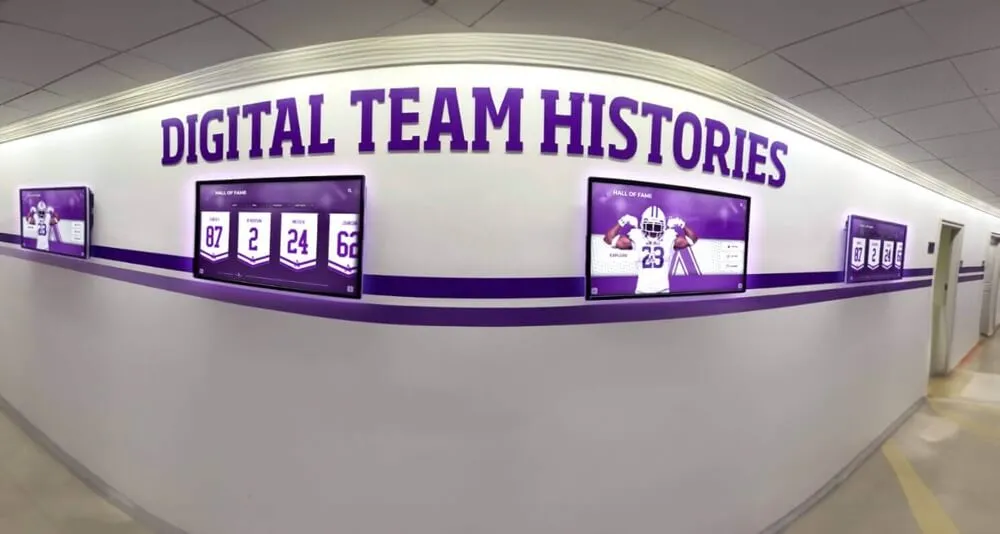
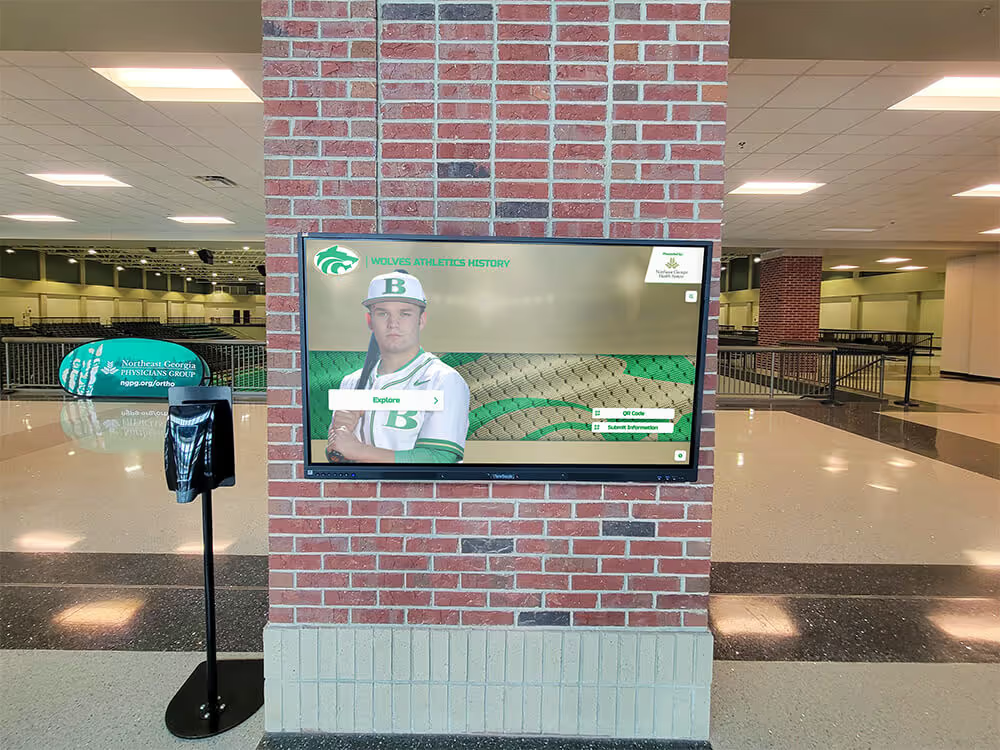
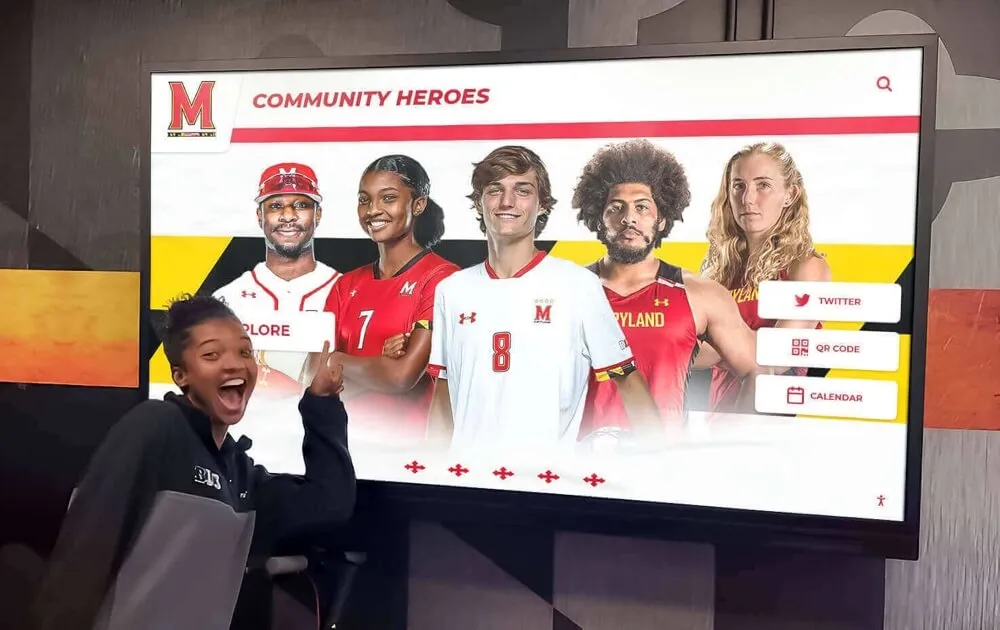
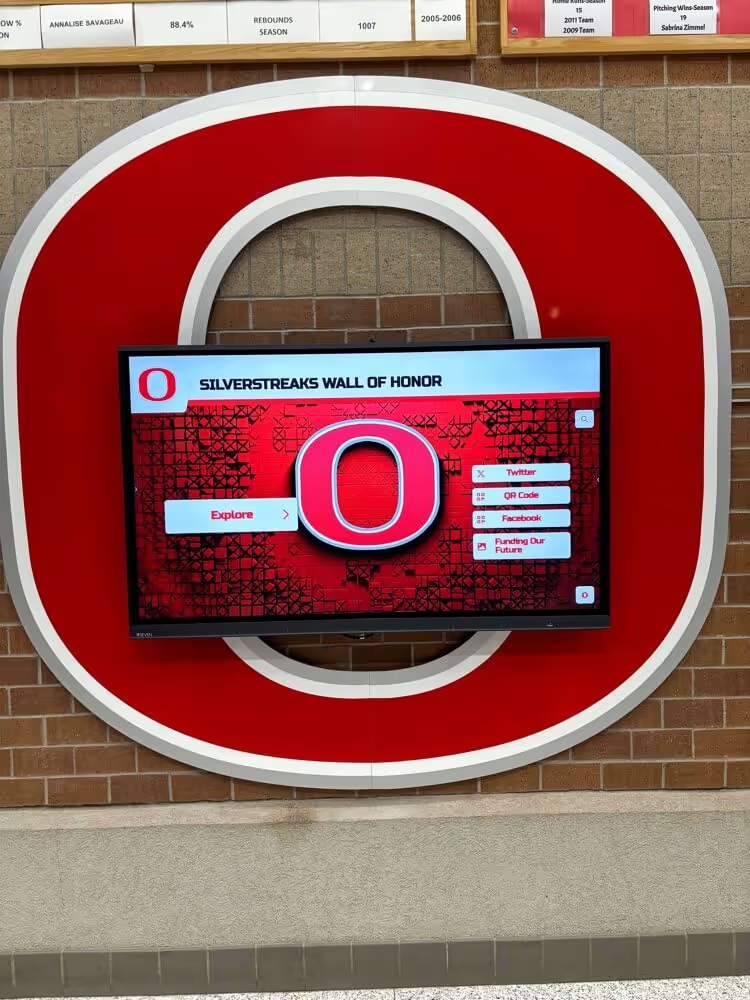
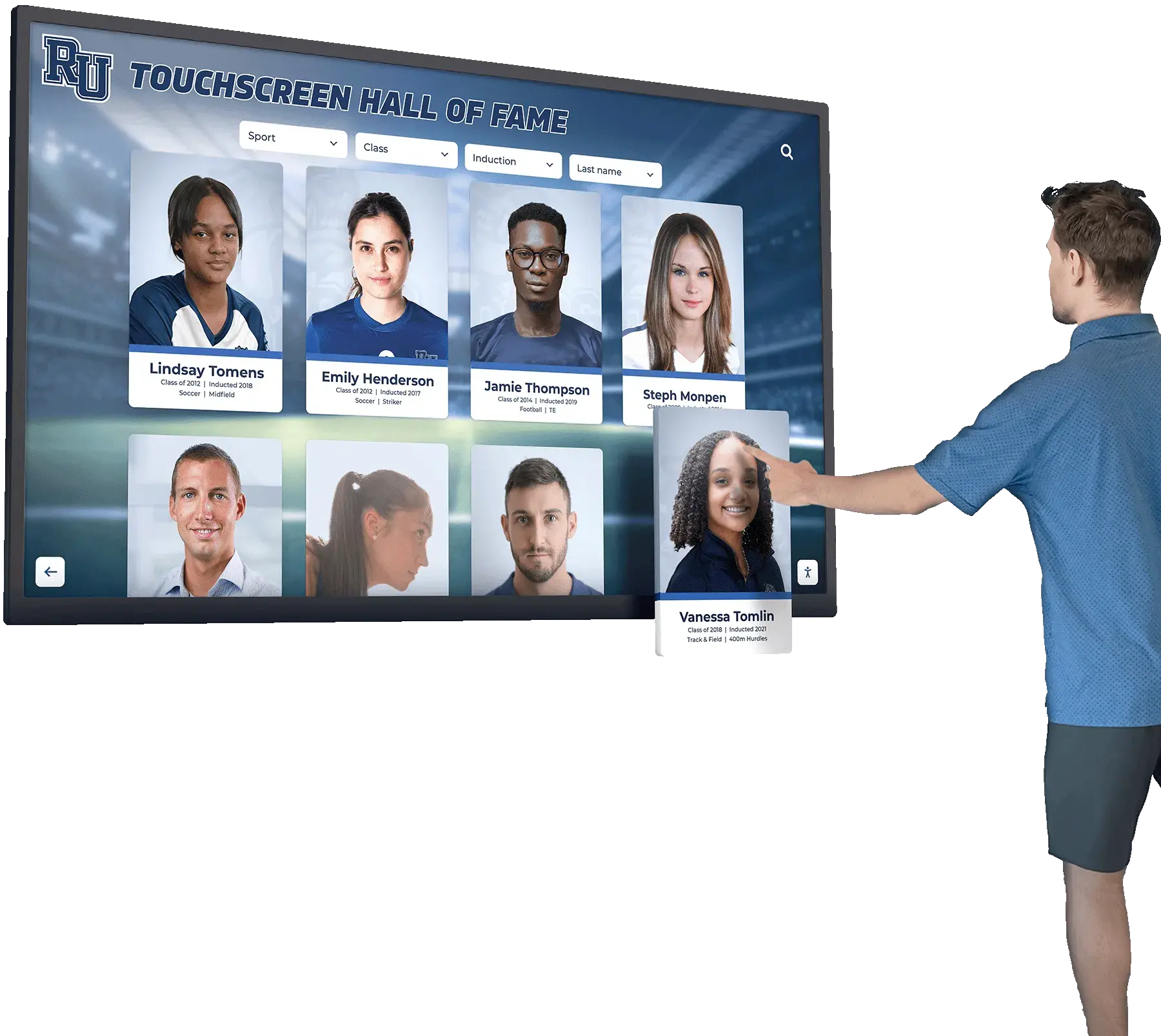
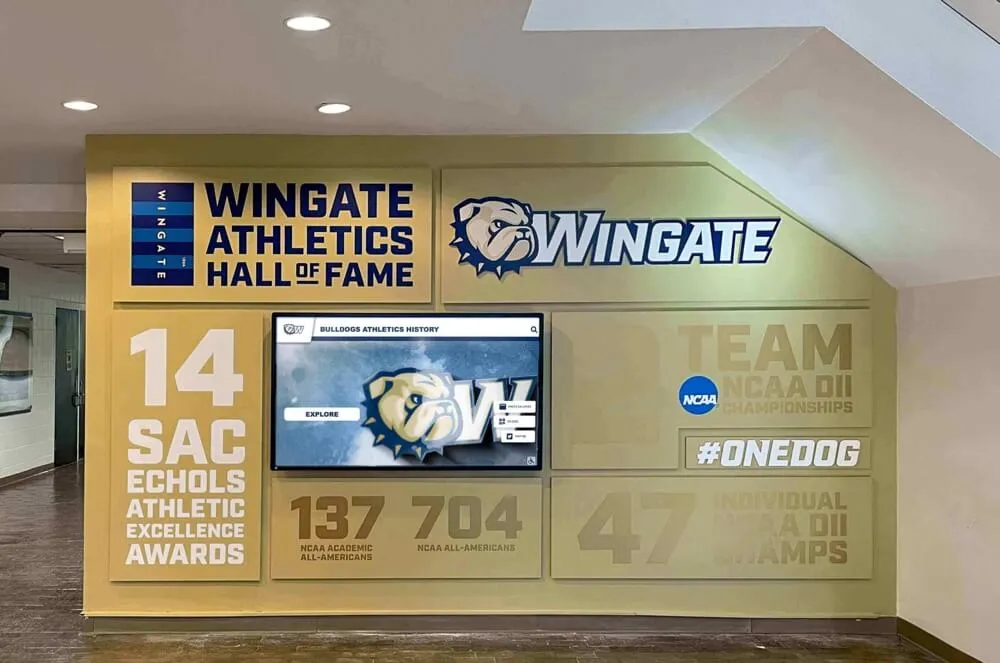
Modern recognition systems complement graduation cord traditions by providing year-round visibility for academic achievements
The History and Purpose of Graduation Honors Cords
Understanding the origins of academic regalia helps contextualize modern graduation cord traditions.
Medieval University Origins
Academic regalia traces back to medieval European universities:
Early Academic Dress
- Scholars and clergy wore distinctive robes denoting education and status
- Hoods and gowns identified academic rank and field of study
- Color symbolism communicated specific meanings within academic communities
- Ceremonial dress distinguished educated individuals in broader society
American Adaptation
- Colonial colleges adopted European academic dress traditions
- American institutions developed unique variations and additions
- Honors cords emerged as American innovation in academic recognition
- Visual hierarchy created clear distinction between achievement levels
The tradition of wearing specific cords to denote honors represents a relatively modern development compared to other academic regalia elements, with widespread adoption occurring primarily during the twentieth century as American higher education expanded and standardized recognition practices.
Functions of Graduation Cords
Honors cords serve multiple important purposes within graduation ceremonies:
Immediate Visual Recognition
- Cords provide instant acknowledgment of academic achievement
- Family and community members can identify honored graduates
- Visual differentiation celebrates excellence during communal ceremony
- Photographic documentation preserves recognition permanently
Motivation and Aspiration
- Visible recognition motivates underclassmen to pursue academic excellence
- Cord traditions create clear achievement goals for students
- Recognition reinforces institutional values around academic achievement
- Celebration of achievement encourages continued educational pursuits
Learn how schools extend recognition beyond ceremonies through academic recognition programs that celebrate diverse excellence.
Institutional Pride and Tradition
- Graduation cord traditions become part of school identity
- Consistent recognition practices build institutional culture
- Ceremonial elements create memorable experiences for graduates
- Recognition traditions connect current students with institutional history
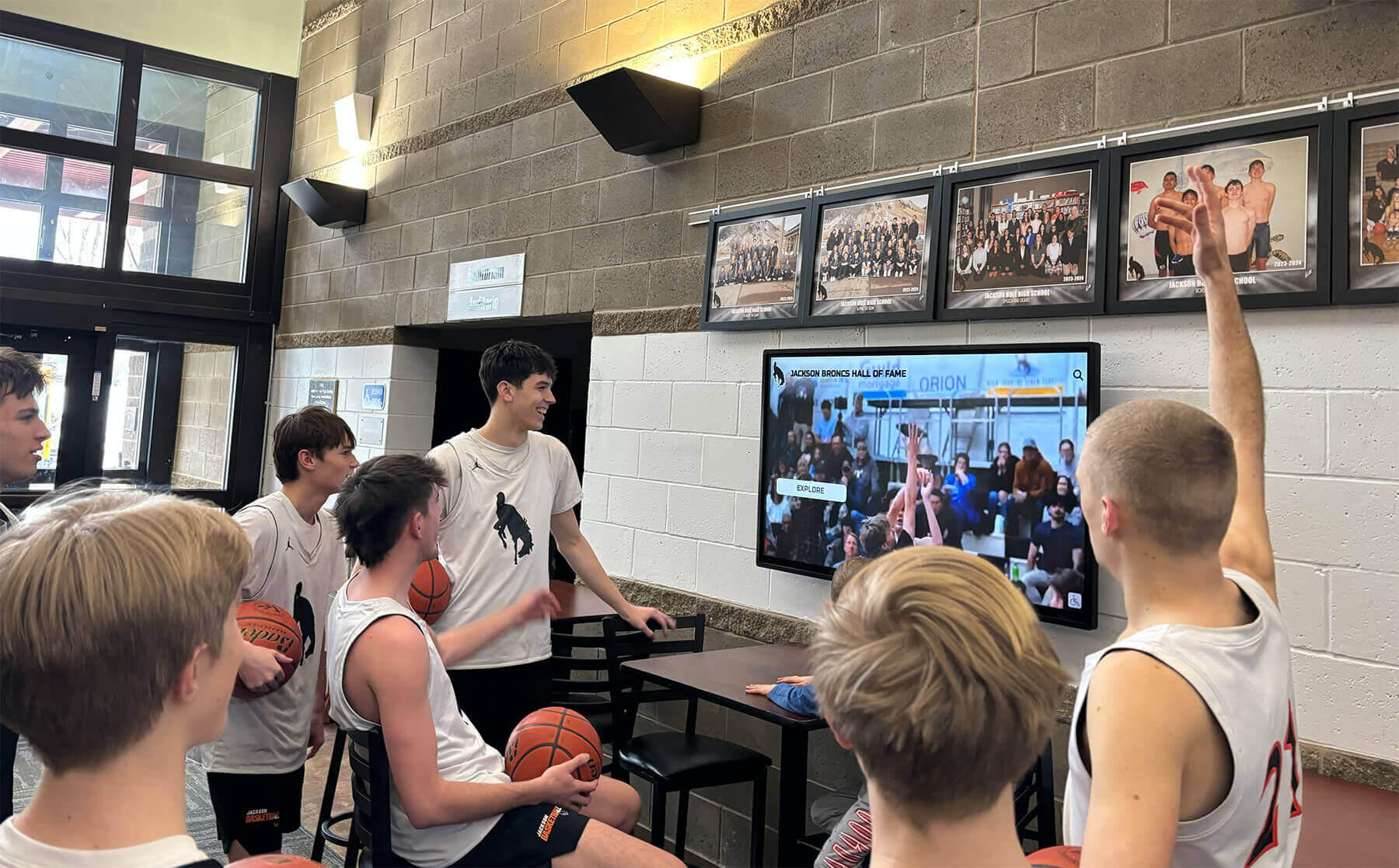
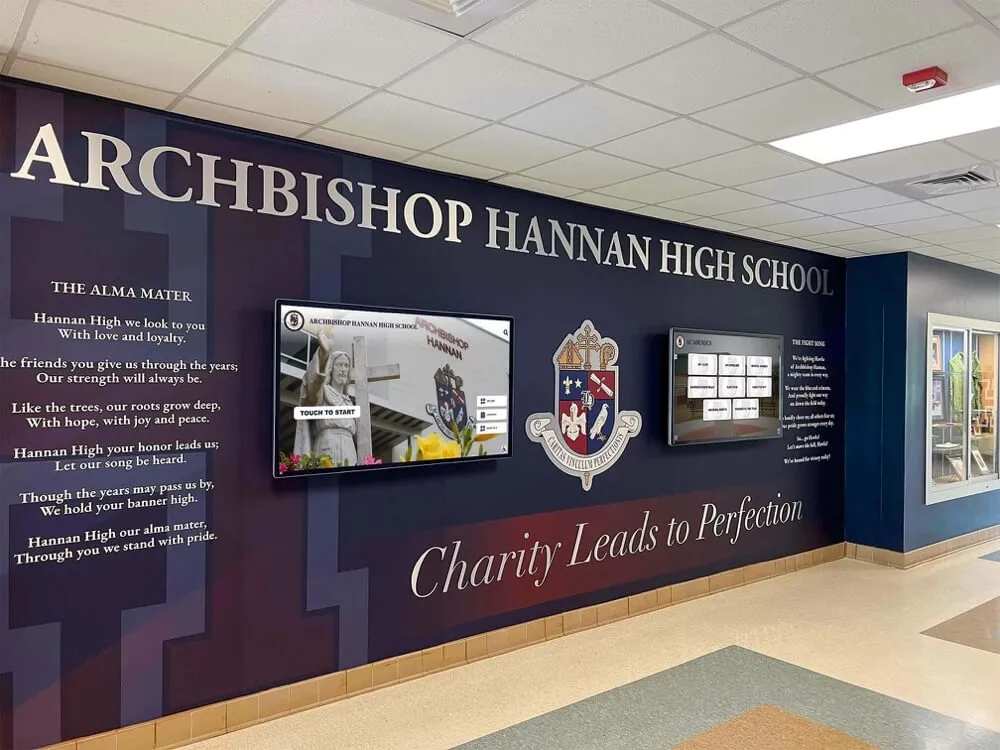
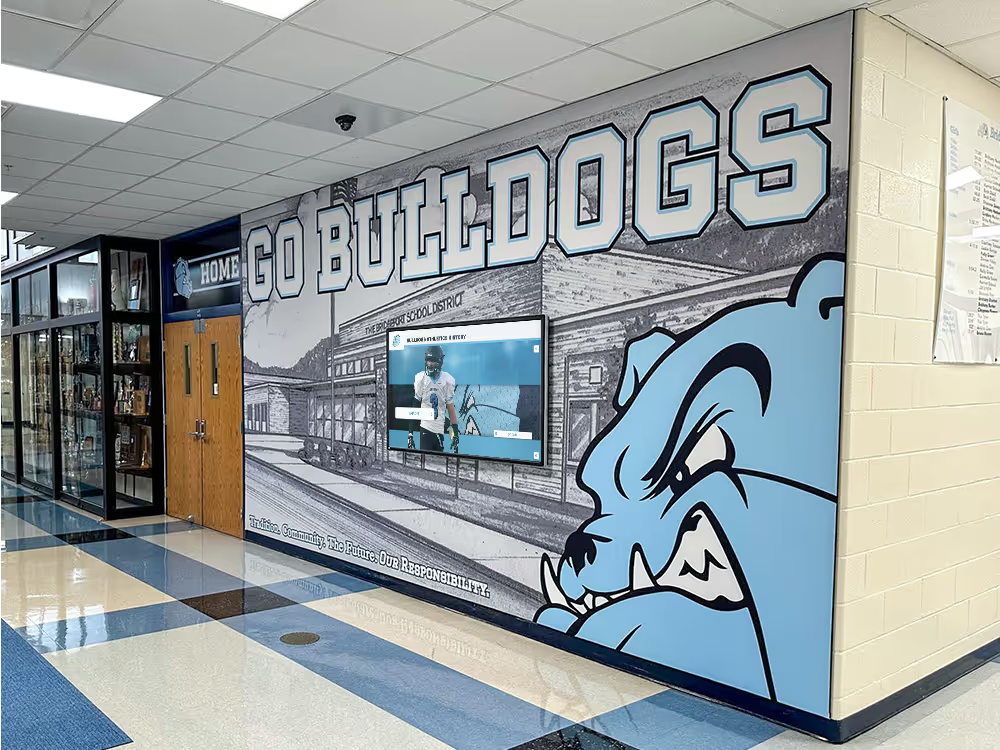
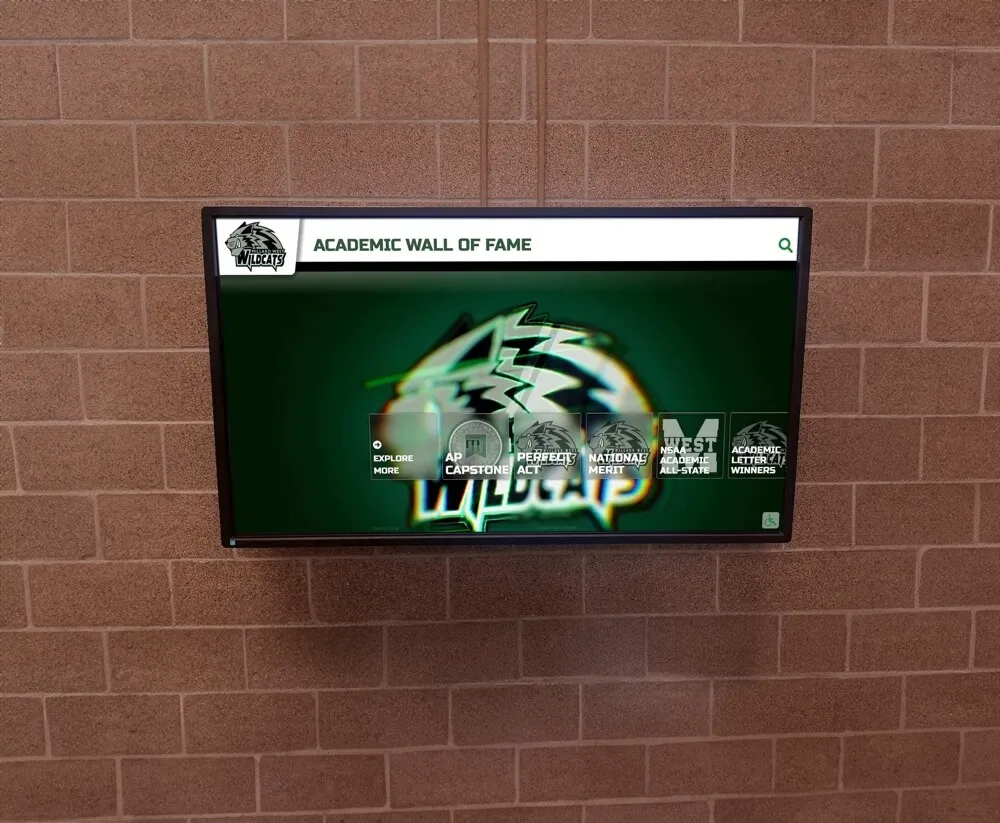
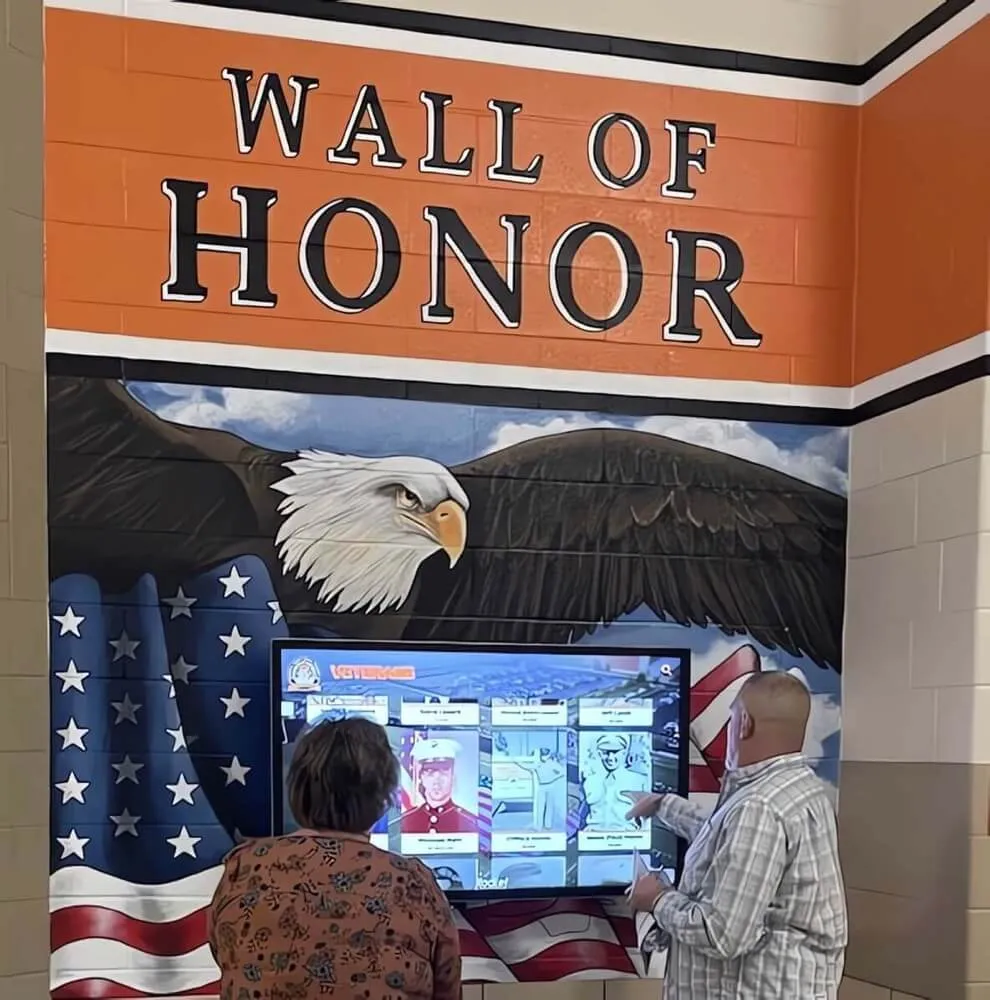
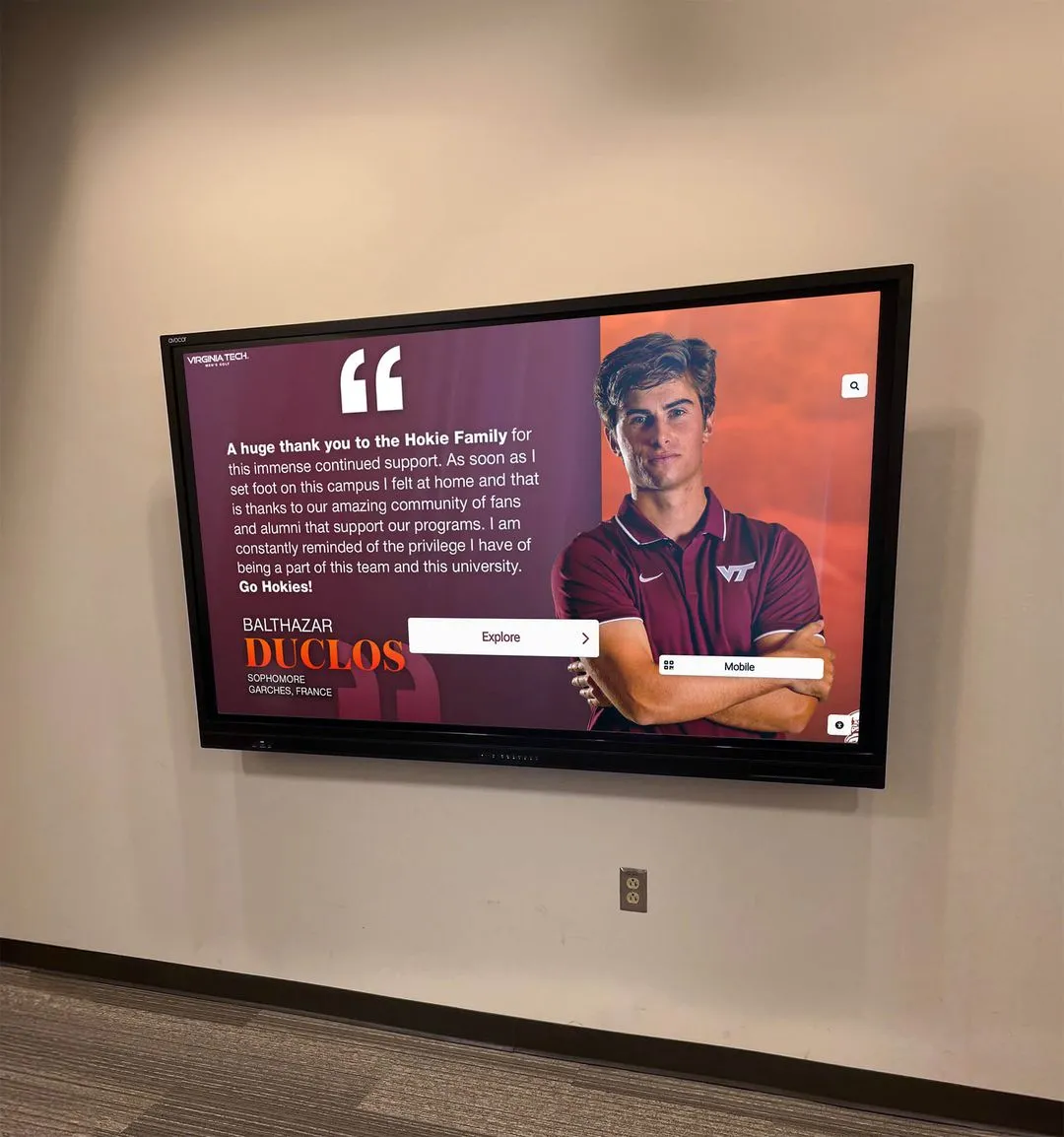
Interactive displays complement graduation traditions by making academic achievements visible throughout students' educational journeys
Standard Graduation Cord Colors and Their Meanings
While specific meanings can vary by institution, certain color associations have become widely recognized across American education.
Honor Society and GPA Recognition Cords
Academic achievement represents the most common reason for wearing graduation cords:
Gold Cords
- Most commonly represent high academic achievement across GPA thresholds
- Often designate general honors such as cum laude, magna cum laude, summa cum laude
- May indicate membership in specific academic honor societies
- Considered the most prestigious standard academic recognition cord
- Sometimes worn as double or triple cords for highest distinctions
Silver/White Cords
- Often represent scholarship recipients and academic achievement
- May denote specific honor societies or recognition programs
- Sometimes indicate cum laude honors at institutions using multi-color systems
- Can represent specific academic departments or fields
Red Cords
- Frequently designate leadership positions and academic excellence
- May represent specific honor societies or academic programs
- Sometimes indicate student government or leadership organization membership
- Can denote perfect attendance or persistence achievements
The National Honor Society, one of the most recognized academic honor organizations, traditionally uses gold cords for its members, though individual schools may adopt different colors based on institutional preferences.
Subject-Specific Academic Cords
Many institutions award cords recognizing excellence in particular academic disciplines:
STEM Subject Cords
- Gold/Yellow: Mathematics and science excellence
- Copper/Bronze: Engineering and applied sciences
- Silver: Technology and computer science programs
- Light Blue: Education and educational leadership
Humanities and Social Sciences Cords
- Dark Blue: Philosophy and academic excellence
- Purple: Law, jurisprudence, and social sciences
- White: Literature, arts, and letters
- Pink: Music and performing arts
Career and Technical Education Cords
- Brown: Business and commerce programs
- Crimson: Journalism and communication
- Green: Medicine, health sciences, and environmental studies
- Orange: Engineering and technical fields
Learn about comprehensive student achievement recognition in academic recognition that connects to future success.

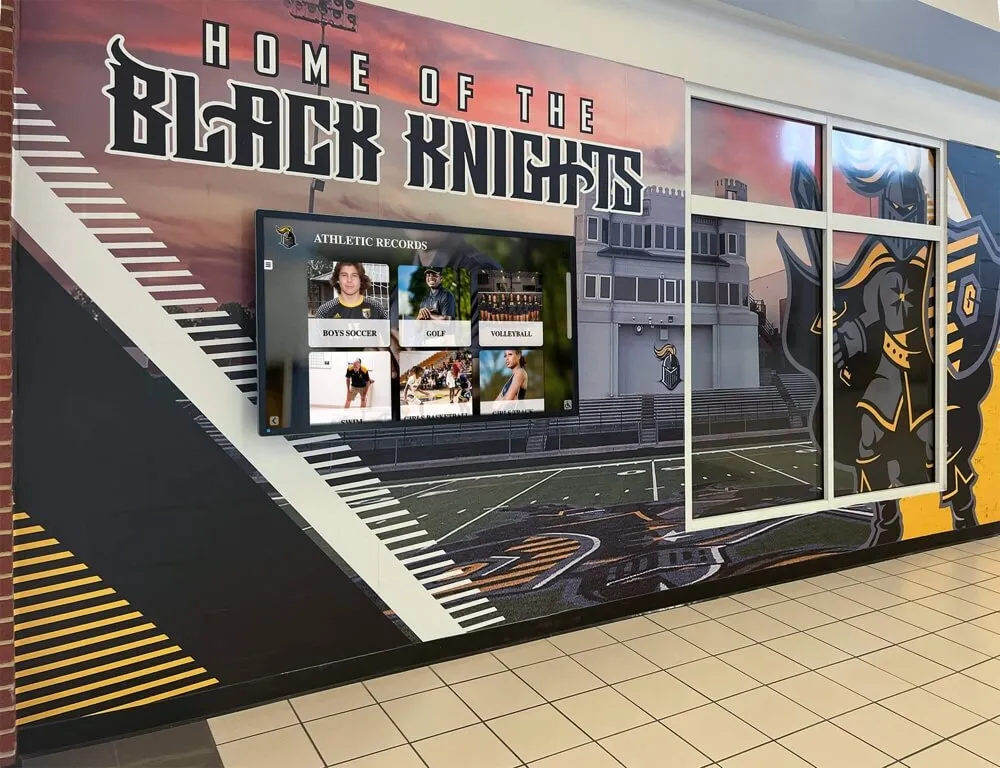
Individual achievement profiles document the specific accomplishments represented by graduation cords
Honor Society and Organization Cords
Specific organizations maintain distinctive cord traditions:
Academic Honor Societies
- National Honor Society: Gold cords
- Phi Beta Kappa: Blue and gold cords
- Alpha Lambda Delta: Maroon and gold cords
- Phi Kappa Phi: Gold cords with blue and gold tassels
- Golden Key International: Gold cords
Service and Leadership Organizations
- Key Club: Blue and gold cords
- Student Government: Varies by institution, often red or blue
- Peer Tutoring Programs: Often white or silver
- Community Service Recognition: Varies, commonly teal or purple
Cultural and Identity Organizations
- Multicultural honor societies: Colors representing cultural heritage
- International student recognition: Blue or white commonly
- First-generation college students: Various colors by institution
- Bilingual/multilingual achievement: Often incorporating multiple colors
Specialty Recognition Cords
Additional achievement categories merit cord recognition:
Attendance and Persistence
- Perfect attendance recognition
- Persistence through challenging circumstances
- Overcoming significant obstacles
- Demonstrated resilience and commitment
- Non-academic achievement recognition

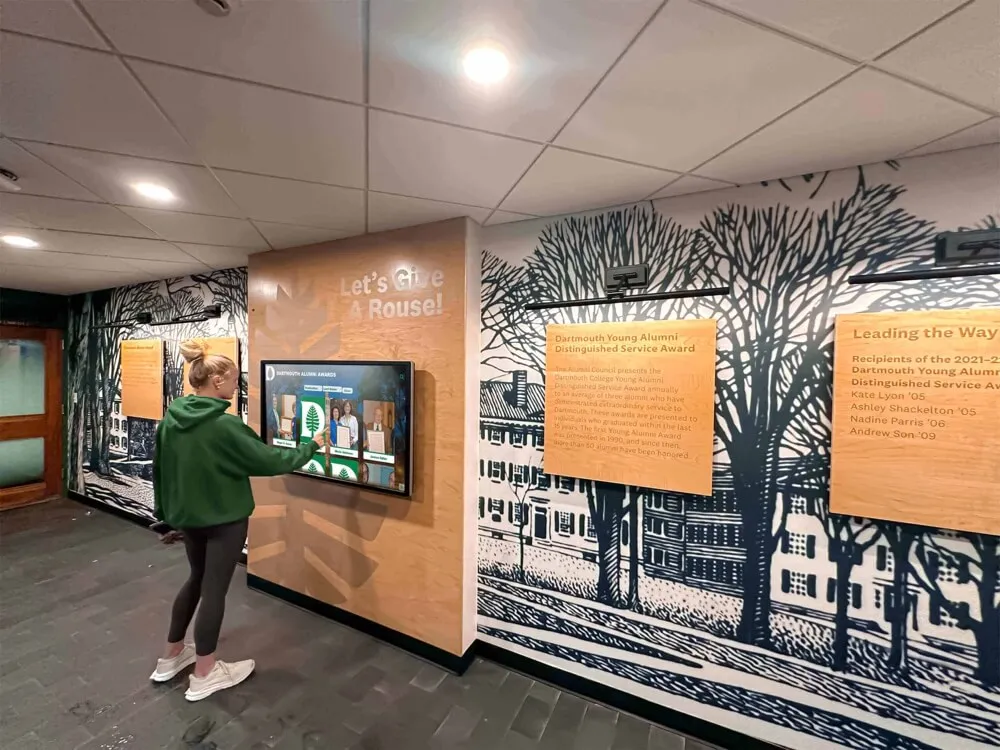
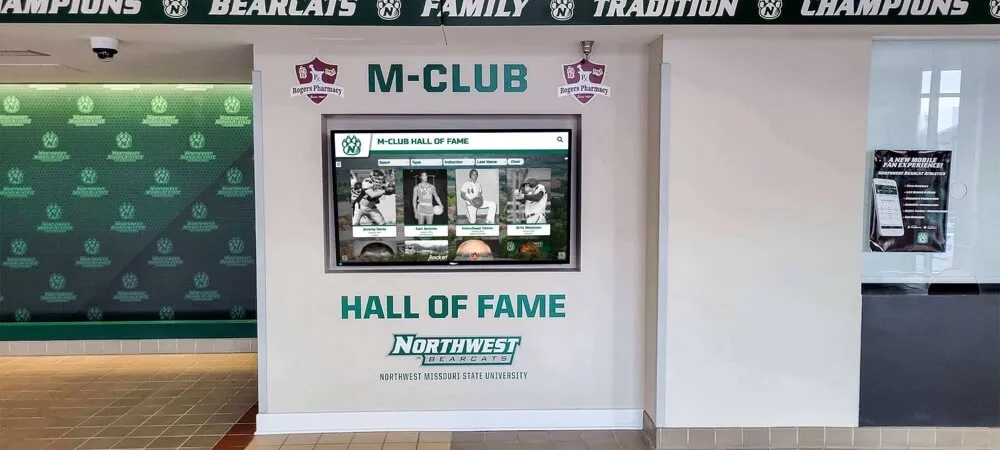
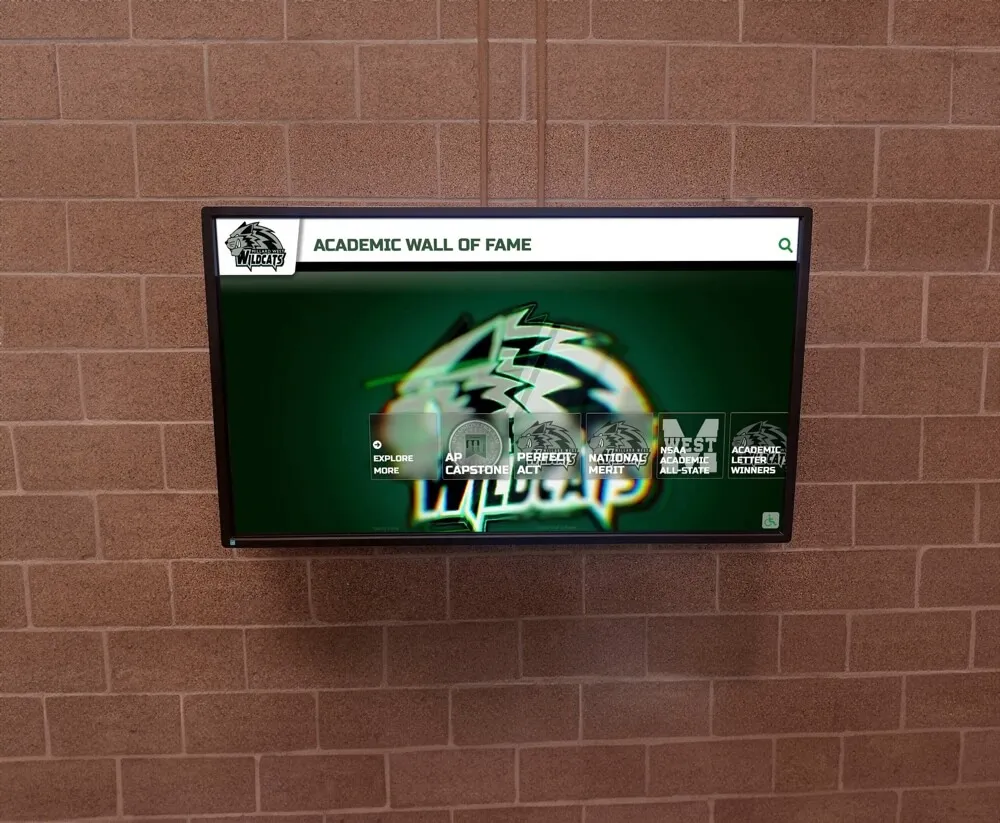
Digital systems enable students to explore the full stories behind graduation achievements
Special Program Completion
- Advanced Placement Scholar designations
- International Baccalaureate program completion
- Dual enrollment program achievement
- Career and technical certification attainment
- Specialized academy or program completion
GPA-Based Honor Cord Systems
Grade point average remains the most common criterion for graduation cord awards.
Traditional Latin Honors System
Many institutions use Latin designations corresponding to specific GPA thresholds:
Summa Cum Laude (Highest Honors)
- Typically requires 3.9-4.0 GPA (varies by institution)
- Often represented by gold cords, sometimes triple or special distinction
- Usually applies to top 5% or fewer of graduating class
- May require additional criteria beyond GPA alone
- Considered most prestigious academic recognition
Magna Cum Laude (Great Honors)
- Generally requires 3.7-3.89 GPA (institutional variation exists)
- Often represented by gold cords or double gold cords
- Typically top 10-15% of graduating class
- Demonstrates sustained academic excellence
- Recognized by colleges and employers as significant achievement
Cum Laude (With Honors)
- Usually requires 3.5-3.69 GPA (varies by school)
- Commonly represented by single gold cord or silver cord
- Often top 20-25% of graduating class
- Acknowledges consistent academic achievement
- Provides recognition for strong academic performance
Explore how schools celebrate academic milestones through honor roll and academic recognition programs.
Percentage-Based Honor Systems
Some schools award cords based on class ranking percentages:
Top 10% Recognition
- Students ranking in top 10% of graduating class
- Often receive distinguished gold cords
- Accounts for grade inflation variations across years
- Creates consistent recognition percentage annually
- May combine with minimum GPA threshold
Top 25% Recognition
- Recognition for upper quartile academic achievement
- Provides broader acknowledgment while maintaining meaning
- Often uses silver or white cords to differentiate from top tier
- Ensures substantial portion of class receives recognition
- Balances achievement recognition with honor significance
Improvement and Growth Recognition
- Cords recognizing most improved GPA trajectories
- Acknowledgment of overcoming academic challenges
- Recognition independent of absolute achievement level
- Celebrates personal growth and persistence
- Distinctive cord colors showing different achievement type

Documentation systems preserve the stories behind graduation achievements for institutional archives
Alternative Academic Excellence Criteria
Progressive institutions recognize achievement through varied lenses:
Portfolio-Based Recognition
- Assessment of overall academic accomplishments beyond GPA
- Project-based learning achievement evaluation
- Cumulative academic work quality assessment
- Demonstration of mastery across multiple domains
- Recognition of non-traditional academic excellence
Growth Mindset Recognition
- Measurement from individual baseline to graduation
- Acknowledgment of personal academic trajectory
- Recognition ensuring diverse learners can achieve cords
- Focus on effort, persistence, and improvement
- Equity-focused approach to honors recognition
Creating Comprehensive Graduation Recognition Systems
Effective graduation recognition extends beyond cords to create systematic celebration of diverse achievements.
Multi-Tiered Recognition Approaches
Schools should offer recognition opportunities across achievement levels:
Pinnacle Achievement Recognition
- Valedictorian and salutatorian honors with special regalia
- National merit recognition and scholarship achievement
- Perfect GPA maintenance with distinctive cords or medallions
- State and national competition championships
- Lifetime achievement acknowledgment through multiple forms
Standard Excellence Recognition
- GPA-based honors with corresponding cords
- Subject-specific excellence awards and cords
- Honor society membership recognition
- Special program completion acknowledgment
- Comprehensive achievement across multiple dimensions
Personal Achievement Recognition
- Individual improvement and growth milestones
- Overcoming specific challenges or obstacles
- Distinctive contributions to school community
- Character-based recognition alongside academic achievement
- Ensuring all students can achieve meaningful recognition
Balancing Cord Proliferation Concerns
As recognition programs expand, schools face challenges managing cord quantity:
Cord Consolidation Strategies
- Limiting number of cords any student can wear (typically 2-4 maximum)
- Creating single cords representing multiple related achievements
- Using medallions or stoles for some recognitions instead of cords
- Establishing hierarchy of most significant recognitions
- Ensuring visual distinction remains meaningful
Maintaining Recognition Significance
- Clear criteria preventing grade inflation in cord awards
- Periodic review of recognition standards and relevance
- Balance between inclusivity and achievement significance
- Faculty input on recognition appropriateness
- Student feedback on perceived recognition value
Learn about comprehensive recognition in student recognition programs that create lasting impact.
Alternative Recognition Formats
- Program booklet listing recognitions with student names
- Digital displays showcasing graduate achievements
- Special recognition during name reading
- Honor society induction ceremonies separate from commencement
- Permanent recognition displays supplementing ceremony acknowledgment
Communicating Cord Meanings
Clear communication ensures families and community understand recognition:
Pre-Ceremony Communication
- Graduation program including cord meaning key
- School website explanation of recognition system
- Senior year communication about cord eligibility
- Family education about achievement requirements
- Social media and newsletter coverage
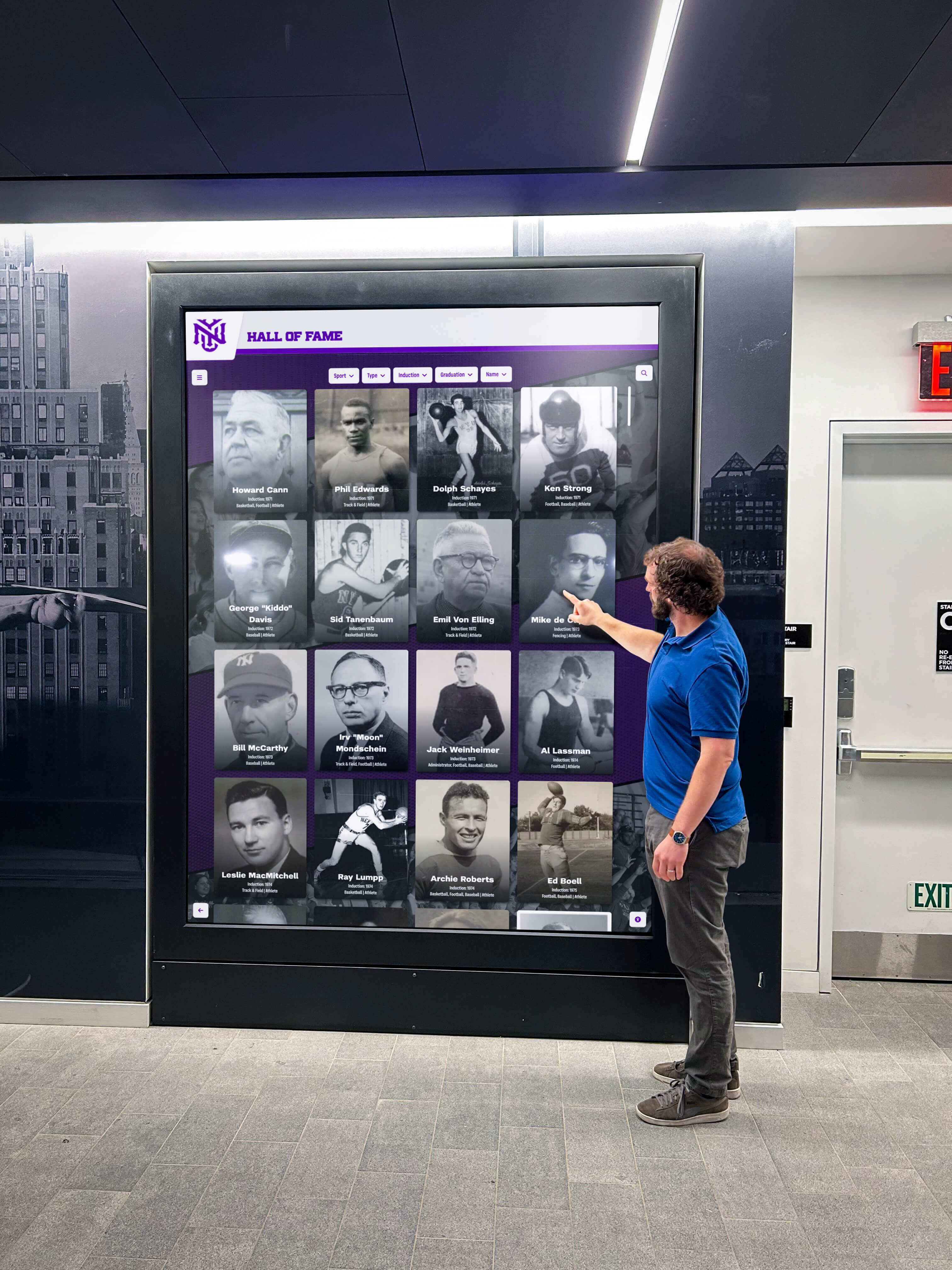
Interactive systems enable ceremony attendees to explore graduate achievements in detail
Ceremony Recognition
- Verbal explanation during commencement
- Visual displays showing cord meanings
- Special acknowledgment of honor graduates
- Recognition of specific achievement categories
- Photographic documentation capturing regalia
Establishing Fair and Consistent Cord Policies
Schools need clear policies ensuring equitable cord award practices.
Eligibility Criteria Development
Creating transparent standards for all recognition:
GPA Calculation Standards
- Clear definition of included coursework (weighted vs. unweighted)
- Treatment of transfer credits and dual enrollment
- Timing of final GPA calculation for eligibility
- Rounding policies and decimal place considerations
- Appeal process for borderline cases
Cumulative vs. Final Achievement
- Whether recognition reflects entire high school career
- Weight of final semester or year performance
- Treatment of academic probation or discipline issues
- Consideration of improvement trajectories
- Balance between sustained and final achievement
Minimum Eligibility Requirements
- Any attendance or behavioral requirements
- Completion of specific coursework or programs
- Time enrolled at institution (transfer student considerations)
- Participation in required activities or ceremonies
- Clear disqualification criteria if applicable
Equity and Access Considerations
Recognition systems must ensure fairness across student populations:
Course Access Equity
- Ensuring all students access to honors and AP courses
- Recognition accounting for limited advanced course availability
- Accommodation for special education students
- Consideration of work or family obligations limiting course loads
- Equitable opportunity regardless of student background
Special Circumstances Accommodation
- Modified criteria for students with documented disabilities
- Consideration of extraordinary personal or family circumstances
- Recognition of achievement despite significant obstacles
- Clear process for requesting accommodations
- Balance between fairness and consistency
Explore student achievement recognition that celebrates diverse excellence.
Multiple Pathway Recognition
- Various achievement types receiving cord recognition
- Academic, service, leadership, and specialized cords
- Ensuring recognition opportunities across student profiles
- Value communication for different recognition types
- Comprehensive system acknowledging diverse excellence
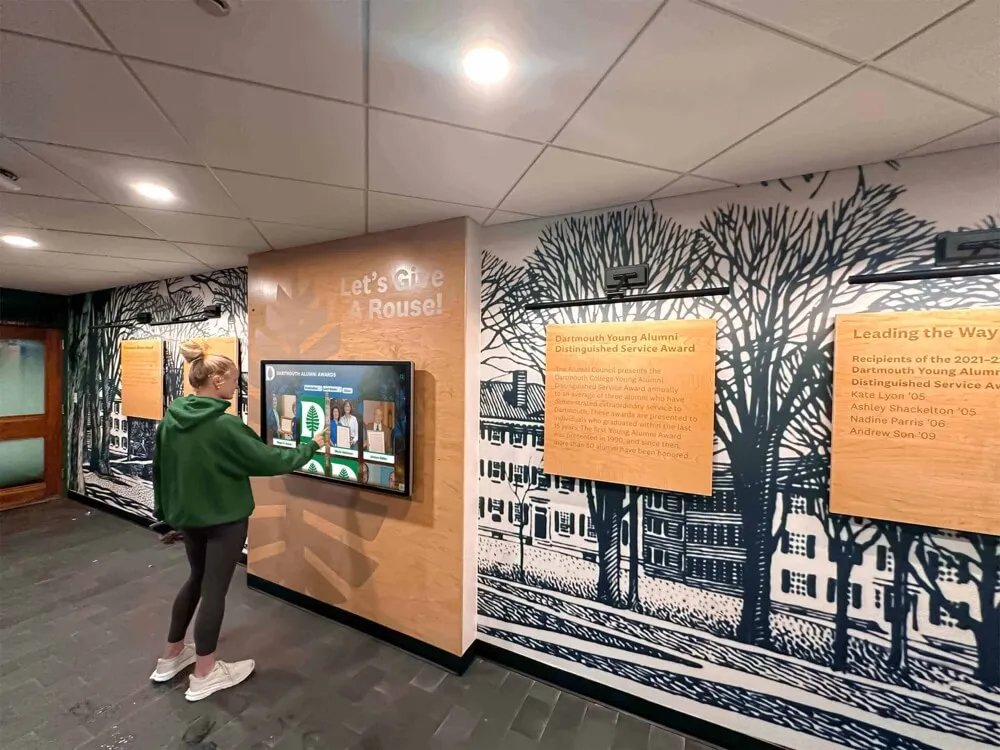
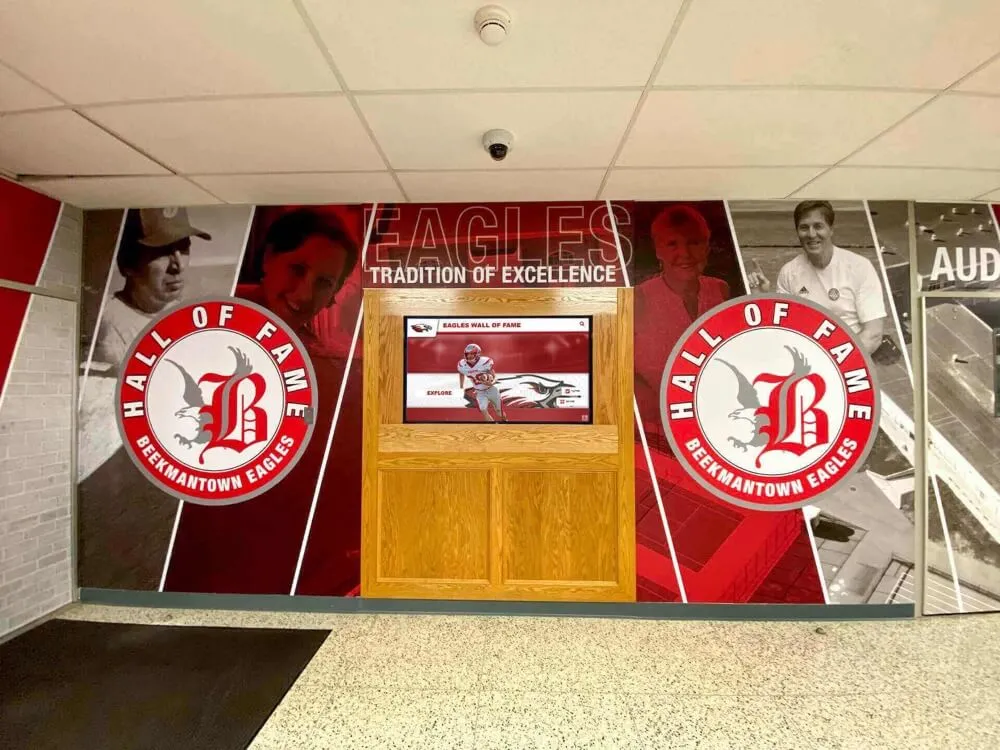
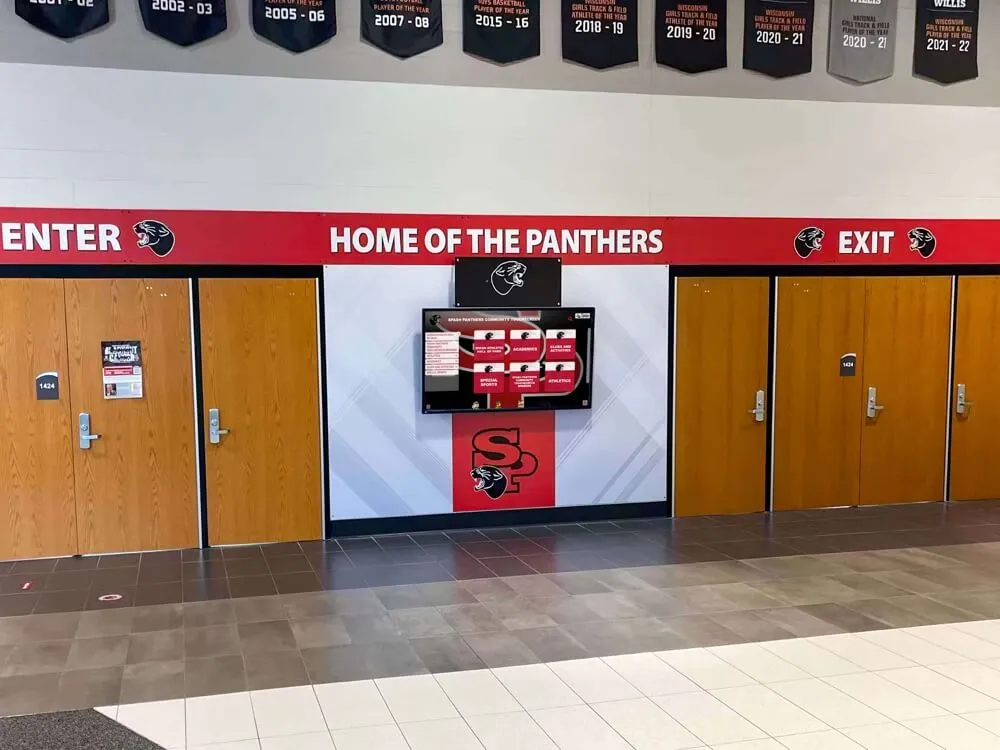
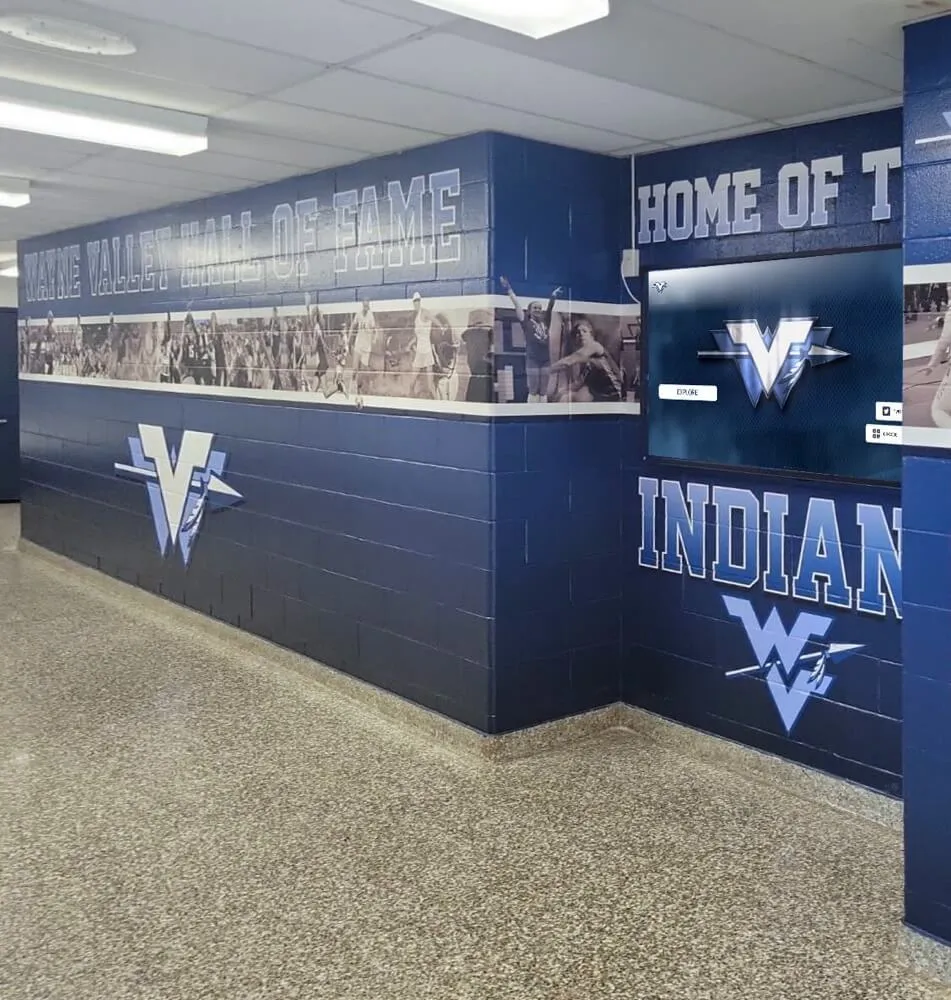
Strategic placement of recognition systems ensures ceremony achievements receive year-round visibility
Graduation Recognition Beyond Cords
Effective schools supplement cord traditions with comprehensive recognition systems.
Senior Recognition Programs
Celebrating graduating class achievements throughout final year:
Senior Award Ceremonies
- Dedicated events honoring specific achievements
- Subject-specific departmental awards
- Service and leadership recognition
- Special contribution acknowledgment
- Family invitation creating celebration opportunities
Senior Recognition Displays
- Hallway displays featuring graduating class members
- Achievement documentation and celebration
- College acceptance and scholarship recognition
- Future plans and aspiration sharing
- Photo galleries and memory preservation
Learn about comprehensive approaches in senior recognition programs that honor complete achievements.
Digital Recognition Systems
Modern technology transforms how schools celebrate graduation achievements:
Interactive Graduation Displays
- Touchscreen systems showcasing graduate achievements
- Detailed profiles beyond what cords can communicate
- Photos, accomplishments, and future plans
- Search and exploration features for families
- Permanent archive of graduating class
Web-Based Recognition Platforms
- Online galleries accessible to distant family
- Social sharing capabilities
- Mobile-optimized viewing
- Integration with school websites
- Analytics showing engagement and reach
Solutions like Rocket Alumni Solutions enable schools to create comprehensive digital recognition systems that complement graduation cord traditions while providing unlimited capacity for celebrating diverse achievements, detailed achievement documentation, and permanent preservation of graduating class accomplishments.
Permanent Achievement Archives
Creating lasting recognition beyond ceremony:
Physical Recognition Displays
- Wall of graduates in high-traffic areas
- Annual class recognition in lobbies or common spaces
- Accumulation creating institutional history
- Connection between past and present students
- Visual demonstration of educational tradition
Digital Achievement Archives
- Searchable databases of graduate information
- Historical achievement tracking across decades
- Alumni connection through graduation recognition
- Research capabilities for institutional history
- Preservation preventing loss of recognition records
Explore digital archive solutions for permanent achievement preservation.
Managing Graduation Cord Logistics
Practical considerations ensure smooth recognition during commencement.
Cord Procurement and Distribution
Ordering and Inventory Management
- Advance ordering based on eligibility projections
- Quality cord selection ensuring durability for photos
- Appropriate color matching to institutional standards
- Surplus inventory for additions or replacements
- Budget planning for annual cord purchases
Distribution Systems
- Clear communication about when/where to collect cords
- Verification of eligibility before distribution
- Instructions for proper wearing
- Extra cord availability for forgotten items
- Lost cord replacement policies
Proper Wearing Instructions
- Demonstration of correct cord placement
- Number and arrangement when wearing multiple cords
- Interaction with hoods, stoles, and other regalia
- Photography considerations for best appearance
- Cultural sensitivity around religious or cultural garments
Ceremony Coordination
Graduate Recognition During Commencement
- Special acknowledgment of honor graduates
- Grouped recognition by honor level
- Individual mention of highest achievements
- Balance between recognition and ceremony length
- Photography ensuring cord visibility
Program Documentation
- Printed programs listing honor graduates
- Explanation of cord meanings for attendees
- Recognition of special achievements
- Graduate name formatting and accuracy
- Keepsake quality reflecting ceremony importance
Special Considerations for Different Educational Levels
Graduation cord practices vary across educational contexts.
High School Graduation Cords
Secondary school recognition considerations:
Age-Appropriate Recognition
- Balance between achievement celebration and inclusivity
- Consideration of adolescent social dynamics
- Family engagement in recognition process
- Connection between cords and college applications
- Motivation for underclassmen witnessing recognition
College Preparation Connection
- Recognition relevant to college admissions
- Scholarship application enhancement
- Resume and application documentation
- Connection between high school and higher education honors
- Preparation for university recognition systems
College and University Graduation Cords
Higher education contexts involve different considerations:
Departmental and Major-Specific Cords
- Recognition within academic departments
- Professional organization cords
- Specialized program completion
- Research achievement acknowledgment
- Graduate school preparation recognition
Graduate School Recognition
- Advanced degree honor distinctions
- Research and publication recognition
- Teaching excellence acknowledgment
- Professional certification completion
- Dissertation or thesis distinction
Learn about collegiate recognition through athletic facility and academic recognition integration.
Modern Alternatives and Supplements to Traditional Cords
Progressive institutions explore enhanced recognition approaches.
Digital Badge and Credential Systems
Technology enables new recognition formats:
Verifiable Digital Credentials
- Blockchain-based achievement verification
- Shareable digital badges for resumes and profiles
- Metadata documenting specific achievement criteria
- Permanent, tamper-proof achievement records
- Integration with professional networking platforms
Visual Recognition Systems
- Augmented reality graduation programs
- Scannable QR codes linking to achievement details
- Digital displays supplementing physical ceremony
- Real-time social media integration
- Enhanced family engagement through technology
Expanded Recognition Categories
Moving beyond traditional academic metrics:
Character and Service Recognition
- Community service hour achievement cords
- Character excellence and integrity recognition
- Peer leadership and mentorship acknowledgment
- Anti-bullying and inclusion advocacy
- Positive school culture contribution
Innovation and Creativity Recognition
- Entrepreneurship and innovation achievement
- Creative arts excellence
- Problem-solving and design thinking recognition
- Cross-disciplinary project achievement
- Future-ready skill demonstration
Explore comprehensive approaches in student awards that recognize multidimensional excellence.
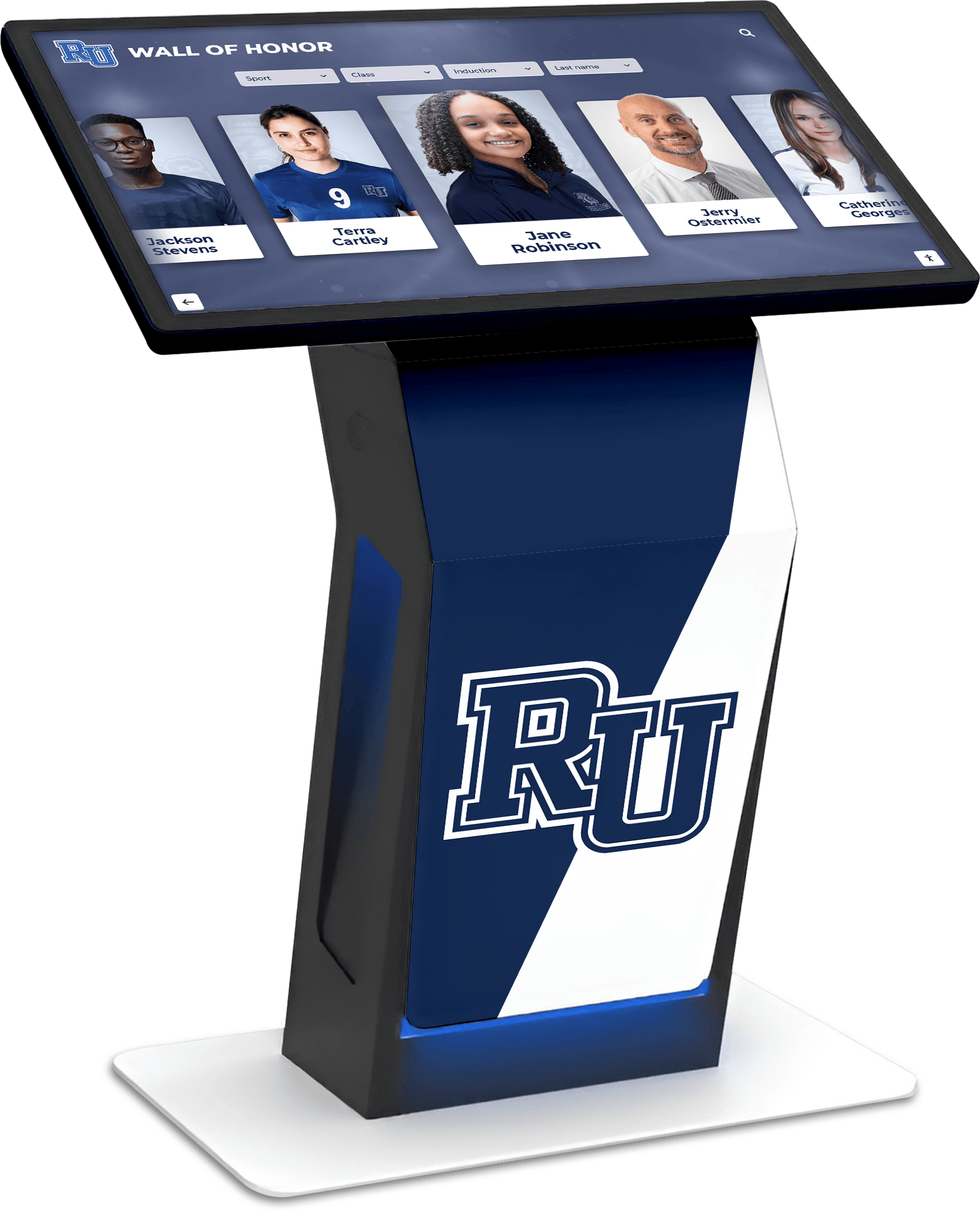
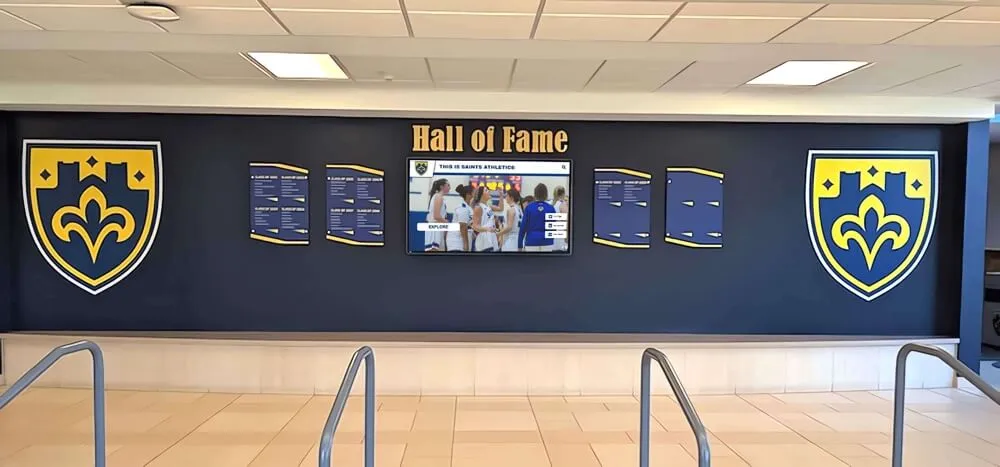
Integrated recognition systems complement graduation ceremonies with year-round achievement celebration
Addressing Common Graduation Cord Questions
Students and families frequently ask about honors cord traditions.
Frequently Asked Questions
Who decides cord eligibility?
- Schools establish specific criteria for each recognition
- Administration typically makes final eligibility determinations
- Faculty input often influences recognition standards
- Clear policies prevent favoritism or inconsistency
- Appeal processes address disputed eligibility
Can students wear cords from external organizations?
- Policies vary by institution
- Some schools limit to only school-awarded cords
- Others permit recognized honor society cords
- Clear communication prevents ceremony confusion
- Balance between recognition and regalia manageability
What if a student qualifies for multiple cords?
- Most schools permit wearing all earned cords
- Some institutions establish maximum numbers
- Guidance on arrangement and appearance
- Recognition that multiple cords demonstrate diverse achievement
- Photography considerations for best presentation
Do graduation cords appear on transcripts?
- Cords represent ceremonial recognition, not transcript notations
- Latin honors typically appear on diplomas and transcripts
- Honor society membership may be documented separately
- Ceremony recognition differs from official academic records
- Students should document achievements for applications beyond transcripts
Common Cord Misconceptions
Clarifying misunderstandings about graduation recognition:
Cords Are Not Purchased by Students
- Legitimate honors cords are earned through achievement
- Schools or honor societies provide cords to eligible students
- Commercial cord sales may not reflect actual achievement
- Wearing unearned cords undermines recognition significance
- Clear policies prevent inappropriate cord wearing
Not All Colorful Regalia Are Honor Cords
- Stoles, sashes, and other regalia serve different purposes
- Cultural stoles honor heritage and identity
- Organizational stoles represent group membership
- Different regalia types serve distinct recognition functions
- Understanding differences ensures appropriate wearing
Learn about recognition traditions through school event planning that incorporates comprehensive recognition.
Creating Lasting Impact Beyond Graduation Day
Effective recognition extends beyond single ceremony.
Connecting Graduation Recognition to Alumni Engagement
Graduation achievements provide foundation for lifelong institution connections:
Alumni Recognition Continuation
- Graduation honor recognition in alumni directories
- Honor graduate networking opportunities
- Alumni speaker programs featuring distinguished graduates
- Mentorship connections based on shared achievements
- Career advancement support through alumni networks
Institutional Pride Development
- Recognition creating positive school associations
- Graduation memories strengthening alumni bonds
- Achievement celebration encouraging giving back
- Tradition continuation through alumni participation
- Multi-generational recognition connections
Motivating Current Students Through Recognition
Visible graduation recognition influences underclassmen:
Aspirational Impact
- Underclassmen witness honor graduate recognition
- Clear achievement pathways demonstrate possibility
- Specific criteria provide motivation targets
- Success stories inspire similar pursuits
- Recognition creates positive peer influence
Cultural Development
- Consistent recognition builds achievement-focused culture
- Intellectual excellence receives equal celebration to other achievements
- Recognition signals institutional values clearly
- Students understand achievement receives acknowledgment
- Positive culture attracts families valuing academic excellence
Explore comprehensive recognition through touchscreen software that showcases ongoing achievement.
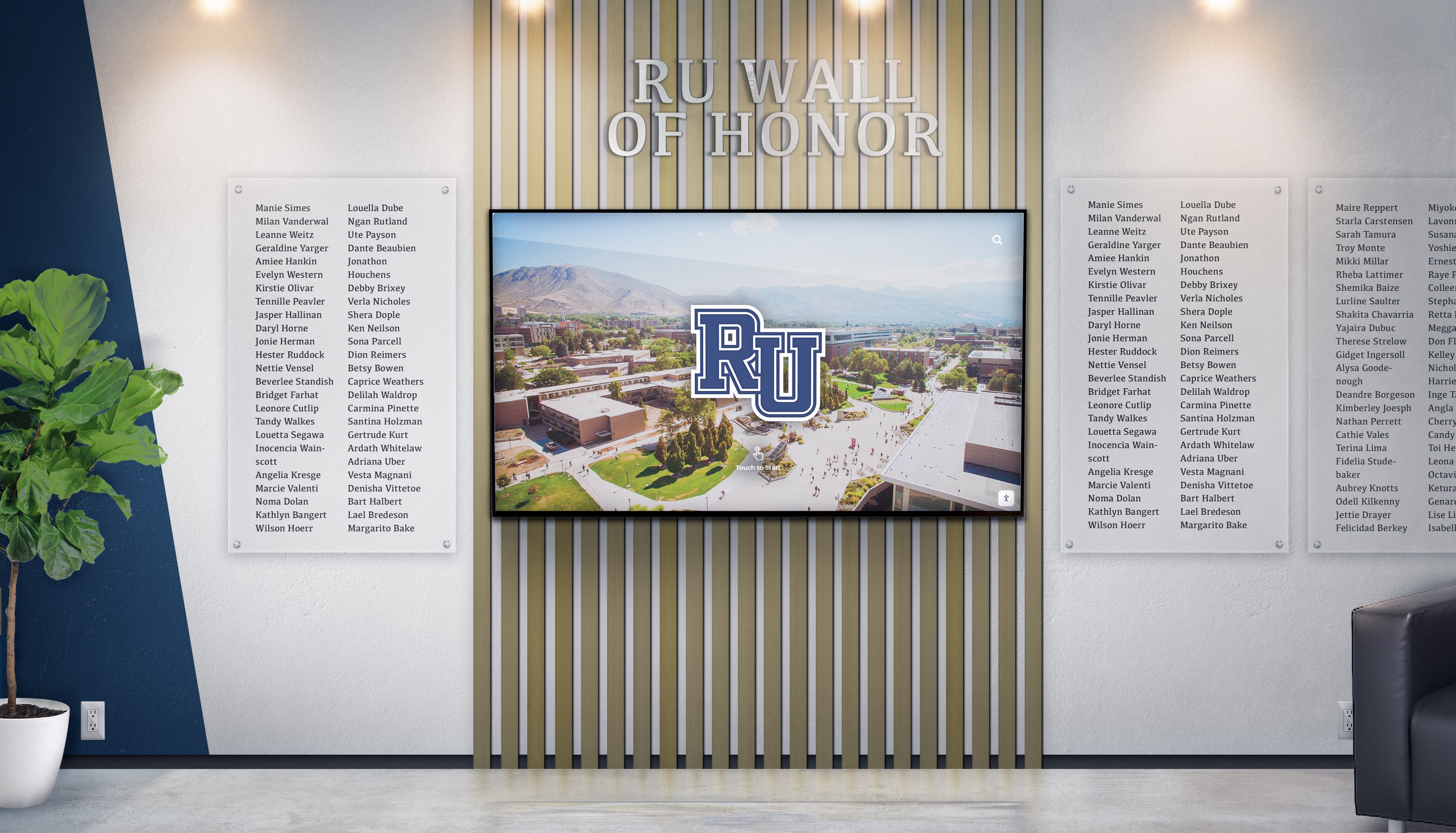
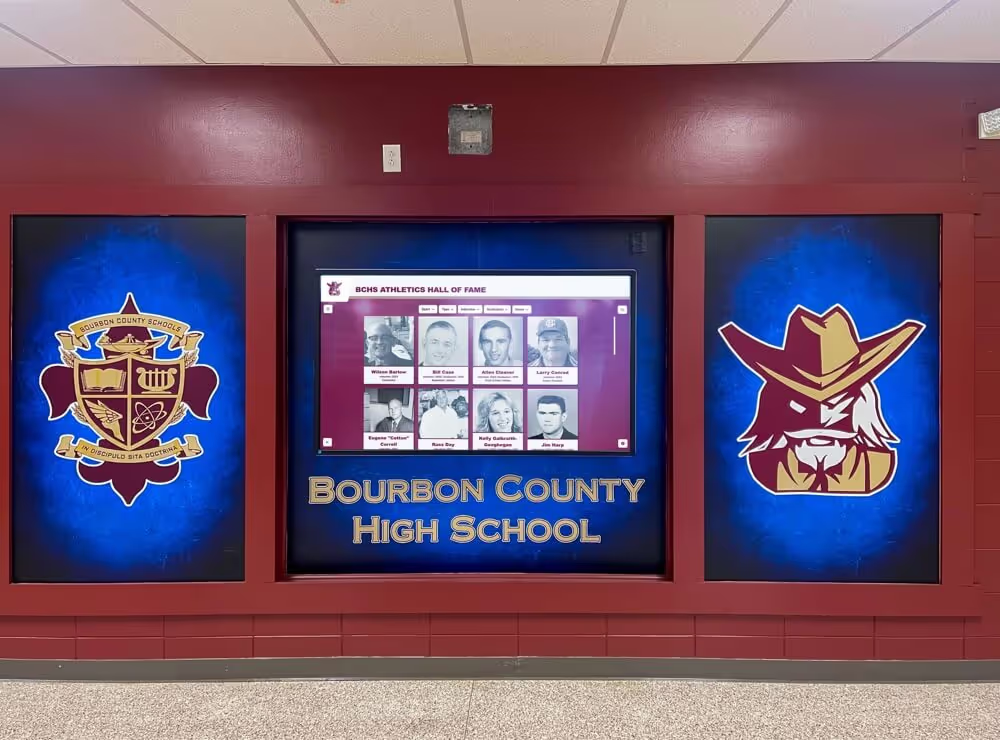
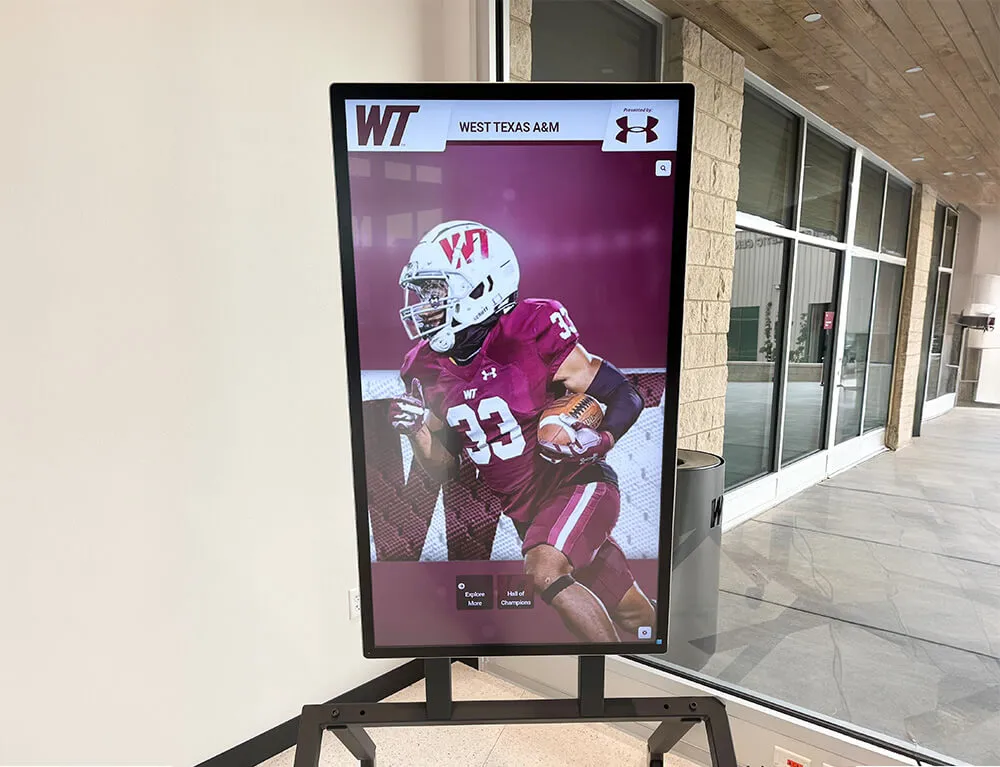
Comprehensive recognition systems combine graduation traditions with permanent displays celebrating achievement
Conclusion: Honoring Achievement Through Meaningful Recognition
Graduation honors cords represent powerful traditions connecting immediate ceremonial recognition with lasting celebration of student achievement. When schools thoughtfully implement cord recognition systems—with clear criteria, consistent application, meaningful color symbolism, and comprehensive communication—they create graduation experiences that appropriately honor diverse accomplishments while motivating future students toward excellence.
The strategies explored in this guide provide comprehensive frameworks for understanding and implementing effective graduation cord traditions. From color meanings and GPA-based systems to equity considerations and modern recognition supplements, these approaches ensure graduation ceremonies appropriately celebrate the achievements students have worked years to accomplish.
Yet the most effective schools recognize that graduation cord traditions represent just one element of comprehensive recognition systems. While cords provide visible acknowledgment during commencement ceremonies, permanent recognition displays ensure achievements receive ongoing visibility throughout educational communities. Digital recognition platforms eliminate the space constraints limiting traditional recognition while providing detailed achievement documentation that single-color cords cannot communicate.
Enhance Your Graduation Recognition Traditions
Discover how modern digital recognition solutions complement graduation cord traditions by providing year-round visibility for academic achievements and comprehensive celebration of diverse student excellence.
Explore Recognition SolutionsBuilding on graduation cord traditions by implementing permanent recognition systems creates environments where academic achievement receives celebration equal to any other accomplishment. Modern digital platforms make comprehensive recognition achievable across unlimited students and achievement categories, ensuring the accomplishments represented by graduation cords remain visible long after commencement ceremonies conclude.
Start by evaluating your current graduation recognition policies, ensuring clarity and consistency in cord award criteria. Then consider how permanent recognition displays can extend ceremony traditions throughout the year, creating ongoing motivation while preserving graduating class achievements for institutional memory.
Your graduates deserve recognition equal to the effort they’ve invested in earning their achievements. Thoughtful graduation cord traditions combined with comprehensive recognition systems create the meaningful celebration your students have earned while building positive educational cultures where all students thrive.