



A hall of fame ballot template gives school selection committees a structured, repeatable document for scoring nominees, recording votes, and producing a written record that survives turnover in committee membership. Without a standardized ballot, committees often rely on informal discussion and unwritten consensus—an approach that erodes transparency, invites disputes, and leaves no paper trail when future administrators ask why a particular athlete or educator was inducted decades earlier.
This guide provides a complete framework: the core sections every HOF ballot should contain, a sample scoring rubric with criteria weighting, a step-by-step voting workflow, and guidance on archiving committee decisions so the reasoning behind every inductee class is preserved—whether in a filing cabinet or a cloud-based digital recognition platform.
Regardless of whether your school runs an annual athletic hall of fame, an academic hall of honor, or a combined recognition program, the ballot template is the governance document at the center of your selection process. Getting it right the first time prevents years of ad hoc corrections.

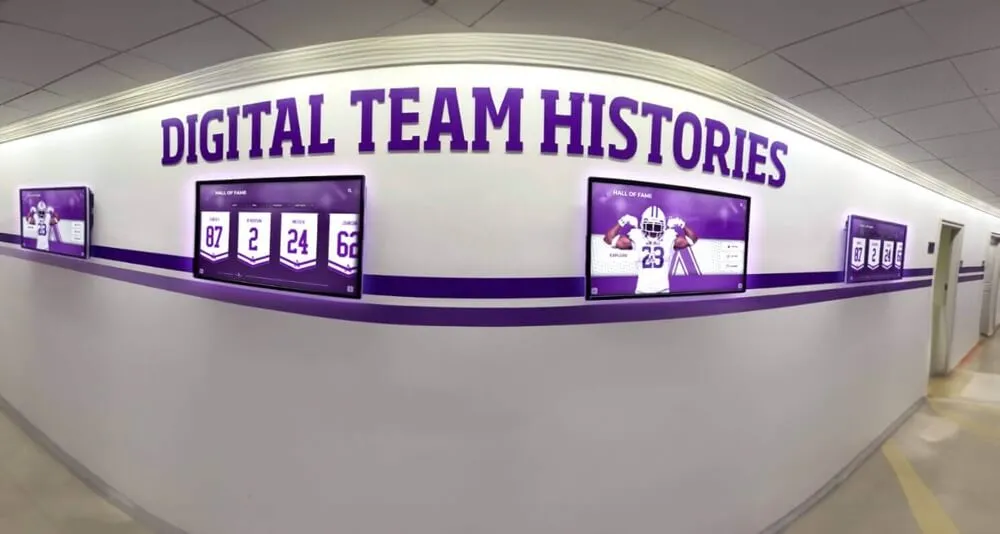
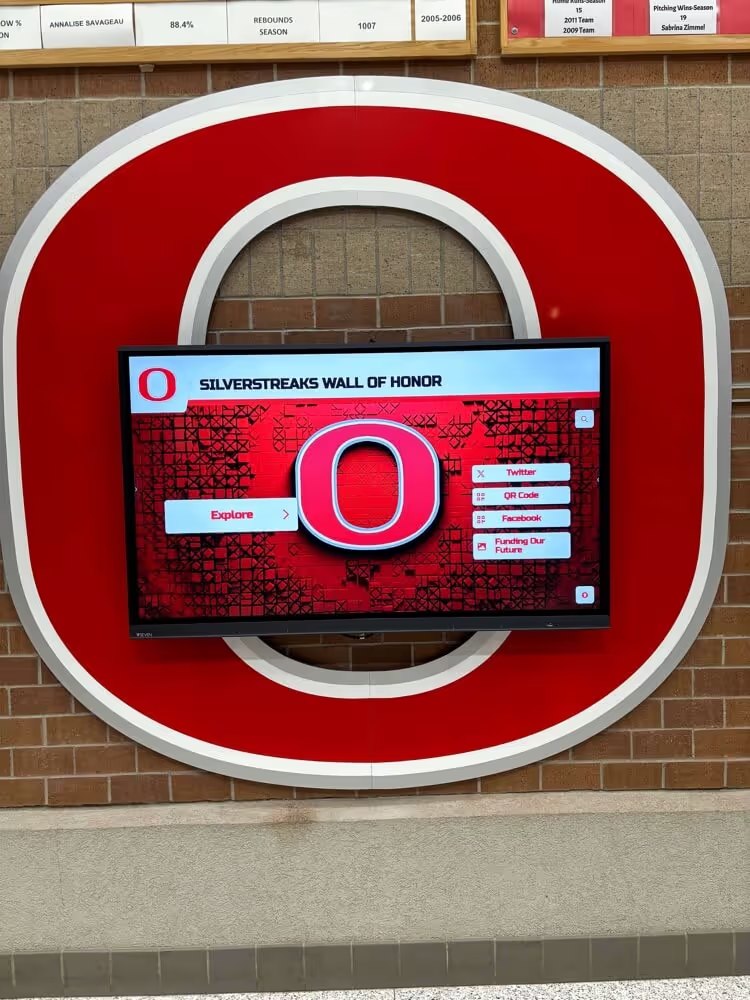
A clear ballot template supports every inductee class that eventually appears on a hall of fame display wall
Why a Standardized Hall of Fame Ballot Template Matters
A standardized ballot template serves three practical purposes: it creates scoring consistency across committee members, it produces a defensible written record, and it simplifies onboarding for new committee members who were not present in earlier cycles.
Consistency across voters. When each committee member scores nominees against the same criteria using the same scale, individual biases are mitigated. A member who would otherwise overweight personal familiarity with a nominee is anchored to objective criteria: career statistics, tenure at the institution, community impact, and documented achievements.
Defensibility. Families, alumni, and community members sometimes question why a nominee was passed over. A completed, signed ballot provides a documented answer. The selection committee can point to specific criterion scores rather than offering a vague “the committee felt the time wasn’t right.”
Continuity through turnover. Athletic directors, coaches, and committee chairs change over time. A school with 30 years of hall of fame history may have had a dozen different committee configurations. Standardized ballots filed with the athletic department create institutional memory that does not depend on any individual’s recollection.
The hall of fame selection process and digital display guide explores how these governance structures translate into long-term recognition programs—worth reviewing as context for designing your ballot infrastructure.
Core Components of a Hall of Fame Ballot Template
Every effective hall of fame ballot template should include four structural sections.
Section 1: Nominee Identification
This section records the factual record of the nominee independent of any scoring. It must include:
- Full name (as it will appear on the display, plaque, or digital profile)
- Graduation year or years of service (for staff/educator nominees)
- Sport(s) or area(s) of contribution (athletics, academics, service, administration)
- Nominating party — name and role of the person submitting the nomination
- Date of nomination submission
Accurate identification here prevents the most common administrative error: misspelled names on permanent displays and plaques. Requiring the nominator to confirm spelling in writing before balloting begins eliminates most of these errors upstream.
Section 2: Eligibility Checklist
Before scoring begins, the ballot should include a binary eligibility checklist that the committee chair reviews:
- Meets minimum years-since-graduation requirement (if applicable)
- No active disciplinary matters with the institution
- Supporting documentation submitted (statistics, transcripts, letters of support)
- Nominee has been formally notified of consideration (if required by bylaws)
Any nominee who fails an eligibility check should be removed from consideration before scoring ballots are distributed. Including this step on the ballot itself means the skip is documented.
Section 3: Scored Criteria (The Core of the Template)
This section is where committee members assign individual scores to each nominee across defined criteria. The next section provides a complete sample rubric.
Section 4: Committee Vote and Signature
After scores are tabulated, each committee member records their final vote (Induct / Do Not Induct / Defer), signs the ballot, and dates it. The committee chair retains all completed ballots.
Sample Hall of Fame Ballot Scoring Rubric
The rubric below is structured for an athletic hall of fame with academic and character components. Schools can adapt criterion names, weights, and scales to fit their specific program. The total possible score is 100 points.
| Criterion | Weight | Score (1–5) | Weighted Score |
|---|---|---|---|
| Athletic Performance — Career stats, records, honors (All-Conference, All-State, championships) | 30% | _____ | _____ × 6 = _____ |
| Impact on Program — Contribution to winning culture, team leadership, mentorship of teammates | 20% | _____ | _____ × 4 = _____ |
| Character and Sportsmanship — Conduct on and off the field, community reputation, no disqualifying conduct | 20% | _____ | _____ × 4 = _____ |
| Academic Achievement — GPA, academic honors, academic-athletic balance | 15% | _____ | _____ × 3 = _____ |
| Post-Graduation Contribution — Alumni engagement, community service, professional distinction | 15% | _____ | _____ × 3 = _____ |
| Total | 100% | — | _____ / 100 |
Scoring scale for each criterion:
- 5 = Outstanding / Clearly exceptional by any measure
- 4 = Strong / Above average for this institution’s history
- 3 = Solid / Meets the criterion’s standard expectation
- 2 = Developing / Partially meets the criterion
- 1 = Insufficient / Does not meaningfully meet this criterion
Suggested induction threshold: Most committees use a minimum aggregate score (e.g., 70 out of 100 across all voters) to advance a nominee to induction. The specific threshold should be defined in the school’s hall of fame bylaws before the first vote is cast.
For context on how selection criteria translate into permanent digital recognition, the hall of fame selection criteria and digital displays resource walks through how criteria decisions affect what information appears in inductee profiles.

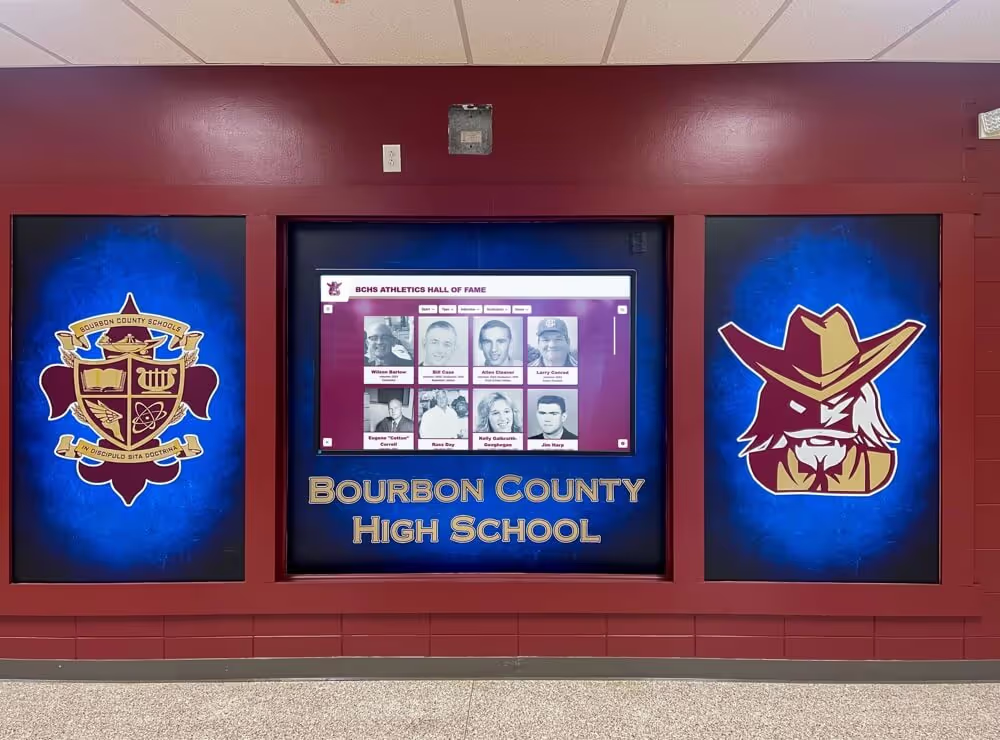
Well-defined criteria at the ballot stage produce inductee profiles rich enough to support compelling digital displays
Step-by-Step Hall of Fame Voting Workflow
Once the ballot template is designed, the workflow for distributing, completing, and tabulating ballots should be codified so it runs consistently year over year.
Step 1: Open the Nomination Window
Establish a fixed annual window (e.g., January 1 – February 28) during which nominations are accepted. Announce the window to alumni, coaching staff, and the broader school community. All nominations received before the deadline advance to eligibility review; those received after are held for the following cycle.
Step 2: Conduct the Eligibility Review
The committee chair reviews each nomination against the eligibility checklist. Nominees who do not meet all eligibility criteria are formally notified and their nominations are held or returned with explanation. This step should be completed before ballots are distributed.
Step 3: Distribute Ballots to Committee Members
Each committee member receives a ballot packet containing:
- One completed ballot (Sections 1 and 2 pre-filled by the committee chair) for each eligible nominee
- The scoring rubric definitions and scale
- A submission deadline and instructions for returning completed ballots
Ballots should be distributed in sealed form when committee members are voting blind (i.e., without knowing how peers are scoring). This approach reduces social pressure and anchoring bias.
The hall of fame voting process guide covers committee structure and voting mechanics in more detail, including how to handle abstentions and conflicts of interest.
Step 4: Collect and Tabulate Scores
Once the ballot deadline passes, the committee chair (or a designated administrator who is not voting) collects all completed ballots and tabulates aggregate scores for each nominee. Recommended tabulation:
- Calculate each voter’s weighted total for each nominee
- Average the weighted totals across all voters
- Rank nominees by average score
- Identify all nominees meeting or exceeding the induction threshold
Step 5: Hold the Final Vote
Present tabulated scores to the full committee. Committee members review the aggregate scores and cast their final Induct / Do Not Induct / Defer votes. Document the vote count and record the final decision on the committee’s master record sheet.
Induct — nominee meets the threshold and committee approves
Do Not Induct — nominee does not meet criteria; nomination may be resubmitted in a future cycle
Defer — nominee meets criteria but committee consensus is to wait (common when the inductee class size is capped)
Step 6: Notify Nominees and Prepare Official Records
Inductees are notified privately before any public announcement. All ballot packets—including individual voter scores—are filed with the athletic department as official records.
For a comprehensive guide to the full selection process from nomination through display, the school hall of fame selection criteria and digital display guide provides an end-to-end framework schools can adapt.
Setting Criteria Weights for Different Program Types
Not every school runs the same type of hall of fame. The rubric weights above are designed for a combined athletic and character program. Adjust the weights to match your program’s focus:
Athletic-primary programs:
- Athletic Performance: 40%
- Program Impact: 25%
- Character/Sportsmanship: 20%
- Post-Graduation Contribution: 15%
Combined athletic-academic programs:
- Athletic Performance: 25%
- Academic Achievement: 25%
- Character/Sportsmanship: 20%
- Program Impact: 15%
- Post-Graduation Contribution: 15%
Educator/coach induction track:
- Contribution to Program: 35%
- Mentorship and Student Impact: 30%
- Tenure and Longevity: 20%
- Character and Legacy: 15%

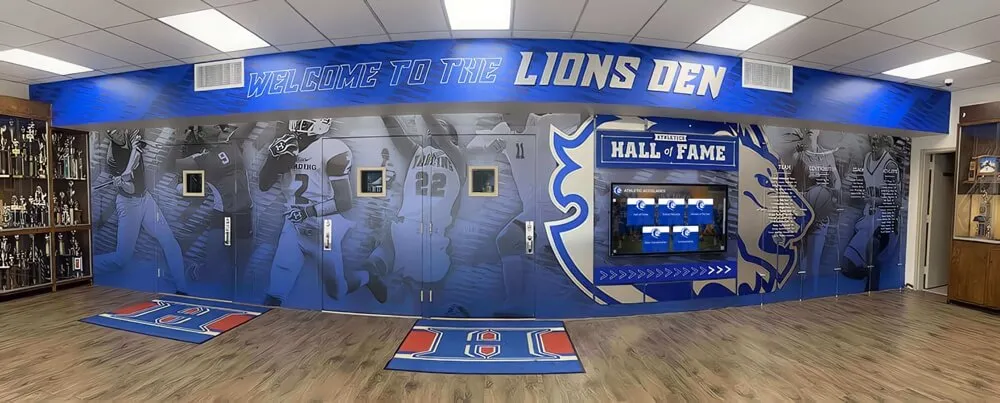
Inductee displays reflect the selection criteria used at ballot stage—strong criteria produce richer, more compelling recognition profiles
The hall of fame selection criteria digital display guide addresses how program type—athletic, academic, combined—affects both criteria weighting and the design of inductee profiles in digital recognition systems.
Standardizing Committee Composition and Conflict of Interest Rules
The ballot template governs scoring, but the committee’s composition and conflict rules govern who fills it out. These rules belong in the hall of fame bylaws, but should be referenced on the ballot cover sheet so every voter is reminded of them at the time of scoring.
Recommended committee composition for school athletic hall of fame:
- Current athletic director (committee chair)
- One current head coach (rotates annually)
- One alumni representative (former athlete or coach)
- One community member (non-alumni, non-staff)
- One administrator (principal or vice principal)
Conflict of interest rule: Any committee member with a direct personal relationship to a nominee (family member, close personal friend, former direct report) must recuse from that nominee’s ballot. The recusal should be documented.
Class size cap: Define the maximum number of inductees per year in the bylaws. A class size cap (e.g., 3–5 inductees per cycle) prevents inflated classes that dilute the honor’s significance.
For programs that also track separate honors like homecoming court or school service awards using parallel committee processes, the homecoming court roles and selection process guide offers useful comparisons in committee structure and criteria-setting.
Modernize how you display your inductees. Rocket Alumni Solutions builds cloud-based touchscreen hall of fame platforms that let schools update inductee profiles instantly—no vendor visit, no print shop order. See a live demo.
Preserving Ballot Decisions and Building a Long-Term Archive
Once the voting cycle closes, completed ballots are administrative records. Schools that treat them as such—rather than as single-use documents—build a hall of fame history that can be verified, referenced, and explained decades later.
What to Archive After Each Induction Cycle
- All completed individual ballots (signed, dated)
- The tabulated score summary sheet for each cycle
- The final vote tally with individual vote records
- Any written recusals or eligibility disqualifications
- The induction class announcement and public program
File these documents together, organized by year, in both physical form (a binder in the athletic director’s office) and digital form (a scanned PDF set in the school’s document management system or cloud storage).
Why Alumni Database Tools Strengthen the Archive
Many schools are building alumni tracking systems that connect nomination histories, induction records, and ongoing alumni engagement data. The alumni database software guide for K–12 schools outlines how these systems can link hall of fame records to broader alumni profiles—useful when inductees are also donors, volunteers, or mentors in current programs.
From Paper Archive to Digital Inductee Profile
The ballot archive answers the administrative question: “Why was this person inducted?” The inductee profile on the digital display answers the public question: “Who is this person and why are they honored here?” Both documents draw from the same underlying criteria, but serve different audiences.
A complete inductee profile for a digital display should include:
- Full name and graduation year
- Sport(s) or area of contribution
- Key achievements that drove induction (draw from the ballot’s criterion scores)
- A photo from their playing or service years
- Induction year and class
When the ballot template clearly defines criteria, building these profiles is straightforward—administrators can pull the information directly from the nomination packet and ballot.

Digital hall of fame platforms let visitors browse inductees by year, sport, and class—an experience that starts with well-documented selection records
Connecting the Ballot Process to Physical and Digital Recognition
The ballot template is the governance document; the plaque or digital profile is the public output. Both need to be designed in parallel so that the information captured at the ballot stage is sufficient for the display you intend to produce.
For physical plaques: Review the hall of fame plaque template guide to understand what information needs to be formatted for engraving—name, years, sport, and key achievement language—and ensure your ballot nomination form captures all of it.
For digital displays: Cloud-based recognition platforms like Rocket Alumni Solutions allow administrators to build inductee profiles with unlimited text, photos, videos, and linked records. Because the platform is updated remotely, new inductees can be added the same day as the induction ceremony—no production lead time required.
The contrast between static physical displays and dynamic digital archives matters practically for schools with decades of history. Touchscreen systems can surface a 1985 inductee’s profile with the same accessibility as a 2026 inductee’s—something a hallway plaque wall cannot achieve when space runs out.
The college commitment day and athlete celebration guide shows how schools use digital recognition infrastructure for moment-based recognition events—a model that applies directly to induction announcements as well.

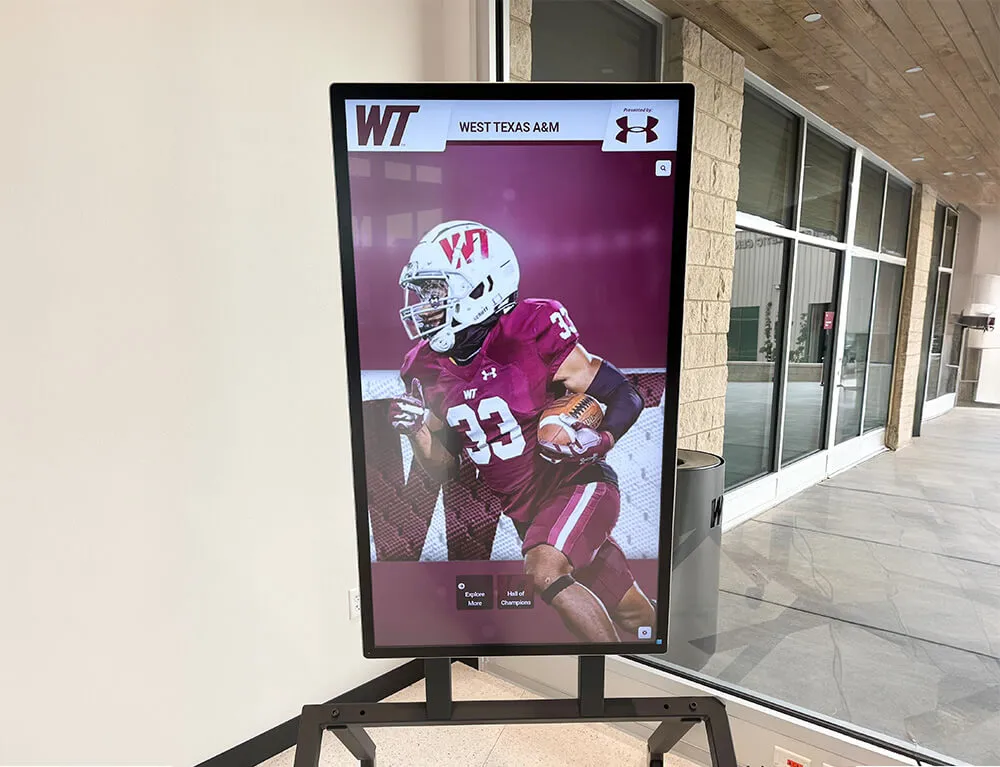
Digital hall of fame platforms make inductee records accessible to visitors, alumni, and prospective students alike
For programs that are still developing their digital infrastructure, the basketball hall of fame history and inductee selection overview provides useful context on how professional-level programs structure multi-decade selection archives—a framework smaller institutions can adapt at scale.
Frequently Asked Questions
What should a hall of fame ballot template include?
A hall of fame ballot template should include a nominee identification section (name, graduation year, sport, nominator), an eligibility checklist, a scored criteria rubric with weighted categories and a defined scoring scale, and a final vote section with a signature line. The template should be designed so that every committee member scores against the same criteria using the same scale, and so that completed ballots can be filed as permanent administrative records.
How should schools weight hall of fame selection criteria?
Criteria weights depend on the program type. Athletic hall of fame programs typically assign the highest weight (30–40%) to on-field performance and records, with secondary weight on program impact, character, and post-graduation contributions. Combined athletic-academic programs split weight more evenly across athletic performance and academic achievement. Schools should define weights in the hall of fame bylaws before the first ballot is issued so that weights cannot be adjusted retroactively to favor or exclude specific nominees.
How many inductees should a school's hall of fame class include per year?
Most high school and university athletic hall of fame programs induct 3–7 members per year. Smaller class sizes maintain the honor's exclusivity; larger classes allow programs with deep backlogs of qualified nominees to make faster progress. The right number depends on the size of the institution, the number of eligible nominees in any given cycle, and the physical or digital display capacity available to feature each inductee meaningfully. Define the class size cap in bylaws and apply it consistently.
How long should schools retain completed hall of fame ballots?
Schools should retain completed hall of fame ballots permanently as part of the institution's official athletic records. Unlike operational documents with defined retention windows, induction decisions are part of the school's permanent historical record. Completed ballots should be stored in both physical form (signed originals filed with the athletic director) and digital form (scanned PDFs in cloud storage or document management systems).
Can a nominee be reconsidered after being passed over?
Yes. Most hall of fame programs allow nominees who receive a "Do Not Induct" or "Defer" decision to be renominated in subsequent cycles, provided they continue to meet eligibility requirements. The bylaws should specify how many years must pass before a passed-over nominee can be reconsidered and whether a new nomination packet must be submitted or whether the original materials remain on file. Documenting the original ballot scores is especially valuable here because it shows which criteria the nominee scored well on and which fell short—helping future nominators strengthen their submissions.
Conclusion: The Ballot Template as the Foundation of a Credible HOF Program
A hall of fame ballot template is not a formality—it is the infrastructure that makes your induction process defensible, consistent, and meaningful over decades. Schools that invest in a well-designed ballot, a documented voting workflow, and a permanent archive of committee decisions produce hall of fame programs that earn community trust and survive leadership transitions intact.
When those ballot records connect to a digital recognition platform—where inductee profiles are searchable by year, sport, and class, and can be updated the same day as the induction ceremony—the selection process becomes the foundation of a living institutional archive rather than a one-time administrative exercise.
Turn Your Induction Records Into a Living Digital Archive
Rocket Alumni Solutions builds cloud-based touchscreen hall of fame platforms that let schools publish new inductees instantly, give alumni remote access to recognition records, and display every class from the program's history without running out of wall space.
Request a Custom Demo