
When a school’s clay target team competes at the USA High School Clay Target League national championship, recognizing the results accurately starts with understanding how the event separates its award categories. High school clay target awards at this event are not a single bracket — they divide into distinct team placements, separate male and female individual honors, a single overall title, and an independent patch program. Each category has its own eligibility logic and evidence standard, and an athlete can hold honors in more than one simultaneously.
This guide is for athletic directors, school communications staff, and recognition editors who want to caption results correctly and build a lasting record of participation. All rules described here apply specifically to the USAHSCTL national championship as documented in the league’s published National Championship Rules; other leagues and tournaments operate under different rules and award structures.
Award ceremonies for this event are held separately at the conclusion of each championship competition, and unattended awards are mailed within two weeks — so accurate documentation begins the moment results are posted, not when a physical award arrives.
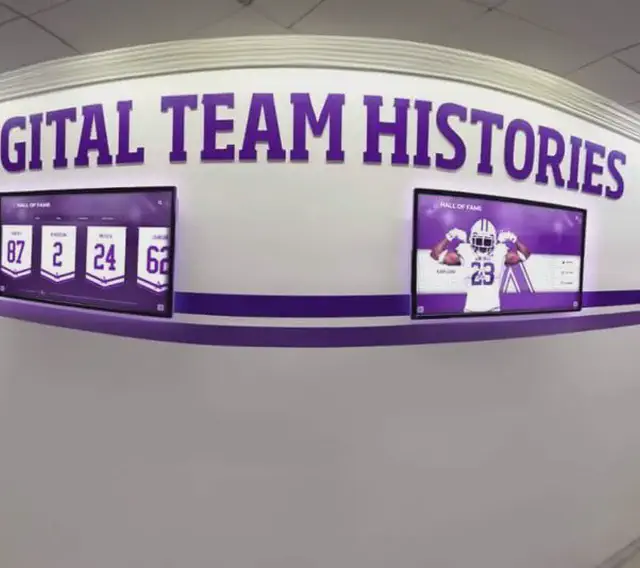
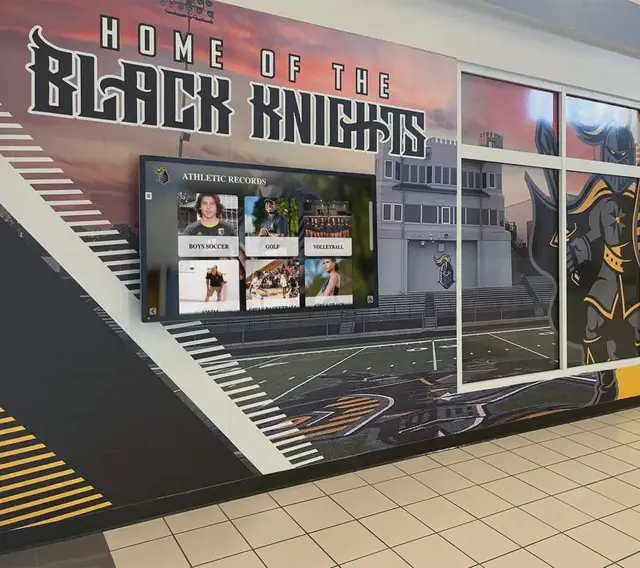
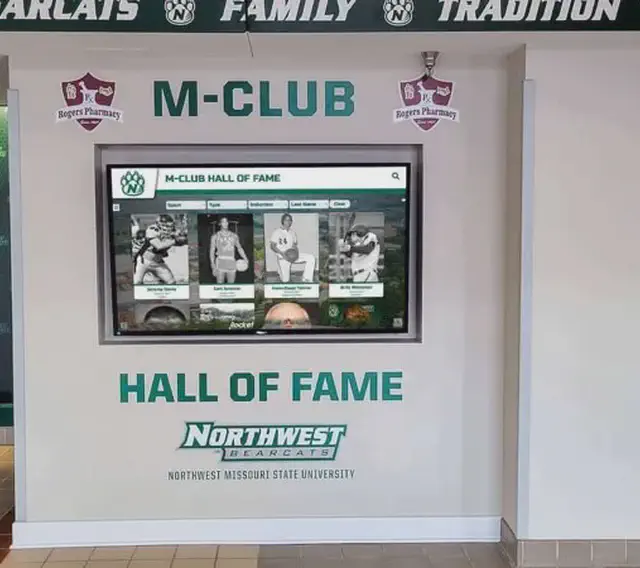
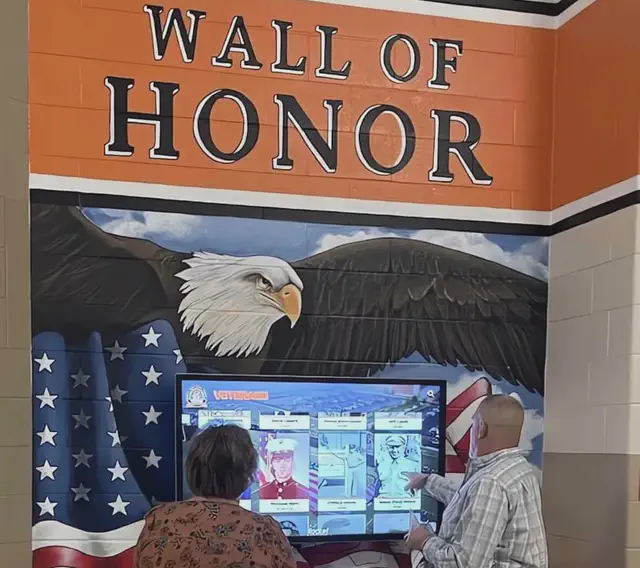
Clay target honors fit naturally into the same permanent display spaces as other athletic achievements — but accurate labeling by category is essential.
How the 2026 USAHSCTL National Championship Structures Its High School Clay Target Awards
The 2026 national championship issues awards in four independent categories, as stated in the league’s published rules. The categories are not mutually exclusive: a single athlete can appear in more than one.
| Award Category | Places Recognized |
|---|---|
| Team | 1st–5th place |
| Female Individual | 1st–10th place |
| Male Individual | 1st–10th place |
| Overall Individual | 1 place (top score overall) |
Teams of five competing athletes are scored as a unit. Individual categories are split by male and female designations, each recognizing ten places. The overall individual award recognizes a single athlete — the top overall championship-round score regardless of gender category — which means a single athlete may appear in both their gender category and the overall title simultaneously. These are related but distinct honors; both should be documented and displayed with their correct labels.
Why Keeping Categories Separate Matters for Recognition
Combining categories in a caption creates a subtle but significant error. A female athlete who places 2nd in Female Individual did not finish 2nd overall; the overall award is determined independently on the same day. Equally, a team’s 3rd-place team finish says nothing specific about where individual athletes on that team ranked in the individual competition, since those are separate events scored separately.
The practical fix is straightforward: use the official category name in every caption. “2nd Place, Female Individual” and “2nd Place, Team” are accurate. “2nd Place Overall” is only accurate if confirmed against the Overall Individual result.
Championship Round vs. Qualifying Round: What Gets Captioned as What
The national championship runs two distinct rounds, and the distinction is essential for accurate recognition because the league’s rules state explicitly that championship awards are based on Championship Round targets only — not cumulative totals from both rounds combined.
Individual competition: Up to 1,800 student athletes shoot 100 targets (two 50-target sessions) in Saturday’s Qualifying Round. The top 400 scores advance to Sunday’s Championship Round, where athletes shoot another 100 targets. Awards for National Champion and all individual Male and Female placements are determined by the Championship Round score alone.
Team competition: Up to 240 squads of five athletes shoot 100 targets in Friday’s Qualifying Round. The top 80 teams advance to Sunday’s Championship Round, which uses the same 100-target format. Team places 1–5 are based on that championship round alone.
Two Accomplishments, Two Accurate Captions
Qualifying for the championship round and placing in the championship round are both genuine achievements, and a school can accurately celebrate either. They describe different things and should not be used interchangeably.
- “Advanced to the national championship round” — accurate for a team or athlete in the top 400 (individuals) or top 80 (teams) after the qualifying round
- “Placed 4th at the national championship” — accurate only for a result confirmed from the championship round’s final standings
Using the qualifying-round advancement as a placement caption overstates the result. Using a championship placement caption for a qualifying result understates what the word “champion” implies. Neither serves the athlete accurately.
Tiebreakers and Official Results
Tiebreaking for the championship round uses the longest reverse run: officials count backward from the last target shot until a missed target is reached. If that’s still tied between athletes or teams, a shoot-off follows. Final rankings reflect both the round score and any tiebreaker outcome, so official posted results at the conclusion of competition are the authoritative source for any placement caption — preliminary leaderboards and in-event scoring sheets are not final until confirmed.

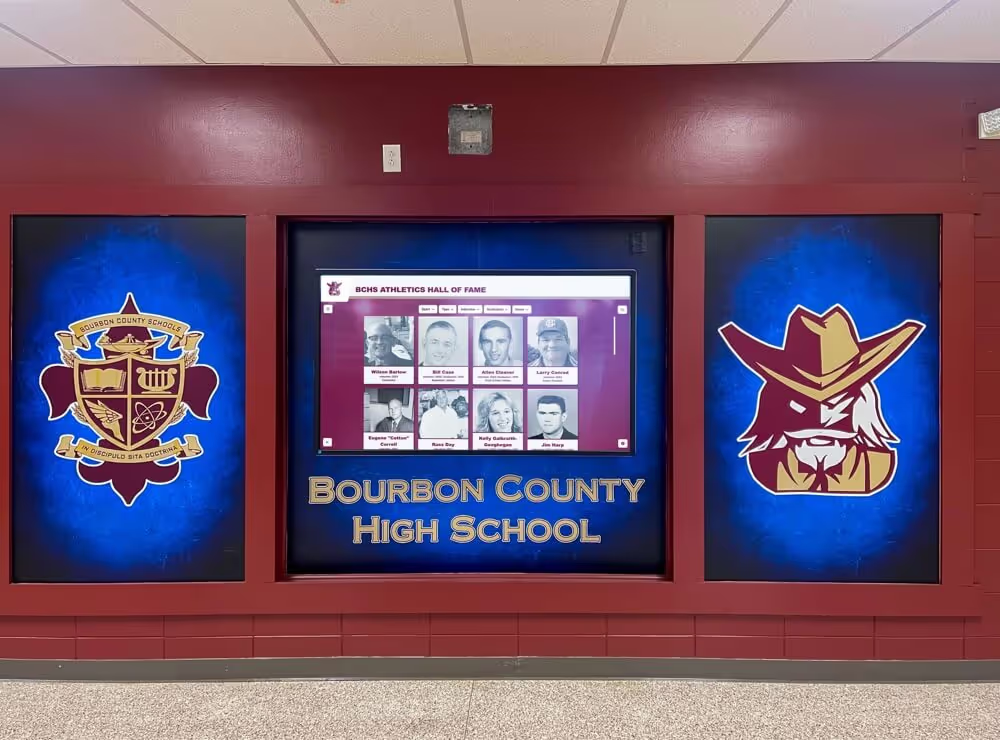
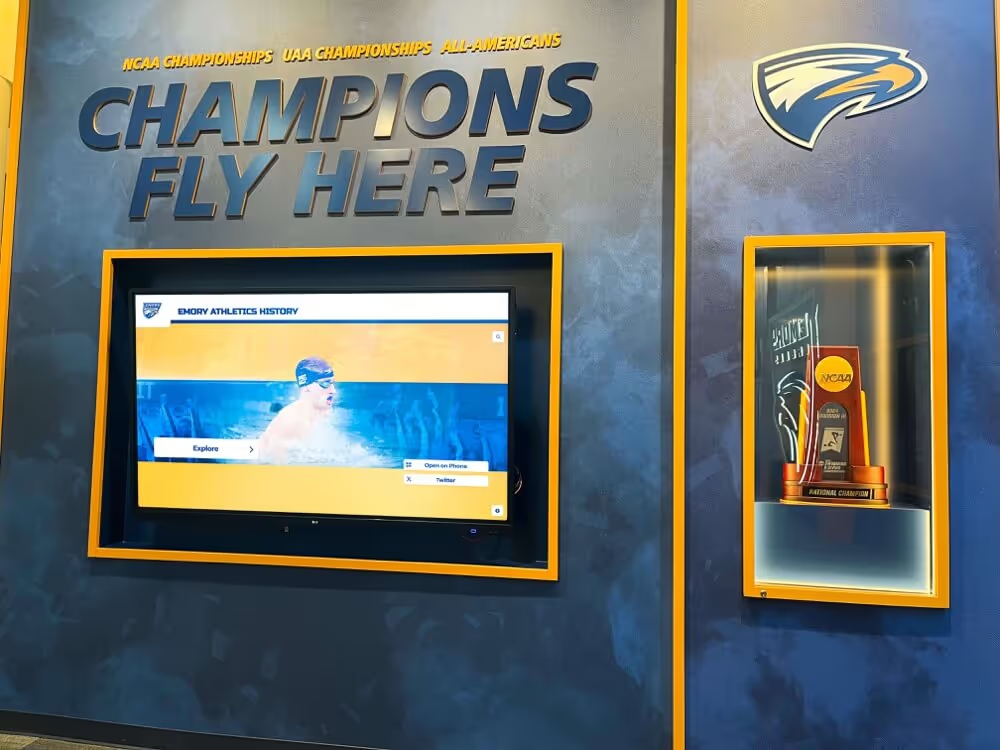
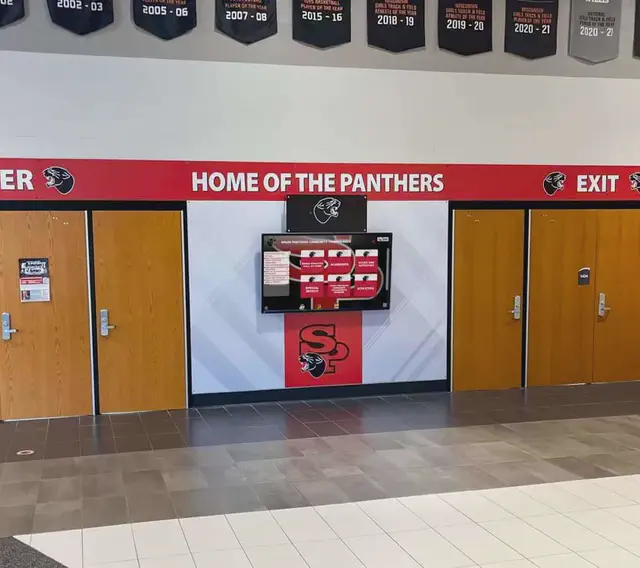
Recognition displays organized by category help viewers distinguish qualifying achievements from championship placements at a glance.
Straight Patches: An Independent Honor with Specific Conditions
Straight patches recognize consecutive successful targets hit during official competition at the event. The league’s national championship rules identify four thresholds: 25, 50, 75, and 100 consecutive targets. Practice rounds do not qualify — only targets from official competition rounds count toward a straight.
When an athlete reaches more than one threshold in the same event — for example, hitting 75 consecutive targets — the rules specify that only the highest-numbered patch is awarded. That athlete receives the 75-target patch, not separate patches for 25 and 50 as well. Athletes can inquire with event staff for patch distribution.
What a Straight Patch Does and Does Not Establish
A straight patch is an independent recognition of a specific performance during competition. It does not by itself determine where an athlete finishes in the rankings, and a top ranking is not implied by achieving a straight patch. Final standings depend on total championship-round scores, with tiebreakers applied from official results.
A school can accurately recognize both honors independently: “earned a 75-target straight patch at the national championship” and “placed 6th in Male Individual at the national championship” are non-contradictory captions that describe separate accomplishments. What would be inaccurate is implying that the patch established the placement, or inferring a placement from the patch alone.
An athlete who hits a straight and an athlete who finishes in the top ten of their individual category have both accomplished something worth documenting — the documentation just needs to keep those accomplishments clearly labeled.

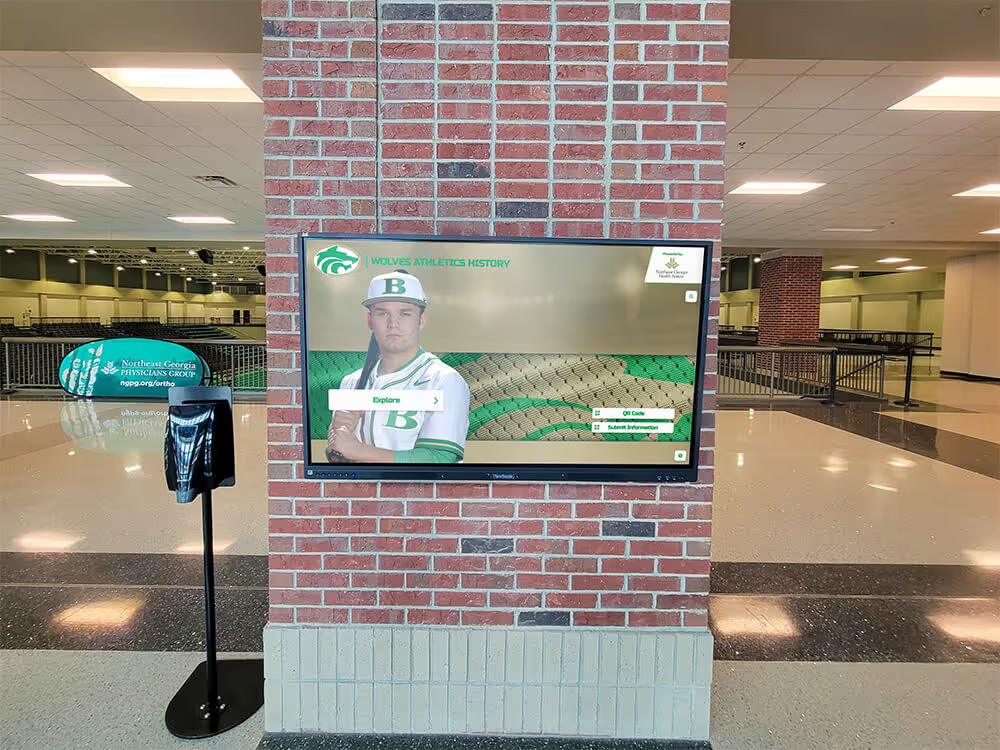
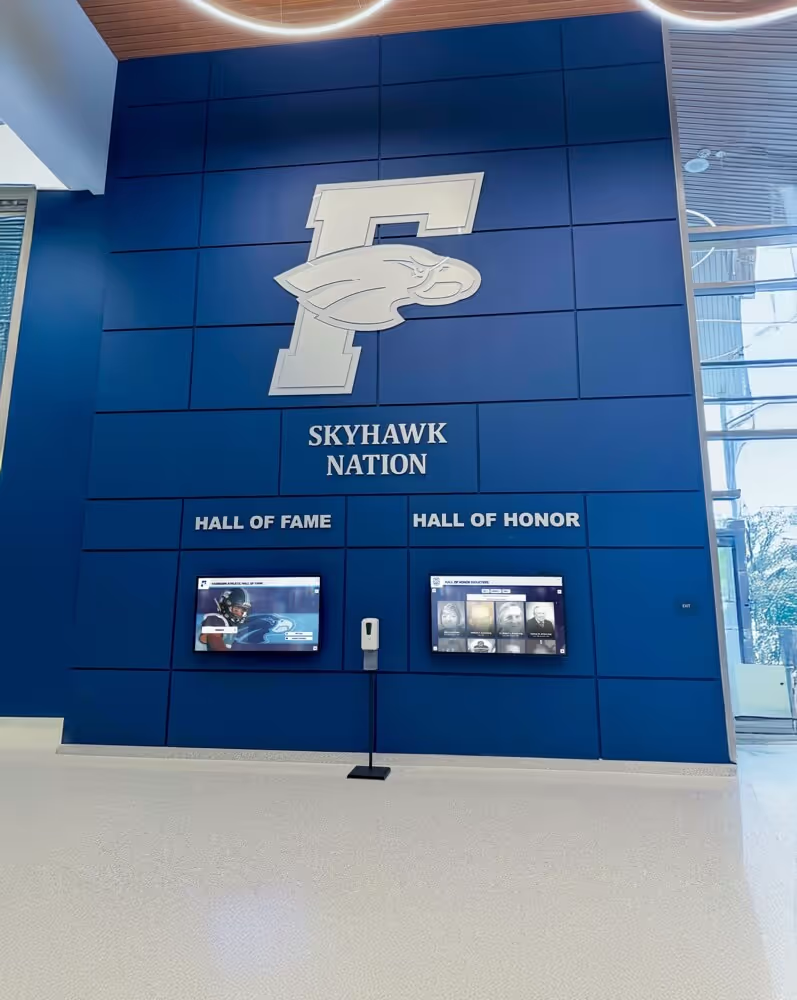
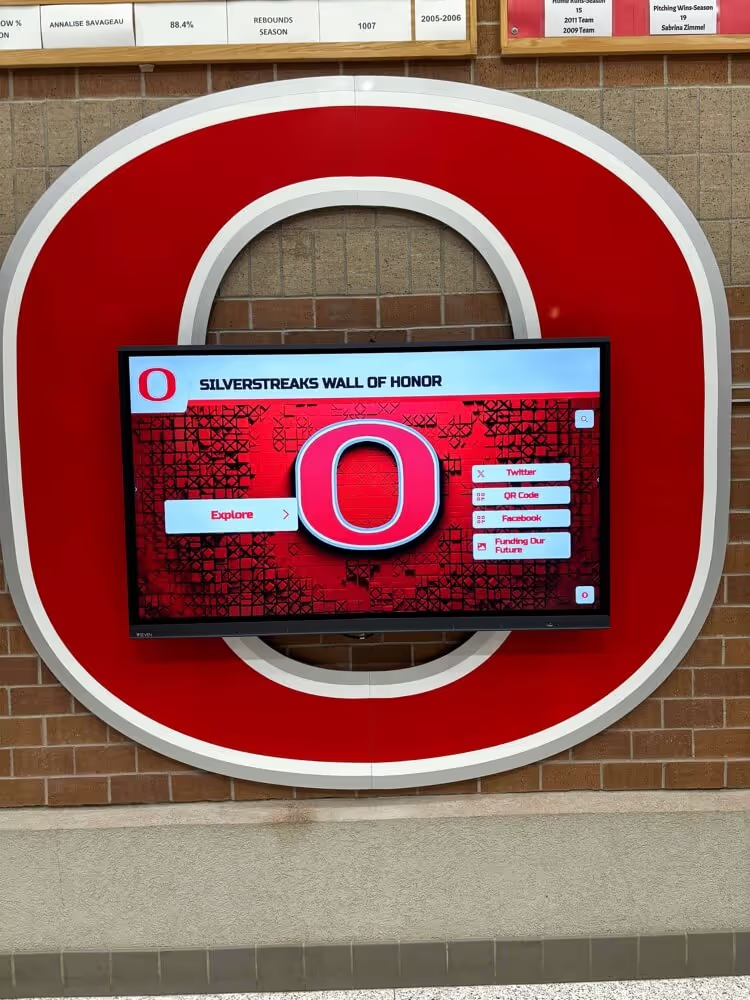
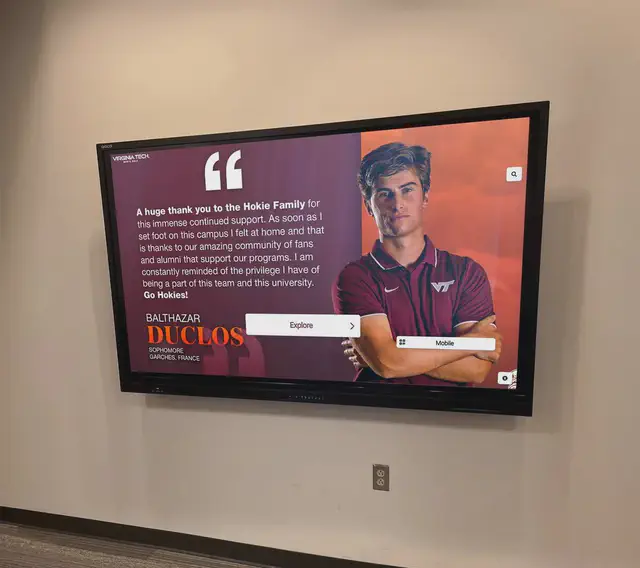
Honor walls that separate team titles from individual placements help viewers read results correctly without prior knowledge of how the event was structured.
Blank Caption and Entry Worksheet
This worksheet is a blank editorial aid for recording verified award information before publication or display entry. It is not an eligibility form, a mandatory all-fields gate, or an import template. Publish the fields you can confirm; leave others blank or pending until verified against official posted results.
| Field | Enter Here | Notes / Examples |
|---|---|---|
| Awarding body | USA High School Clay Target League | |
| Competition name | USAHSCTL National Championship | |
| Competition year / dates | 2026 | |
| Award category | Female Individual / Male Individual / Team / Overall Individual / Straight Patch | |
| Place or distinction | e.g., 3rd Place — or Straight Patch, 50 Targets | |
| Recipient (athlete or team name) | Full name as registered; team name as registered | |
| Competition round | Qualifying Round or Championship Round | |
| Public evidence link | URL of official posted results | |
| Notes / pending verification | Flag any field not yet confirmed from official results |
A caption supported by all confirmed fields is straightforward to draft. When only some fields are verified — for example, a qualifying advancement is confirmed but championship-round results are not yet posted — publish what you can confirm and note what is pending rather than inferring placement from an unfinished leaderboard.
Building a Lasting Record of Clay Target Achievements
Clay target results accumulate quickly across a season, and championship-event details can blur in memory or get lost in a rushed post-event week. Reliable records start with the distinction between what was earned at which round.
For schools maintaining a team history, organizing season rosters and team photos connects athlete names to competition years — the foundation that makes individual placement records meaningful when you revisit them years later. When long-time participants and alumni reflect on program history, collecting alumni memories for a team-history archive surfaces context — travel, team culture, standout moments — that official results alone cannot capture.
For the display side, the core challenge is the same as in any sport with layered results: a viewer looking at a wall display or touchscreen should immediately understand what category an honor belongs to. A team 3rd-place recognition and a Female Individual 7th-place recognition are different achievements; a well-organized display makes that clear without requiring the viewer to already know how the event was structured.
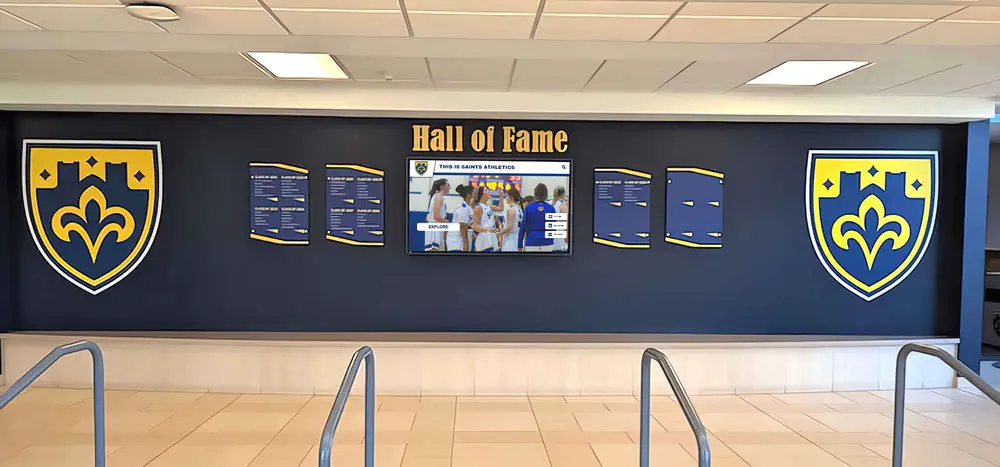
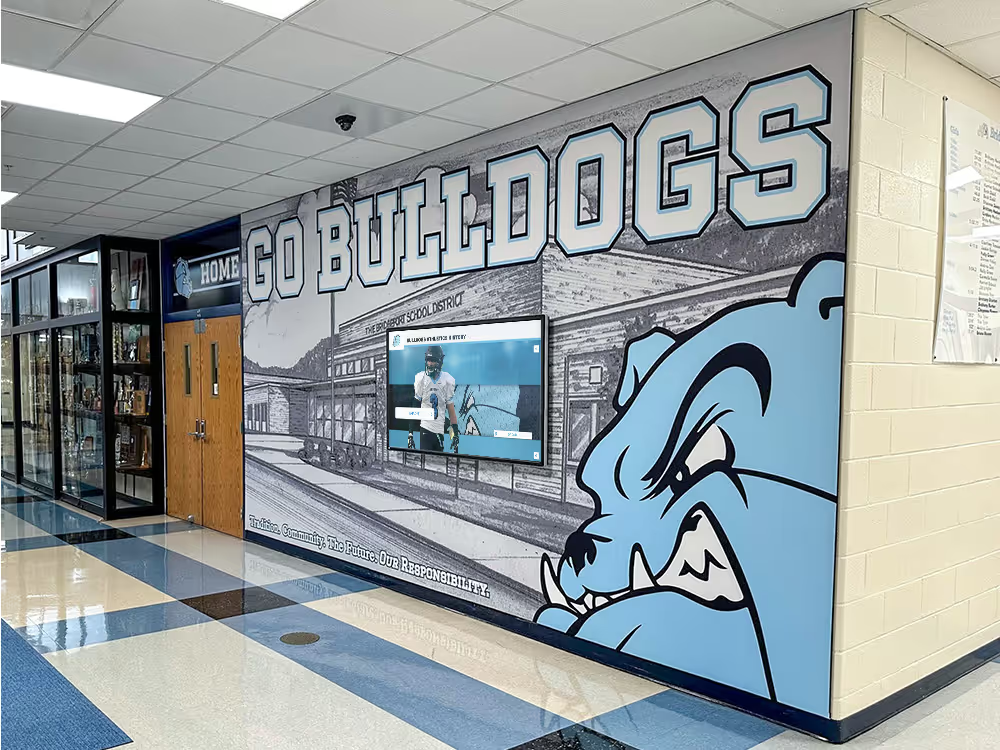
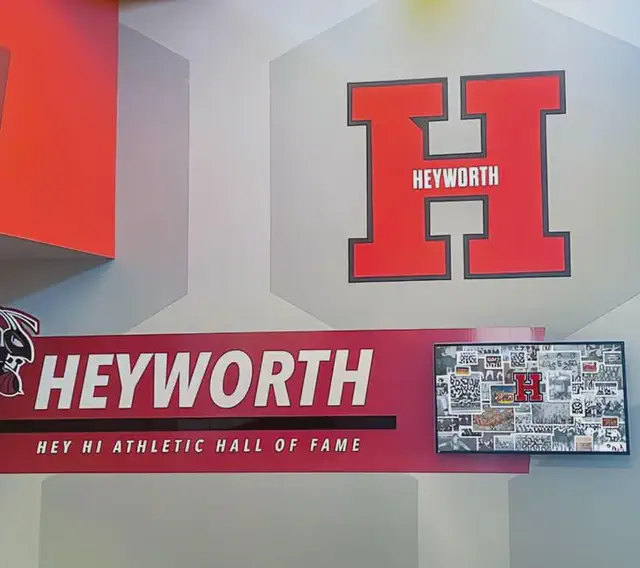
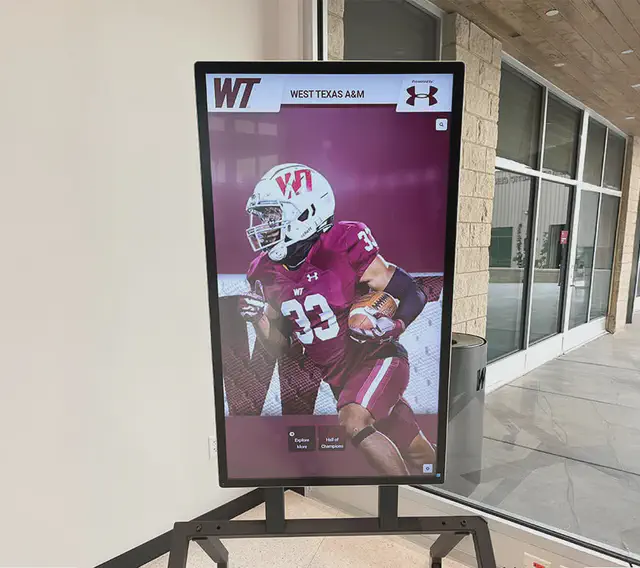
Combining physical and digital display elements lets schools label team and individual results in clearly separated sections — reducing caption confusion for visitors.
Display Considerations for Layered Award Structures
The USAHSCTL national championship award structure — with up to four categories per event and separate team and individual competition streams — creates a natural organizational challenge for permanent displays. Practical approaches:
Label the round clearly. Because championship awards are based on the championship round alone, displays listing a placement should identify the competition tier — for example, “USAHSCTL National Championship, Championship Round, 2026” — to distinguish it from qualifying-round acknowledgments.
Keep team and individual results in distinct sections. A team’s 2nd-place finish and a team member’s 6th-place individual finish are related but separate accomplishments. Displays that combine them under a single heading misrepresent both.
Mark straight patches separately. Patches merit recognition on their own terms, with an accurate description of what they represent: a consecutive-target achievement during competition, not a final ranking. A short label like “75-Target Straight Patch, Competition Round” is more informative than simply “Clay Target Honor.”
Use posted results as the source. Scores visible during competition, coaching notes, and preliminary leaderboards can differ from final posted results after tiebreakers are resolved. Base all permanent display captions on official finalized results.
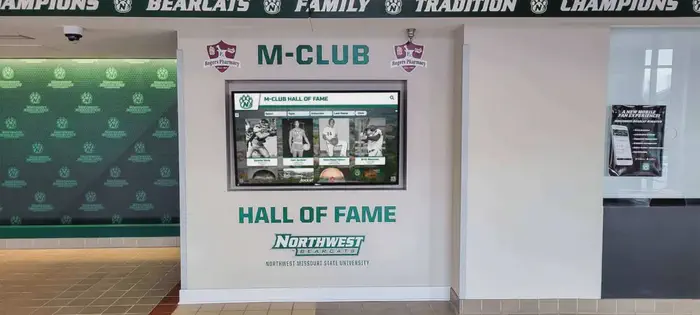
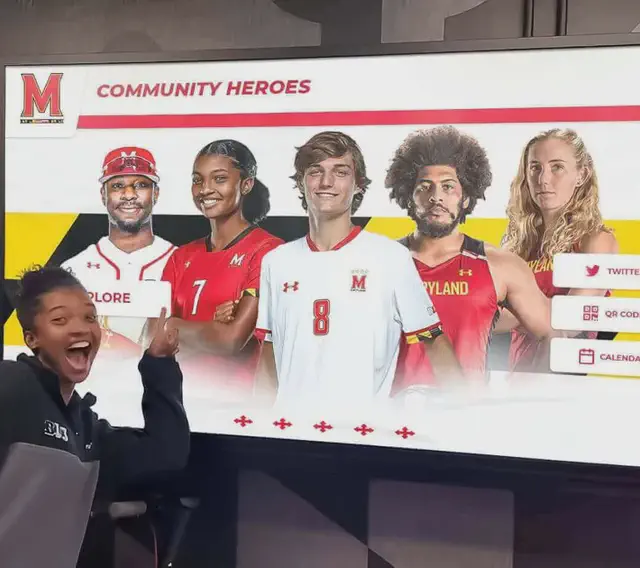
Digital recognition panels make it straightforward to separate team titles, individual placements, and specialty achievements — keeping each category clearly labeled in a permanent display.
Frequently Asked Questions
What awards does the USAHSCTL national championship give to teams?
The national championship awards team places 1st through 5th. Teams of five competing athletes are scored by their combined championship-round performance; awards are based on the championship round only, not cumulative totals from the qualifying round. Up to 80 teams advance from the qualifying round to compete for those placements. Schools that reach the championship round but do not finish in the top five still hold a genuine, accurately captioned accomplishment: a national championship round qualifier result.
Can a student athlete hold both a gender-category individual placement and the overall title?
Yes. The overall individual award recognizes the top championship-round score regardless of gender category, while the Female Individual and Male Individual categories — each with 1st through 10th place — are issued separately. An athlete can appear in both simultaneously. For example, a female athlete who records the highest championship-round score overall would hold both a Female Individual placement and the Overall Individual title. Both are accurate and should be documented separately with their correct category labels.
What counts as a straight for the USAHSCTL national championship patch?
A straight is a consecutive run of successful targets hit during official competition rounds. Practice rounds do not count toward patch eligibility under the event’s rules. Patches are issued at four thresholds — 25, 50, 75, and 100 — but only the highest threshold achieved is awarded; a single patch per athlete is issued for the highest-numbered straight reached. An athlete who hits 100 consecutive competition targets receives the 100-target patch, not four separate patches.
Does a straight patch indicate a top-10 individual placement?
No. A straight patch and an individual placement are independent recognitions. The patch marks a specific achievement — consecutive competition targets hit without a miss — while individual placements are determined by championship-round totals and tiebreakers from official final results. An athlete can receive a patch without placing in the top ten of their category, and an athlete can place in the top ten without achieving a straight. Display and caption each accomplishment on its own terms.
How should schools caption a qualifying-round advancement versus a championship round placement?
A qualifying-round advancement means the athlete or team scored in the top tier of the qualifying round and earned a spot in the championship round. Championship placements — team 1–5, individual 1–10 in each gender category, or overall — are determined by the championship round alone. Using “national qualifier” for a qualifying-round advancement and “national championship [place]” for a confirmed championship-round result keeps both captions accurate without overstating or conflating separate stages of the event. Both are legitimate recognition milestones; each should carry the label that matches its actual round.
Conclusion: Accurate Labels Protect the Value of Every Honor
High school clay target awards at the USAHSCTL national championship span four distinct categories — team, female individual, male individual, and overall individual — plus an independent straight patch program that runs on separate criteria. Getting each caption right means knowing which round produced the result, which category it belongs to, and what official posted results confirm.
A qualifying advancement is worth celebrating accurately. A championship placement is a separate, additional accomplishment. A straight patch stands on its own — earned during competition, documented clearly, displayed without overstating what it proves. Schools that build this precision into their recognition records create a lasting reference that serves athletes, families, and future teams for years to come.
Display Your Clay Target Honors Clearly and Permanently
See how schools use digital recognition displays to organize layered award categories — team titles, individual placements, and specialty achievements — in permanent, easy-to-navigate formats that preserve every detail for years.
Request a Demo