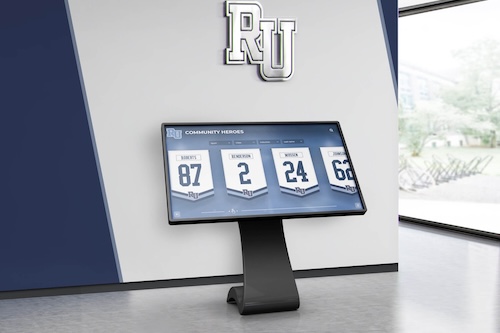

The hardest moment for many athletic directors isn’t finding wall space for a new high school cornhole awards display — it’s knowing exactly what words to put on the label before the plaque goes up. Was it a singles title or a doubles title? Should the team name say the school or the district or the conference? Did winning a bracket stage at a Signature Open make someone an “overall champion”? Getting each of those answers right before anything is printed saves a costly correction later. This guide works through every display question in order: what competitions cornhole produces, who each award actually credits, how to write the label, and how digital tools let you update or expand the display without touching a single screw.
This is a recognition content guide for athletic staff. It covers display organization, labeling, and editorial planning — not eligibility criteria, sport-specific scoring rules, or coaching guidance.
Cornhole’s rise as an organized high school sport has outpaced the recognition infrastructure at most schools. Many athletic departments that have been recognizing basketball and track for decades are now handling their first cornhole result without a template. The good news: the same editorial discipline that makes a basketball trophy case trustworthy — credit the right unit, use the official name, cite the source — translates directly to cornhole.
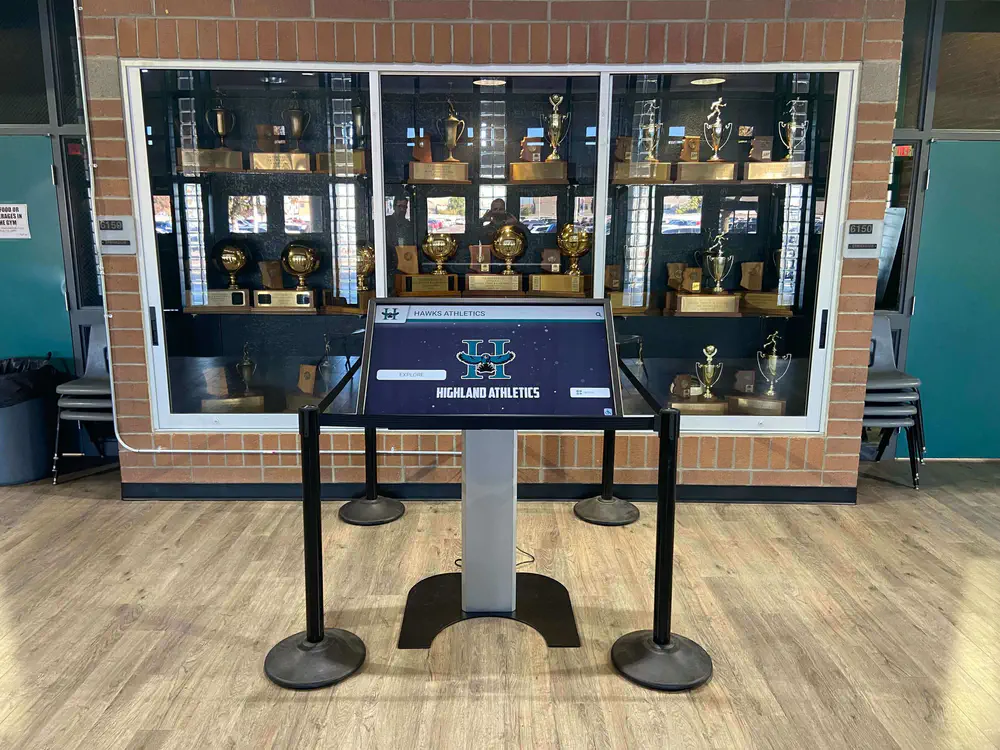
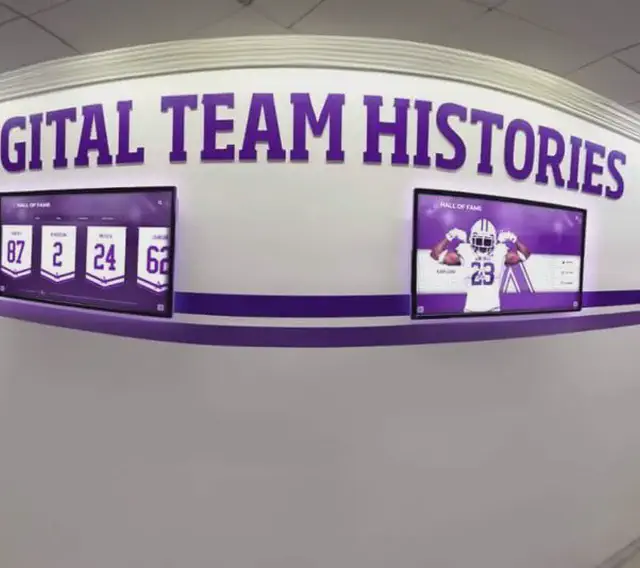
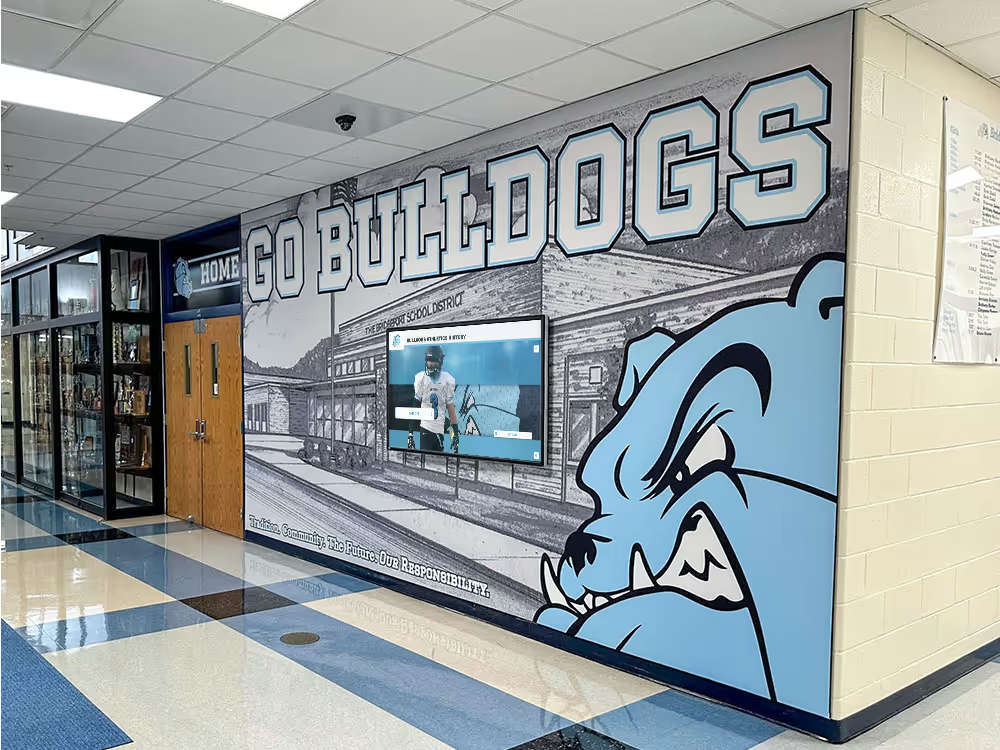
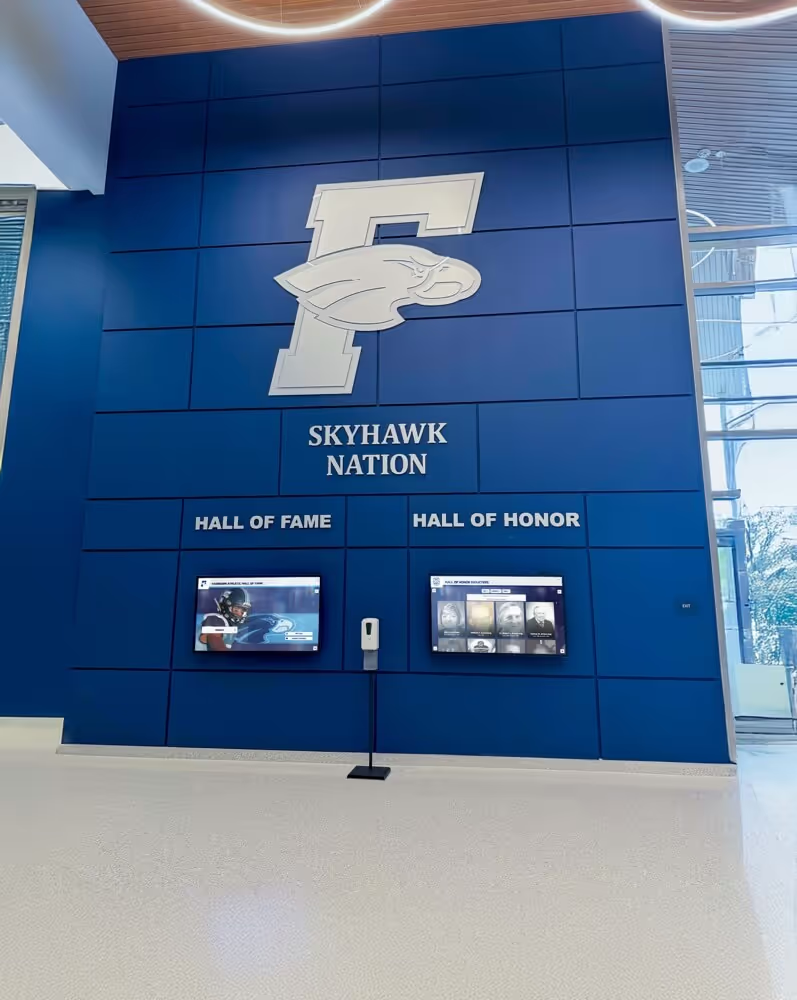
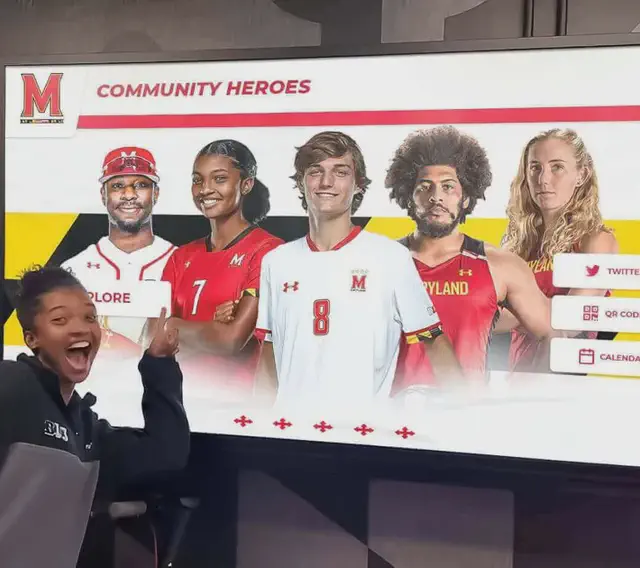
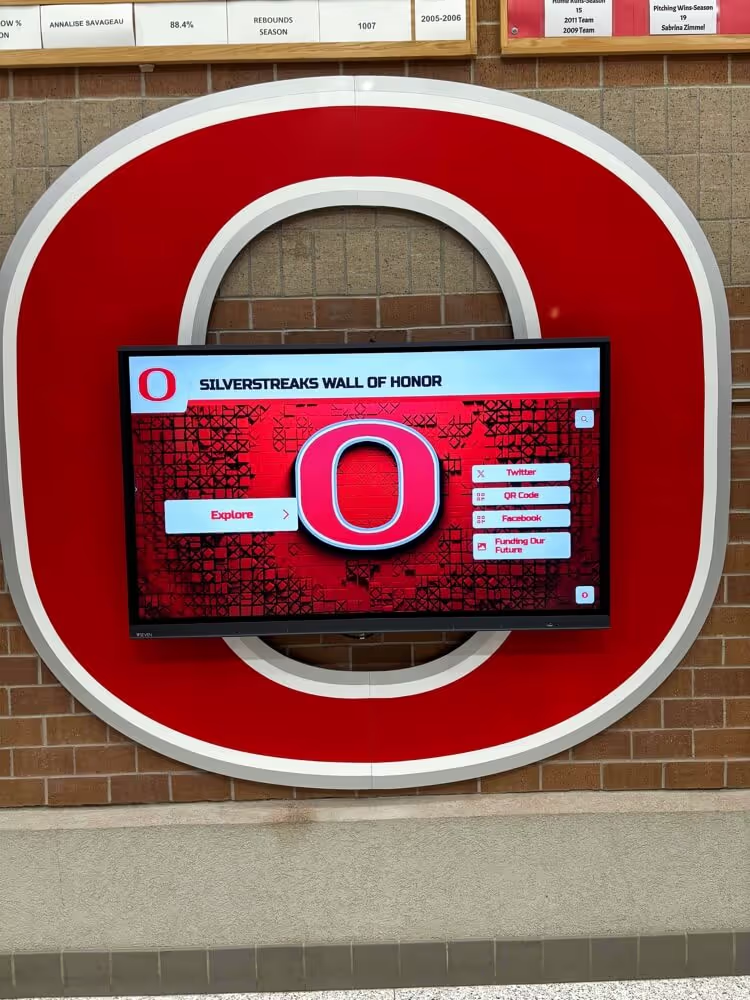
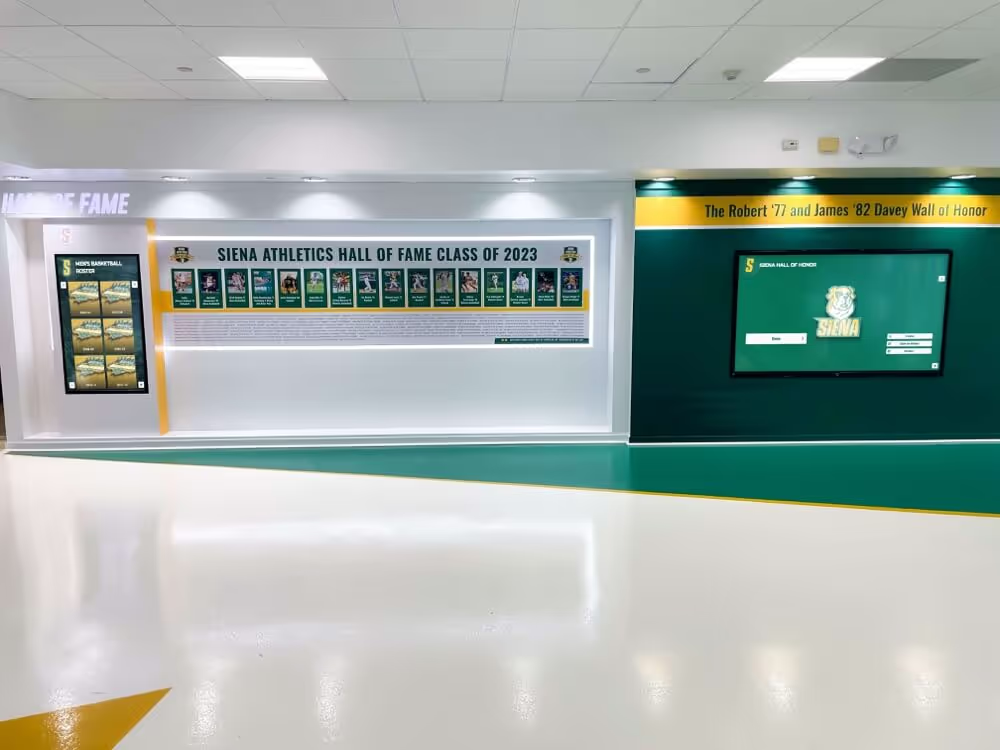
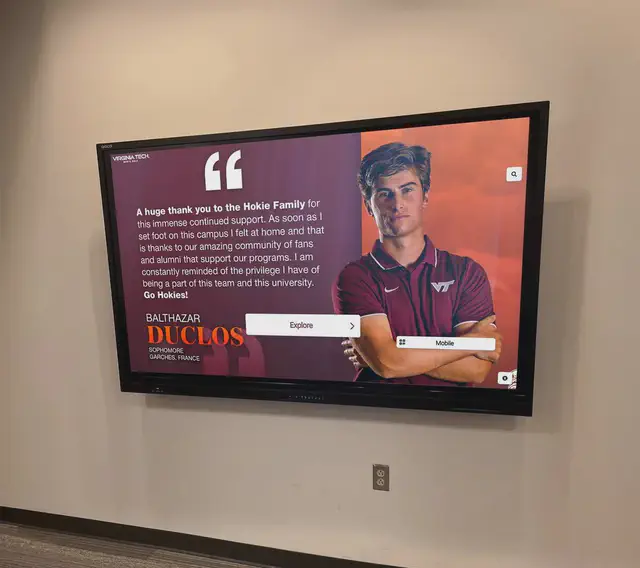
A digital kiosk beside the traditional trophy case gives cornhole results the same permanent visibility as any other program — and lets administrators update labels without reprinting hardware.
Why Cornhole Recognition Requires Careful Labeling
High school cornhole produces multiple distinct competitions within a single event. A tournament that runs High School Singles, High School Doubles, and High School Team events is producing three separate sets of results that credit three entirely different units — an individual athlete, a two-person pair, and a competing team. None of those results transfers to the others.
The American Cornhole League’s high school program page illustrates the team-naming convention that affects display labels directly: the national team example uses the school district or athletic conference as the team identifier, not necessarily the individual school name. That distinction matters when you are deciding what name goes on the trophy case entry.
If your display lists “2025 Cornhole Champions” under a photo of two athletes who won a Doubles event, you have inadvertently credited a Doubles achievement as if it were a Team result — and left the actual partners unlabeled. A visitor who searches for that team’s season record will find nothing that matches. Source-faithful labels prevent that outcome.
The Three Competition Types and What They Credit
| Competition Type | Credited Unit | Display Entry Requires |
|---|---|---|
| Singles | One individual athlete | Athlete name, school, event, year |
| Doubles | Both partners, as a pair | Both names (as paired in source), school, event, year |
| Team | The official competing team | Team name exactly as published, event, year |
These three categories are not interchangeable. A school that earns results in all three has three separate display entries — not one combined “cornhole champion” label.
Singles: One Athlete, One Entry
A High School Singles result credits one athlete. The recognition belongs to that individual — not to their school’s team, not to anyone they may have doubled with, and not to the program as a whole.
For recognition purposes:
- Create a separate display entry for each singles result
- Label the event exactly as the source document names it: “High School Singles” or “Boys Singles” or “Girls Singles,” depending on how the governing body categorizes it
- Use the athlete’s name exactly as it appears in the official results
- Include the event name, the sanctioning organization, and the season year
The 2025–26 ACL Myrtle Beach Signature Open results index publishes High School Singles, Doubles, and Teams as separate sections — a structure that reflects how the results are counted and credited. Bracket stages and round-robin stages within that event are intermediate competition formats; finishing in a bracket is not the same as winning the event overall. Leave any result unlabeled in the source as an unlabeled result on your display.
Hypothetical singles label example:
[Athlete Name], [School Name] — High School Singles, [Place], 2025–26 ACL Myrtle Beach Signature Open.
If the source document does not confirm an overall placement — only a bracket result — write what the source confirms and nothing more.
Doubles: Crediting the Partnership
The Doubles result belongs to the pair. Both athletes competed together and both earned the recognition. A display entry that lists only one partner omits half the credited unit; an entry that substitutes the team name for the pair misidentifies the recipient entirely.
For recognition purposes:
- Preserve the exact pairing as it appears in the official results
- List both partners’ names, in the form published by the source
- Label the event: “High School Doubles,” with the event name and year
- Do not substitute a team name, a school name, or a single athlete’s name for the pair
A strong local example of how external organizations publish doubles results can be found in the 2025–26 ACL Cleveland Signature Open results, which publishes a High School Doubles “Overall Champ” designation. That label is scoped to Cleveland’s High School Doubles event. It identifies the winning pair in that event at that tournament — it does not make either athlete a national champion, a team-event winner, or the school the program’s team champion. When you cite that result on a display, credit it at the scope the source defines.
Hypothetical doubles label example:
[Partner A] & [Partner B], [School Name] — High School Doubles, Overall Champion, 2025–26 ACL Cleveland Signature Open.
If a school’s cornhole program fields multiple doubles pairs in the same event, each pair’s result is its own entry. Do not merge two separate pairs into one display item.
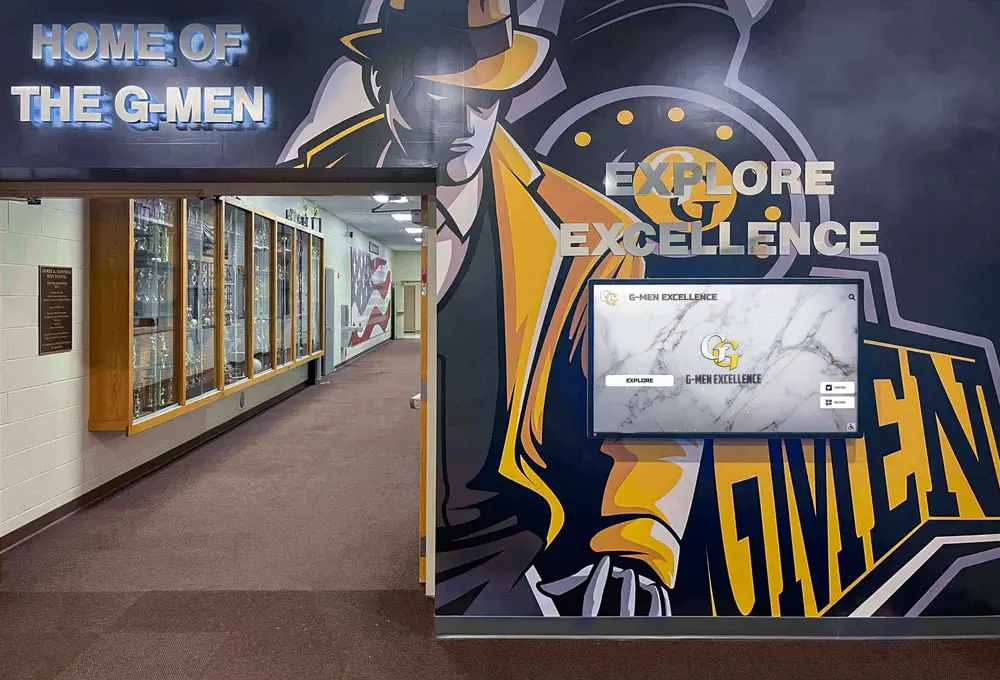
Trophy cases and digital displays work together when each holds results credited correctly by competition type — singles results in a singles section, doubles results listing both partners, team results using the official team name.
Team: Using the Official Competing Name
The Team result credits the competing team as organized — which in cornhole may be a school team, a school district team, or a conference team, depending on how the governing body registered the entry. The ACL high school program’s use of district and conference naming for team entries is an important reminder: the official competing name in the source document is the name that belongs on your display, even if it is broader than your school alone.
For recognition purposes:
- Use the team name exactly as it appears in the official results document
- Do not substitute your school’s nickname if the competing unit was listed under a district or conference name
- Label the event: “High School Team” or the event’s exact category name, with the event name and year
- Do not credit a team result to individual athletes, even those whose performances contributed to the team score
Hypothetical team label example:
[District or Team Name as Published] — High School Team, [Place], 2025–26 ACL [Event Name].
If students from your school competed as part of a district or conference team entry, you can note their participation — but the team credit in the results belongs to the officially listed competing unit, not to the school alone.
A school can and should celebrate verified participation by its students when the official team name is broader than the school. “Our students represented [District Name] in the High School Team division” is an accurate, meaningful statement. “Our school won the Team title” may not be — check the official source first.
How Schools Organize a Championship Display
The editorial decisions above — what to call the event, who to credit, how to separate competition types — feed directly into how the display is physically or digitally organized. For a cornhole-specific trophy case, the most effective structure mirrors the competition structure: a Singles section, a Doubles section, and a Team section, each labeled by season year.
For a comprehensive look at this organizational approach across sports, how schools organize a championship display covers the display planning sequence from raw results through published entries — including how to handle multi-level competitions where intermediate and final results appear in the same results hub.
The same principle applies in cornhole: a Signature Open may publish results from multiple rounds and multiple competition groups (high school alongside college and professional divisions). Keeping your display entries scoped to the specific result your students earned — labeled with the correct competition, division, and stage — protects both accuracy and the credibility of the display.
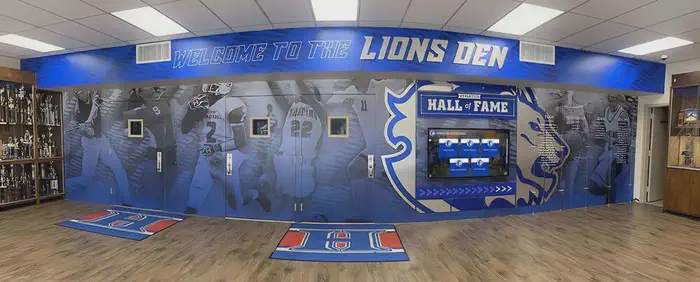
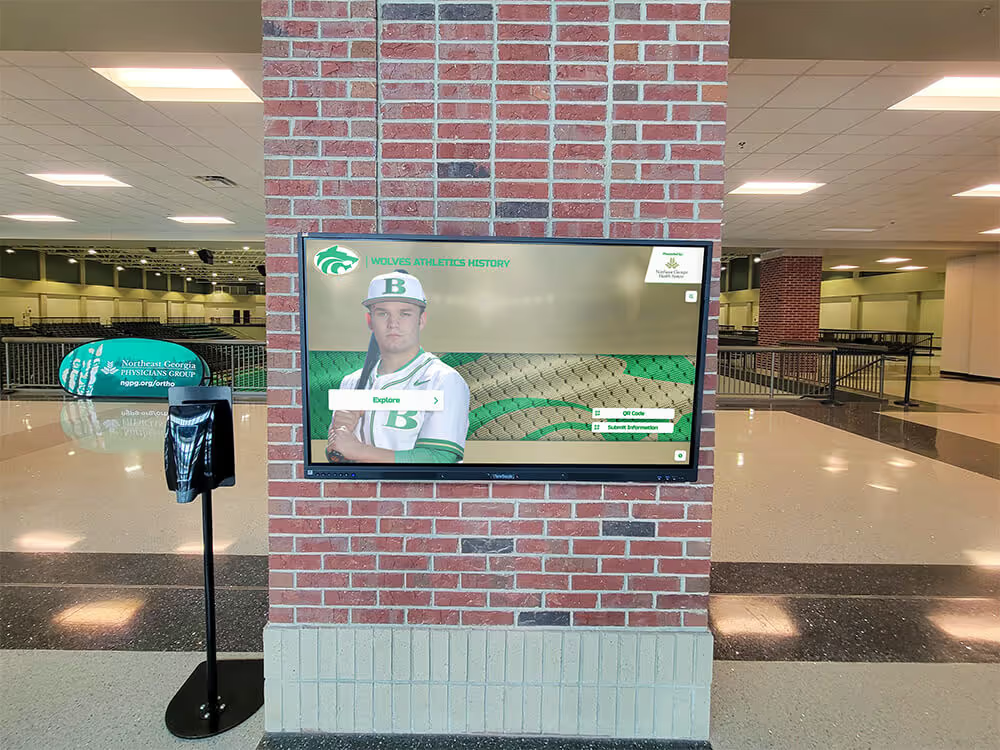
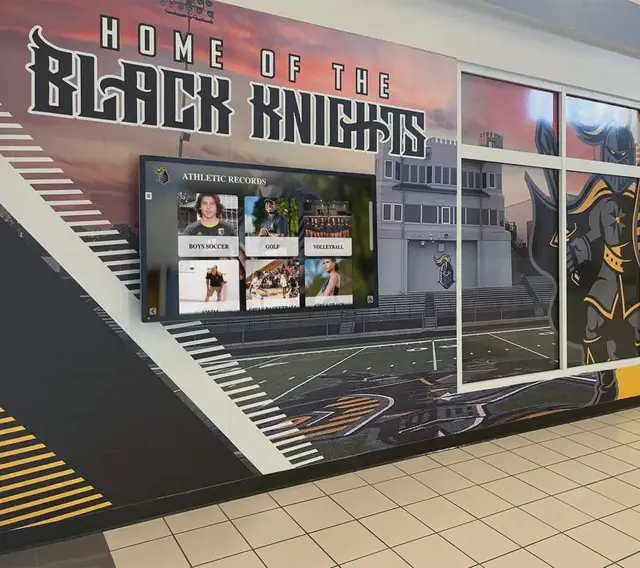
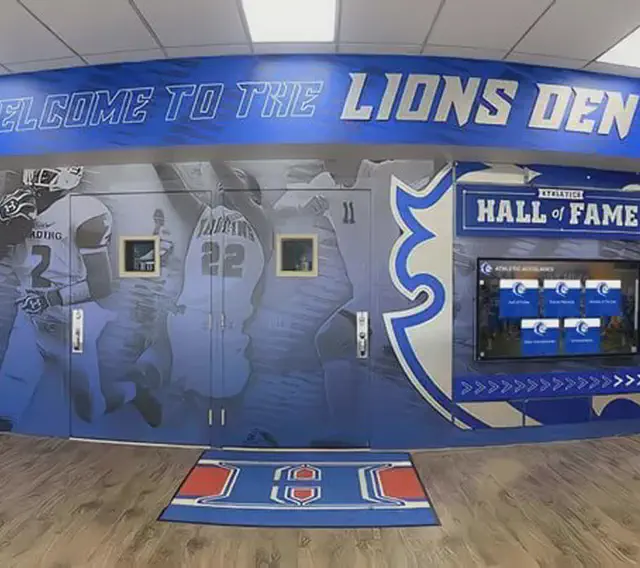
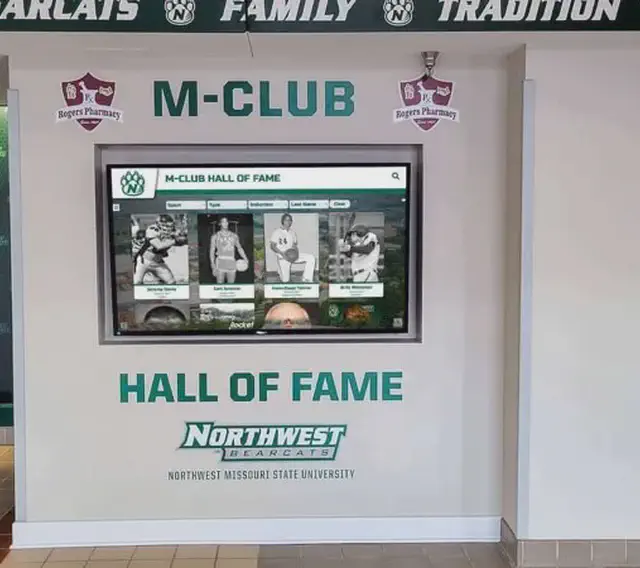
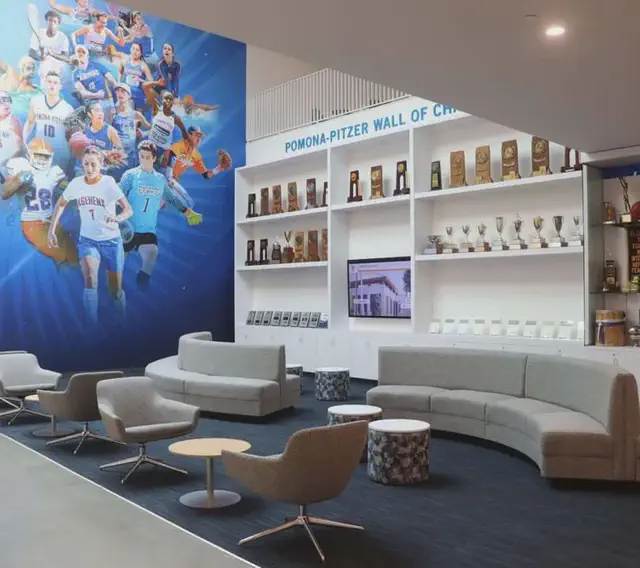
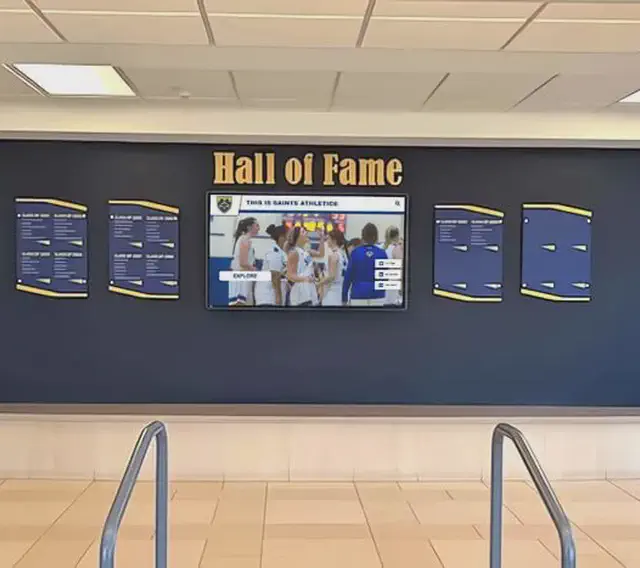
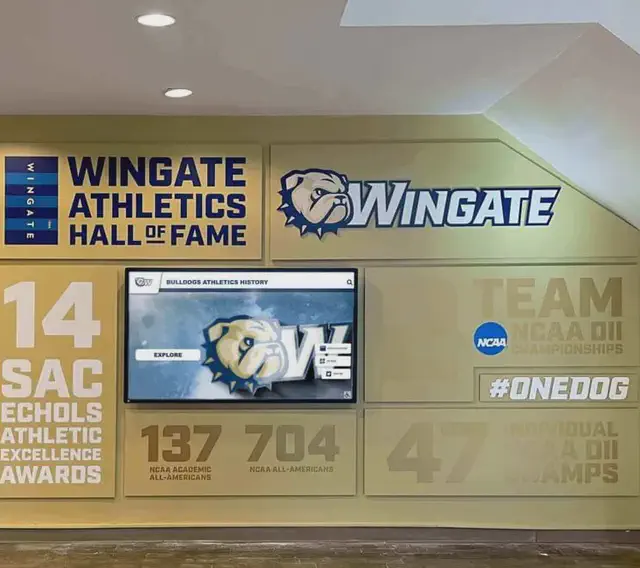
A well-organized recognition space separates competition types clearly — giving Singles, Doubles, and Team results each their own section so visitors can find exactly what they are looking for without sifting through a combined list.
Participation Recognition: When the Full Result Isn’t the Point
Not every cornhole result that belongs on a display is a championship. For programs in their early years, reaching a sanctioned tournament, qualifying for a bracket, or finishing as a school’s first-ever participant in a statewide event is worth recognizing on its own terms.
Participation recognition is legitimate and meaningful when it is labeled accurately:
- State the participation fact: “First year of competition,” “Competed at ACL [Event Name],” or “Qualified for [Stage]”
- Do not upgrade a participation fact into a placement claim
- If the source document confirms a bracket finish or a round-robin standing but not an overall placement, write what the source confirms
A school that fields its first cornhole team and reaches the High School Doubles bracket at a Signature Open has achieved something worth noting in the trophy case. The entry just needs to say what actually happened — and that is enough.
Writing the Label Before the Plaque Goes Up
The quickest way to avoid a correction after the fact is to write the draft label first, verify it against the source, and get a second reviewer to sign off before anything is printed or published.
A useful pre-publication checklist for each cornhole display entry:
- Identify the source document. What is the official results page published by the sanctioning organization? Note the URL.
- Confirm the competition category. Is this a Singles, Doubles, or Team result? What is the exact name of that category in the source?
- Confirm the credited unit. Who is listed as the credited recipient in the source — one athlete, a named pair, or a team?
- Confirm the placement or participation fact. What does the source say happened? Overall champion, bracket placement, participant?
- Draft the label. Use only information confirmed in steps 1–4.
- Have a second person review. A second set of eyes catches errors in names, spellings, and scope claims.
- Record the reviewer and date. Keep this in your internal planning file even after the entry goes up.
This sequence costs ten minutes per entry. It is far cheaper than reprinting a plaque.
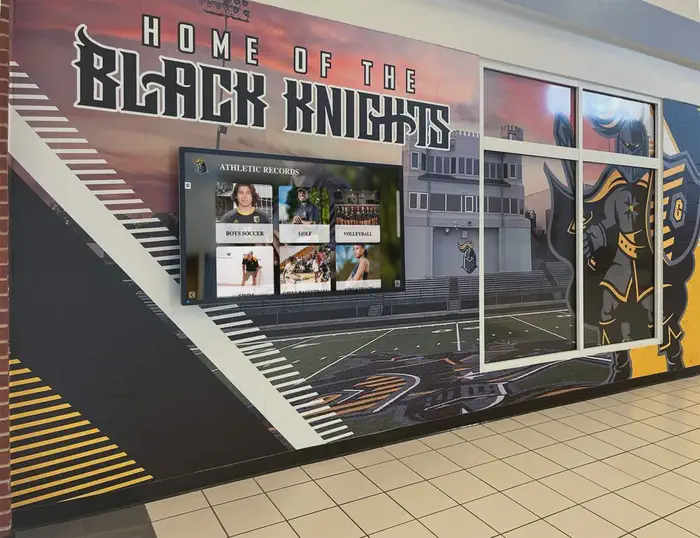
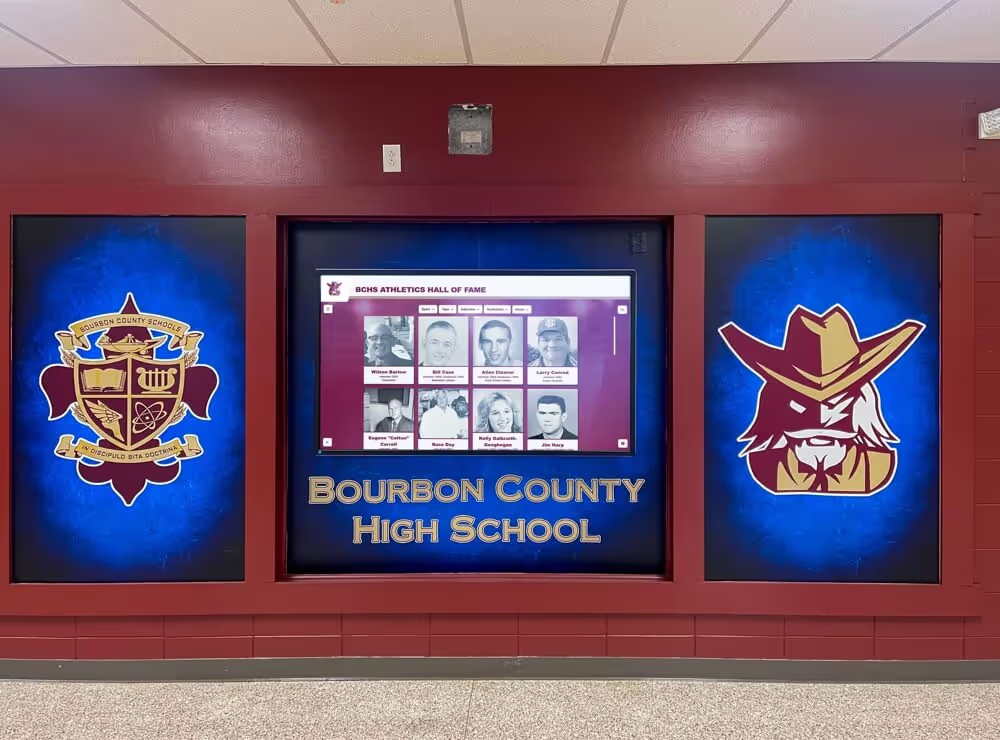
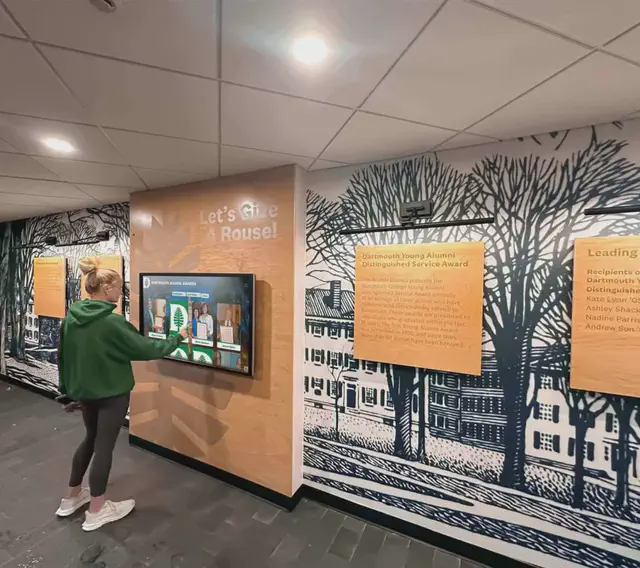
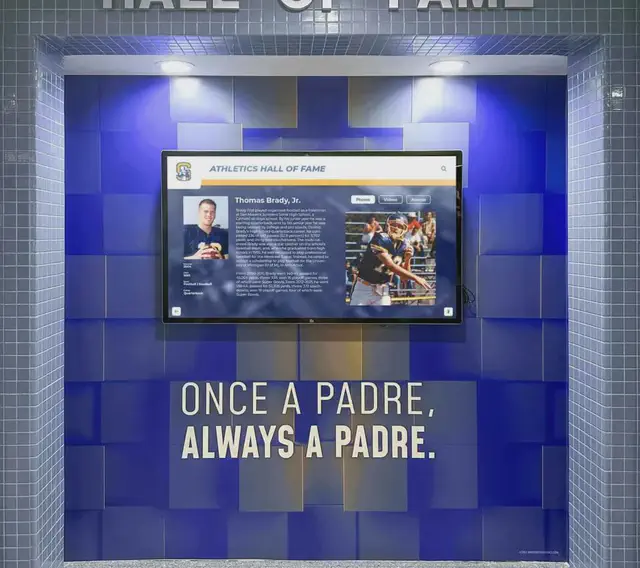
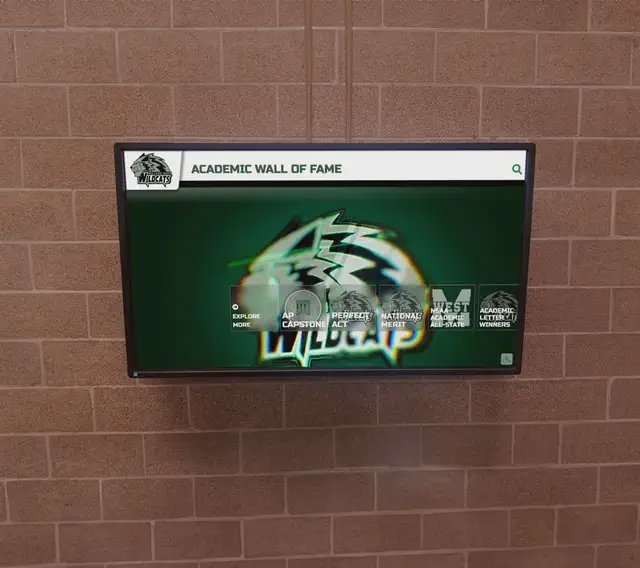
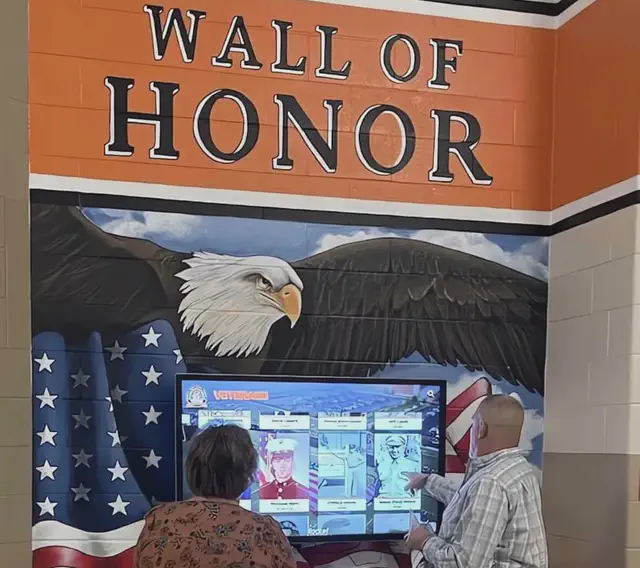
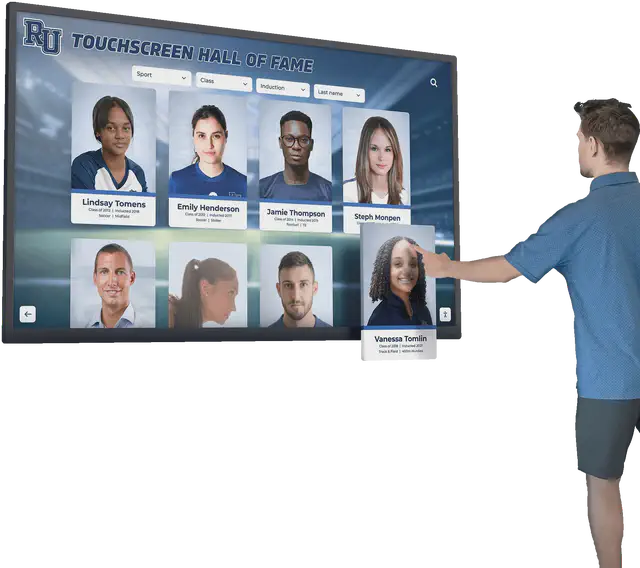
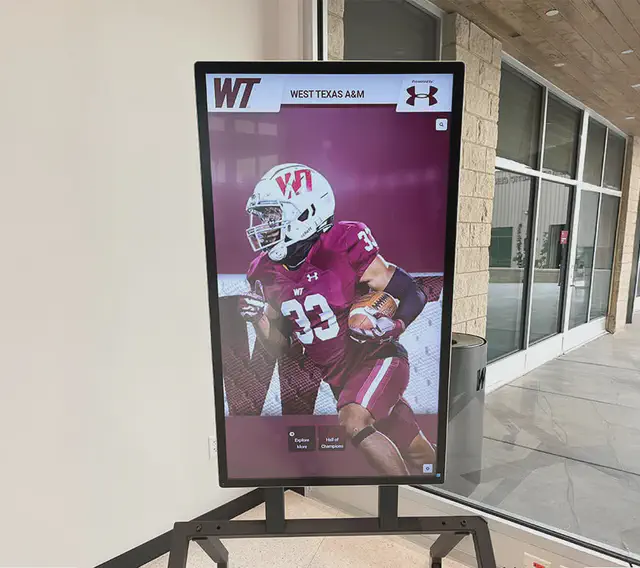
A sport-category browsing structure lets visitors navigate directly to cornhole results — Singles, Doubles, or Team — without scrolling through a combined list of every athletic achievement the school has earned.
Digital Displays for Cornhole Recognition
Physical trophy cases have a fixed amount of space, and cornhole programs that compete at multiple events across a season can generate results faster than shelf space allows. A singles result, a doubles result from a different tournament, and a team placement from a third event are three entries — and that is a single season for one active program.
A cloud-managed digital display removes the shelf-space constraint entirely. Administrators can add new entries from any internet-connected device, update a label if a source document is corrected, and organize results by competition type, year, or athlete without touching the physical display.
Rocket Alumni Solutions offers a digital recognition platform that schools use for this kind of layered athletic recognition — where a cornhole program’s Singles, Doubles, and Team results each live in their own clearly labeled section, alongside hall-of-fame inductees, record boards, and other program histories. The platform supports remote updates, so the display reflects the current season’s results without waiting for a vendor visit.
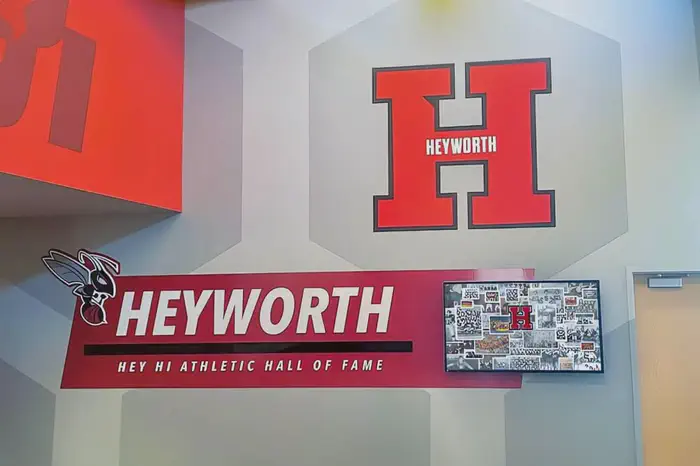
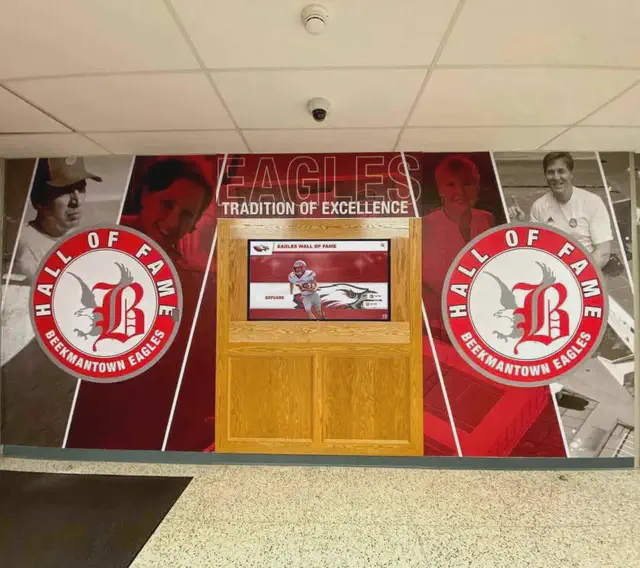
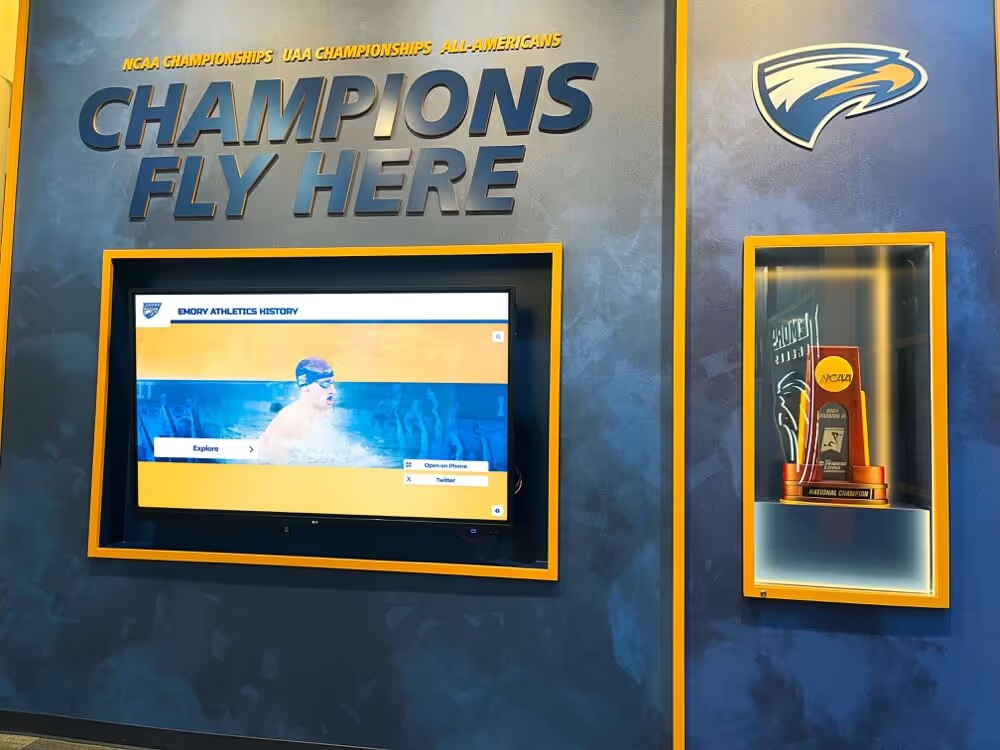
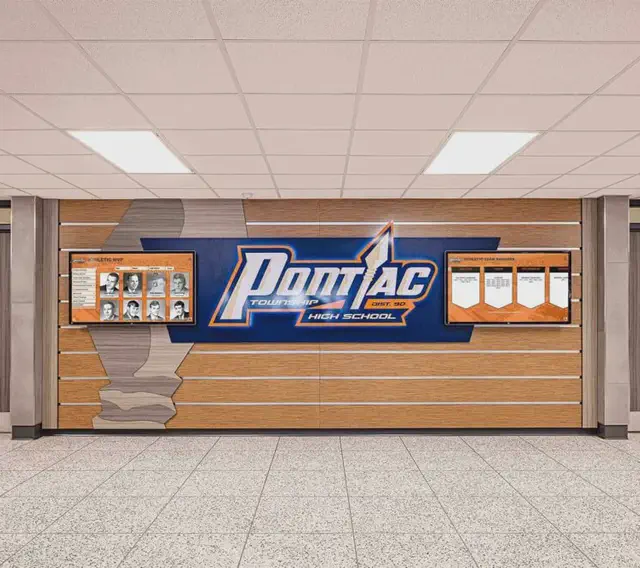
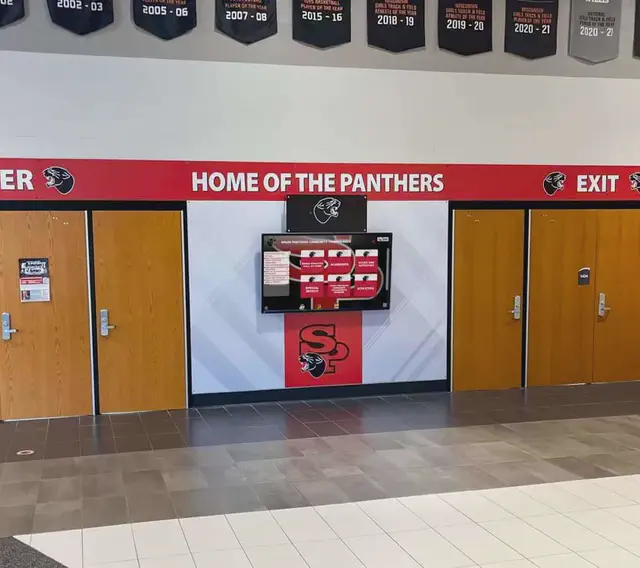
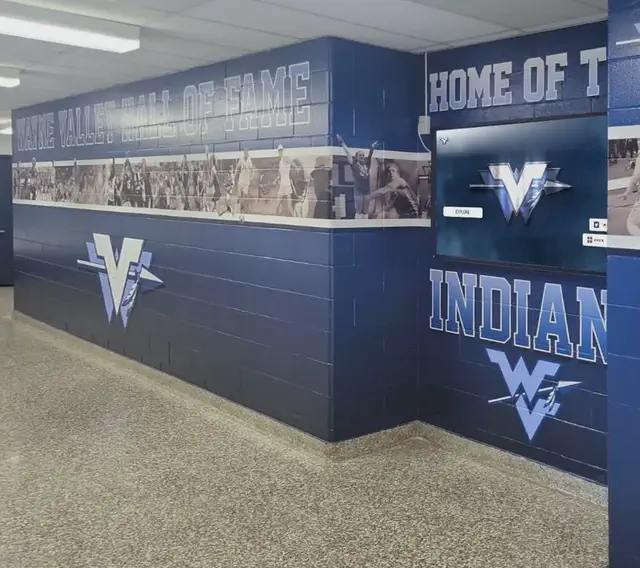
Pairing a permanent wall sign with a digital display lets a cornhole program grow its recognition library over multiple seasons without running out of space — new results are added in the platform, not on the wall.
Blank Planning Worksheet
The fields below are a blank editorial planning aid for bringing cornhole results onto a display. These are suggestions for your staff’s internal review — not a required national schema. Use only approved public information.
For a Singles entry:
| Suggested Field | Notes |
|---|---|
| Athlete’s approved public name | As published in source |
| School name (exactly as published) | |
| Exact event label | “High School Singles,” “Boys Singles,” etc. |
| Placement or participation fact | From official results document only |
| Event name, sanctioning organization, year | |
| Source URL | |
| Reviewer and approval date |
For a Doubles entry:
| Suggested Field | Notes |
|---|---|
| Both athletes’ approved public names | List exactly as paired in source |
| School name (exactly as published) | |
| Exact event label | “High School Doubles” |
| Placement or participation fact | From official results document only |
| Event name, sanctioning organization, year | |
| Source URL | |
| Reviewer and approval date |
For a Team entry:
| Suggested Field | Notes |
|---|---|
| Team name (exactly as published) | May be district or conference name |
| Exact event label | “High School Team” or as published |
| Placement or participation fact | From official results document only |
| Event name, sanctioning organization, year | |
| Source URL | |
| Reviewer and approval date |
Frequently Asked Questions
What should a high school cornhole awards display label include?
Every cornhole display label should state the competition category (Singles, Doubles, or Team), the credited unit (one athlete for Singles, both partners for Doubles, the official team name for Team), the event name, the sanctioning organization, and the season year. Use only information confirmed in the official results document published by the organizing body — do not add placement claims that are not stated in the source.
Should a Doubles cornhole award credit both partners or just one?
Both partners must be credited in the display entry, using their names exactly as they are paired in the official results document. A Doubles result that lists only one partner's name omits half the credited unit and misrepresents the award. Do not substitute a school name or team name for the pair — the award belongs to the two-person competing unit, not the program.
Can a Doubles result also count as a Team award for the school?
No. A Doubles result credits the competing pair in the Doubles competition. A Team result credits the official team entry in the Team competition. These are separate competitions with separate credited recipients. Even if the same athletes participate in both, each result needs its own display entry with the correct competition label and credited unit.
What if the team competed under a district or conference name, not the school name?
Use the team name exactly as it appears in the official results document, even if that name is a school district or athletic conference rather than the school's own name. The recognition credit in the results belongs to the officially registered competing unit. You can note that your school's students participated as part of that entry — but the team-level award credit follows the official name in the source.
Does a bracket win at a Signature Open mean "overall champion"?
Not automatically. A Signature Open typically publishes results across multiple stages — round-robin, brackets, and overall placements — and across multiple divisions including high school, college, and professional categories. Finishing in a bracket is an intermediate result, not an overall championship. Only label a result as an overall champion if the source document uses that specific designation for that competitor in that event and division.
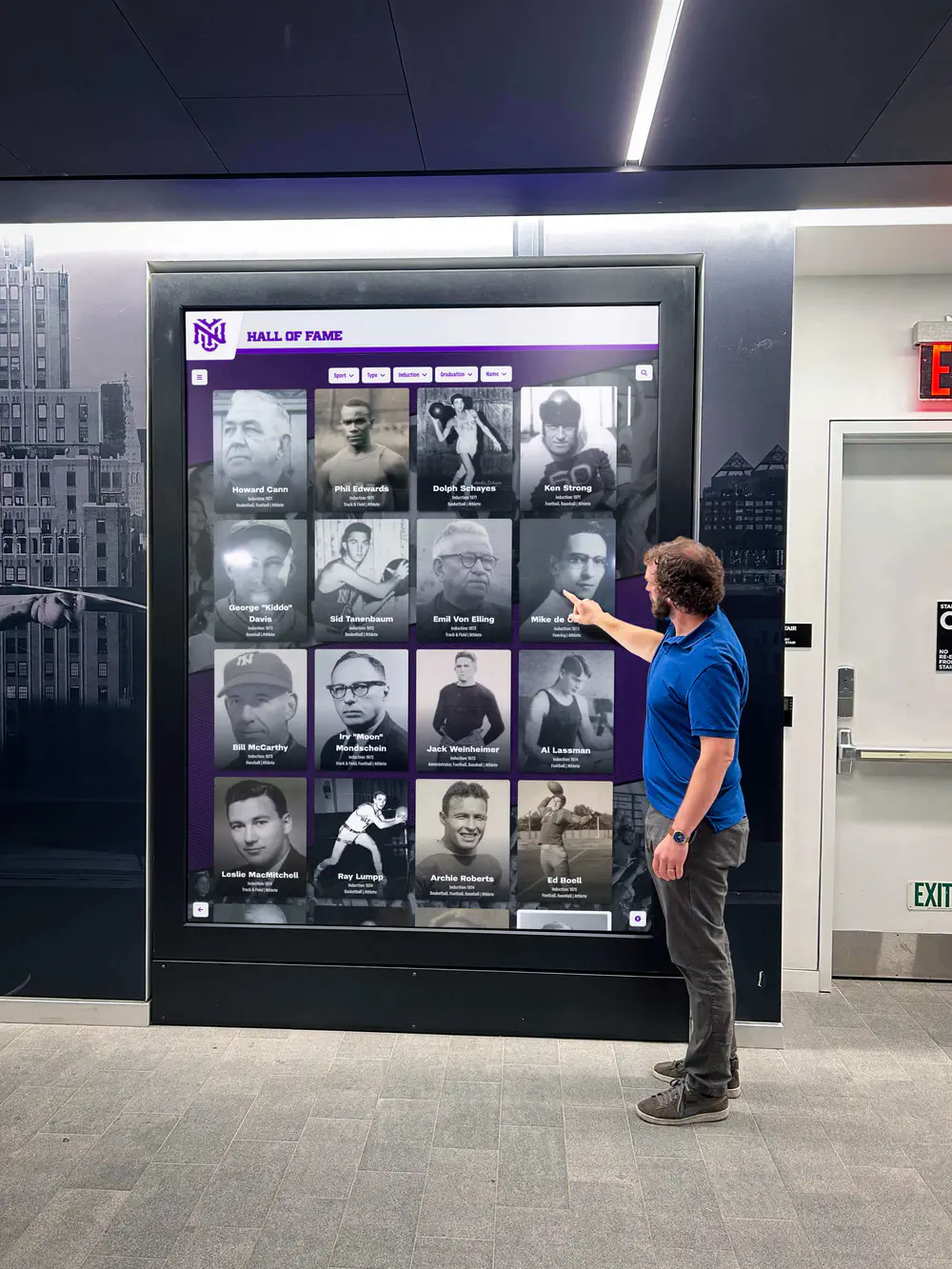
When every entry is labeled by competition type and credited to the correct unit, visitors can find a specific cornhole result — a Singles entry, a Doubles pair, a Team placement — without it being mixed into a combined list that obscures what each athlete or team actually earned.
Conclusion: Label First, Publish Second
A cornhole program that competes seriously deserves recognition that is as carefully sourced as the result that earned it. The athletic director who takes ten minutes to verify the competition category, confirm the credited unit, and draft the label before the plaque goes up gives every athlete — the Singles competitor, the Doubles pair, the Team — recognition that holds up for the families and alumni who encounter it years from now.
The practical sequence is simple: identify the source document, write what it confirms, label the credited unit accurately, have a second reviewer sign off, then publish. That discipline works for a physical trophy case, a hallway plaque, and a cloud-managed digital display — and it works for cornhole just as it does for every other program in the building.
Give Your Cornhole Program a Lasting Display
Rocket Alumni Solutions helps schools build digital recognition displays that keep Singles, Doubles, and Team results clearly separated, accurately labeled, and accessible to families and alumni from anywhere. Request a demo to see how a digital awards display can grow alongside your program.
Request a Demo