
A Nordic ski program that earns a state meet result brings home something specific: a pursuit placement, a team sprint ranking, a final team point total — or some combination of all three. Each comes from a separate published document, credits a different recipient unit, and needs a distinct label on your high school nordic ski awards display. This guide helps athletic directors, coaches, and recognition editors choose what belongs on a lasting digital display, what each result credits, and how to organize entries so every visitor — family member, recruit, alumni — understands exactly what they are reading.
This is a recognition content guide. It covers display organization, labeling, and editorial planning — not eligibility criteria, federation scoring rules, or coaching guidance.
Nordic ski championships at the high school level produce a fuller paper trail than most people outside the program realize. When you log into the state athletic association’s results hub after the meet, you do not find a single document. You find several — each covering a different event, each crediting results differently. For a recognition editor whose job is to build a display that holds up for decades, that layered structure is both a gift and a challenge.
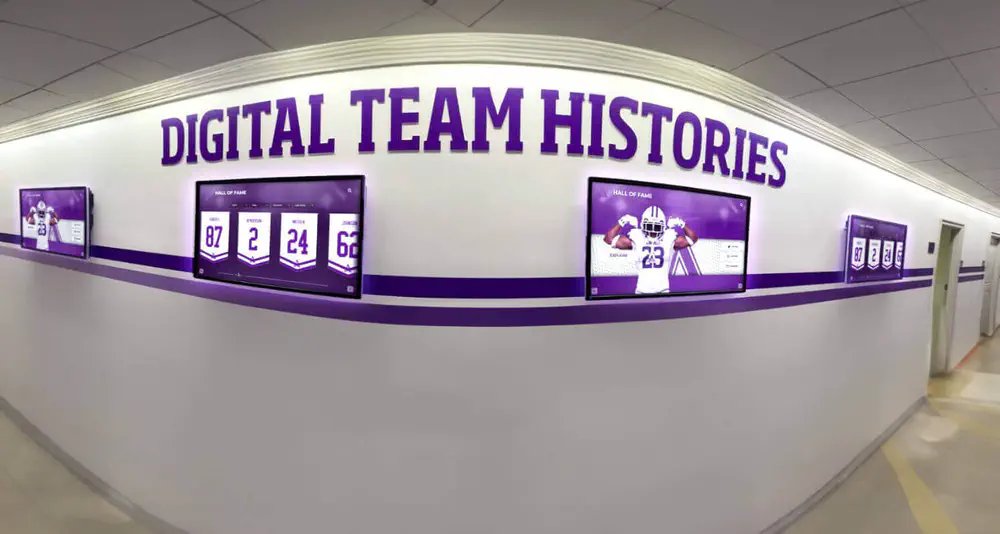
Organized digital displays keep team histories, individual achievements, and event-specific results in clearly separated sections — so visitors never have to guess which category a result belongs to.
Three Documents, Three Recognition Units
The Minnesota State High School League’s 2026 Nordic Ski State Tournament Schedule and Results page shows the structural reality that recognition editors across the country encounter: a Nordic championship produces distinct result documents for each event format, and those documents credit achievements differently.
For the 2026 MSHSL Nordic Ski State Meet — held February 11–12, 2026 — the results hub links to separate documents for:
- Team Sprint Compiled Results — a two-day structure with qualifying heats and a final, crediting each school’s entry as a pair of skiers
- Pursuit Results — an individual competition combining a Freestyle segment and a Classic segment into a combined total time, crediting each individual skier separately
- Final Team Results — a standing built from points earned by each school across the meet, expressed as a points total, not an elapsed time
There is also a Freestyle-Interval document on the hub, covering an earlier phase of the competition. The focus here is on the pursuit, team sprint, and final team results — the three that most often come to a recognition editor’s desk as candidates for a lasting display.
Each of those three documents tells a different story, credits a different recipient, and needs a different label on your display.
What the Team Sprint Credits
The Boys Team Sprint Final Results published by MSHSL for the 2026 meet is headed “Team Sprint Compiled Results” and lists each school’s entry as a pair of named skiers. The two athletes race alternating legs together; the result is a combined time, and the placement and points belong to that specific pair.
That structure has a direct consequence for your display. A team sprint entry credits a pair, not the full roster, and not any individual. When a school’s pair finishes at a given rank in the team sprint, the display entry for that result names the pair exactly as listed in the source document.
For recognition purposes:
- Preserve the exact pairing as listed in the official results document
- Label the event as Boys Team Sprint or Girls Team Sprint, with the meet date and governing body
- Do not substitute a single athlete’s name for the pair, or the team name alone without the pair
- If your school’s program includes co-op participants, use the co-op name exactly as it appears in the source (the 2026 MSHSL boys results list entries under names such as Orono/Delano and Winona/Cotter/Hope Lutheran — preserve the slash-separated form rather than abbreviating or splitting the name)

Clear event-category organization on a digital screen lets visitors navigate directly to a team sprint pair entry without it being confused with an individual result or an overall team standing.
What the Pursuit Credits
The Boys Pursuit Final Results is headed “Pursuit Results” and carries a note at the top: (i) Individual Qualifier. That notation appears in the source document next to certain entries throughout the results table, indicating that some athletes competing in the state pursuit qualified as individuals rather than as part of a full team entry.
The pursuit combines two segments — a Freestyle start and a Classic final — presented in the results as separate columns alongside a combined total time. For recognition purposes, the combined total is the skier’s result for the event as a whole. Neither segment time alone is a standalone pursuit result.
The pursuit display challenge is distinct from the team sprint challenge because pursuit credits individual athletes, and a single school may have multiple athletes placing across a wide range of ranks. When several of a school’s athletes finish in the pursuit, each placement is a separate result, credited to that athlete individually — with their rank, their school, and their combined total time from that specific meet.
For recognition purposes:
- Each pursuit entry is a separate item on your display — one athlete, one result, one rank
- The (i) notation from the source document indicates an individual qualifier; whether and how to reflect that on a public display is an editorial decision for your school, but do not omit an entrant’s affiliation or misidentify their qualifying category
- Use the competing school or co-op name exactly as it appears in the source (for example, Sartell - Cathedral appears as a co-op in the 2026 boys pursuit results, with the same “(i)” notation)
- The pursuit total time is the credited result for the event; the two separate segment times each have their own context in the source document and should not be presented as independent event results
What the Final Team Results Credit
The Boys Final Team Results and Girls Final Team Results each present a team standings table headed “Team Results.” Each school appears with a rank and a Points total — a number reflecting the accumulated point contributions from that school’s athletes across the meet. The 2026 girls final results list St. Paul Academy and Summit School at the top of the girls’ standings; the boys final results list Stillwater at the top of the boys’ standings — each with a points total, not an elapsed time.
Three things are essential to understand about how to represent final team results on a display.
First: the unit is points, not elapsed time. The Points column in both documents is explicitly headed “Points.” A display that presents those totals as times, or that leaves the unit off entirely and lets a visitor interpret the number as a time, produces a misleading entry.
Second: both events can contribute. The final team results documents show, for each school’s total, a breakdown of contributing entries — including both pursuit placements from February 12 and team sprint placements from February 11. The pursuit and the team sprint are distinct events, but that distinction does not mean their contributions to the team total are unrelated. A recognition display that shows only pursuit results for a school and labels the total as the “team score” is incomplete.
Third: the final team standing is not the same as the team sprint standing. The team sprint has its own separate ranking by time and by points. The final team standing is a broader accumulation across the meet. These are two different claims and need two different labels on any display.
Co-Op Names on a High School Nordic Ski Awards Display: Use the Source
Nordic ski programs in many states include co-operative arrangements: schools that formally combine enrollment pools to field a competitive team. When a co-op places in the state meet, the governing body publishes their results under the co-op name. That is the name on the official document, and it is the name that belongs on your display.
The 2026 MSHSL results include co-op entries across both team sprint and pursuit documents. Some examples from the published documents:
- Orono/Delano (Boys Final Team Results, Boys Team Sprint)
- Winona/Cotter/Hope Lutheran (Boys Team Sprint)
- Bloomington Jefferson/Kennedy (Boys Team Sprint, with “(i)” notation)
- St. Paul Academy and Summit School (Girls Final Team Results, Girls Team Sprint)
- Elk River/Zimmerman (Girls Final Team Results)
- Sartell - Cathedral (Boys Pursuit — with individual qualifier notation)
Each of those names appears in the MSHSL source exactly as written above. A recognition editor building a display entry should copy the name from the source rather than inventing an abbreviation, dropping a partner school, or substituting one of the partner schools’ names for the full co-op name. The official result belongs to the co-op as named; altering the name changes what is being credited.
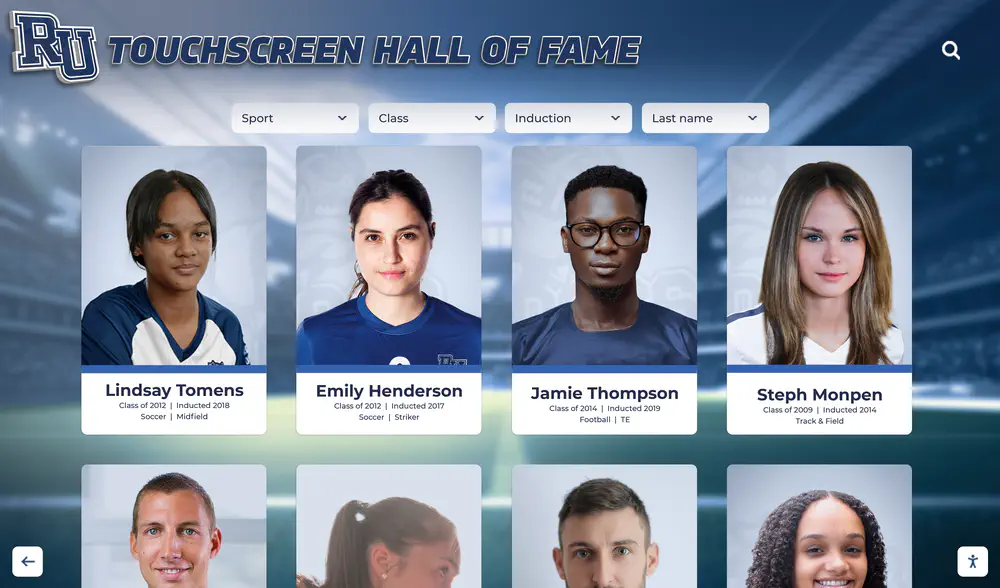
Individual pursuit results, team sprint pair entries, and final team standings can each occupy a distinct labeled section on a digital display — keeping co-op names, event categories, and result types accurate for every visitor.
Two Events, One Total: Why the Distinction Protects Every Result
One of the most common recognition missteps with Nordic ski results is treating the pursuit, the team sprint, and the final team standing as equivalent or interchangeable categories. They are not, and presenting them as though they are creates a display that cannot be trusted by families, alumni, or recruits.
A school that accumulated the most points in the final team standings did not “win” the pursuit or win the team sprint by definition — it accumulated the most points across the meet. A school that finished at the top of the team sprint did not automatically finish at the top of the final team standings. And a school with a top individual pursuit placement did not automatically take the team title.
For a recognition editor, this means:
- A final team champion label belongs on the final team results entry, not on the pursuit entry or the team sprint entry
- A team sprint label belongs on the team sprint entry and credits the pair, not the full roster
- An individual pursuit placement belongs to the individual athlete in their own entry, labeled with their rank and their combined time — not merged into a team-title entry
The distinction does not mean the events are unrelated: the MSHSL documents show clearly how individual pursuit results and team sprint results each contribute point values toward the final team total. That relationship is part of the story worth telling on a display — but it requires accurate labeling, not collapsing three separate results into one.
For general context on how digital recognition programs approach winter sports recognition across multiple event formats, the winter sports hall of fame resource at TouchHallofFame.us offers a broader look at how schools and organizations organize recognition across snow and ice sports programs.

When pursuit results, team sprint results, and final team standings each have their own labeled section, families and alumni can find exactly what they are looking for without having to interpret unfamiliar distinctions themselves.
Content Planning for a High School Nordic Ski Awards Display
The tables below are blank editorial planning aids for bringing Nordic ski results onto a digital display. These fields are suggestions for your staff’s internal review — not a required national schema, not a native software field, and not a prerequisite before you can publish any verified entry. Use only approved public information.
For a Team Sprint entry:
| Suggested Field | Notes |
|---|---|
| School or co-op name (exactly as published) | |
| Exact event label | “Boys Team Sprint” or “Girls Team Sprint” |
| Athletes credited (pair, as listed in source) | |
| Placement and points | From official results document |
| Meet name, governing body, date | |
| Source document URL | |
| Reviewer and approval date | |
| Approved public caption |
For a Pursuit entry:
| Suggested Field | Notes |
|---|---|
| Athlete’s approved public name | |
| School or co-op name (exactly as published) | |
| Qualifying status | “(i) Individual Qualifier” if so noted in source |
| Exact event label | “Boys Pursuit” or “Girls Pursuit” |
| Rank and combined total time | From official results document |
| Meet name, governing body, date | |
| Source document URL | |
| Reviewer and approval date | |
| Approved public caption |
For a Final Team Results entry:
| Suggested Field | Notes |
|---|---|
| School or co-op name (exactly as published) | |
| Exact event label | “Final Team Results” |
| Rank and points total | Write “points” explicitly — not bare numerals |
| Meet scope and date range | |
| Meet name and governing body | |
| Source document URL | |
| Reviewer and approval date | |
| Approved public caption |
Blank Caption Examples
The following are blank templates for drafting public captions. Fill in only information verified from the authoritative source document. Do not add record claims, eligibility labels, or roster inferences that are not stated in the source.
Team sprint pair entry:
[School or co-op name] — Boys/Girls Team Sprint, [Rank] place, [Points] points — [Athlete name] | [Athlete name] — 2026 MSHSL Nordic Ski State Meet, February 11, 2026.
Individual pursuit entry:
[Athlete name], [School or co-op name] — Boys/Girls Pursuit, [Rank] place, combined time [total time] — 2026 MSHSL Nordic Ski State Meet, February 12, 2026.
(If applicable: Individual Qualifier, as noted in official results.)
Final team standing entry:
[School or co-op name] — Final Team Results, [Rank] place, [Points] points — 2026 MSHSL Nordic Ski State Meet, February 11–12, 2026.
Each template leaves room to add only what has been verified. If a school has separately confirmed a program record, that information can be added after verification — do not transfer a state-meet result directly to a “school record” claim without the school’s own records process confirming it.
A Review Sequence for Each Entry
Bringing a Nordic ski result onto a digital display is a human editorial task. The source document confirms what the association published; your staff confirms what belongs on your display, in what form, and with what label.
Verify
Pull the source document for the specific event and season from the governing body’s results hub. The MSHSL 2026 Nordic Ski State Tournament Schedule and Results page links directly to separate PDFs for the team sprint, pursuit, and final team results. Confirm the school or co-op name, the event label, the credited recipient (pair, individual, or team), and the result as published. Note whether any “(i)” or other qualifier notation appears next to the entry in the source.
Label
Apply the event name exactly as published — Boys Pursuit, Girls Team Sprint, Boys Final Team Results. Express team totals as points, not as times. Preserve the full co-op name as written in the source. Write the record scope using language that reflects only what has been verified: a meet result, a placement, or a point total.
Preview
Confirm that the pursuit entry appears in the pursuit section, the team sprint entry in the team sprint section, and the final team entry in the team standings section. Confirm that no entry appears in a list that merges the three result types as equivalent or comparable. Share proposed captions with athletes and families for review of approved public wording and image use, following your school’s publication permissions process.
Publish
Activate the entry after the above checks are complete. Record the reviewer name and approval date in your internal planning table. Keep the planning table and source documentation in your school archive — these are not deleted when the display goes live. Keep a correction contact visible so families or alumni who spot a discrepancy have a way to reach someone.

When every entry is sourced, labeled, and placed in the right section, a digital recognition display gives Nordic ski achievements the same lasting visibility as any other program in the building.
Frequently Asked Questions
What is the difference between a team sprint result and a final team result in Nordic skiing?
A team sprint result credits the specific pair of athletes who raced together in that event, ranked by their combined time and assigned points. A final team result credits the school’s overall standing across the entire state meet, expressed as a points total drawn from contributions across both the pursuit and the team sprint. The two results credit different things: the team sprint credits a pair for a single event; the final team standing credits the competing school as a whole for the full meet. Both can appear on a display, but each needs its own label.
Does a team total in the final team results represent elapsed time?
No. Final team totals in the MSHSL results documents are points, not elapsed time. The 2026 MSHSL Boys Final Team Results and Girls Final Team Results each present team standings with a “Points” column heading. A display that presents those numbers as times — or omits the unit entirely — is factually incorrect. Label the total clearly as points every time it appears.
What does “(i) Individual Qualifier” mean in the MSHSL pursuit results?
The notation “(i)” in the 2026 MSHSL Boys Pursuit Final Results and similar documents indicates that an athlete qualified for the state pursuit as an individual rather than as part of a full team entry. The source document defines the notation explicitly at the top of the results table. Recognition editors should preserve the competing school or co-op affiliation from the source; whether to include the individual-qualifier notation on a public display is an editorial decision for the school, but the entry should not misidentify the athlete’s qualifying category.
How should a co-op school name appear on a digital recognition display?
Use the co-op name exactly as it appears in the official results document — including any slash or hyphen that is part of the official name. The 2026 MSHSL results include co-op entries under names like Orono/Delano, Winona/Cotter/Hope Lutheran, St. Paul Academy and Summit School, and Elk River/Zimmerman. Abbreviating, dropping a partner school’s name, or substituting a single-school name for the co-op name changes what is being credited and may misrepresent which organization’s athletes earned the result.
Can pursuit individual results and team sprint pair results both appear on a school’s recognition display?
Yes — and both should, if the school has earned results in each. They are separate entries from separate events that credit different things. A school with a pursuit placement and a team sprint placement earns two distinct recognitions; presenting both accurately requires two separate, distinctly labeled entries. Neither entry should be merged with or used to explain the other. Where both contribute points toward a final team standing, the final team standing entry is a third, separate item — also labeled on its own and sourced from the final team results document.
Rocket Alumni Solutions helps schools build digital recognition displays that can hold pursuit results, team sprint pair entries, and final team standings as separate, clearly labeled sections — giving every Nordic ski achievement the accurate, lasting home it earned. Request a demo to explore how a digital display can present your program’s full range of results to families, recruits, and alumni.