
A school that competes at the USA Racquetball High School National Championships can earn up to three separate team titles — Boys Team, Girls Team, and Overall Team — along with individual results across six numbered singles divisions and three numbered doubles divisions, each with its own Gold, Blue, Red, or White flight finish. When results come back to the athletic office, the recognition editor’s first obligation is to preserve exactly what was earned: the right title, the right division, the right flight, and — for doubles — the names of both partners. This guide is for athletic directors, school communications staff, and recognition editors who want to build a high school racquetball awards display that honors every achievement with the accuracy it deserves.
This is a recognition editing guide. It addresses display labeling, caption accuracy, and planning practices — not eligibility criteria, coaching guidance, or rules interpretation.
A racquetball program that competes nationally generates a layered recognition record over time: team standing points contributed by every competing student, individual division medals, doubles partnerships, and — for the highest-placing students in selected divisions — All-American status. Each of those is a distinct achievement. Keeping them distinct on a display is what transforms a list of results into a trustworthy historical record that families and alumni can search with confidence.
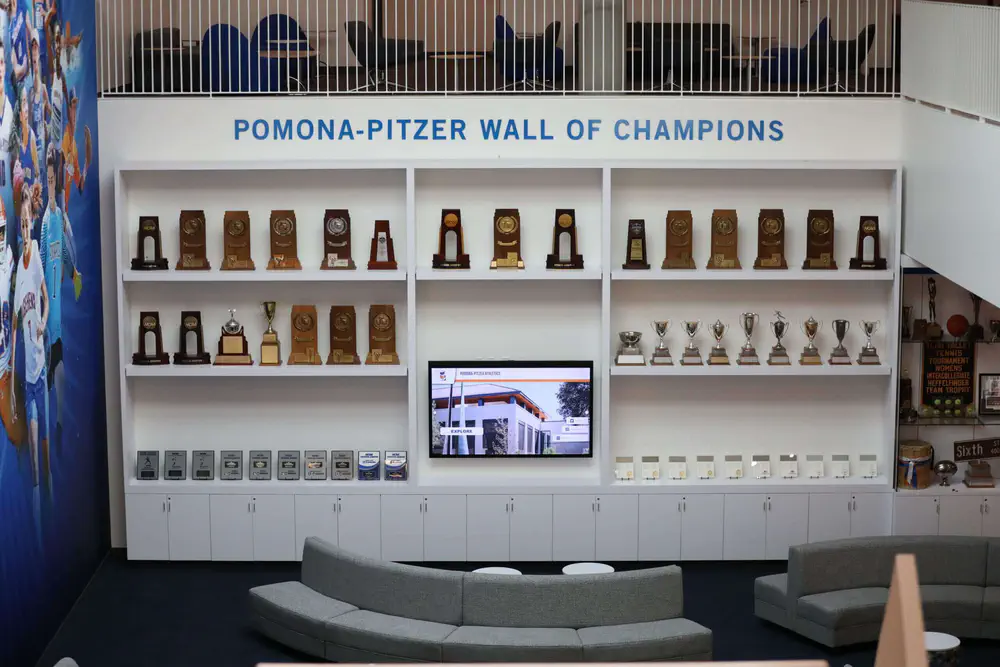
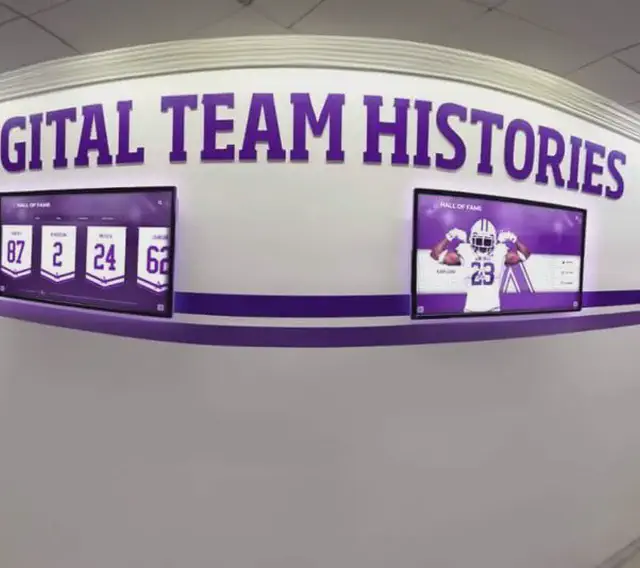
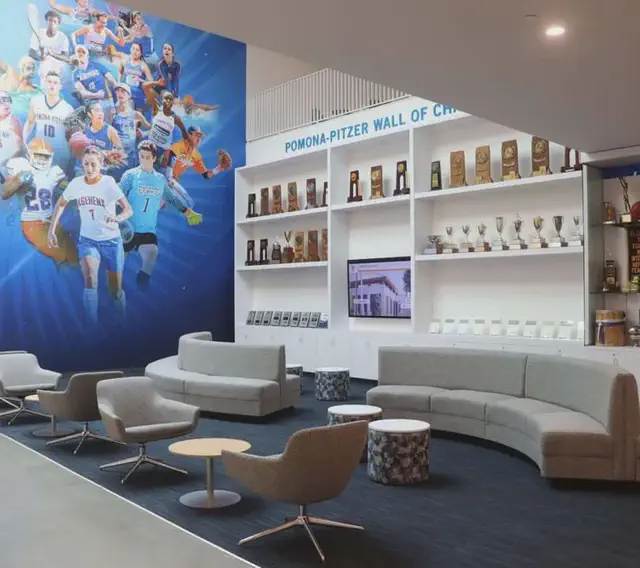
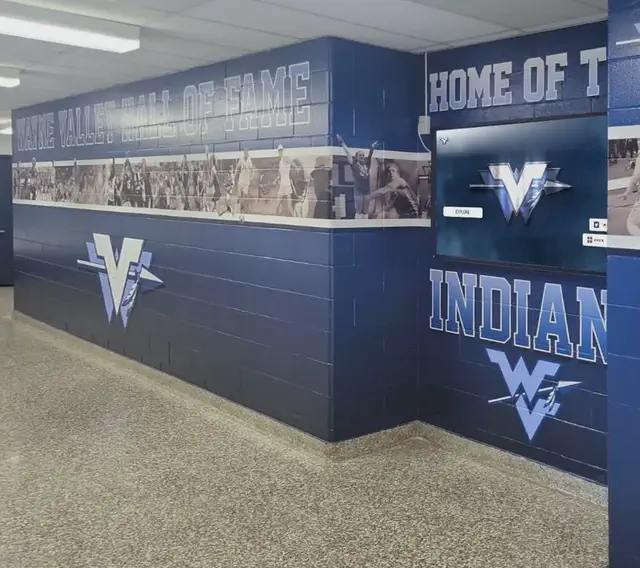
A dedicated championship display organizes recognition across programs and seasons, giving every title a clearly labeled, permanent home.
Three Titles, Not One: Boys Team, Girls Team, and Overall Team
The USA Racquetball High School National Championships tracks three separate team standings: Boys Team, Girls Team, and Overall Team. These are not equivalent, and they are not mutually exclusive. A school can win all three in the same year. Each title belongs in its own display entry, labeled with the full official event name, the year, and the specific title category.
Collapsing them into a single “Team Championship” entry loses critical information. A student who contributed Girls Team points through doubles placing — and whose school also won the Boys Team title — has a right to see her team’s specific achievement preserved and labeled correctly, not merged into an undifferentiated entry.
According to the USA Racquetball March 24, 2026 recap for the 2026 USA Racquetball National High School Championships in St. Louis, Missouri, Kirkwood High School won all three team titles that year: the Boys Team title, the Girls Team title (described as the school’s 4th in school history), and the Overall Team title (the school’s 5th straight). Three separate titles — each earned, each displayable, and each distinct from the others. A school that won only the Overall title that same year would have one display entry. A school that won Boys Team but not Girls Team or Overall would have one entry. The count of display entries follows the count of titles earned.
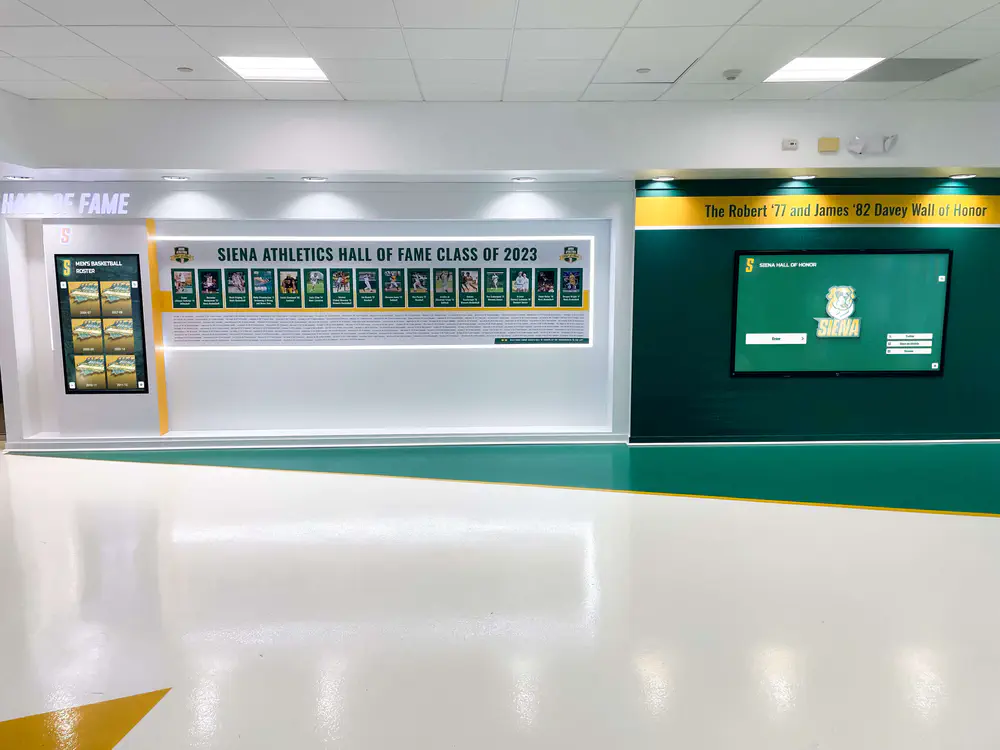
Organized recognition displays give each team title its own labeled entry, so families and alumni can verify what their program competed for and what it earned.
Singles Divisions and the Four-Flight Structure
Singles competition at the championship runs across six numbered divisions (Division #1 through Division #6). The top-ranked player on each team enters Division #1; the second-ranked enters Division #2, and so on. Division #6 is open to any player not entered in a higher division. Within each division, singles play follows an Olympic Format with four flights — Gold, Blue, Red, and White — ensuring that players face similarly skilled opponents as the event progresses and that medals are awarded 1st through 4th within each flight.
That structure matters for display labeling. A placing in Division #3’s Gold flight is a real, nationally recognized result. It should appear in a recognition entry with its complete context:
- Year and official event name
- Competition: Boys or Girls Singles
- Division number: for example, #3
- Flight: Gold, Blue, Red, or White
- Placing: 1st, 2nd, 3rd, or 4th
Dropping the division number inflates the result — it implies the student competed for an undivided national title, which is not what the division structure determines. Dropping the flight name removes information that lets families verify the result against official brackets. National Championship medals were awarded 1st through 4th in all flights of all divisions. A 3rd-place finish in Red flight of Division #4 is a medal earned at a national championship. That result belongs on a display, labeled accurately — not inflated, and not omitted because the flight was not Gold.
Doubles Recognition: Format and Both Partners
The championship fields three numbered doubles divisions for each of boys, girls, and mixed competition (Divisions #1, #2, and #3). Doubles used a different format from singles: single elimination with one consolation round. The Gold, Blue, Red, and White flight language that applies to singles does not apply to doubles results, because doubles did not use the four-flight Olympic structure. Applying singles flight terminology to a doubles result describes a format that did not exist in that event.
A doubles display entry should reflect the actual format: “Girls Doubles Division #1 — Finals, 1st Place” is accurate. “Gold flight” is not.
Two requirements apply to every doubles entry: credit both partners by name, and verify both names against the official results document. A doubles medal belongs jointly to both athletes. When both partners’ names are verifiable from official brackets, both names belong in the caption. An entry that names only one partner leaves a co-achiever without a record.
The 2026 recap records five Gold match results for Division #1 events, all verified against the named source:
- Boys Doubles Division #1 Final: Geffen Kama and Ayan Sharma (California) over Henry Prien and Graham Sperato (Missouri)
- Girls Doubles Division #1 Final: Rebecca Christopher and Alexis Boyko (Kirkwood H.S.) over Violet Kennedy and Audrey Reed (Lafayette)
- Mixed Doubles Division #1 Final: Andrea Perez-Picon and Alejandro Robles Picon (California) over Rebecca Christopher and Graham Sperato (Missouri)
Each of those results involves athletes at two schools whose names belong in display entries — four names in a finals entry, four more in a runner-up entry — when their schools prepare recognition displays.
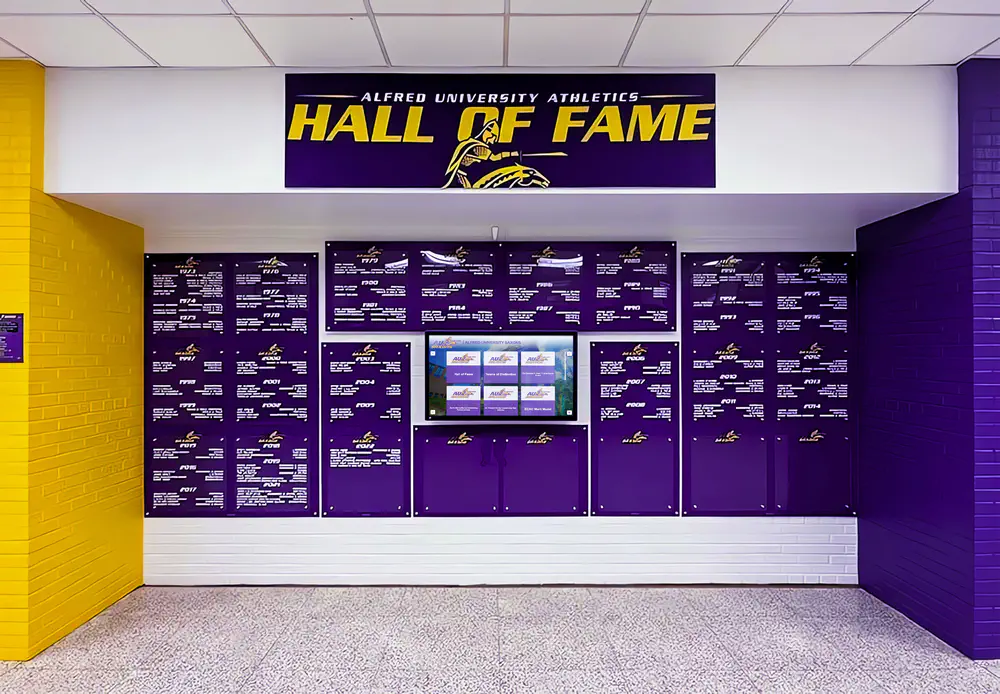
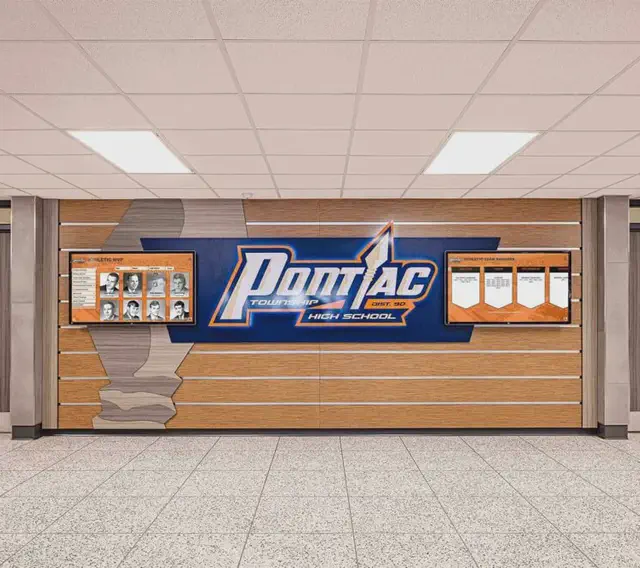
Recognition entries organized by event type and category allow visitors to find individual results, doubles partnerships, and team standings in one display.
Blank Caption Templates for Recognition Editors
A recognition editor preparing display entries before the full results document arrives can use blank caption templates as editorial placeholders. These are staff planning aids — not native display fields, import formats, or prerequisites to publishing. A complete, verified short entry can go live while optional details await confirmation. Full verified team credit belongs in the entry; a photo alone does not substitute for a confirmed roster.
| Entry Type | Template |
|---|---|
| Team title | [Year] USA Racquetball National High School Championships — [Boys / Girls / Overall] Team Title |
| Individual singles placing | [Year] USA Racquetball National High School Championships — [Boys / Girls] Singles Division #[N], [Gold / Blue / Red / White] Flight, [1st / 2nd / 3rd / 4th] Place |
| Doubles placing | [Year] USA Racquetball National High School Championships — [Boys / Girls / Mixed] Doubles Division #[N], [Finals / Consolation], [1st / 2nd] Place — [Partner A full name] and [Partner B full name] |
These are blank, illustrative templates for editorial planning only. Fill all bracket fields from verified official results before publication. Do not publish entries with placeholders. A placing in a numbered division should not appear without that division number. Both doubles partners belong in the entry when their participation is confirmed through official results.
All-American Recognition: A Separate Award
All-American status is a distinct honor — not a synonym for medaling or finishing in a named flight. According to the All-American Teams page at mohsrball.com, the annual All-American Teams are named based on specific finish thresholds at the USA Racquetball High School National Championships. The criteria include the top 8 finishers in Division #1 Boys Singles and Division #1 Girls Singles, the top 2 finishers in Division #2 Boys Singles and Division #2 Girls Singles, and the top 4 finishers in each of the three Division #1 Doubles events — Boys, Girls, and Mixed. The program has been running since March 2004.
Not every medal winner qualifies. A 2nd-place finish in Division #3 Boys Singles is a genuine national championship result that belongs on a display — but it falls outside the All-American criteria for that division. Display entries should accurately distinguish a division medal from All-American recognition. The two achievements can coexist for a single student — an athlete could earn a division medal and be named to the All-American team through a qualifying Division #1 or Division #2 result — but each requires its own labeled entry.
If your school has an All-American honoree, verify the student’s name and the specific event against the annual published list at mohsrball.com before adding an All-American label to the display entry. The placing that made a student eligible for consideration and the confirmation that they were formally named to the team are two separate checkpoints. The USA Racquetball 2026 recap acknowledges that All-American status was awarded at the 2026 championships and links to the MOHS page as the authoritative source for the annual recipient list.
The 2026 Championships: A Dated Reference for Recognition Staff
The 2026 USA Racquetball National High School Championships drew 311 athletes — 193 boys and 118 girls — from 22 schools across 7 states to St. Louis, Missouri, with competition at Vetta Concord and Vetta West. That scale means dozens of programs brought home results that deserve display entries: team title contributions, individual division medals across all six singles divisions and three doubles divisions, and All-American recognitions for those who qualified.
For recognition staff at any of the 22 competing schools, the March 24, 2026 recap provides verified starting data: the official event name, the three separate team titles, the Gold match results for Division #1 singles and all three Division #1 doubles events, and the Coach of the Year award — Daniel Witt of Kirkwood High School. The complete division placings below the Gold match level are available through the official brackets linked in the recap, and those brackets are the authoritative source for display entries covering any division other than the ones captured in the Gold match summaries.
Kirkwood High School’s 2026 season is a clear illustration of how multiple display entries can legitimately cover a single championship year. The Boys Team title, the Girls Team title, and the Overall Team title are three separate achievements, each earned by students competing across all six singles divisions and three doubles divisions. The students who contributed Division #4 or Division #5 points earned part of that Overall title just as the Division #1 finalists did. Preserving all three title entries — and the team membership behind each — is the full recognition record.
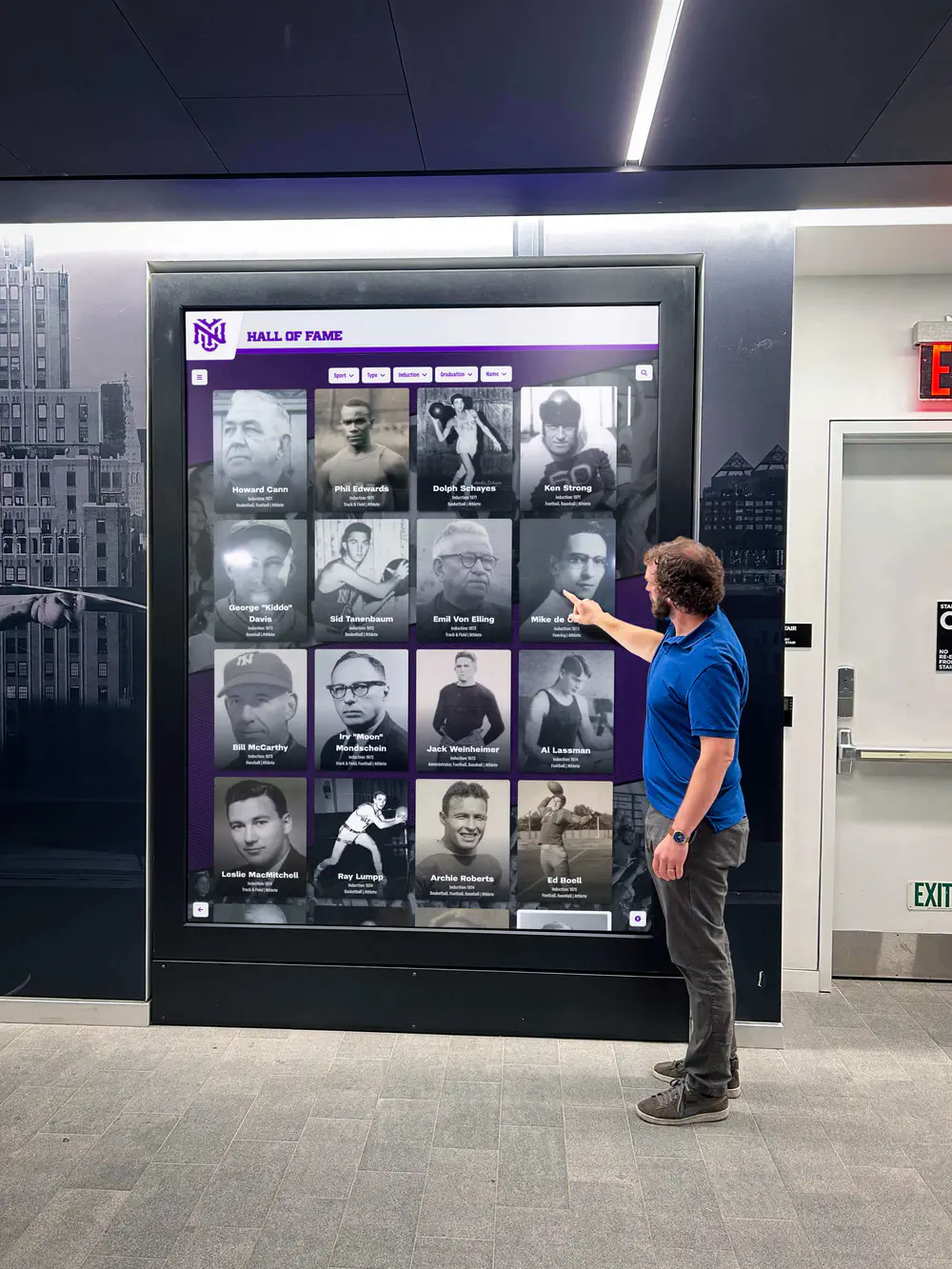
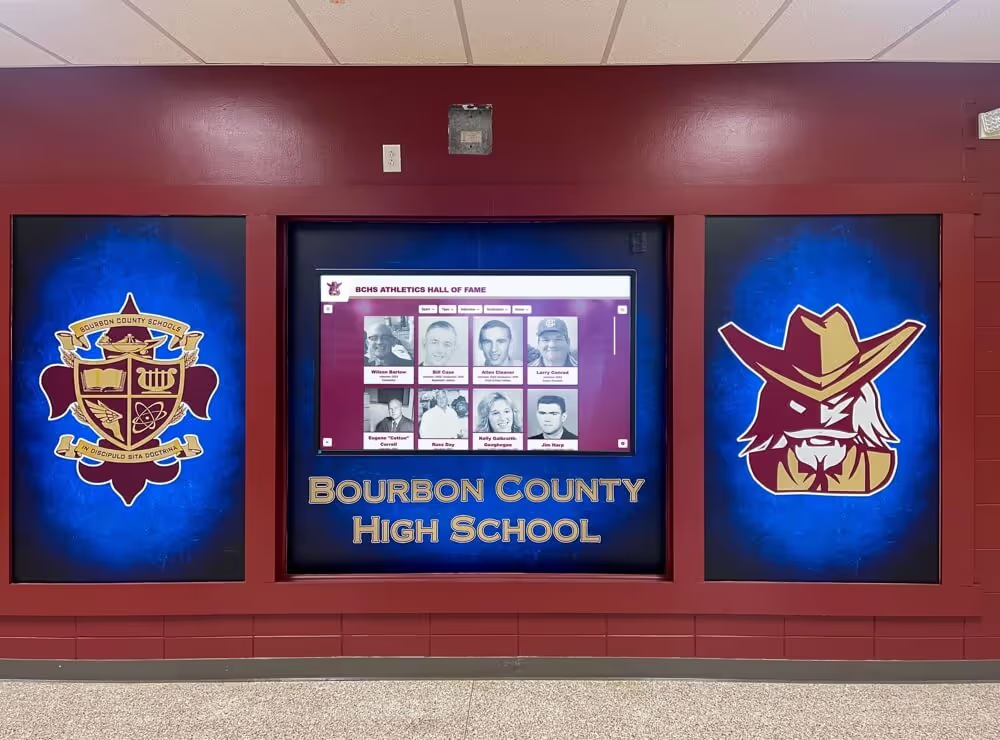
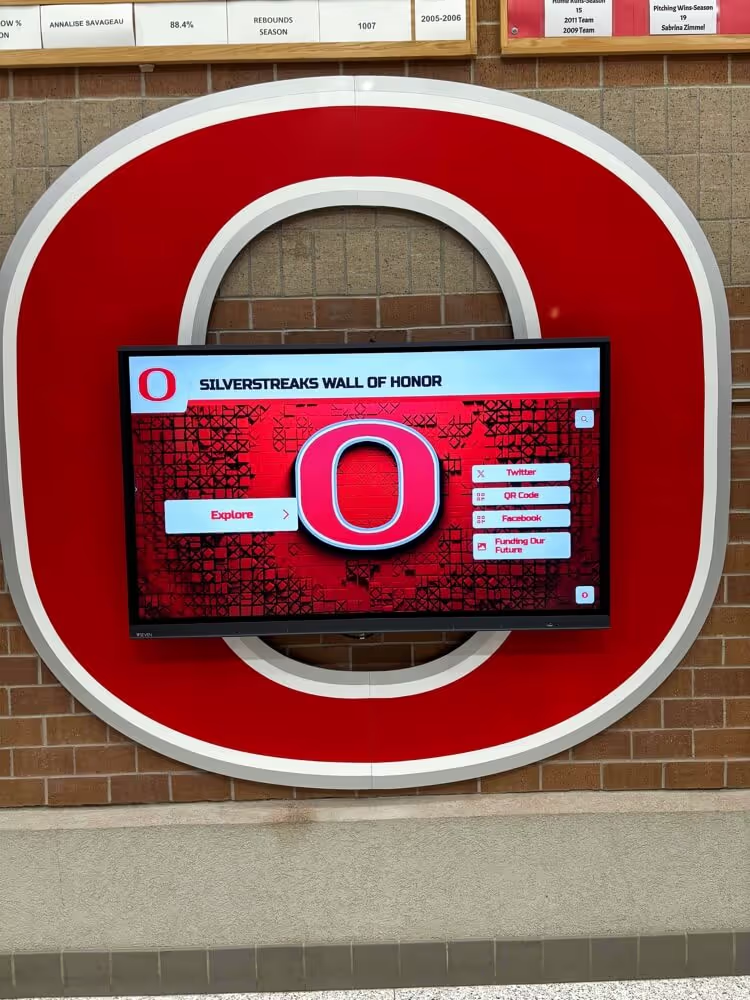
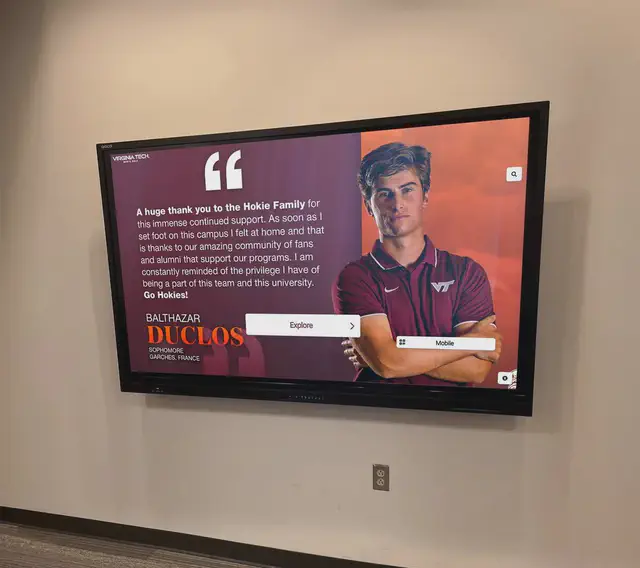
Interactive displays let families and alumni search for specific competition results, division placings, and individual athlete recognition entries across a program's full history.
Building a Complete Racquetball Display Archive
A school that competes annually at USA Racquetball High School Nationals accumulates years of recognition material: team title years, division medalists across six singles divisions, doubles partnerships, All-American honorees, and Coach of the Year recipients. Keeping that archive organized — so a 2019 Girls Doubles Division #2 placing is as findable as a current Overall Team title — is an ongoing editorial responsibility that grows more valuable with each passing season.
For guidance on organizing season rosters and team photos alongside competition results, that resource describes approaches to connecting roster documentation to recognition entries in a way that keeps the archive navigable over time. Roster documentation and display entries are related but separate: a full team entry credits the students who contributed points, and a photo supports a display, but neither substitutes for the other.
For related guidance on structuring team recognition entries for athletic programs and on the types of sports awards appropriate for school recognition displays, those resources cover the broader category of athletic recognition alongside racquetball-specific decisions.
The labeling discipline required for physical entries applies equally to digital ones. An entry that omits a division number, misidentifies a doubles format as a singles flight structure, or assigns All-American status without verification is inaccurate regardless of medium. Consistent, verified entry data is what makes a recognition archive trustworthy for the families, alumni, and future students who will consult it for years to come.

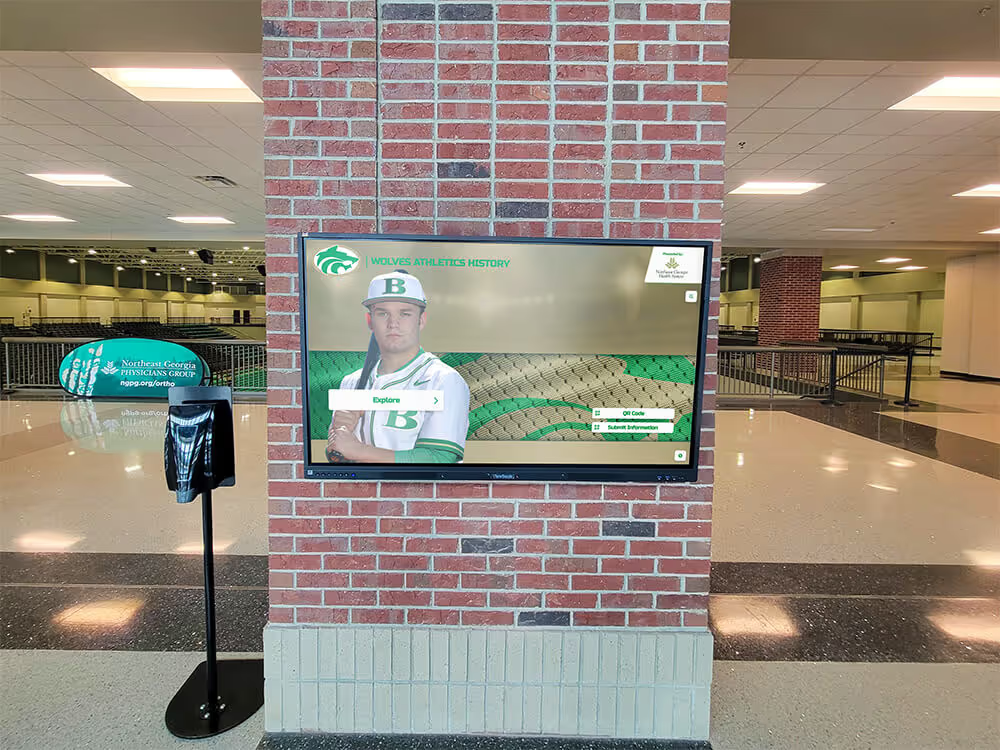
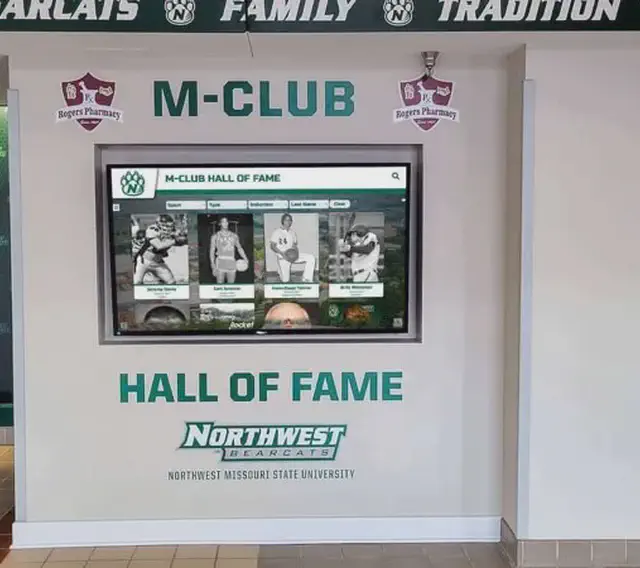
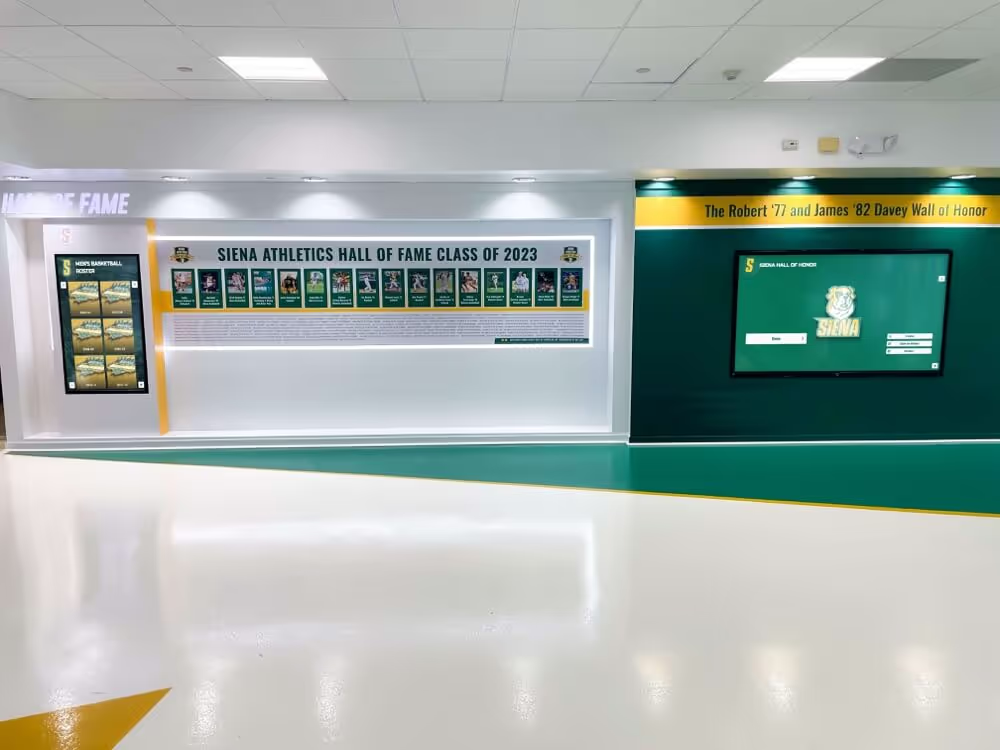
A well-organized athletics hall of fame brings team titles and individual honors together in one navigable display — giving every entry a labeled, permanent home.
Frequently Asked Questions
What is the difference between the Boys Team, Girls Team, and Overall Team titles at the USA Racquetball High School National Championships?
They are three separate standings. Boys Team accumulates scores from boys singles and boys doubles divisions; Girls Team accumulates from girls competition; Overall combines all scoring into one standings table. A school can win any combination of the three in the same year, including all three. Each title should have its own display entry, labeled with the specific competition category, so families searching for a particular achievement can find it accurately.
Should a placing in Division #3 or Division #5 be displayed differently from a Division #1 placing?
The division number and flight should always be part of the display entry label. A Division #5 Gold flight 1st-place finish at a national championship is a genuine achievement earned in competition — but it is not the same as a Division #1 Gold flight finish, and the label should say so clearly. Both are worth celebrating. Neither should be misrepresented by omitting the division number or inflating it to an unqualified national title.
Do doubles display entries use the same flight terminology as singles entries?
No. Singles used an Olympic Format with four flights (Gold, Blue, Red, White). Doubles used single elimination with one consolation round. Doubles entries should not use flight language. A doubles placing should be labeled with the division number and the round — for example, “Girls Doubles Division #1 — Finals, 1st Place” — not with a flight designation that applied only to singles.
How is All-American status confirmed for a display entry?
Compare the student’s finish against the published annual recipient list at mohsrball.com/all-american-teams. The placing that made a student eligible and the formal confirmation of All-American status are separate steps. Do not assign the All-American label based on a placing alone; verify against the published list before adding that designation to any display entry.
What information does a complete racquetball championship display entry require?
For a team title: year, full official event name, and the specific category (Boys, Girls, or Overall). For an individual singles result: year, event name, competition (Boys/Girls Singles), division number, flight (Gold/Blue/Red/White), and placing (1st–4th). For a doubles result: year, event name, competition type (Boys/Girls/Mixed Doubles), division number, the round (Finals or Consolation), placing, and both partners’ full names verified from official results. All-American entries additionally require confirmation against the annual published list.