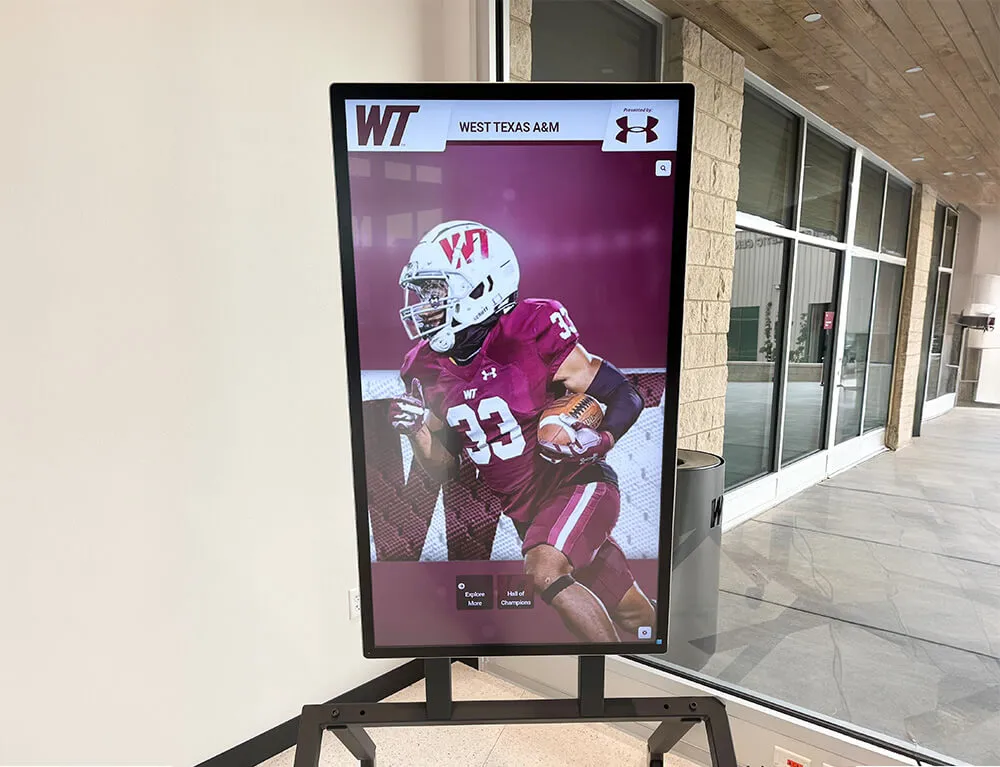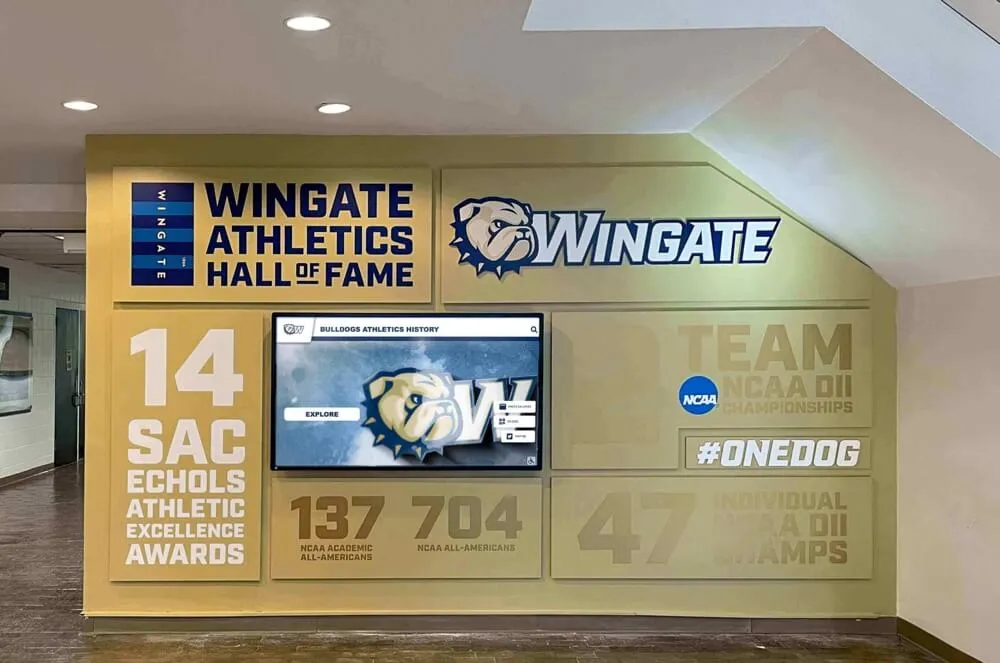




Walk into almost any school athletic hallway and you will find the same scene: a row of medal and trophy display cabinets packed with hardware, team photos taped to the inside glass, and a few trophies turned sideways because there is simply no room left. Behind that case, in a storage closet, sit another three boxes of awards waiting for space that will never open up. Schools accumulate recognition hardware faster than physical cases can hold it — and the result is that decades of athletic and academic achievement quietly disappear from public view.
This guide examines when static medal and trophy display cabinets serve schools best, when a digital archive delivers more value, and how most programs ultimately benefit from running both in parallel. Whether you are an athletic director planning a facility renovation, a school administrator reviewing recognition budgets, or a booster club chair wondering how to honor fifty years of championship history, this comparison will help you make a well-informed decision.
The question is not really “cabinets or digital?” — it is “what belongs in each?” Physical and digital recognition solve different problems for different audiences, and schools that treat them as competing investments usually underutilize both. The ones that treat them as complementary layers typically end up with richer recognition programs and more engagement from current students, alumni, and community members.

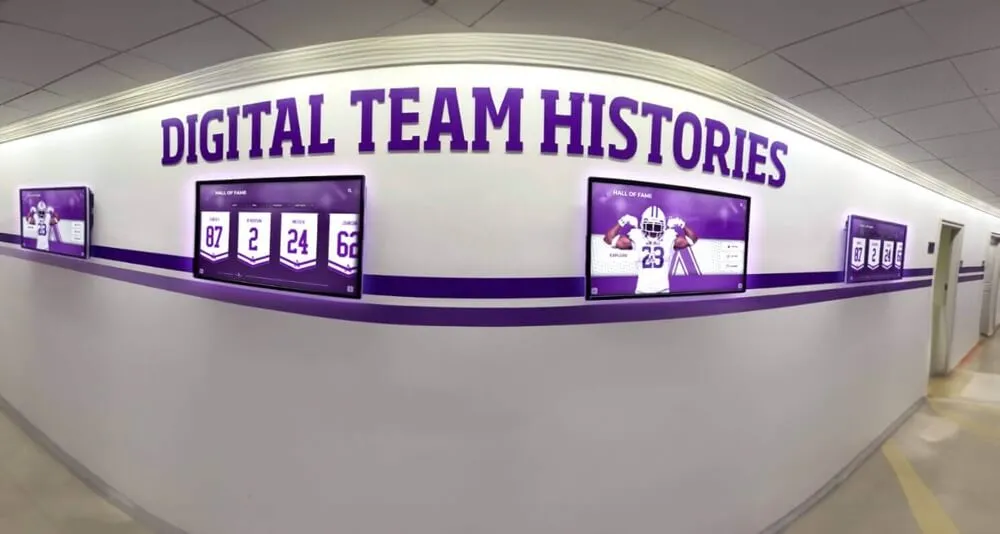
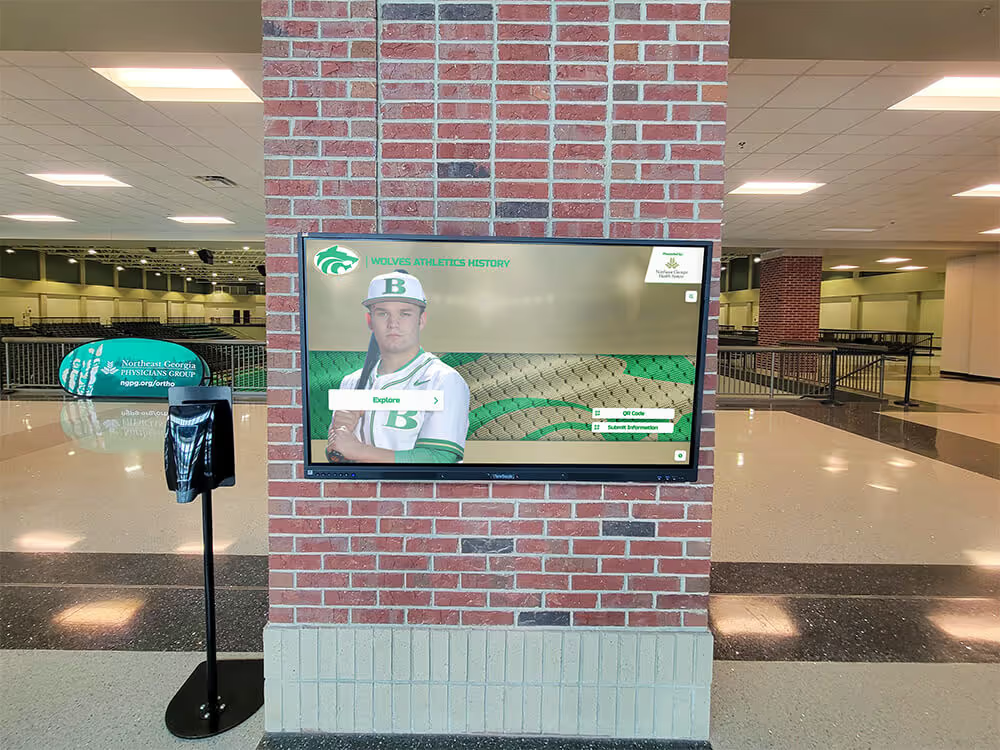
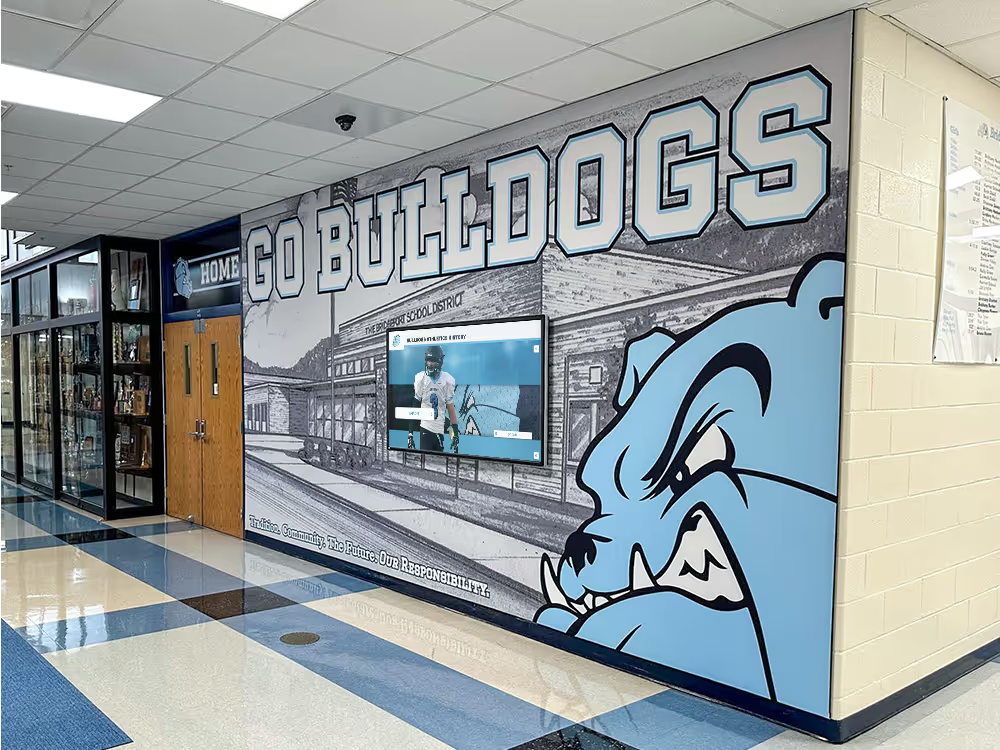
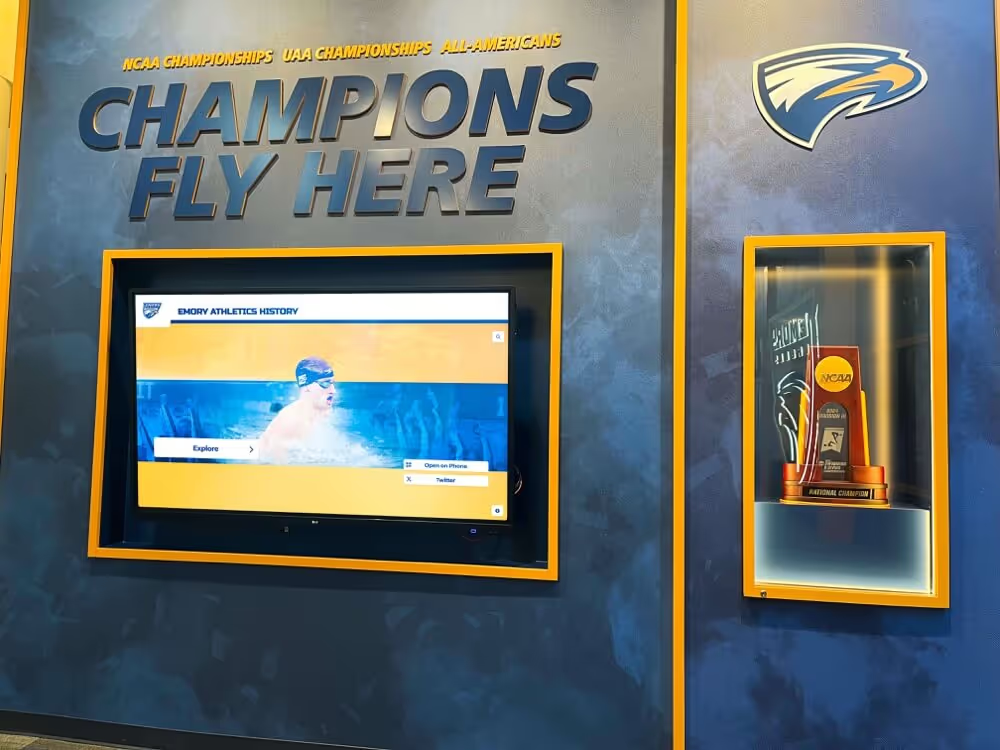
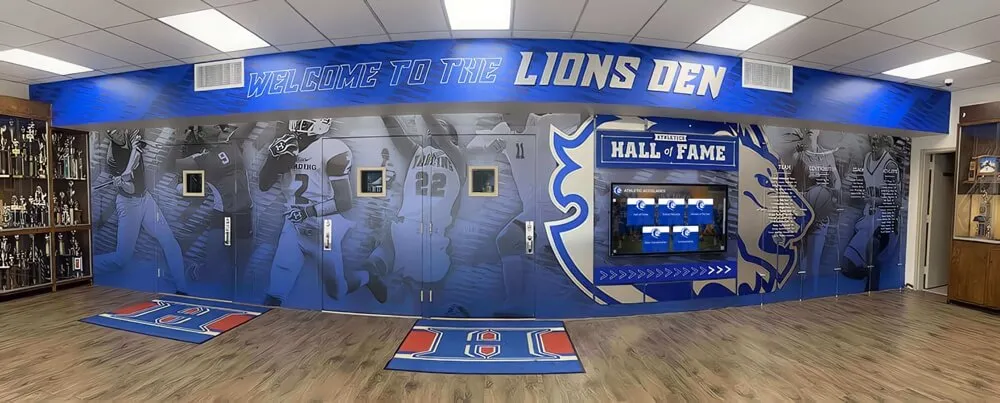
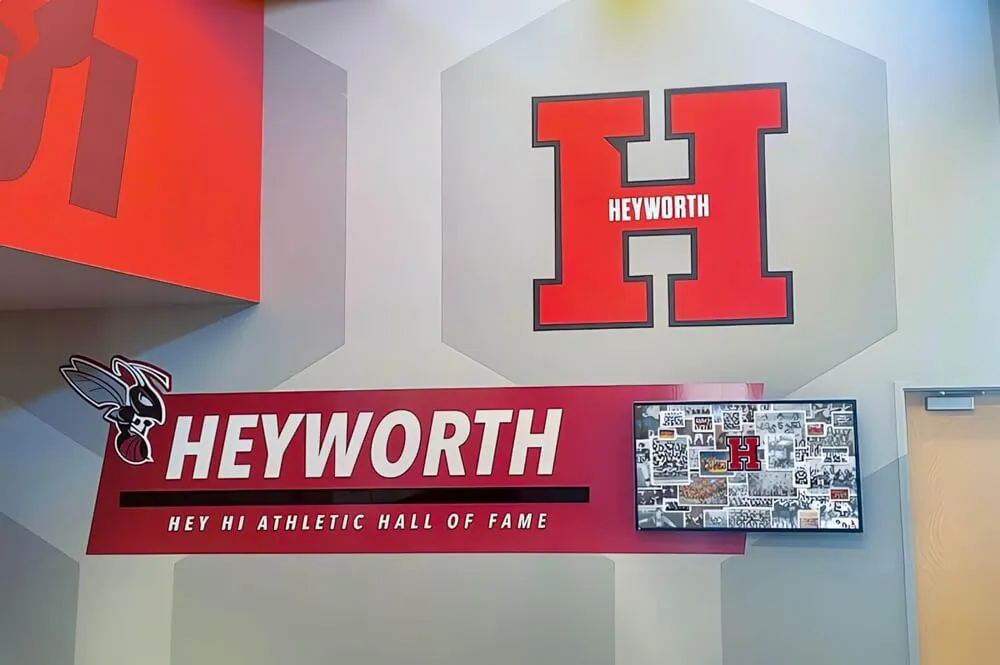
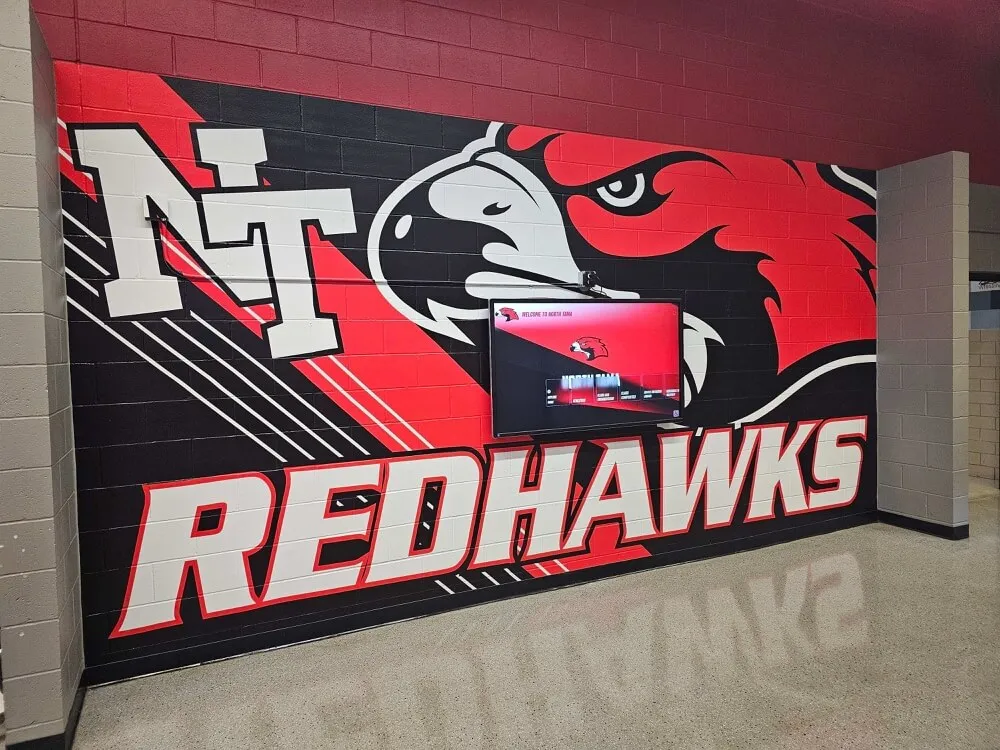
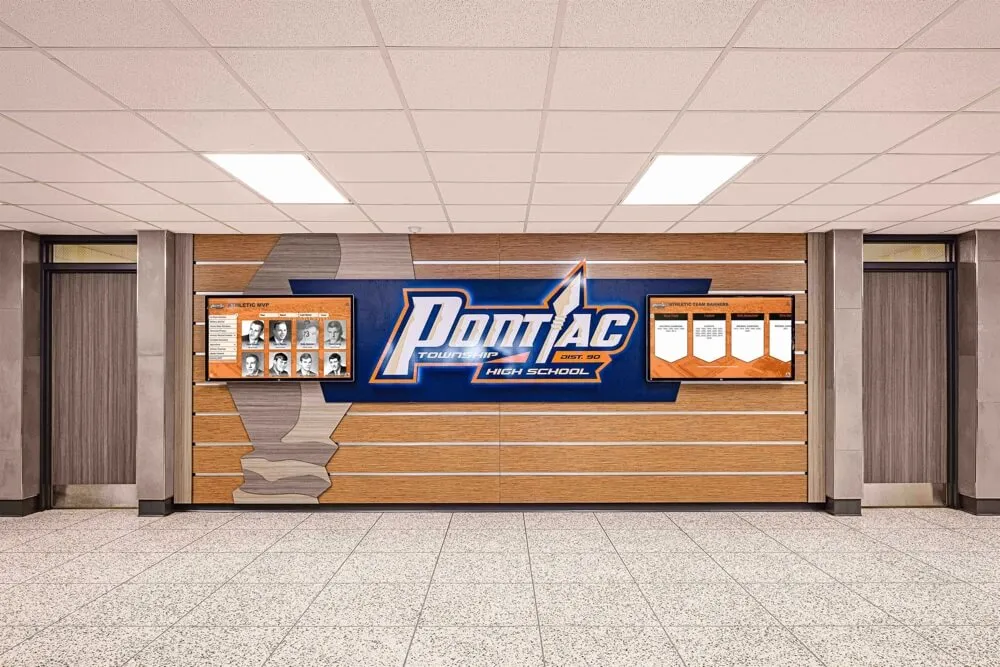
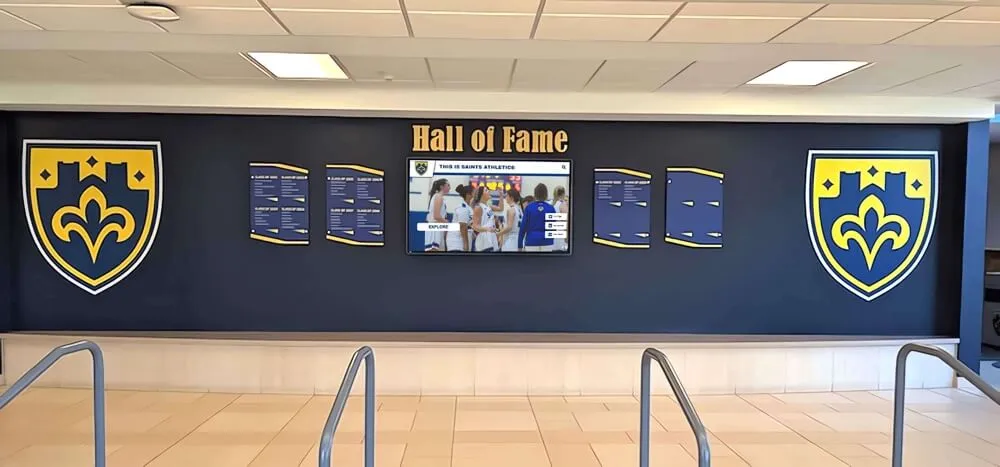
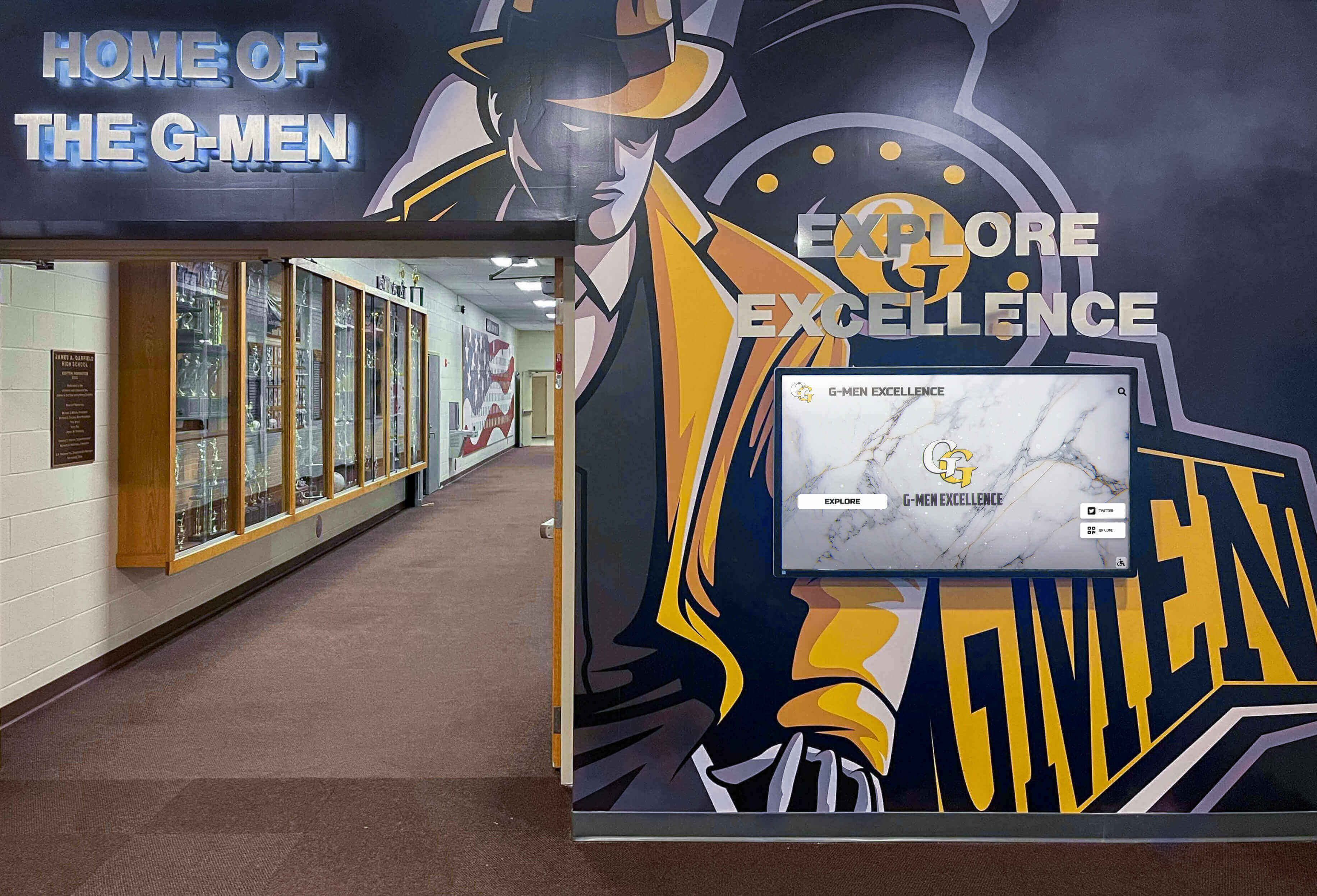
Modern athletic hallways often blend traditional trophy cases with mural art and digital screens to extend recognition capacity beyond what any single format can hold
What Medal and Trophy Display Cabinets Do Best
Physical trophy cases exist for reasons that digital screens cannot fully replicate. Understanding those strengths helps you decide what hardware belongs inside glass — and what should live elsewhere.
Tangible Ceremonial Weight
A state championship trophy sitting under a spotlight in a locked case communicates something that a photograph on a screen does not. The physical object — its size, its material, the year engraved on the base — carries the weight of the accomplishment in a way that is immediately legible to anyone who walks past. First-time visitors, prospective students, and parents at open house events respond to a well-curated cabinet in a way they simply do not respond to a dormant screen.
That ceremonial weight matters most for your flagship achievements: championship trophies, retired jerseys, regional records, and singular milestones that a program wants to anchor to a specific physical place in the building. These items benefit from the permanence and authority that only a physical case provides.
No Power or Maintenance Dependency
A glass cabinet with good lighting requires almost no ongoing technical maintenance. There are no software updates, no connectivity outages, and no hardware failures that take the display offline. For facilities teams already stretched thin, that simplicity has real operational value — particularly in secondary school environments where IT support for display hardware is limited.
Schools in areas with unreliable power infrastructure or tight technology budgets often find that well-maintained physical cases provide more consistent daily visibility than digital alternatives that depend on stable internet connections and vendor support contracts.
Direct Access to Original Artifacts
Some recognition items carry meaning precisely because they are originals: the actual ball from a 500th career win, a signed jersey, a hand-engraved plaque from 1978. A digital archive can photograph and document these items, but it cannot replace the experience of seeing the real object. Trophy cases serve as the permanent home for irreplaceable artifacts that a school wants to protect and display simultaneously.
For this reason, many schools that make the transition to hybrid recognition systems keep their physical cabinets for original artifacts, retired numbers, and championship hardware, while moving photographs, rosters, statistics, and individual honors to digital platforms where capacity is unlimited.
The Real Limitations of Physical Display Cabinets
Despite those genuine strengths, physical medal and trophy display cabinets impose constraints that grow more costly as programs accumulate history.
Finite Space Creates Forced Choices
A standard four-section trophy case holds roughly 30 to 60 items depending on size. A school with active athletic, academic, and fine arts programs can fill that space within five to ten years. After that, every new addition means retiring something else — usually the oldest items, which are often the most historically significant.
The cumulative effect is a systematic erasure of institutional memory. A school with a 40-year athletic history cannot meaningfully honor that history in a 10-foot display case. The choice is not between recognizing current students and honoring history — it is between accepting that history will be invisible or finding a format with no capacity limits.
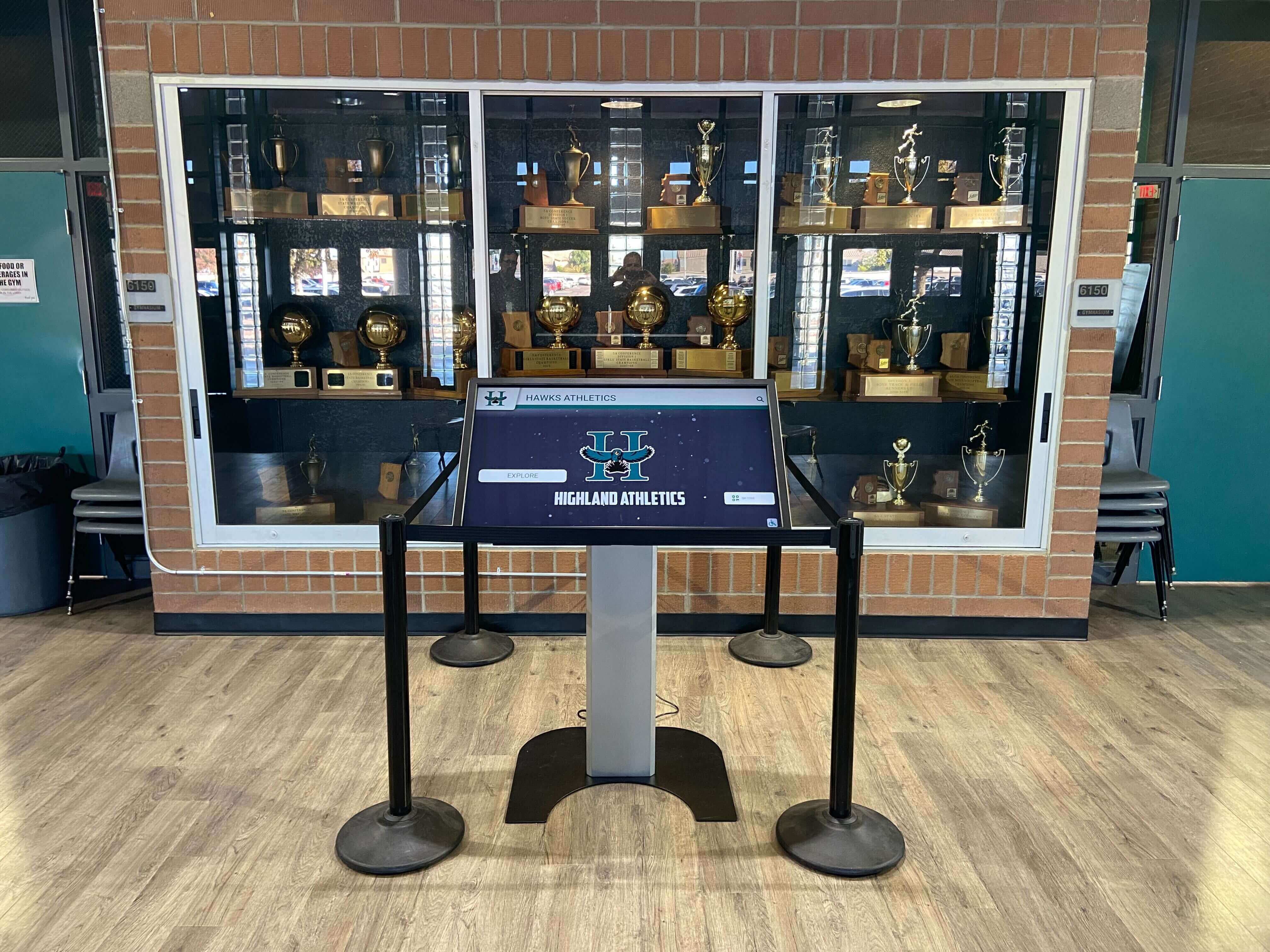
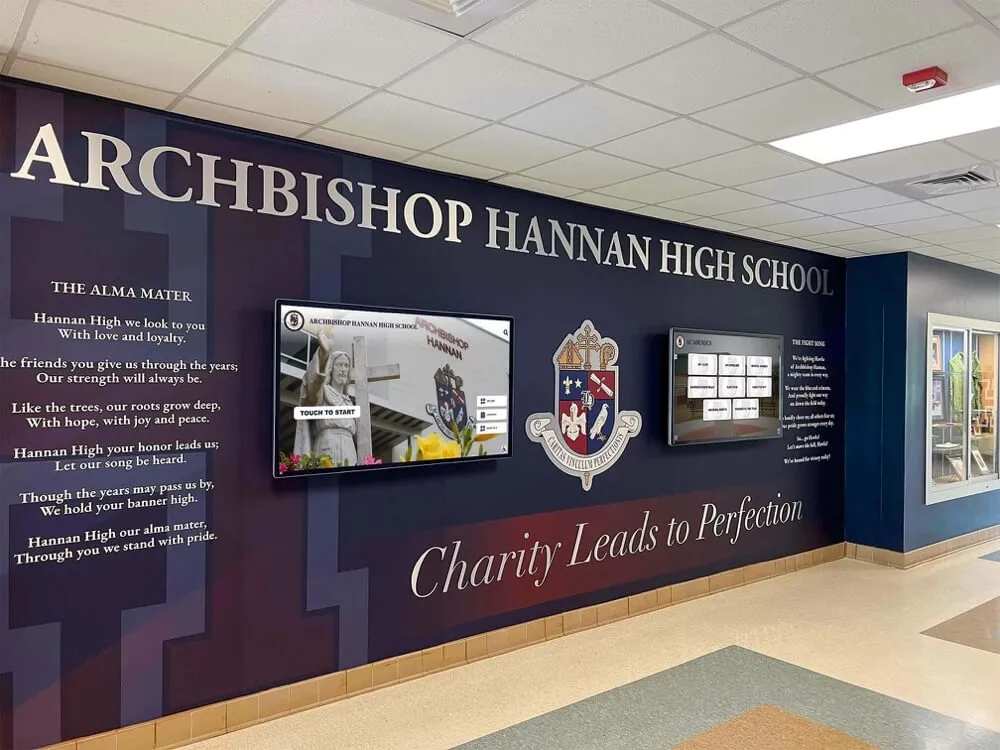
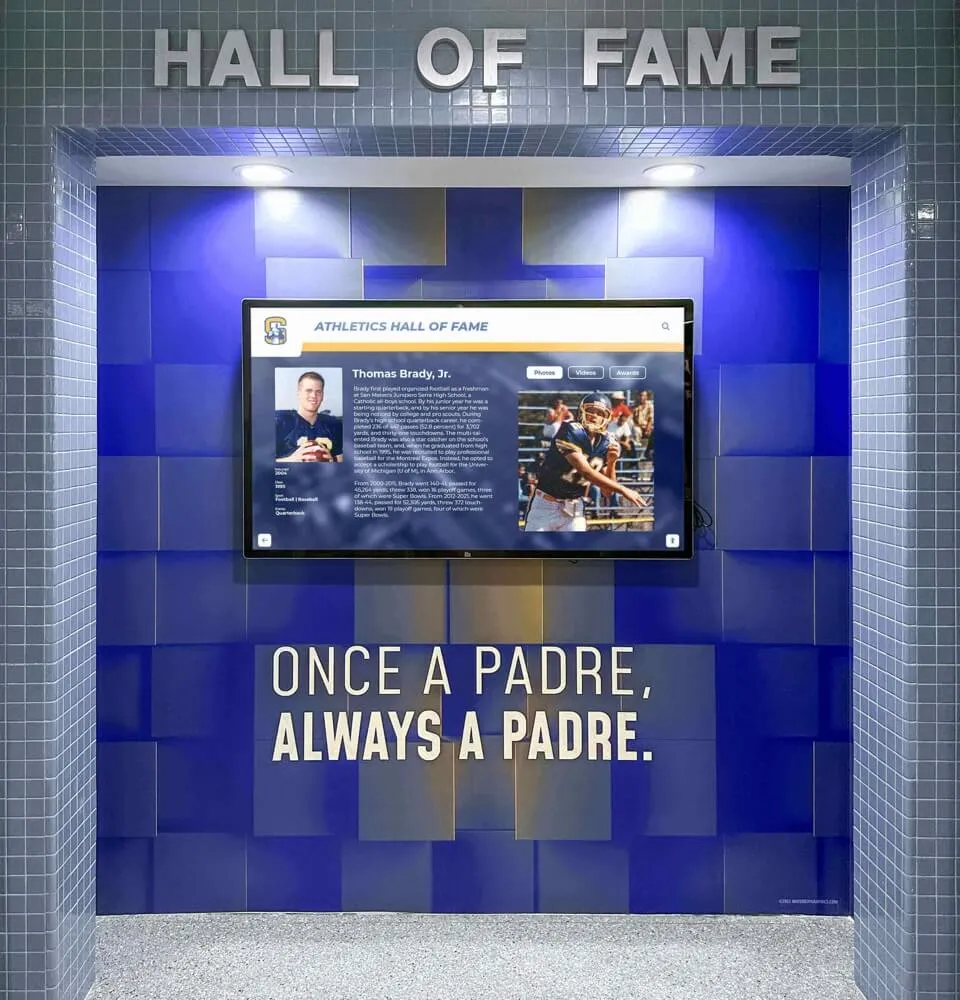
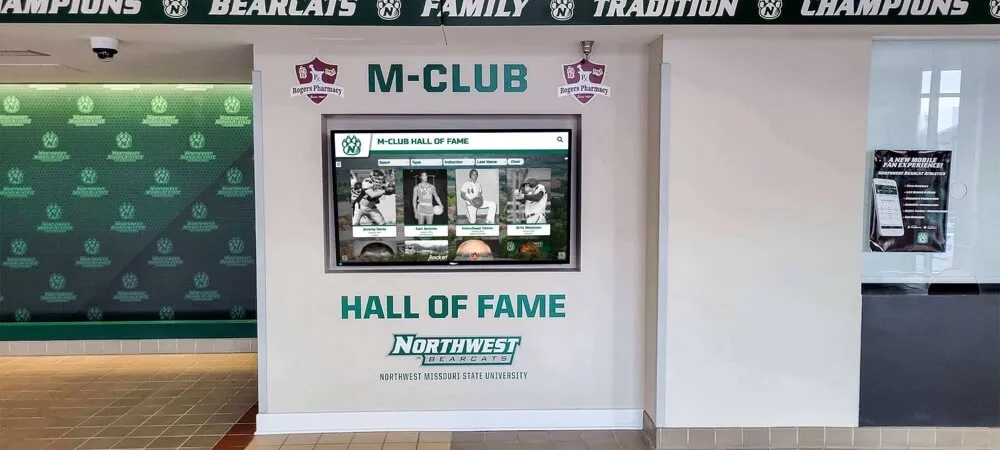
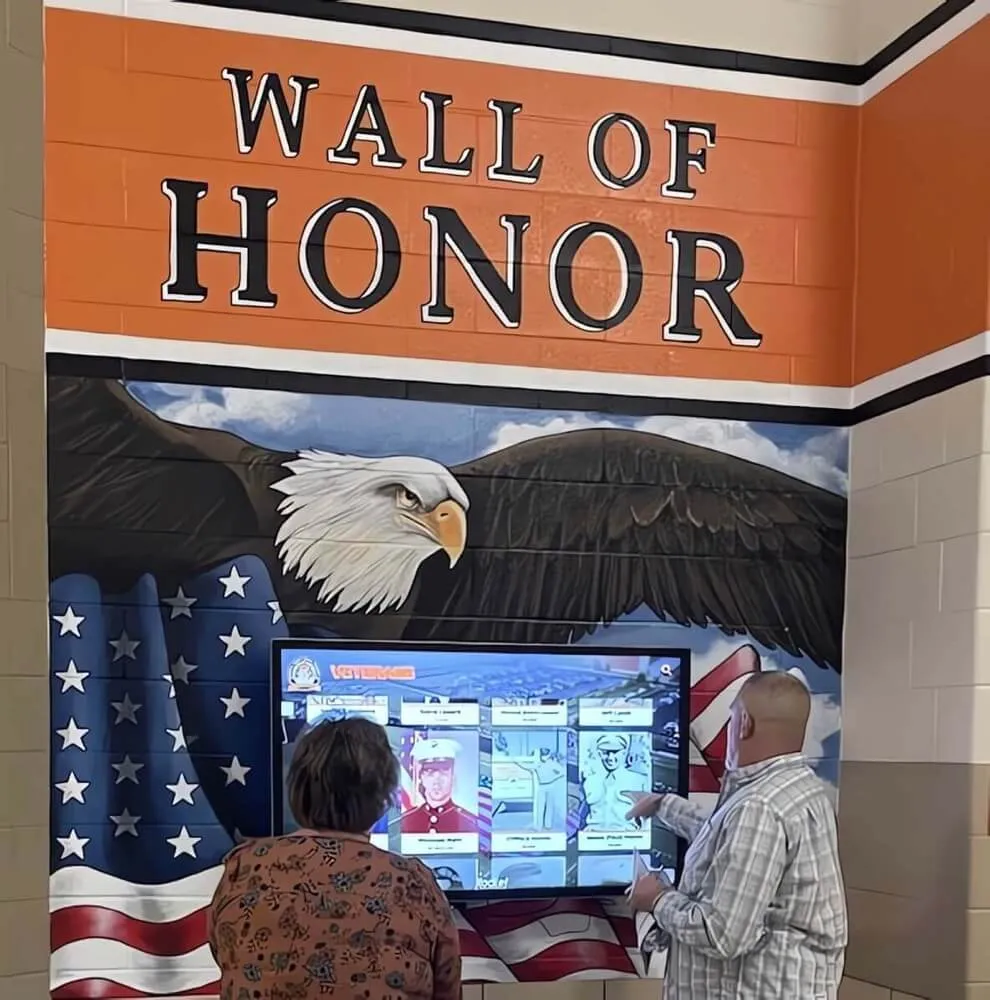
Installing a digital kiosk next to an existing trophy case is one of the most cost-effective ways to extend recognition capacity without removing any physical hardware
No Storytelling Depth
A trophy engraved with “2009 State Champions” tells you the outcome. It does not tell you that the team came back from a 12-point deficit in the fourth quarter, that three seniors were playing through injuries, or that the coach had announced her retirement the week before. Physical cases display objects; they do not tell stories.
That storytelling gap matters more than most athletic directors initially realize. The students who look at a 2009 trophy in 2026 have no connection to it. They cannot search for a player’s name, watch a clip from the championship game, or read the season’s record. Without context and narrative, historical hardware is essentially invisible to anyone who was not there.
Inaccessibility to Alumni and Remote Audiences
A trophy case serves one audience: people who physically enter the building. Alumni who moved across the country, parents who cannot attend games, and community members who do not have regular reason to enter the school never see the recognition that exists in those cases. For schools investing in alumni engagement and community relationships, a recognition system that only works in person is structurally limited.
The best hall of fame tools for athletics programs now include mobile-accessible components that let alumni browse recognition content from anywhere — something no physical cabinet can replicate.
What Digital Archives Deliver That Physical Cases Cannot
A digital recognition archive is not a substitute for a trophy case — it is a different tool solving different problems. Understanding what digital platforms do well clarifies the division of labor between the two.
Unlimited Capacity for All Achievement Types
Digital systems have no physical capacity limit. A school can recognize every honor roll student from the past 30 years, every athletic award recipient, every fine arts achievement, and every community service milestone without running out of space. Recognition programs that have historically been constrained to “top ten” honorees because of wall space can expand to acknowledge every deserving individual.
This matters particularly for programs working to build more inclusive recognition cultures. When physical space forces administrators to choose between recognizing 20 people or 200, the 180 who do not make the wall receive an implicit message about their relative importance. Digital archives eliminate that forced choice entirely.
For schools building comprehensive recognition programs, youth sports awards ideas provide a starting point for the full range of categories worth documenting.
Photos, Rosters, Statistics, and Video
A digital archive can hold everything a physical case cannot: team photos with full rosters and names, season records year by year, individual career statistics, video highlights from games and ceremonies, oral history recordings, and personal statements from inductees. That depth transforms a name-and-year record into an actual narrative — the kind that current students and returning alumni find genuinely engaging.
Schools that have digitized their complete athletic records report that alumni engagement increases substantially once former athletes can search for their own names and find their seasons documented in detail. The recognition becomes personal in a way that a generic trophy on a shelf cannot achieve.
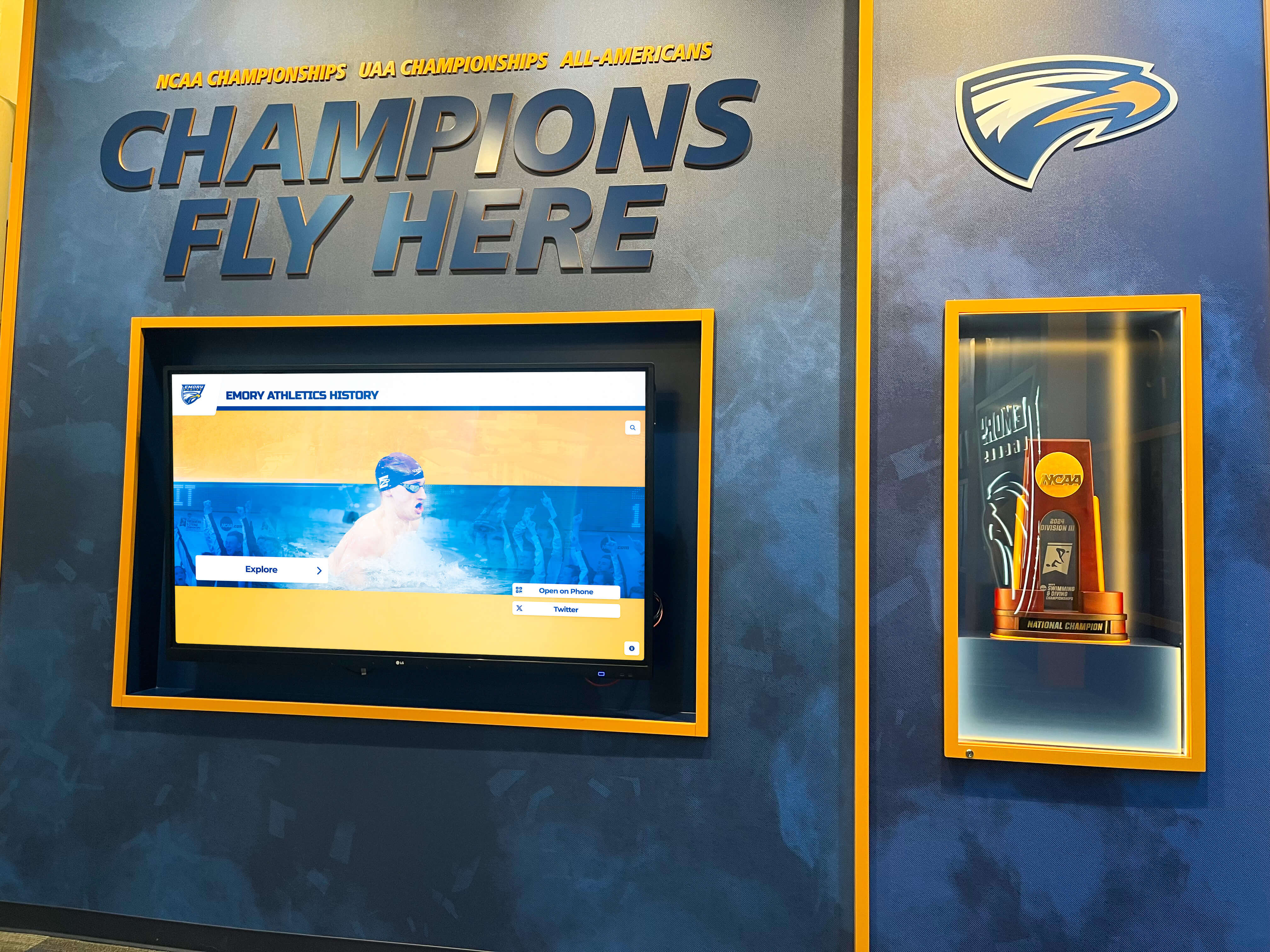
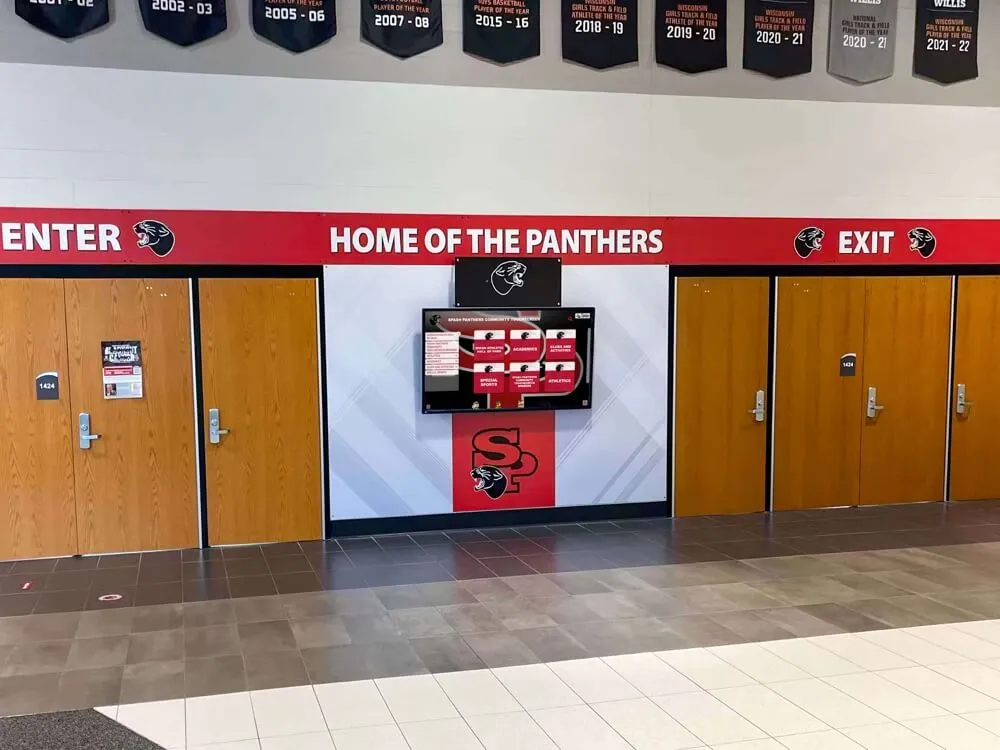
Flagship championship hardware deserves permanent physical display; the roster, statistics, and story behind each trophy are what digital archives preserve at scale
Remote Access for Alumni and Community
A well-built digital archive is accessible from any device, anywhere. Alumni can browse their graduating class achievements from the other side of the country. Parents of current students can share a recognition moment on social media the day it happens. Donors and board members can see the scope of a program’s history before making investment decisions.
That remote accessibility creates recognition value that extends far beyond the building — and it supports alumni relations, development, and community engagement in ways that cabinet-only systems structurally cannot.
For a broader look at what today’s recognition platforms include, hall of fame display tools for schools covers the full feature landscape across multiple platforms.
Side-by-Side Comparison: Static Cabinet vs. Digital Archive
The table below summarizes the key decision factors for most school programs.
| Factor | Physical Trophy Cabinet | Digital Archive |
|---|---|---|
| Capacity | 30–100 items typically | Unlimited |
| Cost to add new recognition | Hardware + engraving + installation | Content update only |
| Storytelling depth | Name, year, category | Photos, rosters, stats, video |
| Alumni remote access | No | Yes |
| Search / filter | No | Yes |
| Maintenance | Cleaning, bulb replacement | Software updates, content management |
| Power dependency | Low | High |
| Original artifact display | Yes | No |
| Ceremonial presence | High | Moderate |
| Update time | Days to weeks | Minutes |
| Best for | Championship hardware, retired numbers, singular milestones | Complete historical records, individual honorees, alumni engagement |
Neither format dominates across all factors. The right answer for most schools is a clear division of purpose: physical cabinets for flagship artifacts and ceremonial presence, digital archives for comprehensive history, individual records, and remote engagement.
How to Decide What Belongs in the Cabinet vs. the Archive
A practical framework for sorting your recognition inventory:
Put in the physical cabinet:
- Championship and tournament trophies (state, regional, conference)
- Retired jerseys or numbers
- Record boards for active sport records
- Singular milestone items (500th win balls, anniversary commemoratives)
- Donated artifacts with historical significance
Put in the digital archive:
- All individual award recipients (MVP, academic awards, sportsmanship)
- Full team rosters by year and season
- Honor roll and academic recognition lists
- Photos from events, banquets, and ceremonies
- Career statistics for athletes
- Alumni achievement updates beyond high school
- Video highlights, ceremony recordings, acceptance speeches
Put in both:
- Hall of fame inductees (physical plaque or shield + full digital profile)
- Championship seasons (physical trophy + digital season narrative)
- Program milestones (physical marker + digital historical context)
This division respects what each format does best rather than asking either to do a job it was not designed for.
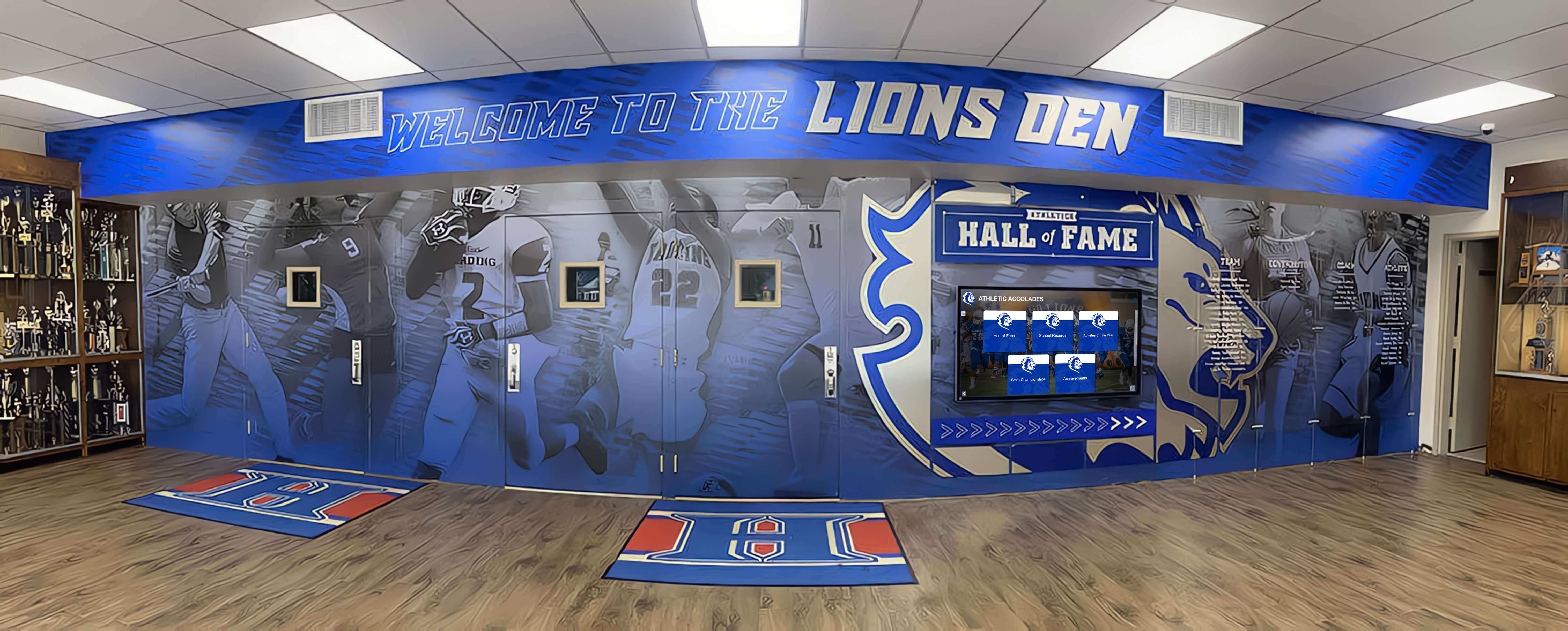
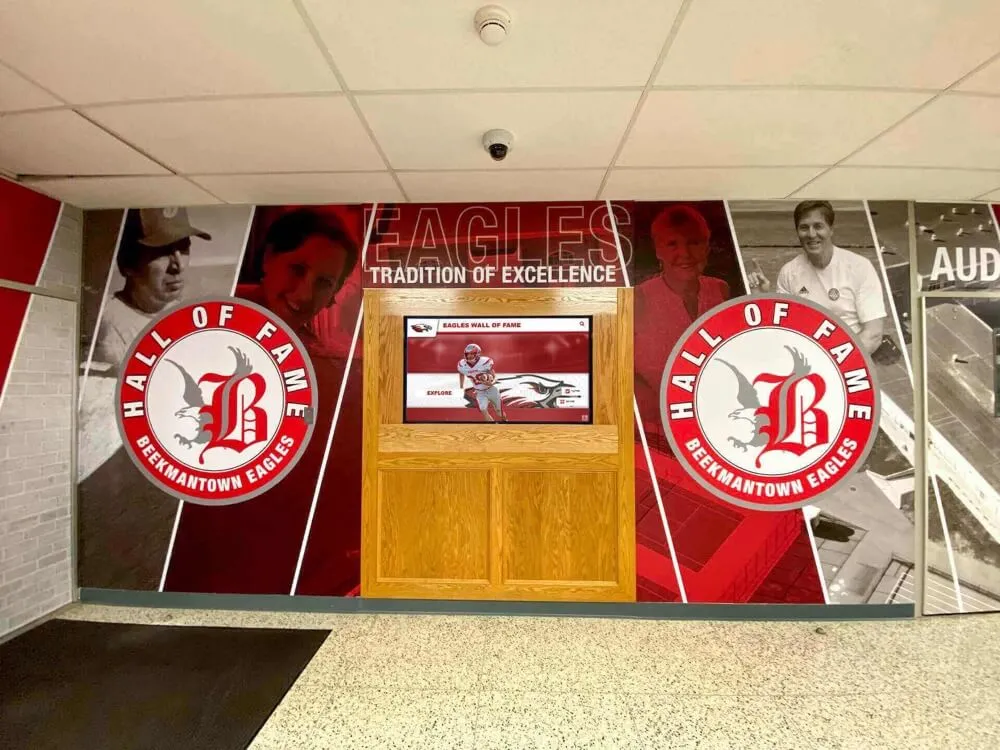
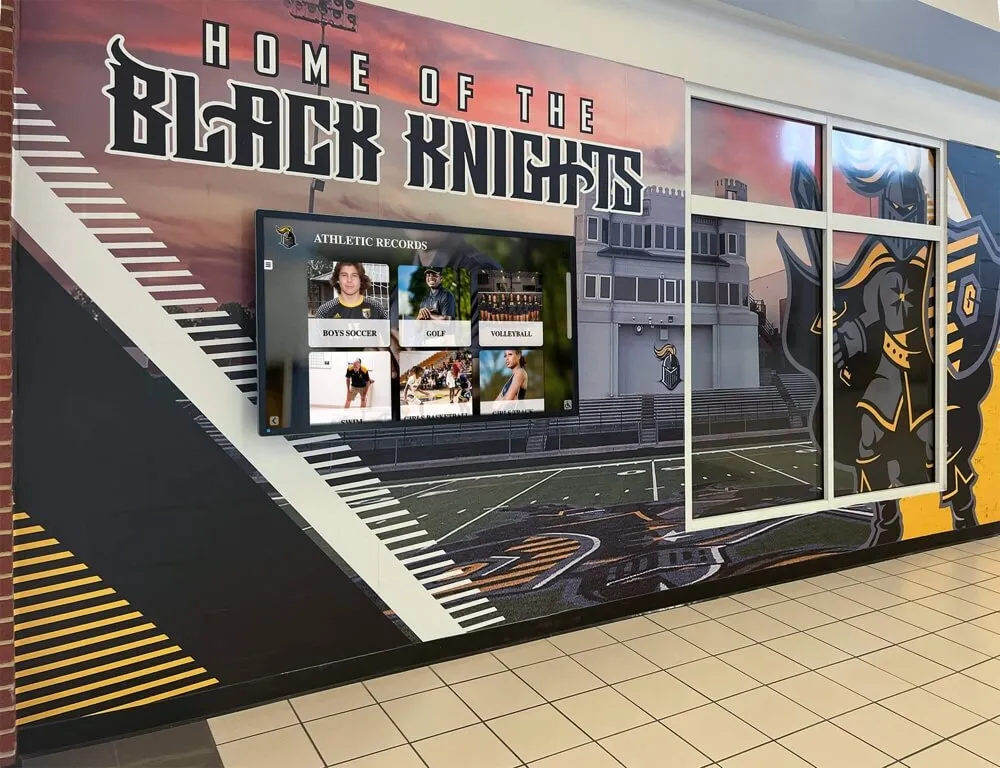
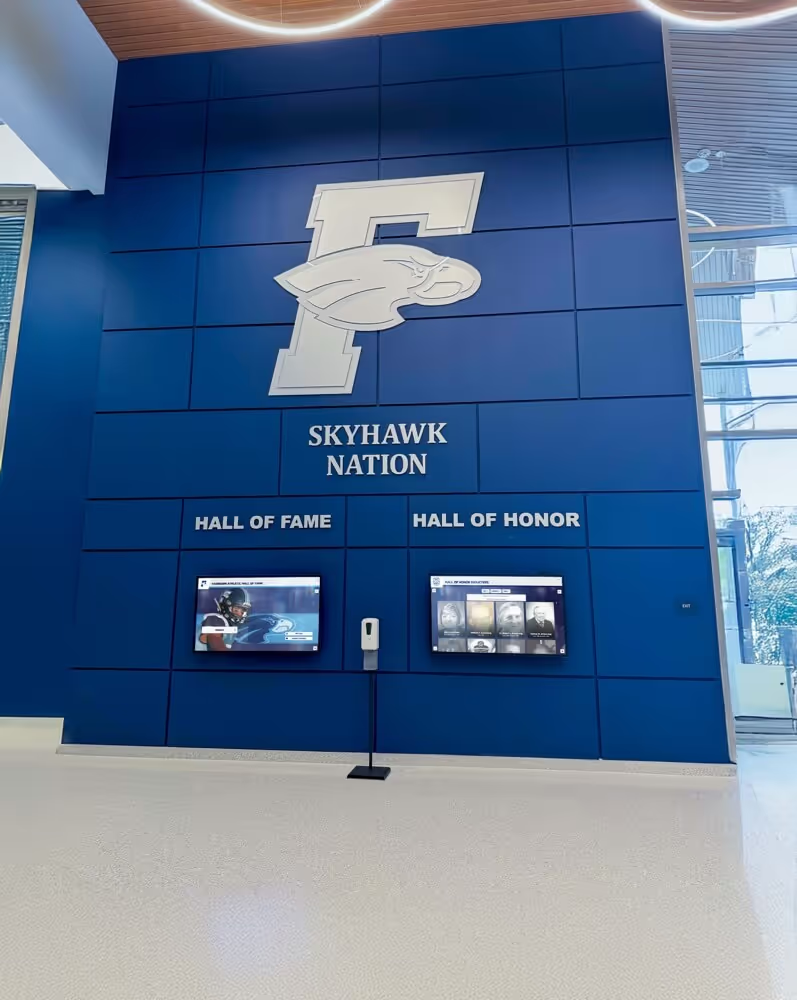
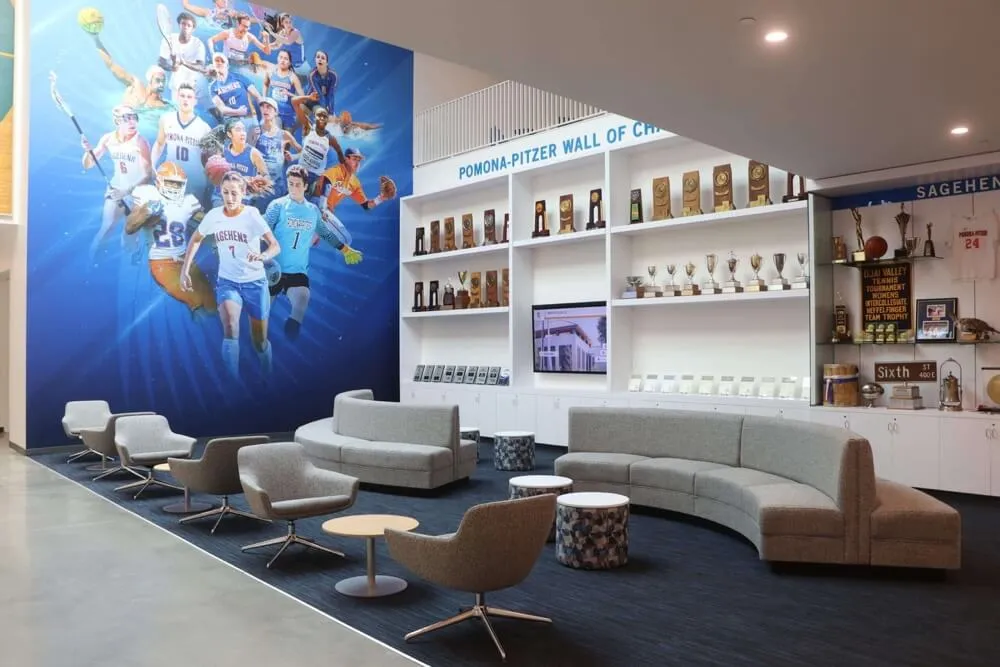
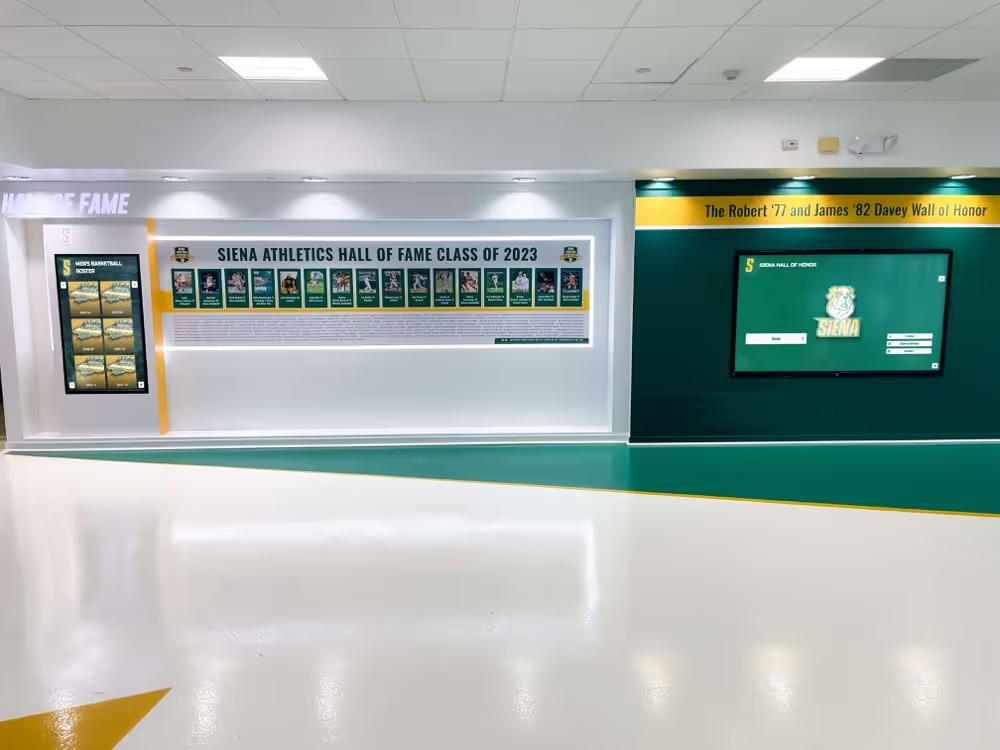
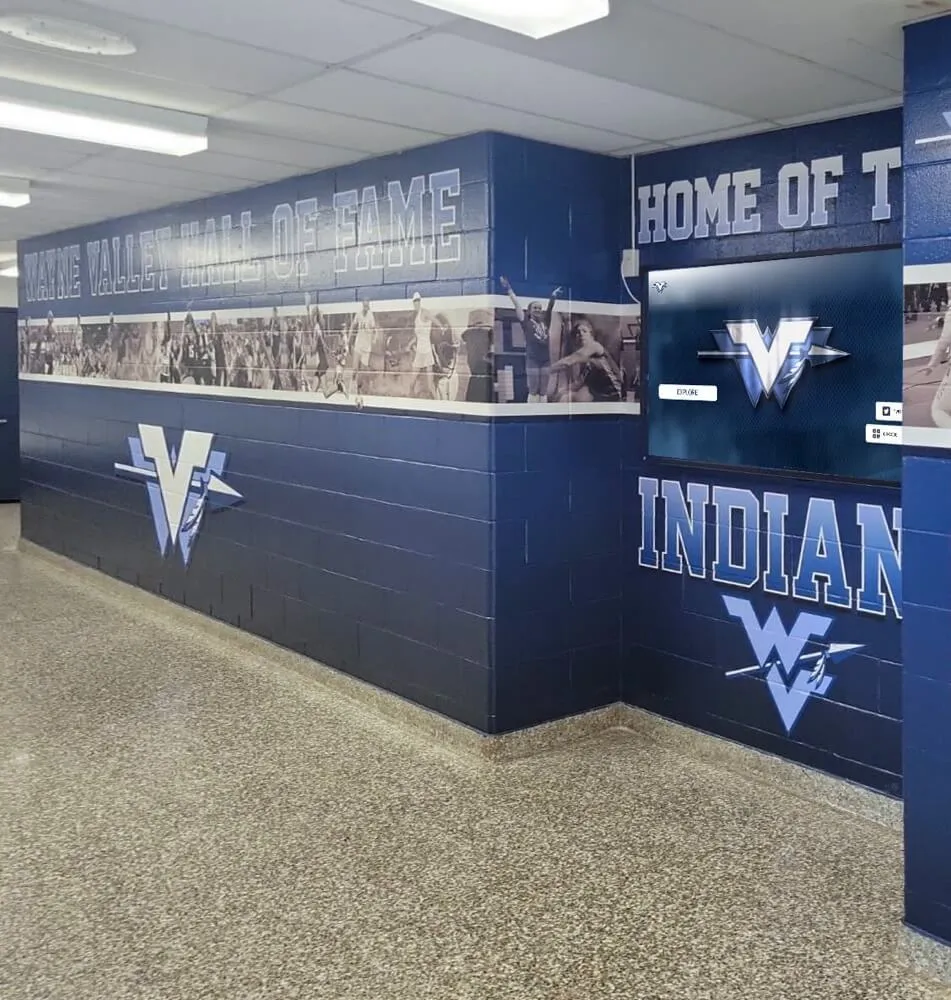
Dedicated athletic corridors that pair physical cases with digital elements create immersive recognition environments that honor both tradition and the full depth of program history
Building a Hybrid Recognition System: Physical + Digital
Most schools that upgrade their recognition infrastructure move toward a hybrid model rather than replacing one format with another. The transition typically follows three phases.
Phase 1: Audit and Inventory
Before investing in new hardware or software, conduct a full audit of existing recognition assets: every trophy, plaque, medal, certificate, photograph, and record book. Categorize each item using the framework above — flagship artifact, historical record, or both. This audit usually reveals that a significant portion of what sits in storage belongs in a digital archive rather than a physical case, and that the physical cases can be reorganized to showcase only the most significant hardware.
Phase 2: Establish the Digital Foundation
Set up a digital recognition platform that can hold unlimited records and provide search, photo display, and optional remote access. This does not need to be a touchscreen kiosk from day one — a cloud-based system that staff can update easily is more valuable than sophisticated hardware with no content. Digitize historical records starting with the most recent and working backward; even a partial archive provides immediate value.
Many schools find that digital record board tools for school athletics integrate record tracking and hall of fame recognition on the same platform, eliminating the need for multiple separate systems.
Phase 3: Connect Physical and Digital
Once both systems are in place, create deliberate connections between them. QR codes on physical plaques that link to full digital profiles are the simplest bridge. Touchscreen kiosks installed adjacent to trophy cases extend the physical display with unlimited digital depth. Digital record boards mounted above physical trophy cases show real-time statistics alongside historical hardware. These connections mean that the physical and digital systems reinforce each other rather than competing for visitor attention.
Rocket Alumni Solutions specializes in exactly this kind of hybrid installation — designing touchscreen walls of fame and digital record boards that complement existing trophy cases rather than replacing them, with cloud-based content management that lets staff update recognition from any device without touching the physical installation.
Comparing Recognition System Options for Schools
Schools evaluating recognition upgrades typically encounter several categories of solutions. Here is how they compare for programs managing both physical and digital recognition needs.
Option 1: Traditional Trophy Case Upgrade
Upgrading to a higher-quality physical cabinet — better lighting, lockable glass, illuminated shelving, custom millwork — improves the presentation of existing hardware without adding any capacity or digital capability. This is the right investment when your primary need is presenting flagship artifacts more impressively and your historical inventory is small enough to fit comfortably in the existing space.
Best for: Programs with fewer than 15 years of history, smaller trophy collections, or limited technology infrastructure.
Limitation: Does not address capacity, storytelling depth, or alumni engagement.
Option 2: Standalone Digital Archive Platform
Cloud-based recognition platforms allow schools to maintain unlimited records accessible via web browser. Staff manage content through a simple interface; alumni access records through a public URL. These platforms typically cost $1,000–5,000 per year depending on features and typically do not include on-site hardware.
Best for: Schools primarily focused on alumni engagement, development, and remote access rather than on-site visitor experience.
Limitation: No physical presence in the building; requires internet access and ongoing subscription.
For a wide-ranging look at award categories worth tracking in any digital system, youth sports recognition categories covers the full spectrum from MVP to most improved.
Option 3: Touchscreen Kiosk Adjacent to Existing Cases
Installing a touchscreen kiosk or interactive wall in the same corridor as existing trophy cases is the most common hybrid approach. Visitors engage with the physical hardware in the case and can immediately explore the full history, roster, and statistics on the adjacent screen. The physical case maintains its ceremonial function; the touchscreen handles unlimited depth and search.
Best for: Schools with established physical collections that need to extend their recognition capacity without rebuilding the entire display environment.
Limitation: Requires ongoing power, connectivity, and content management; hardware has a 5–7 year replacement cycle.
Option 4: Rocket Alumni Solutions — Integrated Recognition System
Rocket Alumni Solutions builds fully integrated digital recognition environments that include touchscreen walls of fame, cloud-based record boards, QR-accessible mobile profiles, and content management tools that non-technical staff can use without training. Their systems are ADA WCAG 2.1 AA compliant and designed to work alongside existing trophy cases rather than replace them.
The platform supports photos, video from YouTube, Vimeo, and Hudl, career statistics, team histories, and alumni profiles — and updates propagate to the on-site display and any web-accessible version simultaneously. Schools use a single content management system to maintain both the in-building touchscreen and the alumni-facing web portal.
Best for: Programs that want a turnkey solution combining on-site interactive display, alumni remote access, automatic record board updates, and professional installation support.
See how the platform compares to other options in this overview of hall of fame tools for athletics and donor recognition.
Budget Planning for Physical and Digital Recognition
Understanding the cost structure of each approach helps administrators make investment cases to school boards and booster organizations.
Physical Cabinet Costs
- Entry-level trophy cases: $500–1,500 for standard freestanding units
- Wall-mounted display cases: $800–3,000 depending on size and glass quality
- Custom millwork trophy alcoves: $5,000–25,000+ for built-in architectural installations
- Trophy engraving and hardware: $15–150 per item depending on material and complexity
- Ongoing cost: Cleaning, lighting replacement, occasional hardware repairs
Physical cases are a capital expense with low ongoing costs — the primary recurring investment is in the hardware (trophies, plaques, medals) placed inside them.
Digital Recognition Platform Costs
- Cloud-based archive (no hardware): $1,000–4,000/year
- Touchscreen kiosk installation: $8,000–20,000 depending on screen size and mount type
- Interactive wall systems: $15,000–50,000+ for large-format installations
- Content management: Typically included in platform subscription
- Ongoing cost: Annual software subscription, hardware maintenance, content updates
Digital systems have higher upfront costs and ongoing subscriptions but provide unlimited recognition capacity and eliminate per-item hardware costs. The break-even math improves as the number of individuals recognized grows, since adding a new digital profile costs essentially nothing compared to ordering a new physical plaque.
For programs planning recognition events that feed into both physical and digital systems, sports award ideas for young athletes provides a useful menu of categories worth building into an annual recognition calendar.
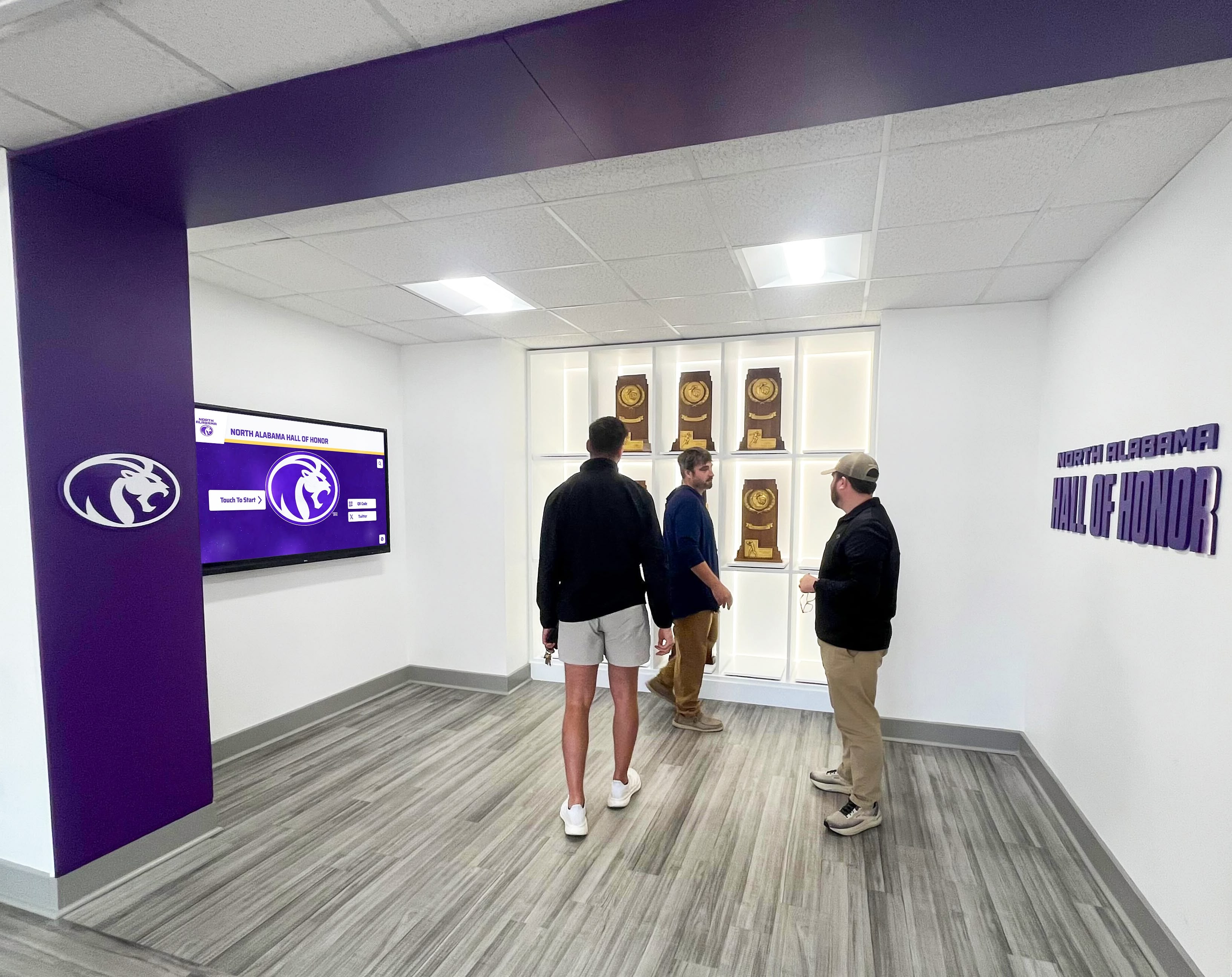
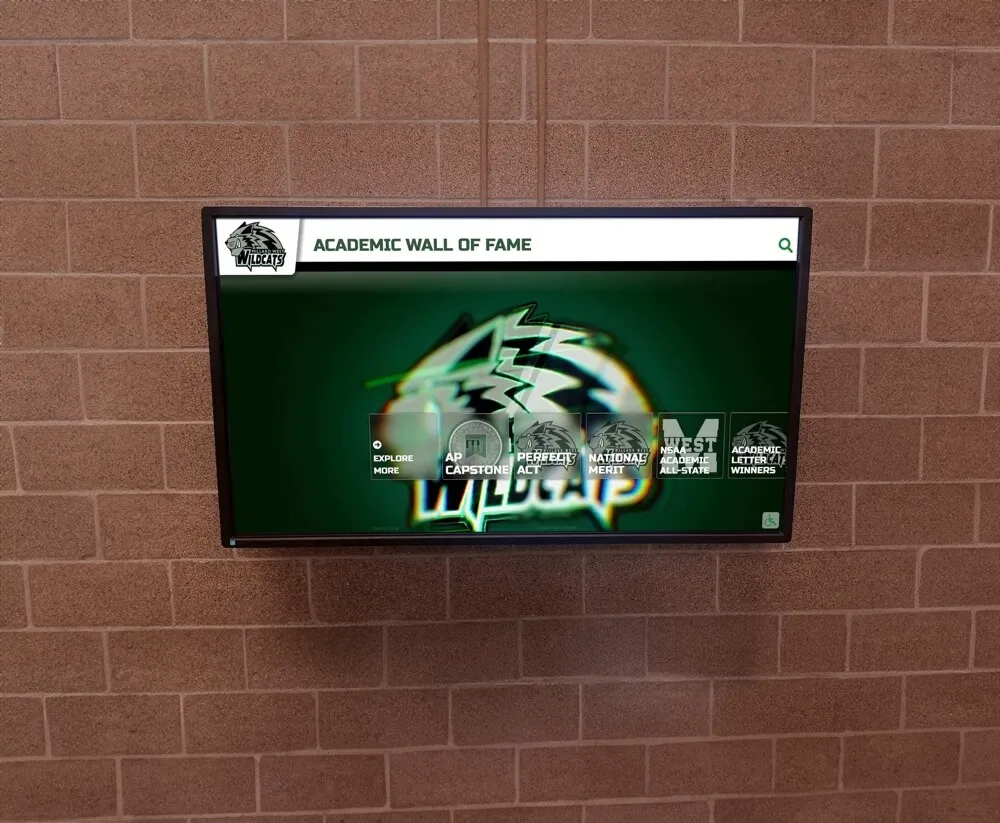
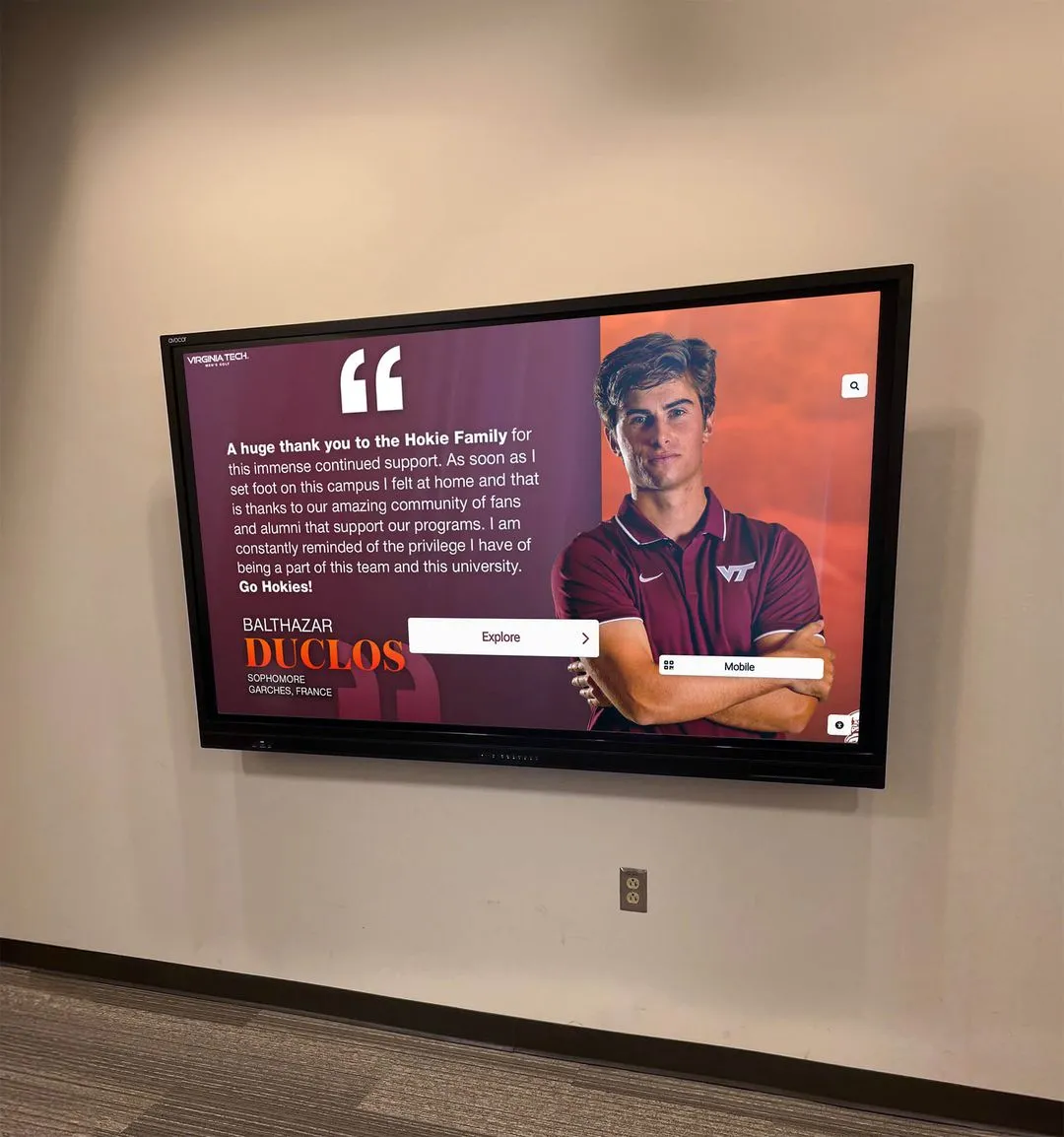
Well-designed recognition environments invite visitors to engage with achievement history — physical artifacts anchor the space while digital layers provide unlimited depth
Frequently Asked Questions
What is the difference between a medal display cabinet and a trophy display cabinet?
Medal display cabinets are typically designed to show individual medals — usually hung on hooks, laid flat behind glass, or mounted on fabric-backed panels. They work well for athletic department medal collections from track meets, swim meets, and tournaments where individual medals accumulate quickly. Trophy display cabinets are designed for upright three-dimensional hardware and typically have deeper shelves to accommodate varying heights and bases. Many schools use a combination: trophy cases for major team hardware and separate medal display panels or shadow boxes for individual medal collections. The choice between them is primarily driven by the physical form of the hardware being displayed rather than the type of achievement being recognized.
How many trophies fit in a standard school display cabinet?
A standard four-section trophy case measuring roughly 48 inches wide by 48 inches tall holds approximately 30 to 60 items depending on trophy size. Larger items like championship trophies from state competitions may take up the space of three or four smaller pieces. Schools with more than a decade of active athletic programs typically fill a standard case within five to eight years, which is why supplemental storage and digital archiving become necessary even for programs that are not trying to display their entire history.
Can a digital archive replace a physical trophy cabinet?
No — and most recognition professionals would not recommend attempting a complete replacement. Physical trophy cabinets serve ceremonial and prestige functions that digital screens do not replicate: the presence of an original championship trophy, the institutional authority of a well-lit display case in a school lobby, and the immediate legibility of a physical artifact to first-time visitors. Digital archives are best understood as a complement that handles what physical cases cannot: unlimited capacity, individual athlete records, searchable history, remote alumni access, and multimedia storytelling. The question is not whether to have a cabinet or an archive — it is how to divide responsibility between the two.
What should schools put in a physical trophy case vs. a digital archive?
The most practical division: use physical cases for flagship championship trophies, retired jerseys or numbers, and singular milestone artifacts that benefit from physical presence and permanence. Use digital archives for individual award recipients (MVP, academic honors, sportsmanship awards), full team rosters, career statistics, event photos, and any recognition that would otherwise be invisible because the cabinet is full. For hall of fame honorees, most schools do both — a physical shield or plaque in the hallway paired with a full digital profile including photos, career highlights, and video.
How do QR codes connect physical trophy cases to digital archives?
QR codes printed on small plates or stickers attached to trophy cases or individual plaques allow visitors to scan with a smartphone and immediately access the full digital record associated with that item. A championship trophy from 2007 might have a QR code that opens the full season record, team photo with named roster, game highlights, and coach’s notes — content that is impossible to display on a physical plaque but permanently available in the digital archive. This bridge between physical and digital is inexpensive to implement and significantly increases engagement from visitors who want more than a name and year.
What is the typical lifespan of digital recognition hardware?
Touchscreen kiosks and digital display screens used in school recognition environments typically have a hardware lifespan of five to seven years before requiring replacement, though the underlying content management software and cloud-based archive can persist indefinitely. Schools often plan hardware refreshes on the same cycle as other AV equipment. The content itself — photos, rosters, statistics, inductee profiles — migrates to new hardware without loss when platforms use cloud-based storage rather than local device storage.
How do schools manage content for a digital archive without a dedicated IT team?
The best digital recognition platforms are designed for non-technical users: coaches, athletic directors, and administrative staff who do not have IT backgrounds. Cloud-based systems with browser-based content management — similar in complexity to updating a school website or social media page — are the practical standard. Staff add new inductees, upload photos, and update records through simple forms; the platform handles display formatting, mobile optimization, and hardware synchronization automatically. Schools considering digital recognition systems should evaluate content management ease alongside hardware quality, since a system that requires technical staff for routine updates will quickly fall behind.
Key Takeaways
Physical medal and trophy display cabinets remain the right home for flagship championship hardware, original artifacts, and the ceremonial recognition elements that define a program’s identity in a building. They require no ongoing power or software, present original objects with appropriate authority, and communicate achievement to first-time visitors in an immediately legible way.
Digital archives handle what physical cases cannot: unlimited recognition capacity, individual records with photos and statistics, searchable history spanning decades, remote access for alumni, and the multimedia storytelling that transforms a name-and-year trophy into a narrative current students actually engage with.
The programs that get the most from their recognition investments are those that treat both formats as essential layers rather than competing choices — keeping physical cases for the artifacts that belong under glass, and building digital archives that ensure every deserving individual gets recognized regardless of how full the cabinets are.
For programs evaluating top tools for interactive hall of fame displays, the range of available platforms now covers everything from basic cloud archives to fully installed touchscreen environments — and identifying which tier matches your recognition goals and facility context is the right starting point for any upgrade conversation.

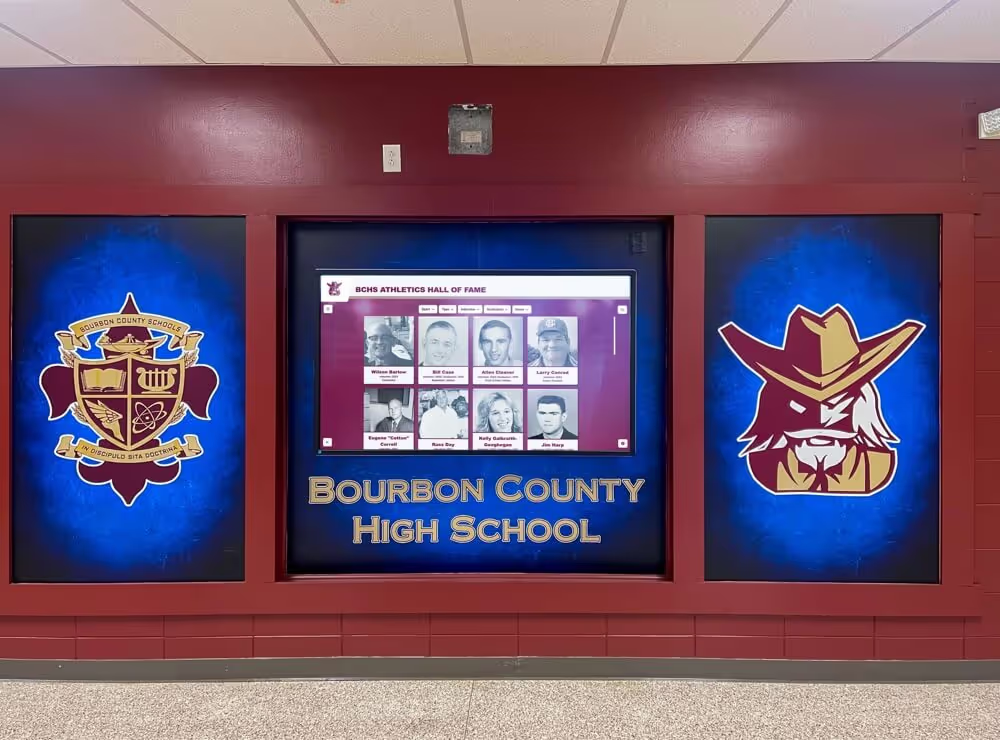
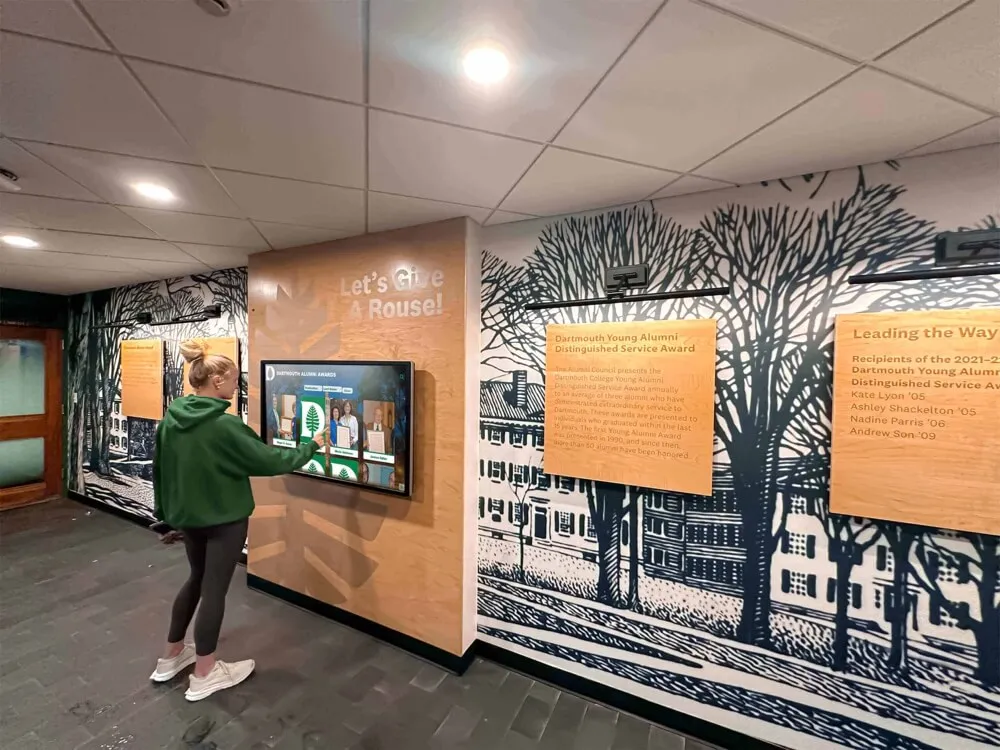
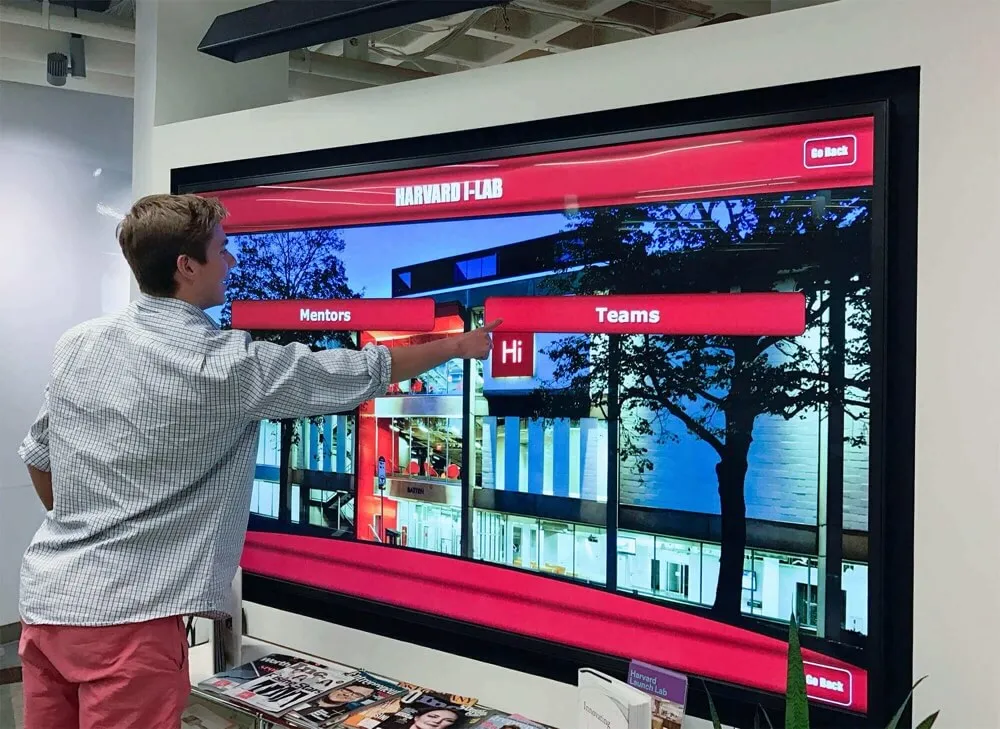
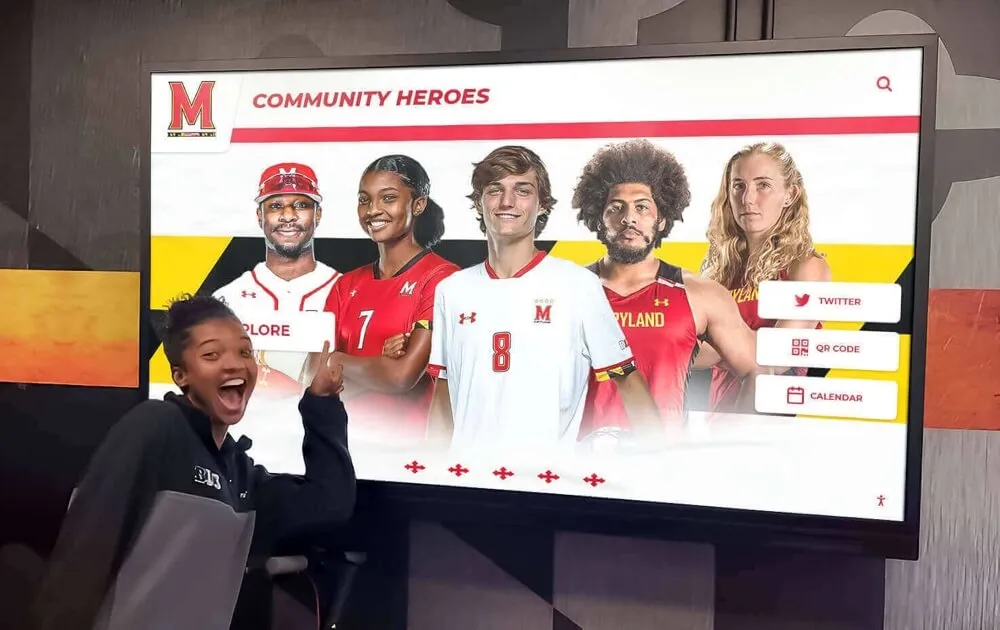
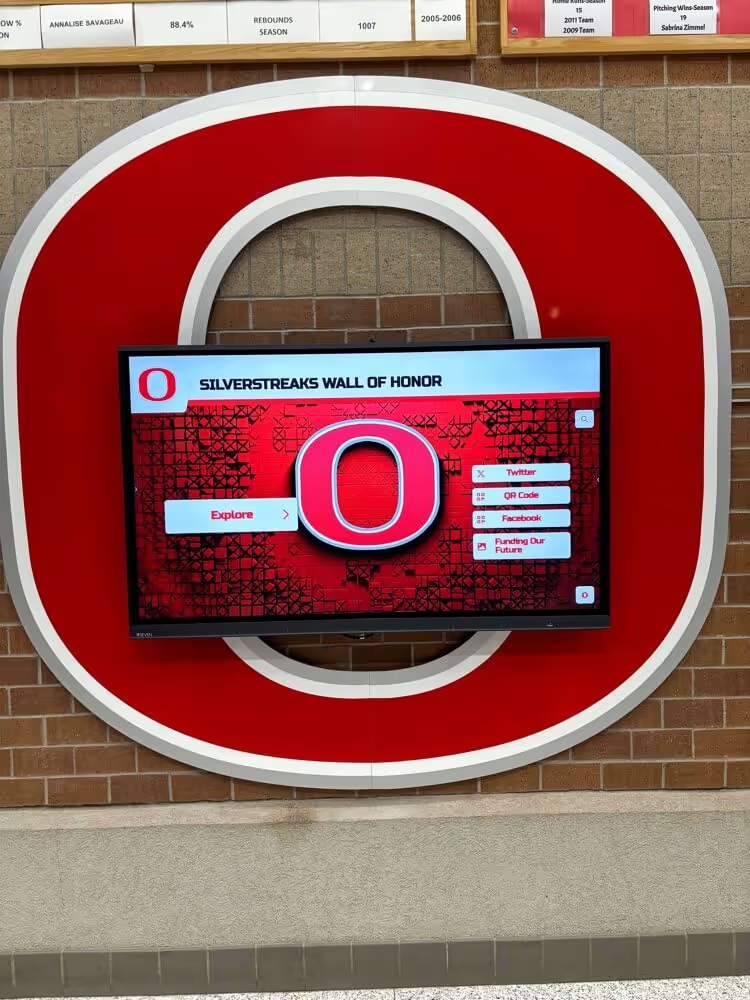
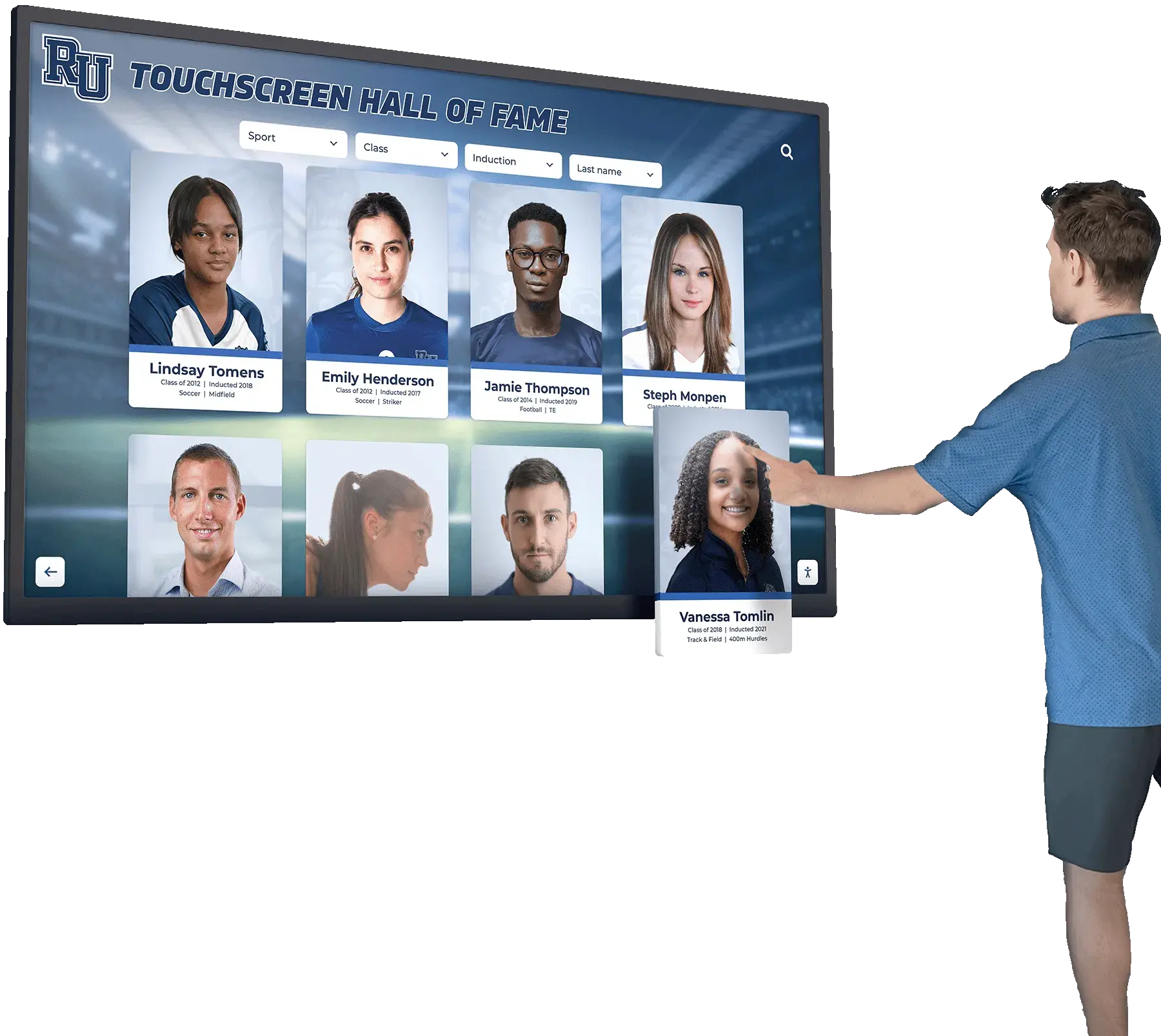
Interactive digital displays give every visitor the ability to search, browse, and discover achievement history — a capability no physical trophy case can provide
Ready to Extend Your Trophy Case into a Full Recognition System?
Rocket Alumni Solutions designs touchscreen walls of fame and digital record boards that work alongside your existing trophy cabinets — giving your school unlimited recognition capacity, searchable alumni archives, and cloud-based content management that any staff member can update in minutes.
Explore Rocket Alumni Solutions