

The girls on your cross-country team ran in every weather condition last fall. Your swimmers arrived before sunrise four mornings a week. Somewhere in a filing cabinet or a yearbook stack, a photograph shows the first girls’ team your school ever fielded in a sport that today fills the stands.
National Girls and Women in Sports Day is an occasion to bring those stories together — the current season and the historical archive, the all-conference honoree and the sophomore who attended every practice. A school digital display can hold all of it in one place, accessible to every student who walks past it and every family who visits for a game.
This guide gives athletic directors a practical plan for building a NGWSD display collection that celebrates every program and every participating sport — verified, community-approved, and ready before February.
What Is National Girls and Women in Sports Day?
The Women’s Sports Foundation organizes National Girls and Women in Sports Day to celebrate athletes, coaches, and leaders in girls’ and women’s sports across the country. The WSF’s NGWSD Get Involved page invites schools and community organizations to host their own events in recognition of the occasion. The About NGWSD page provides background on the celebration’s purpose and its place in the broader sports community.
The next observance is currently listed by the WSF as February 3, 2027 — check the organizer’s page before finalizing your school’s calendar, as the listed date may be updated. WSF also notes that communities whose schedules don’t align with the national date are still welcome to celebrate: a late-January recognition week or a March assembly in honor of the season just past carries the same spirit.

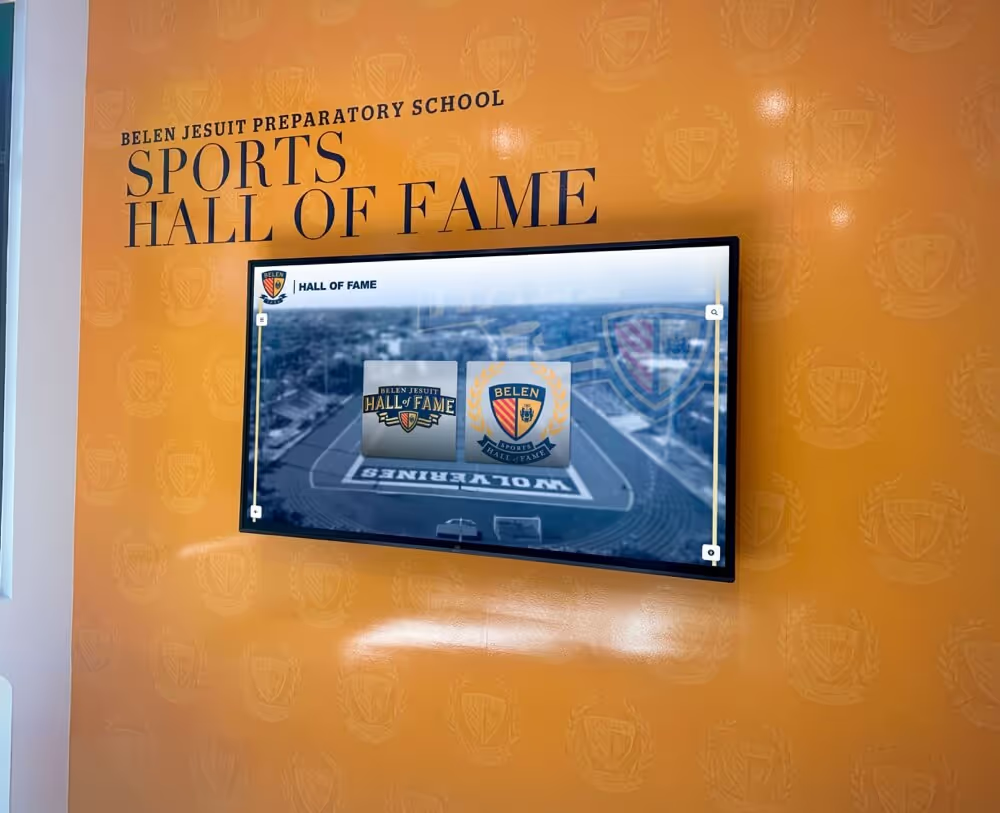
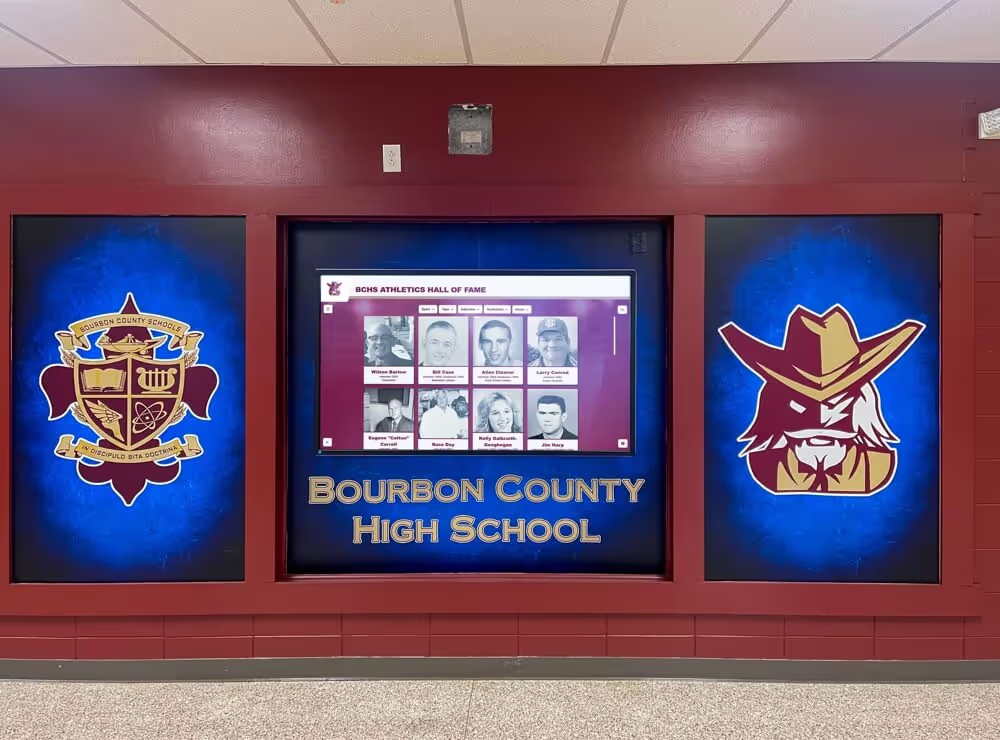
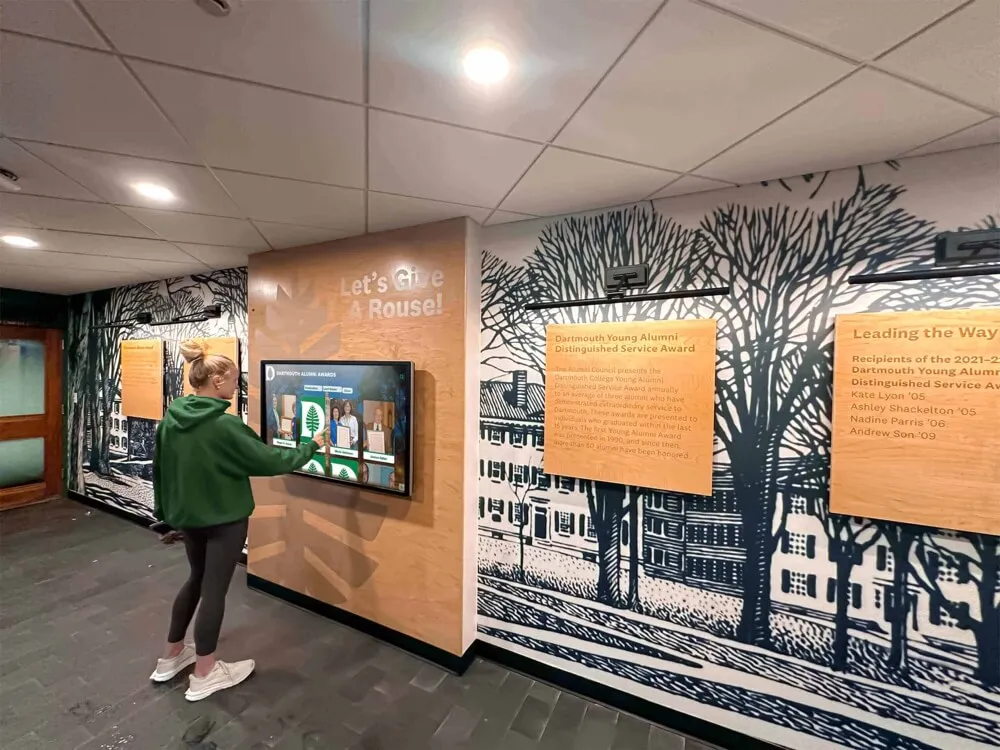
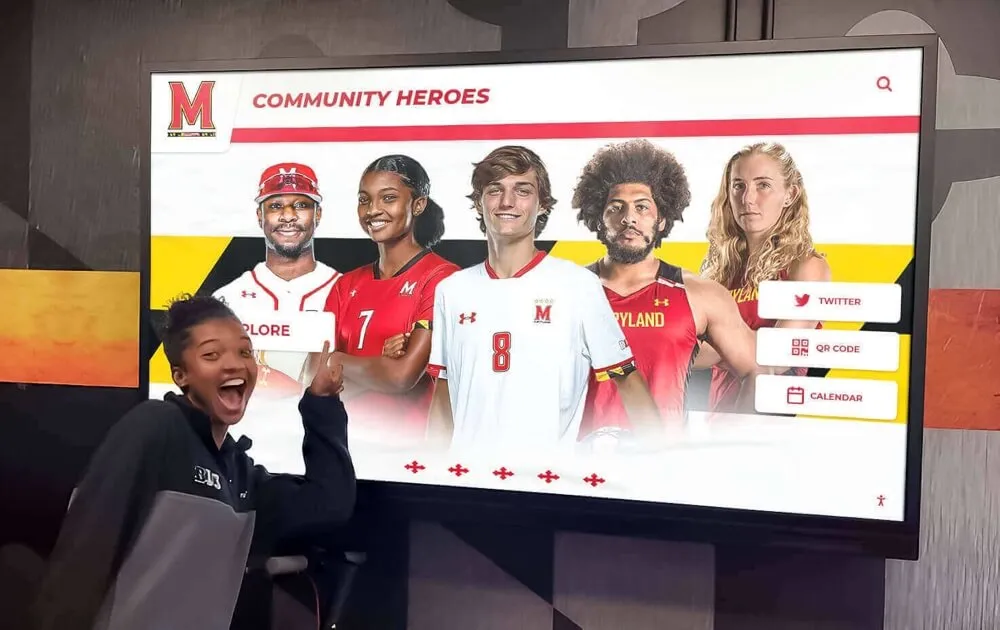
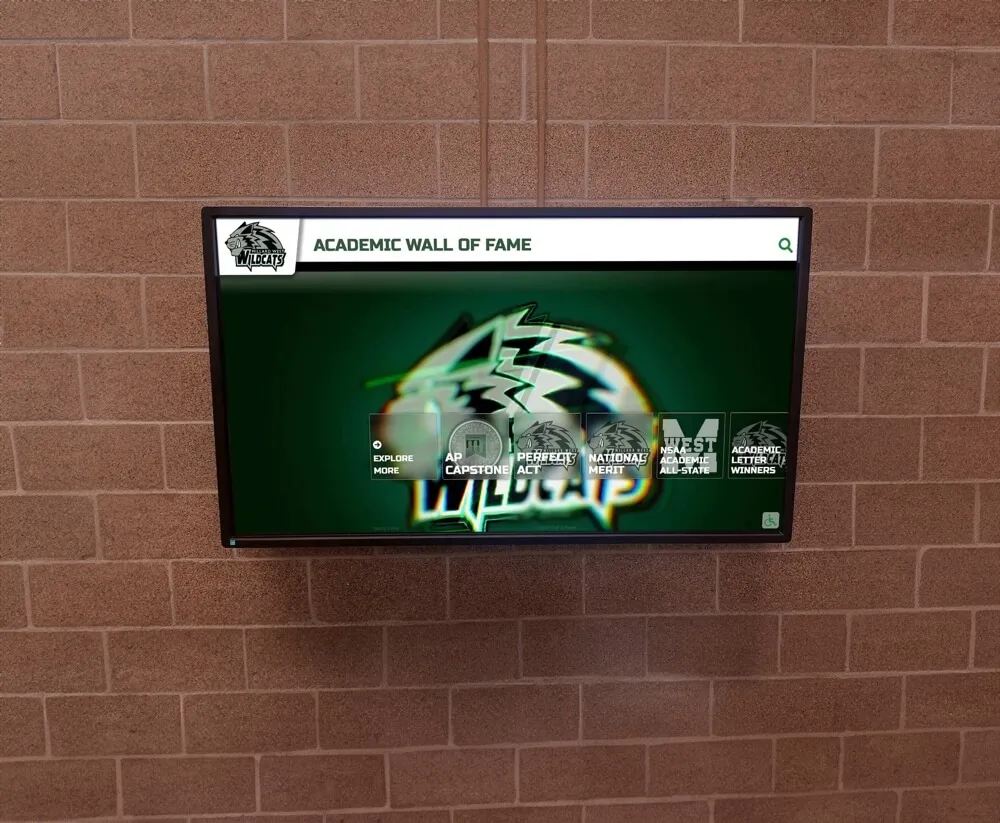
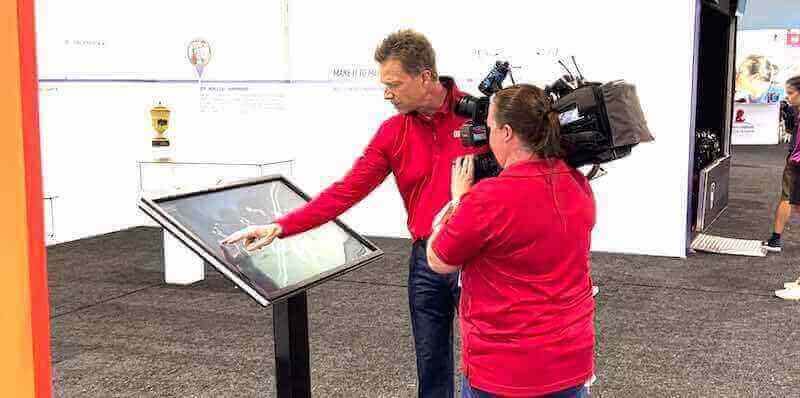
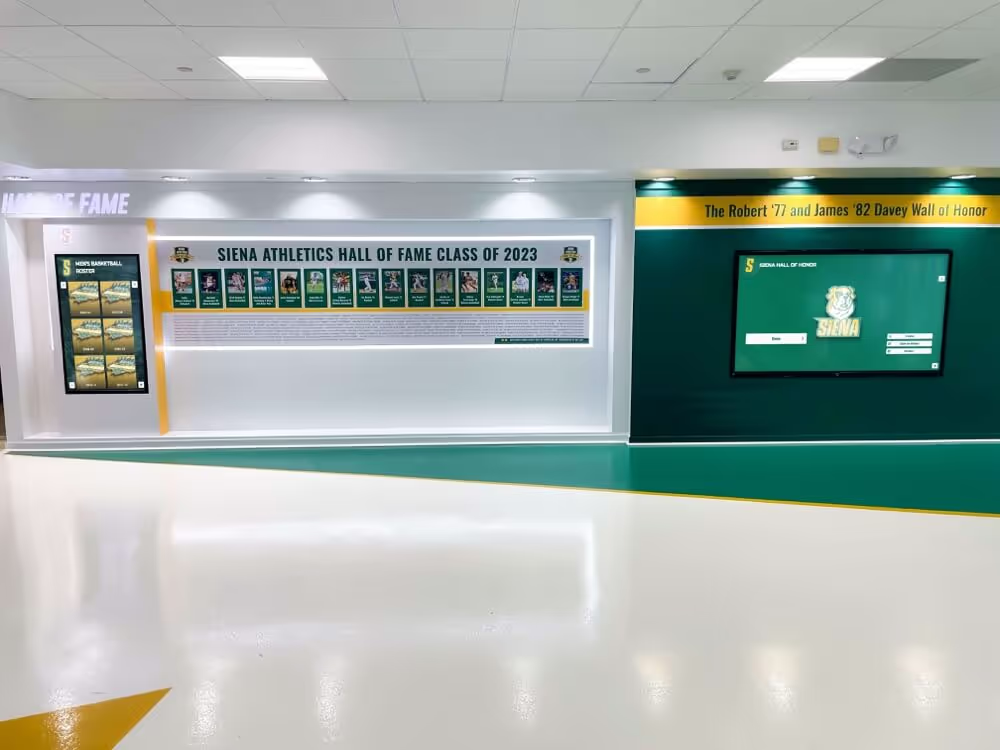
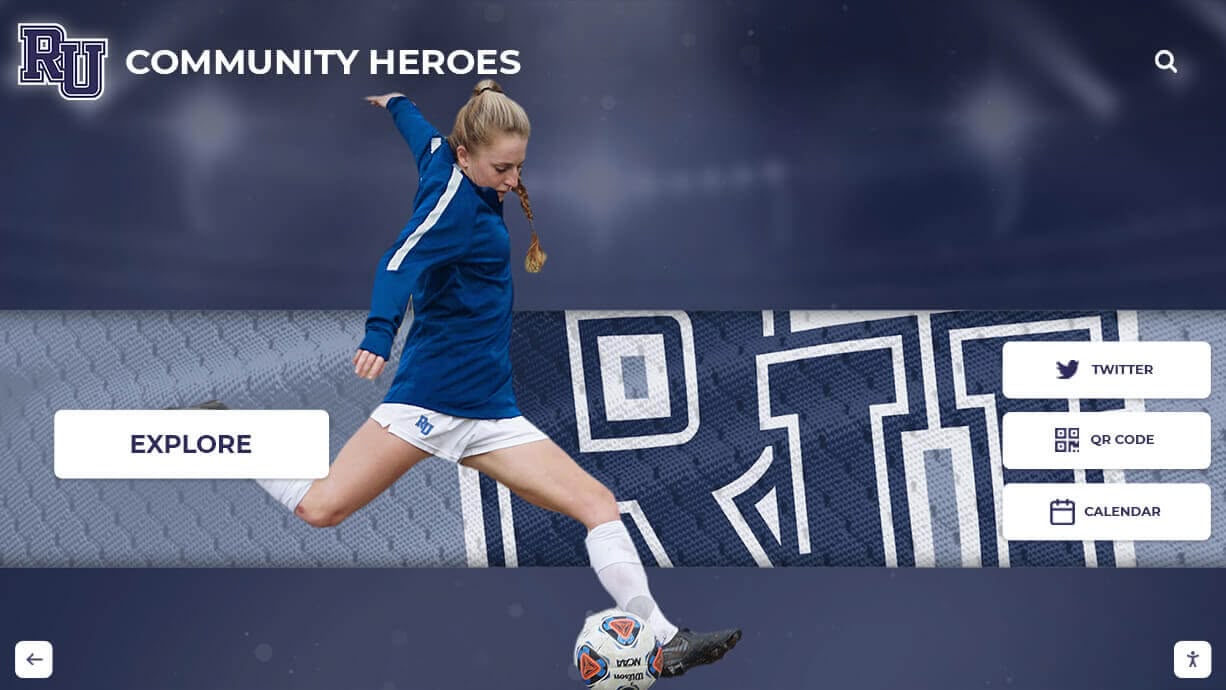
Community recognition displays can celebrate female athletes across all sports, from current rosters to documented program history
Why a Display Collection Makes NGWSD Last Longer
A ceremony lasts an hour. A well-built display creates a record that students discover during lunch, families browse before games, and alumni share years later.
Building a NGWSD display collection doesn’t require new hardware or a full production team. If your school already uses a digital recognition system, the content plan below guides what to gather and how to organize it. If you’re planning your display setup, the same framework applies to a physical wall, a slide deck, or a hallway bulletin board — digital displays simply give you more room and make it easier to update content over time.
One rule throughout: participating sports include every program that includes female athletes at your school, not only winter-season teams, state champions, or programs with recent headlines.
Eight Display Ideas for National Girls and Women in Sports Day
1. Team-by-Team Gallery
Collect: A current-season team photo, the sport’s roster, the head coach’s name, and this year’s schedule or season record.
Why it belongs: Every team that includes female athletes deserves visibility — not just those that won championships or advanced to postseason play. A sport-by-sport gallery communicates that the school celebrates participation as well as results. A team without an available photo can still have a panel listing the team name, coach, and season dates.
Before publishing: Confirm that families have provided standard school publication consent for any team photos. Image alternatives work well for any program where photos are unavailable.
2. Athlete-Approved Reflections
Collect: Brief, voluntary statements from current athletes about what their sport means to them. Use a written opt-in — not a class assignment or team meeting requirement.
Why it belongs: Student voices make recognition feel real. A short statement from a goalkeeper about pregame preparation or a distance runner’s reflection on her training loop connects a name to a person in ways that statistics cannot.
Before publishing: Verify name spelling and any pronouns the athlete has offered in their opt-in form. Do not paraphrase in ways that change meaning. Athletes who decline or don’t respond should not have entries — participation must be fully voluntary.
3. Coach and Mentor Spotlight
Collect: A current photo (with the coach’s consent), name, sport, current season, and a brief biography drawn from publicly available school materials.
Why it belongs: NGWSD explicitly honors coaches and mentors alongside athletes. A spotlight on a coach who has built a program over many years — or launched a new team from scratch — connects current athletes to the work that came before them.
Before publishing: Confirm name spelling, any pronouns the coach has offered, and current title before anything is published.
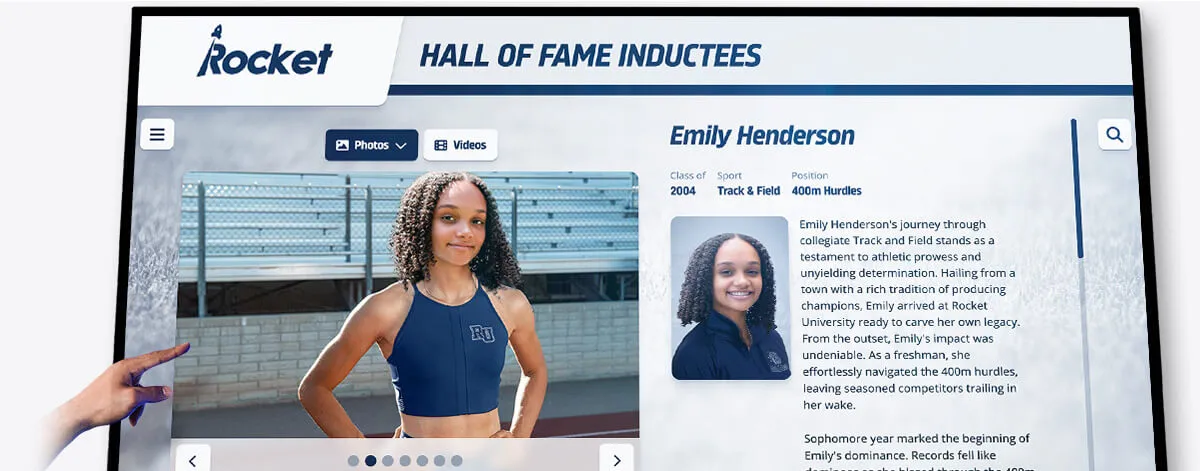
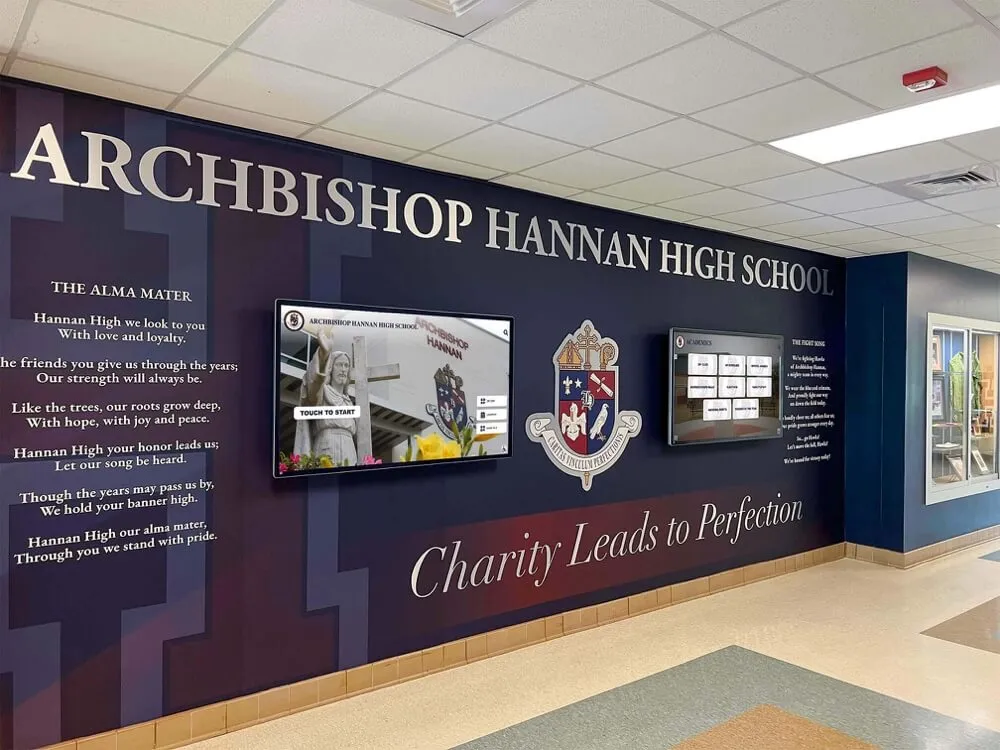
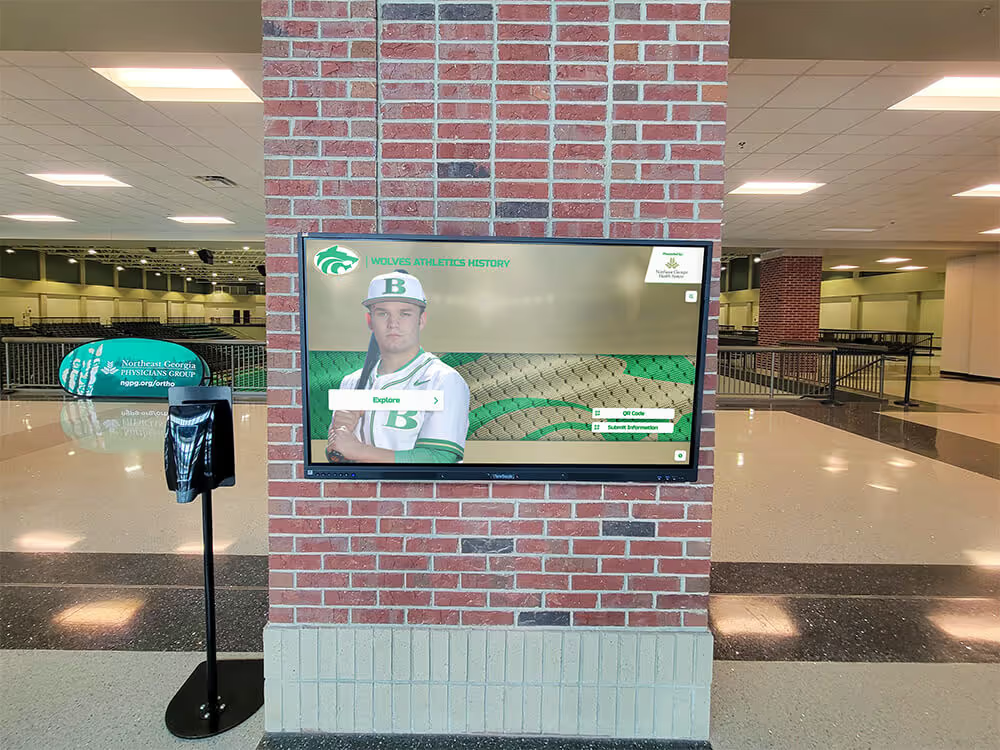
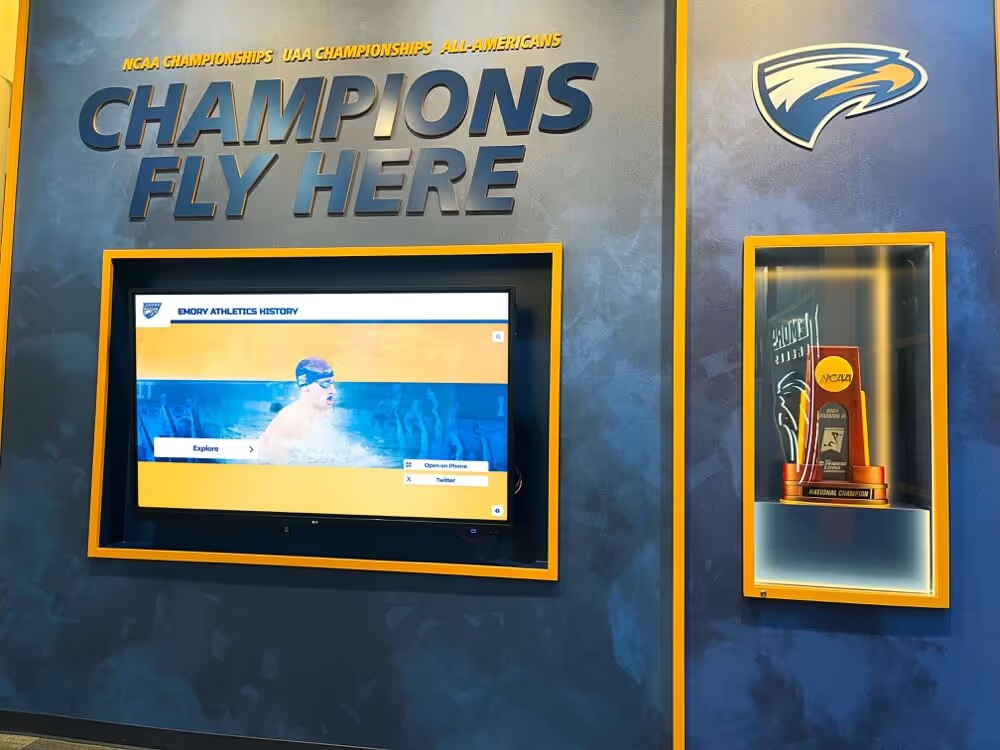
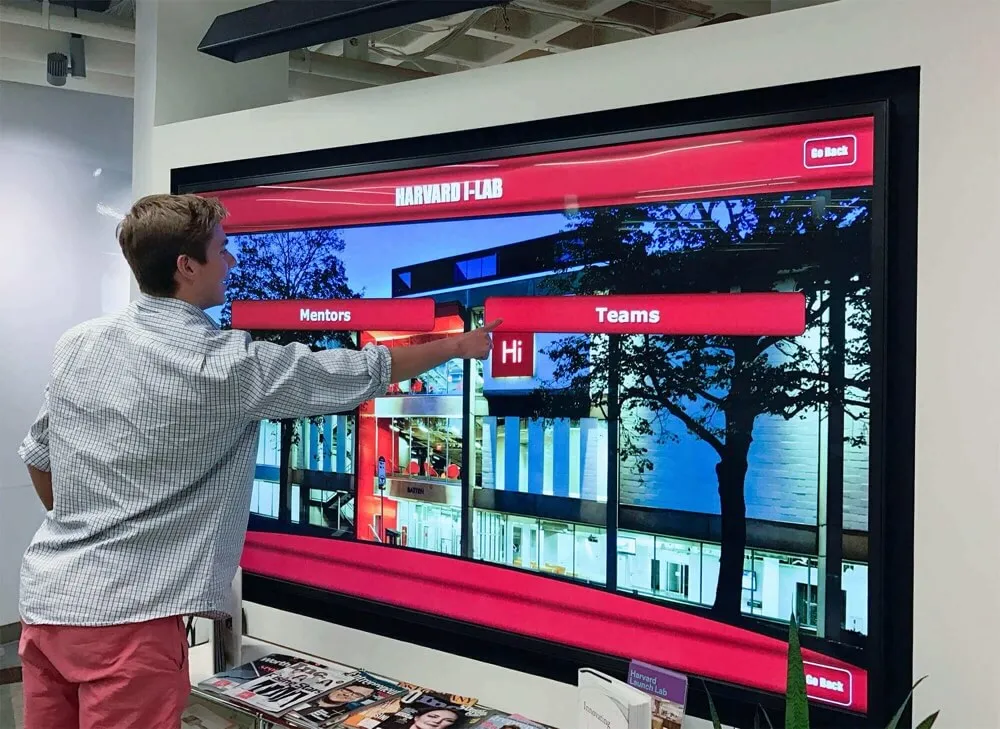
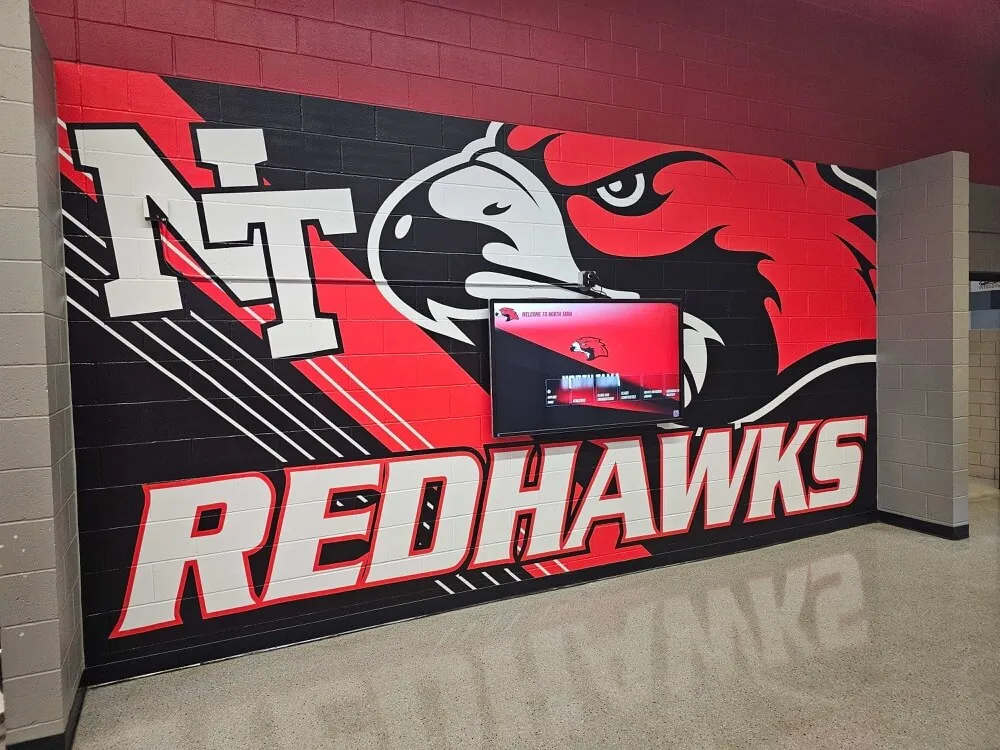
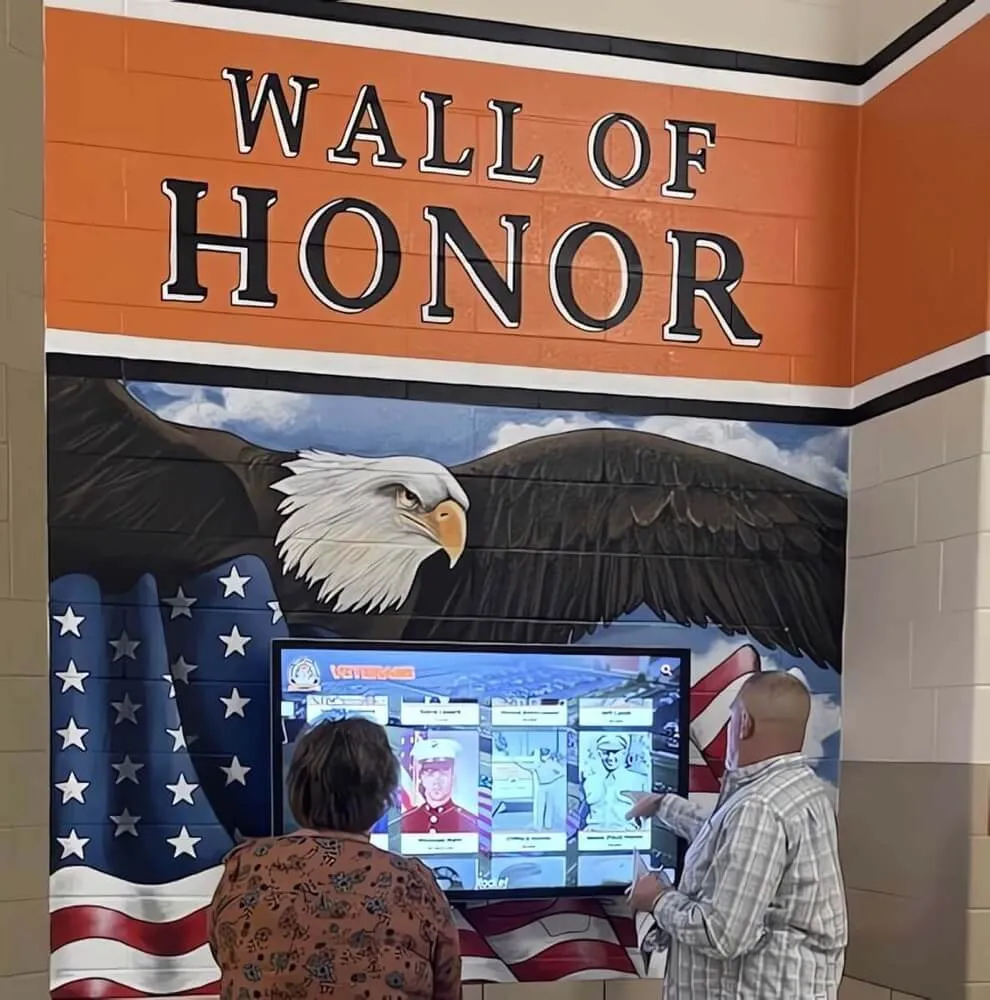
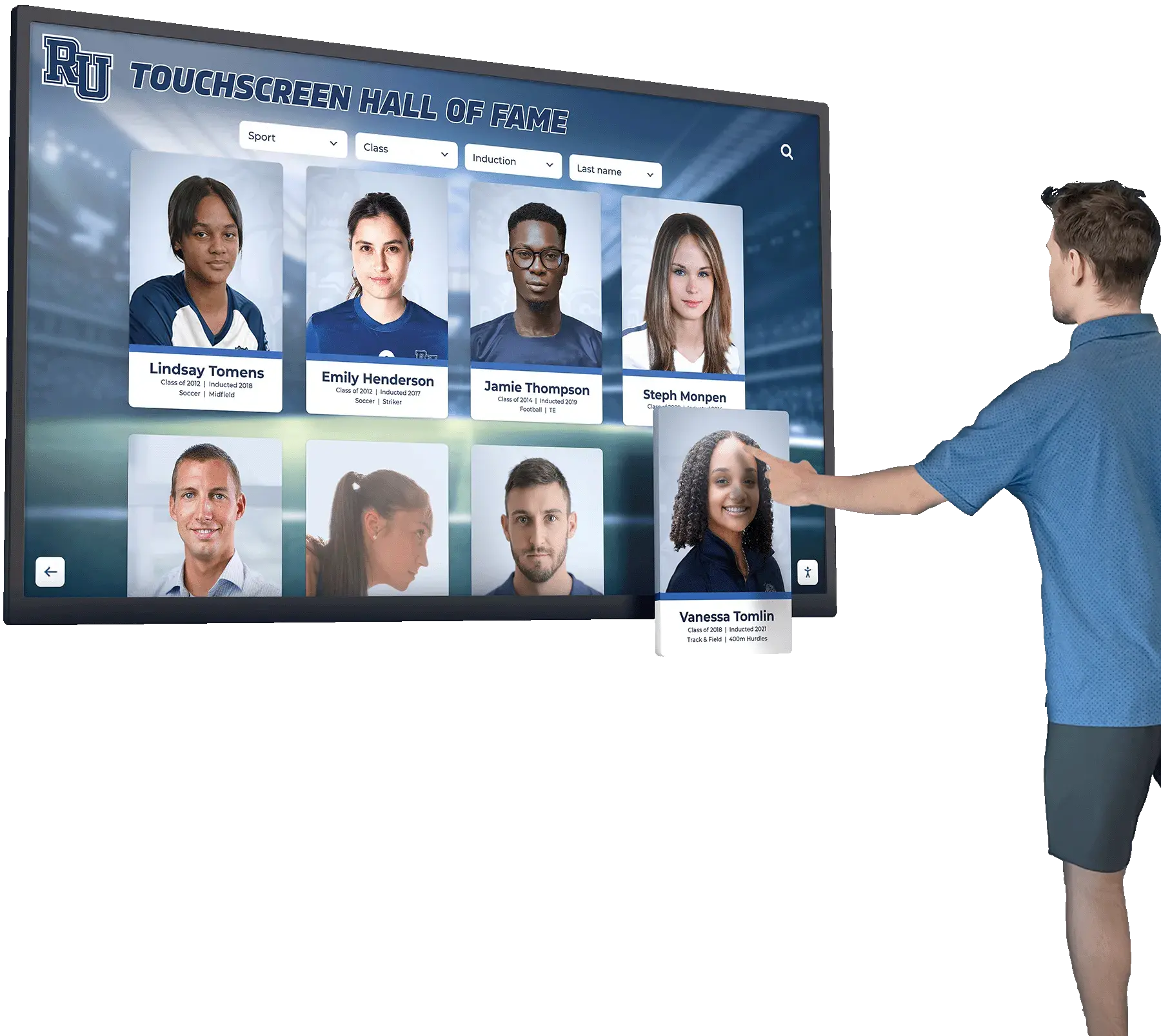
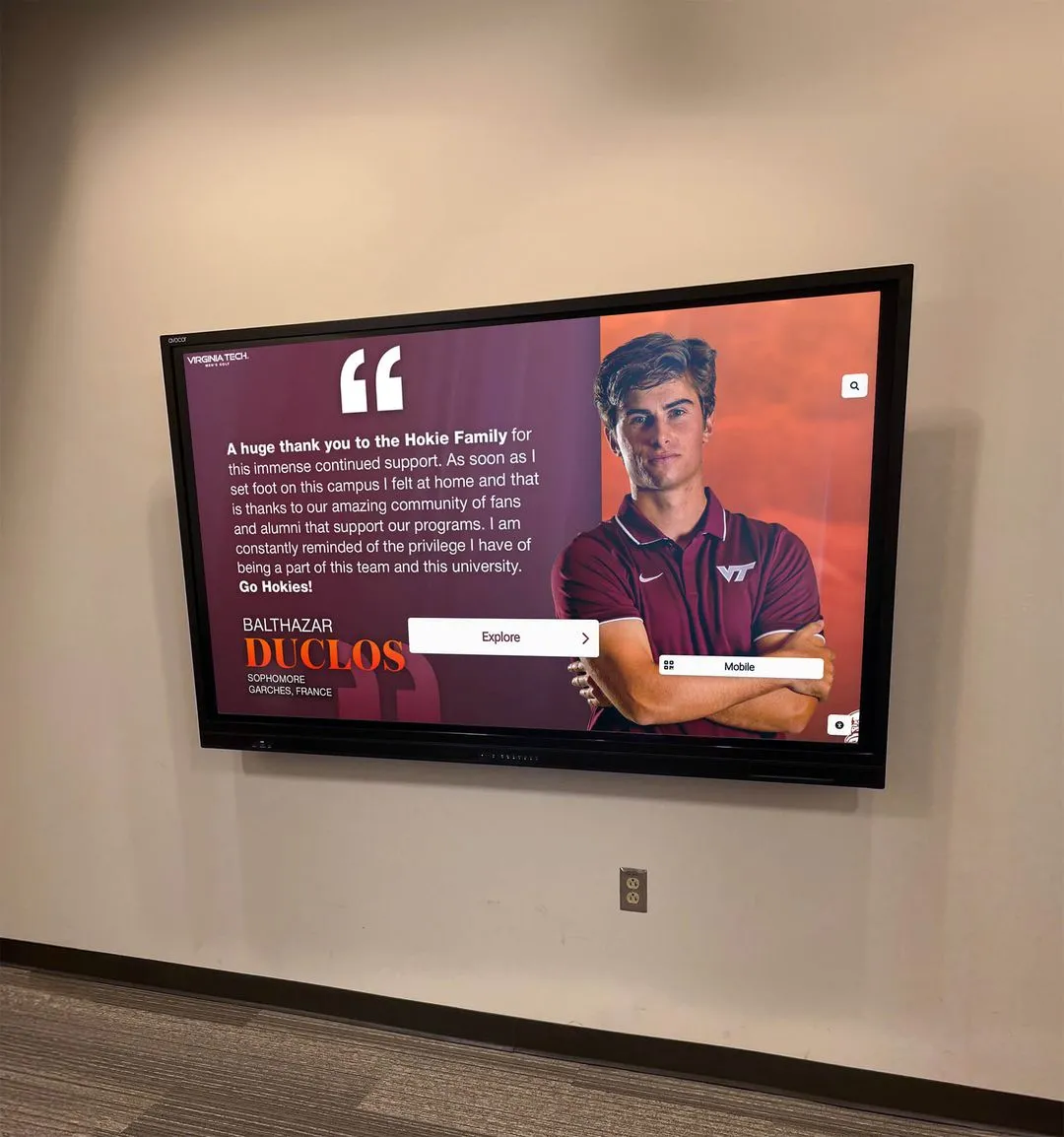
Touchscreen recognition panels can feature individual athlete profiles alongside verified honors and season records
4. Documented Local History Timeline
Collect: Verifiable dates from your school’s own records — when each girls’ program was added, the name of the first coach on file, early season records where documented. Pull from yearbooks, athletic department files, and school archives.
Why it belongs: A timeline grounded in the actual archive shows current athletes that the programs they compete in were built by people who came before them. That connection belongs to your school community, and it’s yours to share.
Important: Distinguish carefully between what records confirm and what seems likely. A gap in the yearbook record doesn’t prove a team didn’t exist before a certain year. A photograph of an early team shows the team existed — not necessarily that it was the first. If records before a certain year are incomplete, say so on the panel: “Records before [year] have not been located.” Do not call someone the “first” unless a source document supports that specific claim.
5. Verified Earned-Honors Collection
Collect: Conference, district, regional, or state honors that female athletes or teams have received in documented seasons. Pull from official conference lists or school records — not from memory.
Why it belongs: Recognizing earned honors — all-conference selections, academic award recipients, individual titles — gives those achievements a permanent home beyond a framed certificate in a locker room.
Important distinction: Broader participation recognition in a NGWSD display is not the same as all-star selection. If a display panel is labeled “All-Stars” or uses similar language, include only athletes who received that designation through an official competitive process. A general recognition panel for all participants in a sport and season is its own entirely appropriate category — just label it accurately. For guidance on recording earned all-star honors in a permanent display, see this overview of recording earned women’s soccer all-star honors in a permanent display.
6. Student-Curated Story Collection
Collect: Short written pieces submitted by student journalists, yearbook staff, or individual athletes describing a team tradition, a meaningful moment, or a memory from the current season.
Why it belongs: Peer-created content gives students ownership of the story. A junior writing about a teammate’s comeback game produces something an administrator’s writeup cannot replicate.
Before publishing: Review submissions for accuracy. Confirm that any athletes mentioned by name are aware of and comfortable with the content. Apply the same name, pronoun, and permissions checks used for other panels.
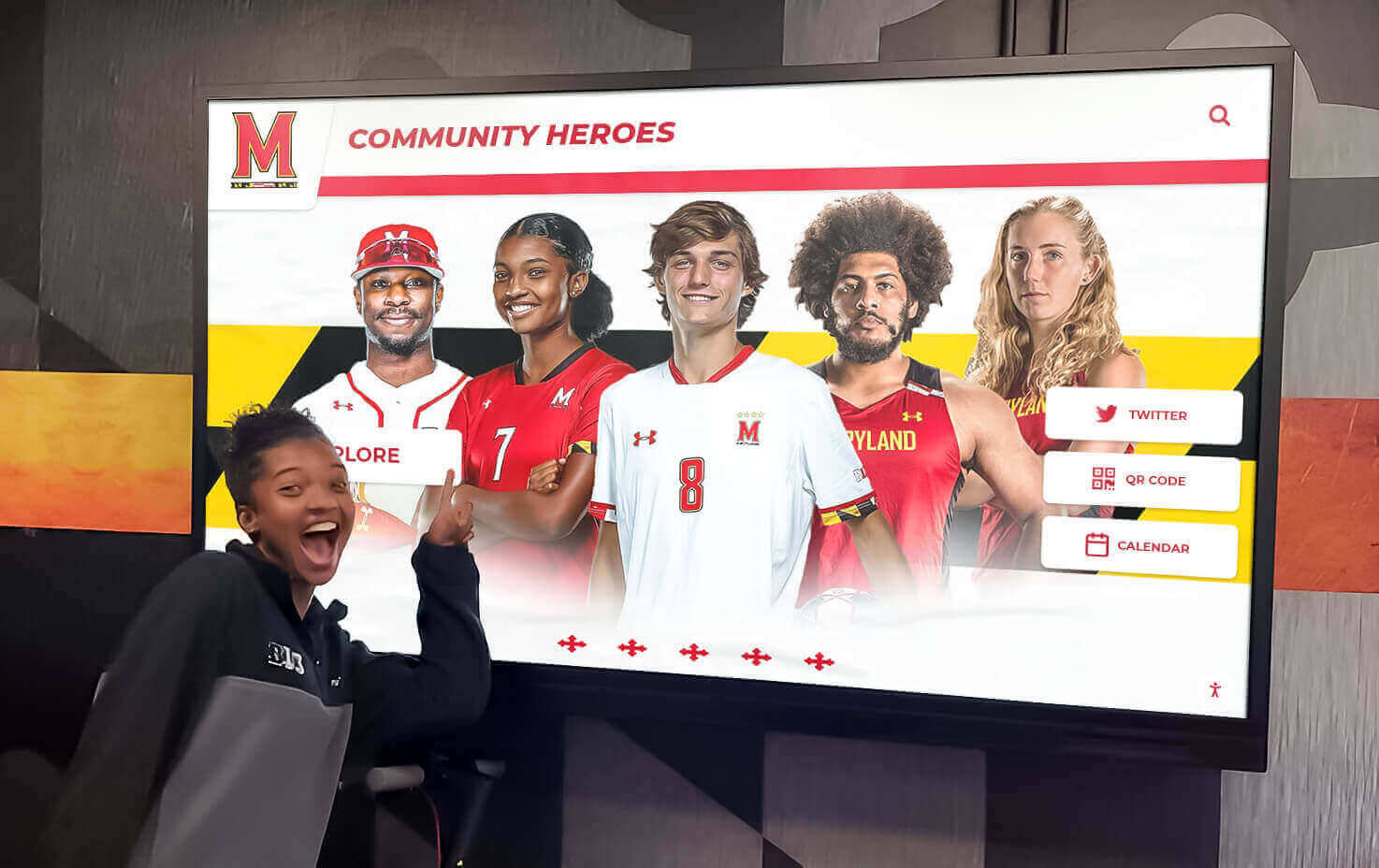
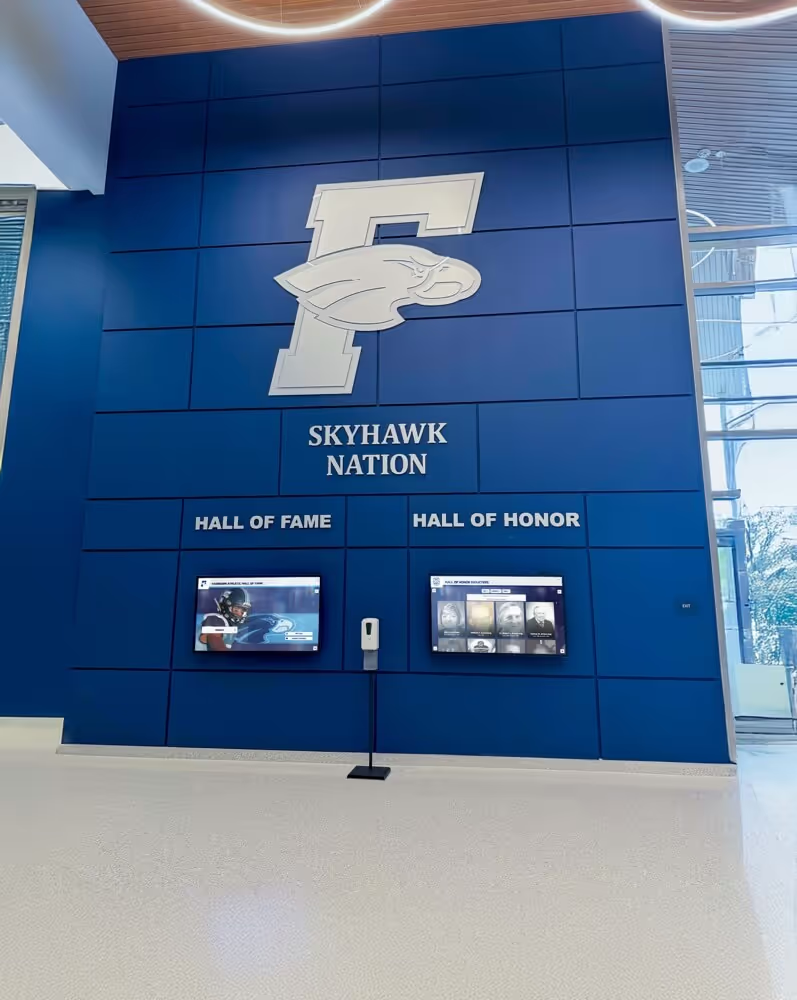
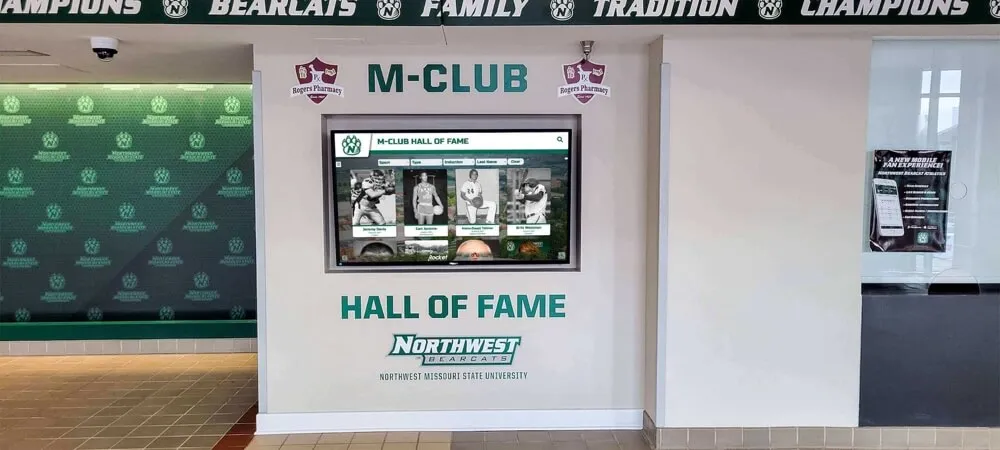
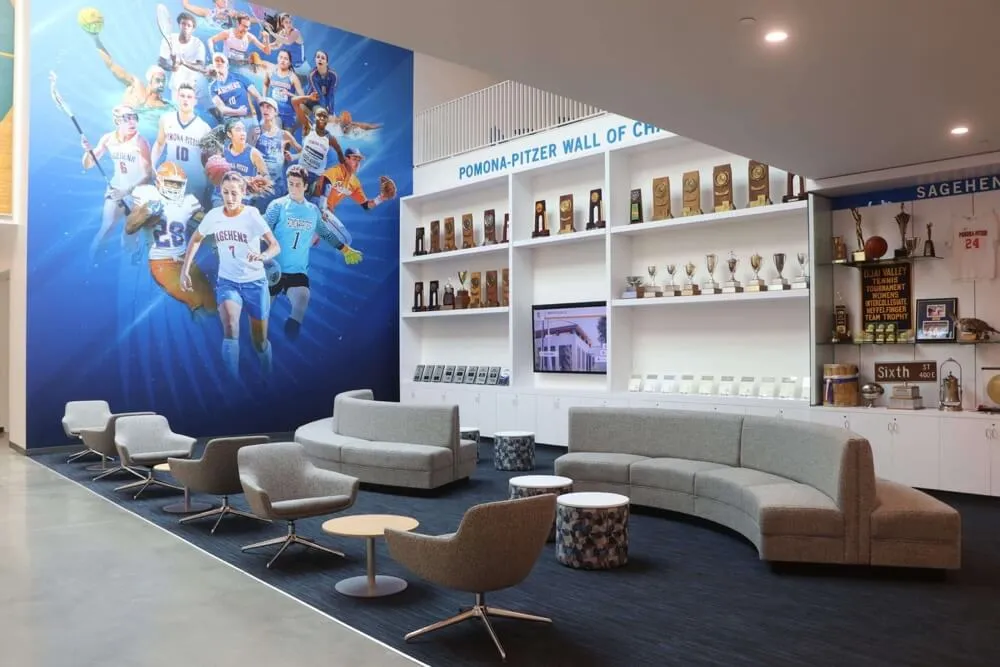
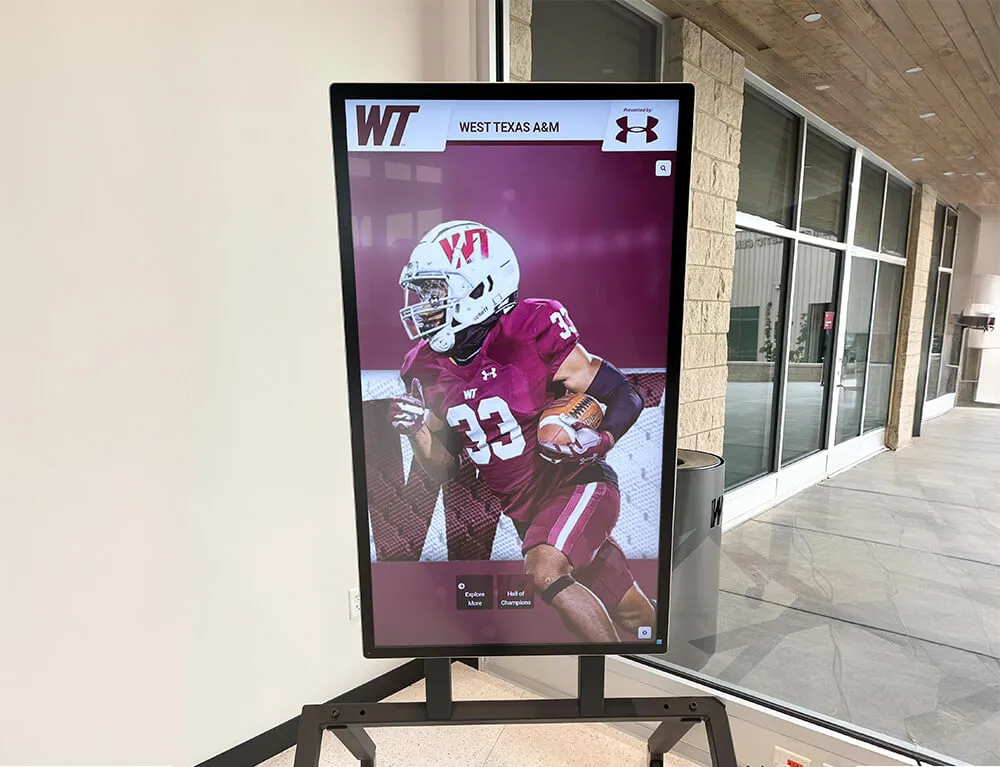
Student-facing displays encourage exploration of school athletic history and current program recognition
7. Event Information Panel That Expires
Collect: Your school’s planned NGWSD celebration — an assembly, recognition ceremony, pep rally, or community game — with confirmed date, time, location, and logistics.
Why it belongs: A display isn’t only a historical record; it’s a communication tool. An event panel tells students and families what the school is doing to mark the occasion and drives attendance.
Plan for expiration: Assign a staff member to archive or remove this panel after the event date. A February event panel still active in March signals that no one is tending the content — and it crowds out the permanent archive that should take its place.
8. Lasting Annual Archive
Collect: After each observance, a dated summary panel capturing who was recognized, which teams participated, and what milestones were noted.
Why it belongs: Schools that build year-over-year archives turn a single celebration into a growing institutional record. An athlete browsing the display in a future year can trace how the school’s recognition of girls’ and women’s athletics has evolved over time. That continuity is itself a form of respect.
Adaptable Planning Table
The table below is a planning scaffold — a starting point, not a finished display. Fill in each column with verified information before any panel goes live. No entries represent a real school, student, athlete, or statistic.
| Story / Topic | Verified Name, Team, Season | Source Document | Approved Image or Text-Only Alternative | Proposed Screen Copy | Staff Owner | Review / Archive Date |
|---|---|---|---|---|---|---|
| Team gallery — [Sport] | [Team name], [Season year] | Athletic office roster | Team photo (consent confirmed) or sport name / season text panel | “[Sport] — [Season] — [Coach Name], Head Coach” | [AD / coach] | After season ends |
| Athlete reflection | [First name, grade] — [Sport] | Signed opt-in form | Headshot (permission confirmed) or initials-only text panel | [Student statement, approved as submitted] | [Advisor / coach] | [Student graduation year] |
| Coach spotlight | [Coach name] — [Sport] | School directory / biography | Headshot (permission confirmed) or name / title text panel | “[Coach name] has led [sport] since [verified year].” | [Athletic director] | Annual review |
| Local history milestone | First documented girls’ [sport] team | Yearbook / archive record | Historical team photo or text-only panel | “The first documented girls’ [sport] team competed in [verified year].” | [Archivist / AD] | Ongoing archive |
| Earned honors | [Athlete name] — [official award] — [season] | Official conference / state record | Portrait (permission confirmed) or name panel | “[Name] earned [official award title], [season].” | [Coach] | After season confirmed |
| Student story | [Topic] — by [student name] | Submitted piece, reviewed | Accompanying photo or text-only | [Excerpt, approved as submitted] | [Advisor] | After publication |
| Event panel | NGWSD celebration — [your school] | School calendar | School logo or generic graphic | “Join us [date / time / location].” | [AD / communications] | Day after event |
| Annual archive | NGWSD [year] Recognition | Completed display panels | Summary graphic or text panel | “In [year], [school] recognized…” | [Athletic director] | Archive after observance |
Preparation Timeline
Four to Six Weeks Before the Observance
- Confirm the WSF’s current listed date at womenssportsfoundation.org/get-involved/ngwsd/ before finalizing your school’s calendar.
- Decide which display sections to build this year and which to add in a future cycle.
- Identify a staff owner for each panel category.
- Pull verified historical records from the athletic archive, yearbooks, and conference records.
Two to Three Weeks Before
- Send voluntary opt-in invitations to athletes who may want to contribute reflections. Make explicit that participation is optional and has no effect on team standing, playing time, or any awards.
- Draft coach and mentor spotlight copy and share it with each named individual for review before anything is published.
- Confirm names, pronouns as offered, earned award titles, and dates for all records-based entries.
One Week Before
- Finalize panel content and confirm school publication permissions for all photos.
- Review legibility on all panels: font size, contrast, and caption availability for any audio content used in a ceremony.
- Build the event information panel with confirmed logistics.
- Assign a staff member to archive the event panel after the observance.
Day-of Review Checklist
Before the display goes live or the event begins:
- Check the WSF organizer’s current page to confirm the observance date hasn’t been updated.
- Verify that all named athletes opted in and that those who declined are not included.
- Confirm name spellings and any pronouns students provided in opt-in forms.
- Check that all dates, award titles, and team names match source documents.
- Confirm school publication permissions are on file for every photo in use.
- Use only institution-approved media — no unverified social media screenshots or unofficial images.
- Scan all panels for legibility: font size, contrast, and captions where needed.
- Confirm the event panel has an assigned archive or removal date.
- Note any missing records honestly on relevant panels rather than inferring facts.
These recommendations are practical guidance. They are not legal advice, ADA/WCAG compliance certification, or a substitute for your school’s specific media and privacy policies.
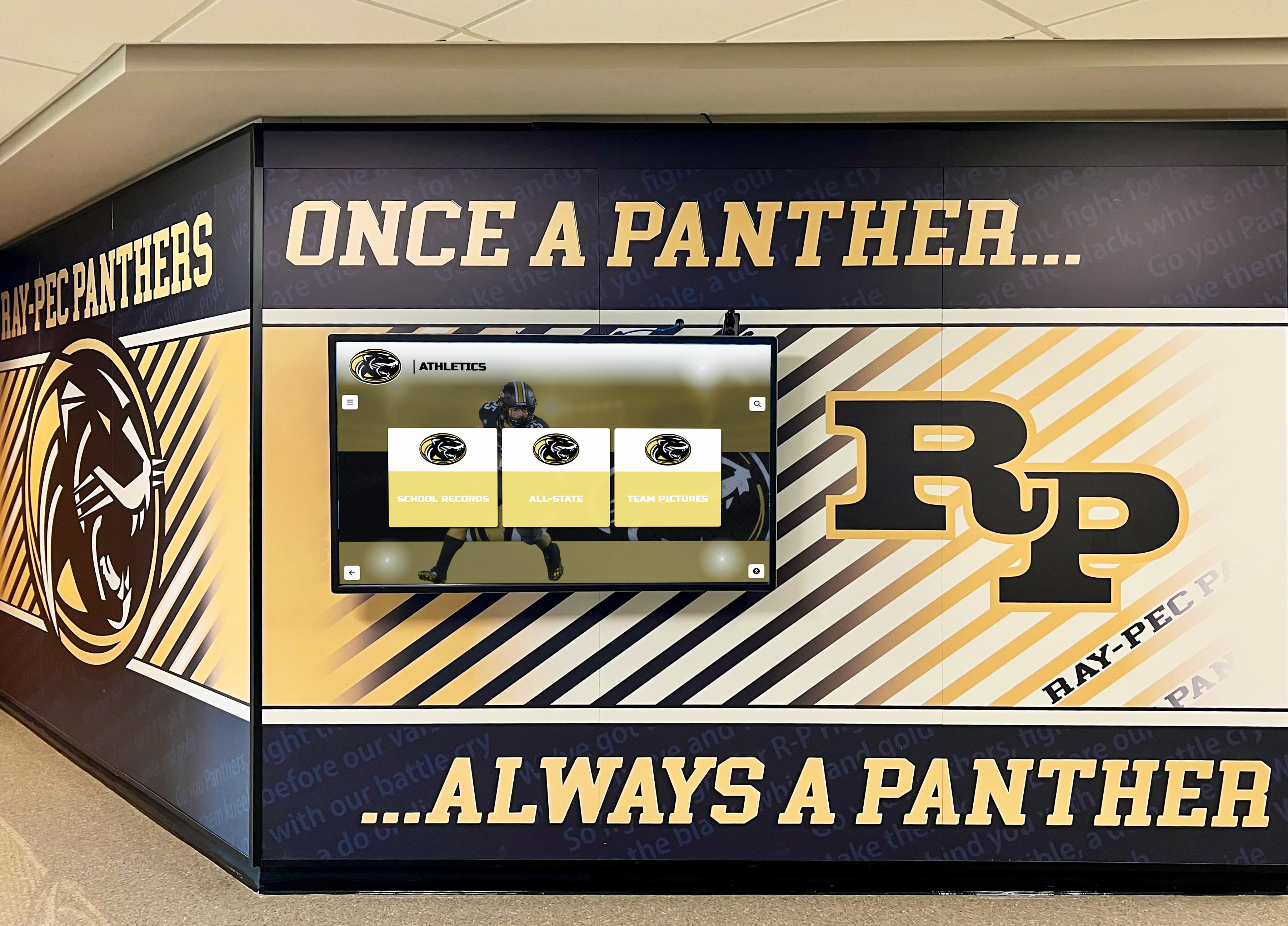
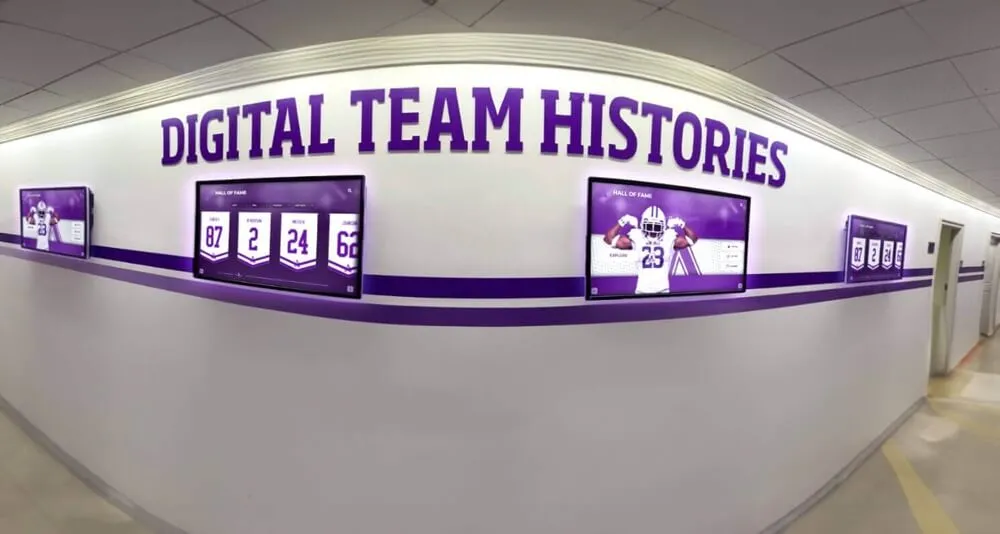
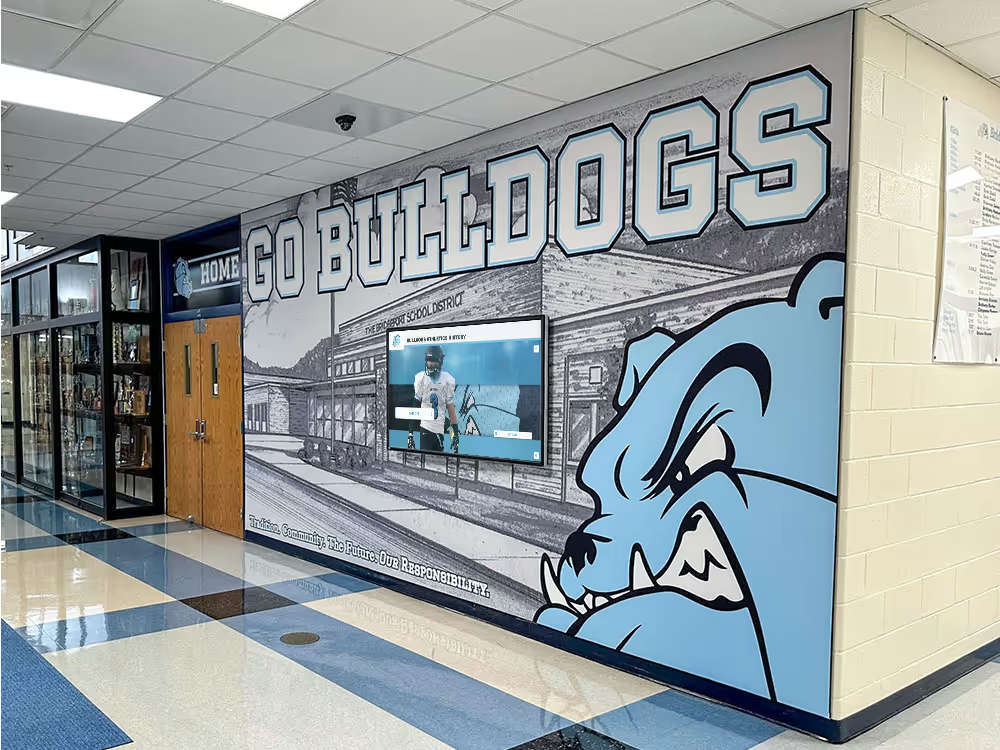
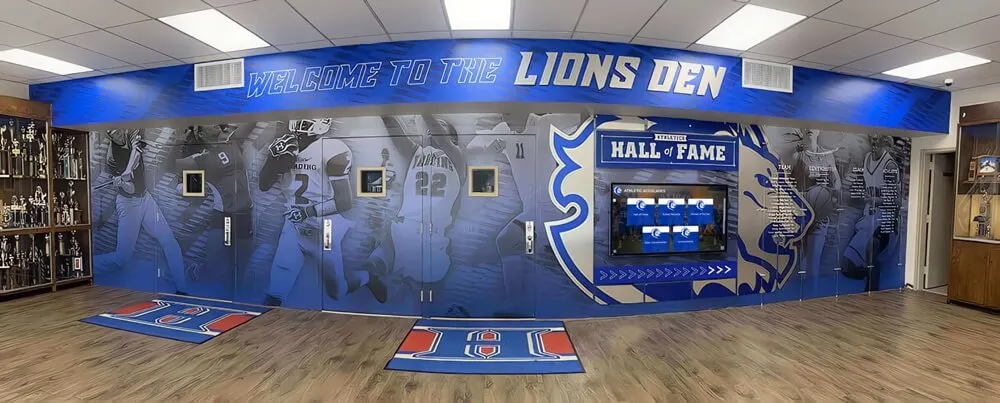
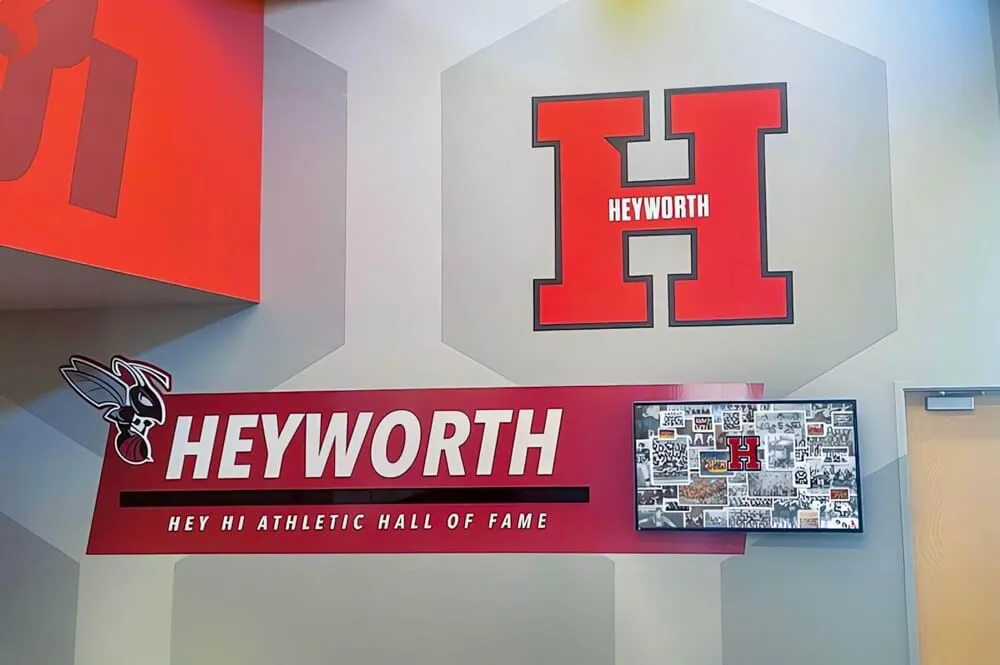
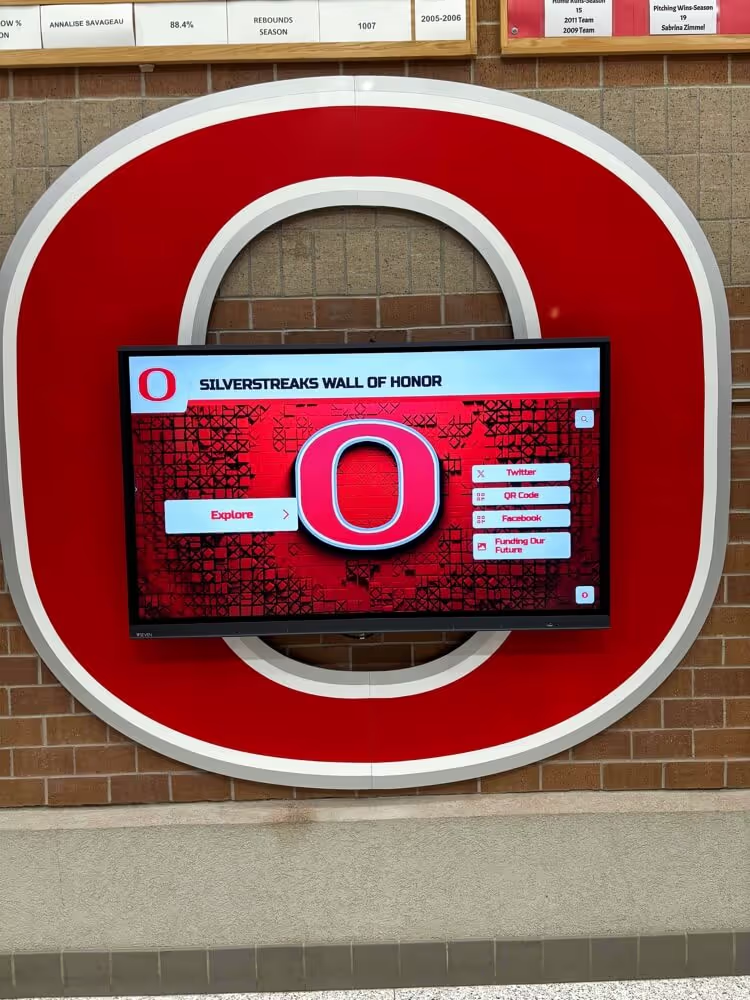
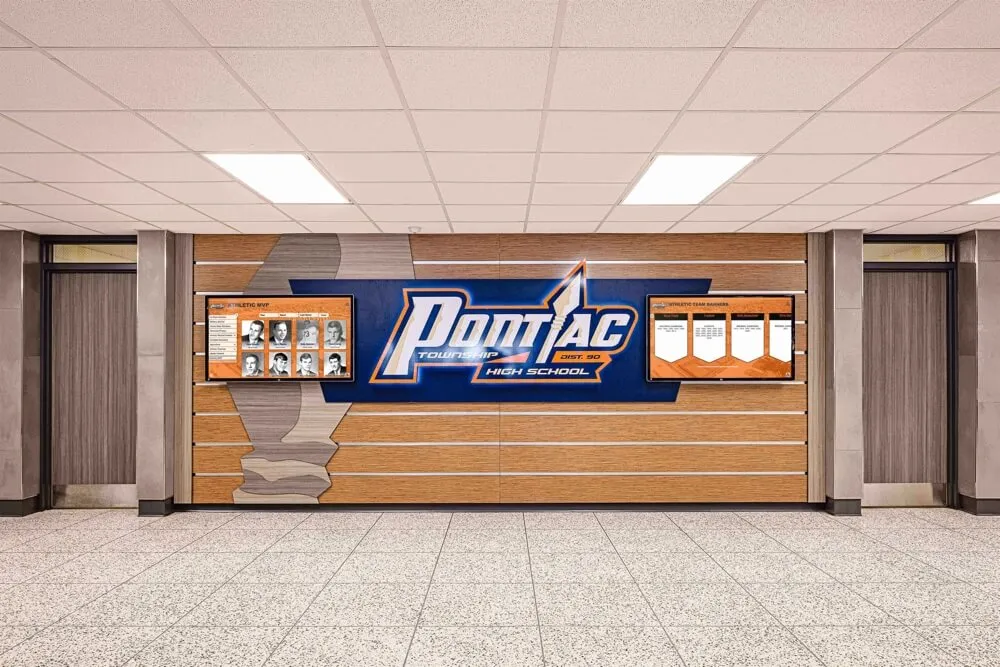
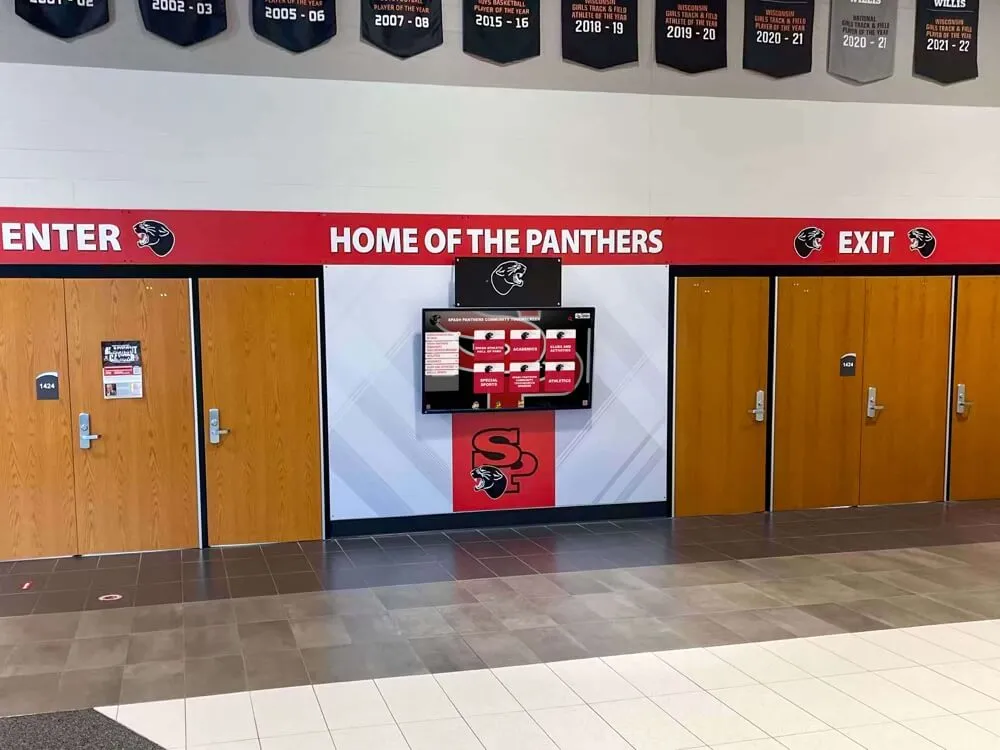
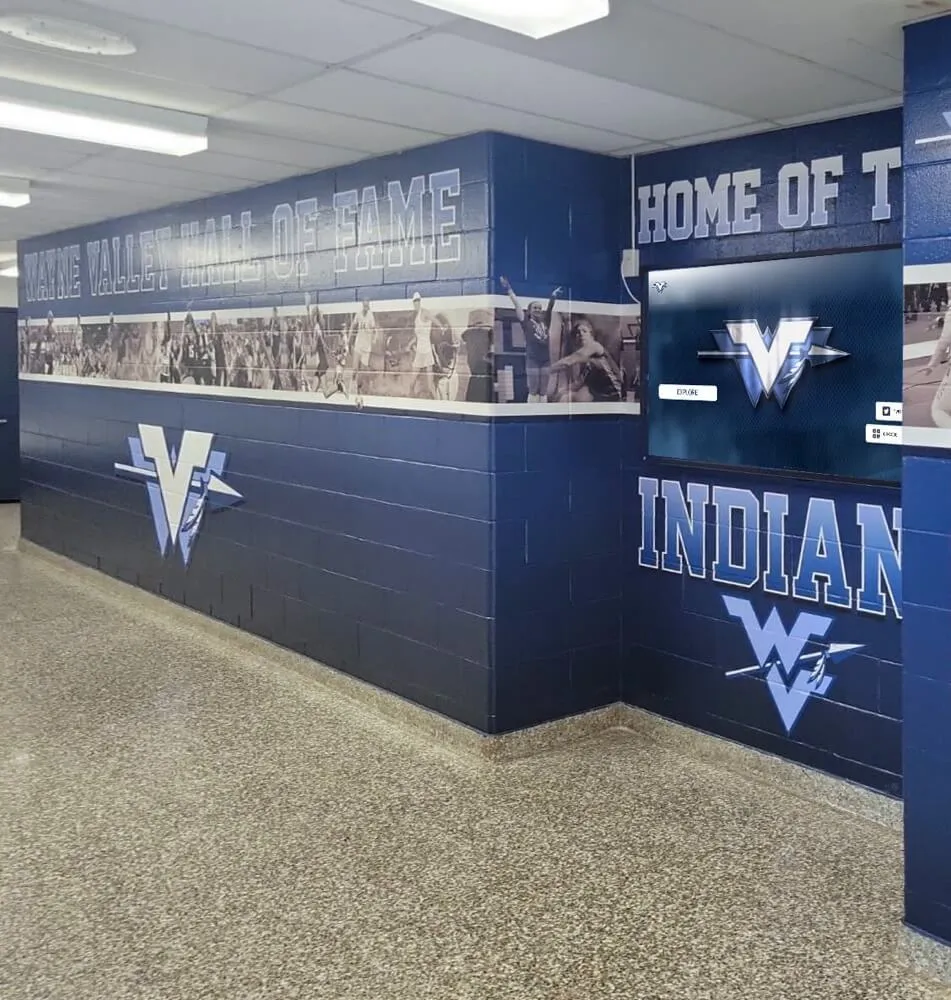
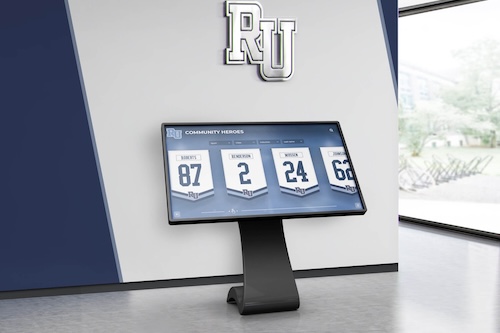
Digital screens integrated into athletic hallways give recognition content ongoing visibility throughout the school year
Preserving History Honestly
One of the most meaningful things a NGWSD display can do is document genuine milestones — the season a girls’ volleyball program competed for the first time, the coach who built the softball team, the year the school qualified its first state competitor in track.
A few principles worth carrying into that work:
Distinguish documented from inferred. A gap in the yearbook doesn’t prove a team didn’t exist before a certain year. An unfamiliar name in a photograph doesn’t prove that person was the first of anything. Use “first documented” or “first verified by available records” rather than simply “first.”
Acknowledge uncertainty directly. If athletic records before a certain decade are incomplete, say so on the display panel. Future community members with old yearbooks or photographs may come forward. Honest uncertainty is more accurate than a false certainty that later archivists will have to correct.
Keep participation recognition and competitive honors separate. Recognizing every female athlete in your school’s swim program in a NGWSD gallery is participation recognition — an act of community pride. It is not the same as naming all-stars, selecting award recipients through a competitive process, or granting letters or any other institutional status. Label each section accurately so every viewer understands what they are seeing.
Recognition is not compliance. A display that celebrates female athletes is a gesture of institutional pride and community. It does not prove equal-opportunity compliance, cause participation rates to increase, or constitute legal documentation of any kind. Schools with Title IX or other compliance obligations should work with their legal counsel on those matters separately.
How a Digital Display Supports the Celebration
A digital recognition system gives your school a practical way to organize all of the above in one place. Content can be updated as records are verified, student panels can be added as opt-ins arrive, and the annual archive section can grow each year without pushing older content off a physical wall.
Rocket Alumni Solutions builds school-focused touchscreen recognition platforms used in athletic facilities and hallways. The system is designed to hold multi-sport recognition collections, documented history timelines, and individual athlete profiles in a single display that staff can update remotely — a natural environment for a NGWSD collection that you want to maintain year-round, not just in February.
A display like this also complements opportunities to recognize character alongside competition. For ideas on incorporating sportsmanship recognition into a broader athletic display, see school sportsmanship recognition categories.
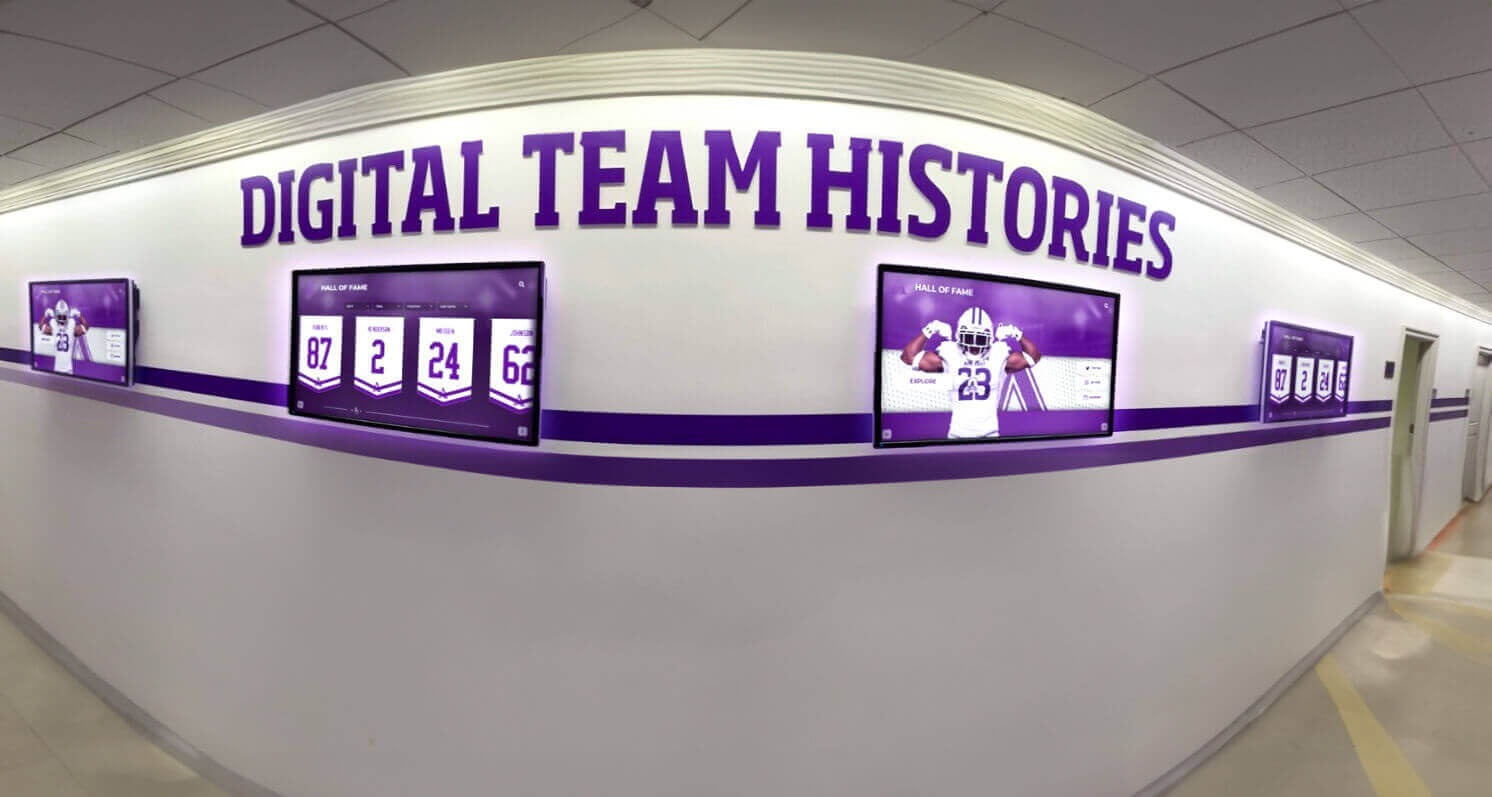
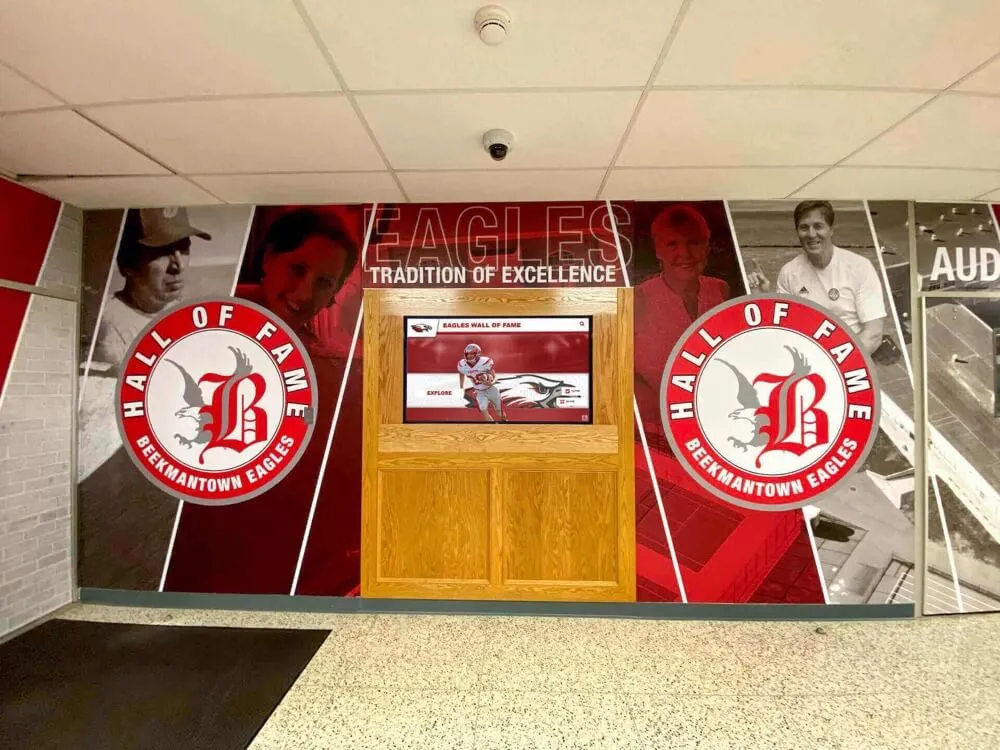
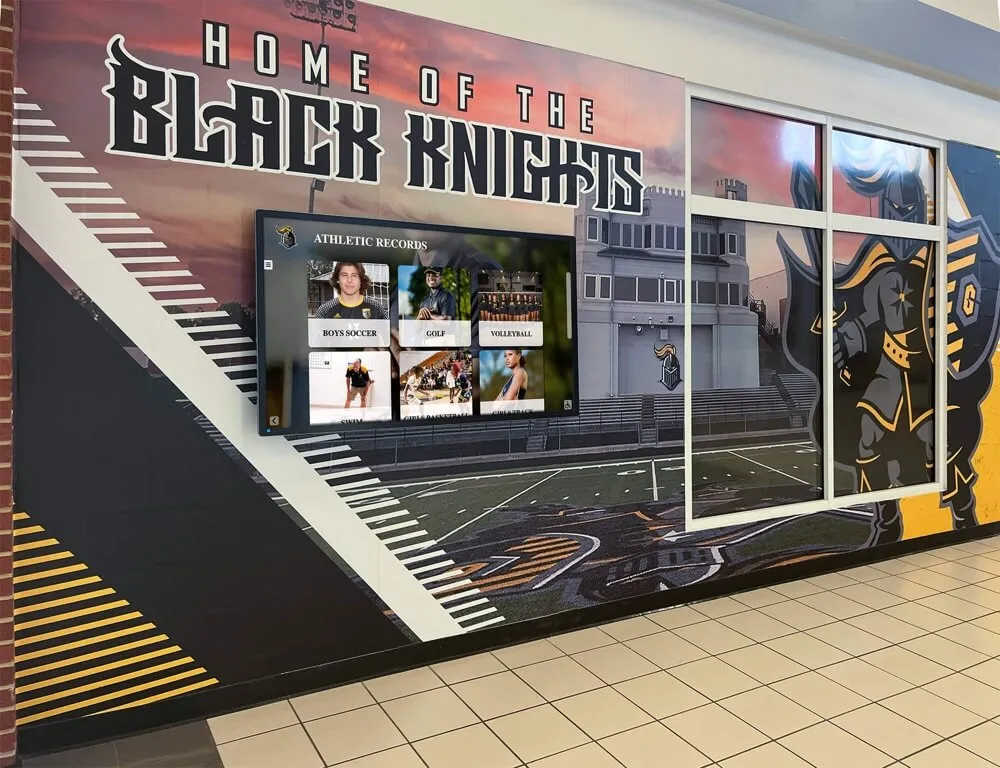
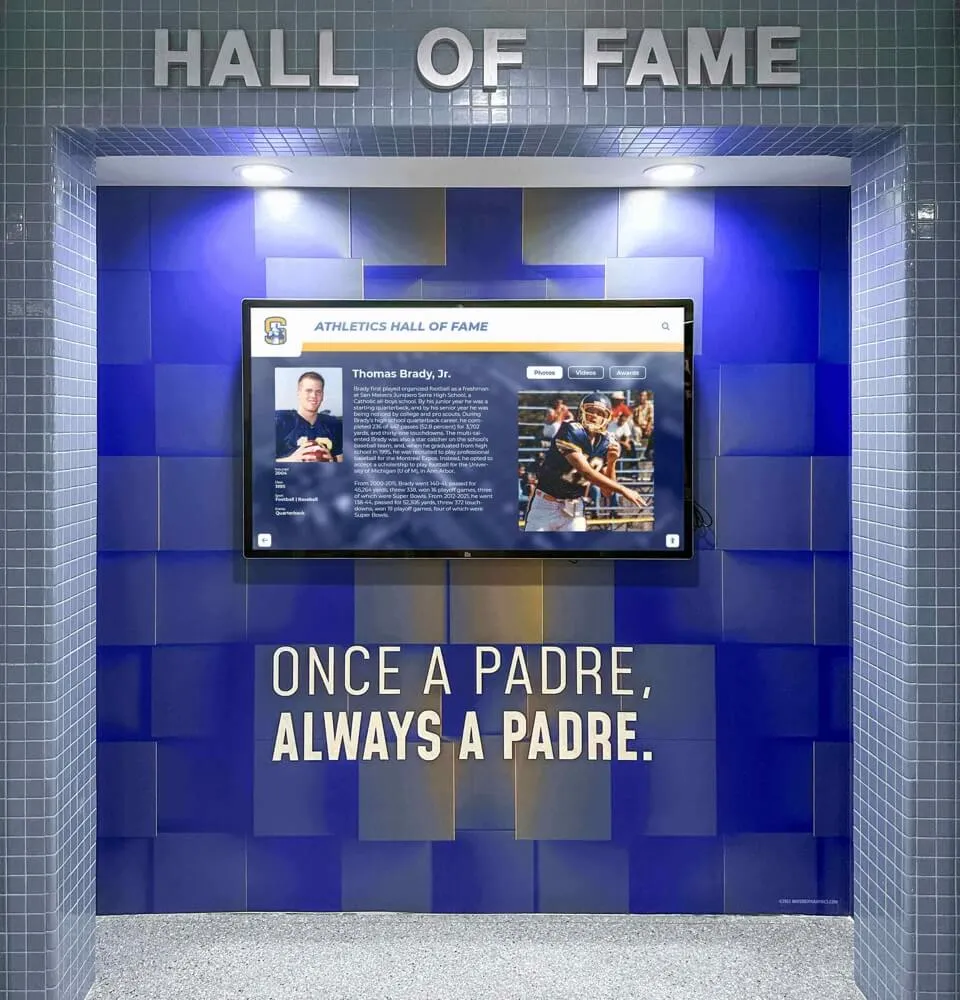
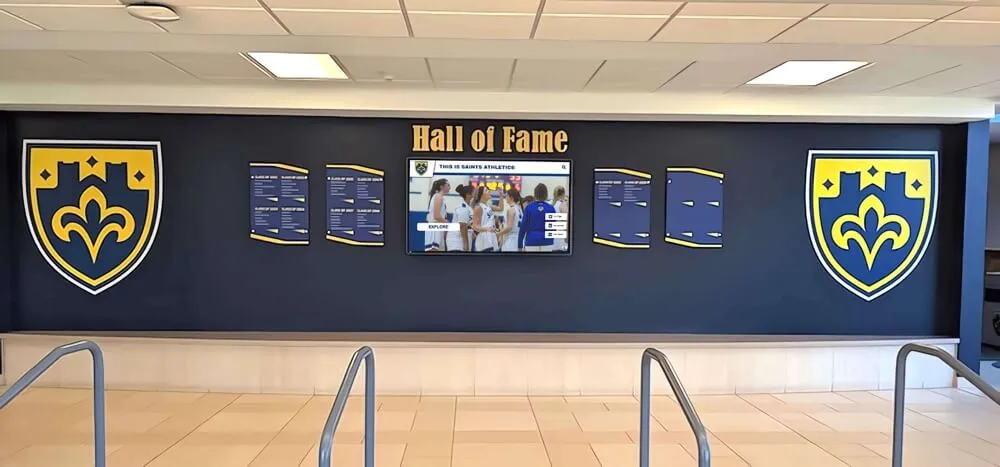
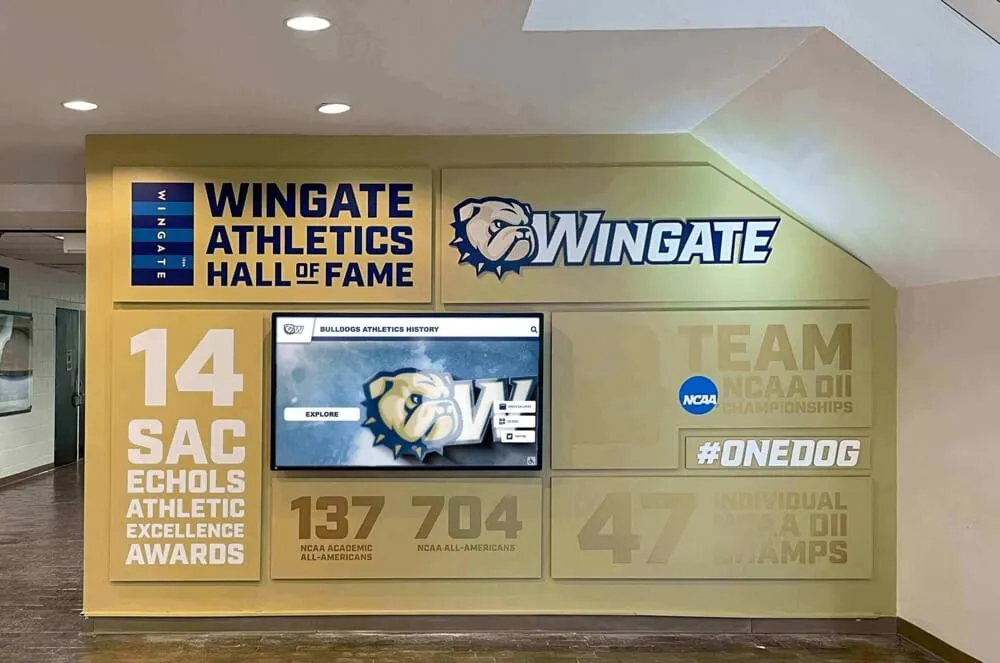
Multi-panel hallway displays allow schools to organize recognition content by sport, season, or category without space constraints
Frequently Asked Questions
What is National Girls and Women in Sports Day and when is it?
National Girls and Women in Sports Day is organized by the Women’s Sports Foundation to celebrate athletes, coaches, and leaders across girls’ and women’s sports. Schools and community organizations are invited to host their own events. The next observance is currently listed by the WSF as February 3, 2027 — visit womenssportsfoundation.org/get-involved/ngwsd/ for the current date and any updated guidance before finalizing your school’s calendar.
Which sports should a school include in a NGWSD recognition display?
Every sport that includes female athletes at your school belongs in the display. The celebration is not limited to winter programs, state champions, or programs with recent headlines. A cross-country team that didn’t reach postseason, a swim team in its second year, and a girls’ wrestling program just getting started each represent the school’s commitment to girls’ and women’s athletics and deserve recognition alongside more established programs.
How do we recognize athletes who prefer not to be publicly featured?
Offer student participation as a fully voluntary opt-in and be clear that declining has no effect on team standing, playing time, or awards. For panels that mention athletes by name, confirm with each individual before publishing. If a student doesn’t participate, a team- or sport-level panel without individual names is a respectful alternative that still honors the program.
What is the difference between a NGWSD participation display and all-star selection?
A NGWSD display typically recognizes participation, community, history, and contributions across all programs — it is a community celebration, not a competitive designation. All-star honors and earned awards should only appear in labeled sections confirming that athletes received those designations through an official process. Keep the two categories clearly separate so every viewer understands the distinction.
How should a school handle gaps in athletic history records?
Acknowledge them honestly on the display panel. A panel that reads “records before [year] have not been located” is accurate and may prompt community members with old yearbooks or photographs to come forward. Never fill gaps by inference or treat a photograph as proof of a specific claim. Historical accuracy requires documented sources; when those sources don’t exist, honest uncertainty is the right approach — and a more trustworthy one.
The students competing under your school’s colors this season are building history right now. A National Girls and Women in Sports Day display gives your school a way to honor them — and everyone who came before them — with the care and accuracy that genuine recognition deserves.
Schedule a demo to see how Rocket Alumni Solutions supports school touchscreen recognition programs