



After months of rehearsal, an orchestra concert delivers something extraordinary: a room full of young musicians performing complex, coordinated music at a level that stuns families who’ve never heard the piece before. The applause at the end of the final movement represents a genuine collective achievement — one that took just as much dedication, technical mastery, and competitive spirit as any athletic championship. Yet when the house lights come up and the concert programs are folded away, most schools have no lasting recognition infrastructure to show for it.
Recognition for orchestra programs often stops at the curtain call. While athletic departments maintain trophy cases, hang championship banners, and induct players into halls of fame, music programs frequently make do with a printed program and a photograph in the school newspaper. That imbalance isn’t because performing arts achievements are less significant — it’s because schools haven’t yet applied the same recognition thinking to fine arts that they’ve long applied to sports.
This guide covers the full spectrum of orchestra concert recognition — from traditional awards and all-state honors to digital display systems that make music program history as visible and permanent as any athletic hall of fame. Whether you’re a music director seeking to formalize your program’s recognition culture, or an administrator looking to close the recognition gap between athletics and the arts, these strategies provide a practical starting point.
The curtain call is a beginning, not an end. Every orchestra concert is a data point in a story that spans years, seasons, and generations of student musicians — a story worth telling in ways that outlast the performance itself.

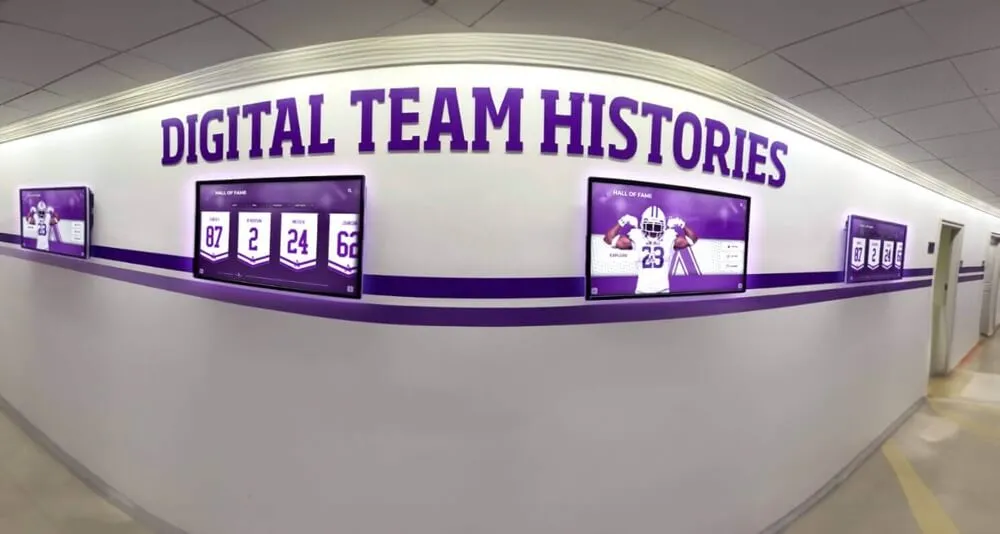
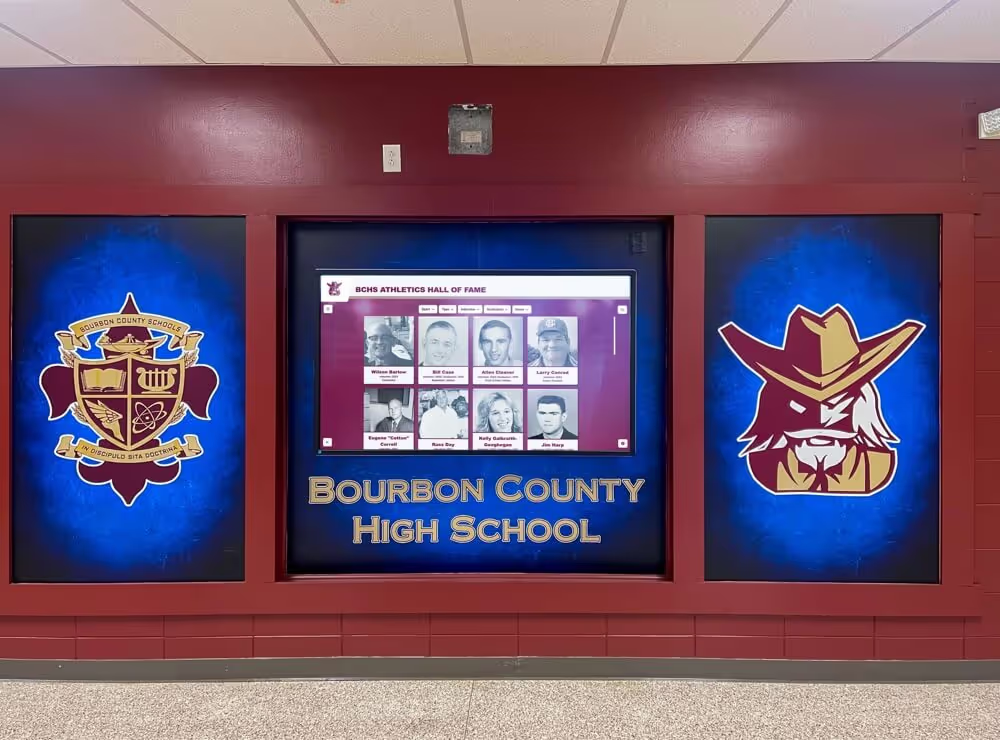
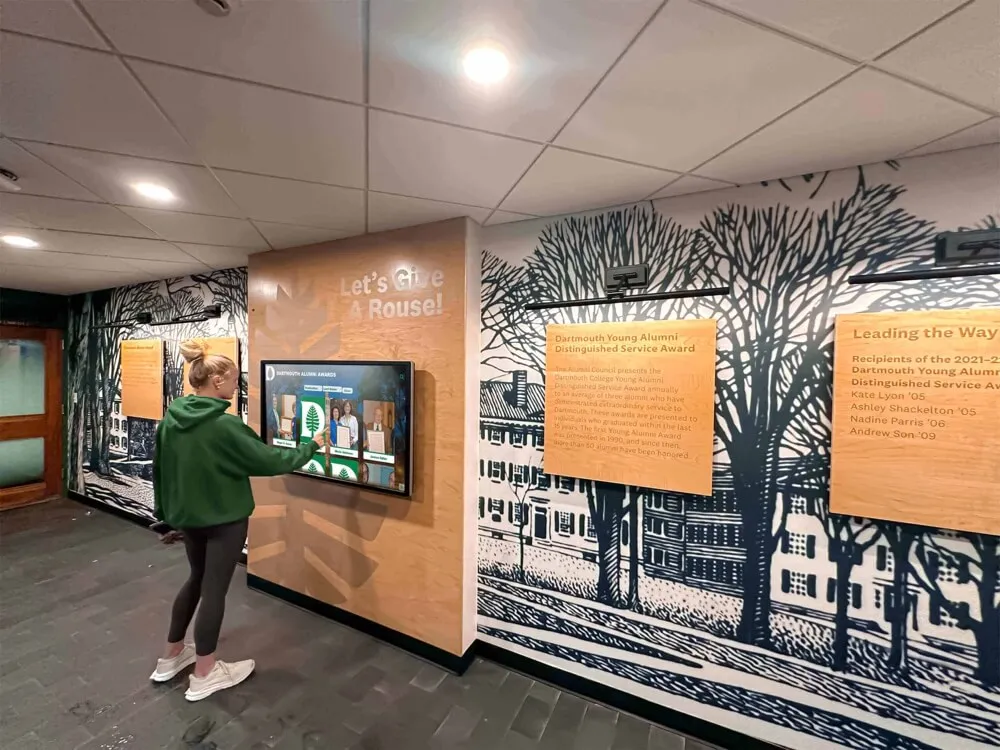
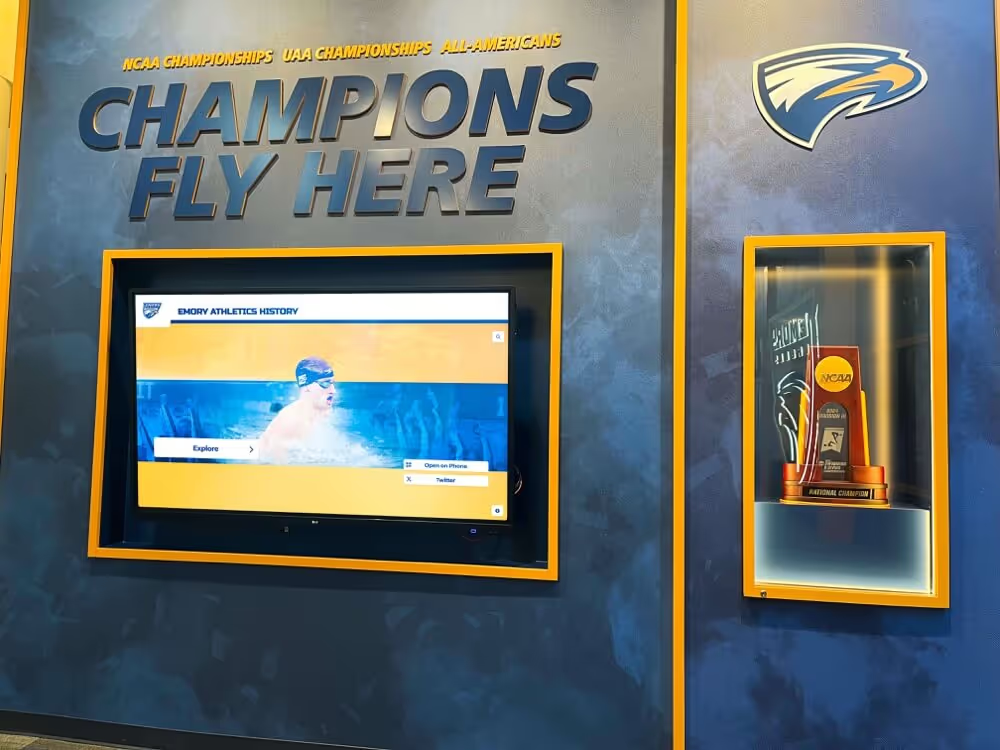
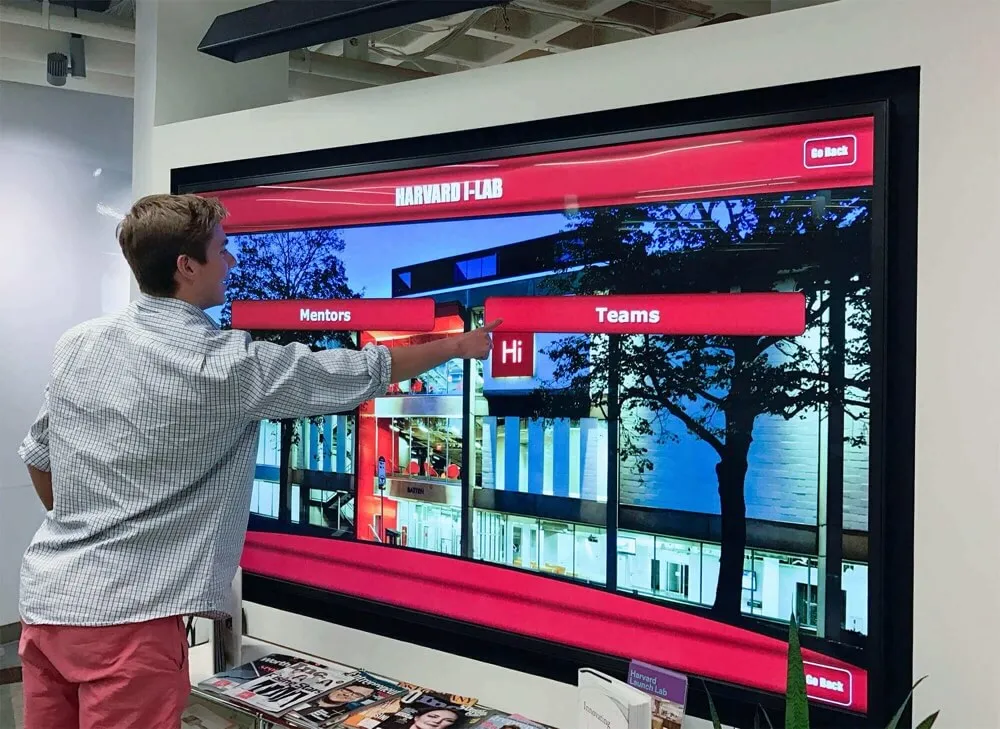
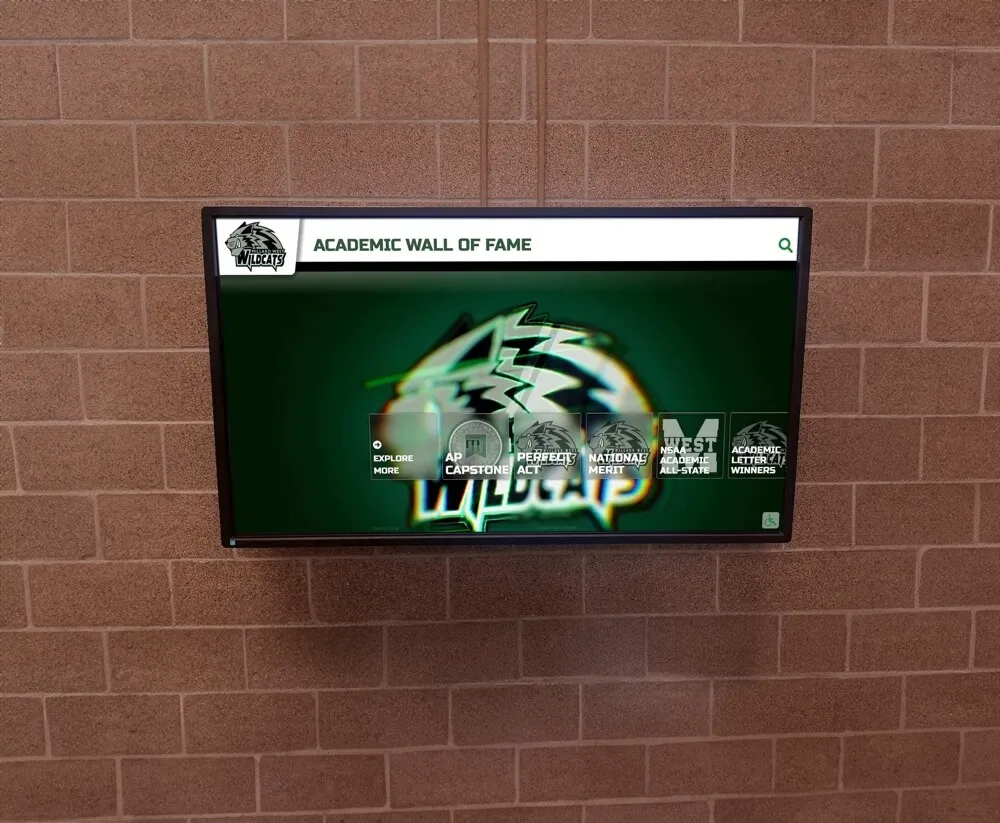
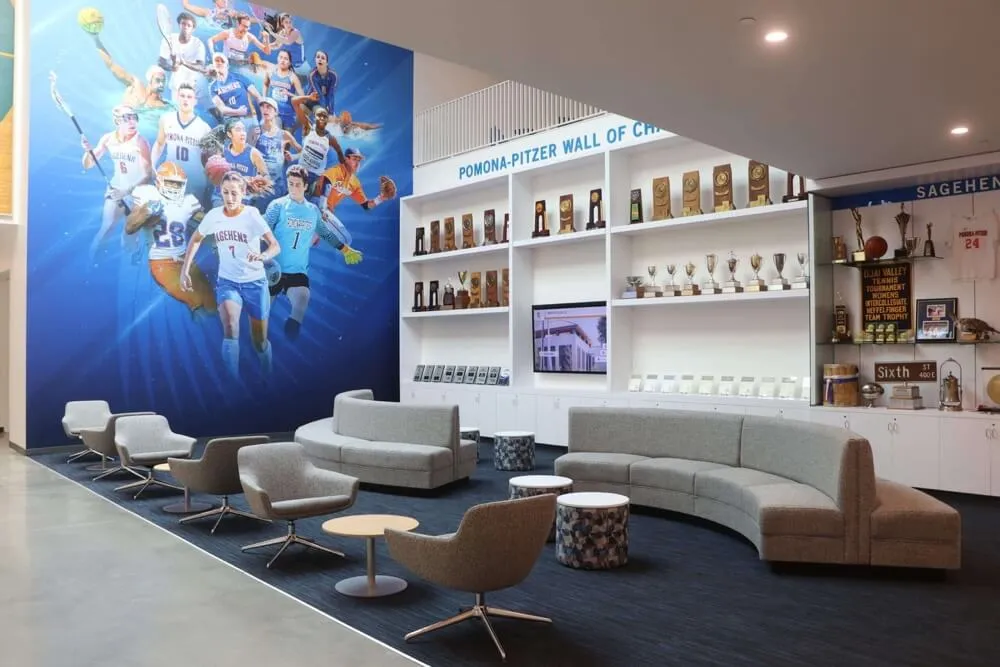
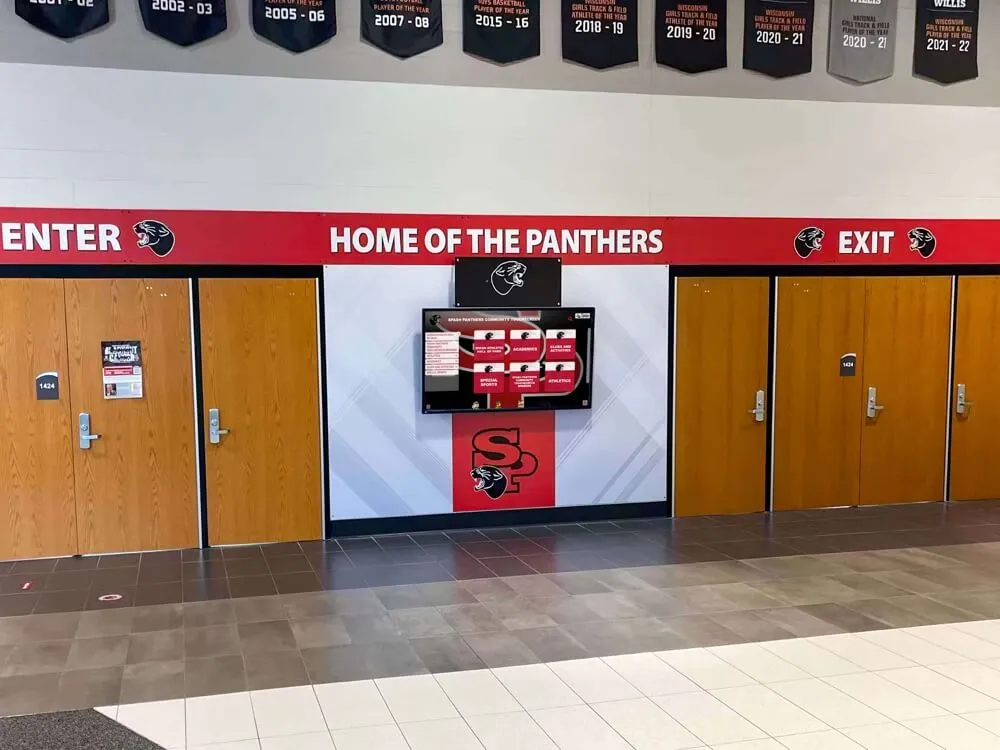
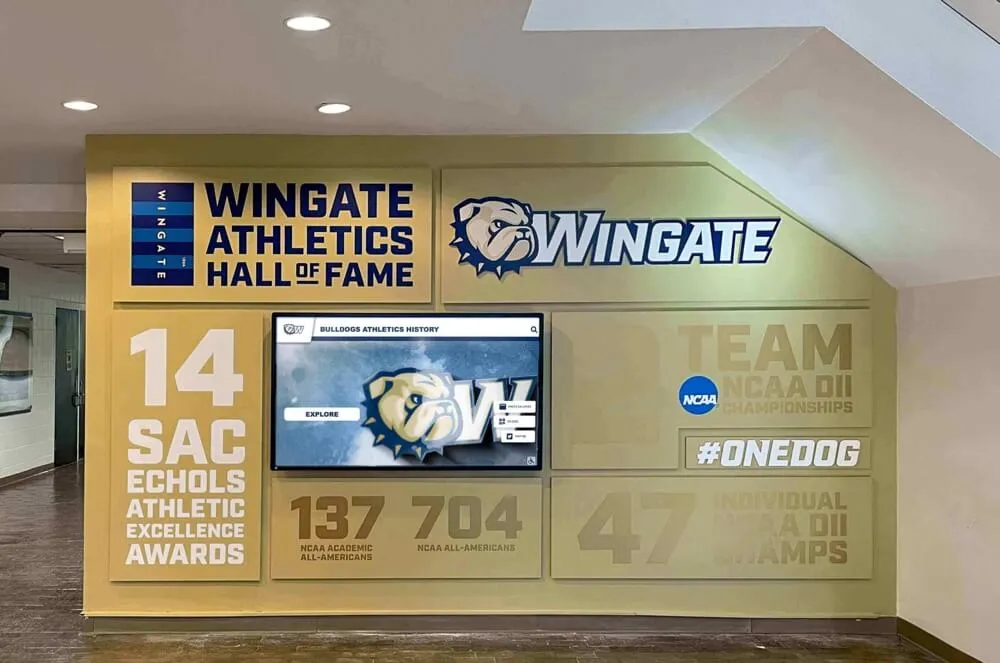
Digital recognition displays create permanent records of program achievements — a model schools are increasingly adapting from athletics to performing arts recognition systems
Why Orchestra Concert Recognition Matters More Than a Standing Ovation
The standing ovation is immediate and powerful, but it vanishes. Recognition systems create permanence — and that permanence shapes how students see themselves, how programs recruit new members, and how institutions communicate their values.
The Recognition Gap Between Athletics and Fine Arts
The disparity between athletic recognition and performing arts recognition in American schools is significant and structural. Athletic departments typically maintain trophy cases, record boards, hall of fame inductee lists, championship banners, and dedicated hallway displays. Fine arts programs — including orchestras — tend to receive bulletin board space and concert program archives, if they receive anything at all.
According to the National Association for Music Education (NAfME), music participation in schools delivers documented academic, social, and developmental benefits: students in music programs consistently show higher graduation rates, stronger outcomes in mathematics and language arts, and measurable social-emotional development. Yet that documented excellence rarely results in proportional institutional recognition investment compared to athletics.
The practical consequence for orchestra directors is a recognition vacuum. Students who achieve musically — earning first chair through competitive audition, qualifying for district or all-state ensembles, being selected for solo performance — may find that achievement celebrated warmly for one evening and forgotten thereafter. Compare that to an athlete who earns a letter, sees their name on a record board, or gets inducted into a hall of fame whose display endures for decades. The asymmetry is significant.
Recognition as a Recruitment and Retention Tool
Visible, permanent recognition is one of the most underused tools in performing arts program management. When a prospective student and their family walk into a school and see a hallway filled with athletics banners and trophy cases but nothing representing the orchestra’s regional championships, the message is unmistakable: athletics is valued here; music is not.
Schools that create visible recognition infrastructure for fine arts programs report meaningful effects on recruitment and retention. Students are more likely to commit to a program where they can see that program’s history, understand the path to recognition, and know their achievements will be honored in lasting, visible ways — not just applauded for an evening and forgotten.
Interactive school announcement and display systems offer practical guidance for how schools use digital platforms to make program recognition visible, accessible, and consistently updated — approaches that work for fine arts programs as effectively as they do for athletics or academics.
Traditional Ways Schools Honor Orchestra Students
Existing recognition traditions for orchestra programs tend to be informal and inconsistent. Formalizing them with defined criteria and visible celebration creates the foundation for a genuine recognition culture.
Chair and Section Awards
Orchestral seating assignments are one of the most genuinely competitive, merit-based recognition structures in school life. First chair positions in each section are earned through auditions, maintained through demonstrated excellence, and competed for throughout a student’s time in the program. Yet most schools treat chair assignments as internal logistics — not as the accomplishments they are.
Formalizing chair recognition is a low-cost, high-impact starting point:
- Present first chair students at the season’s final concert with brief verbal recognition from the director
- List section leaders prominently in concert programs with notation of their placement level
- Maintain a historical record of first chair students by instrument and year — this cumulative archive becomes genuinely meaningful after a decade
- Create a principal chair recognition ceremony at end-of-year celebrations that mirrors the culture of athletic awards banquets
Concert Program Archives as Recognition Documents
The printed concert program is one of the orchestra’s most durable recognition artifacts, yet most programs treat them as disposable after the performance. A program that lists full ensemble membership, solo performers, section leaders, and notes about repertoire significance becomes a historical document when archived systematically.
Schools that create recognition plaques and permanent displays for milestone concert events — anniversary performances, debut concerts, award-winning seasons — invest those programs with permanence they deserve. A framed program from the orchestra’s 25th anniversary concert, displayed near the music wing entrance, communicates history and institutional seriousness to every student, parent, and visitor who passes it.
Senior Recognition Traditions
Senior recognition in orchestra programs can mirror — and sometimes surpass — the emotional resonance of athletic senior nights. For students who’ve participated in the program for four years, the final concert is a genuine milestone deserving ceremony:
- Reserved seating for senior families at the final concert
- Individual introduction of each senior with acknowledgment of their years of participation and specific achievements
- A dedicated senior ensemble piece performed exclusively by graduating students
- A printed tribute insert in the final concert program listing each senior’s full participation record
- A symbolic recognition item — a framed photo, engraved music note, or custom award — presented at a post-concert reception
These traditions build from what schools already do and add the permanence and ceremony that transforms a performance into a recognition event.
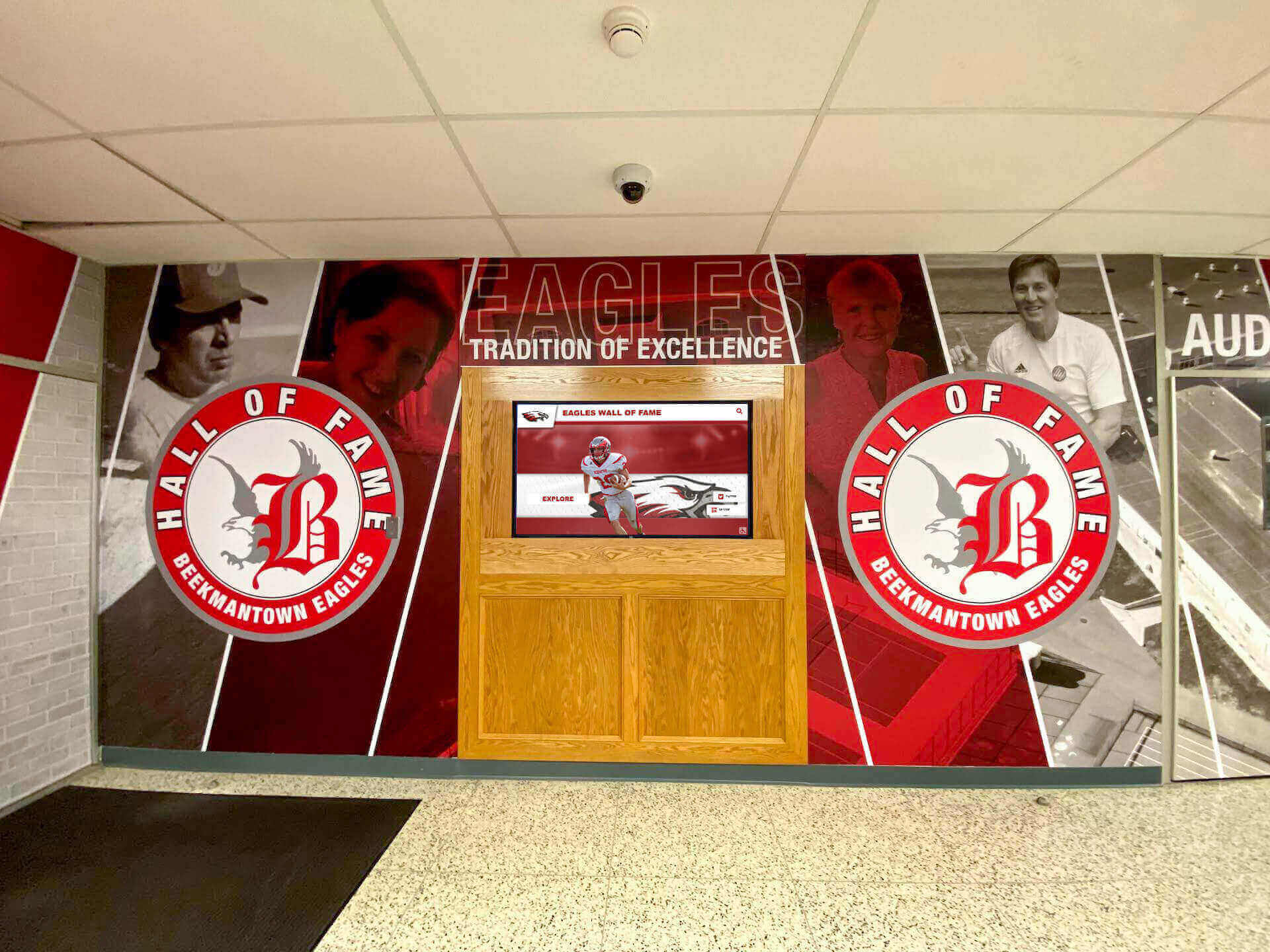
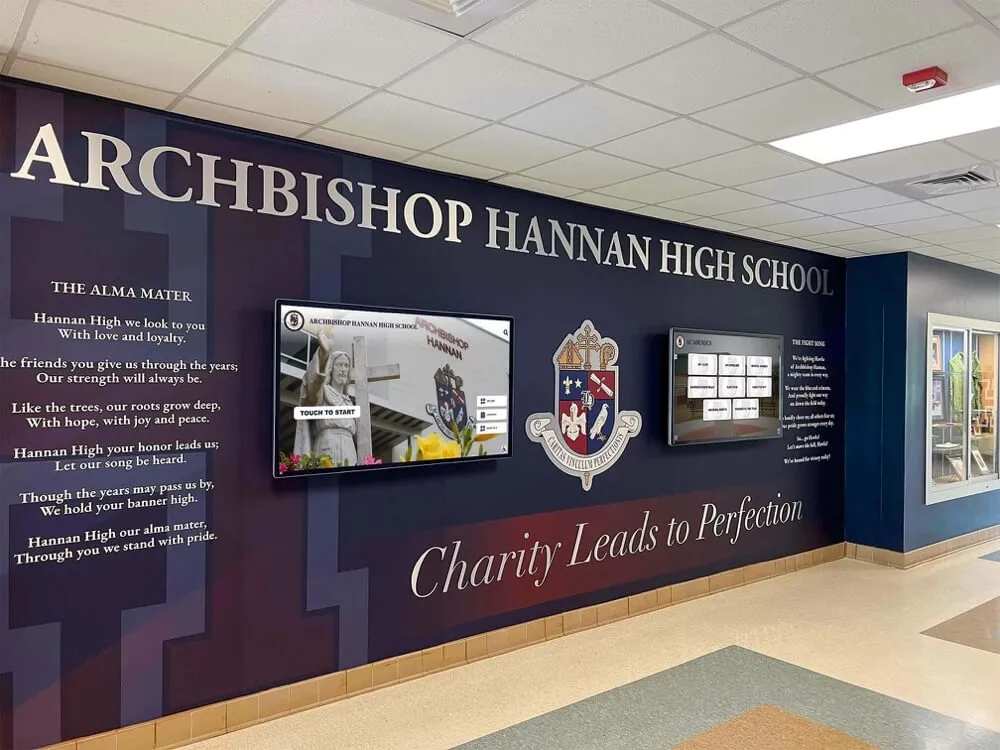
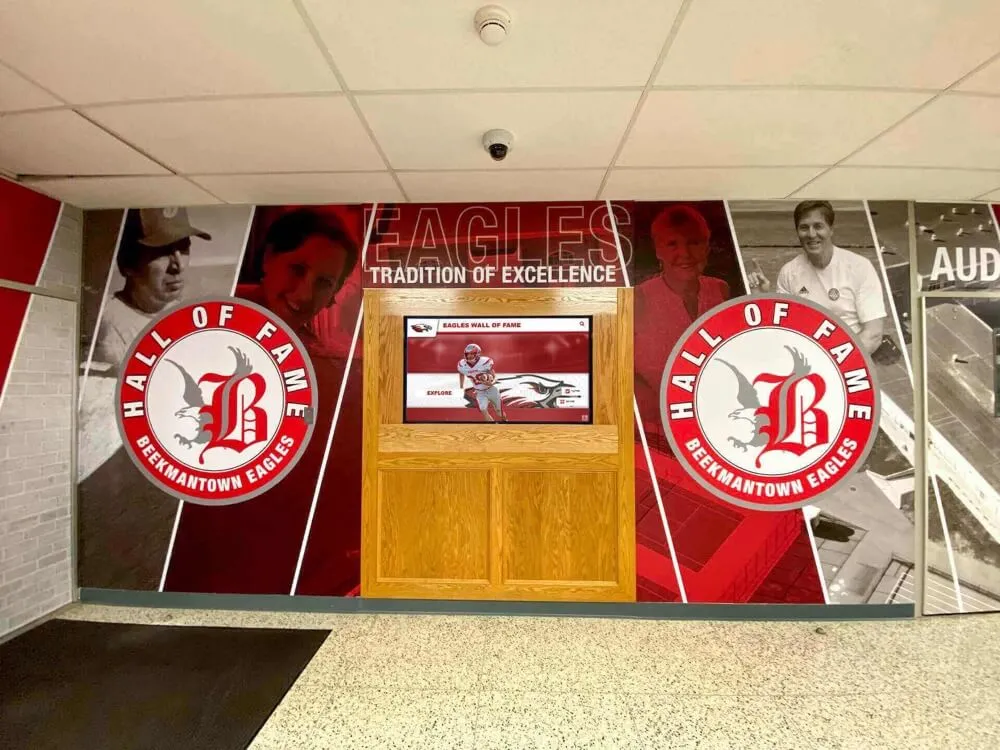
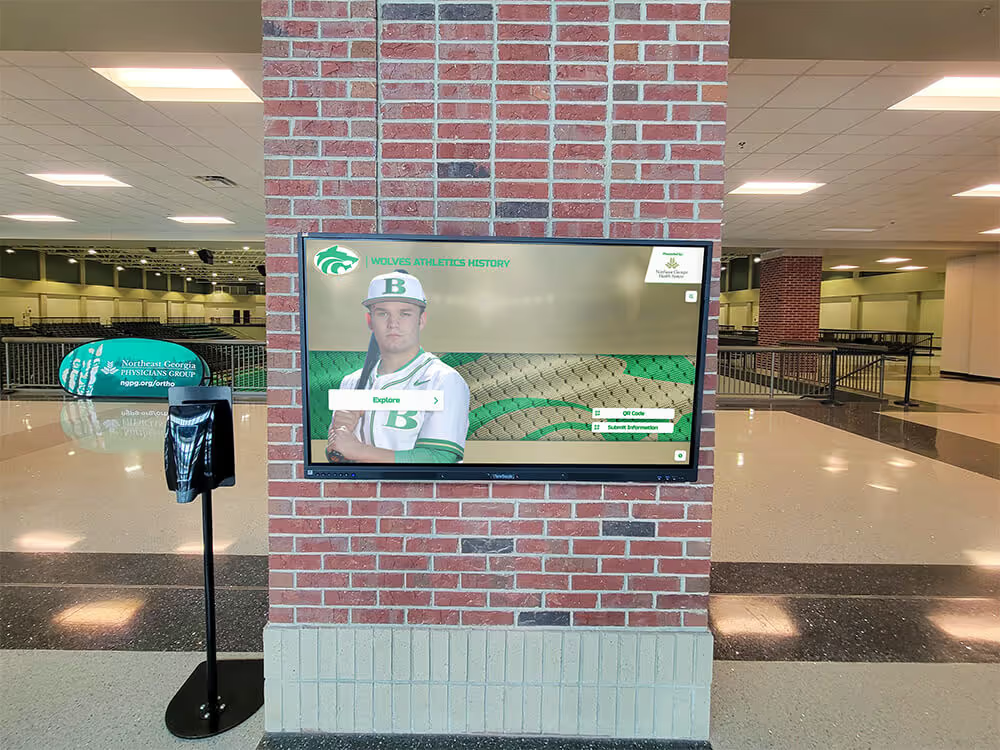
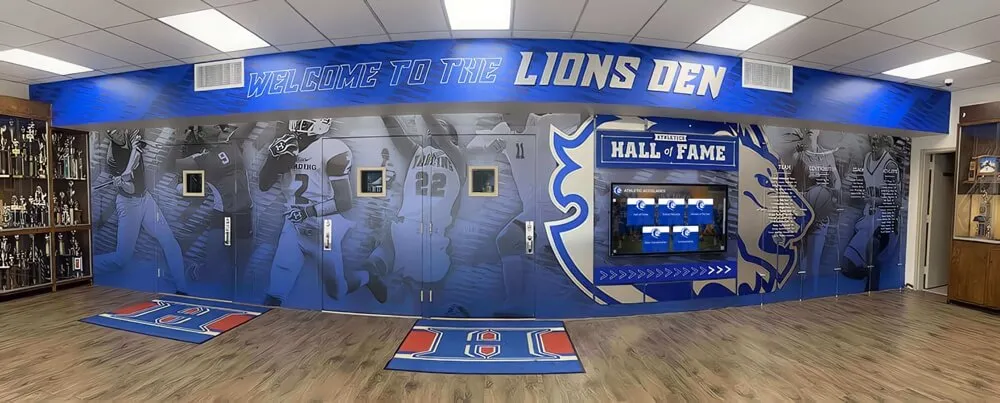
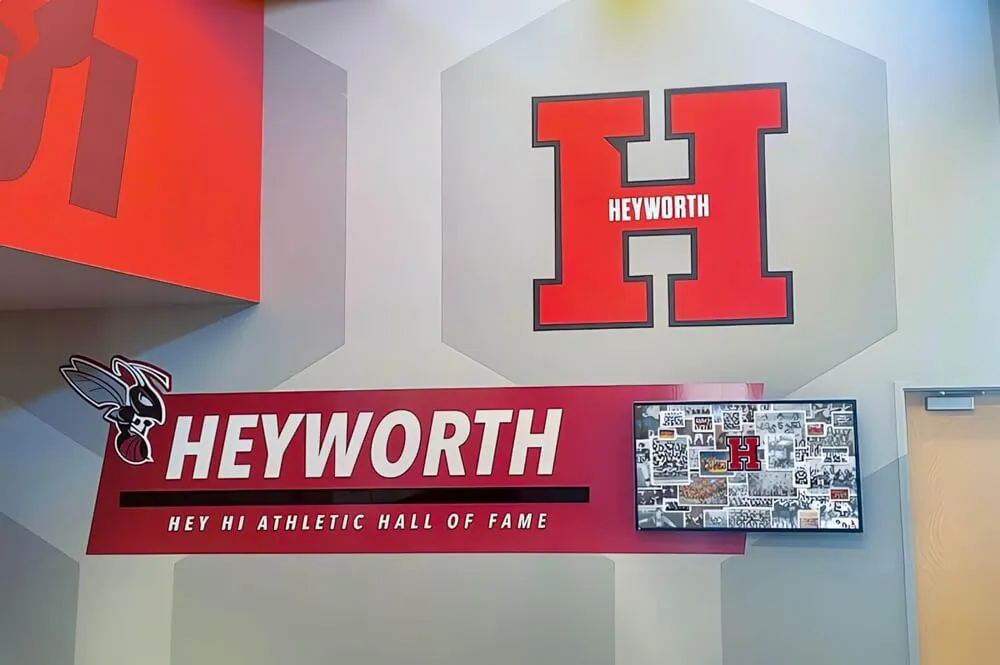
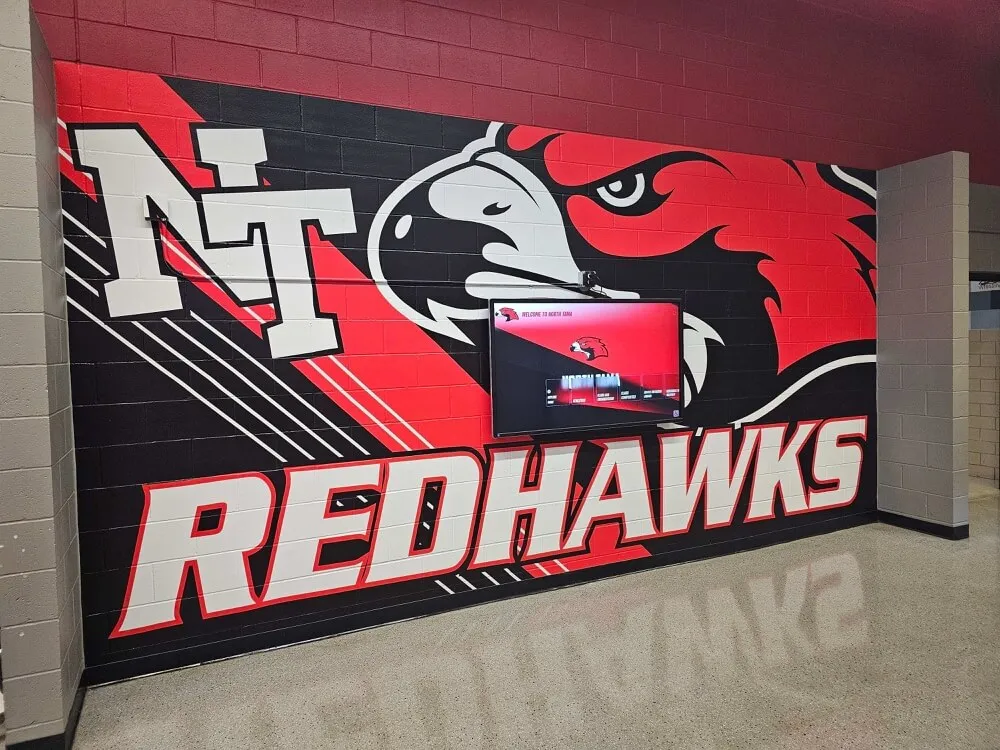
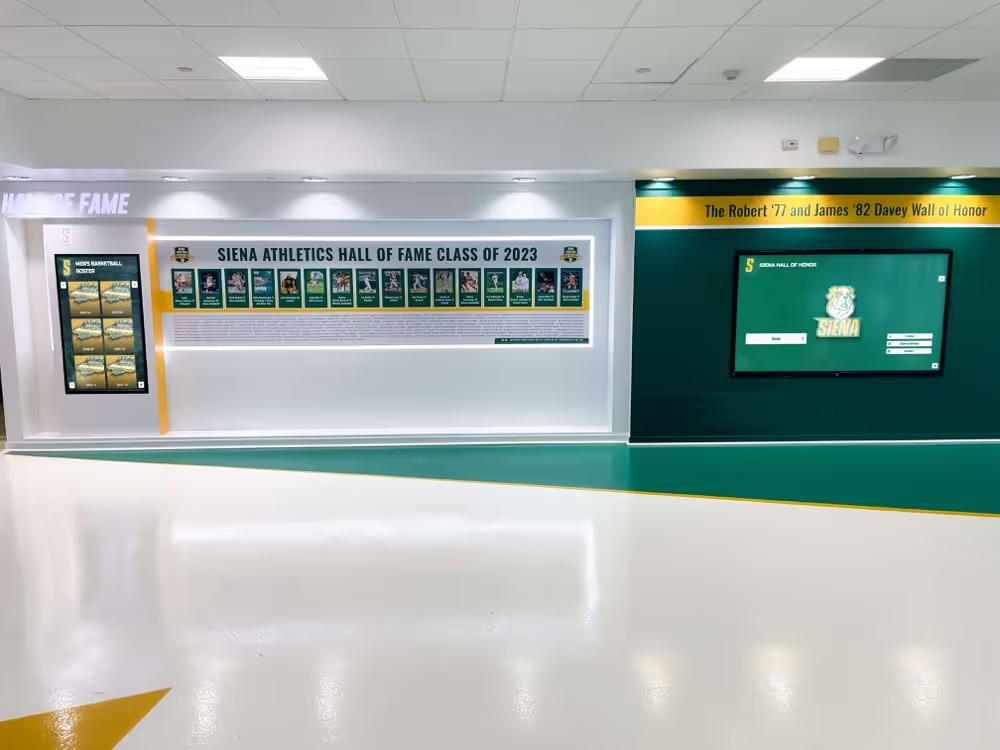
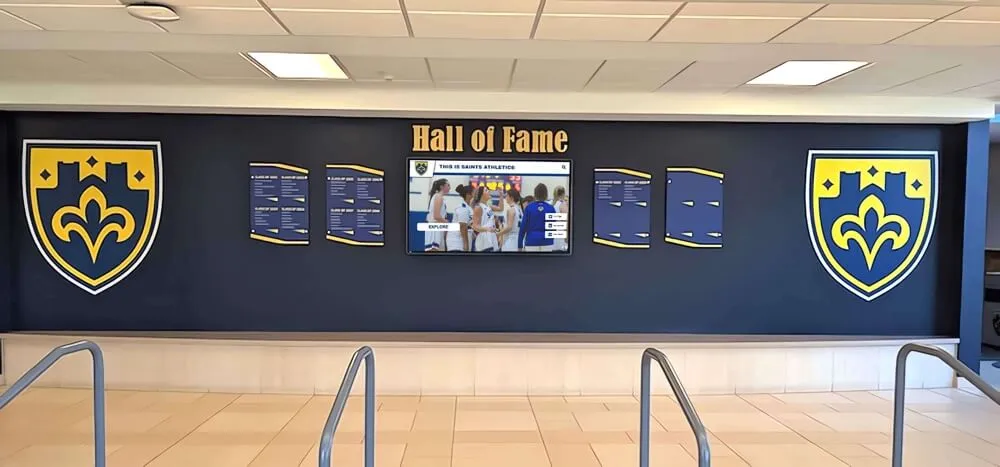
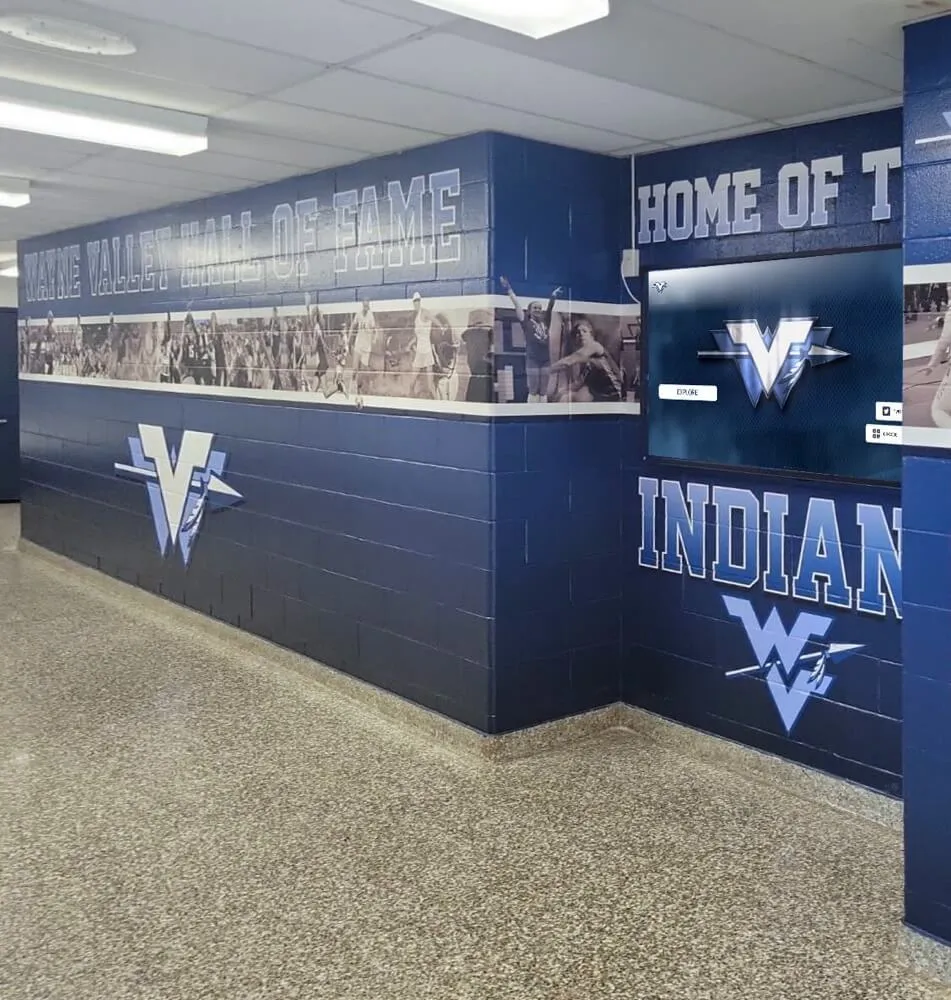
Permanent recognition displays — hall of fame murals, achievement walls, and digital systems — honor program history in ways that survive well beyond individual performances or seasons
Creating a Formal Orchestra Awards Program
A structured awards program gives students visible goals, honors genuine achievement, and creates the kind of documented record that digital recognition systems can preserve and display. The most effective programs adapt the athletic awards model to the specific excellence criteria of orchestral music.
Defining Award Categories
Orchestra award categories should reflect both technical achievement and program citizenship — the dual standards that define a serious music program’s culture.
Achievement-based awards:
- Outstanding Musician of the Year (selected by director or faculty committee)
- Most Improved Musician (recognizes dedication and measurable growth over the full season)
- Principal Chair Award (recognizes each section leader by name with formal presentation)
- Solo Performance Award (for students who performed solos with distinction)
- Chamber Music Excellence Award (for students who participated in chamber ensembles with distinction)
Program citizenship awards:
- Orchestra Spirit Award (commitment to ensemble culture and morale)
- Leadership and Mentorship Award (for upperclassmen who actively supported younger musicians)
- Consistent Excellence Award (full-season attendance and preparation)
- Academic Excellence Award (honoring students who excel academically while maintaining rigorous musical participation)
The End-of-Season Banquet Model
Many athletic programs use a formal end-of-season banquet to present awards, recognize senior players, and celebrate the season’s achievements in a deliberate ceremony with families present. Orchestra programs can adapt this model effectively.
Just as end-of-season banquet planning for athletic programs follows a proven template of recognition, reflection, and community celebration, a music awards banquet creates the same community-building moment for orchestra families. A typical structure includes director remarks reviewing the season’s highlights, individual award presentations with brief citations, senior recognition, a student performance, and informal reception time.
The banquet model matters because it creates a context where recognition is the explicit purpose of the gathering — not an afterthought to the performance. Awards presented in front of family members, with ceremony and specificity, carry far more lasting weight than recognition announced from a stage before an audience focused on the upcoming music.
Fine Arts Letters and Recognition Equivalents
Music letter programs are among the most powerful recognition equalizers between athletics and fine arts. A music student who has spent four years in the orchestra program, achieved principal chair status, and performed in regional ensembles has demonstrated commitment and excellence that fully warrants the same tangible recognition as any athletic letter winner.
The history and significance of varsity letters illuminates why formal recognition traditions build identity and motivate sustained participation across generations. The argument for music letters applies with equal force: a tangible, school-branded recognition item creates a lasting connection between the student and their program that far outlasts any single performance season.
Recognizing All-State Orchestra and Regional Honors
All-state, all-region, and district orchestra selections represent the most elite recognition available to high school musicians — competitive honors that rival any athletic all-conference selection in terms of the work required to earn them. Schools that treat these honors the way they treat athletic recognition close the recognition gap at its most visible point.
The Scale of All-State Orchestra Achievement
To understand why all-state orchestra selection deserves visible, institutional recognition: in most states, all-state string placement is among the most competitive student designations available, with audition processes involving prepared repertoire pieces, sight-reading, and scales — evaluated by professional musicians who have no connection to the student’s home school or program.
A student who earns all-state placement has achieved measurable, externally validated excellence. That achievement belongs on a record board, in a display case, and in any hall of fame system the school maintains for recognized achievers. Treating it with the same institutional gravity as an all-state athletic selection simply extends existing recognition logic to include music.
Creating Permanent Record Systems for Music Honors
Schools that track and display athletic records — fastest times, highest scores, most wins — should maintain equivalent records for orchestra honors:
- All-state and all-region selections by year, displayed chronologically alongside the student’s instrument
- District orchestra selections by year
- Solo and ensemble competition placements with ensemble name, piece, and placement level
- National-level honors: National Honor Roll in Orchestra, youth symphony selections, or equivalent elite designations
Just as academic achievement recognition for elite milestones creates permanent displays honoring students who achieve in academically rigorous ways, orchestra programs benefit from equivalent systems that make regional and state-level music honors permanently visible at the school.
Announcing Honors in School-Wide Communications
All-state orchestra selections should receive the same announcement treatment as any significant student achievement. In schools where sports all-conference selections are announced over the PA system, celebrated in the school newspaper, and posted on achievement boards, orchestra honors deserve identical treatment:
- Morning announcement recognition with the student’s name, instrument, and ensemble designation
- School social media posts with student permission
- Display in the school’s achievement or recognition board alongside academic and athletic honors
- Communication to families acknowledging the distinction with specifics about its competitiveness
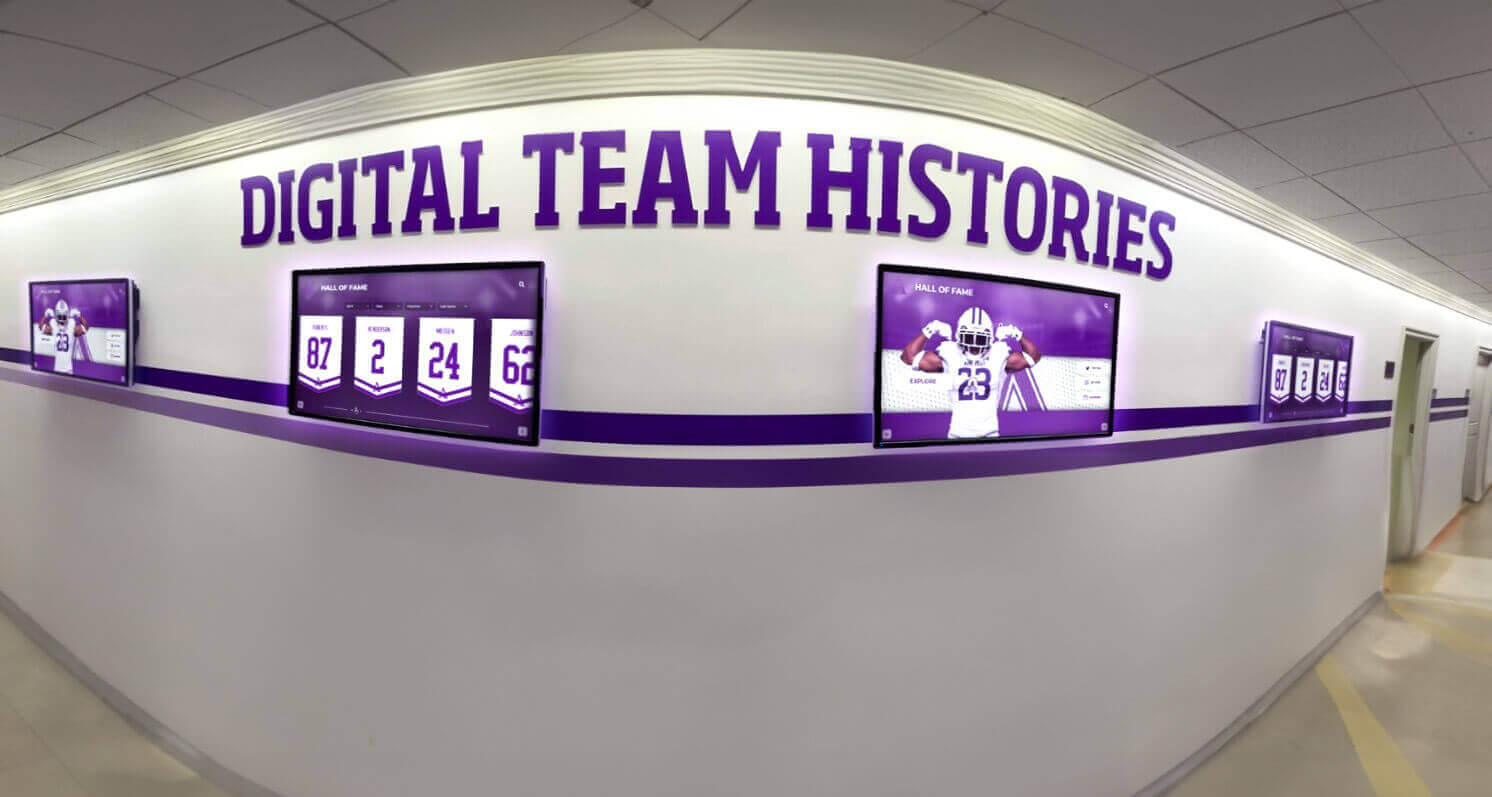
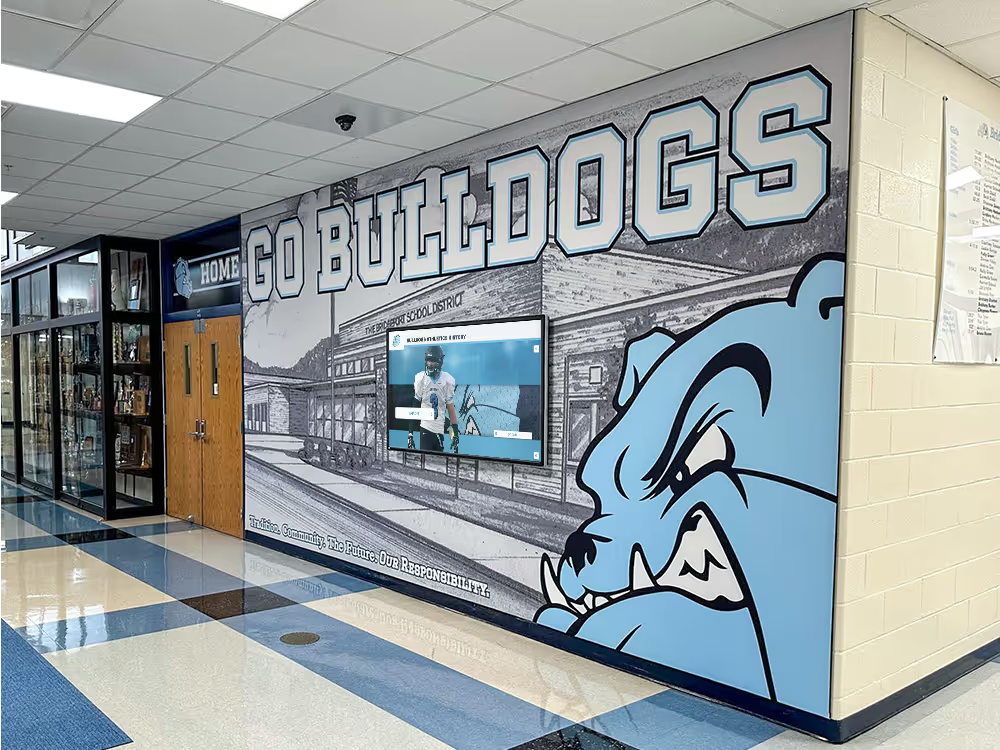
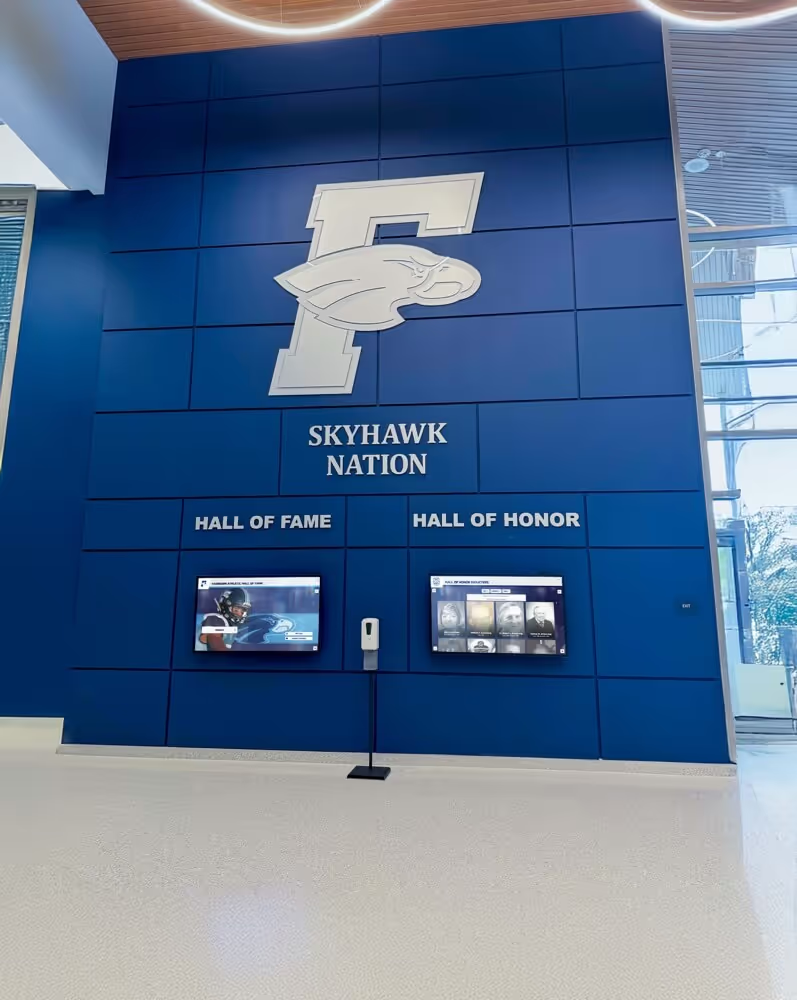
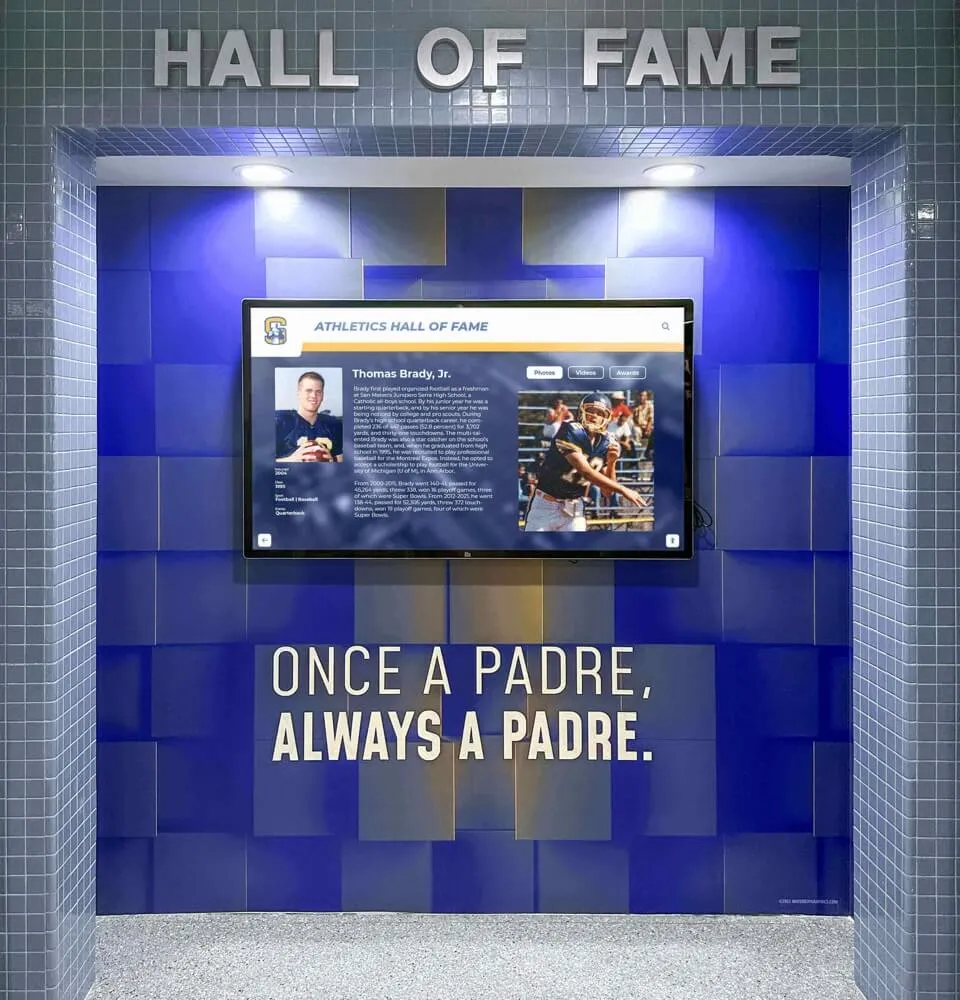
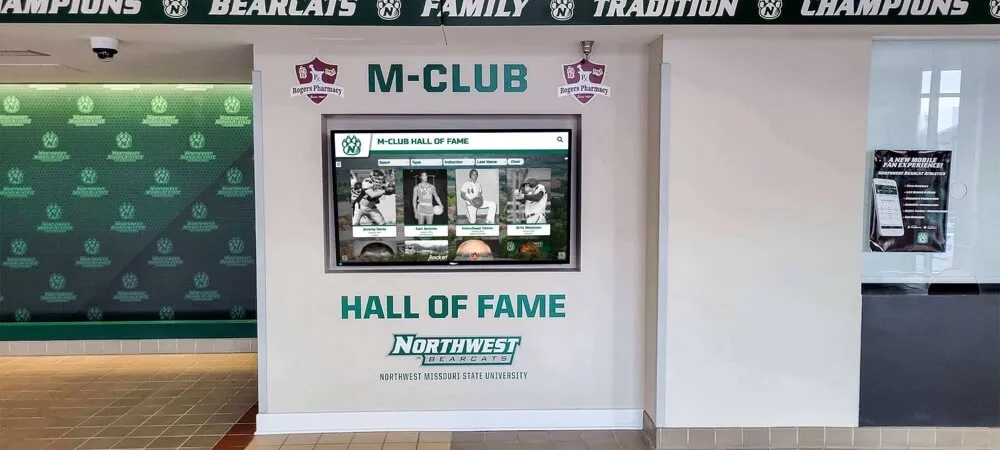
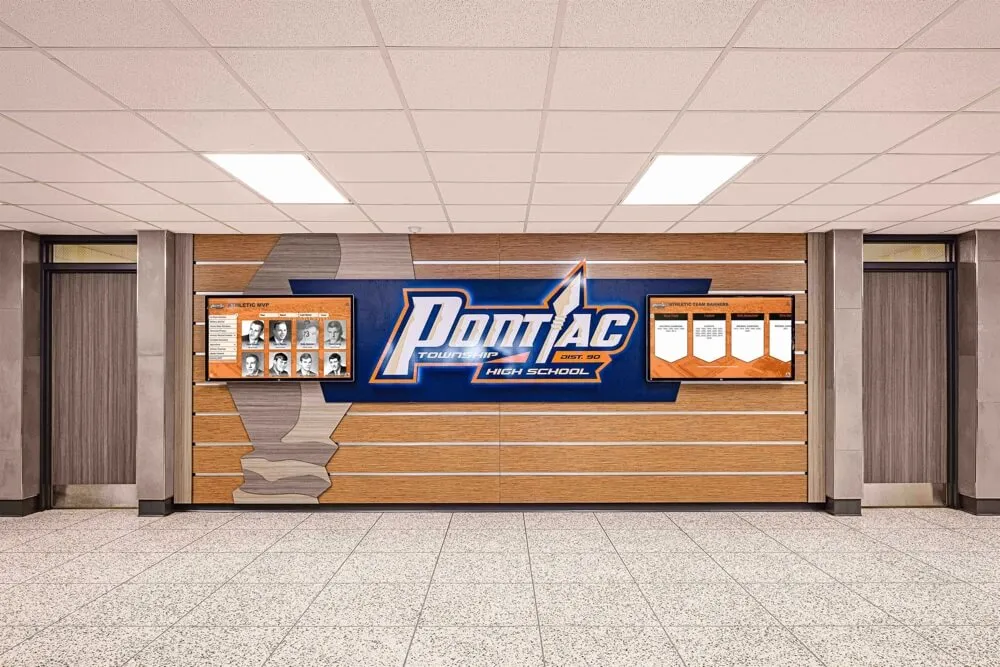
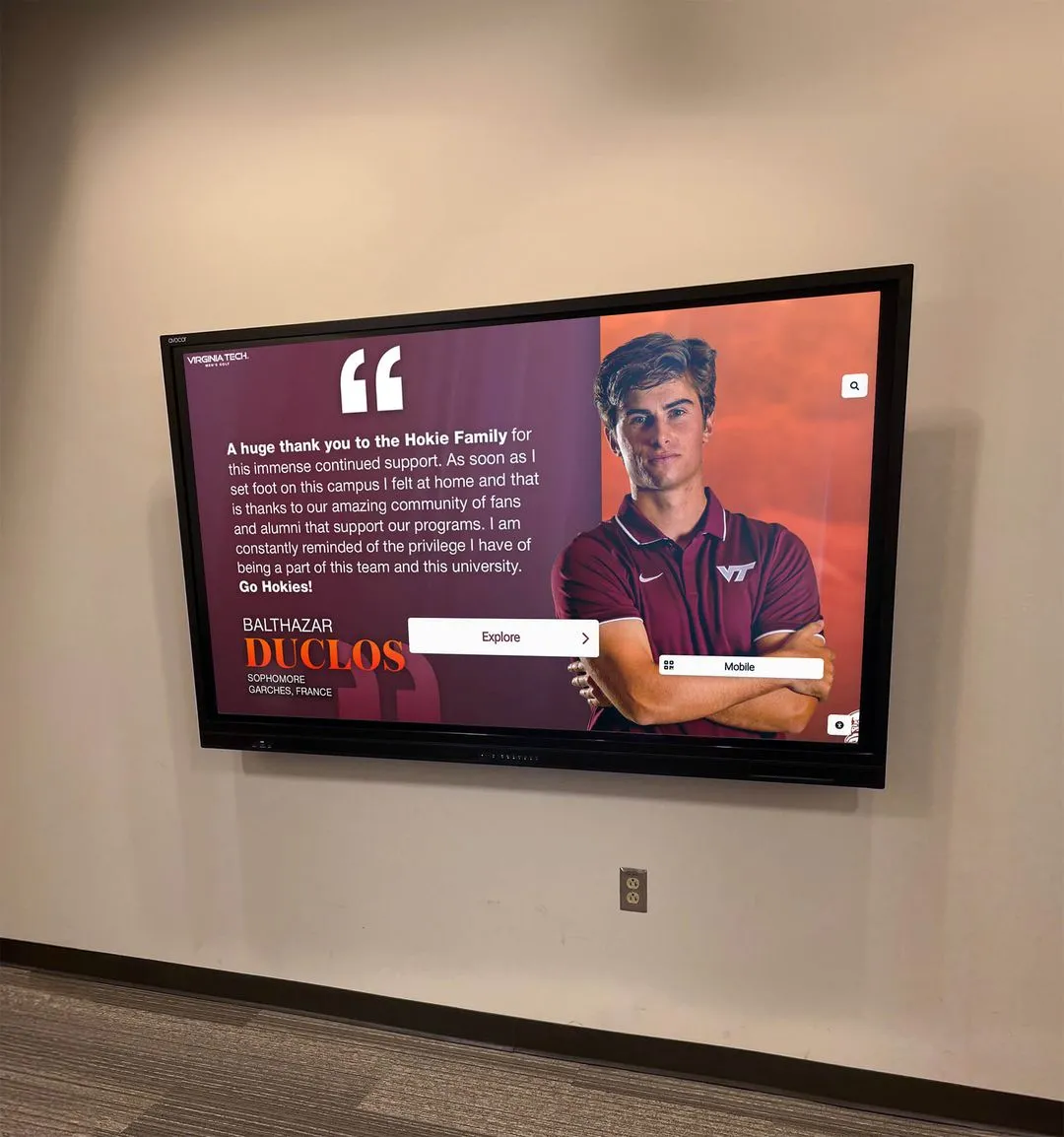
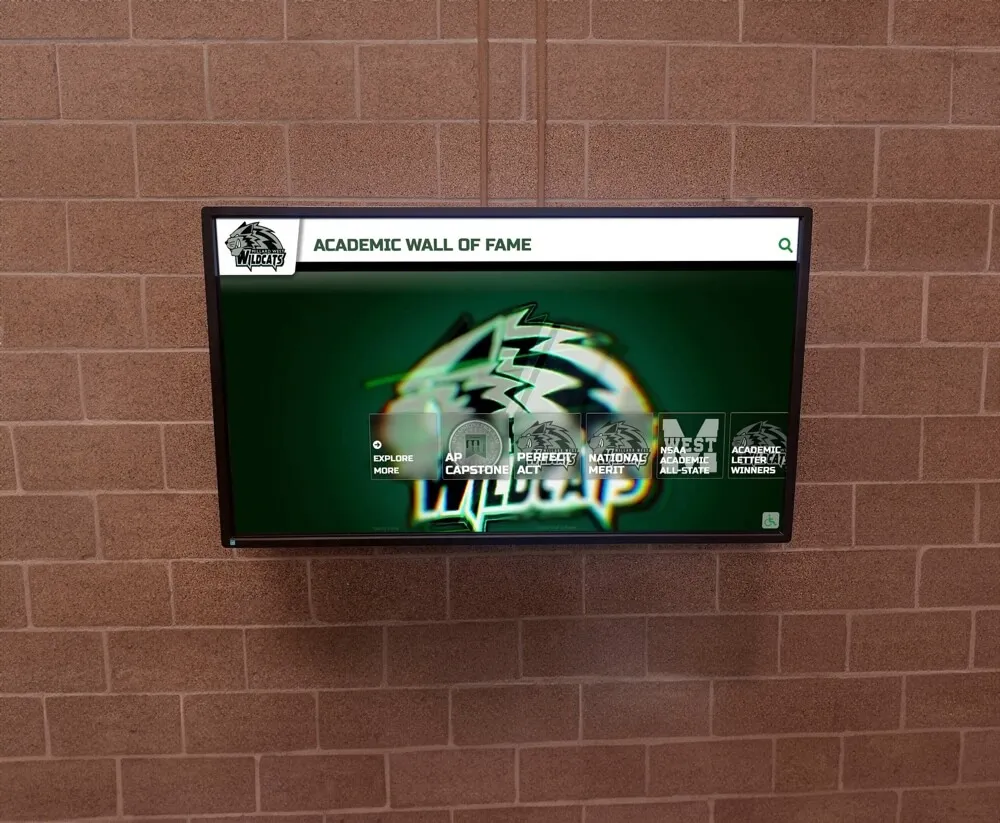
Digital display systems in school hallways create permanent, accessible records of program achievement — a model equally effective for orchestra honors as for athletic record boards
Digital Recognition Systems for Fine Arts Programs
Physical trophy cases and bulletin boards serve single programs and have limited capacity. Digital recognition systems allow schools to display fine arts achievements with the same permanence and visibility as athletic honors — and to update them continuously as new achievements are earned.
Why Traditional Recognition Infrastructure Underserves Fine Arts
Physical trophy cases are finite. Schools with extensive athletic programs fill available case space with trophies, plaques, and memorabilia before fine arts programs can claim any share. Bulletin boards are informal and temporary by nature. The result is a structural — not intentional — disadvantage for fine arts recognition that plays out across most American schools.
Digital display systems solve this problem directly. A digital trophy wall can dedicate sections to multiple programs simultaneously — athletics, academic honors, and performing arts — presenting each with equal visual prominence in the same hallway display. The capacity constraint that limits physical recognition infrastructure disappears in digital form.
What a Digital Orchestra Recognition System Includes
A well-designed digital recognition system for orchestra programs maintains several layers of content:
Season-by-season achievement records:
- Concert program archives accessible by year, listing ensemble membership and repertoire performed
- All-state and district selection records going back to program founding
- Solo and ensemble competition results with placement documentation
Individual recognition profiles:
- First chair holders by instrument and year
- Award winners with brief citation text
- Alumni who pursued music professionally and credit the school orchestra program
Program history:
- Director recognition honoring those who built the program over years or decades
- Milestone concerts and performances with photographs
- Instrument and ensemble growth records showing how the program developed over time
Schools that transform recognition spaces into engaging exhibit experiences find that interactive, touchscreen-accessible content creates a genuinely different visitor experience than static displays — drawing students and families in to explore program history rather than simply walking past it.
Touchscreen Recognition Walls for Fine Arts Halls
Touchscreen recognition walls installed in fine arts hallways or music wing entrances give orchestra programs the same institutional weight athletic programs carry in gym lobbies. A visitor approaching the music wing who encounters an interactive display documenting years of orchestra excellence — with photographs, achievement records, alumni profiles, and concert archives — receives a clear message about how the school values its music program.
Inspirational wall displays that transform school spaces are not exclusively for athletics. The same design principles that make athletic hallways visually compelling — program history, achievement documentation, student photography, school identity elements — translate directly to performing arts settings where the same sense of pride and legacy is equally present.
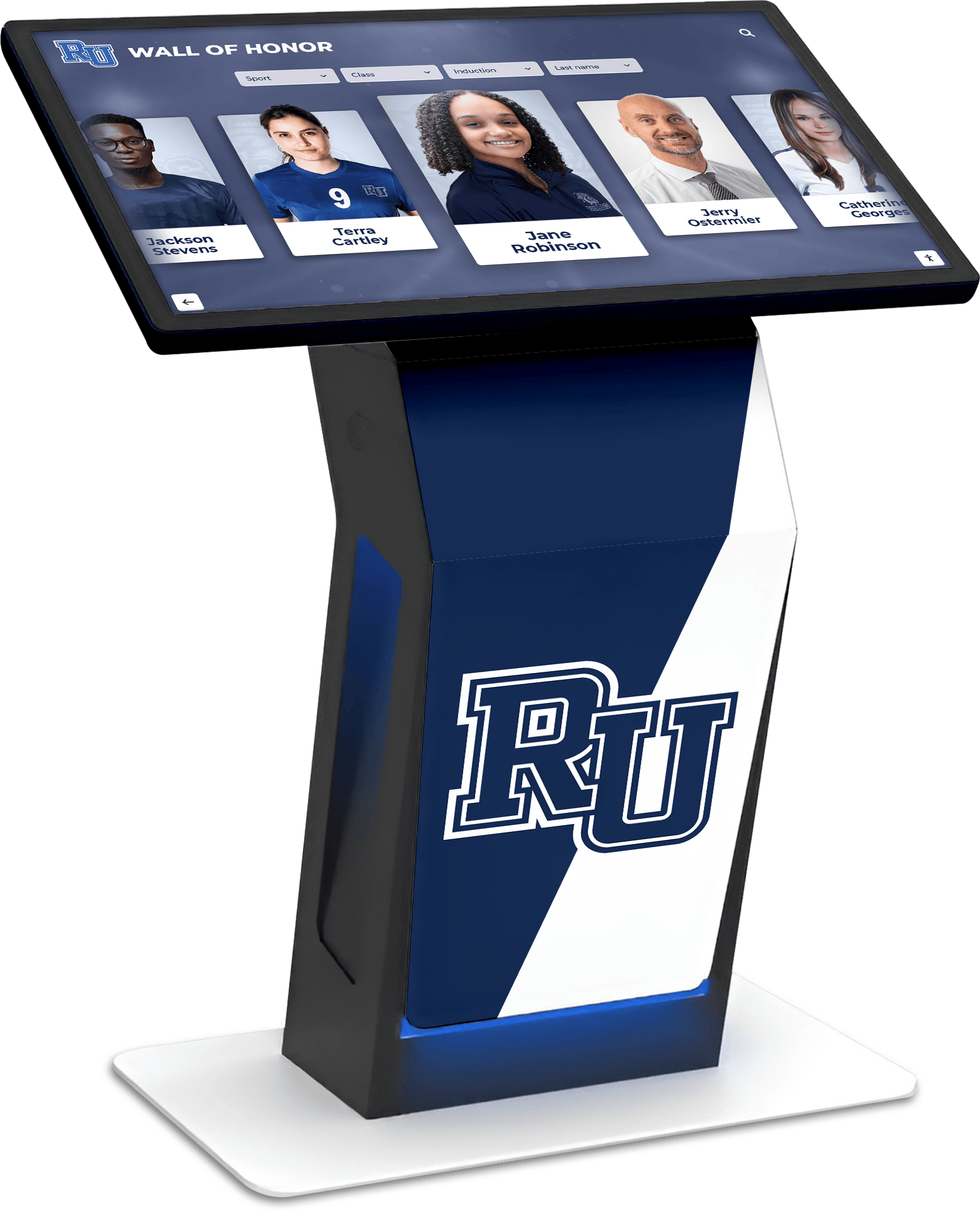
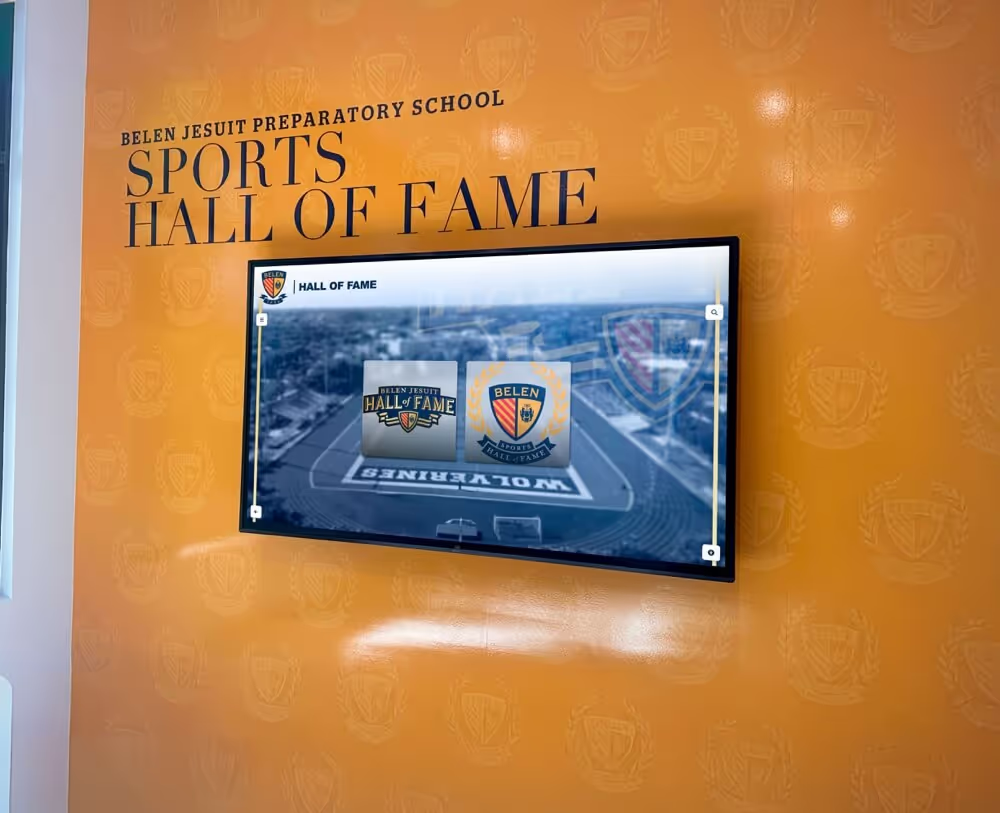
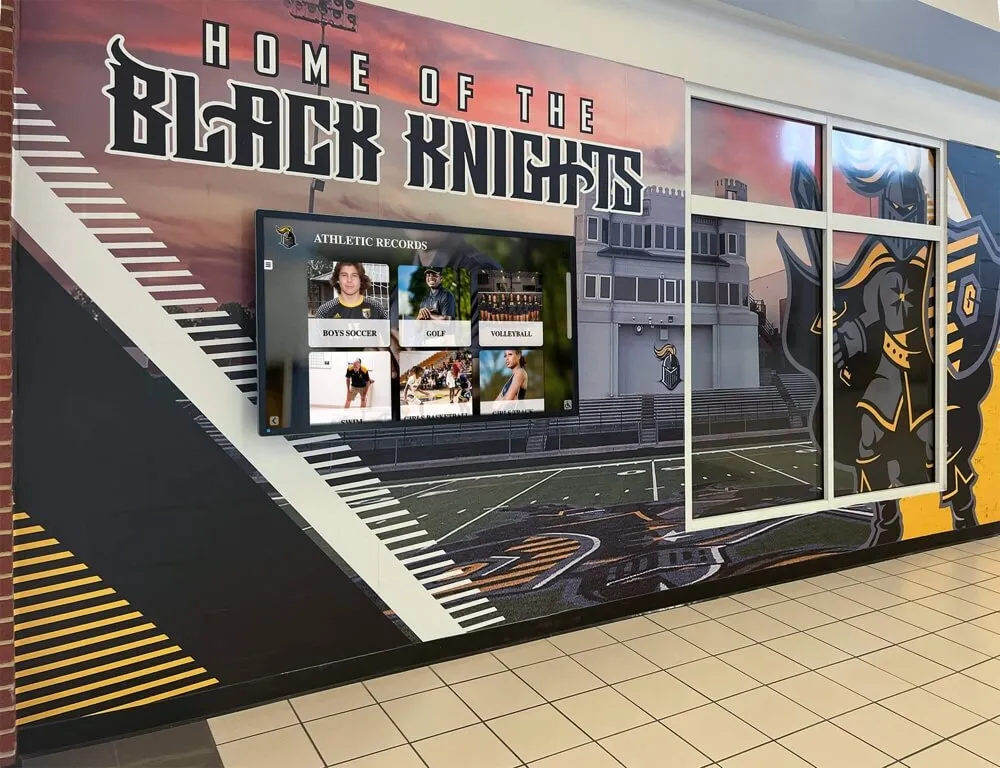
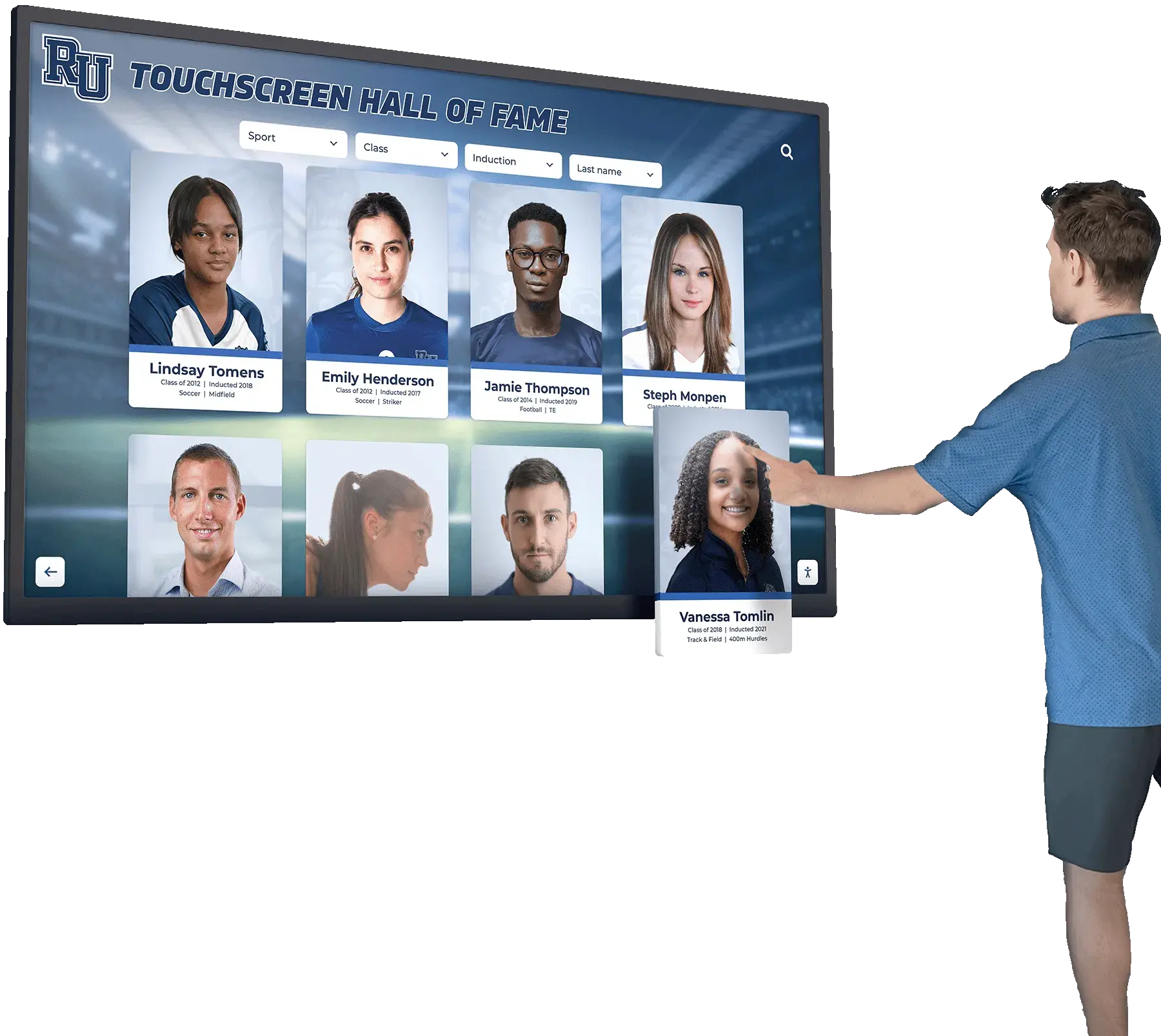
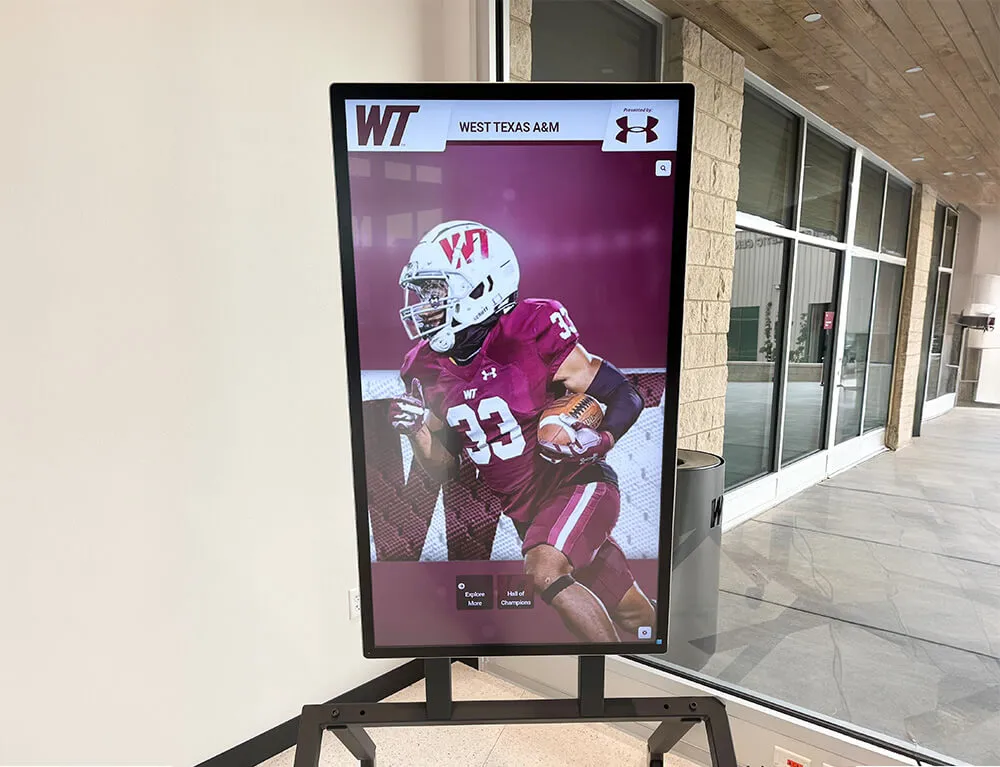
Interactive touchscreen recognition kiosks allow visitors to explore program history in depth — browsing achievement records, individual profiles, and historical archives through intuitive touch navigation
Building an Orchestra Hall of Fame
A performing arts hall of fame is among the most powerful recognition investments an orchestra program can make — and it is more accessible to implement than most directors assume.
What Makes a Performing Arts Hall of Fame Work
The most effective performing arts halls of fame apply the same criteria framework as athletic halls of fame: defined induction criteria, a formal nomination and selection process, a public induction ceremony, and a permanent display that records inductees in lasting form.
Induction criteria models for an orchestra hall of fame:
- Alumni who pursued professional careers as performers, composers, music educators, or conductors
- Students who earned all-state or equivalent elite regional recognition during their time in the program
- Long-serving directors whose tenure built the program’s foundational culture and competitive identity
- Students who achieved extraordinary combinations of musical excellence and academic achievement
- Community supporters and donors whose contributions enabled significant program development
The induction ceremony: An annual or biennial induction ceremony held in conjunction with a major concert creates natural attendance synergy. Inductees are recognized publicly, brief biographies are read, and inductee profiles are formally added to the recognition display. The ceremony gives the hall of fame moment weight that a quiet administrative update cannot.
Recognition frameworks for extracurricular and academic programs demonstrate that formal recognition programs work effectively for any program with ongoing membership and measurable achievement — not exclusively for athletics. The hall of fame framework is transferable, and orchestra programs fit it naturally.
Connecting Alumni to the Current Program
A hall of fame creates a natural bridge between the current program and its alumni — a resource that pays dividends in mentorship, donor relationships, and program continuity. Orchestra alumni who are formally inducted into a hall of fame or recognized on a permanent display maintain connection to the school in ways that passive alumni do not.
That ongoing connection has practical benefits: alumni who feel genuinely recognized by the institution are more likely to return as guest performers at major concerts, mentor current students, contribute to booster fundraising campaigns, or advocate for the program during budget discussions. The recognition investment creates an alumni relationship investment — and that relationship sustains programs through the budget cycles and administrative changes that otherwise erode fine arts funding.
Schools that have built recognition systems using interactive digital touchscreen installations consistently find that recognition programs create community investment well beyond the immediate honoree. Families, friends, and community members who attend recognition events develop emotional connections to programs and institutions that translate into lasting engagement and support.
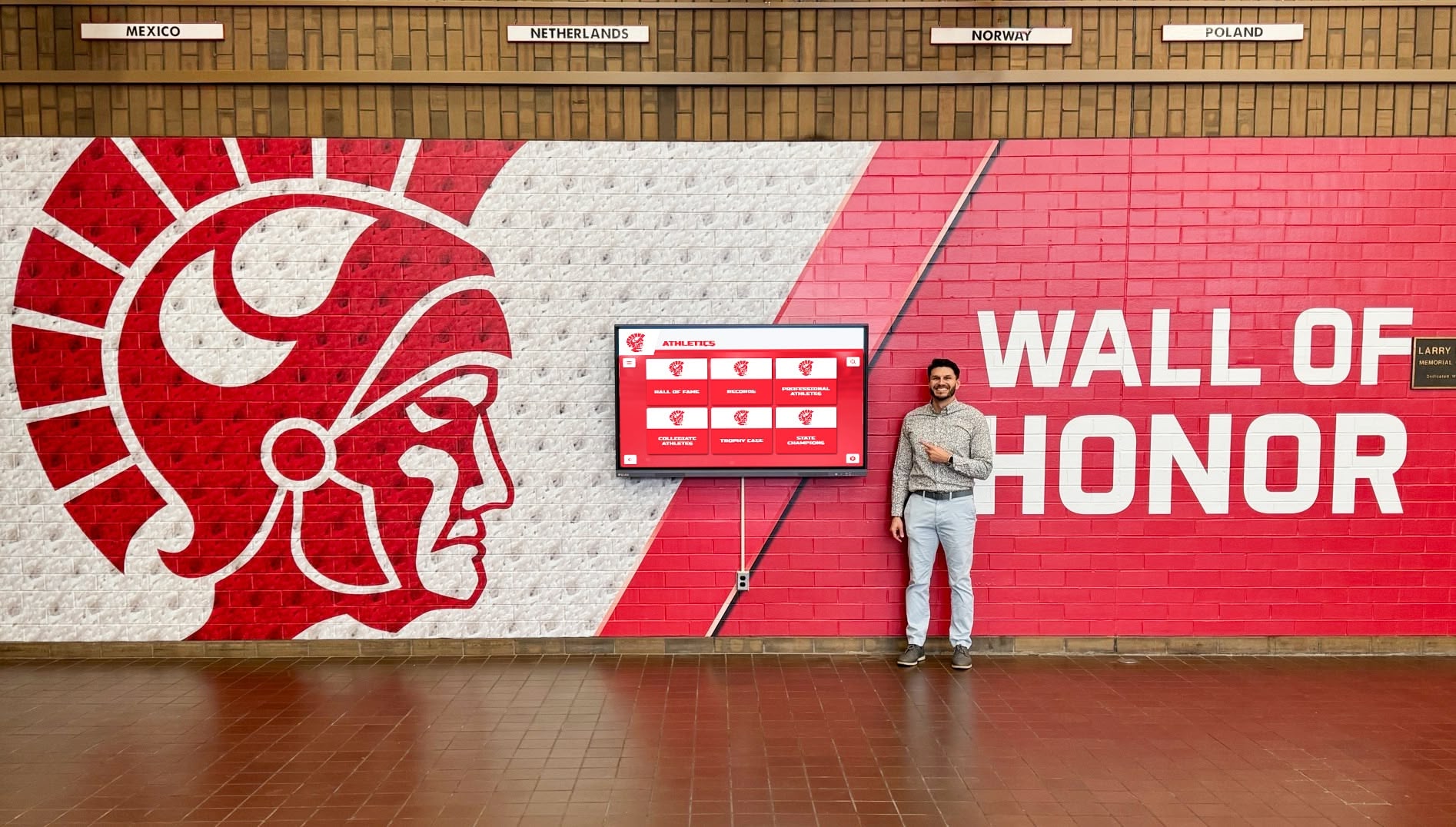
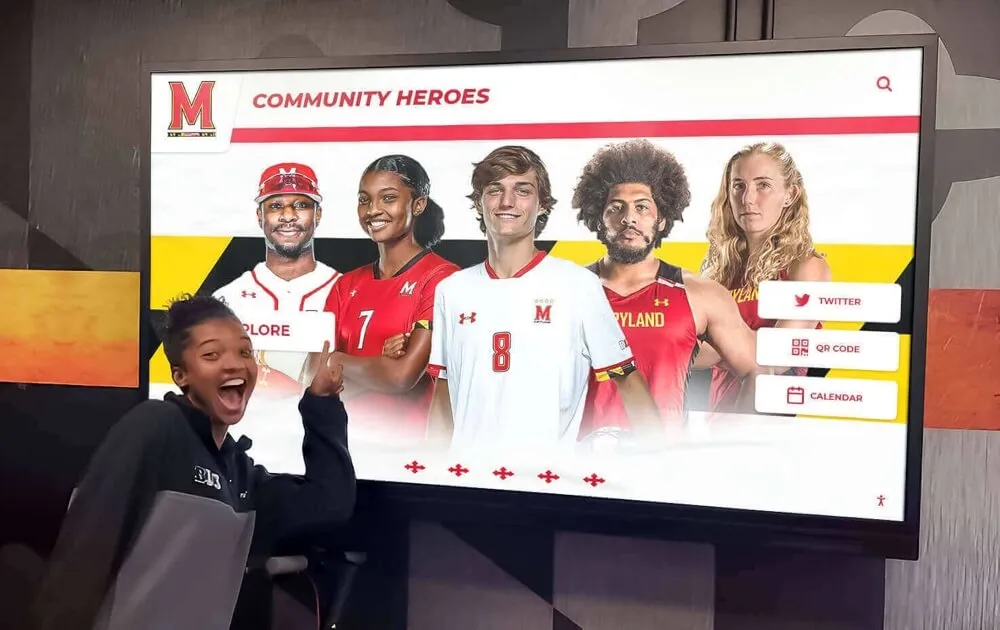
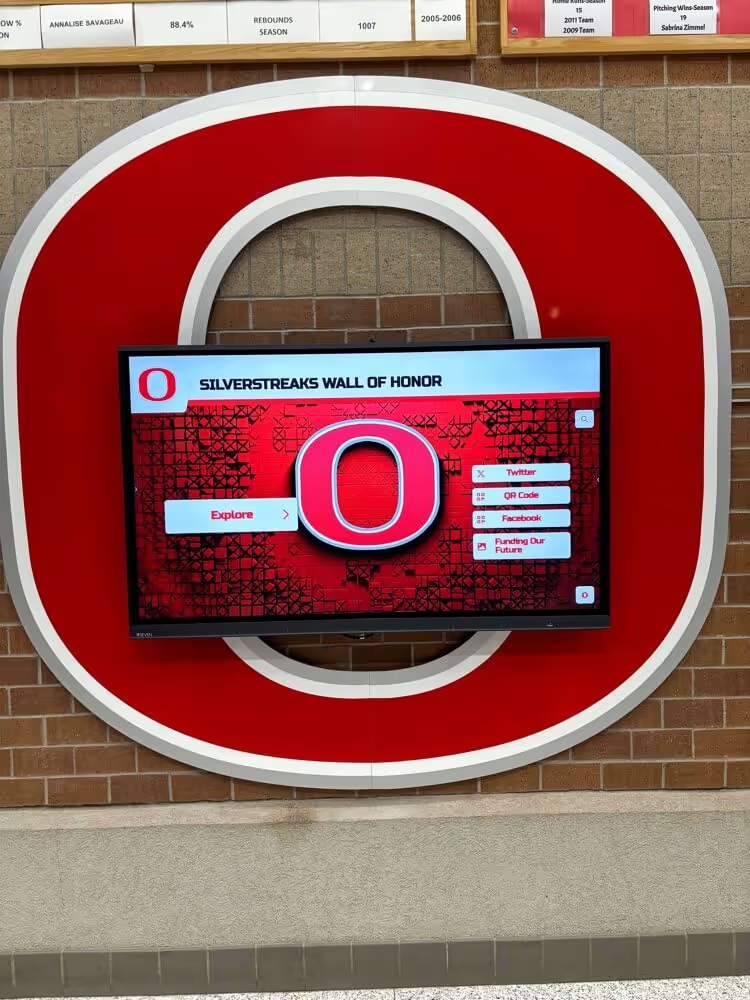
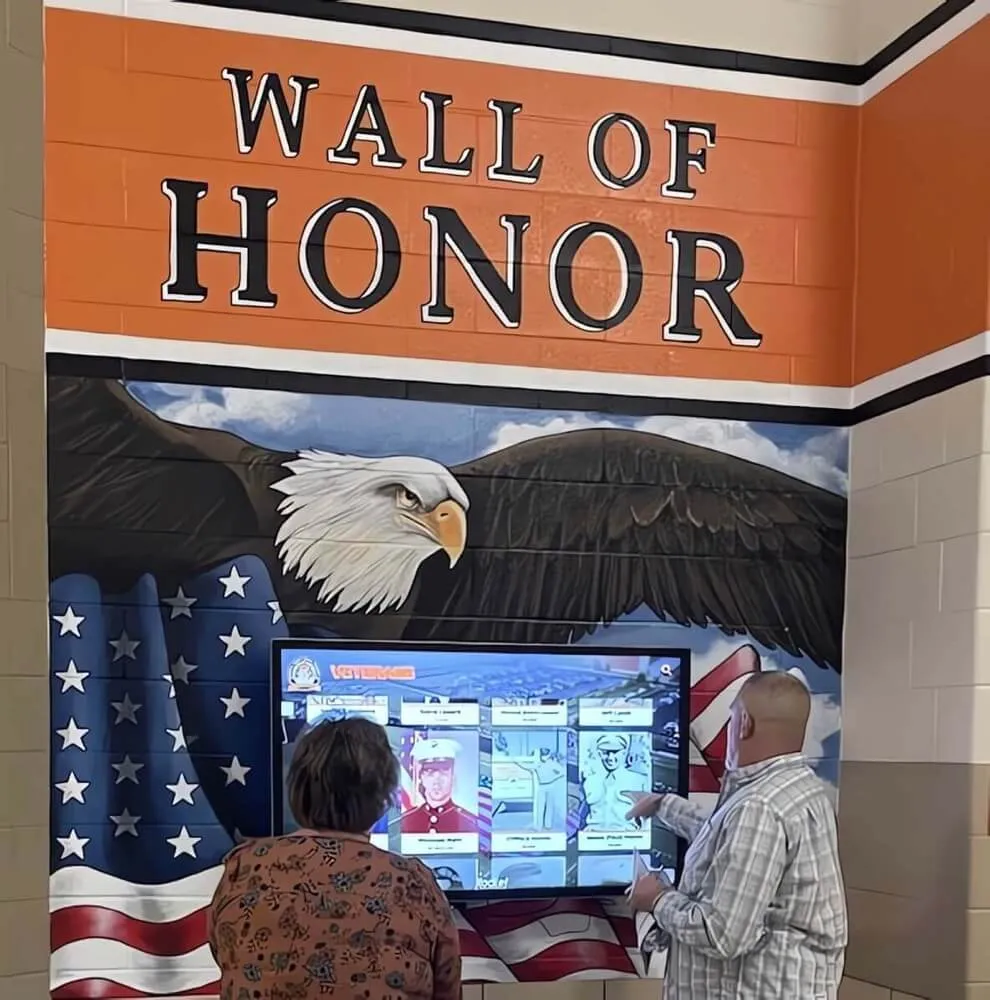
Wall of honor displays in school hallways create visible institutional recognition that students, families, and visitors actively engage with — communicating program values through permanent public presence
Frequently Asked Questions
How do schools recognize students in orchestra programs?
Schools recognize orchestra students through end-of-season awards banquets, fine arts letter programs, senior recognition ceremonies at final concerts, all-state honor announcements in school-wide communications, and permanent digital displays. The most effective programs combine immediate recognition at the concert, medium-term ceremony through awards events, and permanent records through digital systems that preserve program history for future students.
What awards should a school orchestra program give?
Effective categories include outstanding musician of the year, most improved musician, principal chair awards for each section leader, solo performance awards, chamber music excellence recognition, and citizenship awards for leadership and mentorship. An academic excellence category honoring students who balance strong academics with rigorous musical participation extends recognition across the full scope of student achievement.
How can a school create a permanent display for orchestra achievements?
Schools can create permanent orchestra displays through digital recognition systems in fine arts hallways or music wing entrances — displaying achievement records, all-state selections, first chair histories, concert program archives, and alumni profiles. Interactive touchscreen versions allow visitors to browse full program history. Static options include recognition plaques, framed achievement boards, and dedicated banner installations in the music wing.
Should orchestra students be recognized like athletes in schools?
Yes. Orchestra students who earn all-state selections, hold first chair through competitive audition, and participate for multiple years have demonstrated commitment and excellence that fully justifies recognition equivalent to athletic letter winners and hall of fame inductees. Research from the National Association for Music Education documents consistent academic and developmental benefits from music participation — recognition parity honors that achievement and supports program recruitment and retention.
What is an all-state orchestra and how significant is the selection?
An all-state orchestra assembles the top high school musicians in a state through competitive auditions evaluated by professional musicians with no institutional connection to the student’s home school. Selection represents externally validated, elite achievement — the performing arts equivalent of all-state athletic honors, worthy of identical institutional recognition treatment including permanent display records and school-wide announcements.
Conclusion: Beyond the Final Bow, Recognition That Lasts
Every orchestra concert represents months of collective work, competitive chair assignments, technical development, and artistic collaboration that deserves recognition well beyond a curtain call. Schools that build formal recognition infrastructure for fine arts programs — awards systems, permanent digital displays, hall of fame programs, and all-state honor traditions — close the recognition gap between athletics and the arts in ways that benefit current students, recruit future ones, and honor alumni who built the program’s legacy.
The tools exist. Digital recognition systems give fine arts programs the same permanent, visible recognition infrastructure that athletics has long enjoyed. Awards programs adapted from proven athletic models translate directly to the specific excellence criteria of orchestral music. Hall of fame programs for performing arts follow the same framework as athletic halls of fame — and generate the same community investment in return.
The standing ovation is a beginning. What comes after it — in the hallways, in the display cases, in the digital archives accessible to anyone who visits the music wing — is where lasting recognition takes shape. Students who see their program honored permanently are students who commit to it with genuine pride. Alumni who find their achievements recorded in a school’s recognition system remain connected and supportive for decades. That is the value of treating orchestra concert recognition as the institutional investment it deserves to be.
Ready to Build Lasting Recognition for Your Music Program?
Rocket Alumni Solutions creates interactive digital recognition walls and touchscreen displays that give fine arts programs — orchestras, bands, choirs, and theater — the same visible, permanent recognition infrastructure as athletics. Preserve your program's history and honor your students' achievements for generations to come.
Explore Recognition Solutions