

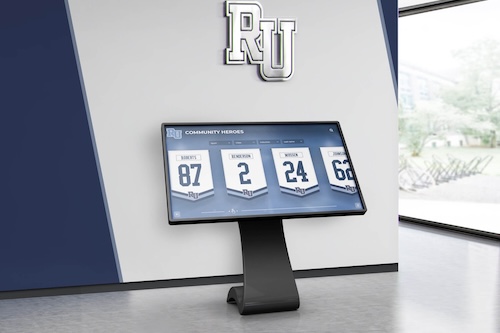

Every athlete who once sprinted a 60-yard dash or cleared a hurdle at a height no longer on today’s schedule left something real behind — a number, a name, a moment that mattered to their team and community. A thoughtful retired track event records display keeps that performance visible and honest, showing visitors exactly what the record was, in the original category where it was set, without pretending the competition is still alive or erasing the effort that earned it.
This guide is for athletic directors and records custodians who manage a digital recognition board and need to decide how to handle events or classification categories that no longer appear on the current meet schedule. The answer is not to delete the record or to quietly fold it into an unlike event. The answer is to present it clearly — in its own section, with original information intact — so every visitor understands both the history and the present at a glance.
A retired event record is not a broken record. It is not a vacated performance or a disqualified athlete. The event category stopped being contested; the record did not stop being true. An athlete who ran the 60-yard dash in a year when that race appeared on the schedule holds a genuine school record in that event. Nothing about a later schedule change rewrites what that athlete accomplished.

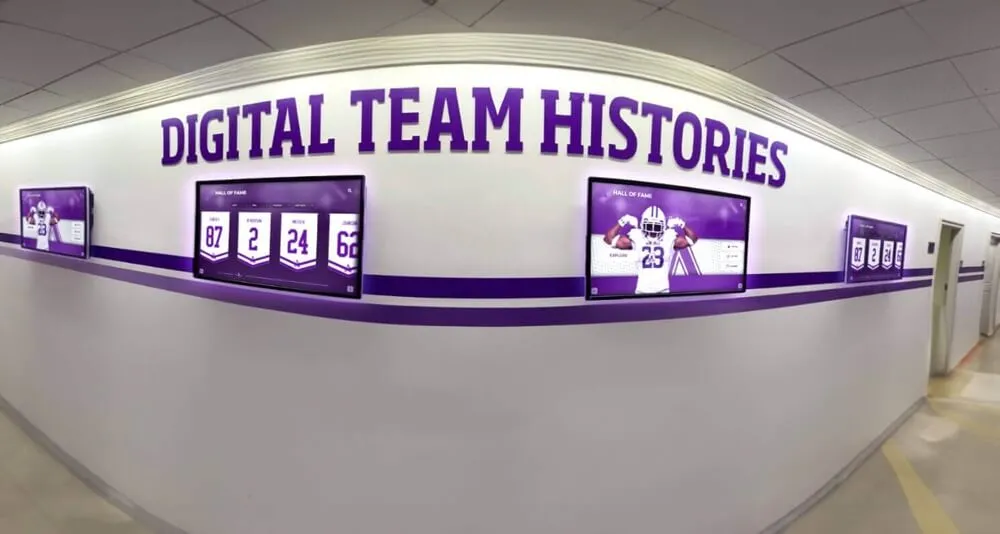
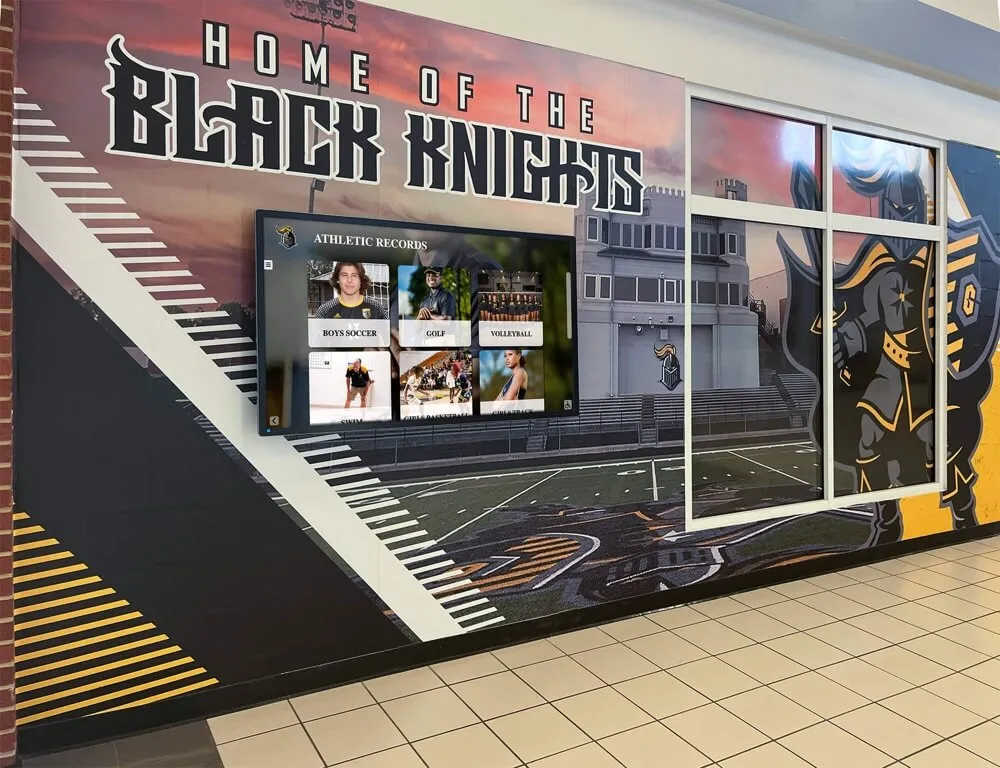
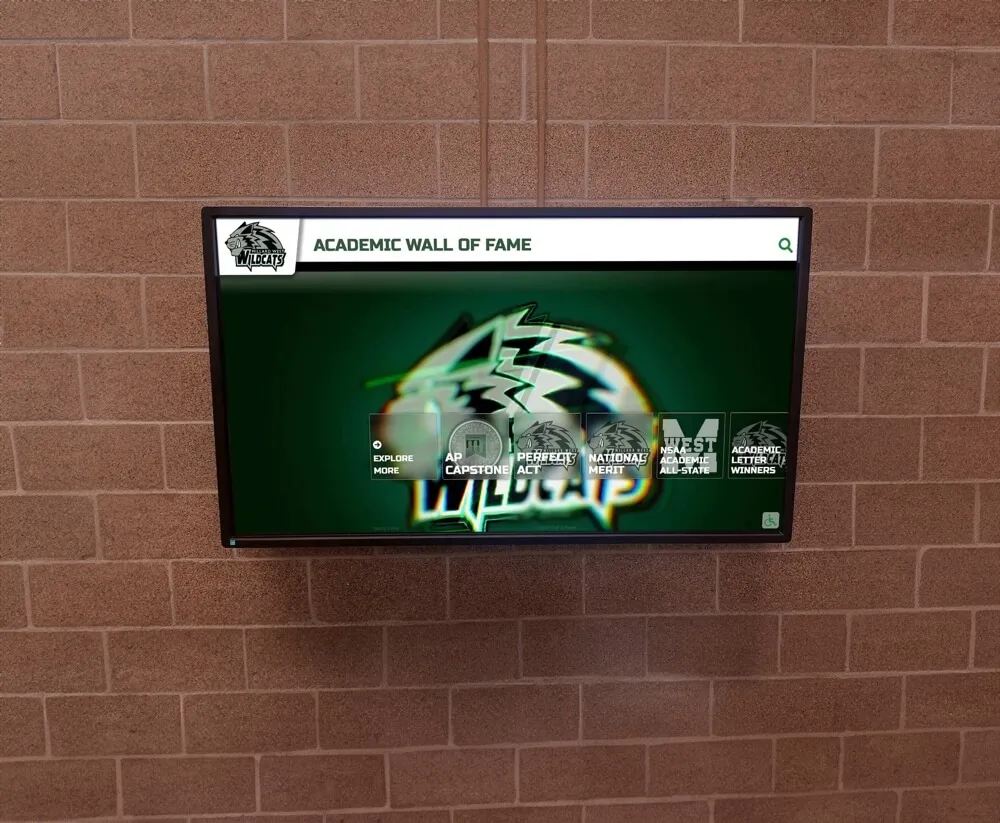
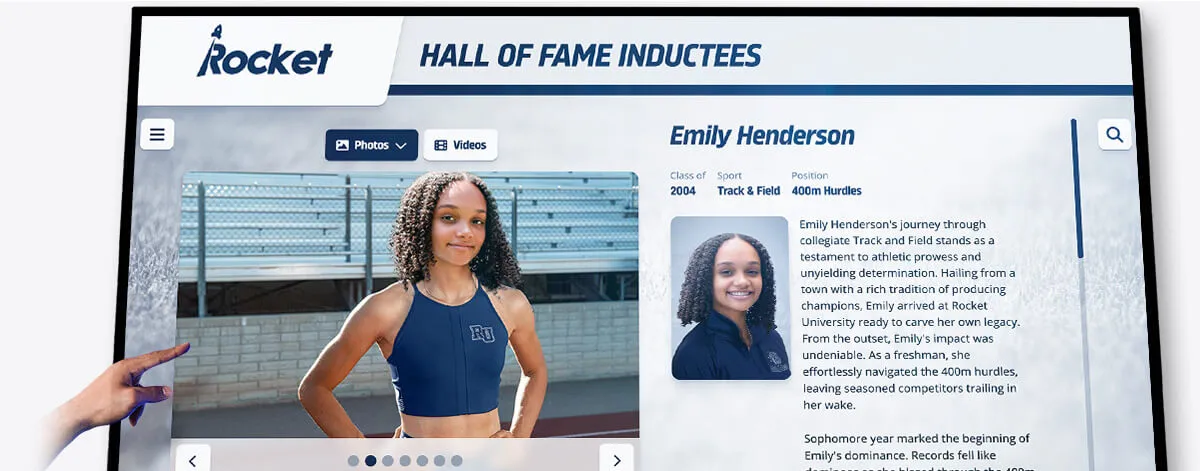
A digital recognition board presents track records by event and classification exactly as they were earned, giving visitors the full picture.
What “Retired Track Event” Actually Means
A track event is retired when the governing body or school stops including it on competition schedules — not because any athlete did anything wrong, and not because the performance is now considered invalid. The 60-yard dash and the 440-yard run are familiar examples at the prep level: real races, timed by certified officials, producing genuine performances that schools properly recorded. When those distances gave way to metric equivalents, or when classification systems reorganized into divisions, the old events left the schedule. The school records tied to those events did not.
The same logic applies to classification-based records. If a state association organized finals by Class A, B, and C and later transitioned to a division structure, a Class A school record from 1998 is a Class A school record. It is not a Division 1 record, not a generic all-time school record pending conversion, and not an error to be corrected. It is history presented accurately.
Understanding this distinction matters before any label goes on a display. Staff sometimes reach for language like “vacated,” “invalid,” or “pending review” when they encounter an unfamiliar event name in old documentation. None of those terms fit a legitimately set record in a legitimately run event that simply no longer appears on the calendar. The right frame is historical, not erroneous.
How Associations Demonstrate Good Practice
Some state associations model the two-section approach in their own published records. The Michigan High School Athletic Association maintains track and field records pages that include distinct Retired Track & Field Records sections alongside current records. The MHSAA Boys Track & Field records page and the MHSAA Girls Track & Field records page each note that imperial running events and individual Class records are retired, and that Lower Peninsula and Upper Peninsula class-to-division transitions occurred in 2000 and 2001.
That published structure — current records in one area, retired records clearly labeled in another — offers a useful reference point for how a school’s own digital display can handle the same distinction. One important note on scope: the MHSAA Finals meet records describe performances set at the association’s championship meets under a specific classification structure. That does not automatically govern every Michigan school’s own all-time school records policy, nor does it instruct each school to retire its internal records at the same moment the association changed its finals structure. Those are separate questions worth raising with whoever holds authority over your school’s record documentation.
Plan Two Clearly Titled Sections
The most visitor-friendly approach on a digital recognition board is to give current-event records and retired-event records their own named sections, each with an unambiguous heading.
Current Records — lists events that appear on today’s meet schedule. Organized by event, by gender, or by team according to your display’s layout. Update this section as new verified marks are set.
Historical Records (or “Retired Event Records”) — lists events or classification categories that are no longer contested. Each entry in this section preserves:
- The original event name and distance or height in original units. Do not relabel “440-yard run” as “400 meters” — they are different events run under different conditions.
- The original performance and original units as recorded in your source documentation.
- Athlete or relay team identity as it appears in the source. Do not adjust spelling or fill in missing names by guessing.
- The year the record was set.
- The classification or division as it appeared at the time, if applicable.
- The source you verified against: meet results, the athletic office’s own records, or state association documentation.
- A brief context note indicating that this event is no longer contested.
If documentation for a particular entry is incomplete, mark that field “Awaiting verification” rather than guessing. A missing field is far more honest than a filled but wrong one, and it signals to future staff that follow-up is needed.
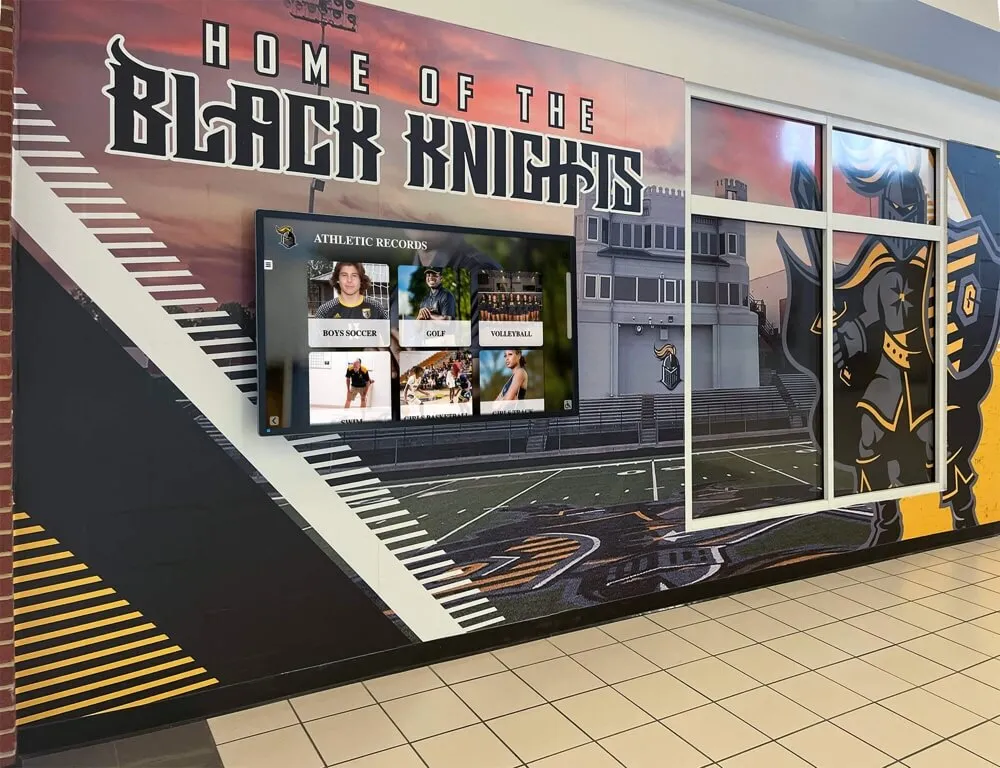
Distinct current and historical sections — with clear headings — give every visitor the context they need to appreciate both eras of a program.
Caption Template and Content-Planning Table
A standard blank template for staff to complete reduces the risk of missing fields or inconsistent labels across entries. Copy and adapt these for your school’s workflow.
Blank Caption Template
Complete one of these for each historical record entry before it appears on the display:
[Original Event Name — Original Distance or Height — Original Units]
[Athlete Name or Relay Members] — [Year Set]
[Classification or Division at time of record, if applicable]
Mark: [Original Performance and Units]
Source: [Document or database where this was verified]
Note: Historical — event no longer contested
Reviewed by: [Name and Title] on [Date]
If a field cannot be verified, replace its bracketed value with Awaiting verification rather than leaving it blank in the public display. Internal planning notes to staff are different from what appears on the board itself.
Blank Content-Planning Table
Work through every candidate historical entry in a planning document before publishing. The fields below are suggestions for your internal workflow — they are not built into any particular display platform:
| Field | Entry 1 | Entry 2 | Entry 3 |
|---|---|---|---|
| Original event / category | |||
| Original mark and units | |||
| Athlete(s) or relay | |||
| Year set | |||
| Classification / division | |||
| Source document | |||
| What changed and when (if verified) | |||
| Approved historical label | |||
| Reviewer name and date |
Fill every row before staging an entry for publication. Entries with more than one unverified field should wait until documentation is found rather than go live with guesses filling the gaps.
Who to Ask Before You Label
Placing a record in the historical section is an editorial decision your staff or your school’s records authority makes. It is not automatically issued by a state association, and a state association’s decision about its own championship records does not automatically determine your school’s internal records policy.
Before finalizing any entry in the historical section, ask the relevant authority these questions:
- Which events or classification categories does your school officially treat as retired, and as of what date?
- Are there any events where a school-level record is still considered current even though a state association has retired its classification at the championship level?
- Has anyone at the appropriate authority level authorized a direct comparison between an old imperial performance and a metric equivalent for official school-record purposes?
That last question matters for displays in particular. Conversion formulas exist and are routinely used for meet seeding, but a seeding conversion does not automatically produce a new official school record in a different event. A 60-yard dash and a 60-meter dash are different events. If there is any question about whether a conversion has been authorized for official record purposes, the display entry should say “Awaiting verification” rather than showing a converted number presented as a record claim.
Similarly, do not invent dates for when events changed, invent final record holders in events where your documentation is incomplete, or apply blanket rules about implement weights or hurdle heights across eras without a verifiable source. State each fact on the display only when documentation supports it.
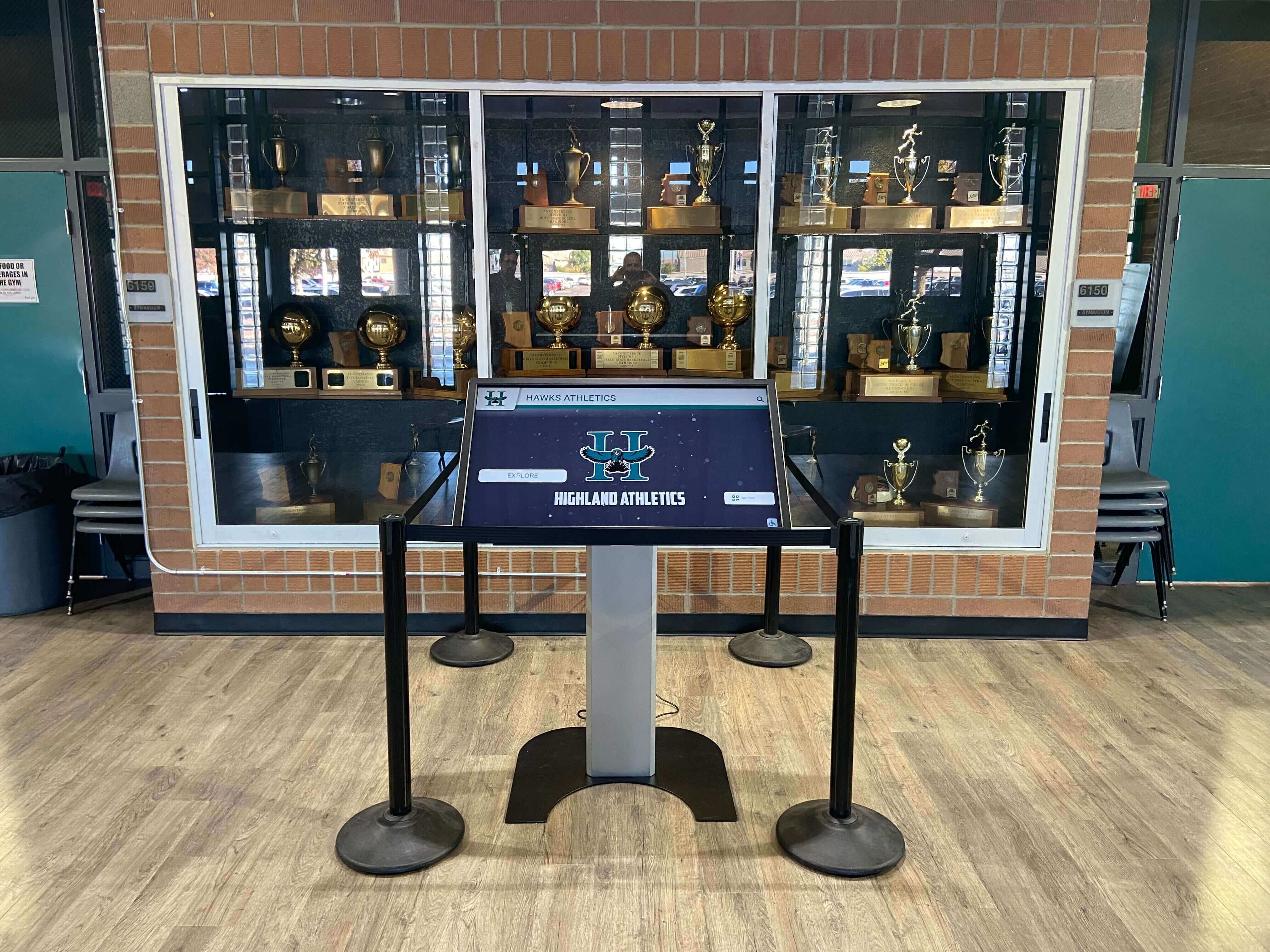
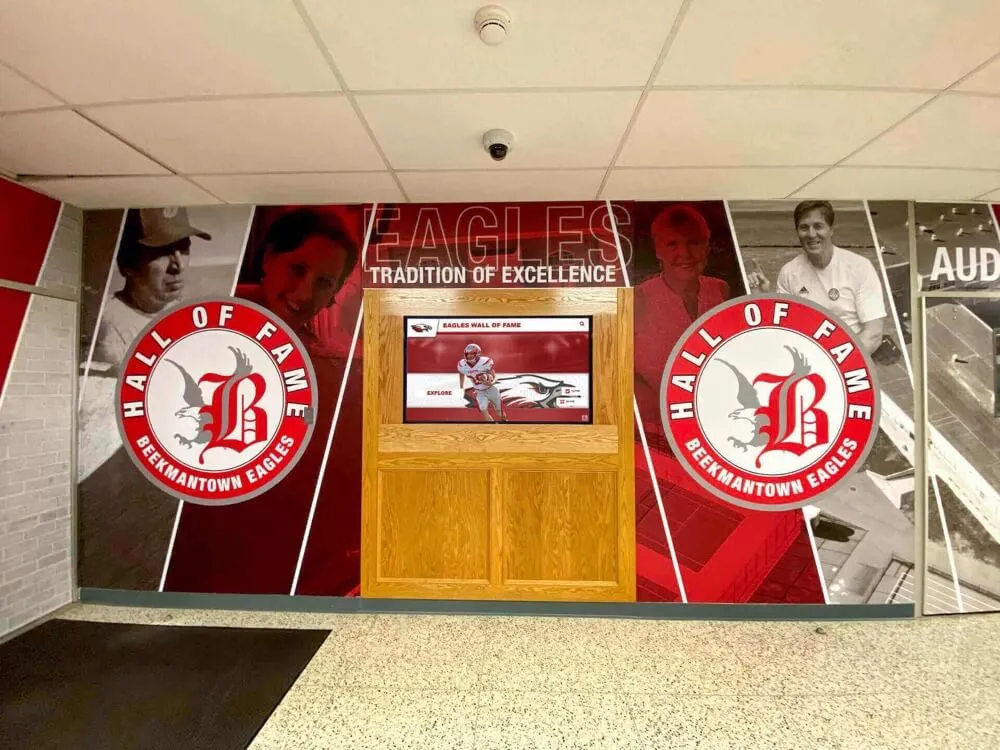
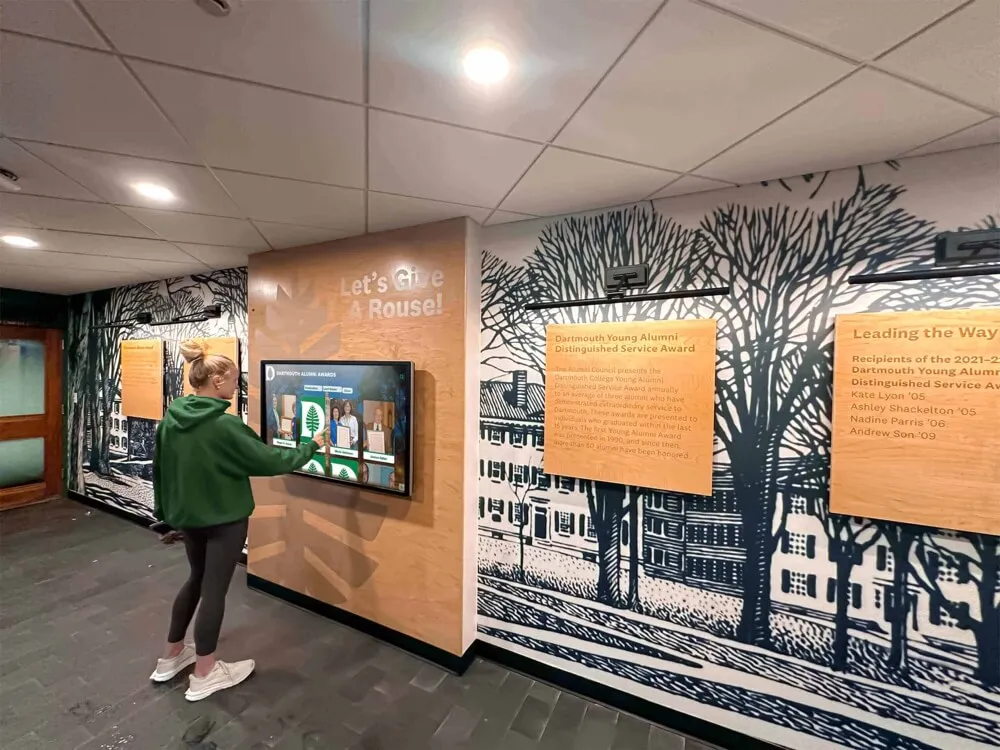
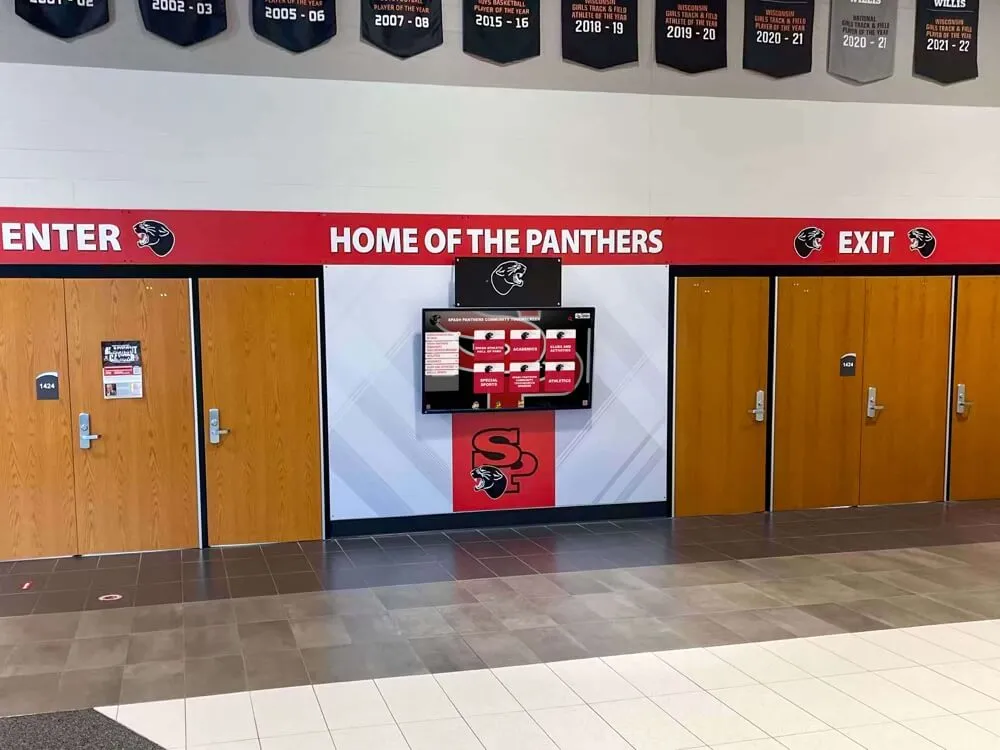
Placing a digital records board alongside existing trophy displays lets visitors connect history and current achievement in a single visit.
Display Hierarchy in Ordinary Language
Visitors to your digital recognition board should understand what they are looking at without needing to read an explanatory paragraph. Use this structure:
1. Current Records — placed prominently, labeled plainly: “Current Records” or “[Sport] School Records.” These are events on today’s schedule with marks that are open to being broken. This section should be the first thing visitors find when they navigate to records.
2. Historical Records — a visually distinct section, reached easily from the records area, labeled clearly: “Historical Records” or “Retired Event Records.” Use a different background band, a section divider, or a header that makes the distinction immediately obvious before a visitor reads the first entry. Original units stay in this section exactly as recorded — 60 yards is 60 yards on this display.
3. Context note — one or two sentences is enough: “These records were set in events or classifications no longer part of the current meet schedule. Performances are presented in original units as verified.” Anything longer risks overwhelming the records themselves.
4. Source and date notes — each historical entry carries enough information that a future records custodian can trace the documentation. A format such as Source: [Office name or document], verified [Month Year] keeps it legible without turning the display into a bibliography.
Human review of records is a step your staff completes before content reaches the screen. The display itself presents what your staff has verified and approved — it does not perform verification on its own.

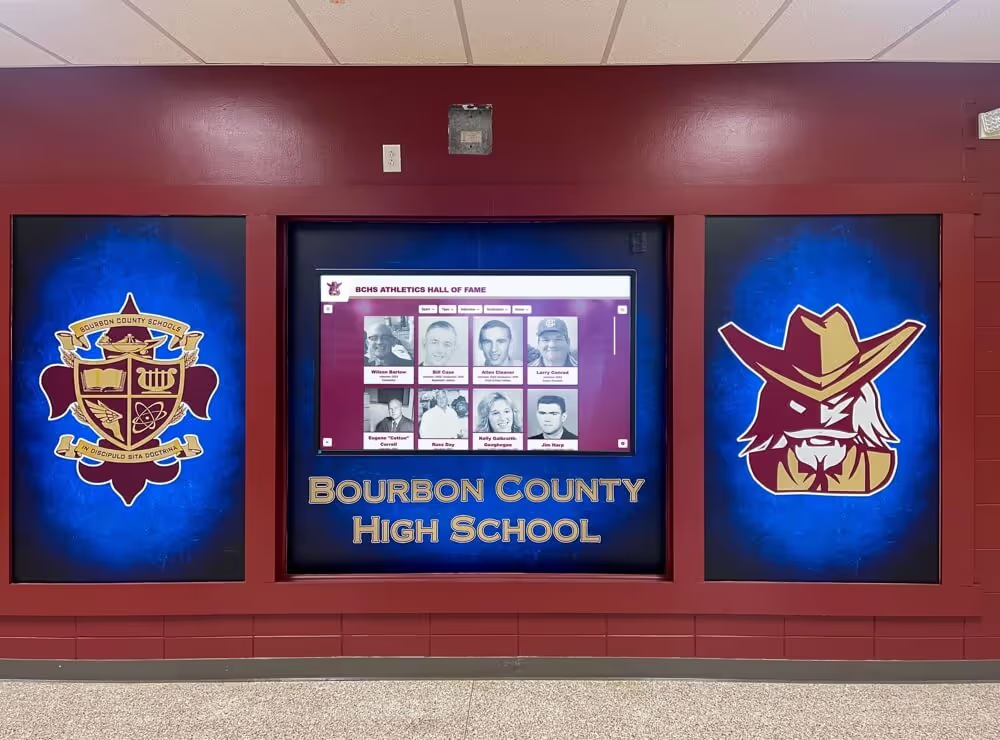
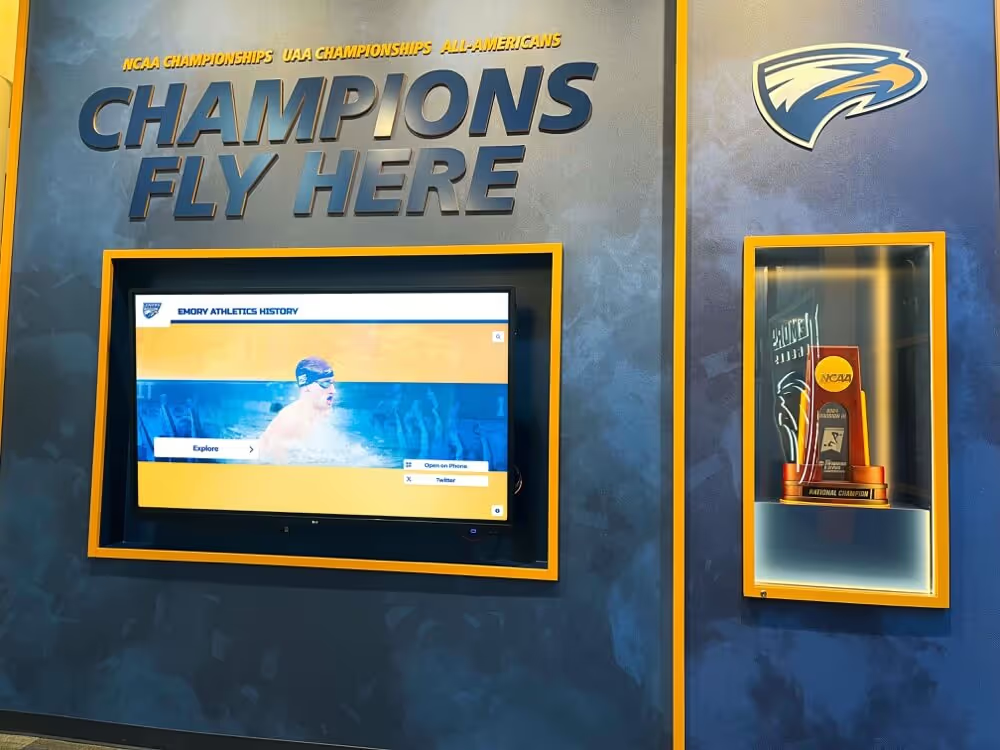
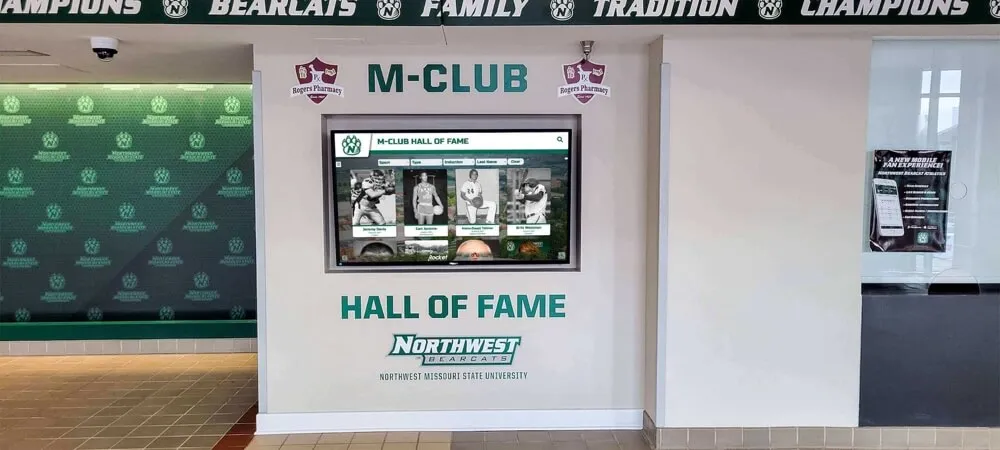
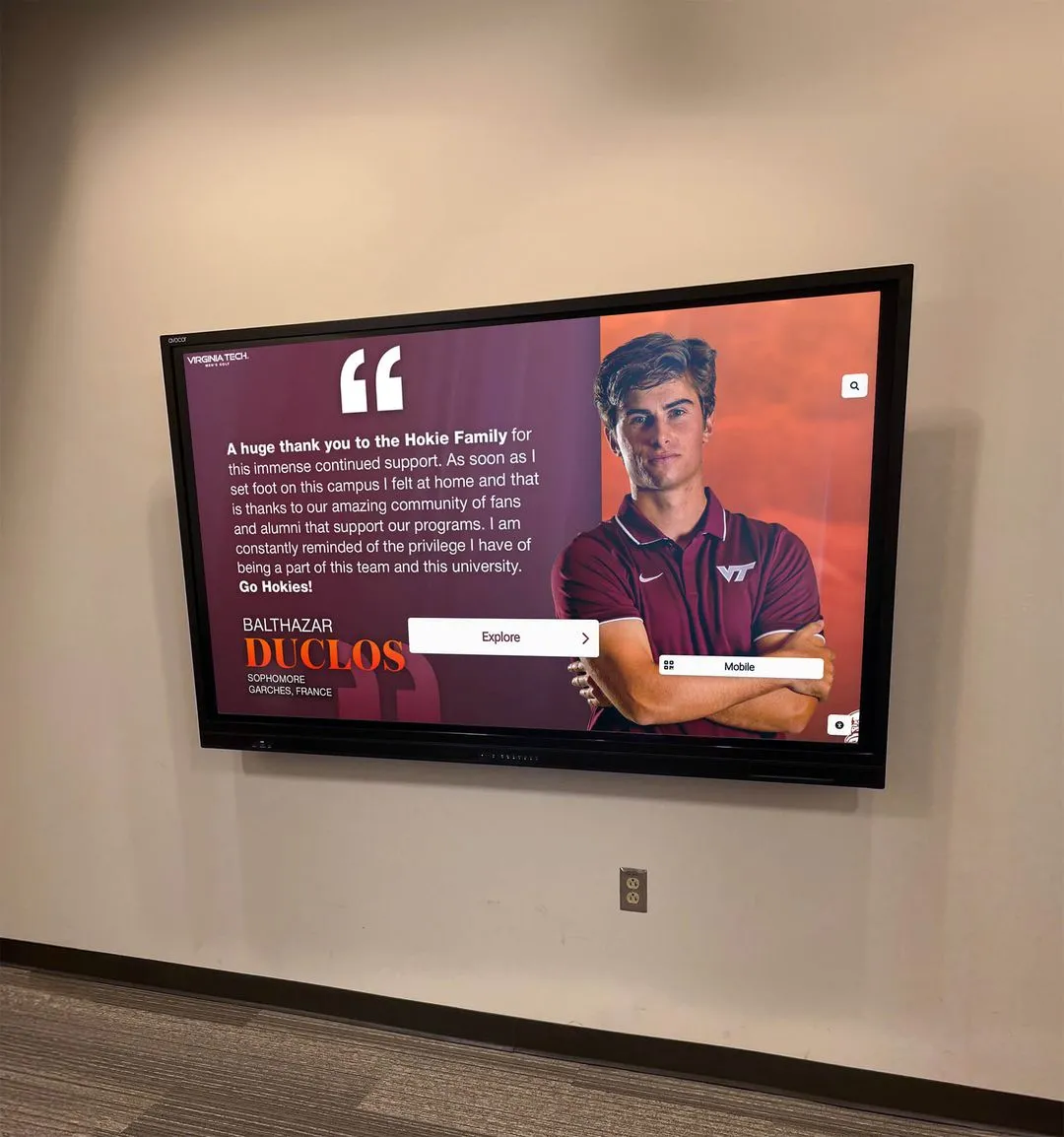
Clear visual organization — separate sections with distinct headers — tells visitors immediately which category each entry belongs to.
Presenting History on a Digital Recognition Display
Rocket Alumni Solutions helps organizations present approved photos and achievement stories in an interactive recognition display. A digital board built for athletic recognition can hold a Current Records section and a clearly labeled Historical Records section side by side — making it easy for staff to assign a context note, preserve original units, and attach a source reference to every entry. Visitors can navigate by sport, era, or event without needing to understand the administrative decisions behind each section.
Verify-Label-Preview-Publish Checklist
Before any historical track record goes live on your digital display, work through each step:
- Verify the mark: Confirm the original performance against the source document. Record the source name and the date you checked it.
- Verify the athlete or relay: Confirm identity against the same or a corroborating source. Mark uncertain fields “Awaiting verification.”
- Verify the event details: Confirm the event name, distance or height, and units exactly as they appear in the original record documentation. Do not convert or relabel.
- Verify the retirement designation: Confirm that the appropriate authority has designated this event or classification as retired for your school’s records — not just at the state championship level.
- Label: Apply a consistent editorial label across all historical entries. An example: Historical — event no longer contested. This is your school’s editorial note, not an association-issued certification.
- Preview: Review the full entry on the display before publishing. Confirm the historical section is visually distinct from the current records section and that the context note is visible.
- Publish: Activate the entry. Record who reviewed and approved it, and the date, in your internal planning table.
- Archive: Keep the original source documentation and the internal planning table entry on file. These stay in your school archive and are not deleted when the display goes live.
- Correction contact: Make a contact point visible — a staff name or department email address — so that family members or alumni who spot a discrepancy have a way to reach someone.

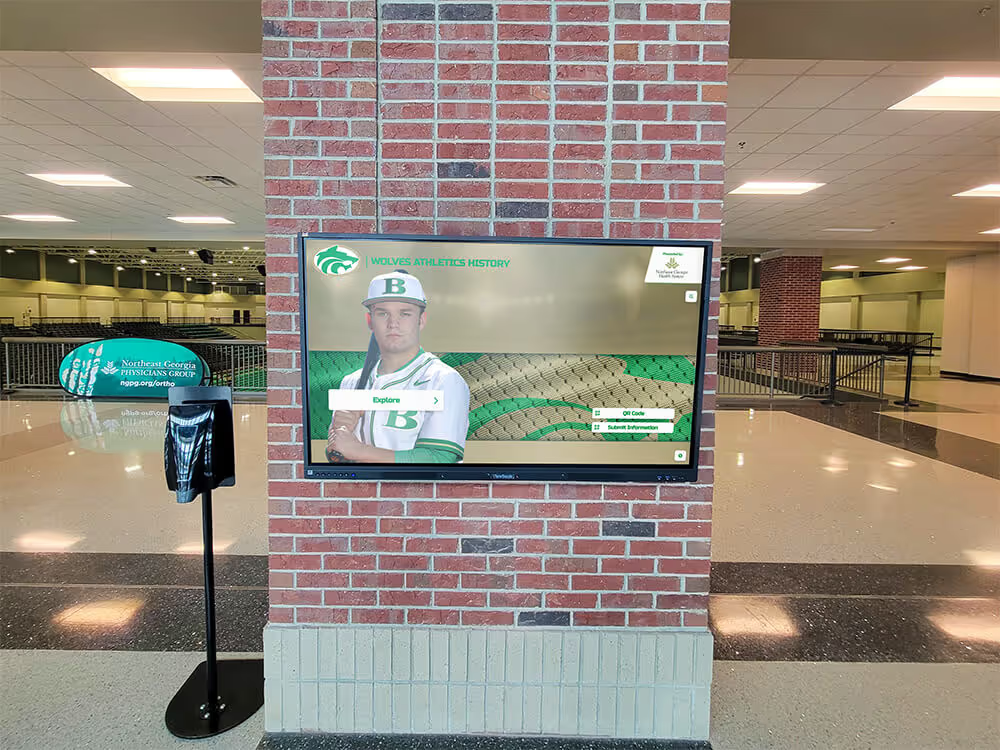
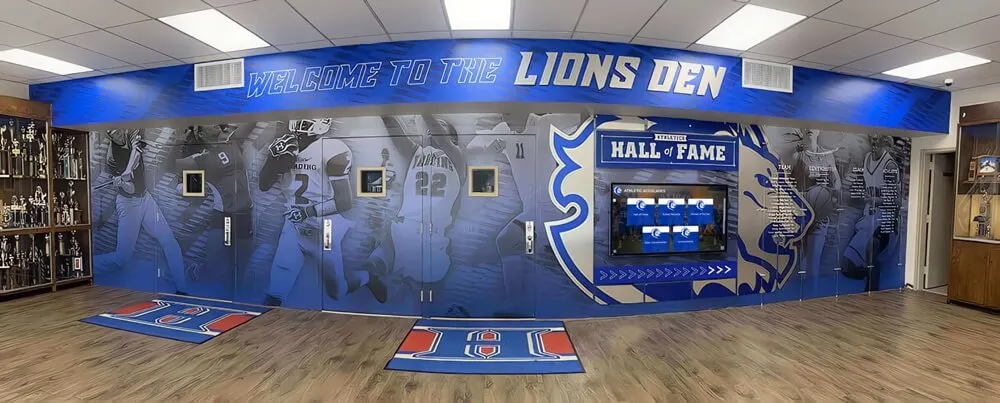
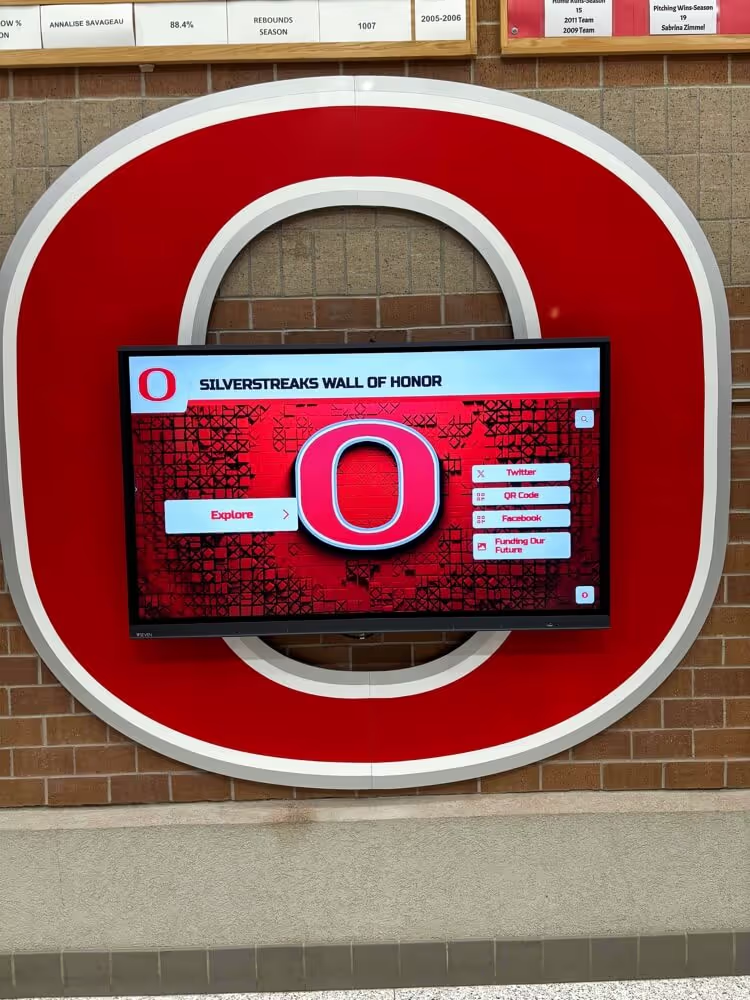
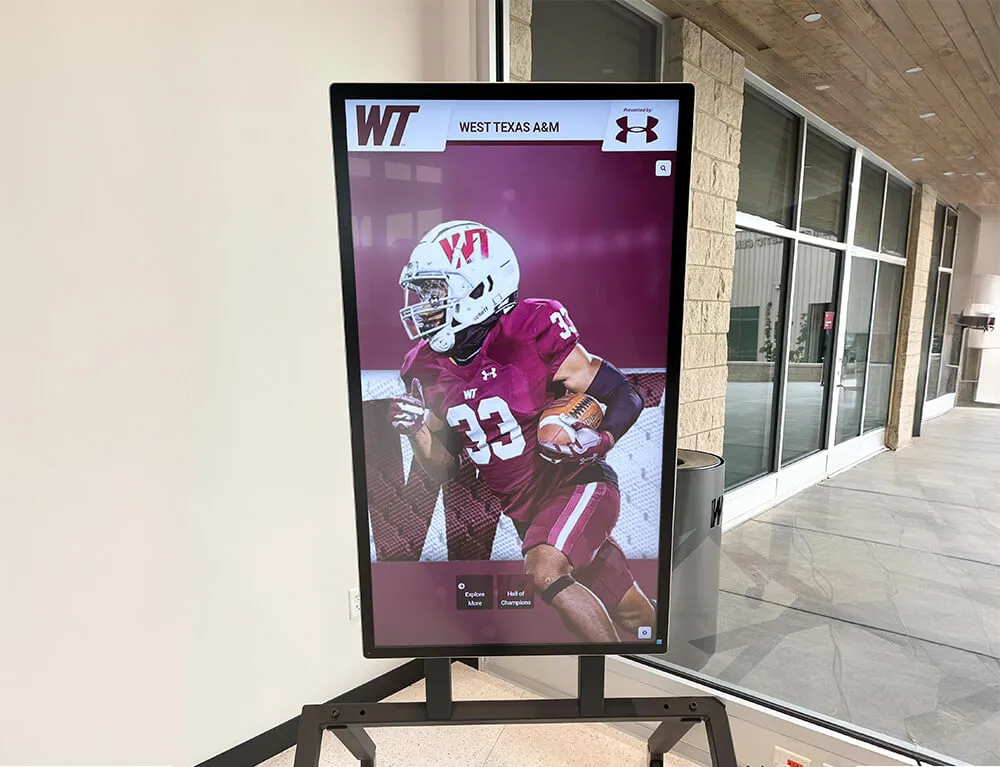
Interactive navigation lets visitors move between current and historical sections easily — keeping historic records as accessible as today's champions.
Frequently Asked Questions
What does it mean for a track event record to be “retired”?
A retired track event record means the competition category — the specific event, distance, or classification — is no longer part of the current meet schedule. The performance itself remains valid. The athlete competed in a real, sanctioned event and the record reflects that result honestly. “Retired” describes the event, not the mark or the athlete.
Should retired track event records be removed from a school’s digital records display?
Removing them would erase genuine history. The appropriate step is to move them into a clearly labeled historical section, preserve all original information including event name and original units, and add a brief note explaining that the event is no longer contested. This gives visitors full context without implying the records are still open to being broken.
Can a 60-yard dash time be converted to meters and posted as a new school record in the 60-meter dash?
Not without authorization from your school’s records authority. Conversion formulas used for meet seeding do not automatically produce a new official school record in a different event. A 60-yard dash and a 60-meter dash are different events run under different conditions. If there is any question about whether a conversion is authorized for record purposes, label the entry “Awaiting verification” and consult whoever holds authority over your school’s records.
Who decides what label goes on a retired event record on the display?
Your school’s athletic director, records custodian, or equivalent authority makes that editorial decision. A state association’s decision about its own championship records applies to those championships; your school’s all-time records may follow a different policy. Confirm the applicable policy for your school before publishing any label.
What information should appear on a historical track record entry in a digital display?
At minimum: the original event name and distance in original units, the athlete or relay identity, the year the record was set, the classification or category if applicable, the source document, a brief note that the event is no longer contested, and the reviewer name and date. Any field that cannot be verified should read “Awaiting verification” rather than contain guessed information.
Conclusion
A careful retired track event records display does two things at once: it preserves the pride of athletes who competed in good faith under the rules that existed at the time, and it tells today’s visitors exactly what they are looking at. Separate sections, original units, honest labels, and verifiable sources protect both the historical record and the integrity of your current records board.
Genuine history is worth the effort of presenting it carefully. Performances that earned a place on your records board belong on your display — in their own section, clearly identified, with original details intact, and available to every community member who wants to understand where your program has been.
Related Resources
Finding and cross-checking school sports record source materials — a practical guide to locating and verifying the documentation behind school athletic records before they go on a display.