



Navigating swim meet events for the first time can feel overwhelming for new swimmers, parents, and even beginning coaches. Between individual medleys, butterfly sprints, distance freestyles, relay teams, and age group divisions, competitive swimming presents a unique structure that differs significantly from land-based sports. Understanding the complete landscape of swim meet events—from the standard Olympic distances to age group specialties, from individual races to relay formats—enables swimmers to compete strategically, parents to follow competitions meaningfully, and coaches to develop athletes effectively.
Unlike sports where a single position defines an athlete’s role, competitive swimming offers swimmers opportunities to specialize across multiple stroke types, distances, and event formats. A swimmer might excel in sprint butterfly events while also contributing to medley relay teams, or focus on distance freestyle while occasionally competing in individual medley races. This versatility creates both opportunity and complexity as swimmers, families, and programs navigate event selection, training focus, and competitive strategy.
This comprehensive guide demystifies the complete structure of swim meet events, explaining standard race distances, stroke classifications, relay team formats, age group divisions, and competitive levels from recreational meets through elite national championships—providing swimmers, parents, and coaches with the knowledge to understand, prepare for, and excel in competitive swimming.
Competitive swimming operates within highly standardized event structures developed over decades to ensure fair competition, accurate record-keeping, and progressive athlete development. Whether you’re watching your child’s first age group meet or following Olympic trials, the same core event framework applies, creating consistency and comparability across the sport at all competitive levels.

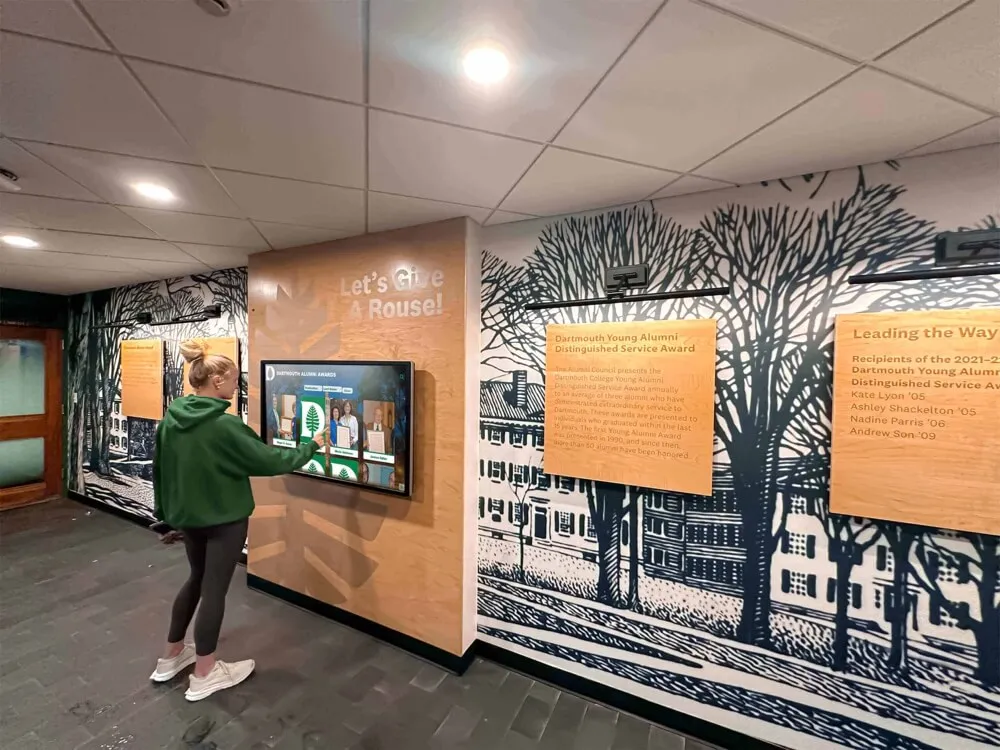
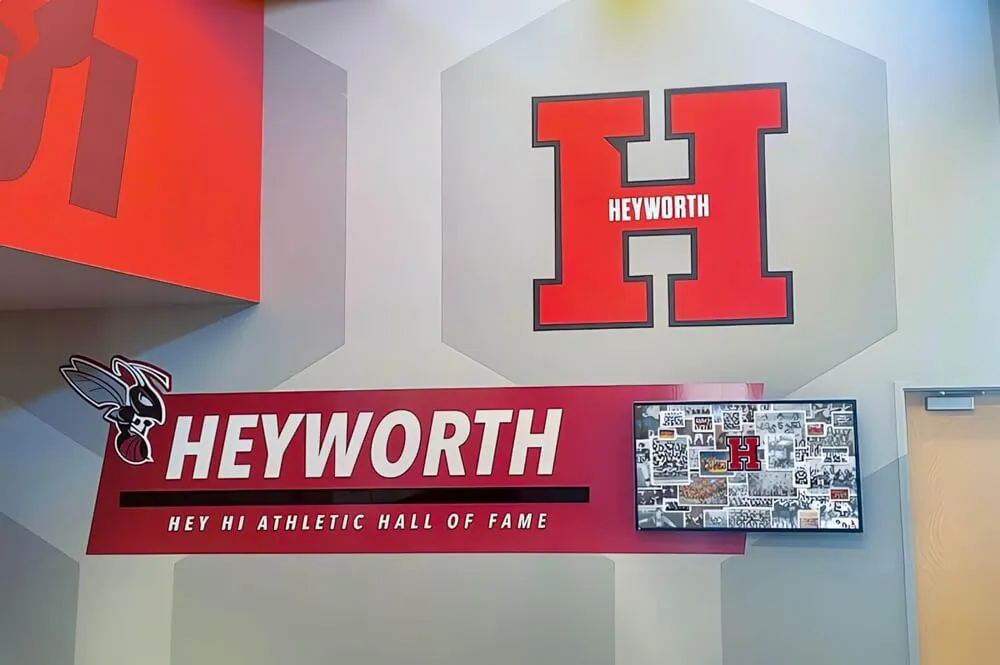
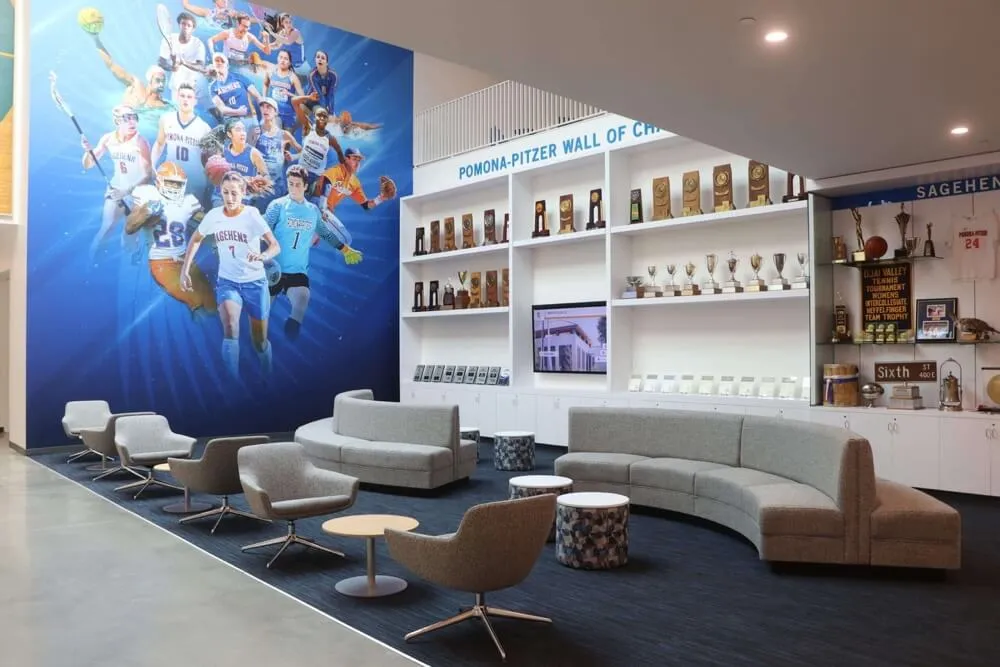
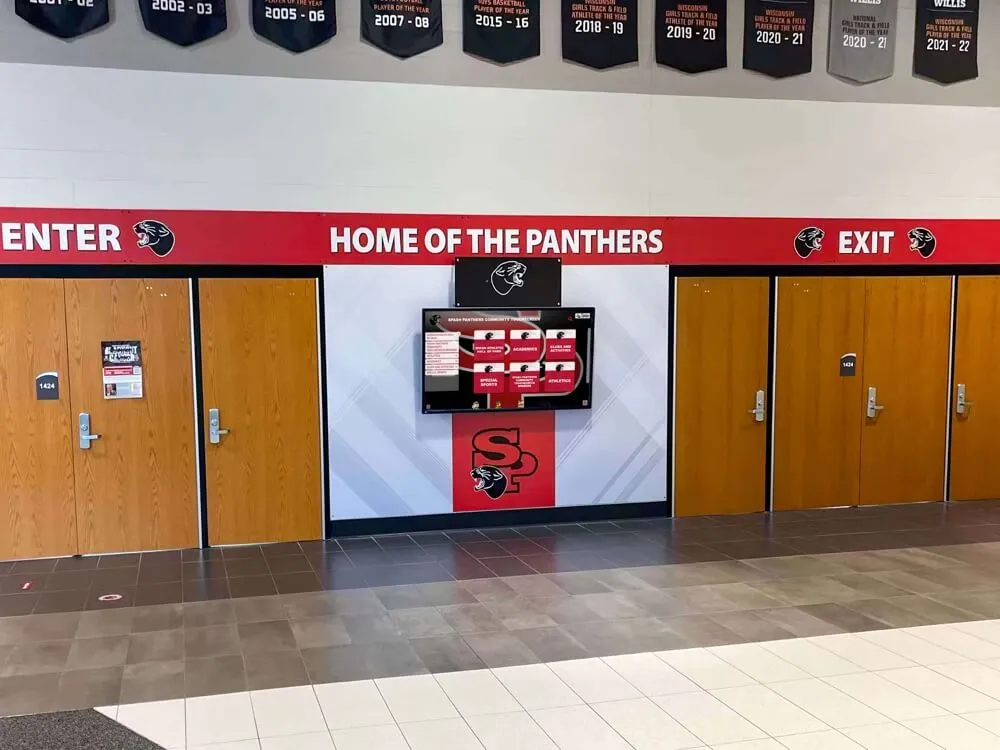
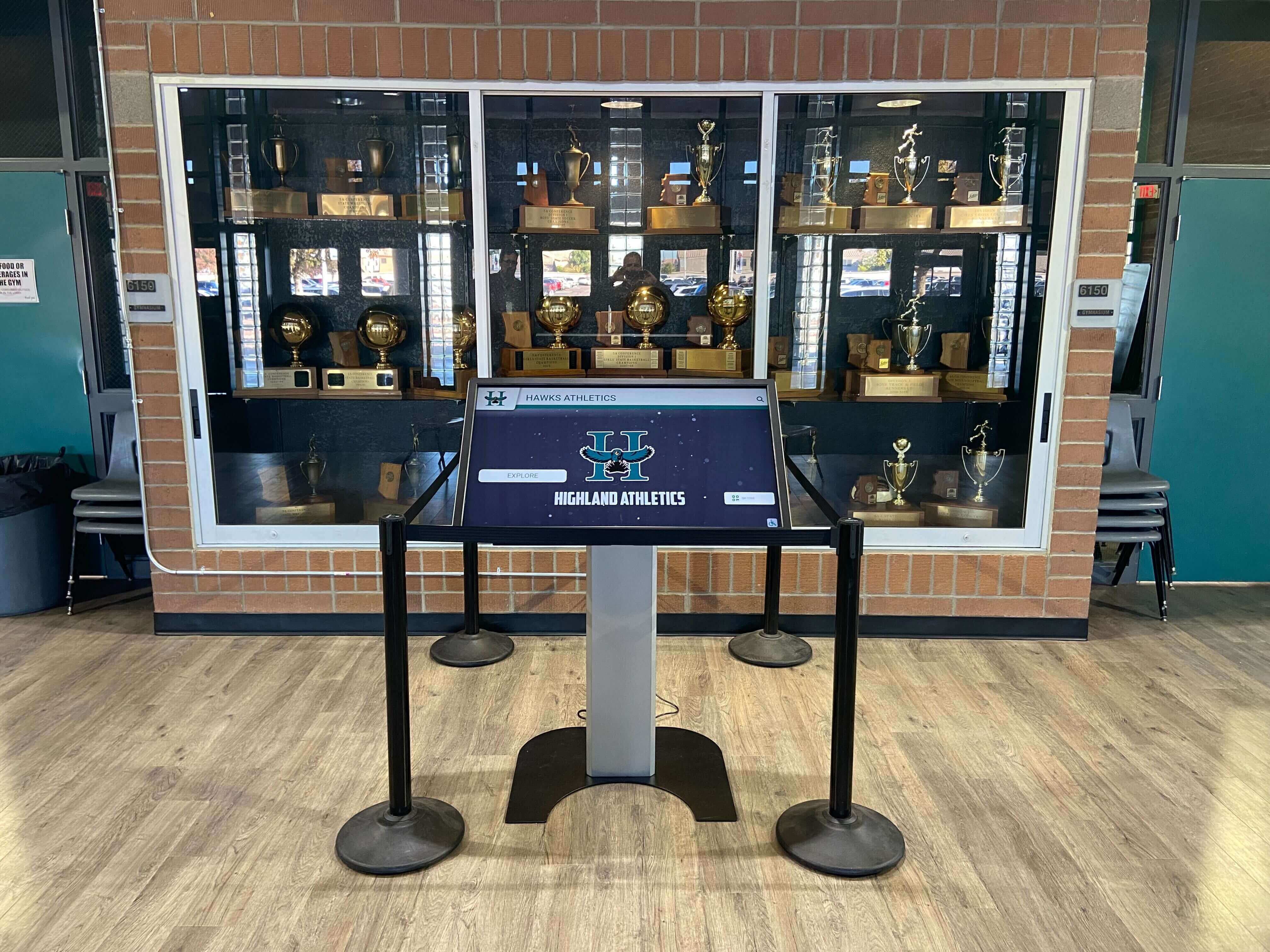
Championship recognition walls preserve swimming excellence celebrating individual and relay achievements across seasons
Understanding the Four Competitive Swimming Strokes
All swim meet events feature one or a combination of four officially recognized competitive strokes. Mastery of these fundamental stroke techniques determines which events swimmers can enter and excel in throughout their competitive careers.
Freestyle Swimming
Freestyle represents the fastest and most versatile competitive stroke, featured across the widest range of distances.
Stroke Characteristics
- Technically refers to “any stroke” but universally swum as front crawl in competition
- Alternating arm pulls with continuous flutter kick
- Regular side breathing rhythm maintaining forward momentum
- Most efficient stroke for covering distance at speed
- Foundation stroke all competitive swimmers must master
Common Freestyle Event Distances
- Sprint distances: 50 yards/meters (one pool length), 100 yards/meters
- Middle distances: 200 yards/meters, 500 yards (400 meters)
- Distance events: 1000 yards, 1650 yards (1500 meters for long course)
- Open water distances: 5K, 10K, and longer marathon swims
Freestyle events at all distances remain the most entered competitions at swim meets, with nearly all swimmers competing in at least one freestyle race. Sprint freestyle (50 and 100) emphasizes explosive power and high turnover, while distance freestyle requires pacing strategy, endurance, and mental toughness.
Backstroke Swimming
Backstroke provides the only competitive stroke swum on the back, creating unique technical and strategic considerations.
Stroke Mechanics
- Alternating arm recovery over water while on back
- Continuous flutter kick providing propulsion and body position
- Looking upward throughout the race except during turns
- Start executed from in the water rather than diving blocks
- Underwater dolphin kick phase after start and each turn
Standard Backstroke Distances
- 50 yards/meters backstroke (sprint)
- 100 yards/meters backstroke (most common championship distance)
- 200 yards/meters backstroke (distance backstroke)
Backstroke specialists develop strong feel for pace and distance without seeing the wall approaching until the final strokes. Flags positioned five yards from each wall provide critical position information helping swimmers time flip turns and finishes without looking.
Breaststroke Swimming
Breaststroke represents the slowest but most technically demanding competitive stroke with strict rules governing legal technique.
Technical Requirements
- Simultaneous arm pull from extended position to chest
- Frog-kick leg action with feet turned outward
- Hands must touch the wall simultaneously during turns and finish
- One arm pull and one kick per stroke cycle
- Head must break the surface during each stroke cycle except after start and turns
Breaststroke Event Distances
- 50 yards/meters breaststroke (sprint)
- 100 yards/meters breaststroke (standard competitive distance)
- 200 yards/meters breaststroke (distance breaststroke)
Breaststroke generates more disqualifications than other strokes due to technical rule complexity. Illegal kicks, non-simultaneous touches, and underwater pullout violations commonly result in disqualification, making technical mastery essential for breaststroke specialists.
Butterfly Swimming
Butterfly combines power, timing, and endurance, representing the most physically demanding competitive stroke.
Stroke Characteristics
- Simultaneous over-water arm recovery in windmill motion
- Dolphin kick typically executed twice per arm cycle
- Undulating body motion coordinating arms, kick, and breathing
- Simultaneous two-hand touch required at turns and finish
- High energy expenditure requiring strength and technique
Butterfly Event Distances
- 50 yards/meters butterfly (sprint butterfly)
- 100 yards/meters butterfly (standard competitive distance)
- 200 yards/meters butterfly (distance butterfly, one of the most challenging events)
The 200-yard butterfly ranks among the most grueling races in competitive swimming, requiring swimmers to maintain technically demanding stroke mechanics while managing lactic acid buildup and fatigue. Elite butterfly specialists possess exceptional shoulder strength, core stability, and mental toughness.
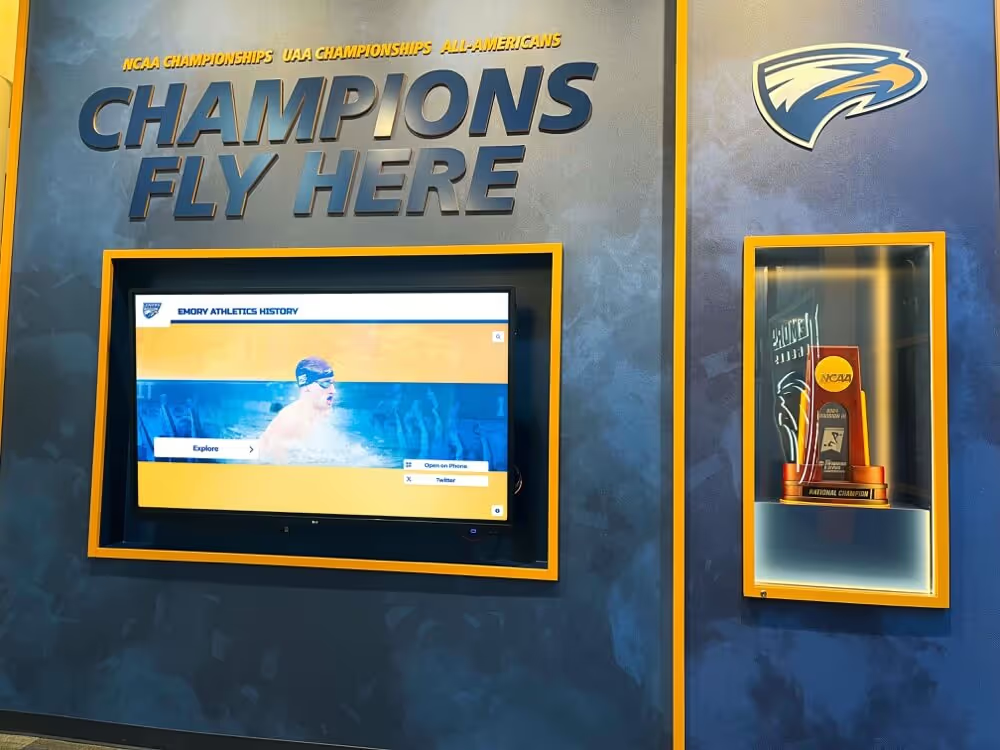
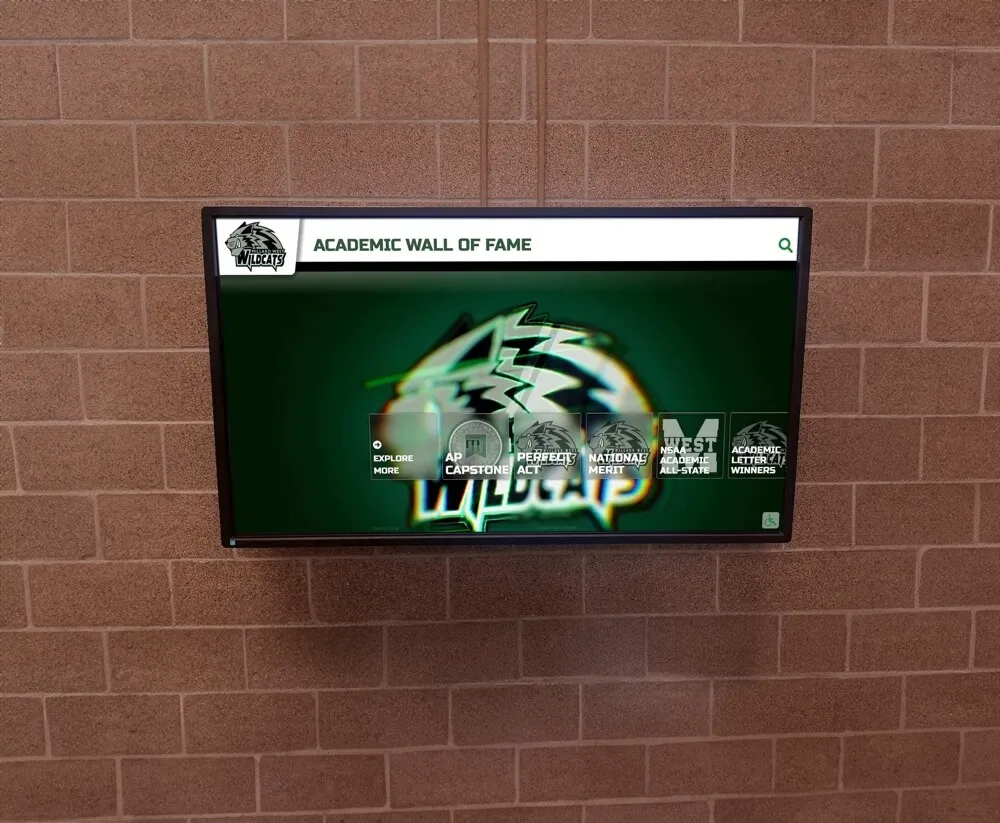
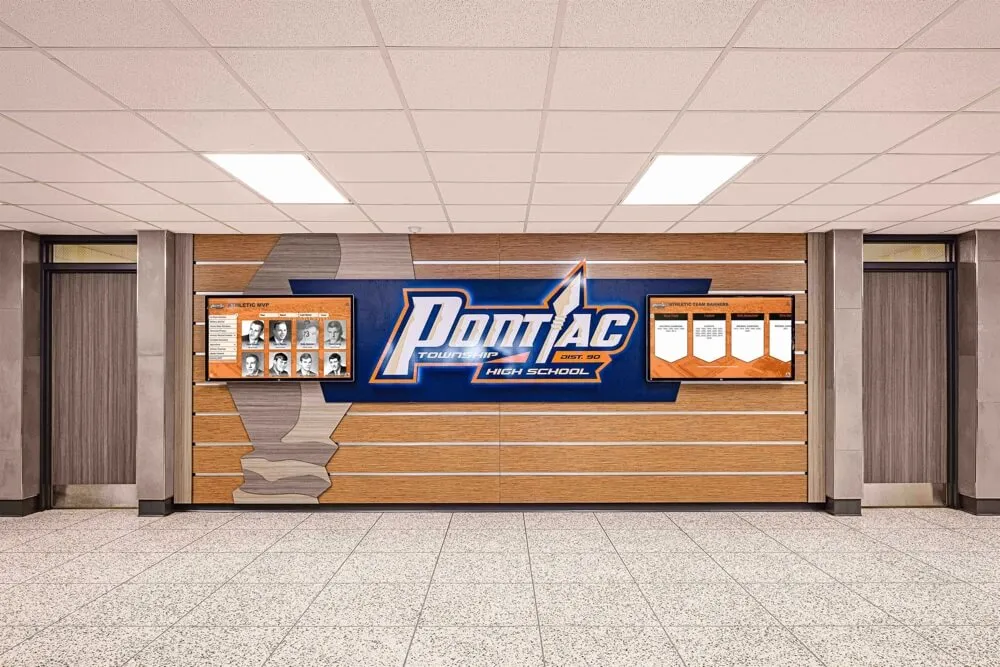
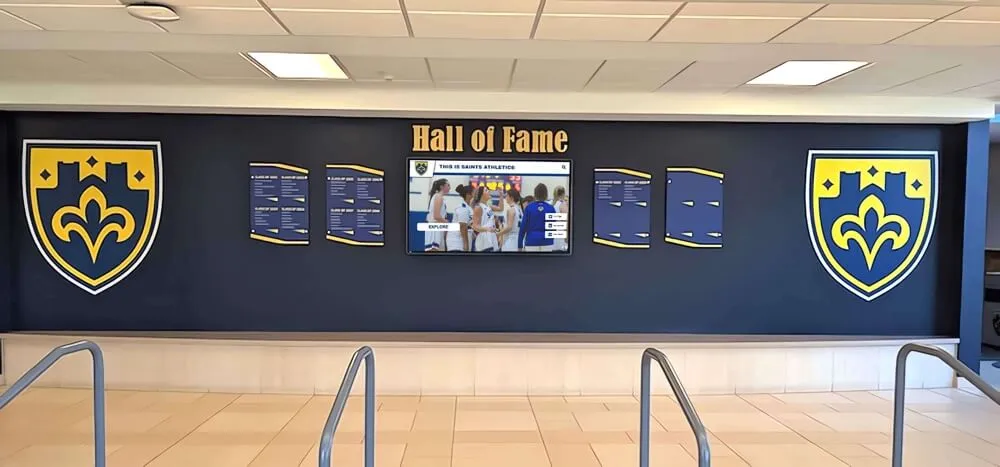
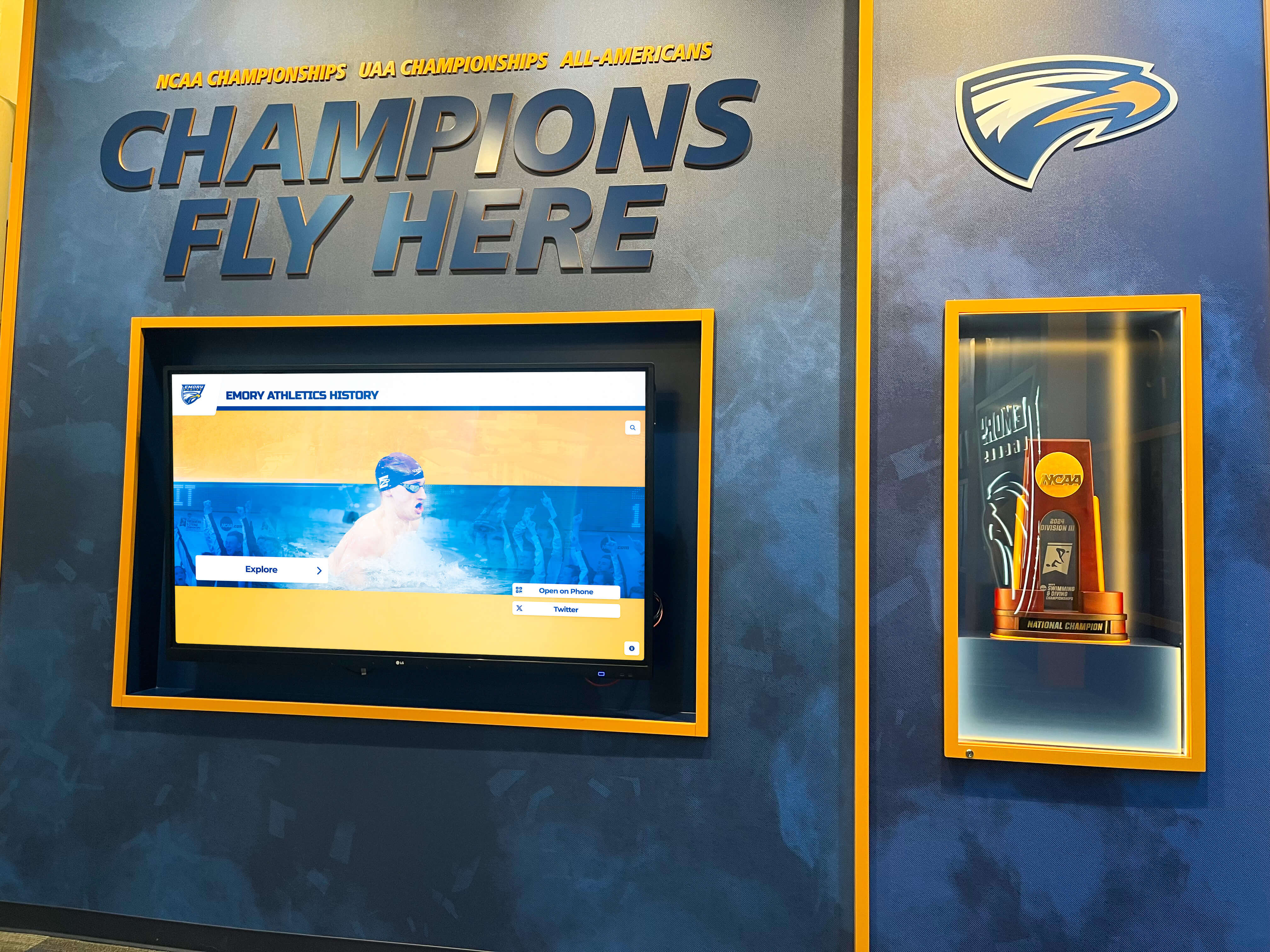
Digital recognition systems showcase swimming achievements including event records, relay teams, and championship performances
Individual Medley Events: Swimming All Four Strokes
Individual medley (IM) events challenge swimmers to compete in all four strokes within a single race, testing versatility, endurance, and strategic pacing.
Individual Medley Format and Rules
IM races follow prescribed stroke order creating unique strategic considerations:
Stroke Sequence
- Butterfly: First quarter of the race
- Backstroke: Second quarter
- Breaststroke: Third quarter
- Freestyle: Final quarter
This sequence—butterfly, backstroke, breaststroke, freestyle—applies universally to all individual medley events. Swimmers must complete each stroke segment before transitioning to the next, with transitions occurring at the wall between segments.
Common IM Distances
- 100 yards IM (short course only): 25 yards of each stroke, common for younger age groups
- 200 yards/meters IM: 50 yards/meters of each stroke, standard championship IM distance
- 400 meters IM (500 yards): 100 meters of each stroke, ultimate test of versatility
Strategic Considerations for IM Racing
Individual medley events require different racing strategies than single-stroke events:
Pacing Challenges
- Strong fly start without burning excessive energy for remaining strokes
- Backstroke as recovery or attack segment depending on swimmer strengths
- Breaststroke management avoiding the “dead zone” where fatigue peaks
- Freestyle finish often determining race outcomes among equally matched swimmers
Training for IM Versatility Successful IM swimmers develop:
- Technical proficiency across all four strokes
- Strength and conditioning supporting diverse muscular demands
- Pacing discipline across changing stroke speeds
- Mental toughness to maintain technique when fatigued
- Efficient transitions minimizing time loss between stroke changes
Many coaches consider strong IM performance the mark of complete swimmers, as IM success requires well-rounded technical, physical, and mental capabilities.
Relay Events: Team-Based Swimming Competition
Relay events bring team dynamics to the primarily individual sport of swimming, creating high-energy races featuring strategic lineup decisions and exciting finishes.
Freestyle Relay Formats
Freestyle relays feature four swimmers each completing equal distance swimming freestyle:
Standard Freestyle Relay Distances
- 200 yards/meters freestyle relay: Four swimmers each swimming 50 yards/meters
- 400 yards/meters freestyle relay: Four swimmers each swimming 100 yards/meters
- 800 yards/meters freestyle relay: Four swimmers each swimming 200 yards/meters (less common)
Strategic Lineup Considerations
- Leadoff swimmer: Strong starter with consistent splits
- Second and third positions: Strategic placement of varying speed swimmers
- Anchor position: Typically fastest or most clutch performer
Coaches strategically sequence relay lineups balancing early leads with strong finishing speed, considering which swimmers perform best under pressure and how swimmers’ different pacing strategies complement each other.
Medley Relay Structure
Medley relays feature four swimmers each swimming a different stroke:
Medley Relay Stroke Order Unlike individual medley, medley relays follow backstroke, breaststroke, butterfly, freestyle order:
- First swimmer: Backstroke (starts in water)
- Second swimmer: Breaststroke
- Third swimmer: Butterfly
- Fourth swimmer: Freestyle
This stroke sequence accommodates the backstroke start from in the water, as backstrokers cannot dive from blocks while teammates are swimming.
Common Medley Relay Distances
- 200 yards/meters medley relay: Each swimmer completes 50 yards/meters
- 400 yards/meters medley relay: Each swimmer completes 100 yards/meters
Lineup Strategy for Medley Relays Coaches assign swimmers to medley relay positions based on:
- Stroke specialization and technical proficiency
- Relative speed advantage in specific strokes
- Experience and reliability under relay pressure
- Depth in specific stroke across team roster
Medley relays showcase team depth and versatility, as competitive relay teams need strong swimmers across all four strokes rather than just freestyle speed.
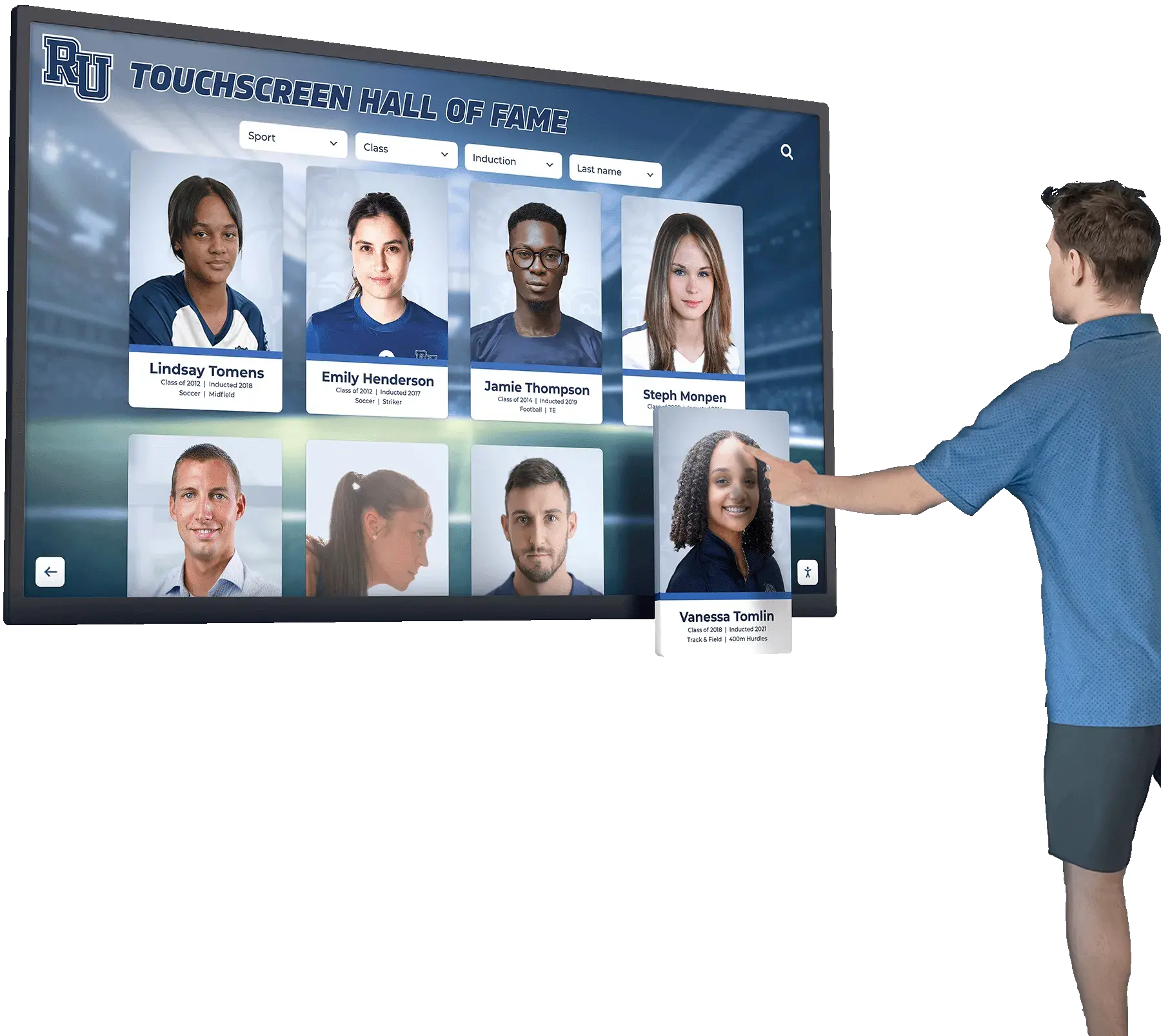
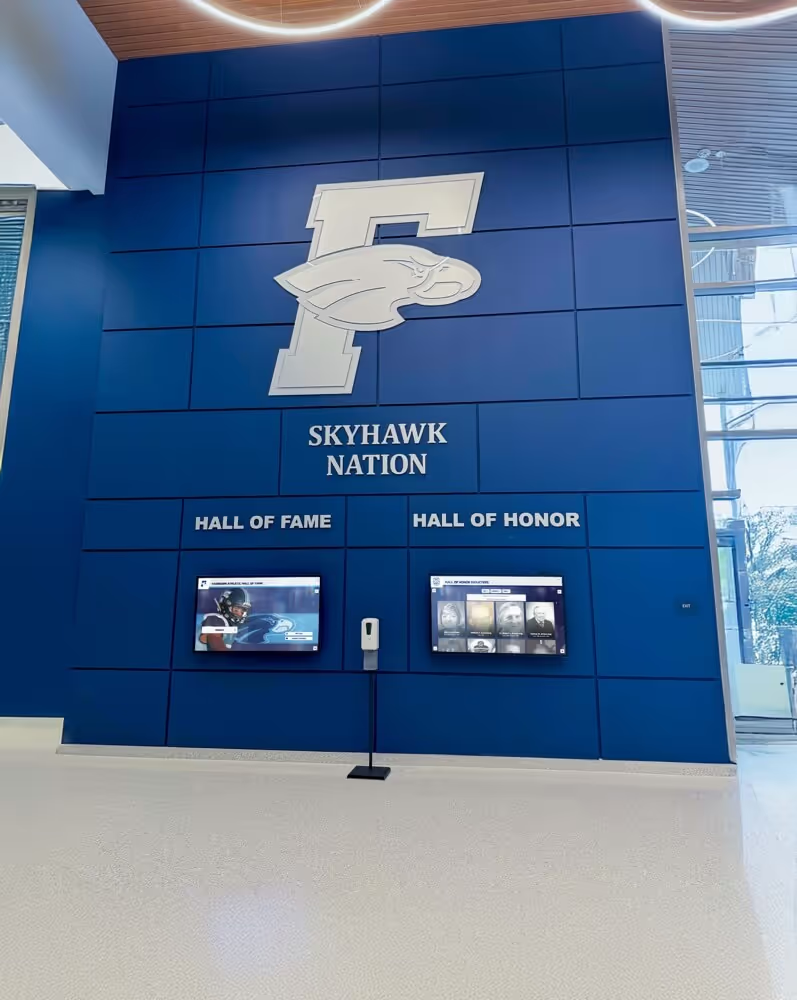
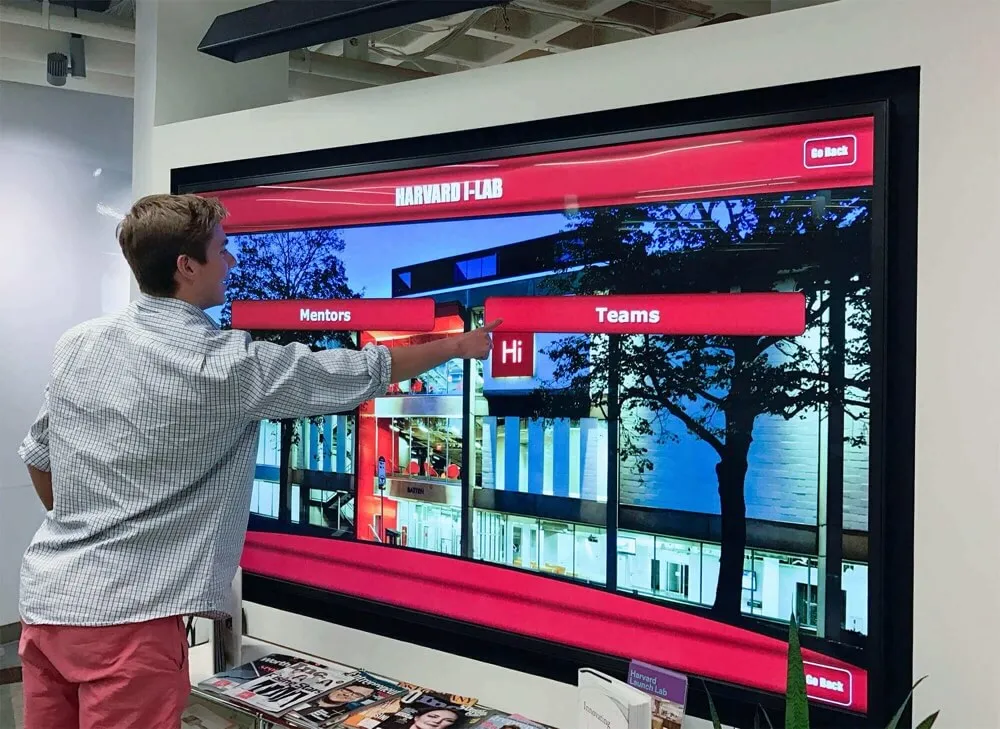
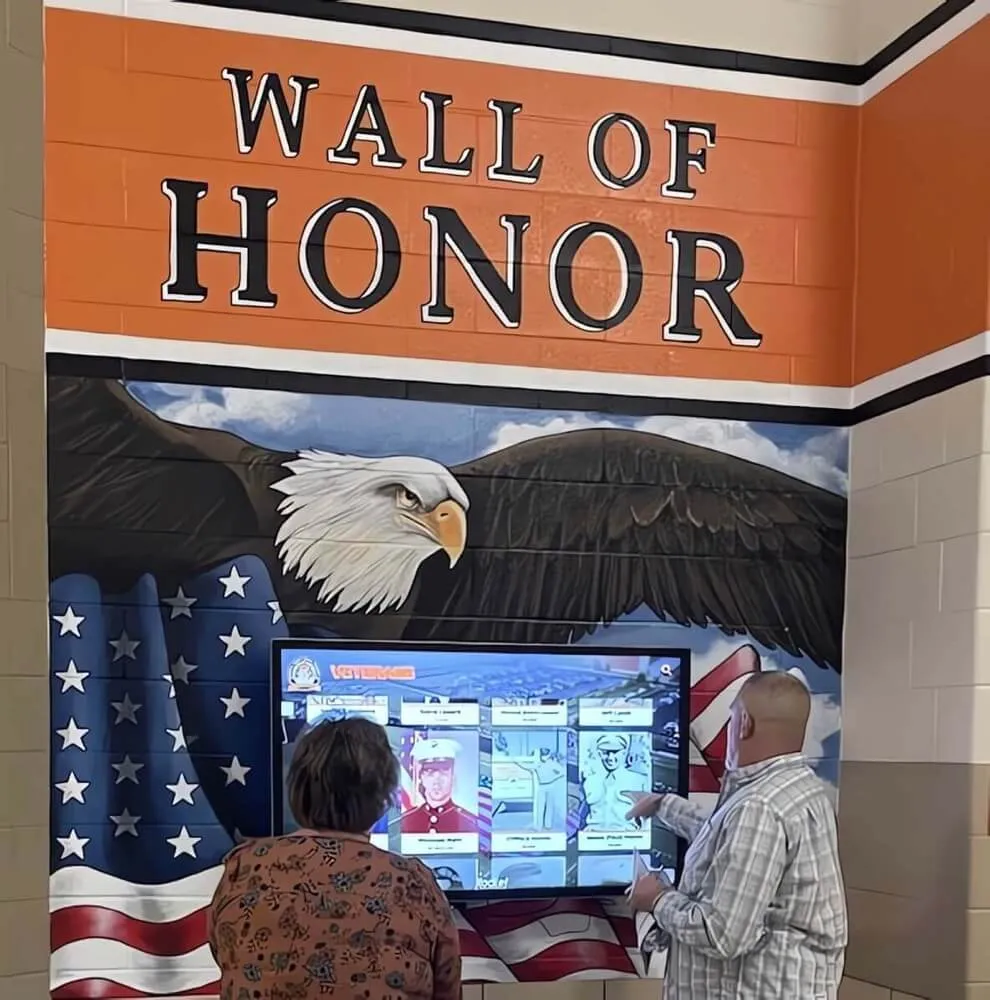
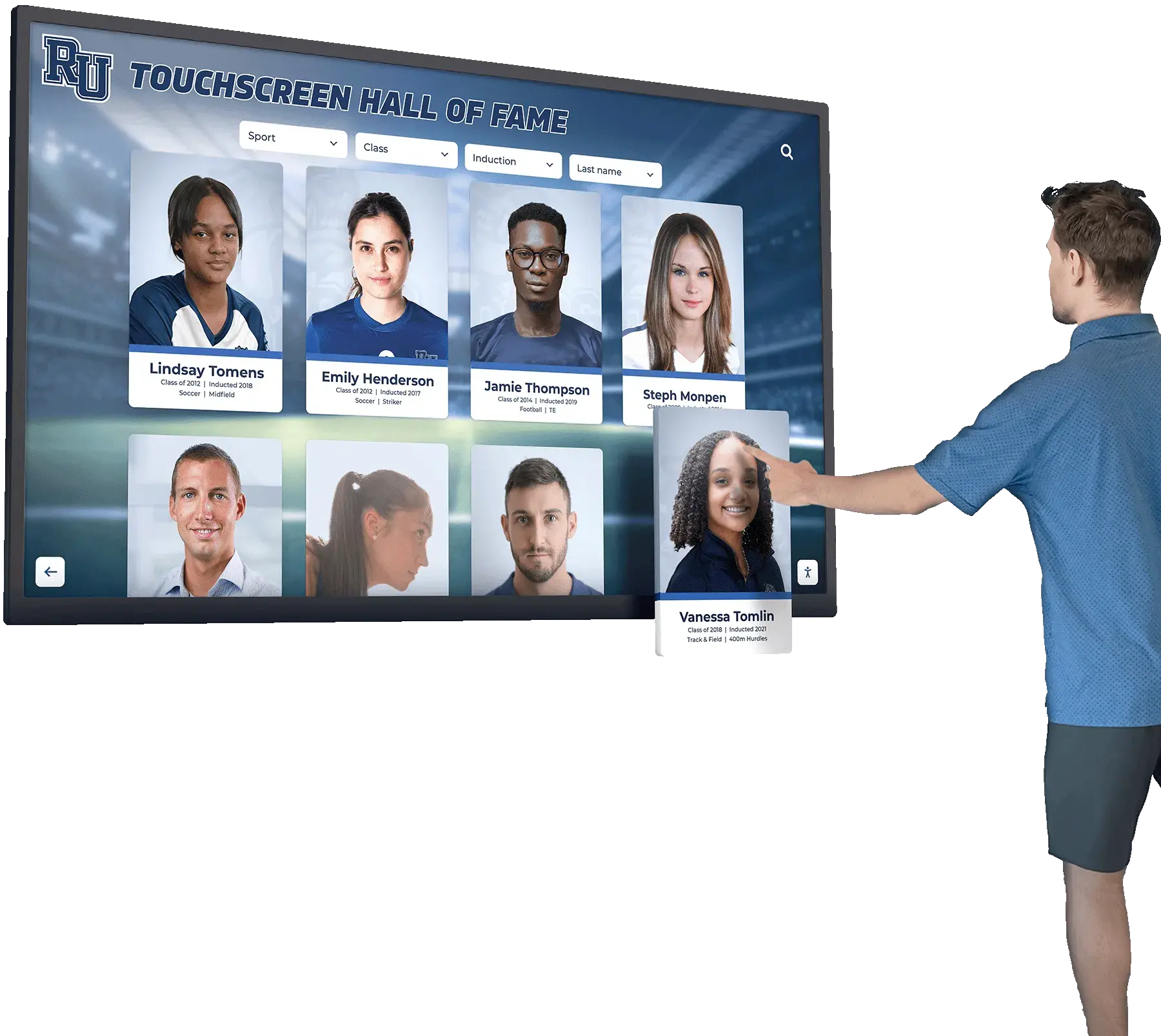
Interactive displays allow exploration of swimmer profiles including event specializations, personal records, and relay contributions
Age Group Swimming Event Structure
Youth and age group swimming organizes events by swimmer age, creating developmentally appropriate competition and progressive skill building.
Standard Age Group Divisions
USA Swimming and most competitive swimming organizations use standardized age group brackets:
Common Age Group Classifications
- 8 & Under (8U): Introductory competitive swimming
- 9-10 years: Foundational skill development
- 11-12 years: Advancing technique and endurance
- 13-14 years: Pre-senior competitive development
- 15-16 years: Senior preparation
- 17-18 years: Senior level competition
Some organizations use different divisions (6U, 7-8, 9-10, 11-12, 13-14, 15-18) while others create single-year age groups for championship meets.
Age-Appropriate Event Offerings
Younger age groups compete in modified event structures appropriate for developmental stage:
8 & Under Typical Events
- 25-yard freestyle (one width in short course)
- 25-yard backstroke
- 25-yard breaststroke
- 25-yard butterfly
- 100-yard freestyle relay
- 100-yard medley relay
9-10 Age Group Expansion
- Introduces 50-yard events in all strokes (full pool length)
- Adds 100-yard individual medley
- Includes 100-yard events in all strokes
- May include 200-yard freestyle
- Maintains relay events at appropriate distances
11-12 Age Group Progression
- Full range of stroke distances including 200s
- 200-yard individual medley becomes standard
- Introduction to 500-yard freestyle for distance swimmers
- More advanced relay formats
13 & Over Senior-Level Events
- Complete event offerings matching high school and college competition
- Full distance events including 400 IM and 1650 freestyle
- Advanced relay distances
This progressive event structure develops swimmers systematically, introducing longer distances and more complex events as athletes mature physically and technically.
Event Limitations and Strategic Entry Selection
Most age group meets limit the number of events individual swimmers can enter:
Typical Event Limits
- Preliminary/Finals meets: Often 3-4 individual events plus relays
- Dual meets: May allow entry in all events
- Championship meets: Usually 2-3 individual events plus relays
These limitations require strategic event selection:
- Swimmers focus on events matching their strengths and development goals
- Coaches balance immediate competitive success with long-term development
- Families consider time commitment and swimmer fatigue
- Teams strategically distribute swimmers across events to maximize team scoring
Learn more about recognizing diverse athletic contributions in end of season athletic awards that celebrate every player’s contribution.
Short Course vs. Long Course Swimming
Competitive swimming occurs in two pool configurations affecting race distances, techniques, and competitive strategies.
Short Course Swimming (25-Yard or 25-Meter Pools)
Short course swimming takes place in 25-yard (most common in United States) or 25-meter pools:
Short Course Characteristics
- More frequent turns providing underwater dolphin kick opportunities
- Shorter sustained swimming segments between walls
- Typically faster times due to turn and push-off advantages
- Standard for most high school and age group competition in United States
- NCAA championships competed in short course yards
Strategic Advantages Swimmers with strong underwater skills, powerful turns, and explosive push-offs often perform better in short course relative to their long course results. Races feature more frequent opportunities for position changes at turn walls.
Long Course Swimming (50-Meter Pools)
Long course swimming occurs in Olympic-sized 50-meter pools:
Long Course Characteristics
- Fewer turns emphasizing sustained swimming ability
- One pool length equals 50 meters (versus two lengths in short course)
- Standard for Olympic Games, World Championships, and international competition
- Summer season focus in United States with outdoor long course facilities
- Generally slower times compared to short course yards equivalents
Technical Demands Long course swimming places greater emphasis on pacing, technique sustainability, and open water turns. Swimmers must maintain efficient stroke mechanics for longer uninterrupted distances, and races require different mental approach with less frequent wall contact and fewer turn opportunities.
Distance Conversions and Time Comparisons
Common distance conversions between short and long course:
Equivalent Events
- 50 yards ≈ 50 meters (slightly longer)
- 100 yards ≈ 100 meters
- 200 yards ≈ 200 meters
- 500 yards ≈ 400 meters
- 1650 yards ≈ 1500 meters (metric mile)
Times achieved in short course yards typically run faster than long course meter equivalents due to additional turns and shorter swimming segments. Conversion calculators help compare performances across different pool configurations.
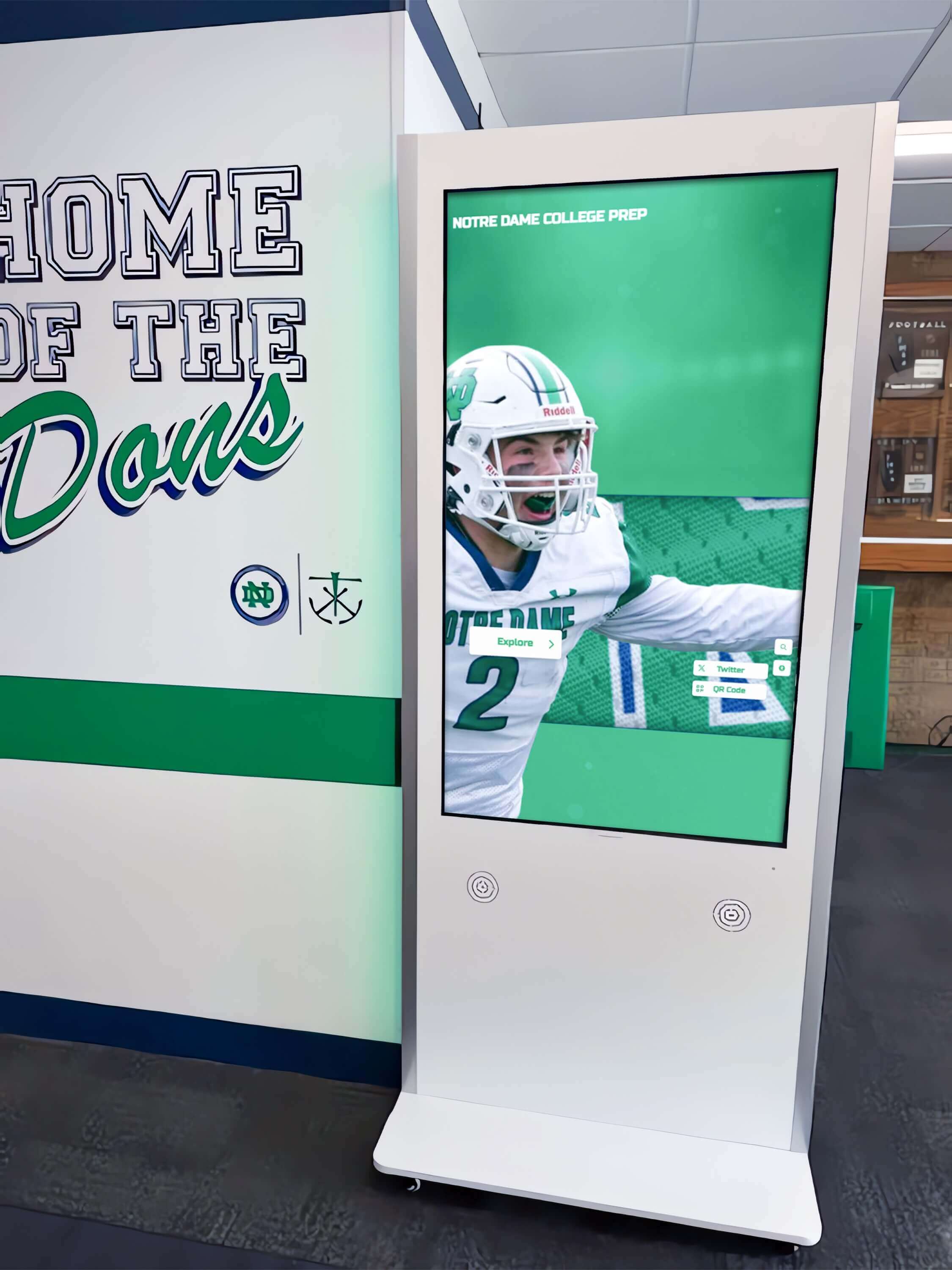
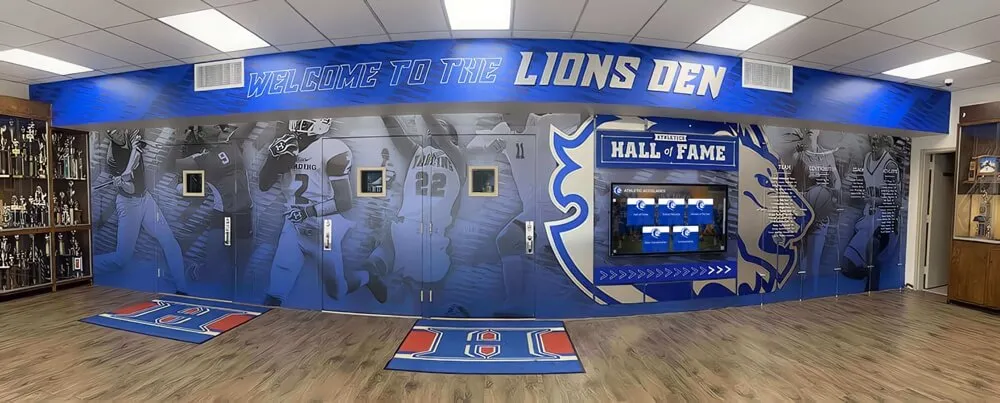
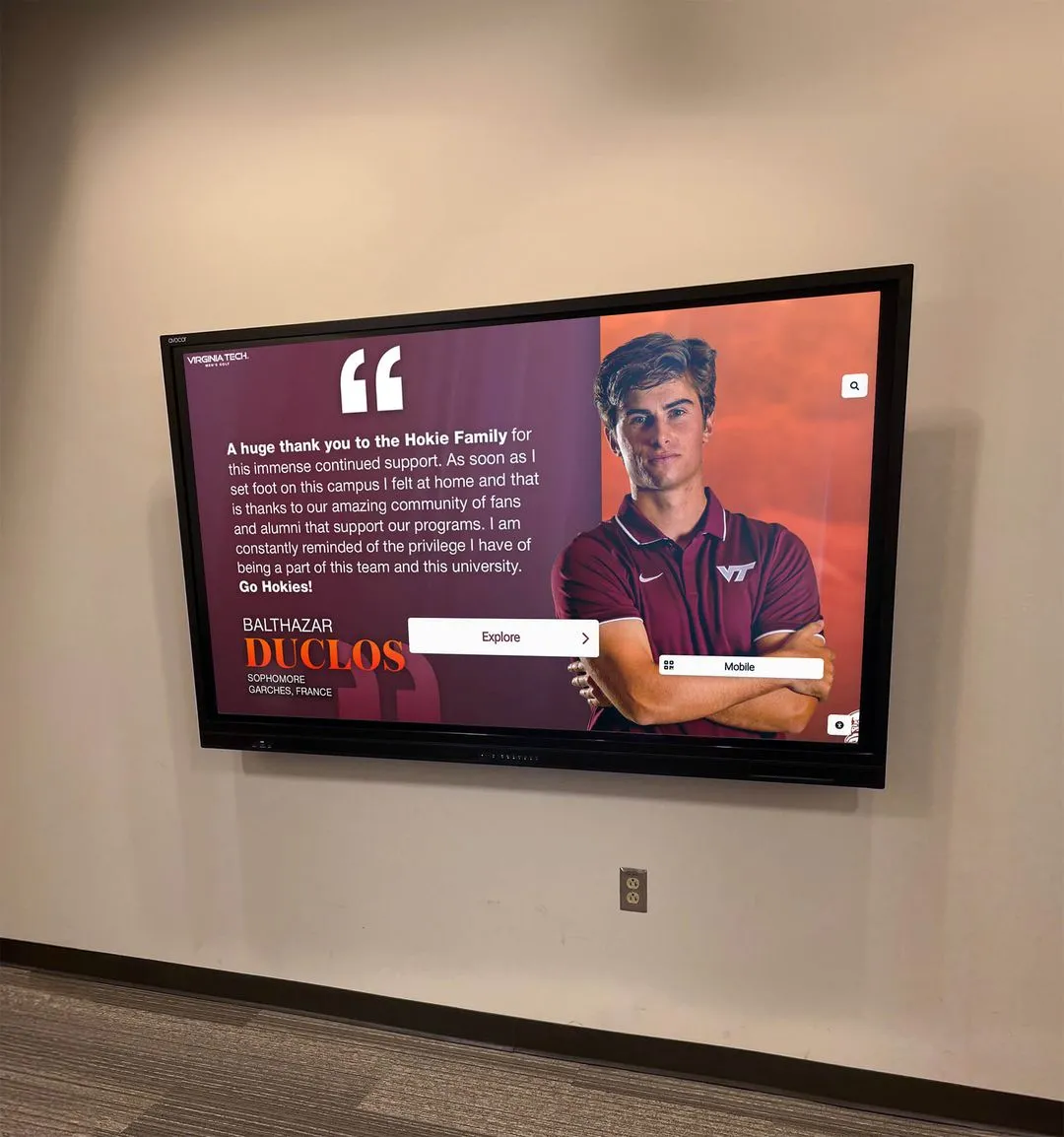
Recognition kiosks in athletic facilities celebrate swimming and all sport achievements creating year-round visibility for athlete excellence
High School and College Swimming Event Structures
High school and collegiate swimming follow specific event structures aligned with their competitive seasons and governing bodies.
High School Swimming Events
High school swimming, governed by the National Federation of State High School Associations (NFHS), features standardized event lineups:
Standard High School Meet Format
- 200-yard medley relay
- 200-yard freestyle
- 200-yard individual medley
- 50-yard freestyle
- 100-yard butterfly
- 100-yard freestyle
- 500-yard freestyle
- 200-yard freestyle relay
- 100-yard backstroke
- 100-yard breaststroke
- 400-yard freestyle relay
This 11-event structure appears at dual meets, conference championships, and state championships nationwide. Individual swimmers typically compete in two individual events plus relays.
High School Championship Formats
- Preliminary and final sessions at championship meets
- Top swimmers advance from morning preliminaries to evening finals
- Consolation finals for swimmers placing 9-16 in some states
- Team scoring based on placement across all events
- Diving competition included in states with diving programs
Learn about celebrating athletic achievements comprehensively in athletic banquet planning that honors all contributions.
NCAA College Swimming Events
NCAA Division I, II, and III championships feature expanded event offerings:
Standard College Competition Distances
- Sprint events: 50, 100, and 200 freestyle; 100 back, breast, fly
- Middle distance: 400 and 800 freestyle relay, 200 back, breast, fly
- Distance events: 500 and 1650 freestyle
- IM events: 200 and 400 individual medley
- Relays: 200 medley relay, 400 medley relay, 200/400/800 freestyle relays
NCAA Championship Format
- Three-day championship meet featuring top qualifiers nationwide
- Time trials followed by timed final heats in each event
- A, B, and C finals allowing deep scoring opportunities
- Men’s and women’s championships
- Team scoring determining national championship
College swimmers often specialize more narrowly than age group swimmers, focusing training on 2-3 primary individual events plus relay contributions.
Competitive Swimming Meet Formats
Different meet formats serve various competitive purposes and scheduling needs throughout the swimming season.
Dual Meets
Dual meets pit two teams against each other in head-to-head competition:
Dual Meet Structure
- Two teams compete across all events
- Swimmers score points based on finish placement
- Standard scoring: 1st place = 5 points, 2nd = 3, 3rd = 1 (varies by format)
- Relay events typically double-scored (1st = 10, 2nd = 6, 3rd = 2)
- Team with most total points wins the meet
Dual meets emphasize team strategy, depth across events, and athlete versatility as coaches maximize points across the complete event lineup.
Invitational Meets
Invitational meets host multiple teams in larger competitive formats:
Invitational Characteristics
- Multiple teams (often 6-20) competing simultaneously
- Swimmers entered in selected events rather than all events
- Preliminary and final session formats for large invitationals
- Individual and team awards based on performance
- Opportunity for swimmers to achieve time standards and qualifying times
Large invitationals provide exposure to diverse competition, qualifying time opportunities, and championship meet practice under similar competitive formats.
Championship Meets
Championship meets represent season culminations featuring top qualifiers:
Championship Meet Structure
- Qualifying time standards required for entry
- Conference, district, regional, state, or national level championships
- Preliminary morning session with top qualifiers advancing to finals
- A finals (top 8 or 16), B finals (consolation), and sometimes C finals
- Individual and team championships determined
- Record-breaking performances and achievement recognition
Championship meets create the highest-pressure competitive environments where swimmers peak performances and teams compete for ultimate recognition.
Explore how digital signage services can showcase swimming achievements year-round throughout athletic facilities.
Time Standards and Qualifying Systems
Competitive swimming uses standardized time benchmarks creating achievement levels and advancement opportunities.
USA Swimming Motivational Time Standards
USA Swimming establishes time standards across age groups and events:
Standard Classifications
- B Time Standards: Entry-level competitive achievement
- BB Time Standards: Advancing competitive proficiency
- A Time Standards: Strong competitive performance
- AA Time Standards: Excellent competitive achievement
- AAA Time Standards: Elite age group performance
- AAAA Time Standards: Exceptional elite performance
These motivational times provide progressive achievement goals appropriate for each age group and event, updated periodically to reflect current competitive levels nationwide.
Championship Meet Qualifying Times
Swimmers must achieve specific times to qualify for championship meets:
Qualifying Levels
- Conference/League Championships: Relatively accessible standards encouraging broad participation
- Regional/Zone Championships: More competitive qualifying times
- State/Provincial Championships: Faster standards limiting field sizes
- National Championships: Elite standards selecting top performers nationwide
- Junior National and National Team qualifying: Highest domestic standards
Meeting qualifying standards represents significant achievements validating training progress and competitive development.
Time Trial Opportunities
Swimmers seeking qualifying times or testing fitness can enter time trials:
Time Trial Formats
- Scheduled during or after regular meets
- Swimmers swim individually or in small groups against the clock
- Official timing creating legally valid times for qualification purposes
- Opportunity to attempt specific distances or events
- Strategic use for achieving standards without full meet fatigue
Time trials provide flexible opportunities for swimmers to pursue qualifying times and personal records outside regular competition schedules.
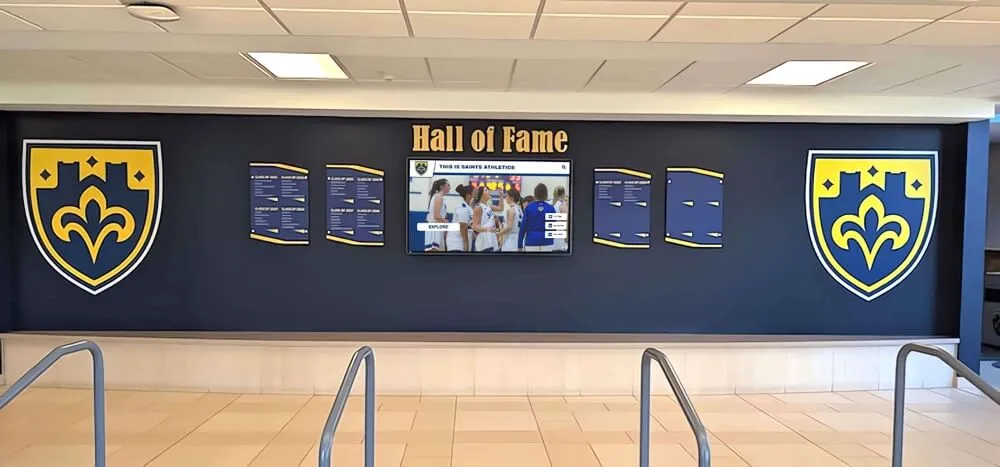
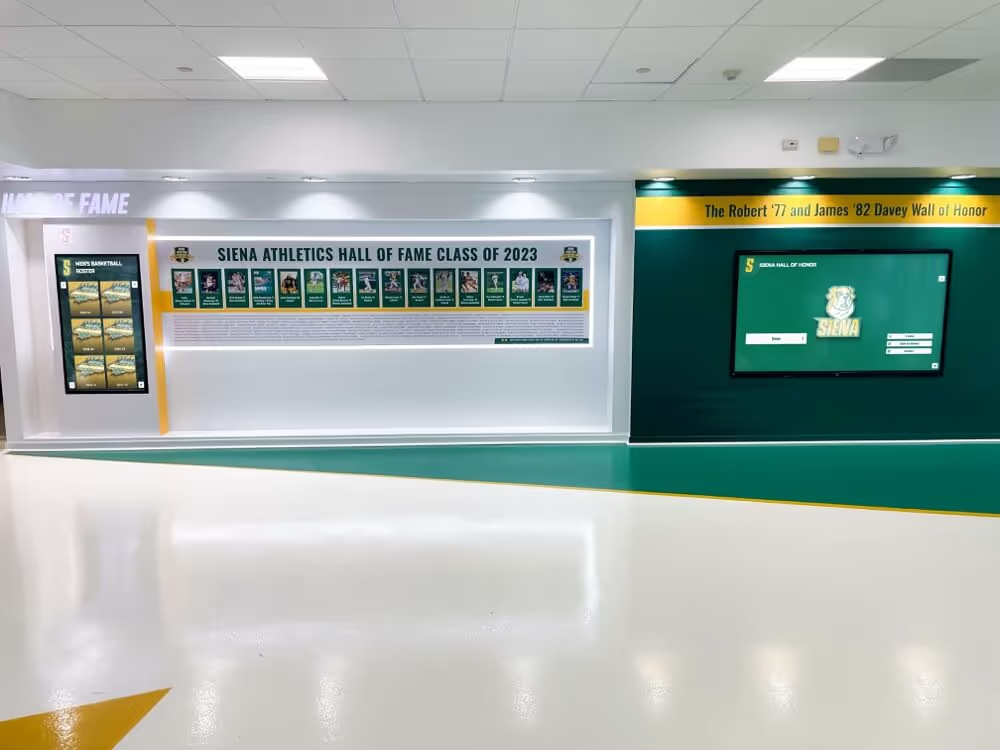
Permanent recognition displays preserve swimming records, relay achievements, and championship performances across program history
Specialized and Non-Traditional Swimming Events
Beyond standard pool competition, swimming includes specialized events expanding the sport’s competitive landscape.
Open Water Swimming
Open water swimming takes place in oceans, lakes, and rivers:
Open Water Distances
- 5K: Standard Olympic distance
- 10K: Marathon swimming distance
- 25K: Ultra-marathon distance
- Various non-standard distances at specific events
Open water swimming requires different skills including navigation, pack swimming tactics, feeding strategies, and adaptation to variable conditions. The discipline features growing participation and Olympic inclusion creating new pathways for distance swimmers.
Masters Swimming Competition
Masters swimming serves adult swimmers (18+) in age-group competition:
Masters Age Groups
- 5-year increments: 18-24, 25-29, 30-34, continuing indefinitely
- Complete event offerings matching age-appropriate capabilities
- Short and long course competitions
- National and international championship opportunities
Masters swimming enables lifelong competitive participation with age-group records creating achievable excellence at all ages.
Para-Swimming Events
Para-swimming provides competitive opportunities for athletes with physical, visual, and intellectual impairments:
Classification System
- Sport-class categories based on impact of impairment
- Modified rules accommodating different disabilities
- Paralympic competition pathway
- Integration with mainstream swimming programs
Para-swimming celebrates athletic excellence across diverse abilities, using classification systems ensuring fair competition.
Modern Recognition of Swimming Achievement
Traditional recognition approaches—record boards in pool natatoriums, names on locker room walls—create limited visibility compared to comprehensive digital solutions celebrating swimming excellence.
Digital Swimming Recognition Benefits
Modern platforms transform swimming achievement celebration:
Comprehensive Record Keeping
- Individual event records across all strokes and distances
- Relay team records with member recognition
- Championship team achievements and season highlights
- Historical progression showing program development
- Searchable database of all swimmer achievements
Interactive Engagement Digital displays enable meaningful interaction with swimming history:
- Parents and athletes can search for specific swimmers and performances
- Event-specific record displays showing progression over time
- Team championship celebrations with photos and times
- Individual swimmer profiles showcasing complete competitive careers
- Filtering by graduation year, event type, or achievement level
Season and Record Updates Cloud-based platforms simplify achievement recognition:
- Real-time updates after championship meets
- New record recognition with historical context
- Season highlight integration
- Senior class recognition and program contribution celebration
- Automated record tracking and display updates
Swimming programs report that digital recognition systems increase athlete motivation, family engagement, and community awareness of program excellence while dramatically reducing administrative burden maintaining traditional static record boards.
Discover how interactive digital tools bring athletic history to life in swimming facilities.
Strategic Display Placement for Swimming Recognition
Effective recognition requires thoughtful placement ensuring regular exposure:
High-Impact Locations
- Pool deck entrance and lobby areas
- Viewing gallery spaces where families watch practices and meets
- Athletic facility main lobbies connecting swimming to broader sports programs
- Locker room areas athletes see daily
- School main buildings increasing program visibility beyond aquatic center
Multi-Platform Recognition Comprehensive systems may include:
- Pool natatorium displays showcasing records and team achievements
- School-wide athletic recognition including swimming alongside other sports
- Web-based platforms enabling remote family access
- Mobile integration allowing anywhere viewing
- Social media integration amplifying recognition reach
This strategic approach ensures swimming achievements receive visibility matching the dedication swimmers invest in training and competition.
Event Selection Strategy for Swimmers and Coaches
Strategic event selection optimizes development, performance, and competitive results.
Developmental Considerations
Young swimmers benefit from diverse event exposure:
Age Group Event Selection
- Exposure to all four strokes developing technical versatility
- Progressive distance increases building endurance
- IM events encouraging well-rounded skill development
- Relay participation teaching teamwork and pressure racing
- Balance between strength events and developmental opportunities
Premature specialization in young swimmers can limit long-term development, while appropriate variety builds complete technical foundations.
Competitive Specialization
Older swimmers increasingly focus on optimal event combinations:
High School and Senior Level Selection
- Primary events matching physiological and technical strengths
- Compatible event combinations (200 free/500 free vs. 50 free/100 fly)
- Consideration of recovery time between events
- Relay contribution opportunities
- Championship meet point maximization
Strategic Event Combination Examples Compatible combinations allow peak performance across multiple events:
- Sprint specialist: 50 free, 100 free, plus sprint fly or back
- Middle distance: 200 free, 500 free, 200 IM
- Stroke specialist: 100/200 butterfly, 200 IM, plus freestyle
- Distance: 500 free, 1650 free, possibly 200 free
Swimmers should train primarily for selected events while maintaining technical proficiency across all strokes for versatility and IM capability.
Mental and Physical Preparation
Event selection must consider complete athlete wellness:
Fatigue Management
- Appropriate rest between events in multi-day meets
- Preliminary/final session double swims in championship meets
- Warm-up and cool-down time availability
- Mental energy demands of different event types
- Travel and session scheduling around events
Coaches balance competitive opportunity with athlete health, avoiding excessive event loads that compromise performance or increase injury risk.
Explore recognition approaches in coach appreciation that acknowledges mentorship across seasons.
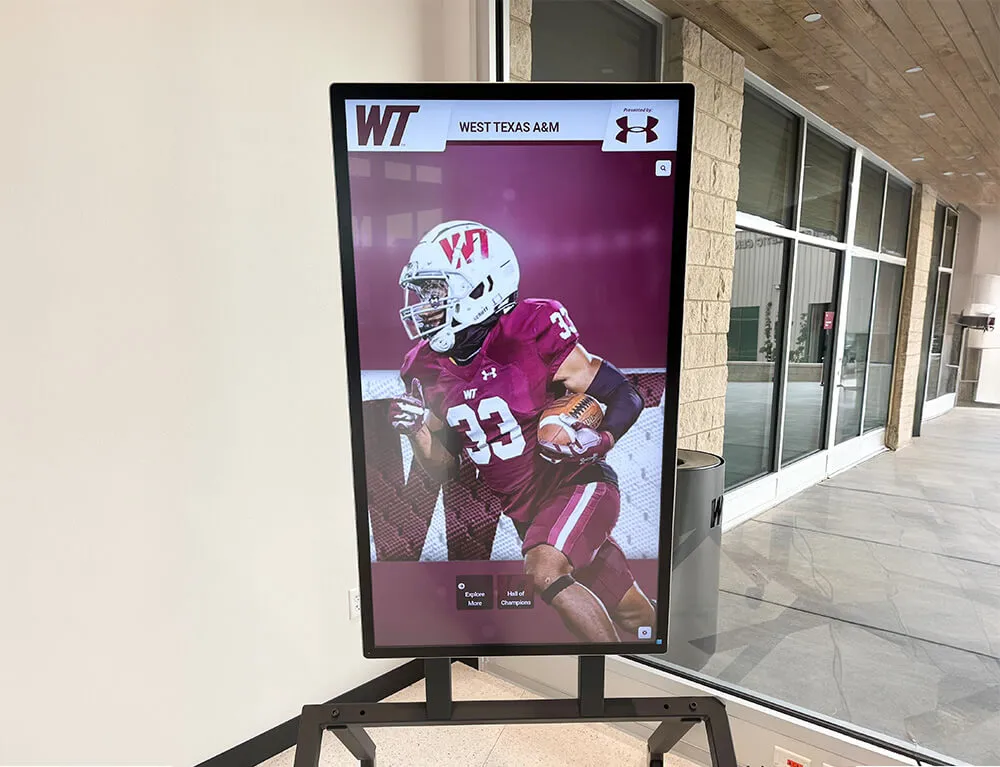
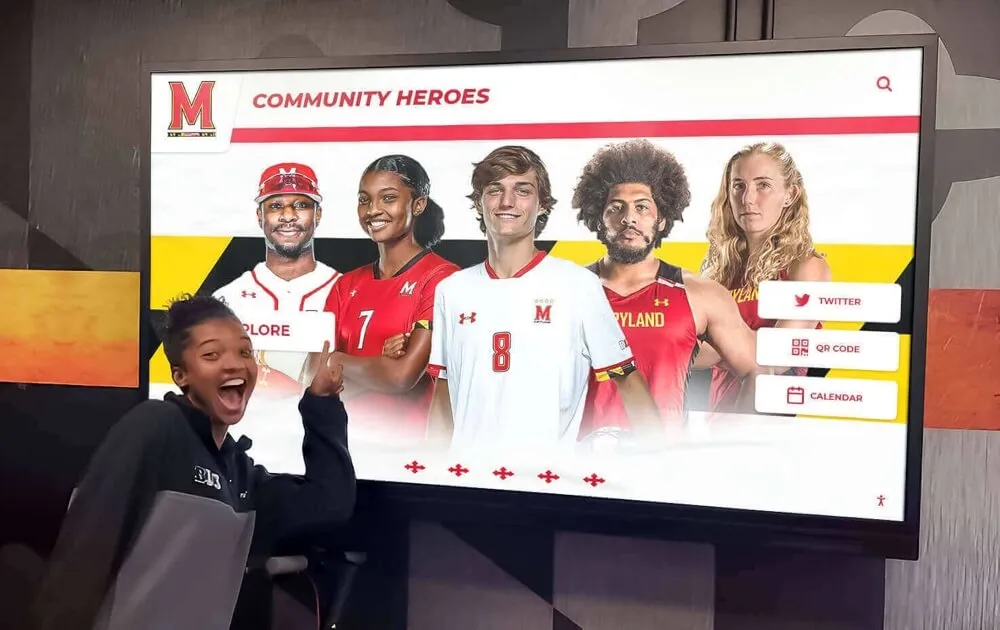
Prominent athlete displays in main lobbies ensure swimming excellence receives high-visibility celebration year-round
Understanding Heat Sheets and Meet Programs
Swim meet heat sheets organize competition and provide essential information for participants and spectators.
Heat Sheet Components
Heat sheets detail complete meet organization:
Standard Information Included
- Event number and name (e.g., “Event 5: Girls 11-12 100 Yard Butterfly”)
- Heat number and lane assignments for each swimmer
- Swimmer names, ages, team affiliations
- Seed times from previous competitions
- Meet records and pool records for each event
- Session timeline and estimated event start times
Seeding Process
Swimmers are assigned to heats based on entered seed times:
Standard Seeding Procedures
- Fastest entered times seeded in final heat
- Progressively slower times in earlier heats
- Lane assignments typically place fastest times in center lanes
- Positive check-in systems for championship meets
- Scratches and deck entries modifying printed heat sheets
Understanding seeding helps swimmers know when to prepare for races and which competitors they’ll face in their heats.
Psyche Sheet Information
Psyche sheets (psychological sheets) help swimmers and coaches assess competition:
Psyche Sheet Value
- Pre-meet listing of all entered swimmers and times by event
- Identification of top competitors and expected winners
- Strategic planning for event lineup decisions
- Relay team composition informed by competitor analysis
- Realistic goal-setting based on entered competition
Coaches and swimmers use psyche sheets for meet preparation, helping establish realistic expectations and race strategies.
Swimming Meet Etiquette and Parent Guidelines
Understanding swim meet culture and expectations enhances experiences for swimmers, families, and teams.
Swimmer Expectations
Competitive swimmers should demonstrate:
Appropriate Behavior
- Arrive on time for warm-ups and team meetings
- Stay with team in designated areas when not competing
- Support teammates enthusiastically between events
- Shake hands or acknowledge competitors after races
- Accept officials’ decisions respectfully
- Maintain positive attitude regardless of performance
Parent and Spectator Guidelines
Families new to competitive swimming should understand:
Meet Etiquette
- Remain behind starting blocks during races allowing clear official sight lines
- Avoid coaching from stands; swimmers work with their coaches
- Respect all swimmers with enthusiastic but appropriate encouragement
- Keep pool deck areas clear unless officiating or volunteering
- Understand that not every race yields best times or victories
Volunteer Opportunities Swim meets require substantial volunteer support:
- Timing positions: Operating stopwatches and electronic timing systems
- Stroke and turn judging: Officiating race legality
- Runner positions: Delivering paperwork between officials
- Concession and hospitality roles: Supporting meet operations
- Setup and breakdown assistance: Preparing facilities
Family volunteer contributions make meets possible while providing insight into competitive swimming’s complexity.
Learn about comprehensive recognition in campus storytelling that celebrates athletic achievements.
Training and Preparation for Specific Events
Success in swim meet events requires event-specific training approaching technical, physiological, and mental demands strategically.
Sprint Event Training (50-100 Distance)
Sprint events demand explosive power and maximum velocity:
Sprint Training Components
- High-intensity interval training developing speed
- Underwater dolphin kick development maximizing start and turn advantages
- Race pace training at or faster than target competition speed
- Strength training building explosive power
- Reaction time and start technique refinement
Sprint specialists typically complete lower training volume than distance swimmers while maintaining higher intensity focus.
Middle Distance Training (200-500 Events)
Middle distance events require balance between speed and endurance:
Training Emphasis
- Threshold training improving lactate tolerance
- Race pace sets developing sustainable speed
- Stroke technique efficiency preventing degradation when fatigued
- Pacing strategy practice for negative splitting or even pacing
- Mental toughness development handling discomfort
Middle distance swimmers balance significant training volume with quality intensity sets preparing for sustained hard efforts.
Distance Event Preparation (500-1650)
Distance events test endurance, pacing, and mental resilience:
Distance Training Focus
- Aerobic base development through high volume training
- Tempo sets building race-specific endurance
- Pacing precision for even-split racing
- Nutritional strategies supporting training volume
- Mental preparation for sustained high-level discomfort
Distance training emphasizes consistency and progressive volume increases building cardiovascular capacity supporting championship performance.
Stroke-Specific Technical Development
Each stroke requires dedicated technical refinement:
Technical Training
- Drill progressions developing proper movement patterns
- Video analysis identifying and correcting technical flaws
- Stroke count and efficiency metrics
- Breathing pattern development for sustained swimming
- Turn and finish technique practice
Technical proficiency becomes especially critical in longer events where efficiency determines sustainable speed.
Frequently Asked Questions About Swim Meet Events
What are the main swim meet events?
The main swim meet events include freestyle races (50, 100, 200, 500, and 1650 yards), backstroke (50, 100, 200), breaststroke (50, 100, 200), butterfly (50, 100, 200), individual medley (100, 200, 400), and relay events (200 medley relay, 200/400/800 freestyle relay). High school meets typically feature 11 events including individual races and three relays. The specific distances and event offerings vary by age group, competitive level, and pool configuration (short course vs. long course).
How do individual medley events work?
Individual medley (IM) events require swimmers to complete all four competitive strokes in prescribed order: butterfly, backstroke, breaststroke, and freestyle. The most common IM distance is 200 yards/meters, with each stroke comprising one-quarter of the total distance (50 yards/meters each). Swimmers must complete each full stroke segment before transitioning to the next stroke at the wall. The 400-meter IM features 100 meters of each stroke and represents one of the sport’s most challenging events, testing versatility, endurance, and pacing across all strokes.
What is the difference between short course and long course swimming?
Short course swimming takes place in 25-yard or 25-meter pools with more frequent turns, while long course swimming occurs in 50-meter Olympic-sized pools with fewer turns and longer sustained swimming segments. Short course races typically yield faster times due to additional push-offs and underwater phases from extra turns. Most U.S. high school and winter age group competition uses short course yards, while summer competition, Olympics, and international meets use long course meters. The different formats require different race strategies and favor different swimmer strengths.
How many events can a swimmer enter in a swim meet?
Most swim meets limit individual swimmers to 3-4 individual events plus relay participation, though this varies by meet format and governing body. Dual meets sometimes allow entry in more events, while championship meets typically restrict swimmers to 2-3 individual events to manage meet length and prevent excessive athlete fatigue. Age group meets often use 4-event limits for individual entries. These restrictions require strategic event selection focusing on a swimmer’s strongest events and optimal event combinations that allow adequate recovery between races.
What are the different swimming strokes used in competition?
The four competitive swimming strokes are freestyle (technically any stroke but universally swum as front crawl), backstroke (only stroke on back), breaststroke (simultaneous arm and leg movements with specific technical rules), and butterfly (simultaneous over-water arm recovery with dolphin kick). Each stroke has distinct technical requirements, rules, and race distances. Freestyle is the fastest stroke, while breaststroke is slowest but most technically restricted. Butterfly demands the highest power output, while backstroke presents unique challenges swimming without seeing the wall ahead. All competitive swimmers develop proficiency across all four strokes for individual medley and team medley relay events.
Conclusion: Navigating the Complete Landscape of Swim Meet Events
Understanding swim meet events transforms competitive swimming from a confusing array of distances and stroke combinations into a comprehensible structure supporting swimmer development, competitive excellence, and strategic planning. From individual 50-yard sprints to demanding 400-meter individual medleys, from relay teamwork to solo distance challenges, competitive swimming offers diverse opportunities for athletes of all strengths, body types, and competitive preferences.
The complete event structure explored in this guide—from the four competitive strokes through relay formats, age group progressions, and championship qualifications—provides swimmers, parents, and coaches with frameworks for navigating competitive swimming successfully. Whether selecting optimal events for training focus, understanding heat sheet organization, or following championship meets, this foundation enables meaningful participation in the swimming community.
Modern swimming programs increasingly recognize that celebrating achievements requires more than pool deck record boards and annual banquet recognition. Digital recognition platforms enable comprehensive celebration of swimming excellence across all events, distances, and competitive levels—preserving individual records, relay achievements, and championship performances while creating interactive experiences engaging athletes, families, and communities year-round.
Celebrate Your Swimming Program's Excellence
Discover how modern digital recognition solutions can showcase your swimmers' achievements across all events, preserve relay team contributions, and create engaging displays that celebrate your program's complete competitive history for generations.
Explore Recognition SolutionsAs swimmers progress from introductory age group competition through high school championships and beyond, understanding the complete event landscape enables strategic development, optimal event selection, and realistic goal-setting aligned with individual strengths and long-term potential. Coaches who thoughtfully guide event selection balance immediate competitive success with long-term technical development, while swimmers who embrace versatility across strokes and distances position themselves for sustained excellence.
The diversity of swim meet events—from explosive sprint butterfly to strategic distance freestyle, from individual challenges to team relay excitement—ensures opportunities for swimmers of all capabilities to find events where they can excel. This comprehensive event structure celebrating speed, endurance, technical mastery, and versatility makes competitive swimming accessible and rewarding for athletes pursuing excellence at all levels from local age group meets to Olympic competition.