



Every roster has that athlete who screens away from the ball, sets the pick nobody notices, sprints back on defense when the score is lopsided, and celebrates a teammate’s success more loudly than their own. The teamwork award exists specifically to name that person—to make unselfish play visible and to tell the whole program that team-first behavior is worth honoring.
Across K-12 schools and college athletic programs, coaches are moving beyond the traditional MVP-and-all-conference model toward recognition systems that celebrate what winning cultures actually require. The teamwork award sits at the center of that shift. Done well, it validates a complete style of playing and competing—one grounded in sacrifice, communication, and shared accountability rather than individual statistics.
This guide walks through how to define the teamwork award, set meaningful criteria, write certificate language that lands, run a fair selection process, and preserve the recognition in ways that outlast the banquet table.
The best athletic programs share a common belief: championships are built by athletes who subordinate personal glory to collective success. A teamwork award codifies that belief by giving it a name, a recipient, and a permanent place in program history. Schools that present this award annually signal to every incoming athlete what the culture actually values—long before the first game of the season.

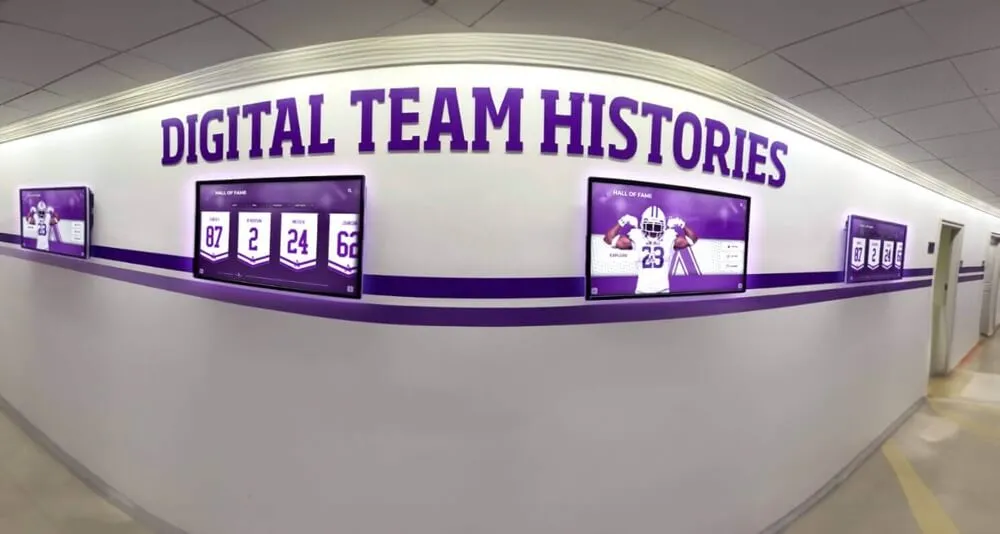
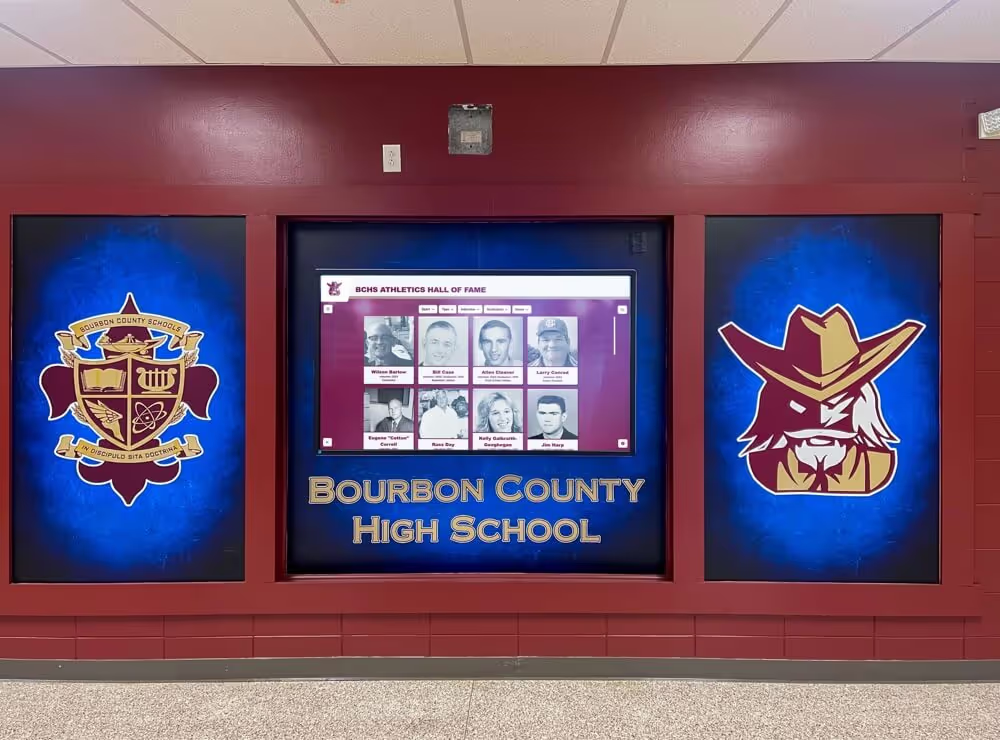
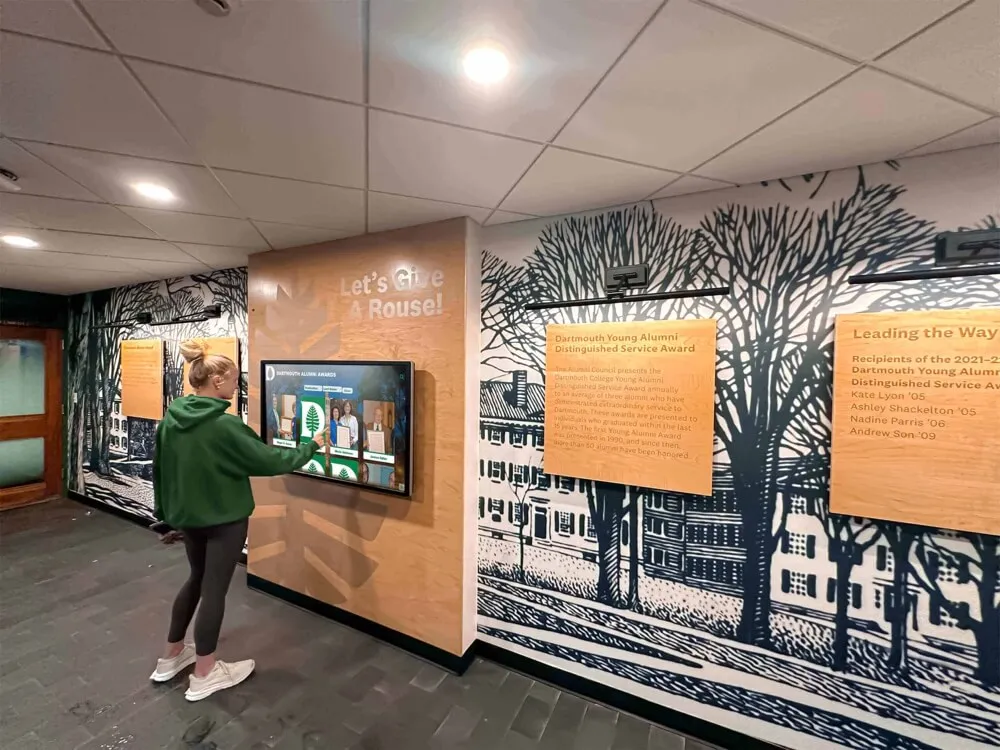
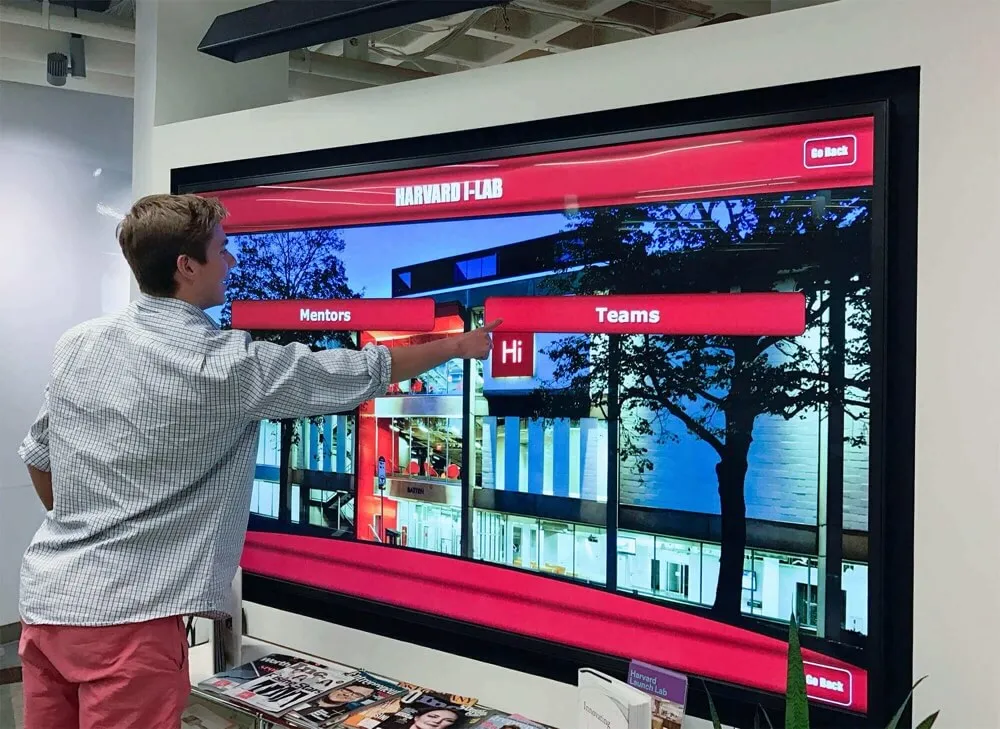
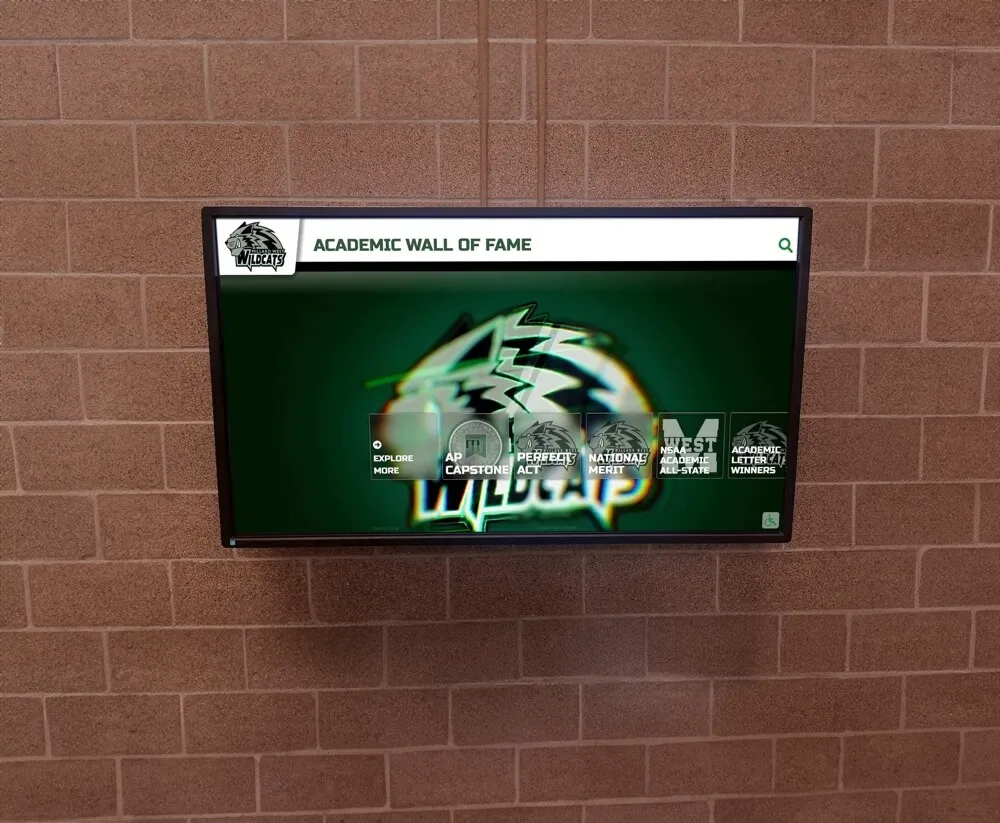
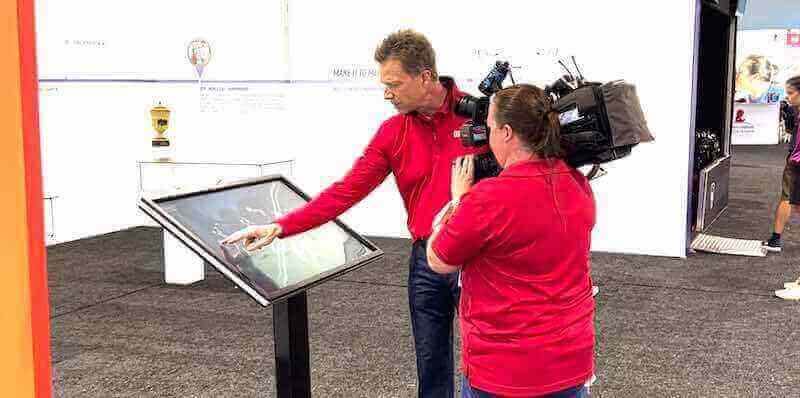
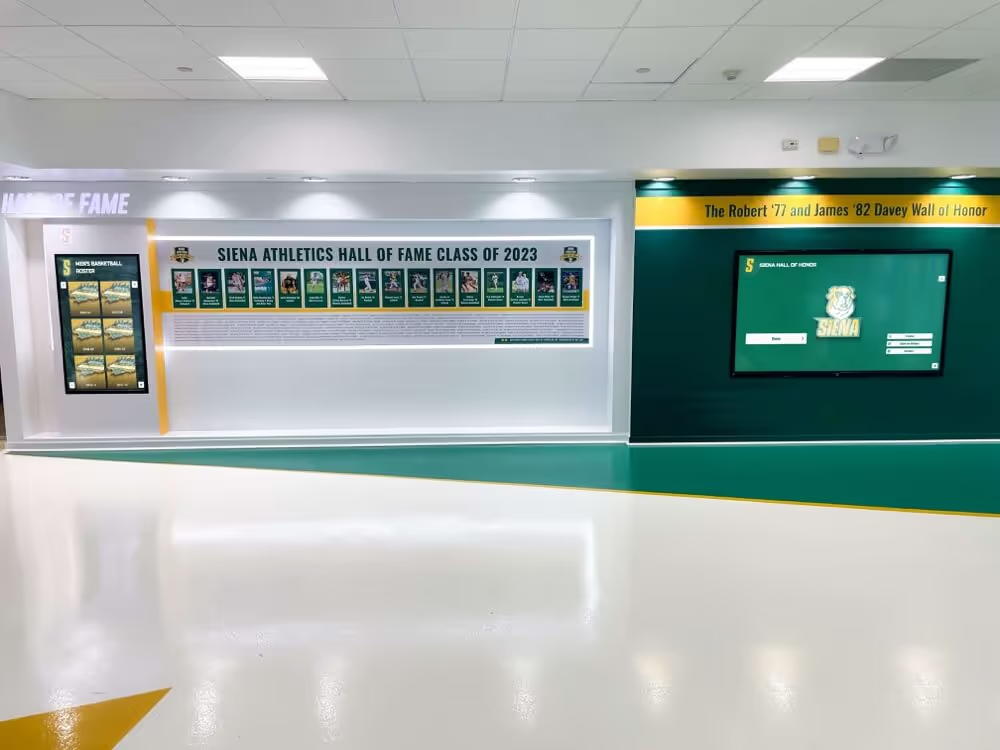
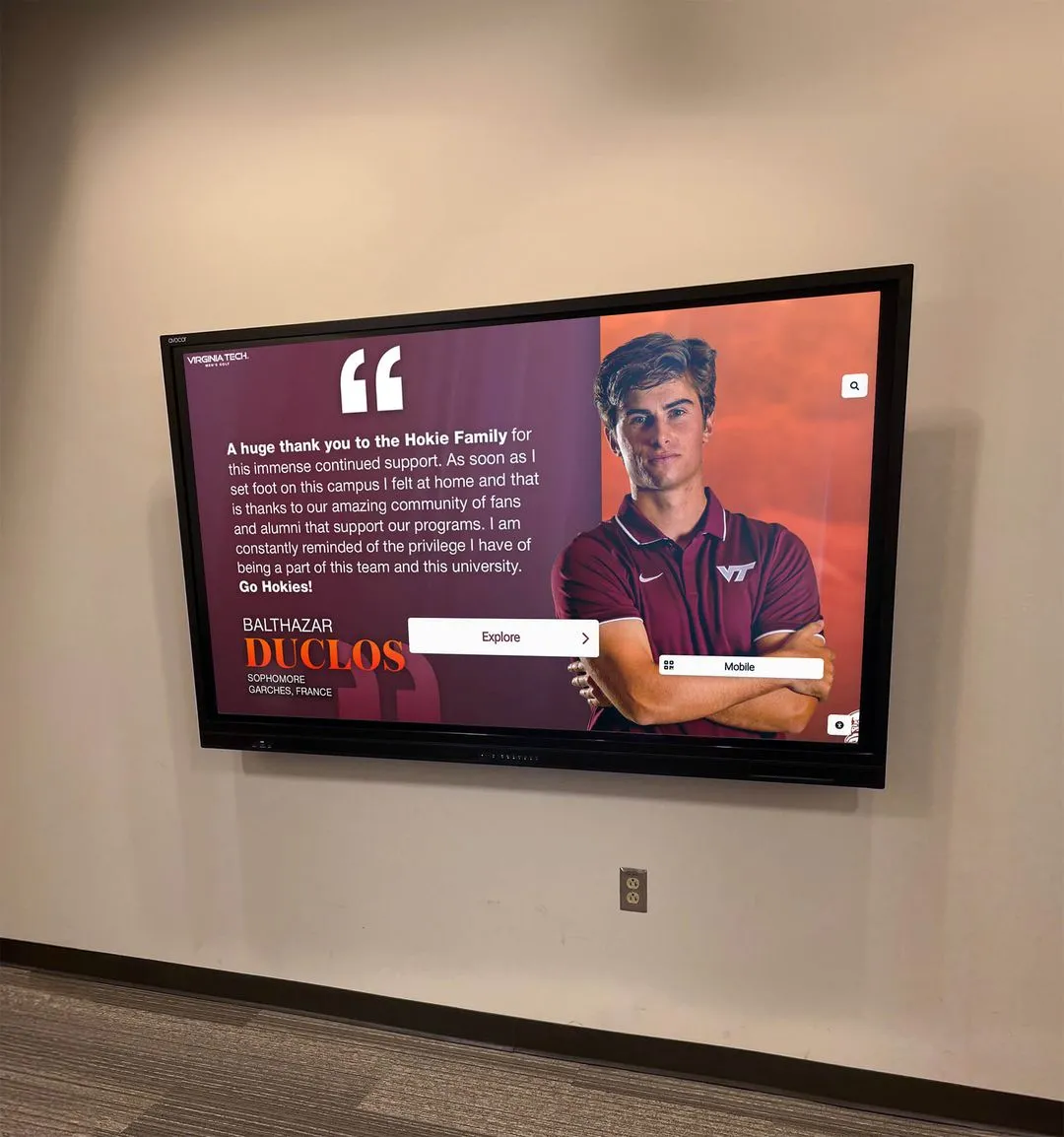
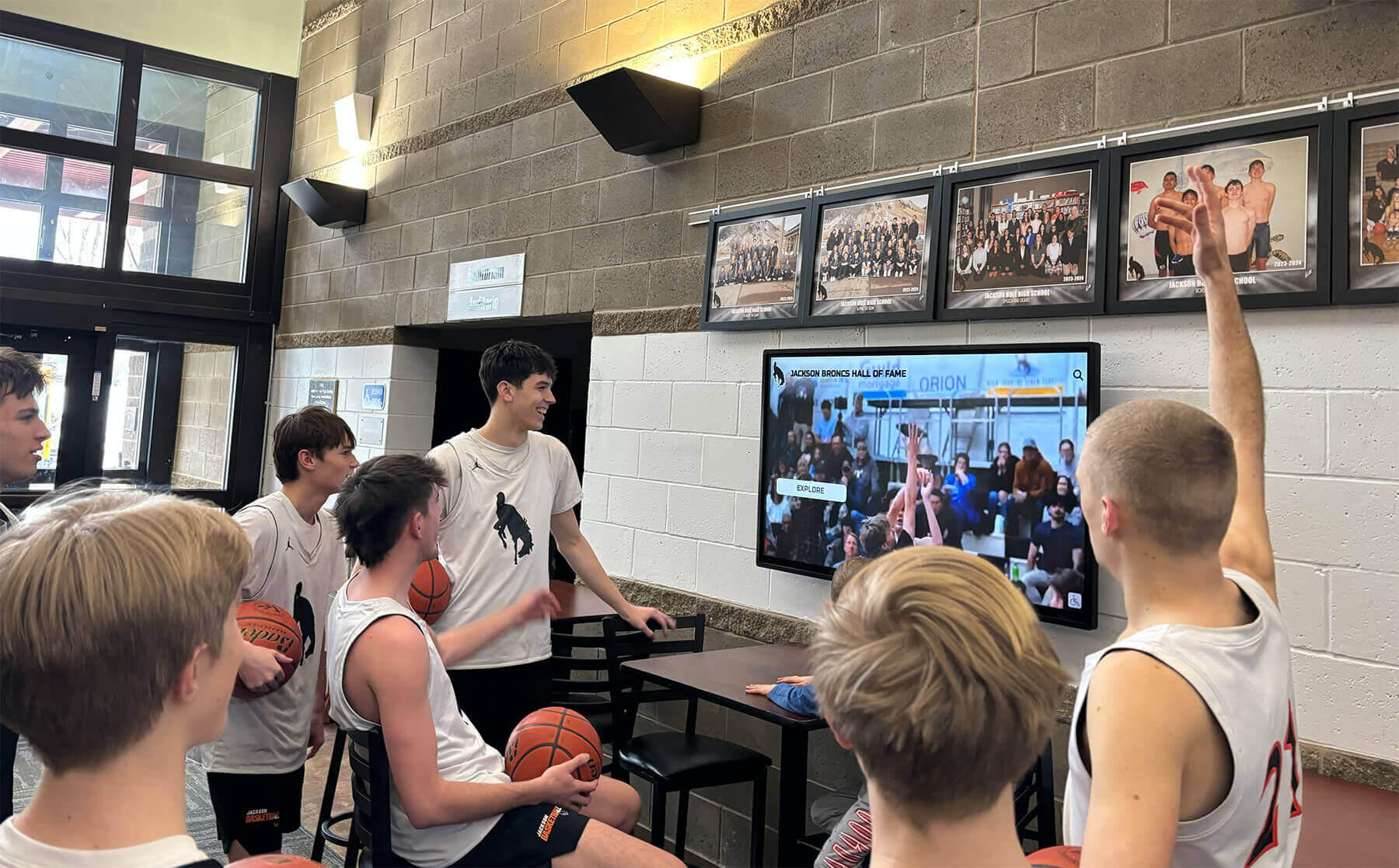
Digital lobby displays give programs a visible, ongoing way to celebrate team-first contributors alongside statistical leaders
What Is a Teamwork Award?
A teamwork award is a formal athletic recognition given to the student-athlete who most consistently demonstrates unselfish, team-first behavior throughout a season. It honors contributions that statistics rarely capture: setting screens without the ball, taking charges, encouraging teammates during slumps, communicating on defense, and embracing a role that serves the team even when it limits personal visibility.
Unlike MVP or offensive player awards—which reward measurable output—the teamwork award recognizes behavioral patterns. The recipient tends to be the athlete coaches reference when they describe the culture they are trying to build, not necessarily the one whose name appears at the top of the stat sheet.
Core characteristics recognized by a teamwork award:
- Prioritizing team outcomes over individual performance metrics
- Consistent, high-effort play regardless of role or playing time
- Positive communication and vocal leadership during competition
- Willingness to accept difficult or unglamorous assignments
- Celebrating teammates’ success as enthusiastically as personal achievement
- Maintaining attitude and effort through winning streaks and losing stretches alike
Some programs give the award a custom name tied to school identity—the “Panther Pride Award,” a coach’s legacy designation, or a name honoring a former player who embodied those qualities. The underlying meaning stays the same regardless of the name: the program sees you, it sees how you contribute, and it considers that contribution worth celebrating.
Explore how schools recognize a broad range of contribution types in this guide to student recognition awards across 40 categories with ceremony ideas.
Why Schools Give Teamwork Awards
Recognition shapes behavior. When an athletic program systematically awards what it values, athletes make choices aligned with those values. Coaches who give a teamwork award each season are building culture in a concrete, repeatable way.
Making Invisible Contributions Visible
Statistical leaderboards miss most of what wins games. The screen that opened the lane, the switch that prevented an easy basket, the timeout-huddle voice that steadied the team after a bad run—none of these appear in a box score. Without a structured award to name them, they stay invisible.
A teamwork award corrects that invisibility. By presenting the award publicly, with specific language describing why the recipient earned it, coaches communicate clearly:
The program notices what the numbers miss:
- Off-ball movement and positional discipline
- Defensive communication and rotation coverage
- Bench energy and sideline engagement
- Sacrifice plays—charges taken, headers cleared, bunts moved runners
- Post-practice conversations that keep teammates accountable
Recognition reinforces the behaviors that build winning cultures:
- Athletes observe which qualities earn formal acknowledgment
- Younger players model behaviors they see rewarded
- Seniors set culture partly through how they pursue recognition
- Coaches align stated values with demonstrated recognition priorities
- The award creates a shared program vocabulary for team-first play
Learn how recognition shapes athletic culture across academic and extracurricular programs in this overview of how schools recognize and showcase their top scholar teams.
Building Long-Term Program Identity
Programs become known for their culture over time. A school that has presented a teamwork award for fifteen consecutive seasons has created something more than a trophy—it has created an expectation. Current athletes know the award exists and know what it means. Alumni remember who won it. Parents mention it during recruiting conversations.
That accumulated cultural weight is difficult to build through individual performance awards alone. Teamwork recognition becomes part of the program’s identity, distinguishing it as a place that values the complete athlete and the complete team.
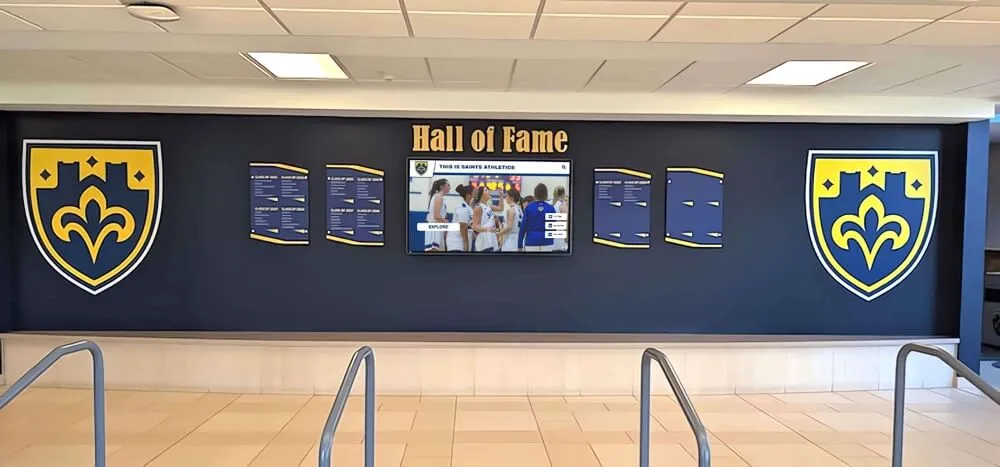
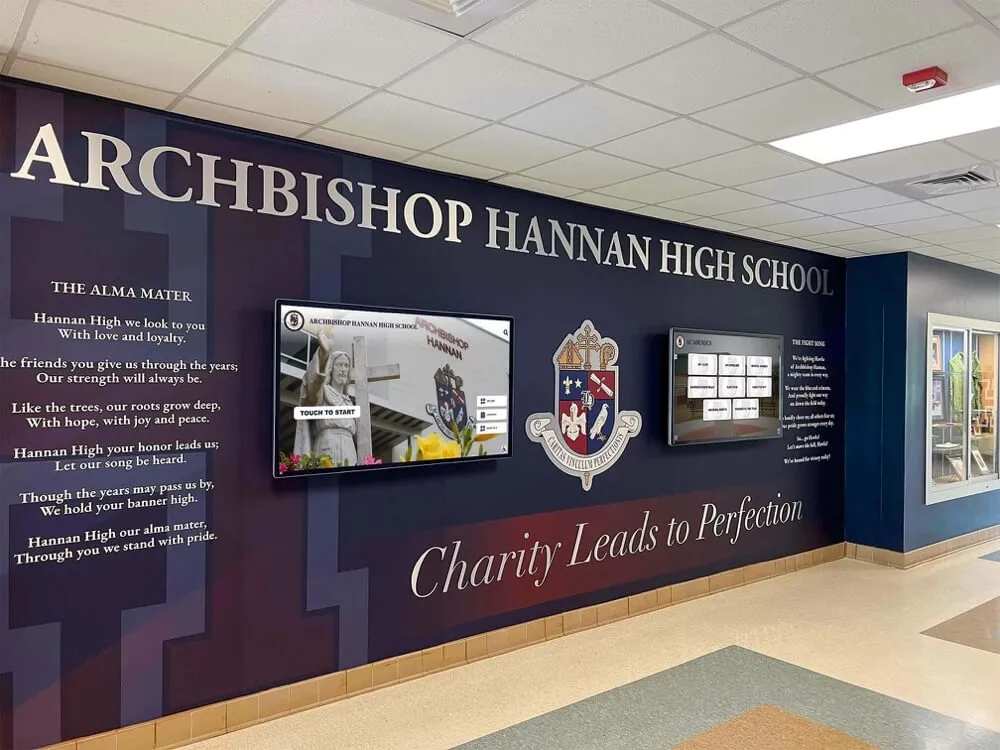
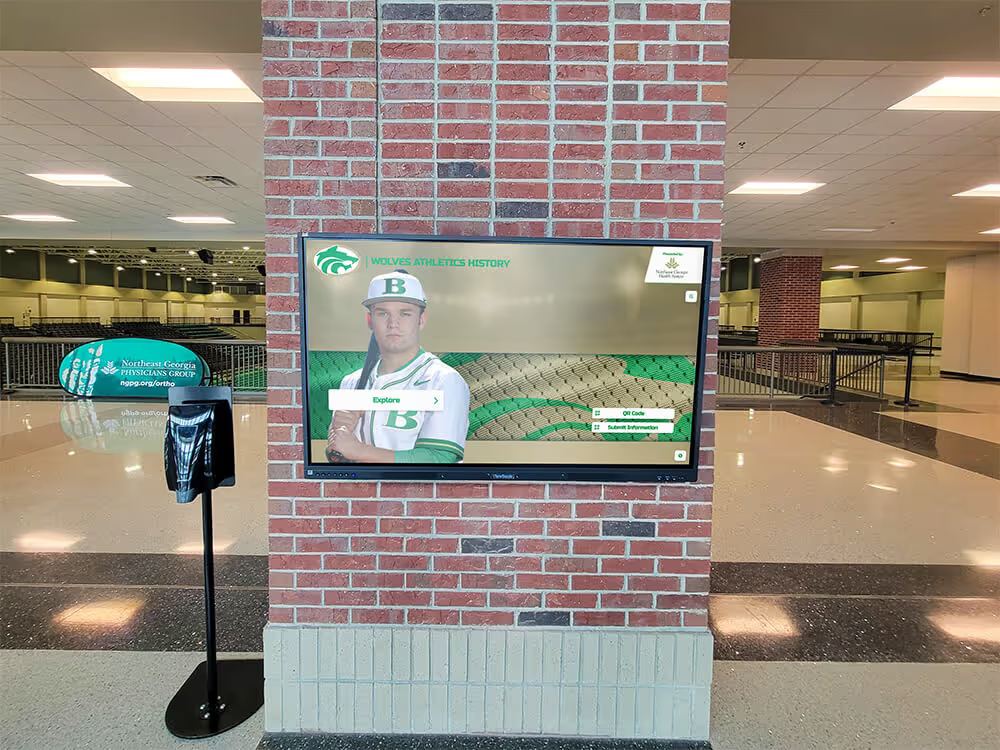
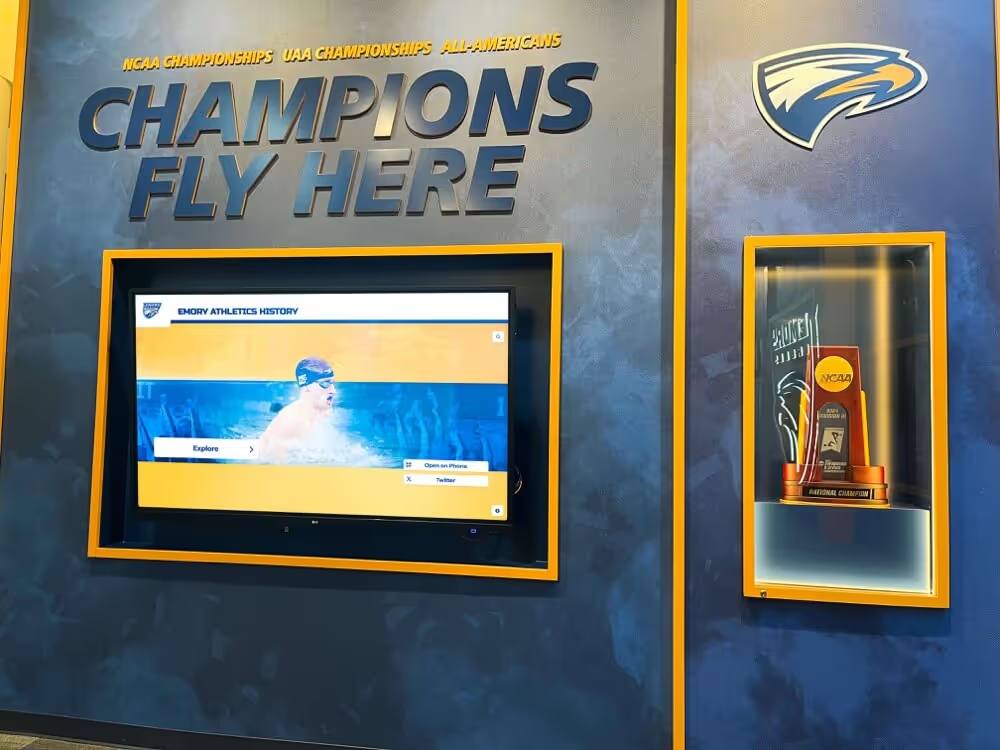
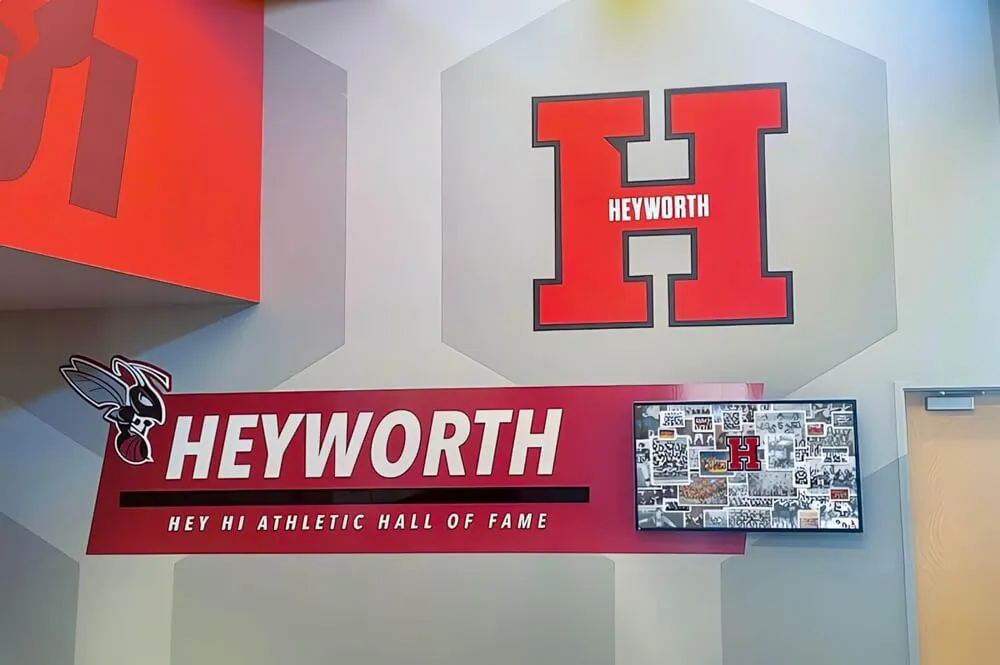
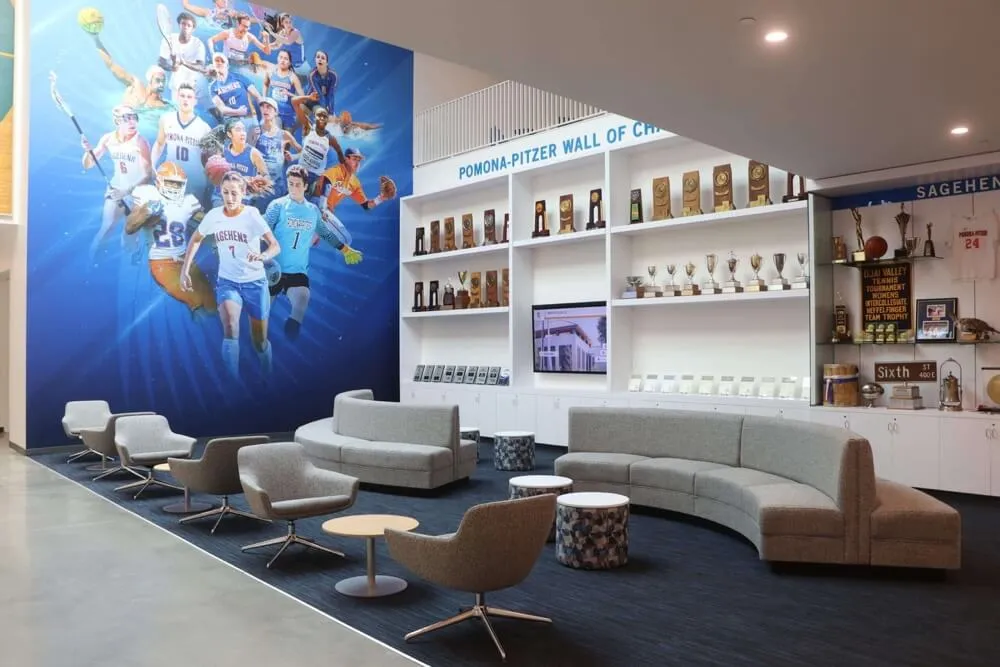
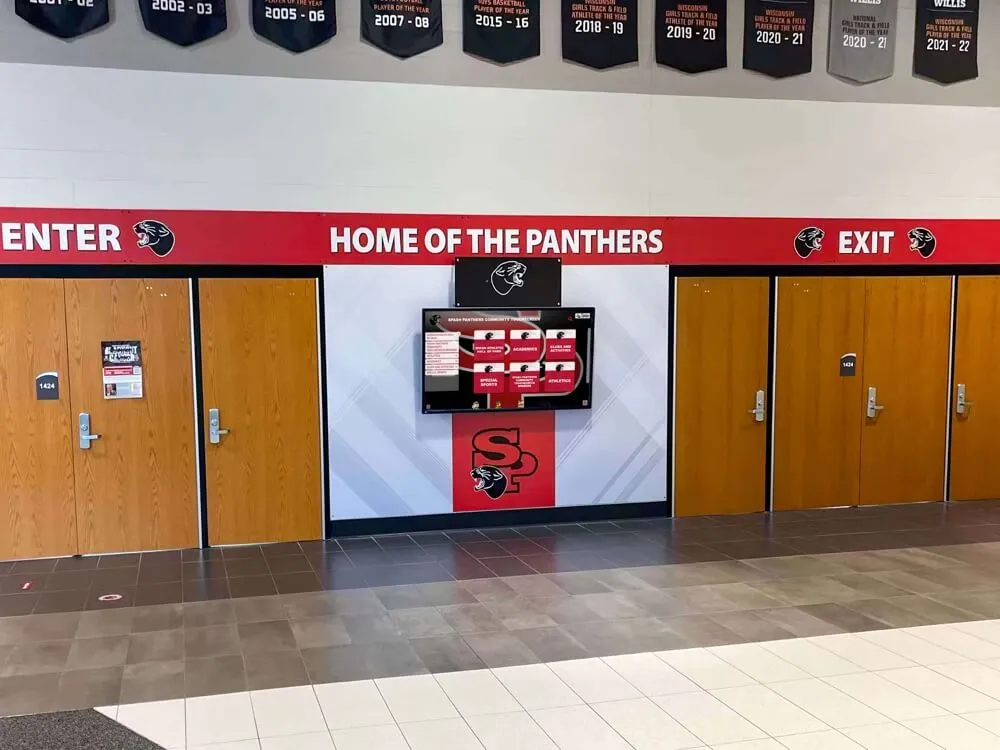
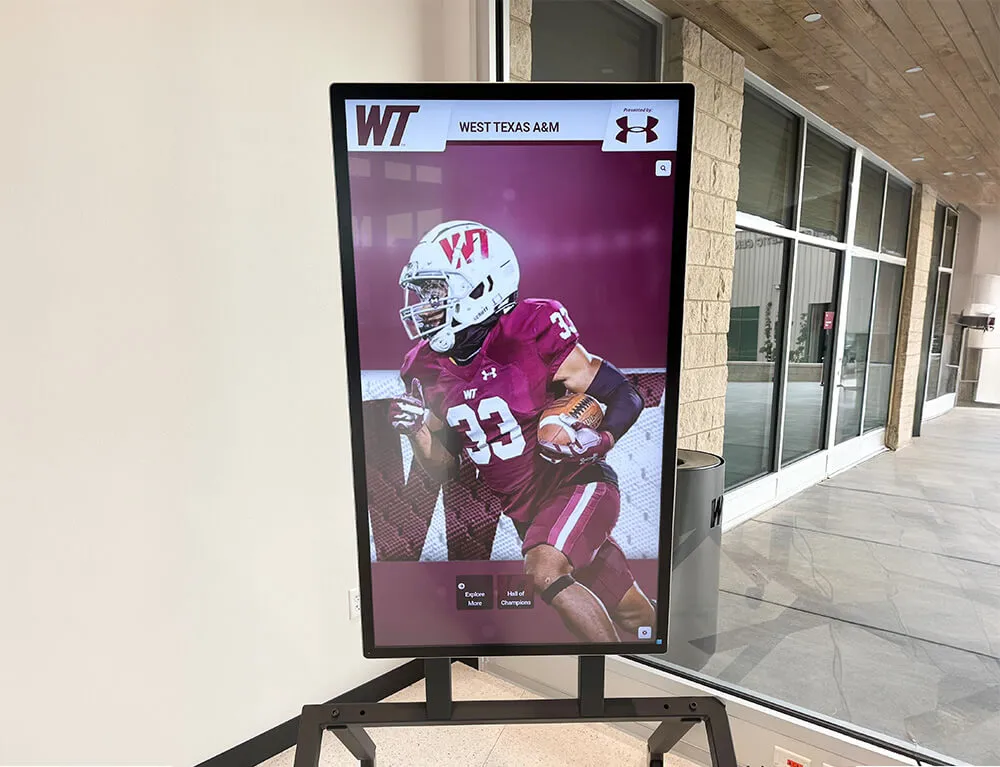
Permanent display systems preserve program culture and team-first recognition alongside traditional championship honors
Criteria for a Teamwork Award: Defining Team-First Behavior
Meaningful awards require clear, pre-established criteria. When athletes and families understand what the teamwork award represents before the season begins, the recognition carries more credibility when it is announced.
Behavioral Criteria to Evaluate
Strong teamwork award criteria focus on observable behaviors rather than subjective impressions. Coaches who track these patterns throughout the season build a defensible, fair selection process.
Communication and awareness:
- Consistently calls out screens, switches, and defensive assignments
- Provides real-time information to teammates during live play
- Participates actively in huddle discussions and practice film sessions
- Speaks up when team energy drops rather than staying silent
Role acceptance and effort:
- Completes assigned role—defensive specialist, sixth person, relay leg anchor—with maximum effort regardless of its visibility
- Executes practice reps at full intensity even when not in competition rotation
- Accepts positional or role changes without complaint or performance drop
- Demonstrates the same preparation and focus in low-stakes games as in rivalry matchups
Support and encouragement:
- Actively celebrates teammates’ achievements during competition
- Provides constructive encouragement after teammate mistakes
- Maintains positive sideline presence during periods away from play
- Connects with and supports teammates across different social groups within the roster
Accountability and consistency:
- Arrives prepared and on time with equipment and mindset ready
- Acknowledges personal mistakes openly and adjusts without defensiveness
- Holds teammates accountable with respect and without undermining coach authority
- Maintains consistent behavior from the first week of pre-season through the final game
Setting Award Criteria Before the Season
The single most effective step programs can take is communicating award criteria before competition begins. When athletes know the teamwork award exists, know what behaviors qualify, and hear coaches reference those behaviors throughout the year, the end-of-season presentation becomes a confirmation of what the team already observed—not a surprise.
Pre-season steps for establishing teamwork award criteria:
- Define 4-6 specific behavioral categories the award will recognize
- Share criteria at the team’s first meeting or in the season handbook
- Reference teamwork award examples during film sessions when players model the behaviors
- Build brief peer feedback into mid-season check-ins
- Document specific examples supporting final selection throughout the season
This approach also supports alumni mentorship programs by connecting current team values to the behavior patterns that define successful alumni—making recognition part of a longer story about the program’s culture and expectations.
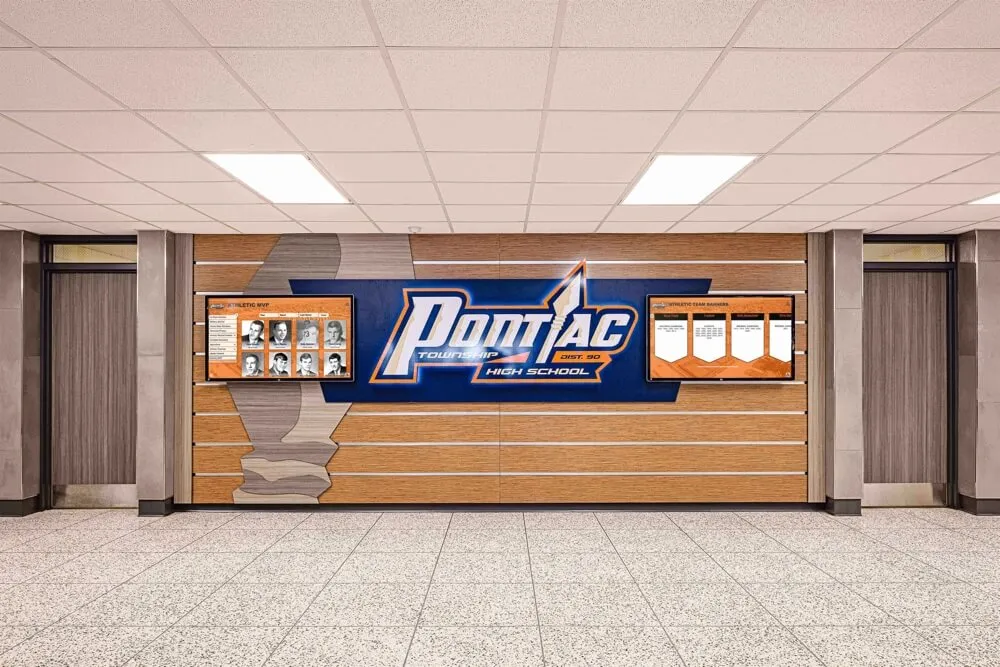
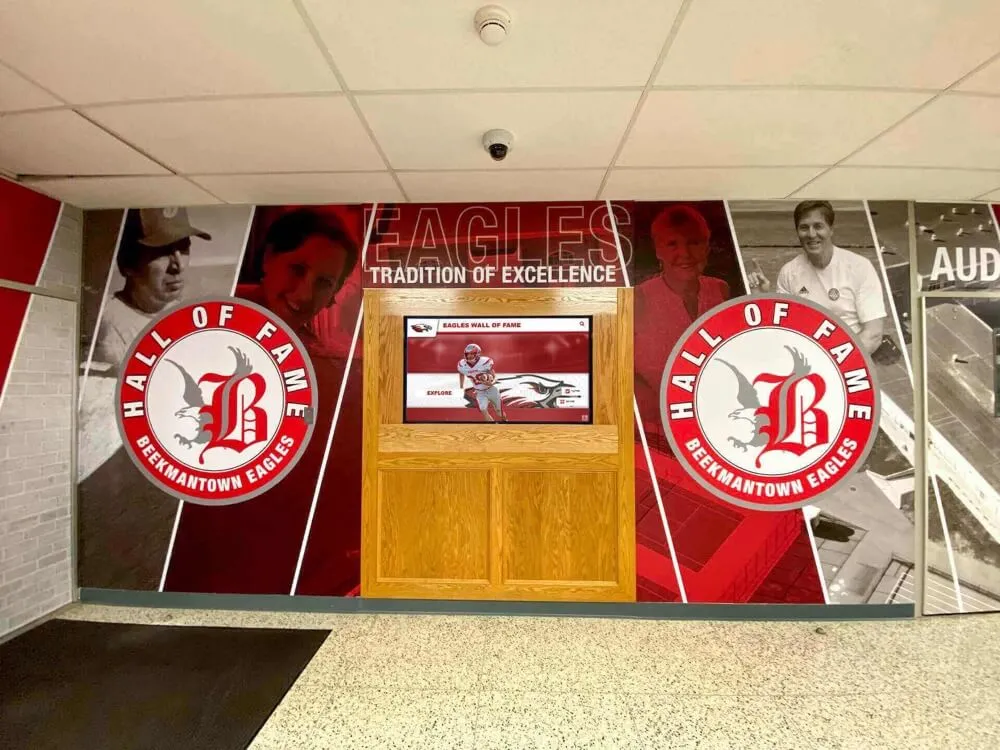
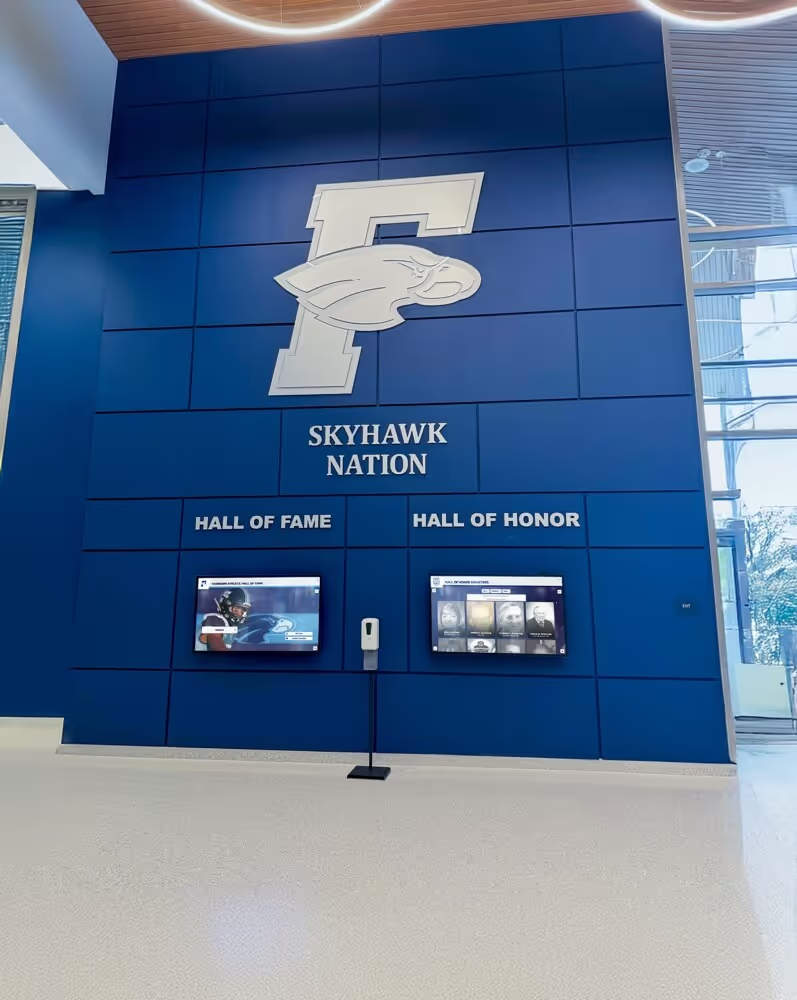
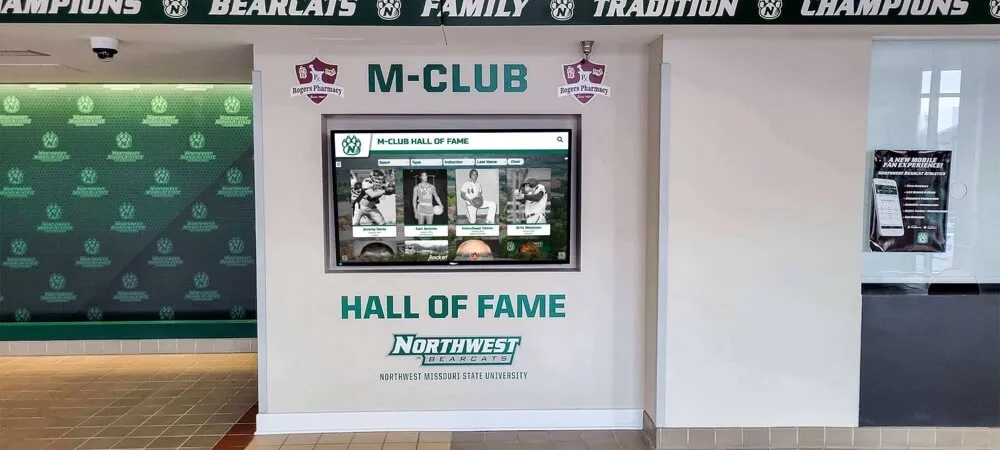
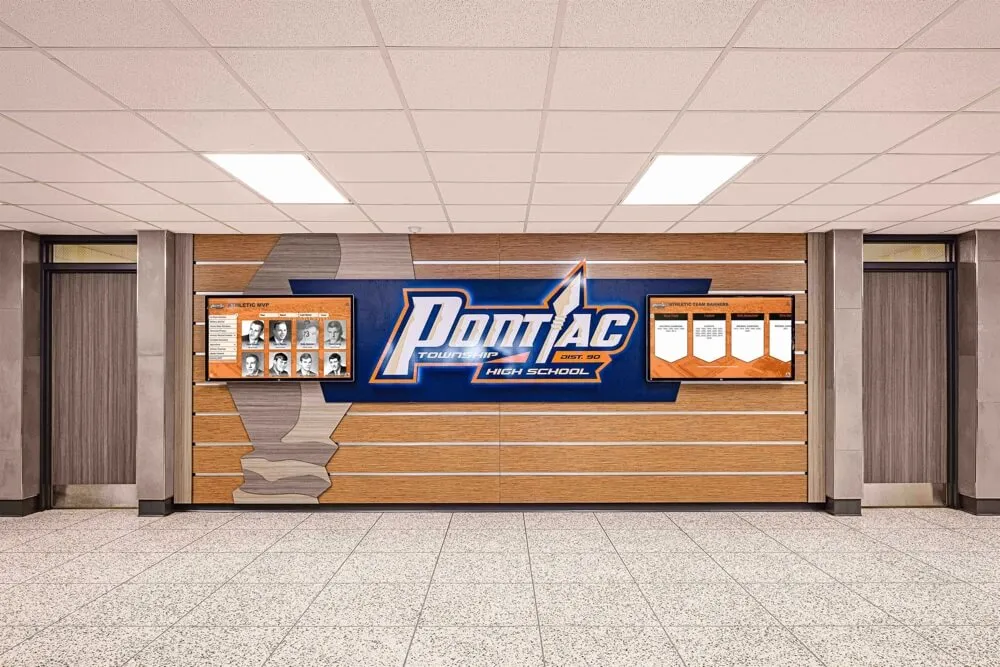
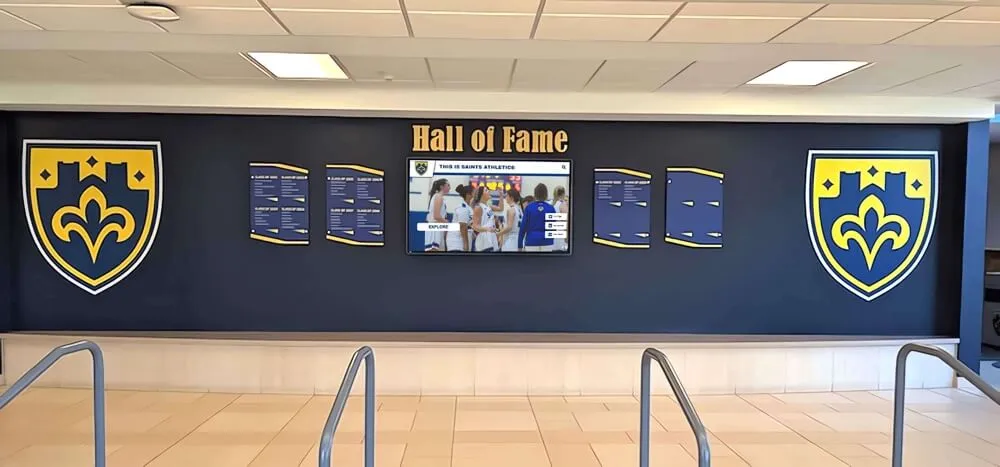
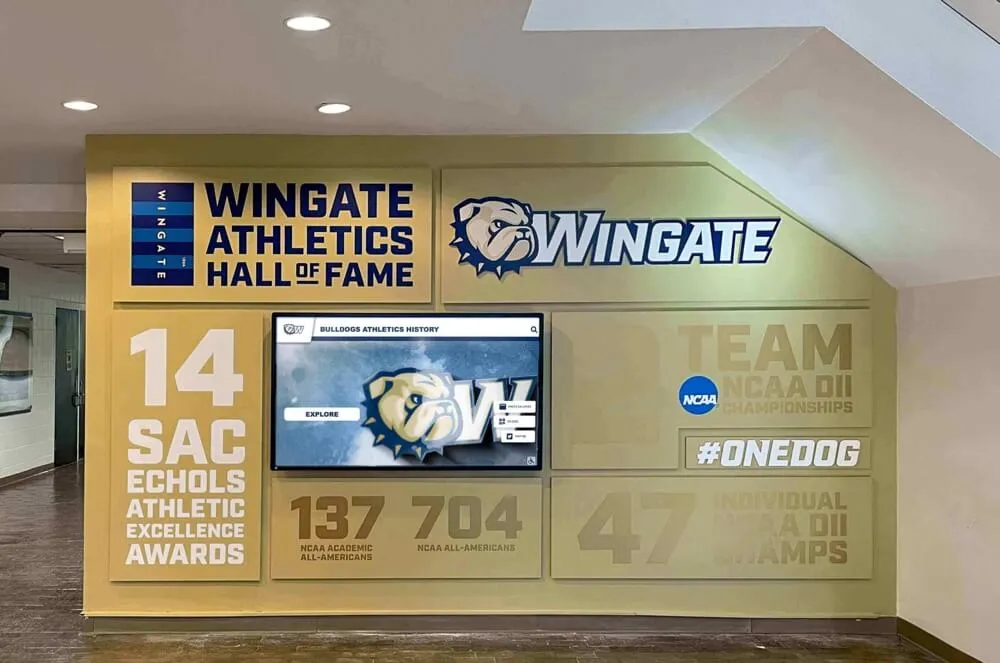
Honor wall installations in athletic hallways ensure team-first contributors receive lasting visibility alongside performance award recipients
Teamwork Award Wording: Certificate and Announcement Examples
One of the most common challenges coaches face is writing the actual language for the award. Generic wording—“presented to [name] for being a great teammate”—undersells the recognition and misses an opportunity to teach the whole team what the award actually means.
Strong teamwork award language is specific, behavioral, and tied to the program’s values. The following examples provide templates coaches can adapt.
Certificate Wording Examples
Option 1 — Criteria-Forward:
Presented to [Athlete Name] for consistently placing team success above personal recognition. Throughout the [Year] season, [he/she/they] demonstrated exceptional communication on defense, embraced a demanding role without hesitation, and elevated the performance of teammates through daily preparation and genuine encouragement. This award reflects what [Program Name] athletics is built on.
Option 2 — Season-Specific:
The [Year] Teamwork Award honors [Athlete Name] for embodying the team-first standard that defines our program. From the first day of pre-season through the final competition, [he/she/they] prioritized collective achievement, held teammates accountable with respect, and demonstrated that unselfish play is its own form of excellence.
Option 3 — Values-Anchored:
Awarded to [Athlete Name] in recognition of unselfish play, consistent effort, and team-first leadership. [His/Her/Their] contributions—many of which do not appear in a box score—were essential to everything this team accomplished. This recognition belongs to the whole roster; [name] simply showed us all how it’s done.
Option 4 — Concise Plaque Format:
[Athlete Name] — [Year] Teamwork Award For unselfish play, team-first leadership, and the courage to compete without counting.
Announcement Language for Banquets and Ceremonies
When presenting the award, coaches should give specific examples rather than reading generic criteria. A 90-second presentation that names two or three actual moments from the season—the screen that opened the winning layup, the locker room speech after a tough road loss, the role switch the athlete accepted without question—creates a moment the whole team will remember.
Opening framework for banquet presentation:
“This award is for the player every coach needs and every team depends on—the one who makes everyone else better without asking for credit. This season, that player was…”
Browse comprehensive frameworks for structuring athletic ceremonies in this guide to student recognition award categories and ceremony ideas.
How to Select the Teamwork Award Winner Fairly
Fair selection protects the award’s credibility. A well-designed process prevents the teamwork award from becoming a consolation prize for athletes who didn’t make the statistical leaderboards, and ensures the recipient genuinely exemplifies the criteria.
Coach-Led Selection
For most programs, the head coach or coaching staff makes the final selection. This works well when coaches document behavioral observations throughout the season rather than relying on end-of-year memory alone.
Effective coach-led documentation practices:
- Keep a running notes file through the season with specific examples of team-first behavior
- Brief post-practice check-ins among staff on who modeled teamwork criteria that week
- Review notes collectively before awards selection—multiple perspectives reduce individual bias
- Require that the final selection can be supported by at least three specific, documented examples
Peer Input Components
Teammates often observe teamwork behaviors that coaches miss—locker room conversations, pre-game preparation habits, how athletes respond to adversity when the coaches aren’t in the room. Structured peer input adds credibility and accuracy.
Implementing anonymous peer feedback:
- Distribute brief end-of-season ballots asking athletes to identify the teammate who most consistently placed team success first
- Use specific behavioral prompts rather than open-ended questions: “Who took the toughest assignment without complaint?” and “Who celebrated your success more than their own?”
- Weight peer input alongside coaching staff observation—50% peer, 50% staff works well for most programs
- Keep individual ballot responses confidential to encourage honest feedback
Guarding Against Misuse
The teamwork award loses meaning when it functions as a participation recognition or when programs give it to the “nice” athlete who didn’t win anything else. Maintaining the award’s credibility requires discipline:
Standards that protect award integrity:
- The recipient should genuinely exemplify specific teamwork behaviors—not simply avoid being difficult
- The award should be presented with the same formality as performance-based honors
- Only present the award when a genuinely qualified recipient exists; skipping a year is preferable to diluting the criteria
- Communicate selection rationale publicly so athletes understand what the recognition represents
Sport-Specific Teamwork Award Ideas
While the core criteria stay consistent, programs in different sports can adapt the teamwork award to honor behaviors that matter most in their competitive context.
Team Sport Variations
Basketball: The basketball teamwork award should emphasize off-ball movement, defensive communication, and the willingness to set screens, take charges, and screen away from the play. Box score metrics rarely capture these contributions, making the explicit recognition particularly meaningful. Rival game performances—the kind featured in rivalry game traditions across high school football—often reveal which athletes play for the team and which play for the stat sheet.
Football: Linemen, fullbacks, and specialists rarely receive individual recognition despite enabling nearly every touchdown in a season. A football teamwork award that explicitly recognizes blocking, protection, and special teams contributions sends a powerful signal to the athletes most critical to team success and least likely to appear on highlight reels.
Soccer: Defensive midfielders, center backs, and goalkeepers who organize the defense deserve specific recognition. A teamwork award in soccer can honor the athlete who tracks back hardest, wins the most headers outside the box, or holds the defensive shape that prevents concessions—contributions invisible to casual observers but essential to clean sheets.
Baseball and Softball: The sacrifice bunt, the hit-and-run execution, the relay throw relay that prevents an extra base—these are team plays that deserve acknowledgment. Coaches at all levels maintain comprehensive seasonal records, similar to how baseball field maintenance guides document the operational work that makes the game possible. The same documentation discipline applied to player behaviors supports a credible teamwork award selection.
Volleyball: Serve-receive specialists and defensive liberos play roles that define whether a team competes or collapses. A volleyball teamwork award recognizing passing efficiency, communication, and consistent positioning honors athletes whose value shows in the scoreboard but rarely in the individual stats.
Individual Sport Team Dynamics
Individual sports—track and field, swimming and diving, cross country, wrestling—still depend on team-first behavior for relay performance, dual meet scoring strategy, and competitive culture. The teamwork award in these sports often recognizes:
- Relay legs run for team scoring rather than individual event qualification
- The athlete who anchors weaker relays to maximize team points rather than competing in stronger heats for personal marks
- Consistent dual meet performance prioritizing team win totals over individual championship preparation
- Mentorship of younger athletes and contribution to practice culture
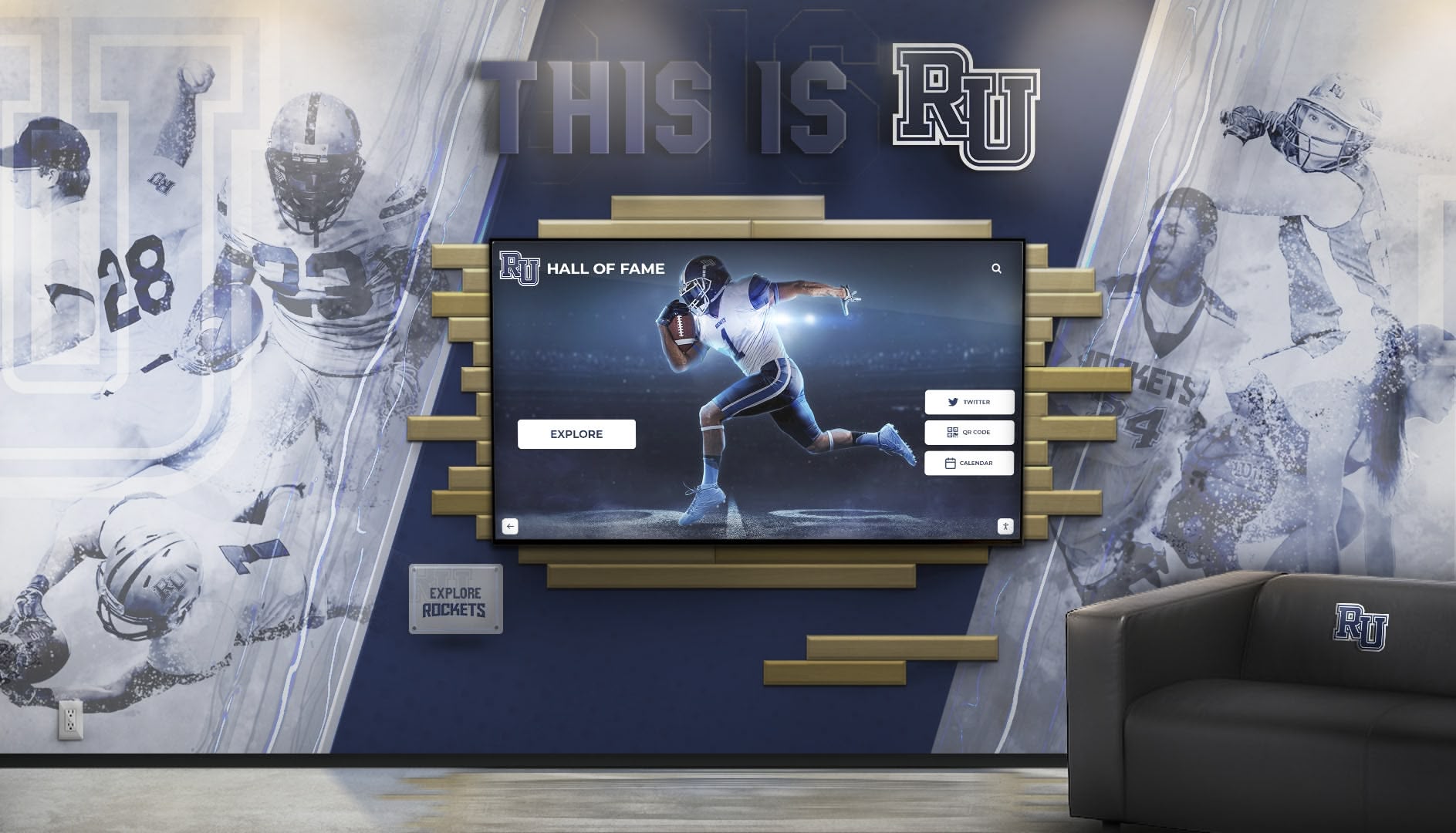
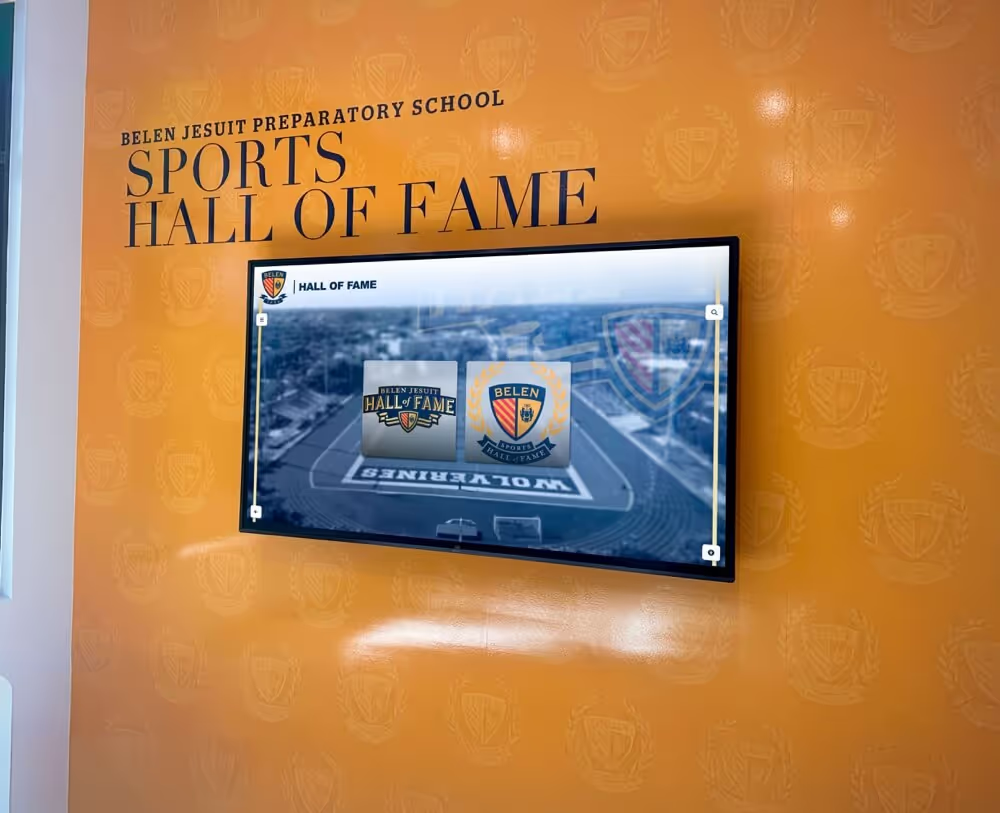
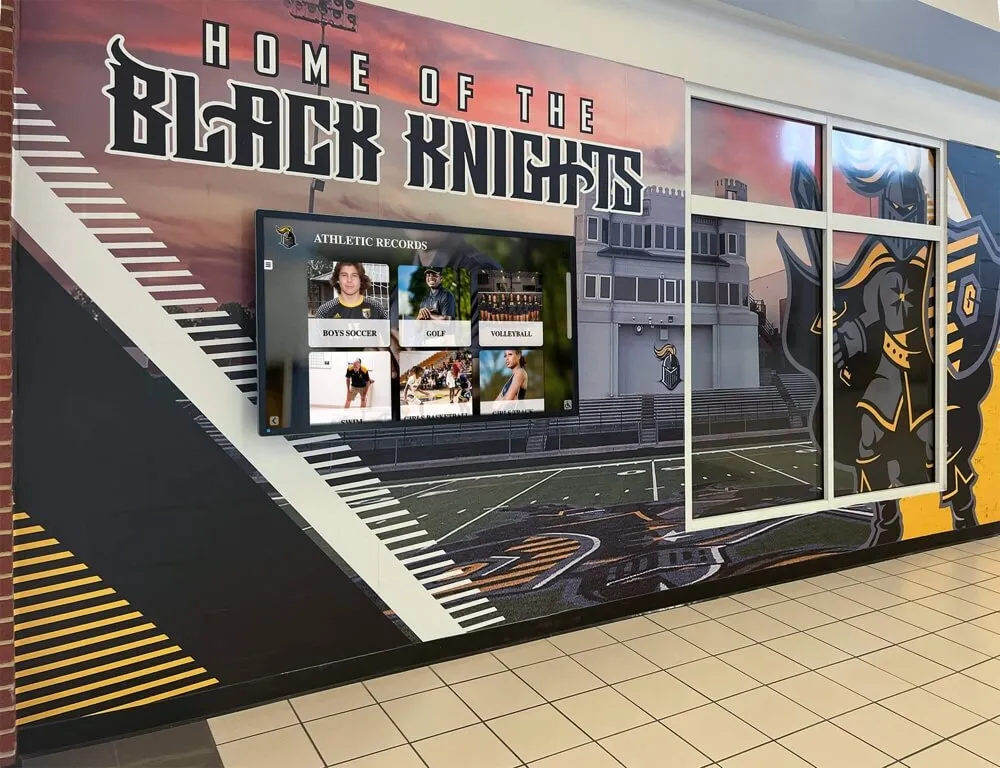
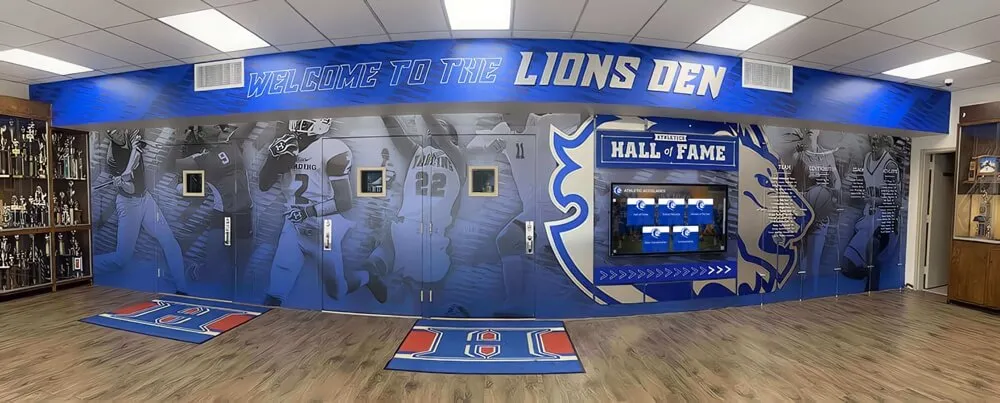
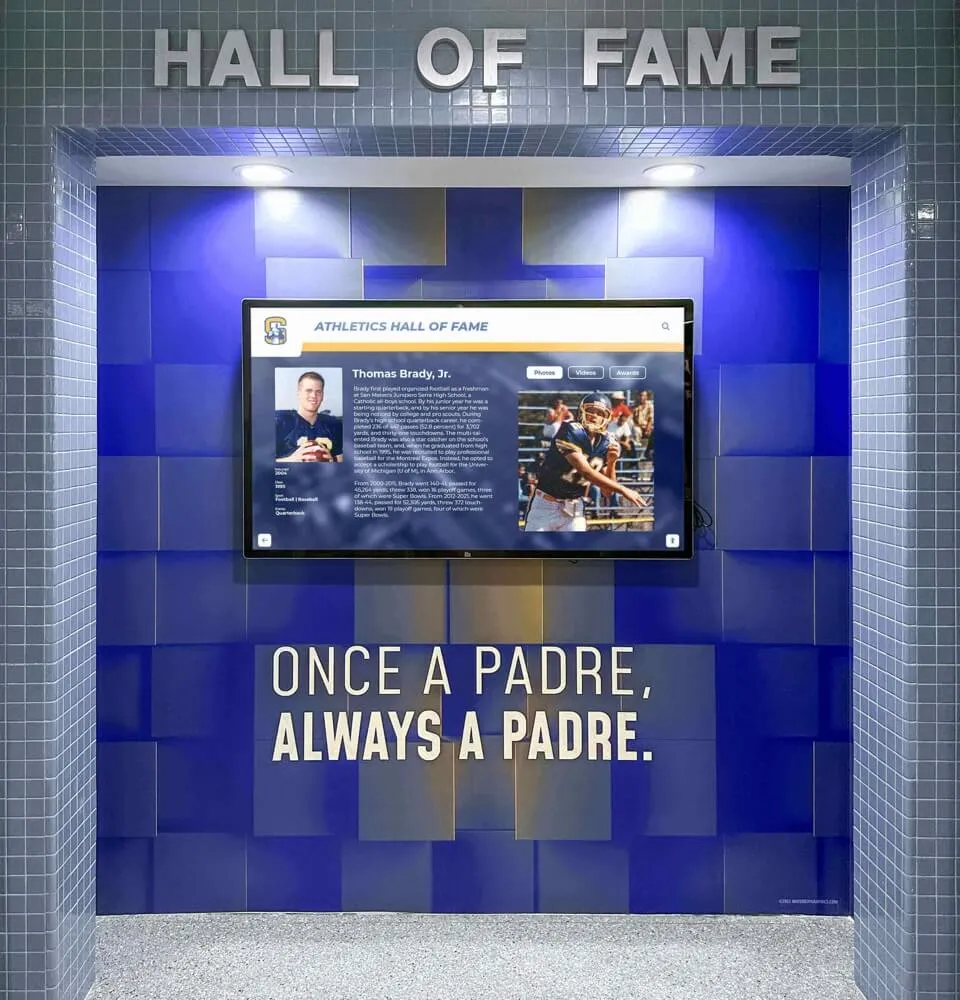
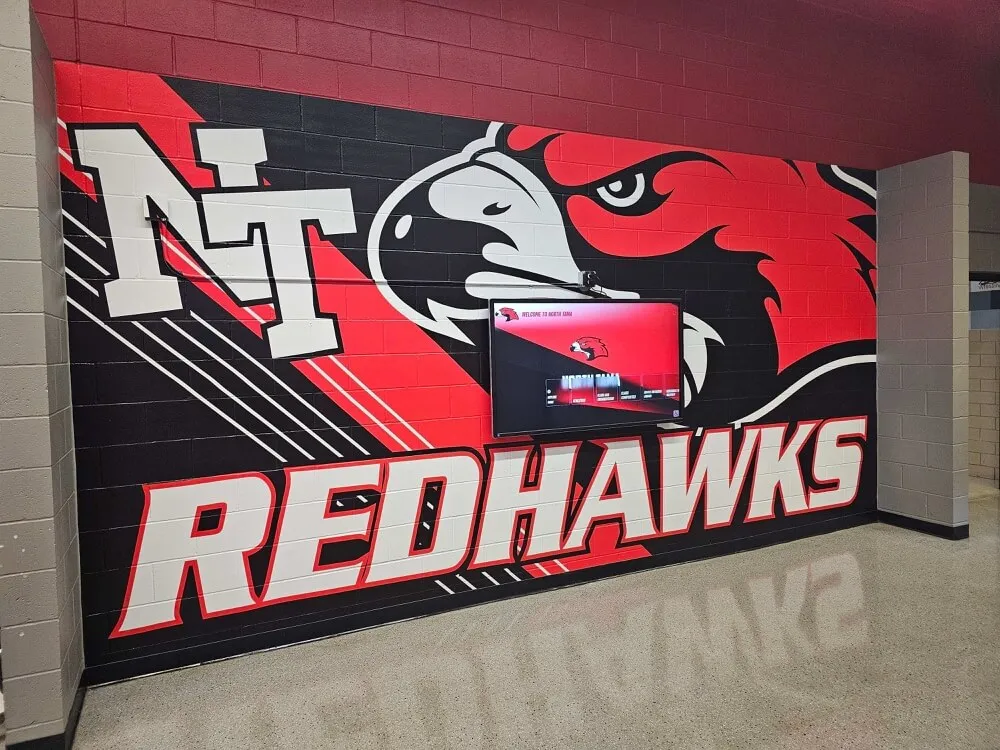
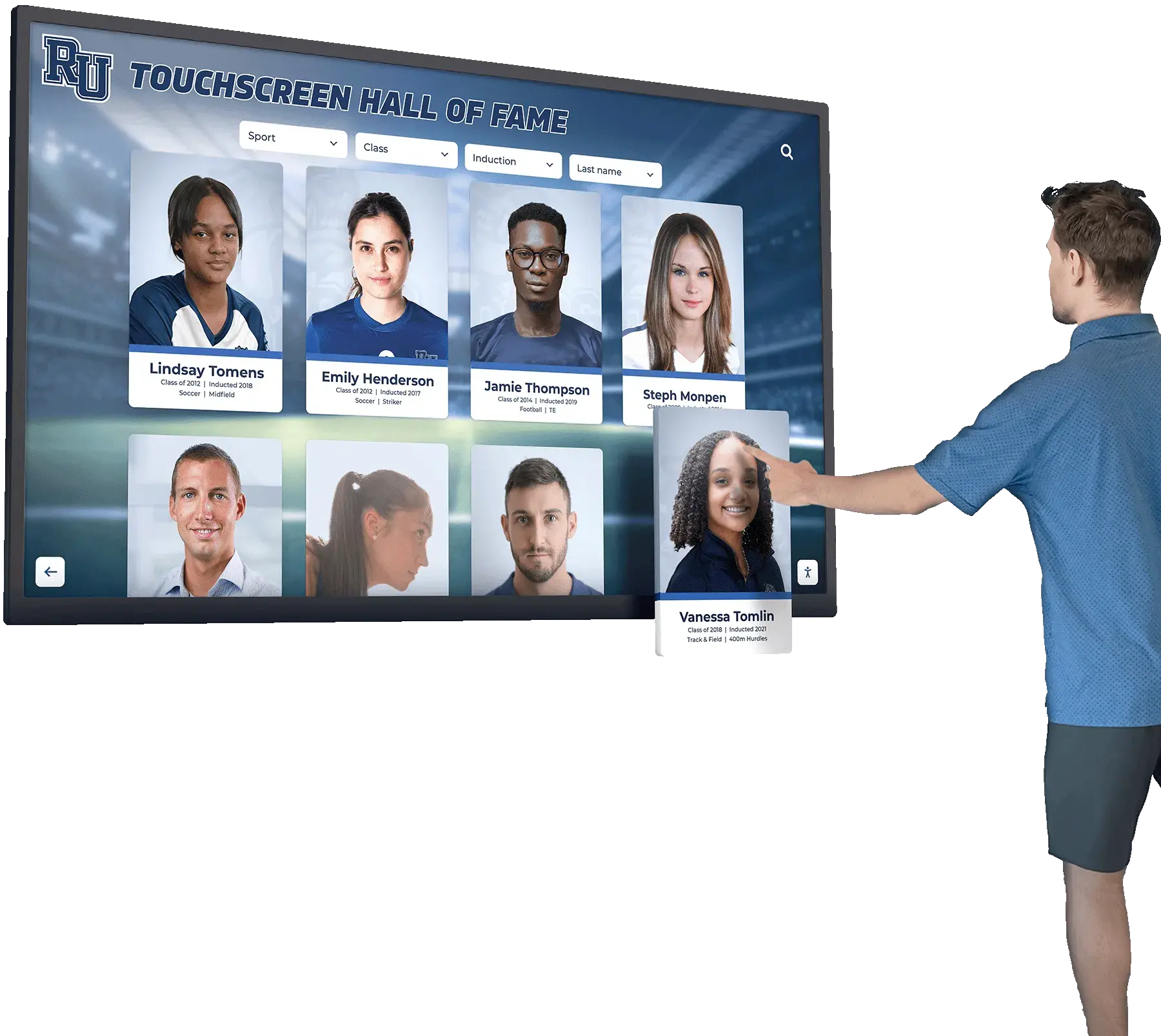
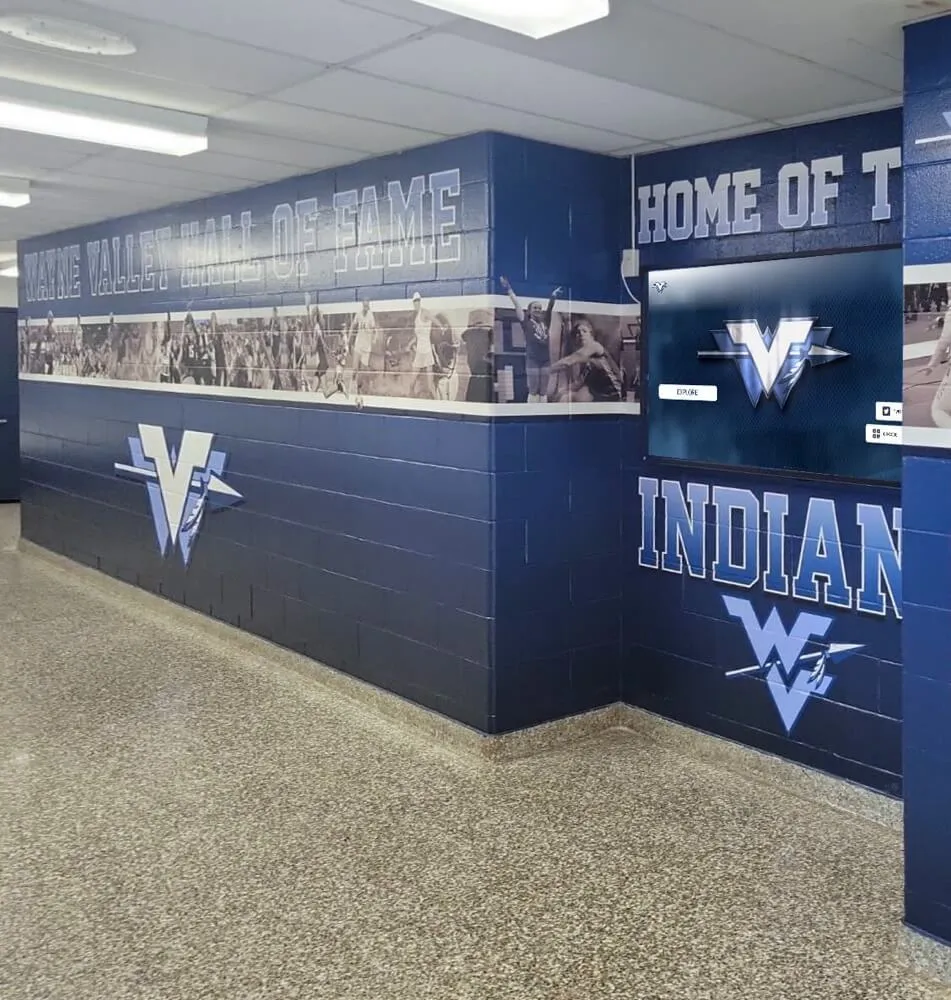
Interactive lobby displays blend sport-specific murals with digital recognition, giving teamwork award recipients a prominent and permanent presence
Displaying the Teamwork Award Beyond the Banquet
A teamwork award presented at a banquet and then forgotten misses most of its potential impact. The recognition creates maximum value when it persists—visible to current athletes, incoming students, and the broader school community throughout the year.
Physical and Permanent Display Options
Traditional recognition displays include trophy cases, honor boards, and hallway plaques. For the teamwork award, placement matters as much as the physical form.
High-impact placement strategies:
- Mount teamwork award recognitions alongside MVP and performance-based honors in the same display—positioning communicates that team-first behavior equals individual achievement in the program’s eyes
- Place multi-year award recipient lists in athletic hallways where athletes pass daily, not only in trophy rooms visited occasionally
- Include teamwork award recipients in the athletic department’s formal record-keeping alongside statistical leaders and championship rosters
Making the recognition year-round rather than event-specific:
- Feature teamwork award recipients in pre-season team meetings to set cultural expectations for incoming athletes
- Reference the award specifically when coaches model team-first behaviors during practice
- Create a visual history of past recipients that new athletes encounter when joining the program
Schools evaluating how to connect recognition programs to broader community engagement can review tools that build community showcases for practical frameworks applicable to athletic recognition systems.
Integrating Teamwork Awards into Athletic Hall of Fame Programs
Formal hall of fame programs typically recognize careers, championships, and individual records. Including team-first leadership categories within that framework broadens what the program’s hall of fame celebrates.
Framework for integrating teamwork recognition into hall of fame systems:
- Maintain a dedicated teamwork award roll in the athletic hall of fame alongside career statistical leaders
- Display cumulative award history organized by sport and year so visitors can see the recognition tradition across decades
- Include brief achievement narratives for each recipient describing what specific behaviors earned the recognition
This integration creates a visible record that team-first leadership is a permanent part of the program’s honored history—not a seasonal gesture.
How Digital Recognition Platforms Elevate the Teamwork Award
Physical displays create permanent recognition, but they have practical limits: space constraints, update difficulty, and limited visibility beyond the building. Digital recognition platforms solve these problems while making teamwork award recognition more engaging, accessible, and durable.
Unlimited Recognition Capacity Without Space Constraints
Traditional trophy cases and honor boards fill up. Adding a new teamwork award recipient each year eventually requires removing older honorees or cramming entries into smaller formats. Digital displays eliminate that constraint entirely.
What digital platforms enable for teamwork award recognition:
- Unlimited award recipients across all sports, years, and categories without physical space limits
- Equal visual presence for teamwork and character-based awards alongside performance and championship honors
- Multimedia profiles featuring photos, highlight clips, coach testimonials, and full award narratives
- Search and filter functionality allowing visitors to find teamwork award recipients by sport, year, or athlete name
- Historical archives preserving complete award history from the program’s founding forward
Explore how schools are upgrading recognition infrastructure in this comparison of interactive kiosk displays for schools in 2026.
Cloud-Based Content Management for Easy Updates
Adding a teamwork award recipient to a digital display should take minutes, not weeks. Cloud-based recognition platforms allow coaches or administrators to update recognition content remotely—from any device, at any time—without involving facilities staff or waiting for a vendor.
Key content management capabilities:
- Remote updates from any internet-connected device immediately after banquet night
- Scheduled publishing to announce teamwork award recipients across digital signage throughout the building
- Template-based award profiles ensuring consistent presentation across sports and years
- Role-based permissions allowing individual coaches to manage their sport’s recognition section
- QR code integration giving athletes and families mobile access to full award profiles off-campus
ADA-Accessible Recognition for Every Student and Family
Recognition systems that cannot be used by all community members fall short of what schools should provide. Modern digital recognition platforms built to WCAG 2.1 AA standards ensure that every student, parent, and visitor—regardless of ability—can engage with teamwork award histories and athlete profiles.
Accessibility-compliant displays also meet legal requirements increasingly relevant to school facilities, making the investment in digital recognition both a cultural and a compliance decision.
Schools evaluating platforms with these capabilities should review resources on touchscreen software buyers guides for school recognition walls for a structured evaluation framework.
Connecting Recognition to the Broader School Community
Digital recognition platforms extend the teamwork award’s reach beyond the athletic hallway. With digital signage modes, the same platform that displays award profiles in the athletic lobby can push recognition content to screens in the main office, cafeteria, or gymnasium entrance.
This broader visibility serves the award’s core purpose: communicating school-wide that team-first behavior is a recognized and celebrated value—not just a private athletic department preference. Programs that connect athletic recognition to community-wide visibility often discover that the culture impact extends into classrooms, clubs, and other co-curricular activities.
For programs exploring how touchscreen displays fit into broader community and alumni engagement, touchscreen display resources for memorial and recognition programs provide relevant frameworks for organizing and presenting meaningful recognition content.
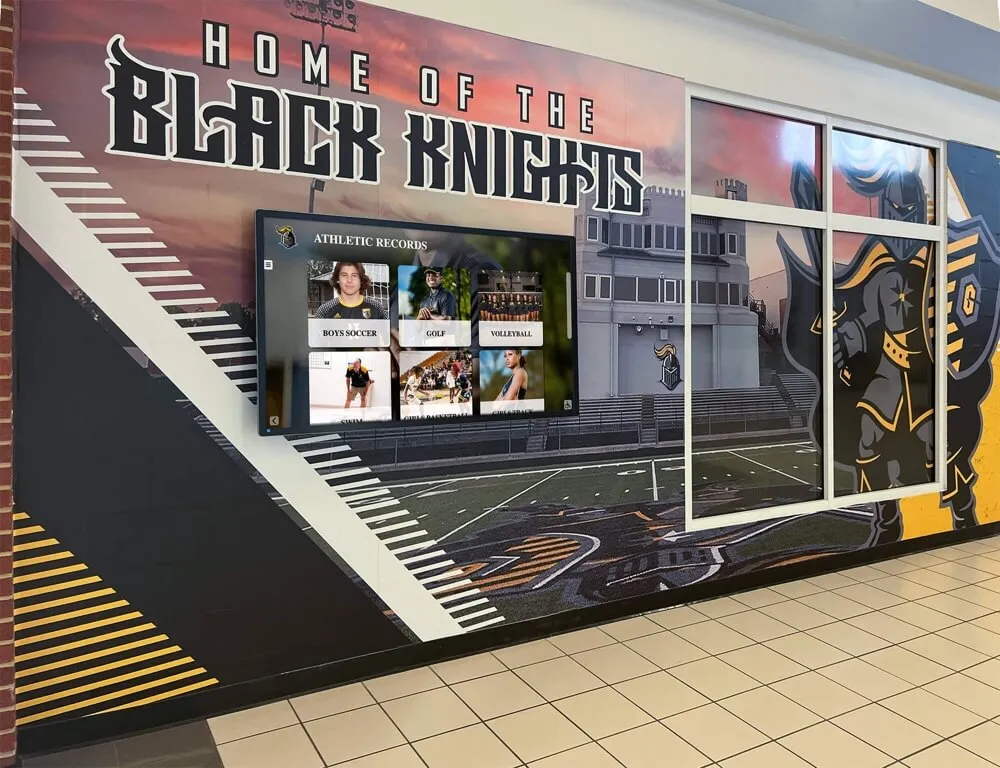
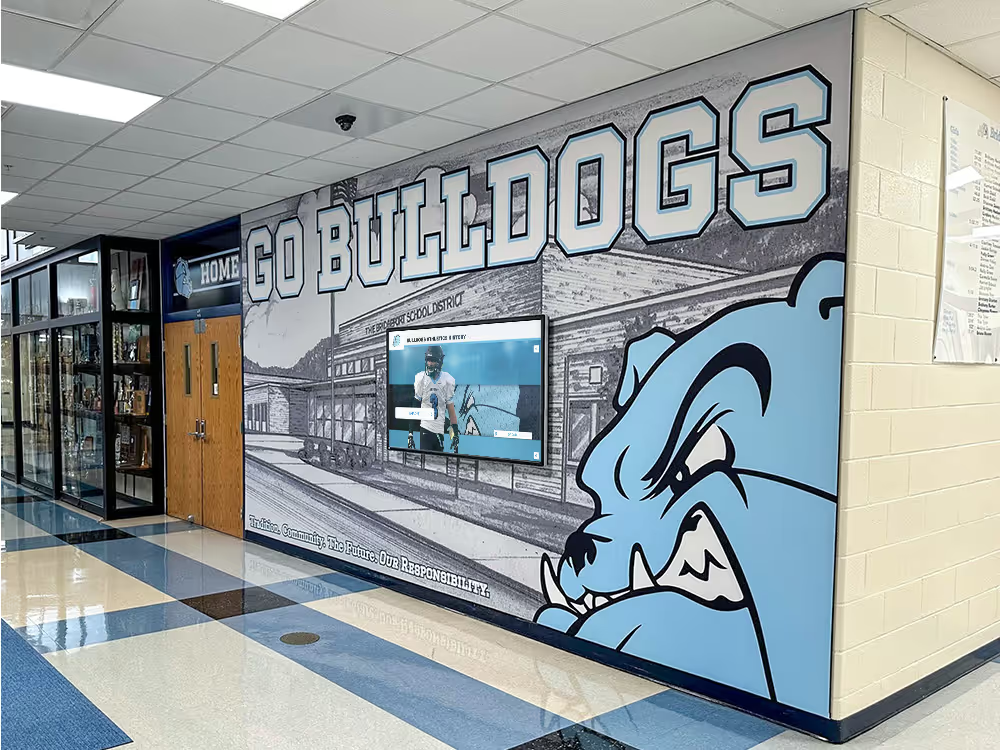
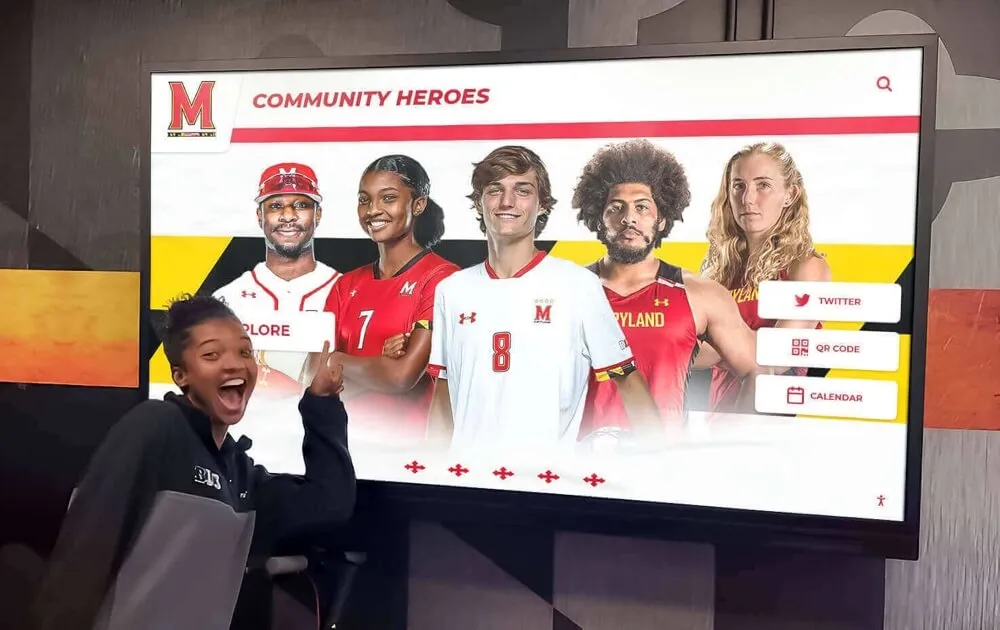
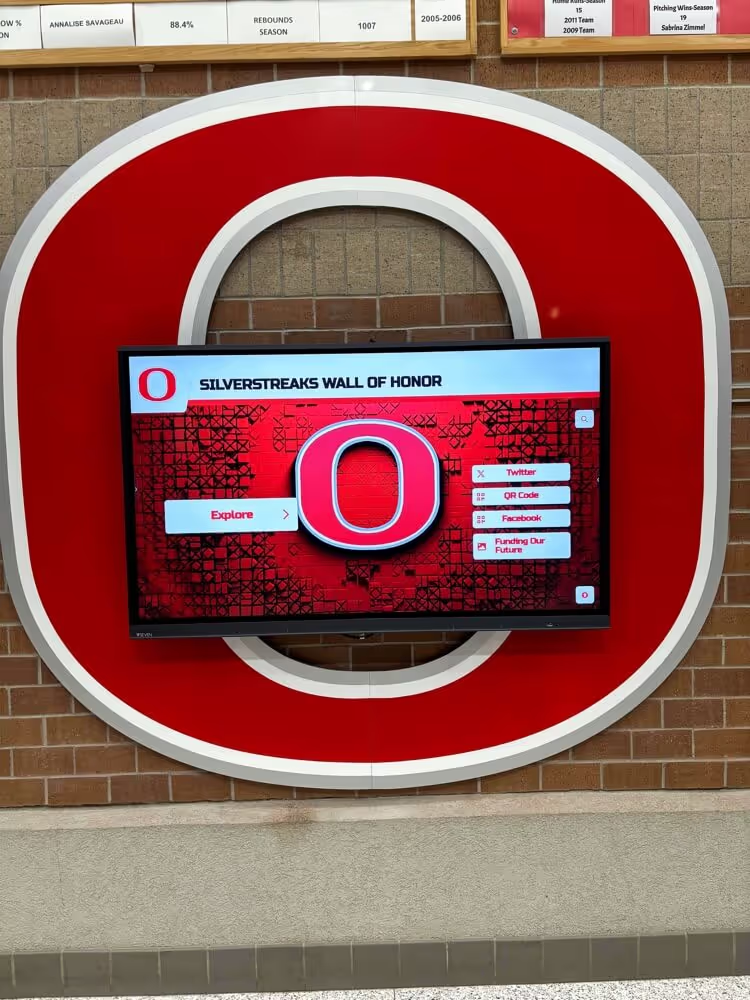
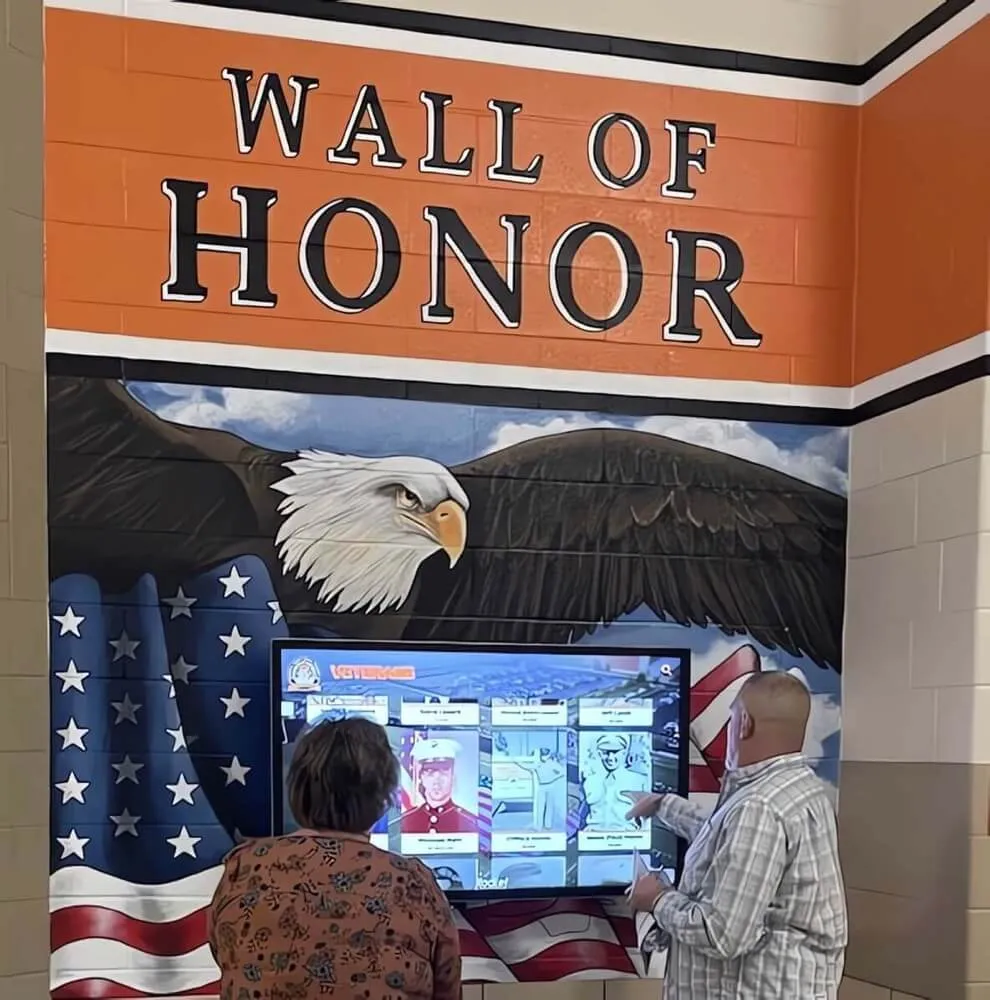
Integrated hallway installations combine program identity murals with digital recognition displays, creating year-round visibility for teamwork and performance honors alike
Why Programs Choose Rocket Alumni Solutions
Rocket Alumni Solutions powers recognition displays at 600+ institutions—K-12 schools, universities, and athletic programs across the country. The platform supports unlimited inductees, unlimited photos and videos, auto-ranking record boards, and a remote cloud-based CMS that allows content updates from anywhere.
The system’s WCAG 2.1 AA accessibility compliance, QR code mobile unlocks, sponsorship suite for revenue generation, and multi-format media support (including YouTube, Vimeo, Hudl, and social media) make it the most complete digital recognition platform available for athletic programs serious about preserving team-first leadership alongside traditional performance honors.
Learn more about what Rocket’s platform offers in this detailed overview of unlimited screens without hidden costs.
See How Your Teamwork Award Can Live Year-Round
Rocket Alumni Solutions builds interactive digital recognition displays that give every award—from MVP to teamwork award—permanent, accessible visibility. Schedule a free demo and see a custom mock-up for your athletic program.
Request a Free DemoFrequently Asked Questions
What is a teamwork award in athletics?
A teamwork award is a formal athletic recognition presented to the student-athlete who most consistently demonstrates unselfish, team-first behavior throughout the season. It honors contributions that statistics do not capture—setting screens away from the ball, taking charges, communicating on defense, accepting difficult roles without complaint, and celebrating teammates’ success. Unlike MVP or performance-based awards, the teamwork award recognizes behavioral patterns and cultural contributions that build winning programs over time. It is typically presented at end-of-season banquets and becomes part of the program’s permanent recognition history.
What criteria should a teamwork award use?
Effective teamwork award criteria focus on observable, documented behaviors rather than subjective impressions. Strong criteria categories include: consistent communication and on-field or on-court awareness; willingness to accept unglamorous roles and execute them with full effort; active support and encouragement of teammates during competition and practice; accountability behaviors such as consistent punctuality, preparation, and self-correction; and sacrifice plays that serve the team rather than individual statistics. Criteria should be communicated to the team before the season begins and applied through a selection process combining coaching staff documentation and structured peer feedback.
How is a teamwork award different from an MVP award?
An MVP award recognizes the athlete whose measurable output most significantly impacted team success—statistics, performance in crucial moments, and quantifiable contributions. A teamwork award recognizes the athlete whose behavioral patterns and cultural contributions most consistently elevated the team, regardless of statistical visibility. The MVP and teamwork award often go to different athletes because they measure fundamentally different dimensions of athletic value. The strongest programs present both awards with equal formality, communicating that individual excellence and team-first leadership are equally honored paths within the program’s culture.
How do schools select teamwork award winners fairly?
Fair teamwork award selection combines three inputs: coaching staff documentation of specific team-first behaviors observed throughout the season, structured anonymous peer feedback from teammates using behavioral prompts rather than open-ended popularity votes, and review of whether the finalist can be supported by multiple documented specific examples. Programs that communicate criteria before the season, track behavioral observations continuously, and use a multi-source selection process produce selections with the most credibility and the clearest developmental signal for all athletes on the roster.
How can schools display the teamwork award permanently?
Schools can display teamwork award recognition through honor boards and hallway plaques placed alongside performance-based recognition, ensuring equal visual status with MVP and statistical leaders. For broader and more durable visibility, digital recognition platforms allow schools to create unlimited award recipient profiles with photos, award narratives, and coach commentary—accessible to athletes, families, and alumni from both physical displays in athletic facilities and through QR code mobile access anywhere. Cloud-based systems allow new recipients to be added within minutes of banquet night, preserving the complete award history without physical space constraints.
Conclusion: Making Team-First Leadership Permanently Visible
The teamwork award is one of the most powerful tools in a coach’s recognition toolkit—not because it costs more or generates more attention than a championship trophy, but because it names something real. It tells athletes who set the culture standard for the season, describes specifically what that standard looks like, and creates a record that every future athlete in the program can look back on.
The programs that get the most out of this award do three things consistently: they establish clear behavioral criteria before the season begins, they run a fair and documented selection process that combines coach observation with peer input, and they give the recognition visibility that matches its importance—not just a mention at the end of the banquet, but a permanent place alongside the program’s most celebrated honors.
Digital recognition platforms make the permanent visibility part achievable for any school. With unlimited award capacity, cloud-based content management, and accessibility-compliant touchscreen displays, programs can ensure that the athlete who set the team-first standard is remembered—by their teammates, by incoming athletes two seasons from now, and by the community that watched them play.
Build a Recognition System That Honors Every Contribution
Discover how Rocket Alumni Solutions helps K-12 schools and universities create interactive digital displays that celebrate team-first leaders alongside MVP honorees—giving every award the permanent, accessible visibility it deserves.
Schedule Your Free Demo