



Tennis forehand technique is the foundation stroke that determines success for high school players at every competitive level. The forehand represents the most frequently used shot in tennis, accounting for approximately 60% of all groundstrokes in competitive matches, making proper technique development critical for match outcomes, player confidence, and long-term progression. A well-executed forehand creates offensive opportunities, controls rally tempo, and establishes the aggressive baseline play essential for modern tennis success.
Yet many high school players develop inconsistent forehand mechanics through trial and error rather than systematic instruction, resulting in unreliable stroke production under pressure, limited power despite physical strength, and technical habits that hinder advancement to collegiate competition. Meanwhile, players who master fundamental forehand technique through structured progression build dependable weapons that improve rapidly with practice and translate to success across all court surfaces and competitive situations.
This comprehensive guide provides high school tennis players, coaches, and parents with step-by-step forehand technique instruction covering grip fundamentals, stance mechanics, swing path progression, contact point optimization, and follow-through completion—plus common mistake identification and correction strategies that accelerate skill development.
Tennis Forehand Technique: Quick Reference
The tennis forehand technique consists of five essential components executed in sequence: (1) Eastern or Semi-Western grip positioning the racket face slightly closed, (2) Unit turn with shoulder rotation and early racket preparation, (3) Forward swing with low-to-high racket path and hip rotation, (4) Contact point in front of the body with arm extension, (5) Complete follow-through wrapping across the body with full rotation. Proper execution creates consistent topspin, controlled power, and reliable stroke production essential for competitive success at the high school level.
Modern tennis forehand technique has evolved significantly over the past two decades, with contemporary players generating substantially more topspin and power than previous generations through improved biomechanics and training methodologies. High school players who master these fundamentals build foundations supporting continued development through collegiate tennis and beyond.

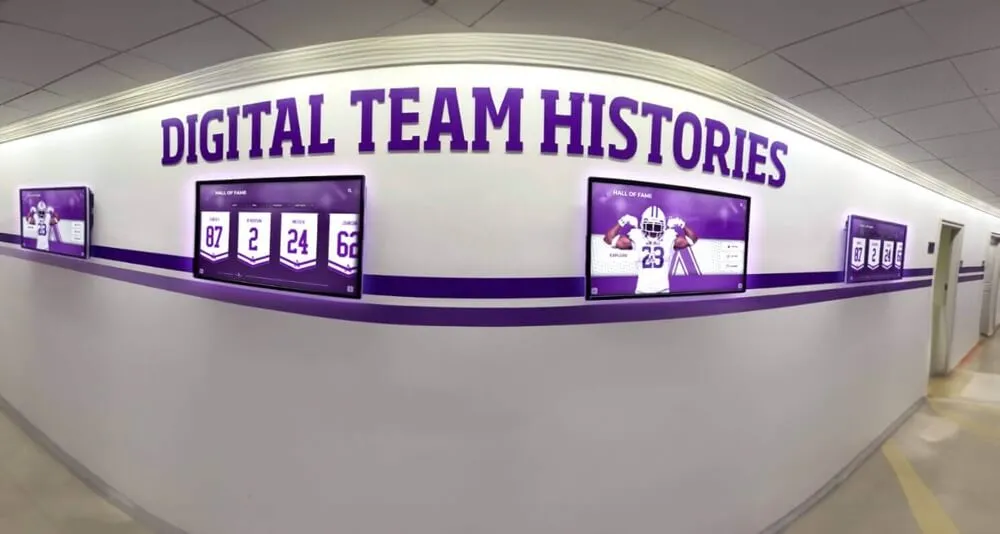
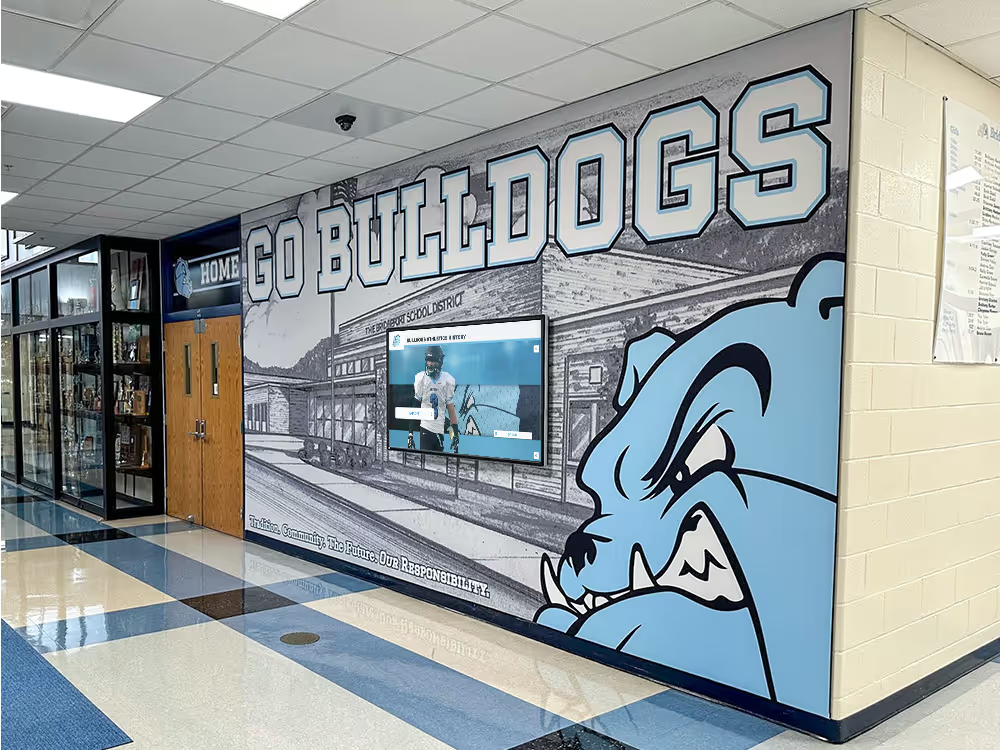
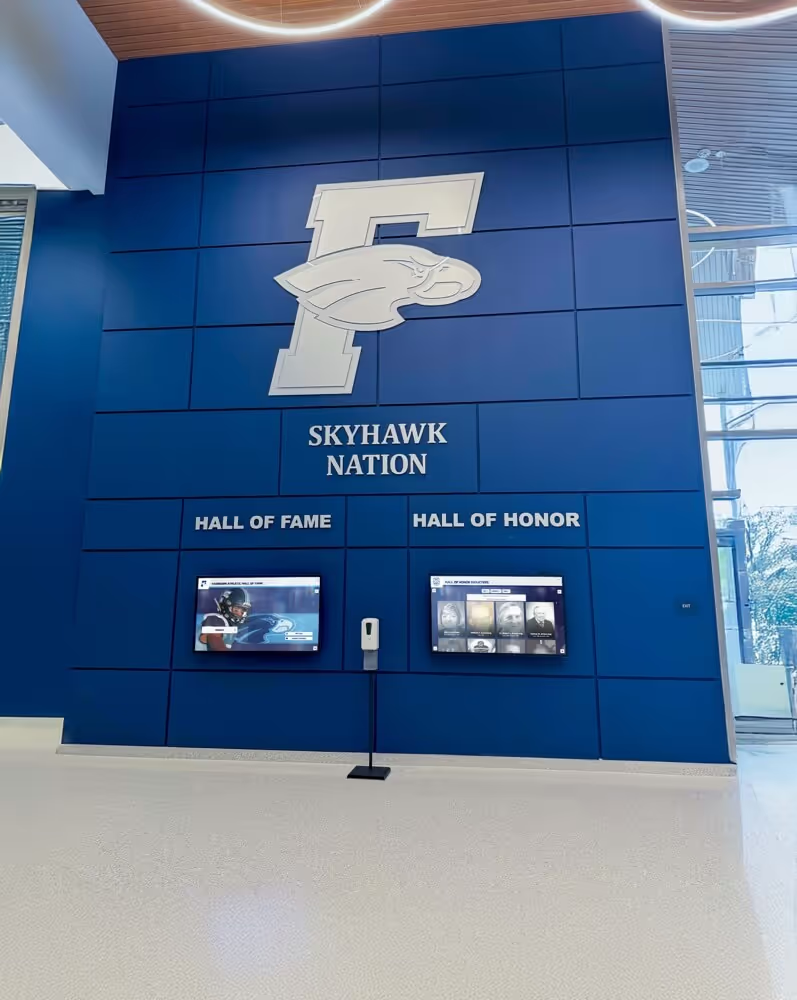
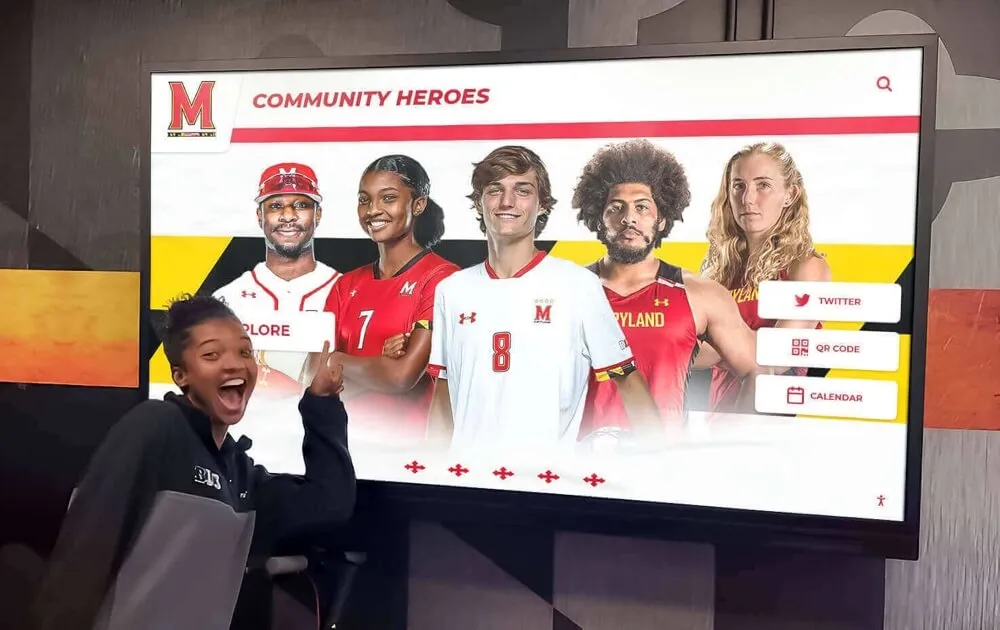
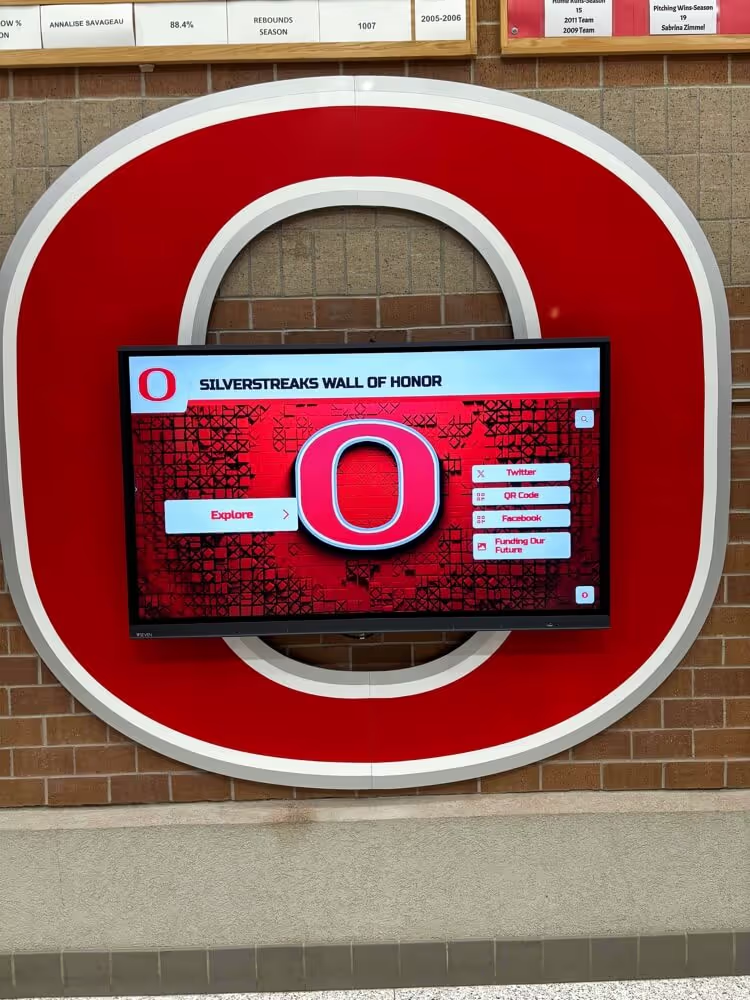
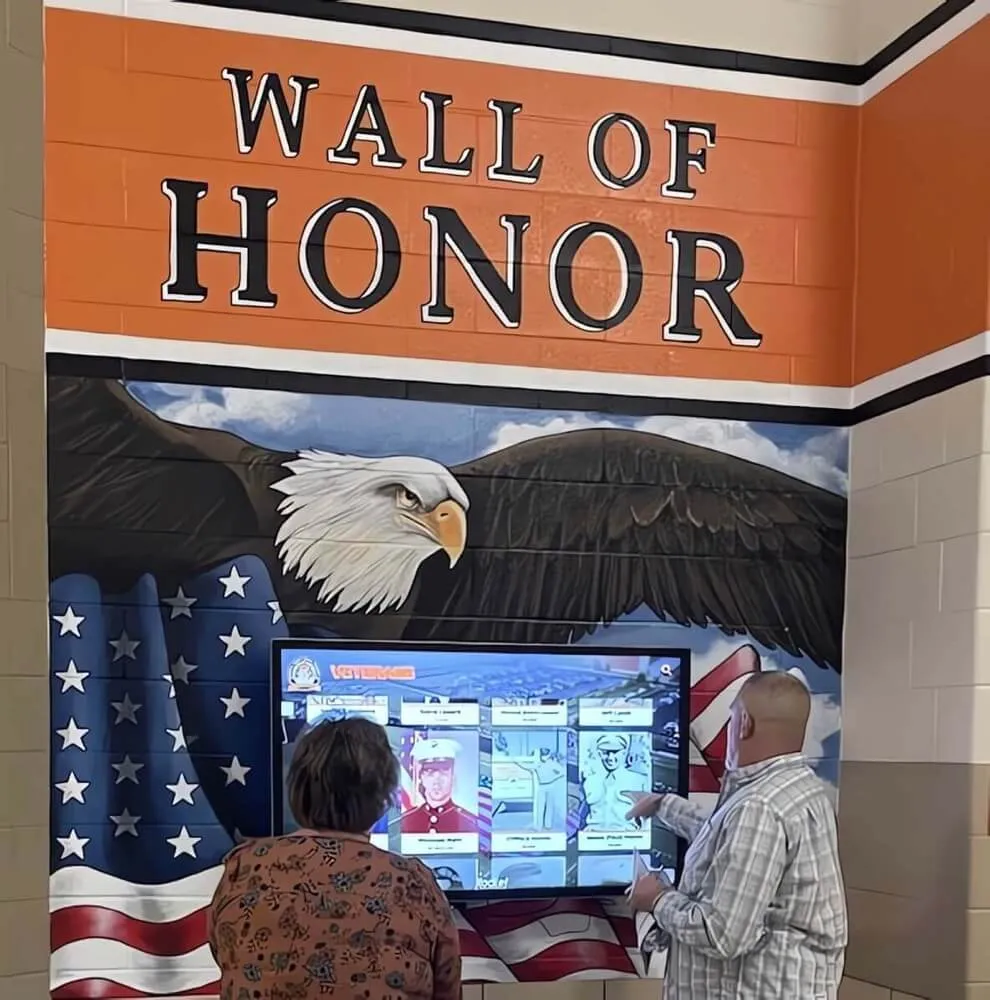
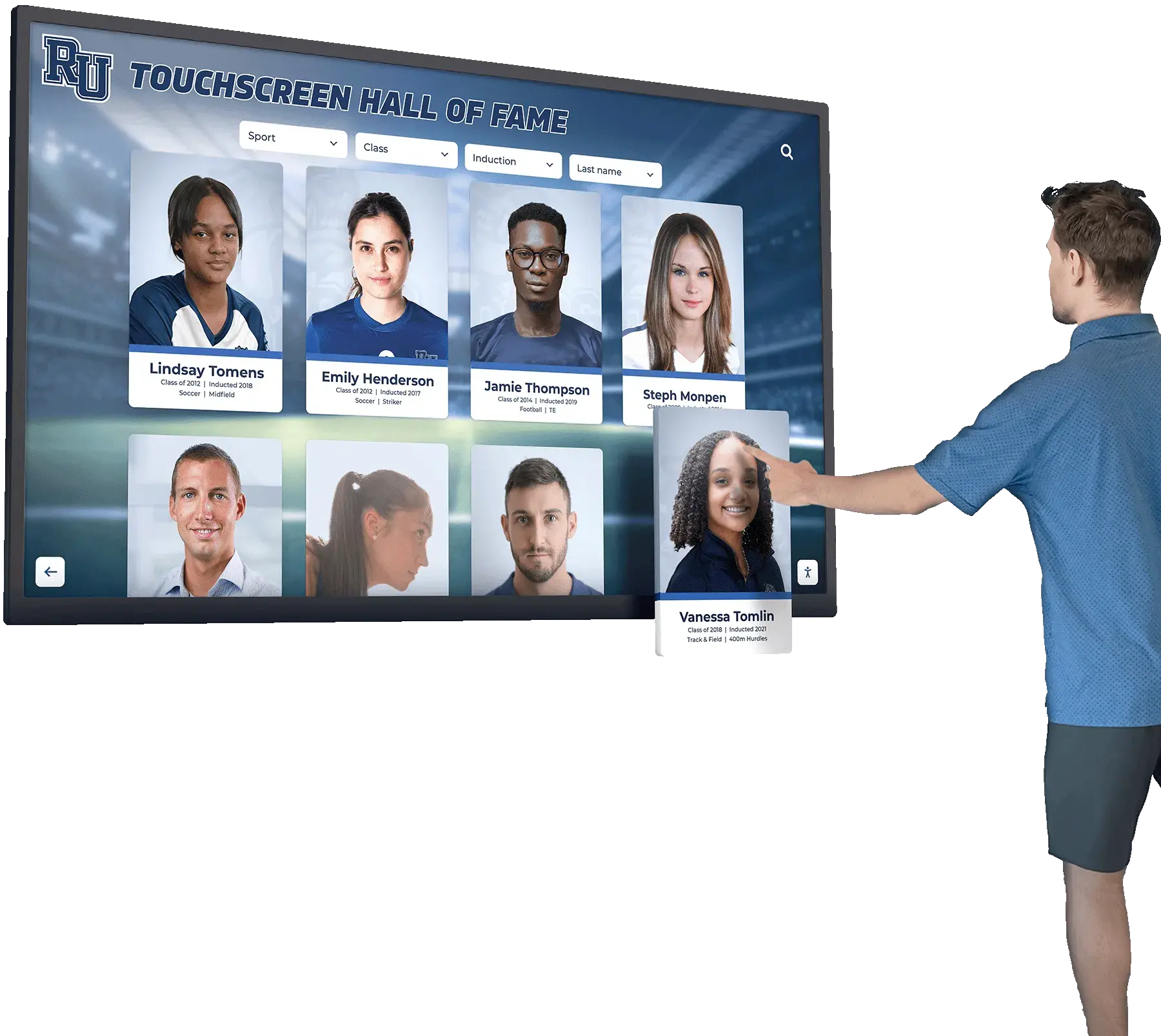
Modern athletic programs celebrate individual skill development and competitive achievements through digital recognition displays
Understanding the Modern Tennis Forehand
Before diving into technical details, understanding the evolution and characteristics of the modern forehand provides context for why specific techniques work.
Evolution of Forehand Technique
Traditional vs. Modern Approaches
- Classic forehands emphasized flat contact and compact swings
- Modern technique generates extreme topspin through vertical swing paths
- Contemporary players use full body rotation creating racket head speed
- Western and Semi-Western grips have largely replaced Eastern grips
- Biomechanical analysis has optimized kinetic chain sequencing
Physical Demands of Modern Tennis
- Power generation requires coordinated lower body, core, and upper body sequencing
- Topspin production demands specific racket path and contact point precision
- Court positioning and recovery depend on balanced technique enabling quick repositioning
- Endurance requirements favor efficient technique minimizing wasted motion
- Injury prevention necessitates proper biomechanics distributing stress appropriately
Why Proper Forehand Technique Matters
Competitive Advantages
- Consistent stroke production under pressure determines match outcomes
- Aggressive forehand dictates rally patterns and controls points
- Reliable weapon builds confidence affecting all aspects of performance
- Technical efficiency enables sustained high-level play throughout matches
- Proper mechanics support continued improvement and skill advancement
Long-Term Development
- Correct fundamentals established early prevent ingrained bad habits
- Scalable technique allows power increases as players mature physically
- Sound biomechanics reduce overuse injury risk during intensive training
- College coaches prioritize players with technical foundations supporting continued growth
- Professional instruction builds faster when fundamentals are already established
Explore recognition for tennis achievements in athletic recognition programs that celebrate diverse sports.
Step 1: The Forehand Grip
Grip represents the foundation determining racket face angle, spin production capability, and natural contact point location.
Semi-Western Grip (Recommended for Most High School Players)
The Semi-Western grip offers optimal balance between power, spin, and versatility:
Proper Hand Placement
- Base knuckle of index finger rests on bevel 4 of the racket handle
- Heel pad of the hand also positioned on bevel 4
- Fingers spread comfortably around the grip creating stable hold
- Thumb wraps naturally around the handle providing support
- Grip pressure remains relaxed until just before contact
Benefits of Semi-Western Grip
- Natural racket face angle produces moderate-to-heavy topspin
- Contact point comfort zone extends from waist to shoulder height
- Versatility allows both offensive and defensive shot production
- Easier transition from neutral to attacking positions
- Most common grip among successful junior and professional players
When to Consider Alternatives
- Extreme Western grip: players who hit with exceptional topspin and high contact points
- Eastern grip: traditionalists preferring flatter shots and lower contact points
- Continental grip: primarily for volleys and serves, not recommended for modern forehands
- Grip adjustments should be coach-directed rather than self-experimentation
Checking Your Grip
Self-Assessment Method
- Hold racket naturally as if shaking hands with the handle
- Check base knuckle and heel pad positioning against grip bevels
- Swing slowly checking if racket face feels naturally controlled
- Hit gentle forehands evaluating comfort and ball trajectory
- Video record grip and compare to professional player examples
Common Grip Mistakes
- Continental grip (bevel 2) produces slice or flat shots lacking topspin
- Extreme Western grip (bevel 5) creates difficulties on low balls
- Inconsistent grip changes between shots causing timing issues
- Overly tight grip tension reducing racket head speed and feel
- Incorrect finger spacing creating unstable racket control

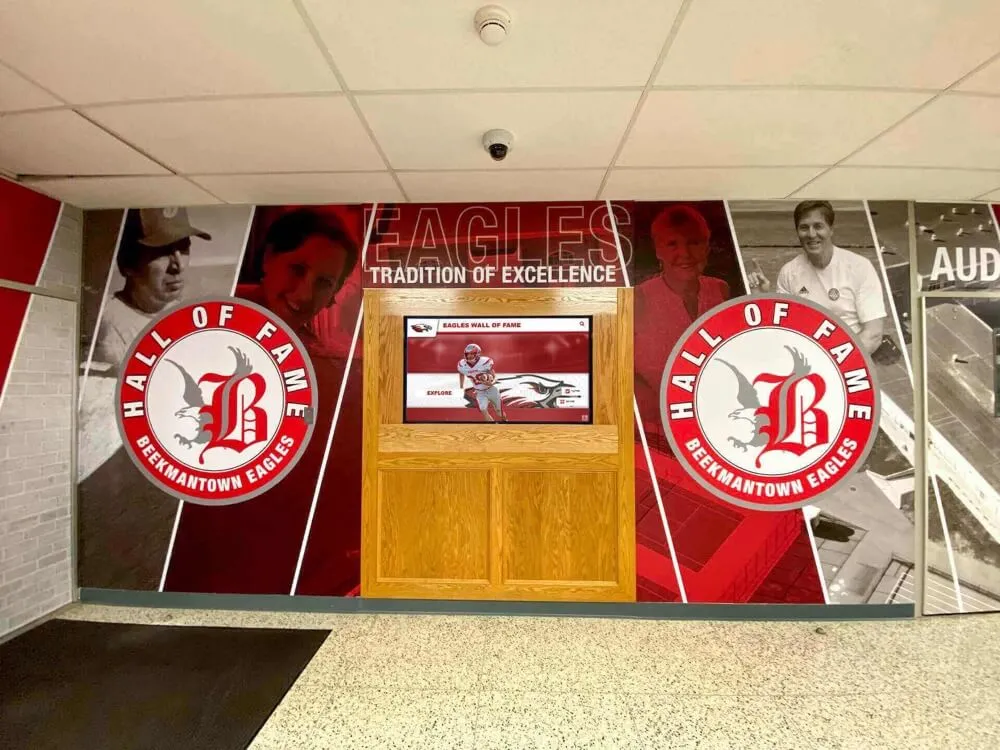
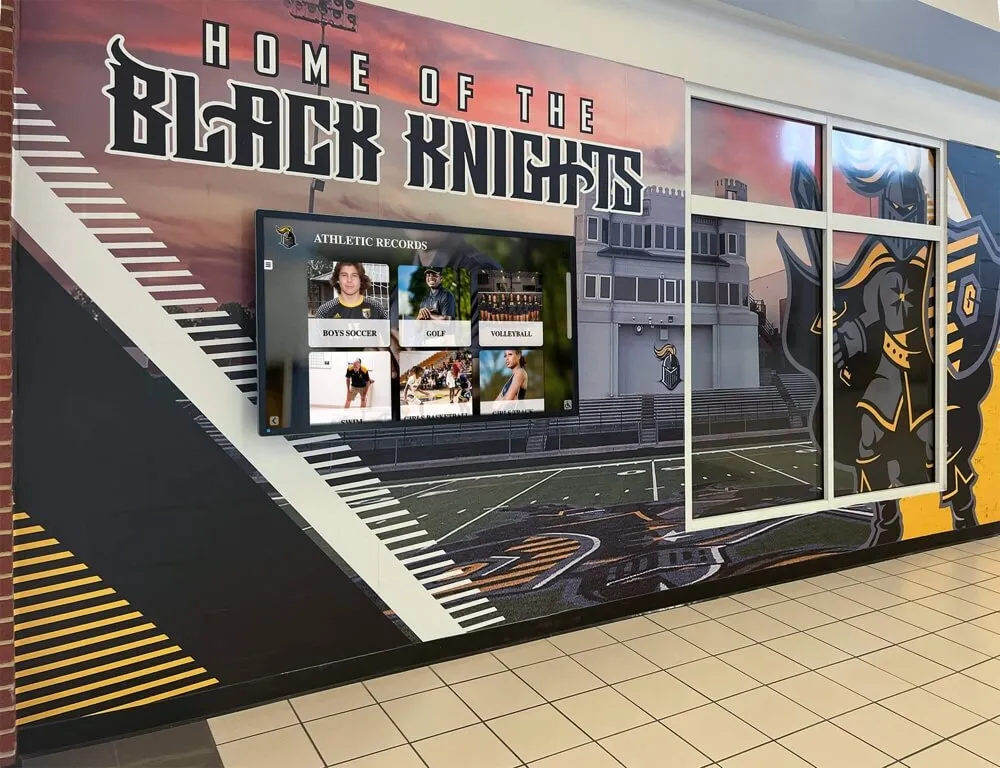
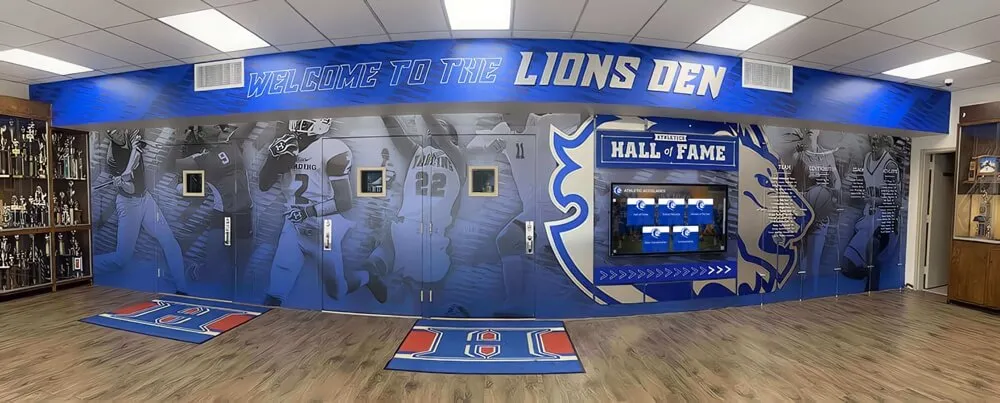
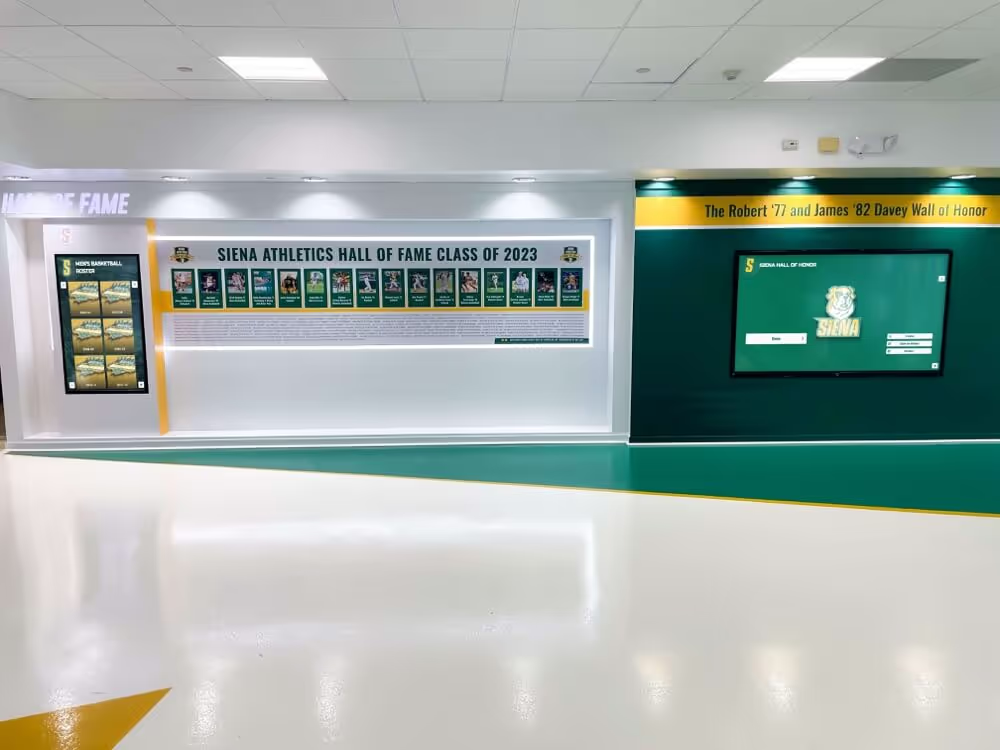
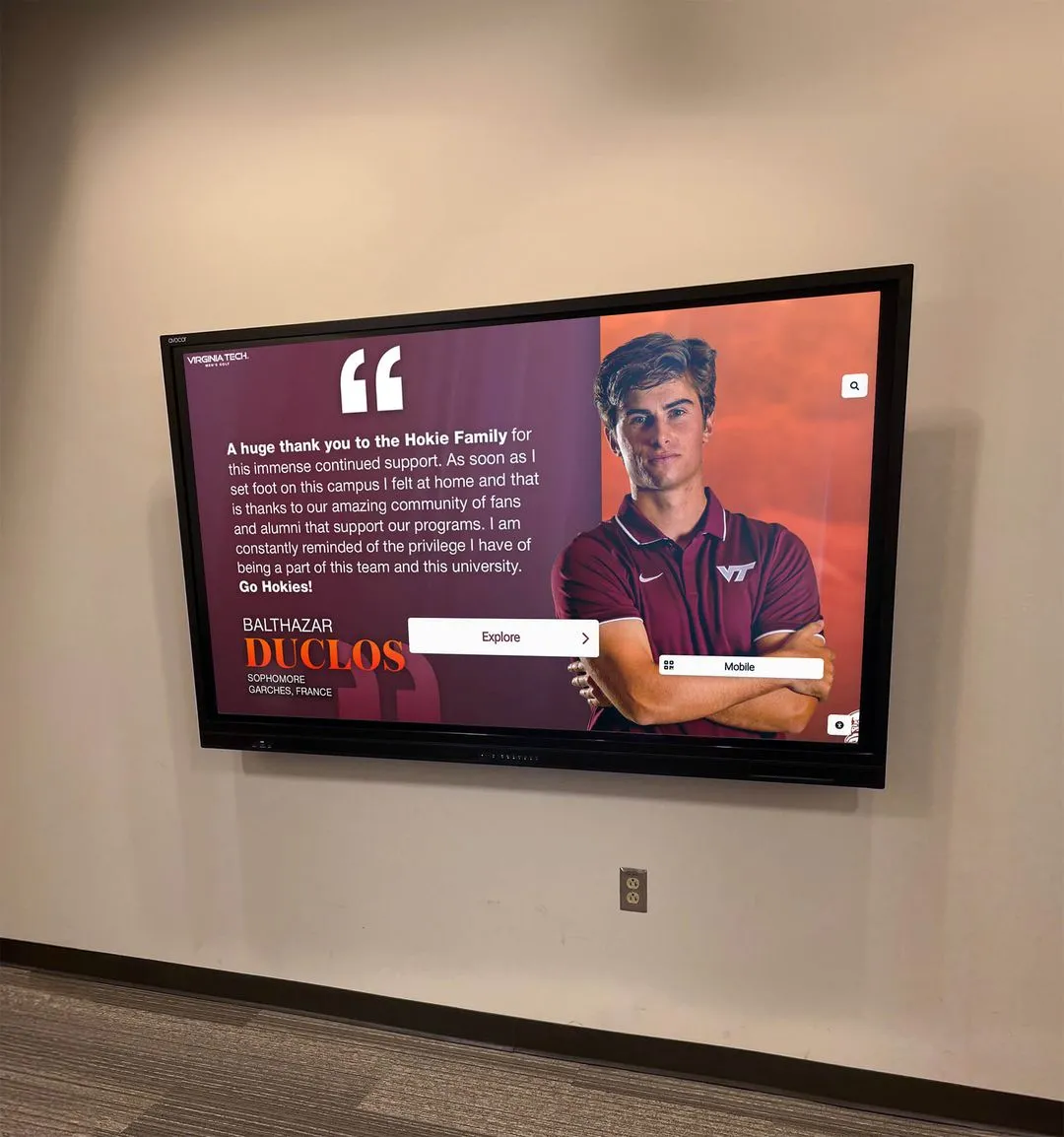
Interactive recognition systems allow athletes to explore achievements across all sports including individual athletic accomplishments
Step 2: Ready Position and Split Step
Preparation begins before the opponent makes contact, establishing the foundation for efficient movement and stroke execution.
Optimal Ready Position
Body Positioning
- Feet shoulder-width apart with weight on balls of feet
- Knees slightly bent maintaining athletic stance
- Torso upright with slight forward lean
- Racket held in front of body at waist height
- Non-dominant hand supporting throat of racket
- Eyes focused on opponent and incoming ball
Mental Readiness
- Anticipate shot direction based on opponent positioning
- Recognize patterns in opponent’s shot selection
- Maintain focused attention throughout rally
- Breathe rhythmically maintaining composure
- Prepare for quick directional changes
Split Step Timing
Execution Fundamentals
- Small hop as opponent makes contact with ball
- Feet land shoulder-width apart in balanced position
- Weight distributes evenly enabling explosive first step
- Knees bend absorbing landing and preparing for movement
- Upper body remains stable and controlled
Purpose of Split Step
- Converts static standing into dynamic movement readiness
- Enables faster reaction time to ball direction
- Creates elastic energy in legs powering first movement
- Establishes balanced position for multi-directional movement
- Professional players execute split step on every opponent shot
Learn about comprehensive athletic achievement recognition in digital display solutions for athletic facilities.
Step 3: Unit Turn and Racket Preparation
Early preparation separates advanced players from beginners, creating time for proper swing execution.
The Unit Turn
Shoulder Rotation Fundamentals
- Turn shoulders perpendicular to net immediately upon recognizing forehand
- Rotate torso as single unit rather than isolated shoulder movement
- Non-dominant arm extends toward ball tracking flight
- Dominant shoulder turns back preparing for forward rotation
- Hips begin turning in coordination with shoulders
Timing Considerations
- Initiate turn as soon as ball direction is recognized
- Complete turn before ball bounces on your side
- Early preparation creates time rather than rushing swing
- Rushed preparation results from late turn initiation
- Advanced players complete turn during opponent’s shot
Racket Takeback
Proper Takeback Path
- Racket moves back in smooth arc rather than straight line
- Racket head remains at approximately waist to chest height
- Non-dominant hand releases from racket throat during turn
- Racket face remains relatively neutral (slightly closed)
- Elbow maintains comfortable bend (not locked or over-flexed)
Creating the Loop
- Modern forehands incorporate looped takeback for rhythm
- Racket drops below contact point before forward swing
- Loop creates natural low-to-high swing path generating topspin
- Excessive loop wastes time and complicates timing
- Compact loop suits faster court surfaces and pace
Common Preparation Errors
- Taking racket back too high creating downward swing path
- Insufficient shoulder turn limiting power generation
- Late preparation forcing rushed and inconsistent swings
- Over-rotating causing balance issues and recovery delays
- Inconsistent takeback creating variable swing mechanics
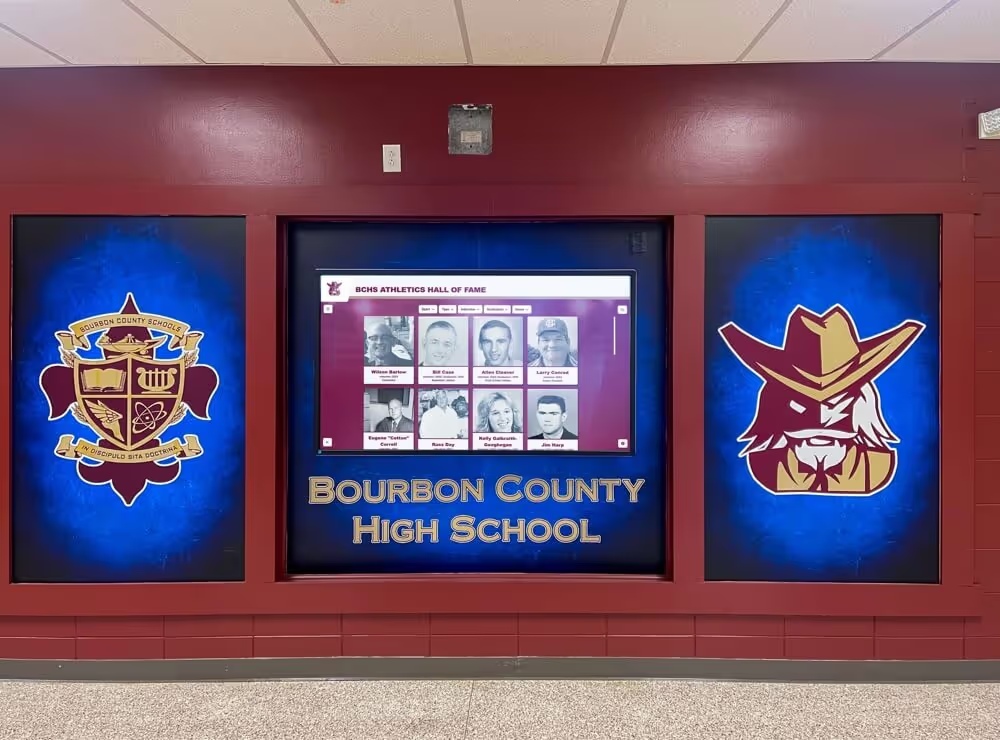
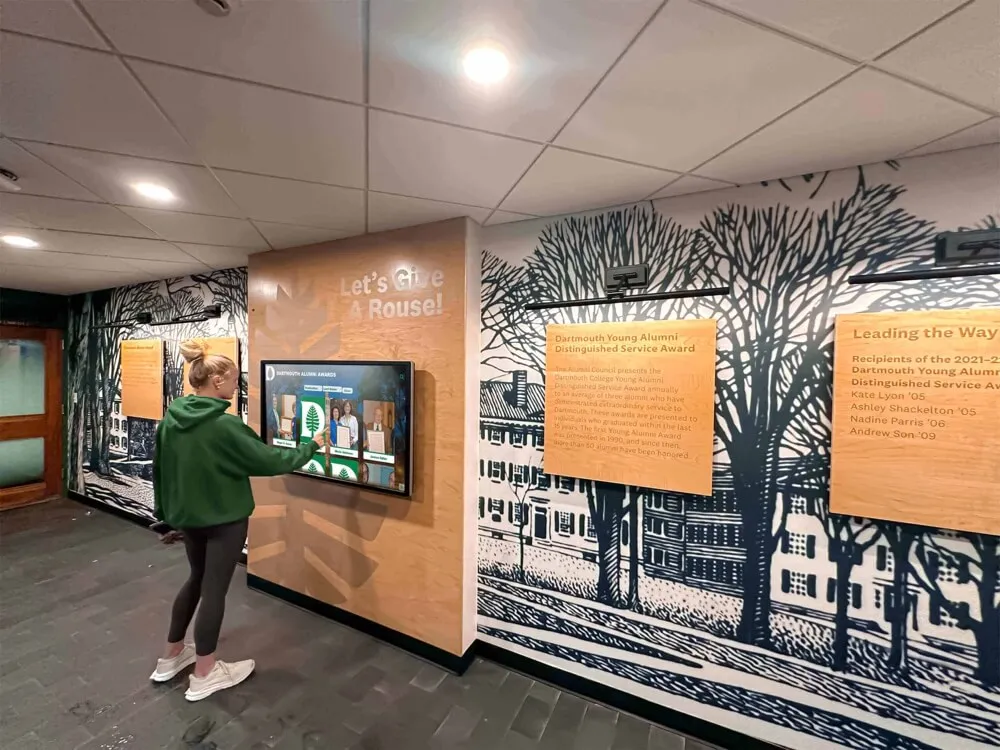
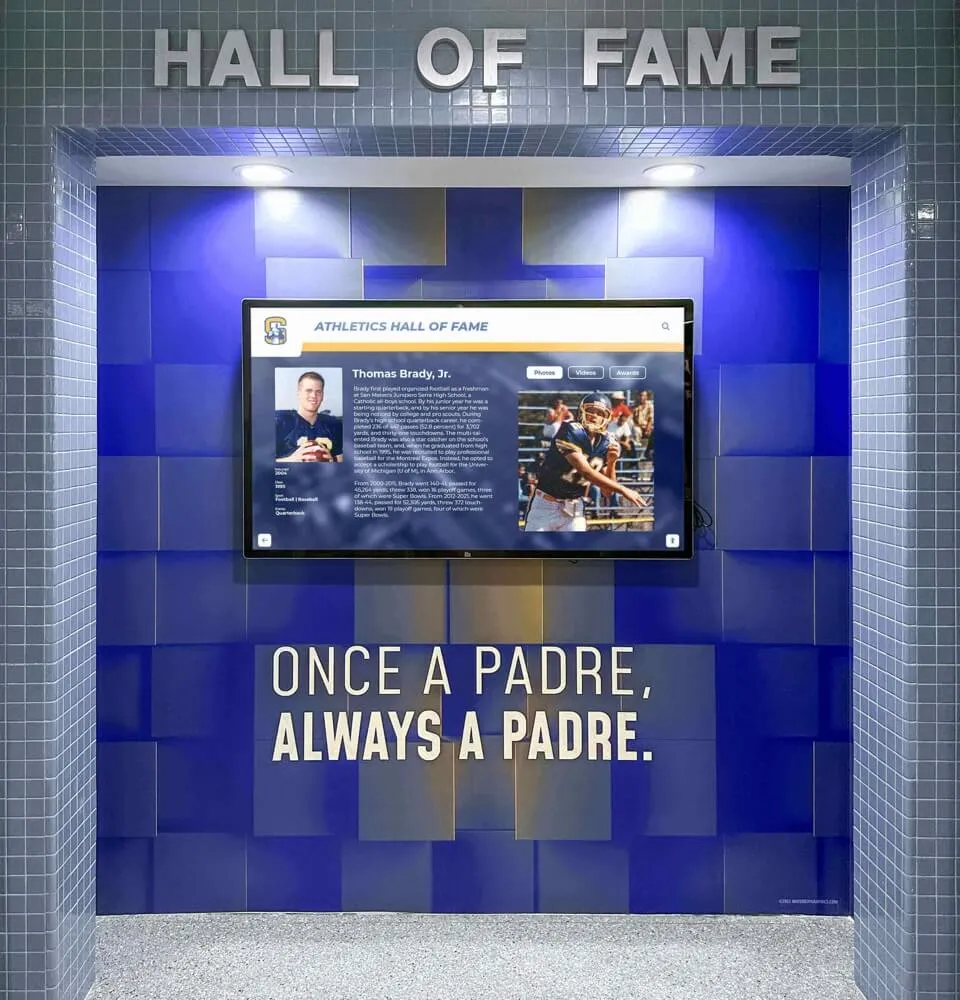
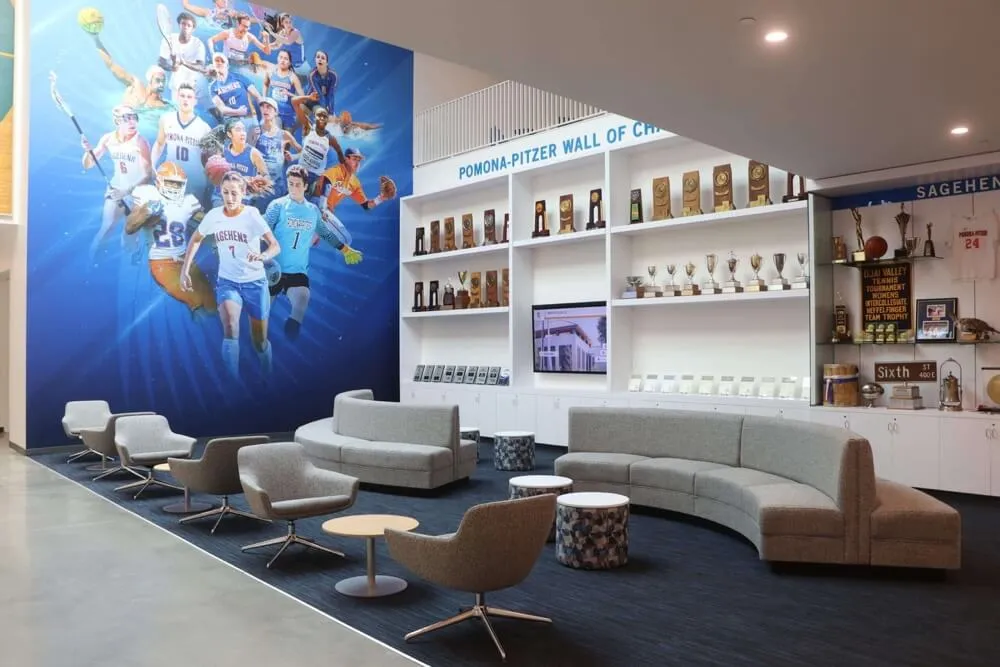
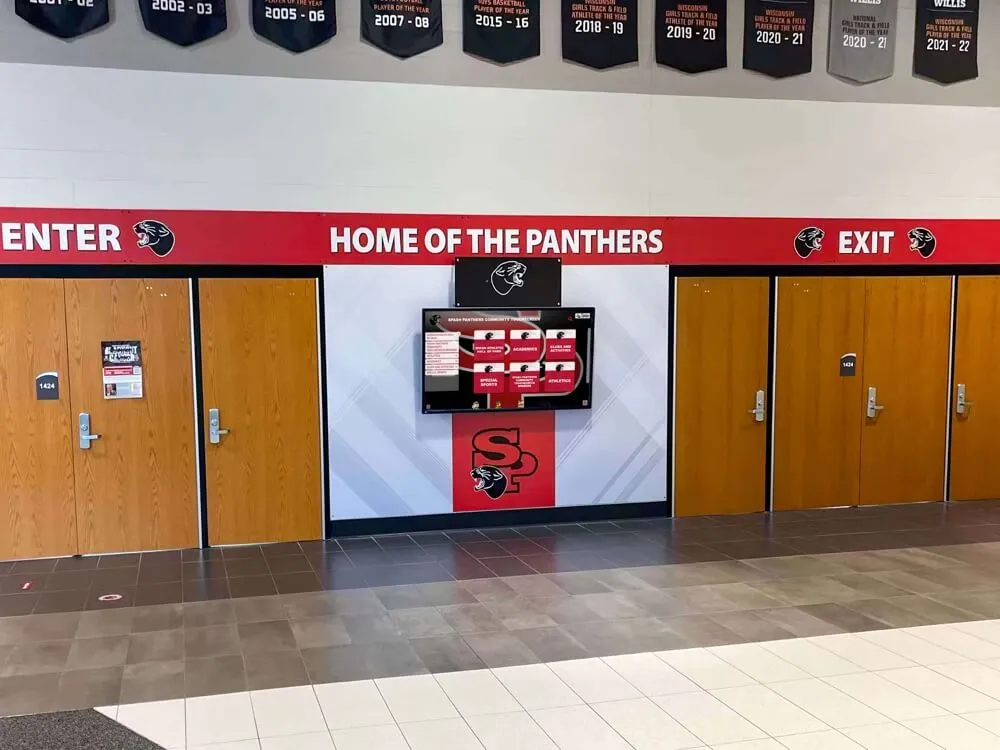
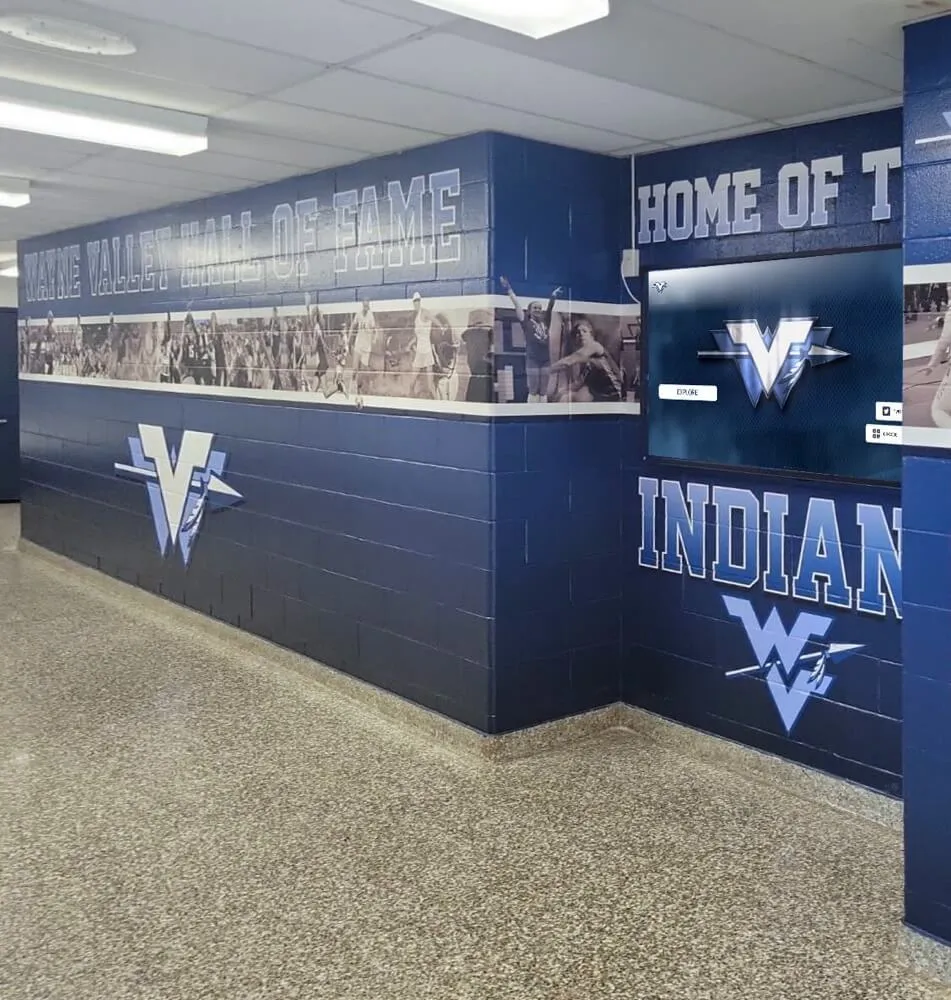
Permanent recognition displays in athletic facilities celebrate individual skill milestones and competitive accomplishments
Step 4: Forward Swing and Kinetic Chain
Power and consistency derive from proper kinetic chain sequencing, transferring energy from ground through body to racket.
Ground Force and Weight Transfer
Lower Body Initiation
- Push off back (right) foot beginning forward movement
- Weight transfers from back foot toward front foot
- Hips rotate toward net ahead of shoulders
- Knees maintain flex throughout swing
- Front foot steps into shot creating stable base
Loading and Unloading
- Back leg loads (coils) during preparation phase
- Energy releases through hip rotation toward net
- Ground reaction forces amplify rotational power
- Proper timing creates whip-like energy transfer
- Advanced players generate significant power from lower body
Racket Path and Swing Mechanics
Low-to-High Swing Path
- Racket drops below anticipated contact point
- Forward swing accelerates upward toward contact
- Vertical racket path component generates topspin
- Swing angle typically 20-45 degrees from horizontal
- Steeper angles produce more spin, flatter produces more pace
Arm Extension and Rotation
- Arm extends toward contact point without full lockout
- Forearm and wrist remain stable through contact
- Shoulder rotates forward completing kinetic chain
- Elbow leads slightly ahead of racket head initially
- Racket accelerates past elbow approaching contact
Creating Racket Head Speed
- Relaxed grip allows maximum racket acceleration
- Full body rotation contributes more than arm strength
- Wrist remains firm but not rigid through contact
- Timing and coordination generate speed more than force
- Smooth acceleration produces more speed than jerky motion
Contact Point Optimization
Ideal Contact Location
- Contact occurs 12-18 inches in front of body
- Height typically between waist and chest for semi-western grip
- Ball contacted on the rise or at apex of bounce
- Contact point alignment: front foot, hip, and shoulder form line
- Arm reaches comfortable extension (approximately 75-80% of full)
Racket Face Angle at Contact
- Slightly closed racket face (5-15 degrees from vertical)
- Exact angle depends on desired shot trajectory and spin
- More closed face creates more topspin and net clearance
- Contact occurs on sweet spot of racket face
- String movement brushes up the back of ball creating rotation
Discover recognition solutions in digital donor recognition systems applicable to athletic achievement celebration.
Step 5: Follow-Through and Recovery
Proper follow-through ensures complete energy transfer while preparing for the next shot.
Complete Follow-Through
Follow-Through Path
- Racket continues upward and across body after contact
- Swing wraps around opposite shoulder completing rotation
- Non-dominant arm pulls back balancing rotation
- Follow-through length indicates full acceleration through ball
- Abbreviated follow-through suggests deceleration before contact
Body Rotation Completion
- Chest faces net or slightly beyond at follow-through completion
- Hips fully rotated toward target
- Back shoulder rotates forward completing torso turn
- Weight fully transfers to front foot
- Back foot may lift slightly indicating complete transfer
Head Position and Balance
- Eyes track contact point through follow-through
- Head remains relatively stable minimizing unnecessary movement
- Balance maintained throughout and after swing
- Excessive movement indicates balance or timing issues
- Controlled finish enables quick recovery
Recovery and Court Positioning
Return to Ready Position
- Split step in ready position as opponent contacts ball
- Recover toward middle of likely next shot angles
- Maintain athletic stance ready for next ball
- Avoid admiring shots or static positioning
- Anticipate opponent’s likely response to your shot
Footwork Patterns
- Open stance: Step out with front foot, recover by pushing off same foot
- Neutral stance: Step into ball with front foot, recover with adjustment steps
- Closed stance (rare in modern tennis): Cross-step on contact, recover differently
- Movement efficiency conserves energy throughout match
- Recovery speed separates good players from great ones
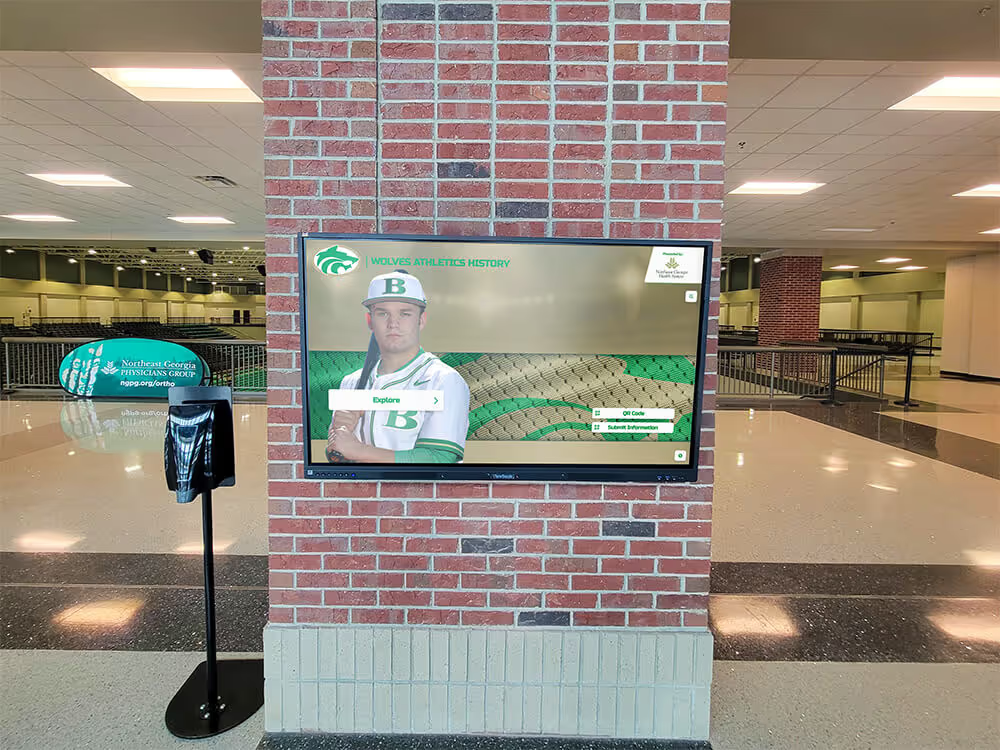
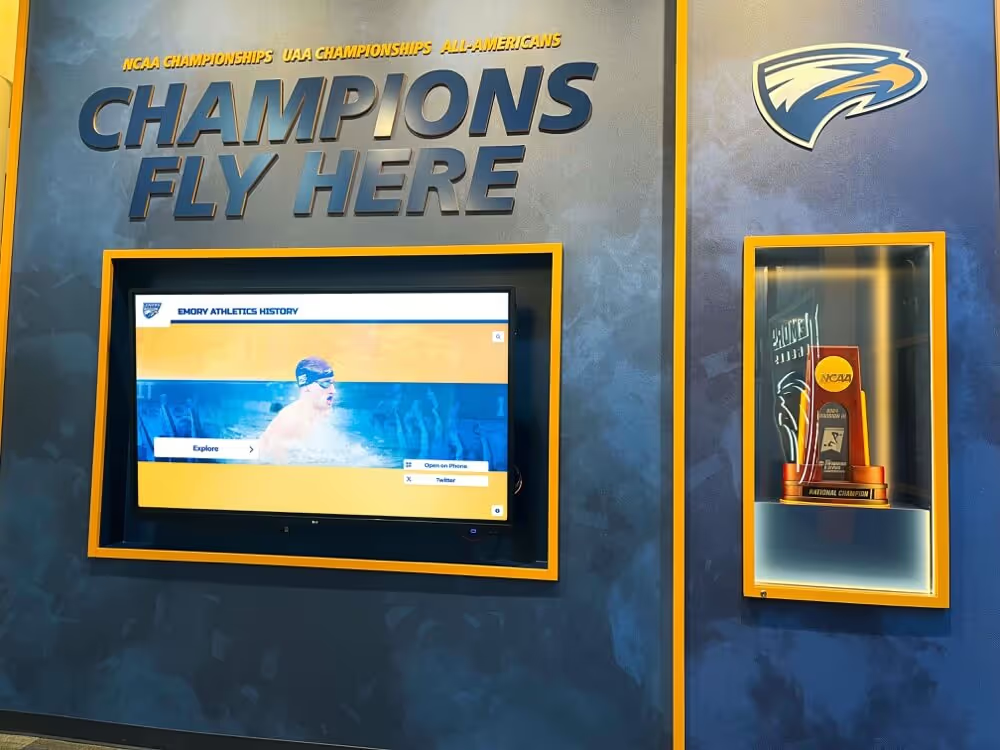
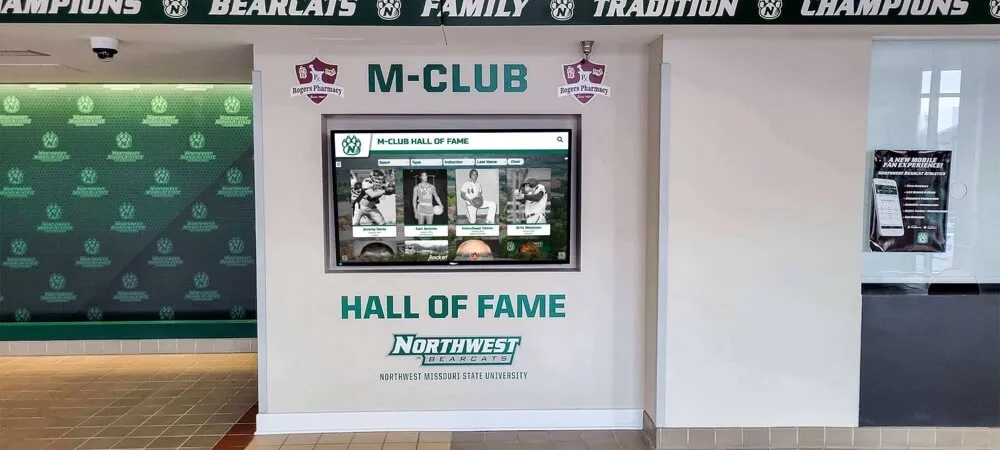
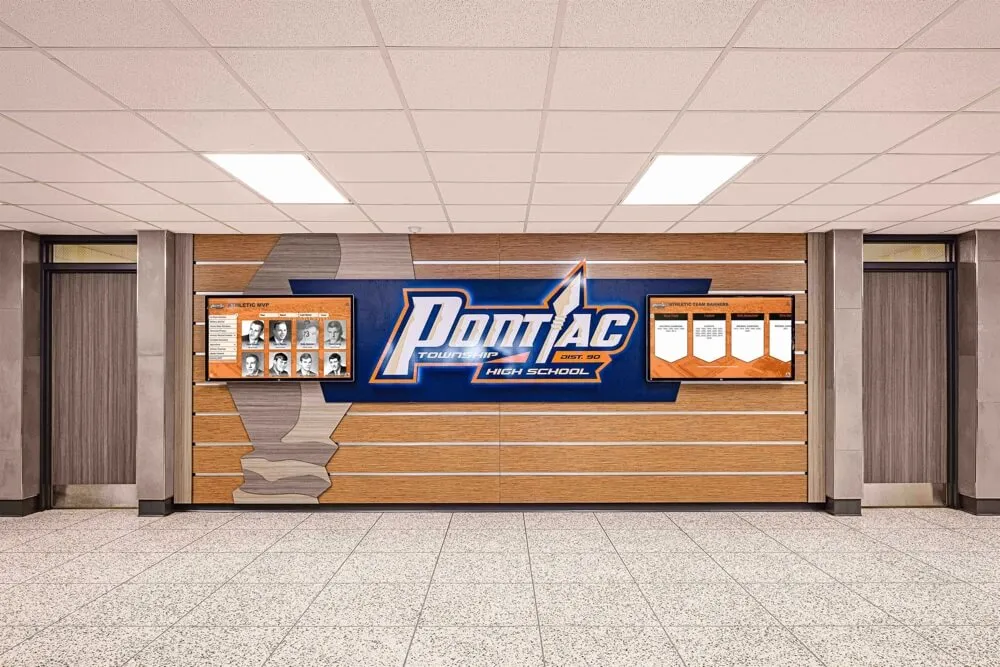
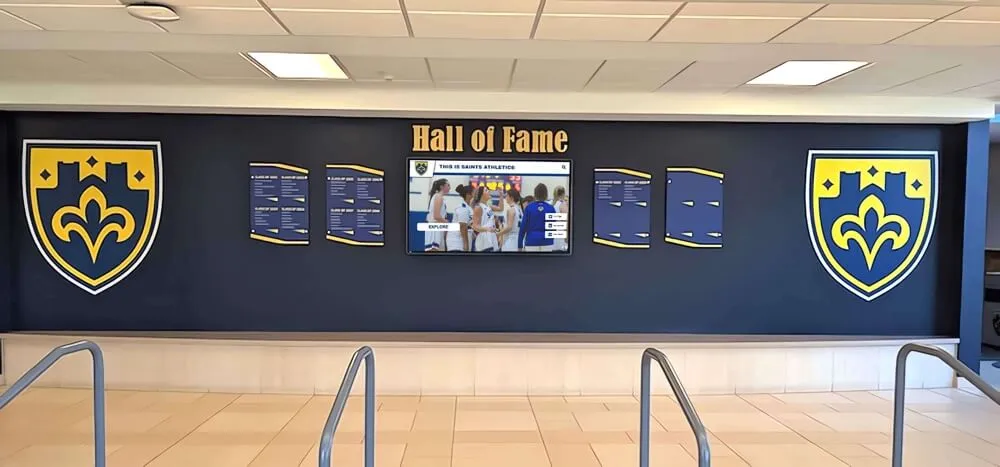
Integrated recognition displays within athletic facilities create visible celebration of achievements including individual skill development
Common Forehand Mistakes and Corrections
Identifying and correcting frequent technical errors accelerates improvement and prevents ingrained bad habits.
Grip and Preparation Errors
Using Continental or Incorrect Grip
- Problem: Continental grip limits topspin generation and modern shot production
- Symptom: Balls sail long or lack spin, difficulty handling high-bouncing shots
- Correction: Transition to Semi-Western grip through structured grip change drills
- Practice Method: Feed drills focusing exclusively on grip feel and consistency
- Timeline: Allow 2-3 weeks for grip change adjustment before match implementation
Late or Incomplete Preparation
- Problem: Insufficient time for proper swing execution
- Symptom: Rushed swings, inconsistent contact points, poor balance
- Correction: Emphasis on early unit turn triggered by opponent’s shot
- Practice Method: Shadow swings focusing on preparation speed, no-ball drills emphasizing turn
- Coaching Cue: “Turn on the bounce” or “Prepare early, swing smoothly”
Straight-Back Takeback Without Loop
- Problem: Difficulty generating natural low-to-high swing path
- Symptom: Flat shots lacking topspin, inconsistent trajectory control
- Correction: Incorporate loop in takeback creating natural upward swing
- Practice Method: Slow-motion swings emphasizing racket drop before forward swing
- Visual Cue: Racket tip points toward back fence before dropping into swing
Swing Path and Contact Errors
Hitting Across the Ball (Swinging Too Horizontally)
- Problem: Horizontal swing path rather than low-to-high progression
- Symptom: Excessive side spin, balls sailing wide or clipping net
- Correction: Exaggerate vertical swing component in practice
- Drill: Feed high balls requiring upward swing path, video analysis showing swing angle
- Mental Cue: “Brush up the back of the ball” or “Low to high, not side to side”
Contacting Too Far Behind or Beside Body
- Problem: Contact point too close to body or behind front hip
- Symptom: Weak shots lacking pace, difficulty controlling direction
- Correction: Focus on stepping into ball establishing contact point in front
- Practice Method: Cone drills marking optimal contact zone, partner feeding to specific location
- Technical Fix: Earlier preparation and better footwork positioning body correctly
Decelerating Before Contact
- Problem: Slowing racket before contact rather than accelerating through ball
- Symptom: Weak shots, inconsistent depth, “pushing” rather than hitting
- Correction: Emphasis on acceleration through contact point with full follow-through
- Drill: Target practice requiring pace to reach deep court zones
- Mental Image: “Swing through three balls” imagining contact on middle ball
Follow-Through and Balance Errors
Abbreviated or No Follow-Through
- Problem: Swing stops at or shortly after contact point
- Symptom: Reduced power, limited topspin, inconsistent results
- Correction: Complete swing with full follow-through across body
- Practice Method: Hold follow-through position for 1 second after each swing
- Coaching Point: Full follow-through indicates proper acceleration
Falling Off Balance During or After Swing
- Problem: Poor weight transfer or excessive upper body rotation
- Symptom: Inconsistent contact, difficulty recovering for next shot
- Correction: Wider base, controlled rotation, stable lower body
- Drill: Balance-focused feeds requiring stable finish position
- Check Point: Should be able to freeze in balanced position after shot
Head Pulling Up Before or During Contact
- Problem: Eyes leave ball before contact completing
- Symptom: Mishits, inconsistent contact point, topped balls
- Correction: Maintain head position through contact point
- Practice Cue: “Watch the strings hit the ball” or “Keep eyes at contact point”
- Drill: Deliberate practice with extreme focus on ball contact visualization
Explore recognition for tennis programs in touchscreen displays for state championship recognition.
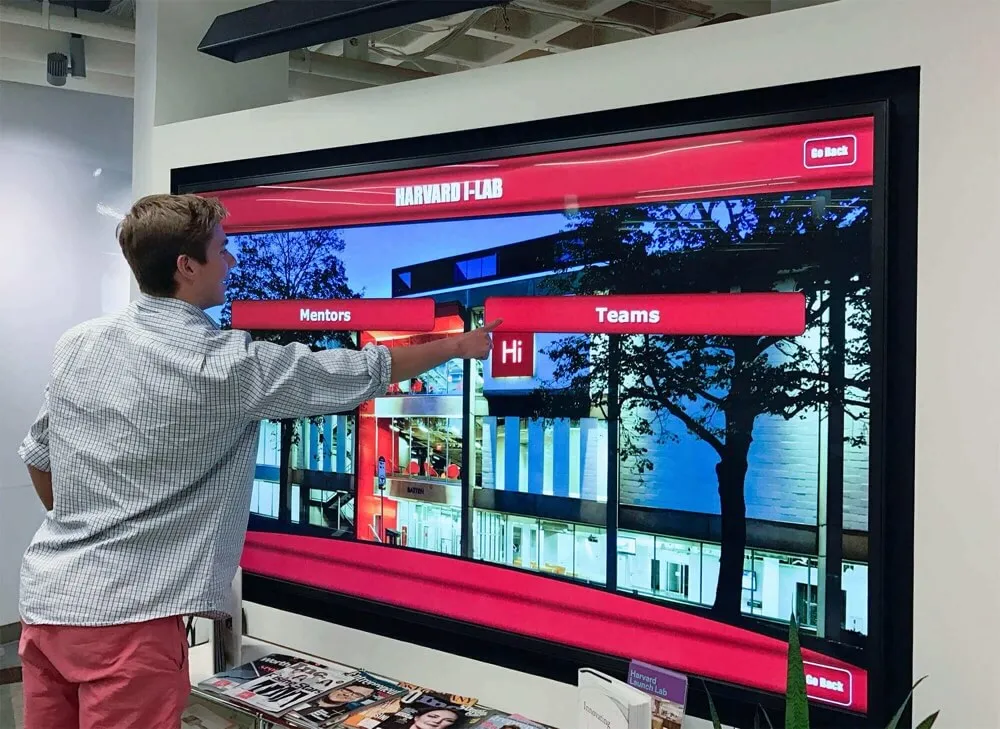
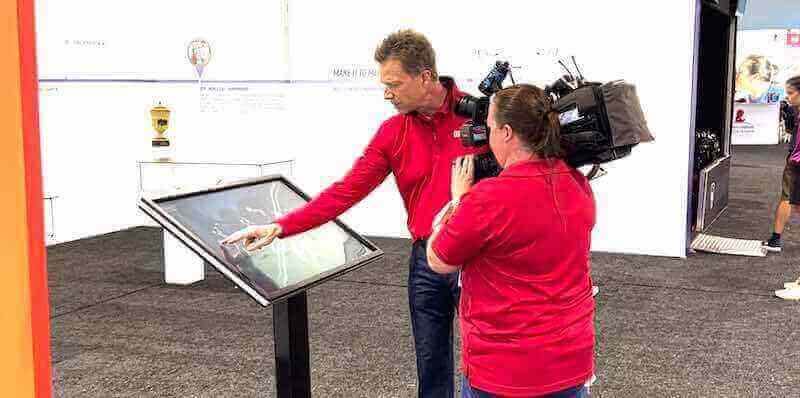
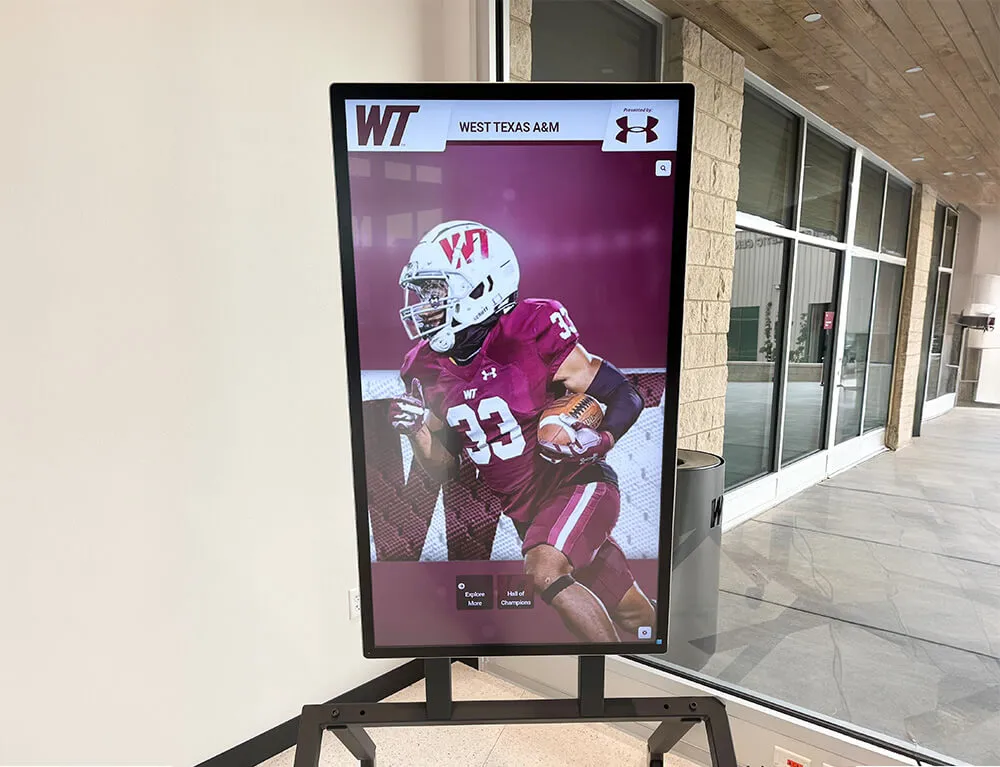
Interactive touchscreen displays enable exploration of individual athlete profiles including sport-specific achievements and skill milestones
Forehand Development Drills for High School Players
Systematic practice using progressive drills builds consistent technique and match-ready execution.
Fundamental Technique Drills
Shadow Swings (No Ball)
- Stand in ready position, execute 10 perfect forehands in slow motion
- Focus on grip, unit turn, swing path, contact point, and follow-through
- Gradually increase speed maintaining technical precision
- Coach provides real-time feedback on mechanics
- Perform 50-100 daily swings building muscle memory
Hand-Fed Forehands
- Coach hand-feeds balls from close range to target contact zone
- Player focuses exclusively on technique without ball tracking difficulty
- Start with stationary feeds, progress to feeds requiring movement
- Emphasize single technical element per session (e.g., contact point)
- Volume: 50-100 forehands per session
Wall Practice
- Hit against practice wall maintaining rally with yourself
- Consistent contact point and swing path produce reliable ball return
- Self-correcting environment where mistakes become immediately obvious
- Progress from close range to deeper positioning
- Build to 50+ consecutive forehands maintaining technical quality
Progressive Ball-Feeding Drills
Cross-Court Forehands
- Partner or coach feeds consistently to forehand side
- Player hits all shots cross-court establishing rally pattern
- Focus on depth control hitting beyond service line
- Progress to targeting specific cross-court zones
- Advanced: Alternate short and deep cross-court shots
Inside-Out Forehands
- Feeds come to middle of court or slightly to backhand side
- Player runs around shot hitting forehand to opposite corner
- Develops footwork, contact point control, and tactical shot
- Critical pattern for high-level tennis
- Progress from stationary feeds to movement-based execution
Approach Shot Forehands
- Short ball feeds requiring forward movement and aggressive shot
- Contact ball on the rise or at apex of bounce
- Emphasis on controlling depth and direction on attacking shots
- Follow shot to net for approach-volley combination
- Simulates match situations requiring transition shots
Match-Simulation Drills
Consistency Drills
- Cross-court forehand rally with partner
- Goal: 20+ consecutive shots maintaining quality and depth
- Builds reliability and confidence in stroke production
- Progress to down-the-line consistency once cross-court is reliable
- Mental training component: maintaining focus through extended rally
Target Practice
- Place targets (cones, towels, or court markers) in specific zones
- Hit forehands attempting to land balls in target areas
- Track success rate creating measurable improvement goals
- Progress from large targets to smaller, more precise zones
- Develops control and intentional shot placement
Pressure Situations
- Games or drills with scoring consequences
- Examples: “First to 11 points with forehand only rallies”
- Simulates match pressure while isolating forehand technique
- Builds confidence executing under competitive conditions
- Reveals technical breakdowns occurring under stress
Learn about celebrating athletic achievements in comprehensive athletic recognition approaches applicable to individual sports.
Physical Conditioning for Forehand Power
Technical proficiency requires supporting physical capabilities for optimal execution.
Strength Training
Core Rotational Strength
- Medicine ball rotational throws building explosive core power
- Cable or band rotation exercises developing controlled power
- Planks and anti-rotation exercises building stability
- Core strength directly correlates to forehand power generation
- Train 2-3 times per week alongside tennis practice
Shoulder and Arm Stability
- External rotation exercises preventing shoulder injury
- Scapular stability work supporting shoulder health
- Grip strengthening exercises building racket control
- Proper strength training enhances performance and prevents injury
- Focus on injury prevention more than maximum strength
Flexibility and Mobility
Dynamic Warm-Up Components
- Arm circles and shoulder mobility exercises
- Torso rotations preparing core for swing mechanics
- Hip mobility work supporting weight transfer and balance
- Leg swings and dynamic stretching preparing lower body
- 10-15 minute warm-up before every practice or match
Static Stretching
- Post-practice shoulder and arm stretches
- Hip flexor and hamstring flexibility supporting movement
- Thoracic spine mobility enabling proper rotation
- Consistent flexibility work prevents injury and improves mechanics
- Hold stretches 30 seconds, perform after tennis activity
Tennis-Specific Conditioning
Footwork and Agility
- Ladder drills building quick feet and coordination
- Cone drills simulating court movement patterns
- Side-to-side shuffles developing lateral quickness
- Split step and first-step quickness drills
- Movement efficiency allows proper positioning for technique execution
On-Court Conditioning
- Live-ball drills building tennis-specific endurance
- Interval training matching tennis work-rest ratios
- Recovery between points and games
- Build capacity to maintain technical quality when fatigued
- Periodize training matching competitive season demands
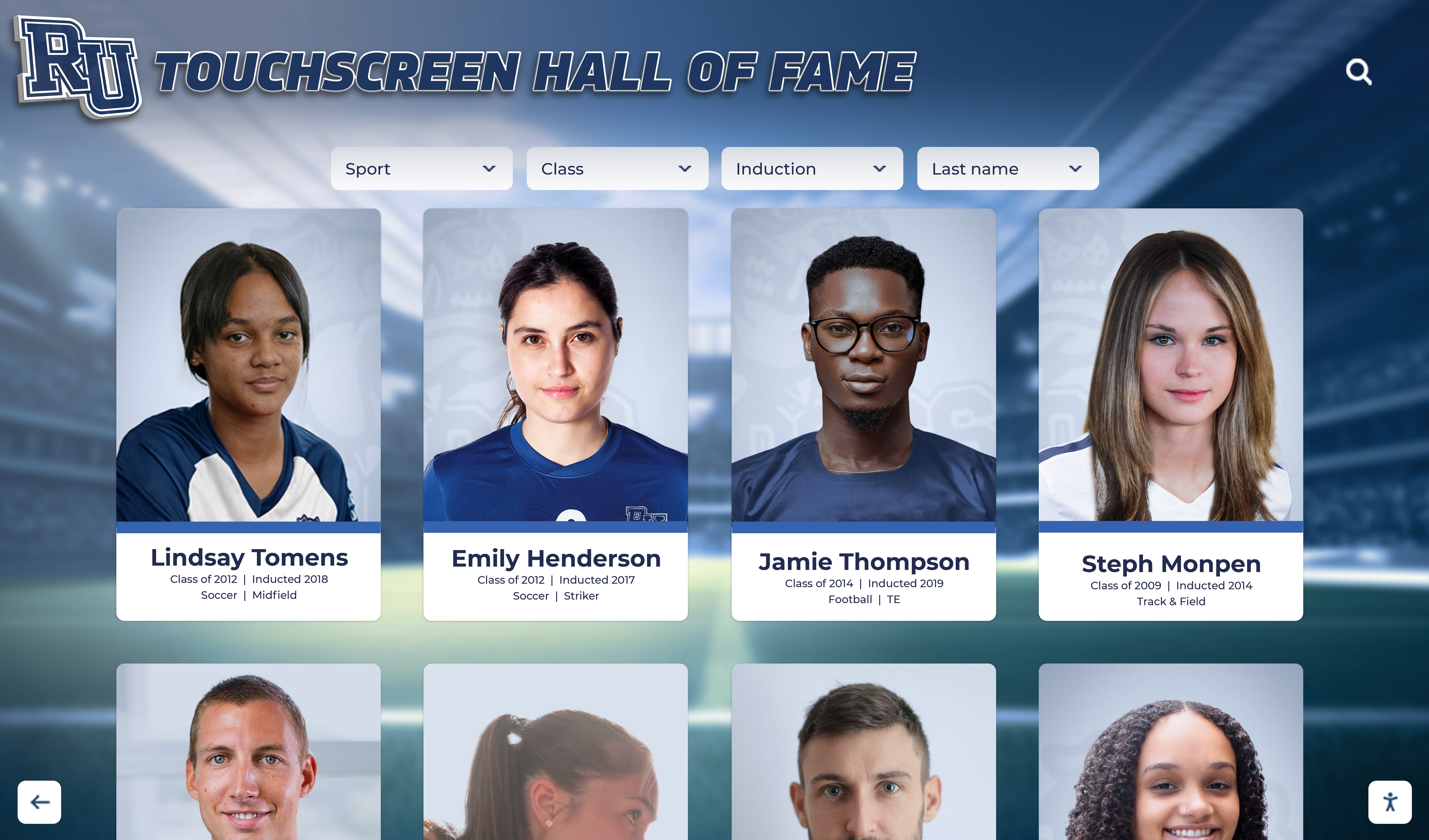
Digital recognition platforms preserve individual athletic achievements including sport-specific records and competitive milestones
Mental Approach and Match Application
Technical skills require proper mental approach for successful match implementation.
Building Confidence in Your Forehand
Practice-to-Match Transfer
- Confidence derives from consistent successful execution in practice
- Volume of quality repetitions builds neural pathways and muscle memory
- Gradual progression from drills to match play
- Positive self-talk reinforcing technical execution
- Focus on process (technique) rather than outcome (winners/errors)
Trusting Your Technique Under Pressure
- High-pressure matches reveal technical weaknesses requiring additional practice
- Simplify mechanics under pressure rather than complicating
- Breathe and reset between points maintaining composure
- Commit fully to shots rather than tentative execution
- Experience builds trust that proper technique produces results
Tactical Forehand Application
Running Around Backhand
- Use superior forehand by moving to hit forehands on balls to backhand side
- Creates offensive opportunities from neutral or defensive positions
- Requires quick recognition and footwork execution
- High-level tactic employed by professional players extensively
- Balance with developing reliable backhand avoiding over-reliance
Dictating with the Forehand
- Use forehand to control rally tempo and direction
- Target opponent’s backhand with heavy topspin forehands
- Create short angles pulling opponent off court
- Build points establishing forehand dominance before attacking
- Aggressive forehand enables transition to net
Defensive to Offensive Transitions
- Heavy topspin creates margin for error in defensive situations
- Depth and height neutralize opponent advantage
- Transition from defensive position to neutral through consistent forehands
- Recognize opportunities to counter-attack from defensive position
- Mental resilience maintaining quality during defensive points
Discover how athletic achievements are celebrated in booster club programs supporting athletic recognition.
Video Analysis and Coaching Resources
Modern technology provides powerful tools for accelerating forehand development.
Self-Analysis Using Video
Recording Setup
- Position camera perpendicular to baseline capturing full stroke
- Record from behind baseline showing contact point relationship to body
- Use slow-motion feature analyzing specific technique elements
- Compare personal video to professional player models
- Track progress recording periodically throughout development
Key Elements to Analyze
- Grip consistency and proper bevel positioning
- Unit turn completeness and timing
- Swing path angle (low-to-high progression)
- Contact point location relative to body
- Follow-through completion and balance
Professional Instruction
Working with Tennis Coaches
- Certified teaching professionals provide systematic instruction
- Individualized feedback addresses specific technical issues
- Structured progression ensures proper skill sequencing
- Coach accountability accelerates improvement timeline
- Group clinics provide cost-effective instruction option
High School Tennis Team Resources
- School coaches provide regular instruction and match feedback
- Team practice creates competitive environment driving improvement
- Teammates provide practice partners for drill work
- Varsity competition provides development pathway
- Team culture reinforces practice commitment and skill development
Online Learning Resources
Instructional Video Content
- Professional player slow-motion analysis
- Technique-specific tutorial content
- Drill demonstrations and practice structure guidance
- Common mistake identification and correction
- Supplement but don’t replace live coaching instruction
Celebrating Tennis Achievement and Skill Development
High school tennis programs increasingly recognize that celebrating individual skill milestones and competitive achievements builds program culture and motivates continued development.
Recognition Beyond Team Championships
Individual Achievement Celebration
- Singles and doubles tournament success
- League and conference recognition
- Skill development milestones (consistent first serve percentage, forehand winners)
- Academic-athletic balance accomplishments
- Sportsmanship and leadership contributions
Modern Recognition Display Solutions
Championship tennis programs create visible celebration of diverse achievements:
Digital Recognition Platforms Modern systems enable comprehensive tennis recognition:
- Individual player profiles showcasing career statistics and achievements
- Match results and tournament performance tracking
- Skill milestone recognition (e.g., “100 Match Wins,” “Conference Champion”)
- Photo galleries from competitions and team events
- Historical program records preserving tennis legacy
Year-Round Visibility Permanent recognition displays provide ongoing celebration:
- Lobby or athletic facility displays highlighting current and past tennis athletes
- Interactive exploration allowing detailed profile discovery
- Update capability accommodating new achievements throughout seasons
- Engagement with families and community members visiting facilities
- Demonstration of institutional commitment to tennis program excellence
Solutions like those offered by Rocket Alumni Solutions enable tennis programs to showcase individual player development alongside team achievements, creating comprehensive recognition that honors the diverse contributions building successful programs. Interactive touchscreen displays installed in athletic facilities allow athletes, families, and community members to explore detailed profiles featuring tournament results, statistical achievements, and career milestones—ensuring tennis excellence receives visibility equal to team sports.
Explore recognition solutions in championship recognition display approaches that celebrate athletic achievements.
Frequently Asked Questions
What is the best tennis forehand grip for high school players?
The Semi-Western grip (base knuckle on bevel 4) is recommended for most high school tennis players, offering optimal balance between power generation, topspin production, and versatility across different shot types and court surfaces. This grip naturally positions the racket face for moderate-to-heavy topspin, handles contact points from waist to shoulder height comfortably, and represents the most common grip among successful junior and professional players. The Semi-Western allows both offensive baseline play and defensive shot-making, supporting continued development through collegiate tennis. Players with extreme playing styles may use Eastern (flatter shots, lower contact) or Western grips (heavy topspin, high contact), but these should be coach-directed decisions rather than self-experimentation.
How can I generate more power on my tennis forehand?
Forehand power generation comes primarily from proper kinetic chain sequencing and body rotation rather than arm strength alone. Focus on: (1) pushing forcefully off your back foot initiating weight transfer, (2) rotating hips toward the target ahead of shoulder rotation, (3) maintaining relaxed grip pressure allowing maximum racket acceleration, (4) extending arm toward contact point approximately 12-18 inches in front of your body, (5) completing full follow-through indicating acceleration through contact rather than at contact. The modern forehand generates power through coordinated lower body drive, core rotation, and timed upper body contribution—players who rely exclusively on arm strength produce less power and increase injury risk. Practice low-to-high swing paths creating both topspin and pace, and develop core rotational strength through off-court conditioning supporting on-court technique.
What are the most common tennis forehand mistakes?
The most common tennis forehand mistakes among high school players include: using Continental or incorrect grip limiting topspin generation, late or incomplete unit turn forcing rushed swings, contact point too close to or behind the body reducing power and control, horizontal swing path rather than low-to-high progression preventing topspin production, abbreviated follow-through indicating deceleration before contact, and falling off balance during the swing revealing poor weight transfer. Additional frequent errors include gripping the racket too tightly restricting racket head speed, pulling the head up before contact causing mishits, and inconsistent preparation varying stroke mechanics. Systematic video analysis, professional coaching instruction, and high-volume repetition of correct technique through structured drills correct these technical flaws more effectively than match play alone.
How often should high school tennis players practice forehand technique?
High school tennis players should practice forehand technique during every practice session, dedicating minimum 15-20 minutes to focused forehand work including warm-up shadow swings, hand-fed or ball machine repetitions emphasizing specific technical elements, and match-simulation drills under pressure. Additionally, players committed to rapid improvement benefit from 50-100 daily shadow swings reinforcing muscle memory and proper mechanics without requiring court time or partners. During competitive season, maintain technical quality through consistent practice while managing fatigue and match preparation; during off-season, increase volume significantly (200-300+ forehands per session) building technical refinement and physical conditioning. Quality repetition matters more than quantity—50 technically sound forehands develop skills more effectively than 200 forehands with inconsistent mechanics.
How long does it take to develop a consistent tennis forehand?
Developing a consistent, match-ready tennis forehand typically requires 3-6 months of focused, systematic practice for high school players starting with proper instruction and committing to regular practice. Players practicing 4-5 times weekly with structured technical work, progressive drills, and gradual match implementation see measurable improvement within 4-6 weeks and develop reliable stroke production within one competitive season. However, continued refinement and power development extend throughout high school and college careers as players mature physically and accumulate experience. Players changing from incorrect grip or fundamentally flawed technique may require longer adjustment periods (2-3 months) before new mechanics feel natural and produce better results than previous habits. Consistency derives from volume of quality repetitions—players hitting 500+ technically sound forehands weekly develop skills faster than those with inconsistent practice regardless of natural athleticism.
Conclusion: Building Your Forehand Foundation for Tennis Success
Mastering tennis forehand technique represents the single most important skill development priority for high school players establishing foundations for competitive success and continued advancement. The systematic progression outlined in this guide—from proper Semi-Western grip positioning through complete unit turn, optimized swing path, precise contact point, and full follow-through completion—provides the technical framework supporting reliable stroke production under all competitive conditions.
The most effective forehand development combines understanding of proper mechanics with high-volume quality repetition, progressive drill work building from fundamental technique to match application, physical conditioning supporting optimal biomechanics, and mental approach trusting technique under pressure. High school players who commit to systematic forehand development through structured practice, professional coaching instruction, and consistent competition build weapons that dictate points, control rallies, and create offensive opportunities determining match outcomes.
Modern tennis demands forehands generating both pace and heavy topspin through biomechanically sound technique rather than pure arm strength. Players who invest time mastering the fundamentals explored in this comprehensive guide establish technical foundations supporting continued power increases as they mature physically, create reliable strokes producing consistent results under competitive pressure, and develop skills translating to success at collegiate levels and beyond.
Celebrate Your Tennis Program's Excellence
Discover how modern digital recognition solutions showcase individual tennis achievements, tournament results, and skill development milestones—creating permanent displays that celebrate the diverse accomplishments building championship tennis programs.
Explore Recognition SolutionsChampionship tennis programs recognize that athletic excellence extends beyond team victories to include individual skill mastery and personal development. High school players who dedicate themselves to proper forehand technique development demonstrate the commitment and work ethic deserving celebration alongside traditional team accomplishments. When schools visibly recognize individual skill achievements, tournament successes, and competitive milestones through comprehensive recognition systems, they communicate that all forms of athletic excellence—from team championships to individual technical mastery—receive valued acknowledgment and celebration.
Start your forehand development journey by filming your current technique, comparing it to the principles outlined in this guide, and establishing specific improvement goals. Work with qualified coaching instruction providing individualized feedback, commit to consistent practice emphasizing quality repetitions over mindless ball-hitting, and trust that systematic technical development produces results more reliably than hoping athleticism alone will suffice. Your forehand represents your most important weapon—invest in building it properly, and watch your competitive results reflect that commitment throughout your high school tennis career and beyond.