
To display a three-sport athlete award accurately in a digital recognition index, caption it with the program’s exact honor name, the scope it covers—a single school year or a full career—and only the sport or season labels your award documentation actually supports. A generic “multi-sport athlete” tag mislabels entries where the underlying honor is a same-year participation recognition versus a four-year career distinction. Those two records look identical if the label is wrong, and fixing a mislabeled entry years later is harder than captioning it correctly the first time.
This guide is for athletic directors and recognition editors who have the physical or digital artifact—a plaque, a certificate, a spring-awards program—and need to caption it correctly when indexing it in a school awards database or display system.
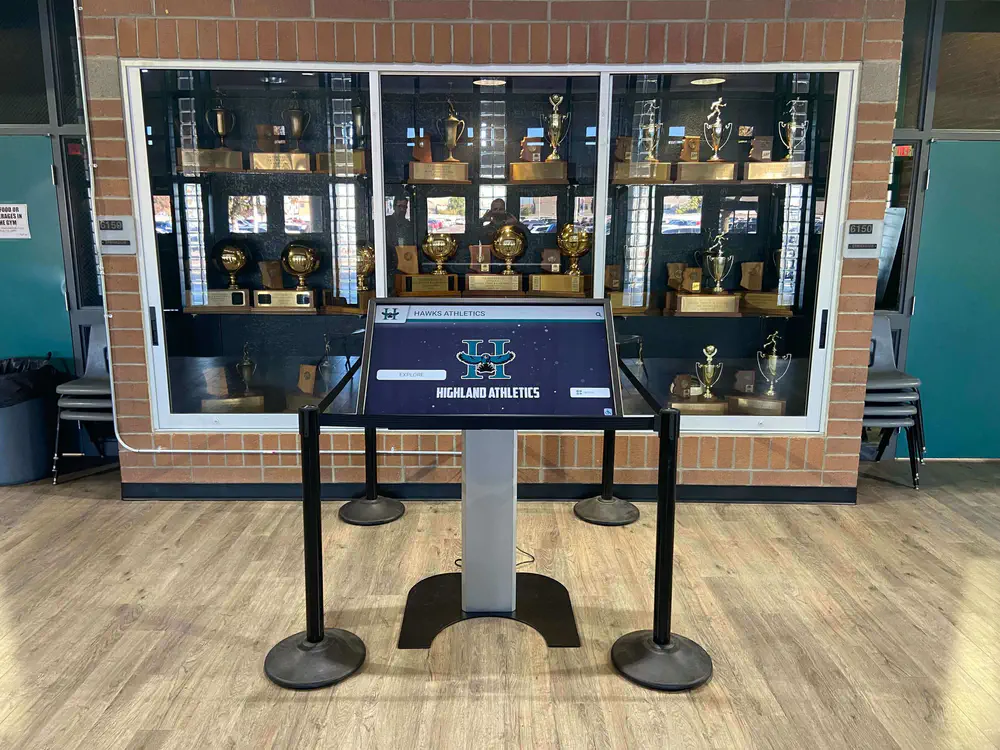
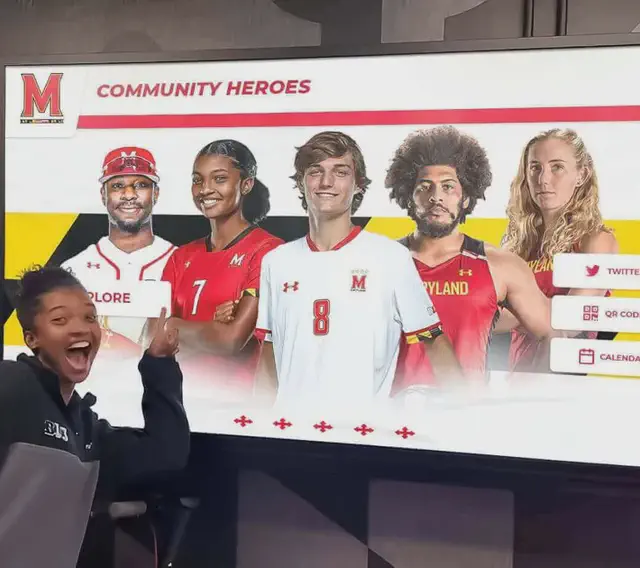
Digital recognition systems allow multi-sport awards to be searchable alongside trophy case honors rather than buried in a single-sport category
The Core Problem: “Three-Sport” Can Mean a Single Year or an Entire Career
Before captioning any entry, identify which type of honor your award record documents.
Single-year recognition is given to a student who participates in—or letters in—three sports within one school year, covering the fall, winter, and spring seasons. The award period ends at the close of that academic year.
Career recognition is given to a student who sustained multi-sport participation across multiple years—typically all four years of high school—before graduation.
These two structures can produce identical-looking plaques when taken out of context. The documentation behind the award—a selection sheet, an awards program listing, the engraving on the physical plaque—is what tells you which type you have. No caption should import assumptions from another school’s program without confirming the local criteria.
What Two Documented Single-Year Programs Show
The Ohio Interscholastic Athletic Administrators Association’s 2016 Multi-Sport Panel Presentation (pages 11–12 and 20–21) documented two different program structures from Ohio high schools at the time—illustrating how the same general concept can be administered differently, with direct implications for how the award is captioned.
One school’s program required the student to both participate and earn a letter in three sports, one each in the fall, winter, and spring seasons, within the same school year. Recipients received a plaque. Because the honor tied directly to lettering in all three seasons, an accurate caption for a recipient from that program includes the award name, the school year, and—where the record shows them—the three sport or season labels. Adding “letter award” to the caption is accurate for that program and misleading for one that did not require a letter.
A second school’s program in the same presentation recognized three varsity sport programs in a single school year without requiring a letter in each. Its fourth-year recognition included a photo plaque presented to the student and a permanent display in the school’s gym lobby. Because lettering was not required, a caption for that program should not add a lettering claim; it should reflect only the participation-based distinction the documentation supports.
Neither of those programs establishes current policy at their schools or any universal standard for three-sport recognition. They illustrate that “three-sport athlete award” is a local program definition—which is why importing a caption from another school’s index without checking your own award documents is a common source of mislabeling.

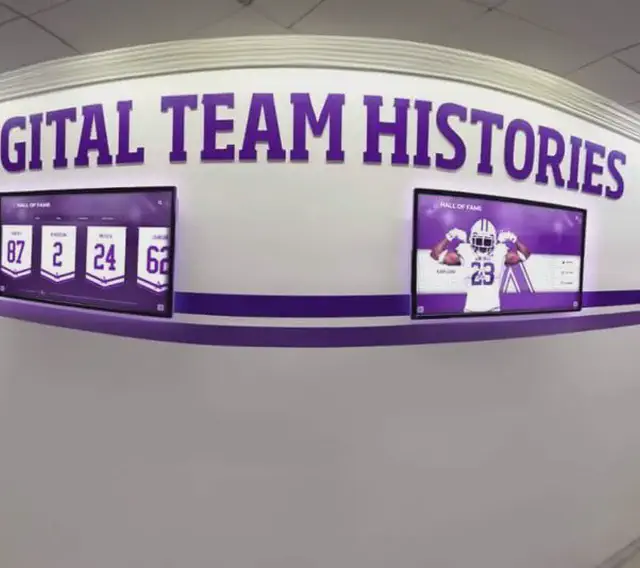
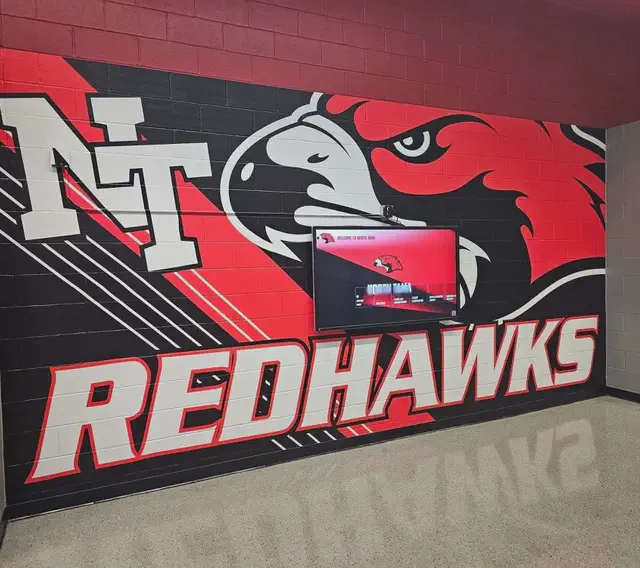
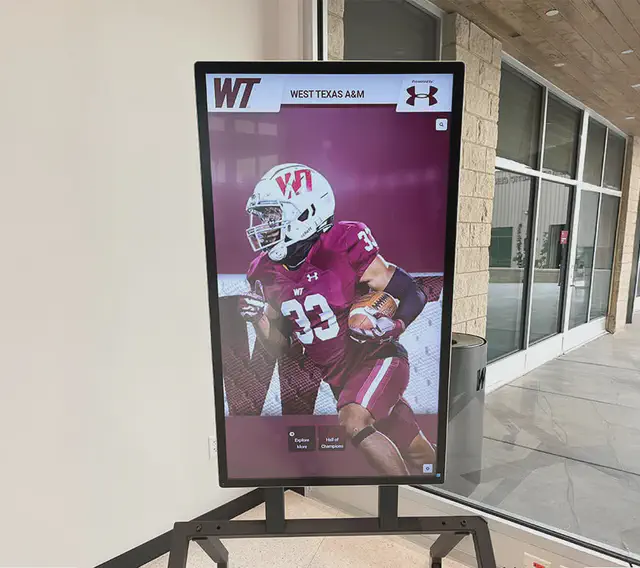
Digital team history displays allow each award category—including multi-sport honors—to surface independently alongside single-sport records
How a Career-Based Program Structures Recognition Differently
Michigan’s high school coaches association runs a separate kind of multi-sport recognition: the Rich Tompkins Multi-Sport Award (MHSCA). Its structure creates two distinct document types that must not be conflated in a caption.
School nominee certificate: Each Michigan high school may nominate one female and one male candidate. All nominees receive a high-quality certificate from MHSCA in honor of representing their school as a candidate.
Class winner plaque: One male and one female from each of four school-size classifications (A, B, C, D) are selected as the MHSCA State Multi-Sport Athlete of the Year. Those recipients receive a plaque, not a certificate.
A second, top-level honor—the Larry Merx “Best of the Best” Award—appears under its own heading on the same page and is listed separately from the Rich Tompkins award recipients in 2025. These are not interchangeable labels; they represent distinct levels of recognition within the same program.
The MHSCA program is explicitly a career honor: athletes must have competed in a minimum of three sports for all four years of high school. That scope must be reflected in any caption. A nominee’s certificate from this program documents a four-year career distinction, not a single-year recognition.
The MHSCA page includes a paragraph noting “Reminder all nominations are due: April 15, 2021.” That dated line does not confirm current-cycle deadlines or criteria. No future dates or selection rules should be inferred from it.
Caption implication: If your award documentation shows a school nominee certificate from a career-based program, label it as a nominee certificate—not as a state award or class winner. If it shows a class winner plaque, label it as such. These are different honors within the same program, and conflating them misrepresents the recipient’s actual achievement.

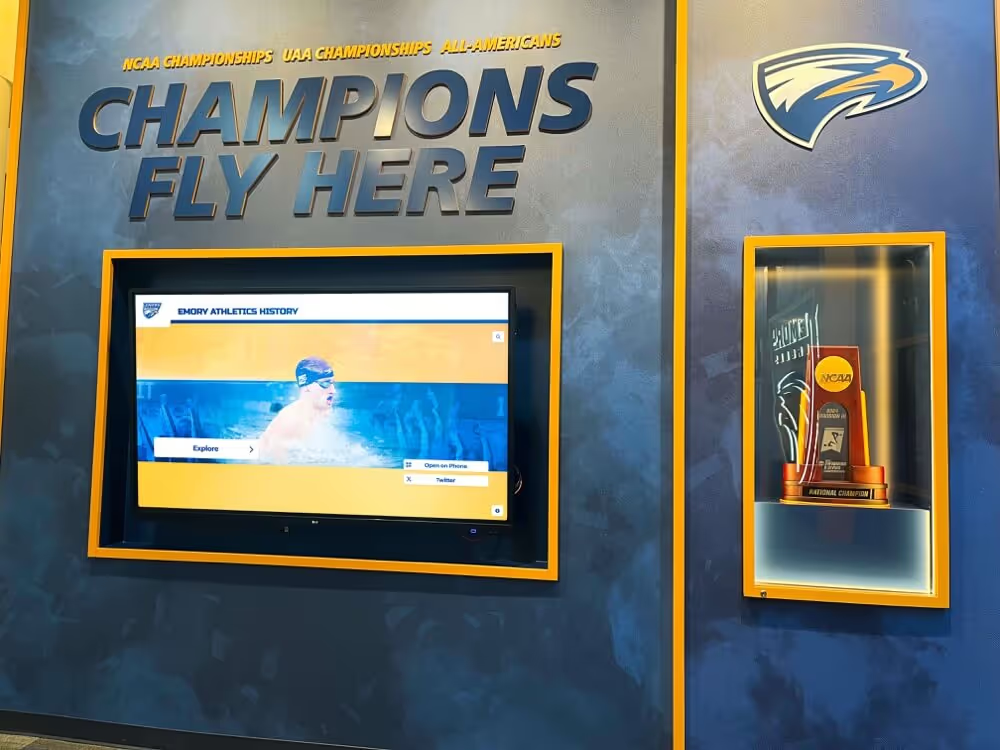
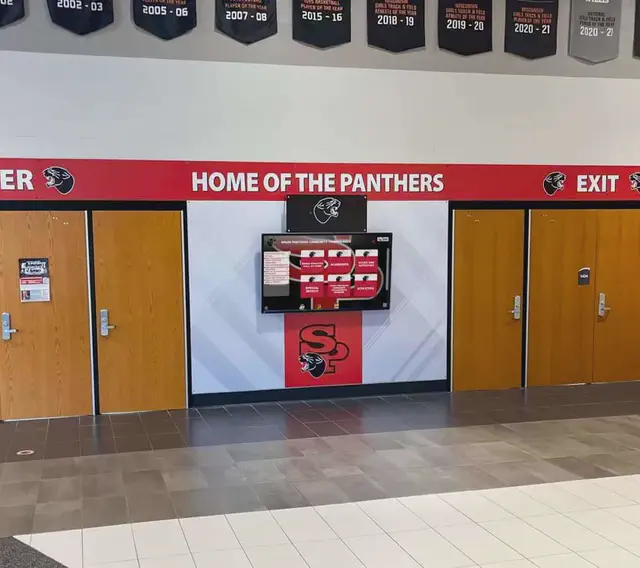
Interactive recognition displays allow visitors to search and browse specific honor categories rather than scanning a static list
Two Short Example Captions
The following are generic examples for two documentation scenarios an athletic director might encounter. Neither ties to a specific school or program.
Example A — Single-year, lettering-based award:
Three-Sport Letter Award — Fall, Winter and Spring [Year] | Cross Country, Basketball, Track & Field
This caption preserves the award scope (one school year), the lettering basis, and the specific sports. If the program did not require lettering, replace “Letter Award” with the program’s exact name and remove the lettering implication.
Example B — Career nominee certificate from a state program:
[Program Name] Multi-Sport Nominee Certificate — Four-Year Participation, Three Varsity Sports | Class of [Year]
This caption distinguishes the nominee certificate from the class winner plaque, preserves the career scope, and avoids claiming a state title the documentation does not support.
A Caption Check Table
Use this before finalizing any entry in a digital awards index. It is an editing reference, not a gate that blocks incomplete entries from being saved.
| Check | Question | Why It Matters |
|---|---|---|
| Award name | Does the caption use the program’s exact name—not a generic substitute? | Generic labels erase program-specific distinctions |
| Scope | Is the honor marked as single-year or career? | The same award artifact can represent either |
| Sport or season labels | Are sport names drawn from the award documentation, not assumed? | A program may list seasons, not sport names |
| Award level | Does the entry distinguish nominee certificate from class or state winner plaque? | Two different honors within the same program |
| Award year | Is the awarding year (not the academic year of sports played) recorded? | Affects search and alumni lookup accuracy |

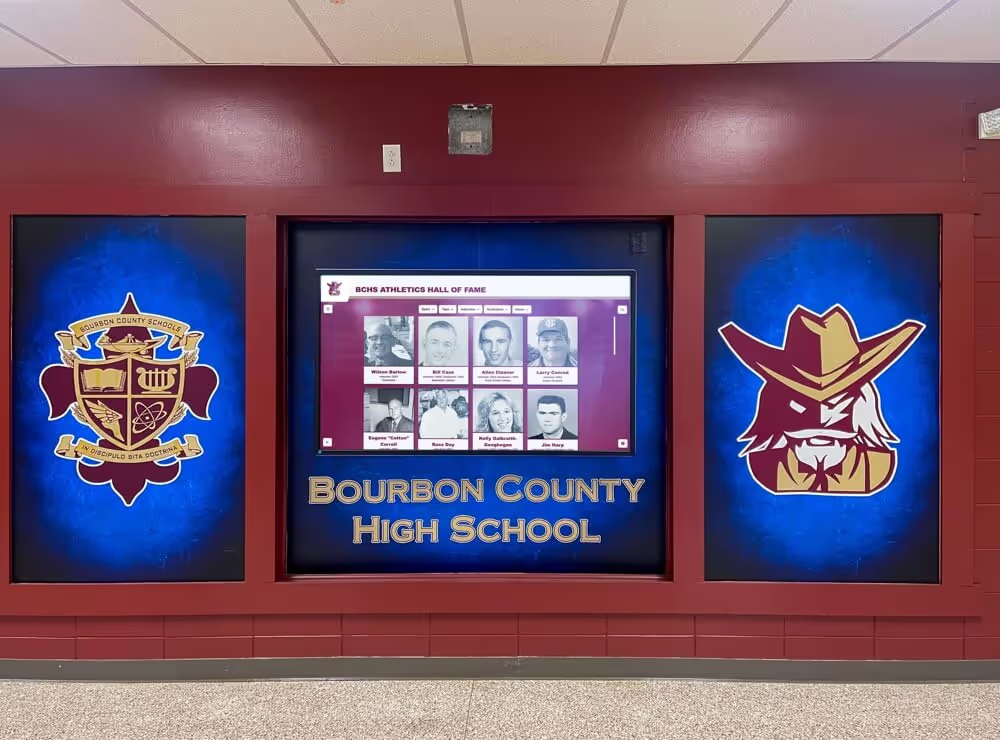
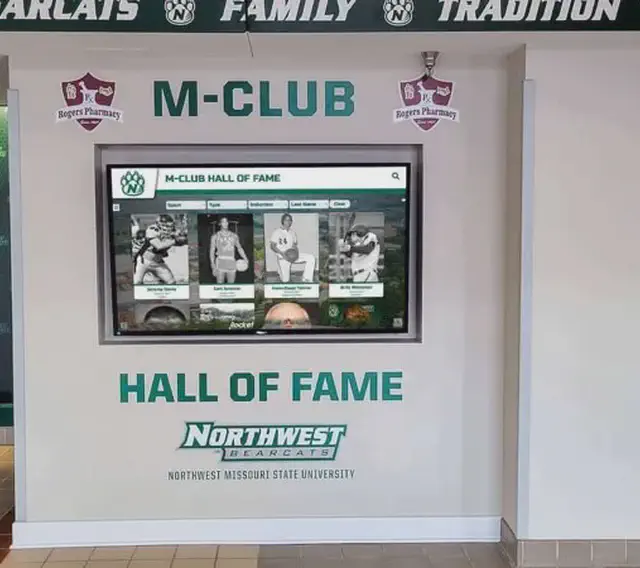
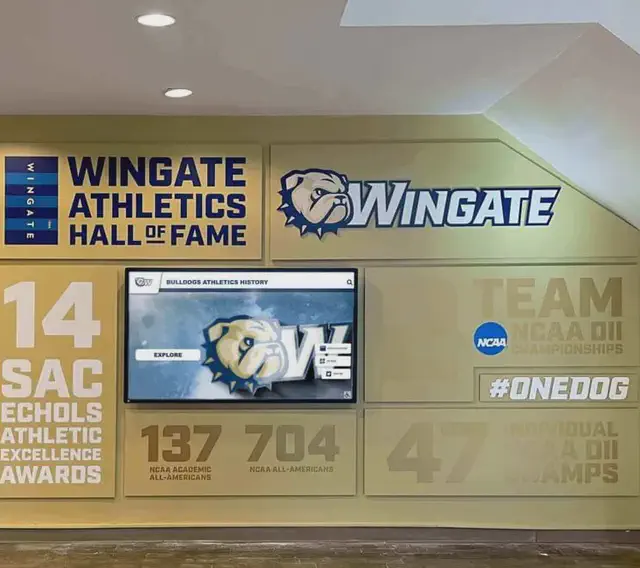
A dedicated Hall of Fame wall with a central digital screen lets multi-sport honors occupy their own category alongside single-sport records
Where the Indexed Entry Lives in a Digital Display
Athletic directors building a digital awards database or searchable hallway display face a secondary decision: which category does a three-sport award belong in?
Multi-sport recognition sits at the intersection of several conventional award types—individual sport records, character-based honors, and multi-season achievement—but it belongs in its own category. A display system that places three-sport awards under “other” or buries them inside a single-sport record board returns incomplete results when a family or alumnus searches years later.
Effective indexing for a three-sport athlete award display typically includes:
- A standalone award category, not nested under any single sport
- A caption that travels with the entry—not just a name and year
- A scope field distinguishing single-year from career recognition
- A source-document note (plaque, certificate, program listing) for future editors who were not present when the award was given
For programs building out the broader category structure for their sports recognition index, the overview of sports award categories schools can showcase provides a useful reference for how multi-sport recognition fits alongside other honor types. For programs that announce three-sport awards at a spring banquet, the guide to planning a spring sports banquet covers how to sequence the presentation so the distinction between individual-sport and multi-sport honors is clear to the audience.
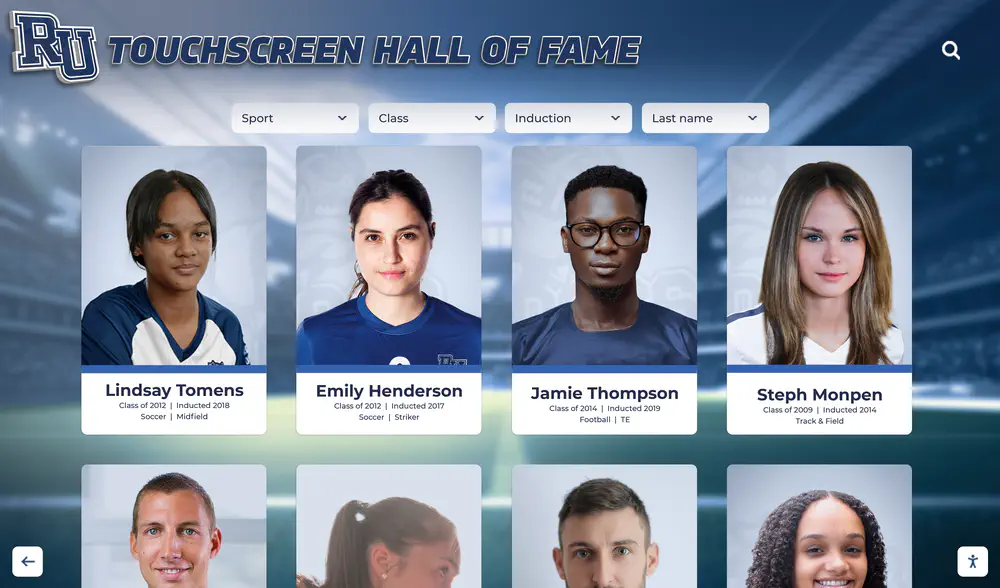
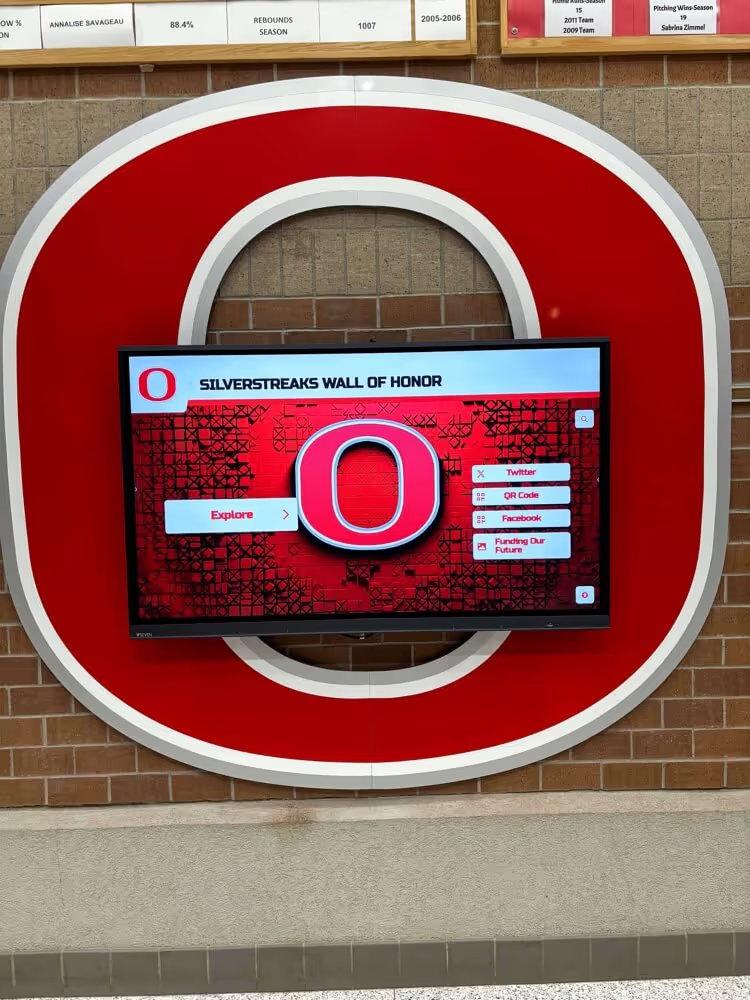
A searchable touchscreen recognition system allows multi-sport awards to be filtered and browsed independently of single-sport categories
Frequently Asked Questions
What is a three-sport athlete award?
A three-sport athlete award recognizes a student who participated in—or lettered in—three different athletic programs, either within a single school year (one per season) or across multiple years, depending on the school's criteria. Schools define this honor locally. The award may be a plaque, a certificate, or a listing in the season awards program, and the type of physical recognition is one indicator of which program structure it comes from.
How do I caption a three-sport award without mislabeling it?
Use the program's exact honor name, identify whether it covers a single school year or a multi-year career, and include only the sport or season labels your award documentation supports. Do not add a lettering claim if the program required participation without lettering. Do not describe a school nominee certificate as a state or class award if that level of recognition is not documented.
What is the difference between a school nominee certificate and a class winner plaque for a multi-sport award?
In programs such as Michigan's MHSCA Rich Tompkins Multi-Sport Award, every school-nominated candidate receives a certificate honoring their nomination. A separate class winner plaque is awarded to one male and one female in each school-size classification who is selected as the top honoree at the state level. These are distinct recognitions; a nominee certificate does not indicate that the student was selected as a class or state award winner.
Should I categorize a three-sport award under a sport or in its own category in a digital display?
A three-sport award should have its own category in a digital recognition index rather than being filed under any single sport. Because the honor spans multiple programs, placing it under one sport creates incomplete search results and obscures the multi-sport scope of the recognition. A standalone "Multi-Sport Recognition" or "Three-Sport Award" category keeps the entry discoverable by alumni and families searching the full record.
What documentation should I keep for a three-sport award entry?
Keep the physical award artifact (plaque or certificate), the season awards program where the honor was announced, and a note of the specific criteria the student met—participation versus lettering, single year versus career. Record the awarding year, the program's exact name, and the classification or scope level if applicable. This documentation allows future recognition editors to caption the entry accurately without returning to incomplete records.
Accurate Labels Protect the Recognition
A three-sport athlete award display entry that carries the wrong scope—single-year labeled as career, nominee certificate labeled as state winner—misrepresents the student’s actual achievement in both directions. It either inflates the honor or understates it, and neither outcome serves the student, the program, or the institution’s credibility.
The fix is straightforward: read the documentation, identify the type, apply the program’s exact name, and add only the scope and sport labels the record supports. Two entries in the same index can describe very different honors; the caption is what preserves the difference.
Schools building a digital recognition system that makes three-sport awards searchable alongside hall of fame profiles, statistical records, and other athletic honors can see what a complete indexing environment looks like by requesting a demonstration.
Index Every Award Type Accurately in One System
Rocket Alumni Solutions builds searchable digital recognition displays that keep multi-sport awards—and every other program honor—captioned correctly, browseable by families, and permanently documented. See how schools organize their full awards history in a single platform.
Request a Demo