



Understanding the types of sports awards a school can give is the first step toward building a recognition program that actually works — one that motivates athletes, aligns with coaching values, and creates a visible institutional record that outlasts the banquet night or the season-end slide show. Awards mean more when they are clearly defined, fairly awarded, and purposefully preserved.
Most schools begin with a short list of familiar honors — MVP, most improved, team captain. A well-designed program expands that list deliberately, matching award categories to specific team roles, documented criteria, and a display plan that keeps recognition visible throughout the year. This guide walks athletic directors, coaches, and school administrators through the full taxonomy of sports award types, the criteria frameworks that make each meaningful, and the display and archiving options that transform one-night recognition into a lasting part of a program’s story.
The types of sports awards a school offers communicate institutional values as clearly as any policy document. When programs only award MVPs and statistical leaders, they implicitly tell every other athlete that their contribution was secondary. When programs build layered recognition systems, they signal that success is collective and that every type of commitment deserves acknowledgment.

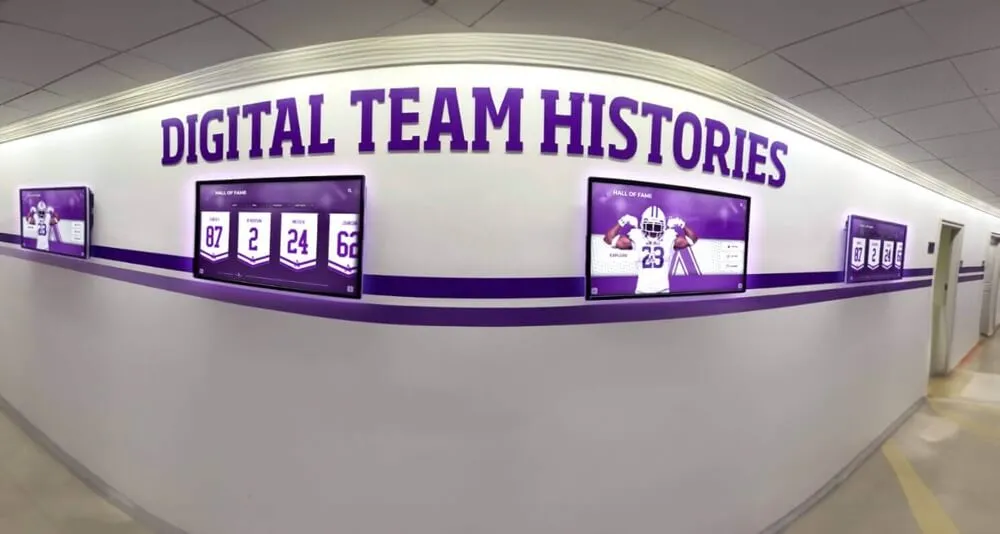
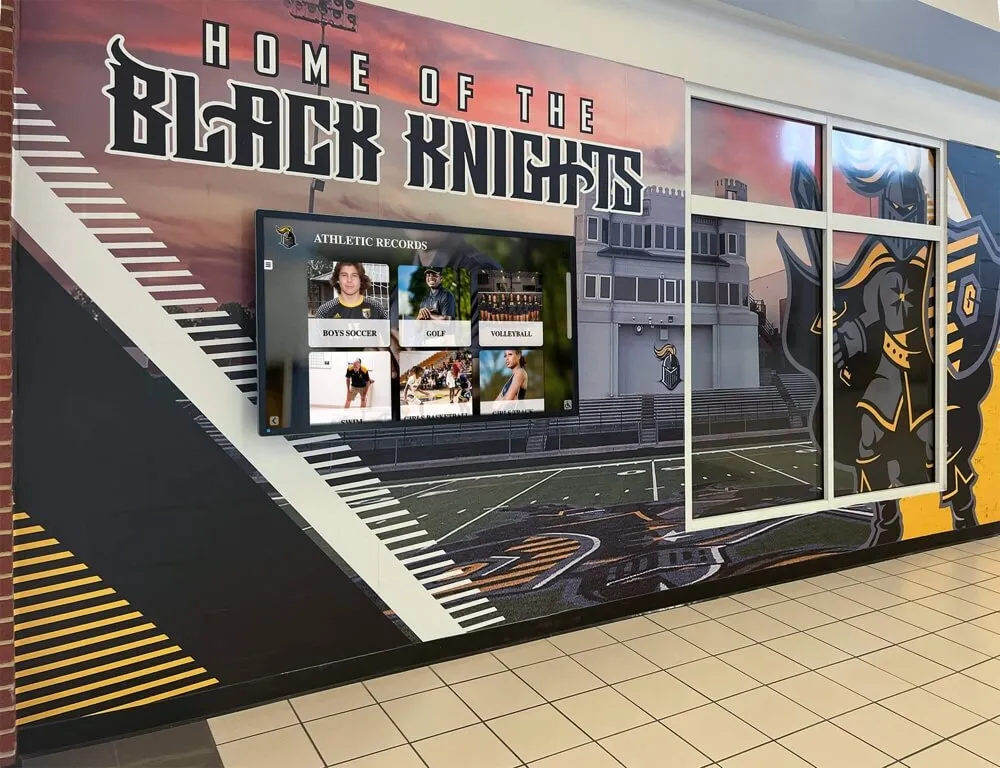
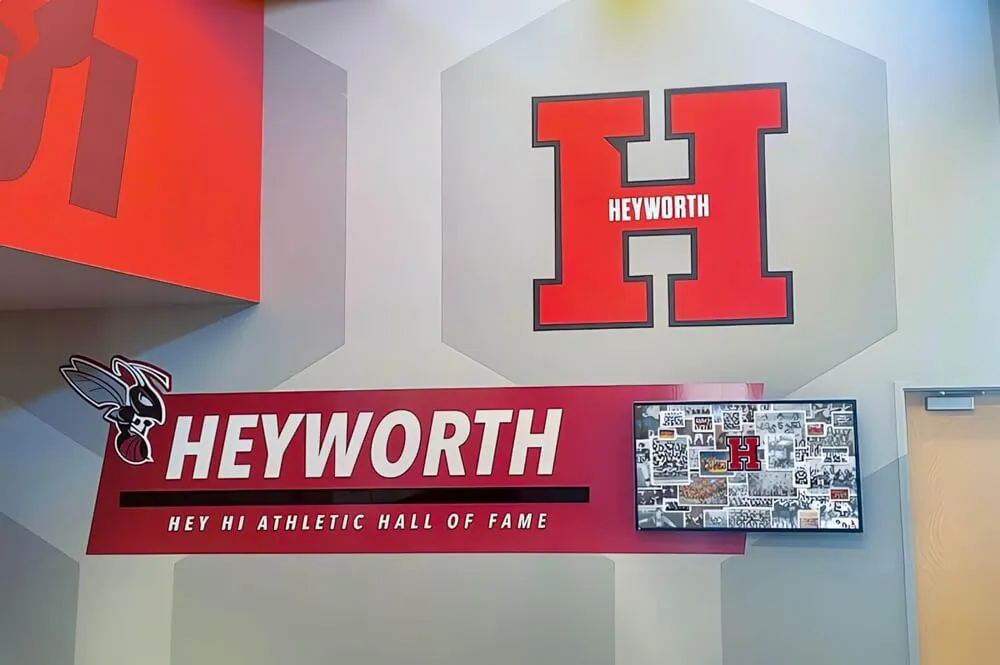
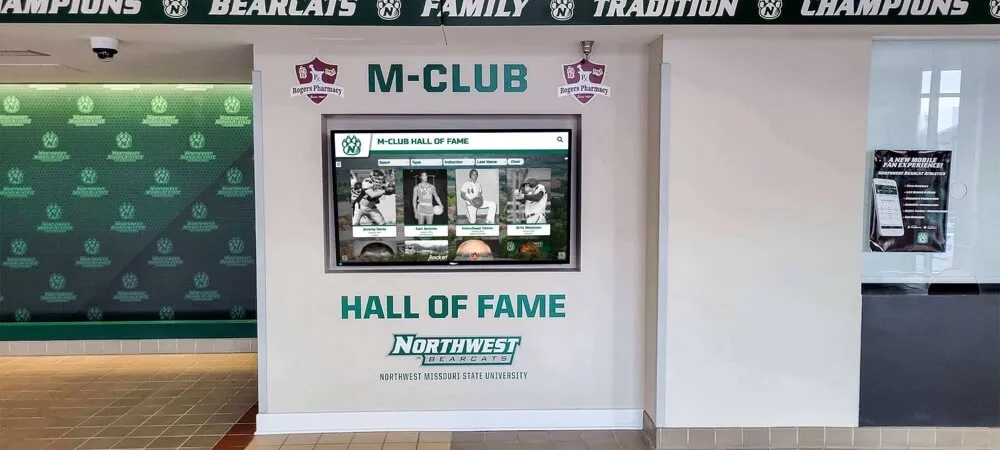
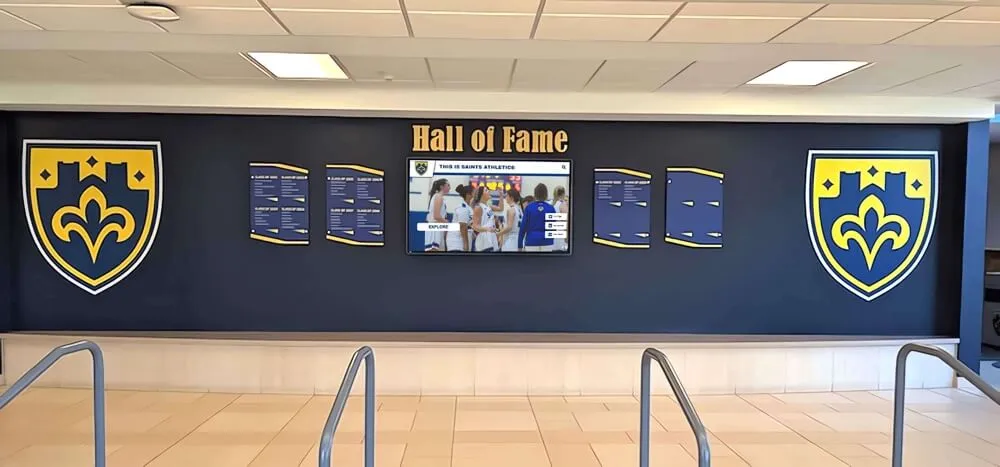
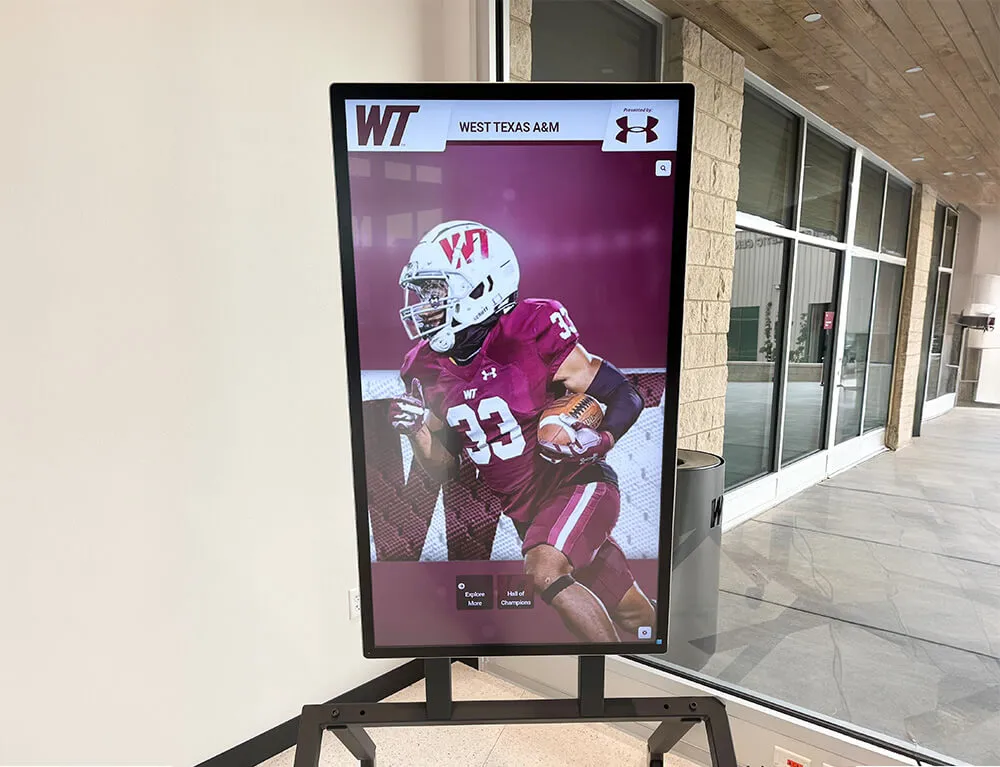
A comprehensive sports award display serves as both recognition and institutional record — visible proof that athletic achievement is valued by the school community
The Core Taxonomy of Sports Award Types
A well-organized sports recognition program draws from five distinct award categories. Each serves a different recognition purpose and targets a different contributor type. Mapping your program against this taxonomy reveals gaps and ensures that no significant contribution goes unrecognized.
| Award Category | Recognition Purpose | Typical Recipient Profile |
|---|---|---|
| Individual Performance | Statistical or on-field excellence | Top performers in measurable outputs |
| Team Achievement | Collective success milestones | Entire roster or specific team units |
| Character & Sportsmanship | Values-based conduct | Any athlete demonstrating program values |
| Academic-Athletic | Excellence across domains | Student-athletes maintaining academic standards |
| Milestone & Career | Cumulative program contributions | Multi-year participants, career record holders |
Most effective school programs include awards from at least four of these five categories. Programs relying exclusively on individual performance awards risk creating status hierarchies that fragment team chemistry and exclude athletes whose contributions — consistent effort, positive locker room presence, leadership under pressure — are harder to measure but essential to program health.
Individual Performance Awards
Individual performance awards are the most familiar types of sports awards in school athletics. They recognize measurable achievement in specific roles and are typically decided by coaching staff based on season statistics or game-level observation.
Most Valuable Player (MVP)
MVP is the most prestigious individual award in most programs. The criteria should reflect overall contribution to team success — not just statistical production — and should be defined in writing before the season begins. A well-constructed definition typically includes:
- Statistical performance relative to program standards
- Impact on team outcomes in crucial situations
- Leadership influence on teammate performance
- Consistency across the full season rather than peak moments alone
Offensive and Defensive Player of the Year
Splitting performance recognition between offensive and defensive contributions ensures that specialists at each end of the game receive appropriate acknowledgment. Defensive excellence — charges taken, assignment shutdowns, blocks, tackles — rarely surfaces in casual stat reviews, making a dedicated defensive award an important signal that defensive commitment matters.
Most Improved Player
Most improved awards require pre-season baseline documentation to be credible. Coaches who track entry-level skill assessments — sprint times, shooting percentages, technical execution scores — can award most improved on defensible grounds. Without baseline data, most improved selections feel arbitrary and can undermine athlete trust in the selection process.
Sport-Specific Performance Categories
Beyond universal individual awards, sport-specific categories allow programs to recognize contributions that generic awards miss. Wrestling programs might add a pins leader distinction. Swimming programs might recognize the athlete with the greatest drop in personal best times. Track programs might add a multi-event versatility recognition. These categories are best designed by coaching staff who understand which contributions go systematically unrecognized in their sport.
For an expanded list of options across sports, youth sports awards ideas covers more than 100 category options organized by sport and program type.
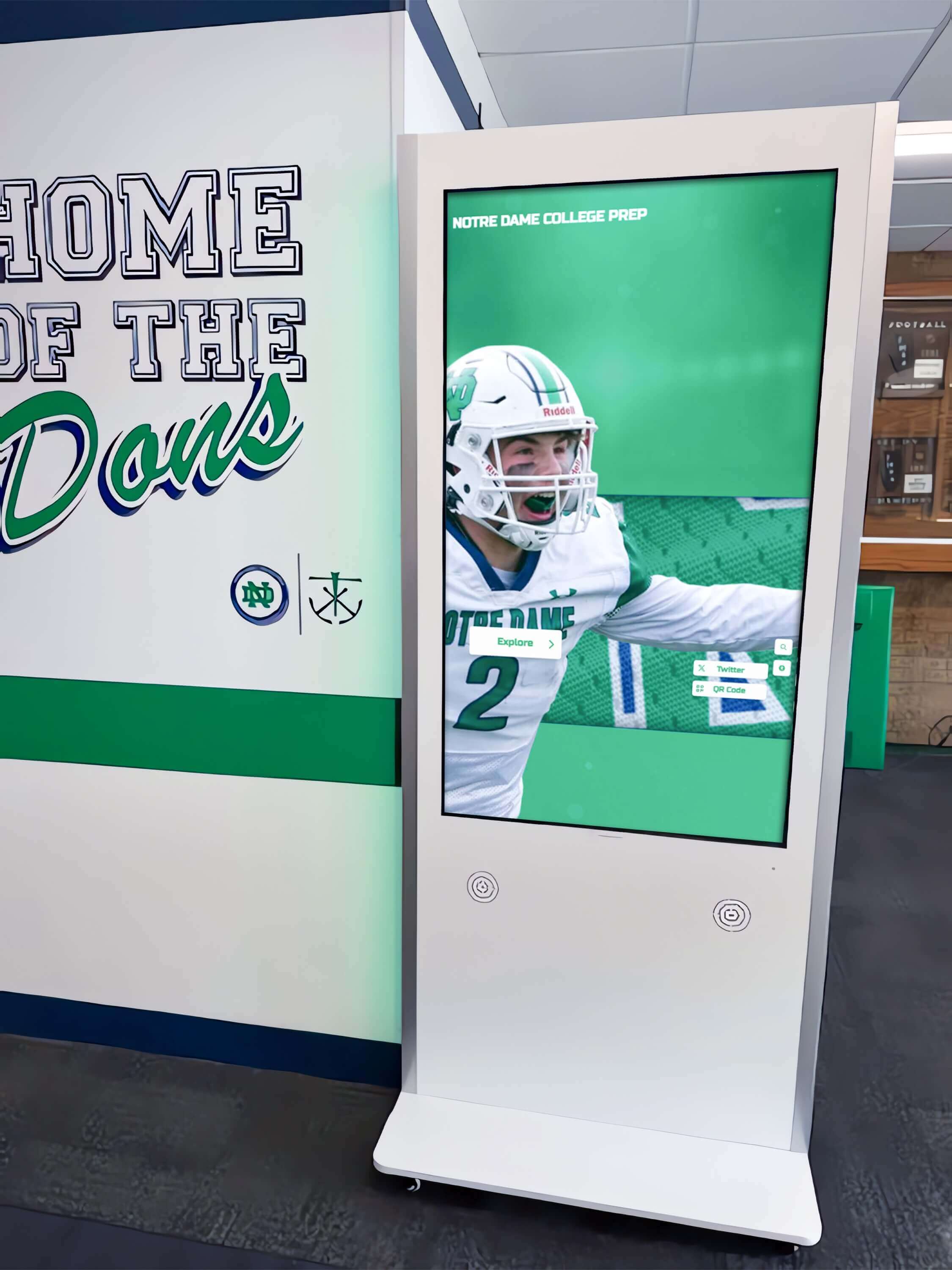
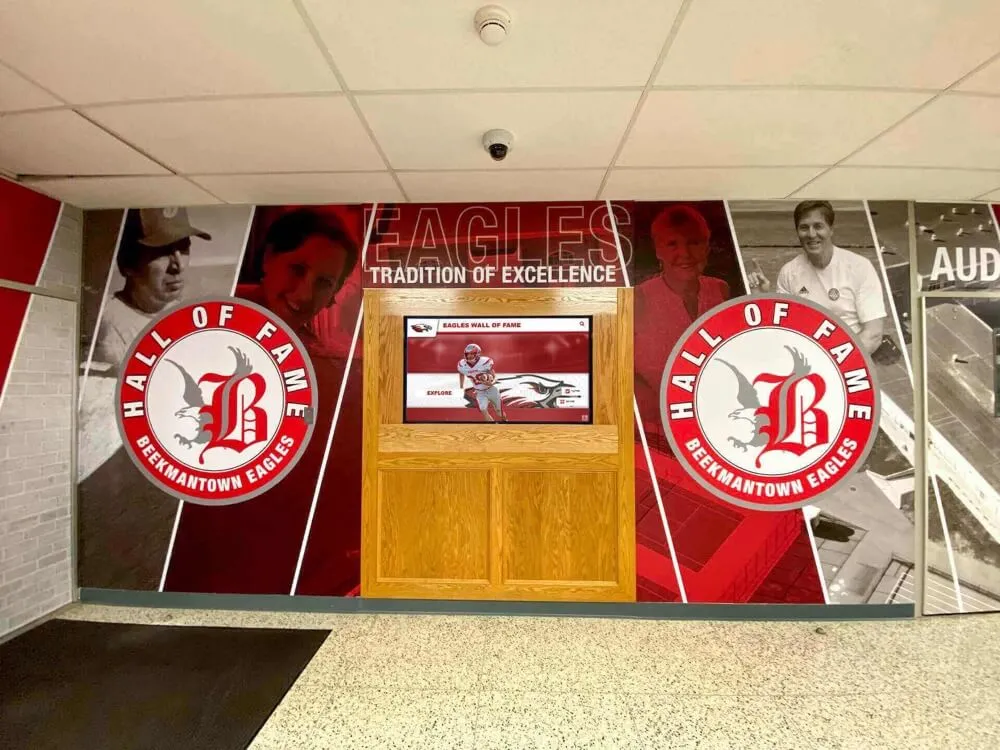
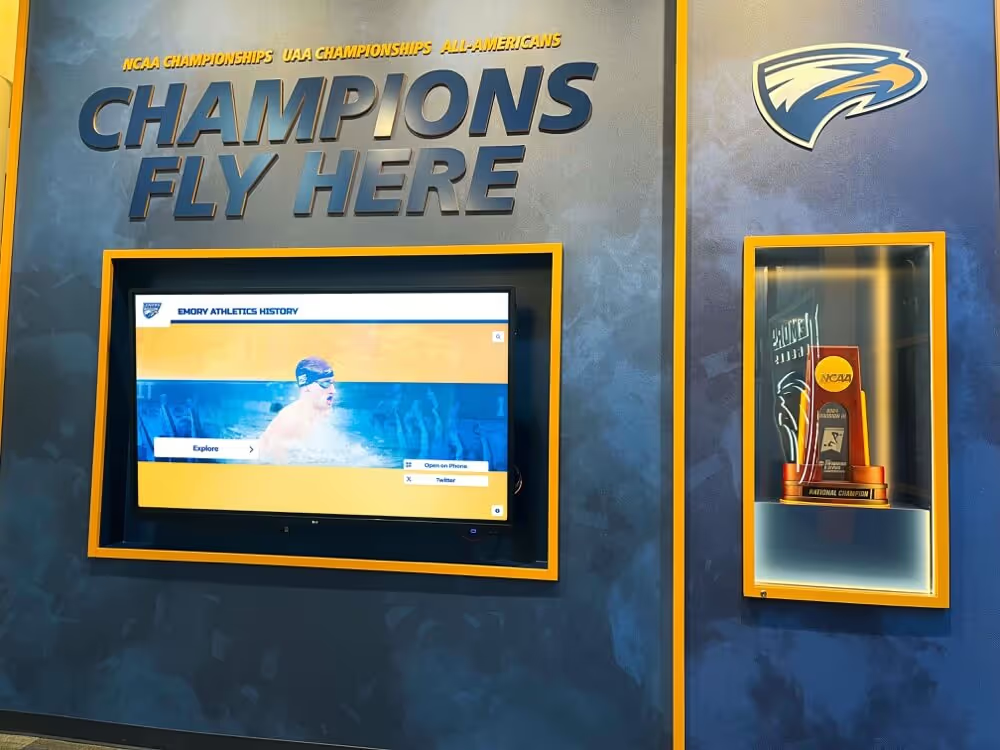
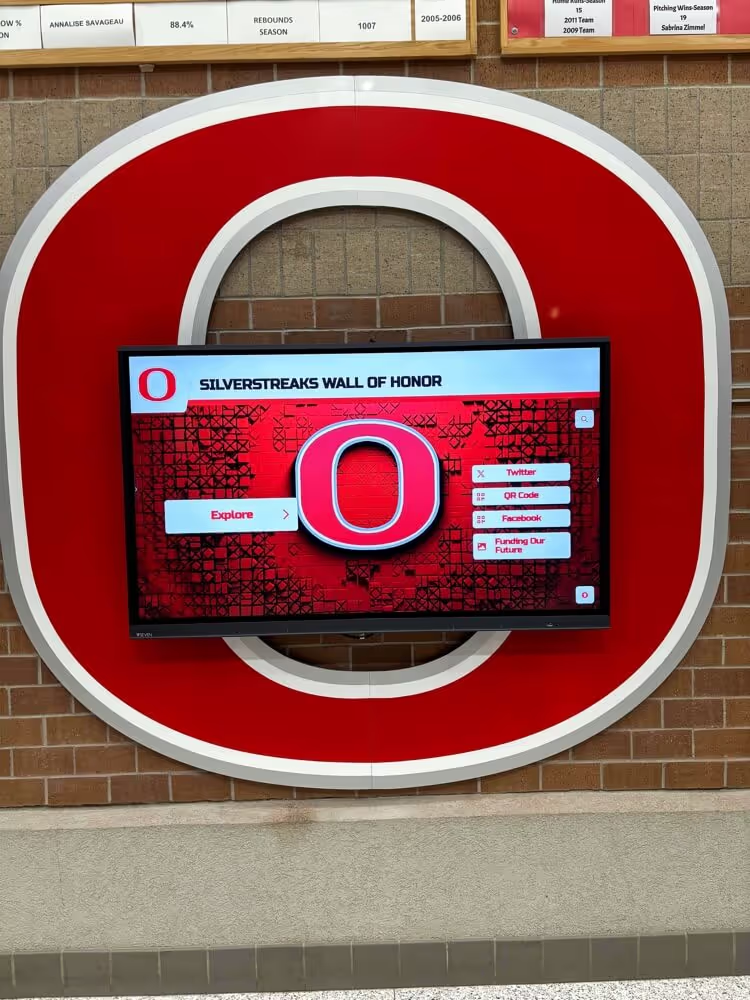
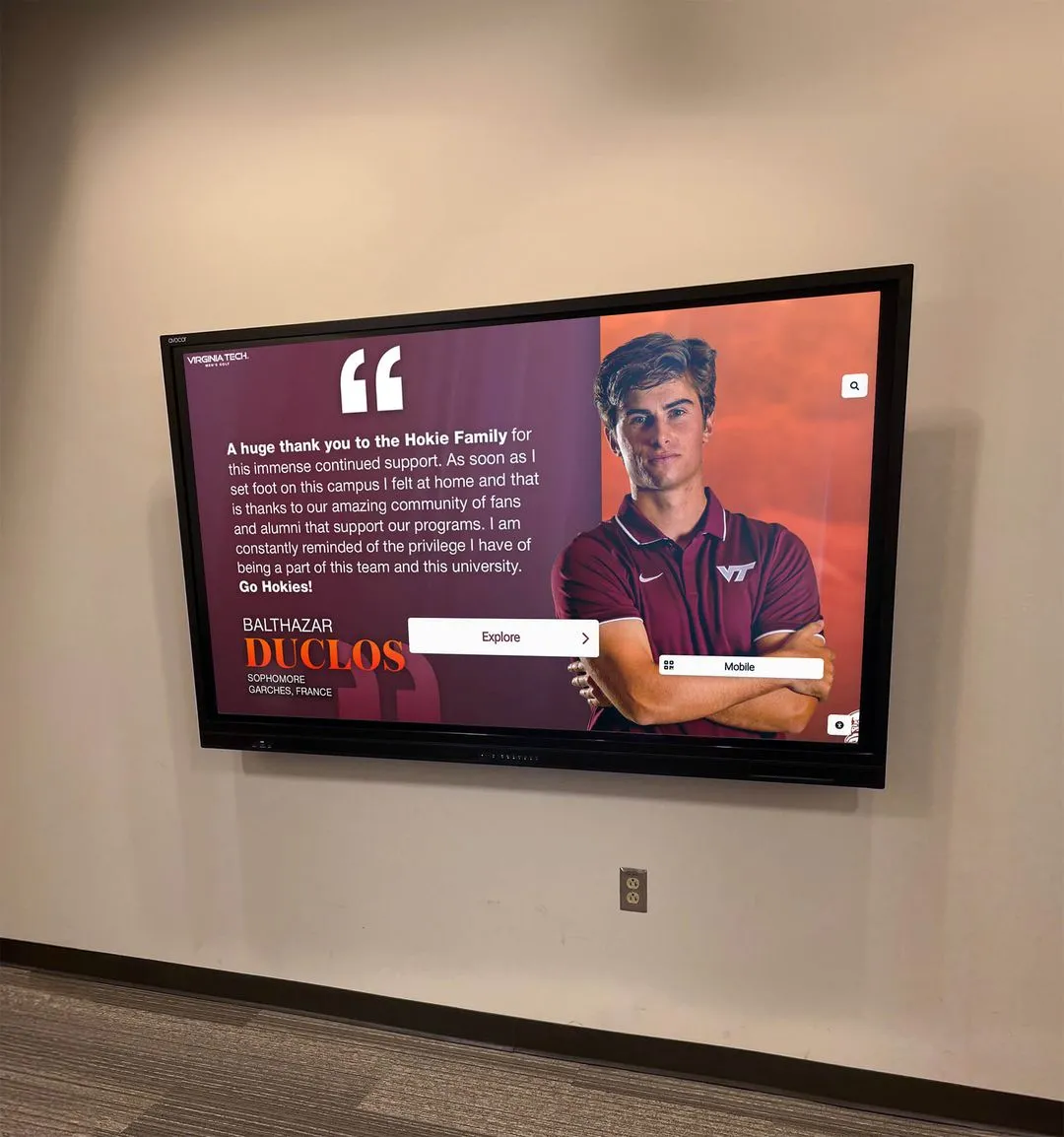
Sport-specific displays let schools recognize contributions that generic award categories miss — from defensive specialists to program record holders
Team Achievement Awards
Team achievement awards recognize collective success. They differ from individual awards because every member of the relevant group shares in the recognition, regardless of individual statistical output. These awards strengthen the cultural narrative that winning is a team outcome.
Championship and Playoff Recognition
Conference championships, regional titles, and playoff advancement milestones are the most visible team achievement awards. These honors should be documented with specificity — not just “conference champions” but the year, the record, the opponent in the decisive contest — so that the recognition serves as an accurate historical record, not just a moment of celebration.
Season Record Recognition
Teams that set new program records in wins, scoring, or other aggregate metrics deserve specific recognition distinct from championship acknowledgment. Record-setting seasons that don’t result in a championship are often underrecognized. An award naming the record, the previous benchmark, and the year creates institutional memory that motivates future teams to compete against program history.
Unit or Position Group Awards
In sports with distinct position groups — offensive and defensive lines in football, front court and back court in basketball — unit recognition acknowledges that team success emerges from coordinated excellence across the roster. These awards also provide additional recognition opportunities for athletes who contribute effectively within a role but don’t produce the individual statistics that trigger individual performance categories.
Character and Sportsmanship Awards
Character awards are among the most important types of sports awards a school can offer, and among the most likely to be undervalued or poorly defined. These honors communicate what the program believes athletics should develop — not just skill and competitive output, but the disposition to compete with integrity and contribute to team culture.
Sportsmanship Award
The sportsmanship award carries more weight when defined by observable behaviors rather than general impressions. Programs that define sportsmanship criteria explicitly — respect for officials, composure after negative calls, conduct toward opponents, sideline behavior during adversity — select recipients on defensible grounds that athletes and families can understand and trust.
Team Captain and Leadership Award
Leadership awards function best when they recognize demonstrated behaviors, not just formal titles. An athlete who earns the team captain designation may not be the athlete who most consistently demonstrated leadership behaviors throughout the season. Programs with a leadership award distinct from the formal captain designation can recognize the full range of leadership actually on display.
Hustle and Effort Recognition
Hustle awards recognize maximum competitive effort — the athlete who takes charges, sprints back on defense, dives for loose balls, and brings maximum intensity to practice regardless of playing time or audience. These awards are particularly meaningful to athletes in supporting roles and communicate clearly that effort itself is valued, not just effort that produces statistics.
Community Service and Character Awards
Some programs recognize athletes whose contributions extend beyond the field through community service, mentorship of younger athletes, or exemplary conduct representing the school in all contexts. These awards expand the definition of program contribution and reinforce that student-athletes are school representatives at all times.
For a broader view of recognition approaches that span athletic, character, and community contributions, creative sports award categories for youth offers additional frameworks schools can adapt to their program values.
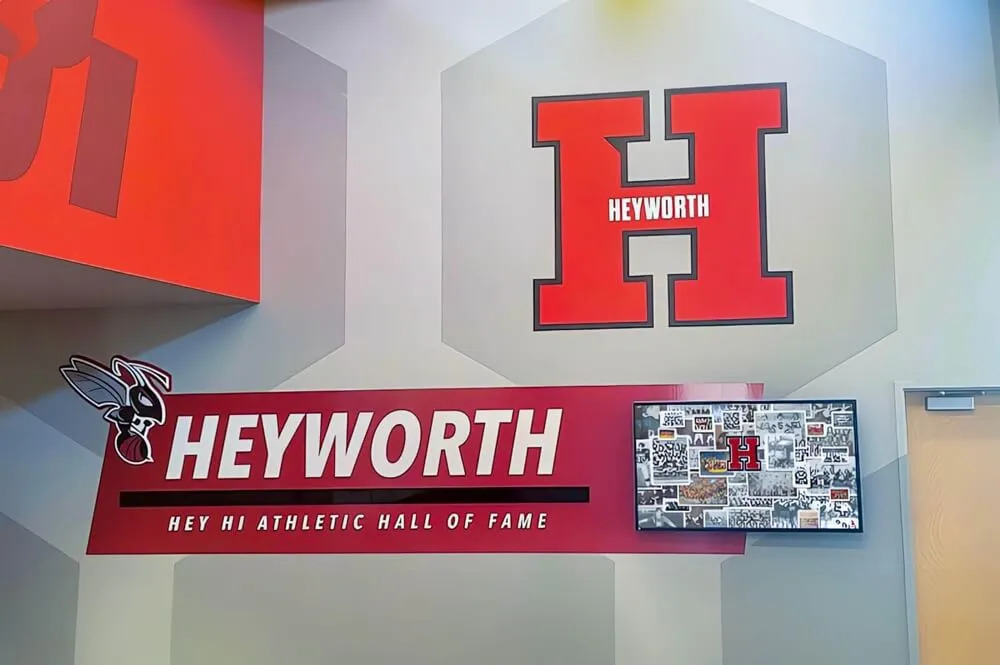
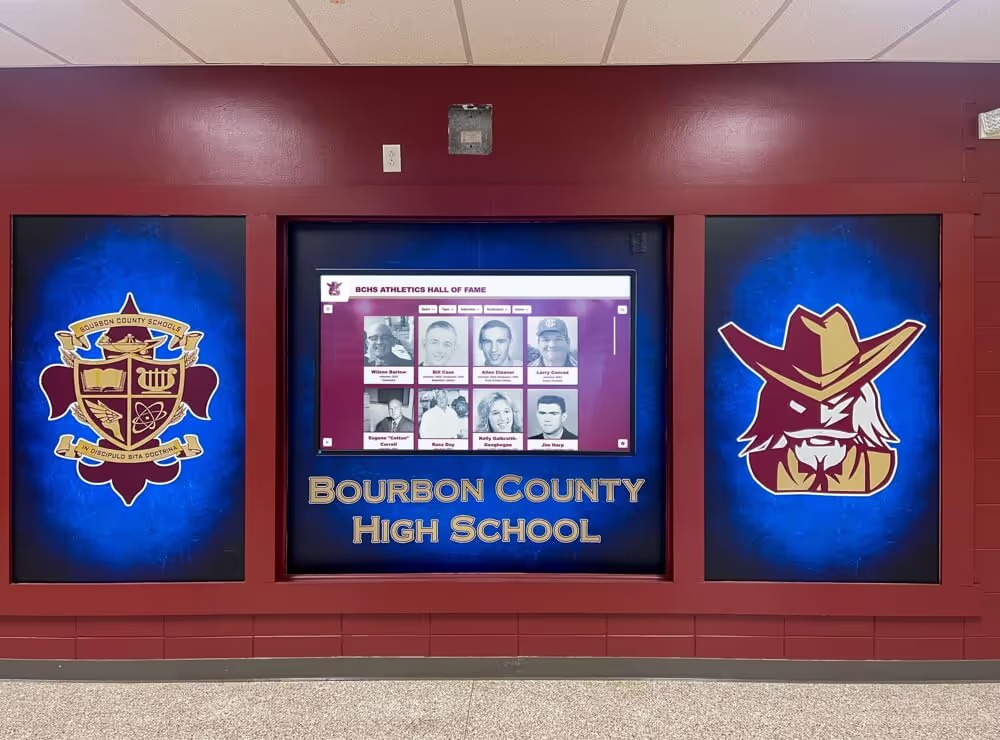
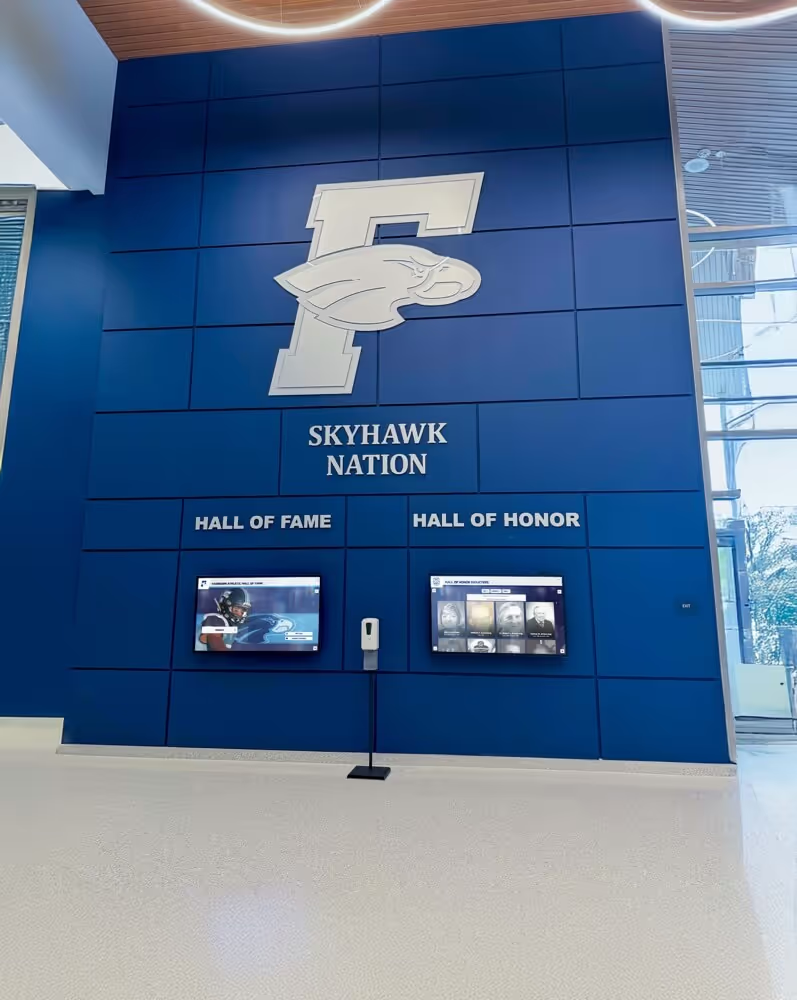
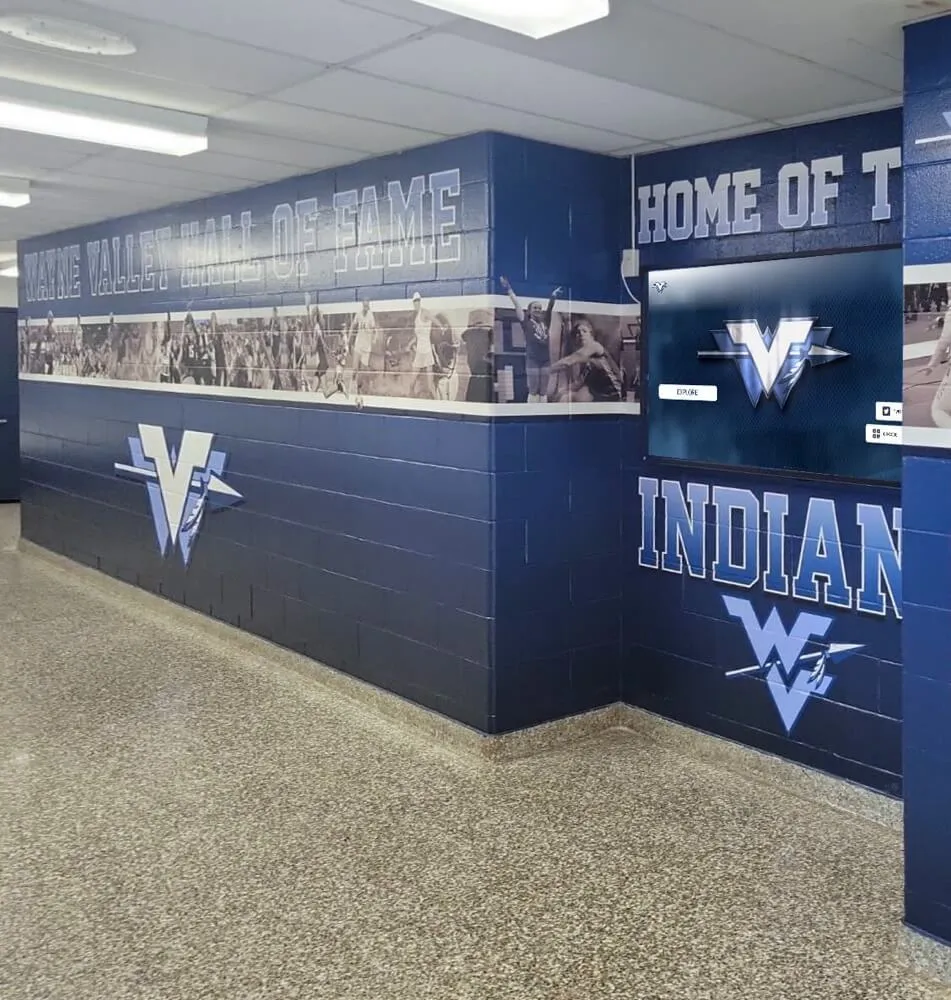
Permanent hall of fame installations give character and sportsmanship awards the same institutional weight as performance honors
Academic-Athletic Awards
Academic-athletic awards recognize the student-athlete’s dual role and signal that schools value both dimensions of the designation equally. According to the National Federation of State High School Associations (NFHS) 2022-23 Participation Survey, approximately 7.8 million students participated in high school sports — a population whose academic achievement deserves structured recognition alongside athletic accomplishment.
Scholar-Athlete Awards
Scholar-athlete recognition typically requires a minimum GPA threshold maintained across a full athletic season. Programs should define whether the GPA requirement applies to the semester concurrent with the sport season or to cumulative standing, and whether weighted or unweighted GPAs apply. Published criteria prevent eligibility disputes and demonstrate that the award reflects genuine academic commitment.
Academic All-Conference or All-League Designations
Many athletic conferences and leagues offer academic recognition tracks that parallel competitive performance honors. These external designations — awarded by the conference rather than the individual school — carry additional credibility because they represent a consistent standard applied across multiple programs. Athletic directors should actively nominate qualifying athletes rather than assuming conference offices will identify them independently.
Student-Athlete of the Year
A comprehensive student-athlete of the year designation integrates academic standing, athletic performance, character conduct, and community contribution into a single recognition. Because selection criteria span multiple domains, transparent rubrics — defining the weight assigned to each component — are essential for maintaining award credibility across selection cycles and leadership transitions.
Milestone and Career Recognition Awards
Milestone and career awards recognize cumulative contributions over time. These types of sports awards serve functions that single-season categories cannot: they document long-term commitment, record-setting achievement, and the multi-year contributors who define program identity across graduating classes.
Varsity Letter Awards
Varsity letters remain one of the most institutionally significant recognitions in school athletics. Criteria for letter earning — participation thresholds, performance requirements, coach discretion guidelines — should be defined in writing and applied consistently. Schools that publish letter criteria in their athletic handbooks prevent disputes and ensure the award’s meaning is understood before athletes pursue the designation.
Career Record Recognition
Athletes who set program records in career statistics — scoring, wins, assists, shutouts — deserve specific, documented recognition. Career record boards, whether physical or digital, create visible institutional memory that motivates current athletes to compete against program history and honors predecessors whose achievements helped define the program’s competitive identity.
Hall of Fame and Hall of Honor Induction
Athletic halls of fame represent the most prestigious long-term recognition most school programs offer. Effective hall of fame programs require documented induction criteria (career achievement thresholds, years since graduation, character standards), a nomination and selection process administered by a defined committee, and a display plan that makes inductee recognition visible and accessible year-round.
For guidance on building effective hall of fame programs, hall of fame display platforms and hall of fame tools for athletic programs cover platforms and approaches schools currently use.
Senior Recognition
Senior recognition honors athletes completing their final season of eligibility. Schools that create documented senior honors — noting four-year participation, contributions across multiple seasons, specific career achievements — preserve senior athlete recognition in permanent records rather than leaving it to ceremony-night memory that fades within a season.
Setting Award Criteria: A Framework for Athletic Directors
Award categories without documented criteria are difficult to award fairly and even harder to defend when recipients are questioned. A consistent criteria framework across all types of sports awards ensures that recognition decisions are defensible, transferable across coaching changes, and trusted by athletes and families.
The Four-Part Criteria Definition
For each award, define four elements in writing before the season begins:
1. Eligibility Requirements Who can receive this award? Full-season participant? Starter only? Any roster member regardless of playing time? Defining eligibility explicitly prevents disputes when a compelling candidate falls outside an assumed but unstated boundary.
2. Selection Method How is the recipient identified? Coach selection? Peer vote? Statistical threshold? Weighted combination? The method should match the award type — statistical awards earn credibility from objective data; character awards benefit from peer input alongside coach observation.
3. Documentation Standard What specific evidence supports the selection? Documenting the justification — the statistical output, the specific behaviors observed, the peer vote results — protects the decision from revision and creates a record future coaches can reference when establishing the award’s tradition and precedent.
4. Display and Archiving Commitment Where and how will the recipient’s recognition be preserved? A banquet certificate that goes home in a folder creates different institutional memory than a name on a permanent display in the athletic hallway. Defining the display plan as part of the criteria framework communicates to athletes that the recognition is permanent, not temporary.
Explore how schools structure comprehensive award programs in interactive hall of fame display solutions for athletic recognition programs of all sizes.
Display Planning: From Ceremony to Permanent Record
The gap between handing out an award at a banquet and creating lasting, visible recognition is where most school programs lose momentum. Display planning should be treated as a required element of award program design, not an afterthought.
The Five-Stage Display Workflow
A practical display workflow for school sports awards programs includes five sequential steps:
Stage 1 — Season Documentation Track award-relevant data throughout the season: statistics, attendance, conduct observations, coach notes. This documentation feeds both the selection process and the content that will accompany the recognition on permanent displays.
Stage 2 — Selection and Announcement Award recipients are identified, decisions are documented, and recognition is announced at the ceremony. Photography at the ceremony creates the visual asset that permanent displays require.
Stage 3 — Physical Display Update Award plaques, banners, record boards, or trophy cases are updated within a defined timeframe after the season. Schools that allow this step to drift across months or seasons create visible gaps in their institutional record.
Stage 4 — Digital Archive Update Award recipients are entered into the school’s digital recognition system — whether a website, touchscreen display, or content management platform — with photo, award category, year, and relevant achievement context.
Stage 5 — Accessibility Check Verify that recognition is findable and viewable by athletes, families, alumni, and visitors through multiple channels: physical display, school website, and dedicated recognition platform.
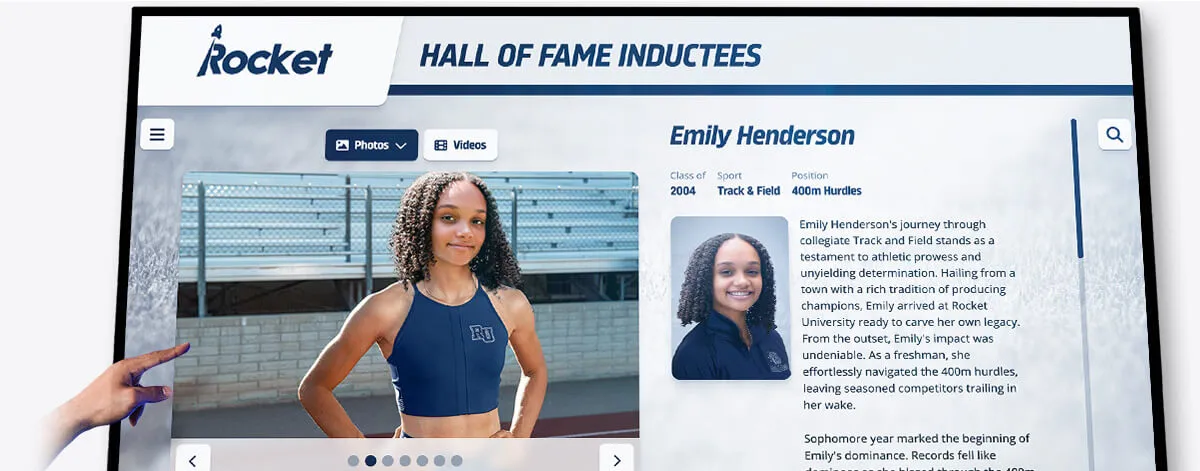
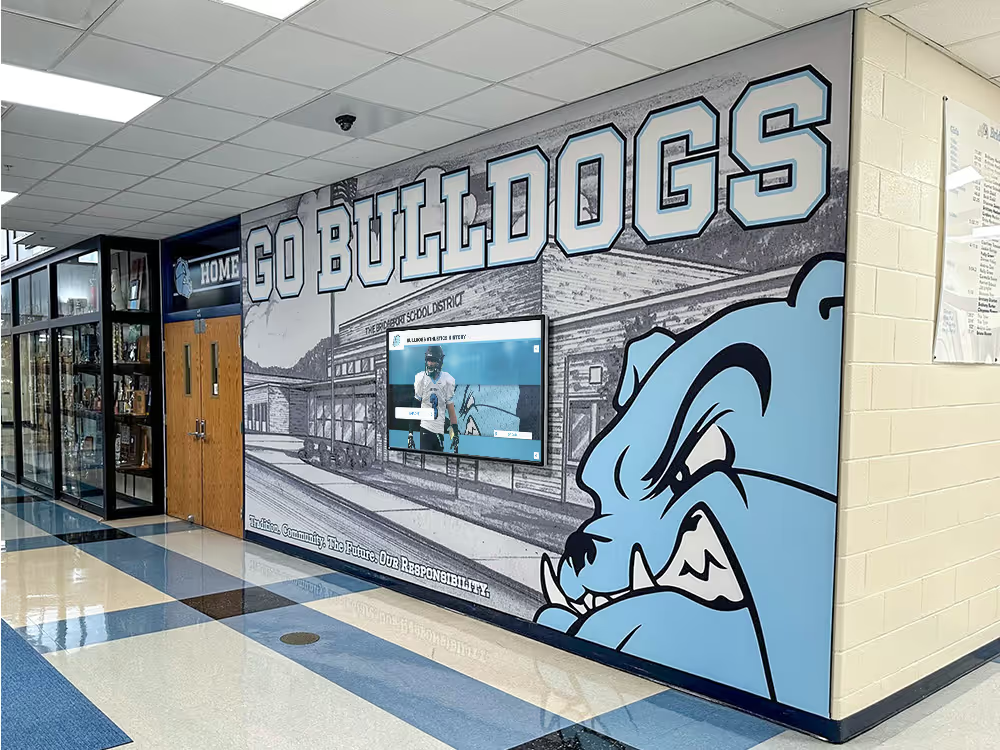
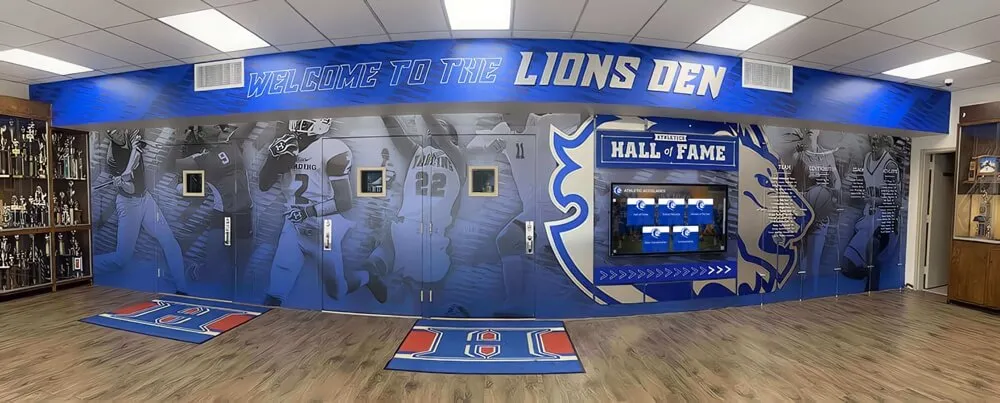
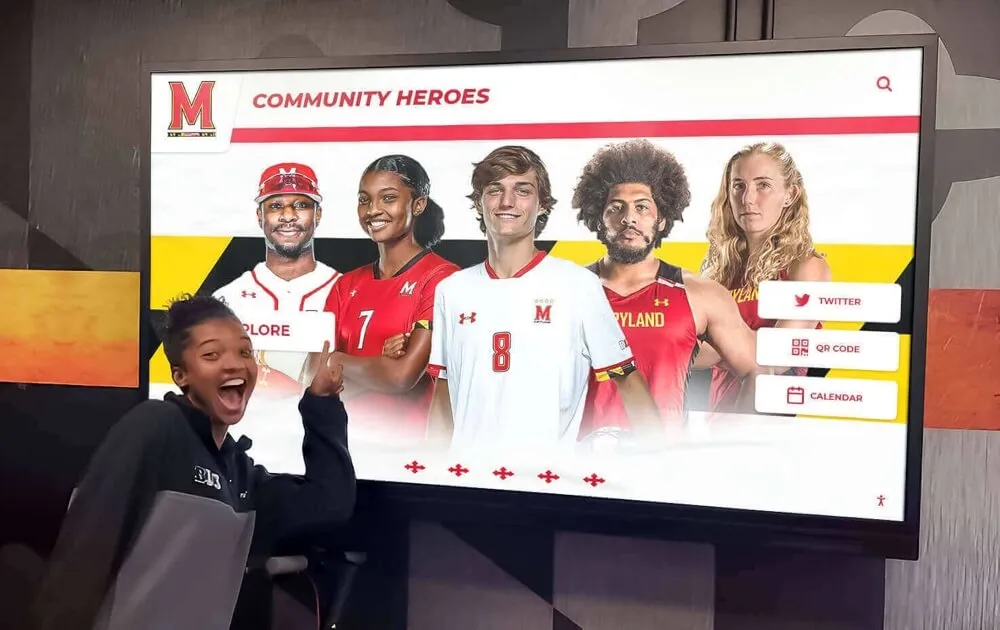
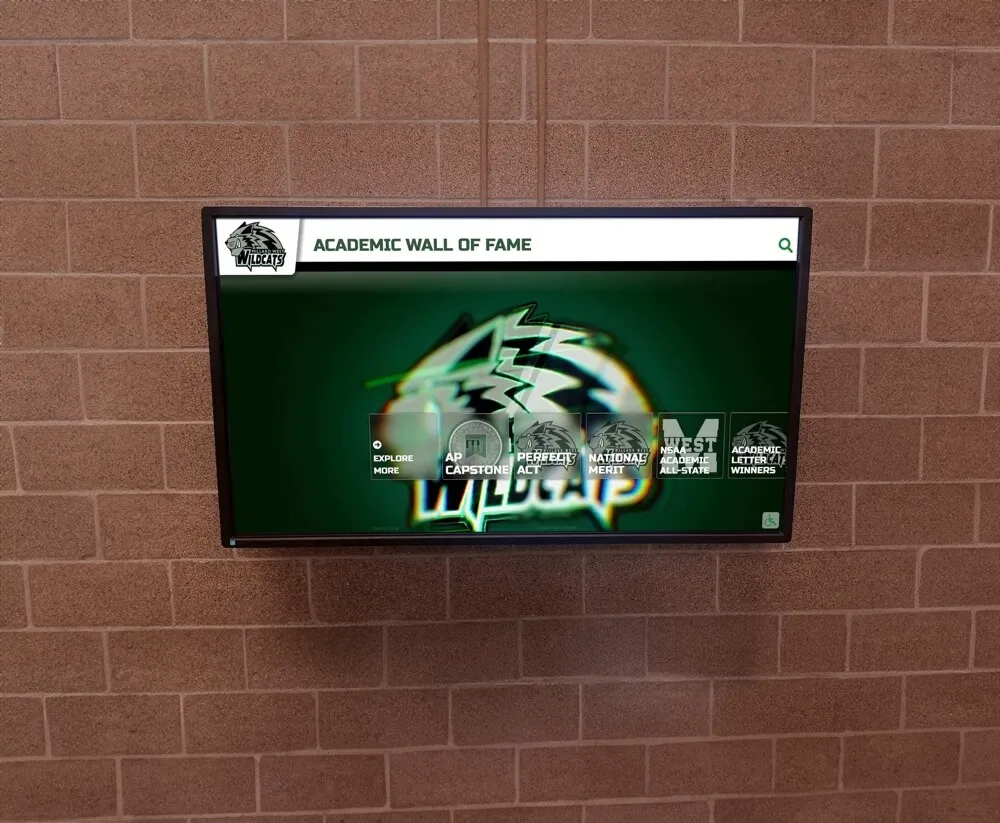
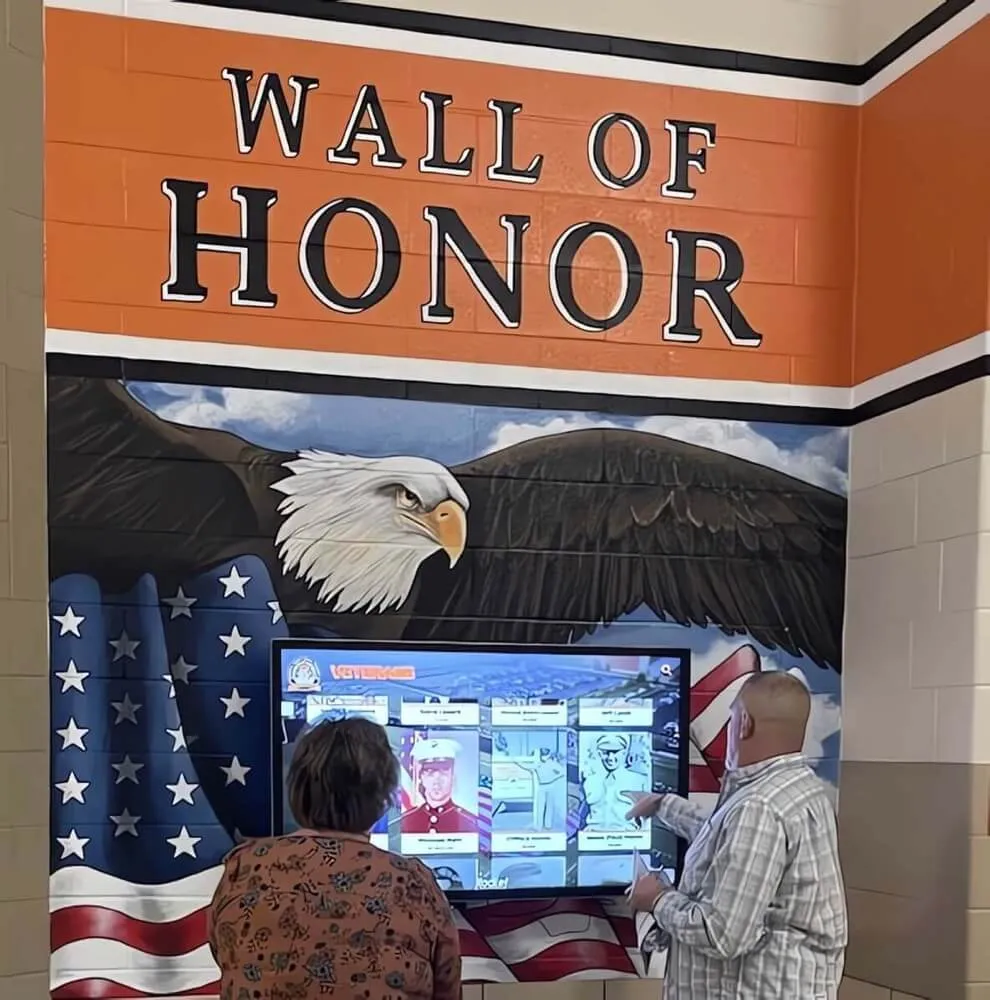
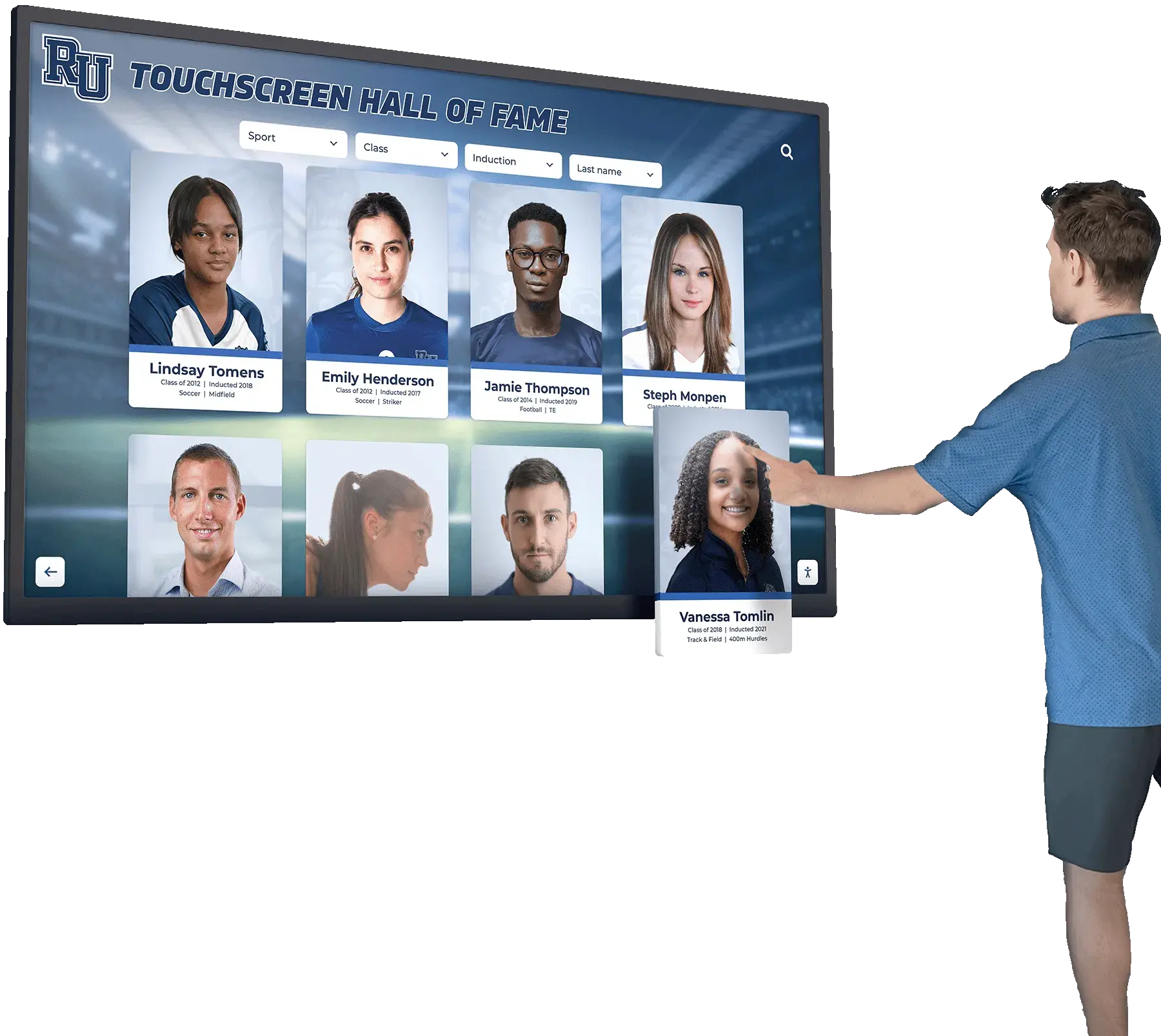
Digital touchscreen displays make individual award histories searchable and accessible to athletes, families, and alumni — extending recognition well beyond a single ceremony night
Physical Display Options
Physical recognition displays serve athletes, visitors, and current students who pass them daily. Effective options include:
Trophy Cases and Showcase Displays Traditional trophy cases remain a staple of athletic facility recognition. Their limitation is fixed capacity — as programs accumulate seasons of achievement, physical cases fill without a corresponding plan for what gets preserved versus archived.
Wall Plaques and Award Boards Individual award plaques, team championship banners, and record boards organized by sport and year create navigable athletic history displays. These work well in high-traffic hallways in athletic facilities, where daily visibility reinforces program identity.
Hall of Fame Murals and Installations Schools investing in purpose-built hall of fame installations create signature recognition spaces that anchor athletic facility identity. These typically combine physical framing, photography, and text with optional digital integration for searchable content.
Digital Display Options
Digital recognition platforms address the primary limitation of physical displays: fixed capacity. A single touchscreen display can house the complete award history of every sport across every graduating class, searchable by athlete name, sport, year, or award category.
Rocket Alumni Solutions’ platform, used by more than 600 institutions, delivers cloud-managed recognition content through touchscreen kiosks, digital signage, and web interfaces. Athletic directors update award records remotely without requiring IT support or physical hardware access. The platform supports unlimited inductees, photos, and video — eliminating the capacity constraints that cause physical displays to become selectively incomplete over time.
For schools evaluating recognition technology options, digital record board and hall of fame tools and donor and athletic hall of fame tools offer comparative overviews of current platform options.
See How Digital Recognition Works in Practice
Rocket Alumni Solutions helps schools transform sports award lists into permanent, searchable recognition systems — displayed on touchscreens, updated remotely, and accessible year-round to athletes, families, and alumni.
Explore Recognition Solutions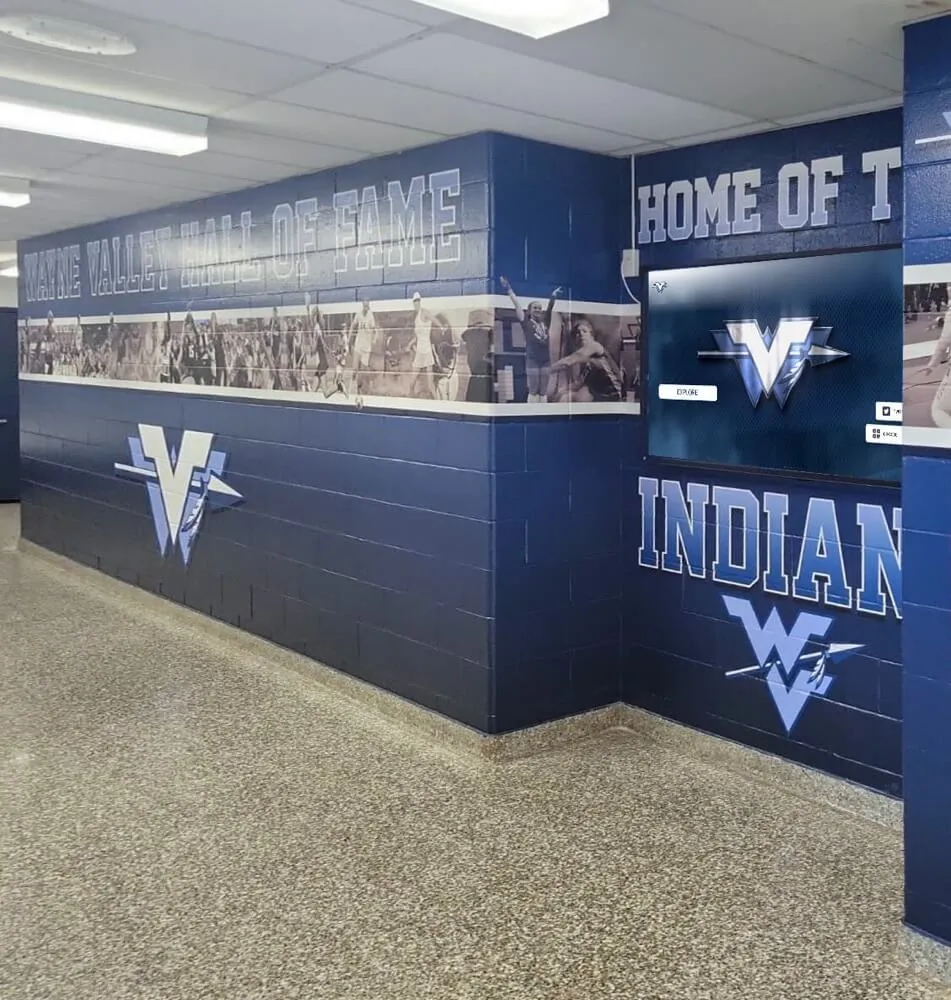
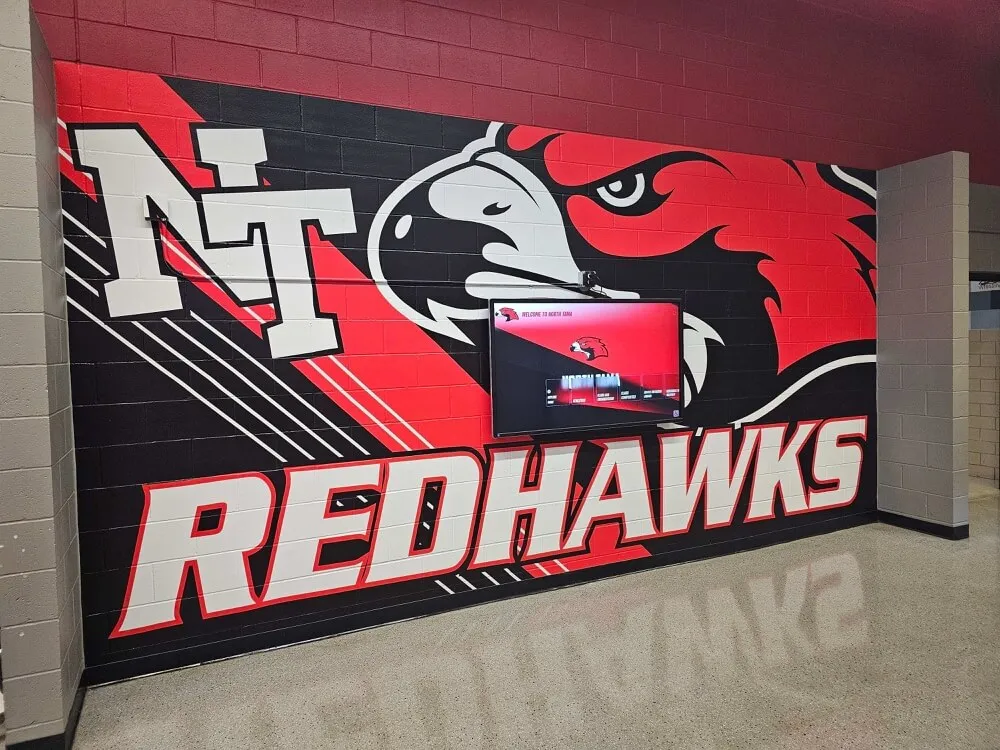
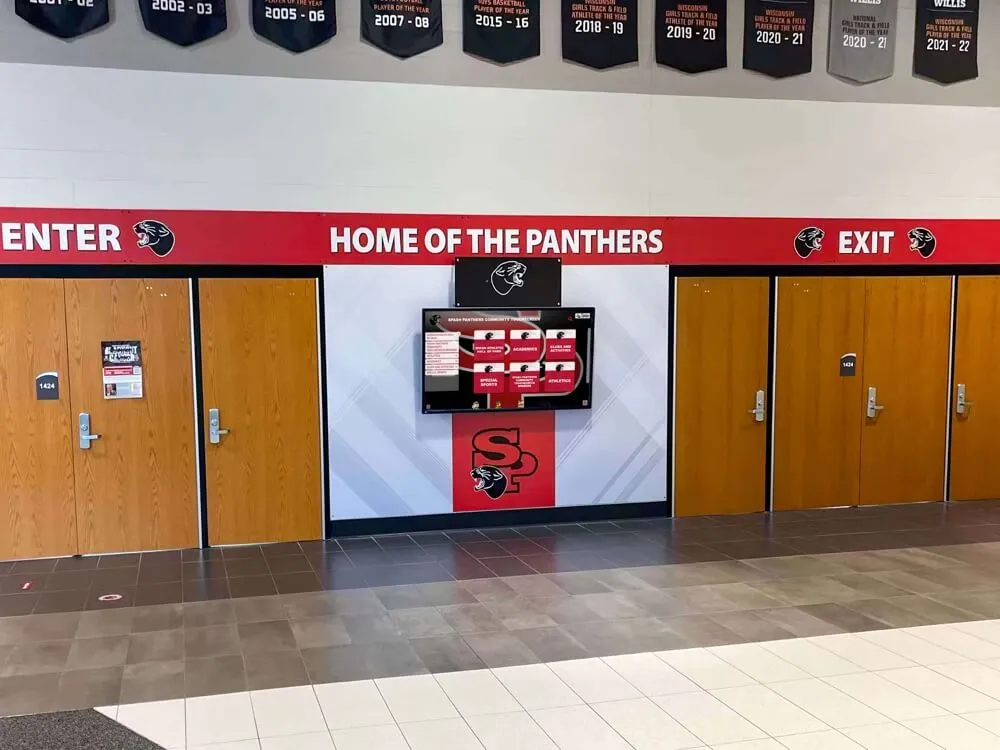
Hallway recognition displays give award recipients daily visibility — reinforcing achievement culture for current athletes who walk past them every day
Award Types by Program Scale
The number and variety of award categories a program should offer depends on program scale, coaching staff capacity to evaluate candidates, and the recognition budget available.
Small Programs (Under 25 Athletes per Team)
- 3–5 individual performance awards
- 1–2 character and sportsmanship awards
- Varsity letter recognition
- Senior recognition
Medium Programs (25–60 Athletes per Team)
- 5–8 individual performance awards including sport-specific categories
- 2–3 character and sportsmanship awards
- 1–2 academic-athletic awards
- Varsity letter and career milestone recognition
Large Programs (60+ Athletes or Multi-Team Sports)
- Full taxonomy across all five award categories
- Sport-specific and position-specific categories
- Separate JV and varsity recognition tracks
- Hall of fame eligibility framework
- Digital display platform for archive management
For extensive reference lists across program sizes, sports awards ideas for student athletes and youth sports award ideas and categories provide organized lists schools can draw from directly.
Making Recognition Visible Beyond the Banquet
A core problem in most school sports award programs is that recognition peaks at the banquet and then disappears. The trophy goes home. The certificate gets filed. The slide show closes. What remains visible in the athletic facility is whatever was already there before the season — often an incomplete, years-behind physical display that doesn’t reflect recent achievement.
Closing the gap between banquet recognition and year-round visibility requires a standing commitment to three things:
Regular Display Updates Assign a specific person — the athletic director, an administrative assistant, or a designated coach — responsibility for updating physical and digital recognition displays within a defined window after each season. Schools that treat display updates as optional tasks see them deprioritized when competing obligations arise.
Alumni Connection Planning Award recipients become alumni. Schools that build recognition archives with permanent digital profiles — rather than just one-night ceremony acknowledgment — create resources alumni search years later when reconnecting with program history. This serves reunion planning, alumni engagement events, and advancement programs that benefit from visible institutional memory.
For context on how recognition connects to long-term alumni engagement, high school reunion display planning provides relevant frameworks schools and alumni relations teams use.
Consistent Naming and Documentation Standards Award names, criteria, and recipient documentation should follow consistent naming conventions across seasons so archives are searchable and comparable over time. Schools that rename awards, change criteria without documentation, or store records in individual coach files create archives that become unnavigable within a few leadership transitions.
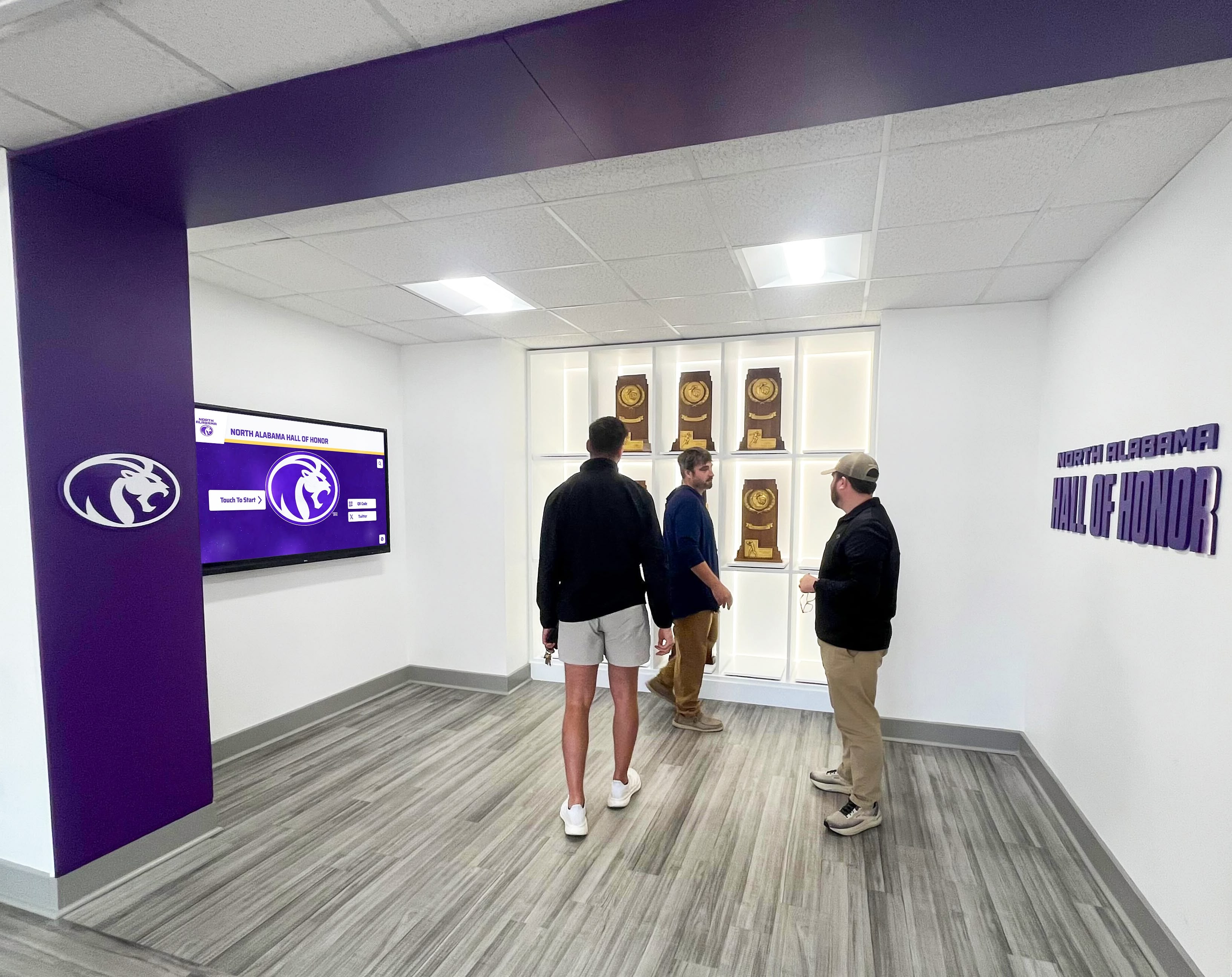
Accessible, navigable recognition displays invite athletes, families, and alumni to engage with program history — turning archives into active community assets
Frequently Asked Questions
What are the main types of sports awards for high school programs?
The five main types of sports awards are individual performance awards (MVP, offensive and defensive player of the year, most improved), team achievement awards (championships, season records, unit recognition), character and sportsmanship awards (sportsmanship, leadership, hustle), academic-athletic awards (scholar-athlete, academic all-conference), and milestone and career awards (varsity letters, career records, hall of fame induction). Most effective programs draw from at least four of these five categories to ensure diverse contributions receive recognition.
How do you set fair criteria for sports award selection?
Fair criteria define four elements explicitly for each award: eligibility requirements (who qualifies), selection method (coach decision, peer vote, statistical threshold, or weighted combination), documentation standard (what evidence supports the choice), and display commitment (how and where the recipient’s recognition will be preserved). All four elements should be written before the season begins and shared with athletes and families.
How many types of sports awards should a school give per season?
The appropriate number depends on program size and staff capacity to evaluate candidates fairly. Small programs with under 25 athletes typically offer 5–8 total award categories. Medium programs with 25–60 athletes benefit from 8–12 categories including sport-specific honors. Large programs or those with multiple teams can sustain 12 or more categories by distributing evaluation across coaching staff rather than concentrating selection in a single person.
How do schools preserve sports awards beyond the banquet night?
Effective preservation requires a five-stage display workflow: season-long documentation, ceremony photography, physical display updates within a defined post-season window, digital archive entry with photo and achievement context, and an accessibility check confirming that recognition is viewable through physical, web, and touchscreen channels. Digital platforms allow schools to maintain searchable archives of every award recipient across every season without the capacity limits of physical trophy cases.
What is the difference between a hall of fame and a hall of honor?
Hall of fame programs typically recognize individuals for sustained career achievement, usually with a waiting period after graduation and selection criteria focused on varsity-level competitive performance. Hall of honor programs often use broader criteria that include character, service, and contributions beyond competitive performance, and may induct coaches, administrators, or significant supporters alongside athletes. The key distinction is scope — halls of fame focus on elite athletic achievement, while halls of honor recognize a wider range of program contributions.
Conclusion: Build the Full Taxonomy, Then Plan the Display
The types of sports awards a school establishes communicate institutional priorities as clearly as any mission statement. Programs limited to MVP and most improved tell athletes that only the most visible performance markers matter. Programs with layered recognition across performance, character, academic achievement, and career milestones demonstrate that athletic excellence is multidimensional — and that the school pays attention to all of it.
Start with the taxonomy: identify which award categories your program currently offers and which gaps represent contributions going unrecognized. Define criteria explicitly, assign selection responsibility, and build the display workflow that ensures recognition outlasts the ceremony. Whether your display solution is a trophy case, a wall of plaques, or a cloud-managed touchscreen platform, the commitment is the same — make recognition permanent, visible, and accessible to the athletes, families, and alumni who earned it.
Turn Your Award List into a Permanent Recognition System
Rocket Alumni Solutions helps school athletic programs build searchable, year-round recognition systems — from touchscreen hall of fame displays to digital award archives that serve athletes, families, and alumni long after graduation.
Learn About Digital Recognition Solutions