



The braided ropes draped around graduates’ necks at every high school and college commencement ceremony tell a story—one woven from years of academic effort, service hours, and organizational membership. If you’ve ever watched a procession of gowned students and wondered what are honors cords and what each color signals, you’re not alone. Parents, incoming students, and even educators regularly ask this question as they prepare for graduation season.
Honors cords are decorative braided cords worn around the neck over a graduation gown to publicly mark specific achievements. Each cord represents something earned—a GPA threshold crossed, a national honor society joined, a specialized program completed, or a record of service accumulated. Unlike a diploma sealed in an envelope, honors cords are visible to the entire ceremony audience in the moment it matters most, making them one of the most direct forms of public academic recognition a school can offer.
This guide answers every common question about honors cords: where they came from, how they differ at the high school versus college level, what the colors mean, how students earn them, and how forward-thinking schools are extending that moment of recognition into something permanent.
Graduation ceremonies pack years of student achievement into a few hours. Honors cords do the heavy lifting of communicating those achievements visually—without a single word, the regalia around a graduate’s neck tells the audience who excelled academically, who served their community, who joined elite honor societies, and who completed specialized programs. Understanding the system behind those cords helps schools award them fairly, helps students pursue them intentionally, and helps families appreciate the full weight of what their graduate accomplished.

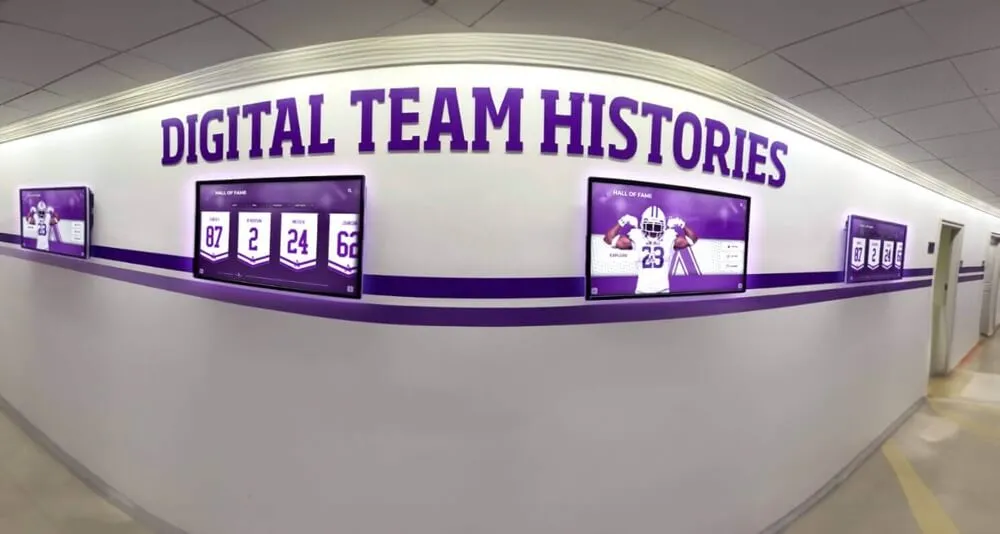
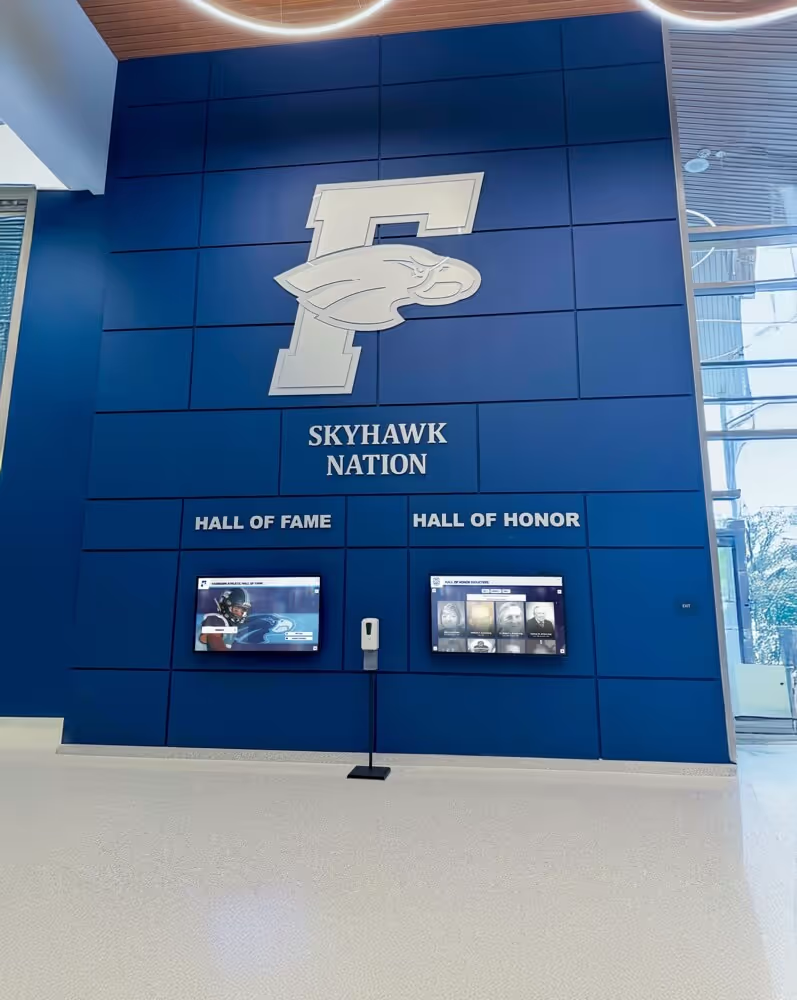
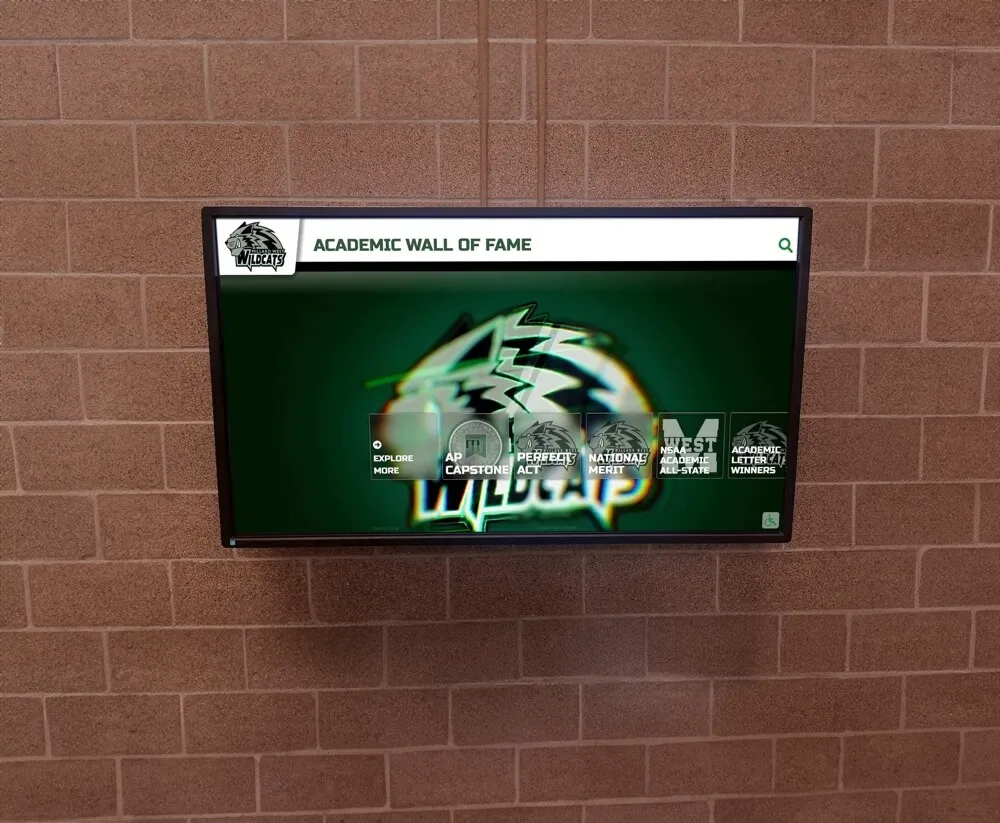
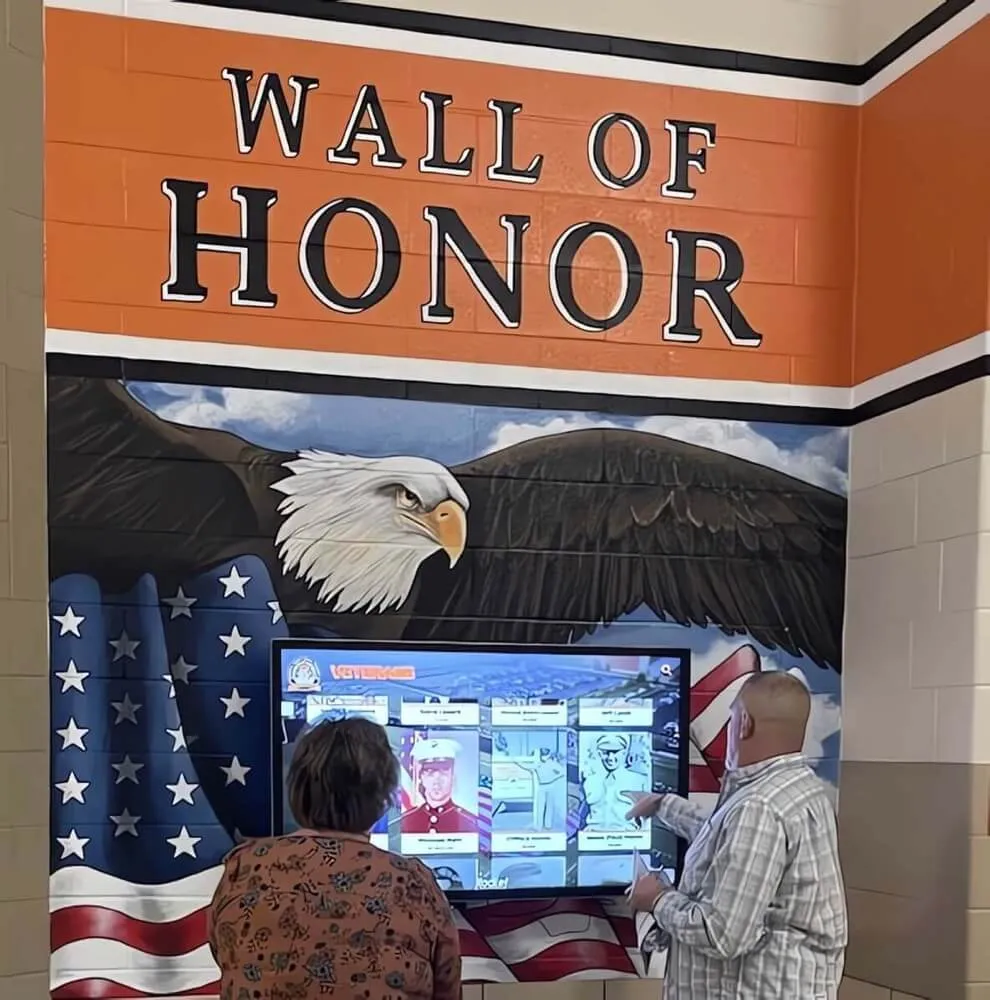
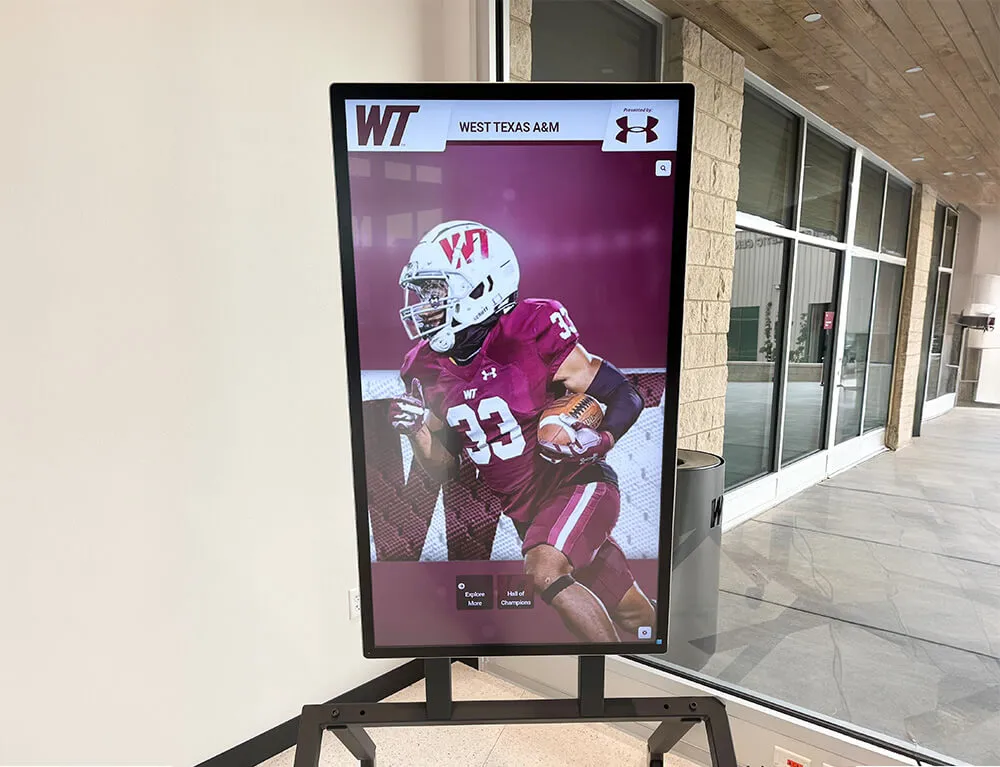
Recognition systems at every level—from graduation cords to permanent honor walls—share the same purpose: making achievement visible to the community
What Are Honors Cords? The Core Definition
An honors cord is a braided or twisted rope, typically 60 inches long, worn draped symmetrically over the shoulders so both ends hang at roughly the same length over the front of the graduation gown. Most cords terminate in tassel-style ends, and they come in single colors, two-tone twists, or triple-strand combinations depending on the awarding organization.
The word “honors” is used broadly. Some cords specifically recognize academic honors (high GPAs or Latin honors distinctions), while others recognize membership in honor societies, completion of specific programs, service achievements, or leadership roles. Not every cord worn at a graduation ceremony means the student graduated with honors in the traditional GPA sense—context and institutional policy determine what each cord represents.
Honors Cords vs. Other Graduation Regalia
Honors cords are frequently confused with other graduation accessories:
Stoles and sashes — Wider fabric panels worn over the shoulders, often representing cultural identity, organizational affiliation, or graduate-level distinction. Many multicultural student organizations distribute stoles; graduate school students sometimes wear academic stoles representing their field.
Medallions — Metal or enamel disc awards worn on ribbon around the neck, typically reserved for valedictorians, salutatorians, or the highest-ranking honor society members. Medallions usually indicate a single top achievement rather than a category of achievement.
Honor cords vs. organizational cords — Some institutions draw a distinction between “academic honors cords” (earned by meeting GPA criteria) and “organizational cords” (awarded for membership or service). Both are physically identical; the difference is what they represent.
Graduation tassels — Every graduate wears a tassel regardless of achievement. Tassel color typically indicates the school or academic department, not individual achievement level.
Understanding these distinctions matters when schools design recognition policies and when students communicate their achievements to colleges or employers after the ceremony.
A Brief History of Honors Cords
Academic regalia—gowns, hoods, and caps—traces its roots to medieval European universities, where scholars and clergy wore distinctive dress to signal their education and institutional rank. The specific tradition of graduation cords is a comparatively recent American innovation.
As American higher education expanded dramatically during the twentieth century, institutions sought visual ways to differentiate graduates by achievement level during large commencement ceremonies. Colored cords offered a practical solution: inexpensive to produce, immediately visible, and flexible enough to accommodate different recognition categories simply by changing colors.
High schools adopted the practice as college preparatory programs grew and institutions wanted to motivate students by making academic achievement visible. Today, honors cords are a near-universal feature of American graduation ceremonies at both the secondary and post-secondary levels, though specific colors and criteria vary significantly by institution.
According to the Intercollegiate Regalia Committee of the American Council on Education, while gowns and hoods follow a relatively standardized color system by academic field, honors cords have never been fully standardized nationally—meaning a gold cord at one school can represent a different achievement than a gold cord at another.
Honors Cords at the High School Level
High school graduation cord programs vary widely, but most secondary schools organize recognition around three main categories.
Academic Achievement Cords
The most common high school honors cords reflect GPA performance. Schools typically establish thresholds:
- Summa cum laude (often 3.9–4.0 GPA): Gold cord, sometimes doubled or combined with a second color
- Magna cum laude (often 3.7–3.89): Gold cord or gold and white twist
- Cum laude (often 3.5–3.69): Single gold or silver cord
Some high schools use percentage-based systems rather than fixed GPA cutoffs, awarding cords to the top 5%, 10%, and 25% of graduating seniors. This approach adjusts automatically for grade inflation and course rigor differences year over year.
Schools that offer weighted grades for Advanced Placement, International Baccalaureate, or dual enrollment courses must decide whether cord eligibility is based on weighted or unweighted GPA—a policy choice that significantly affects which students qualify.
Consistent honor roll achievement throughout a student’s high school career is often the foundation of cord eligibility. For a deeper look at what academic honor roll recognition involves, see this guide to honor roll meaning, requirements, and benefits.
Honor Society Cords
National honor societies with high school chapters provide their own cords to qualifying members:
National Honor Society (NHS) — The most widely recognized high school honor organization awards gold cords. NHS membership requires a minimum 3.0 GPA (with many chapters setting higher thresholds), plus demonstrated character, leadership, and service components.
National Technical Honor Society (NTHS) — For career and technical education students, NTHS awards gold and blue cords to qualifying members.
International Thespian Society — Awards cords to student theater members who have accumulated required point totals through performances and technical work.
Subject-specific honor societies — Societies like the Spanish National Honor Society, Mu Alpha Theta (mathematics), and Quill and Scroll (journalism) each maintain their own cord or regalia traditions.
Special Program Completion Cords
A growing number of high schools award cords for completing specialized programs:
- Advanced Placement Scholars — Students earning qualifying scores on three or more AP exams may receive AP Scholar designation; some schools translate this into cord recognition
- IB Diploma candidates — International Baccalaureate diploma completers often receive distinctive recognition
- Career and technical certifications — Industry certifications earned through CTE programs
- Dual enrollment completion — Graduating with a significant number of college credits
- JROTC program recognition — Military junior ROTC units often have their own cord or ribbon traditions
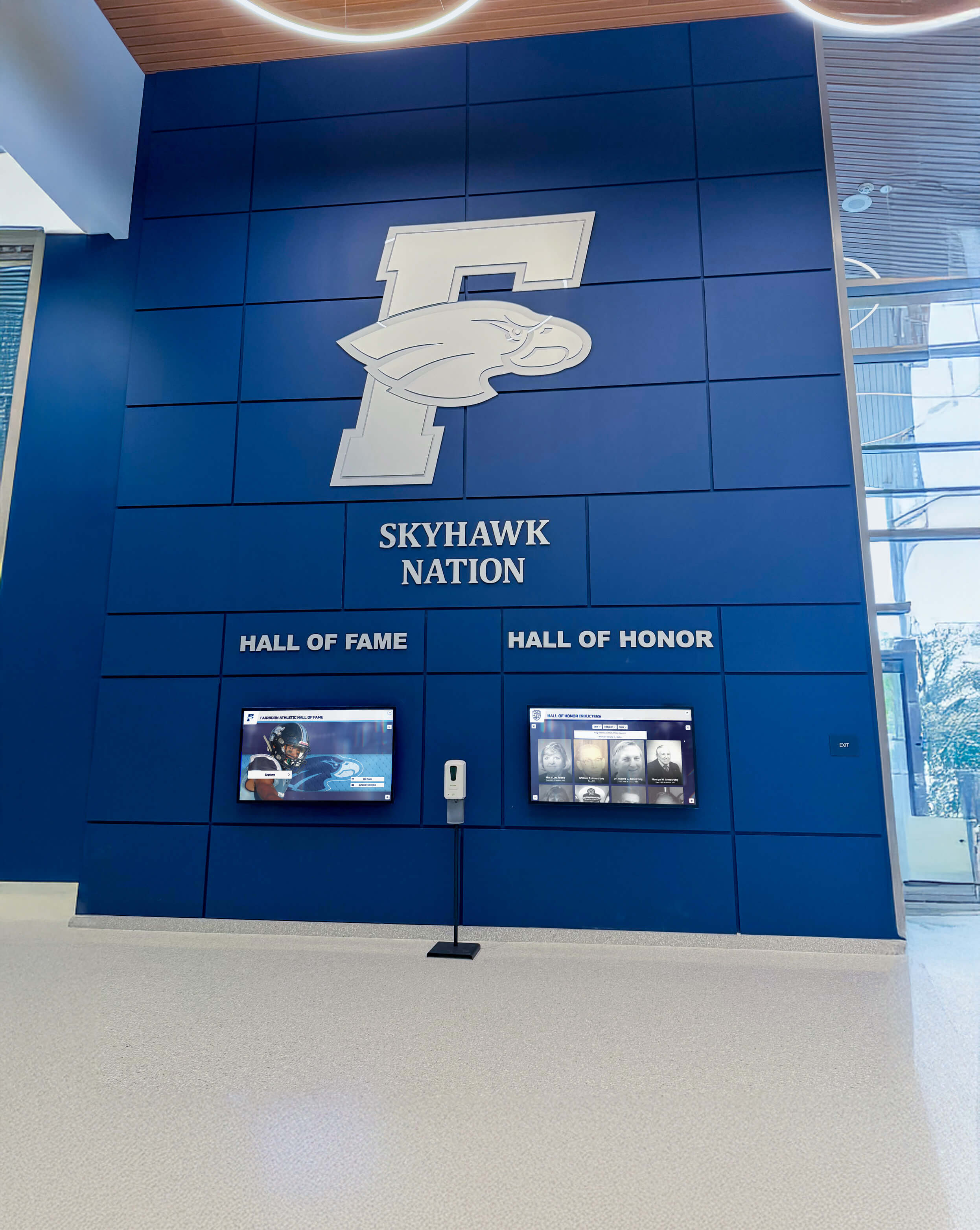
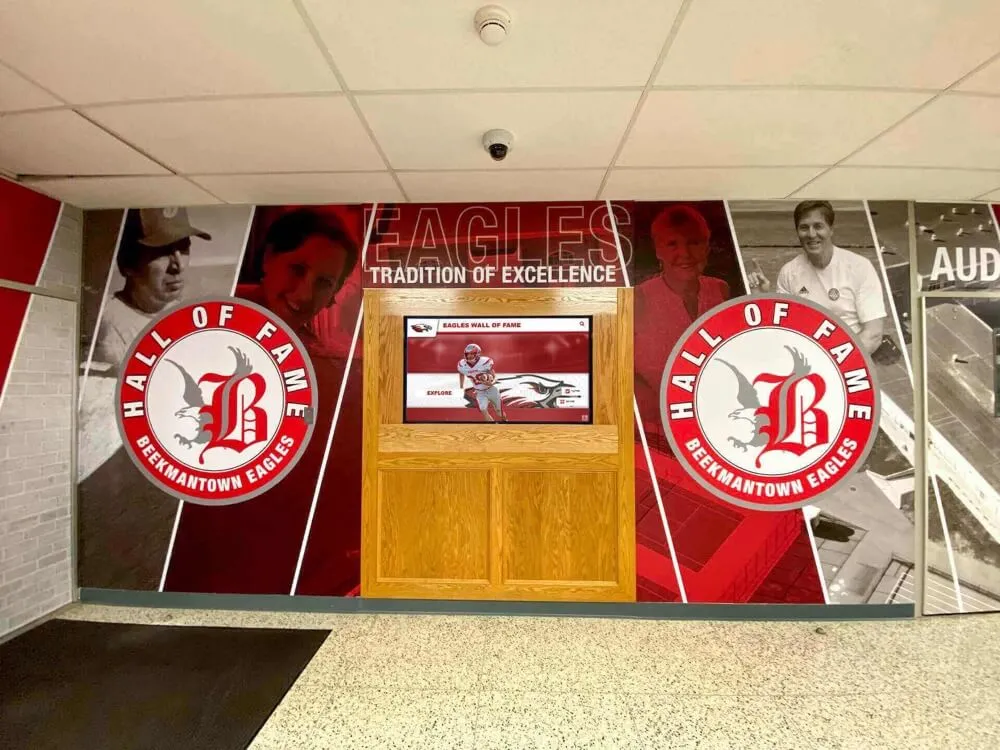
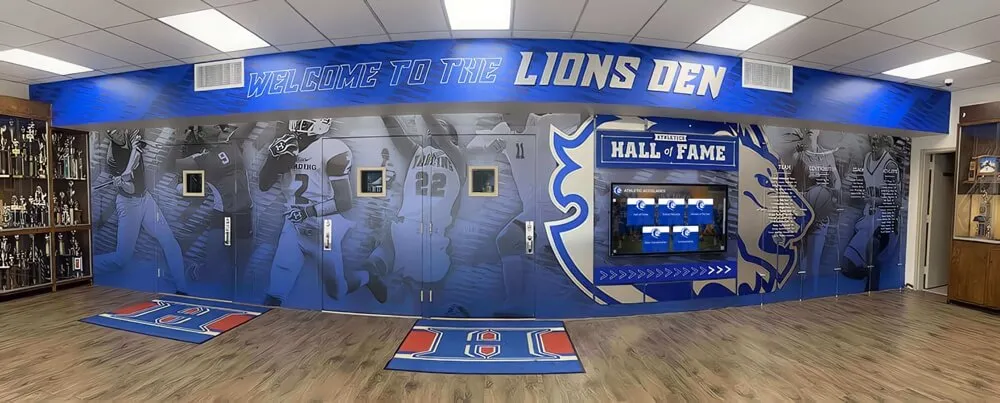
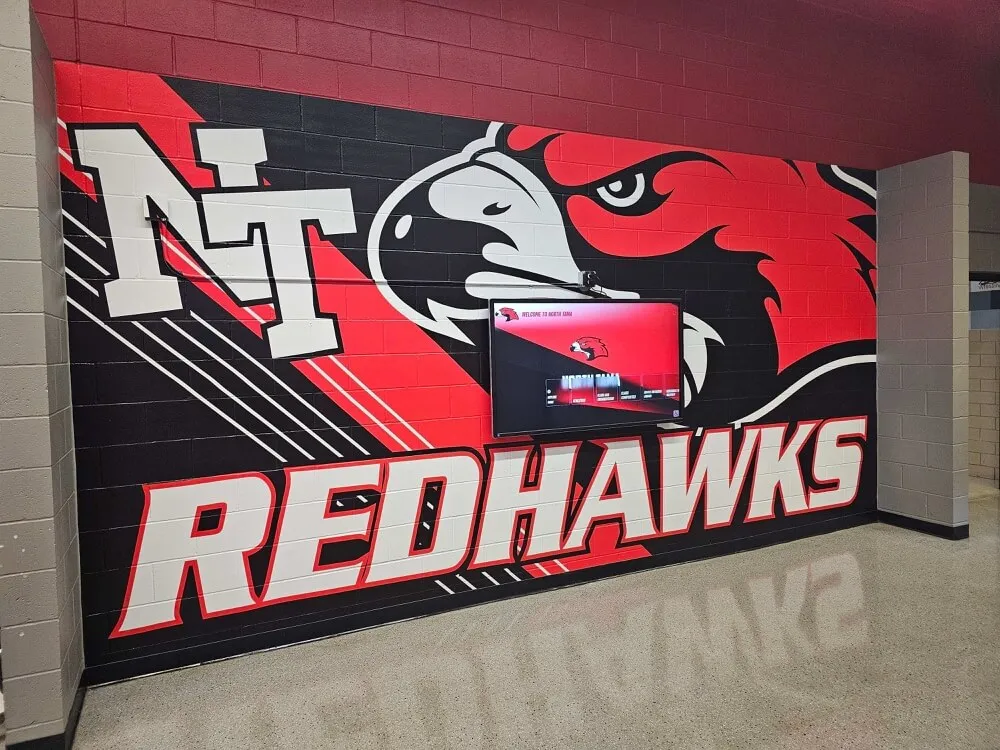
Permanent honor walls in school lobbies extend graduation recognition throughout the year, giving achievements visibility long after the ceremony
Honors Cords at the College and University Level
College graduation cord traditions follow a similar logic to high school but operate within more formalized academic structures.
Latin Honors at the University Level
Most four-year colleges and universities use Latin honors to distinguish graduates by GPA:
| Distinction | Common GPA Range | Typical Cord |
|---|---|---|
| Cum Laude | 3.5–3.69 | Gold or silver |
| Magna Cum Laude | 3.7–3.89 | Gold (sometimes doubled) |
| Summa Cum Laude | 3.9–4.0 | Gold with distinction |
Exact GPA cutoffs vary considerably between institutions. Some research universities set much higher thresholds—summa cum laude at selective schools may require a 3.95 or higher. Others use class-rank percentiles rather than fixed GPA numbers.
At many universities, the final honors designation is only confirmed after the last semester grades post, meaning provisional honors listed in the commencement program may change slightly. Students should verify their final status with the registrar.
Academic excellence at the university level connects to a broader culture of high achievement. Understanding distinctions like the Dean’s List and what it represents helps students understand the progression from semester-level recognition to graduation-level honors.
Departmental and Major-Specific Cords
Universities often layer departmental recognition on top of university-wide Latin honors:
- Engineering colleges may award copper or bronze cords for graduates completing specific engineering honors programs
- Business schools often have their own honor society (Beta Gamma Sigma) with distinctive cords
- Nursing and health science programs may award cords reflecting professional certification achievement
- Education departments sometimes award cords representing completion of student teaching with distinction
Graduate and Professional School Recognition
Master’s and doctoral degree programs typically use different recognition formats. Graduate students may wear academic hoods indicating their degree level and field of study rather than honors cords—though some programs supplement hoods with cords for specific achievements like outstanding dissertations or departmental awards.
Professional programs (law, medicine, dentistry) have their own distinct regalia traditions, with honor society cords from organizations like Order of the Coif (law) or Alpha Omega Alpha (medicine) carrying significant professional prestige.
Graduation Cord Colors and Their Meanings
Because no single national standard governs honors cord colors, color meanings vary by institution. That said, certain associations appear consistently across American schools:
Common Color Associations
Gold — The most universal honors cord color. Appears across GPA-based academic honors, National Honor Society recognition, and dozens of other award categories. When in doubt, gold typically signals academic achievement.
Silver/White — Often paired with gold to indicate cum laude or intermediate academic honors. White also represents arts, letters, and humanities in the academic field color system.
Red — Associated with leadership recognition, student government, and certain honor societies. Some institutions use red for engineering or business distinctions.
Blue — Philosophy, education, and general academic excellence. Key Club (the high school service organization affiliated with Kiwanis) uses blue and gold cords.
Purple — Law, jurisprudence, and social sciences in the academic field color system. Some institutions use purple for top-tier academic recognition.
Green — Health sciences, medicine, and environmental studies. Used by several health-focused honor societies.
Pink/Rose — Music, performing arts, and fine arts programs at many institutions.
Maroon/Crimson — Journalism programs, and the cord color for Alpha Lambda Delta (freshman honor society, maroon and gold).
The most reliable source for what a specific cord color means at any given institution is that school’s official commencement guide or registrar’s website.

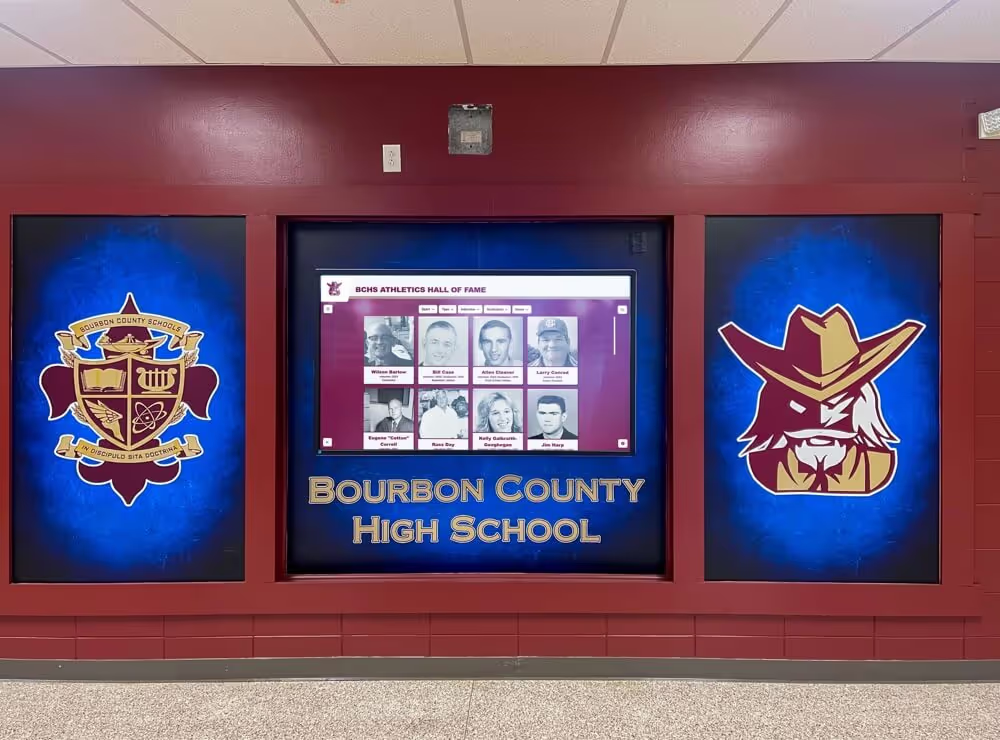
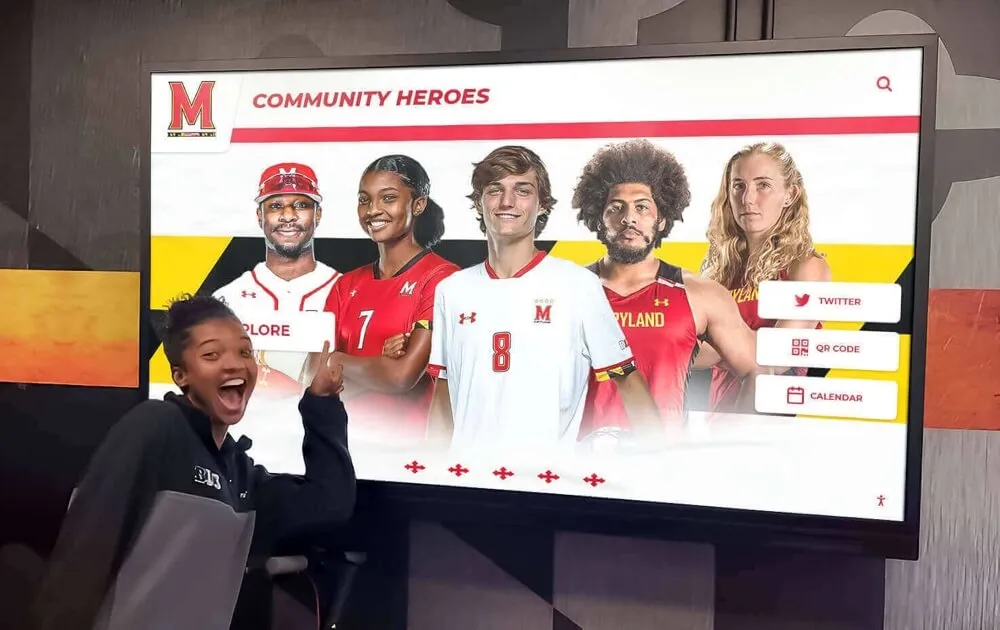
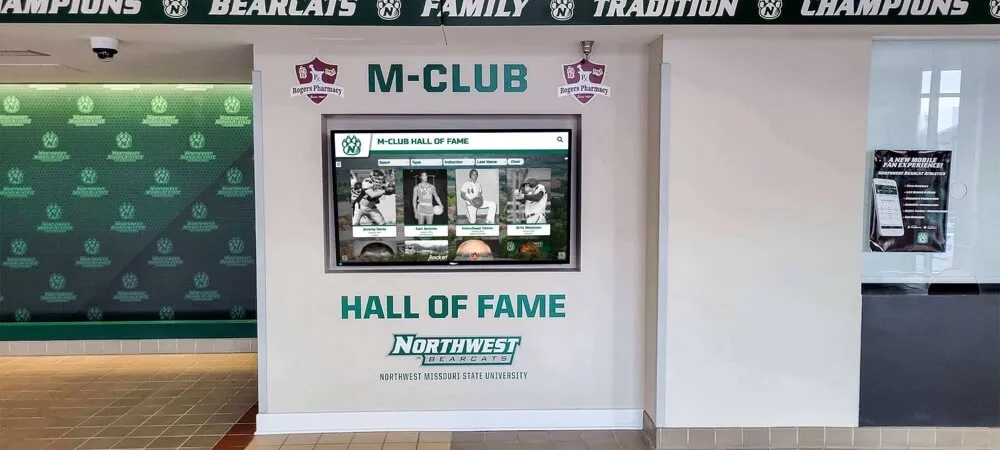
Digital recognition systems capture the full story of individual achievements that graduation cords can only summarize in color
How Students Earn Honors Cords
Earning honors cords requires intentional academic planning throughout a student’s career, not just strong performance in the final semester.
For GPA-Based Cords
- Maintain consistency — GPA calculations typically include all semesters. One poor semester can push a student below a cord threshold even with strong recent performance.
- Understand weighting policies — Know whether your school calculates honors based on weighted or unweighted GPA, and which courses count toward the calculation.
- Monitor your standing — Many registrar systems allow students to see their running GPA. Don’t wait until senior year to find out where you stand.
- Know the cutoffs — Thresholds differ by institution. A 3.5 earns cum laude at some schools but falls below the minimum at others.
For Honor Society Membership
Each society has distinct requirements. NHS, for example, requires not just academic eligibility but selection by a faculty committee evaluating character, service, and leadership. Students who qualify academically must still complete the application process and maintain active membership through their graduation date to receive cords.
For Special Program Cords
Students in CTE programs, dual enrollment tracks, or specialized academies should confirm cord eligibility early in their senior year. Program coordinators typically manage cord distribution separately from the main registrar process.
Appealing Eligibility Decisions
Most institutions have a process for students to appeal cord eligibility decisions—for example, if a transferred grade was calculated incorrectly, or if a documented medical situation affected one semester’s performance. Students who believe they meet criteria should contact their registrar or counselor before the cord distribution deadline rather than waiting until the ceremony.
Wearing Honors Cords Properly
Wearing multiple cords correctly requires attention to a few practical details:
Placement — Cords drape over the neck, resting on the gown’s shoulders, with both ends hanging symmetrically over the front. Uneven draping is the most common visible error.
Multiple cords — When wearing more than one cord, they typically hang together rather than being layered separately. Many students wrap the cords together near the neck to keep them organized.
With stoles — When wearing both a cord and a stole, the cord typically goes over the stole. Some schools recommend specific layering orders; check your institution’s guide.
Photos — Many graduates remove cords briefly for certain formal portraits but should replace them for the processional and on-stage photos where recognition is most visible.
Some institutions limit the number of cords a student may wear—typically two to four—to keep the ceremony visually manageable and prevent the situation where one student has so many cords that the regalia becomes distracting. Check your school’s commencement policy.
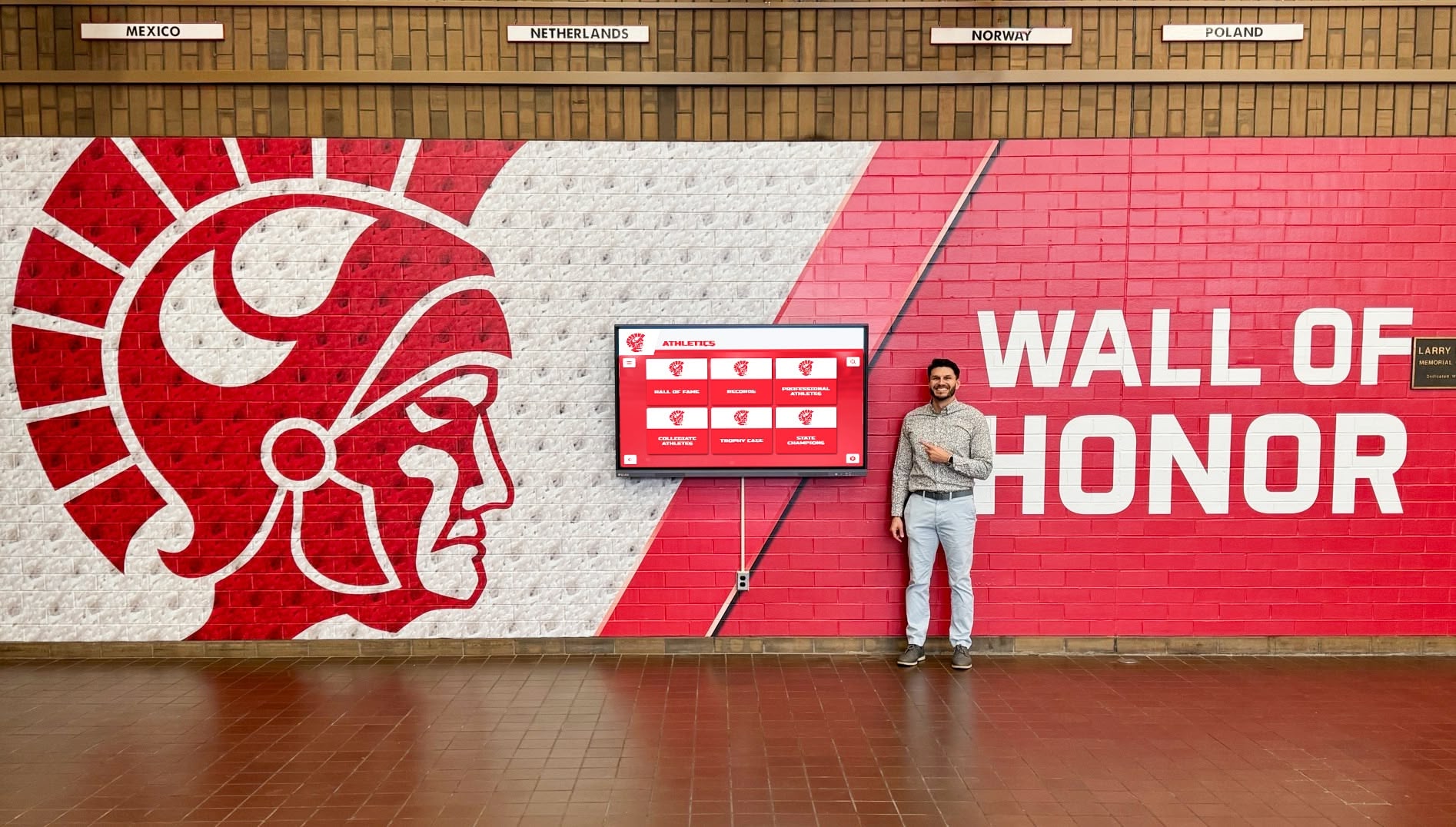
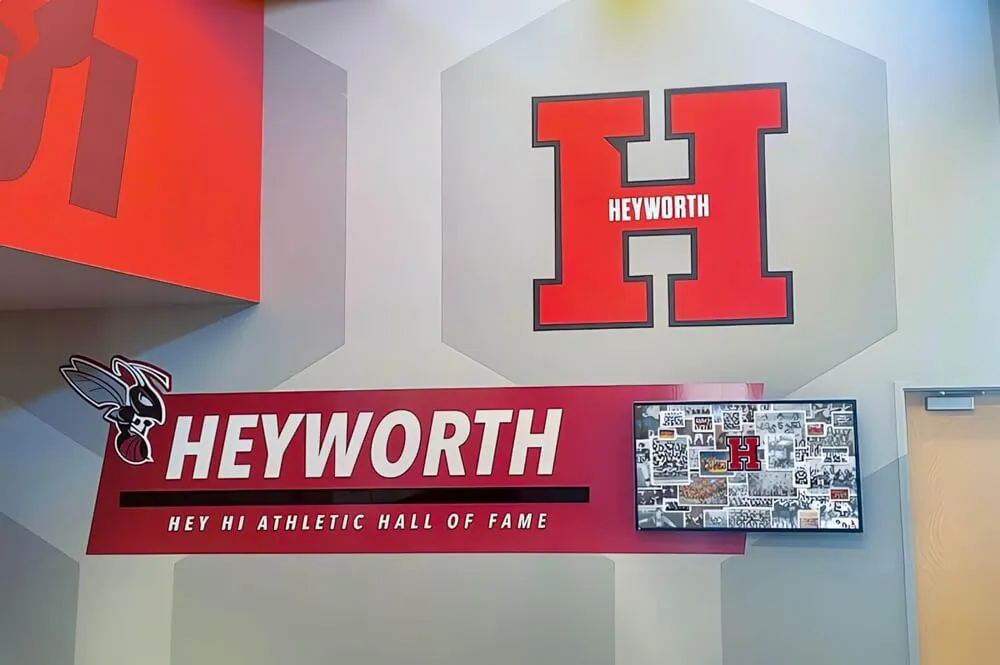
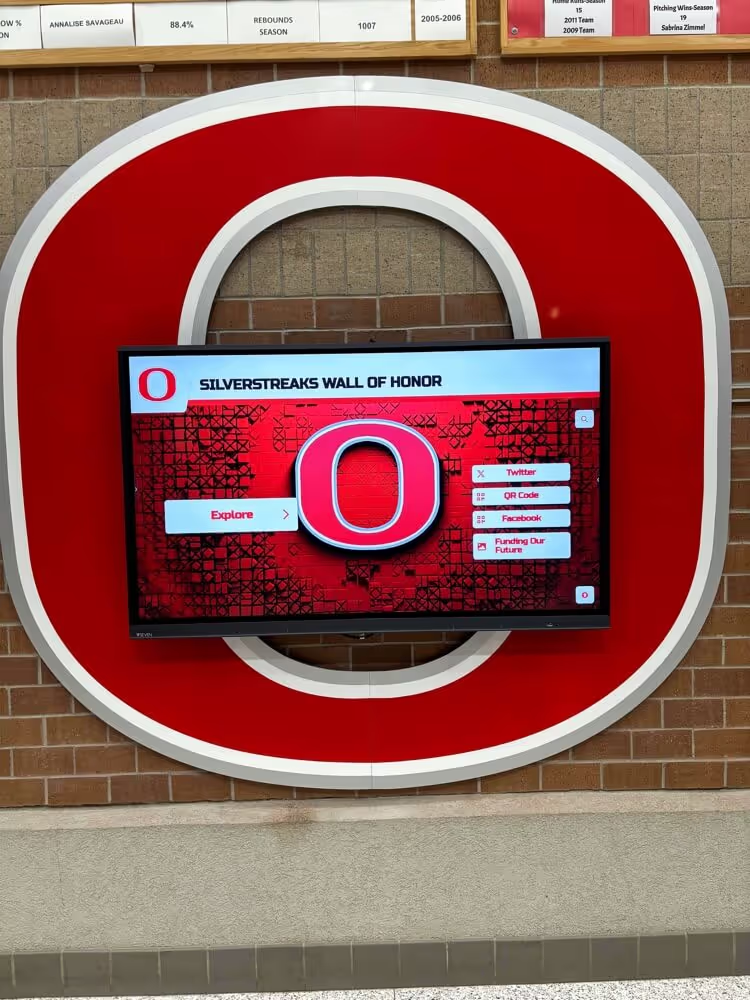
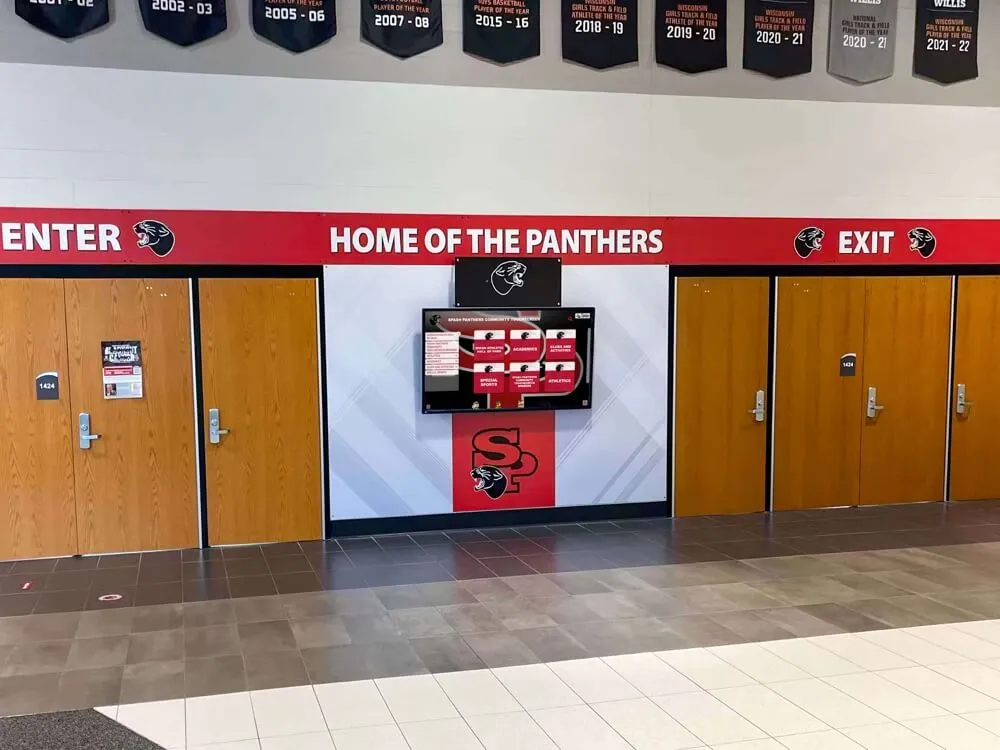
Hallway walls of honor translate the recognition moment of graduation cords into year-round visibility for the whole school community
Preserving Honors Cords After Graduation
The ceremony ends, the gown comes off, and graduates suddenly have a collection of braided cords and no obvious place to keep them. A few preservation approaches are worth considering:
Shadow boxes — Framing honors cords alongside the graduation cap, tassel, program, and any medallions creates a keepsake that displays well in a home or office.
Yearbook documentation — Many yearbooks include graduation pages that photograph students in full regalia. Digital yearbooks extend this further by allowing searchable profiles.
Digital documentation — Photographing cords alongside diplomas and other awards creates a permanent digital record even when physical items are stored away.
For a thoughtful guide to preserving graduation keepsakes including tassels and regalia, see this resource on graduation tassel display, preservation, and yearbook recognition.
How Schools Can Strengthen Honors Cord Programs
A well-designed honors cord program requires more than purchasing colored ropes in May. Schools that run effective programs typically have several elements in place.
Clear Written Criteria
Every cord category should have documented eligibility criteria published in the student handbook, on the school website, and communicated to students no later than the start of senior year. Ambiguous criteria lead to disputes, inconsistent application, and student frustration.
Transparent Timelines
Students should know the exact date by which their GPA will be assessed for cord eligibility, the deadline for honor society applications, and when cords will be distributed. Last-minute notifications create unnecessary stress during an already busy season.
Equitable Access
Recognition systems should account for equity. Students who lack access to honors-track courses due to scheduling constraints shouldn’t be penalized in cord eligibility calculations. Schools with equity-focused policies sometimes offer alternative pathways—growth-based recognition, certification cords, or service cords—ensuring every motivated student has a viable path to graduation recognition.
The broader context of student leadership and achievement recognition informs good cord policy design. See these student leadership award ideas for a framework applicable to multi-category recognition.
Supplement Cords with Permanent Recognition
Honors cords are powerful in the ceremony moment, but that moment lasts about three hours. The achievement behind the cord represents years of sustained effort that deserves longer-lasting visibility.
Schools that supplement graduation cords with permanent recognition systems—honor walls, digital display boards, and searchable alumni achievement archives—create environments where academic excellence stays visible throughout the year. This ongoing visibility motivates current students who see what recognition looks like long before they walk across a stage. For ideas on creating lasting academic honor recognition, explore these wall of honor designs for schools.
Digital Recognition Systems
Modern recognition technology allows schools to move far beyond what physical cords can communicate. A digital display or touchscreen recognition wall can show:
- Full achievement profiles for individual students
- Photos and biographical details
- Specific accomplishments (not just a cord color summary)
- Historical archives linking current students to the graduates who came before them
- Searchable databases accessible during open houses and alumni events

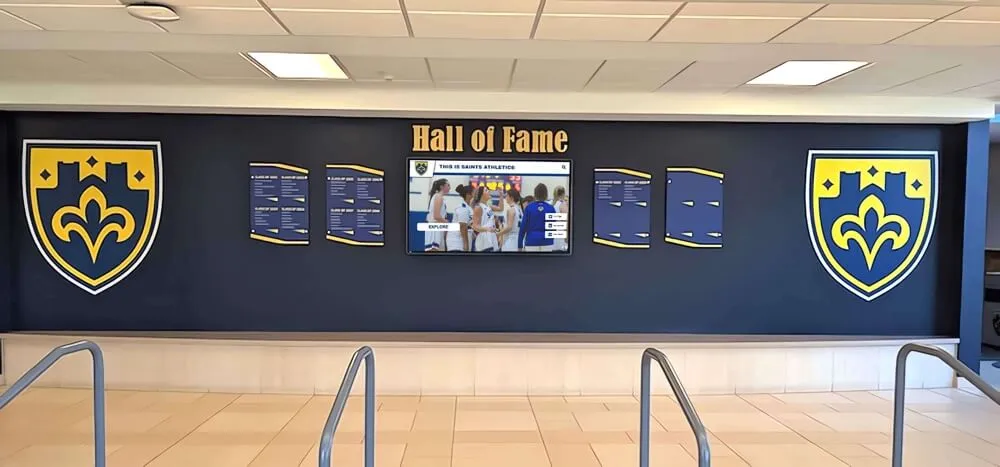
Digital recognition systems give schools unlimited capacity to celebrate achievements in depth—far beyond what a cord color can convey
For a practical overview of how digital award showcasing works for schools, see best ways to showcase achievement awards digitally.
Solutions from Rocket Alumni Solutions enable schools to create comprehensive digital recognition systems—touchscreen walls of fame, interactive achievement displays, and searchable alumni databases—that transform the recognition moment of graduation cords into year-round community celebration. These systems complement cord traditions rather than replacing them, ensuring the achievements those cords represent stay visible long after the ceremony.
Frequently Asked Questions About Honors Cords
What does wearing honors cords at graduation mean?
Honors cords signify that a graduate met specific eligibility criteria set by their school or an honor organization—most commonly a minimum GPA, membership in an honor society, or completion of a specialized academic program. The specific meaning depends on the cord’s color and the institution’s policies. Looking at the commencement program’s regalia key is the fastest way to decode what you’re seeing.
Can students buy their own honors cords?
Legitimate honors cords are provided to students by their school or the honor organization after eligibility is verified. Commercially purchased cords are not recognized as representing institutional honors. Wearing cords not officially awarded by your school is considered contrary to commencement guidelines at most institutions.
Do honors cords appear on transcripts or diplomas?
GPA-based Latin honors (cum laude, magna cum laude, summa cum laude) typically appear on both the diploma and the official transcript. Honor society membership may be noted separately on co-curricular transcripts. The cords themselves are ceremonial—they represent recognition conferred by the institution but are distinct from official academic records.
What is the difference between honors cords and a stole?
A cord is a braided rope worn around the neck; a stole is a wider fabric panel worn draped over both shoulders like a vestment. Stoles typically represent cultural affiliations, organizational memberships, or graduate school distinctions. Both can be worn simultaneously, with the cord typically resting over the stole.
How many cords can a graduate wear?
This depends entirely on the institution. Some schools impose no limit; others cap the number at two, three, or four to keep the ceremony visually consistent. Students who qualify for multiple cords should confirm their school’s policy with the registrar or graduation coordinator before the ceremony.
Are honors cords the same in high school and college?
The concept is the same, but the specific criteria and colors differ significantly between institutions. A gold cord from a high school commencement and a gold cord from a university commencement may represent completely different thresholds and organizations. Always refer to each institution’s official commencement materials for accurate interpretation.

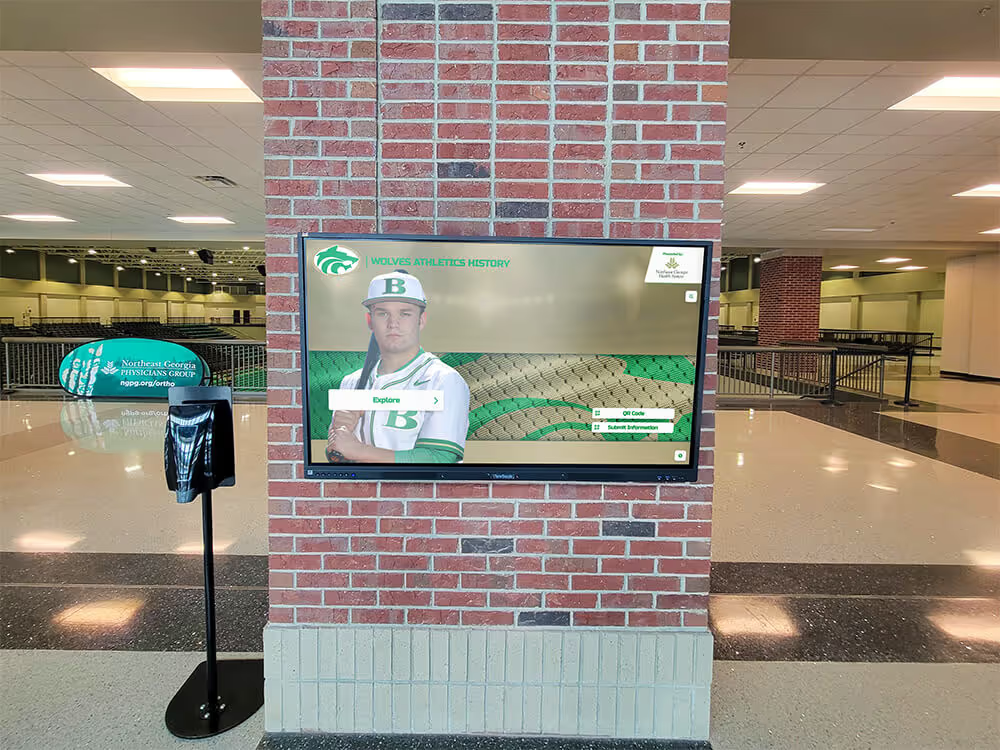
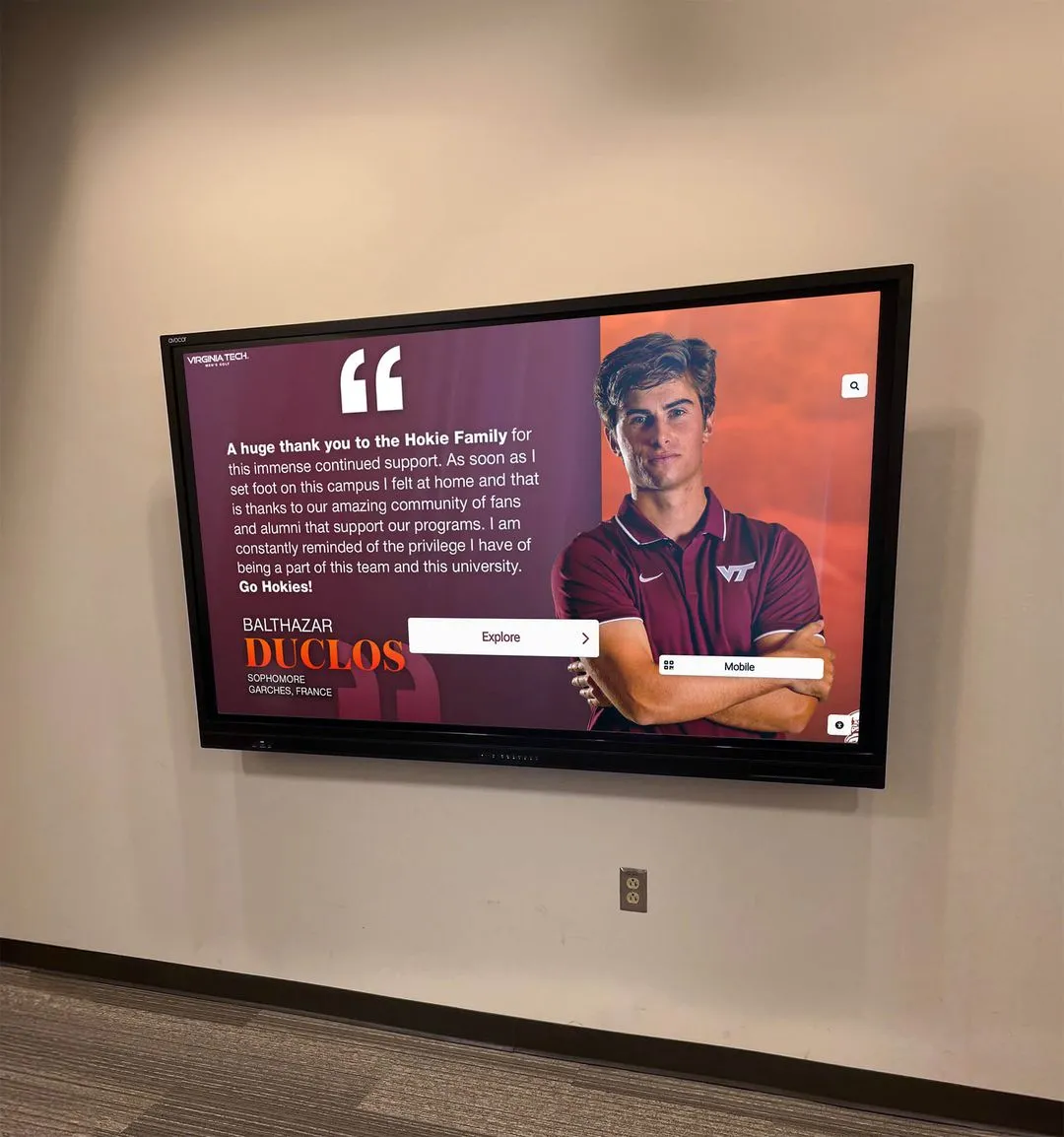
Modern recognition platforms extend graduation honors into searchable, shareable digital archives accessible to students, families, and alumni
Beyond the Ceremony: Connecting Cord Recognition to Institutional Culture
The most effective schools treat honors cords not as a once-a-year purchase from a regalia supplier but as the visible culmination of a year-round culture of recognition. When students see their academic accomplishments celebrated consistently—in hallway displays, digital honor walls, and school communications—the graduation cord ceremony carries more weight because it’s the public peak of ongoing recognition rather than a one-day event.
Schools building this type of culture invest in permanent recognition infrastructure: interactive touchscreen displays that showcase academic award recipients, digital walls of honor that update annually, and alumni achievement archives that connect current students to graduates who came before. The eighth graders heading into high school who see what it looks like to walk across a stage wearing honors cords have a concrete, visible goal—and that visibility starts in the hallways they walk every day.
For recognition ideas that create this kind of lasting impact, explore these 8th grade graduation and recognition ideas and perfect academic achievement award display approaches for inspiration on making academic achievement visible at every level.
Conclusion
Honors cords are one of graduation’s most meaningful traditions—a simple, visual, immediate way of saying to a graduate and their family: this achievement was real, and it was seen. Whether gold for academic honors, blue and gold for Key Club, or maroon and gold for Alpha Lambda Delta, every cord represents a decision a student made years before the ceremony to pursue a standard of excellence worth recognizing.
Understanding what honors cords are—and building institutional systems that support fair eligibility, clear communication, and comprehensive recognition—ensures that the tradition serves its real purpose: motivating students, honoring effort, and building the kind of academic culture where achievement is genuinely celebrated.
The ceremony moment when a graduate crosses the stage is powerful. Building a school culture that makes that moment the expected result of visible, ongoing recognition throughout a student’s career is even more so.
Build Recognition That Lasts Beyond Graduation Day
Discover how Rocket Alumni Solutions helps schools create permanent digital recognition systems that complement graduation cord traditions—making academic achievement visible to students, families, and alumni year-round.
Explore Digital Recognition Solutions