Athletic Awards Cardinality Audit: Seasons, Teams, and Honorees
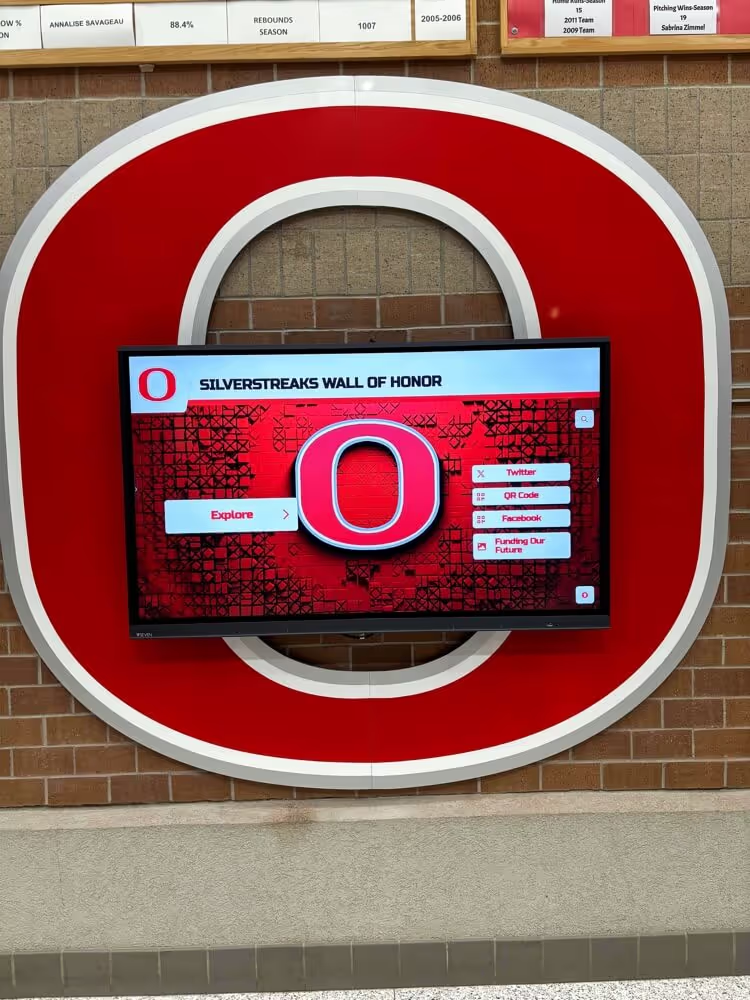
An athletic awards cardinality audit is a structured count-relationship review that verifies whether the number of records linked between seasons, teams, and honorees in an athletic recognition database matches what the program’s own policies define as correct. Where a referential integrity check asks “does this link point to a real record?”, a cardinality audit asks “does the right number of records exist on each side of every relationship?” A season with zero award records for an active team signals a missing batch of data. A solo award assigned to four honorees in the same team and season signals a duplication error. The cardinality audit surfaces both before broken counts reach the touchscreen kiosks, hallway displays, and published recognition archives where athletes, families, and visitors encounter them.
Read More
Athletic Awards Check Constraint Policy for Valid Seasons, Teams, and Categories
An athletic awards check constraint policy defines the validation rules that govern which values are permitted in the fields of an athletic award record — specifically the season, the team or program category, and the award category — before those records are saved, imported, or published to a recognition display. A check constraint rule rejects any value that falls outside the defined limits: a season year that predates the school’s founding, a blank team-category field, a string that matches no entry in the approved category list, or a point total below zero. Unlike foreign key constraints (which verify that references point to existing parent records) and uniqueness constraints (which block duplicate combinations), check constraints enforce value-level rules — making them the front line of defense against invalid data entering an athletic recognition archive.
Read More
Athletic Awards Foreign Key Constraint Audit for Reliable Recognition Records
An athletic awards foreign key constraint audit is a structured review that checks every award record’s reference fields — the athlete ID, the team program code, the season identifier, and the award title key — to confirm each one resolves to an existing parent record. When a reference field points to a parent that has been deleted, renamed without a cascading update, or never properly entered, the award record becomes an orphan: it exists in the system but cannot be displayed, attributed, or verified. Schools that run this audit before each recognition display cycle prevent orphaned records from surfacing on touchscreen kiosks, hallway honor walls, and published archives where athletes, families, and visitors encounter them.
Read MoreAthletic Award Referential Integrity Checks: Keeping Athletes, Teams, Seasons, and Honors Linked
Athletic award referential integrity checks verify that every reference in an award record — the athlete identifier, team program, season label, and award title — resolves to a real, existing parent record in the database. When those links break, award records become orphaned: an honor assigned to an athlete ID that no longer exists, a team program retired three seasons ago, a season label that matches nothing in the academic calendar, an award title renamed without updating the historical entries that reference it. Schools that run these checks regularly prevent broken references from reaching the recognition displays, kiosks, and published archives where athletes, families, and visitors encounter them.
Read More